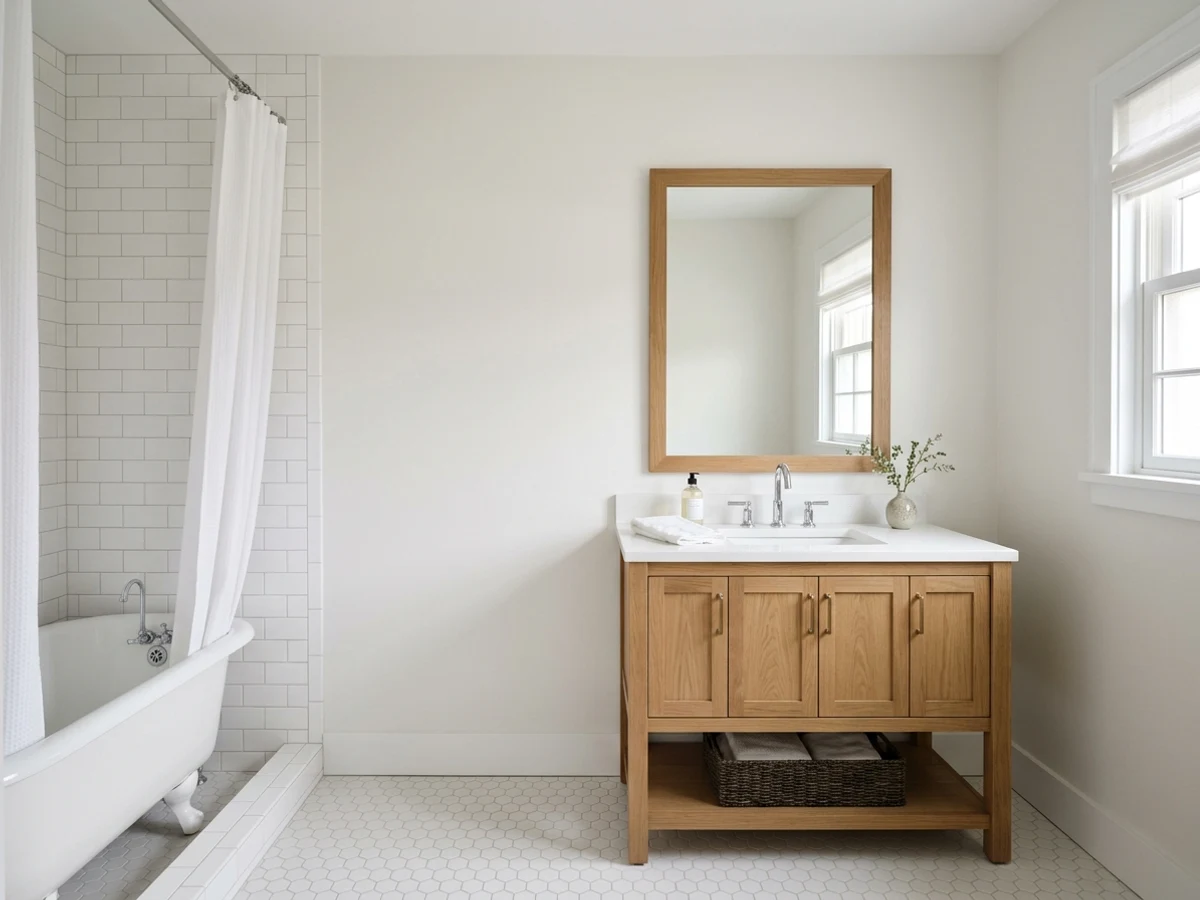
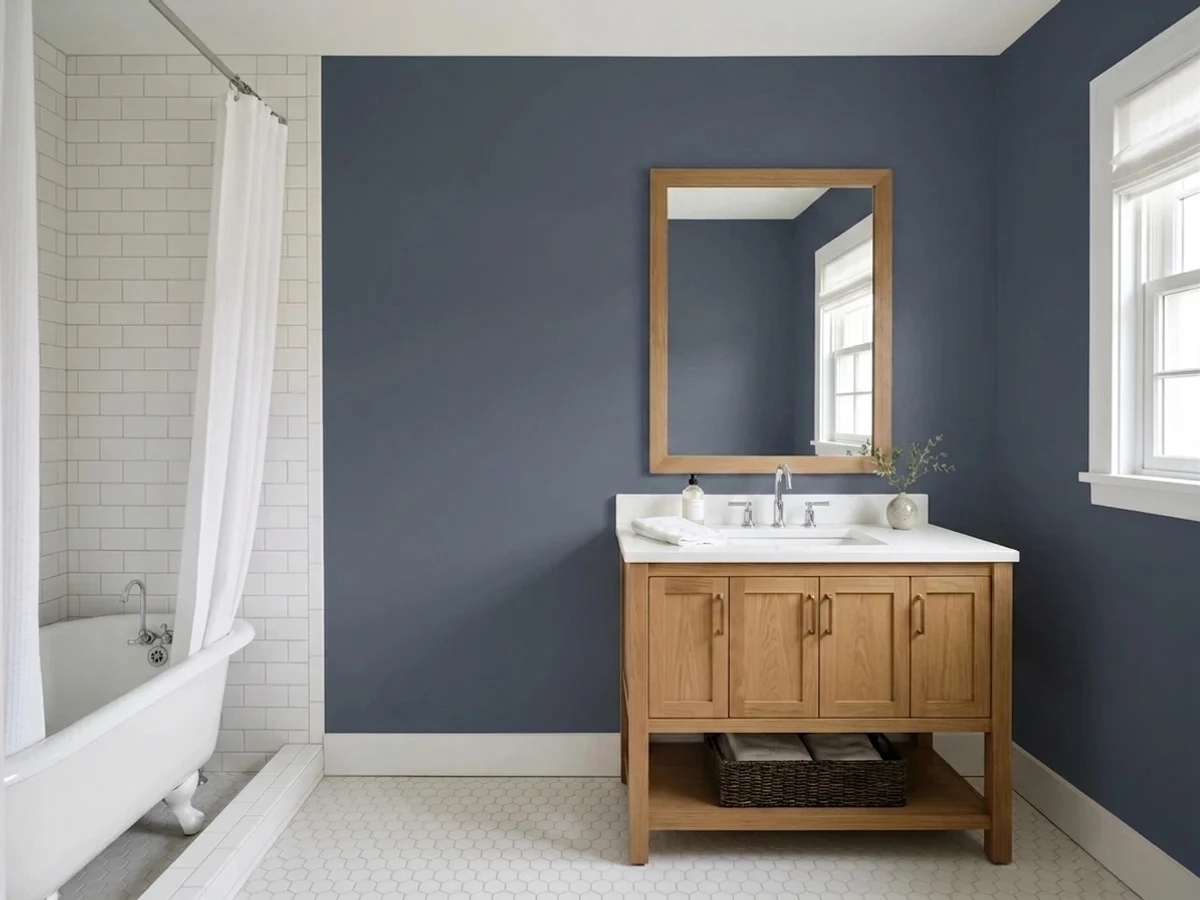
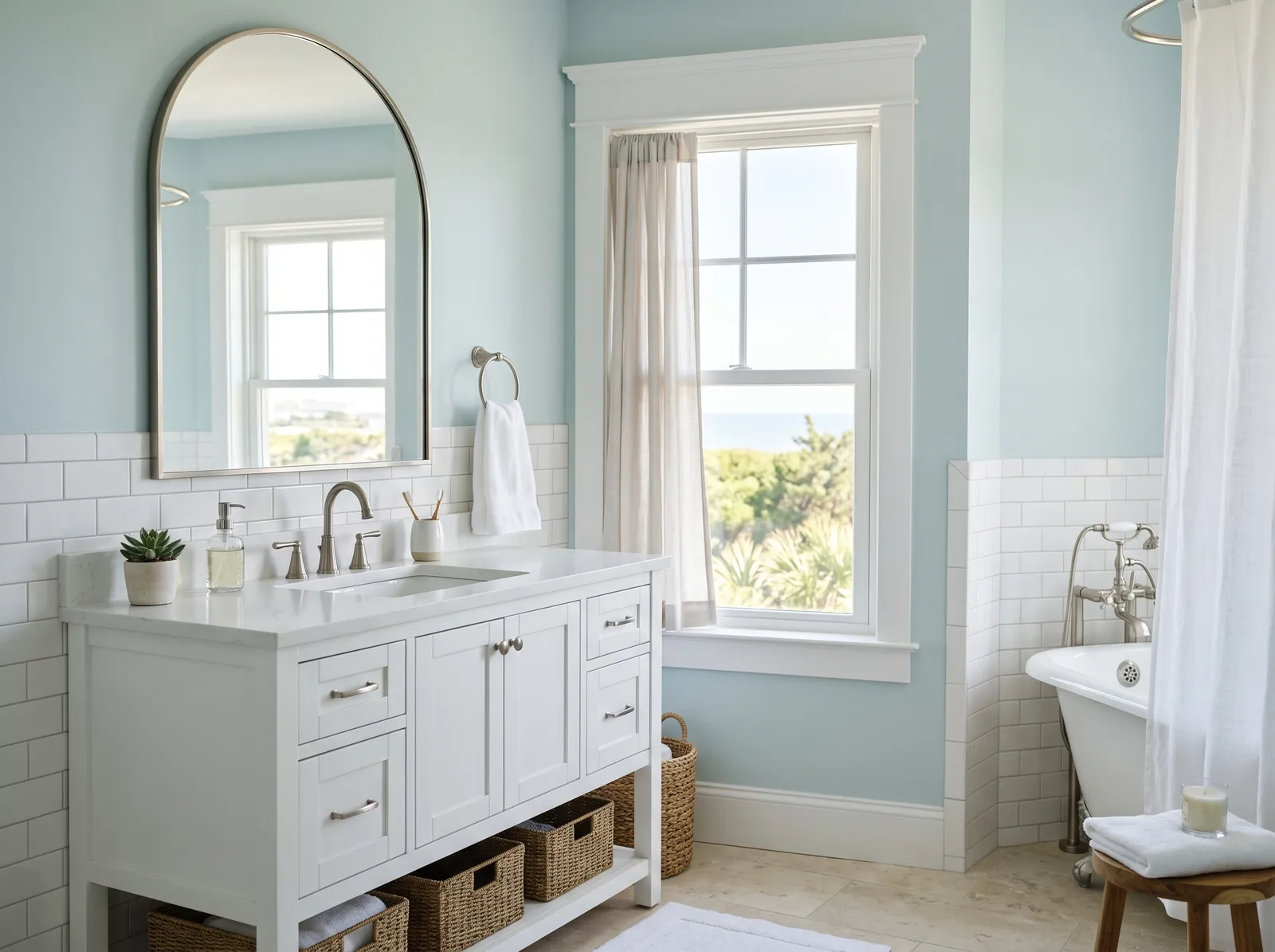
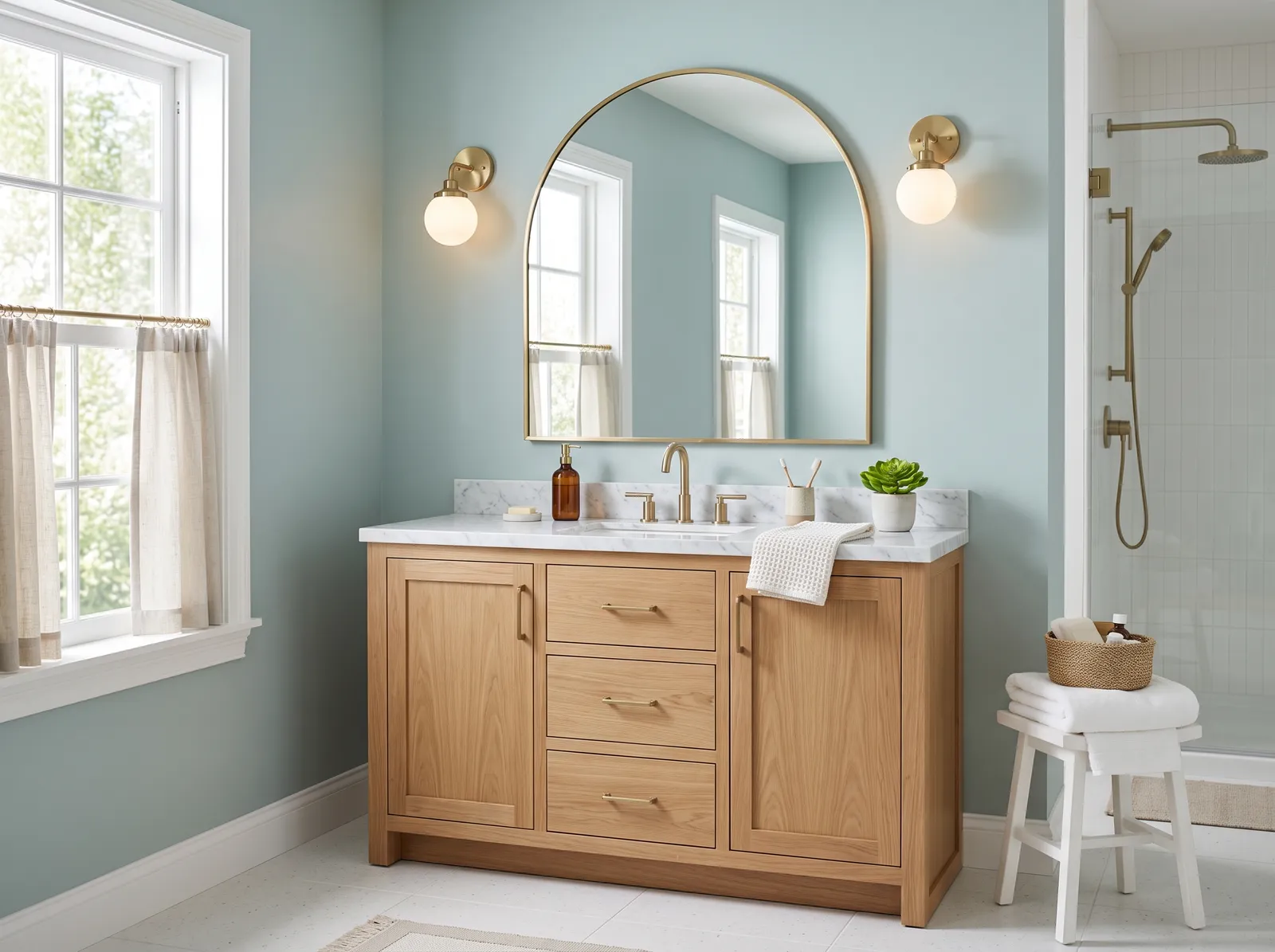
Blue Bathroom Paint Colors
1,741 blue colors that work in bathrooms, drawn from the full ~30,000-color US paint deck. Below: editor's picks specific to bathrooms, then 30 picks spread across the LRV range — narrow further on the brand page when you've shortlisted.
Blue is the most popular color for accent walls, kitchen islands, and front doors — and also the family with the widest spread, from pale dove-blues that read almost grey, to inky near-black navies, to saturated cobalts that read almost royal. Teal-leaning blues (the green-blue overlap) live next door in the Teal family.
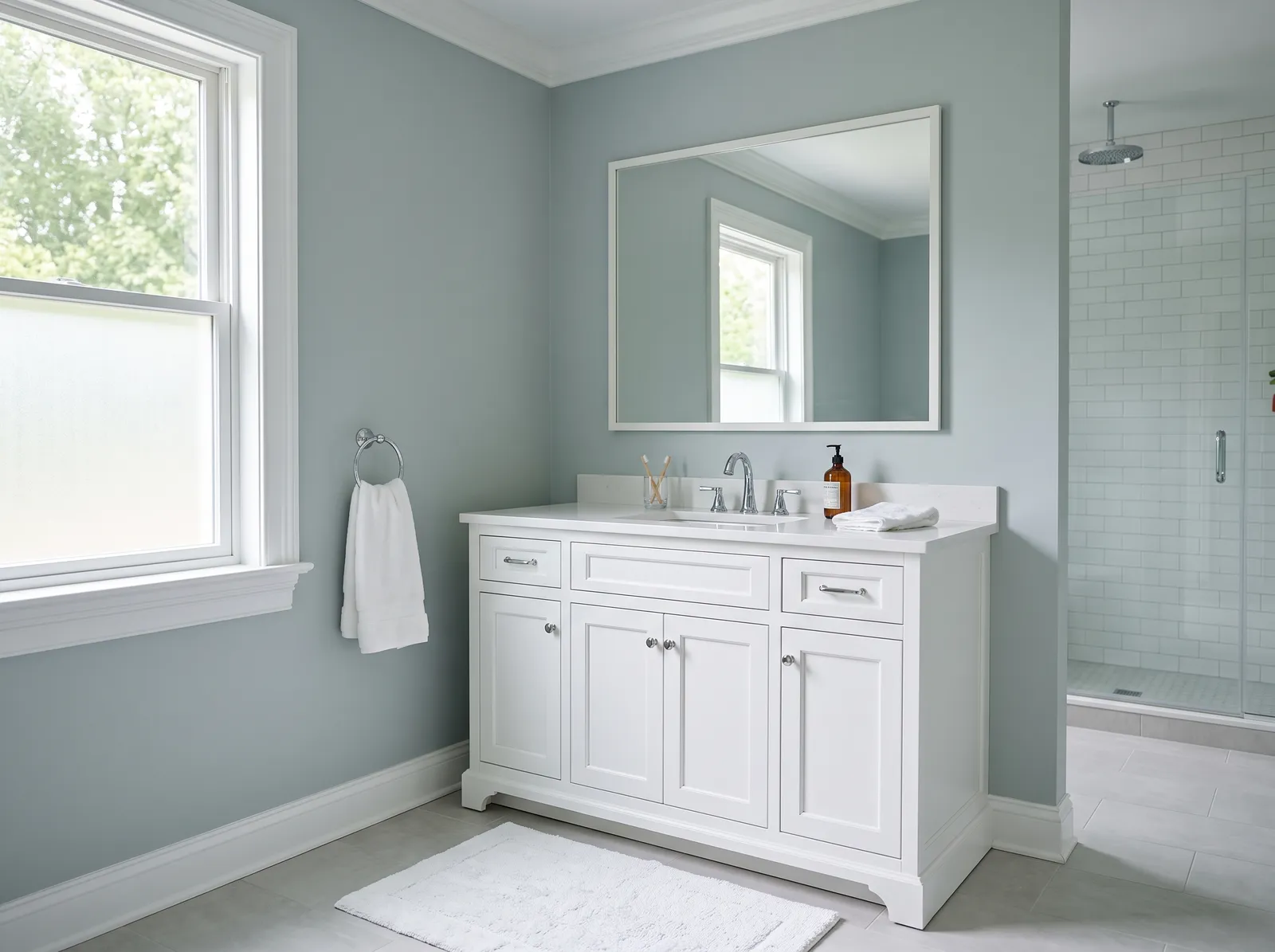
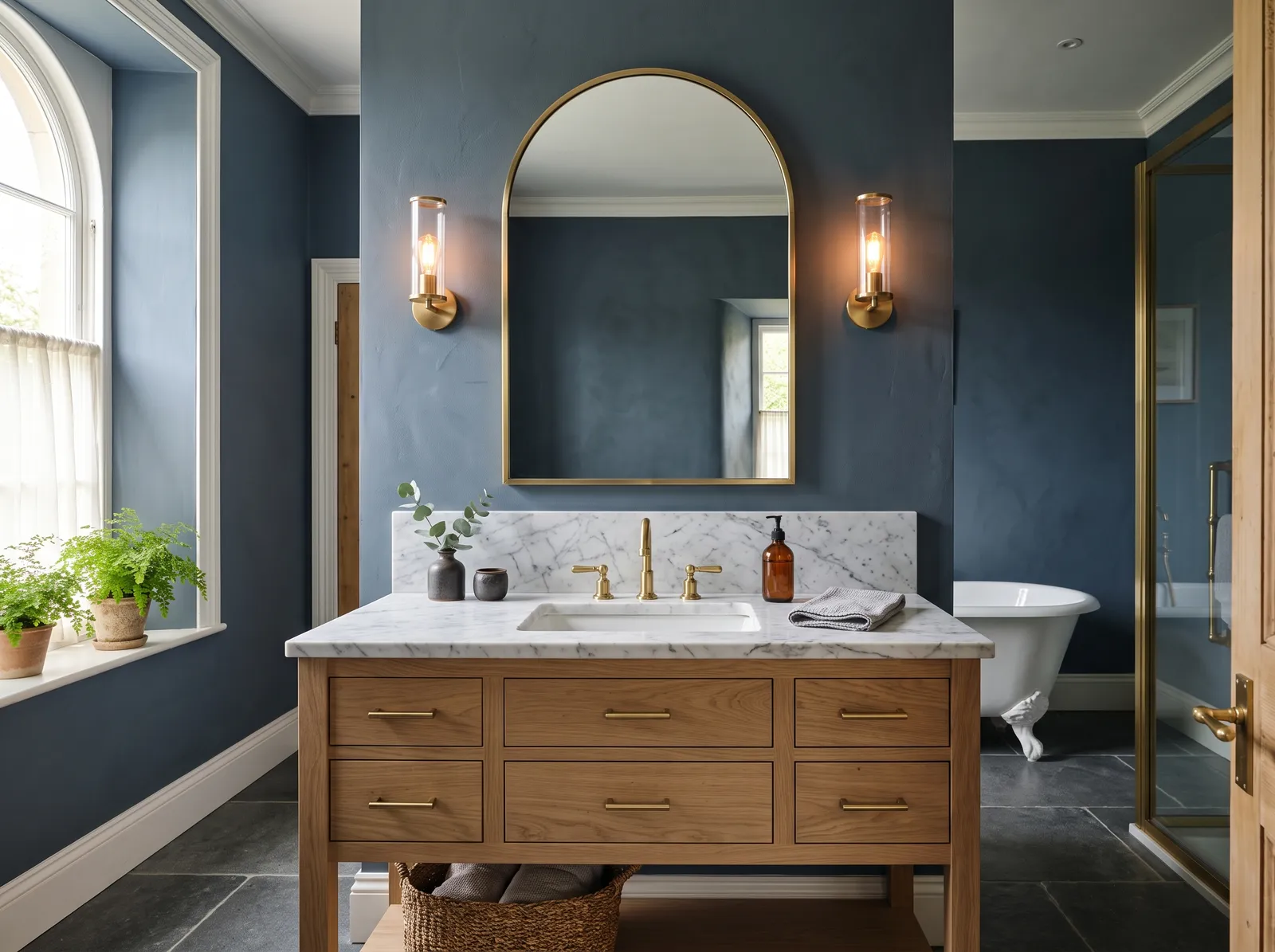
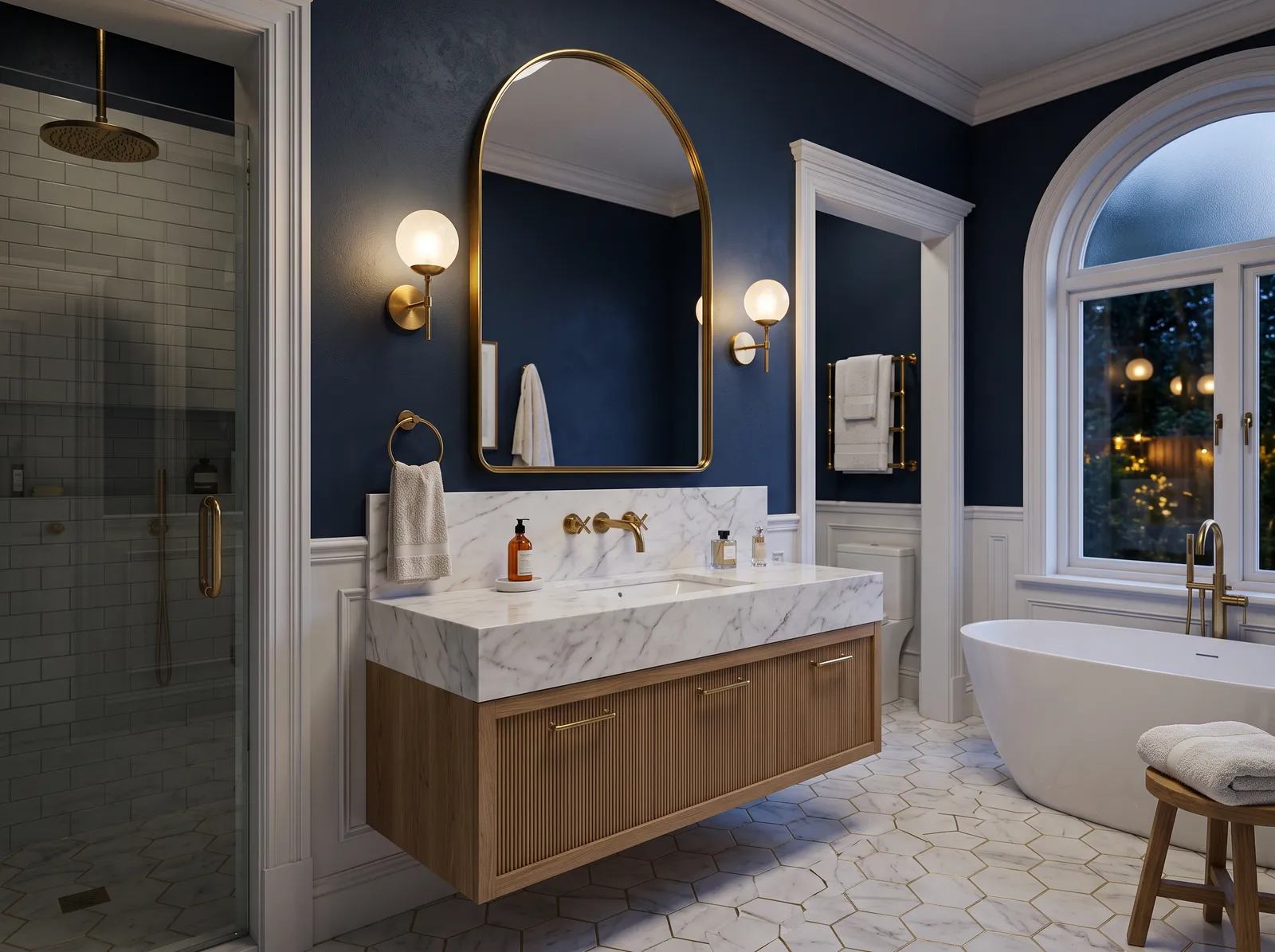
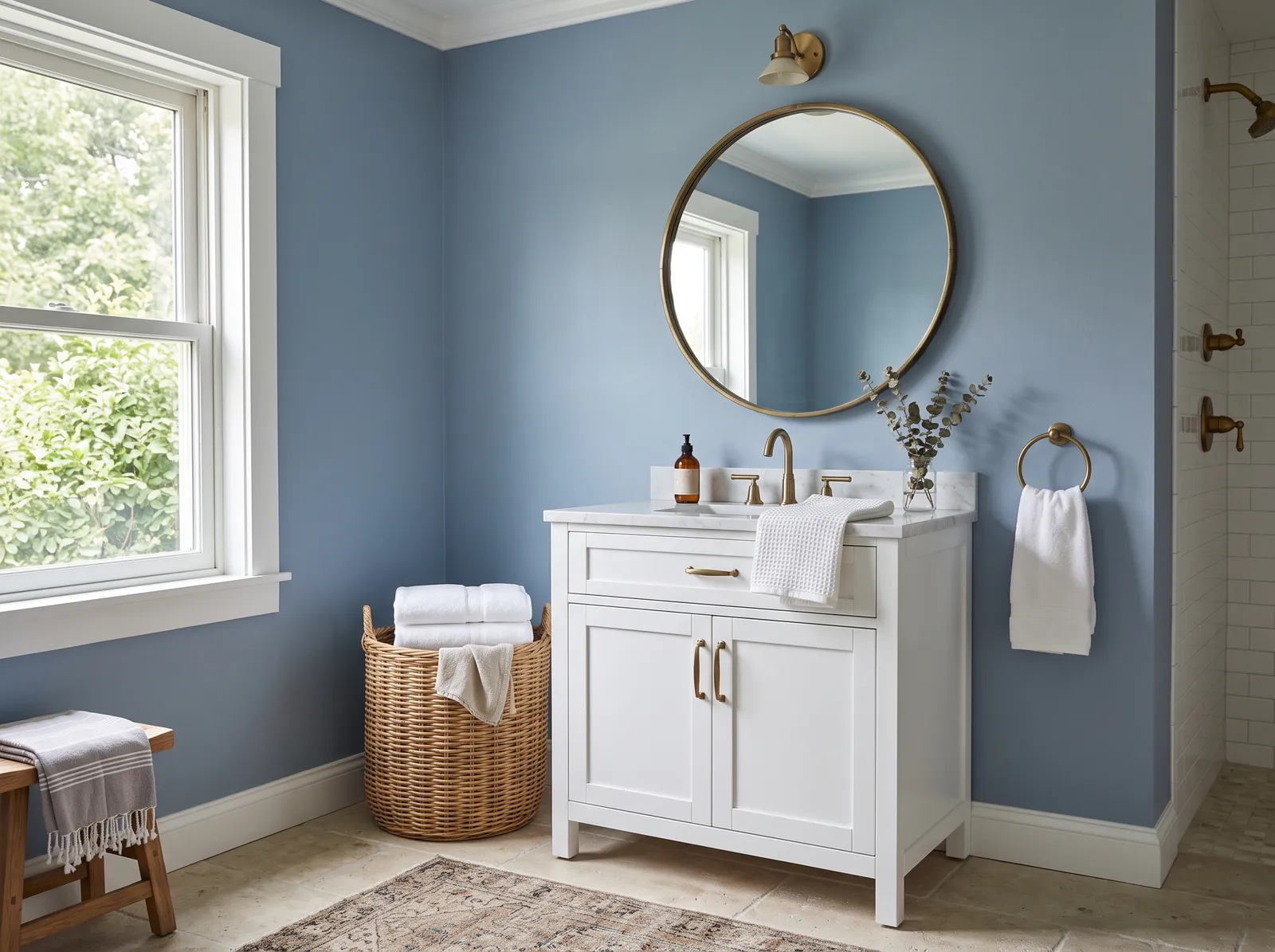
Editor's Picks: Blue for Bathrooms
4 picks30 Blue Picks Across the LRV Range
30 of 1,741 · sorted dark → lightLooking for more? All blue → covers every brand; brand × family pages show full decks.
Blue Bathroom Colors at Every US Brand
21 brands · up to 10 picks eachUp to 10 picks per brand spread across the blue LRV range, drawn from each brand's full deck. Tap any swatch with a curated guide for full spec; tap the brand title for the brand's complete blue deck.
Behr
Valspar
Glidden
Benjamin Moore
PPG / Glidden
Dunn-Edwards
Sherwin-Williams
Dutch Boy
Hirshfield's
Diamond Vogel
Kompozit
C2 Paint
Portola Paints
Magnolia Home
Rodda
Farrow & Ball
Backdrop
Annie Sloan
Clare
Rust-Oleum
Other Bathroom Color Families
Blue Colors in Other Rooms
Blue Paint Colors for a Bathroom
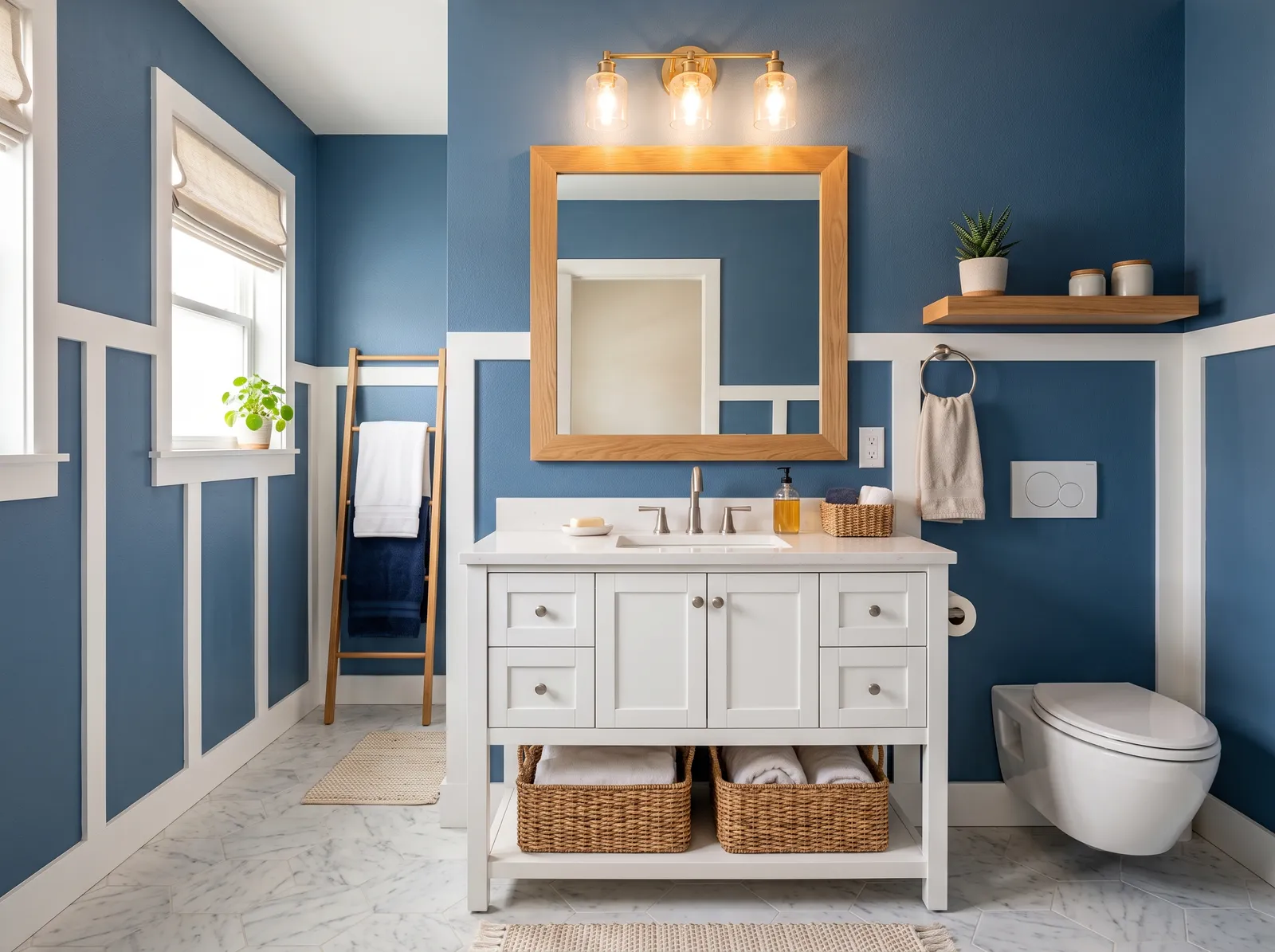
Blue is one of the few colors that just makes sense in a bathroom. It reads clean, it cools a small room down, and it plays well with the white porcelain, chrome, and tile you already have in there. A bathroom is also a forgiving place to be a little braver with color, since it's small and self-contained — a blue you'd hesitate to put across a whole living room can feel calm and finished here.
The catch is that a bathroom is a hard room to paint well. It's usually small, often short on natural light, and constantly hit with steam and splashes. The right blue for this room depends a lot on how much daylight you get, and the right paint depends almost entirely on how you handle moisture. This page walks through both, plus how to pair blue with the trim, ceiling, and fixtures that are typical in a bathroom.
Why Blue Works in a Bathroom
Blue fits a bathroom because it already lives there. Water, glass, chrome, and crisp white fixtures all lean cool, so a blue wall feels like it belongs instead of fighting the room. It also reads as clean — and "clean" is exactly the feeling you want in the one room built around washing up.
The thing to watch is temperature. A bathroom with little natural light and cool LED bulbs can tip a cool blue toward cold and clinical. If your room is dim or north-facing, choose a blue with a little warmth or gray in it so the space still feels relaxing rather than sterile.
Picking the Right Shade and Reading the Light
Light is the deciding factor in a bathroom because the room is small, so a color bounces off every wall and amplifies itself. A blue that looks soft on the chip can go intense once it wraps all four walls. LRV (light reflectance value, 0 for black to 100 for white) is the number that tells you how light or dark a color reads — higher reflects more light and keeps a small bath open, lower turns it cozy and dramatic.
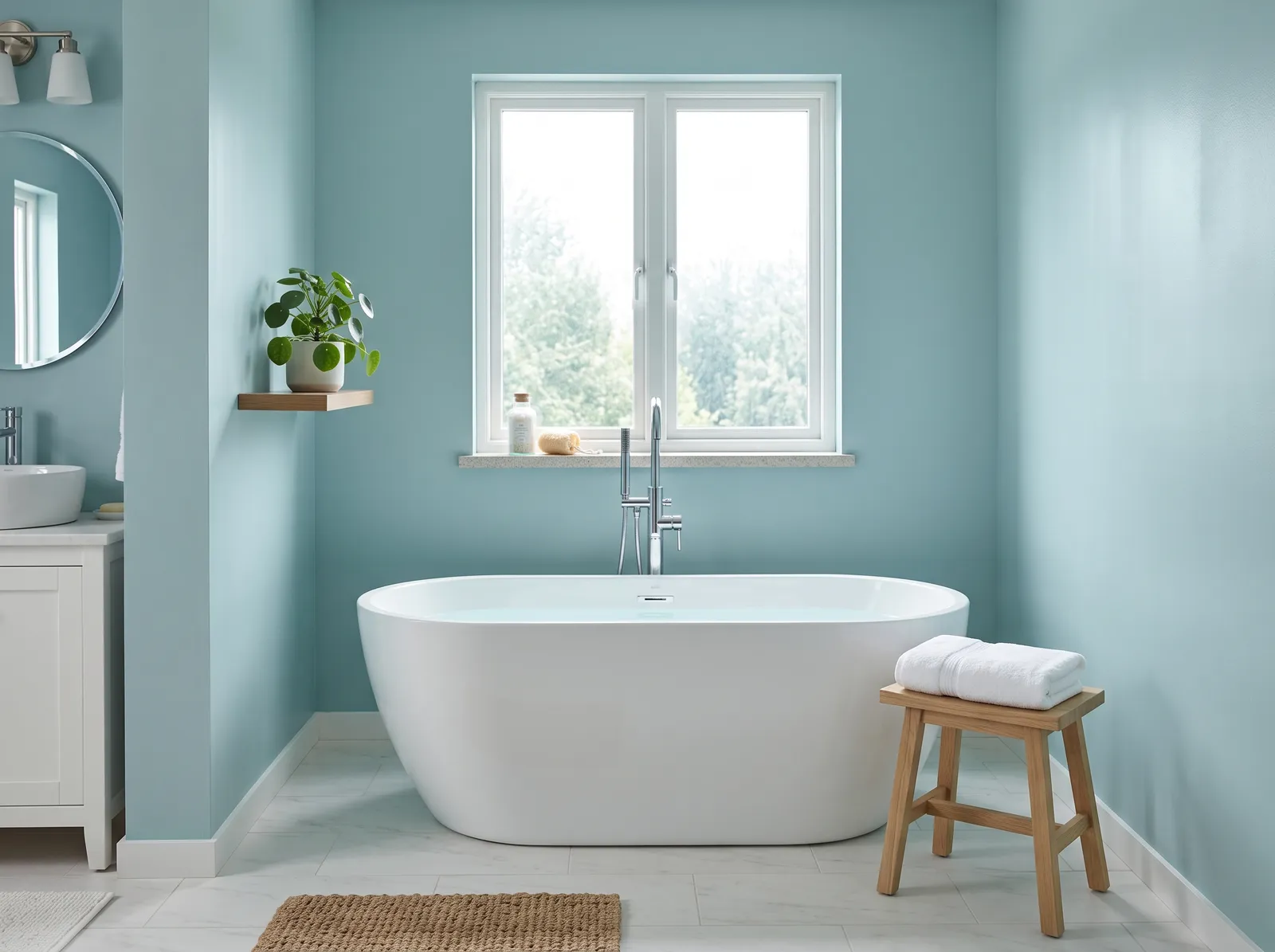
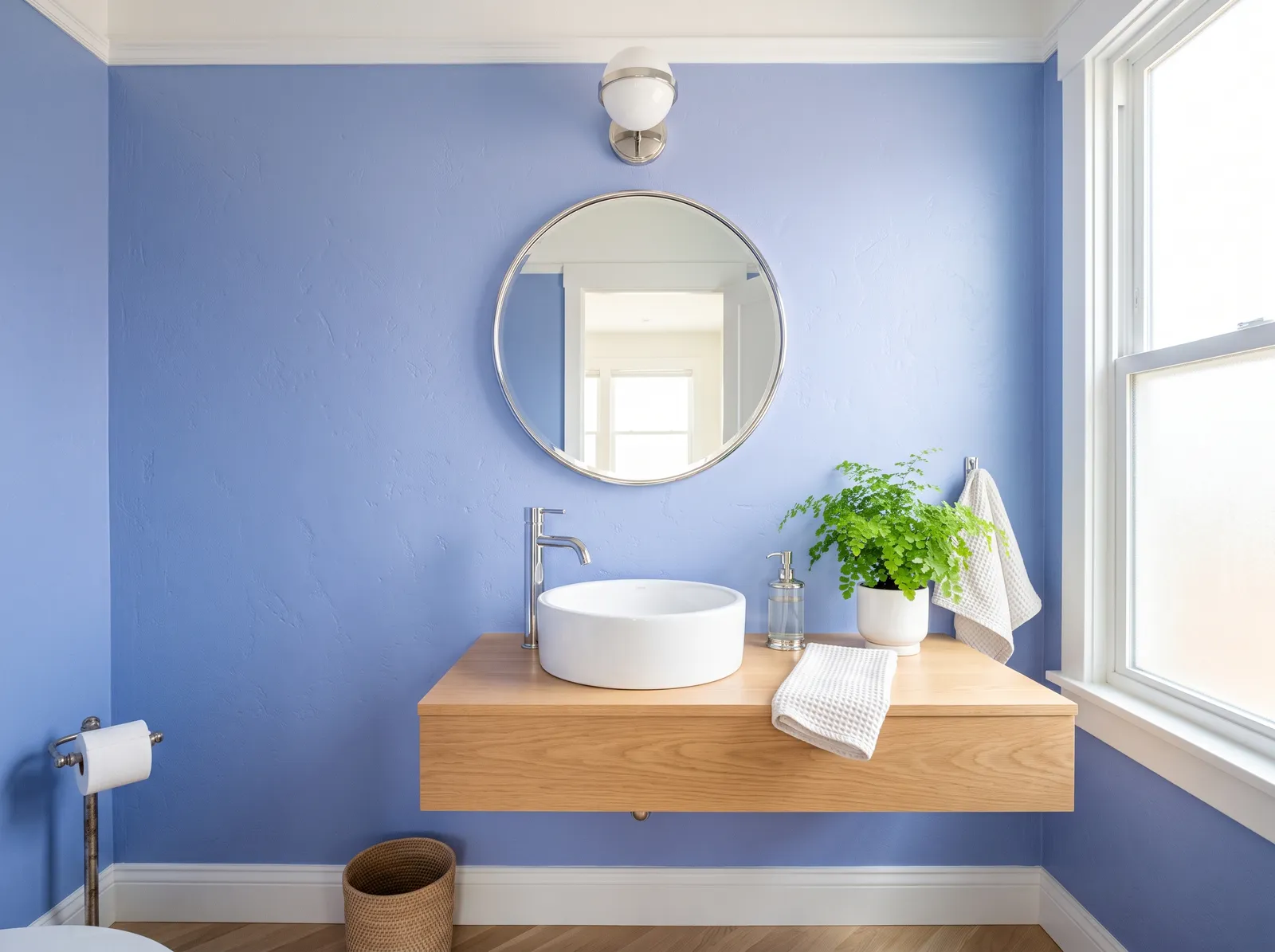
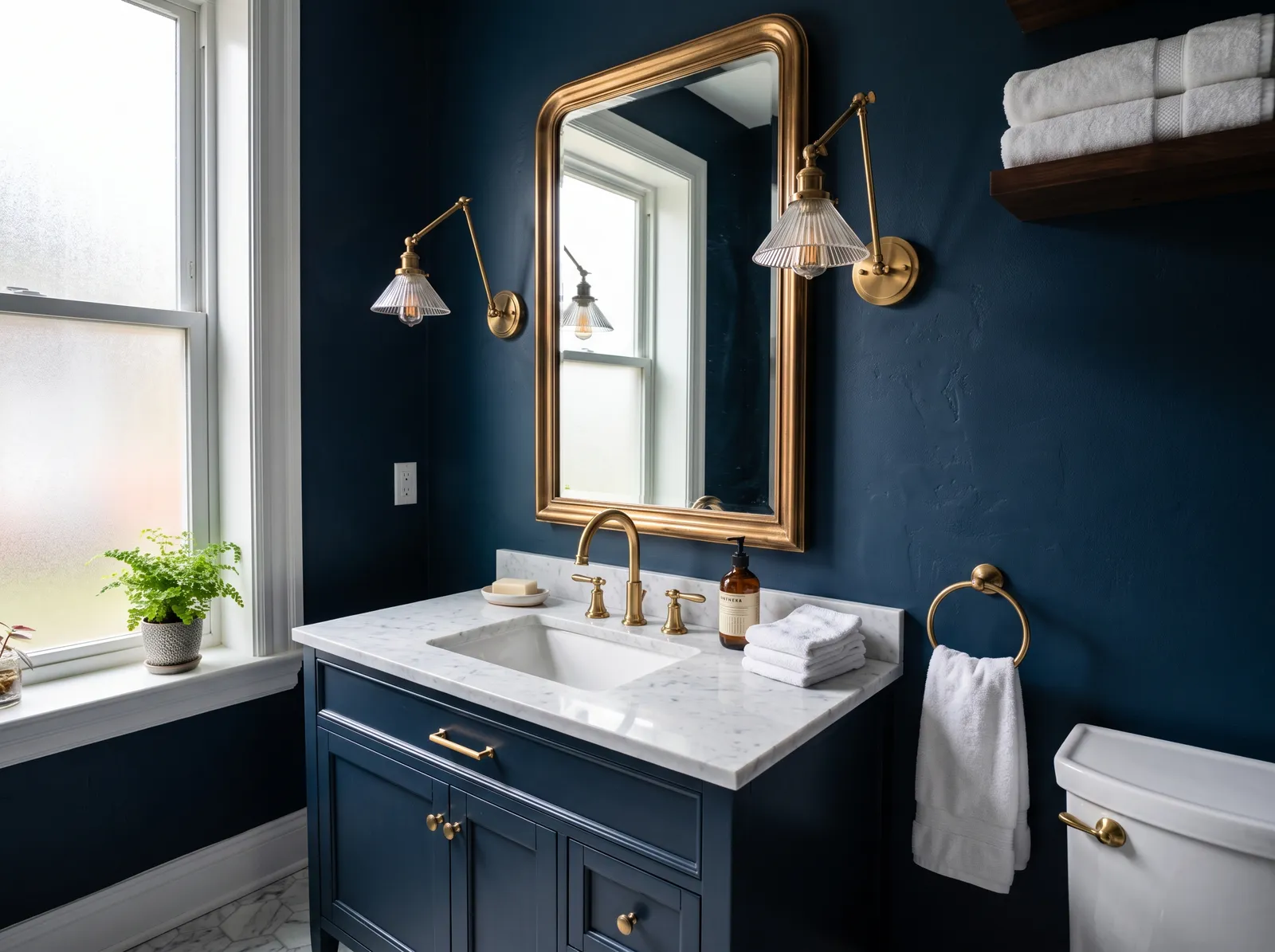
For a windowless or north-facing bathroom, a soft, slightly grayed blue in the LRV 55–70 range keeps things bright without feeling cold. A bathroom with a real window can handle a mid-tone blue around LRV 35–55 and still feel airy. Save deep navy and inky blues (LRV under 20) for a powder room or a bath with good light, where the drama pays off and you're not relying on the walls to brighten the space.
The Right Finish for a Wet Room
Sheen matters more in a bathroom than almost anywhere else in the house. You need a finish that shrugs off steam, wipes clean, and resists the mildew that loves damp walls. For most bathrooms, a satin or eggshell is the sweet spot — enough moisture resistance and washability without a hard plasticky shine.
If you have a busy family bath with a tub or shower, lean toward satin, or step up to semi-gloss on the trim and the wall right around the shower for extra protection. Many brands also sell paint with built-in mildew resistance, which is worth it here. Just avoid flat or matte on bathroom walls — it stains, it can't be scrubbed, and steam will find its weak spots fast.
Pairing Blue With Trim, Tile, and Fixtures
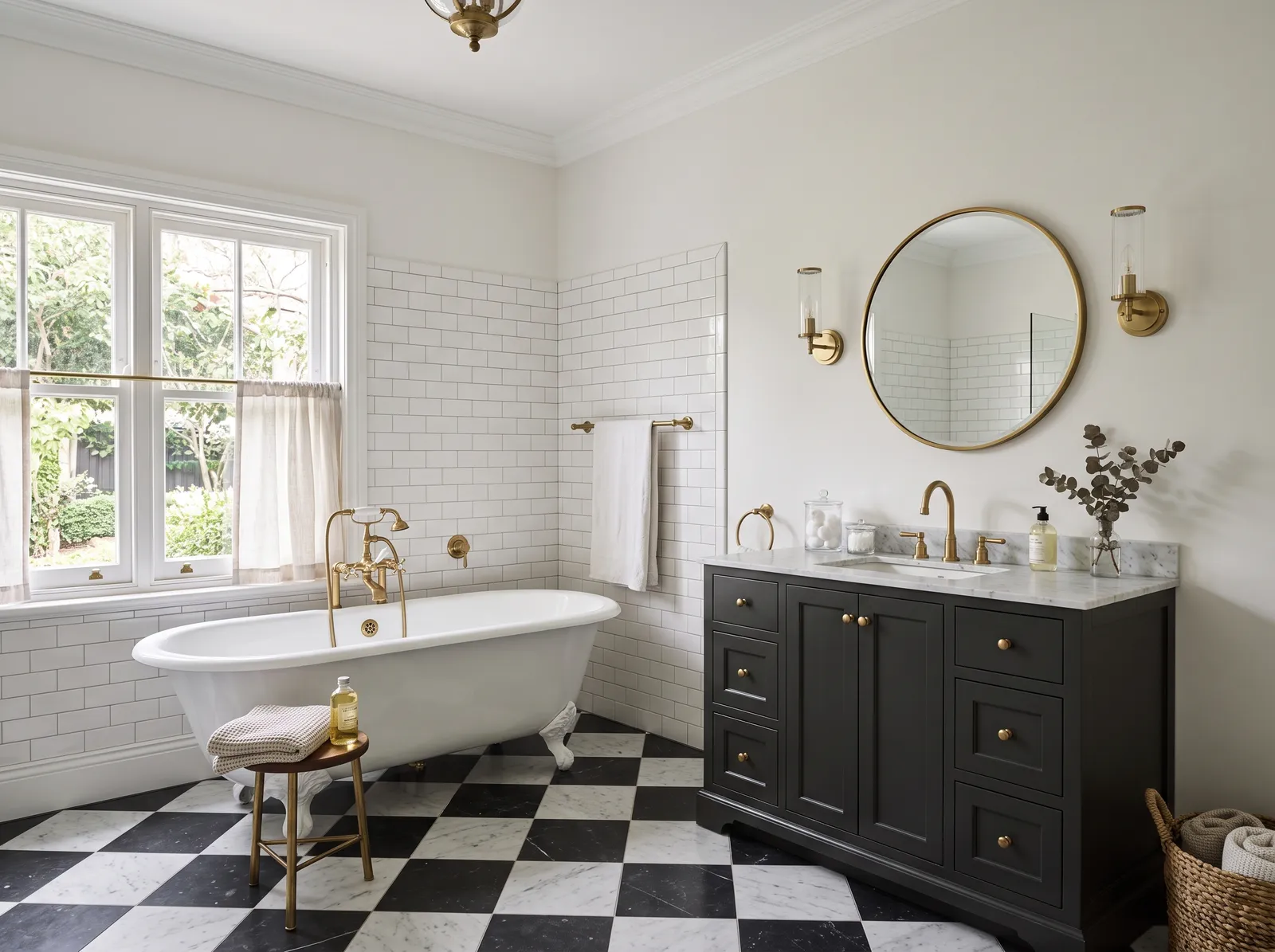
Crisp white trim and a white or near-white ceiling are the safest, most timeless match for blue in a bathroom — they echo the porcelain and keep the room feeling fresh. If you want it softer, a warm off-white trim takes the chill off a cool blue. For a bigger statement, painting the ceiling the same blue as the walls (in a slightly lighter mix) makes a small bath feel like a tucked-away little box, in a good way.
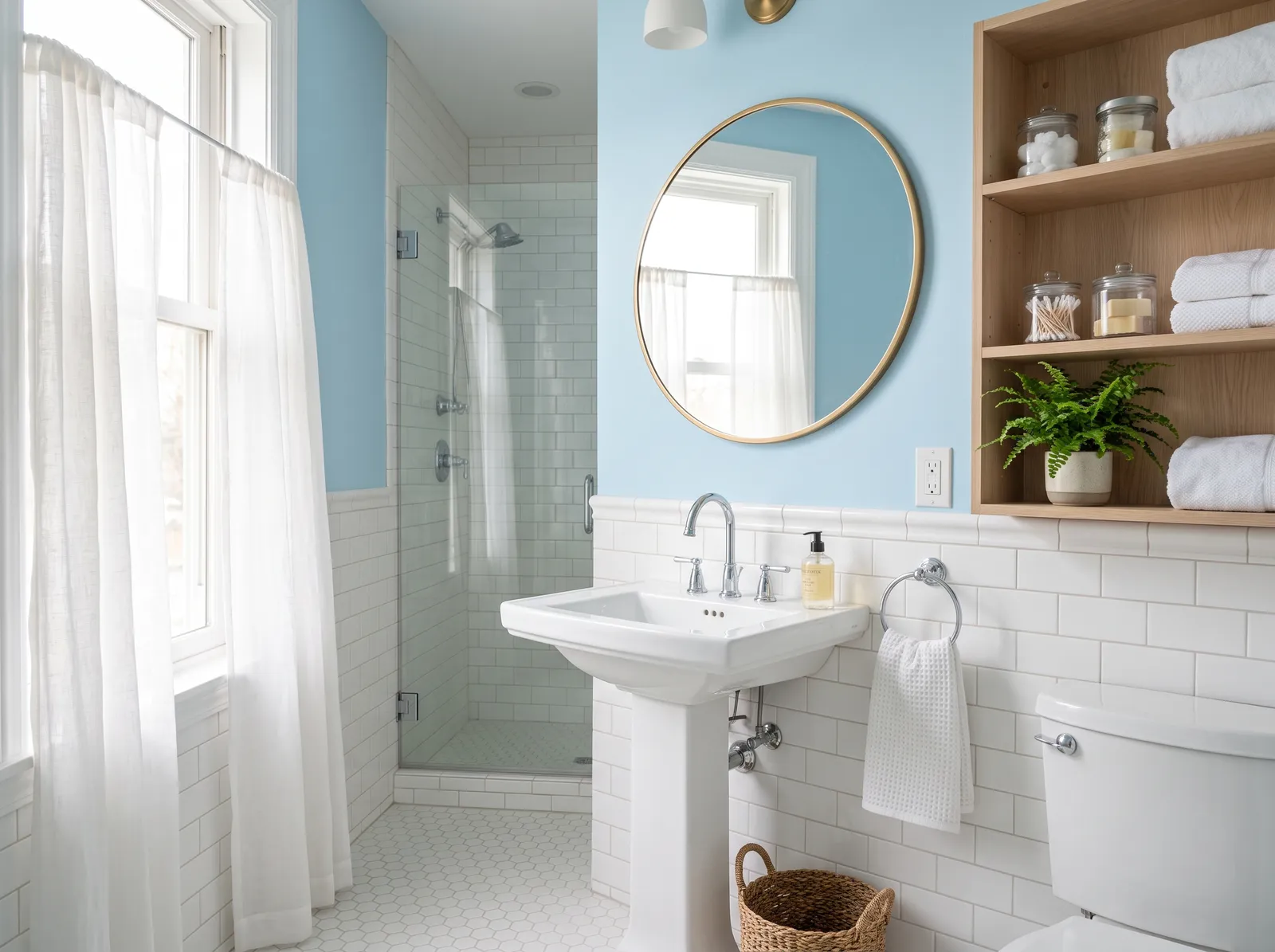
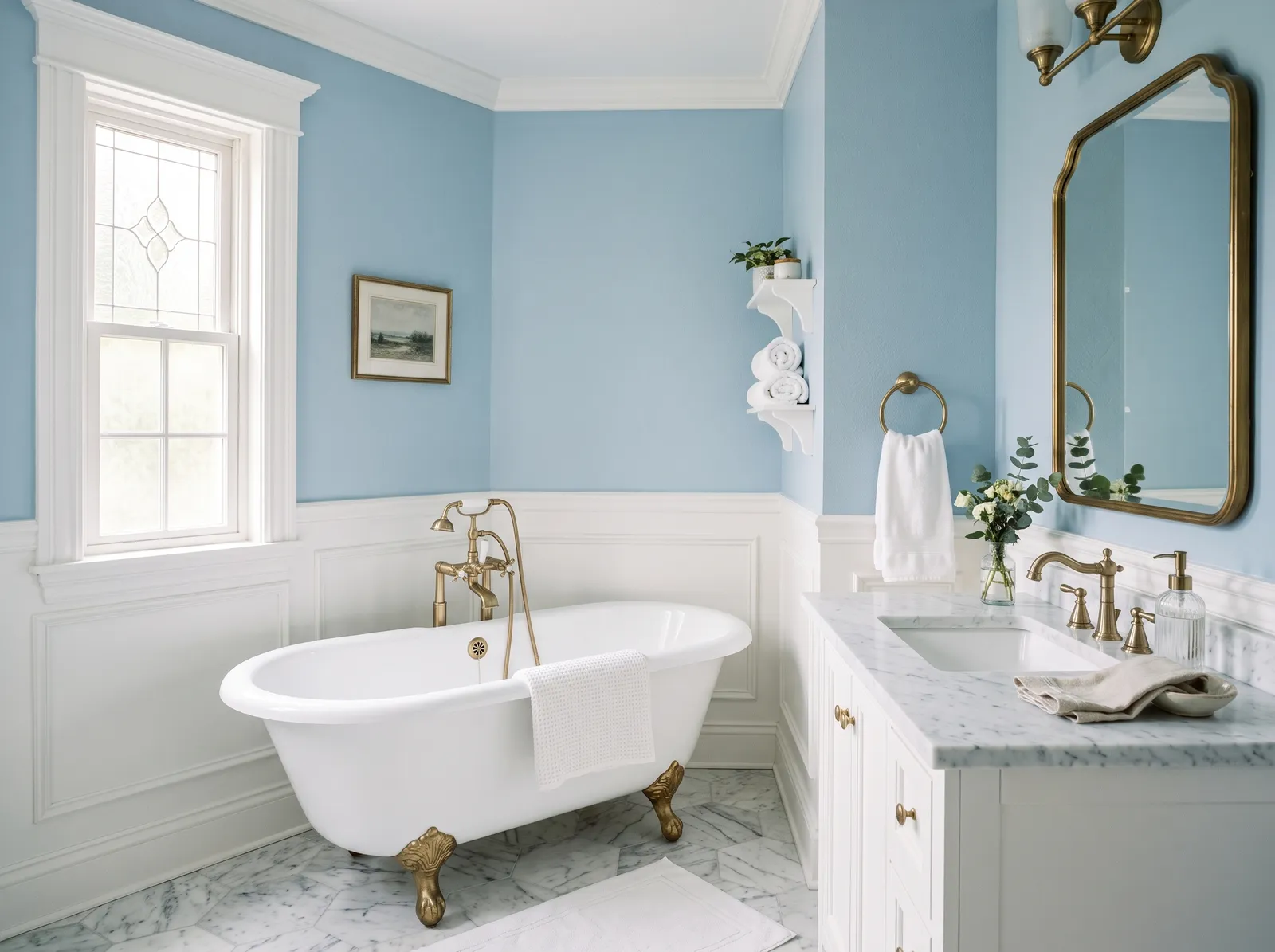
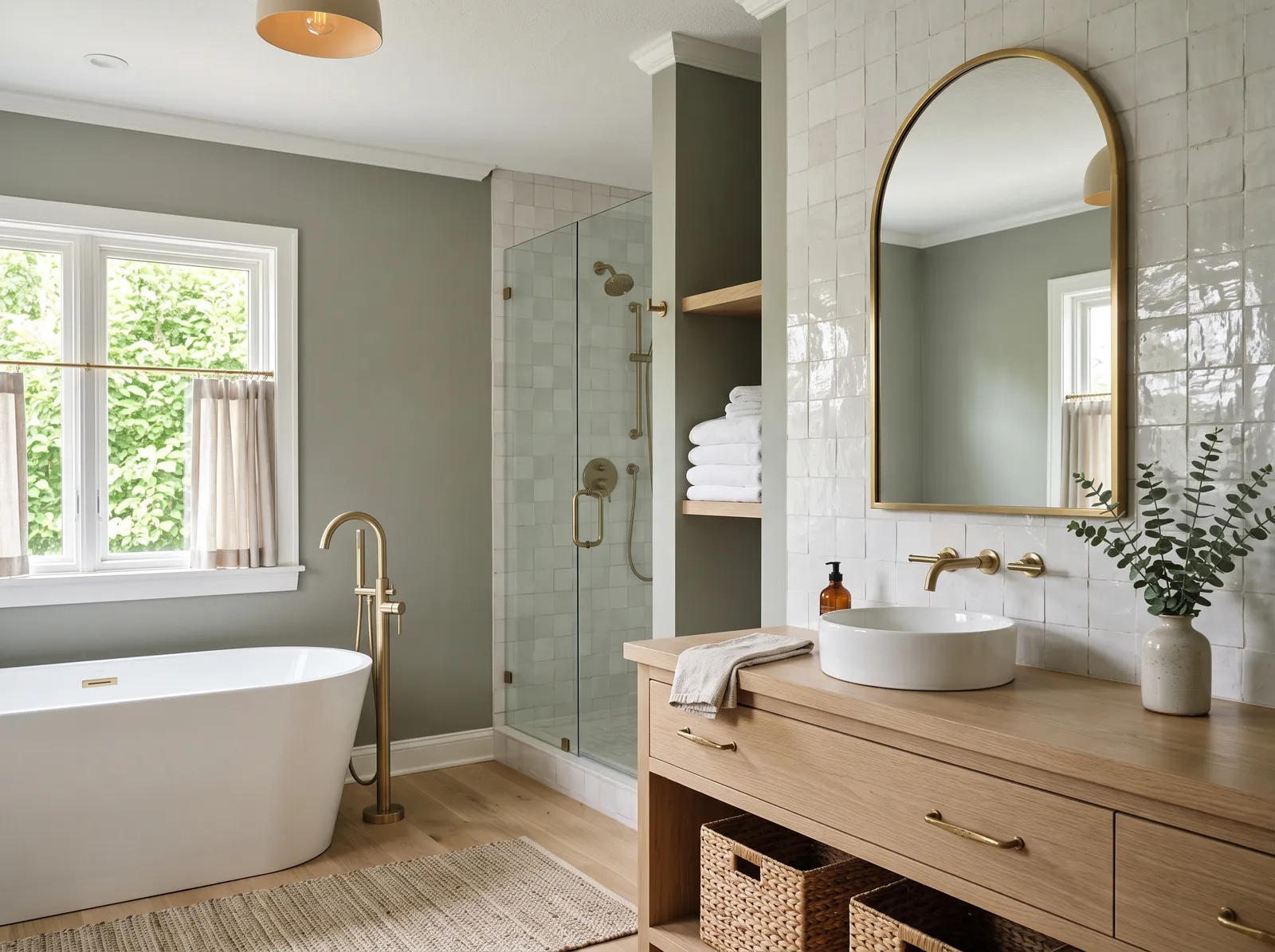
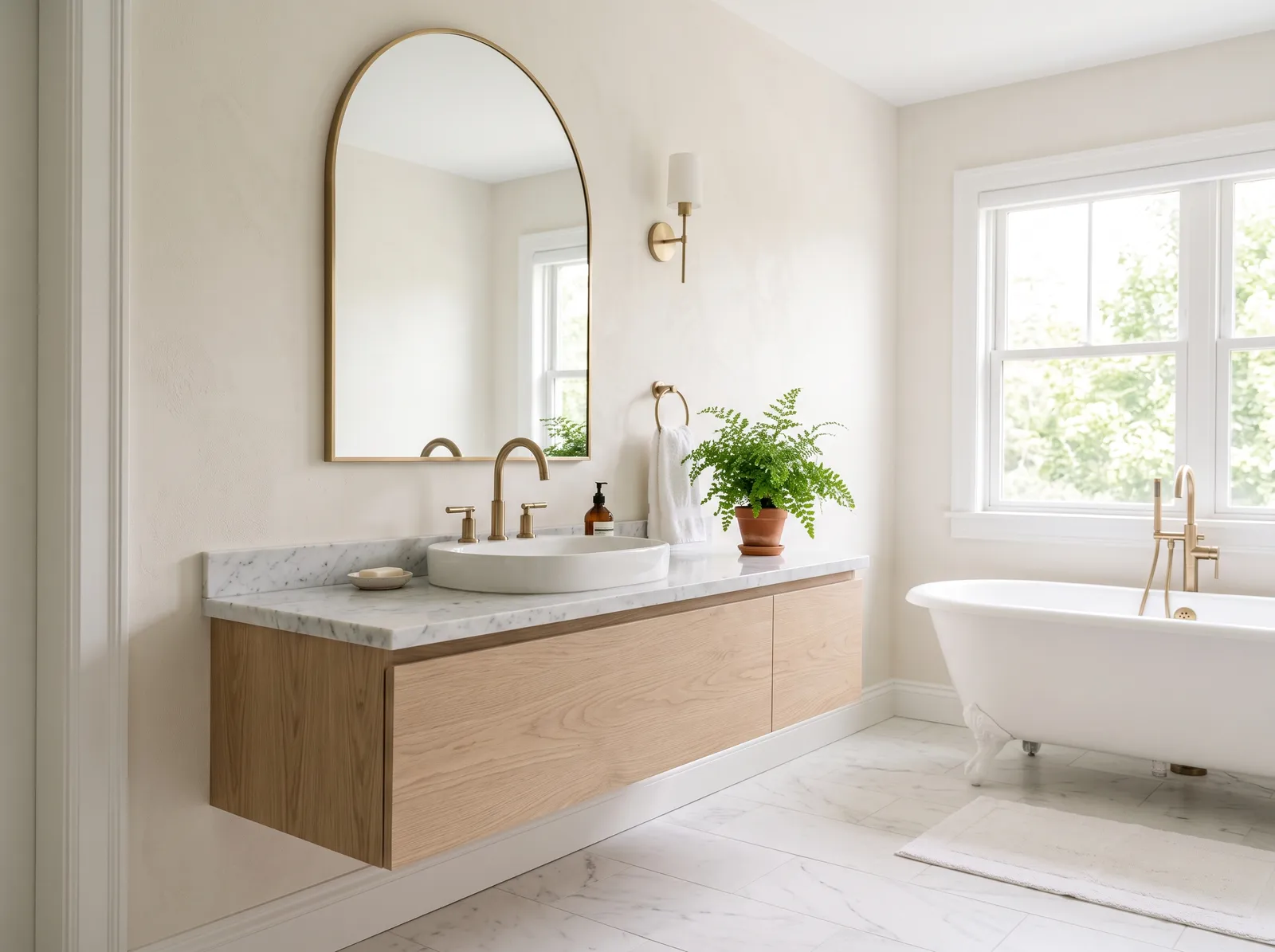
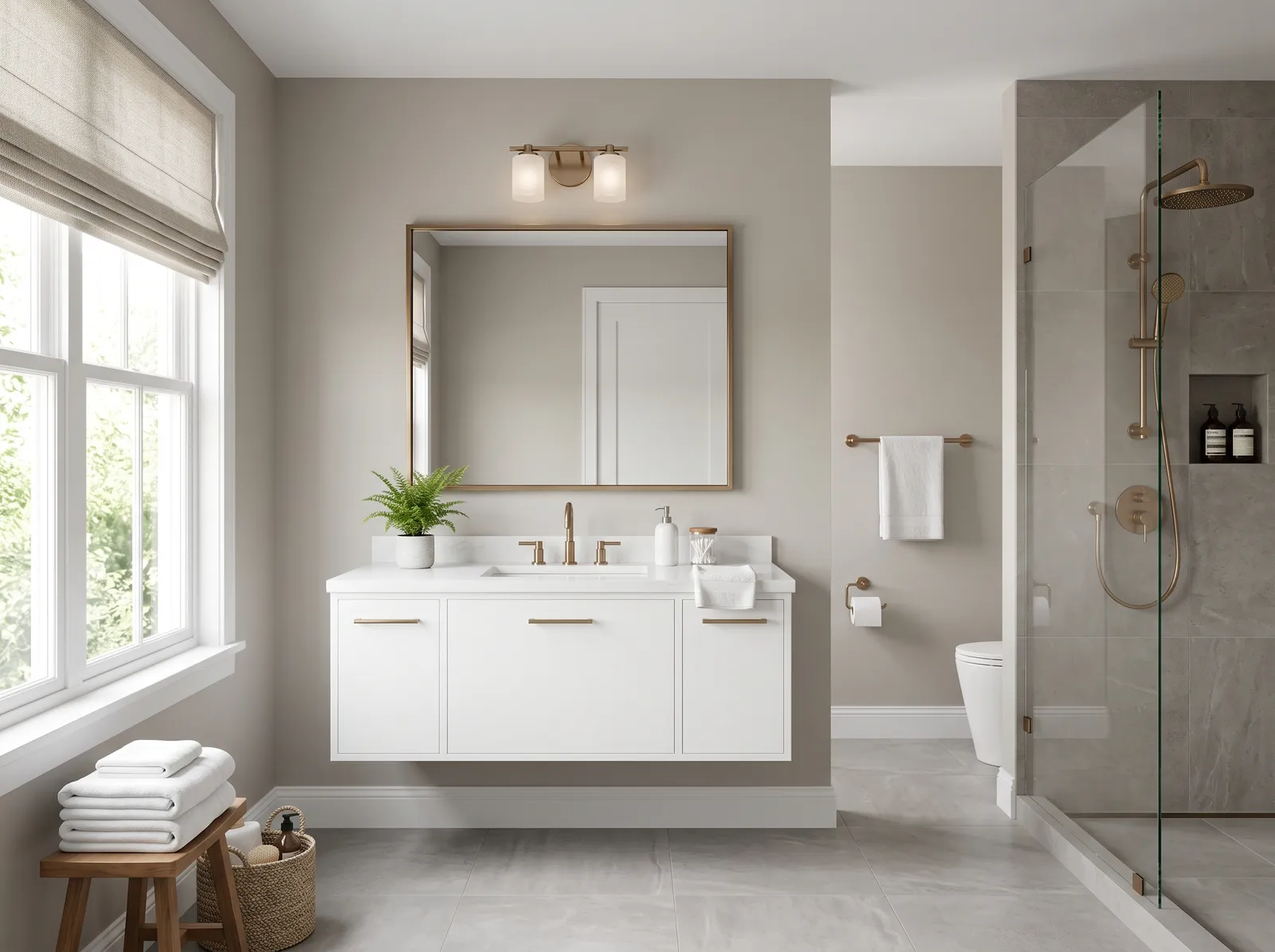
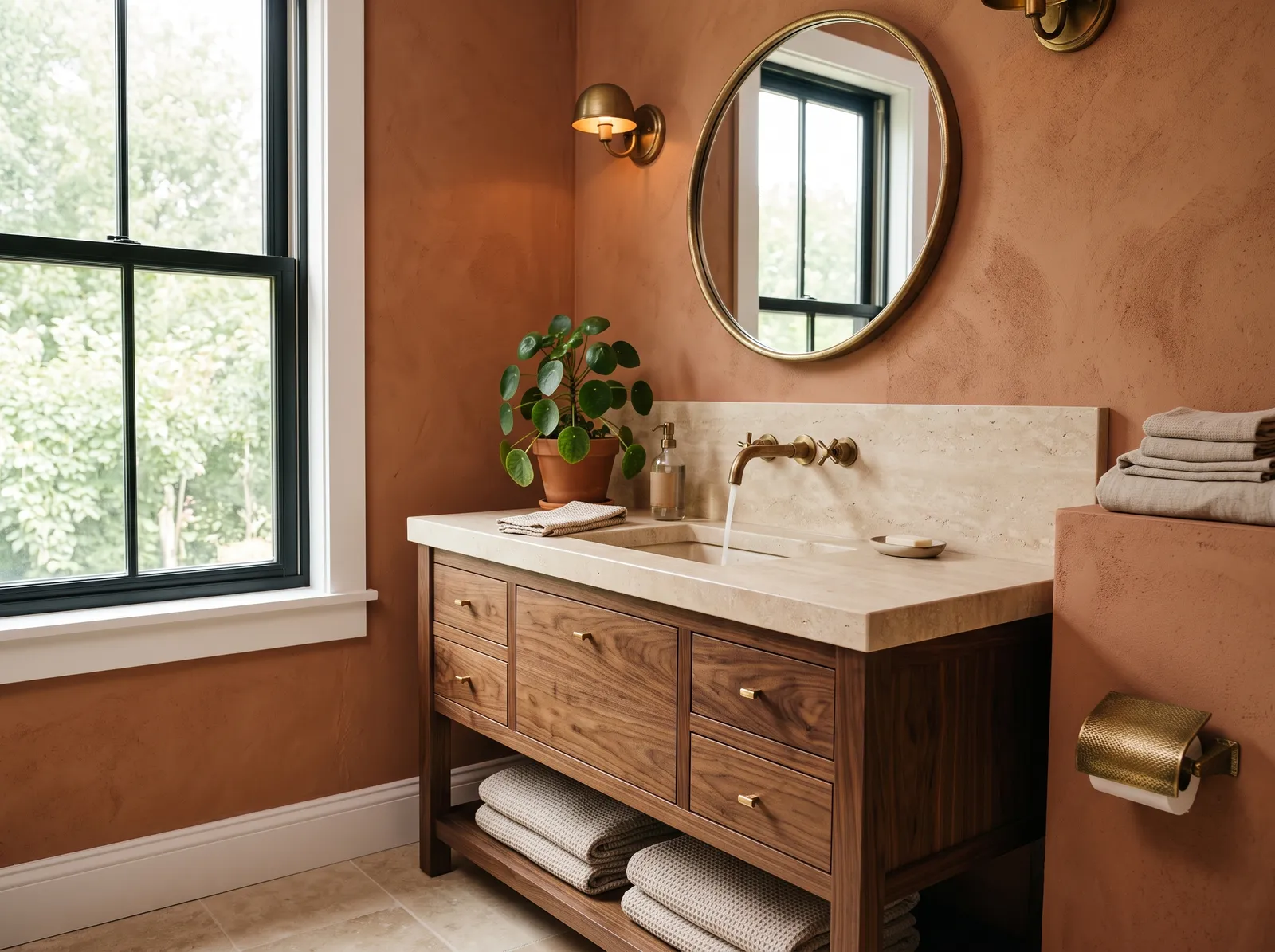
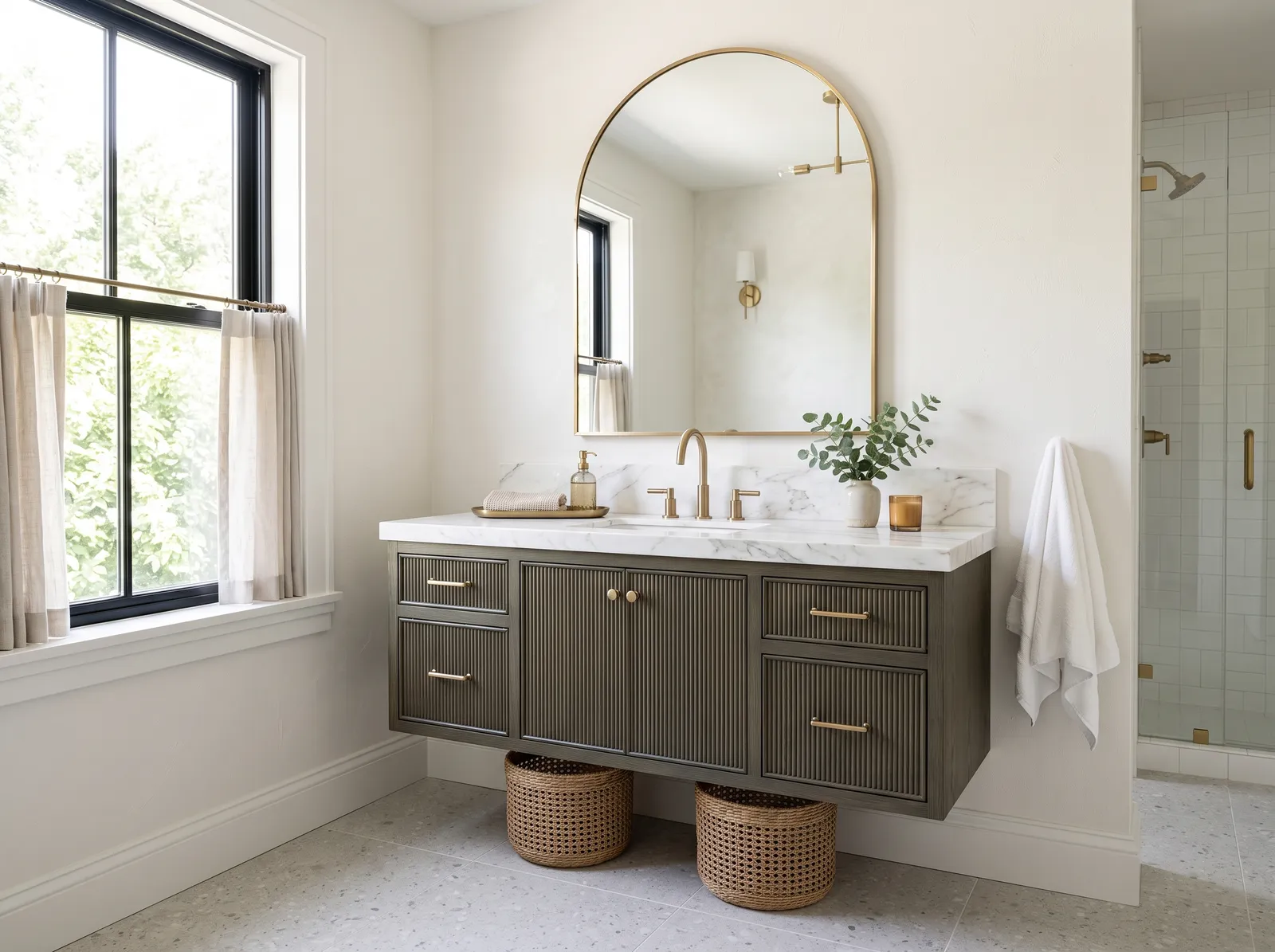
Think about your metals and tile too. Blue is gorgeous with brass and gold fixtures, which add warmth, and clean and sharp with chrome and nickel. White subway tile is a no-brainer with any blue; if you have warm wood vanity or stone, pull a grayer or greener blue so it doesn't clash with those undertones.
Common Mistakes to Avoid
The biggest mistake is skipping the sample on the actual wall. Bathroom lighting is rarely flattering, and a blue that looked perfect in the store can go gray, purple, or icy under your bulbs. Paint a big swatch, look at it morning and night, and check it with the exhaust fan and shower running.
The other common slip is going too dark or too saturated in a tiny, dim bath and ending up with a room that feels like a cave. When in doubt in a small space, go a shade lighter than you think. And don't forget that any blue you fall in love with is mixed to order at the store — so if a swatch here is shown in one brand, the same shade can almost always be cross-matched and tinted in another brand's paint to get the exact finish and moisture resistance you want.
Blue Bathroom Paint — Frequently Asked Questions
What shade of blue is best for a small bathroom?+
For a small or dim bathroom, a soft, slightly grayed light blue in the LRV 55–70 range works best because it reflects light and keeps the room feeling open. If your bath has a good window, you can go a touch deeper into mid-tone blue and still feel airy. Save the deep navy for powder rooms or baths with strong light.
What paint sheen should I use for blue bathroom walls?+
Satin or eggshell is the right choice for most bathroom walls. It stands up to steam, wipes clean, and resists mildew without looking shiny. For a busy family bath, go with satin, and consider semi-gloss on trim and the area right around the shower.
Does blue make a bathroom feel cold?+
It can, if the blue is very cool and the room is dim or lit with cool LED bulbs. To avoid a clinical feel, pick a blue with a little gray or warmth in it, and pair it with warm metals like brass or a soft off-white trim. In a bright bathroom this is much less of a worry.
What trim and ceiling color goes with blue in a bathroom?+
Crisp white trim and a white ceiling are the classic, foolproof match because they echo your fixtures and keep things fresh. A warm off-white trim softens a cool blue. For a cozy look in a small bath, you can paint the ceiling a lighter version of the same blue.
Will a blue I see on this page match across paint brands?+
Yes. Every color shown is mixed to order at the paint counter, so a blue displayed in one brand can almost always be cross-matched and tinted into another brand's paint. That lets you keep the exact shade while choosing the bathroom-friendly finish and mildew resistance you prefer.
How do I test a blue before painting the whole bathroom?+
Paint a large sample swatch directly on the wall, not just the chip on a counter. Look at it in the morning and at night, and check it with the exhaust fan and shower running so you see how the light and steam affect it. Bathroom lighting is unflattering, so this step saves you from a surprise.