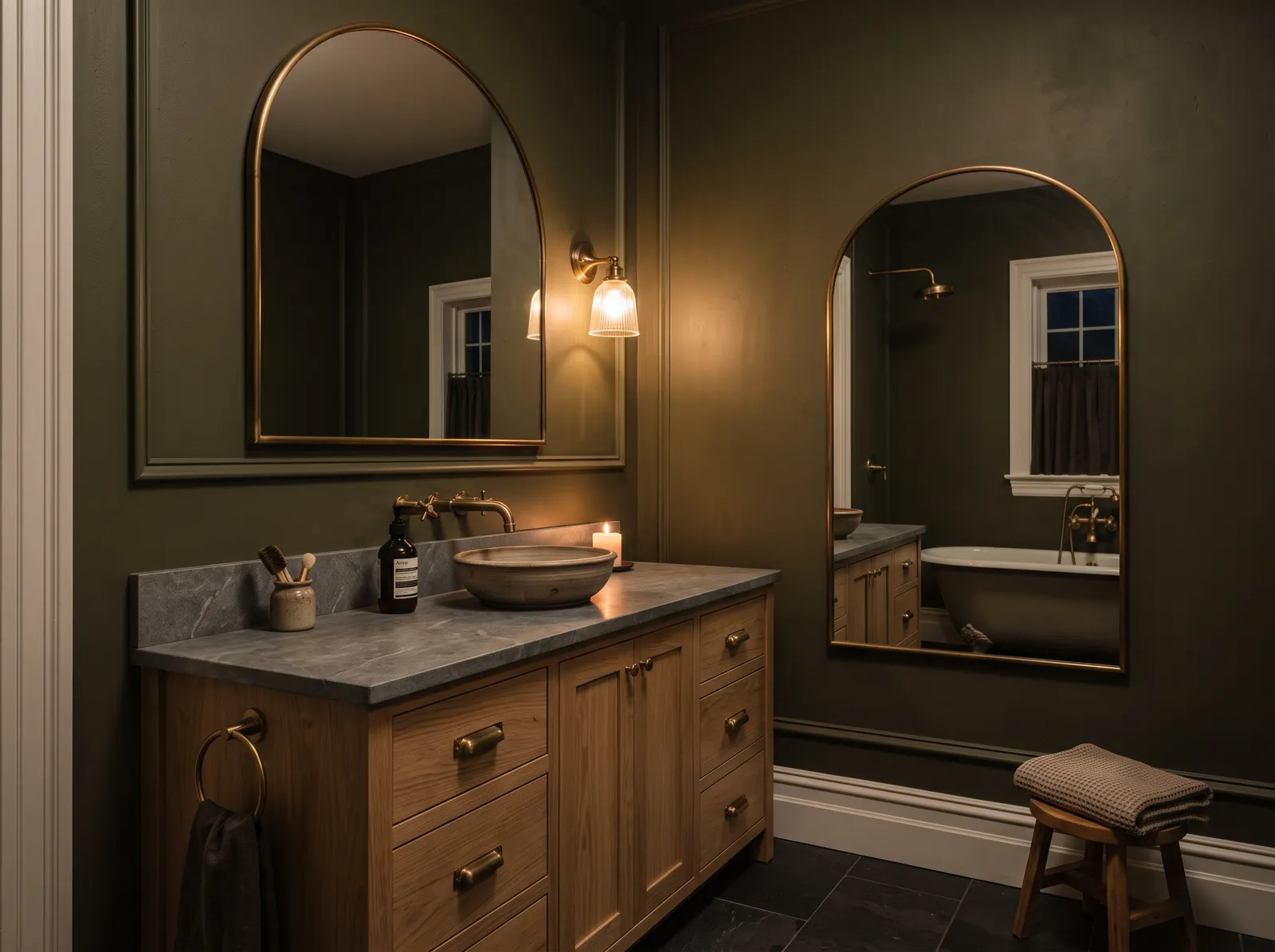
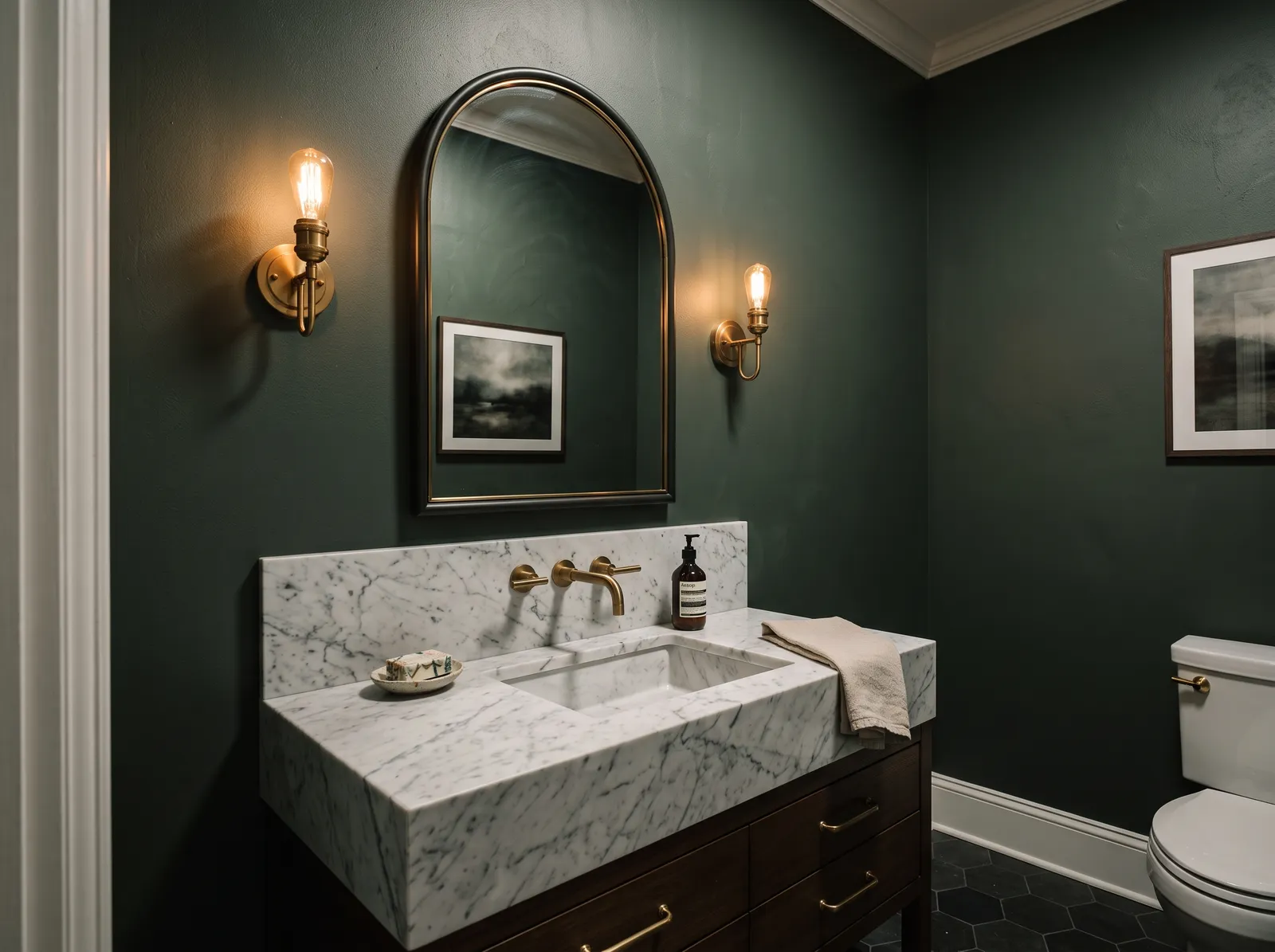
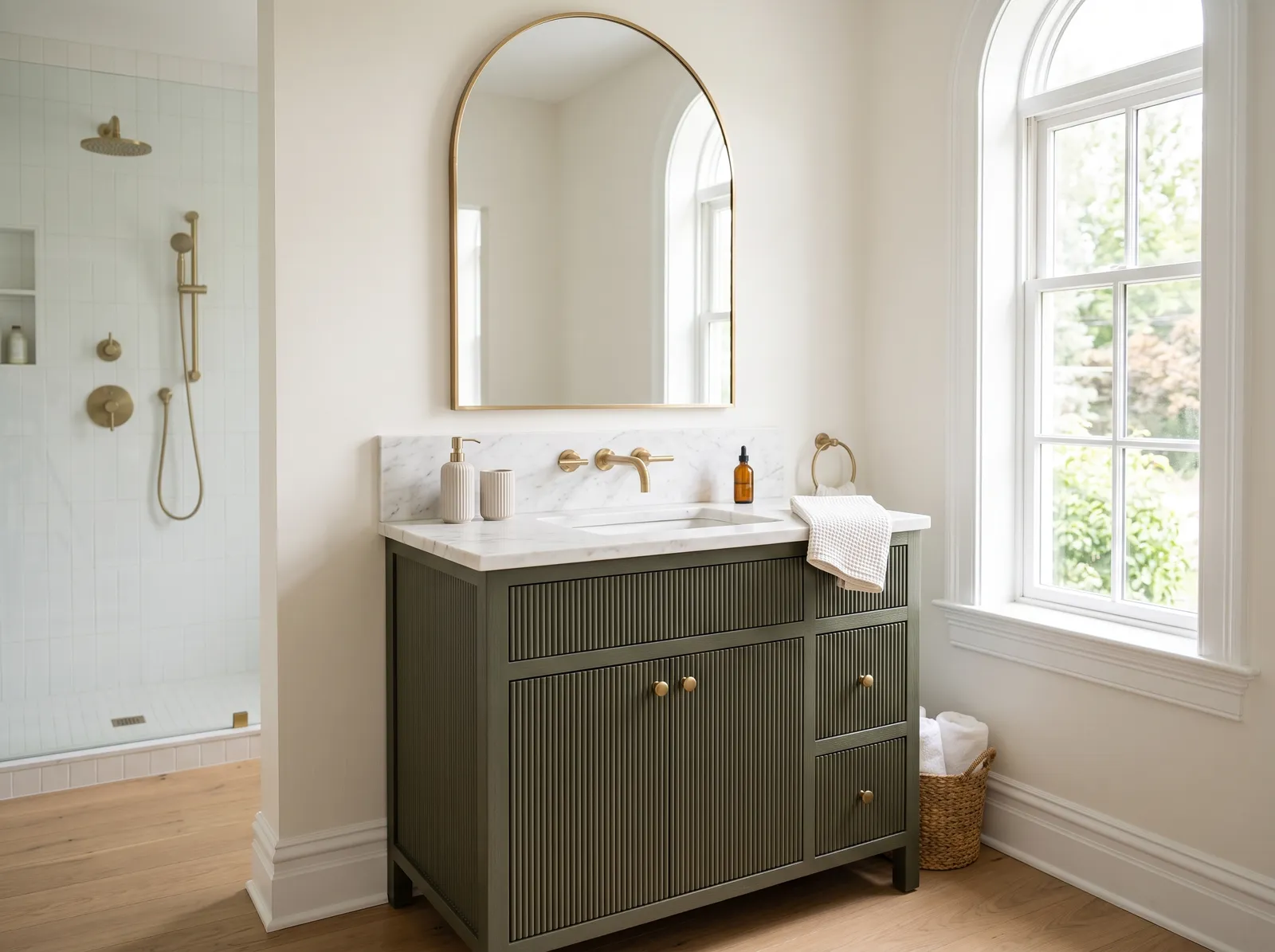
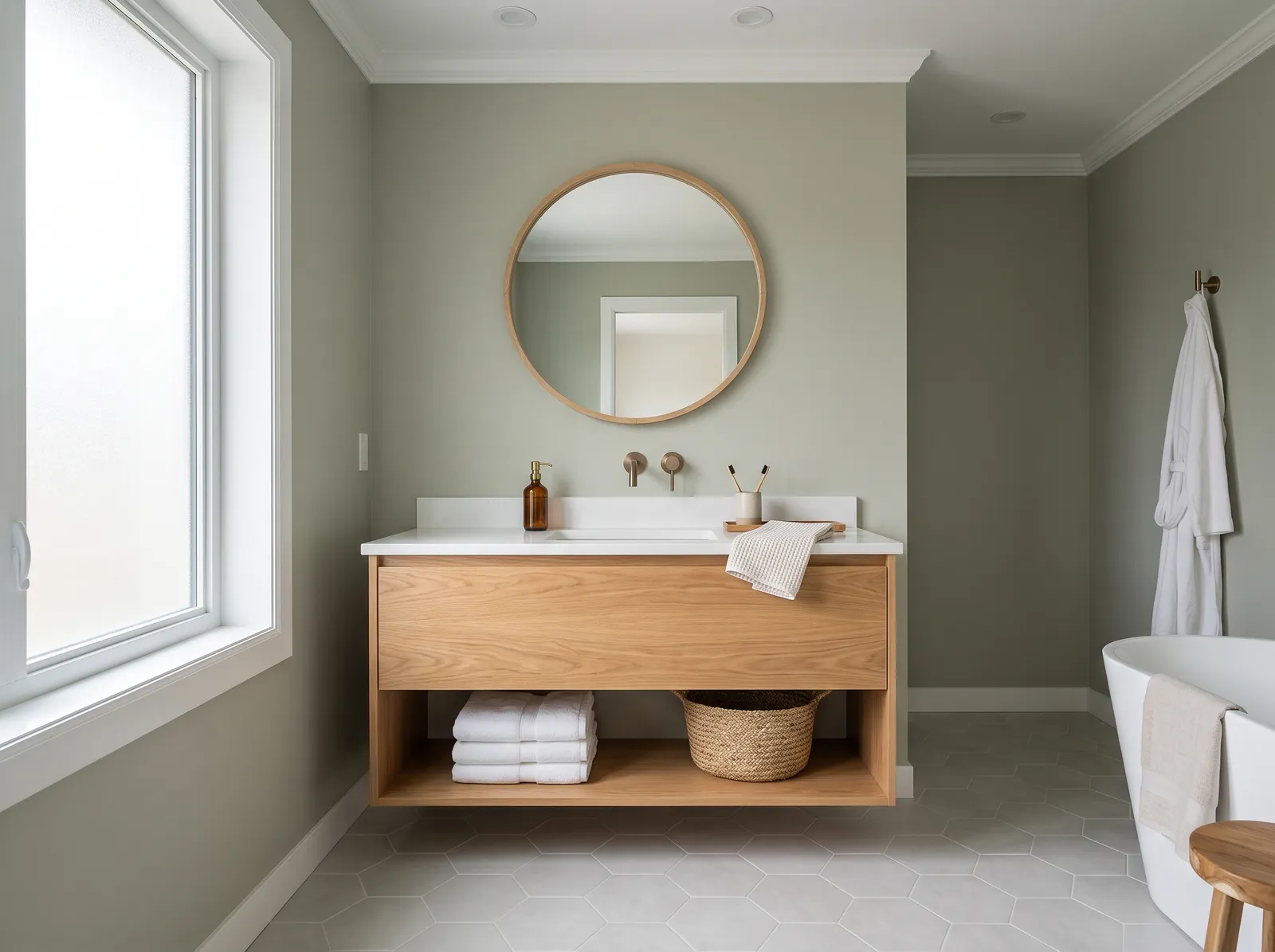
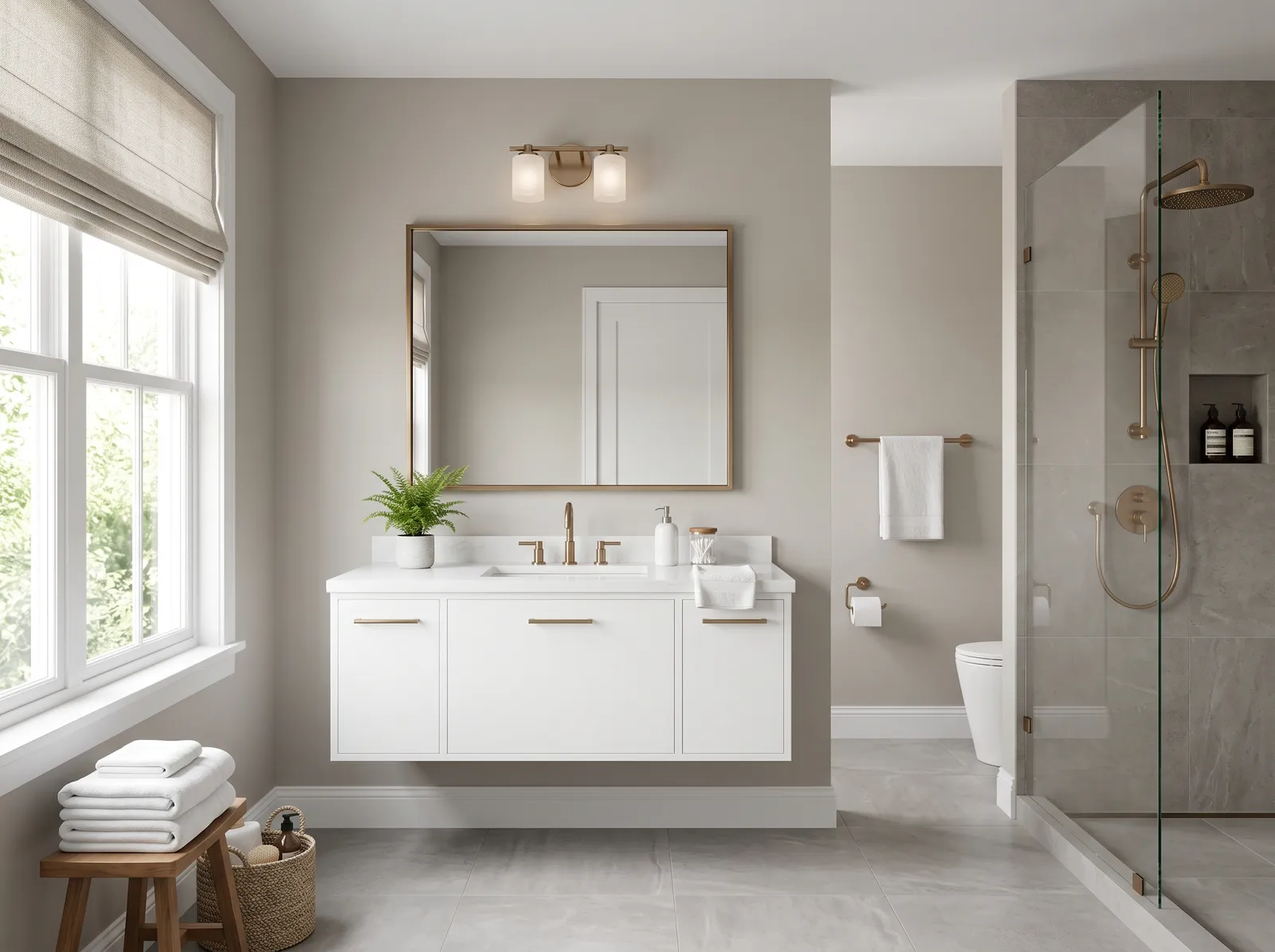
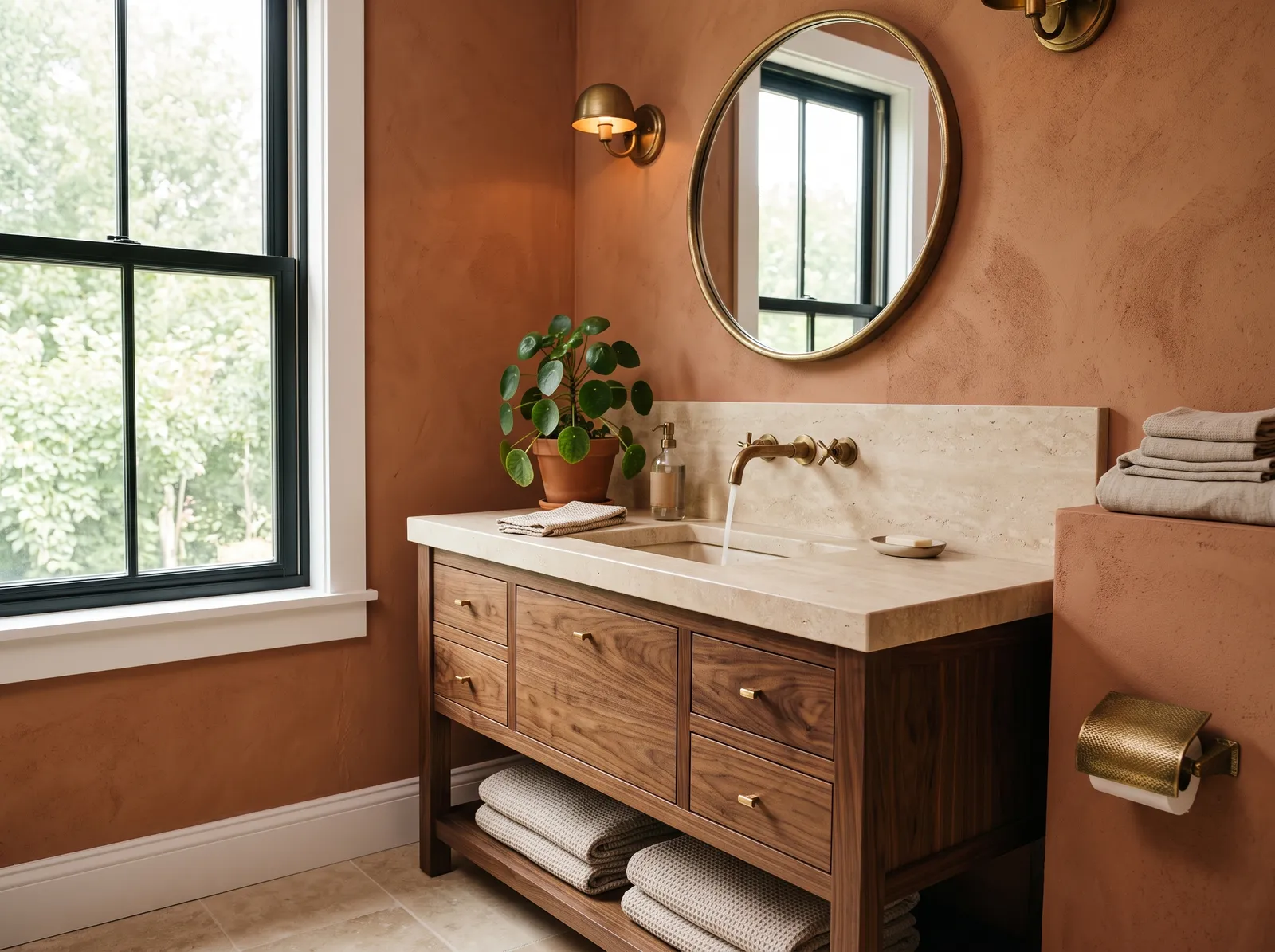
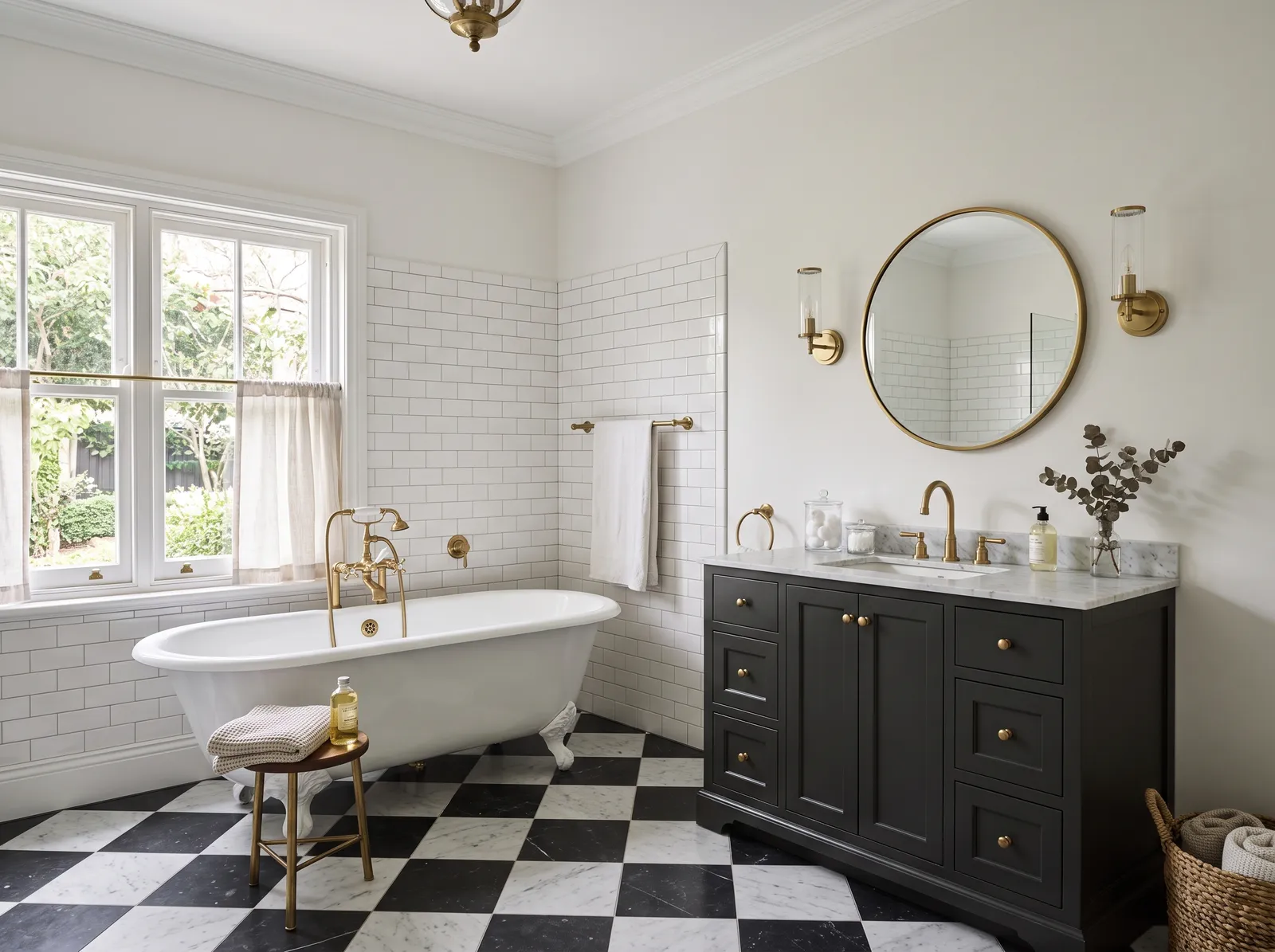
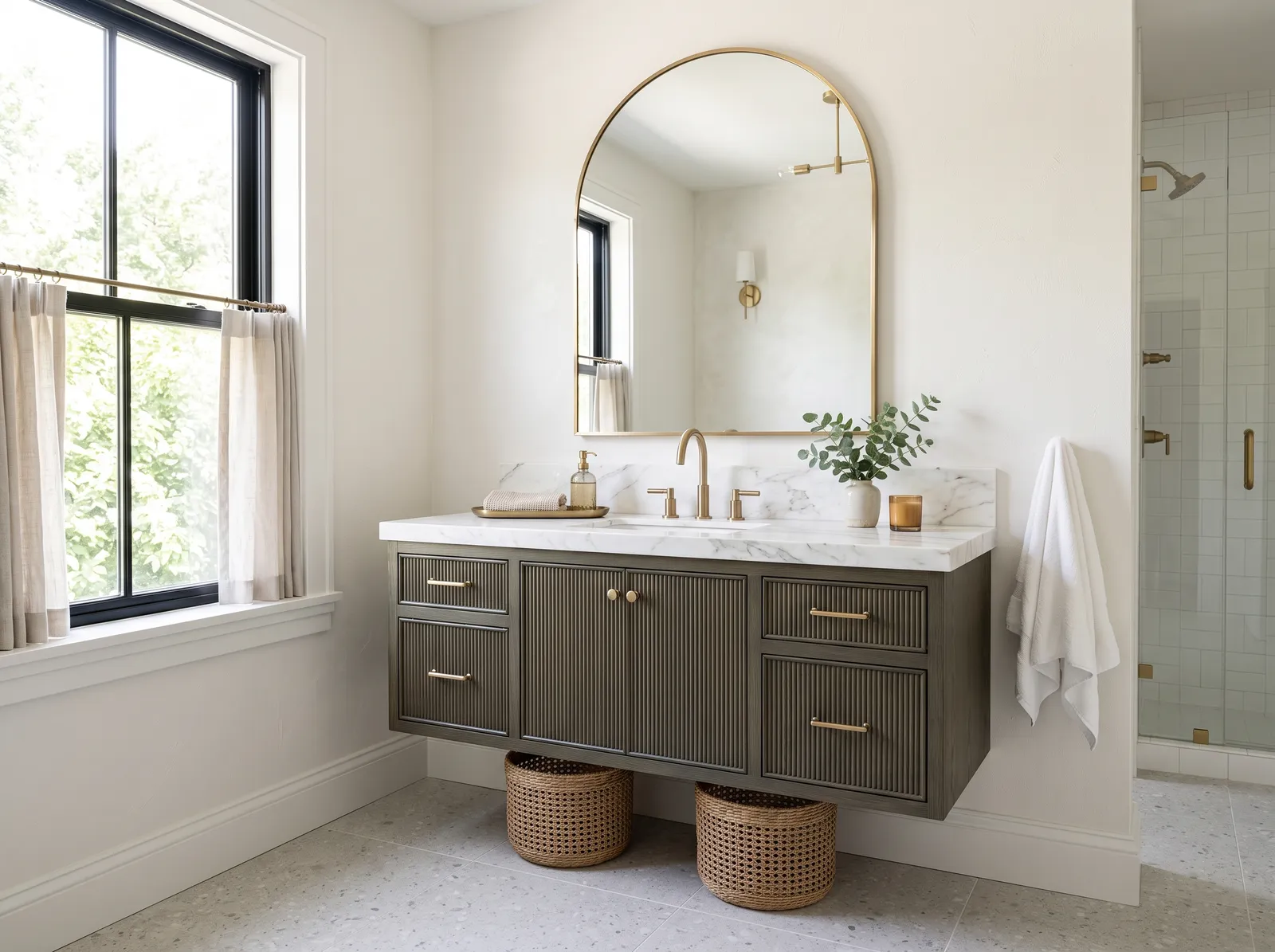
Green Bathroom Paint Colors
2,263 green colors that work in bathrooms, drawn from the full ~30,000-color US paint deck. Below: editor's picks specific to bathrooms, then 30 picks spread across the LRV range — narrow further on the brand page when you've shortlisted.
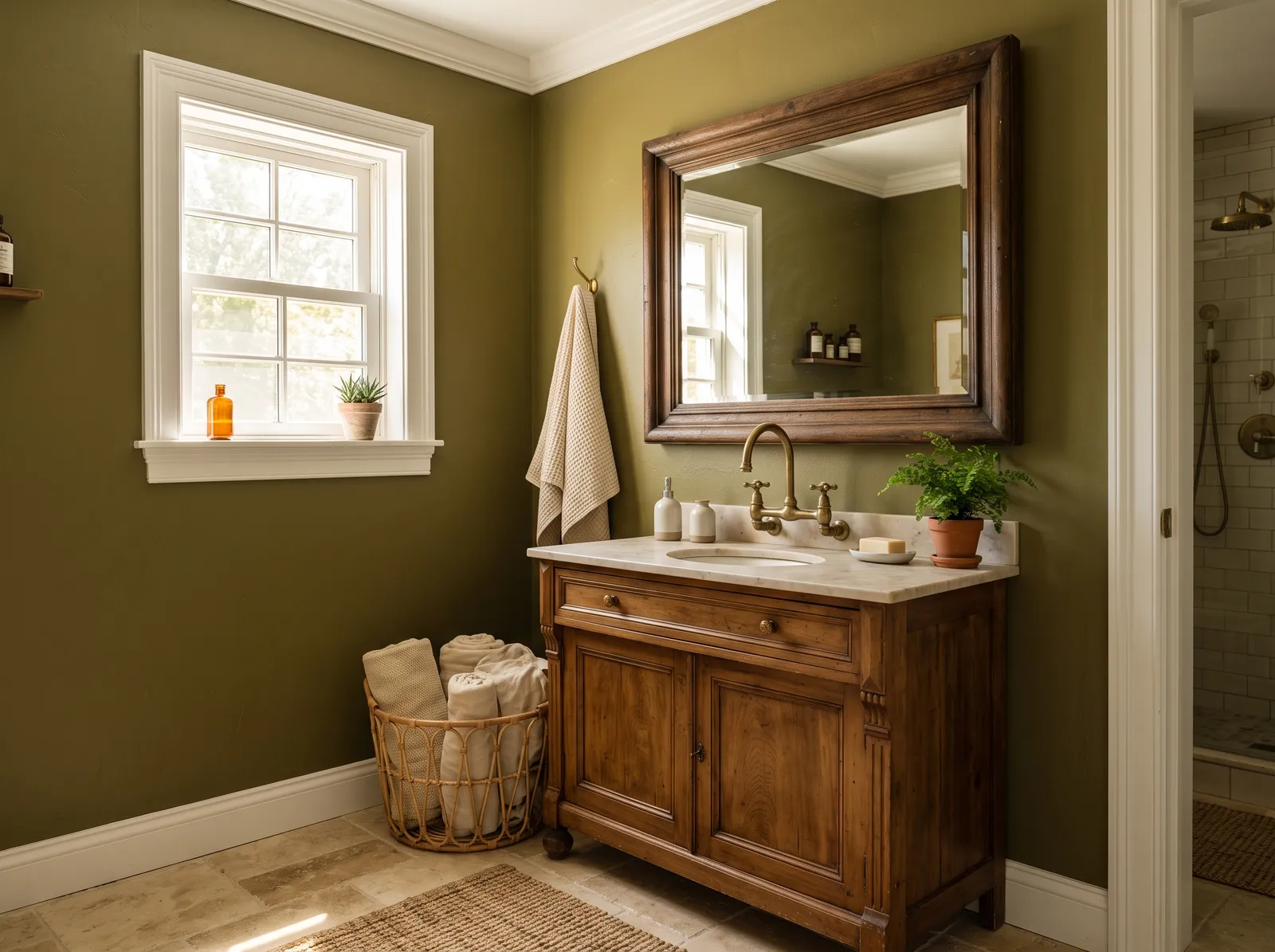
Green has quietly replaced grey as the safe-but-interesting wall color of the late 2020s. Sage Green, the soft grey-green that became the de facto fallback, anchors the family — but the broader green palette runs from olive (warm, earthy, faintly yellow) to forest (deep blue-green) to emerald (saturated jewel tone).
Editor's Picks: Green for Bathrooms
4 picks30 Green Picks Across the LRV Range
30 of 2,263 · sorted dark → lightLooking for more? All green → covers every brand; brand × family pages show full decks.
Green Bathroom Colors at Every US Brand
19 brands · up to 10 picks eachUp to 10 picks per brand spread across the green LRV range, drawn from each brand's full deck. Tap any swatch with a curated guide for full spec; tap the brand title for the brand's complete green deck.
Behr
Benjamin Moore
Glidden
Valspar
Dunn-Edwards
PPG / Glidden
Sherwin-Williams
Dutch Boy
Hirshfield's
Diamond Vogel
Kompozit
C2 Paint
Farrow & Ball
Magnolia Home
Clare
Rodda
Annie Sloan
Backdrop
Other Bathroom Color Families
Green Colors in Other Rooms
Green Paint Colors for a Bathroom
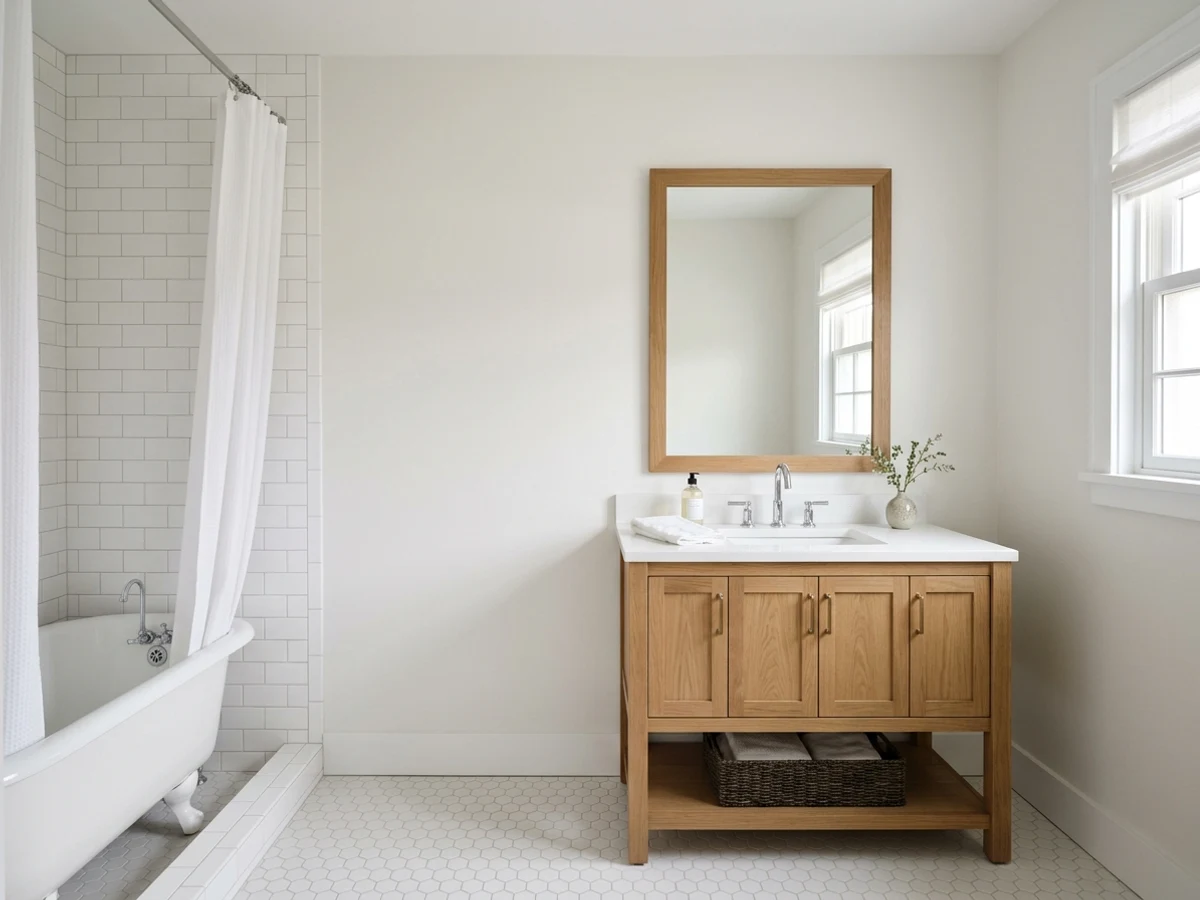
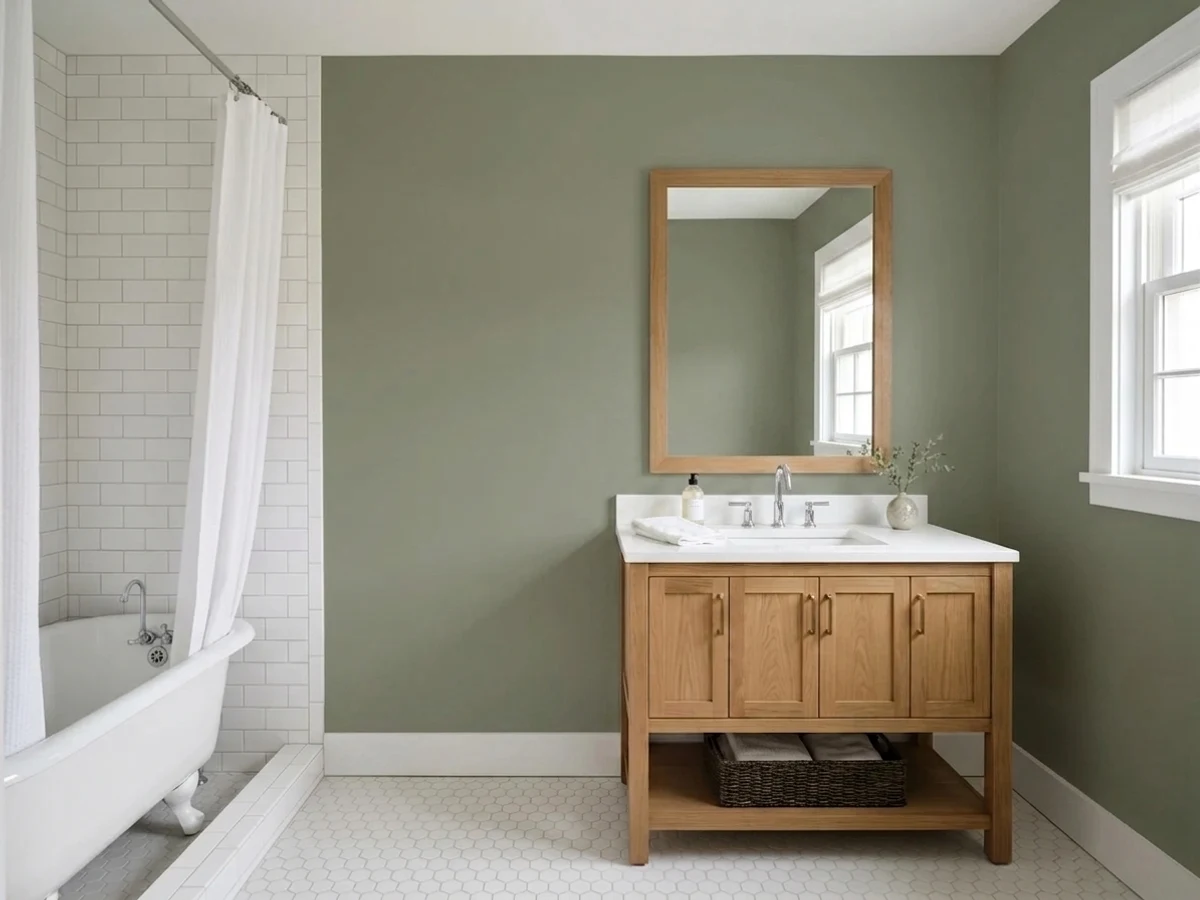
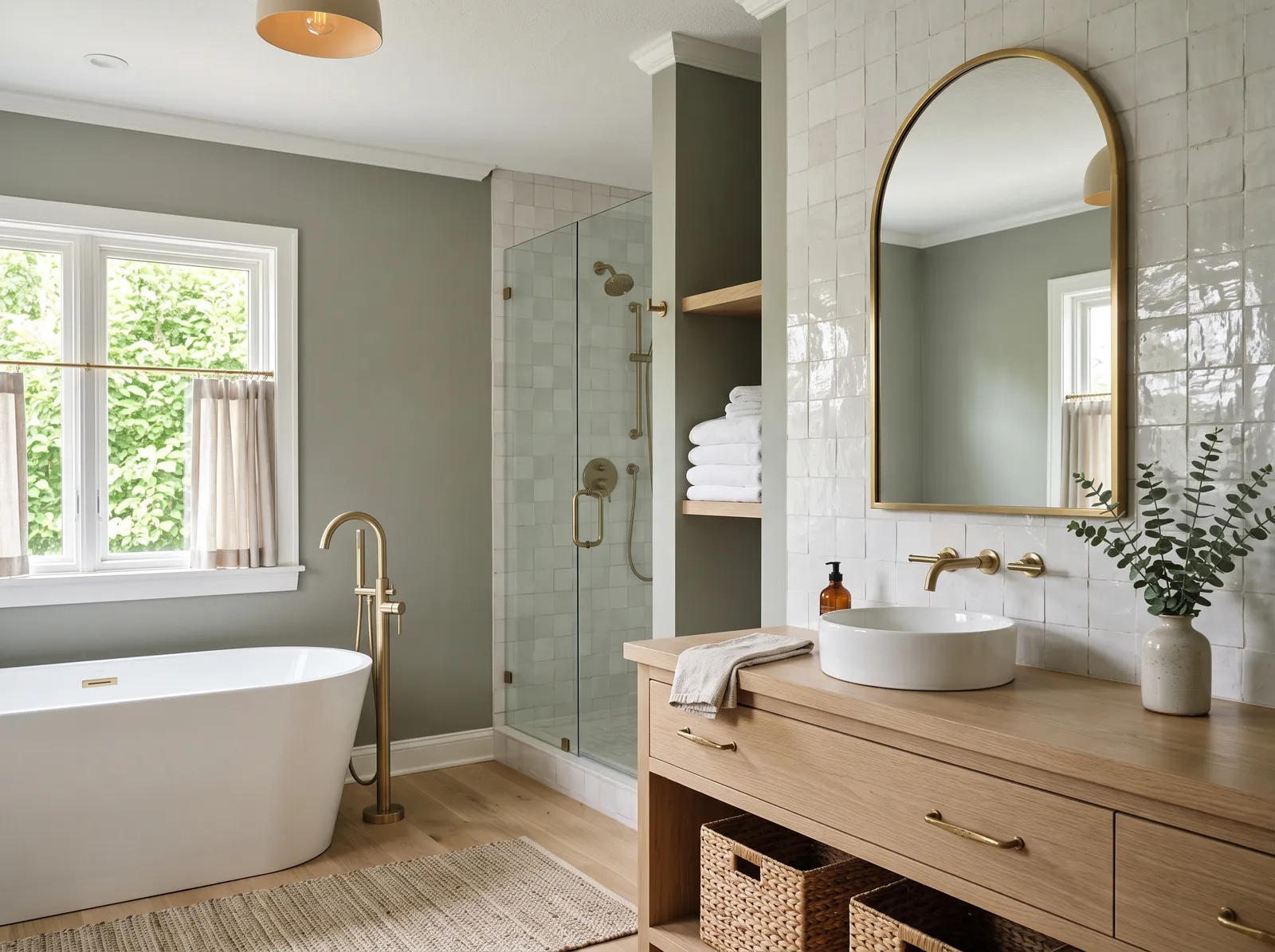
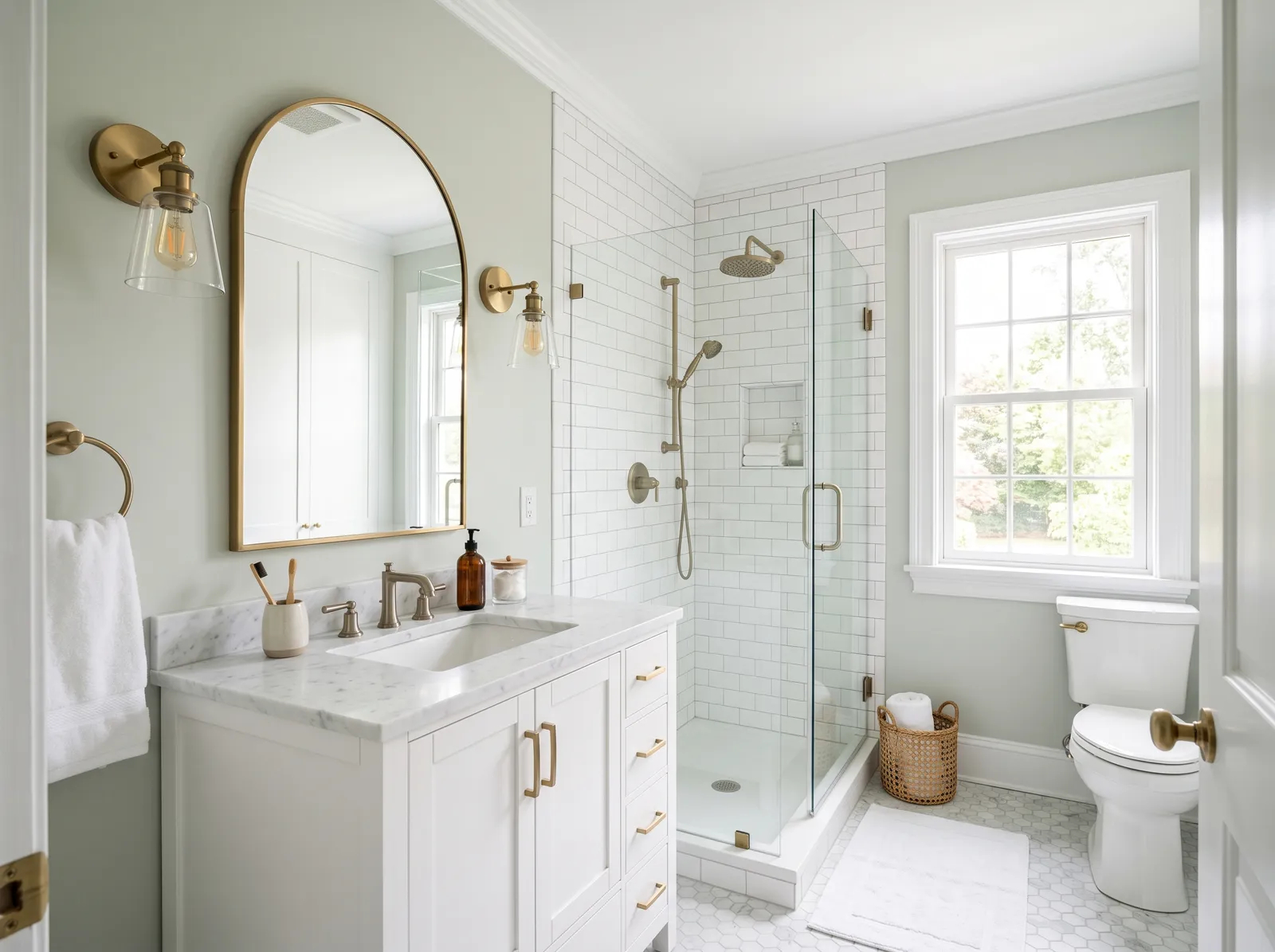
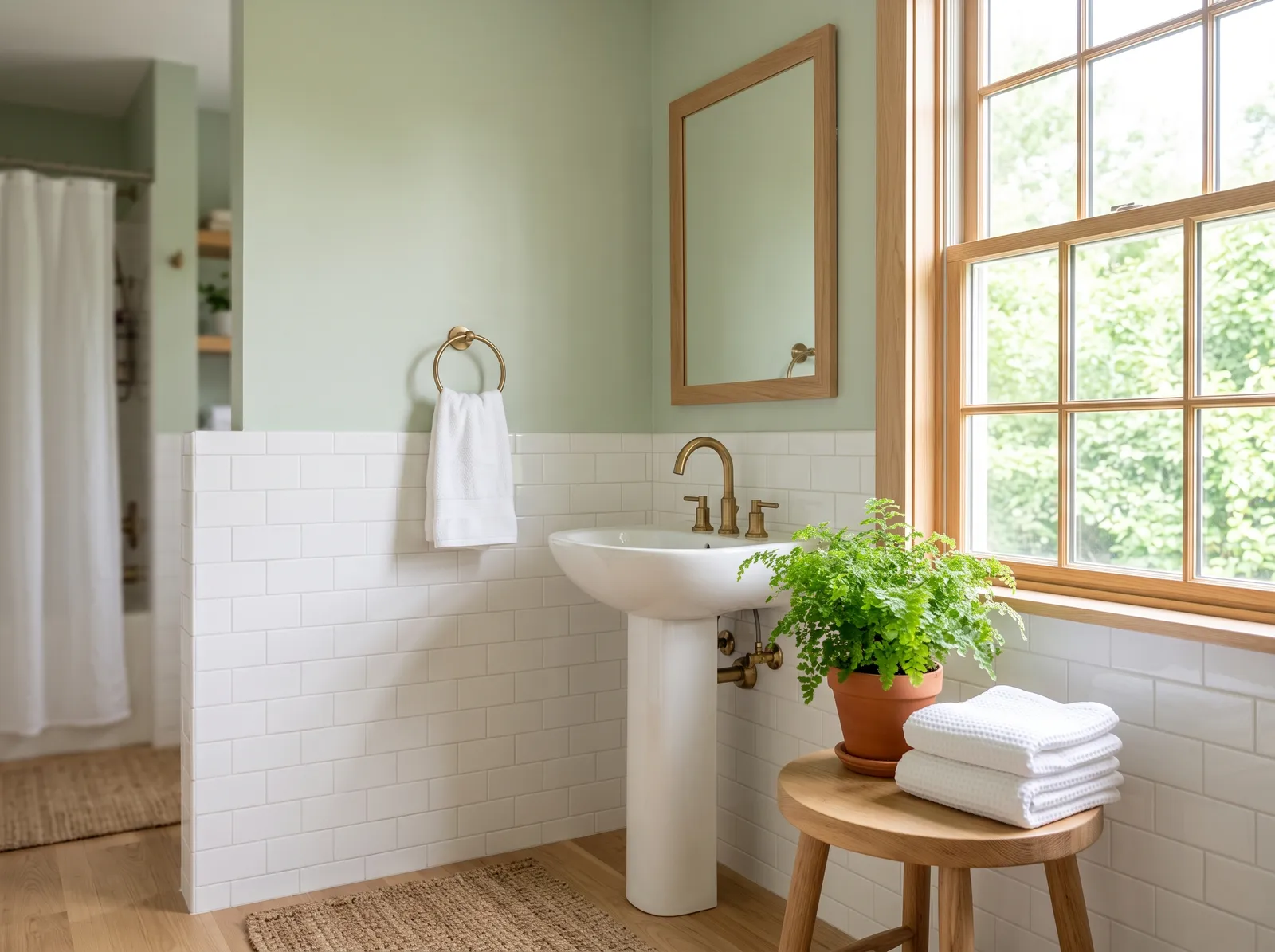
Green is one of the easiest colors to love in a bathroom. It reads clean and calm, it plays well with white tile and chrome, and it brings a little bit of the outdoors into a room that usually has no view. Whether you want a soft sage that disappears into the background or a deep forest that makes a small powder room feel like a jewel box, green gives you a wide range to work with.
The trick in a bathroom is the light and the moisture. Bathrooms tend to be small, often windowless, and lit by bulbs that can pull a green toward yellow or gray. They also see steam, splashes, and frequent cleaning. Below we walk through which greens hold up here, how the room's light should steer your shade, the finish that survives the humidity, and how to pair green with the trim, tile, and fixtures you already have. Every color shown here is mixed to order at the store, so you can match a green across brands and pick whichever one is easiest to buy near you.
Why Green Works In A Bathroom
Green sits right in the middle of the color wheel, so it feels restful without feeling cold. That makes it a natural fit for a room people use first thing in the morning and last thing at night. It also pairs almost automatically with the things a bathroom is already full of: white porcelain, marble or stone, brass and chrome, and warm wood vanities.
The one thing to watch is undertone. A green with a lot of yellow in it can start to look murky under warm bulbs, and a green with a lot of blue can feel chilly in a room with no natural light. Lean toward greens with a soft gray or earthy base for the most flattering, livable result in a bathroom.
Picking The Right Depth Of Green For Your Light
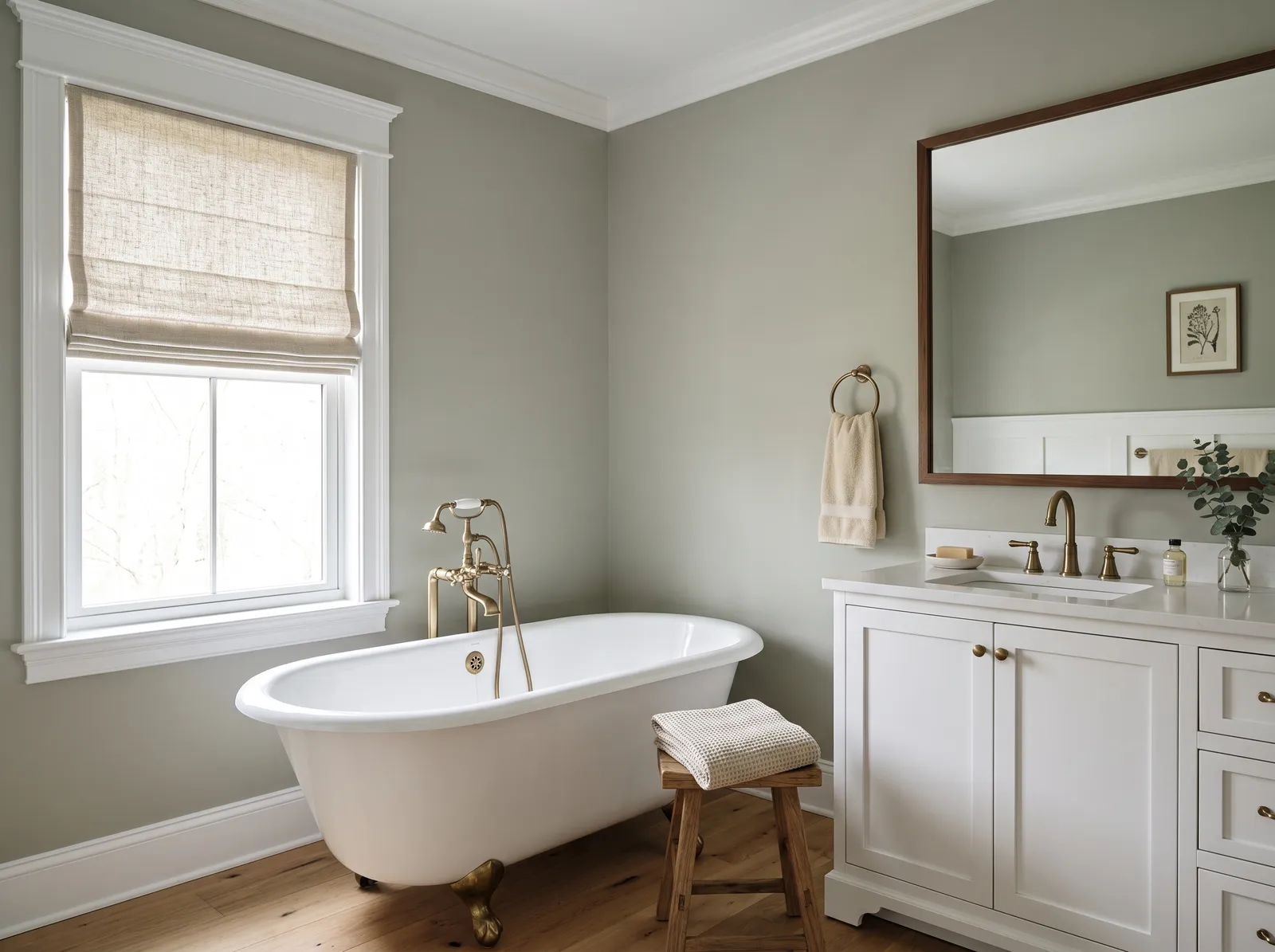
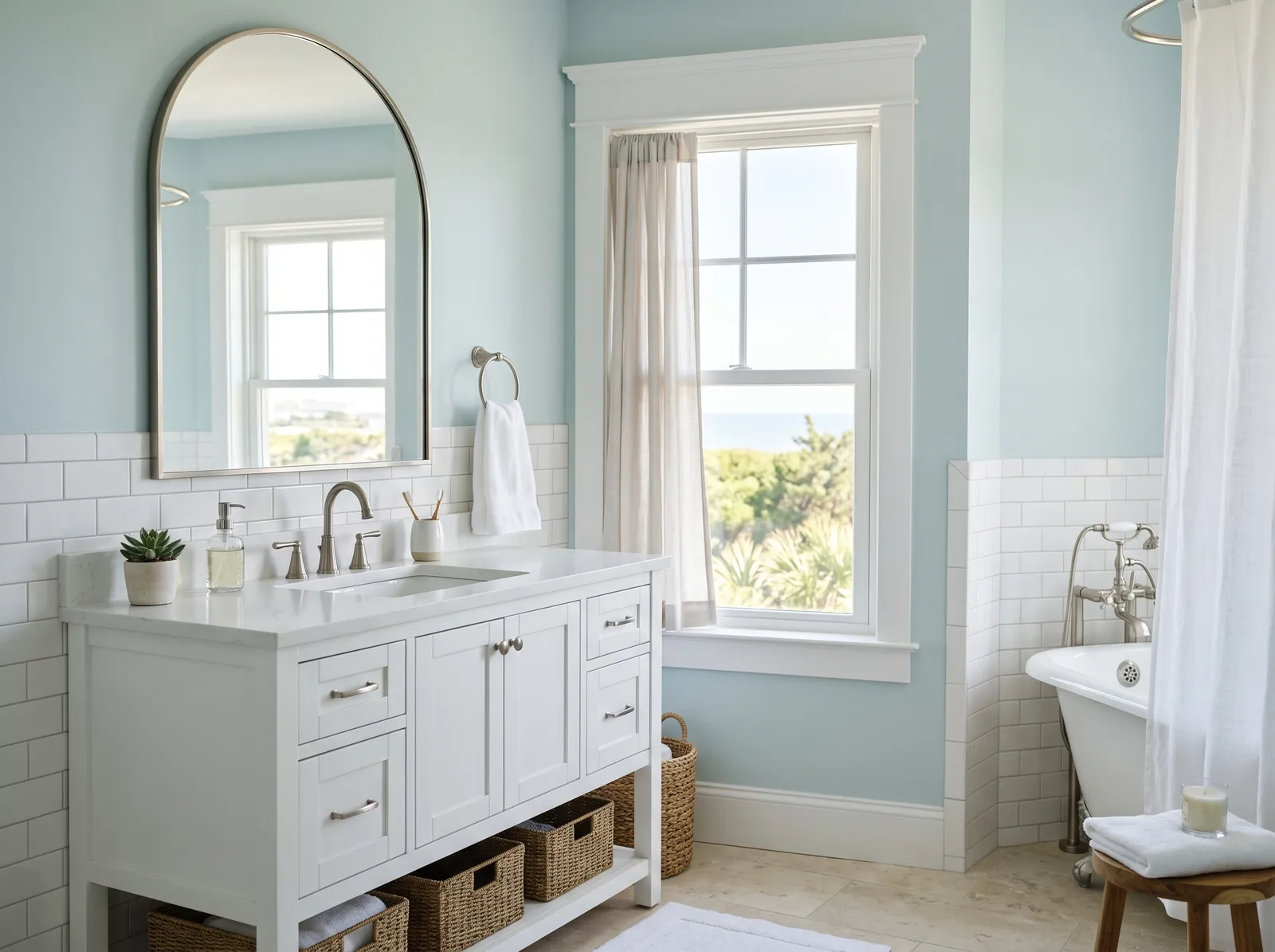
LRV, or light reflectance value, tells you how much light a color bounces back, on a scale from 0 (black) to 100 (pure white). In a small or windowless bathroom, a green in the 55 to 70 LRV range keeps the room feeling open and bright while still showing real color. Soft sages and gentle eucalyptus tones live in this zone and are forgiving under almost any light.
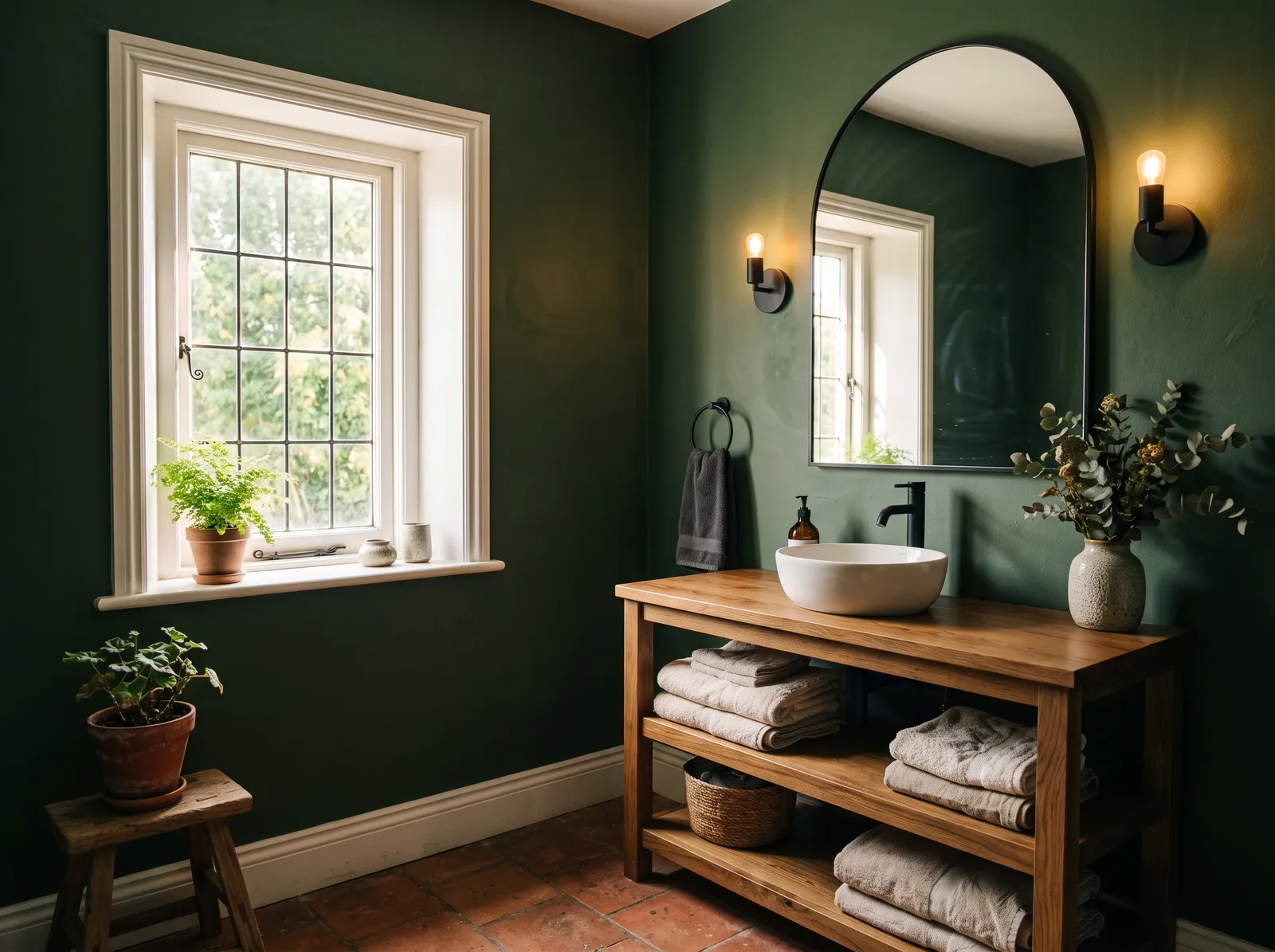
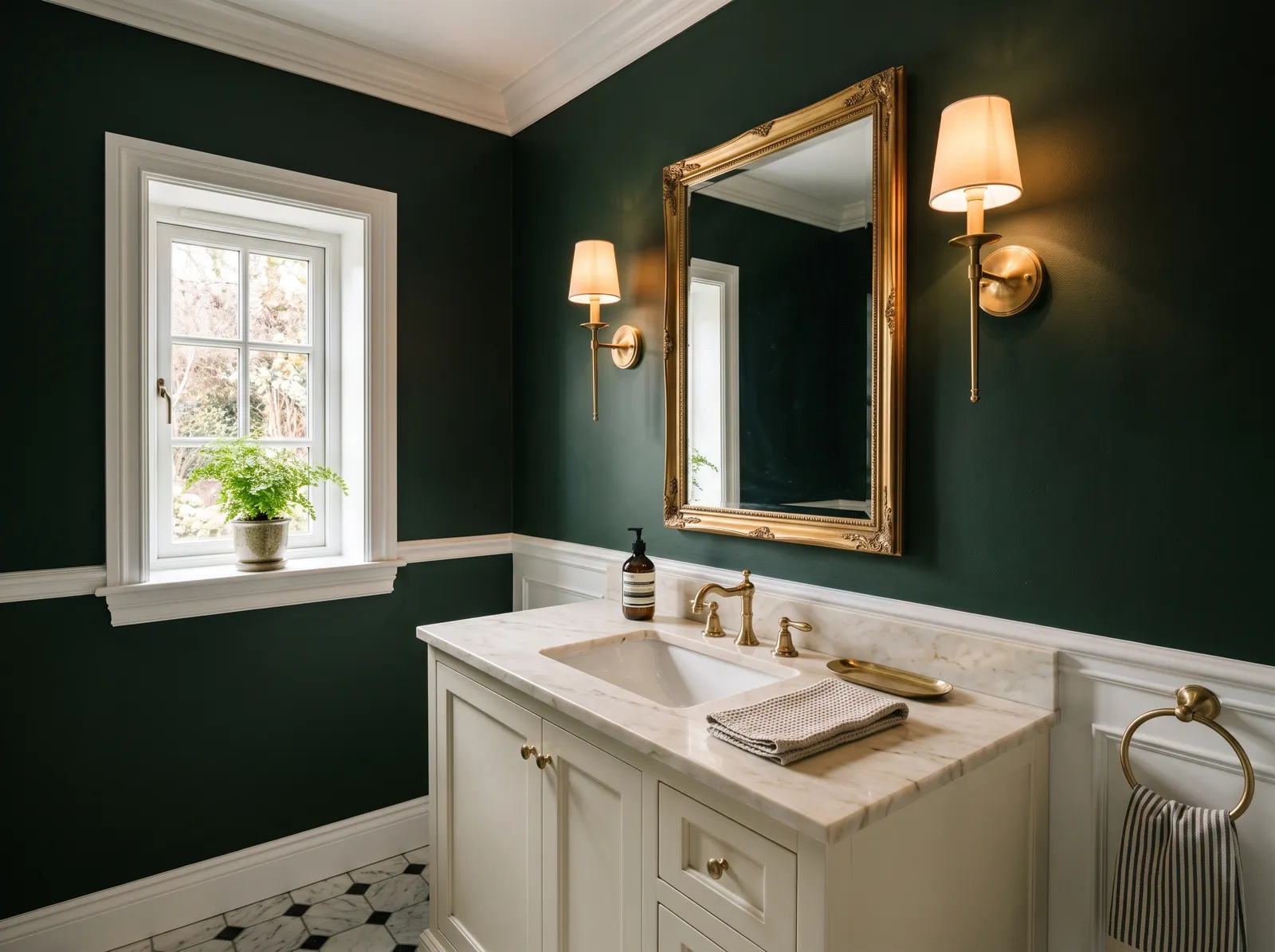
If your bathroom has a good window or you actually want drama, you can go much deeper. A forest or hunter green in the 5 to 20 LRV range turns a powder room or a windowless half-bath into a cozy, enveloping space, since you are not fighting to make a dark room feel large anyway. Just remember that low-LRV greens read very differently by day versus under bulbs, so always test a sample on the wall and look at it morning and night.
The Right Finish For A Wet Room
Bathrooms get steam, splashes, and regular wipe-downs, so flat paint is usually a mistake on the walls. Reach for an eggshell or satin finish, which resists moisture and cleans up far better while still keeping a soft, low-glare look. Satin is the safer pick for a bathroom that runs a hot shower daily or has poor ventilation.
For trim, doors, and any built-in cabinetry, step up to semi-gloss. It shrugs off water and scrubbing and gives green woodwork a crisp edge against the walls. If your green is going on the ceiling too, a moisture-resistant flat or a specialty bath ceiling paint avoids glare overhead while still standing up to condensation.
Pairing Green With Trim, Tile, And Fixtures
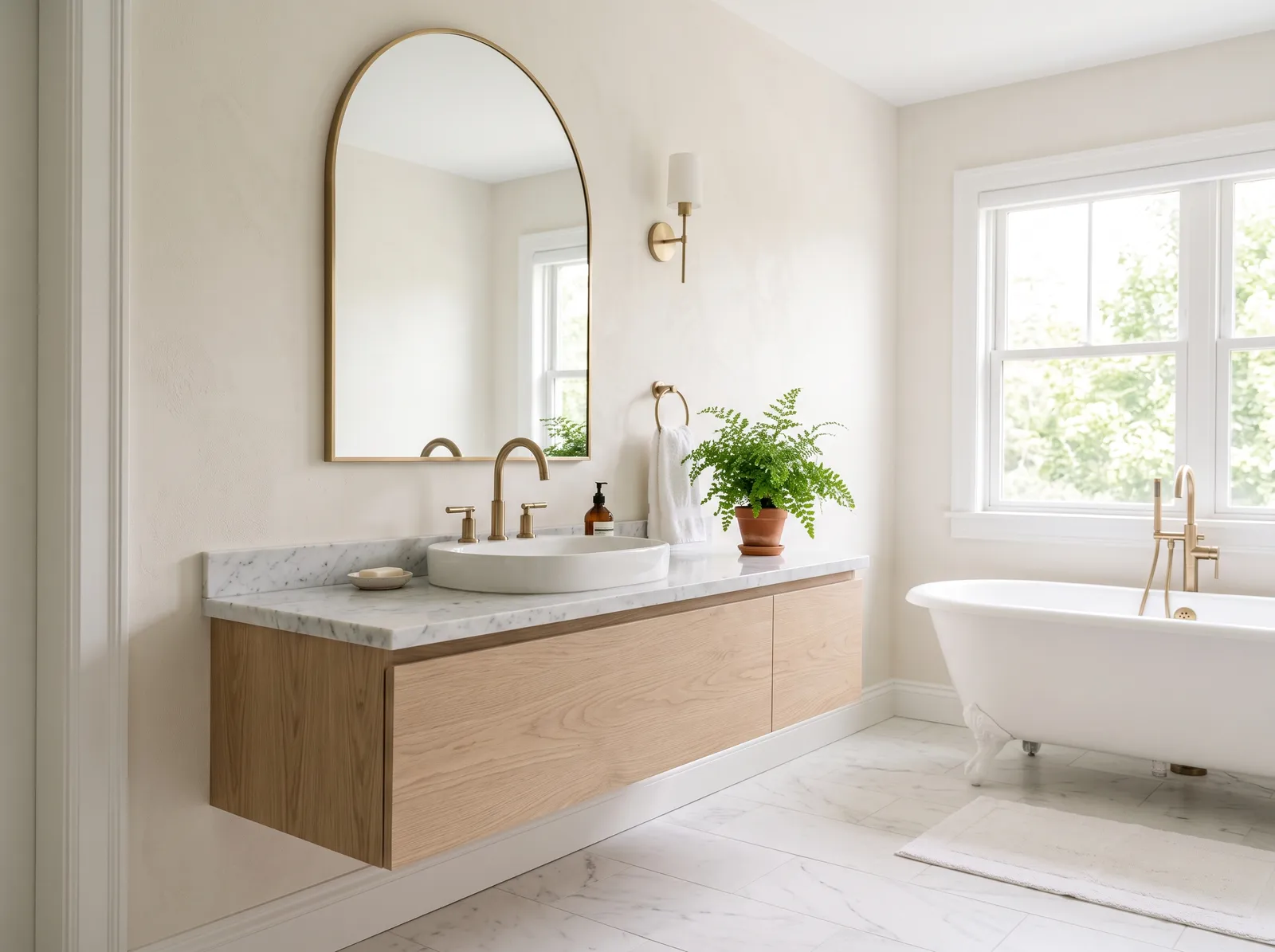
The most reliable partner for green in a bathroom is a soft, warm white on the trim and ceiling. It keeps the room feeling clean and lets the green read as the main event. A bright, cool white can work with deeper greens but may feel stark next to a soft sage.
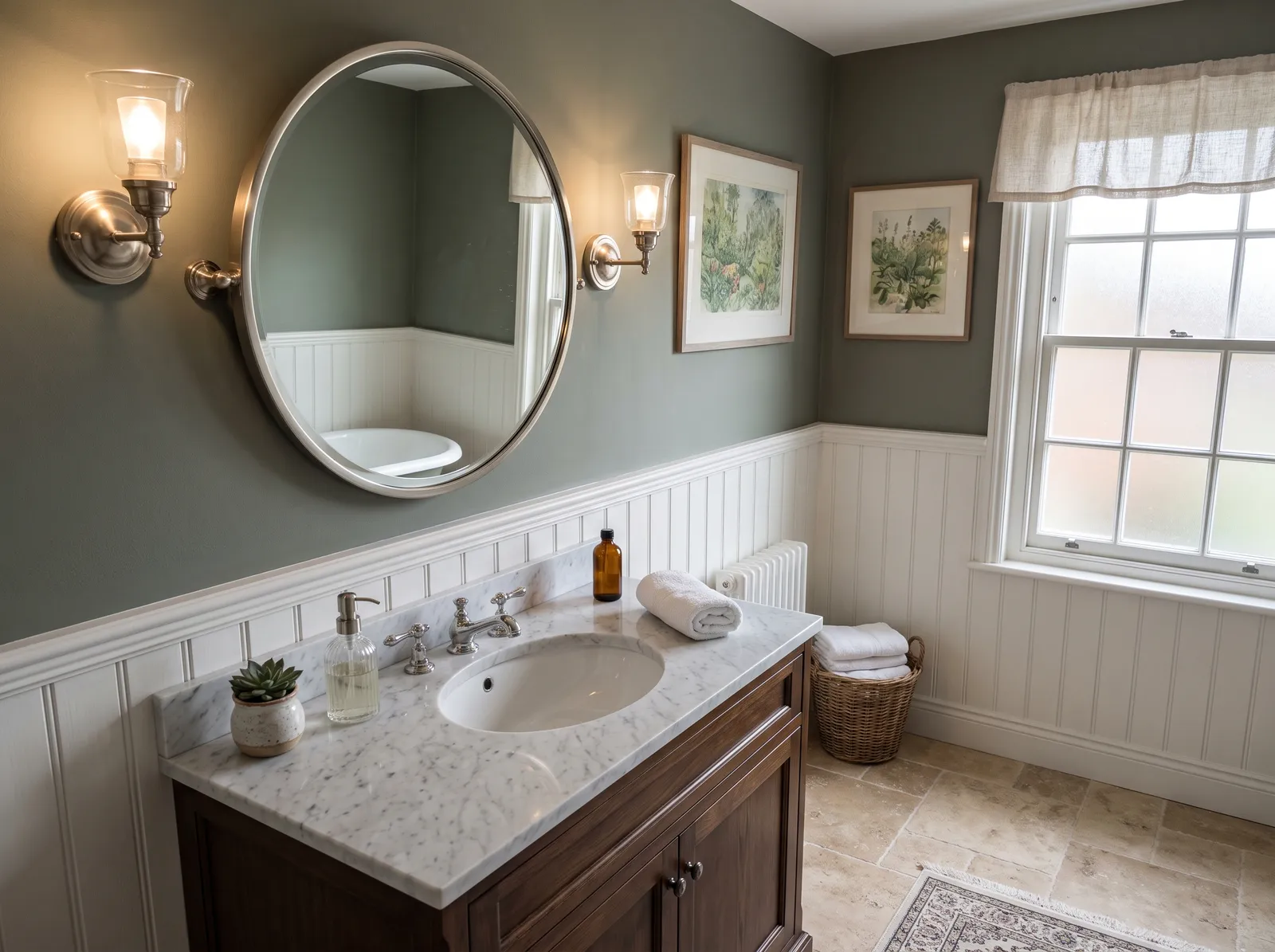
Green is also unusually friendly with metal and stone. Warm metals like brass and gold flatter sage and olive, while chrome and matte black look sharp against a deep forest green. White subway tile, marble veining, and natural wood vanities all sit comfortably beside green, so you rarely have to overthink the combination. If you want green on a vanity rather than the walls, the same color mixed in a cabinet-grade finish ties the room together without repainting the whole space.
Common Mistakes With Green In A Bathroom
The biggest one is skipping the sample. Greens shift hard between daylight and bulb light, and a tiny chip at the store almost never predicts how a full wall will look in a windowless room. Paint a poster-board sample, move it around the bathroom, and check it under the actual lights you use.
The other common slip is choosing too yellow or too gray for the light you have. A yellow-green can turn swampy under warm vanity bulbs, and an overly gray-green can look dirty in a dim space. Match the undertone to your lighting, use a washable finish, and keep the trim simple, and a green bathroom is one of the hardest rooms to get wrong.
Green Bathroom Paint — Frequently Asked Questions
Is green a good color for a small bathroom?+
Yes, especially a soft sage or sea-glass green in the 55 to 70 LRV range, which reflects enough light to keep a small space feeling open. If the room is windowless and you want drama instead, a deep forest green also works well because a small dark bathroom feels intentional and cozy rather than cramped.
What sheen should I use for green bathroom walls?+
Use eggshell or satin on the walls. Both resist moisture and wipe clean far better than flat, and satin is the safer choice if your bathroom gets a lot of steam or has weak ventilation. Save semi-gloss for the trim, doors, and any cabinetry.
What trim and ceiling color goes with green in a bathroom?+
A soft warm white is the most reliable choice for trim and ceiling, since it keeps the room feeling clean and lets the green stand out. Crisp cool whites pair better with deep, saturated greens, while warmer whites flatter sages and olives.
Will a green bathroom look dated?+
Not if you choose a grounded, earthy green rather than a trendy bright one. Sage, olive, eucalyptus, and forest greens have stayed popular for decades because they read as natural rather than fashionable, and they pair with classic finishes like white tile, brass, and wood.
Why does my green paint look different in the bathroom than on the chip?+
Bathrooms are often small and windowless, so the color is driven almost entirely by your bulbs, which can pull green toward yellow or gray. Always test a large painted sample on the wall and view it under your actual lighting at different times of day before committing.
Can I match the same green across different paint brands?+
Yes. Every color shown here is mixed to order at the store, and the same green can be cross-matched between brands. That means you can pick the shade you love and then buy it from whichever brand or retailer is most convenient for you.