Green Sunroom Paint Colors
2,263 green colors that work in sunrooms, drawn from the full ~30,000-color US paint deck. Below: editor's picks specific to sunrooms, then 30 picks spread across the LRV range — narrow further on the brand page when you've shortlisted.
Green has quietly replaced grey as the safe-but-interesting wall color of the late 2020s. Sage Green, the soft grey-green that became the de facto fallback, anchors the family — but the broader green palette runs from olive (warm, earthy, faintly yellow) to forest (deep blue-green) to emerald (saturated jewel tone).
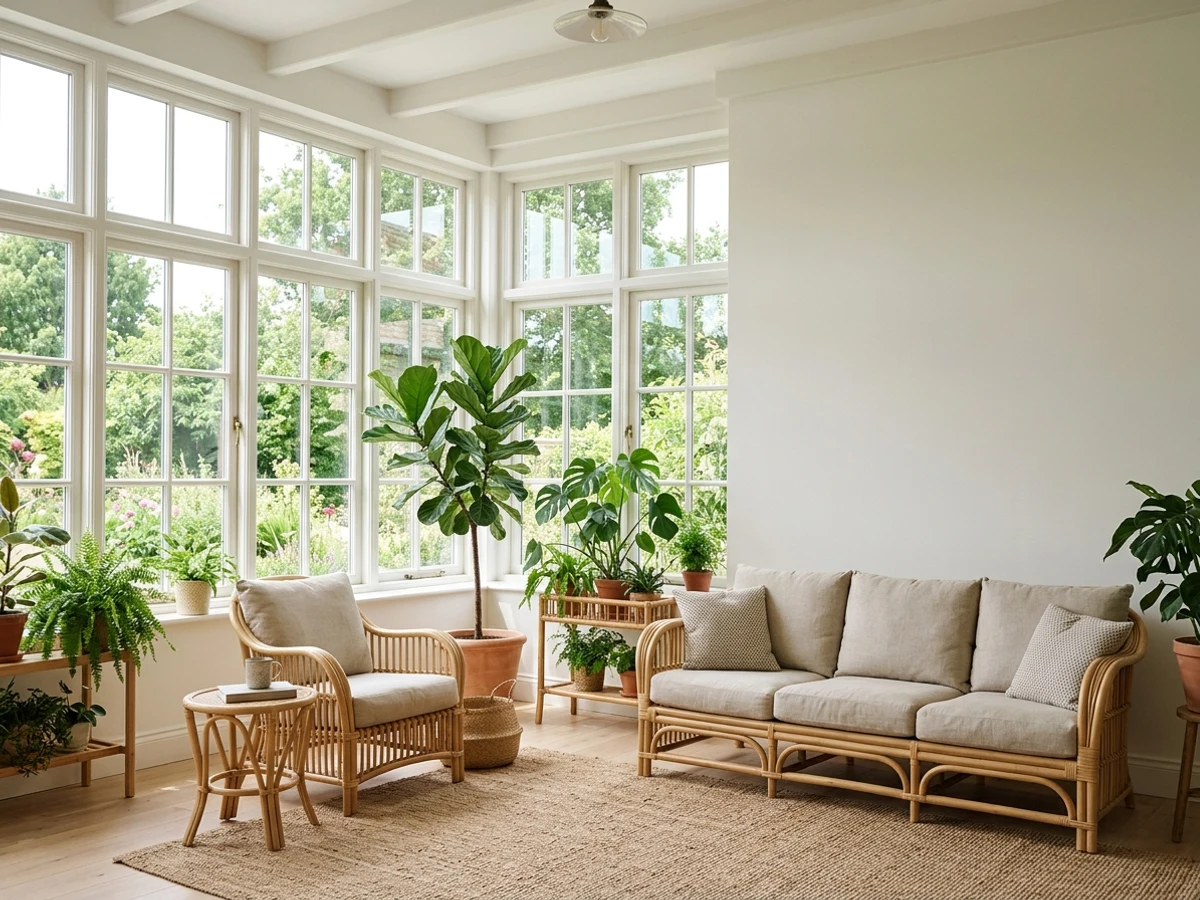
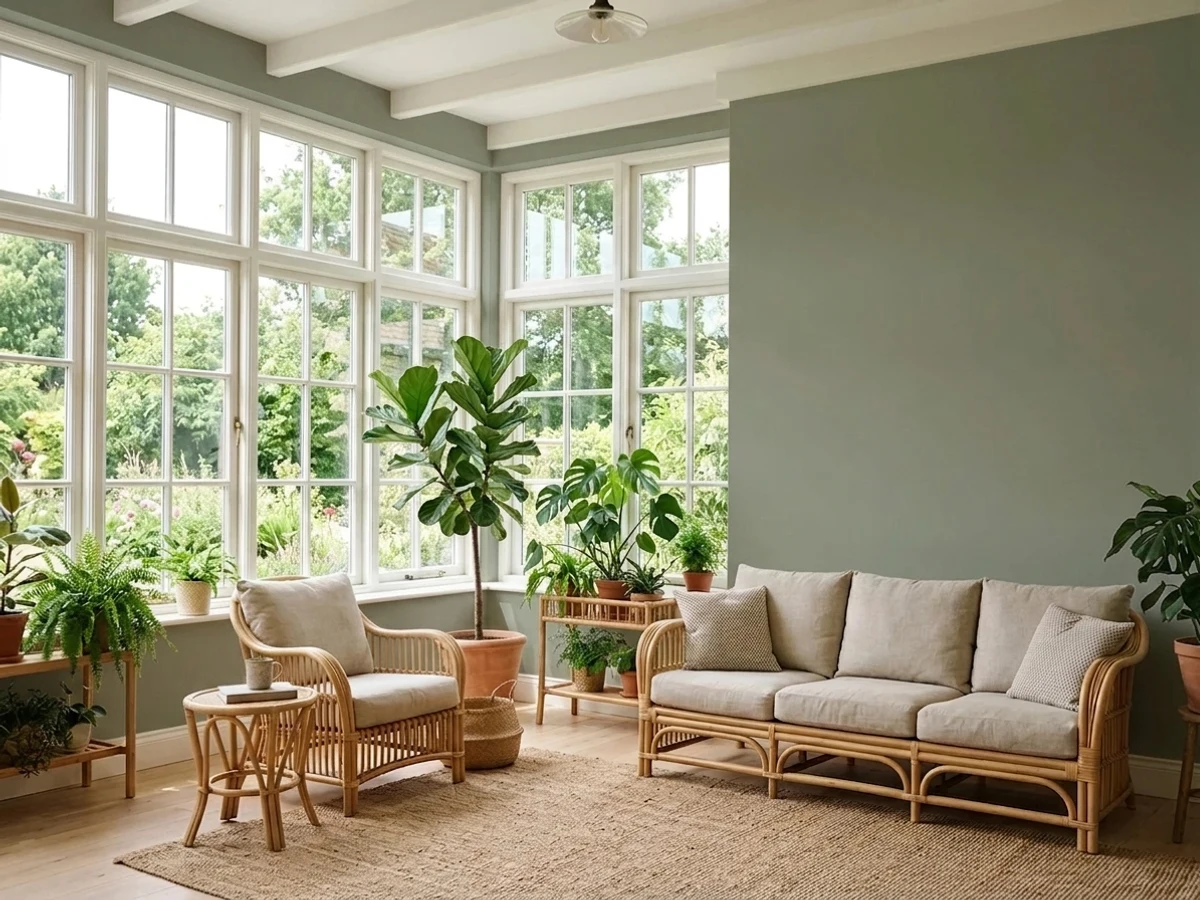
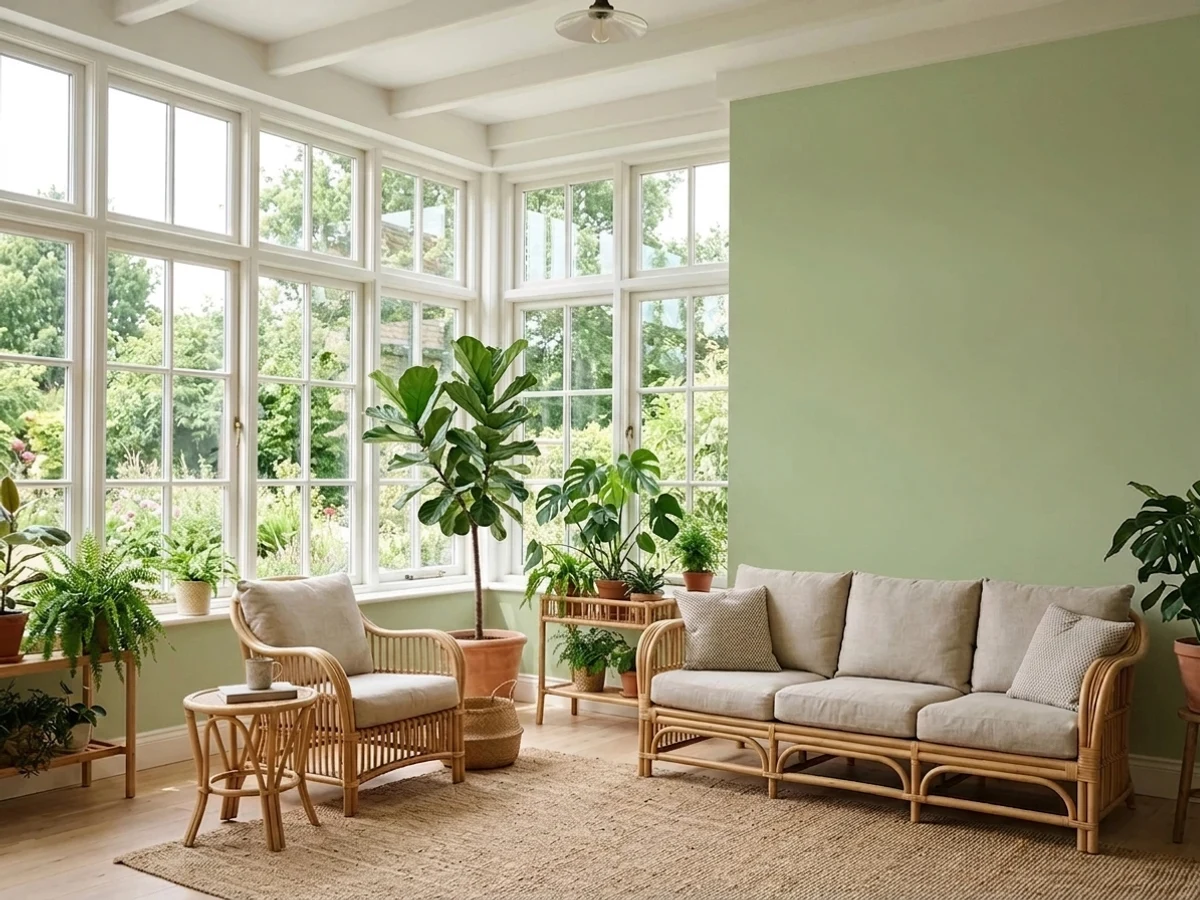
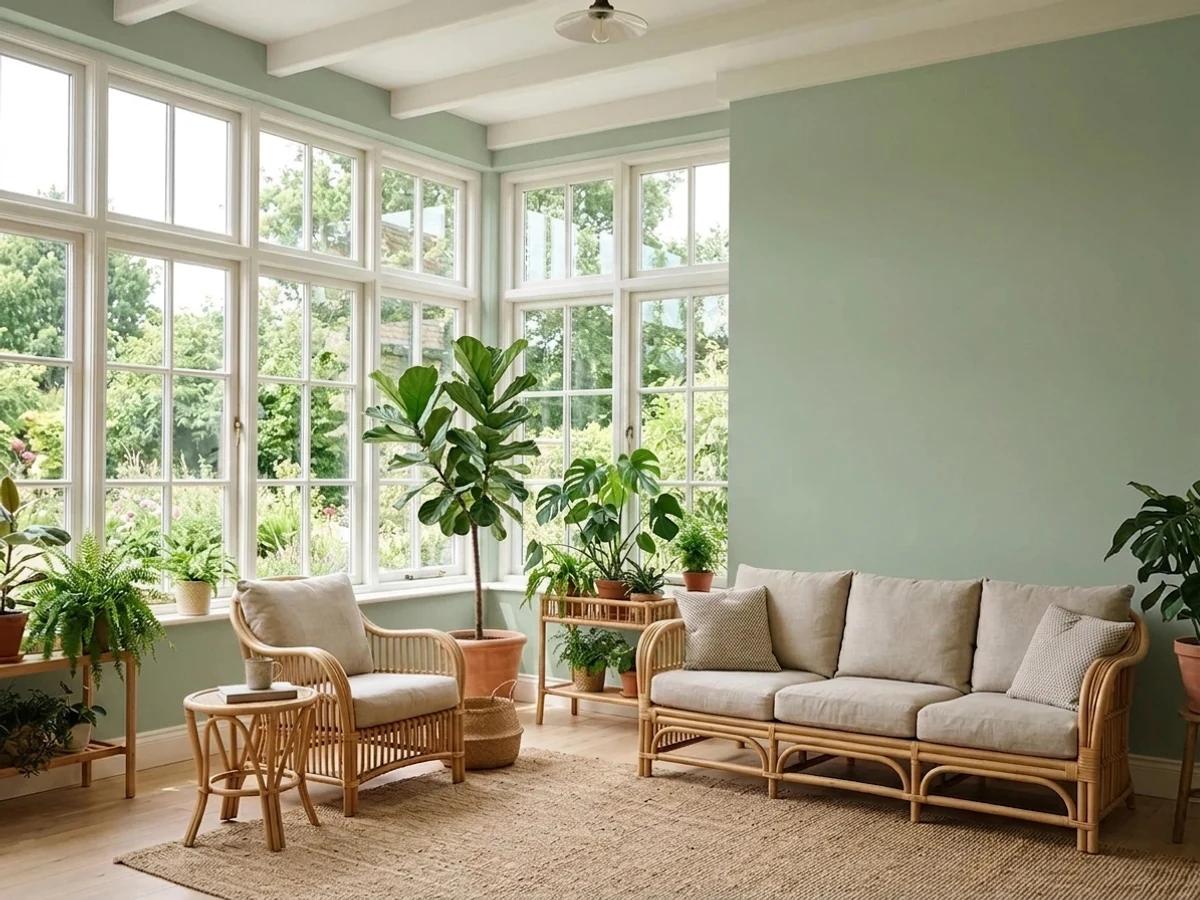
Editor's Picks: Green for Sunrooms
4 picks30 Green Picks Across the LRV Range
30 of 2,263 · sorted dark → lightLooking for more? All green → covers every brand; brand × family pages show full decks.
Green Sunroom Colors at Every US Brand
19 brands · up to 10 picks eachUp to 10 picks per brand spread across the green LRV range, drawn from each brand's full deck. Tap any swatch with a curated guide for full spec; tap the brand title for the brand's complete green deck.
Behr
Benjamin Moore
Glidden
Valspar
Dunn-Edwards
PPG / Glidden
Sherwin-Williams
Dutch Boy
Hirshfield's
Diamond Vogel
Kompozit
C2 Paint
Farrow & Ball
Magnolia Home
Clare
Rodda
Annie Sloan
Backdrop
Other Sunroom Color Families
Green Colors in Other Rooms
Green Paint Colors for a Sunroom
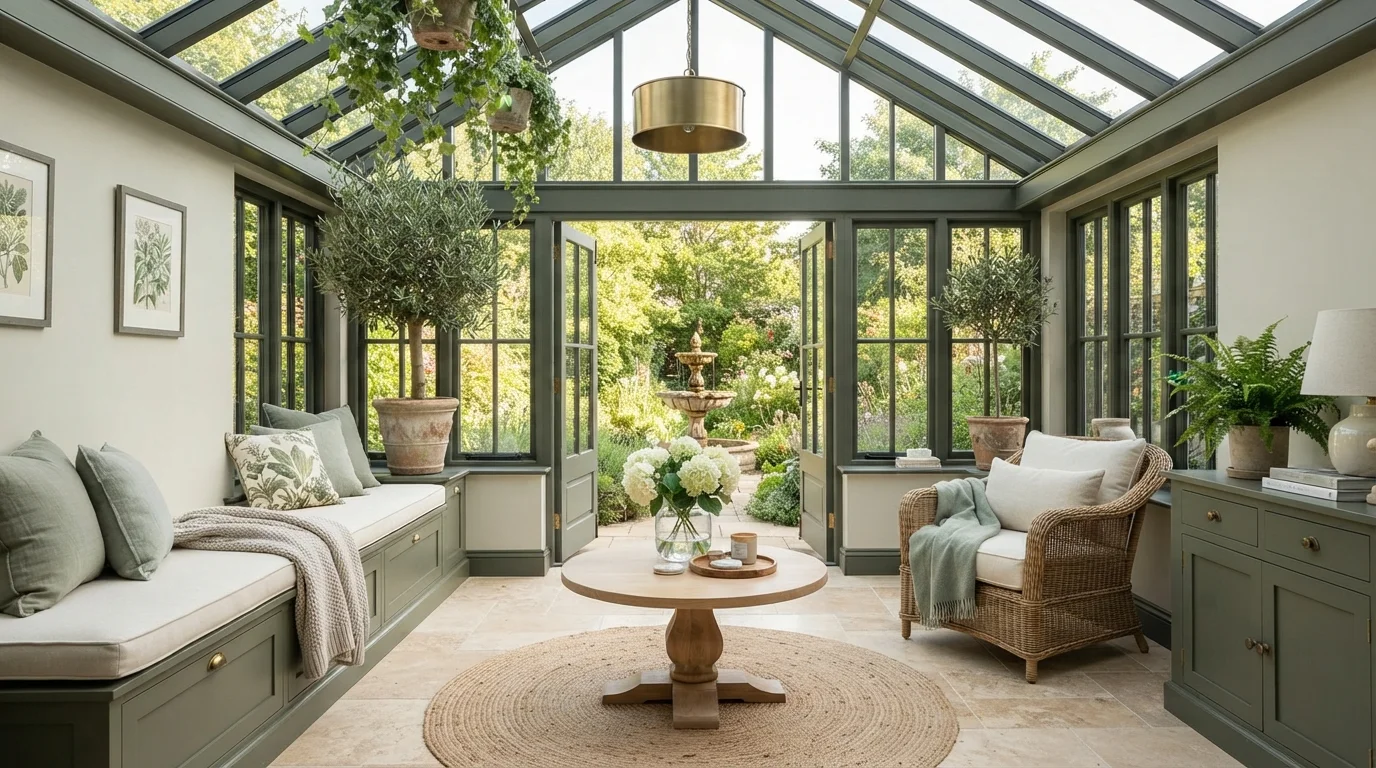
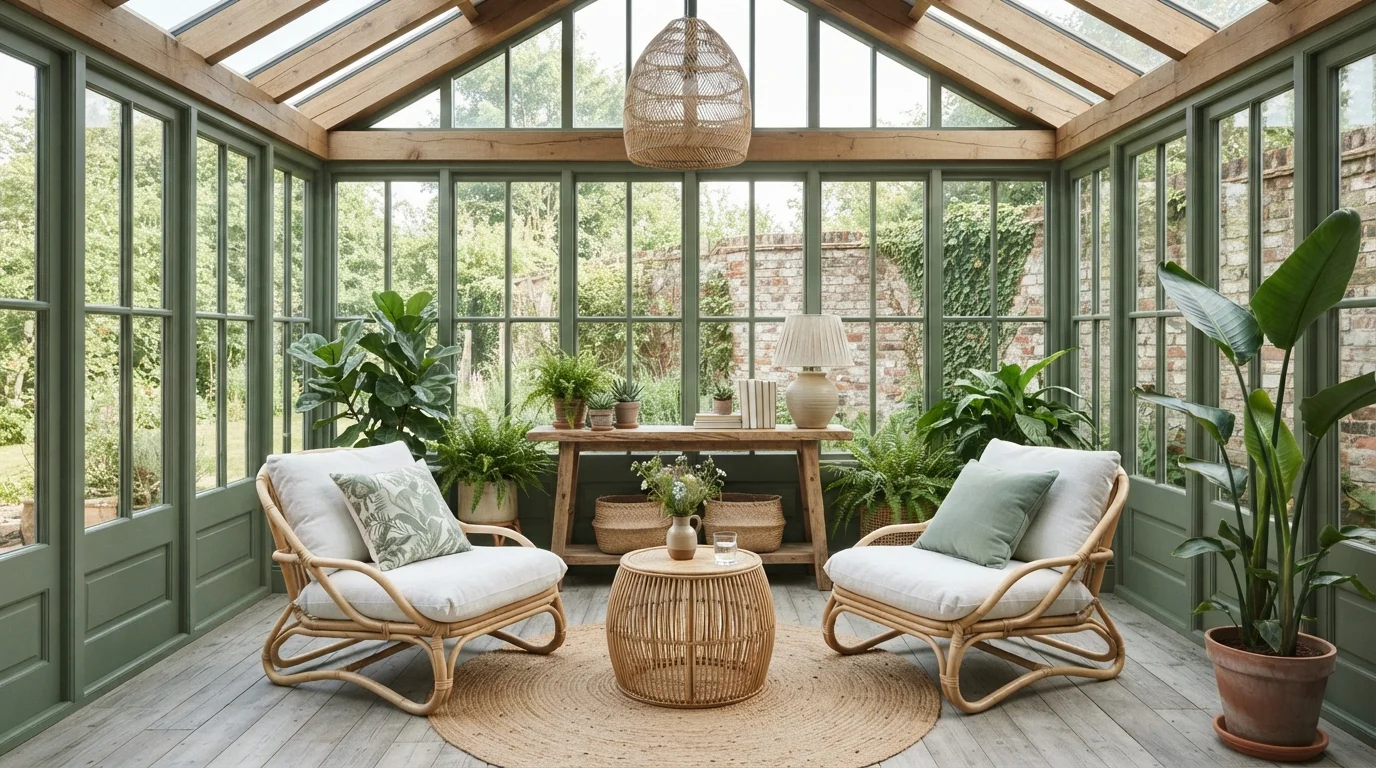
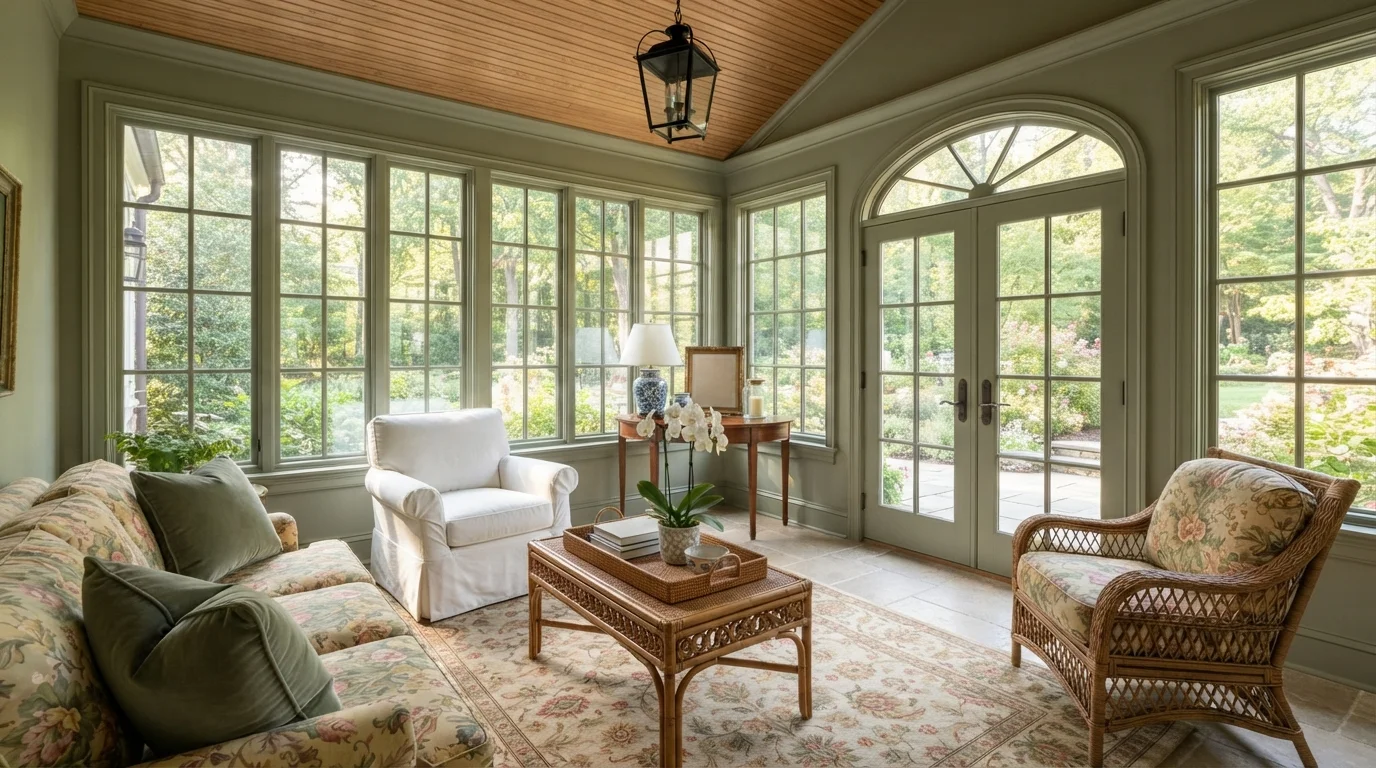
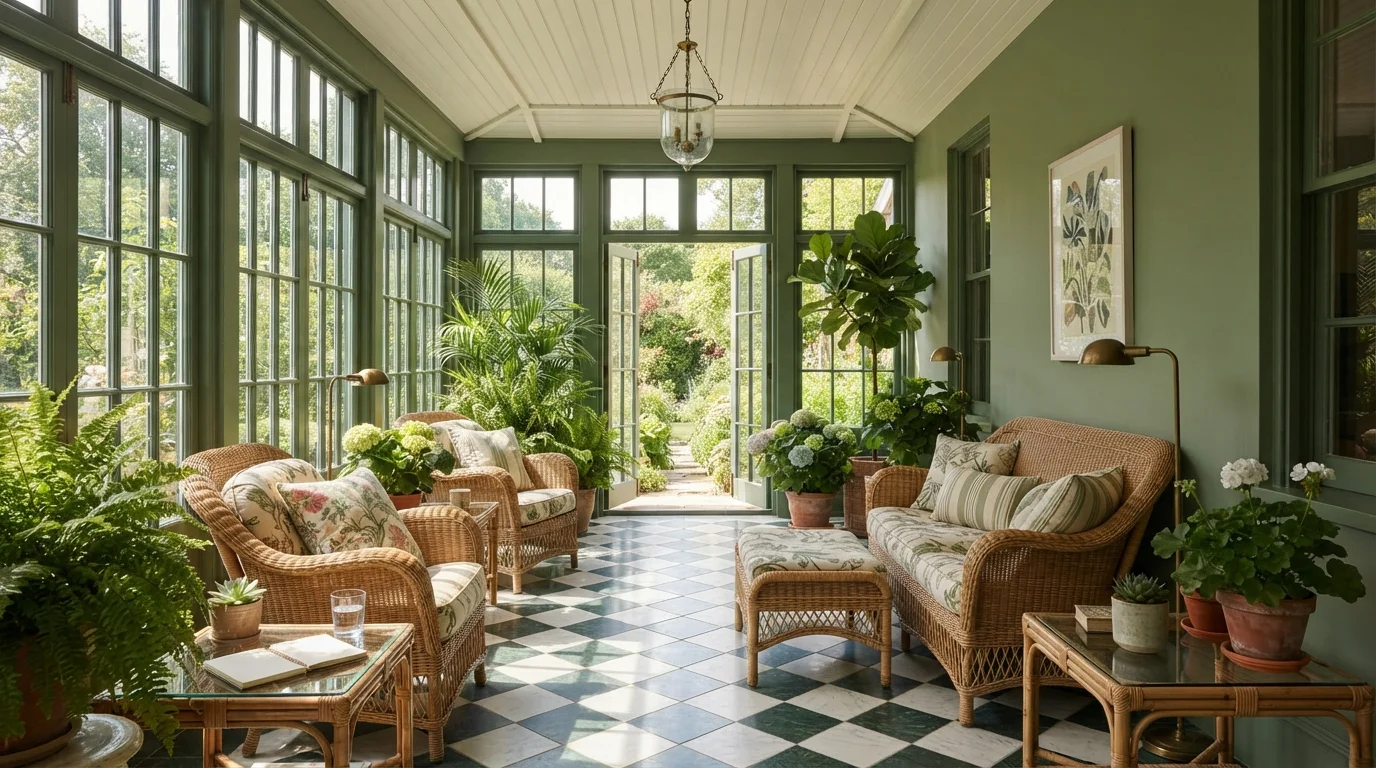
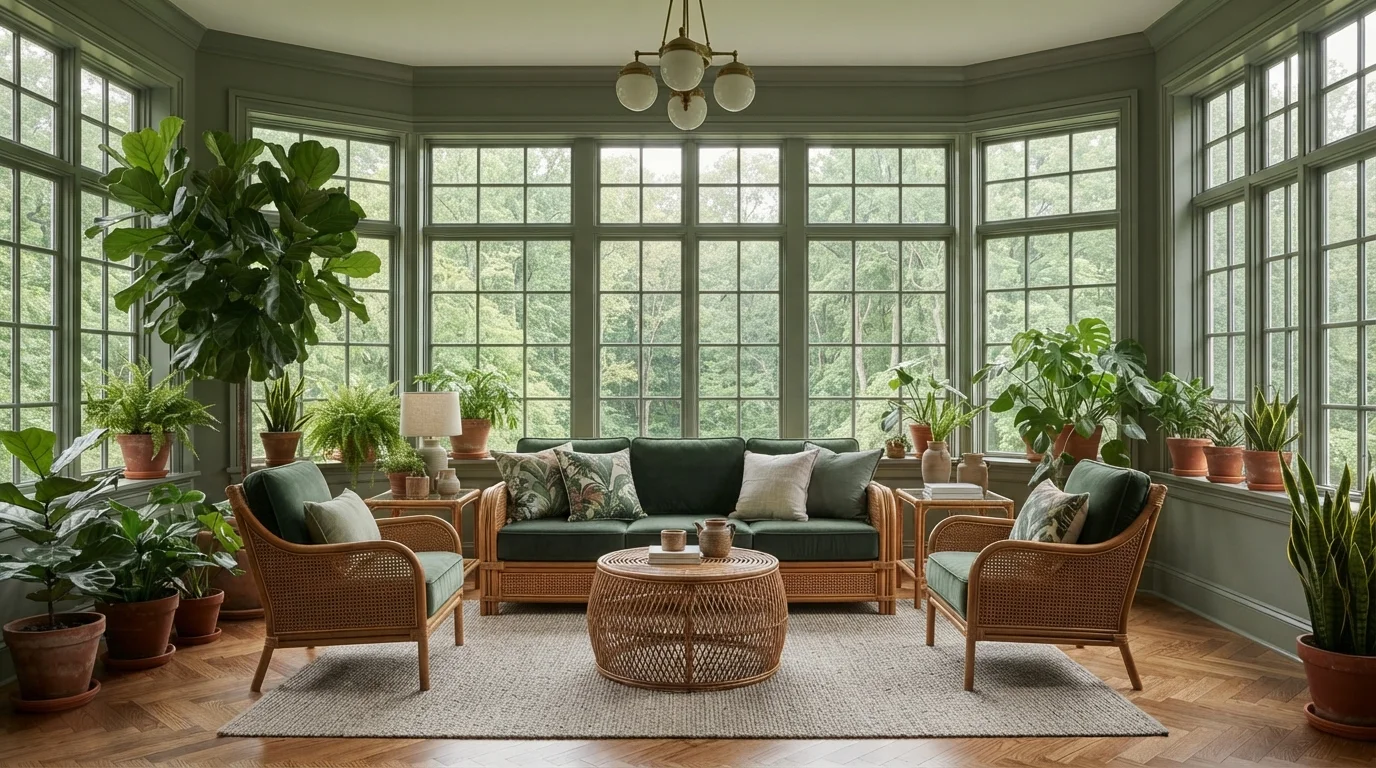
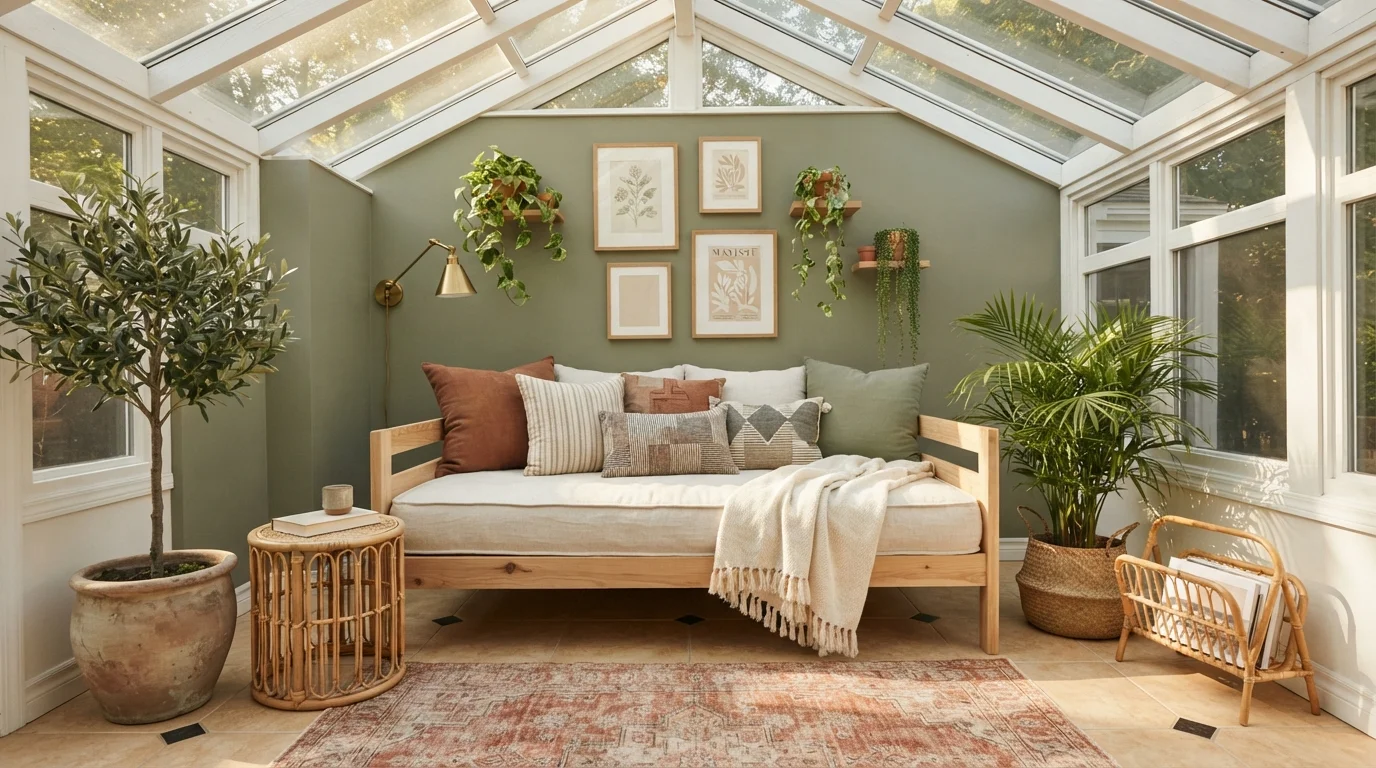
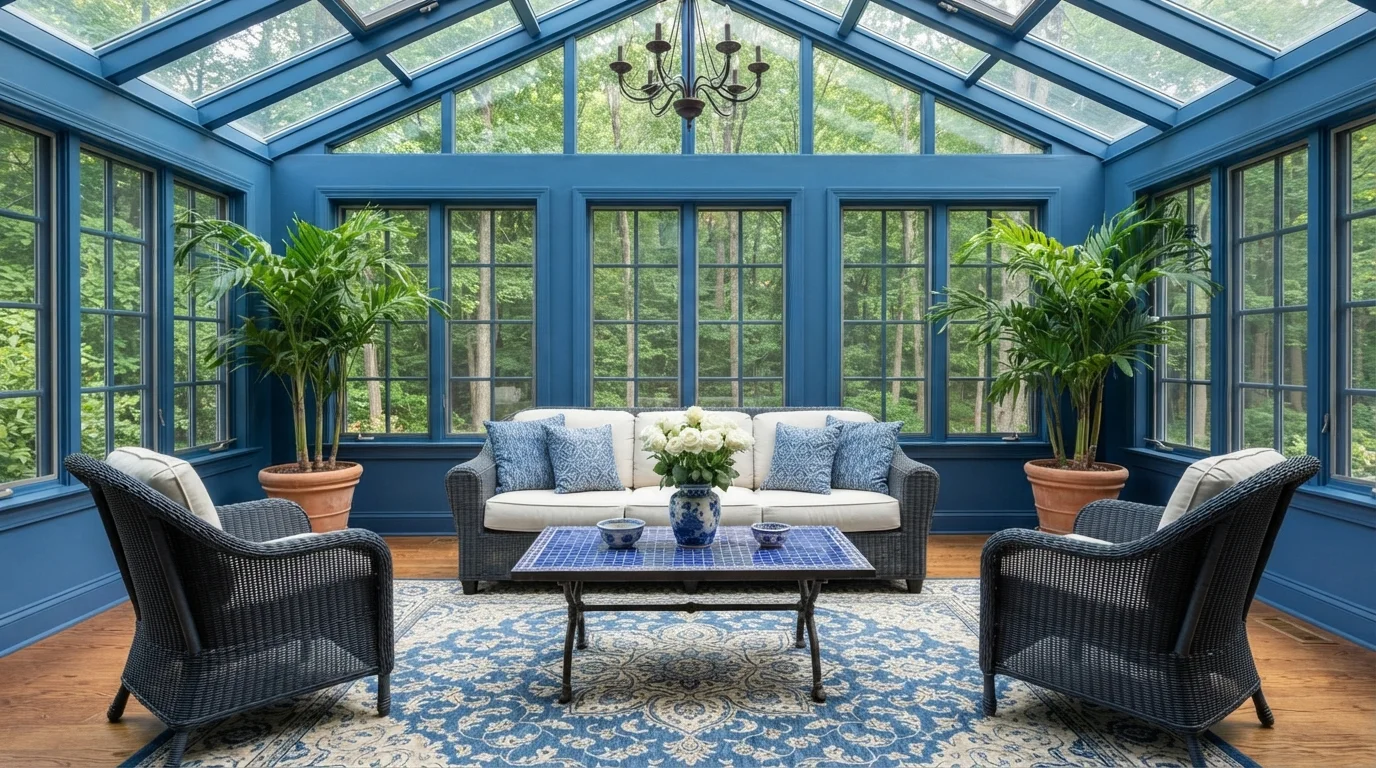
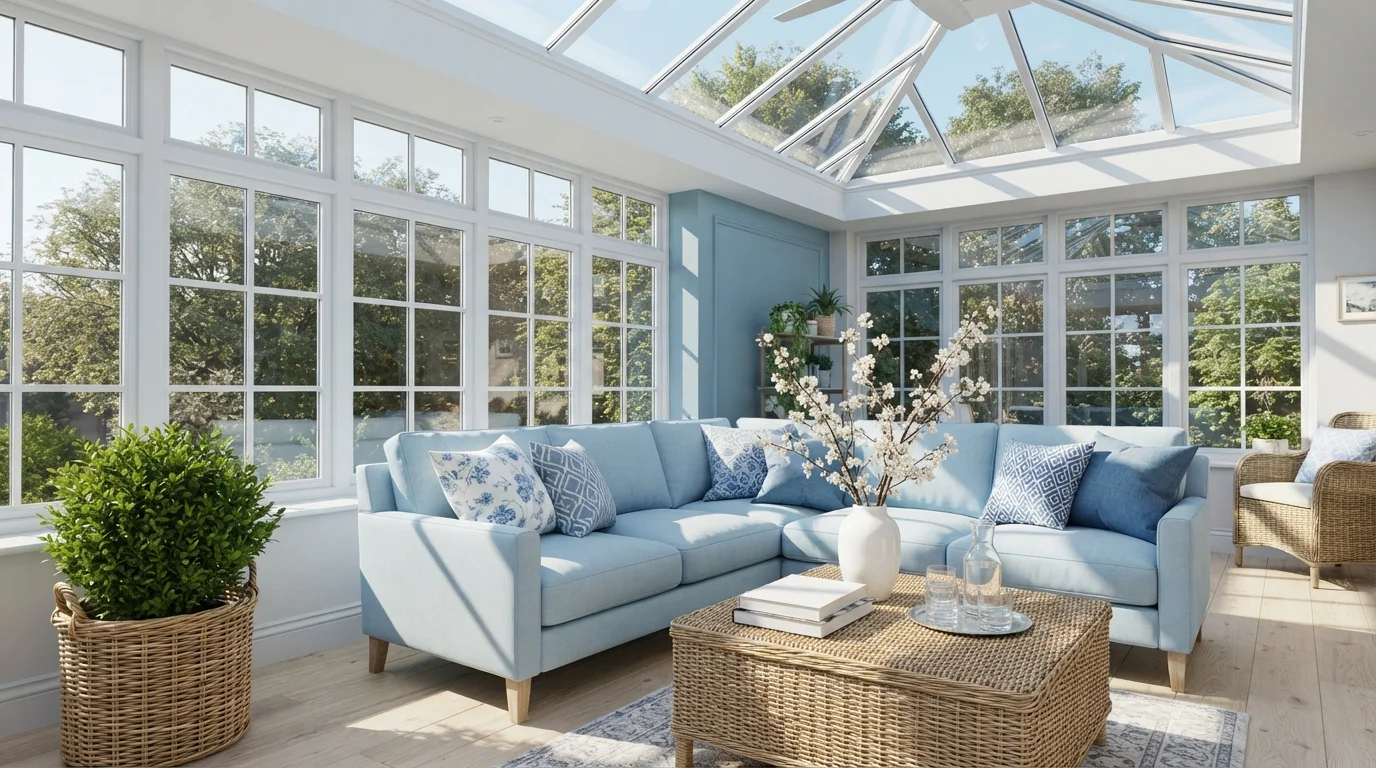
A sunroom is the one room in the house that lives and breathes with the outdoors, so green has a natural home here. It picks up the lawn, the trees, and the sky just past the glass, which makes the wall color feel like it belongs instead of fighting the view. Done right, green in a sunroom reads calm and fresh rather than loud, and it works whether the room leans toward a reading nook, a plant room, or a year-round dining spot.
The trick with a sunroom is that it gets far more light, and far more changeable light, than a normal interior room. A green that looks perfect at noon can turn gray at dusk or go acid-bright in full afternoon sun. Below we walk through which greens hold up in this kind of light, the sheen that survives heat and humidity, and how to pair green with the trim, ceiling, and finishes a sunroom usually has. Every color you see on this page is mixed to order at the store, so you can match the same shade across brands and buy whatever is easiest to get.
Why Green Belongs in a Sunroom
A sunroom is mostly windows, which means the room already pulls in green from outside all day. Painting the walls a green that echoes that view makes the whole space feel settled and intentional, like the indoors and outdoors are part of the same scene. It is also a forgiving room for color, because the wall is rarely a solid block of paint, it is broken up by glass, trim, and whatever sits outside.
Green is easy on the eyes in a bright room, too. After a stark white or pale gray, it cuts glare and gives your eyes something soft to land on, which matters in a space built for slowing down. If the sunroom doubles as a plant room, green walls make every leaf look healthier instead of washed out.
Picking the Right Depth of Green for the Light
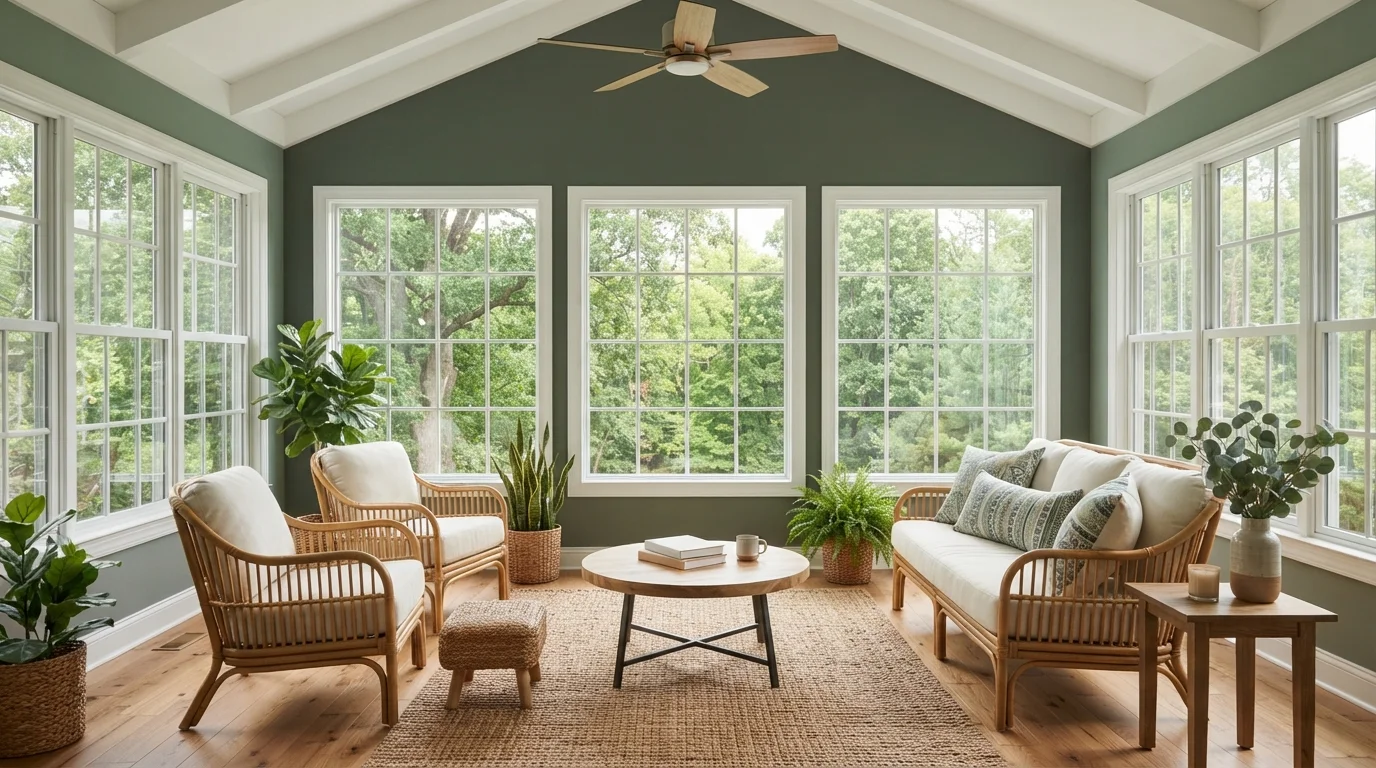
Sunrooms are flooded with daylight, so they can carry greens that would feel heavy anywhere else. Mid-tone greens in the LRV 30 to 55 range tend to be the sweet spot, they hold their color in strong light without bleaching out to a tired beige-green by afternoon. A sage or soft olive in this range reads as a real color all day instead of a pale wash.
Watch the direction your glass faces. South and west sunrooms get warm, intense light that can push a yellow-green toward acid, so a green with a touch of gray or blue in it stays calmer. North and east rooms get cooler, gentler light, which can flatten a muted green into gray, so a slightly warmer or deeper green keeps it alive. If you want something light and airy, stay above LRV 55 but lean toward greens with clear undertone so they do not vanish in all that sun.
The Right Sheen for a Glass-and-Heat Room
A sunroom swings hard between hot and humid in summer and cold against the glass in winter, and that movement is rough on paint. A satin or eggshell finish is the safe pick, it shrugs off moisture and condensation near the windows and wipes clean when pollen, dust, or plant splashes land on the wall. Flat paint may look elegant, but it soaks up grime and is hard to clean in a room that takes a beating from the weather.
Go easy on anything glossier than satin on the walls. With so much direct light, a high sheen turns into glare and shows every roller mark and wall flaw. Save the harder semi-gloss for trim, window frames, and any built-ins, where the extra durability and washability actually earn their place.
Pairing Green With Trim, Ceiling, and Finishes
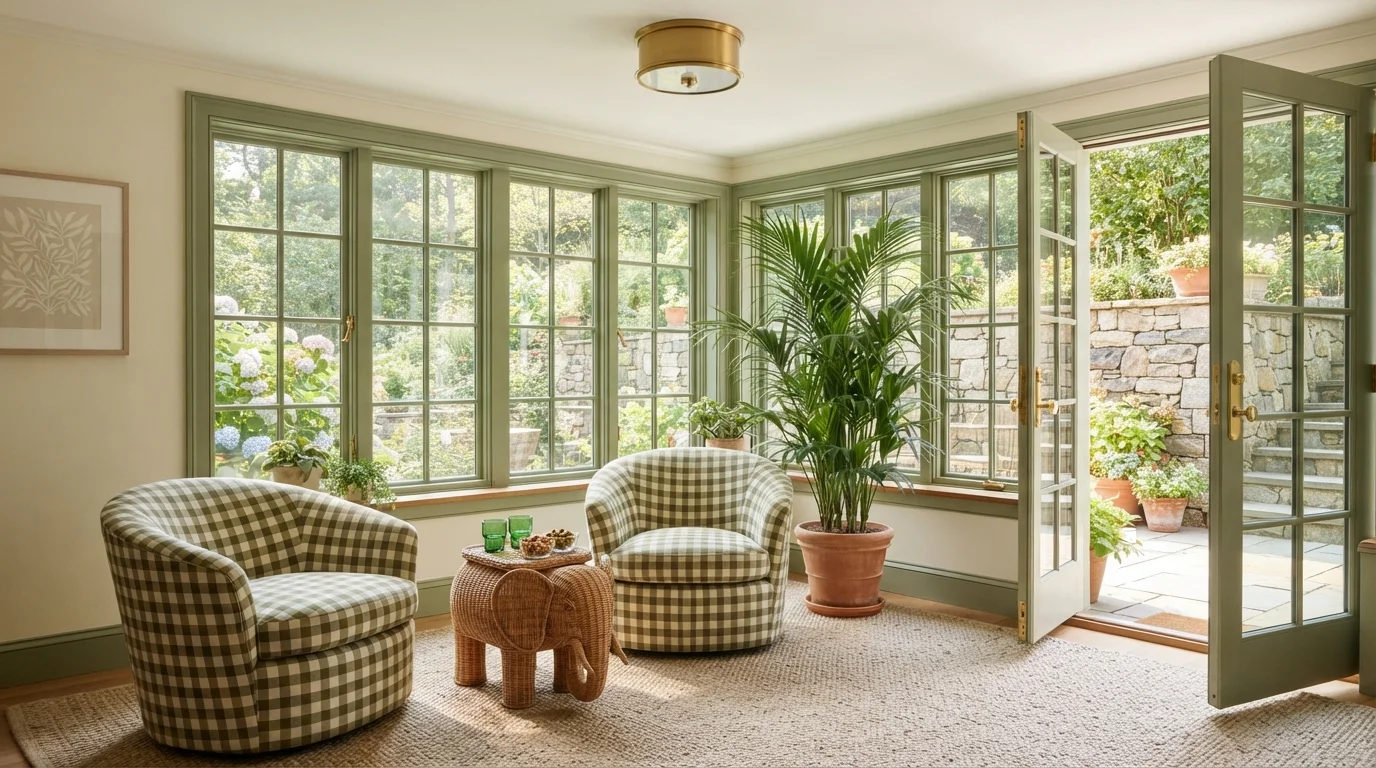
Most sunrooms have a lot of trim, since the windows themselves are framed, so the trim color does heavy lifting. Crisp warm white on the window frames and baseboards keeps a green room feeling fresh and bright, while a creamier white softens the whole thing and leans cottage. If you want the green to feel more architectural, painting the trim a deeper version of the same green blurs the lines and makes the windows feel built in.
For the ceiling, a soft white or a barely-there tint of the wall green keeps the room from feeling top-heavy under all that light. Green plays well with natural materials a sunroom tends to collect, so warm wood, rattan, terracotta tile, and aged brass or black metal fixtures all sit comfortably against it. If the floor is brick or stone, pull a quiet earth tone into the cushions to tie green to the ground.
Common Mistakes With Green in a Sunroom
The biggest mistake is choosing a green off a tiny chip indoors and skipping the sample. Sunroom light is so strong and so changeable that the real wall can look completely different from the chip, especially yellow-greens that go neon in afternoon sun. Always brush a sample on more than one wall and look at it morning, midday, and evening before you commit.
The other common miss is fighting the view instead of joining it. A cool, blue-leaning green can clash with warm wood, brick, or a green lawn just outside the glass and make the room feel off without anyone knowing why. Picking too dark a green in a small sunroom is another trap, since the glass eats wall space, a very deep shade can close the room in rather than ground it, so test depth in the actual room first.
Green Sunroom Paint — Frequently Asked Questions
what shade of green is best for a sunroom?+
A mid-tone green with an LRV around 30 to 55, like a soft sage or muted olive, tends to work best. That range holds its color in bright daylight without washing out, and it stays calm rather than turning acid in strong sun. If your sunroom faces south or west, lean toward a green with a little gray in it so the intense light does not push it neon.
what finish should I use for green walls in a sunroom?+
Satin or eggshell is the right call for the walls. It handles the humidity, heat, and condensation a glass room sees, and it wipes clean when pollen, dust, or plant water hits it. Skip flat, which stains easily and is hard to clean, and keep glossier semi-gloss for trim and window frames where you want the extra durability.
will green make my sunroom look smaller?+
Not if you match the depth to the room. A very dark green can close in a small sunroom, especially since the windows already eat into the wall space. A lighter to mid-tone green keeps things open and airy while still reading as real color, so test the actual shade on the wall before deciding.
what trim color goes with green in a sunroom?+
Warm white trim keeps a green sunroom crisp and fresh, while a creamier white softens it toward a cottage feel. For a more built-in, architectural look, you can paint the trim a deeper version of the same green so the window frames blend into the walls. Green also pairs nicely with aged brass or black metal fixtures and natural wood.
why does my green look different at different times of day?+
Sunrooms get more light, and more changing light, than any other room, so the wall color shifts from morning to evening. Warm afternoon sun can brighten a green toward yellow, while cool morning or north light can flatten it toward gray. This is exactly why you should sample the green on the actual wall and check it at several times of day.
can I get the same green from any paint brand?+
Yes. Every green shown here is mixed to order at the store from a tint formula, so it is not locked to one brand. If you find a green you like, it can be cross-matched and mixed by whichever brand or store is easiest for you to reach, while staying the same color on the wall.