Green Trim Paint Colors
2,263 green colors that work in trims, drawn from the full ~30,000-color US paint deck. Below: editor's picks specific to trims, then 30 picks spread across the LRV range — narrow further on the brand page when you've shortlisted.
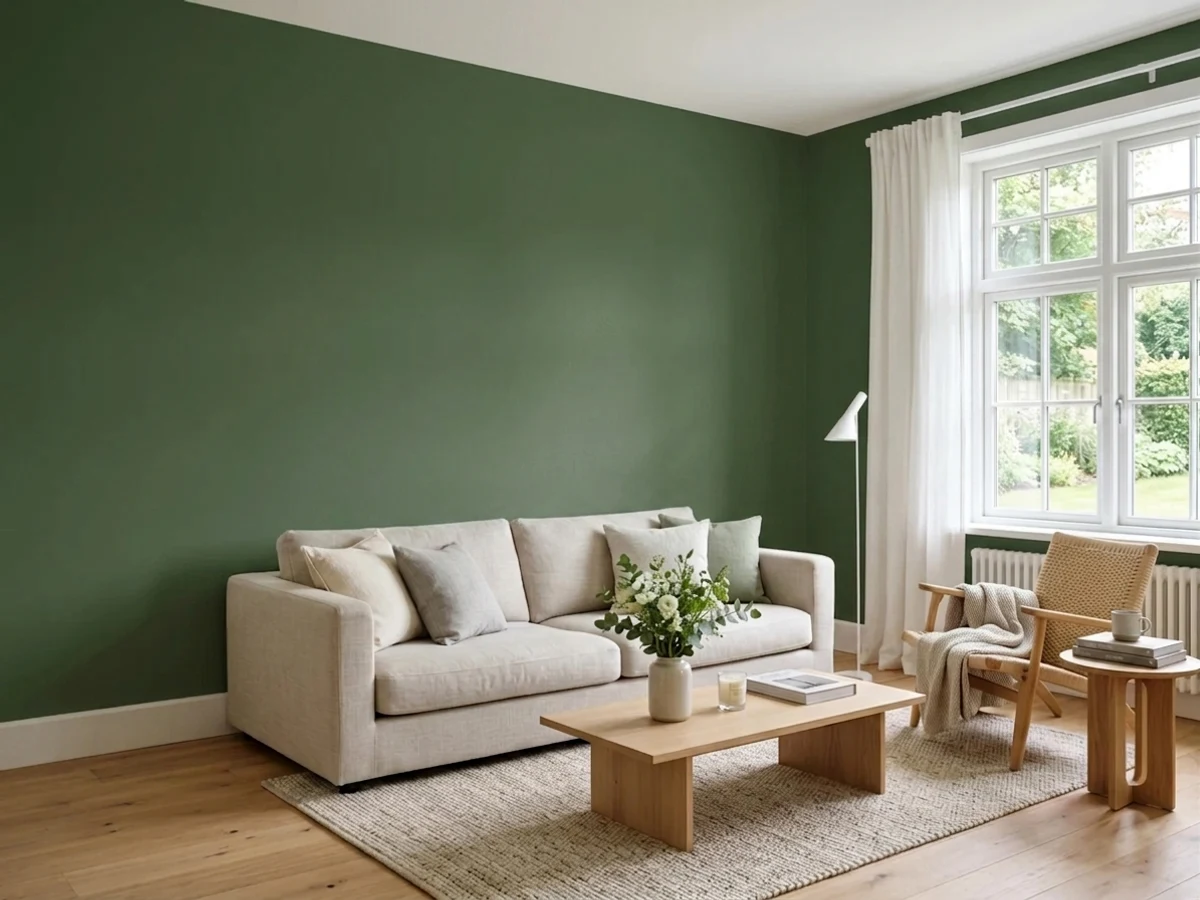
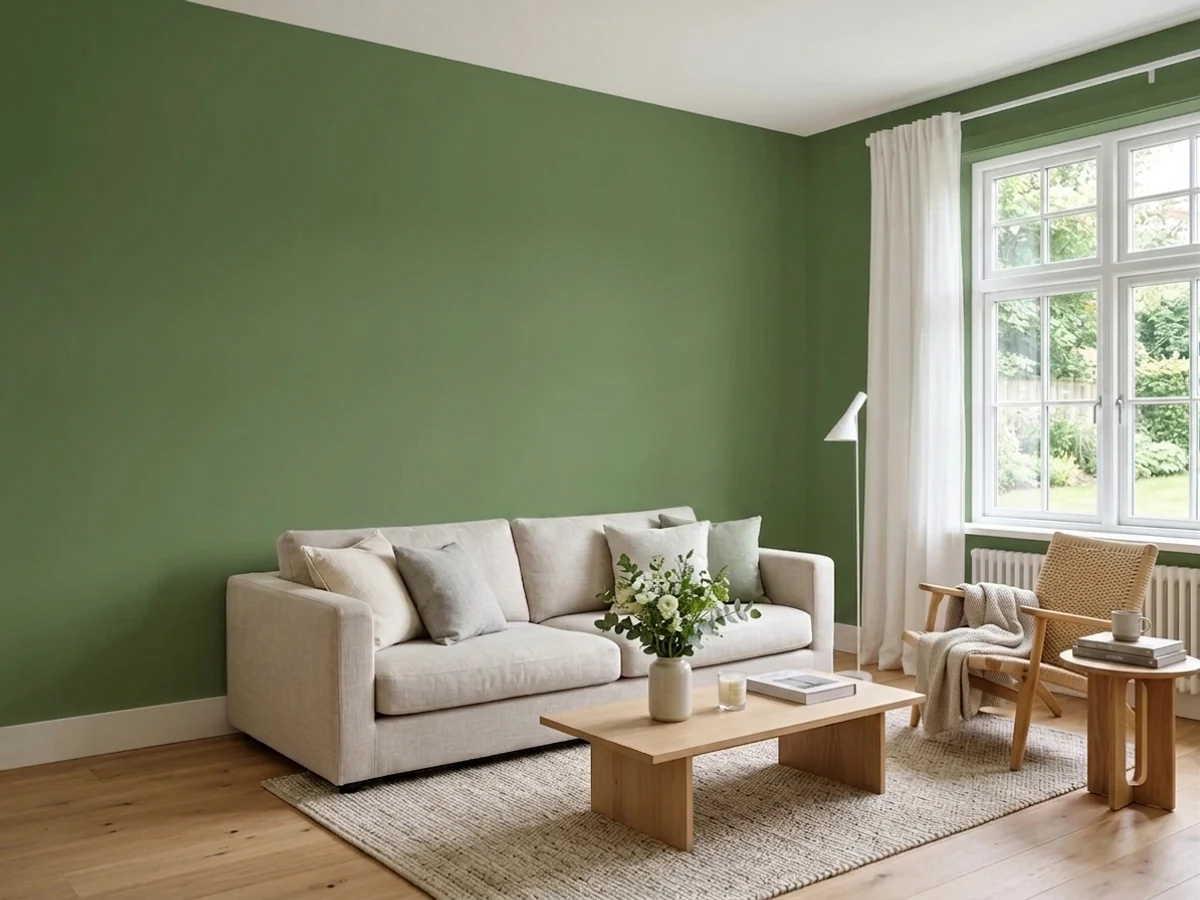
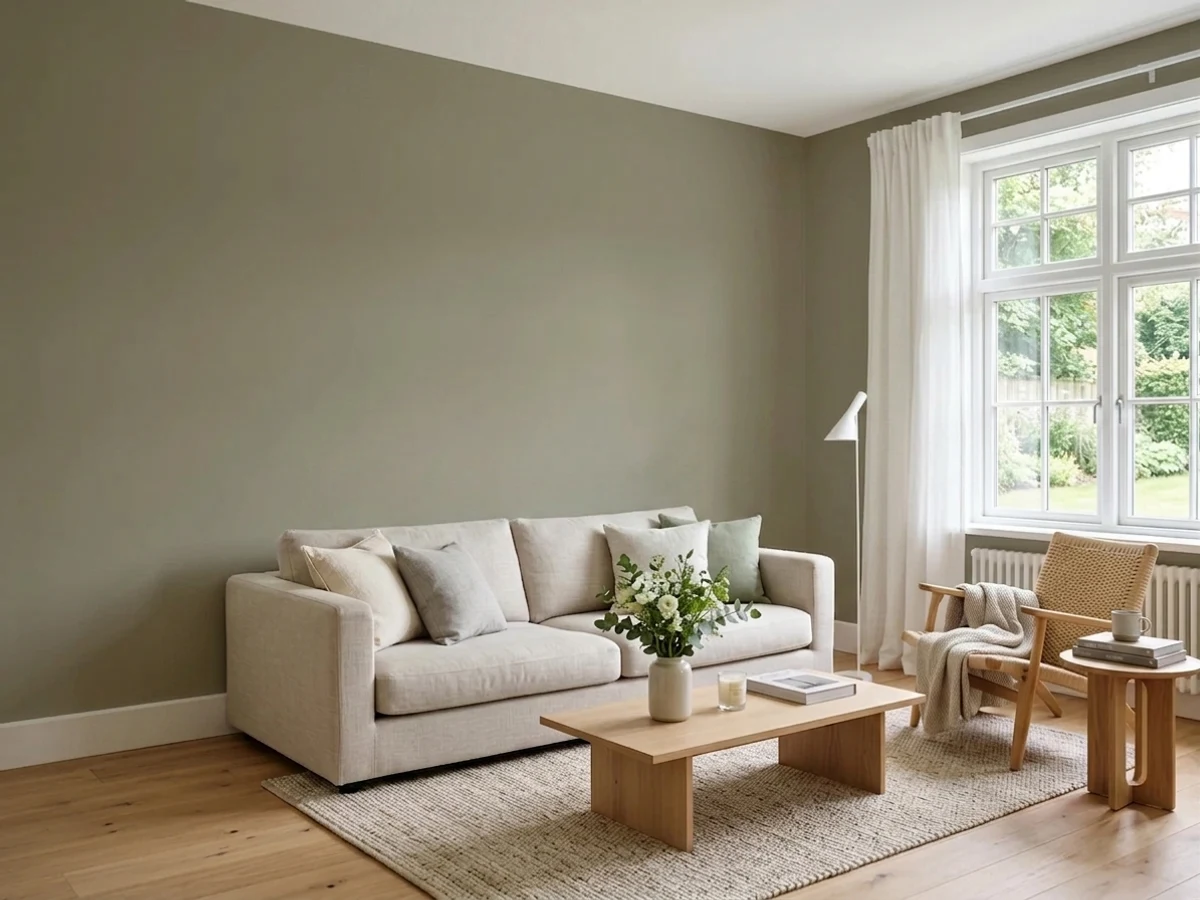
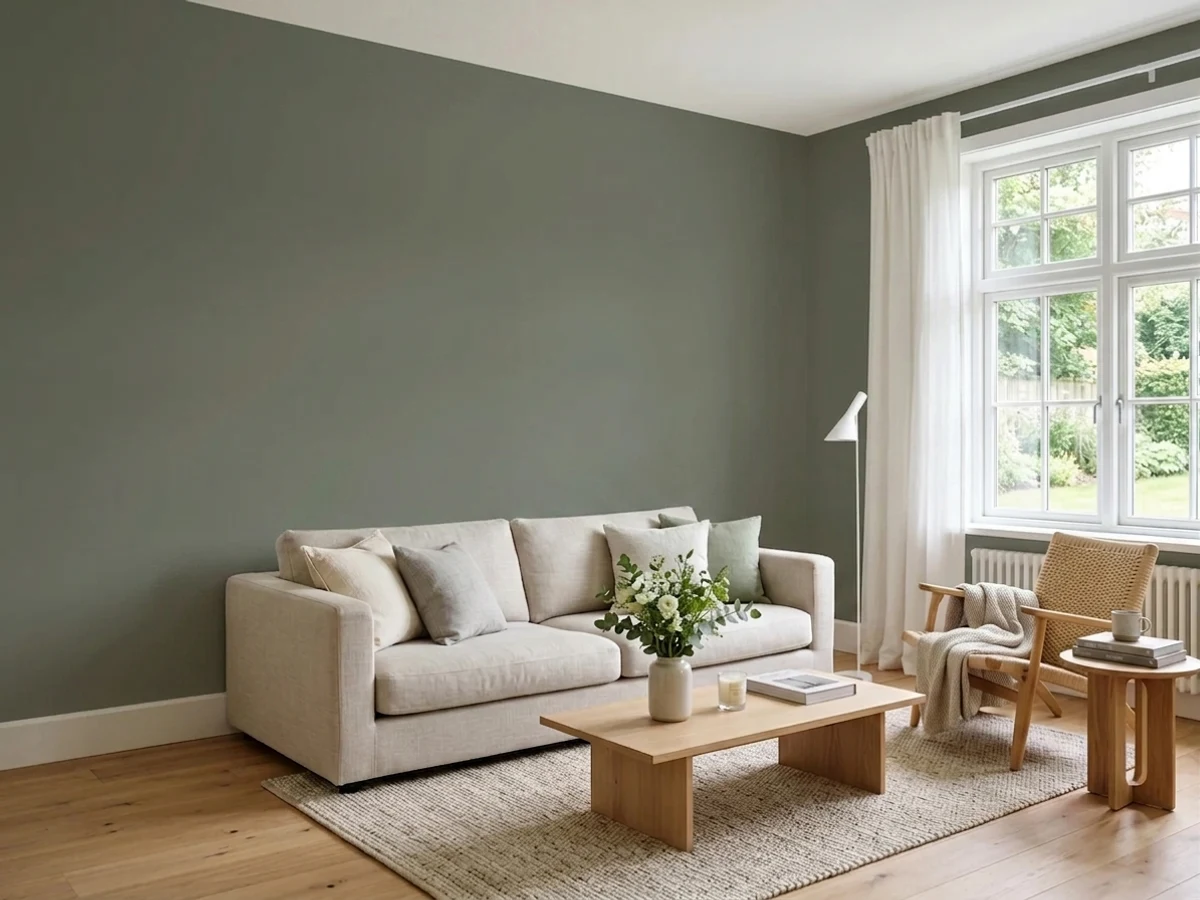
Green has quietly replaced grey as the safe-but-interesting wall color of the late 2020s. Sage Green, the soft grey-green that became the de facto fallback, anchors the family — but the broader green palette runs from olive (warm, earthy, faintly yellow) to forest (deep blue-green) to emerald (saturated jewel tone).
Editor's Picks: Green for Trims
4 picks30 Green Picks Across the LRV Range
30 of 2,263 · sorted dark → lightLooking for more? All green → covers every brand; brand × family pages show full decks.
Green Trim Colors at Every US Brand
19 brands · up to 10 picks eachUp to 10 picks per brand spread across the green LRV range, drawn from each brand's full deck. Tap any swatch with a curated guide for full spec; tap the brand title for the brand's complete green deck.
Behr
Benjamin Moore
Glidden
Valspar
Dunn-Edwards
PPG / Glidden
Sherwin-Williams
Dutch Boy
Hirshfield's
Diamond Vogel
Kompozit
C2 Paint
Farrow & Ball
Magnolia Home
Clare
Rodda
Annie Sloan
Backdrop
Other Trim Color Families
Green Colors in Other Rooms
Green Paint Colors for a Trim
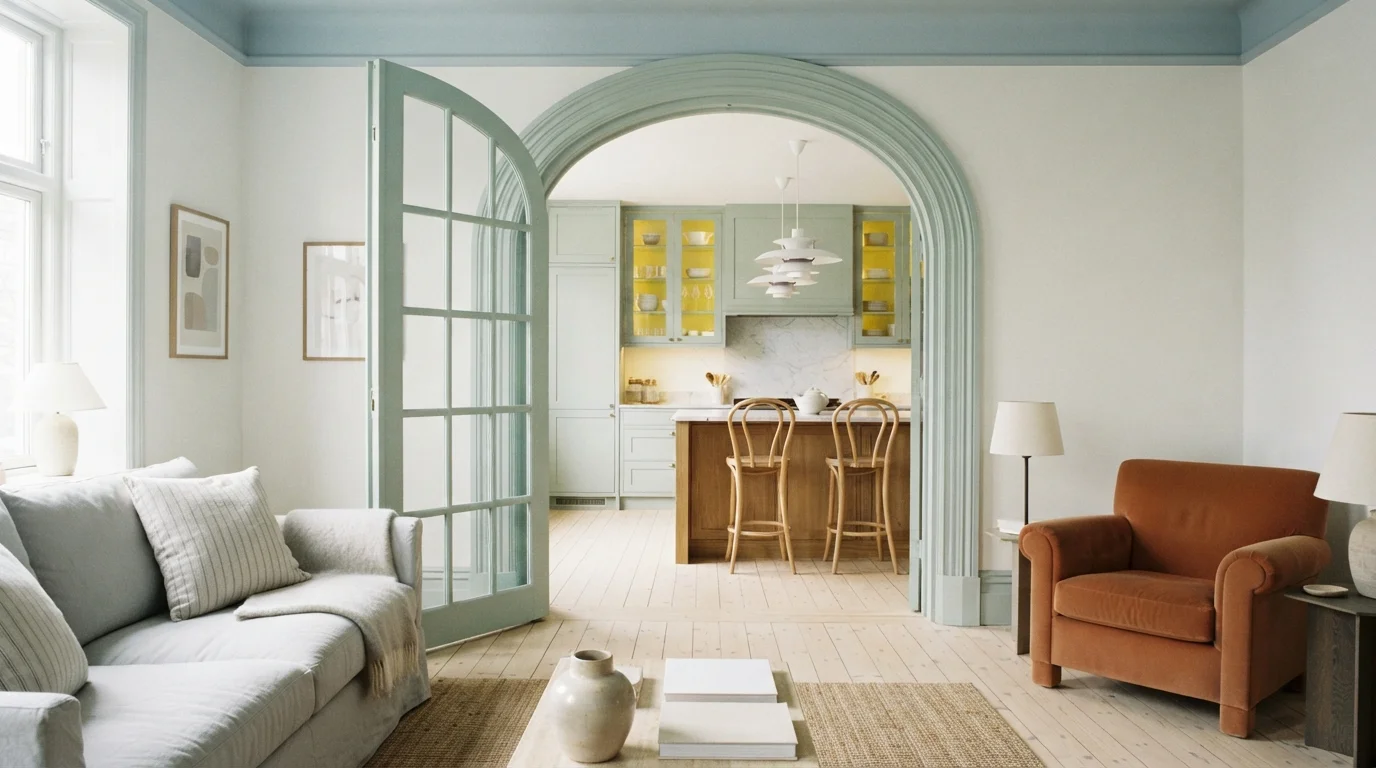
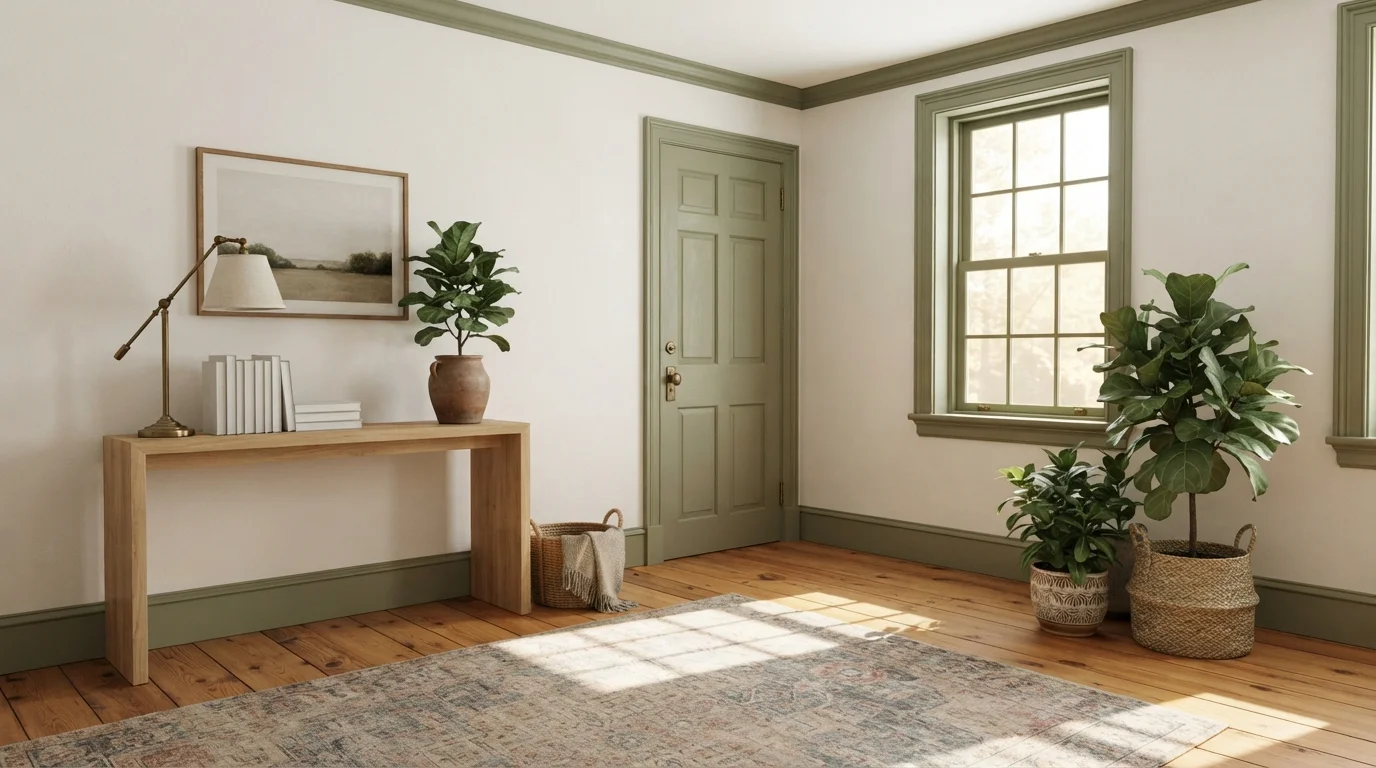
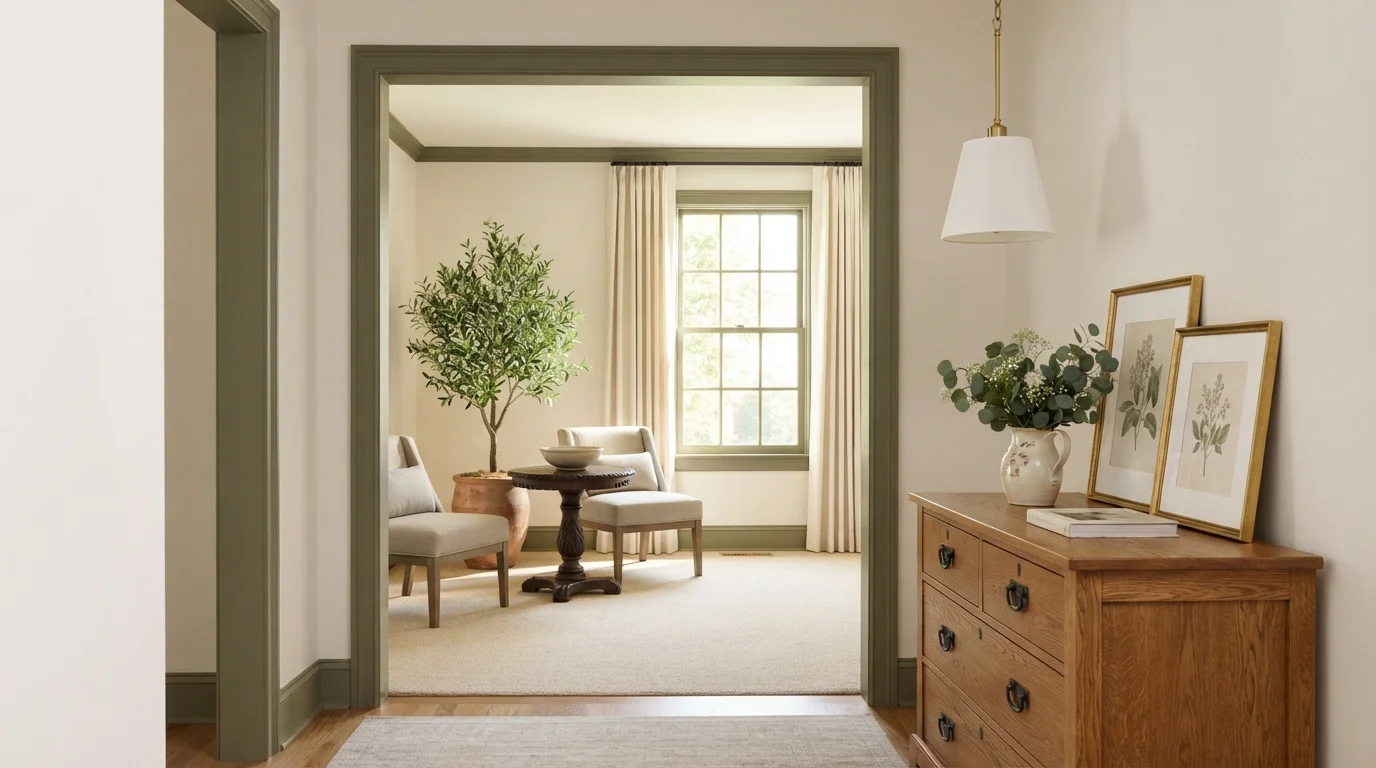
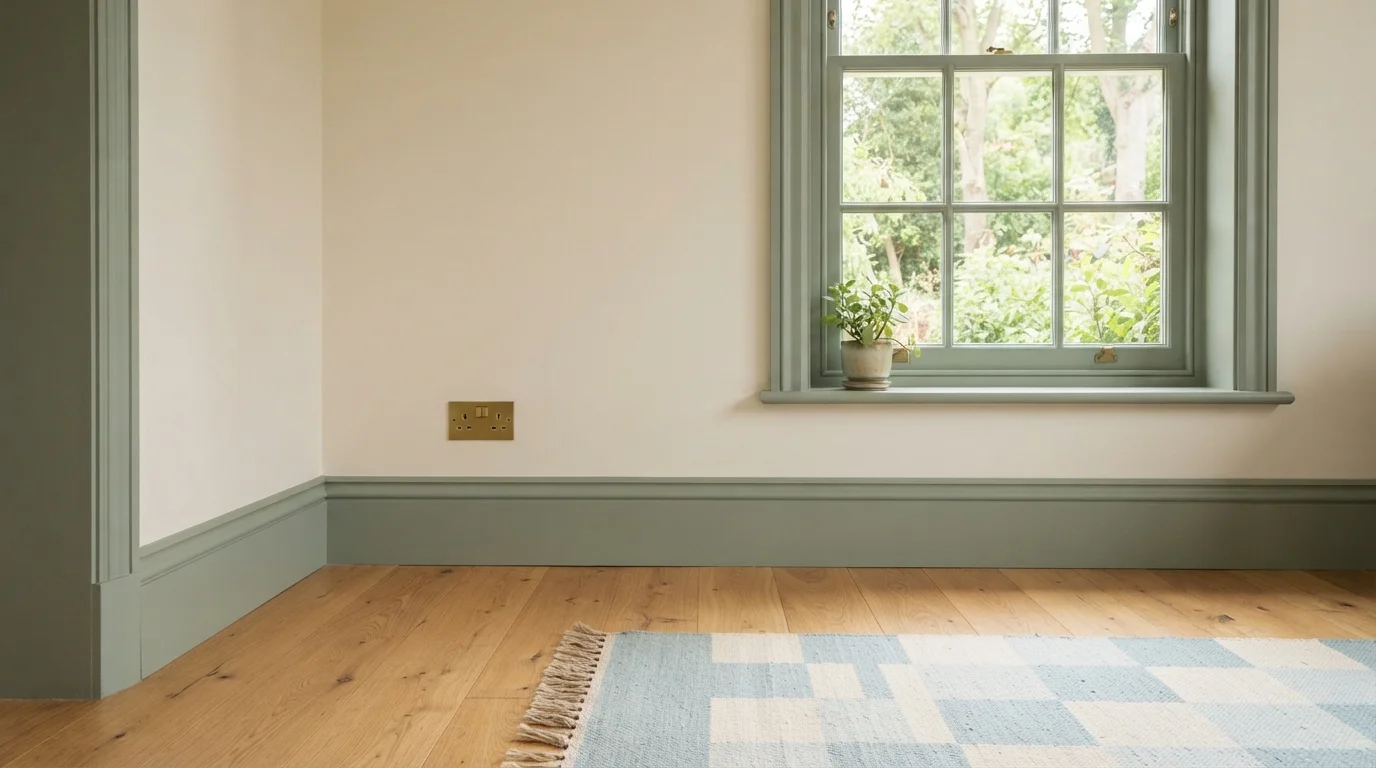
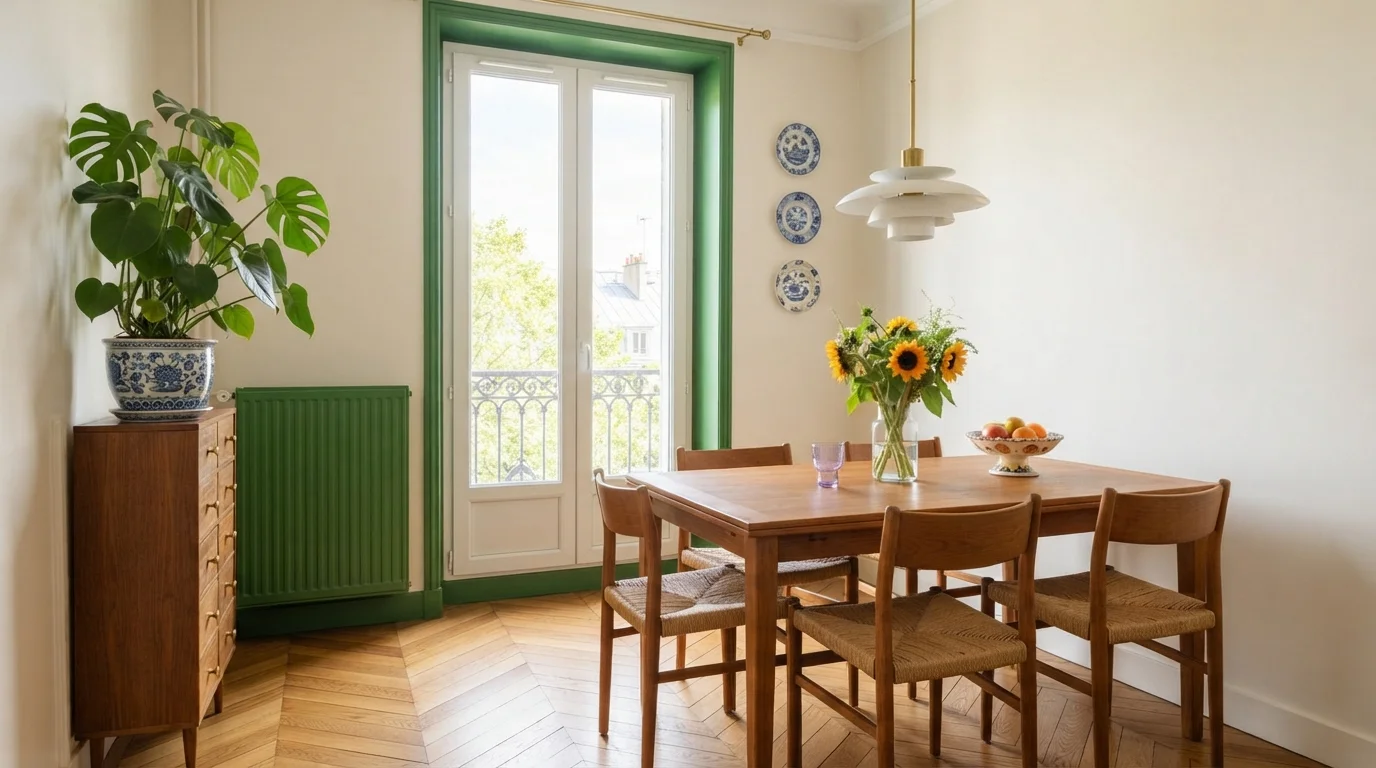
Green on trim is one of the quietest ways to add personality to a room without repainting the whole thing. Baseboards, window casings, door frames, crown molding, and built-in edges are small surfaces, so a green here reads as a deliberate accent rather than a loud statement. The trick is that trim takes a beating from shoes, mops, sticky fingers, and furniture, so the green you choose has to look good and hold up at the same time.
This page is about using green specifically on trim, not green walls and not white trim. The right pick depends on how deep you go, how much daylight the room gets, and what your walls and floors are already doing. Every green shown here can be mixed to order at a paint counter, and the cross-match tools let you take a shade you like from one brand and get the closest version in another, so you are never locked in by what one store stocks.
Why Green Works On Trim
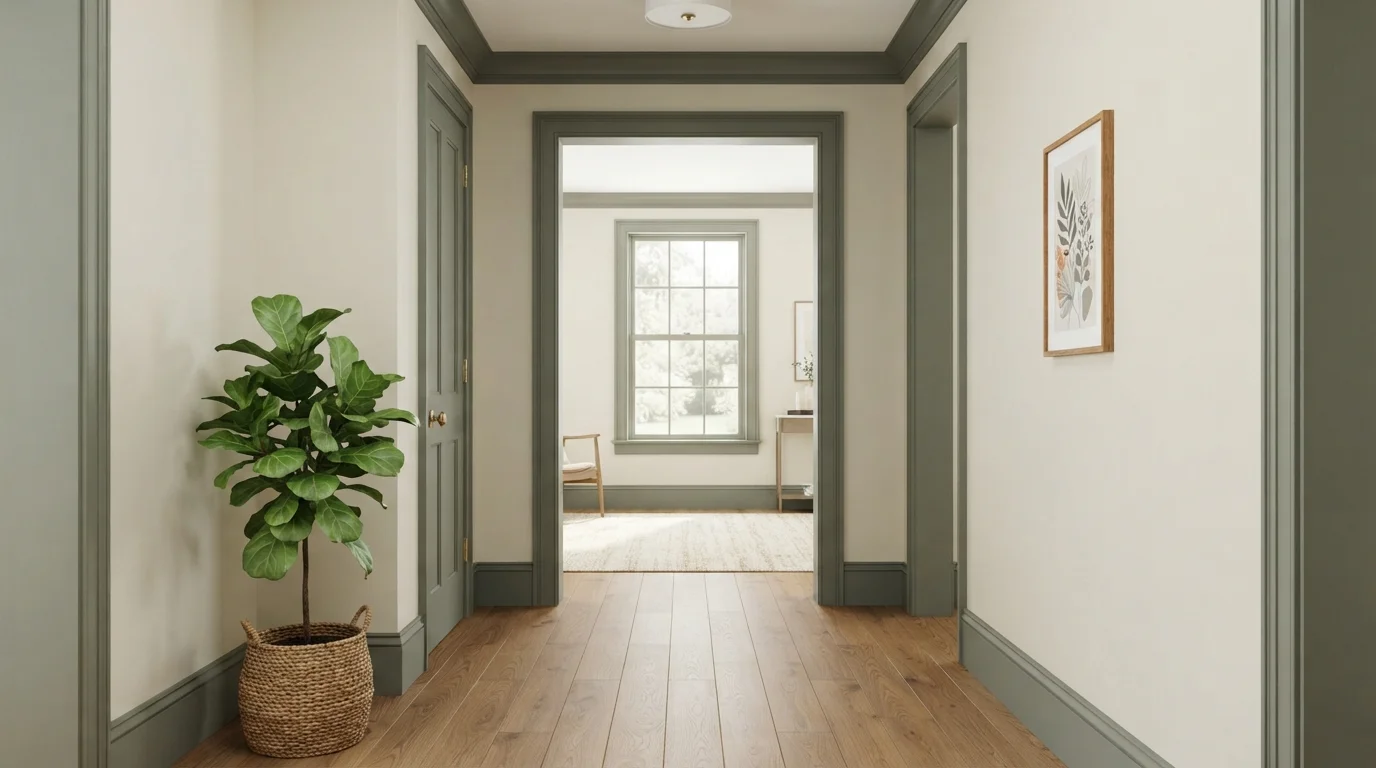
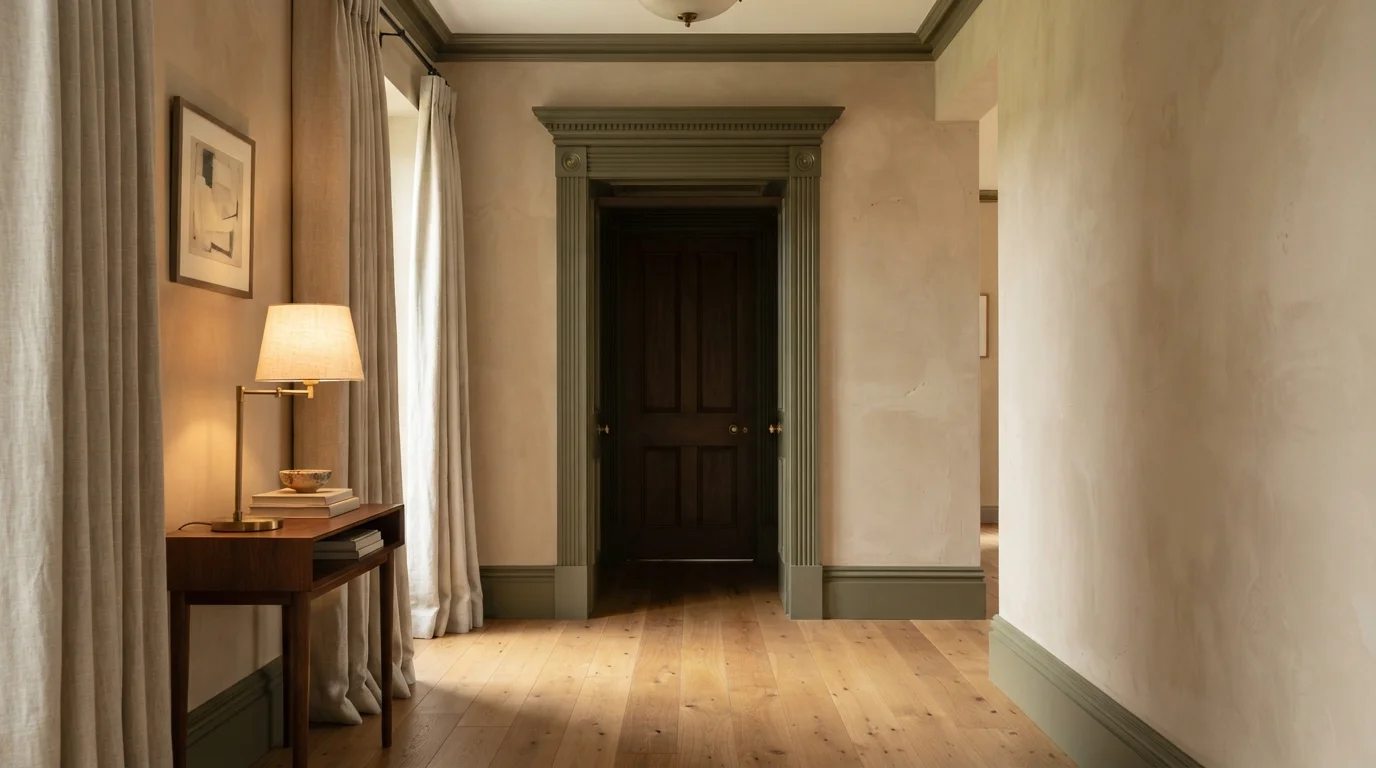
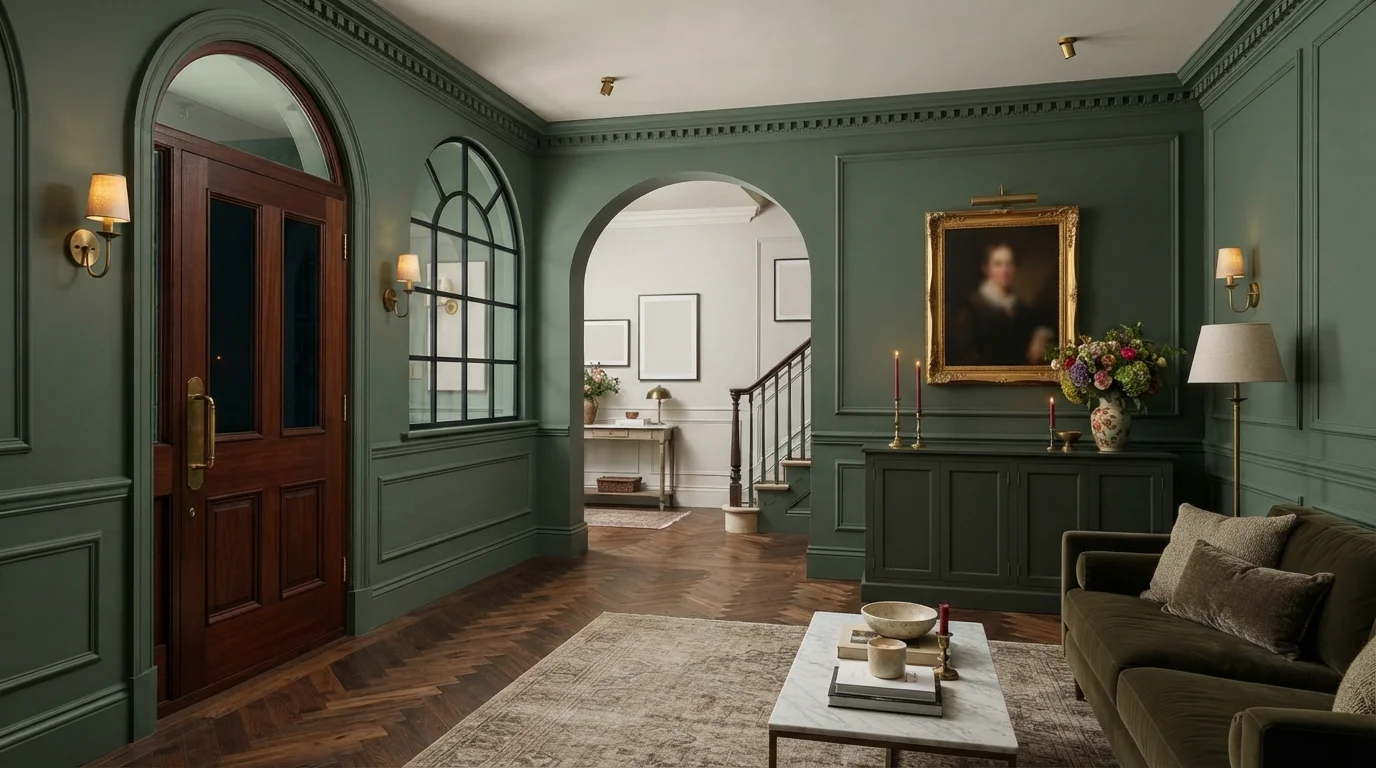
Trim outlines a room, so a green there draws the eye to the architecture itself. A soft sage on casings makes a plain doorway feel intentional, and a deep forest on baseboards grounds the bottom of a wall the way a dark hem grounds a curtain. Because trim is narrow, you can use a richer or moodier green than you would ever risk on a full wall.
The thing to watch is contrast. Green trim only reads as trim if it separates cleanly from the wall and the floor next to it. Against an off-white wall almost any green works, but against a beige or another green wall you need enough difference in depth or tone, or the trim disappears and the whole effect is lost.
Choosing The Right Depth Of Green
LRV, or light reflectance value, tells you how light or dark a color is on a scale of 0 to 100. For trim, depth is a style choice more than a brightness rule, but the room's light still steers it. In a bright room with lots of windows, a mid-to-deep green (LRV roughly in the 15 to 35 range) looks crisp and holds its color all day. In a darker room or one with cool north light, a green that low can read almost black on the trim, so something a little lighter and warmer keeps it looking green.
Very pale greens, up around LRV 60 and higher, behave more like a tinted white and give you the softest, most subtle trim. Warm yellow-greens tend to feel friendly and stay lively in low light, while blue-greens look fresh in strong daylight but can turn gray and flat in a dim space. Look at a sample on the actual trim, in morning and evening light, before you commit.
The Right Sheen For Green Trim
Trim almost always wants a harder, glossier finish than walls because it gets touched, scuffed, and cleaned constantly. Satin is the everyday choice for green trim — it wipes down easily and hides minor surface flaws. Semi-gloss is the more durable step up and is worth it on doors, kitchen casings, and any trim near water or heavy traffic, since it stands up to repeated scrubbing.
Gloss and semi-gloss do show every brush mark, dent, and patch, and they bounce more light, which can make a deep green trim look almost wet in a sunny window. If your trim is older and a little beat up, satin is more forgiving. Whatever sheen you pick, keep it consistent across all the trim in the room so the green reads as one clean line.
Pairing Green Trim With The Rest Of The Room
Green trim is happiest against a neutral wall. Warm whites, soft greige, and pale clay let the green stand out without competing, and a crisp white wall makes a deep green trim look sharp and modern. If your walls are already a color, keep them low-saturation so the trim stays the brightest green note in the room.
For ceilings, a plain white usually wins because it keeps the green from feeling heavy overhead. With fixtures and hardware, green pairs cleanly with brass and unlacquered brass for a warm, traditional feel, with matte black for something graphic, and with nickel or chrome when you want it cool and quiet. If there are built-ins or cabinetry in the room, you can either match the green to them for a built-up look or keep the trim a shade deeper so the edges still define the space.
Common Mistakes With Green Trim
The most common miss is too little contrast — a soft green trim against a soft green or warm beige wall just muddies together and looks like a mistake rather than a choice. The second is going too cool: a blue-leaning green that looked great on the chip can turn gray and cold once it is on narrow trim in a low-light room. Always test on the real trim before buying gallons.
The other frequent errors are practical. Using a flat or eggshell sheen on trim that gets handled means scuff marks you can never fully clean off, and skipping primer over old oil-based or glossy trim leads to peeling at exactly the edges that get touched most. Sand, prime, and use a satin or semi-gloss, and the green will stay looking intentional for years.
Green Trim Paint — Frequently Asked Questions
Is green a good color for trim?+
Yes, especially when you want trim to feel like a design choice instead of a plain border. Green works best when there is clear contrast between the trim and the wall next to it, and when you use a durable satin or semi-gloss finish so it holds up to everyday wear.
What shade of green is best for trim?+
It depends on the room's light. Bright, sunny rooms can carry a deep mid-tone green (roughly LRV 15 to 35) without it going dark, while dim or north-facing rooms look better with a slightly lighter, warmer green so it still reads as green and not near-black.
What sheen should I use on green trim?+
Satin for everyday trim and semi-gloss for doors, kitchens, and anything near water or heavy traffic. Both wipe clean easily; just avoid flat and eggshell on trim because they scuff and stain where hands and furniture touch.
What wall colors go with green trim?+
Neutrals are the safest pairing — warm white, soft greige, pale clay, or crisp white all let the green stand out. If your walls are a color, keep them low in saturation so the green trim stays the brightest accent in the room.
Will green trim make a small room feel smaller?+
Not usually, because trim is a narrow surface. A deep green on baseboards and casings actually frames a small room and adds depth, as long as the walls and ceiling stay light so the room does not feel boxed in.
Can I match a green I like across different paint brands?+
Yes. Every green shown here is mixed to order at the paint counter, and the cross-match tool finds the closest version of a shade in another brand, so you can pick the green you love and get it wherever you shop.