Gray Trim Paint Colors
3,425 gray colors that work in trims, drawn from the full ~30,000-color US paint deck. Below: editor's picks specific to trims, then 30 picks spread across the LRV range — narrow further on the brand page when you've shortlisted.
Gray is the most-recommended neutral in American interiors — the safe choice that anchors a room without committing to a strong color. The "true" grays here lean cool (blue or violet undertone) or stay almost dead-neutral. The warm-leaning grays (taupe, mushroom, greige) live in the Neutral family next door because they read closer to beige than to true gray on the wall.
Editor's Picks: Gray for Trims
4 picks30 Gray Picks Across the LRV Range
30 of 3,425 · sorted dark → lightLooking for more? All gray → covers every brand; brand × family pages show full decks.
Gray Trim Colors at Every US Brand
21 brands · up to 10 picks eachUp to 10 picks per brand spread across the gray LRV range, drawn from each brand's full deck. Tap any swatch with a curated guide for full spec; tap the brand title for the brand's complete gray deck.
Behr
Glidden
Valspar
Benjamin Moore
PPG / Glidden
Sherwin-Williams
Dunn-Edwards
Dutch Boy
Diamond Vogel
Hirshfield's
Kompozit
C2 Paint
Rodda
Magnolia Home
Farrow & Ball
Clare
Portola Paints
Annie Sloan
Backdrop
Rust-Oleum
Other Trim Color Families
Gray Colors in Other Rooms
Gray Paint Colors for a Trim
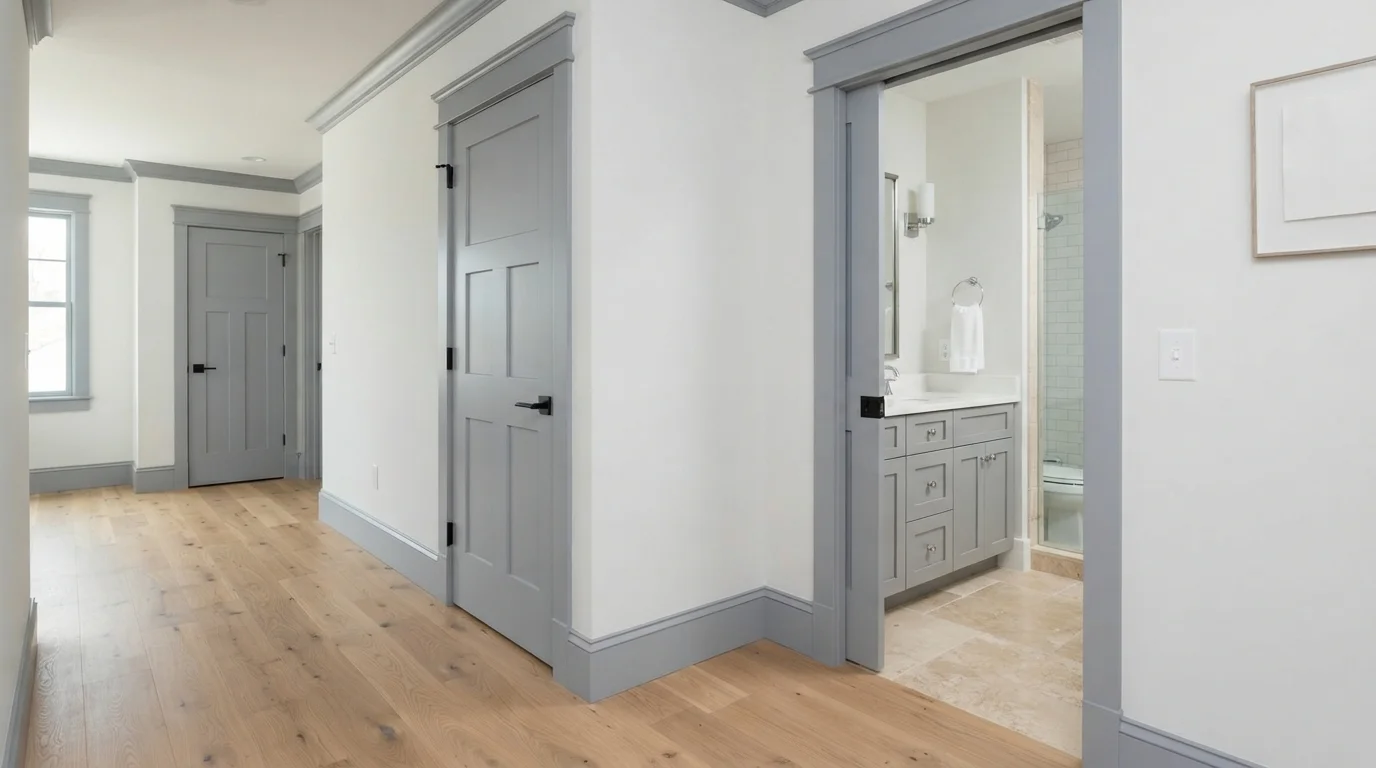
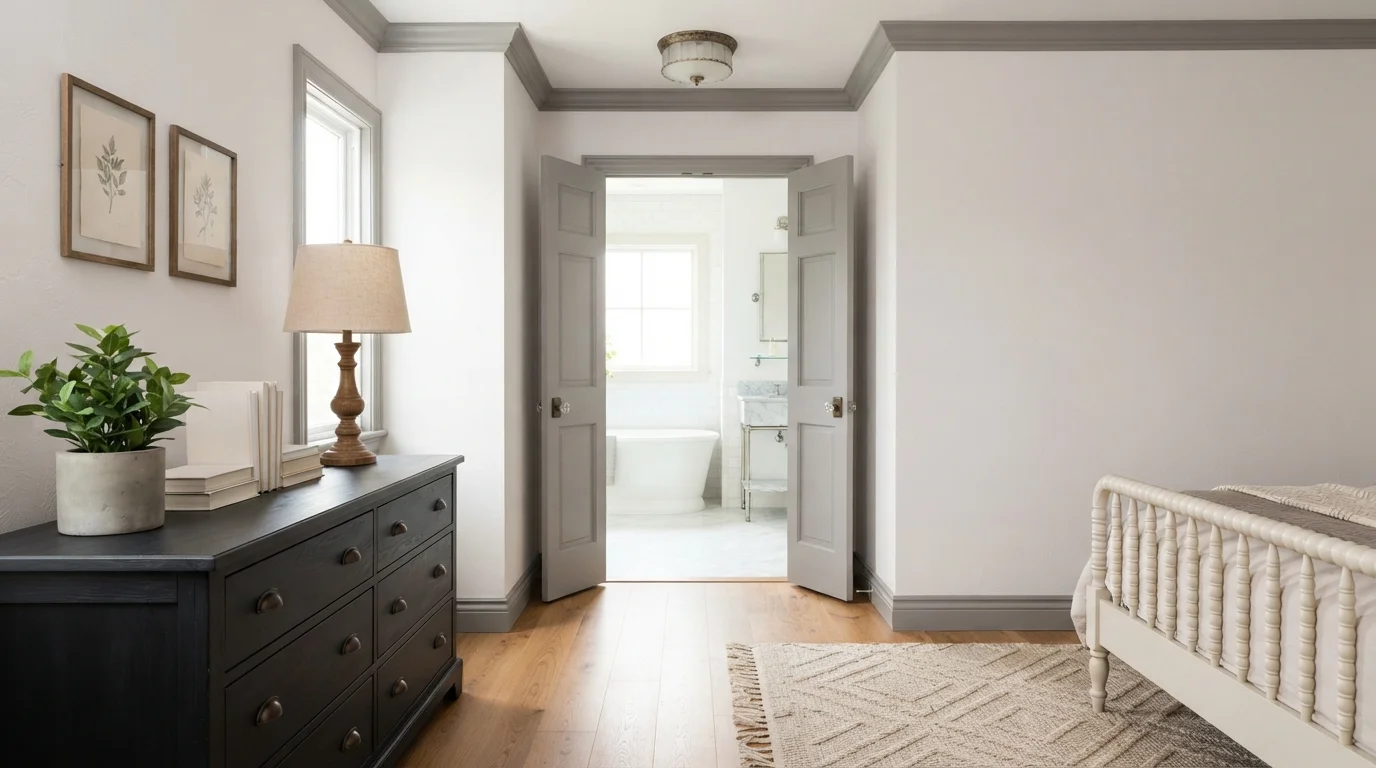
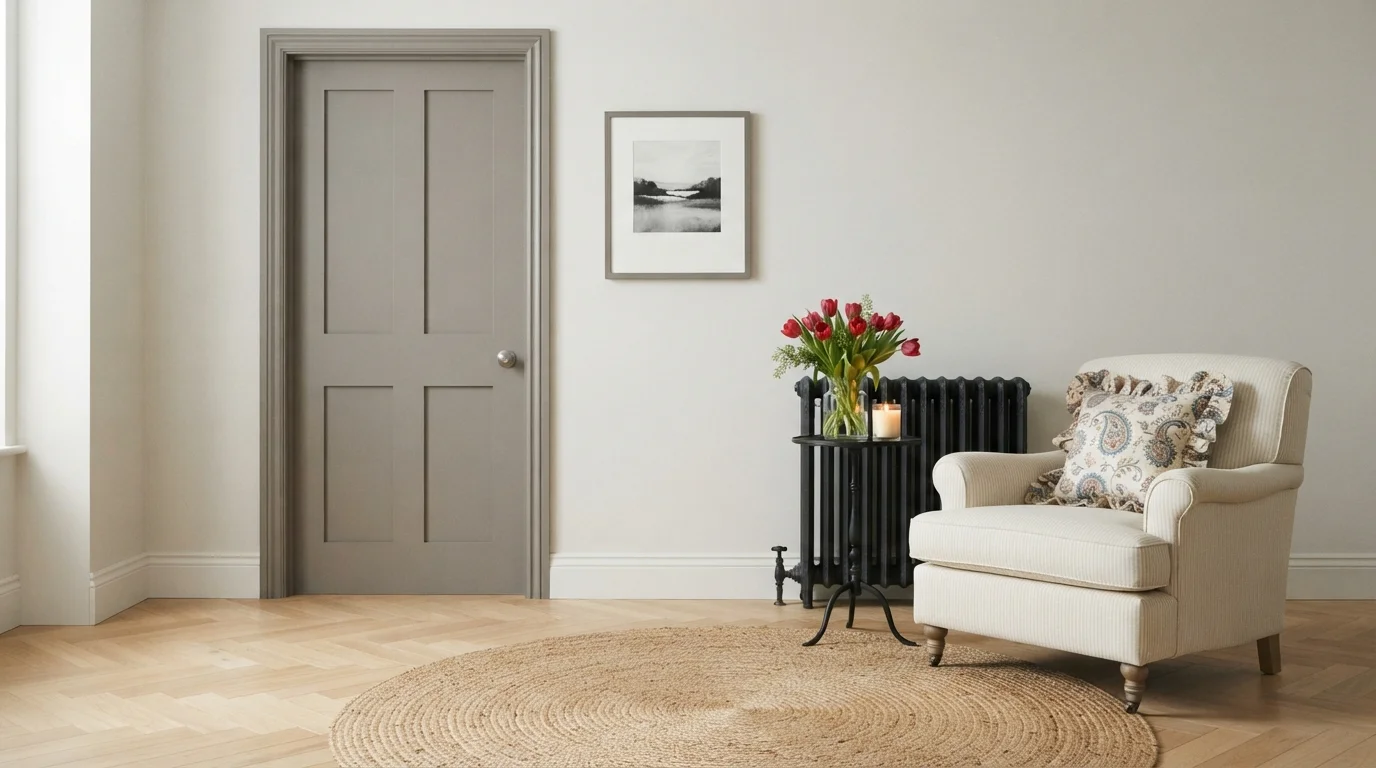
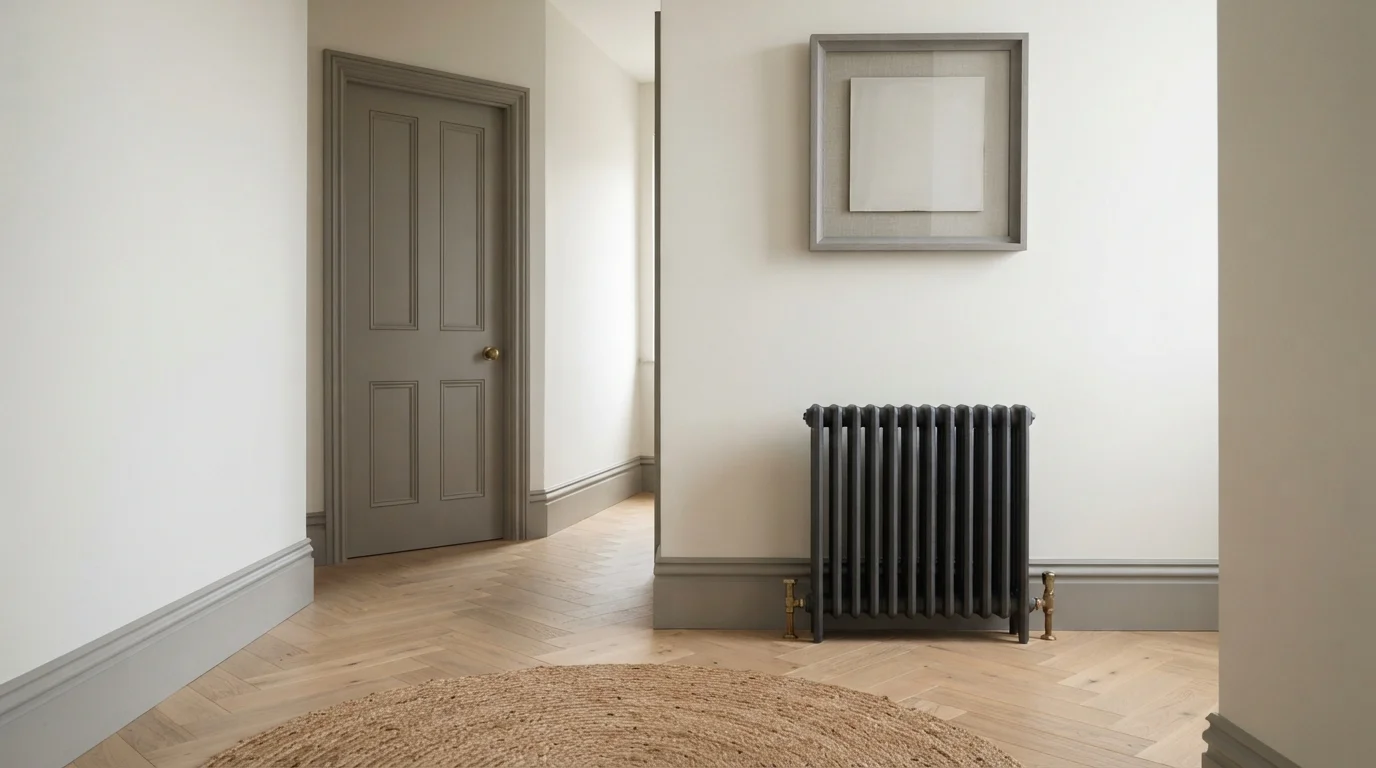
Gray on trim is a quieter choice than crisp white, and it does some things white can't. It softens the line where the wall meets the molding, hides scuffs and fingerprints better than bright white, and gives baseboards, casings, and crown a grounded, architectural feel. The trick is that trim is small in surface area but high in contrast, so the exact gray you pick reads louder there than it would on a whole wall.
Every gray you see on this page is a paint formula, not a fixed product. It gets mixed to order at the store, which means you can take a shade you like from one brand and have it cross-matched into another brand's paint line. That matters for trim, because trim paint needs a tougher, glossier base than wall paint, and you want the freedom to put your favorite color into the right kind of can.
Why Gray Works on Trim
Trim frames the room, so its color sets the contrast level for everything else. A gray trim gives you a softer edge than white, which reads calmer and more modern, and it pulls cool or warm undertones in the walls forward without shouting. It also forgives daily life better, since dust, shoe marks, and hand smudges disappear on a mid-gray far faster than on a stark white baseboard.
The catch is that trim is seen up close and edge-on. A gray that looks neutral on a big wall can look dingy or blue on a narrow casing, so you are really choosing how much contrast you want against the wall, not just a color you like in the can.
Picking the Right Depth of Gray
For trim, depth is everything, and the room's light decides it. In a bright, sun-filled room you can go deeper, since a gray with an LRV in the 30s to 50s will hold its shape and not wash out at the edges. In a darker room or a north-facing space, a deeper gray can turn heavy and muddy on small moldings, so a lighter gray in the LRV 55 to 70 range keeps the trim from disappearing into shadow.
LRV is just how much light a color bounces back, from 0 black to 100 white. Trim usually wants to sit a step or two off the wall in either direction, so check the LRV gap between your wall and your trim color before you commit, not just the swatches side by side.
The Right Finish for Gray Trim
Trim takes abuse, so skip flat and matte here. A satin or semi-gloss on gray trim wipes clean, resists chips on door casings and baseboards, and stands up to the bumps that trim always gets. Semi-gloss is the most durable and washable, which is why it is the standard for trim that sees hands and feet.
Sheen also changes how the gray reads. The glossier the finish, the more it picks up light and the lighter and cooler the gray can appear, while a satin keeps the color truer and cuts glare. In a room with strong direct sun, a satin or low semi-gloss on trim avoids the hot shine you get from a high-gloss surface catching the light.
Pairing Gray Trim With the Room
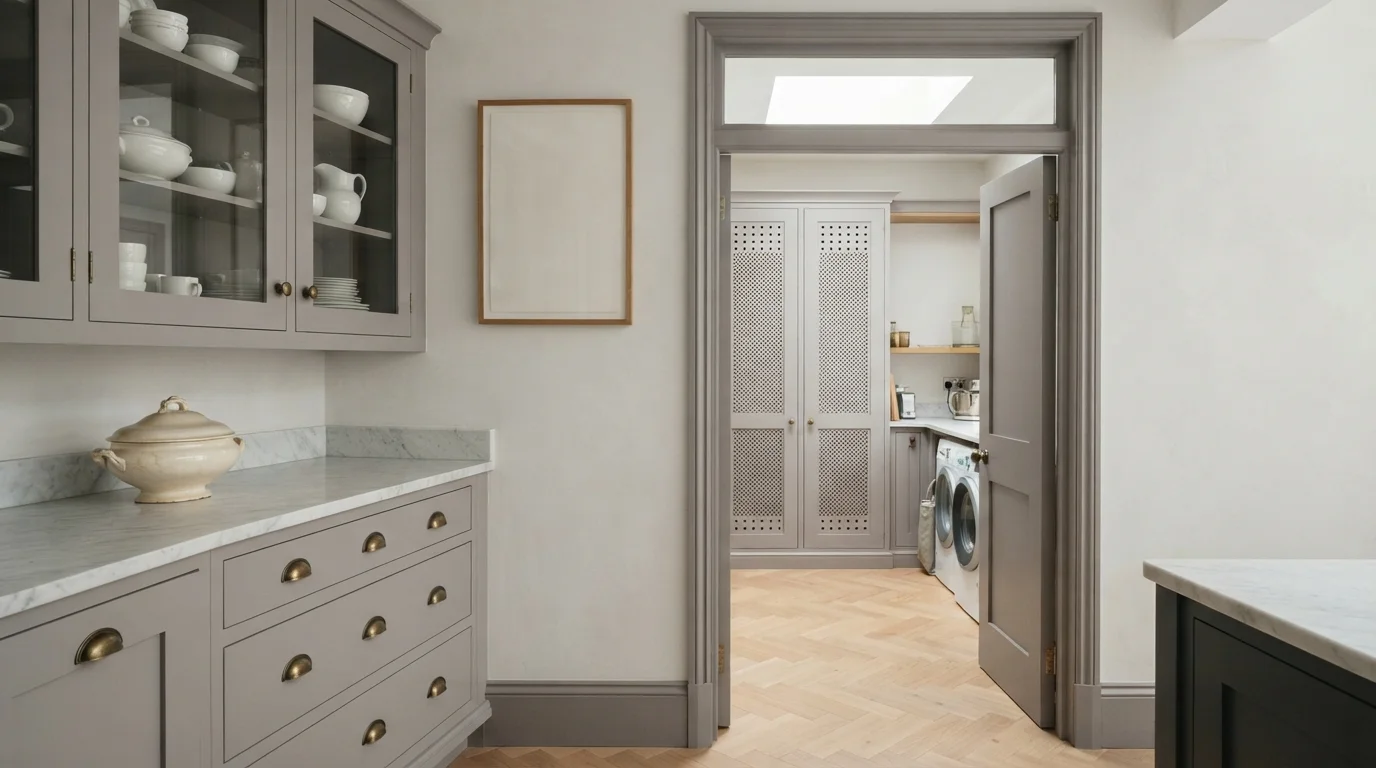
Gray trim is most flexible when the wall, ceiling, and trim share an undertone. With white or off-white walls, gray trim gives clean, low-contrast definition that feels tailored rather than stark. With a colored wall, match the trim's undertone to the wall's so a cool gray trim sits with cool walls and a warm greige trim with warmer walls, otherwise the edges fight each other.
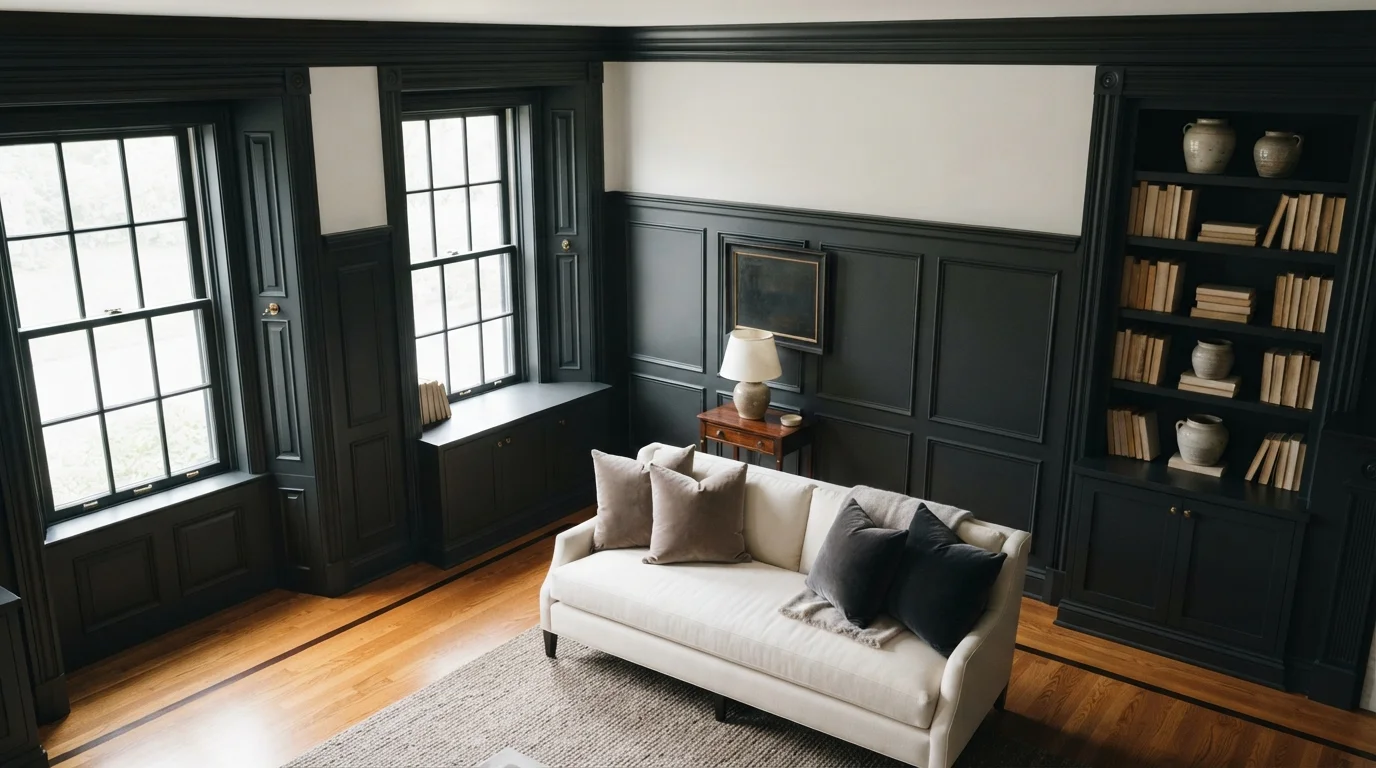
Gray trim also plays well with the metals and surfaces around it. Brushed nickel, chrome, and matte black hardware all read cleanly against cool gray, while warmer greige trim flatters brass, bronze, and wood tones. Keep the ceiling lighter than the trim so the trim still frames the space instead of competing with it.
Common Mistakes With Gray Trim
The biggest mistake is ignoring undertone. Many grays carry blue, green, or purple, and those undertones magnify on narrow trim and next to white, so a gray that looked neutral on the chip can suddenly read icy or lilac on the casing. Always test the actual paint on a piece of the real trim and look at it in daytime and at night under your bulbs.
The other common slip is too little contrast. If the trim gray and the wall are nearly the same value, the moldings vanish and the room looks flat and unfinished. Pick a gray that is clearly lighter or darker than the wall, and use a real trim-grade finish so the difference reads as intentional.
Gray Trim Paint — Frequently Asked Questions
What sheen should I use for gray trim?+
Use satin or semi-gloss. Semi-gloss is the most durable and easiest to wipe clean, which suits baseboards and door casings that get touched and kicked. Satin is a good choice if you want less glare and a truer color, especially in rooms with strong direct light.
What's the best LRV for gray trim?+
It depends on your light. Bright rooms can handle a deeper gray around LRV 30 to 50 without it washing out, while darker or north-facing rooms do better with a lighter gray around LRV 55 to 70 so the trim doesn't turn muddy. The goal is enough gap between the wall and trim values that the trim still frames the room.
Should gray trim be lighter or darker than the walls?+
Either works, but it should be clearly different. If the trim and wall sit at nearly the same value, the moldings disappear and the room looks unfinished. Most people keep trim a step or two off the wall, and lighter trim feels classic while darker gray trim looks more dramatic and tailored.
How do I keep gray trim from looking blue or cold?+
Watch the undertone and test it on the real trim. Cool grays with blue undertones show their color more on narrow moldings and next to white, so if you want warmth, choose a greige with a touch of brown or beige in it. Look at your sample in both daylight and your evening bulbs before committing.
Can I match a gray trim color across different paint brands?+
Yes. Every color shown here is mixed to order at the store, so a gray you like from one brand can be cross-matched into another brand's paint. That lets you put your chosen shade into a proper trim-grade enamel built for durability and washing, no matter which brand the color came from.
What colors go well with gray trim?+
Gray trim pairs cleanly with white and off-white walls for low-contrast definition, and with colored walls when they share the same undertone. For hardware and fixtures, cool grays flatter nickel, chrome, and matte black, while warmer greige flatters brass, bronze, and wood. Keep the ceiling lighter than the trim so the trim still does its framing job.