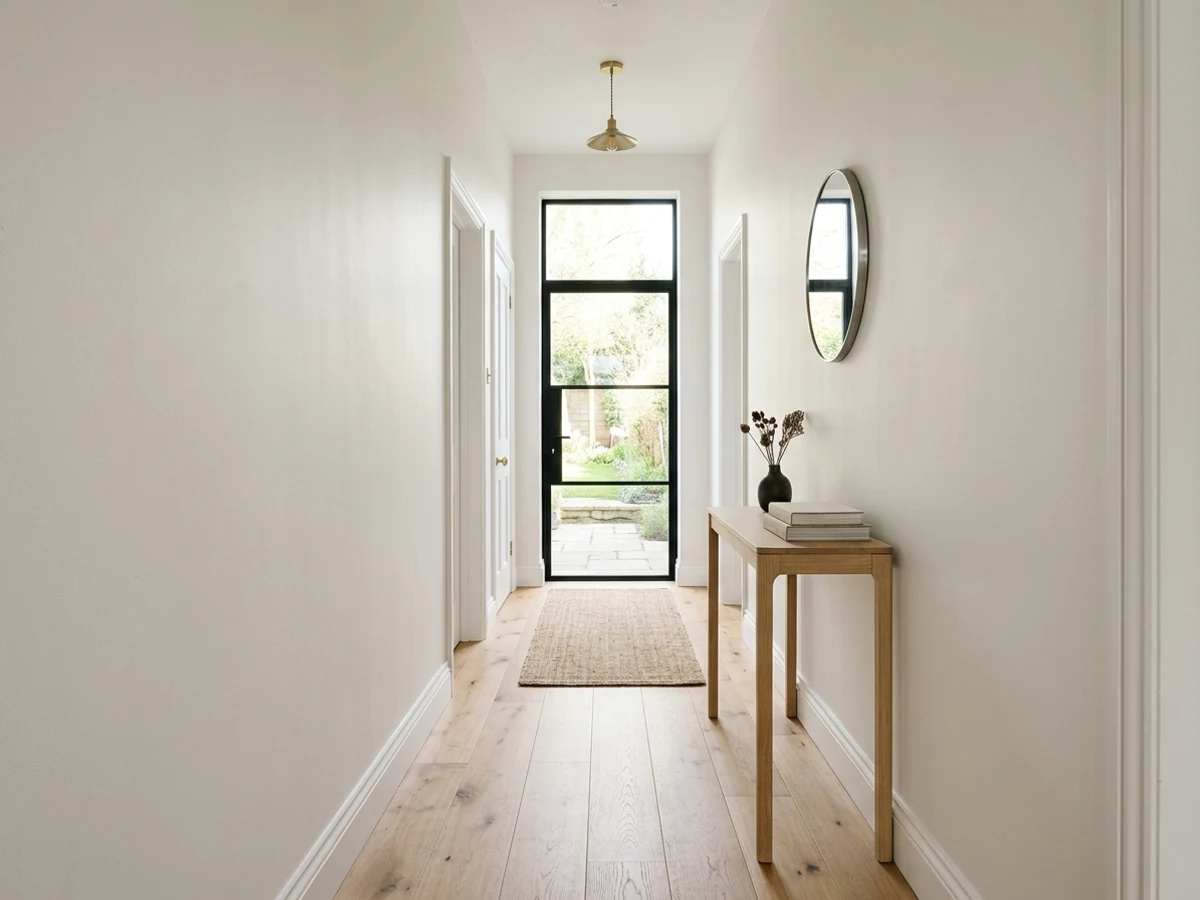
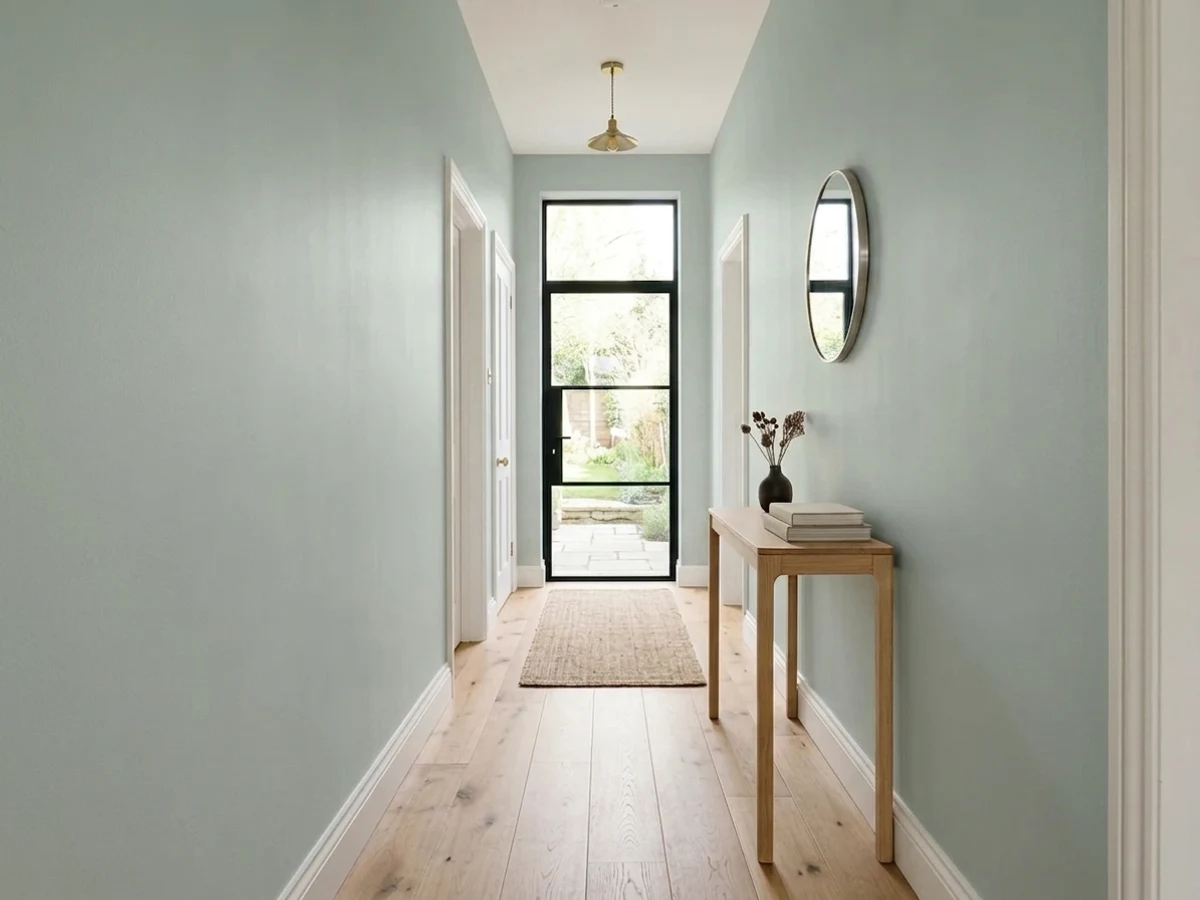
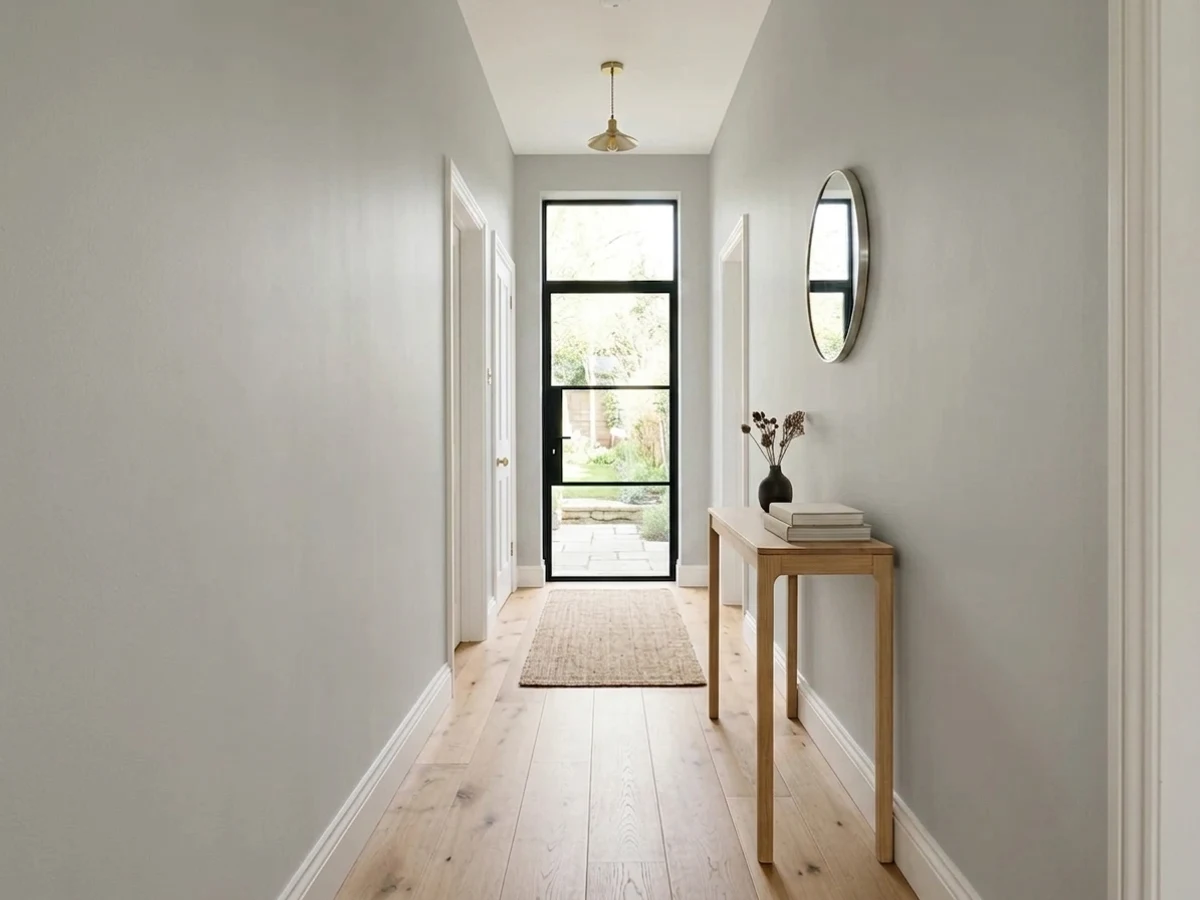
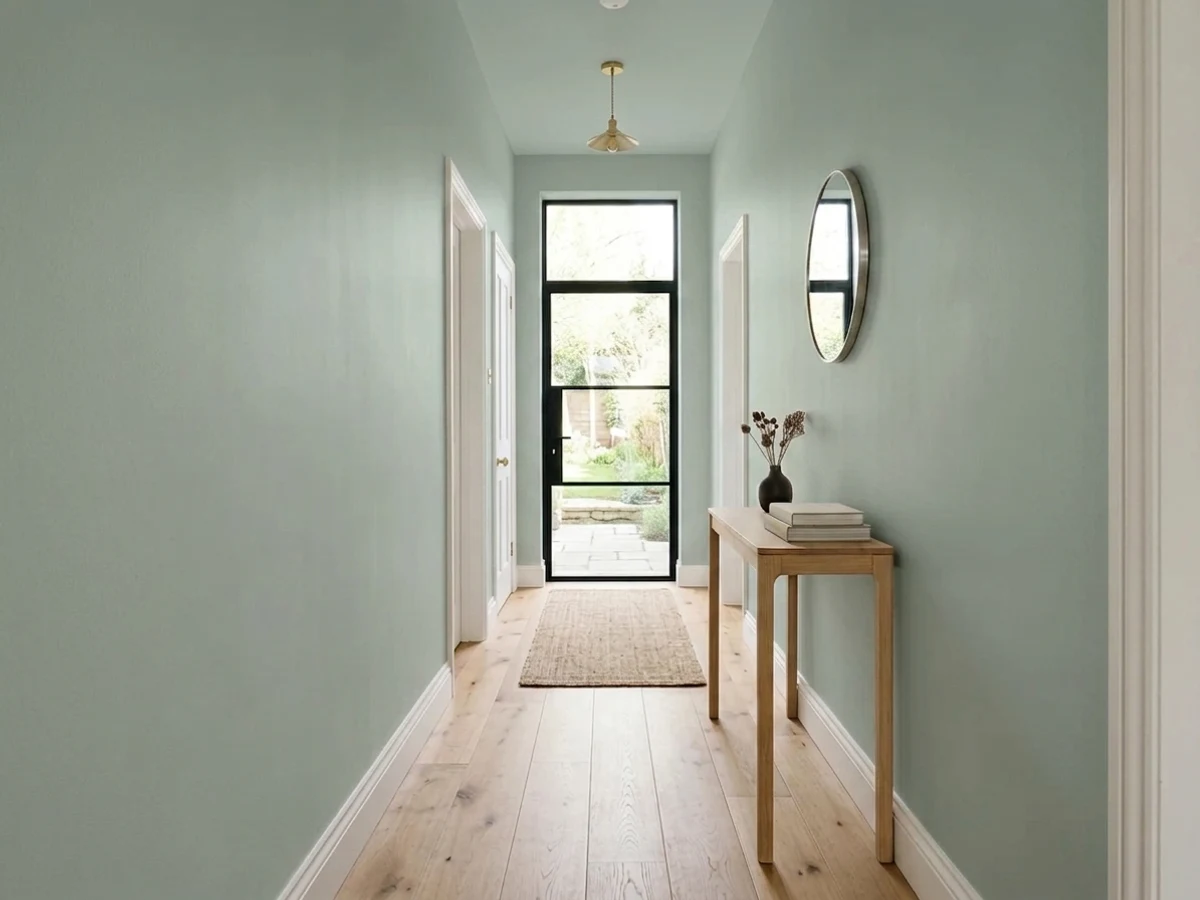
Gray Hallway Paint Colors
3,425 gray colors that work in hallways, drawn from the full ~30,000-color US paint deck. Below: editor's picks specific to hallways, then 30 picks spread across the LRV range — narrow further on the brand page when you've shortlisted.
Gray is the most-recommended neutral in American interiors — the safe choice that anchors a room without committing to a strong color. The "true" grays here lean cool (blue or violet undertone) or stay almost dead-neutral. The warm-leaning grays (taupe, mushroom, greige) live in the Neutral family next door because they read closer to beige than to true gray on the wall.
Editor's Picks: Gray for Hallways
4 picks30 Gray Picks Across the LRV Range
30 of 3,425 · sorted dark → lightLooking for more? All gray → covers every brand; brand × family pages show full decks.
Gray Hallway Colors at Every US Brand
21 brands · up to 10 picks eachUp to 10 picks per brand spread across the gray LRV range, drawn from each brand's full deck. Tap any swatch with a curated guide for full spec; tap the brand title for the brand's complete gray deck.
Behr
Glidden
Valspar
Benjamin Moore
PPG / Glidden
Sherwin-Williams
Dunn-Edwards
Dutch Boy
Diamond Vogel
Hirshfield's
Kompozit
C2 Paint
Rodda
Magnolia Home
Farrow & Ball
Clare
Portola Paints
Annie Sloan
Backdrop
Rust-Oleum
Other Hallway Color Families
Gray Colors in Other Rooms
Gray Paint Colors for a Hallway
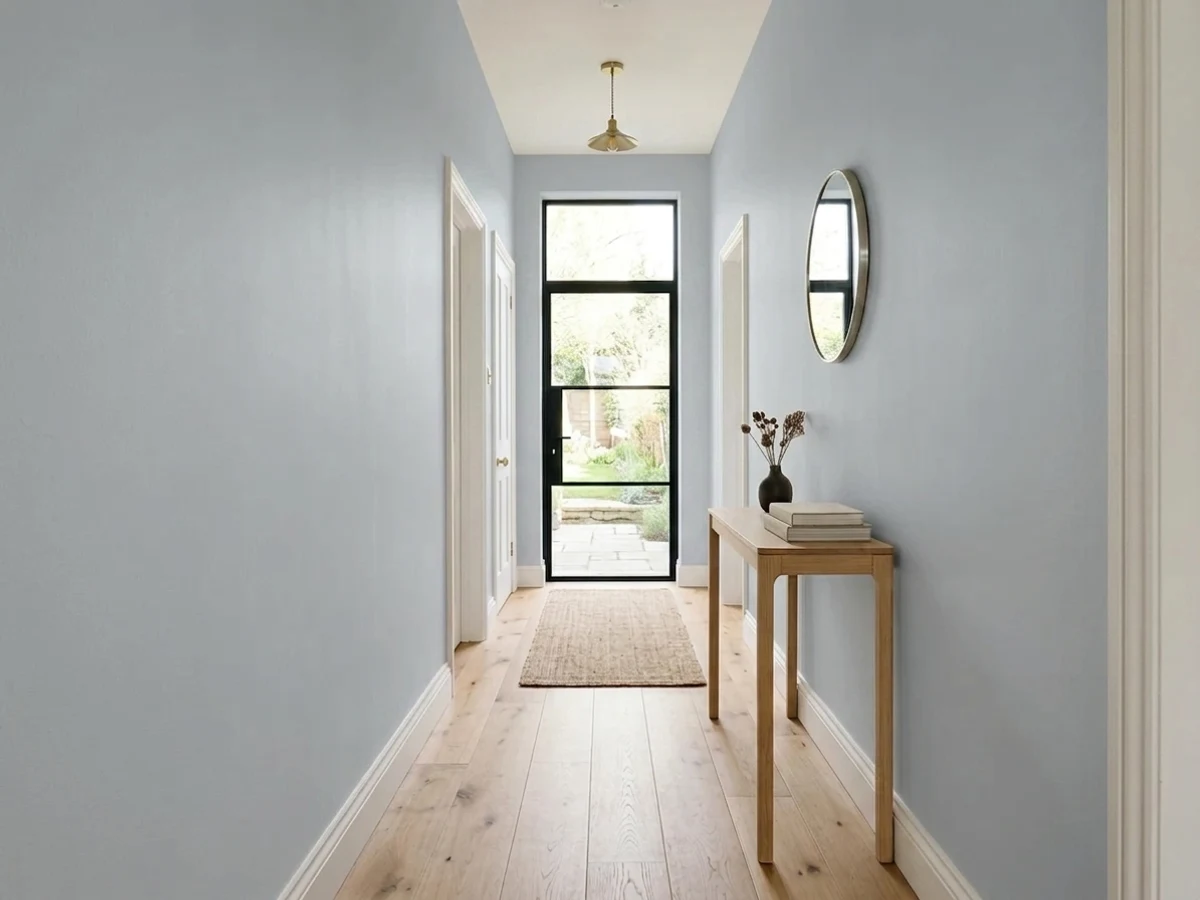
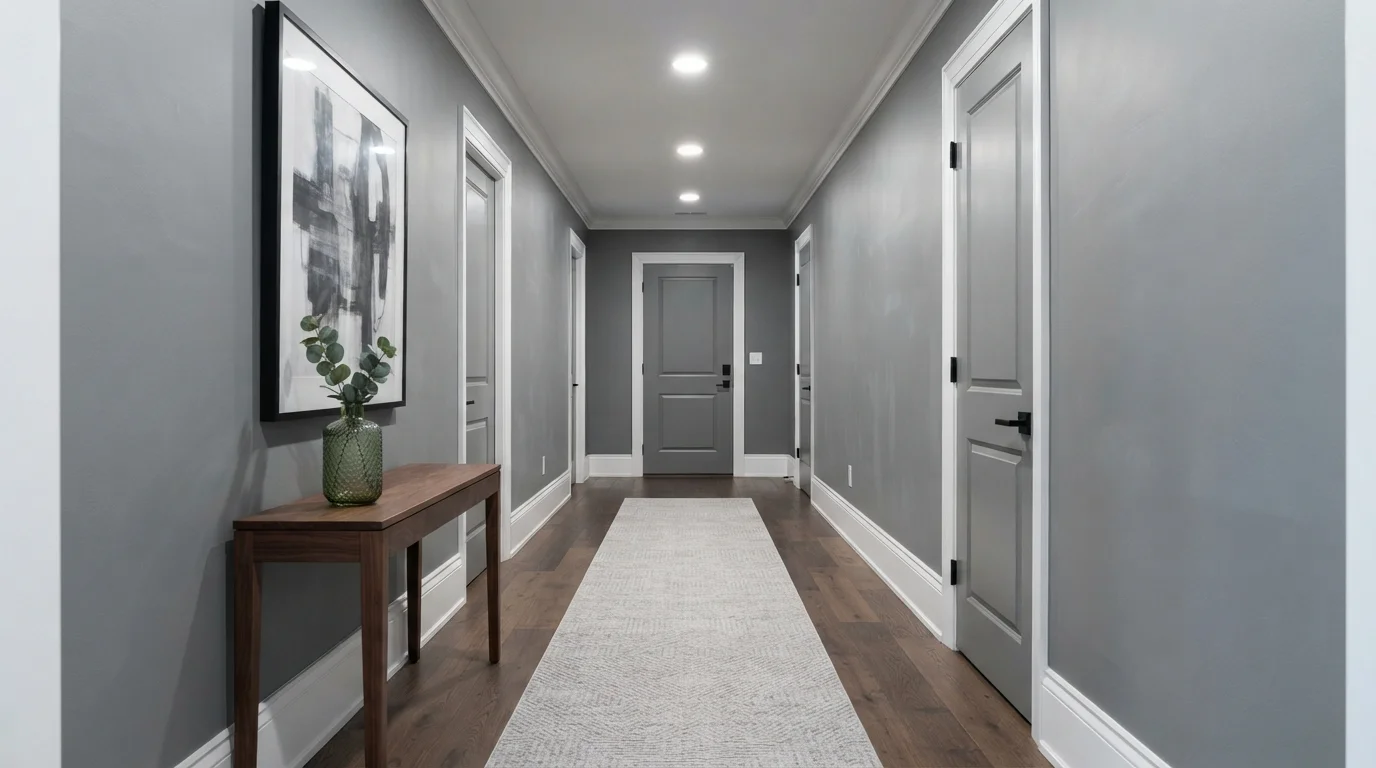
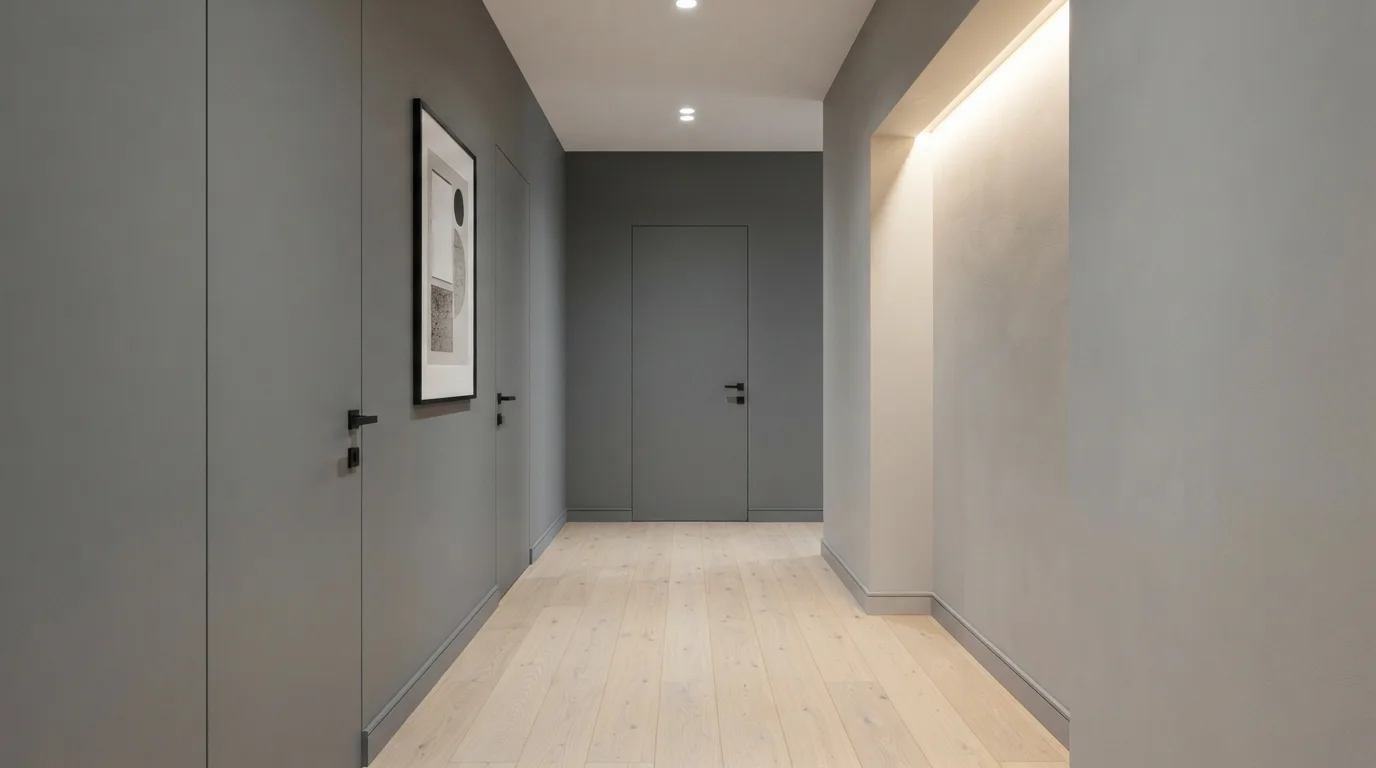
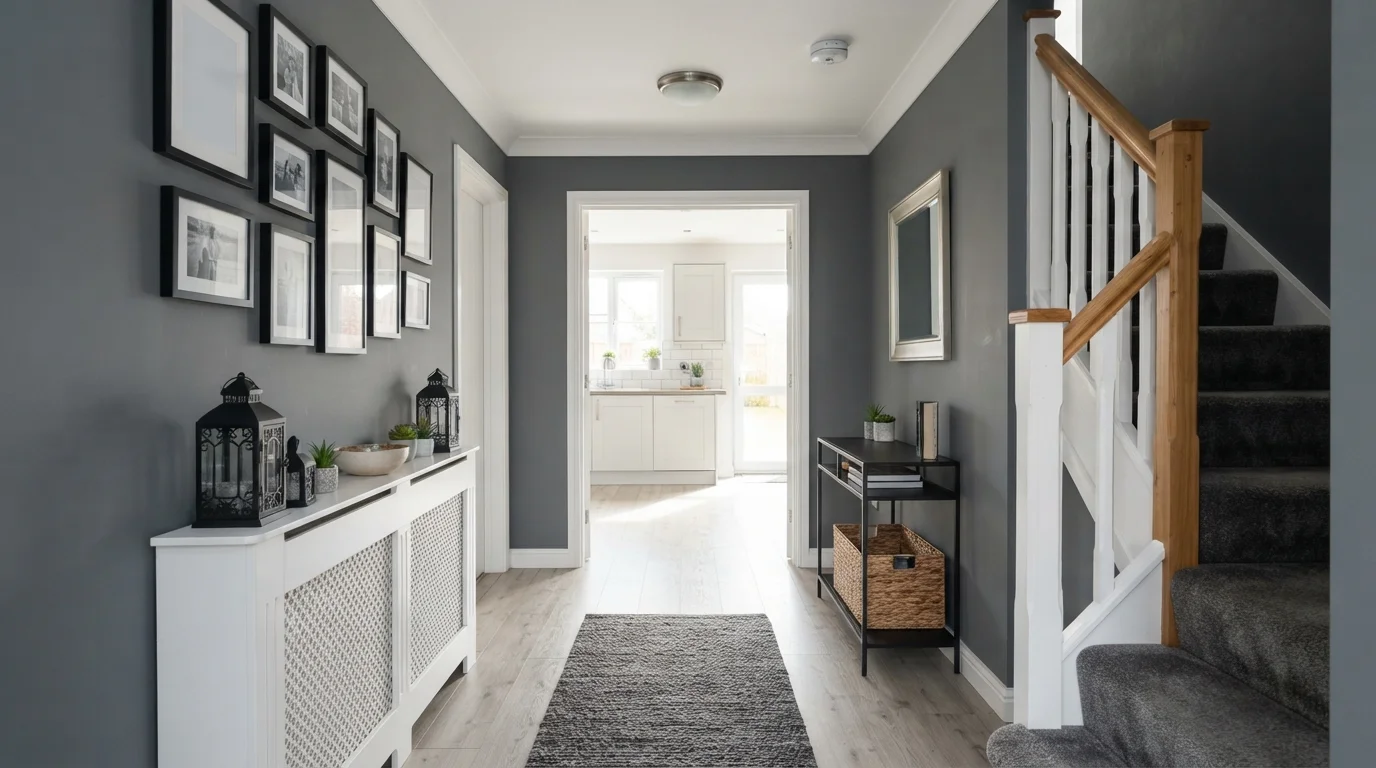
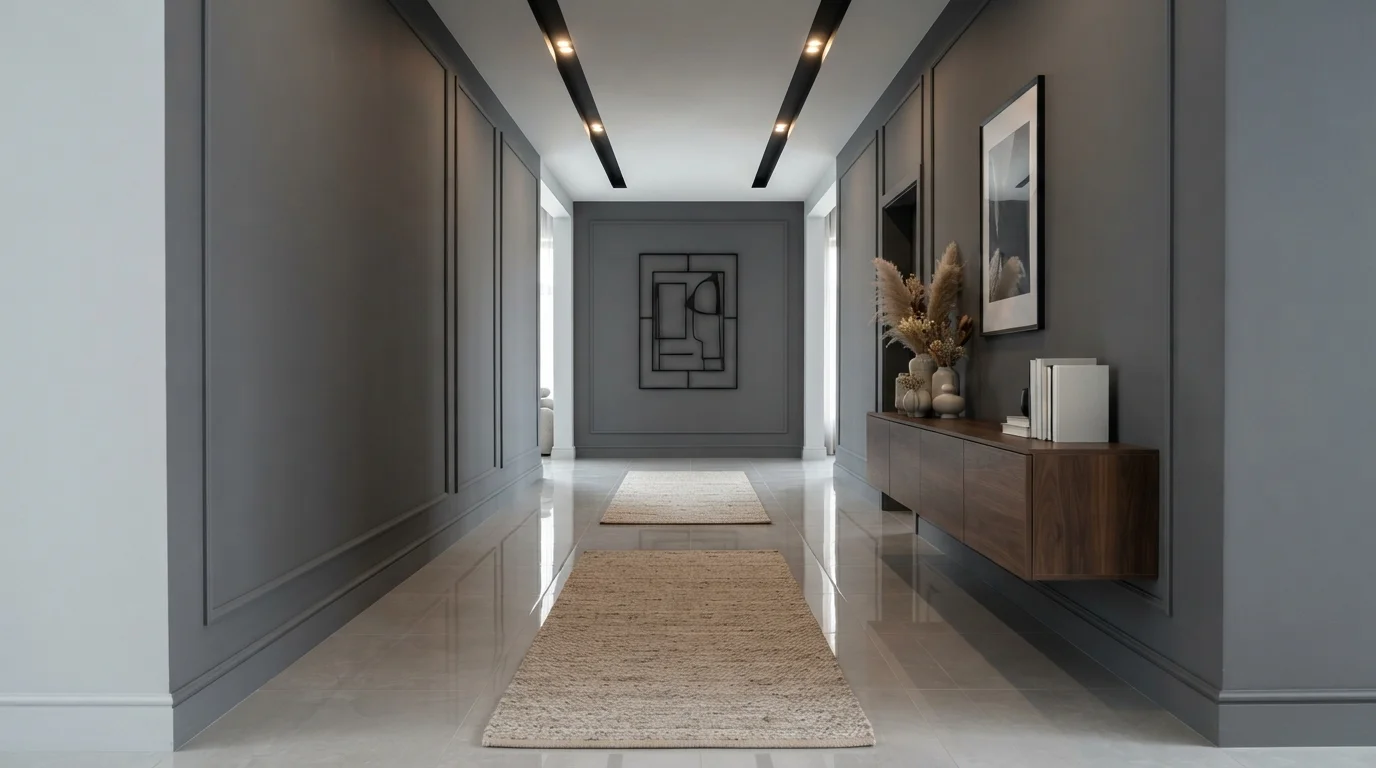
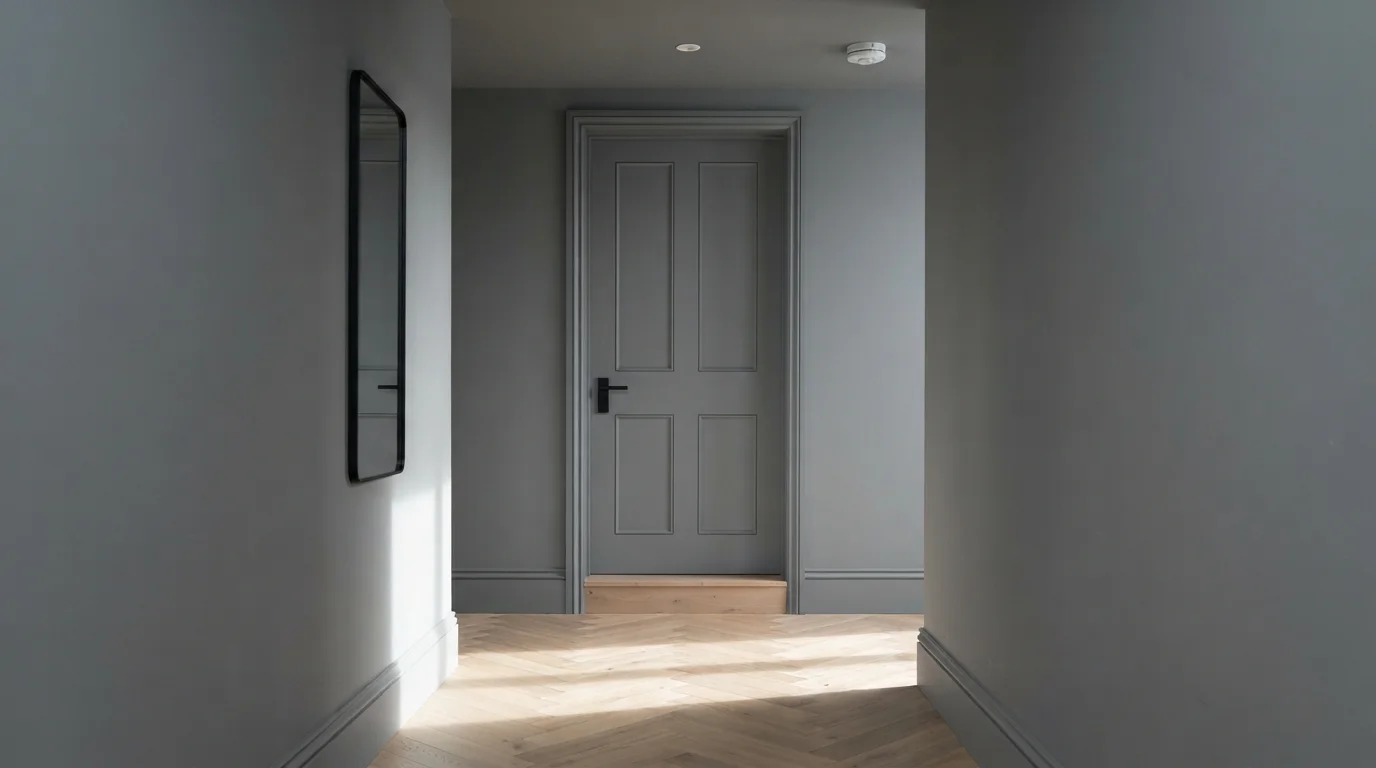
A hallway is the room people walk through, not the room they sit in, and that changes how gray behaves on the walls. Hallways are usually narrow, often have little or no natural light, and take a beating from hands, bags, and passing traffic. Gray is one of the safest, most flattering choices here because it reads as a clean, calm neutral that connects every room it touches without fighting any of them.
The trick is picking the right gray for the light you actually have, not the gray you saw in a showroom. Most hallways skew dim, so a gray that looks soft and sophisticated in a bright store can turn flat and dingy in a windowless corridor. Below is how to choose the depth, undertone, and finish that make a hallway feel wider and brighter rather than closed-in. Every color you see here is mixed to order at the store, so once you find the gray you like you can match it across brands.
Why Gray Works in a Hallway
A hallway has to play nice with every room that opens off it. Gray does that better than almost any other color because it sits quietly between warm and cool, so your living room, bedrooms, and bathrooms all still feel like they belong to the same home.
Gray also hides the scuffs and shadows that hallways collect. A flat white shows every smudge and every dent in the drywall, while a soft gray softens those marks and reads as intentional. That makes it a low-stress color for the hardest-working stretch of the house.
The Right Depth of Gray for Hallway Light
Most hallways get little or no direct daylight, so the safest move is a light gray with a high LRV. LRV is a 0-to-100 scale for how much light a color bounces back, and in a dim corridor you want that number working for you. A gray in the upper range, roughly LRV 60 and above, will keep a windowless hallway from feeling like a tunnel.
If your hallway does catch real daylight, or you have a tall stairwell hall with a window, you can go deeper. A mid-tone gray around LRV 40 to 55 can feel rich and grounded there without going dark. Watch the undertone too: cool blue-grays can read cold and gloomy in low light, so a gray with a slightly warm or greige lean usually feels friendlier in a hallway.
The Best Finish for Hallway Walls
Hallways are touch-heavy zones, so skip flat and matte on the walls. Hands, shoulders, pet tails, and the corner of a suitcase all land here, and you want a finish you can wipe clean. An eggshell or satin sheen gives you washability while still hiding wall imperfections fairly well.
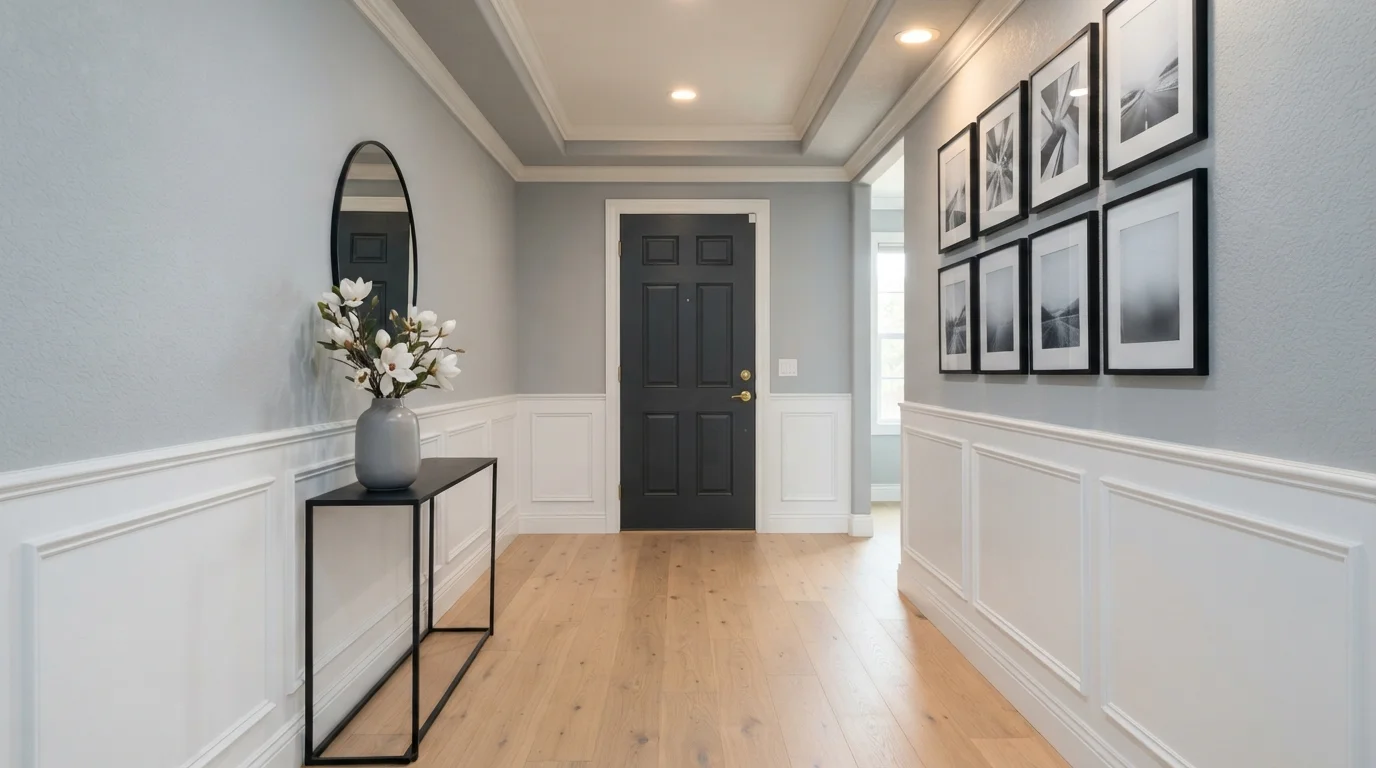
For trim, baseboards, and any chair rail, step up to satin or semi-gloss in your gray or its companion color, since those edges take the most knocks and need to scrub clean. One caution: in a narrow hallway with a ceiling light or wall sconces, a high-gloss wall can throw glare and show every roller mark, so keep the shiniest finishes on the trim, not the broad wall.
Pairing Gray With Trim, Ceiling, and Fixtures
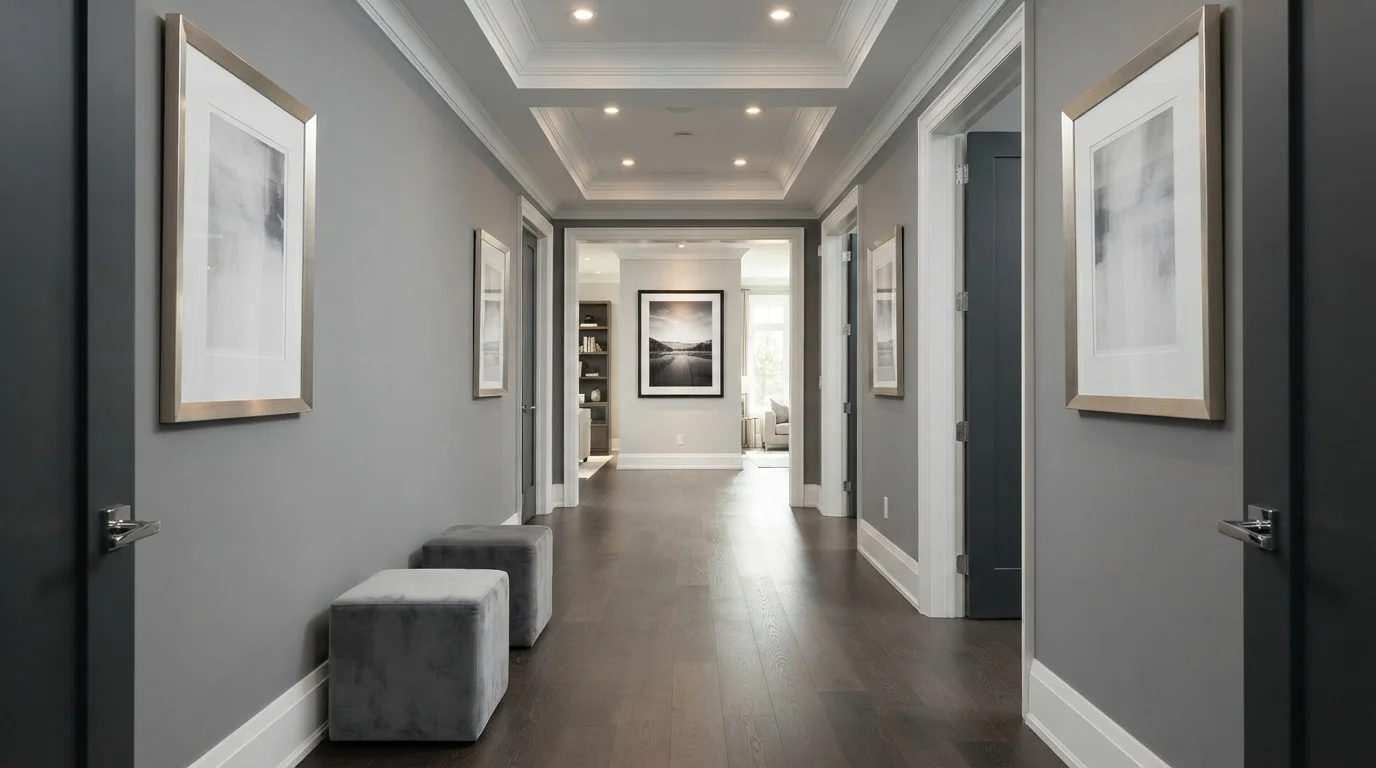
The cleanest hallway look is your gray on the walls with crisp white trim and a white or very light ceiling. White trim keeps doorways and baseboards looking sharp and bounces light back into a dim space. If your gray leans warm or greige, choose a soft warm white rather than a stark blue-white so the two don't clash.
Gray is also forgiving with metal and wood. Warm metals like brass or bronze on sconces and door hardware pop nicely against a cool-to-neutral gray, while a wood console or floor adds warmth that keeps the hallway from feeling sterile. If you have built-in storage or a closet door, painting it the same gray as the walls makes a narrow hall feel less broken-up and more open.
Common Mistakes With Gray in a Hallway
The biggest mistake is choosing the gray on a bright wall or in the store and then putting it in a dark hallway, where it drops several shades and goes muddy. Always tape a large sample on the actual hallway wall and look at it morning, midday, and at night under your real light before you commit.
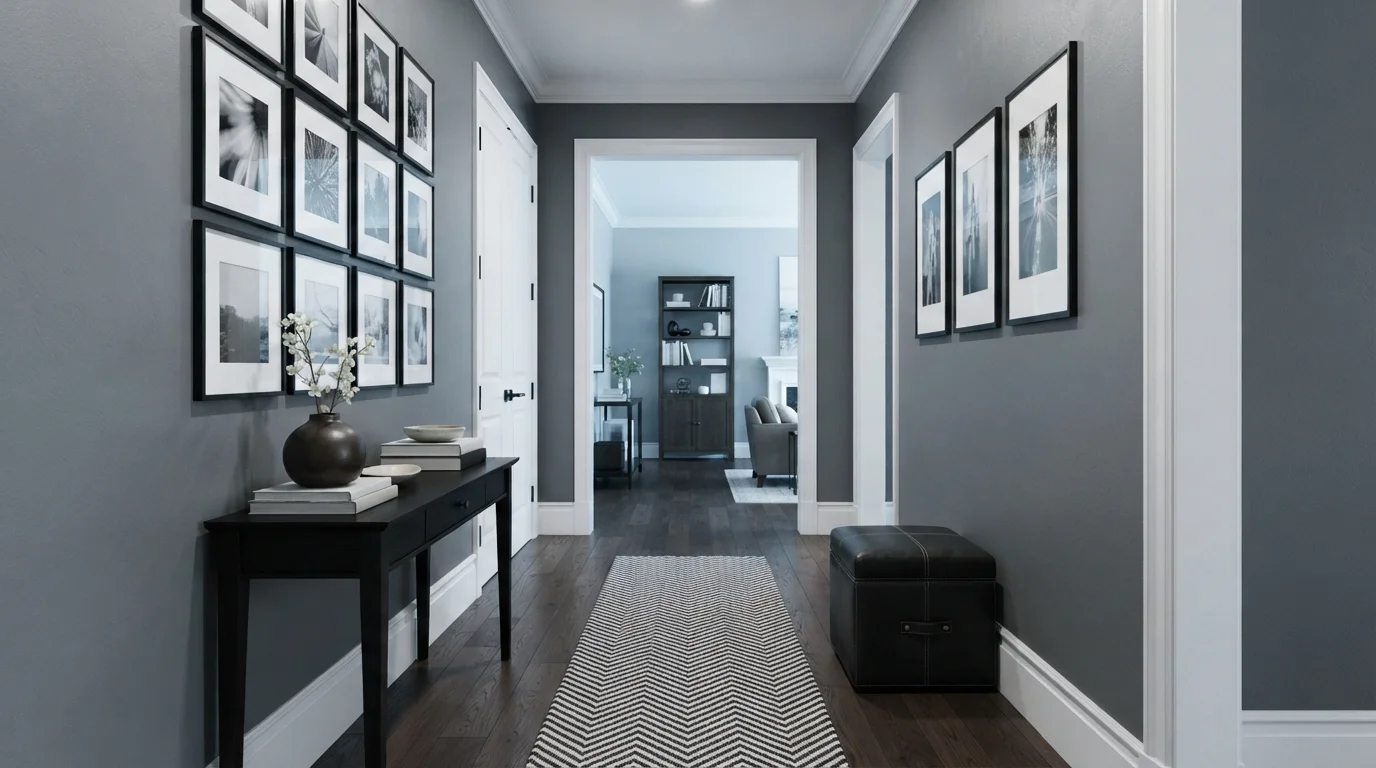
The second trap is going too cool and too dark at once. A deep blue-gray in a windowless hallway can feel cold and cave-like, which fights the whole point of a welcoming pass-through. And don't use a delicate flat finish on walls that get touched all day; it will show hand marks within weeks and won't survive a sponge.
Gray Hallway Paint — Frequently Asked Questions
what is the best gray for a dark hallway with no windows?+
Reach for a light gray with a high LRV, ideally 65 or higher, and lean toward a warm or greige undertone. The lighter the gray, the more of your artificial light it reflects, which keeps a windowless hallway from feeling closed-in. A slightly warm lean also avoids the cold, gloomy cast that cool blue-grays can take on in low light.
what sheen should I use for hallway walls?+
Use eggshell or satin on the walls. Both wipe clean when hands and bags brush the surface, which happens constantly in a hallway, and they still hide minor wall flaws. Save semi-gloss for the trim and doors, and avoid flat or matte on the walls since it marks up fast and won't scrub.
does gray make a narrow hallway look smaller?+
Not if you keep it light. A light, airy gray with crisp white trim actually makes a narrow hallway feel wider and brighter because it reflects light and reads as open. Going too dark or too cool is what shrinks the space, so the depth and undertone matter more than the color itself.
what trim color goes with gray in a hallway?+
Crisp white is the classic and safest choice, since it sharpens doorways and bounces light into a dim hall. Match the temperature of your white to your gray: a soft warm white for a greige or warm gray, and a cooler clean white for a true or cool gray, so the two never look mismatched.
can I match a gray I like across different paint brands?+
Yes. Every gray shown here is mixed to order at the store, and the same shade can be cross-matched between brands using its color values. So if you find a gray you love from one brand, you can have it tinted in another brand's paint line that you prefer for finish or price.
should the hallway ceiling be gray too?+
In most hallways, keep the ceiling white or a very light shade to hold onto brightness, especially if the hall is dim or low. A gray ceiling can work in a taller, well-lit stairwell hall where you want a cozier, more enclosed feel, but in a standard corridor it usually makes the space feel lower and darker.