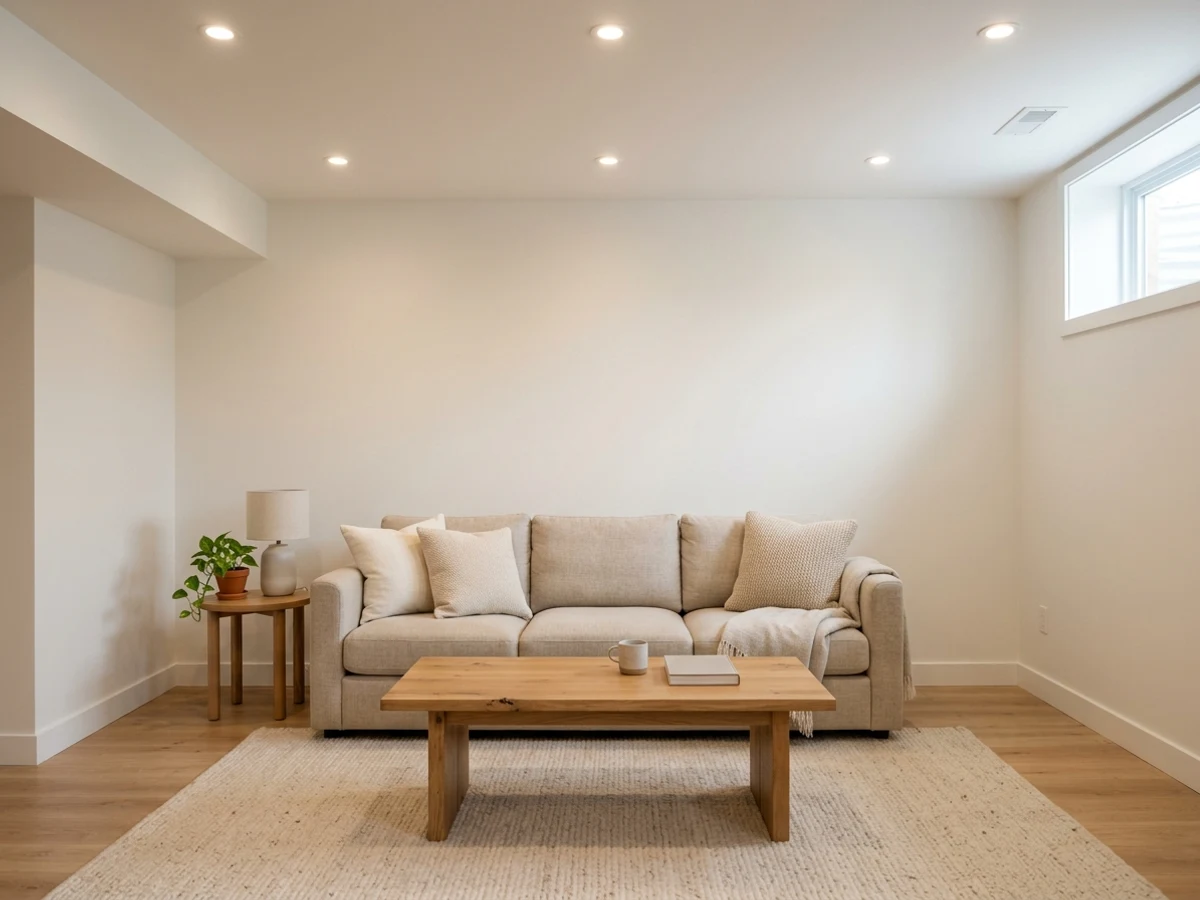
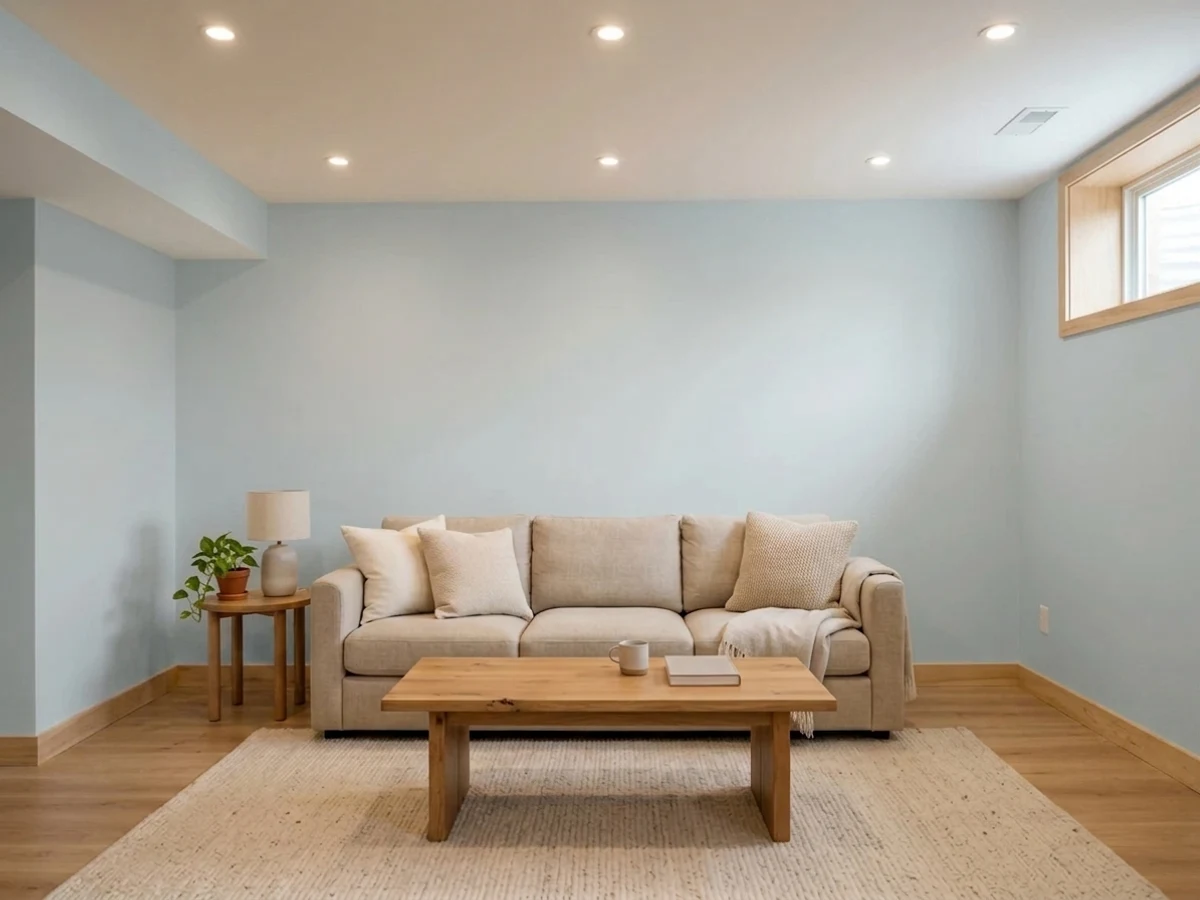
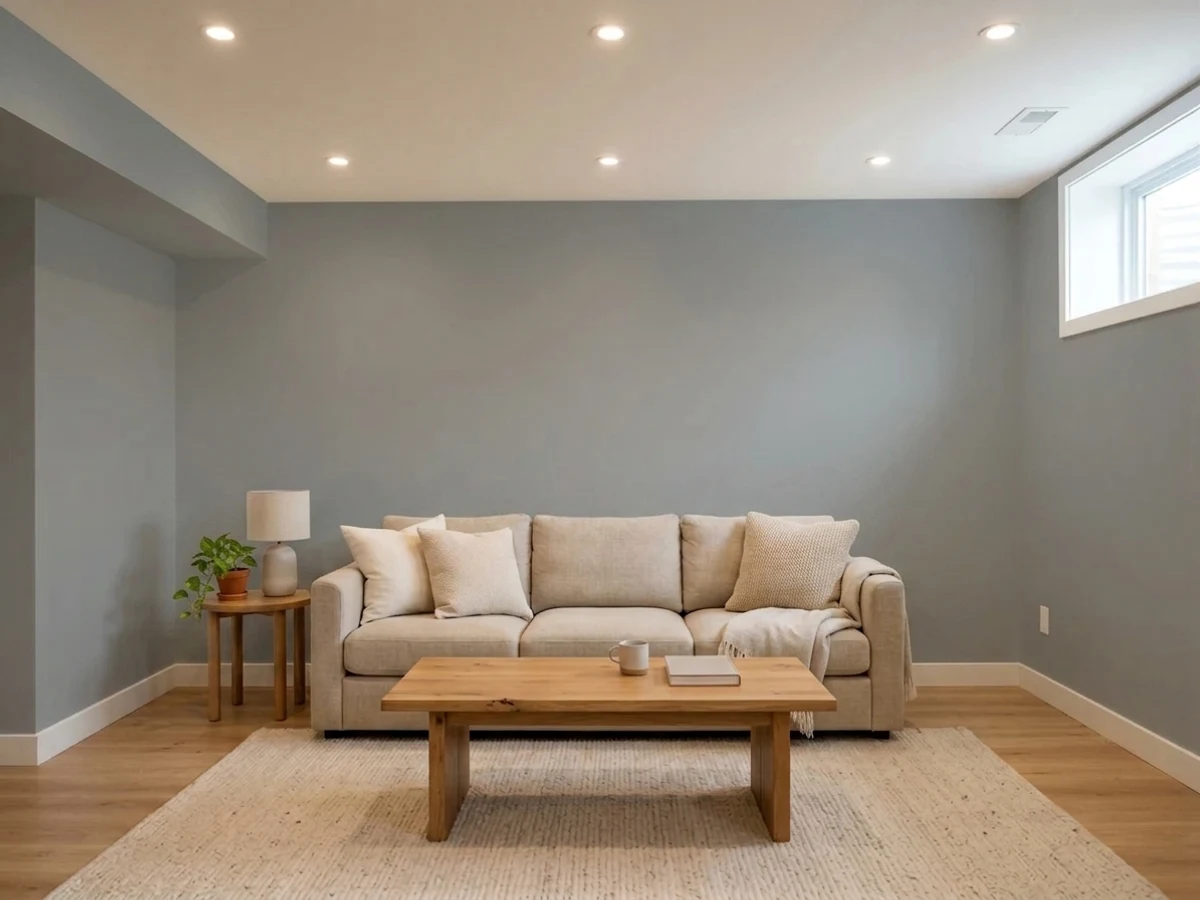
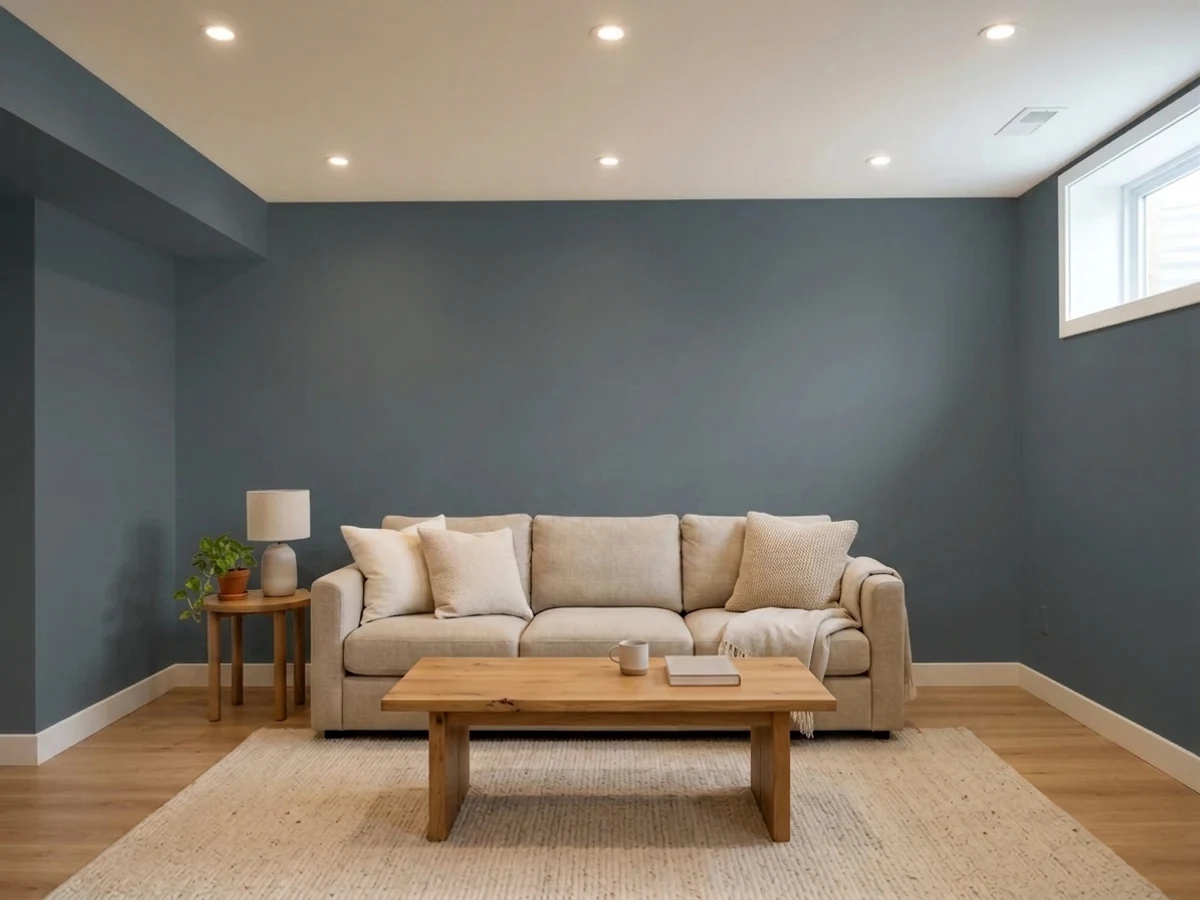
Gray Basement Paint Colors
3,425 gray colors that work in basements, drawn from the full ~30,000-color US paint deck. Below: editor's picks specific to basements, then 30 picks spread across the LRV range — narrow further on the brand page when you've shortlisted.
Gray is the most-recommended neutral in American interiors — the safe choice that anchors a room without committing to a strong color. The "true" grays here lean cool (blue or violet undertone) or stay almost dead-neutral. The warm-leaning grays (taupe, mushroom, greige) live in the Neutral family next door because they read closer to beige than to true gray on the wall.
Editor's Picks: Gray for Basements
4 picks30 Gray Picks Across the LRV Range
30 of 3,425 · sorted dark → lightLooking for more? All gray → covers every brand; brand × family pages show full decks.
Gray Basement Colors at Every US Brand
21 brands · up to 10 picks eachUp to 10 picks per brand spread across the gray LRV range, drawn from each brand's full deck. Tap any swatch with a curated guide for full spec; tap the brand title for the brand's complete gray deck.
Behr
Glidden
Valspar
Benjamin Moore
PPG / Glidden
Sherwin-Williams
Dunn-Edwards
Dutch Boy
Diamond Vogel
Hirshfield's
Kompozit
C2 Paint
Rodda
Magnolia Home
Farrow & Ball
Clare
Portola Paints
Annie Sloan
Backdrop
Rust-Oleum
Other Basement Color Families
Gray Colors in Other Rooms
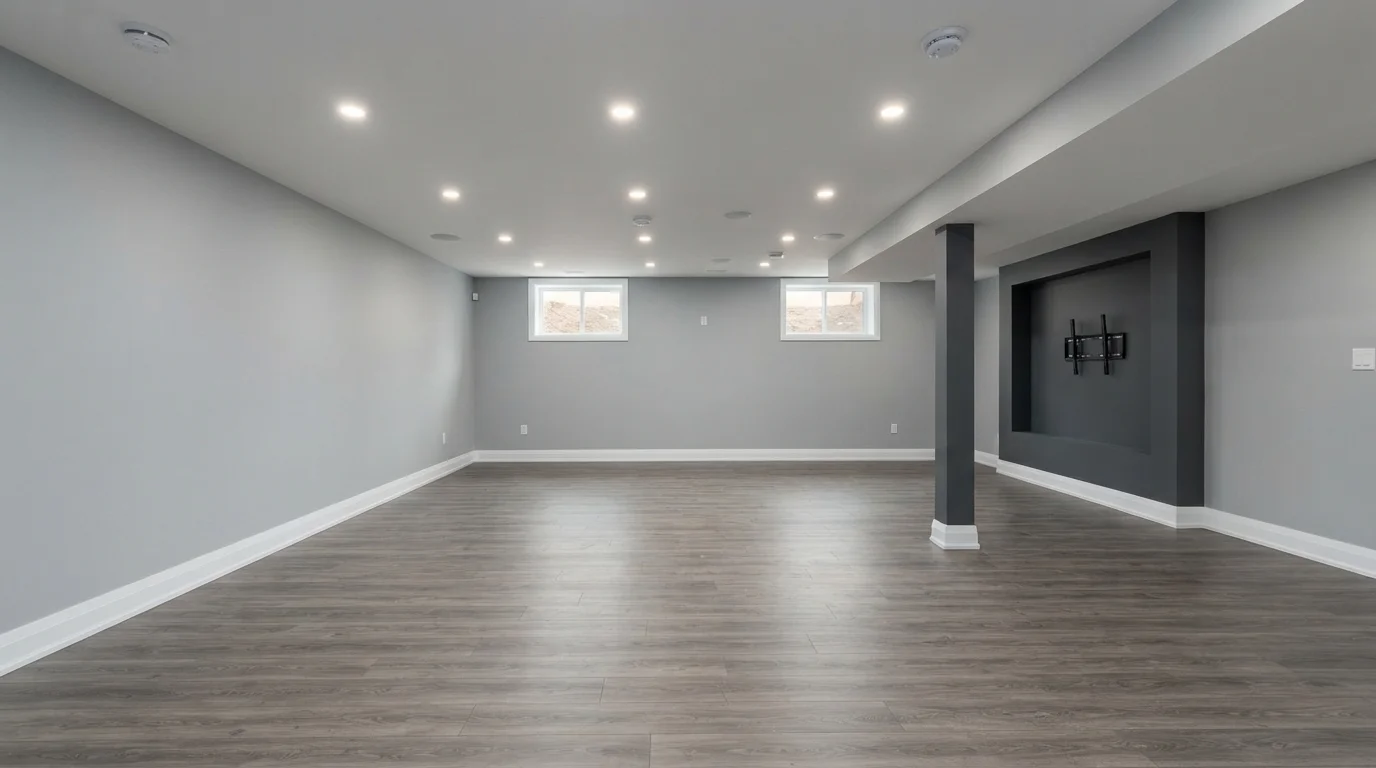
Gray Paint Colors for a Basement
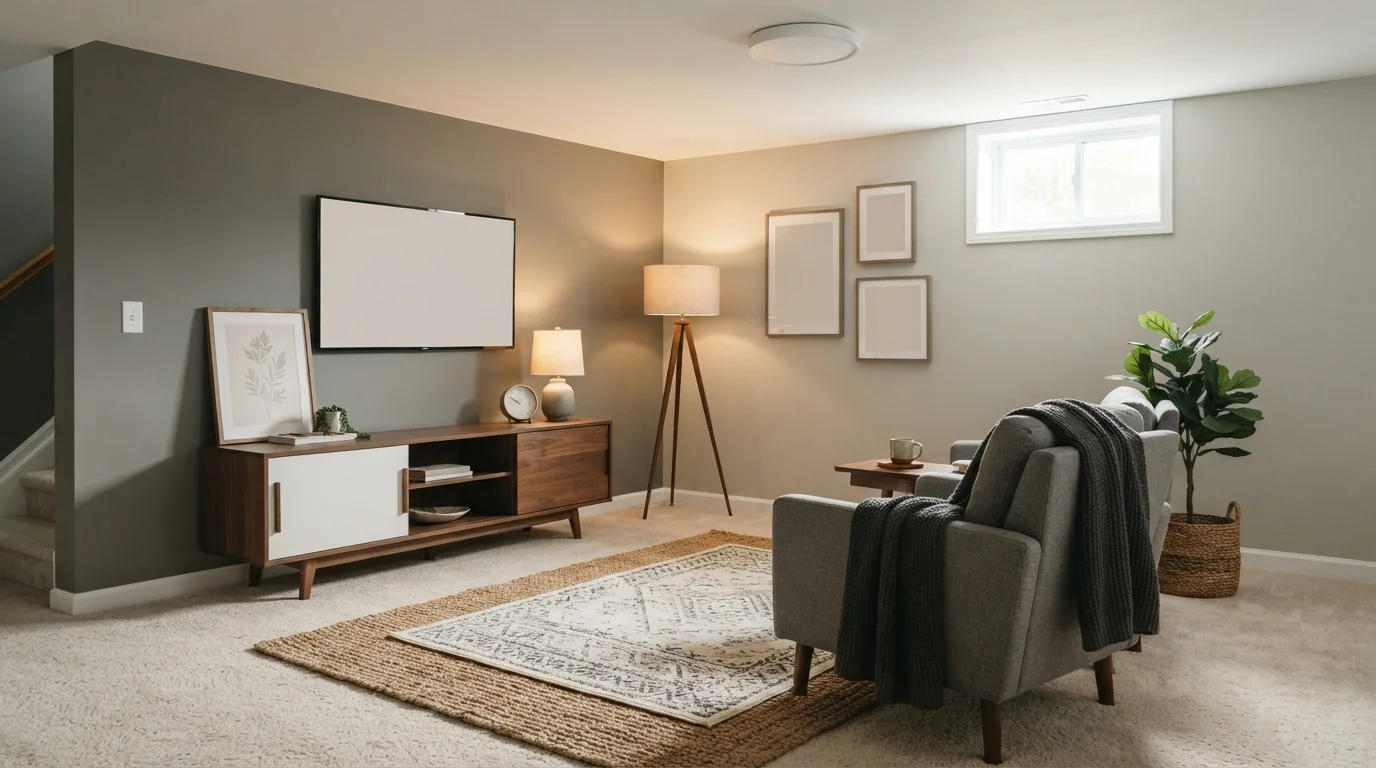
Gray is one of the safest, smartest picks for a basement, but the room itself fights you. Basements run cool, low on daylight, and often a little damp, and all three of those things change how gray reads on the wall. The same gray that looks calm and modern upstairs can turn into a flat, dingy slab down here if you don't account for the light and the depth.
This page is about getting gray right in a basement specifically. We'll cover which depth of gray actually works underground, how the room's light and your bulbs steer the undertone, the finishes that hold up against moisture and scuffs, and how to pair gray with the trim, ceiling, and fixtures you usually find downstairs. Every gray shown here is mixed to order at a paint counter, so you can match a shade across brands and buy it wherever you already shop.
Why Gray Works in a Basement (and What to Watch)
Gray suits a basement because it hides a lot. It reads clean against concrete, ductwork, and the mixed-bag finishes most basements carry, and it doesn't show dust and minor marks the way a bright white does. For a space that doubles as a den, gym, laundry, or guest room, gray gives you one calm backdrop that works for all of it.
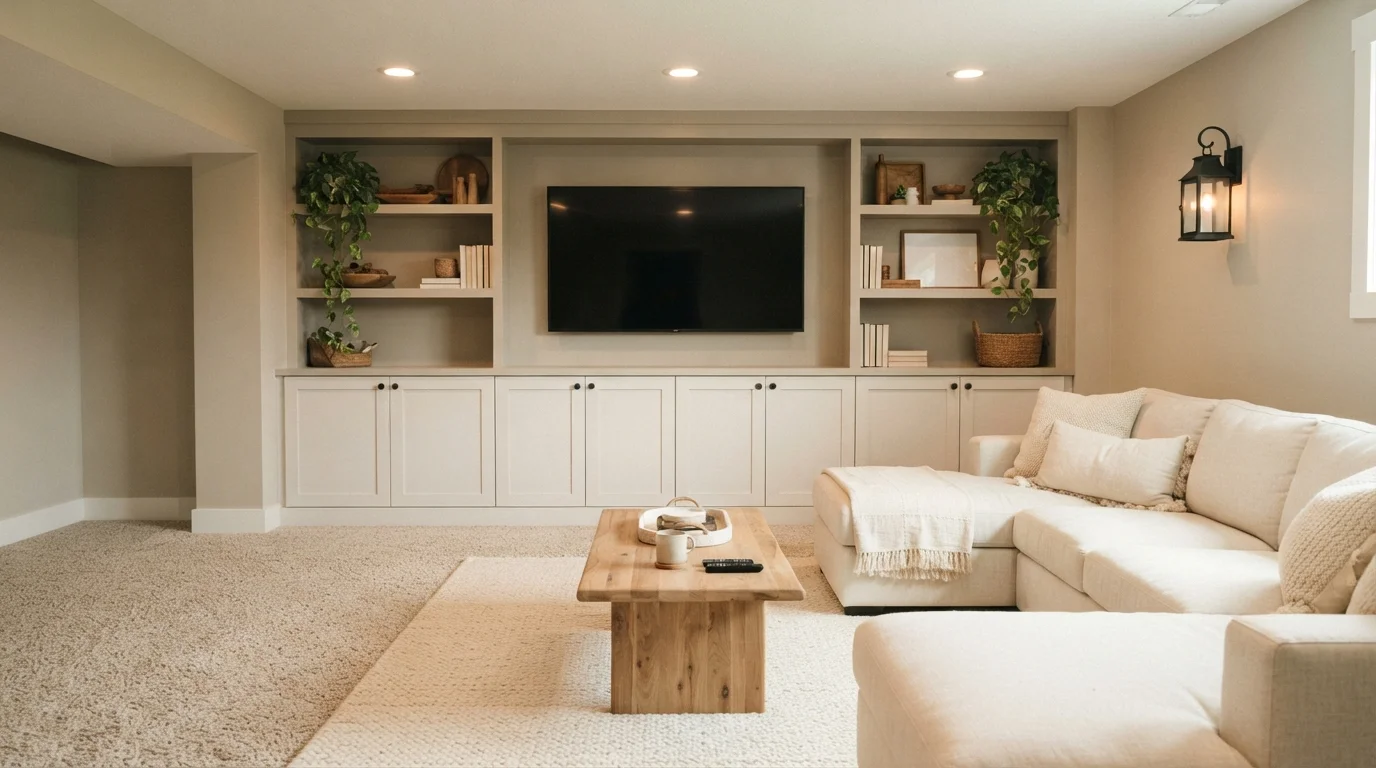
The thing to watch is that basements are dim and cool, and gray has no warmth of its own to push back. In weak, cool light, a gray with a blue or green base can slide toward cold and gloomy fast. The fix isn't to avoid gray, it's to pick a gray that leans slightly warm so the room feels grounded instead of like a cellar.
The Right Depth of Gray for a Low-Light Room
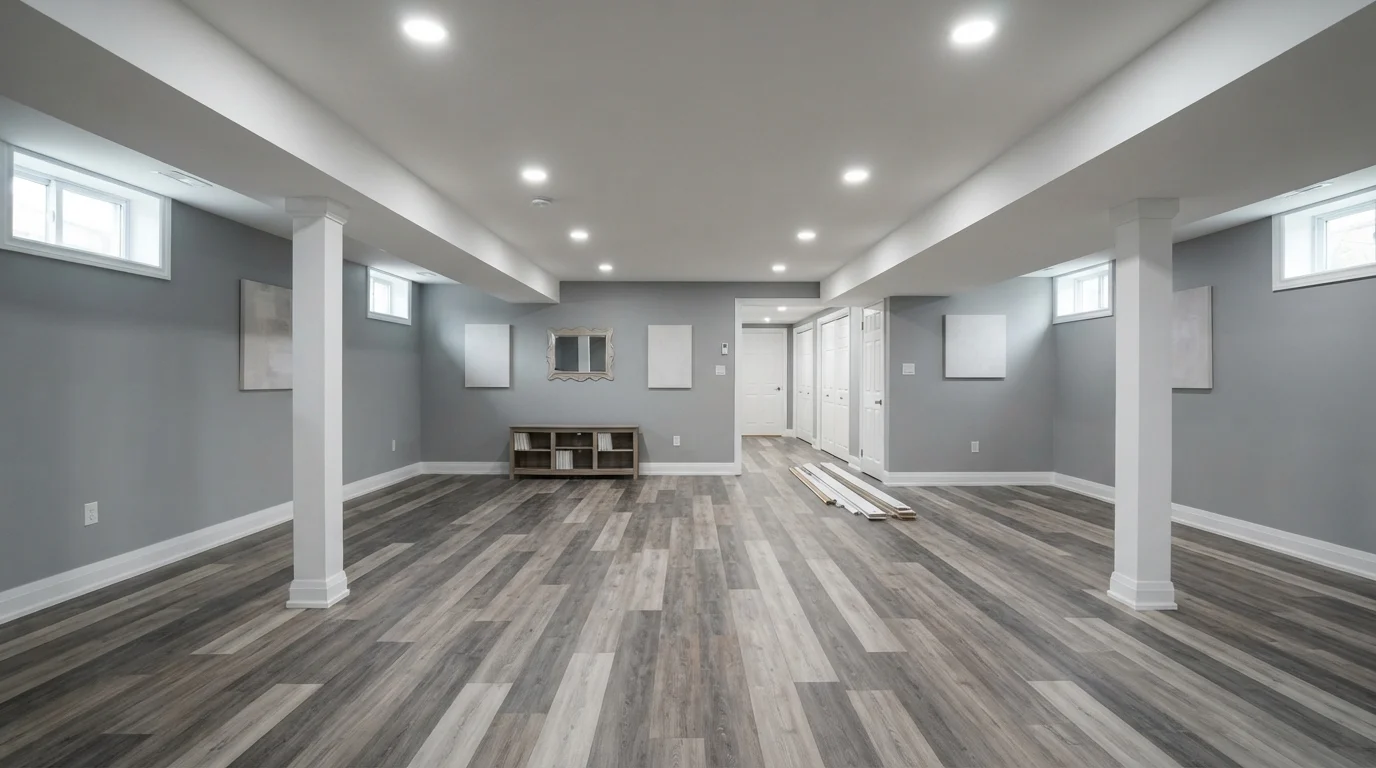
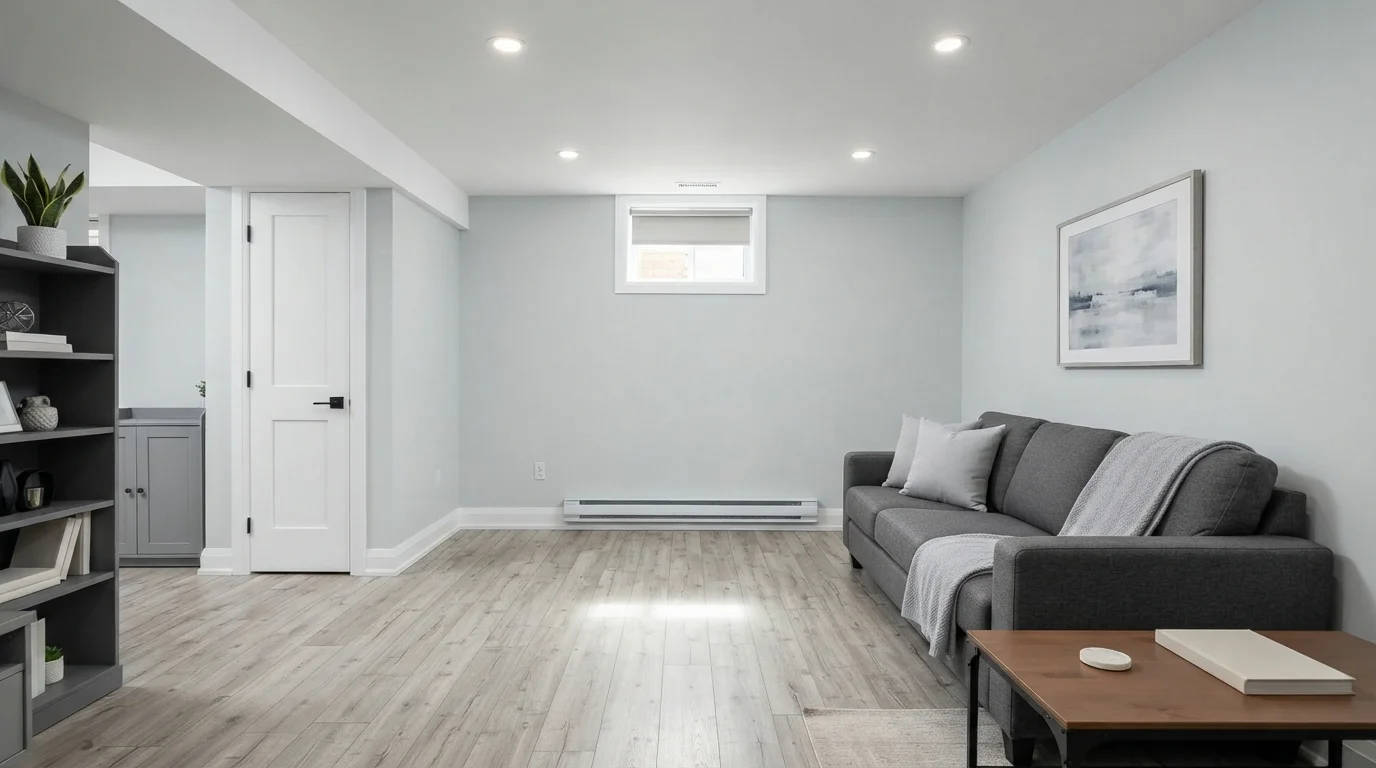
Light Reflectance Value (LRV) tells you how much light a color bounces back, and it matters more in a basement than almost anywhere else. With little or no daylight, a dark gray (LRV under about 25) will eat what light you have and make a low ceiling feel lower. For most basements, a light-to-mid gray in the LRV 55 to 70 range keeps the room open and still hides scuffs.
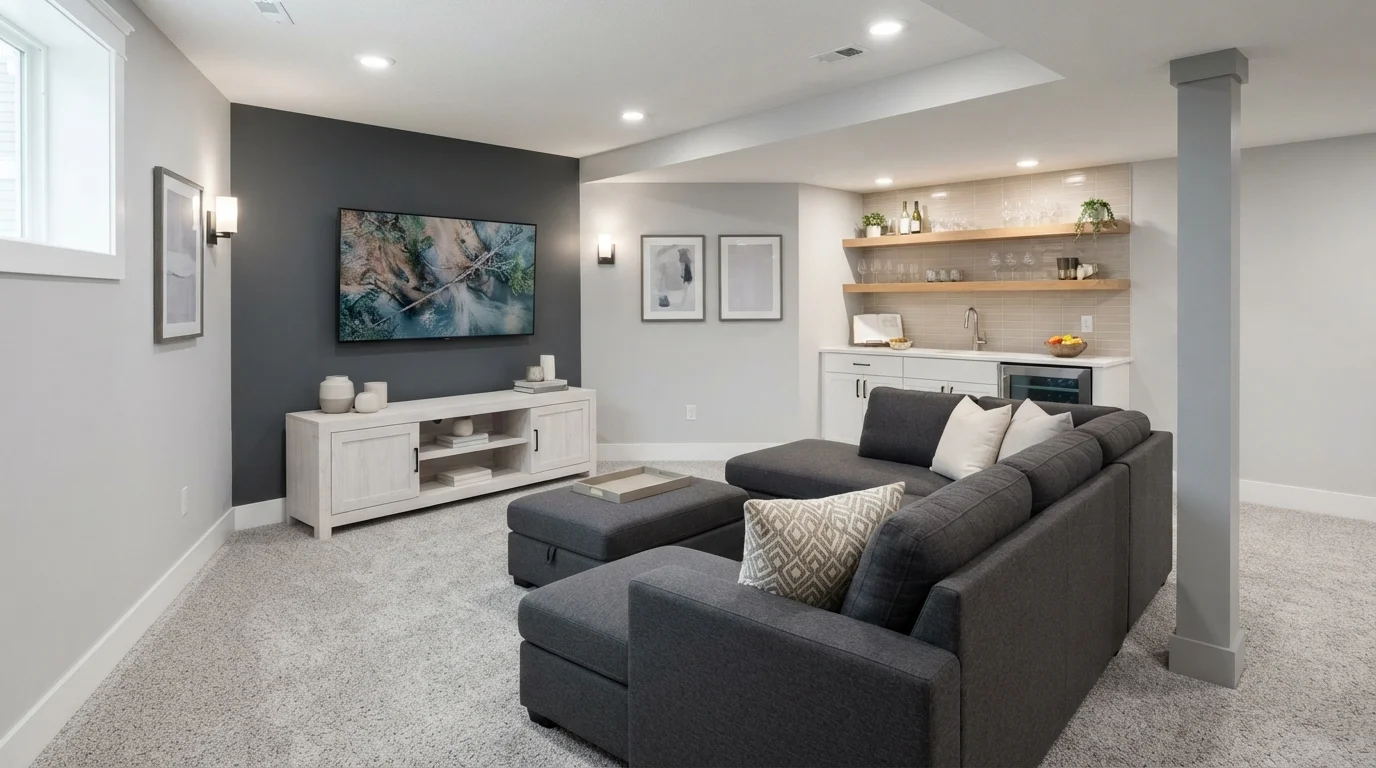
If you have decent egress windows or a walkout, you can drop into mid-tones in the 40s and they'll hold up fine. A greige (gray with a touch of beige) is often the easiest win underground because the warmth counters the cool light. Save the deep charcoals for one accent wall or a media zone where you actually want it dim.
Finish and Sheen for Moisture and Scuffs
Basements deal with humidity, the occasional damp spell, and high-traffic use, so flat paint is usually the wrong call on the main walls. A washable matte or, better, an eggshell or satin holds up to wiping, resists mildew better, and survives a gym bag or laundry cart knocking the wall. The slight sheen also bounces a little extra light, which a dim room can use.
For trim, doors, and any built-ins, step up to satin or semi-gloss so they clean easily and take the bumps. If your basement has real moisture history, look for a paint rated for kitchen-and-bath or high-humidity use and make sure the surface is dry and sealed first, because no finish fixes an active water problem.
Pairing Gray With Trim, Ceiling, and Fixtures
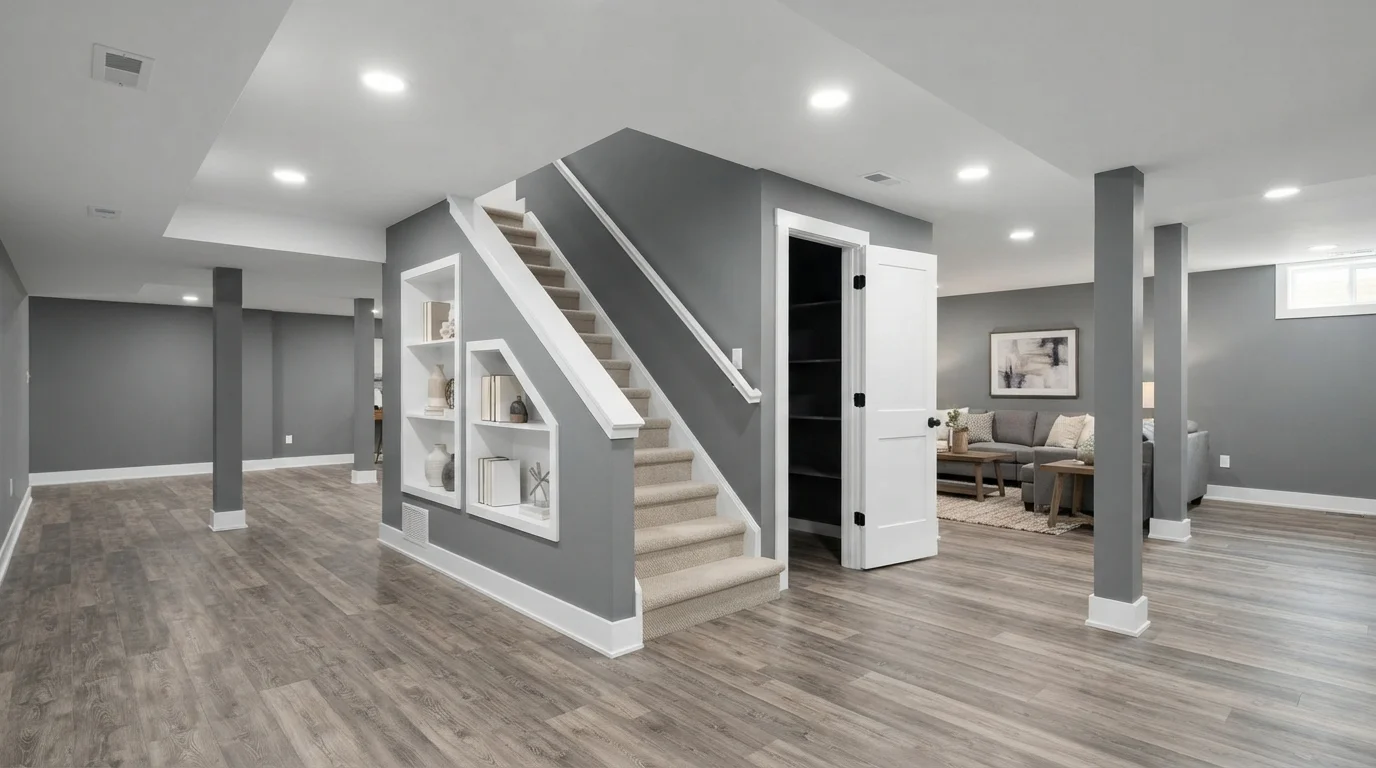
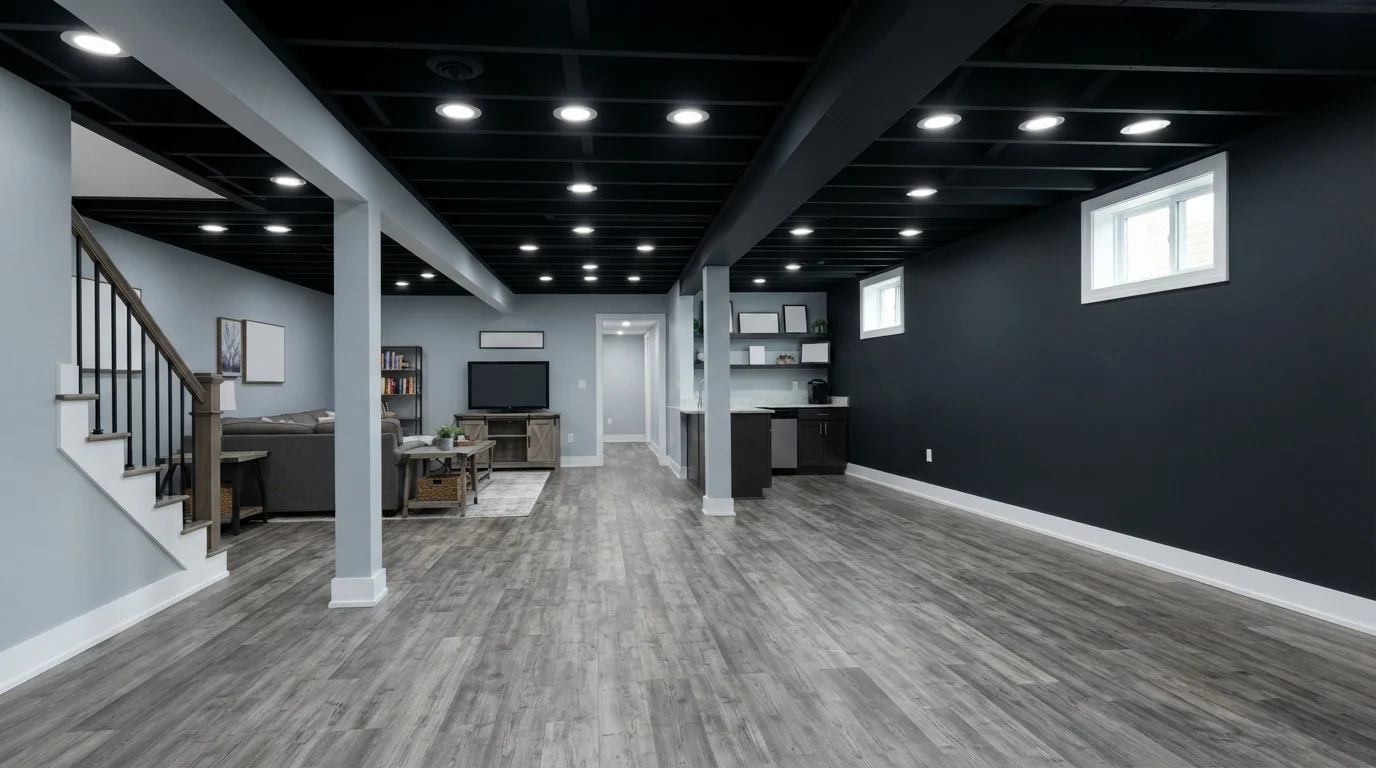
A crisp white trim sharpens gray walls and adds the brightness a basement craves, but skip a stark blue-white if your gray leans warm, or the two will fight. A soft, warm white on trim and doors keeps everything in the same family and feels intentional. For exposed ceilings, ductwork, or joists, painting them one shade darker or matching the wall gray makes the mess disappear and the ceiling read higher.
Gray plays well with the materials basements already have. Pair it with warm wood shelving or a butcher-block bar top to cut the cool, lean into black or brushed-metal fixtures for a clean modern look, or warm it up with brass and amber lighting. For cabinetry or a laundry counter, a deeper gray than the walls gives you contrast without bringing in a new color.
The Most Common Gray Mistakes Down There
The biggest one is going too dark to feel cozy. Cozy comes from warm light and texture, not a dark wall, and a deep gray in a dim basement just reads cave. The second is testing the color upstairs or in the store, then being shocked when it turns cold and blue under basement lighting and weak daylight.
Always paint a large sample swatch on the actual basement wall and look at it under your real bulbs, day and night. Swap any harsh cool LEDs for a warmer bulb (around 2700K to 3000K) and you'll rescue a gray that looked grim. And don't paint over damp or efflorescent concrete, prep and seal first or the color won't last.
Gray Basement Paint — Frequently Asked Questions
what is the best shade of gray for a basement?+
A light-to-mid greige (gray with a hint of beige) is the most forgiving choice for most basements. Its warmth offsets the cool, low light so the room feels grounded instead of cold. Aim for an LRV around 55 to 70 to keep things open, and only go darker if you have good windows or want a deliberately moody media zone.
what LRV should I look for in a basement gray?+
LRV measures how much light a color reflects, and in a dim basement you want a higher number to make the most of limited light. For main walls, look for an LRV in the 55 to 70 range. Stay above about 40 unless you have egress windows or a walkout, and reserve LRVs under 25 for a single accent wall.
what paint finish is best for basement walls?+
Use a washable matte, eggshell, or satin on the walls rather than flat. These resist moisture and mildew better, wipe clean, and bounce a little extra light into a dim room. Step up to satin or semi-gloss on trim, doors, and built-ins for durability, and choose a high-humidity or kitchen-and-bath rated paint if your basement gets damp.
why does my basement gray look blue or cold?+
Basements have weak, cool light, and many grays carry a blue or green undertone that gets exaggerated in that light. The wall has no warmth of its own to balance it out. Pick a gray that leans slightly warm, and swap cool LED bulbs for warmer ones around 2700K to 3000K. Always test a big swatch on the real wall under your own lighting before committing.
should the ceiling and trim be a different color than the gray walls?+
A soft warm white on trim and doors brightens the room and sharpens the gray. For an exposed or low ceiling, painting it the same gray as the walls (or one shade darker) hides ductwork and makes the ceiling feel higher. Match the warmth across everything so the whites and grays don't clash.
can I get the same gray in a different paint brand?+
Yes. Every gray shown here is mixed to order at the paint counter, not tied to one company's can. That means you can take a shade you like and have it cross-matched to another brand's formula, so you can buy wherever you already shop and still get the same color on your basement wall.