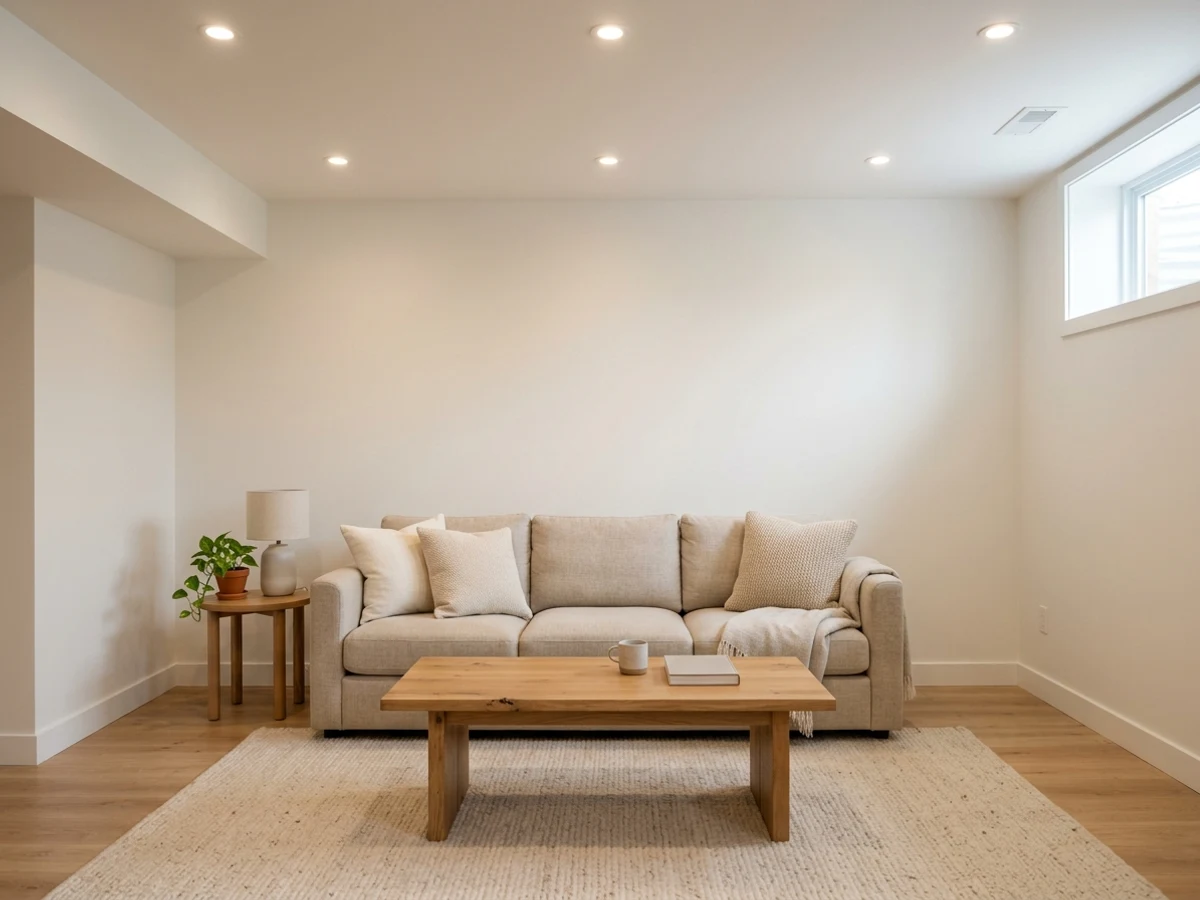
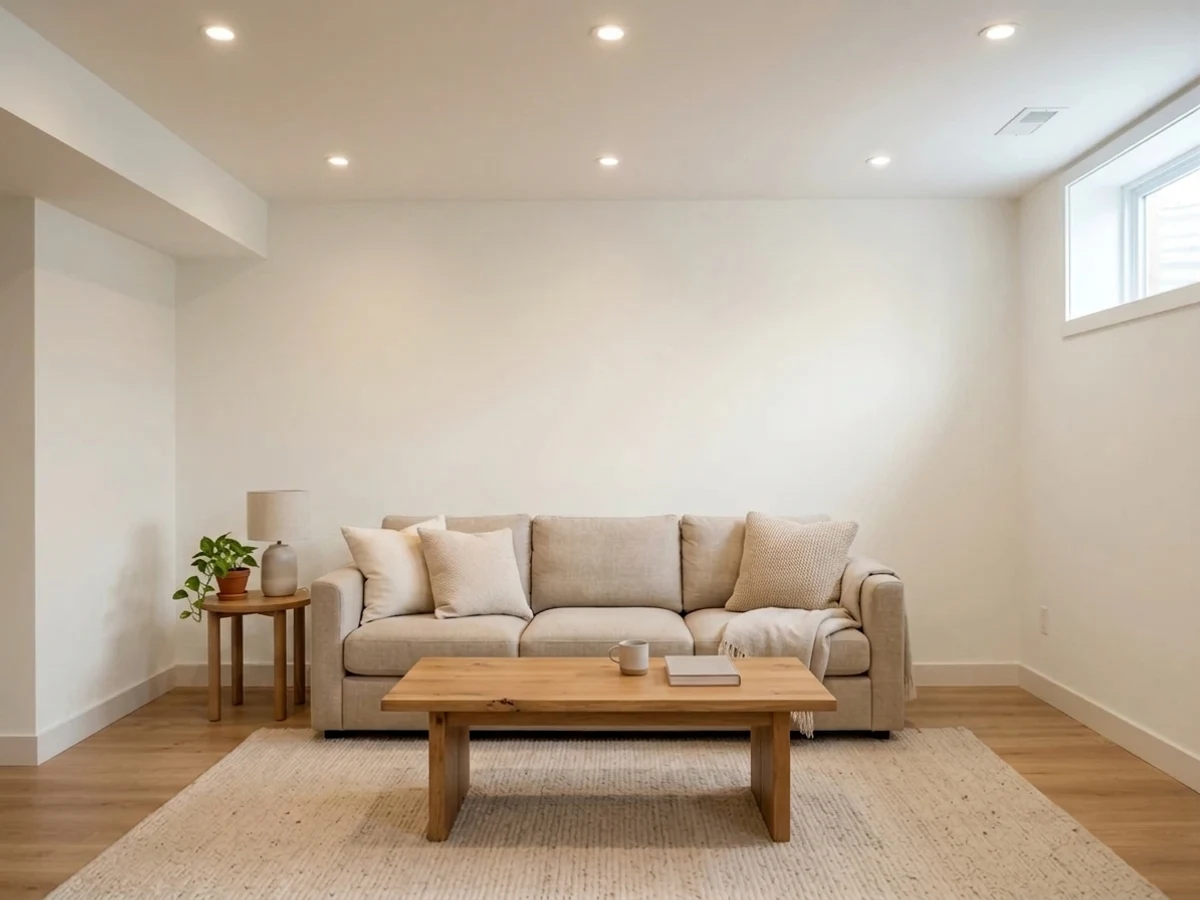
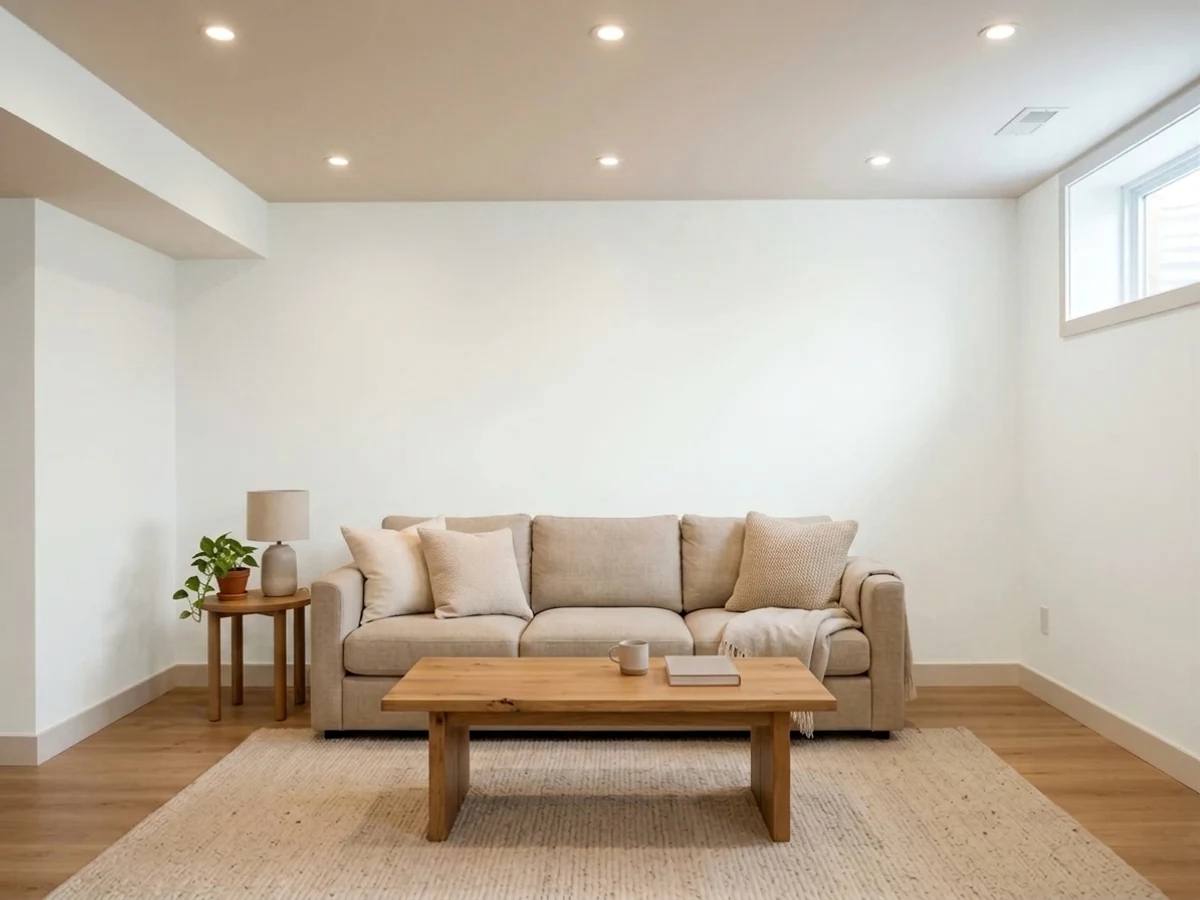
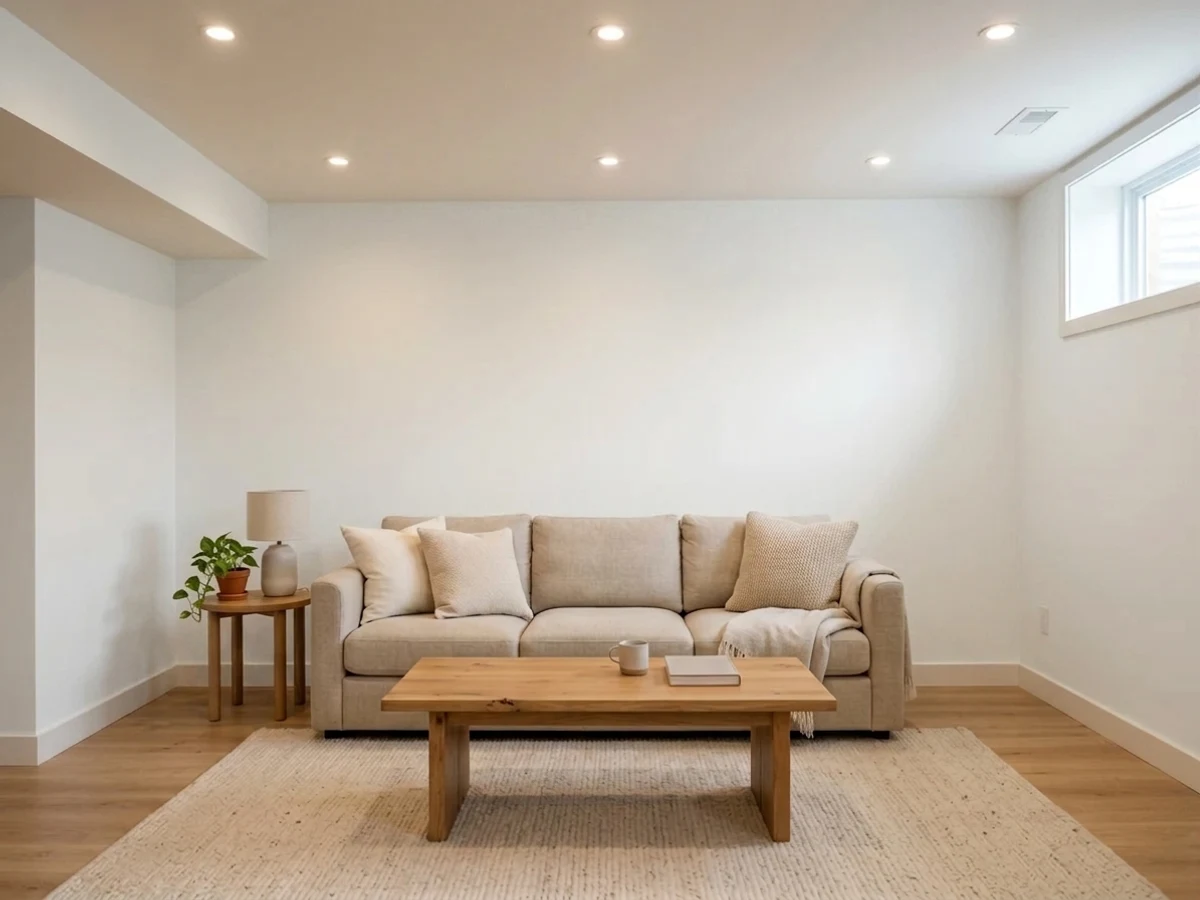
White Basement Paint Colors
2,064 white colors that work in basements, drawn from the full ~30,000-color US paint deck. Below: editor's picks specific to basements, then 30 picks spread across the LRV range — narrow further on the brand page when you've shortlisted.
White is the hardest color to specify well. The right white shifts under daylight, north-facing rooms, and warm-LED bulbs — and most "whites" actually have a strong undertone (yellow, pink, green, or blue) that only shows up once it's on the wall. Below: the warm whites and cool whites we recommend most often, organized so you can compare them at a glance.
Editor's Picks: White for Basements
4 picks30 White Picks Across the LRV Range
30 of 2,064 · sorted dark → lightLooking for more? All white → covers every brand; brand × family pages show full decks.
White Basement Colors at Every US Brand
20 brands · up to 10 picks eachUp to 10 picks per brand spread across the white LRV range, drawn from each brand's full deck. Tap any swatch with a curated guide for full spec; tap the brand title for the brand's complete white deck.
Behr
Benjamin Moore
Dunn-Edwards
Glidden
PPG / Glidden
Valspar
Diamond Vogel
Kompozit
Hirshfield's
Sherwin-Williams
Dutch Boy
C2 Paint
Rodda
Farrow & Ball
Magnolia Home
Clare
Portola Paints
Backdrop
Rust-Oleum
Other Basement Color Families
White Colors in Other Rooms
White Paint Colors for a Basement
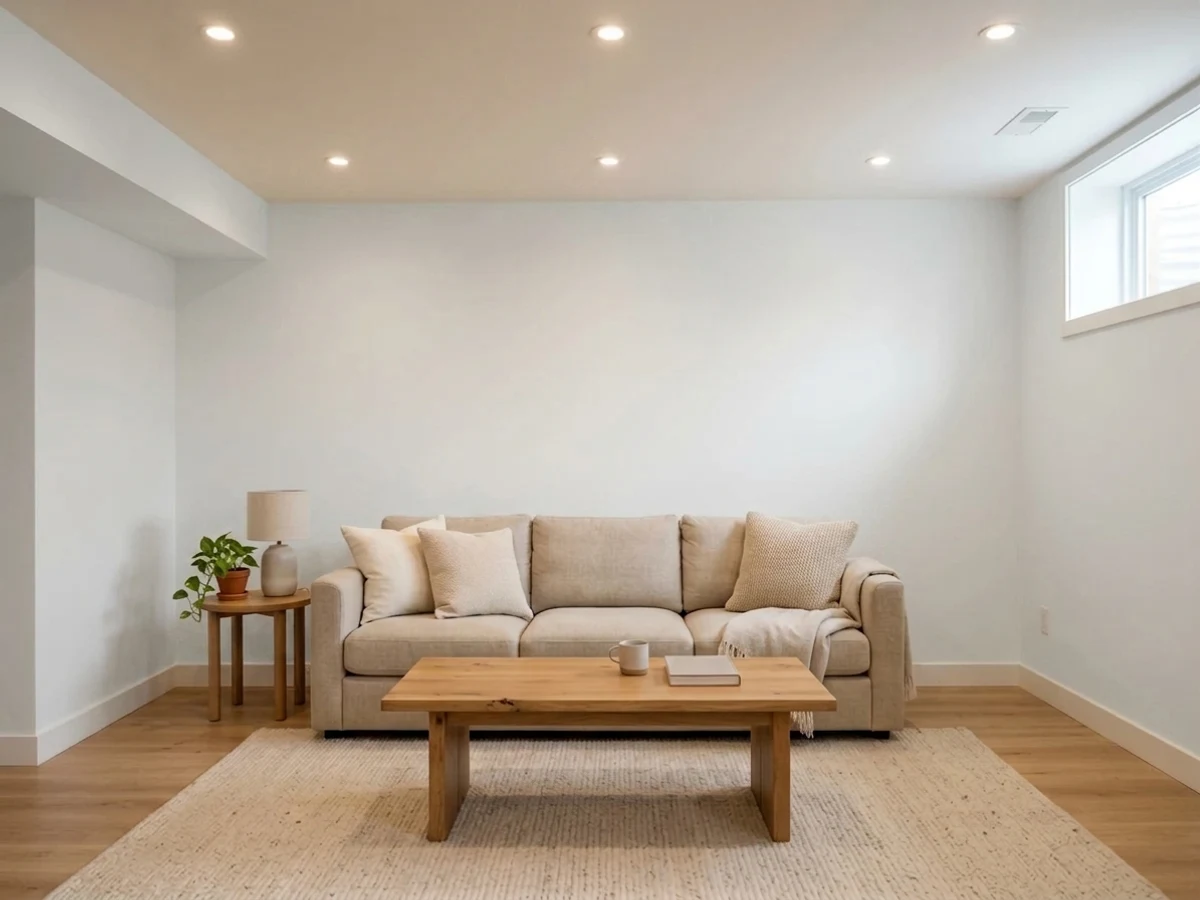
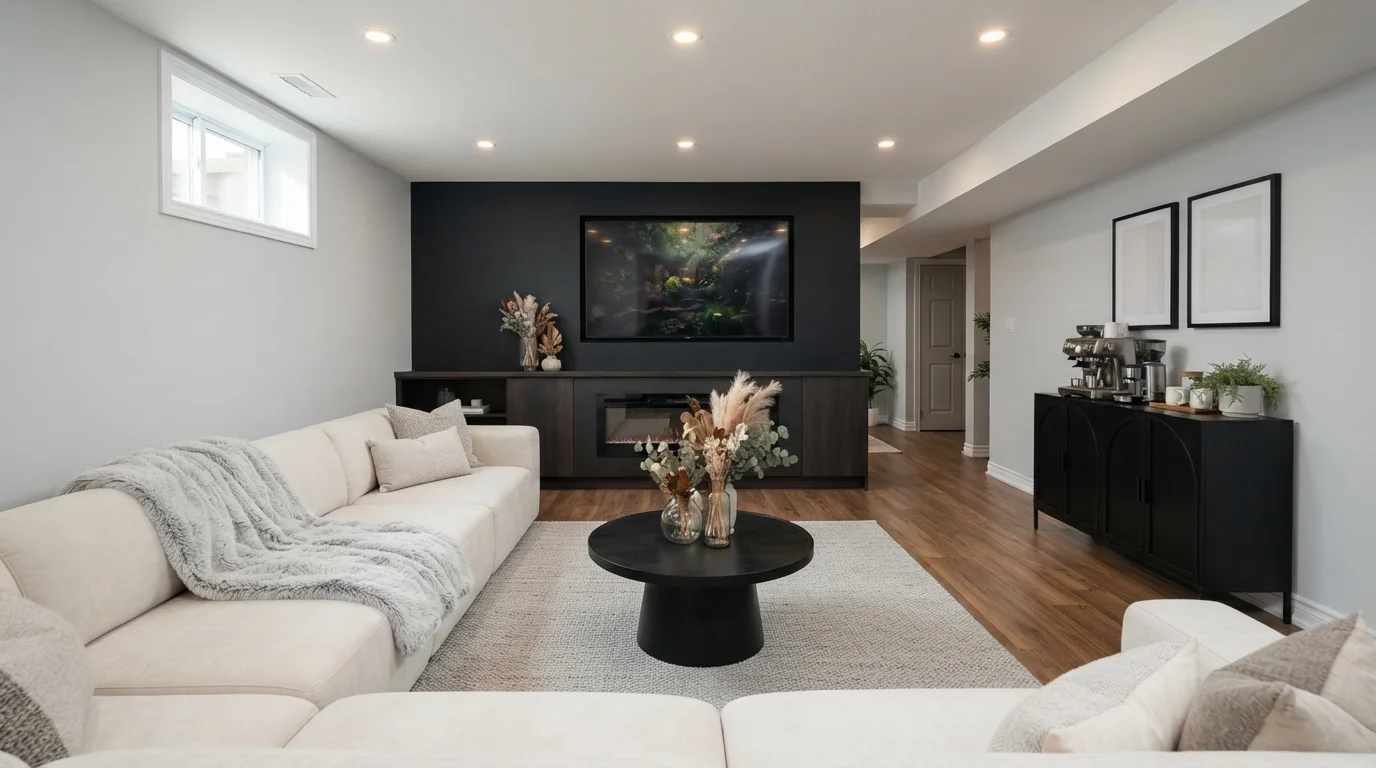
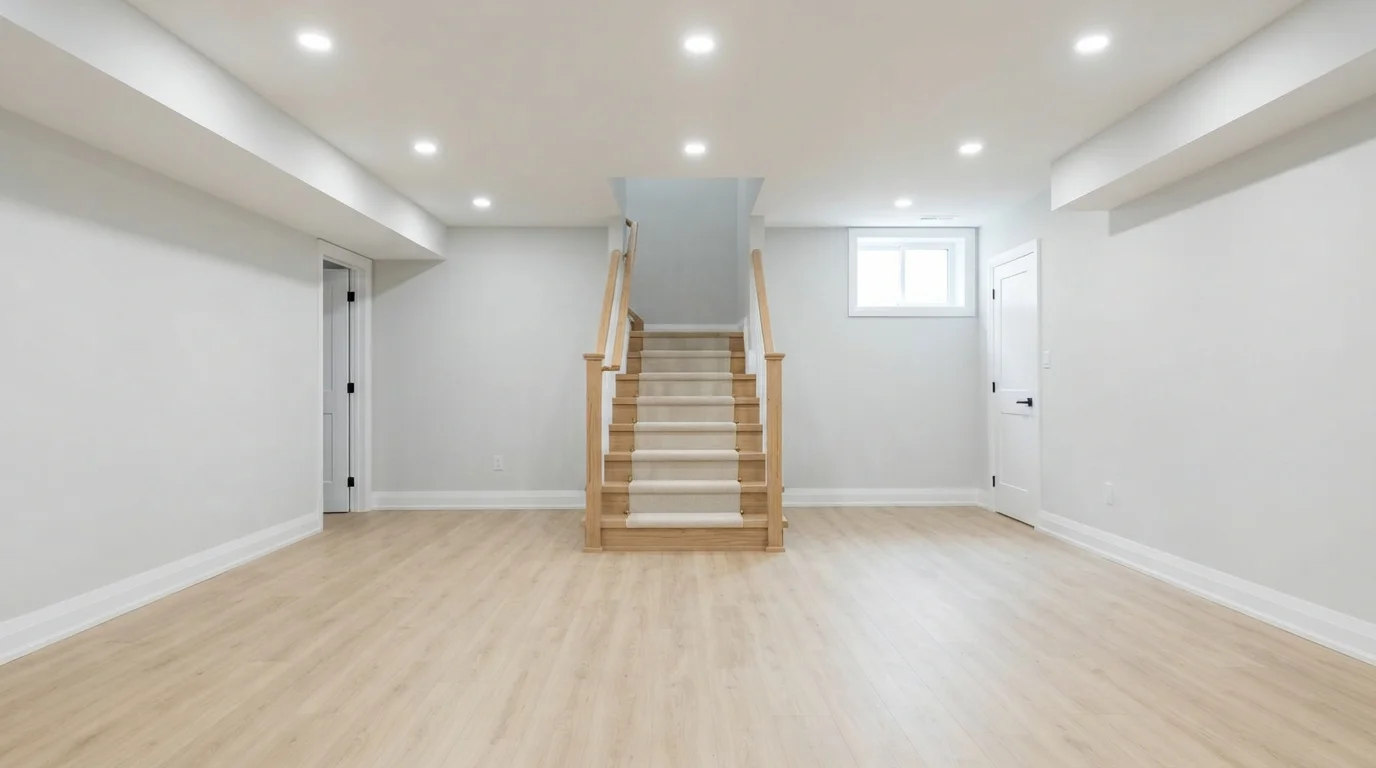
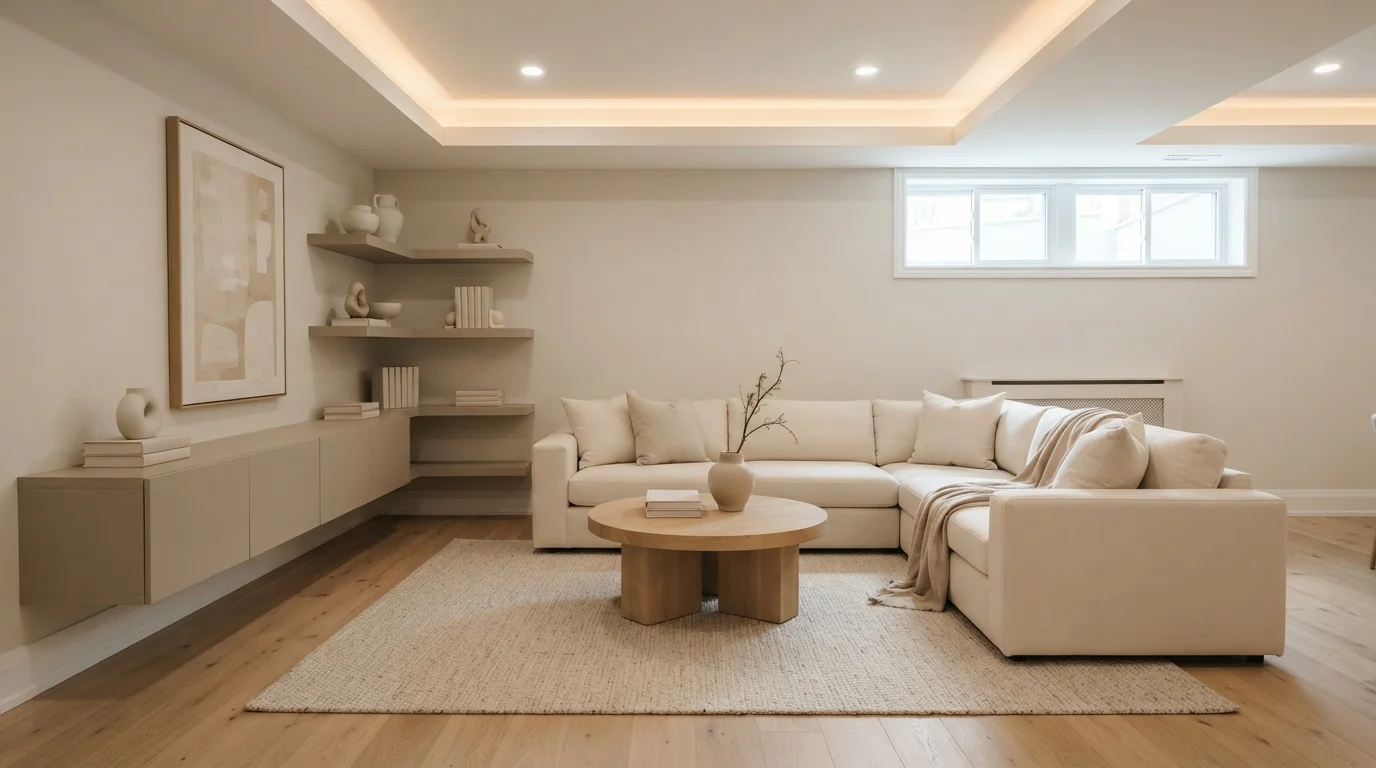
A basement is the hardest room in the house to make feel bright, and white paint is the most common fix people reach for. It can absolutely work, but a basement changes how white behaves. With little or no natural light, the wrong white can read gray, dull, or even slightly green under your bulbs, so the shade you pick matters more down here than it does upstairs.
The good news is that white is forgiving in the ways a basement needs. It bounces what light you do have, it pairs with almost anything, and it makes a low, boxed-in space feel taller and cleaner. The trick is choosing the right depth of white, the right sheen for a damp lower level, and a few smart pairings so the room reads finished instead of like raw storage.
Why White Works In A Basement (And What To Watch)
White is the easiest way to push a dark, low-ceilinged basement toward bright and open. It reflects the limited light you have, hides the patchwork of old framing and foundation walls, and gives a busy multi-use space one calm backdrop. For a room that often doubles as laundry, storage, a gym, and a hangout, that simplicity is worth a lot.
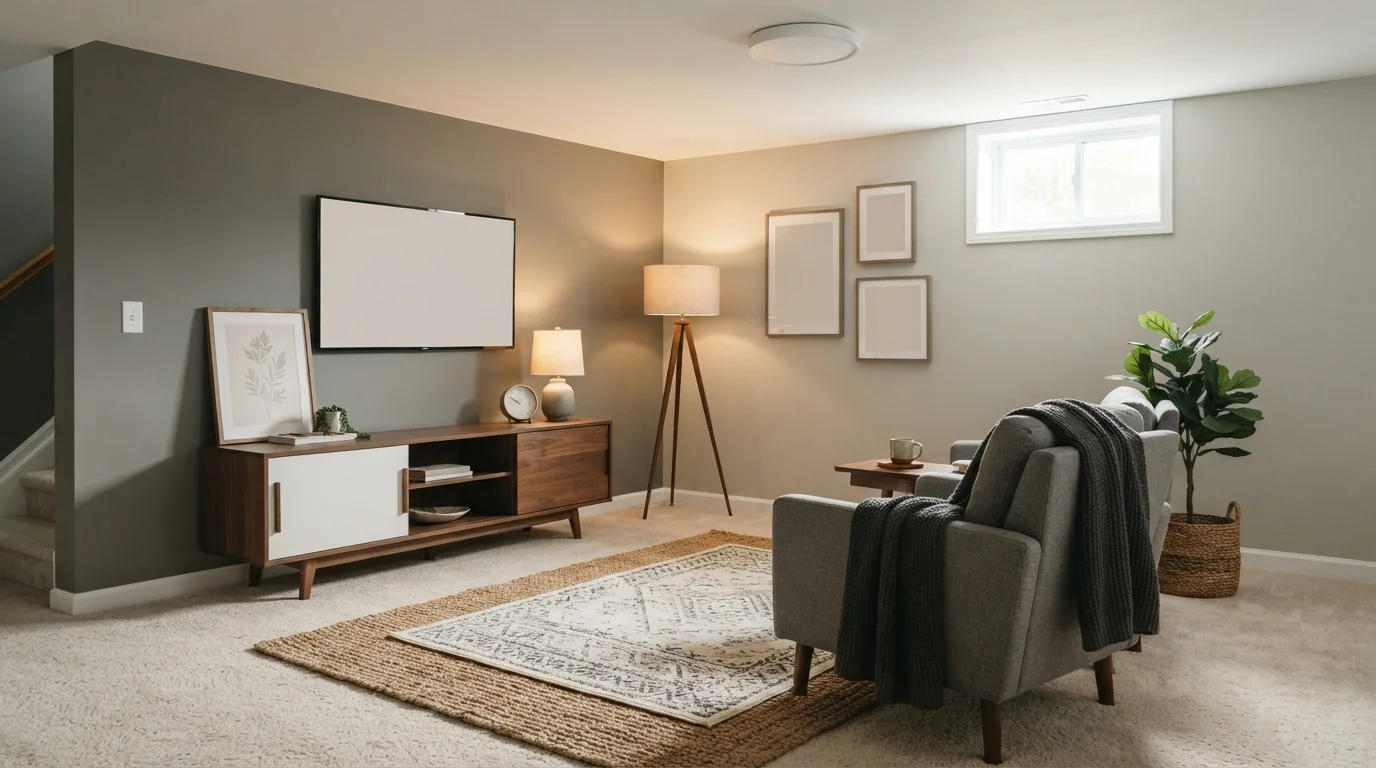
The thing to watch is undertone. Basements rarely get real sunlight, so the cool blue-gray cast of typical bulbs has nothing to balance it. A crisp, blue-leaning white can turn sterile and cold down here, while a warmer white stays inviting. Always test a sample on the actual wall, at night, under the bulbs you'll really use.
The Right Shade Of White For Low Basement Light
Light Reflectance Value, or LRV, tells you how much light a color bounces back, from 0 (black) to 100 (pure white). In a dim basement you want that reflectance high, so lean toward whites in the upper 80s and 90s to make the most of every fixture and any small window wells.
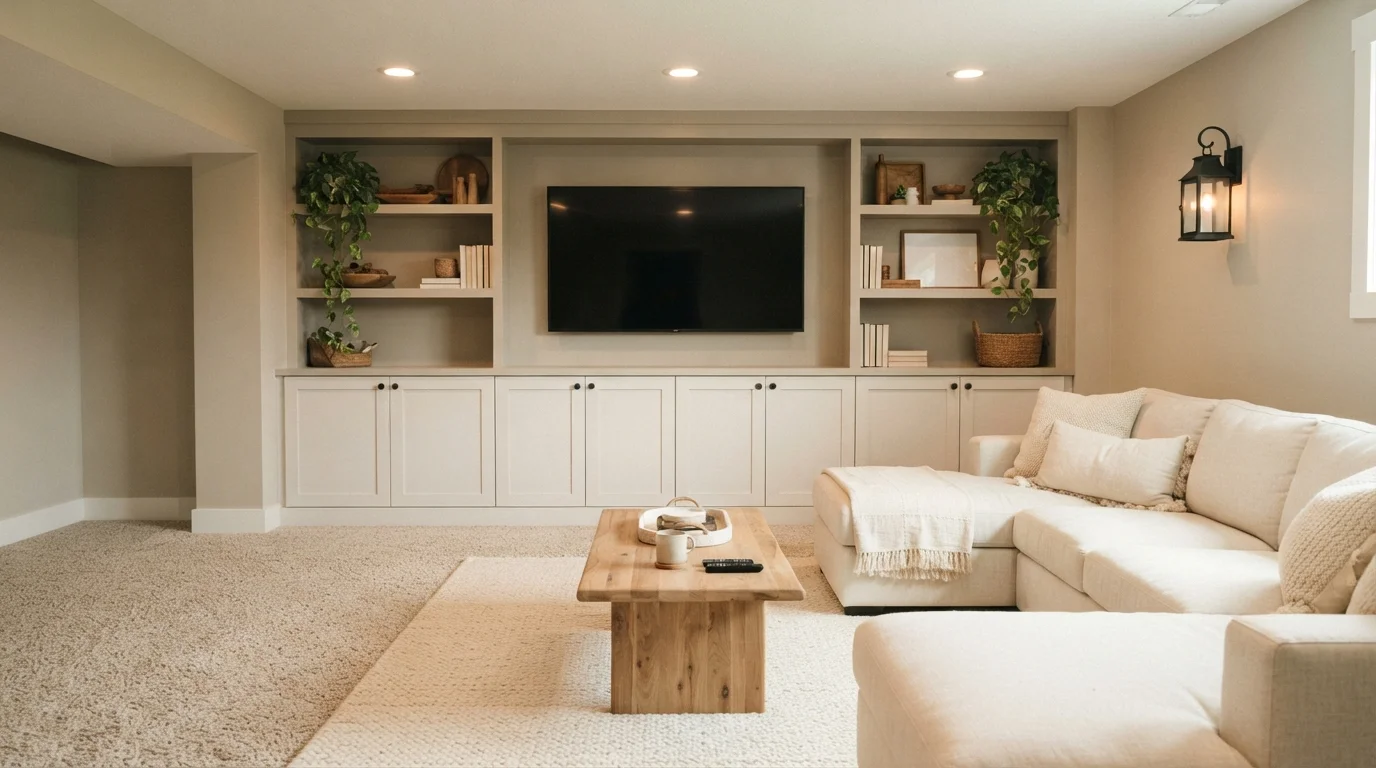
But go for a soft or warm white rather than the starkest, purest white. A white with a faint warm or creamy base counteracts the cool, flat light most basements have, so the room feels clean instead of clinical. Save the icy, ultra-bright whites for rooms that get real daylight to soften them.
The Best Finish For Basement Walls And Ceilings
Basements deal with humidity, and lower levels can get the occasional damp patch, so washability and moisture resistance beat a flat, chalky look. On walls, an eggshell or satin sheen wipes clean, handles a little moisture, and shrugs off scuffs from bikes, boxes, and gym gear far better than flat. In a laundry or bathroom corner, step up to satin or semi-gloss where splashing is likely.
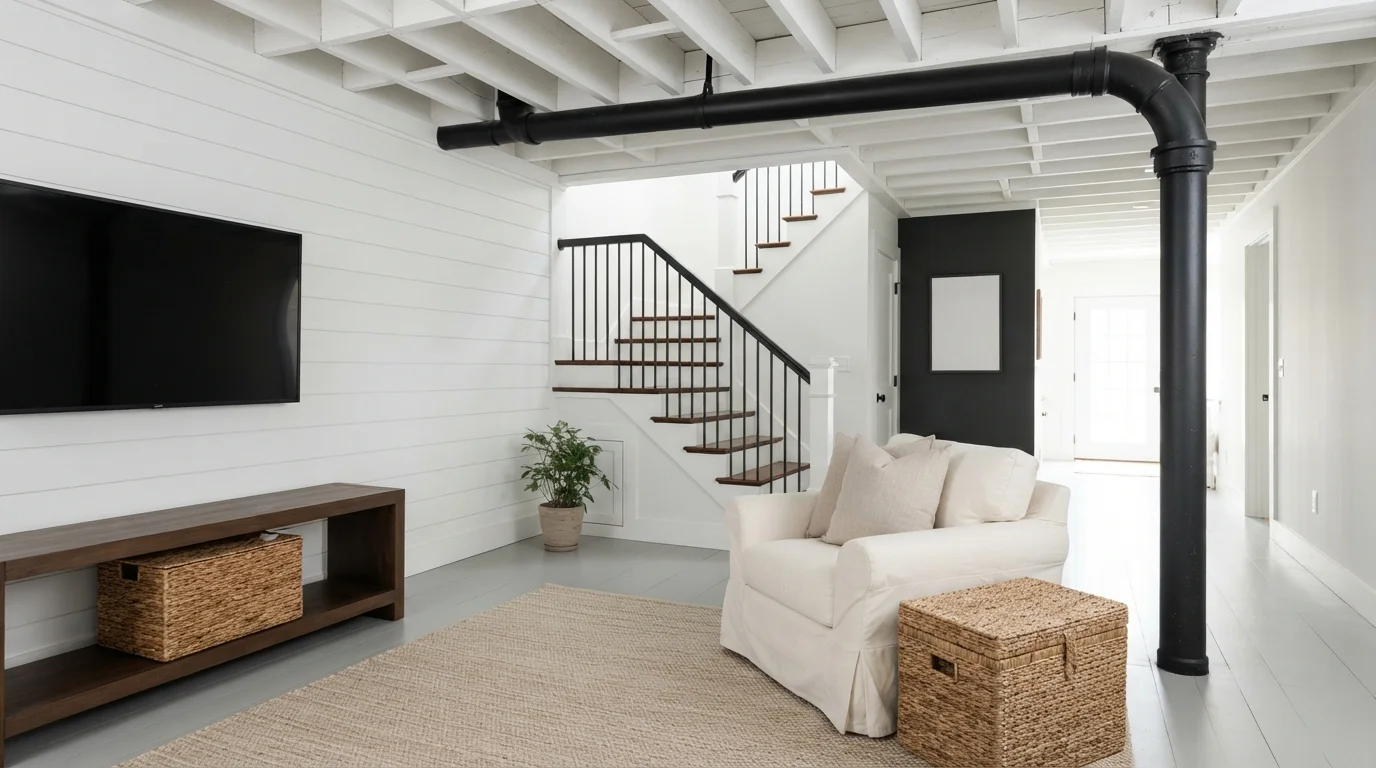
Ceilings are the exception. Glare isn't a worry with a basement's weak light, and a low ceiling with exposed seams or pipes looks best in flat white, which hides imperfections. If you've painted exposed joists or ductwork, a flat or matte white keeps the eye from snagging on every bump.
Pairing White With Trim, Ceiling, And Fixtures
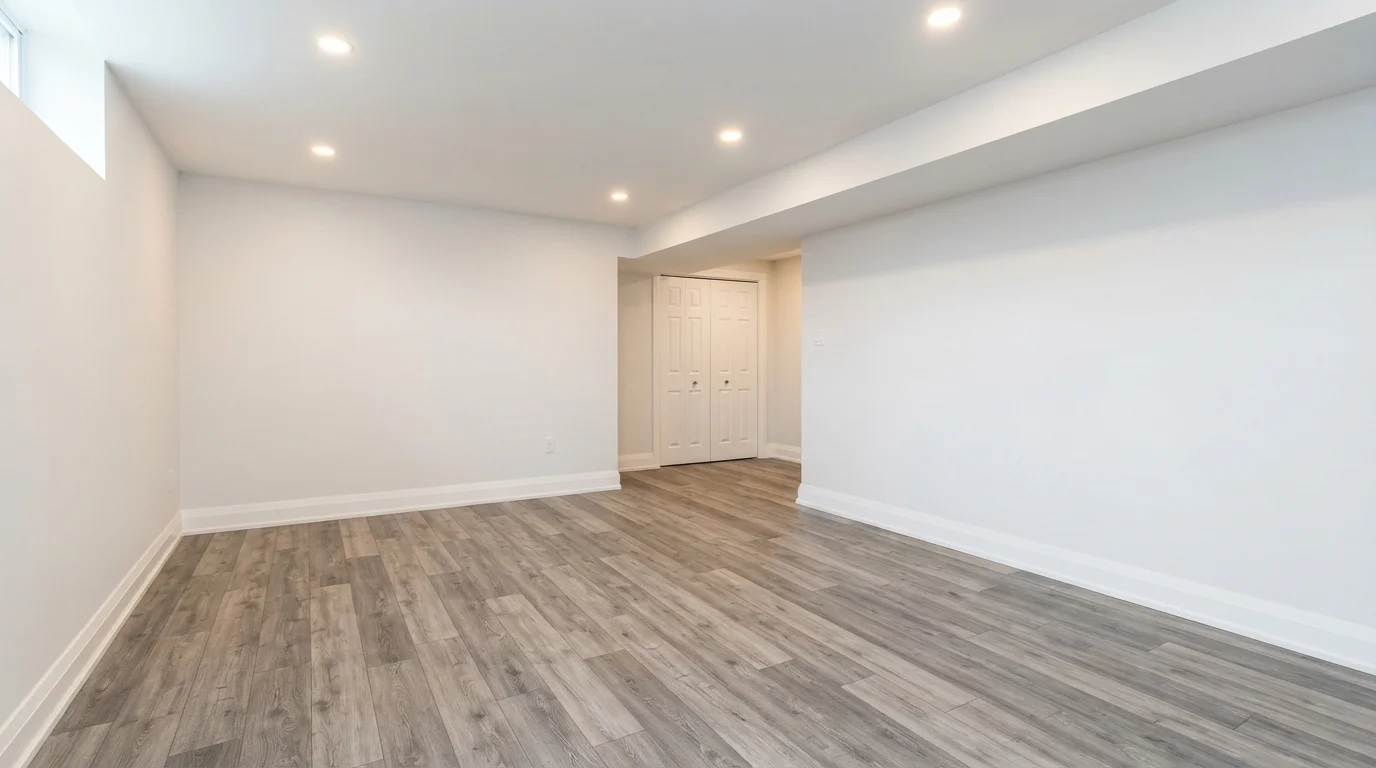
White on white is the cleanest move in a basement. Painting trim, doors, and the ceiling in the same white family, just bumping the trim to a higher sheen, blurs the edges of a boxy room and makes it feel larger. If the ceiling is low or busy with mechanicals, carrying one white everywhere is the safest choice.
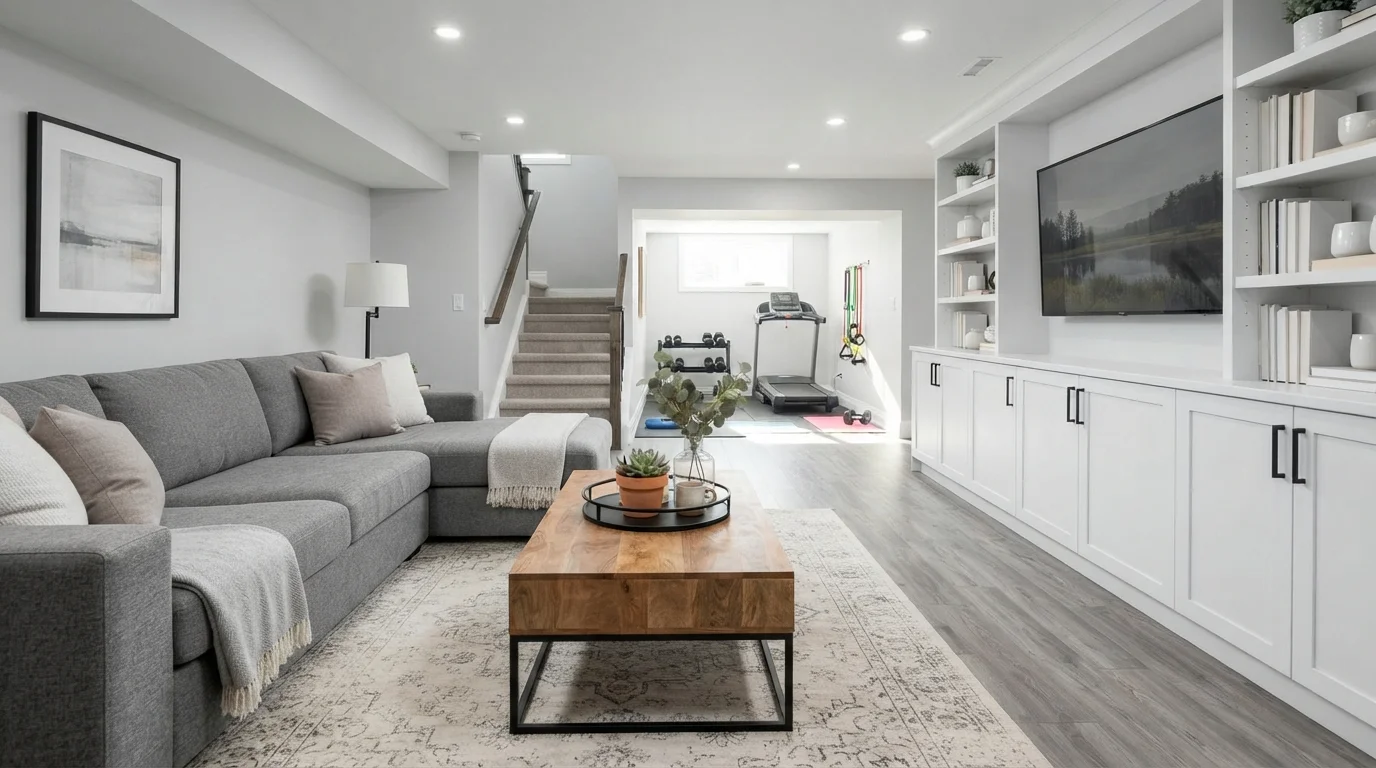
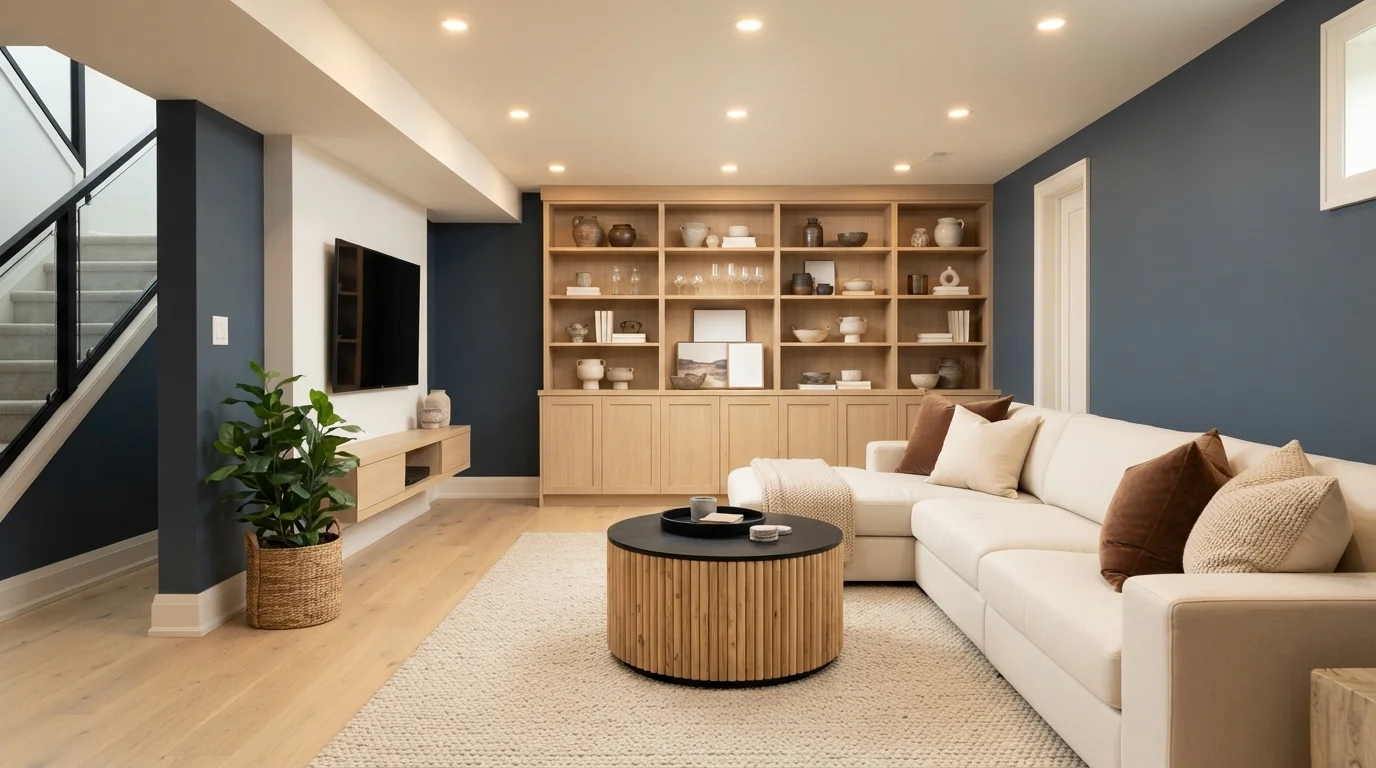
If you want contrast, anchor it low rather than overhead. Warm wood shelving, a soft gray or greige floor, black metal stair railings, or natural-toned cabinetry all read well against white and add warmth a basement needs. Brushed nickel or matte black fixtures pop nicely without fighting the bright walls.
Common Mistakes With White In A Basement
The biggest mistake is picking a white from a tiny chip in the store and skipping the on-wall test. Basement light is so different from the showroom that a white you loved can land cold or dingy once it's up. Paint a large sample, look at it at different times, and judge it under your real bulbs.
The other common slips are using flat paint where moisture or scuffing is a factor, and choosing a stark, blue-white that amplifies the chill of a sunless room. Also resist going too dark for contrast on walls. Save deeper tones for the floor or for one small accent so the room keeps its brightness. Whatever white you settle on is mixed to order at the store, so you can match the same shade across brands and bring a favorite from one line over to another.
White Basement Paint — Frequently Asked Questions
What is the best shade of white for a basement?+
A soft or warm white in the high 80s to low 90s LRV usually works best. The high reflectance bounces the limited light around, while the warm base keeps the room from feeling cold under typical basement bulbs. Skip the starkest, blue-leaning whites, since a sunless room has nothing to soften that chill.
What sheen should I use for basement walls?+
Eggshell or satin is the sweet spot for most basement walls. Both wipe clean, handle a little humidity, and resist scuffs from storage and gym use far better than flat. Step up to satin or semi-gloss near laundry, sinks, or a bathroom where splashing happens.
Will white paint make a dark basement look brighter?+
Yes, within reason. White reflects more light than any other color, so it makes the most of your fixtures and any small windows and helps a low, boxy space feel taller and more open. It can't replace good lighting, though, so pair a bright white with enough warm-toned bulbs to actually fill the room.
Why does my white basement look gray or cold?+
Basements get little or no daylight, so the cool cast of standard bulbs takes over and pulls a white toward gray or blue. The fix is choosing a white with a warm or creamy undertone and testing it on the wall under your real lighting before you commit. Warmer bulbs help too.
Should the basement ceiling be the same white as the walls?+
Carrying one white across walls, trim, and ceiling is a smart move in a basement because it blurs the room's edges and makes a low space feel bigger. Use a flat sheen on the ceiling to hide seams, pipes, and exposed framing, and a slightly higher sheen on walls and trim for durability.
Can I match the same white across different paint brands?+
Yes. Every color shown here is mixed to order at the paint counter, so a white you like can be matched closely from one brand to another. That lets you keep a single white throughout the basement even if you buy paint from different lines.