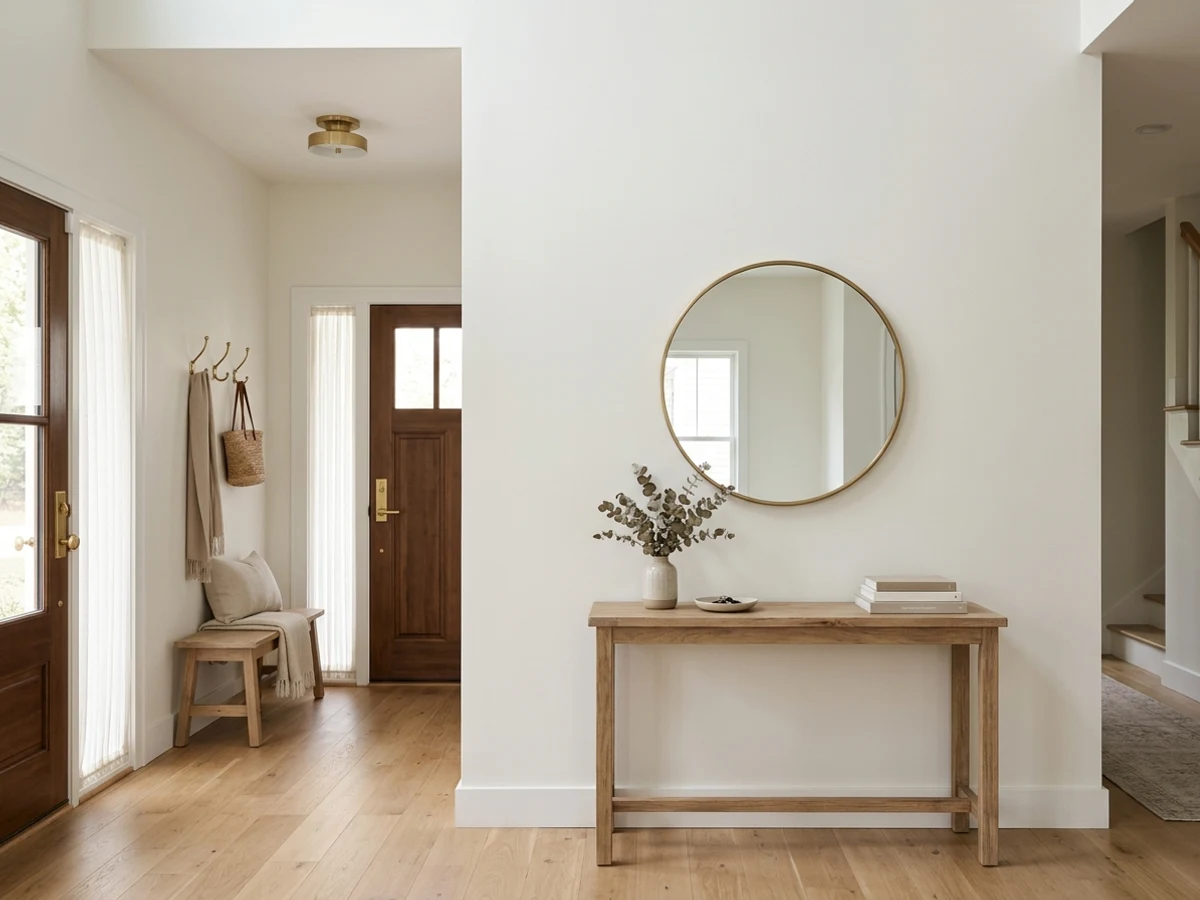
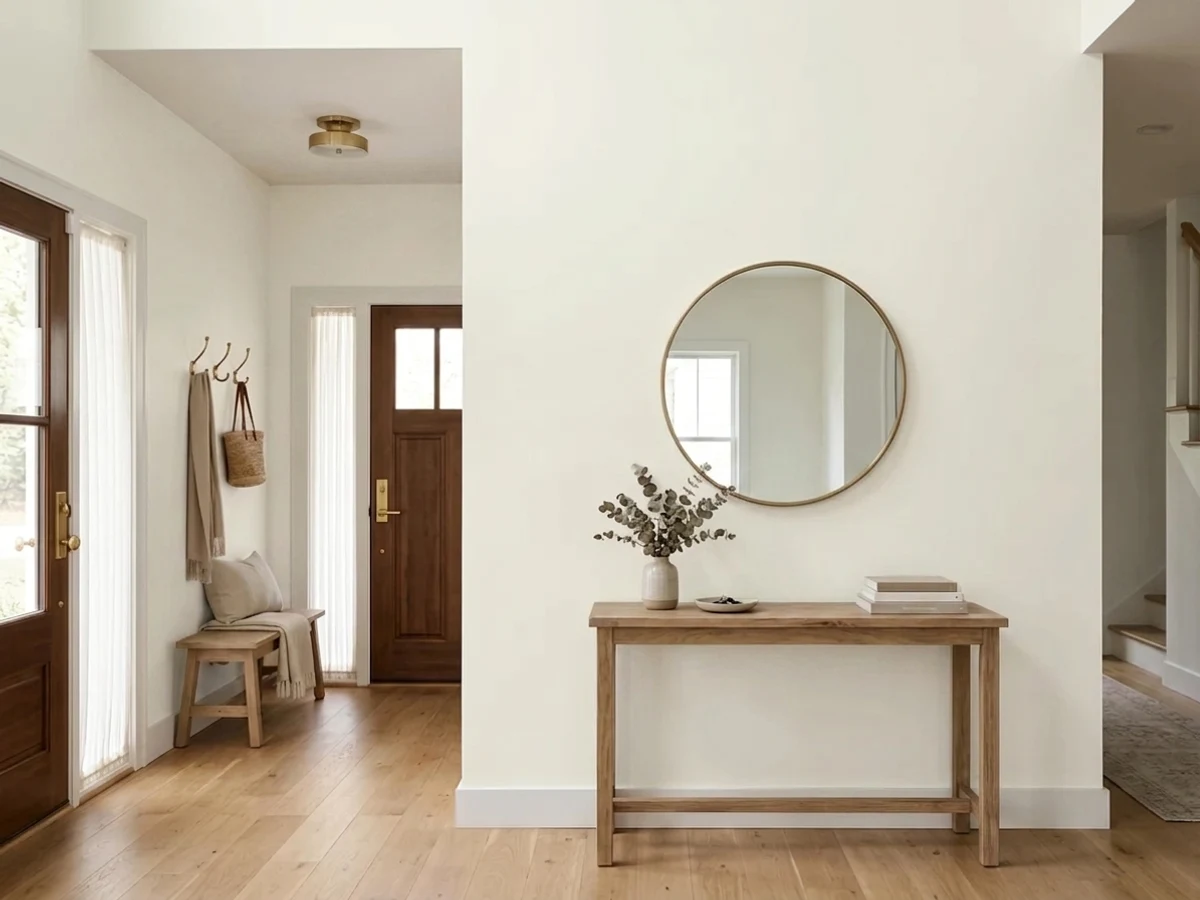
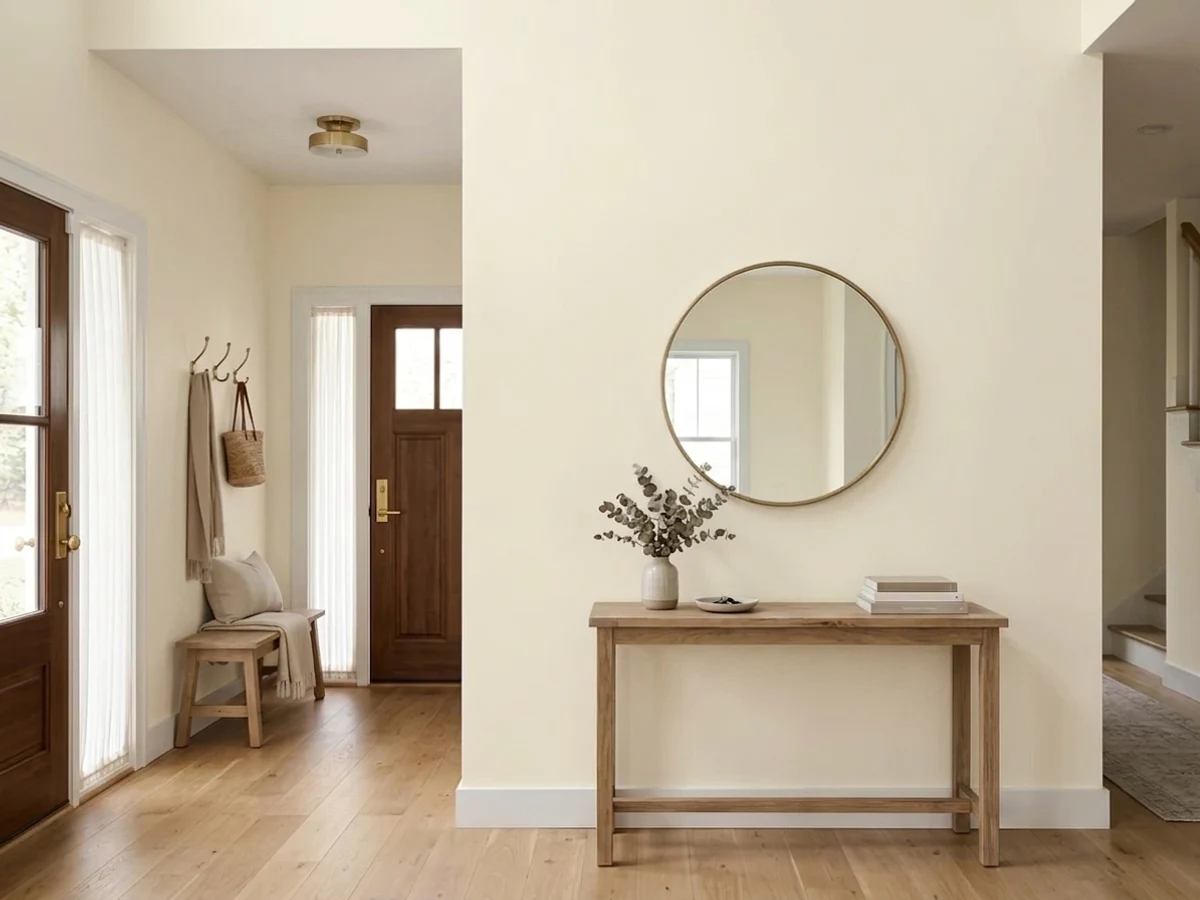
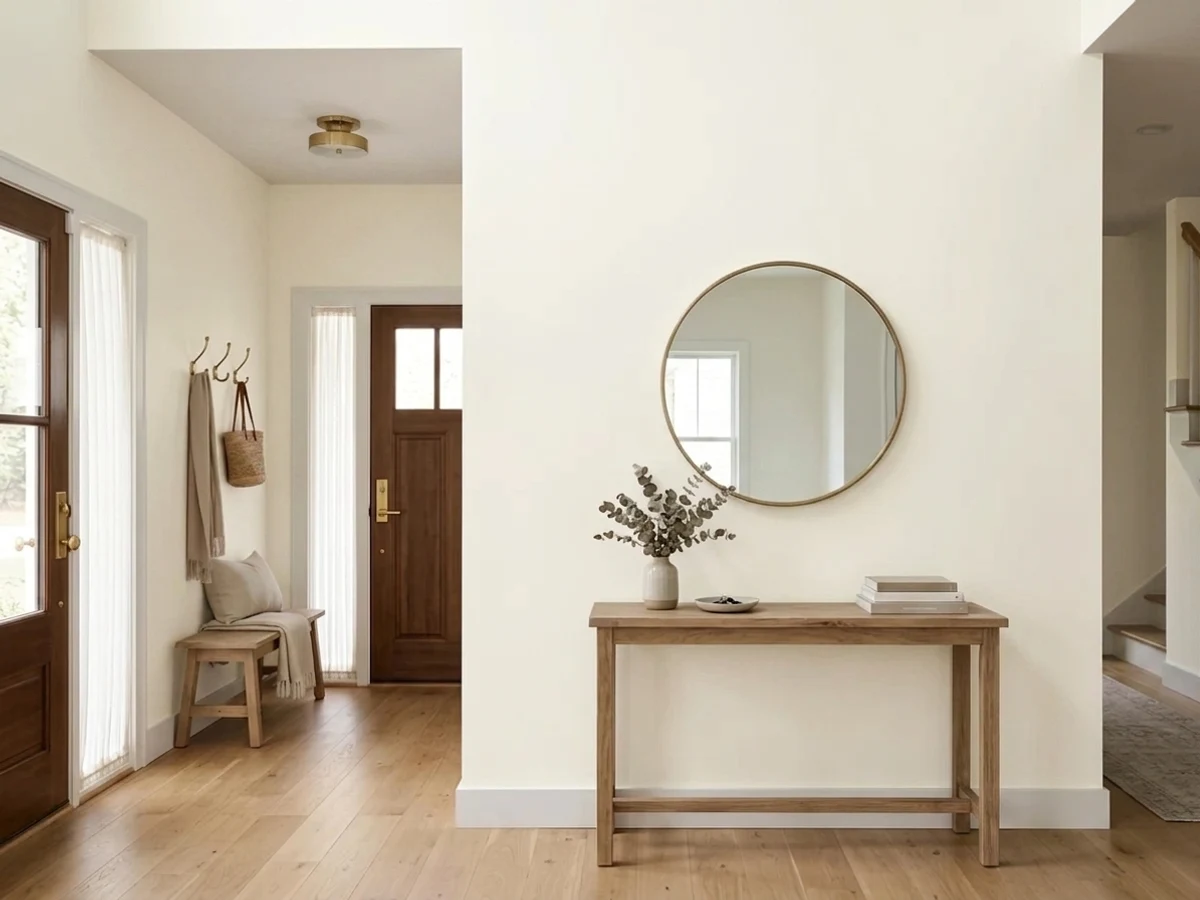
White Entryway Paint Colors
2,064 white colors that work in entryways, drawn from the full ~30,000-color US paint deck. Below: editor's picks specific to entryways, then 30 picks spread across the LRV range — narrow further on the brand page when you've shortlisted.
White is the hardest color to specify well. The right white shifts under daylight, north-facing rooms, and warm-LED bulbs — and most "whites" actually have a strong undertone (yellow, pink, green, or blue) that only shows up once it's on the wall. Below: the warm whites and cool whites we recommend most often, organized so you can compare them at a glance.
Editor's Picks: White for Entryways
4 picks30 White Picks Across the LRV Range
30 of 2,064 · sorted dark → lightLooking for more? All white → covers every brand; brand × family pages show full decks.
White Entryway Colors at Every US Brand
20 brands · up to 10 picks eachUp to 10 picks per brand spread across the white LRV range, drawn from each brand's full deck. Tap any swatch with a curated guide for full spec; tap the brand title for the brand's complete white deck.
Behr
Benjamin Moore
Dunn-Edwards
Glidden
PPG / Glidden
Valspar
Diamond Vogel
Kompozit
Hirshfield's
Sherwin-Williams
Dutch Boy
C2 Paint
Rodda
Farrow & Ball
Magnolia Home
Clare
Portola Paints
Backdrop
Rust-Oleum
Other Entryway Color Families
White Colors in Other Rooms
White Paint Colors for a Entryway
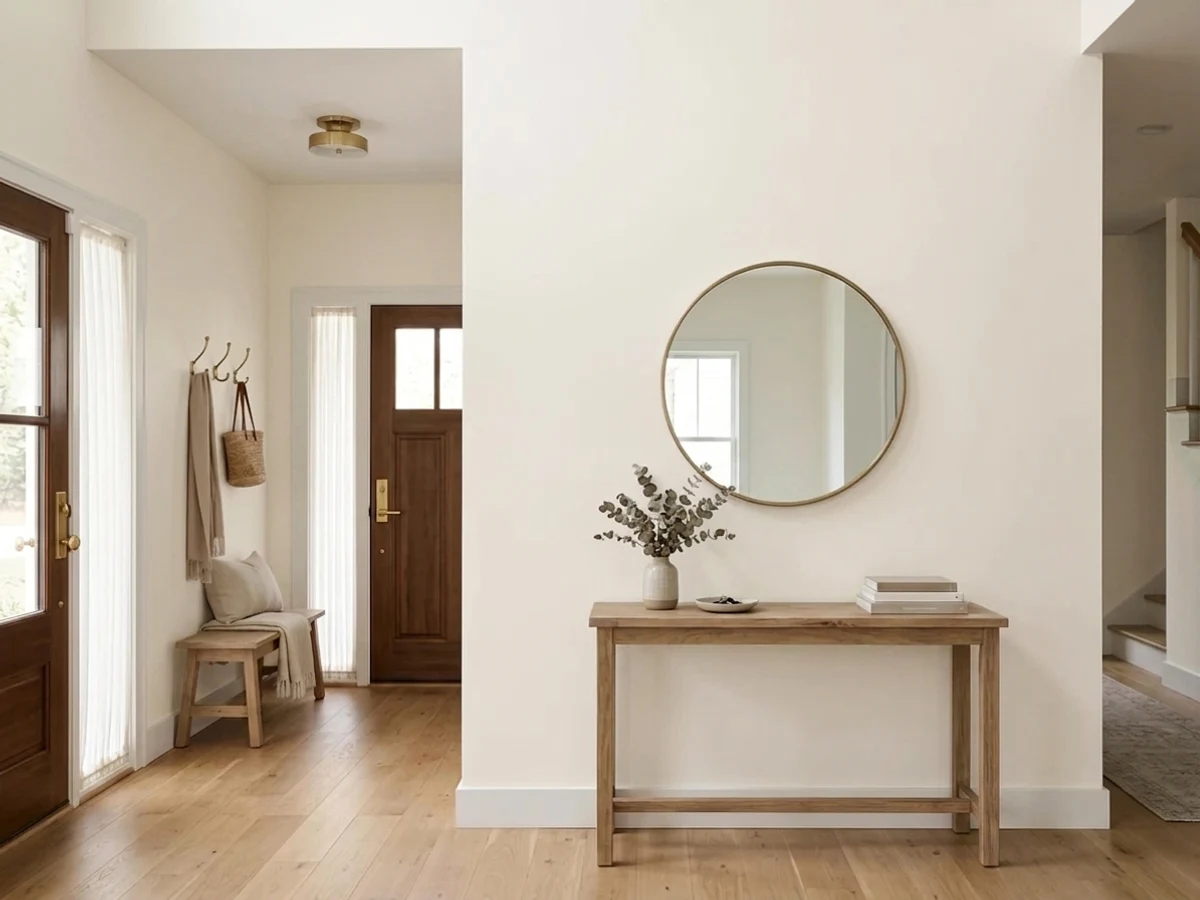
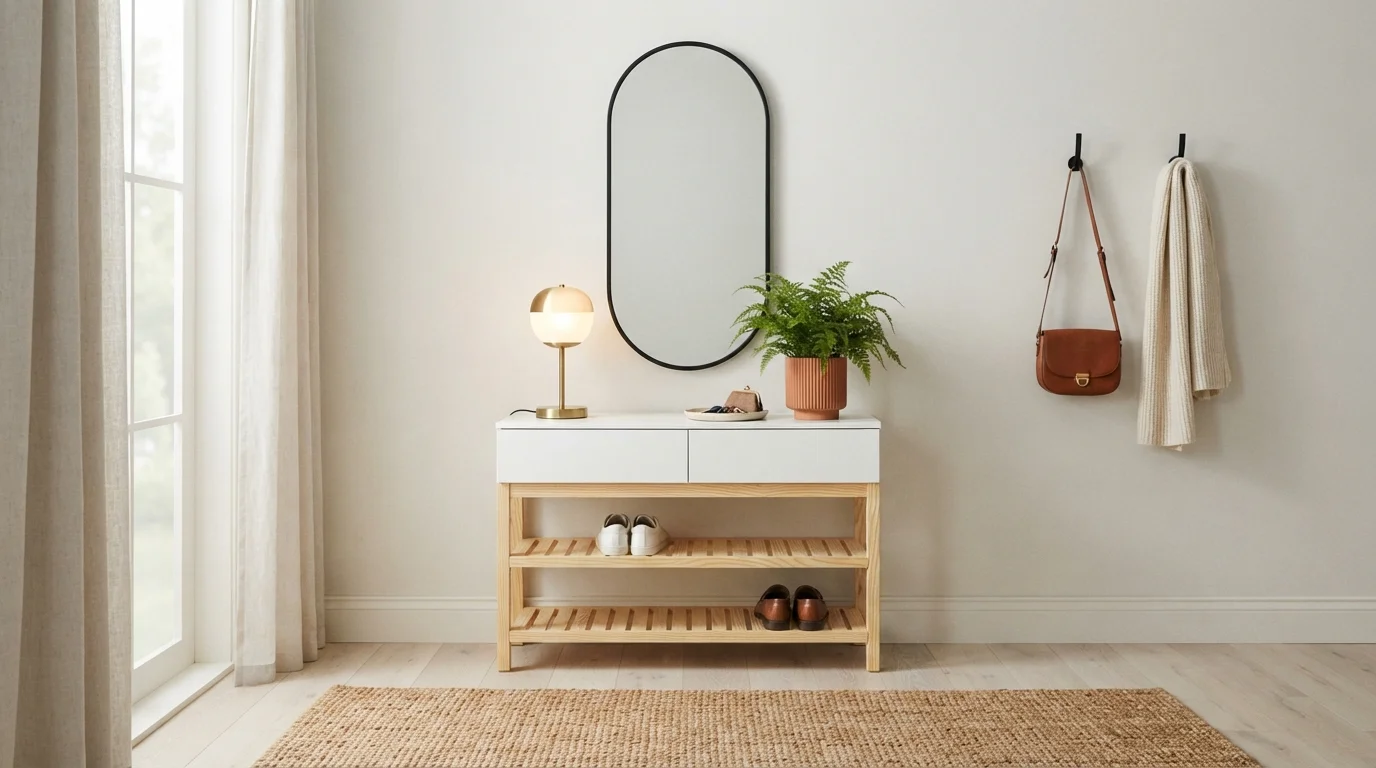
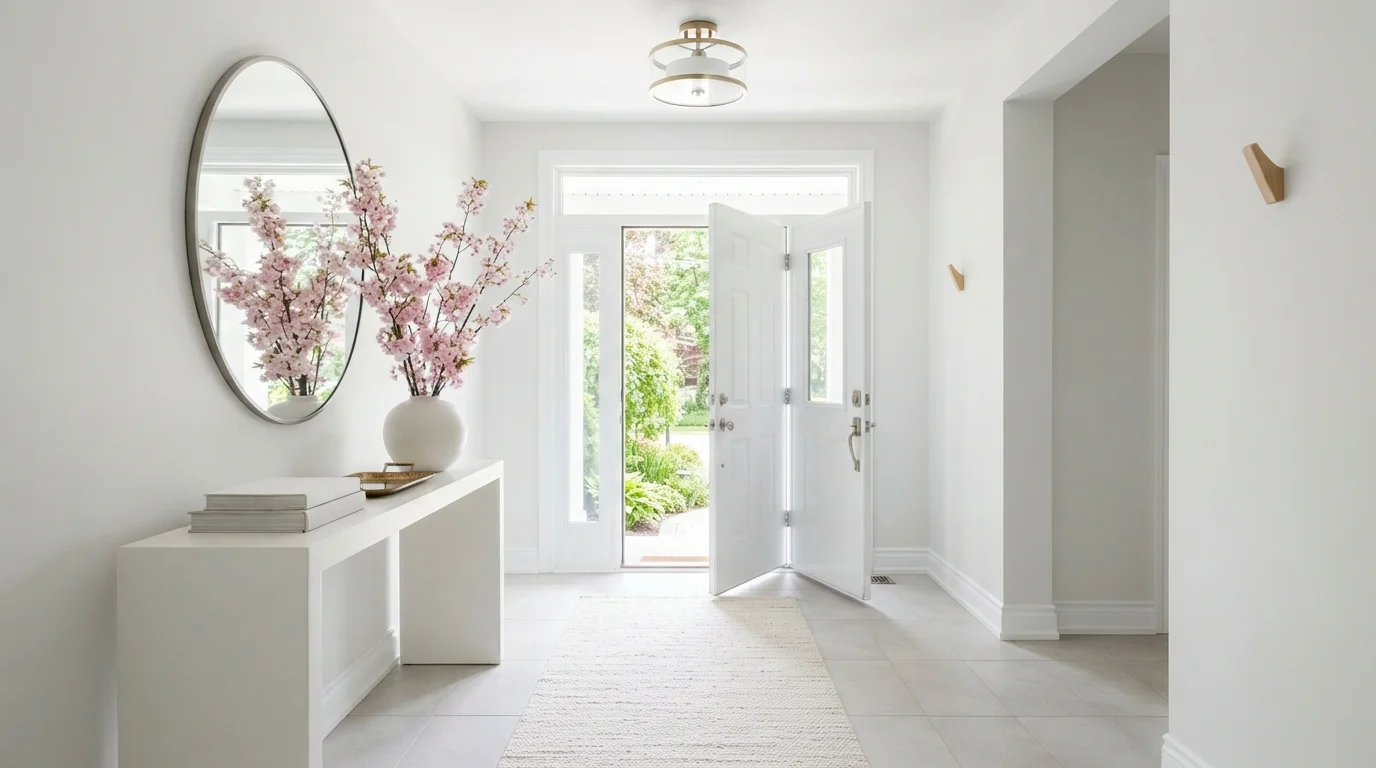
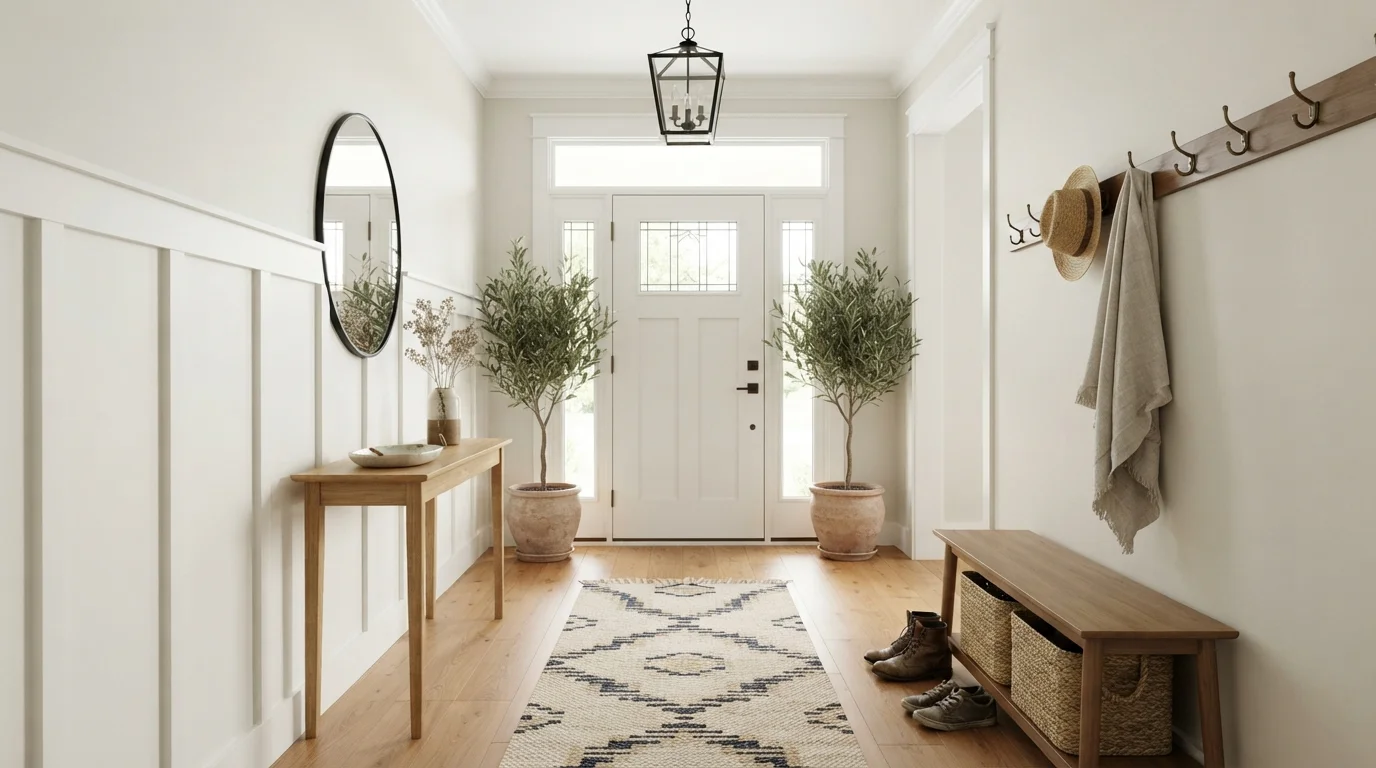
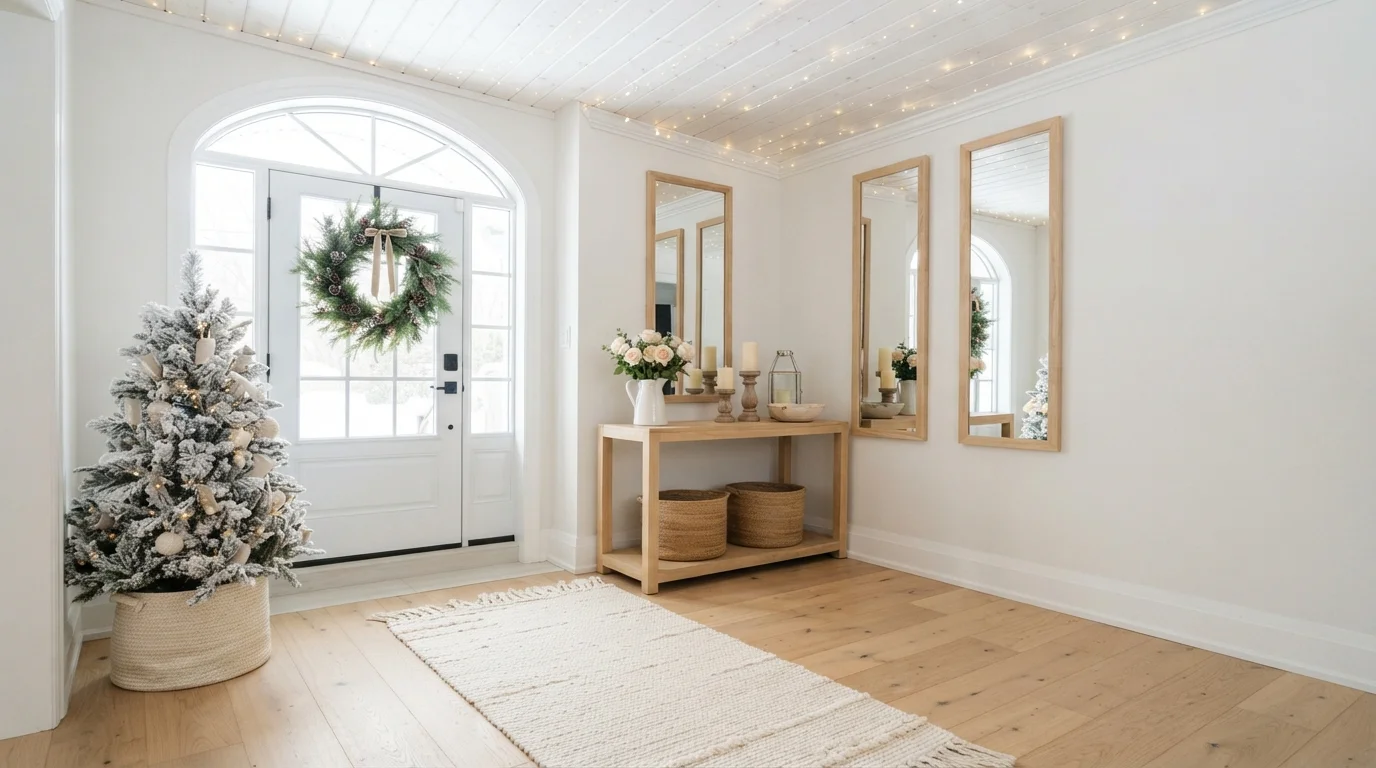
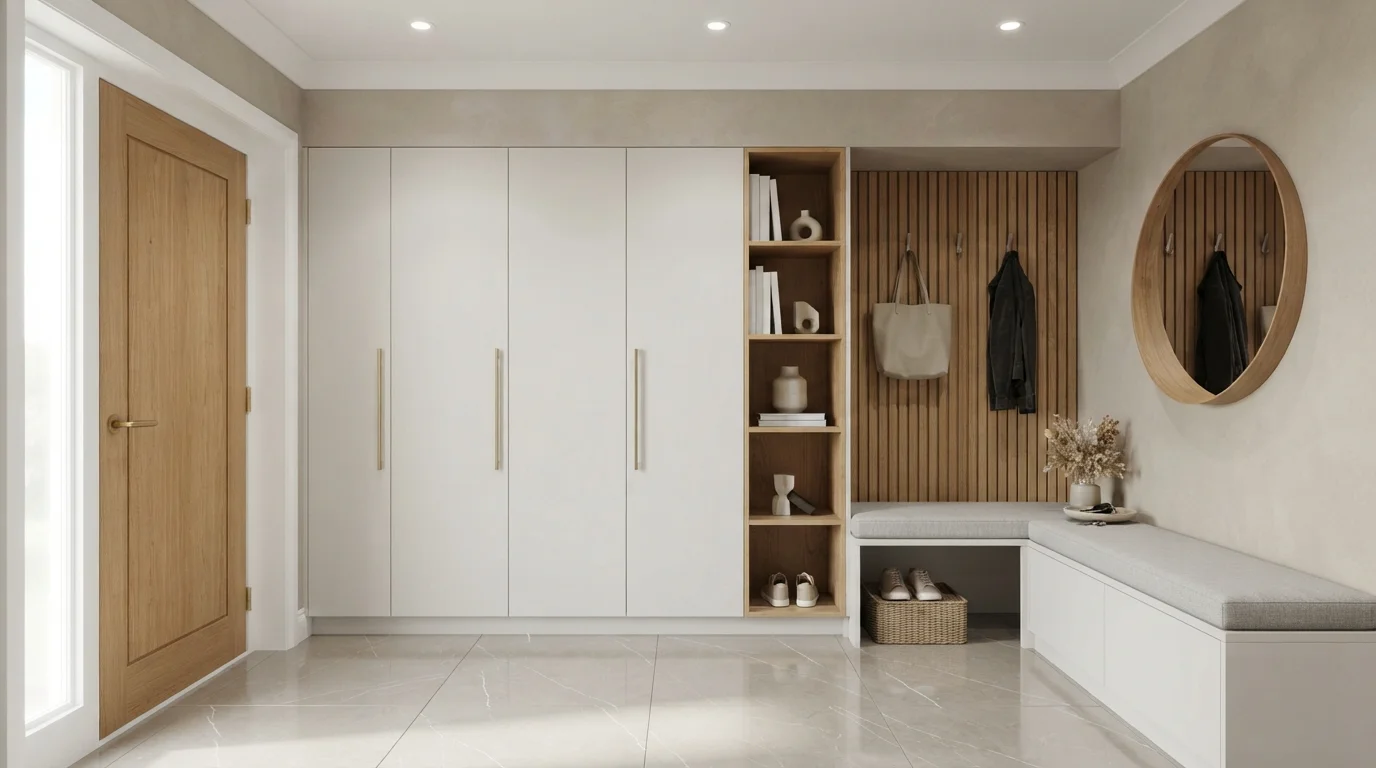
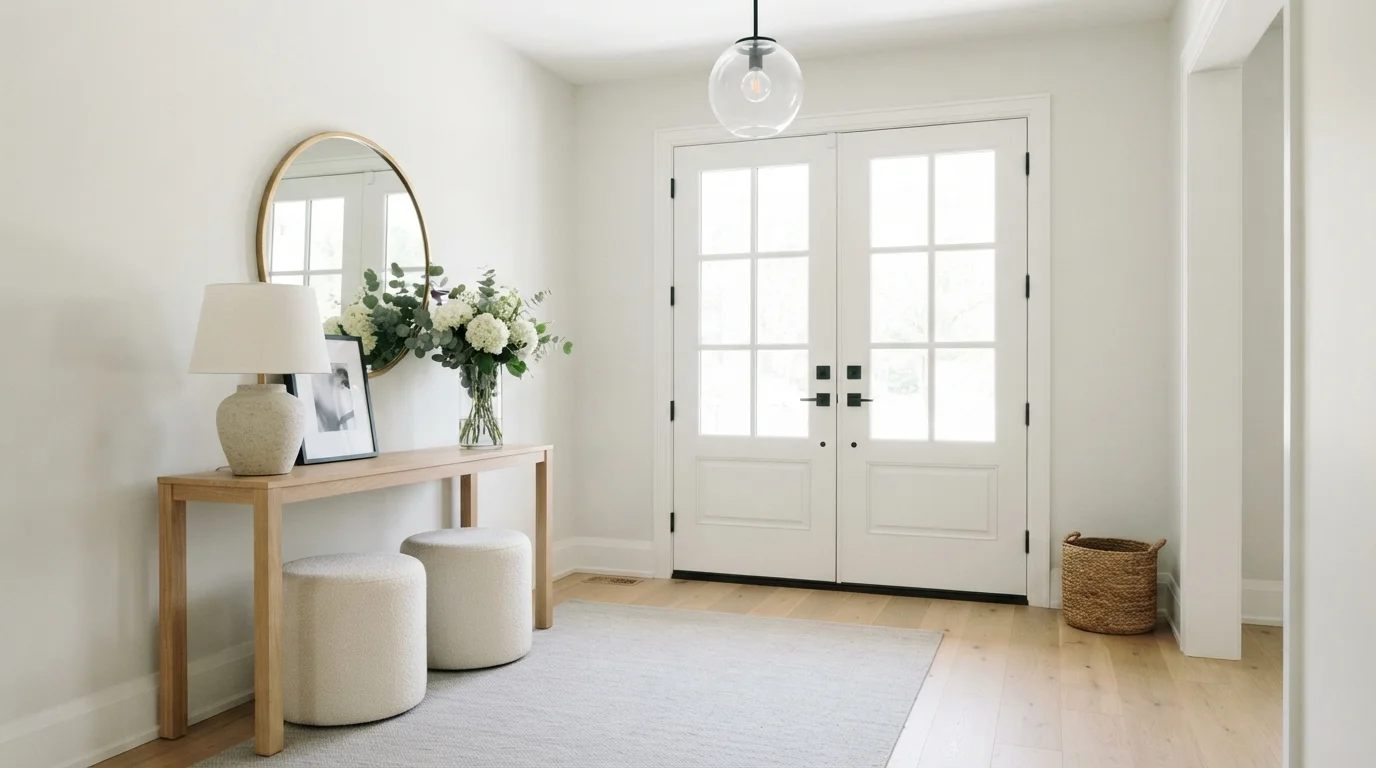
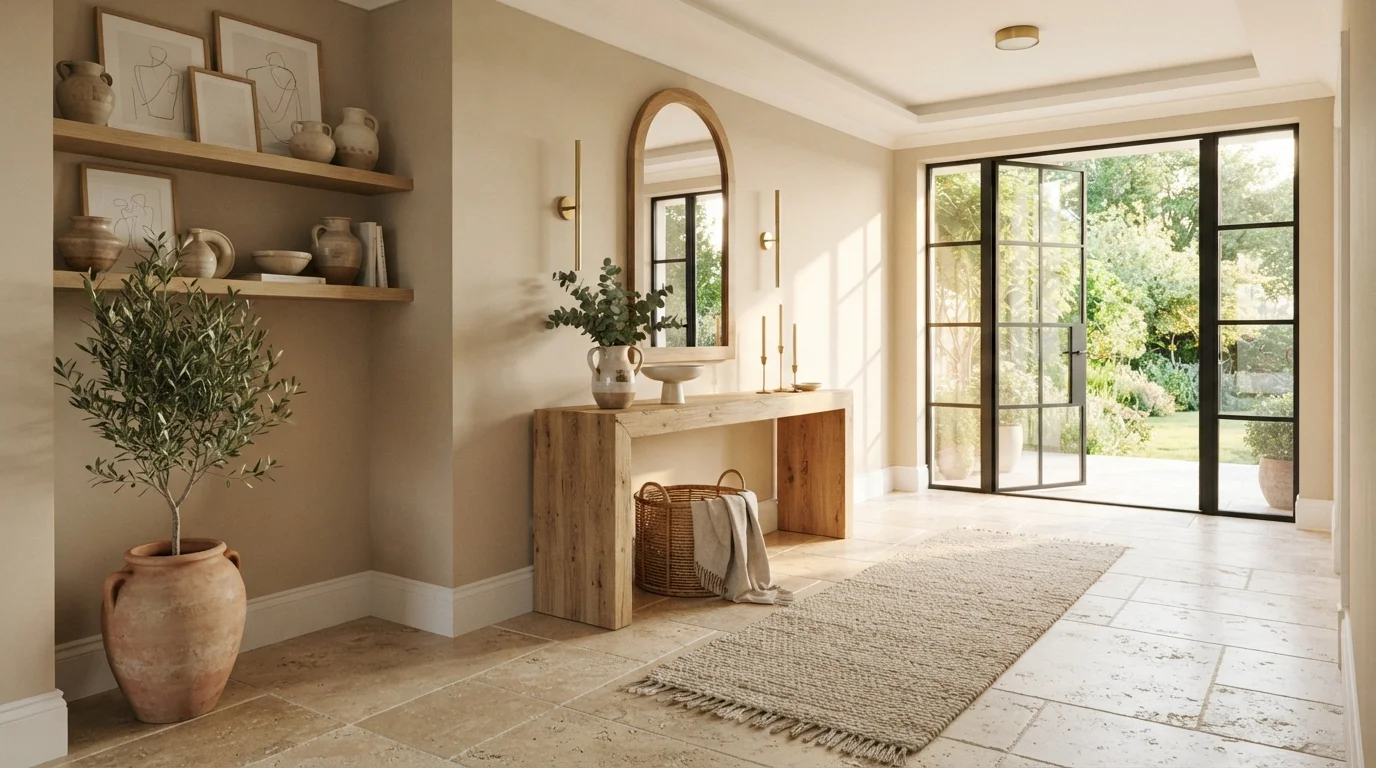
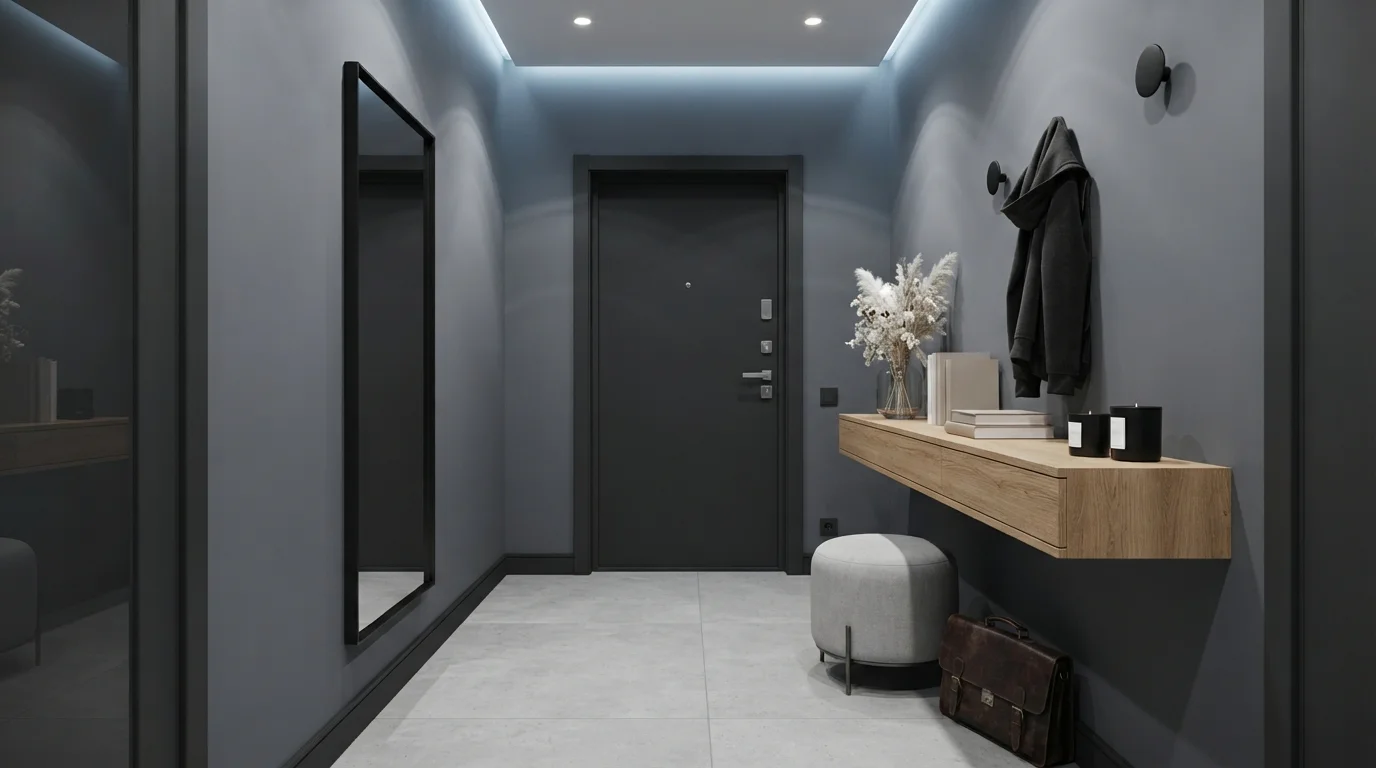
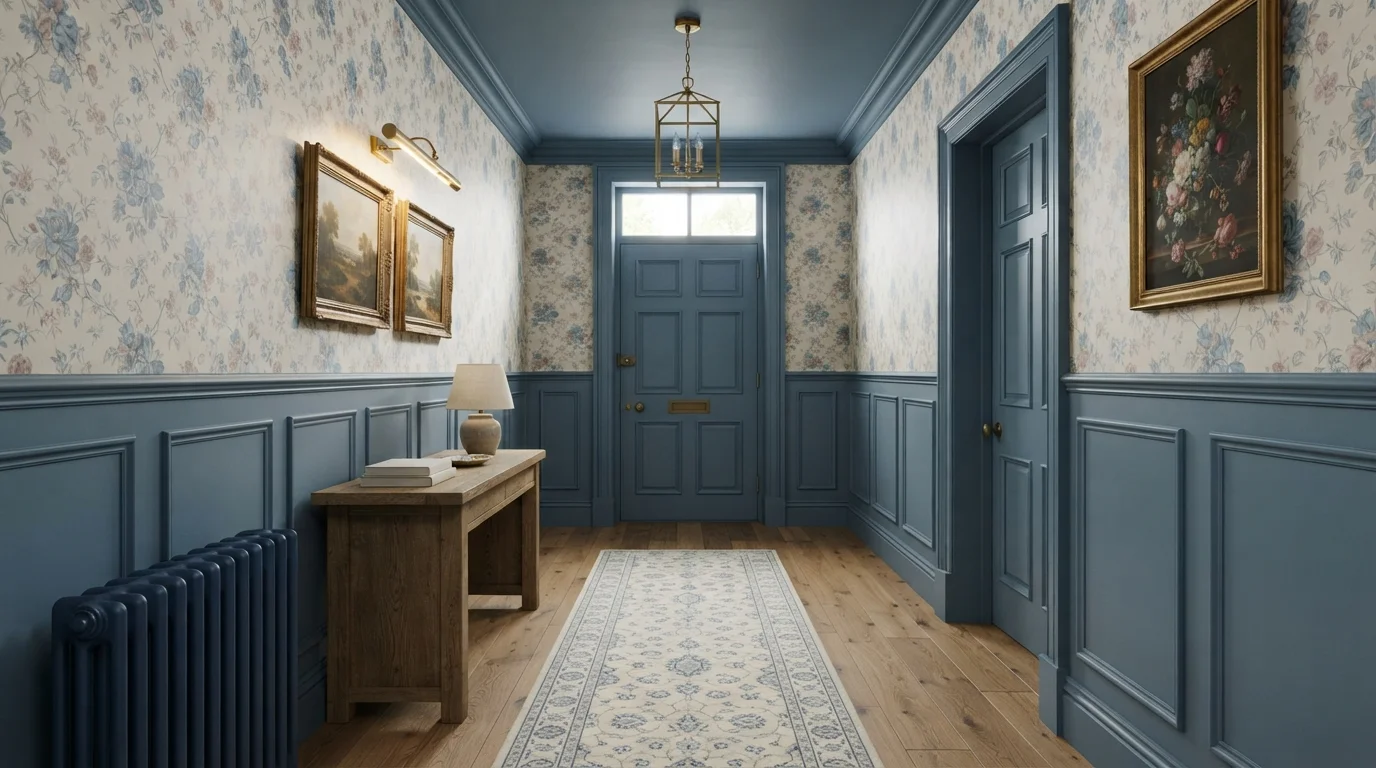
An entryway is the first room your house shows off, and white is the classic way to make it feel bright, open, and welcoming the moment the door swings in. Most entryways are short on windows and long on traffic, so white pulls double duty here: it bounces around whatever light you do have, and it gives a clean backdrop for a console table, a mirror, or a stack of coats and shoes. Done right, white makes a narrow hall feel wider and a dim foyer feel like it has its own glow.
The catch is that an entryway is also the spot that takes the most abuse. Hands on the wall by the light switch, bags brushing the baseboards, salt and mud in winter, and direct sun by the front door that can wash a soft white out to glare. The trick is matching the depth of white to your light and picking a finish that wipes clean. Below is how to choose, pair, and finish white in this room specifically. Every white shown here is mixed to order at the paint counter, so you can match a shade across brands if your favorite formula lives under a different label.
Why White Works in an Entryway
Entryways are usually small, often windowless, and almost always the darkest-feeling spot in the house because they sit between rooms with no light of their own. White is the most reliable fix because it reflects light instead of soaking it up, so a tight foyer reads as open and a long hall reads as wider. It also keeps the focus on what you want noticed first: the front door, a runner, the art, the people walking in.
The thing to watch is that white is honest about wear. Scuffs, fingerprints, and dings show faster on white than on a mid-tone, and the entryway is exactly where that happens. That is not a reason to skip white here, it is a reason to choose the right finish, which we cover below.
The Best Shade of White for This Room
Reach for a soft, warm white rather than a stark bright white in most entryways. A warm white feels welcoming and hides dust and scuffs a little better, while a cool, blue-leaning white can look gray and cold in a space that already lacks light. If your entry gets strong direct sun by the door, you can go a touch cleaner; if it is dim and northern, lean warmer so it does not turn flat or dingy.
LRV, or light reflectance value, is your shortcut here. For a dark or windowless entry, pick a white in the high LRV range, roughly 80 and up, so it works hard to bounce light. In a bright, sun-filled entry, a white in the low-to-mid 70s LRV softens the glare so the walls do not feel harsh in the afternoon.
The Right Finish for an Entryway
Skip flat and matte on entryway walls. This room collects handprints, shoe marks, and the occasional wet-coat brush, and a flat finish holds onto all of it with no easy way to clean it. A washable finish is the whole game here.
Eggshell is the safe default for entry walls because it wipes down without showing every roller mark, and satin is the better pick if you have kids, dogs, or a high-traffic mudroom-style entry that needs real scrubbing. Save semi-gloss for the trim, the front door, and the baseboards, where you want the most durable, most wipeable surface and a little crisp contrast against the softer walls.
Pairing White With Trim, Doors, and Fixtures
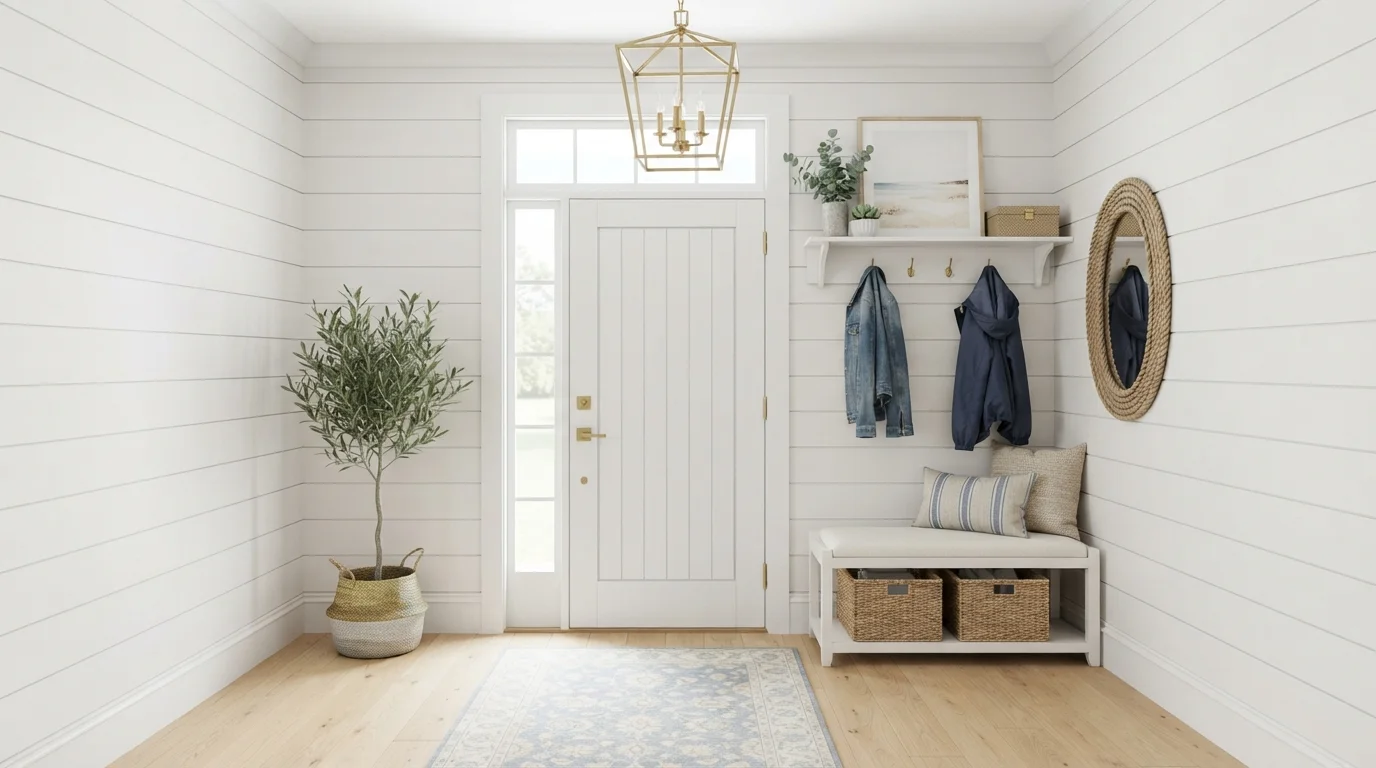
The easiest, most timeless look is white walls with white trim in a tighter, slightly brighter shade, plus the same crisp white on the ceiling. Letting the trim read just a step cleaner than the walls gives you quiet definition around the door and baseboards without any hard color line. If your entry has wainscoting or board-and-batten, painting it the same white as the trim keeps a small space calm instead of busy.
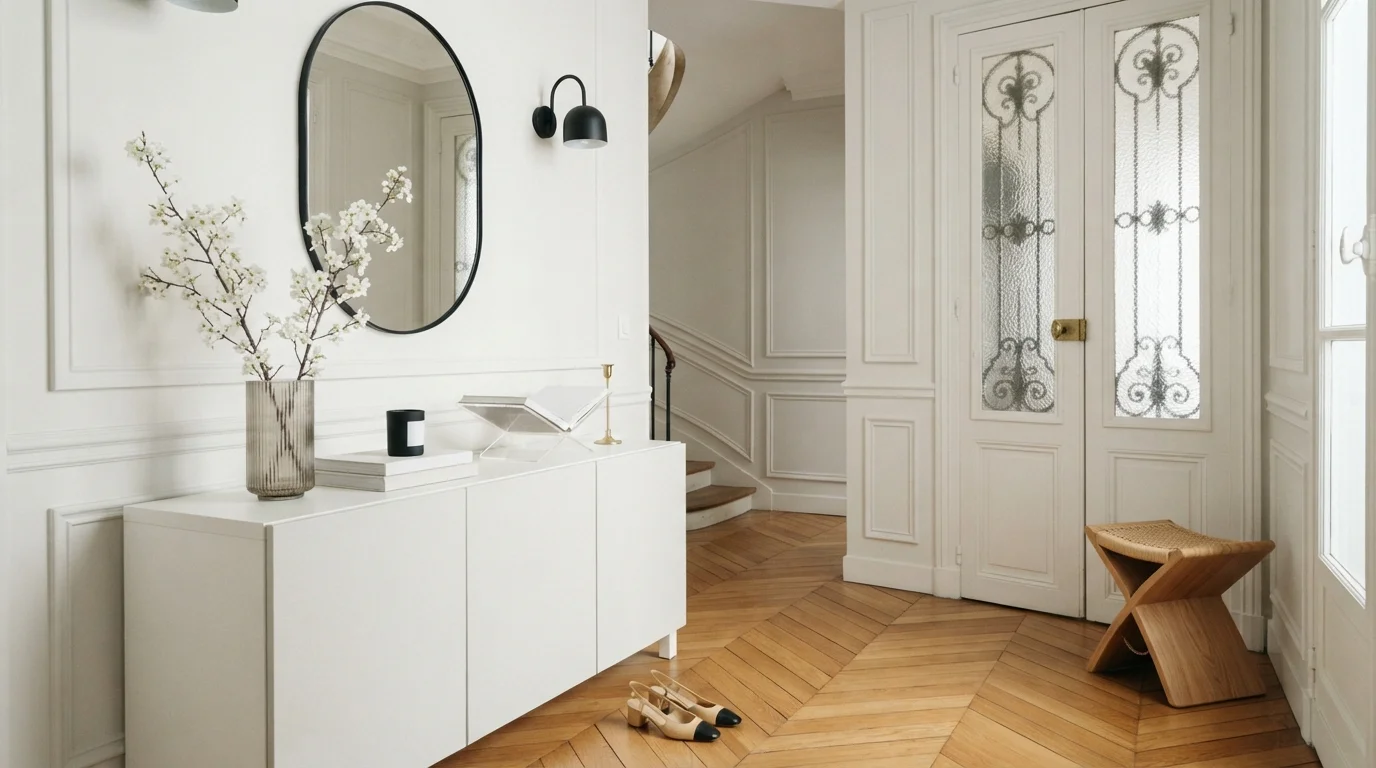
White is also the most forgiving backdrop for the hardware and fixtures an entry leans on. Warm metals like brass and bronze pop against a warm white, black hardware and a black front door give clean graphic contrast, and a natural-wood console or bench reads richer next to white than it would against beige. A bold front door, painted on the inside, is one of the best low-risk ways to add personality to an all-white entry.
Common Mistakes to Avoid
The biggest mistake is choosing a white from a chip in the store instead of testing it on your own entry wall. White shifts hard with light, and an entry's mix of a porch light, a hanging fixture, and whatever spills in from the door can pull a chip cool, warm, or gray in ways you cannot predict at the counter. Always paint a sample patch and look at it morning and night before committing.
The other common misses: going too stark in a low-light foyer so it looks cold, using a flat finish that scuffs and cannot be cleaned, and ignoring undertones so the wall white and trim white fight each other. Pick both whites from the same family of undertone, and check that your floors and any fixed stone or tile do not push the white in a direction you do not want. Any white you like here can be color-matched across brands, so you are not locked into one label to get the exact shade.
White Entryway Paint — Frequently Asked Questions
what is the best white paint color for a dark entryway with no windows?+
Choose a warm white with a high LRV, roughly 80 or above, so it reflects as much light as possible. A warm tone keeps a windowless foyer from feeling cold or gray, and the high reflectance helps the space feel brighter than it actually is. Always test a sample on the wall under your actual lighting before you buy a full gallon.
what sheen should I use for entryway walls?+
Use eggshell as your default and satin if the entry sees heavy traffic, kids, or pets. Both wipe clean, which matters in the spot that collects the most fingerprints and scuffs in the house. Save the more durable semi-gloss for the trim, baseboards, and door rather than the main walls.
should the entryway trim be a different white than the walls?+
It does not have to be, but the cleanest look is trim that reads a touch brighter and crisper than the walls. Keeping both whites in the same undertone family, warm with warm or cool with cool, keeps them from clashing. Painting the ceiling the same crisp trim white ties a small entry together.
will white paint show too much dirt in a high-traffic entryway?+
It will show more than a mid-tone, but the right finish makes it manageable. A washable eggshell or satin lets you wipe off handprints, scuffs, and shoe marks instead of repainting. A slightly warm white also hides dust and minor marks better than a stark bright white.
what white front door color works with white entryway walls?+
On the interior side, a bold or dark door is actually the easiest win against white walls because the contrast adds personality without committing the whole room to color. Black, deep navy, or a rich green all read crisp against white. If you want the door to stay white too, paint it in your trim white and in a semi-gloss for durability.
can I match the same white across different paint brands?+
Yes. Every white shown on this page is mixed to order at the paint counter, and shades can be cross-matched between brands. So if you love a specific white but prefer a different brand's paint line or store, you can usually get the same color matched into the product you want.