Entryway Paint Colors
Top Picks for the Entryway
4 editor's picksPalettes for the Entryway
Ready-made schemesFull, buyable color schemes built for the entryway — walls, trim, and accents matched to real paint.
All Entryway Colors at Every Brand
106 colors · 4 familiesA representative color from every brand that makes this family — most-recognized brands first, with a second pick from the biggest names. Tap any swatch with a curated guide for full spec and cross-brand matches.
Browse by Family Hub
About Entryway Paint Colors
Your entryway is the first thing people see and the last thing they pass on the way out. It sets the tone for the whole house, but it's also a small, hardworking space that takes scuffs, fingerprints, and weather. That mix of "make a good impression" and "survive daily life" is exactly what should guide your color choice.
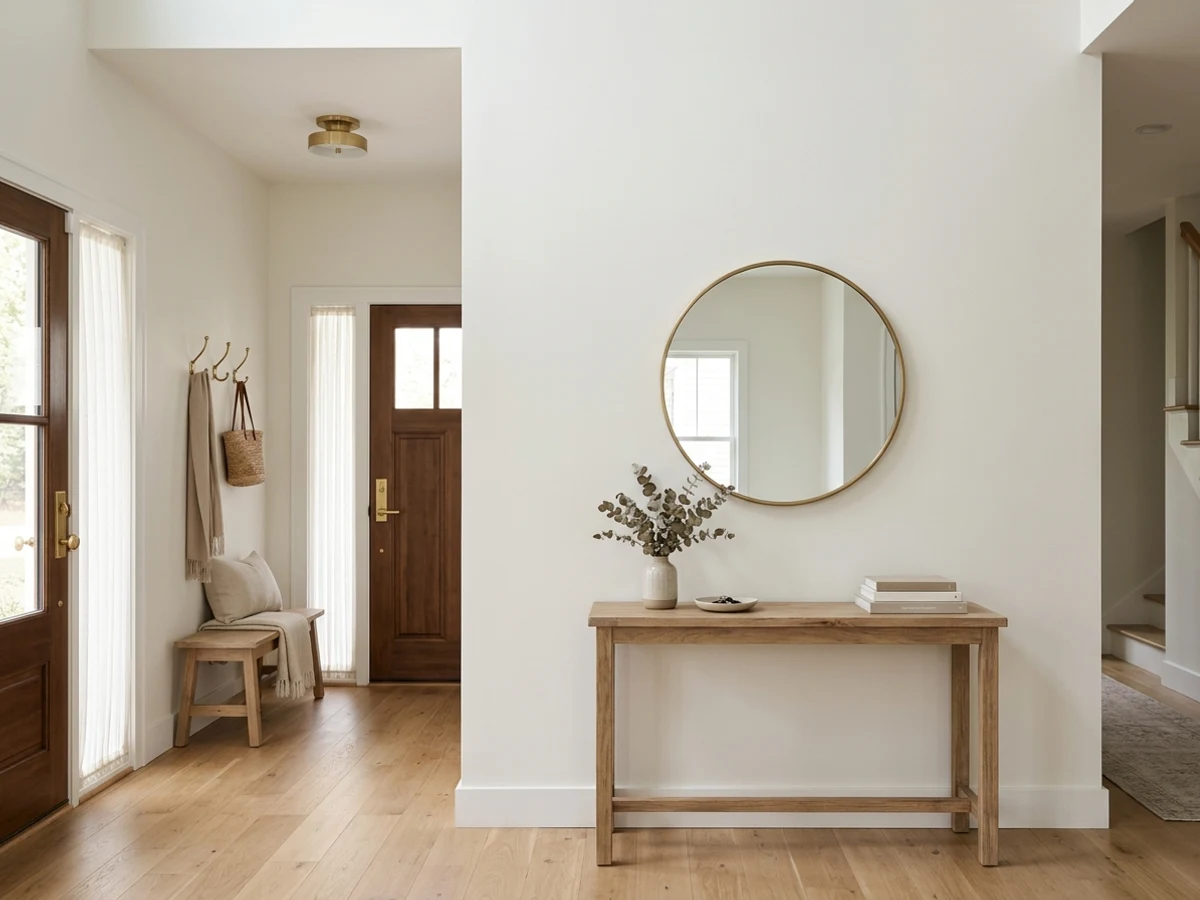
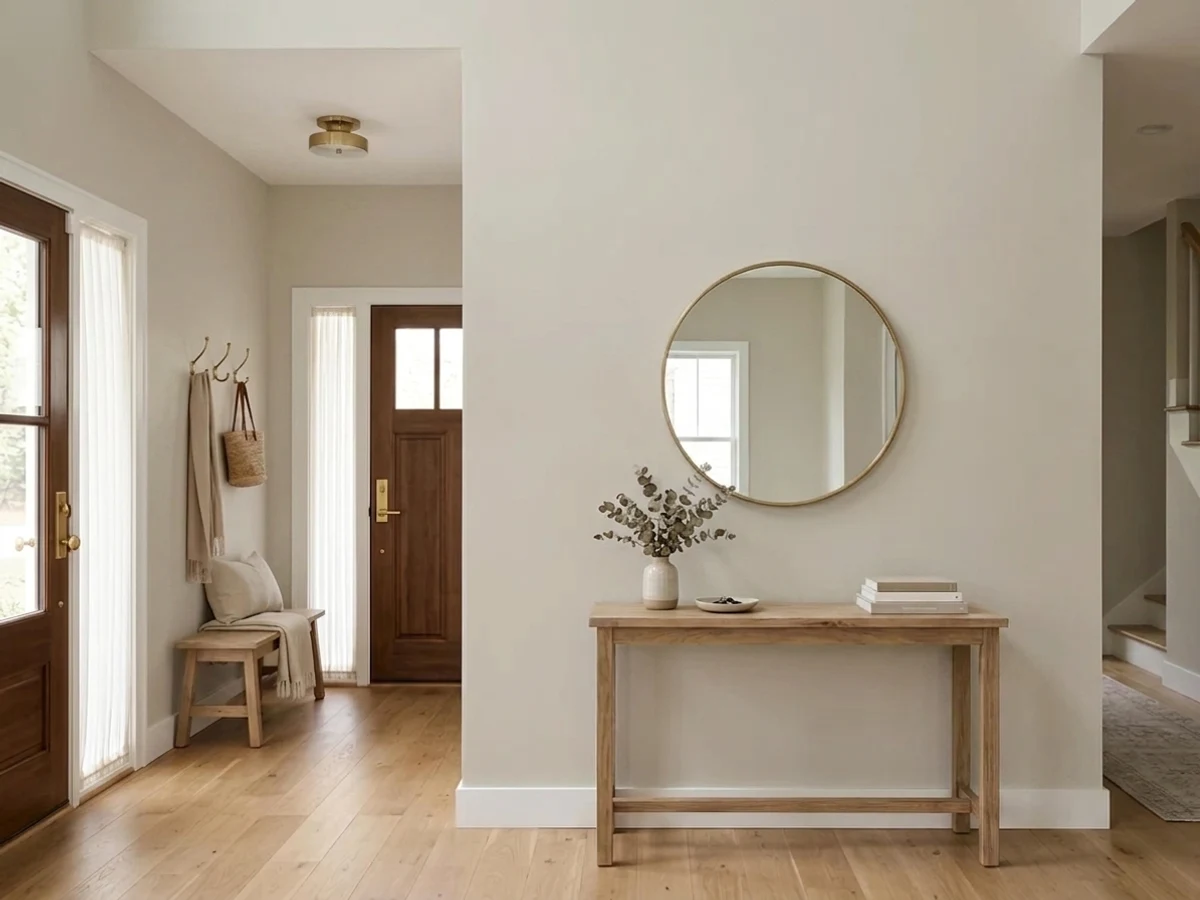
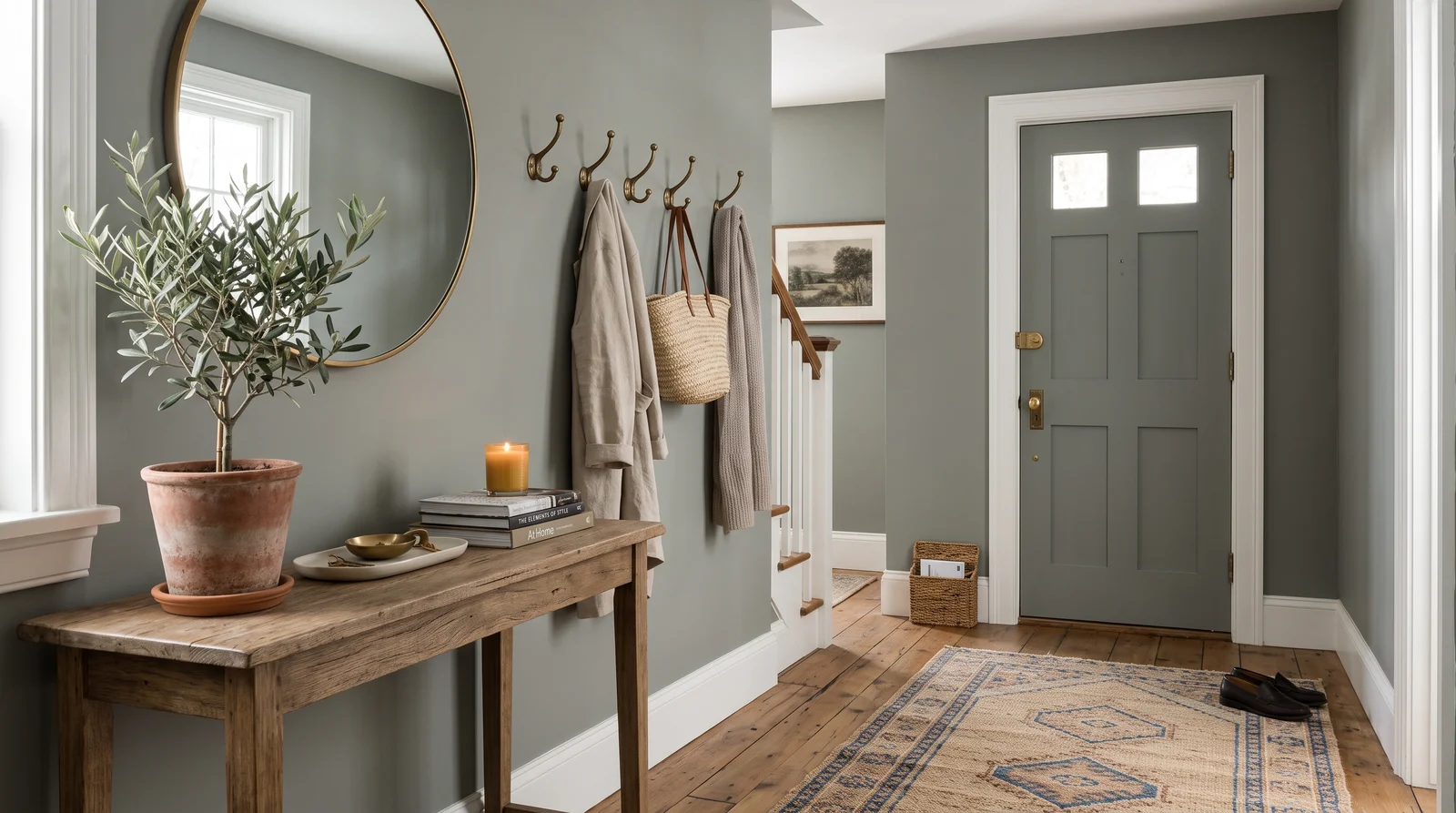
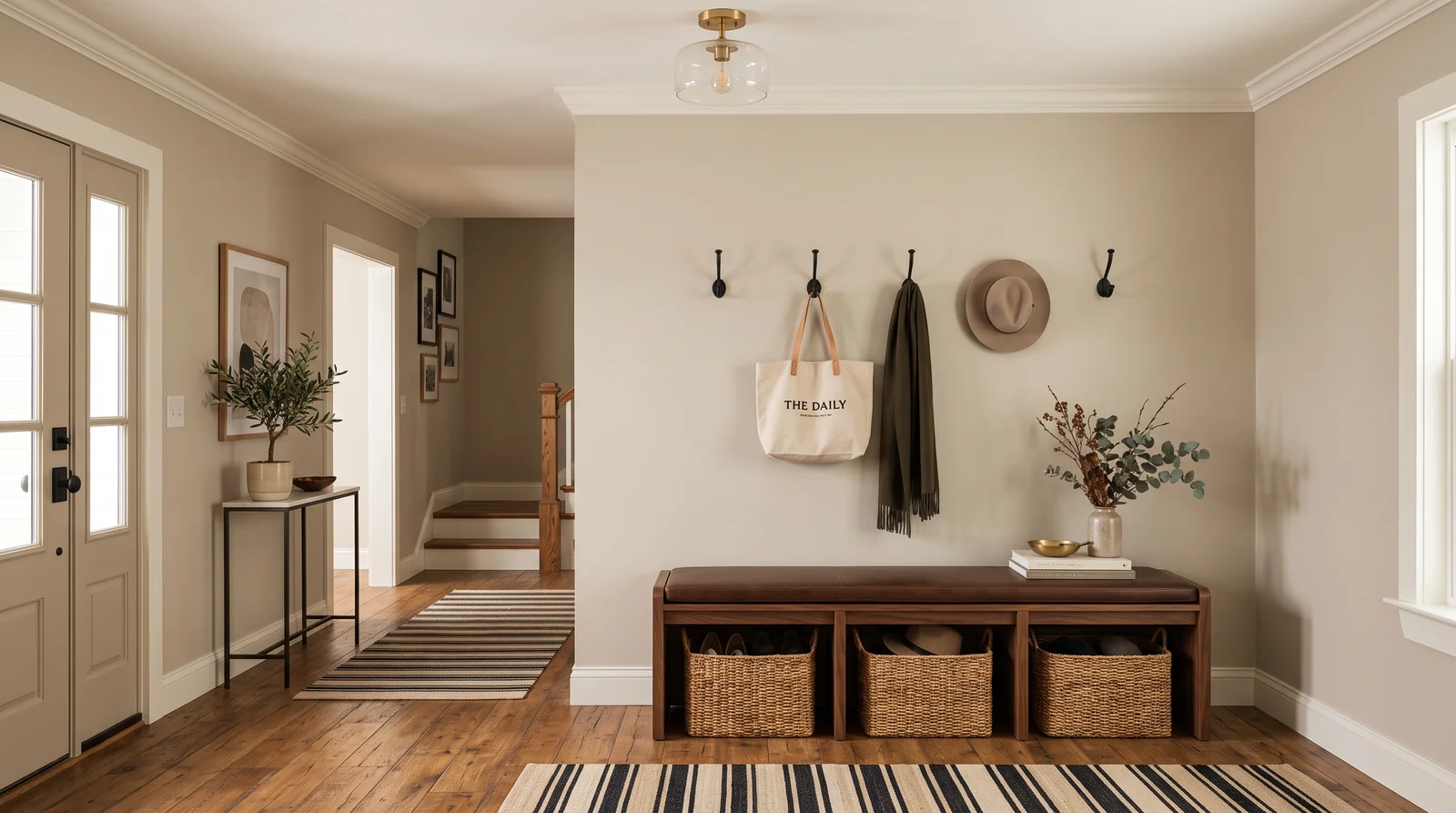
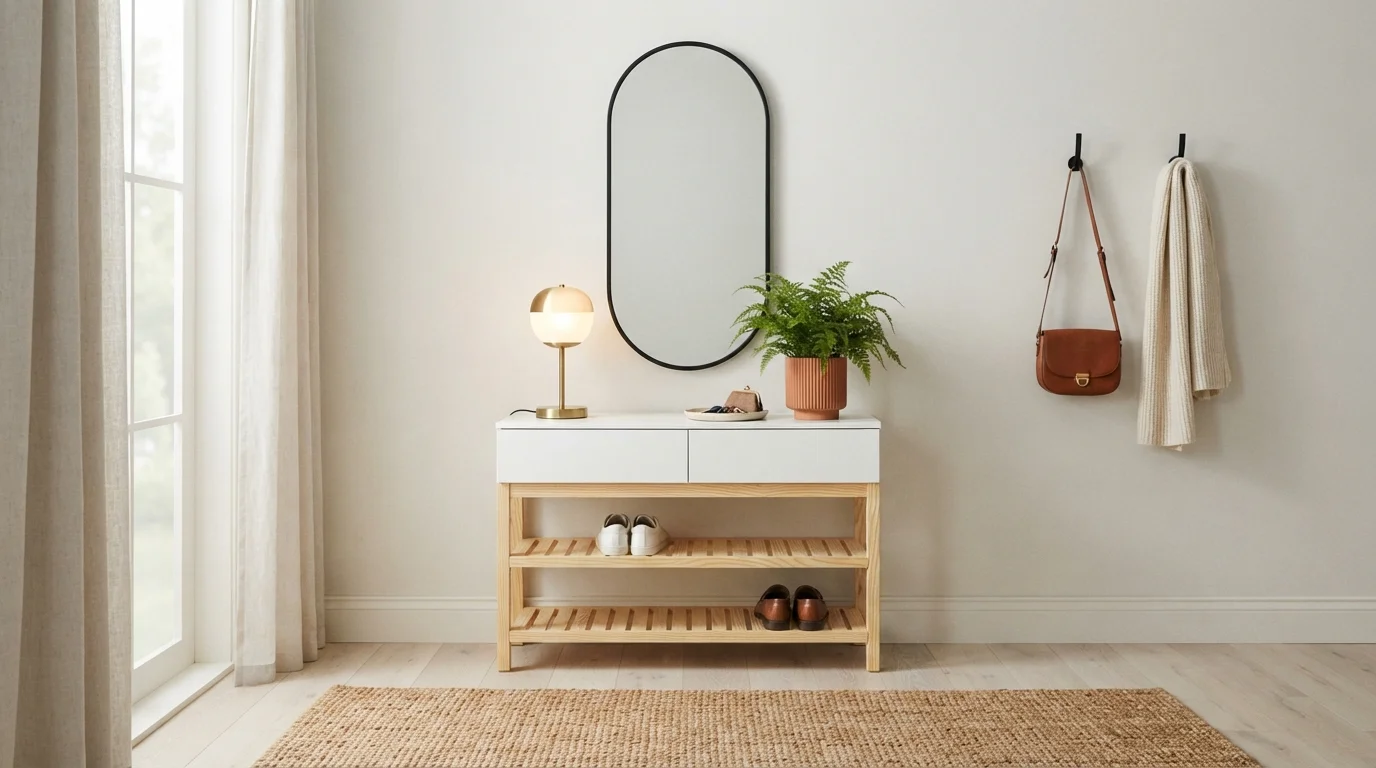
The best entryway colors usually come from four families: warm neutrals, clean whites, soft grays, and deep blues. Each one does something different — a warm neutral feels welcoming, a crisp white feels open, a quiet gray feels calm, and a navy feels confident and grounded. The colors featured here — White Dove, Revere Pewter, Aegean Teal, Accessible Beige, Mocha Mousse, and Hale Navy — cover that full range so you can match the mood you want.
One thing worth knowing up front: every color shown on this page is mixed to order at a paint counter, not pulled off a shelf. That means you can take any name you like here and have it matched across brands, so you're never locked into one company to get the shade you want.
The Best Color Directions for an Entryway
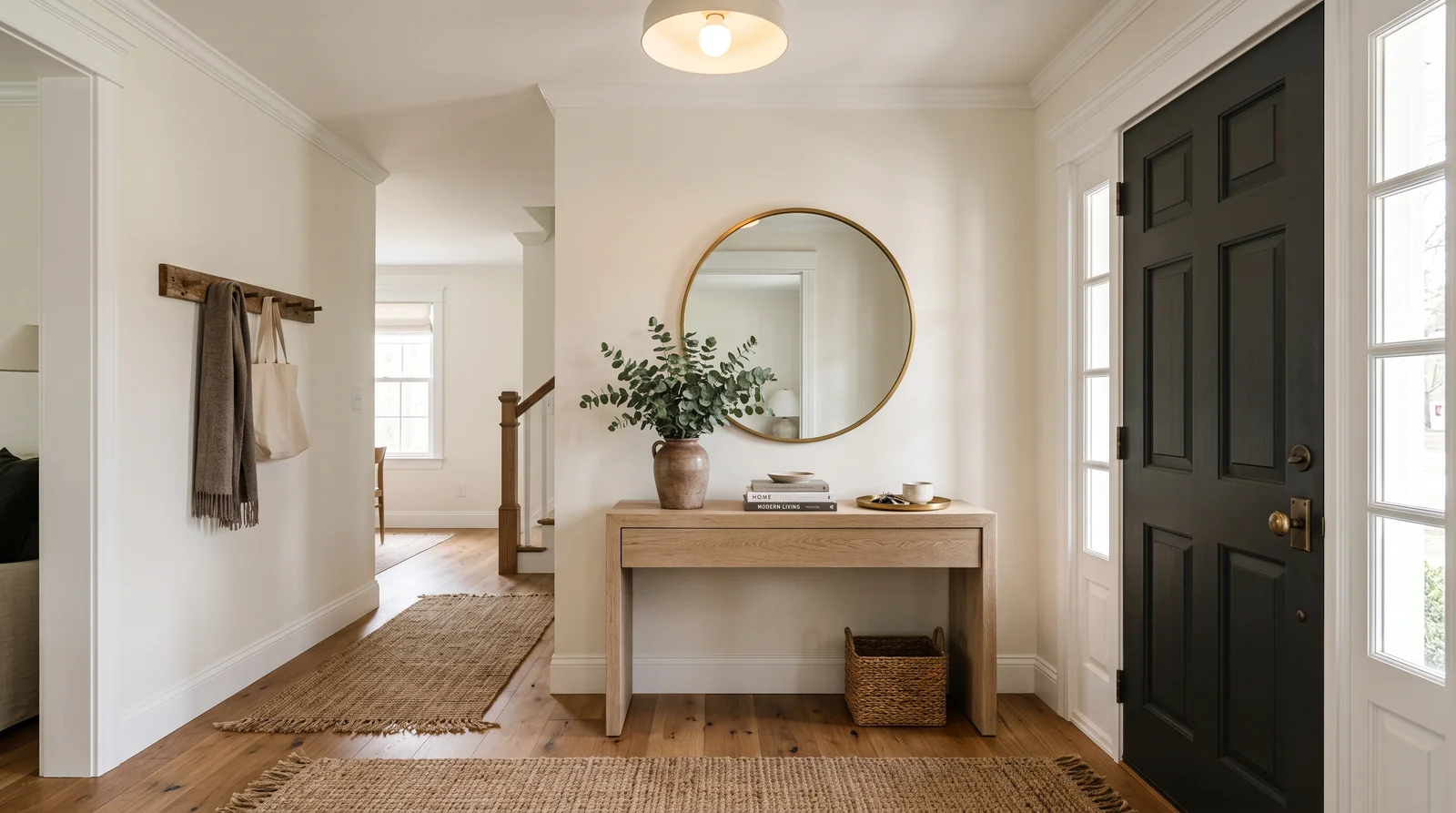
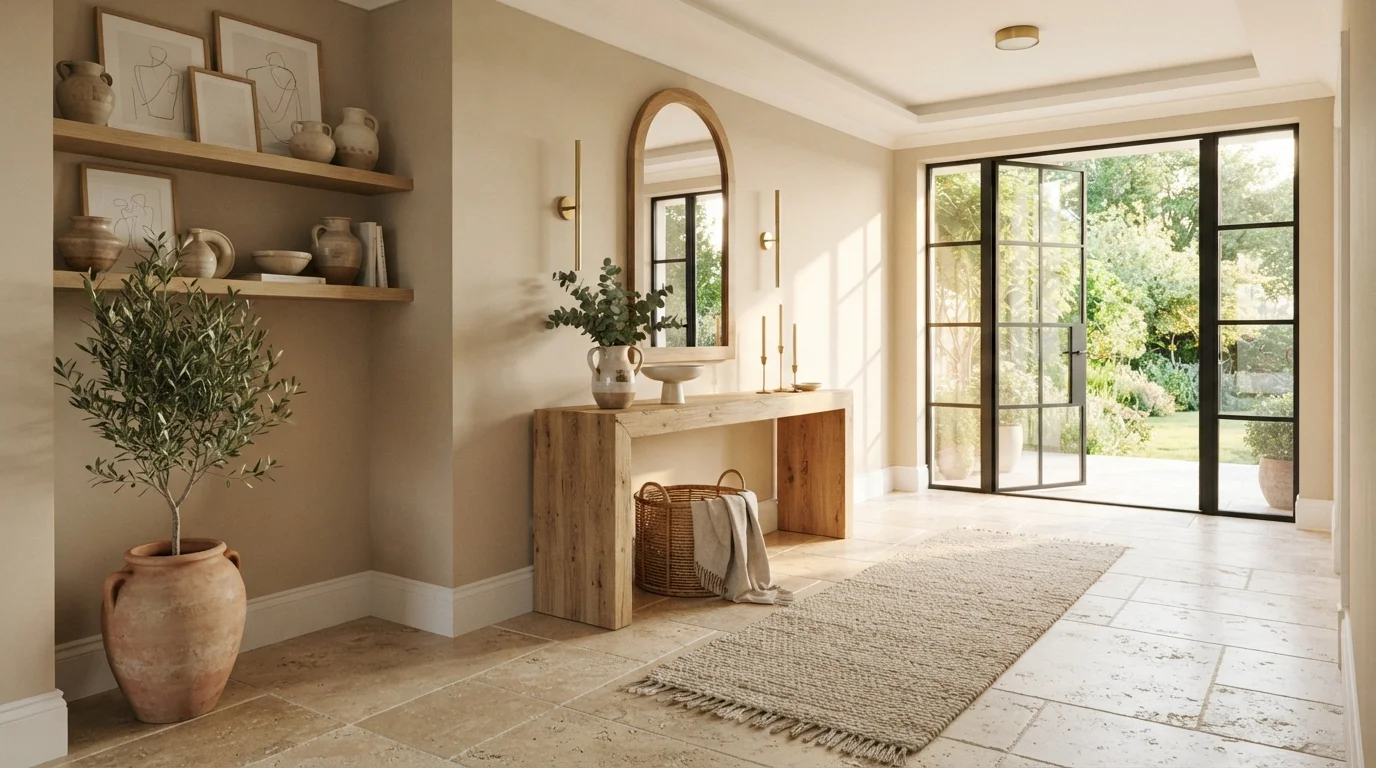
Warm neutrals are the easiest win. Accessible Beige and Revere Pewter feel instantly welcoming because they have a soft, slightly grayed warmth — they read clean without feeling cold, and they make wood floors and trim look richer. These are the colors that say "come in" the moment someone steps through the door.
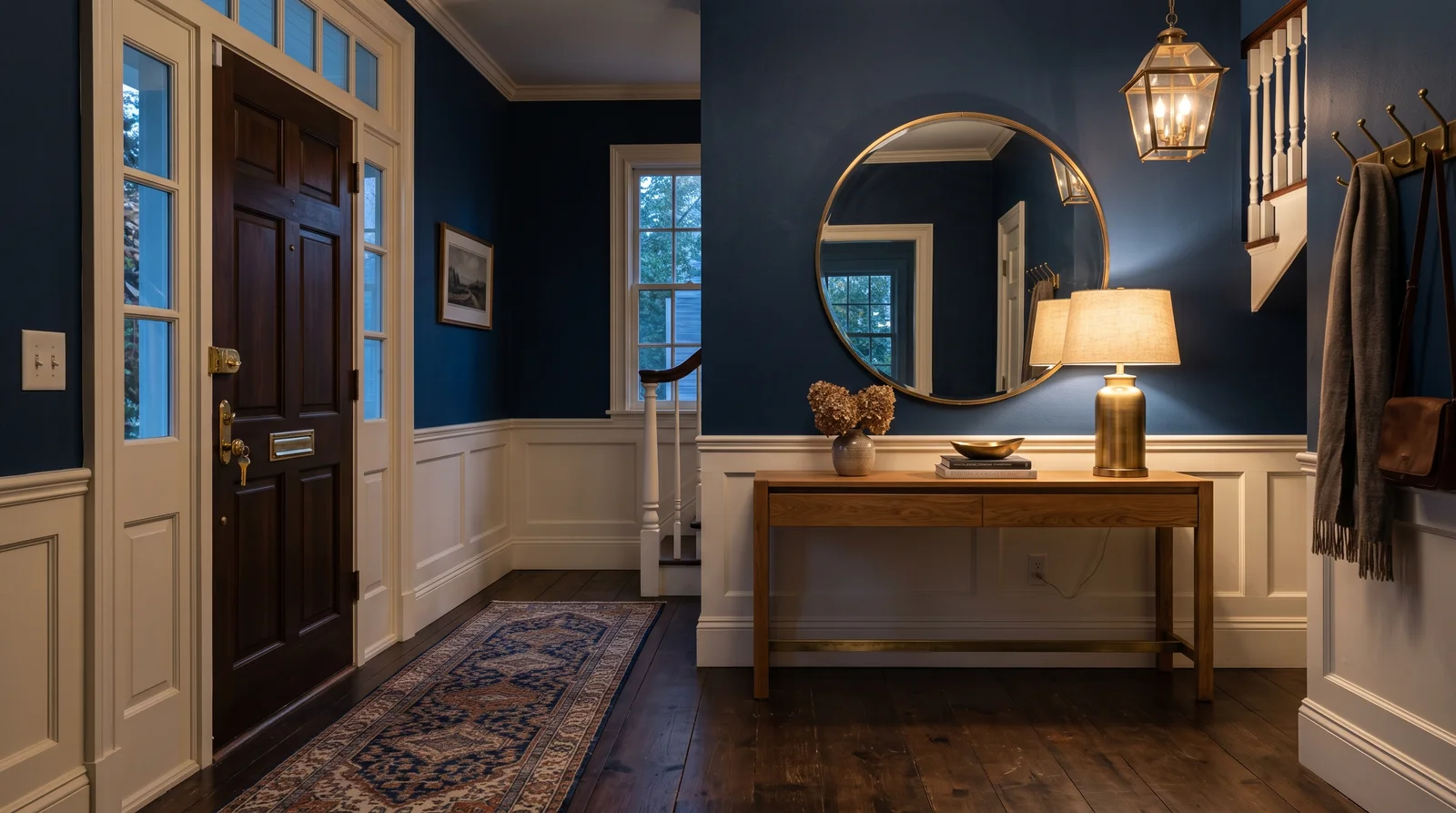
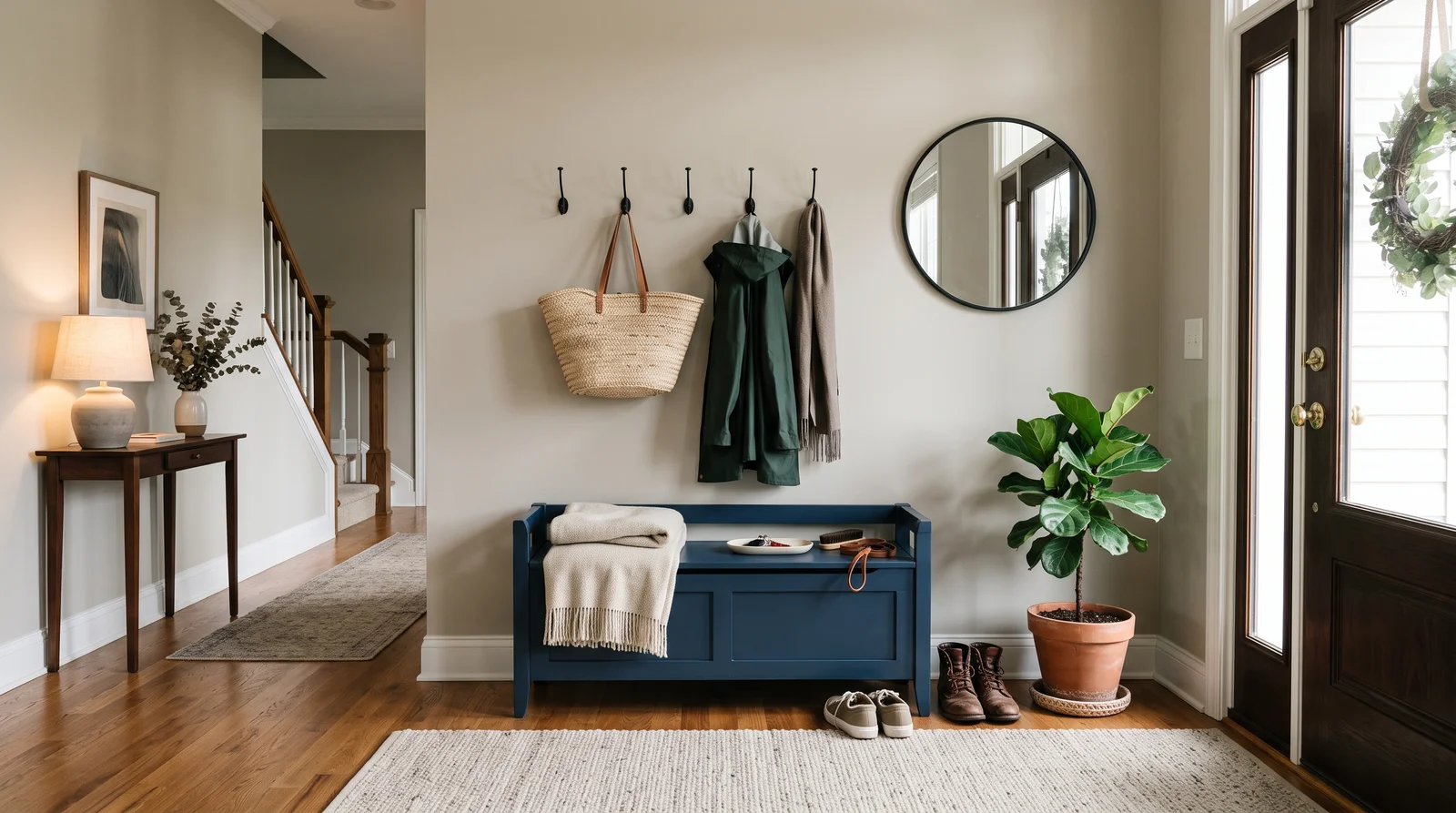
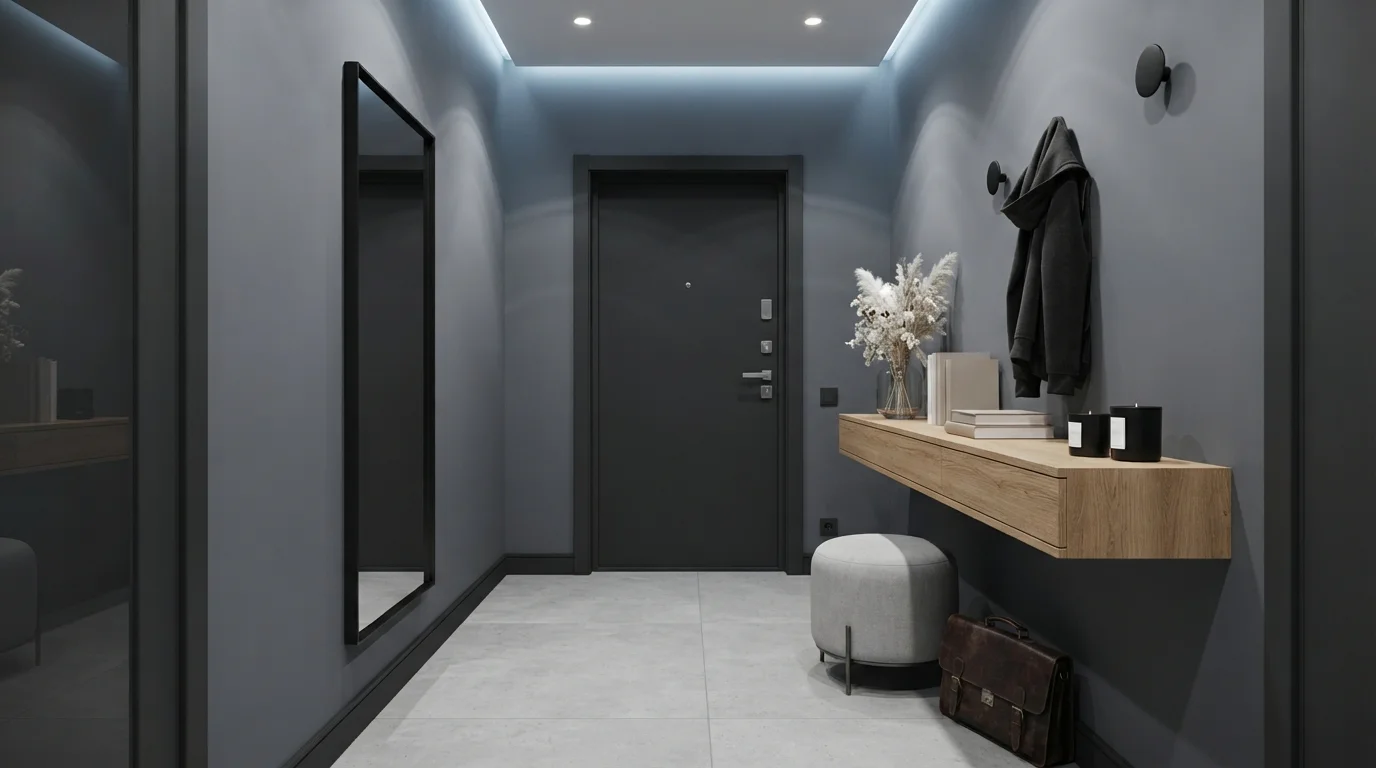
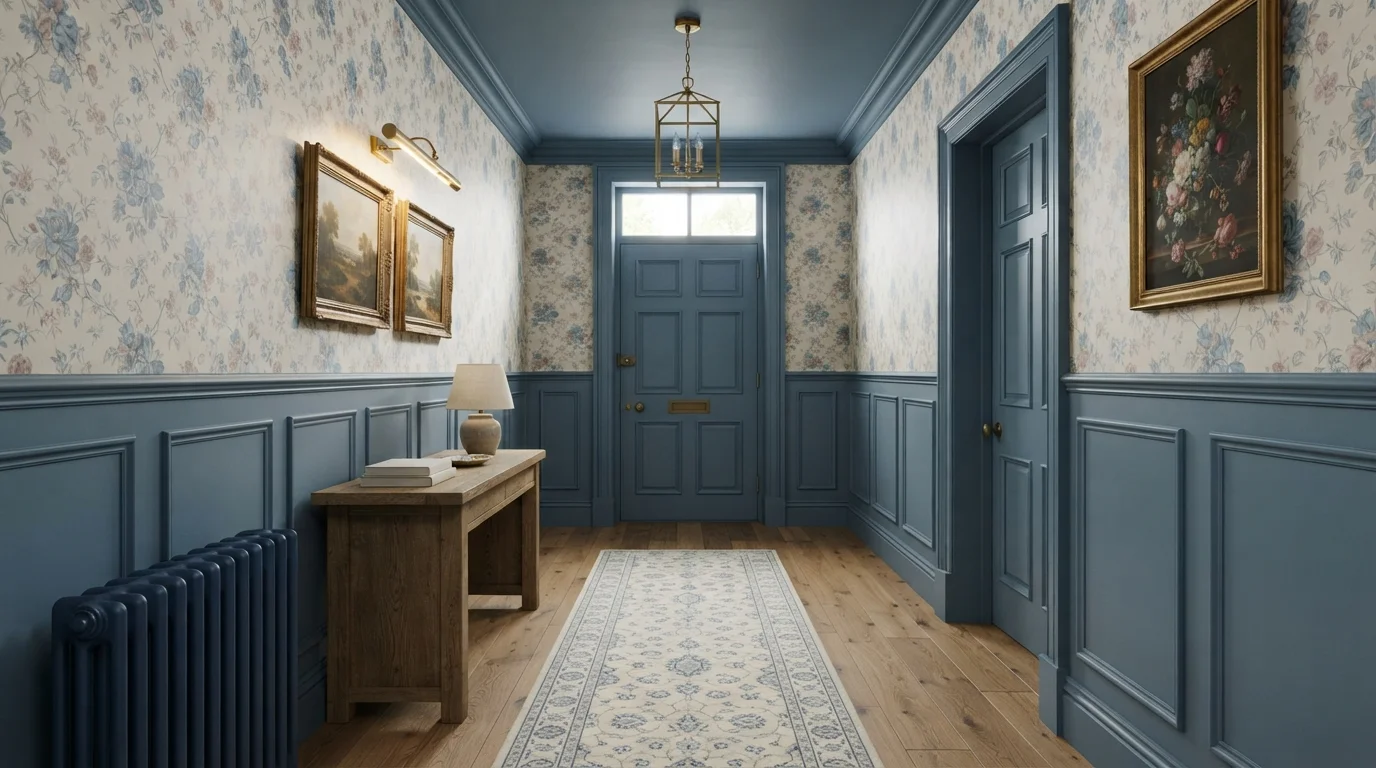
If you want more personality, go deeper. Hale Navy on the walls or a built-in bench makes a small entry feel intentional and finished, and Mocha Mousse brings a soft, earthy warmth that's cozy without being dark. Aegean Teal sits in between — a muted blue-green that feels fresh but still grounded. And when the entry is tight or short on light, a true white like White Dove keeps everything open and bright.
Reading the Light Before You Commit
Entryways are often the least predictable rooms for light. Many have no windows at all, or just a sidelight by the door, so they lean heavily on artificial light morning and night. Under warm bulbs, a color like Revere Pewter or Accessible Beige glows; under cooler daylight bulbs, the same color can look flatter and grayer.
If your entry gets real daylight from a north-facing door or sidelight, cool colors like Hale Navy and Aegean Teal can drift a little cold — lean toward the warmer side or balance them with warm wood and lighting. South- or west-facing light is forgiving and makes warm neutrals like Mocha Mousse feel especially rich. Always tape a sample to the wall and look at it at the two times you actually use the space: rushing out in the morning and coming home at night.
Choosing the Right Finish
Entryways take abuse — bags, shoes, wet coats, and hands on the wall near the door. That's why a flat finish usually isn't the right call here, even though it hides wall flaws. You want something you can wipe down.
Eggshell is the safe middle ground for entry walls: it cleans up well and doesn't throw much glare. If your entry is high-traffic or you have kids and pets, satin gives you even more washability. Save semi-gloss for the trim, door, and any wainscoting or beadboard, where the extra durability and slight shine actually look right and survive scuffs.
Using LRV to Set Brightness and Mood
LRV (Light Reflectance Value) tells you how much light a color bounces back, from near 0 (black) to near 100 (pure white). In an entry with little natural light, a higher-LRV color like White Dove or Accessible Beige keeps the space feeling open and stops it from turning into a dark tunnel between rooms.
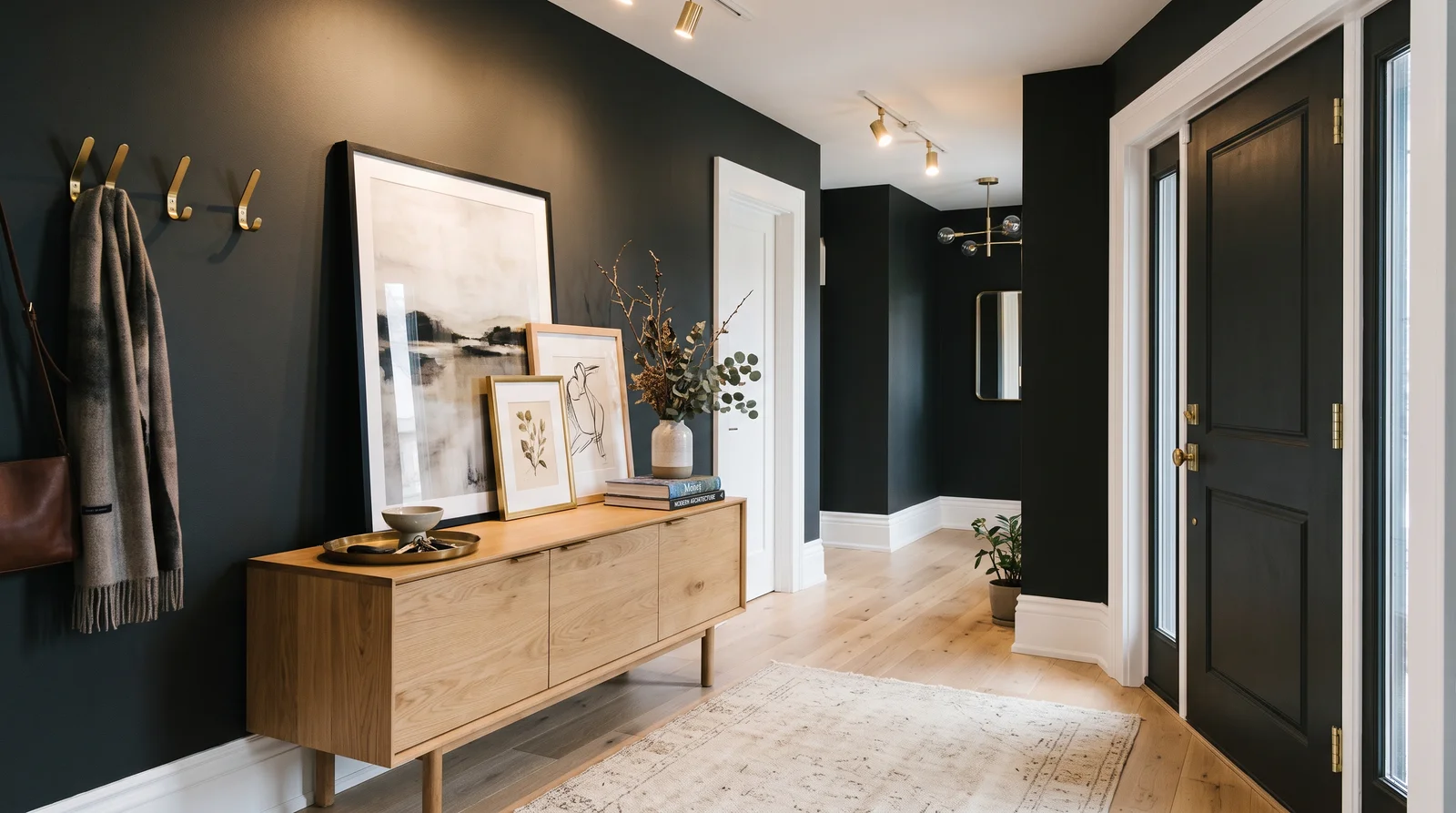
If your entry is generous and well-lit, you have room to go cozy and dramatic. Deeper colors like Hale Navy and Mocha Mousse have low LRVs, which is exactly what makes them feel enveloping and special — just pair them with bright trim and good lighting so the space still reads as a welcome, not a cave. Revere Pewter sits in a comfortable mid-range that flexes either way.
Pairing Walls With Trim, Floors, and Fixtures
The classic entry pairing is a warm or gray neutral wall with crisp white trim — White Dove is a go-to trim white because it's soft enough not to clash with warm walls like Accessible Beige or Revere Pewter. Keep the ceiling white or a lighter shade of the wall color to keep the space feeling tall.
Let your floor and metals guide the undertone. Warm wood floors love Mocha Mousse, Accessible Beige, and Revere Pewter; cooler tile or gray floors pair cleanly with Hale Navy and Aegean Teal. Match your hardware and light fixtures to the mood — brass and bronze warm up a navy or teal entry, while black or nickel keeps a neutral entry crisp and modern.
Common Entryway Mistakes to Avoid
The biggest mistake is treating the entry as an afterthought and grabbing leftover flat paint from another room. It won't hold up to the traffic, and it'll show every scuff within months. The second mistake is going too pale and cold in a dark entry, which makes the space feel like a gray hallway instead of a welcome.
People also forget how the entry connects to the rooms you can see from it. Whatever you pick should get along with the adjacent living room or stairwell color, not fight it. Finally, don't judge a color from the chip alone — entry light is unusual, so always sample on the actual wall before you buy gallons.
Entryway Paint Colors — Frequently Asked Questions
What is the best paint color for a small, dark entryway?+
Go lighter and a little warm. A bright white like White Dove or a soft neutral like Accessible Beige reflects more light and keeps the space open. If you want some color, a warm mid-tone like Revere Pewter still feels welcoming without closing the room in.
Can I use a dark color like Hale Navy in an entryway?+
Yes, especially if the entry gets some natural light or you can add good lighting. Deep colors like Hale Navy or Mocha Mousse make a small entry feel intentional and cozy rather than cramped. Pair them with bright white trim and a light ceiling so the space still feels welcoming.
What sheen should I use on entryway walls?+
Eggshell is the best all-around choice because it wipes clean and doesn't glare. If your entry is high-traffic, use satin for extra washability. Reserve semi-gloss for the trim, door, and any paneling, where durability and a bit of shine look right.
Should the trim match the rest of my house?+
It usually should, since the entry connects to other rooms you can see into. A consistent trim white like White Dove ties the spaces together. Just make sure your trim white doesn't clash with the wall undertone — warm walls want a softer white, not a stark blue-white.
What does LRV mean and why does it matter here?+
LRV is Light Reflectance Value — how much light a color bounces back, from near 0 to near 100. In a dim entry, a higher-LRV color like White Dove keeps things bright, while a low-LRV color like Hale Navy creates a cozy, enclosed feel. It's the quickest way to predict whether a color will open up or darken your space.
Can I match one of these colors at a different paint store?+
Yes. Every color shown here is mixed to order at the paint counter, not tied to one shelf product. You can take a name like Aegean Teal or Revere Pewter and have it cross-matched between brands, so you can stick with the paint line you prefer.
How do I test an entryway color before painting?+
Sample it on the actual wall, not just from a chip, because entry light is unusual and often artificial. Look at the sample both in the morning and at night, since that's when you really use the space. Check it next to your floor and the adjoining room's color too.