Home Office Paint Colors
Top Picks for the Home Office
4 editor's picksPalettes for the Home Office
Ready-made schemesFull, buyable color schemes built for the home office — walls, trim, and accents matched to real paint.
All Home Office Colors at Every Brand
104 colors · 4 familiesA representative color from every brand that makes this family — most-recognized brands first, with a second pick from the biggest names. Tap any swatch with a curated guide for full spec and cross-brand matches.
Browse by Family Hub
About Home Office Paint Colors
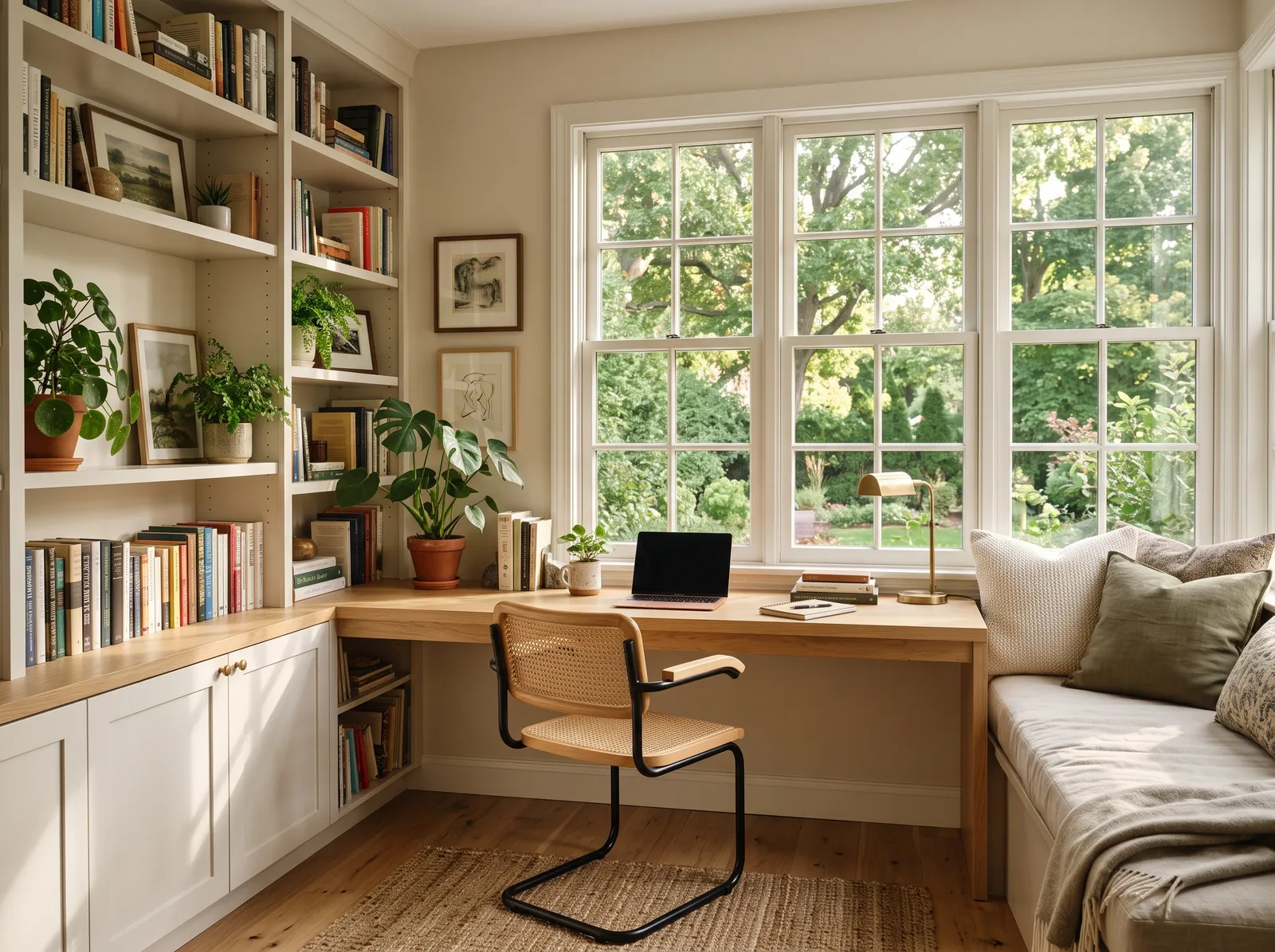
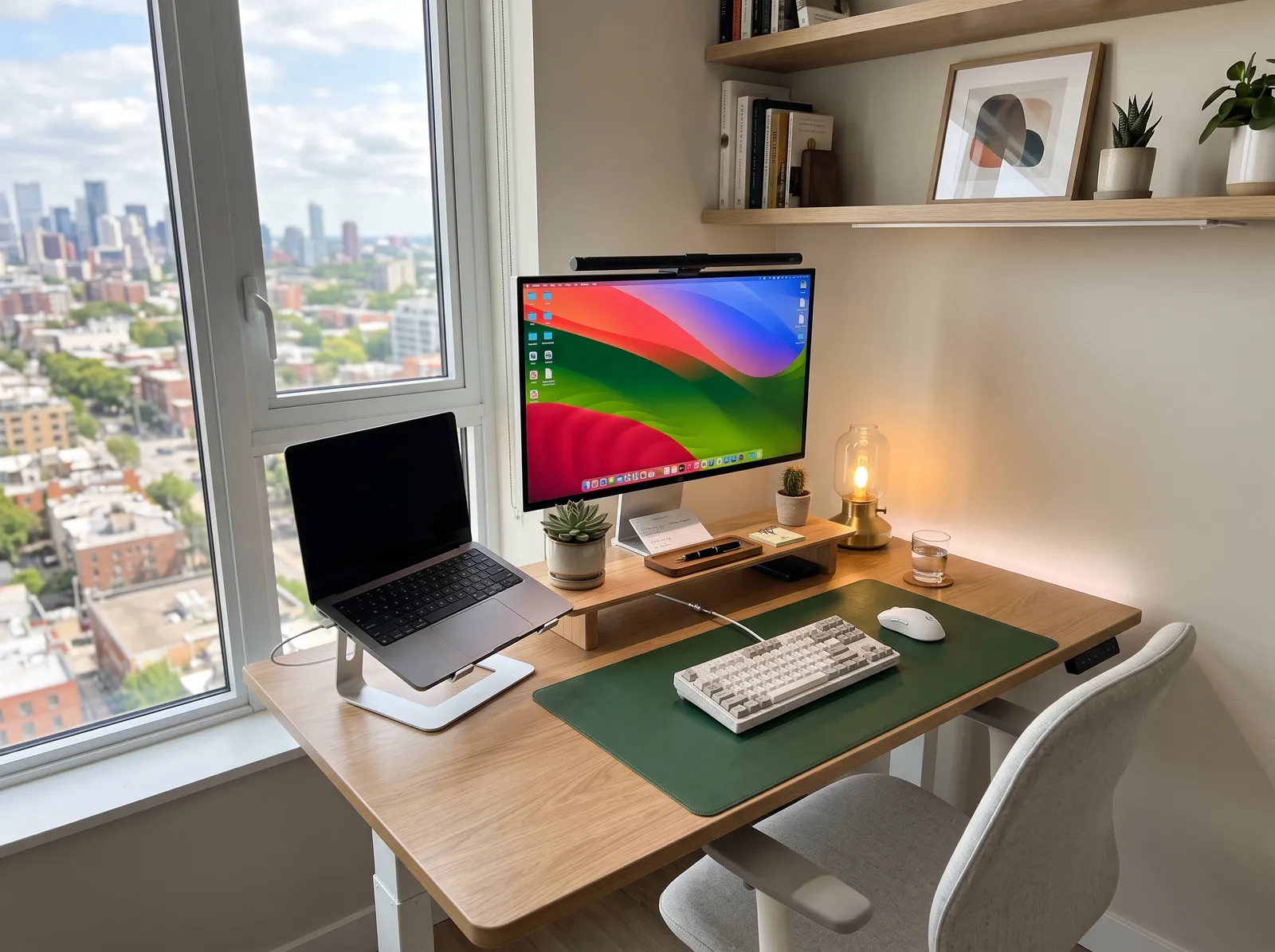
A home office has one job: help you focus without wearing you out. The right paint color does more of that work than people expect. It sets the mood the second you sit down, keeps the room from feeling like a closet or a fishbowl, and either calms a busy mind or wakes up a sleepy one.
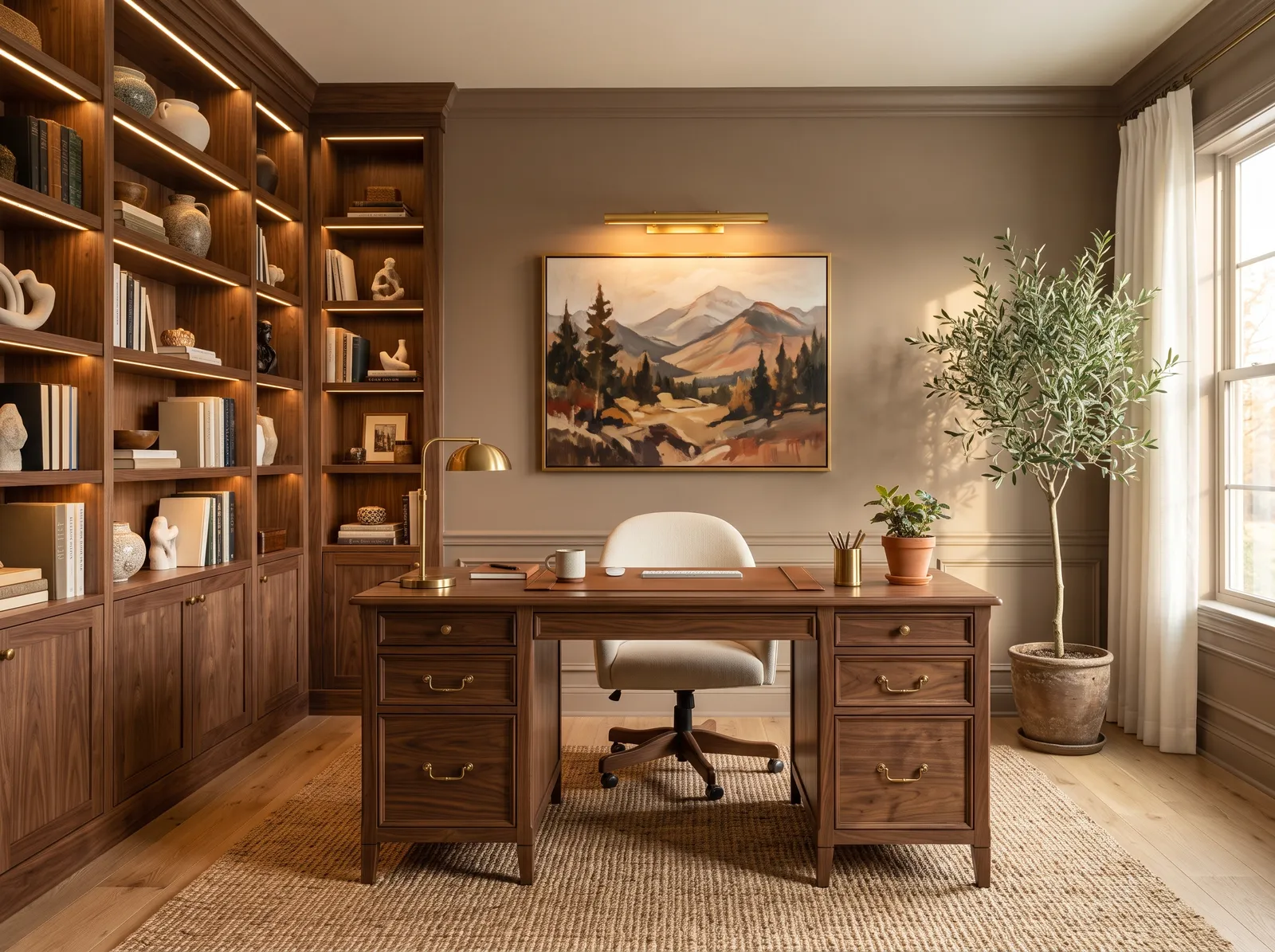
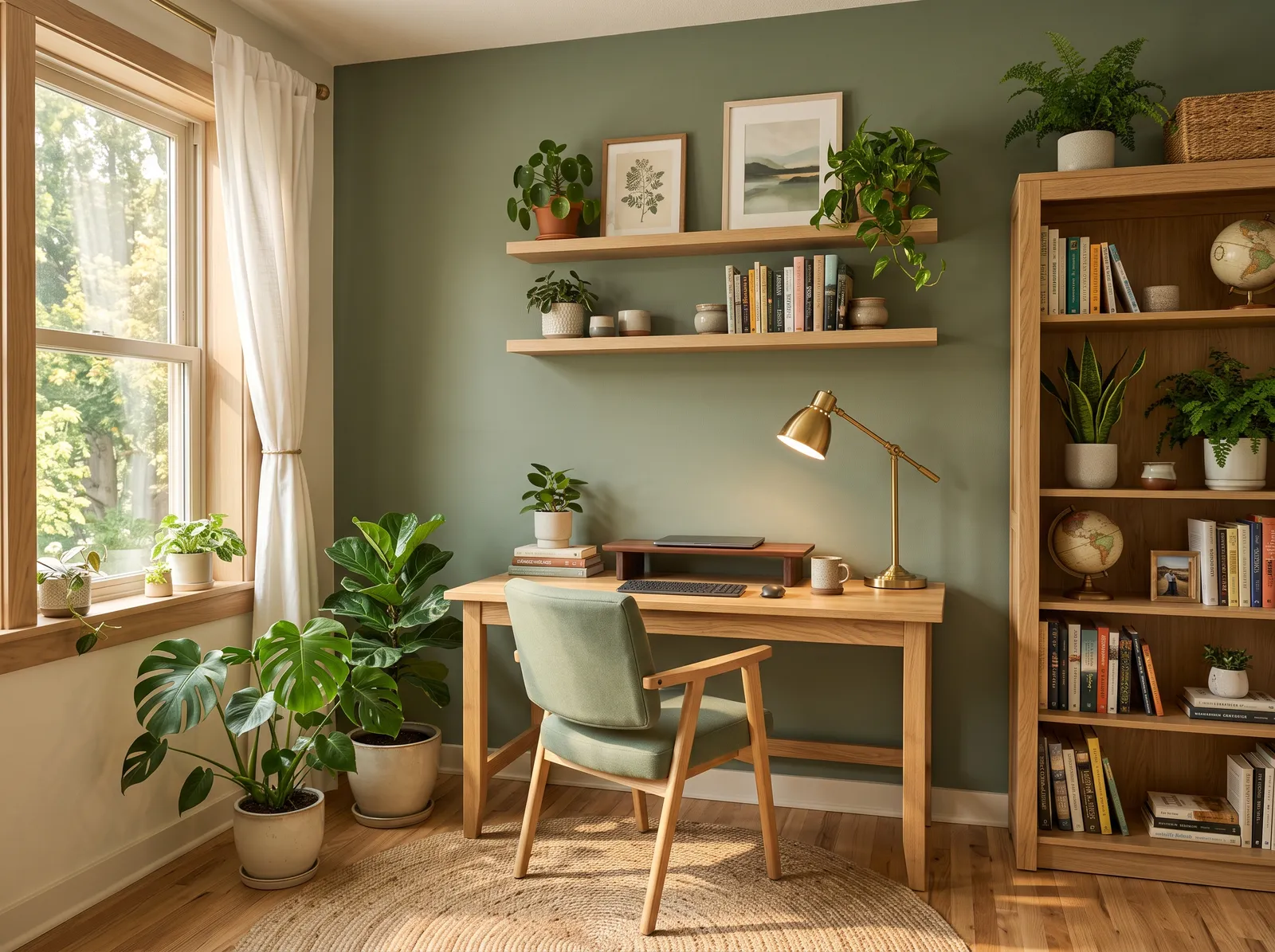
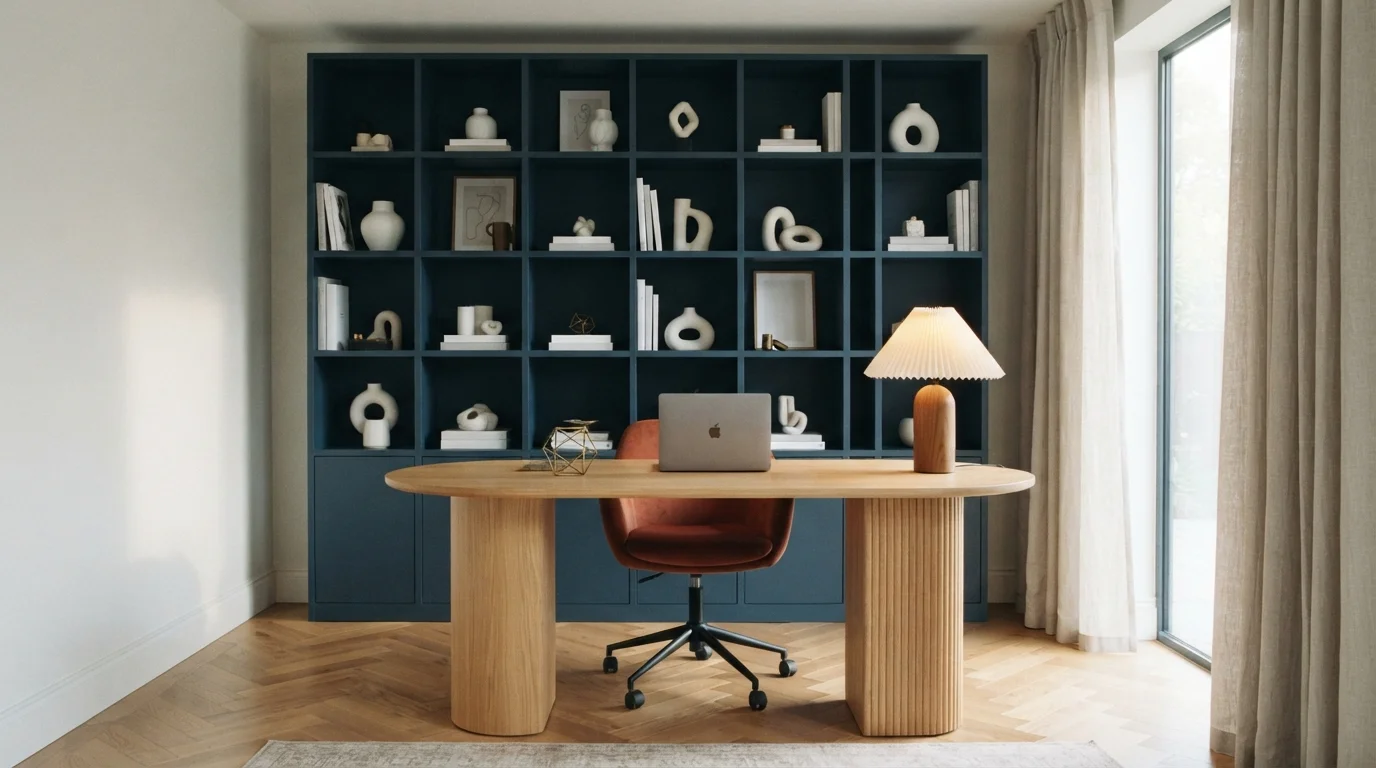
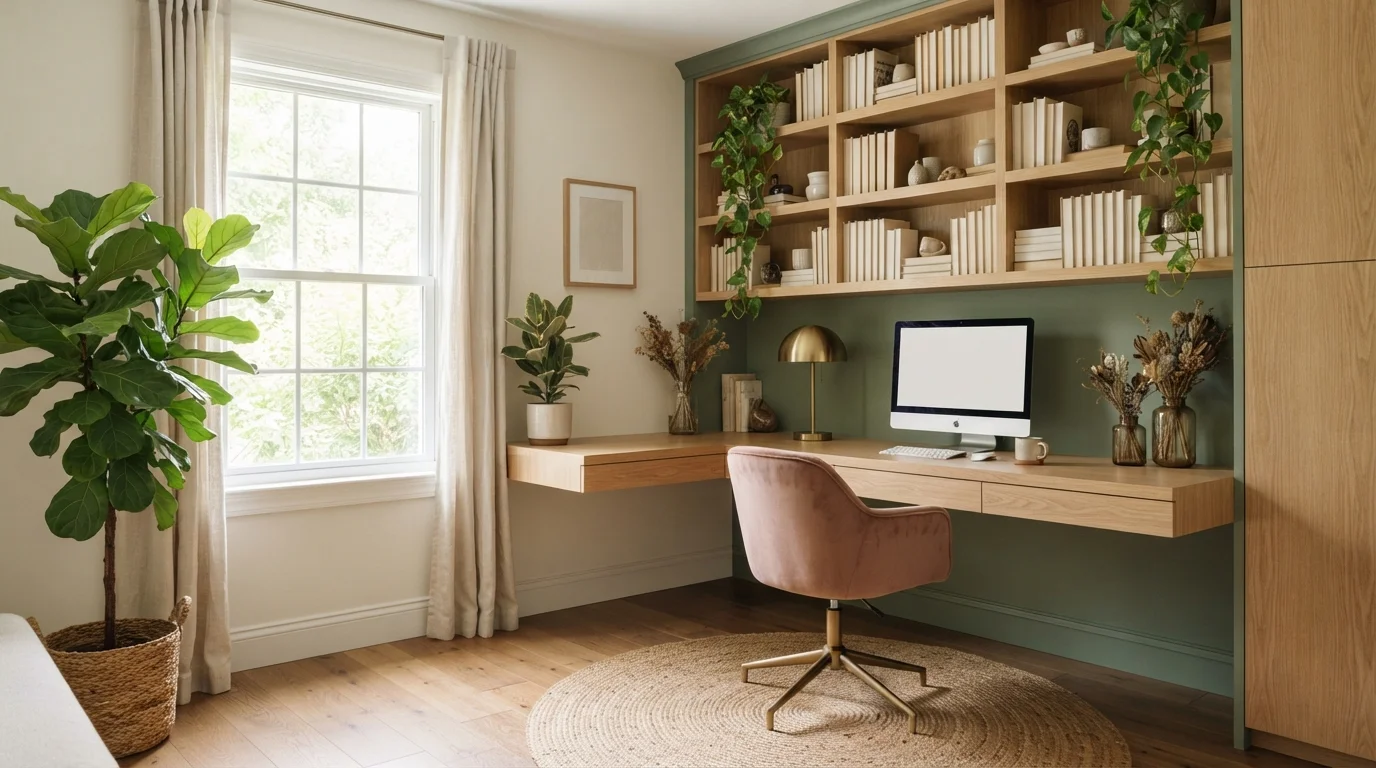
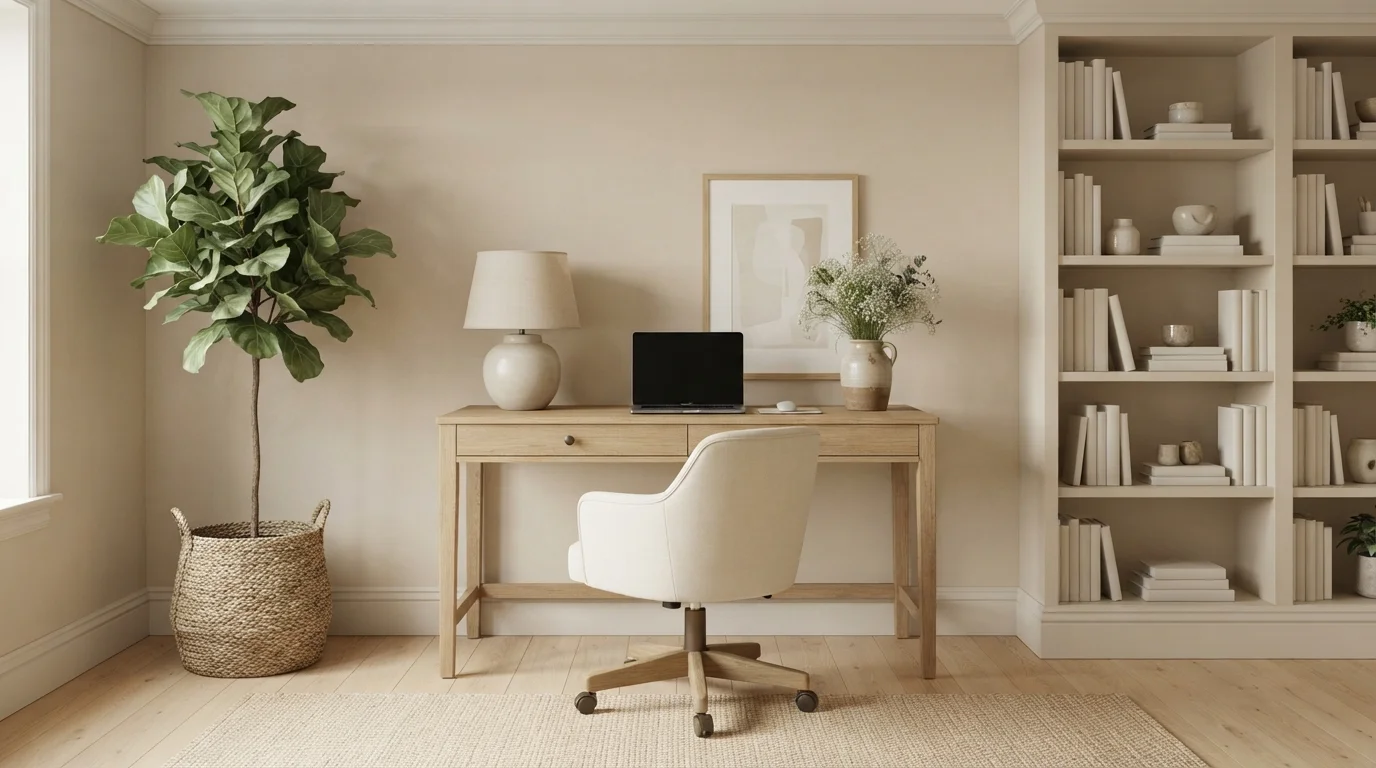
The colors that fit this room best fall into four families: blue, green, gray, and soft neutral. Each pulls the room in a slightly different direction. A deep navy like Hale Navy feels serious and grounded. A muted green like Sage or Eucalyptus feels calm and easy on the eyes. A balanced gray like Repose Gray or a warm neutral like Cashmere keeps things quiet so your screen and your work stay front and center. A blue-green like Aegean Teal sits in between, restful but still interesting.
Everything you see here is mixed to order. Any color can be made at a paint counter and cross-matched between brands, so you are never locked into one company because you fell for one shade. Pick the color you love, then mix it in whatever brand and finish you trust.
The Best Color Directions for a Home Office
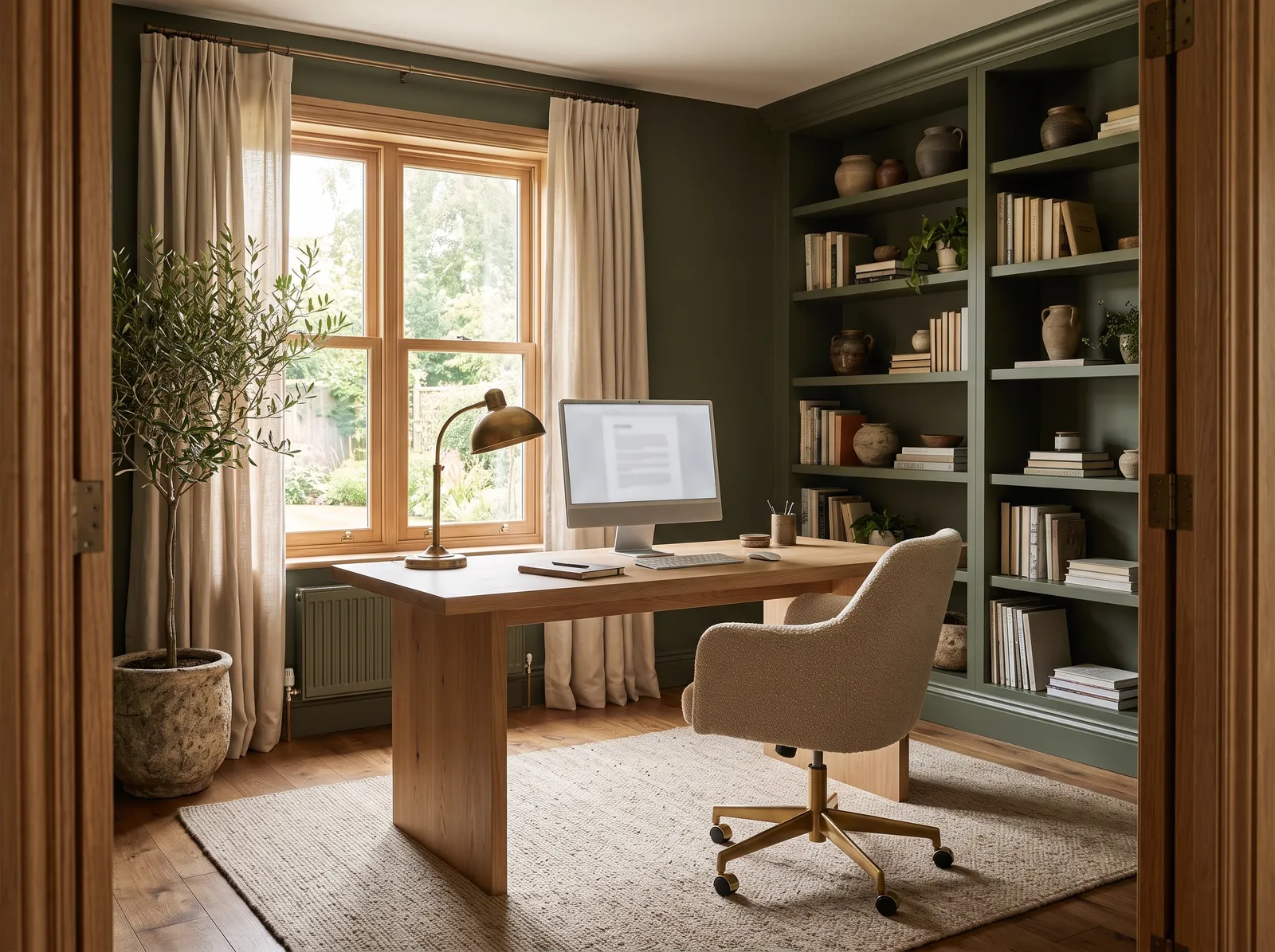
Blues and greens are the safe, smart starting point. A soft blue-green like Aegean Teal or Eucalyptus relaxes the room without putting you to sleep, which is exactly the balance most desks need for long stretches. Muted greens like Sage feel natural and steady and tend to read well on video calls.
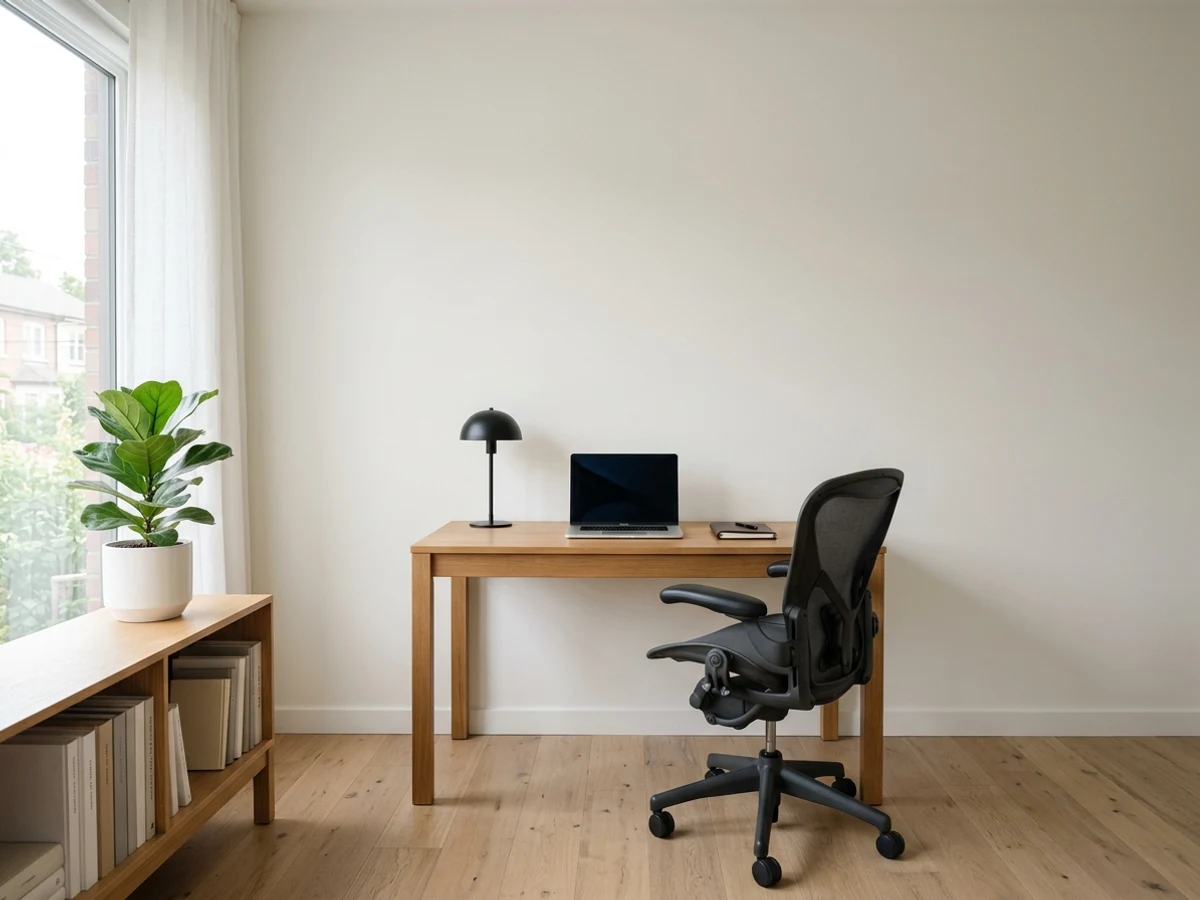
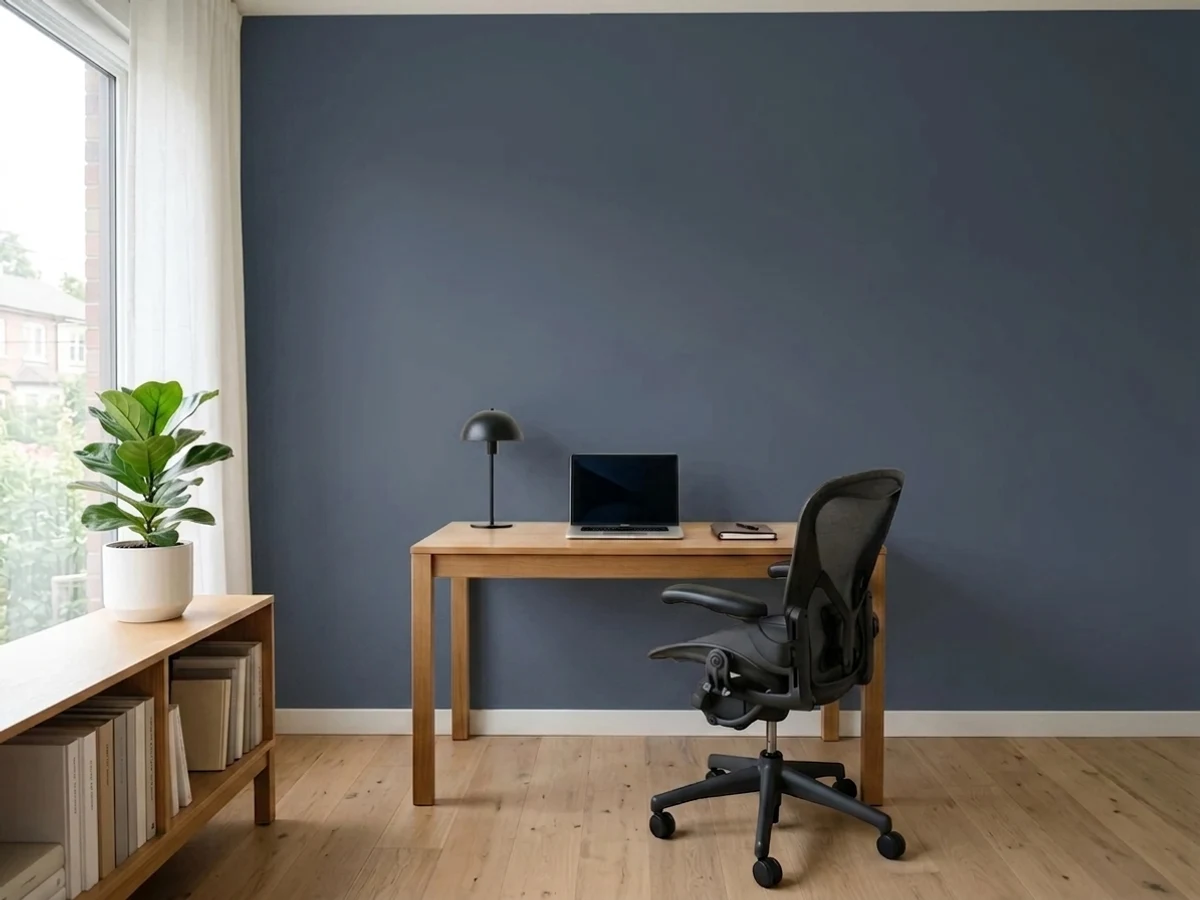
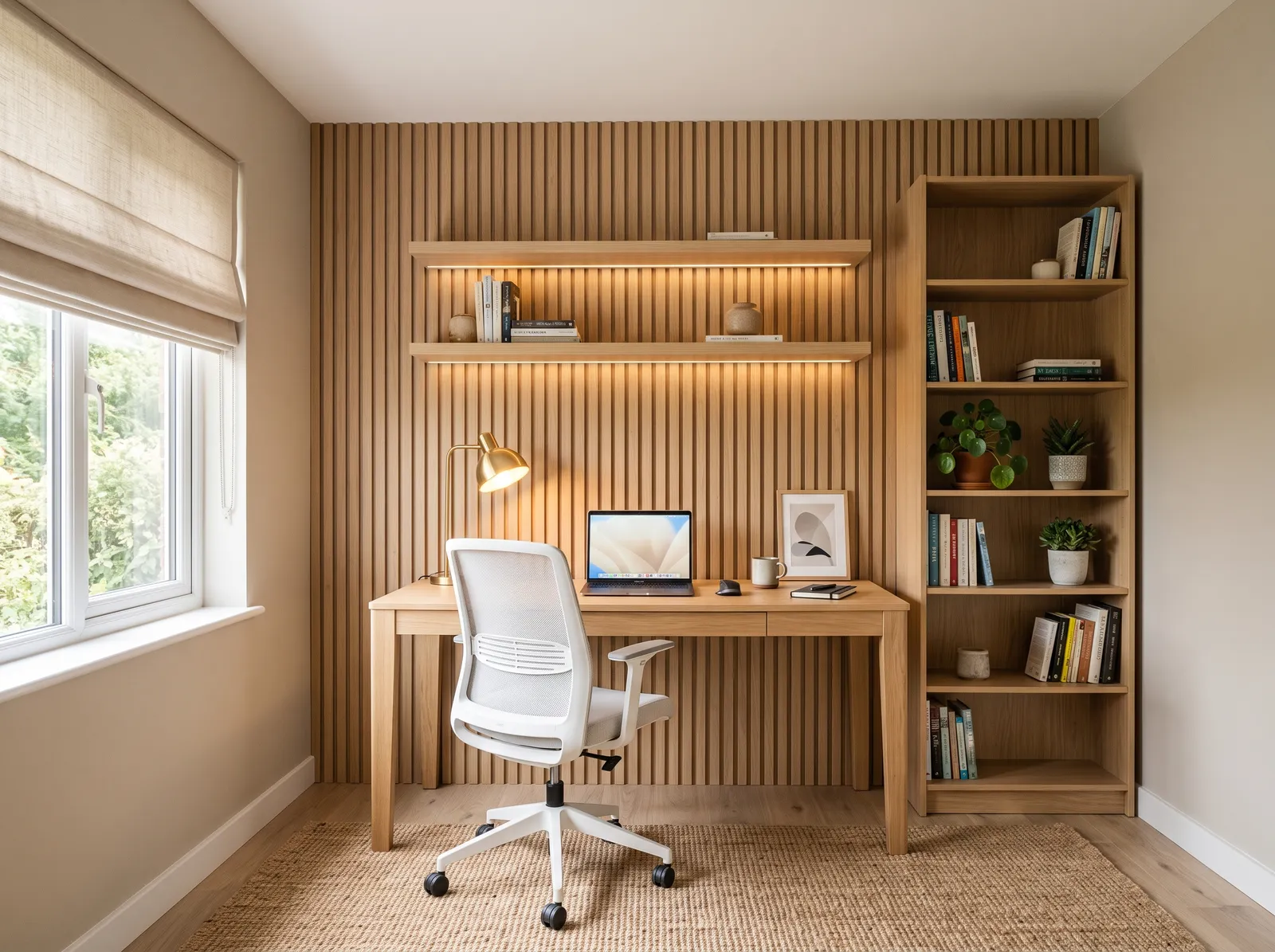
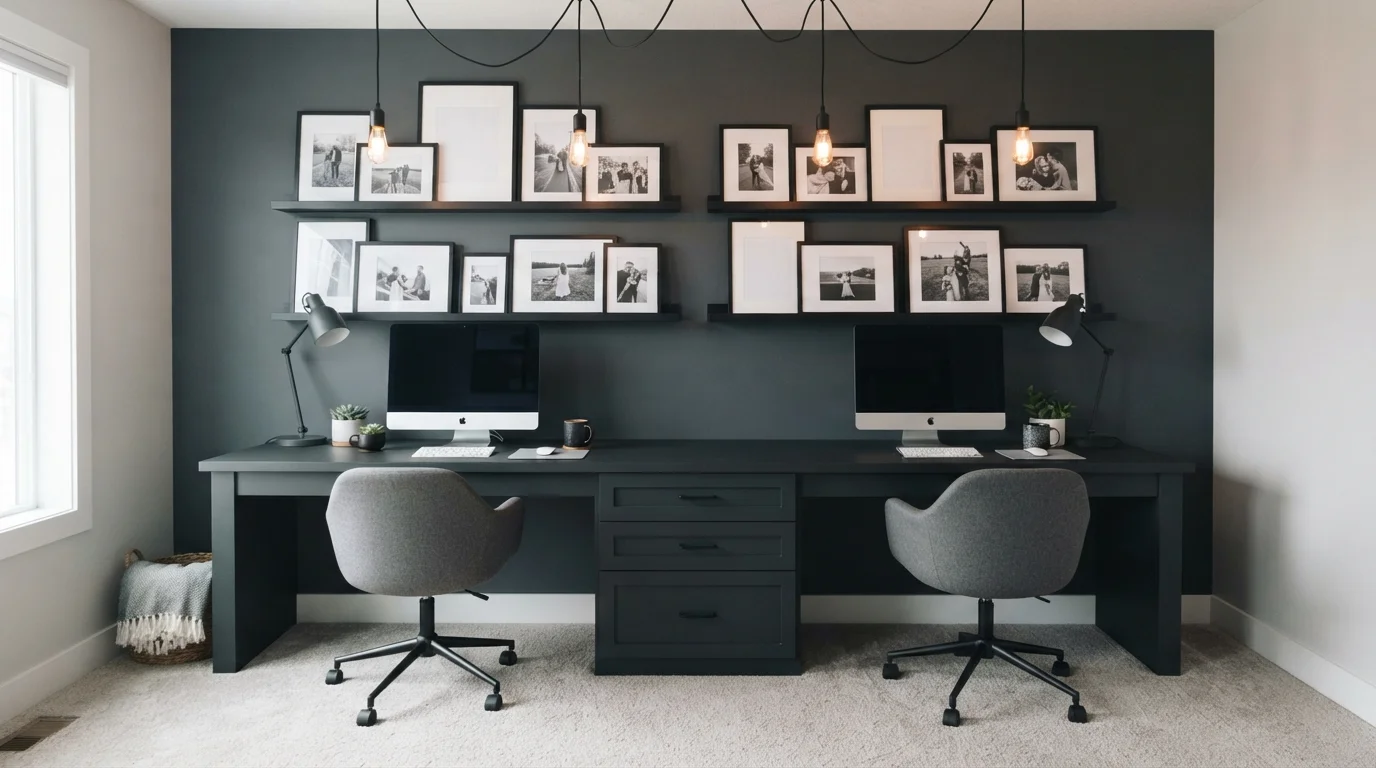
If you want the office to feel calm and barely-there, a warm neutral like Cashmere or a balanced gray like Repose Gray keeps the walls quiet so your work takes center stage. If you want focus with a little backbone, a deep color like Hale Navy on the walls or just one accent wall gives the room weight and makes it feel like a real workspace, not a spare bedroom with a laptop in it.
Let the Room's Light Steer the Color
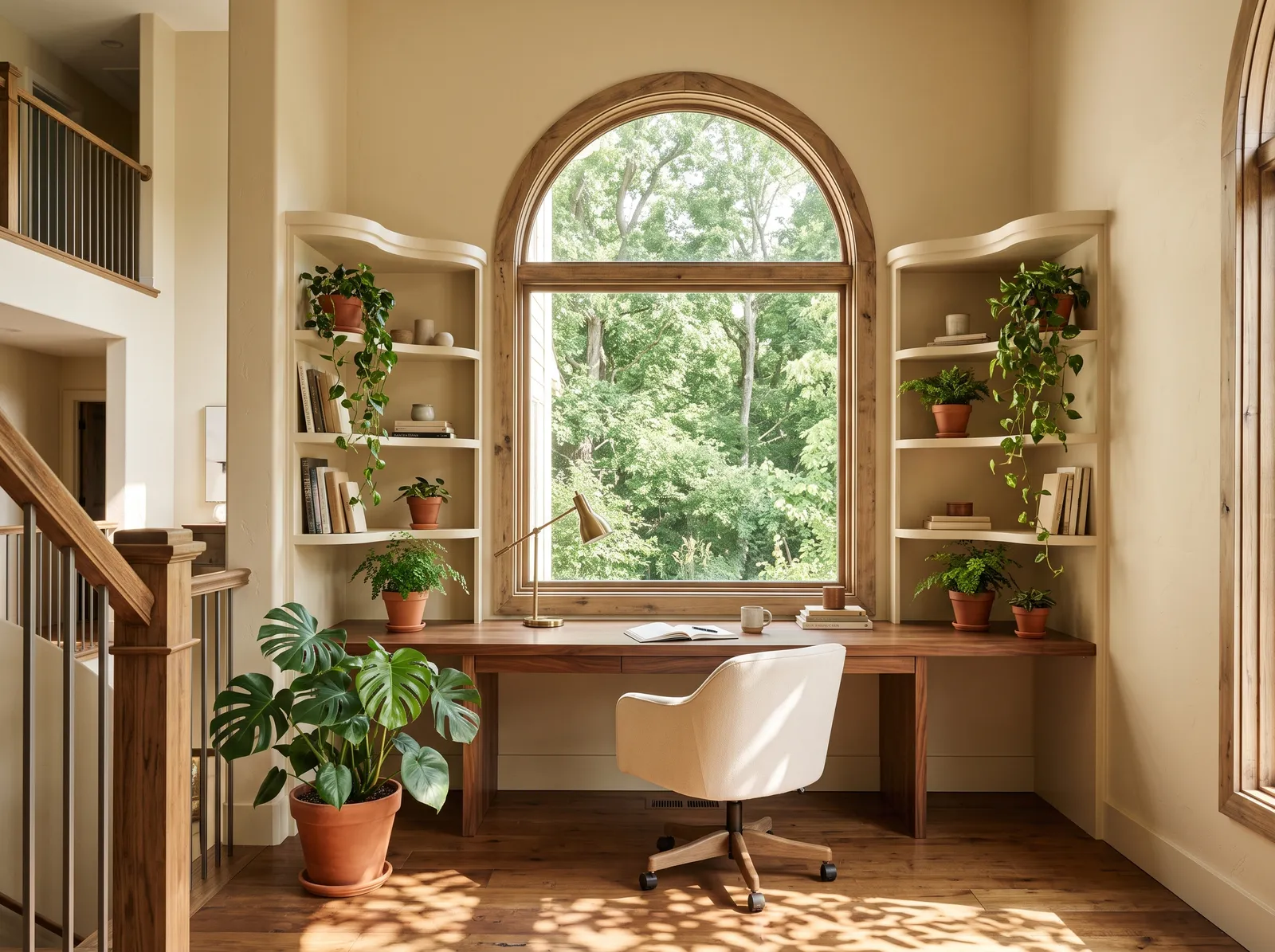
Look at which way your windows face before you commit. North-facing offices get cool, flat light, so warm colors like Cashmere or a soft green keep the room from feeling gray and cold. South-facing rooms get strong, warm light all day and can handle cooler, deeper picks like Hale Navy or Aegean Teal without feeling dim.
Also think about when you actually work. A room you use mostly after dark leans heavily on lamps and overheads, and those warm bulbs pull colors warmer and darker. Tape a sample on the wall and check it in the morning, in the afternoon, and at night under your real lights before you buy a gallon.
Picking the Right Finish for Desk Life
An office does not take the abuse a kitchen or bathroom does, so you do not need a high-shine, scrubbable finish. Eggshell or matte on the walls hides small wall flaws and, just as important, cuts glare. Glare matters more here than in most rooms because shiny walls bounce light into your eyes and onto your screen all day.
Use a slightly tougher finish where hands and chairs touch. Satin or semi-gloss on trim, doors, and any built-in shelving wipes clean and stands up to scuffs from a rolling chair. That mix, a low-sheen wall against a slightly shinier trim, also gives the room a clean, finished look.
Using LRV to Keep the Room Bright or Cozy
LRV is just a number from 0 to 100 that tells you how much light a color bounces back. High numbers (think a light Repose Gray or Cashmere, often in the 50s to 60s) keep a small or dim office feeling open and awake. That is the safer choice if you only have one window or you work long days.
Lower numbers, like a Hale Navy in the single digits or teens, soak up light and make a room feel snug and serious. That can be perfect in a bright room or a large one, but in a small, dark office a deep color all around can start to feel like a cave. If you love a dark shade in a tight space, put it on one wall and keep the rest light.
Pairing Trim, Ceiling, Cabinets, and Floors
Keep trim and ceiling simple so they do not fight your wall color. A soft white ceiling and crisp white trim let a green like Sage or a blue like Aegean Teal stand out cleanly. If your walls are a warm neutral like Cashmere, a warm white trim keeps everything in the same family instead of looking patched together.
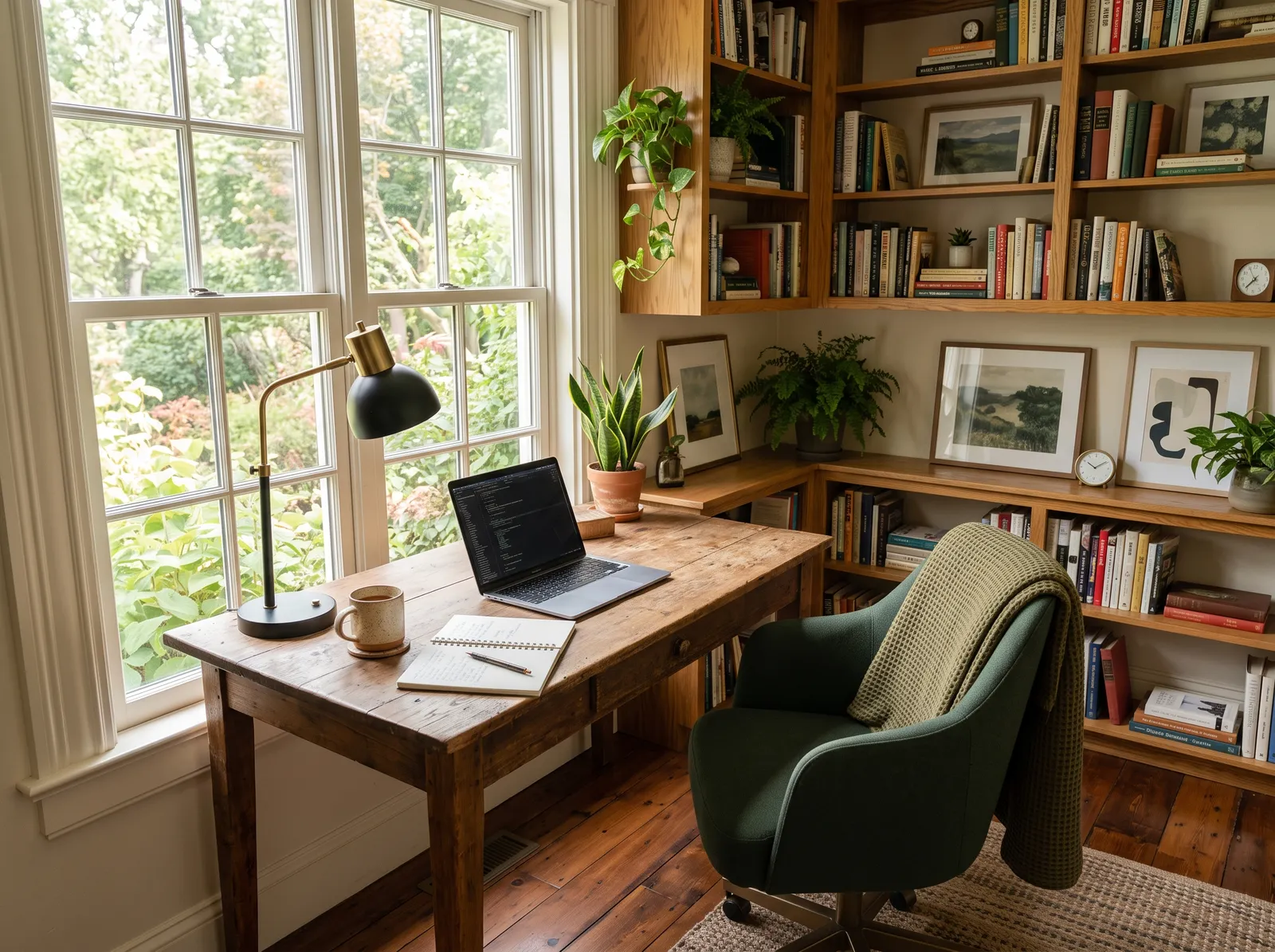
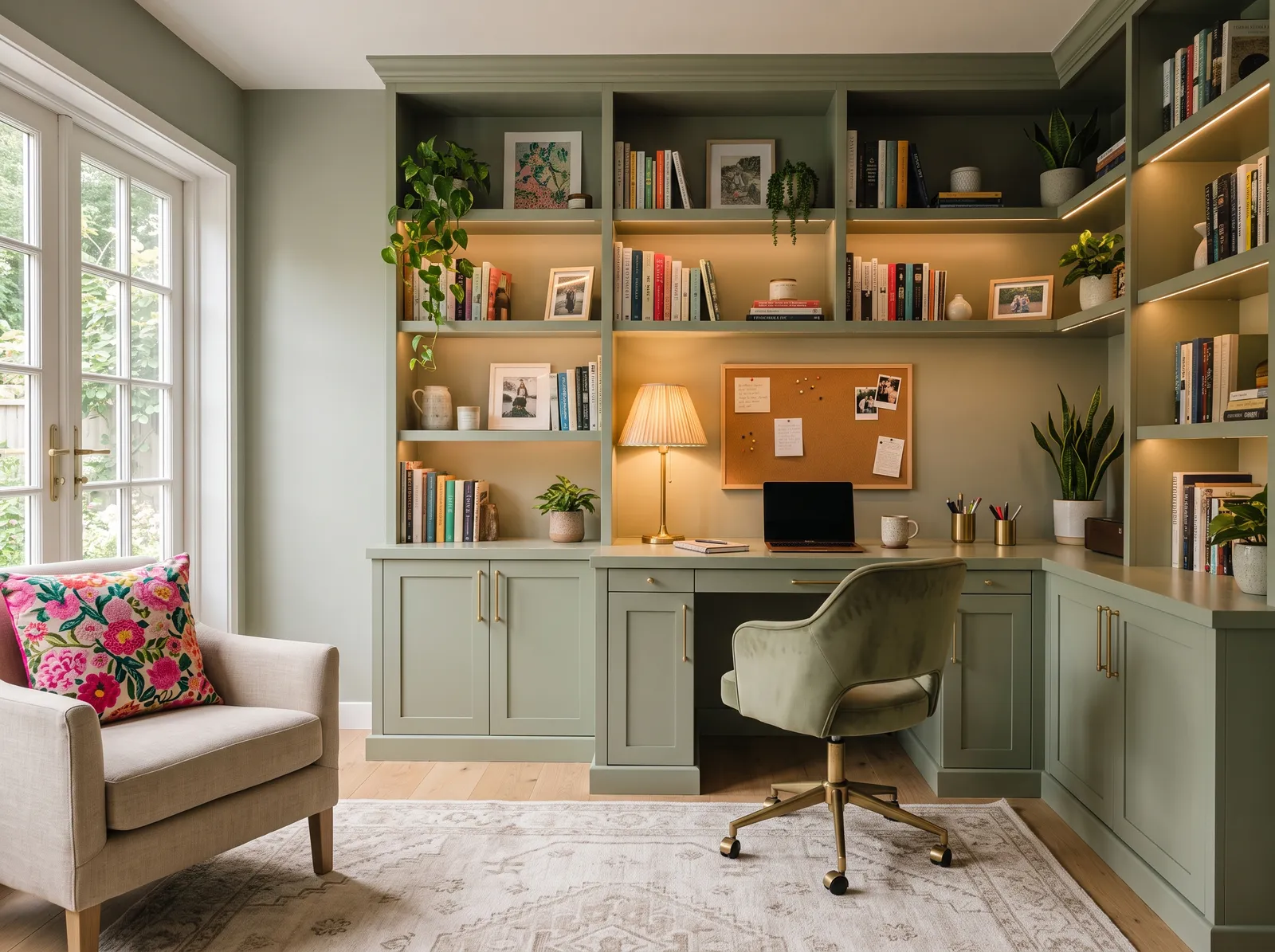
For built-in shelves or a desk wall, you can carry the wall color right onto the cabinetry for a calm, all-one-look feel, or paint them a deeper shade like Hale Navy against lighter walls for contrast. With wood floors, greens and warm neutrals feel natural; with gray or cool floors, a gray like Repose Gray or a blue-green ties the room together.
Common Home Office Paint Mistakes
The biggest mistake is going too bright or too bold without testing it. A color that looked great in the store can feel loud after eight hours of staring at it, and a strong red or orange that energizes a kitchen often just makes an office feel tense. The fix is simple: sample it, live with it for a few days, and trust how it makes you feel at hour six, not minute one.
The other common slips are forgetting glare and forgetting your camera. A high-gloss wall behind your monitor will fight you all day, and a wall right behind your face on video calls can tint your skin an odd color, so test greens and strong blues from the camera's view before you commit.
Home Office Paint Colors — Frequently Asked Questions
What is the best paint color for a home office?+
There is no single best, but calm blues and greens like Aegean Teal, Sage, or Eucalyptus are the most reliable for focus. If you want the walls to stay quiet behind your work, a balanced gray like Repose Gray or a warm neutral like Cashmere is a safe pick. For a richer, more serious feel, a deep navy like Hale Navy works well, especially on one accent wall.
Do dark colors like Hale Navy make a small office feel cramped?+
They can if you use them on every wall in a small or dim room, because dark colors absorb light and pull the walls in. In a bright or larger office, a deep navy feels cozy and grounded rather than tight. If your office is small but you love the color, paint just the wall behind your desk in Hale Navy and keep the other walls light.
What sheen should I use on home office walls?+
Eggshell or matte is the best choice for the walls. It hides small wall flaws and cuts the glare that shiny finishes bounce onto your screen and into your eyes during long work sessions. Save the tougher satin or semi-gloss for trim, doors, and shelving where you need easy cleanup.
How does my window direction change which color I should pick?+
North-facing rooms get cool, flat light, so warm colors like Cashmere or a soft green keep them from feeling cold. South-facing rooms get strong warm light and can handle cooler or deeper colors like Aegean Teal or Hale Navy without looking dim. Always tape a sample up and check it morning, afternoon, and night before buying.
What is LRV and why does it matter for an office?+
LRV is a number from 0 to 100 that tells you how much light a color reflects back into the room. Higher LRV colors like a light Repose Gray or Cashmere keep a small or dark office feeling bright and open. Lower LRV colors like Hale Navy make a room feel cozy and serious but can darken a tight space, so match the number to how much light you actually have.
Can I get these colors in any paint brand?+
Yes. Every color shown here is mixed to order at the paint counter, and colors can be cross-matched between brands. Pick the shade you love, like Sage or Aegean Teal, then have it mixed in whatever brand and finish you trust most.
What color is best for a home office with video calls?+
A soft, muted green like Sage or Eucalyptus tends to look flattering and calm on camera. Avoid very bright or very saturated walls directly behind your face, since strong color can cast an odd tint on your skin. Test the wall from your camera's point of view before you commit, not just from where you sit.