Garage Door Paint Colors
Top Picks for the Garage Door
4 editor's picksAll Garage Door Colors at Every Brand
132 colors · 5 familiesA representative color from every brand that makes this family — most-recognized brands first, with a second pick from the biggest names. Tap any swatch with a curated guide for full spec and cross-brand matches.
Browse by Family Hub
About Garage Door Paint Colors
Your garage door is often the single biggest thing people see when they look at your house. That makes its color a real decision, not an afterthought. The right shade can make a plain front elevation look finished, while the wrong one can fight your siding, your trim, and even your roof.
This page walks through the color directions that actually work on a garage door, and what each one does to the look of the home. We lean on a few proven examples along the way, including soft whites like Alabaster and Dove Gray, warm-cool grays like Repose Gray, and deep anchors like Charcoal, Hale Navy, and Tricorn Black. None of these are tied to one store. Any color here is mixed to order, and a good paint counter can cross-match it from one brand to another.
Because a garage door sits outside in full sun and weather, color and finish have to work together. We will cover how your light steers the choice, how to read LRV so the door reads the way you want, and the small mistakes that quietly make a fresh paint job look off.
The Best Color Directions For A Garage Door
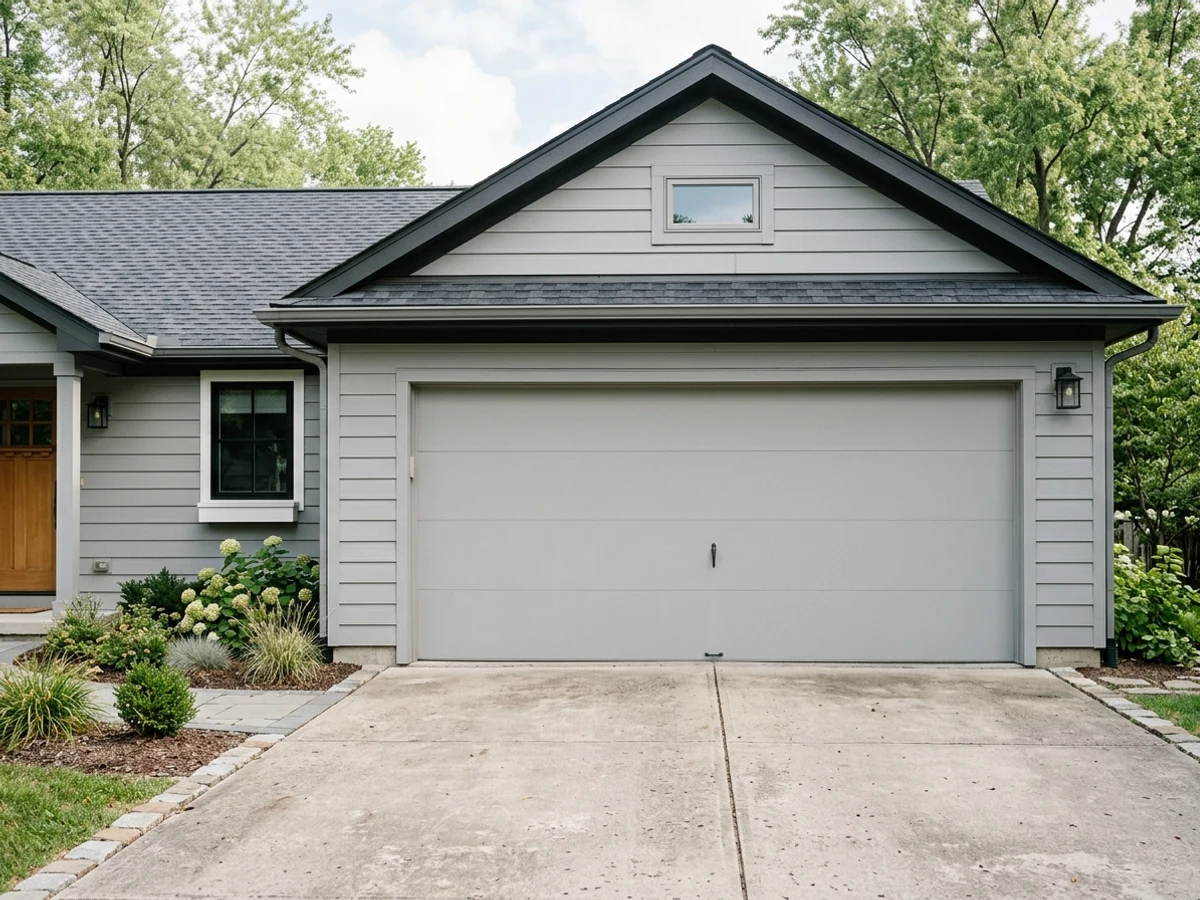
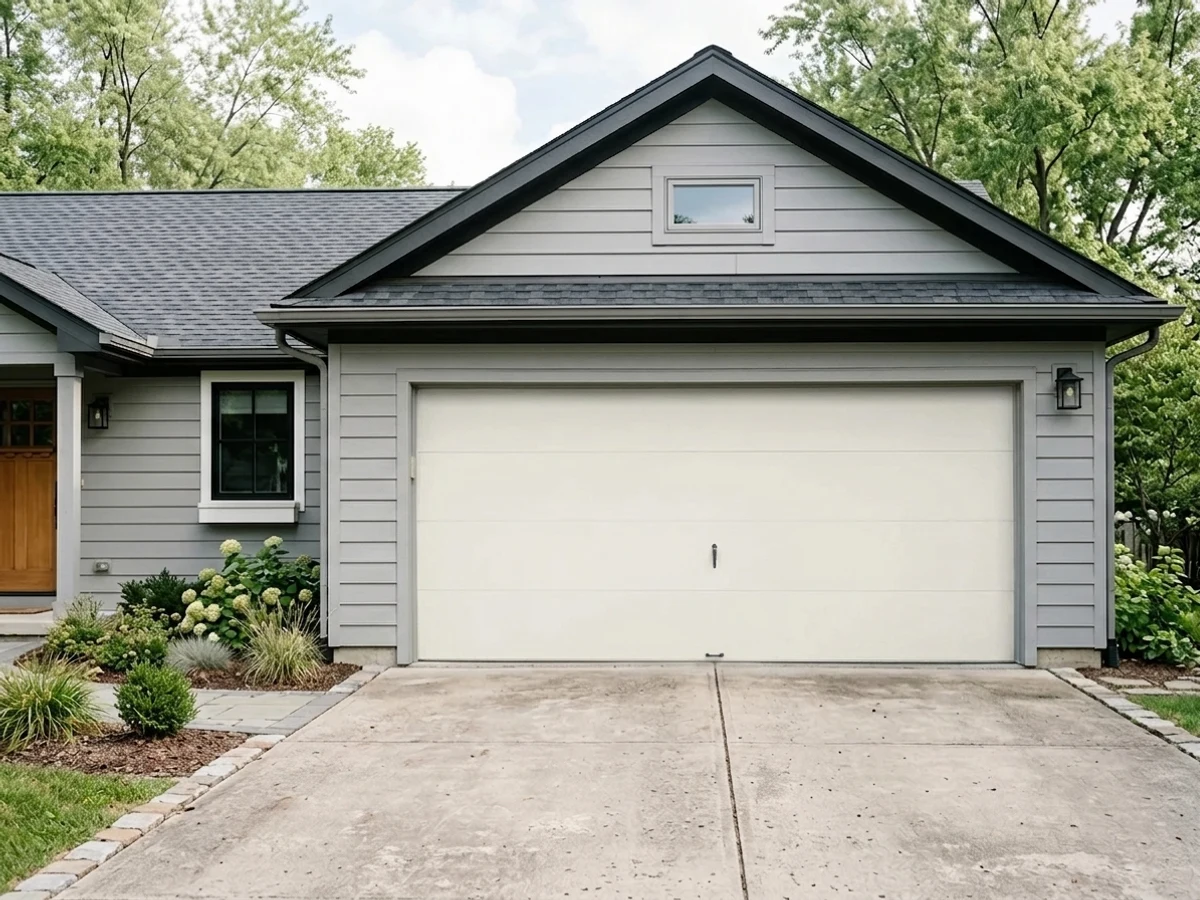
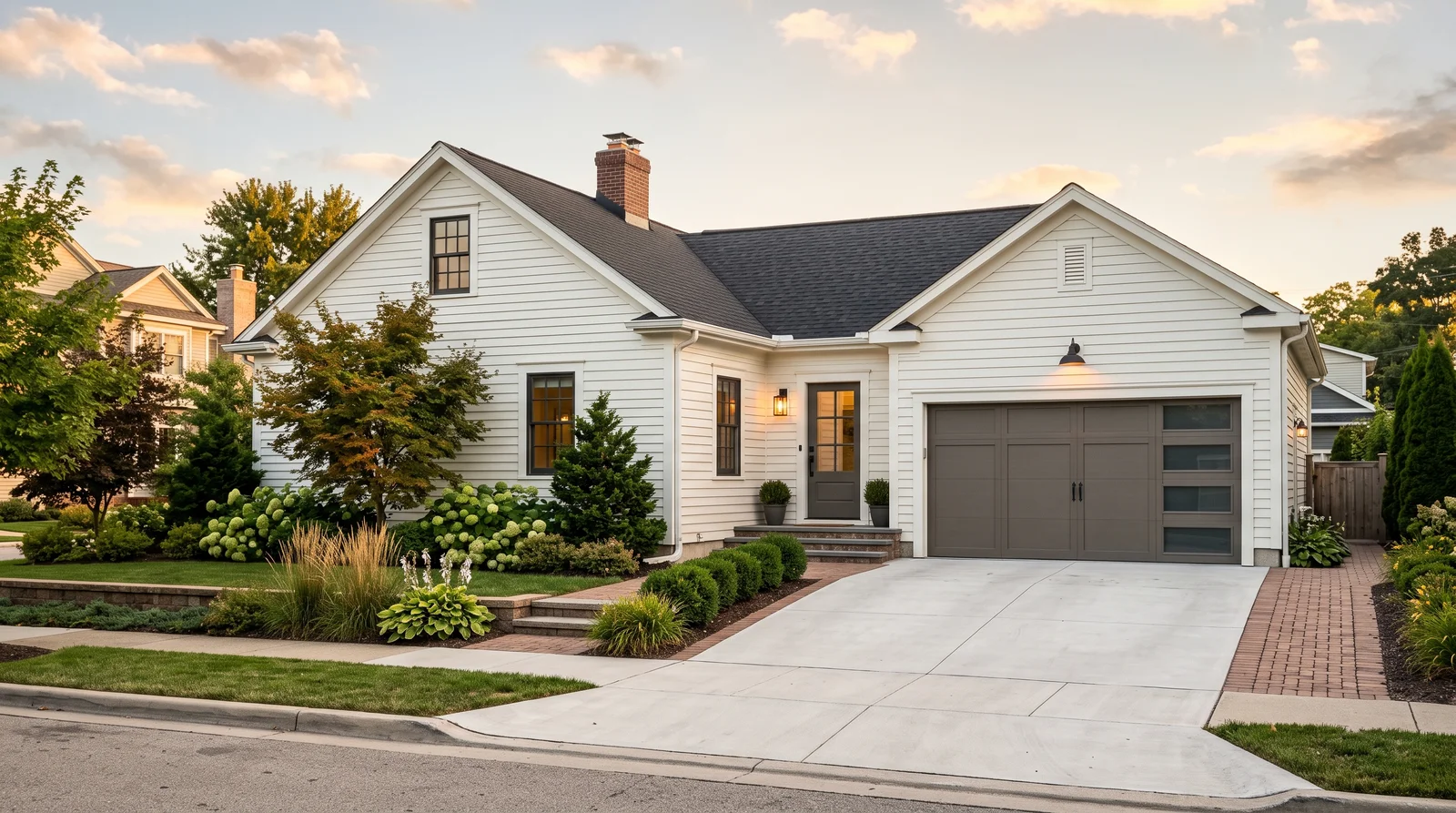
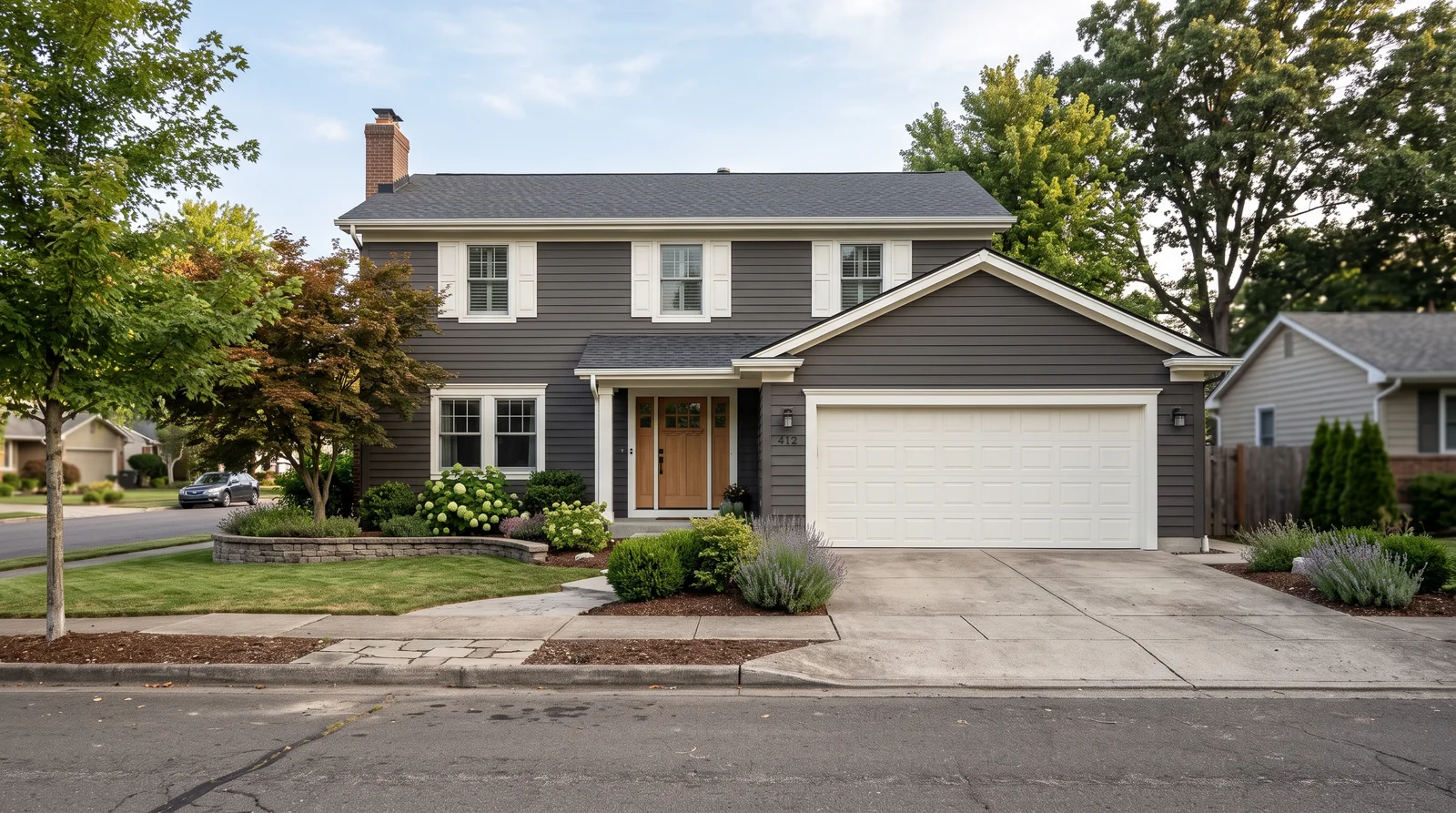
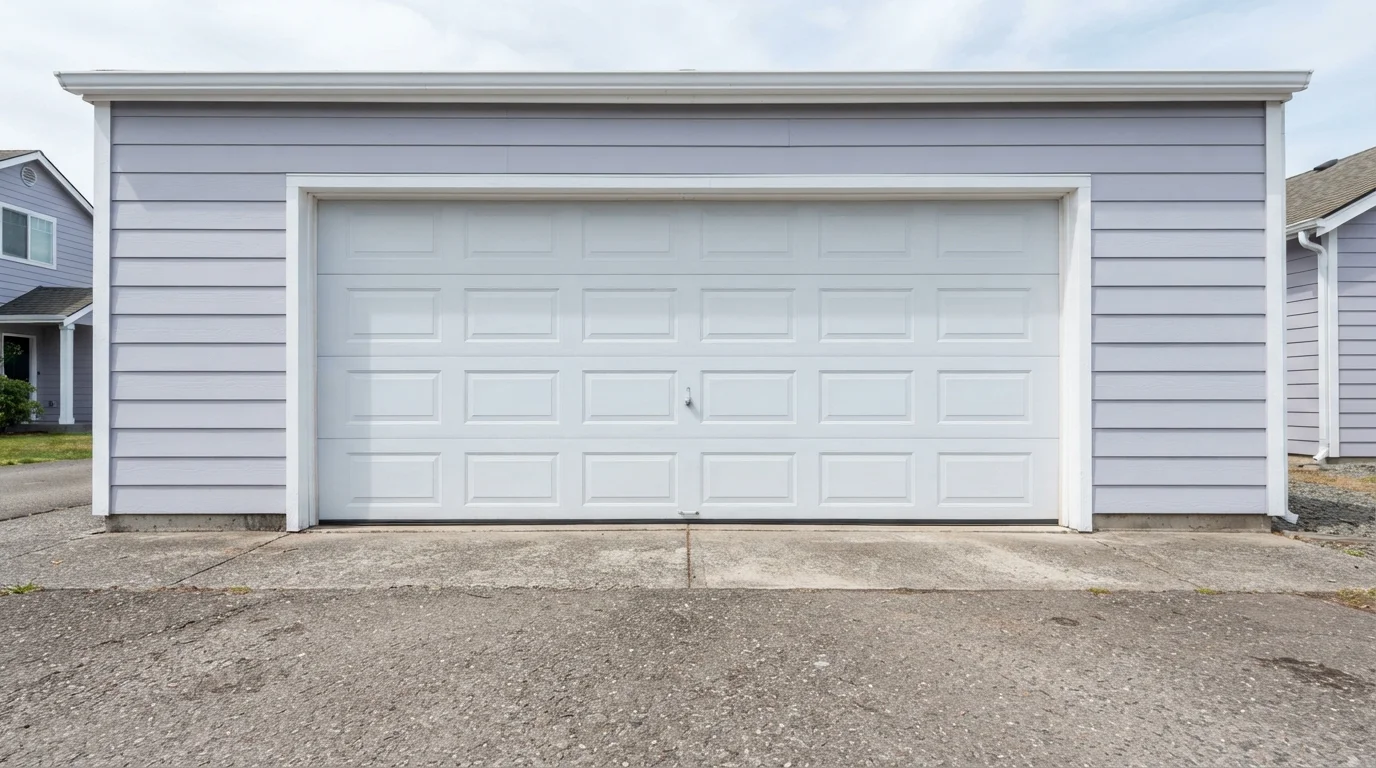
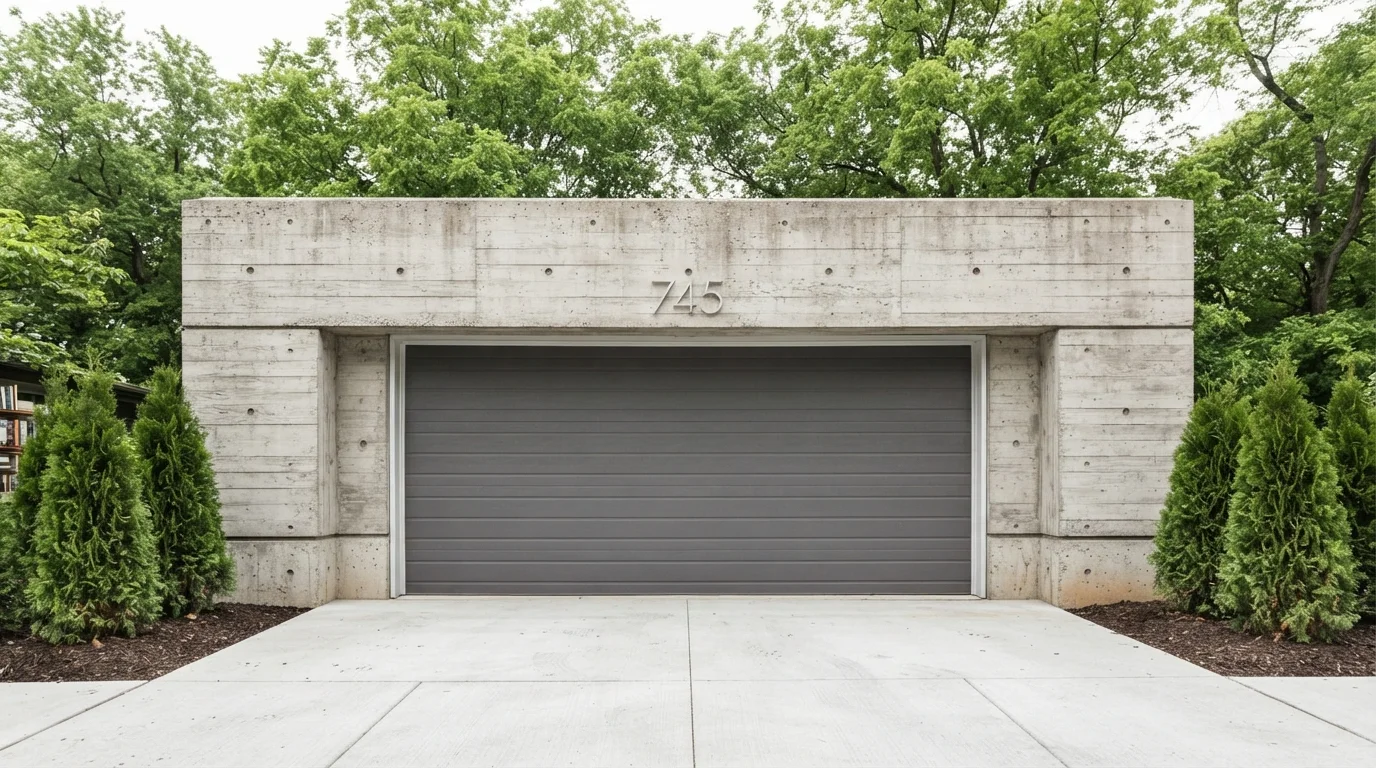
Most garage doors look best in one of four directions: a clean white, a versatile gray, a deep navy, or a true black. White, like Alabaster, keeps the door quiet and lets it blend with white trim so the house reads as one calm shape. Gray, like Repose Gray or the softer Dove Gray, is the safe middle ground that pairs with almost any siding color without drawing the eye.
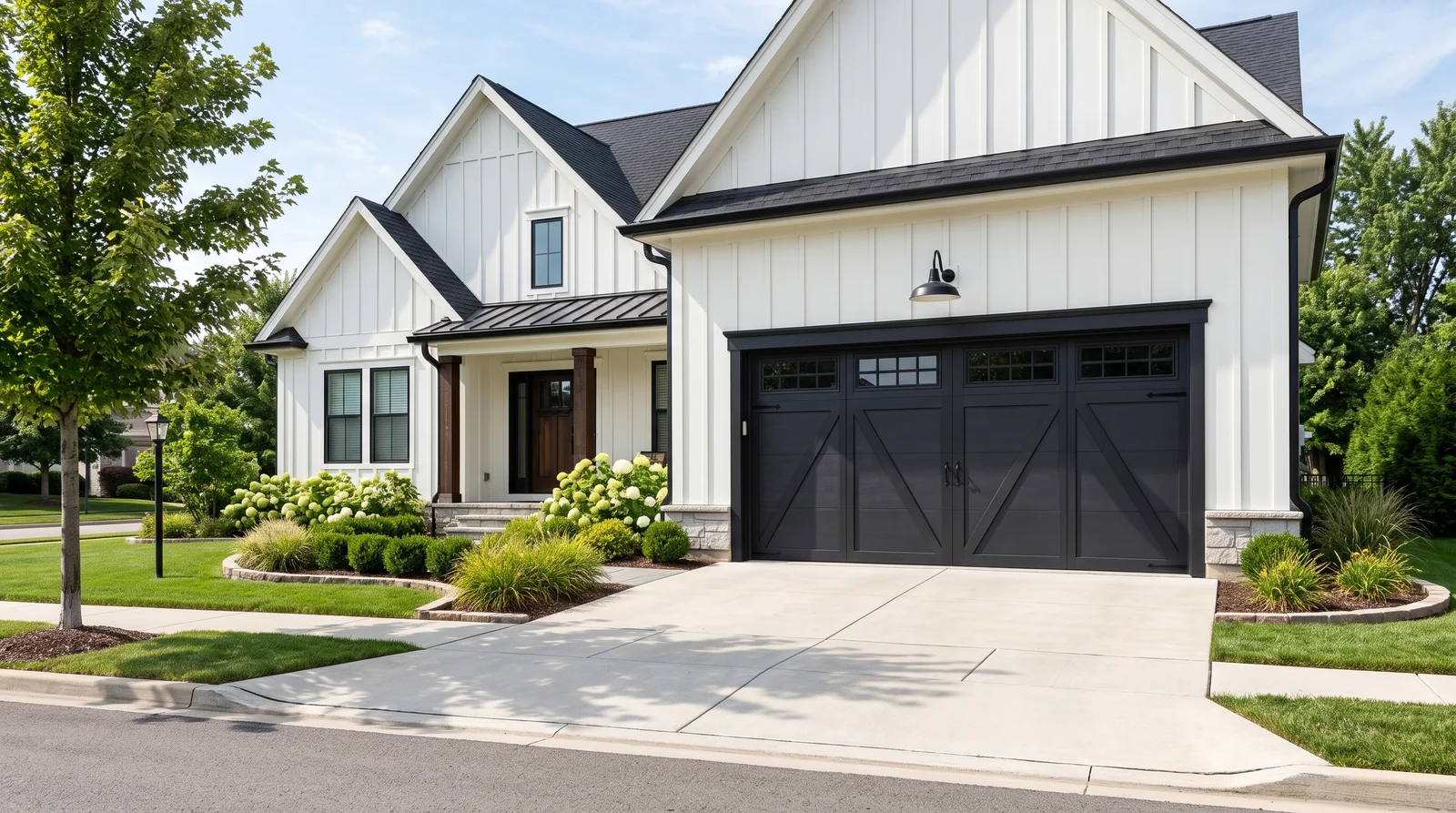
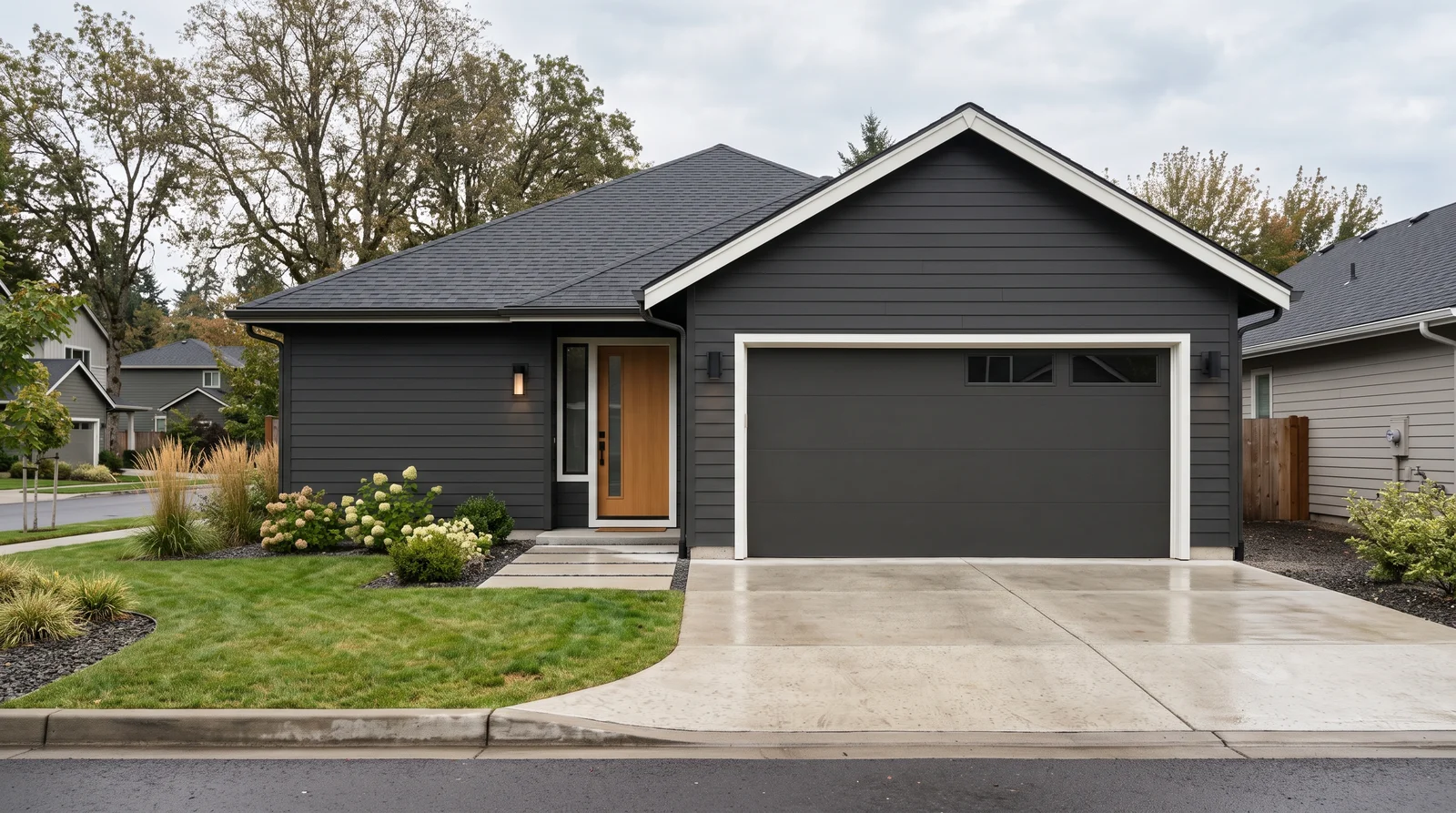
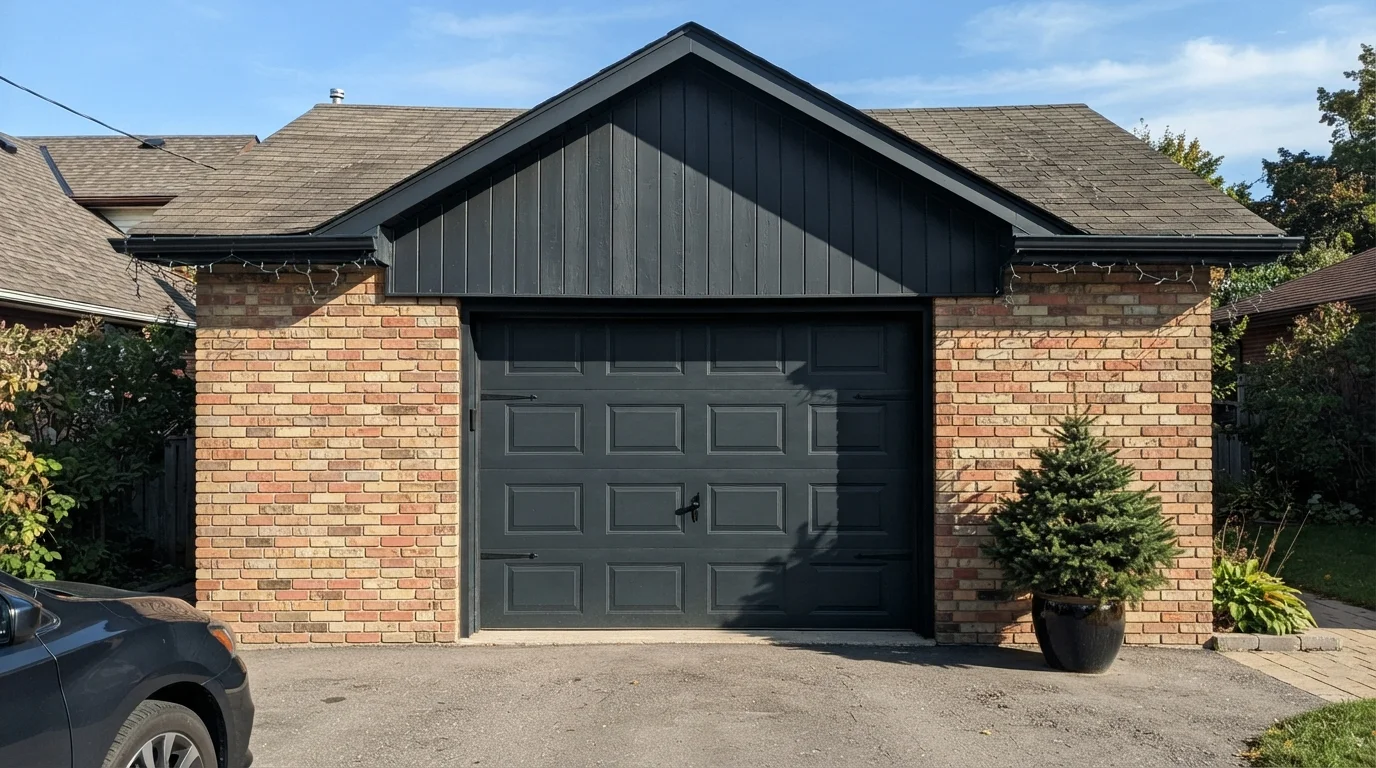
If you want the door to feel intentional and a little richer, go deep. Hale Navy gives a classic, dressed-up look against white or light gray siding, while Charcoal and Tricorn Black read modern and architectural. The rule of thumb: match the door to the trim to make it disappear, or match it to nothing and let it become a deliberate accent.
How Your Light Changes The Color
A garage door faces one direction all day, and that direction decides what the color really looks like. A north-facing door gets cool, even light, so warm grays and off-whites like Repose Gray or Alabaster stay balanced instead of going icy. A south- or west-facing door takes harsh afternoon sun, which washes light colors out and can make a black door look almost gray by late day.
Always test a real sample on the actual door and look at it morning, midday, and dusk. A navy like Hale Navy can look almost black in shade and clearly blue in direct sun, and you want to like both. Headlights and porch lights at night also matter, since deep colors like Charcoal can read flat and very dark after sunset.
Picking The Right Finish And Sheen
A garage door lives in sun, rain, and road grime, so finish is about durability as much as looks. A satin or low-lustre exterior finish is the sweet spot for most doors. It sheds dirt, wipes clean, and resists fading without throwing a hard shine that shows every dent and seam.
Skip flat on a garage door, since it holds dust and is hard to scrub. Skip high gloss too, because the large flat panels will catch sun and glare, and gloss exaggerates any waviness or hardware shadow. Whatever the color, choose a paint rated for exterior use so it can flex with heat and stand up to UV.
Using LRV To Get The Look You Want
LRV, or light reflectance value, tells you how light or dark a color reads, from 0 for black to 100 for pure white. On a garage door this matters twice over: it sets the mood and it affects heat. A high-LRV white like Alabaster keeps the front of the house bright and open, while a low-LRV color like Tricorn Black or Charcoal grounds the elevation and makes it feel solid and modern.
There is a practical side too. Very dark, low-LRV doors absorb more heat in full sun, which can stress some door materials, so confirm a deep color is fine for your door type. Mid-range grays like Dove Gray and Repose Gray sit in a forgiving zone that hides dirt, takes the sun well, and reads neither stark nor heavy.
Pairing The Door With Trim, Siding, And Hardware
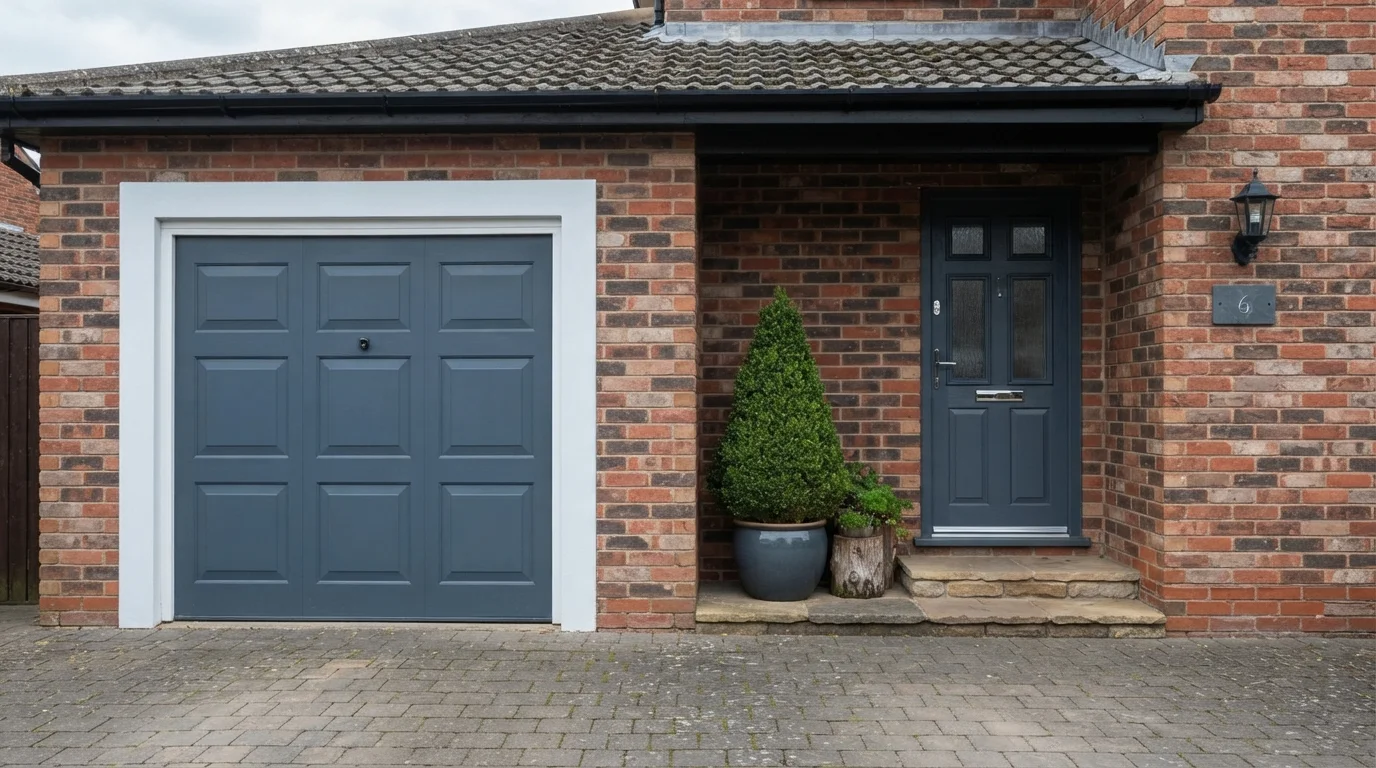
A garage door never stands alone, so pick its color next to everything around it. The cleanest looks usually tie the door to one element on the house: match it to the front door, to the trim, or to the window sashes. For example, Hale Navy on both the front door and garage door pulls a white house together; a Charcoal garage door echoes a dark roof or black window frames.
Watch the warm-cool match too. A warm gray like Repose Gray fights cool blue-gray siding, while Dove Gray sits more neutral. If you add decorative hardware or carriage-style handles, a deeper door color like black or navy makes black hardware look crisp, where it can disappear on a dark gray.
Common Mistakes To Avoid
The biggest mistake is matching the garage door to the siding exactly when the undertones are slightly off, which makes the door look like a smudge instead of a clean panel. Another is going too dark without checking your door material and climate, since a black door in full afternoon sun runs hot and can fade faster. People also forget that big flat panels show texture, so a glossy or very light color can highlight every dent.
Finally, do not choose the color from a tiny chip in the store. Garage doors are large, and color intensifies across a big surface, so a gray can read darker and a navy can read almost black once it is up. Buy a sample, paint a real section, and remember any of these colors can be mixed to order and cross-matched between brands if you want a specific shade in a different paint line.
Garage Door Paint Colors — Frequently Asked Questions
What is the best color for a garage door?+
There is no single best color, but the safest, most flexible choices are a white like Alabaster, a neutral gray like Repose Gray or Dove Gray, or a deep anchor like Hale Navy, Charcoal, or Tricorn Black. White and gray keep the door quiet, while navy and black make it a deliberate, dressed-up accent. The right pick depends on your siding, trim, and how much you want the door to stand out.
Should the garage door match the front door or the trim?+
Either works, but pick one on purpose. Matching the garage door to the trim or siding makes it recede so the house reads as one shape, while matching it to the front door, like both in Hale Navy, ties the front of the home together. What usually looks unfinished is a garage door color that matches nothing else on the house.
What sheen should I use on a garage door?+
Use a satin or low-lustre exterior finish. It wipes clean, sheds road grime, and resists fading without the hard glare of gloss. Avoid flat, which holds dirt and is hard to scrub, and avoid high gloss, which shows every dent and shines harshly on the big flat panels.
Is it a bad idea to paint a garage door black?+
Not at all, and a black like Tricorn Black or a deep Charcoal looks modern and crisp, especially with black hardware or dark window frames. The one caution is heat: very dark colors absorb more sun, so on a door in full afternoon light, confirm your door material is rated for a dark color before committing.
How does LRV help me choose a garage door color?+
LRV tells you how light or dark a color reads, from 0 for black to 100 for white. A high-LRV white like Alabaster keeps the front of the house bright, while a low-LRV color like Charcoal or Tricorn Black grounds it and looks solid. Mid-range grays like Dove Gray and Repose Gray are forgiving, hiding dirt and handling sun well without looking stark or heavy.
Can I get these colors in any paint brand?+
Yes. Every color shown here is mixed to order at the paint counter, and a good store can cross-match a shade from one brand into another paint line. So if you like a color like Hale Navy or Repose Gray but prefer a different brand's exterior paint, you can usually get a close match in the line you want.
Why does my garage door color look different than the sample chip?+
Color intensifies across a large surface, so a gray can read darker and a navy almost black once it covers a whole door. Light direction also shifts it through the day. Always paint a real sample section on the door itself and look at it in morning, midday, and evening light before buying all your paint.