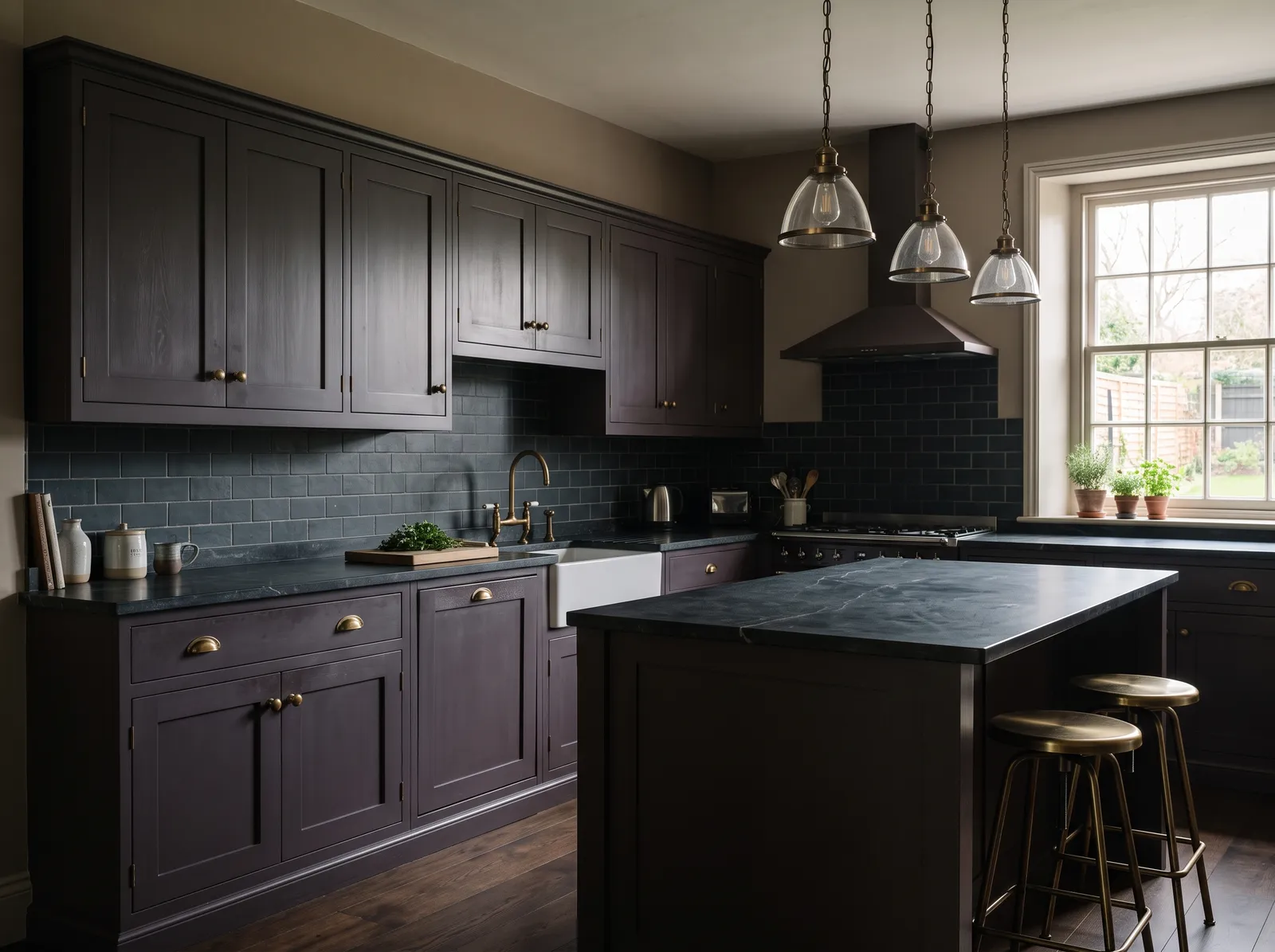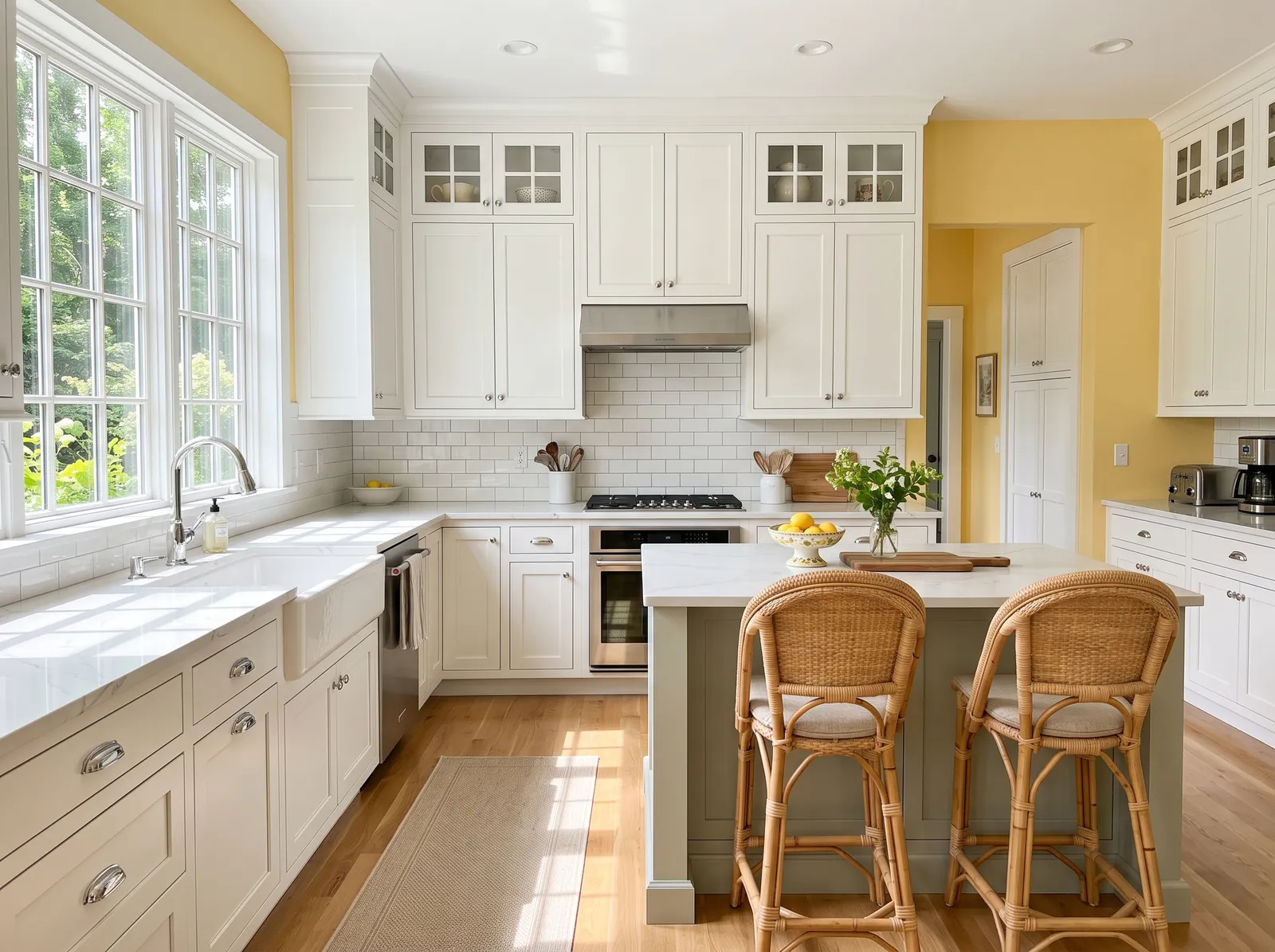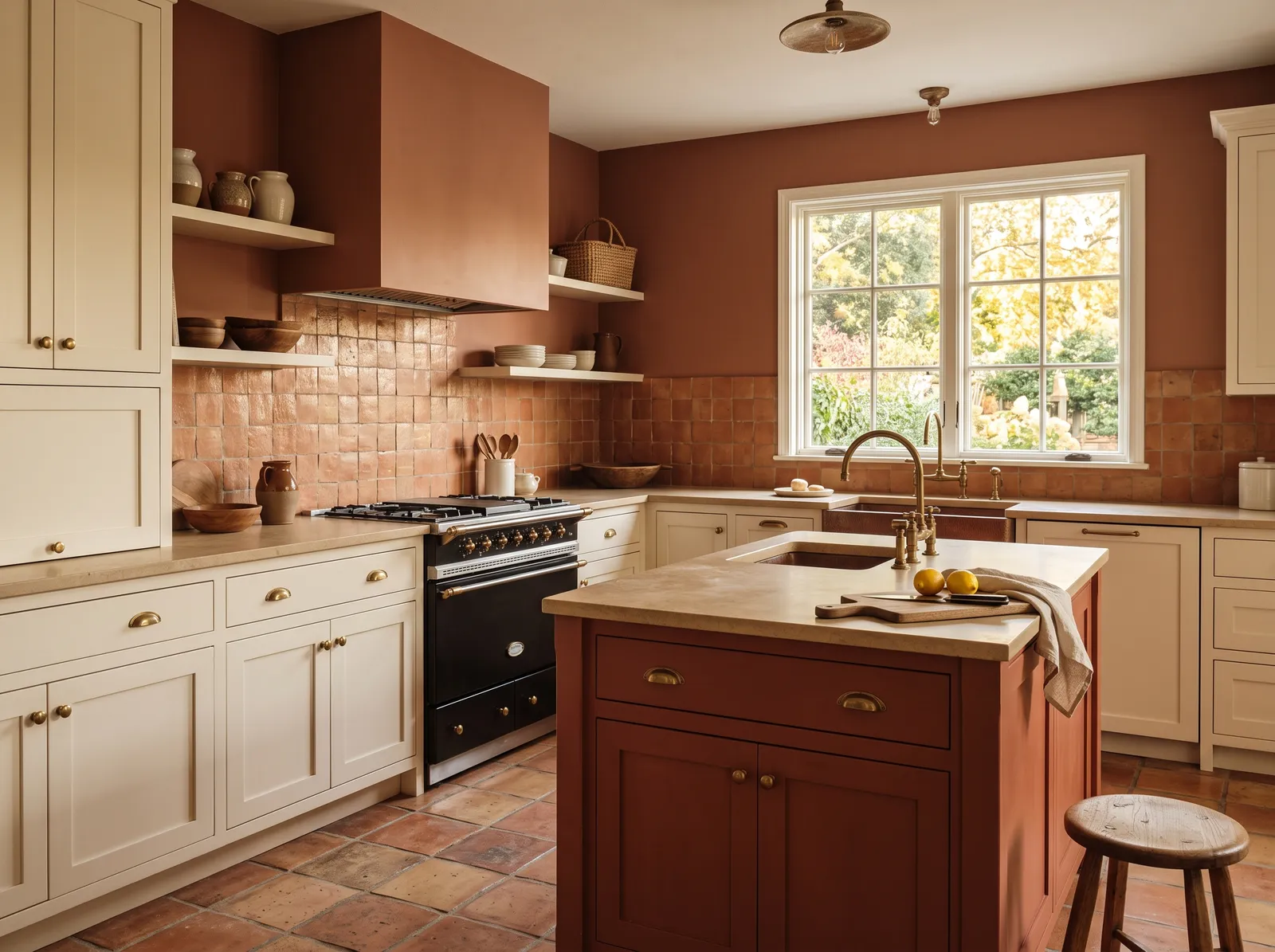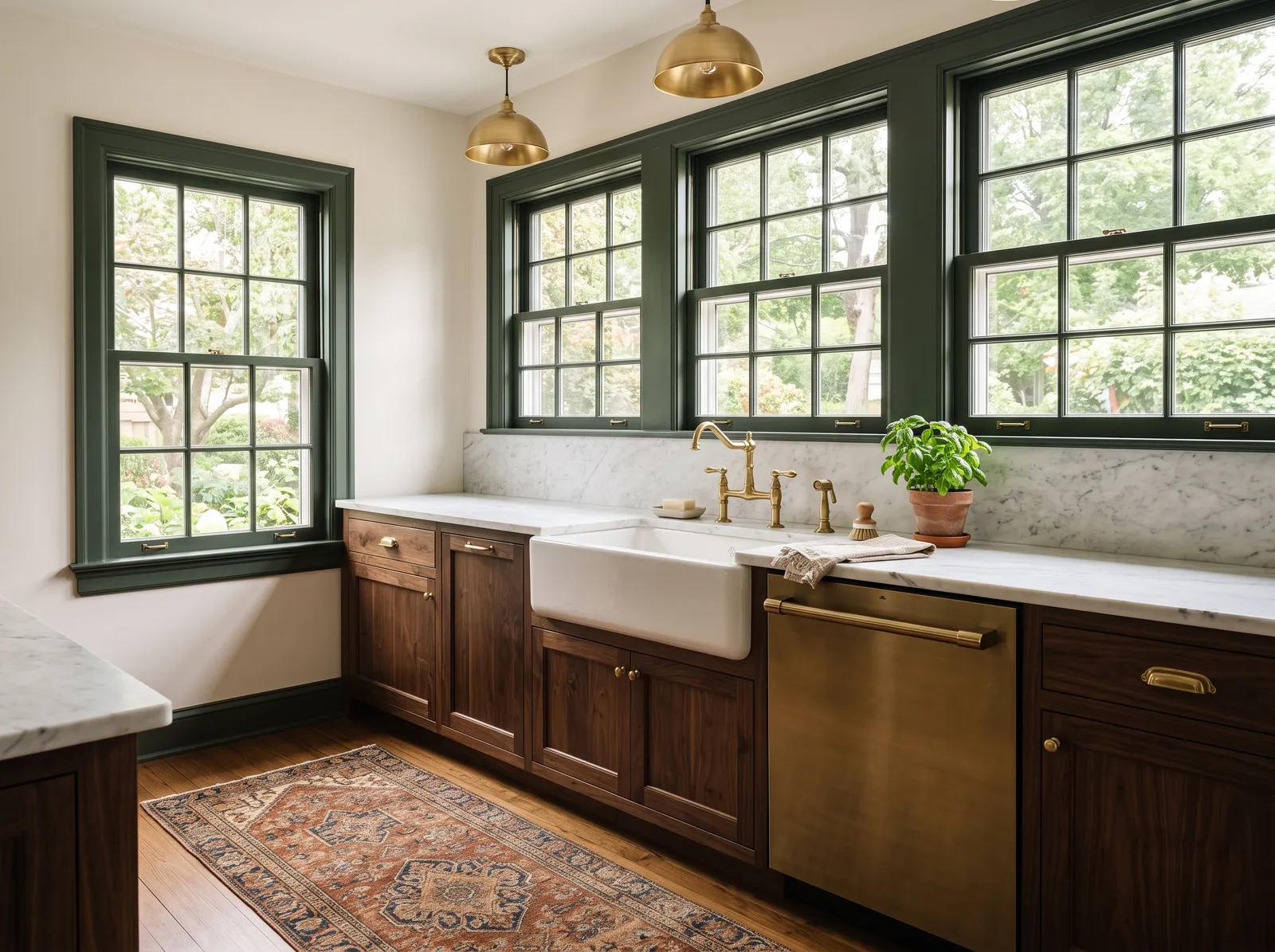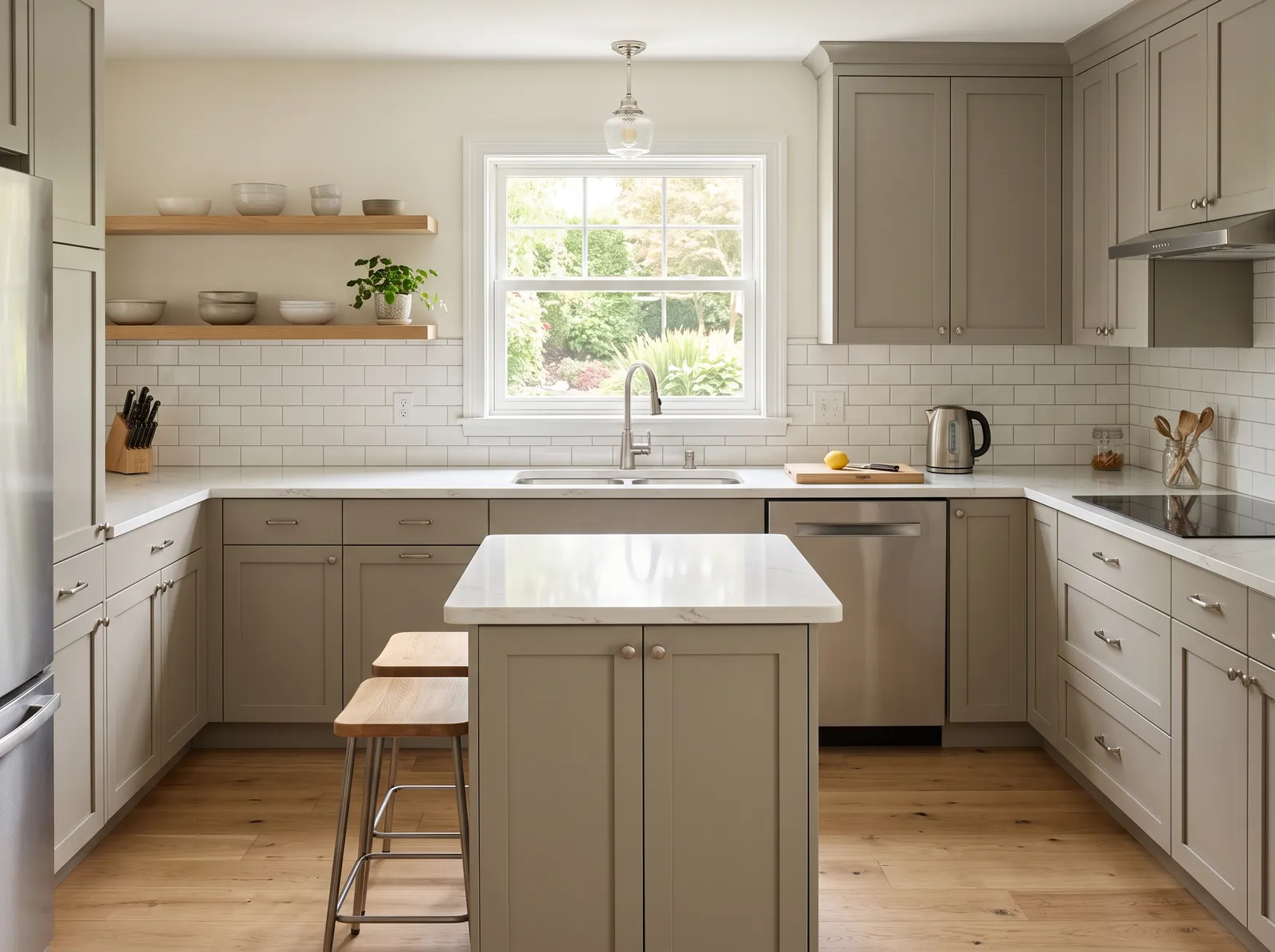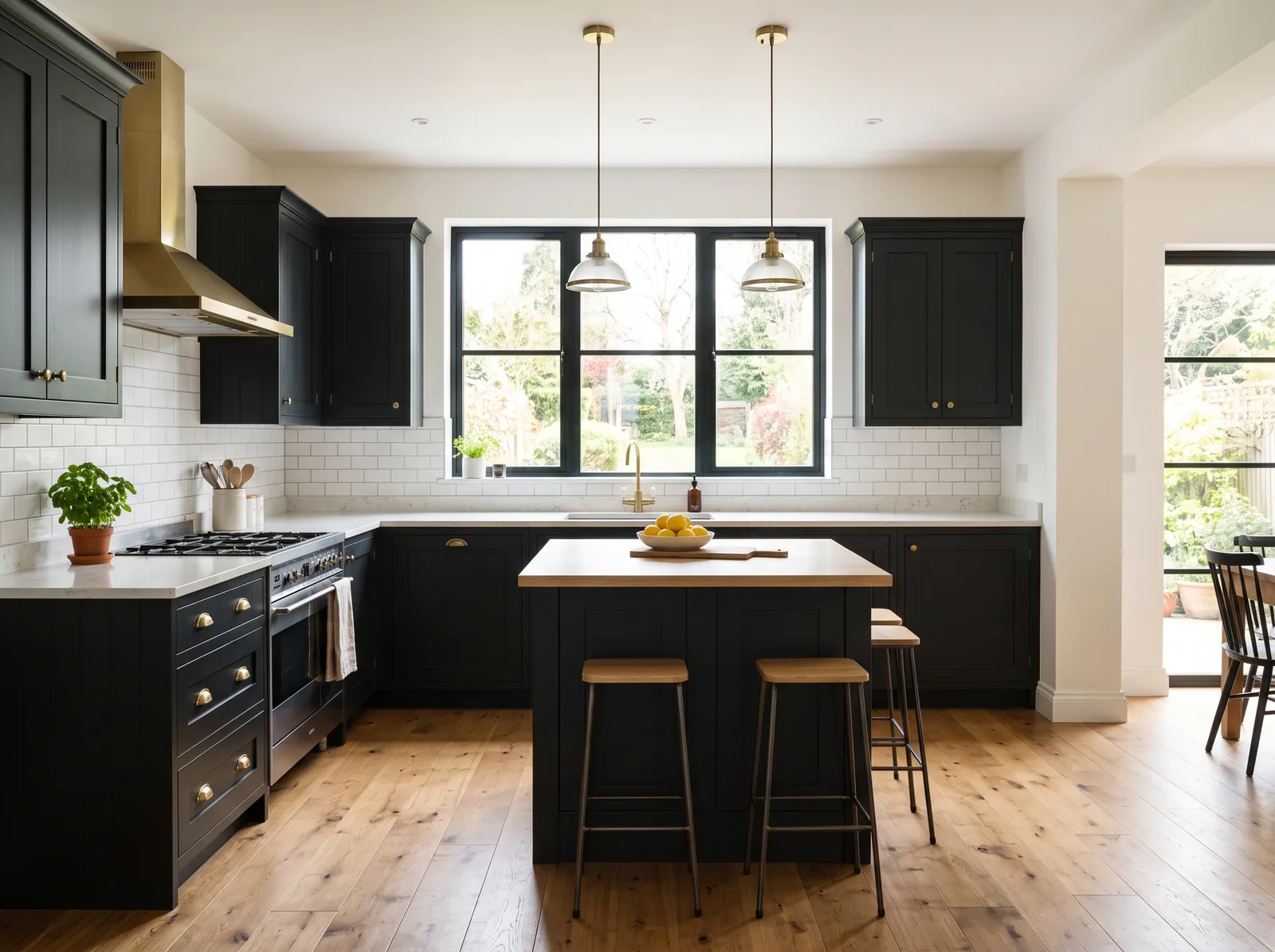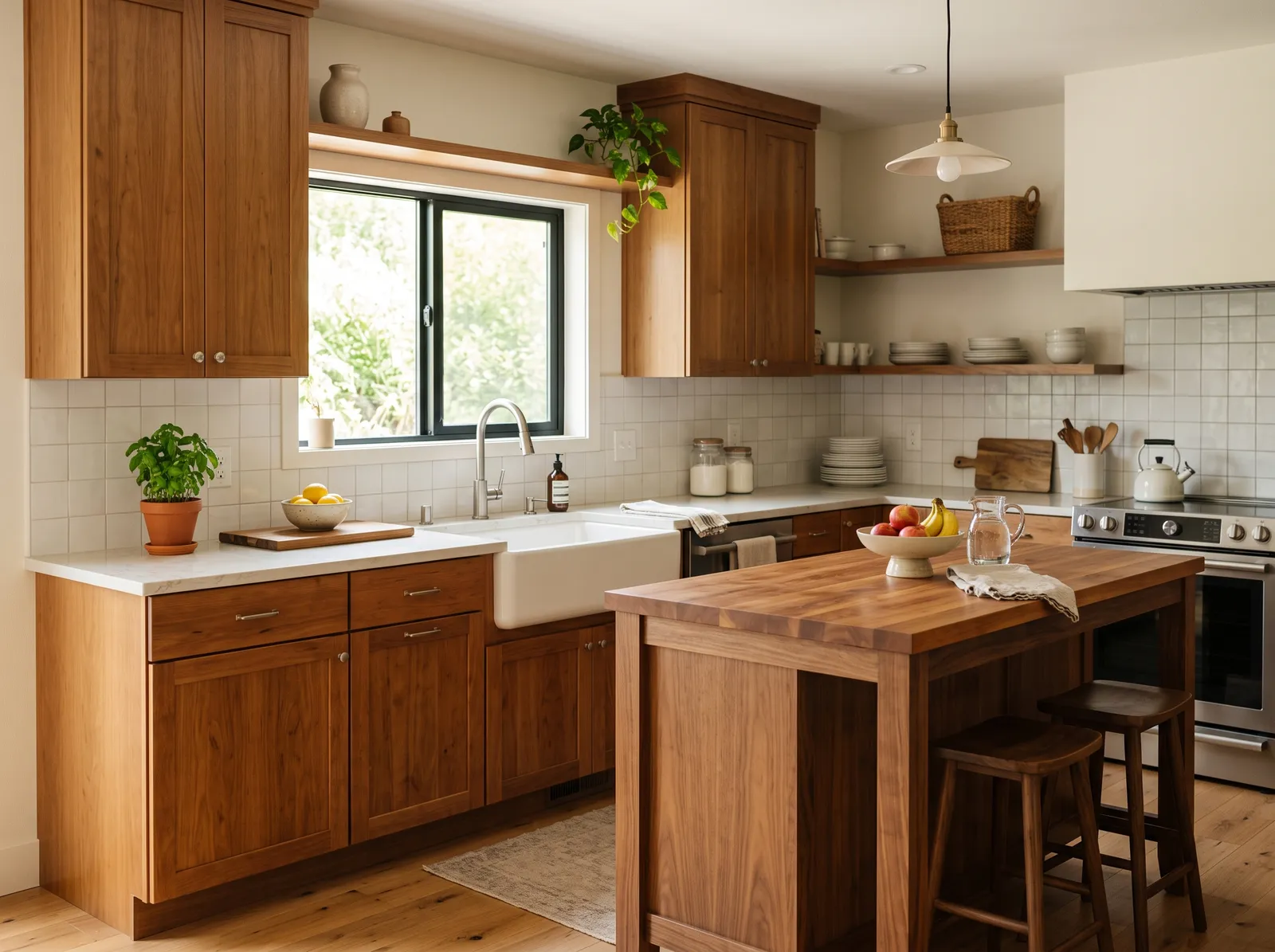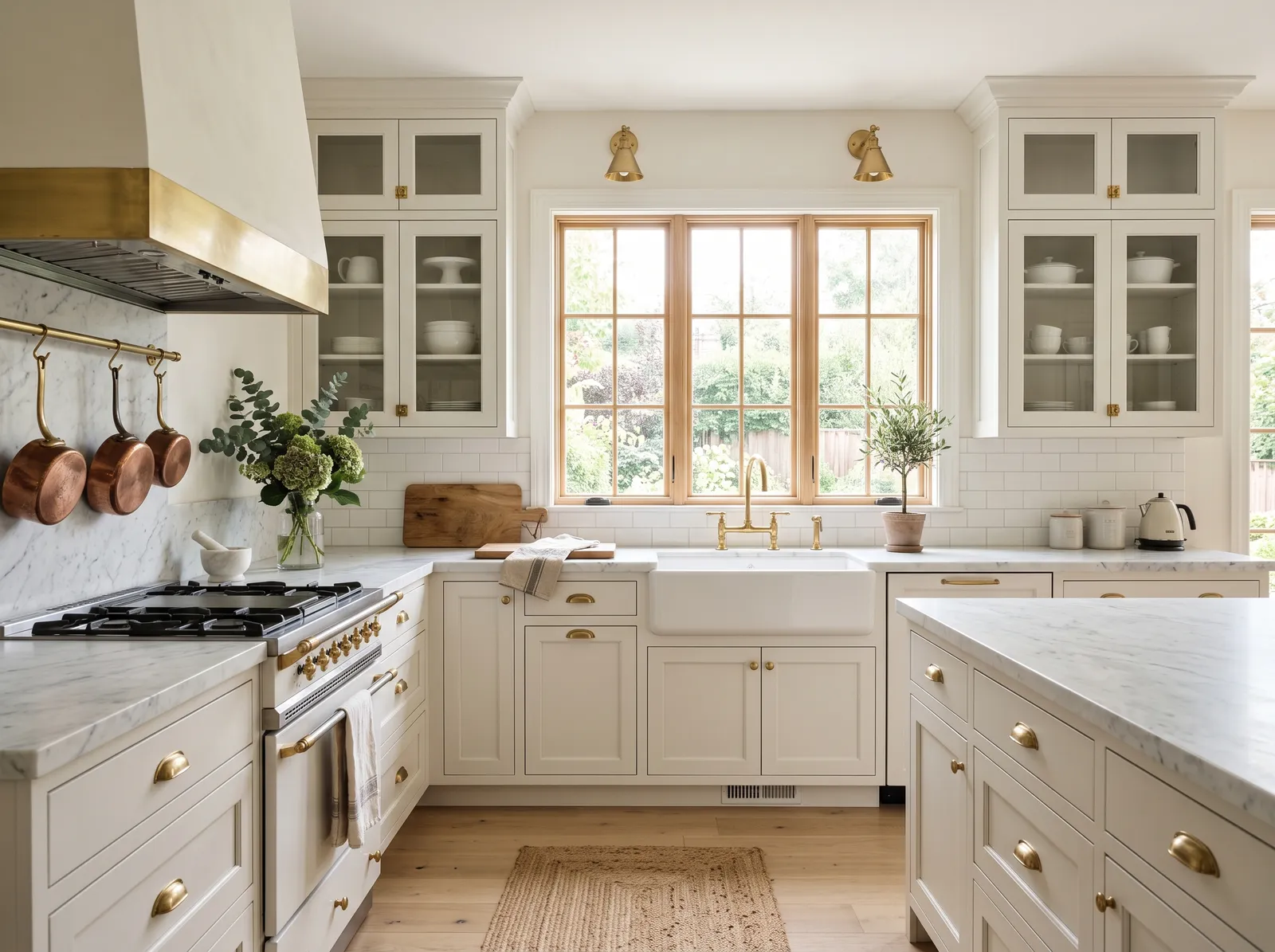
Kitchen Paint Colors
Top Picks for the Kitchen
4 editor's picksPalettes for the Kitchen
Ready-made schemesFull, buyable color schemes built for the kitchen — walls, trim, and accents matched to real paint.
All Kitchen Colors at Every Brand
130 colors · 5 familiesA representative color from every brand that makes this family — most-recognized brands first, with a second pick from the biggest names. Tap any swatch with a curated guide for full spec and cross-brand matches.
Browse by Family Hub
Color is half the decision. The product roundup covers which paint chemistry actually holds up in this room.
About Kitchen Paint Colors
The kitchen is the hardest-working room in the house, and the paint has to keep up. It takes steam, grease, splashes, and fingerprints, all while sitting next to your cabinets, counters, and whatever light pours in through the window. So the right kitchen color does two jobs at once: it sets the mood you want, and it survives the daily mess without looking tired.
Most kitchens land in five color families that just work here — soft whites, calm greens, easy blues, warm neutrals, and quiet grays. Names like Alabaster, White Dove, Sage, Hale Navy, Accessible Beige, and Pigeon show up again and again because they flatter food, wood, and metal at the same time. Below we walk through how to pick a direction, read your light, choose a finish that lasts, and avoid the mistakes that make a fresh kitchen feel off.
One thing worth knowing up front: every color here is mixed to order at the paint counter. You are not locked into one brand. If you love a shade from one company but buy paint from another, the store can cross-match it closely, so pick the color you love first and sort out the can second.
The Best Color Directions for a Kitchen
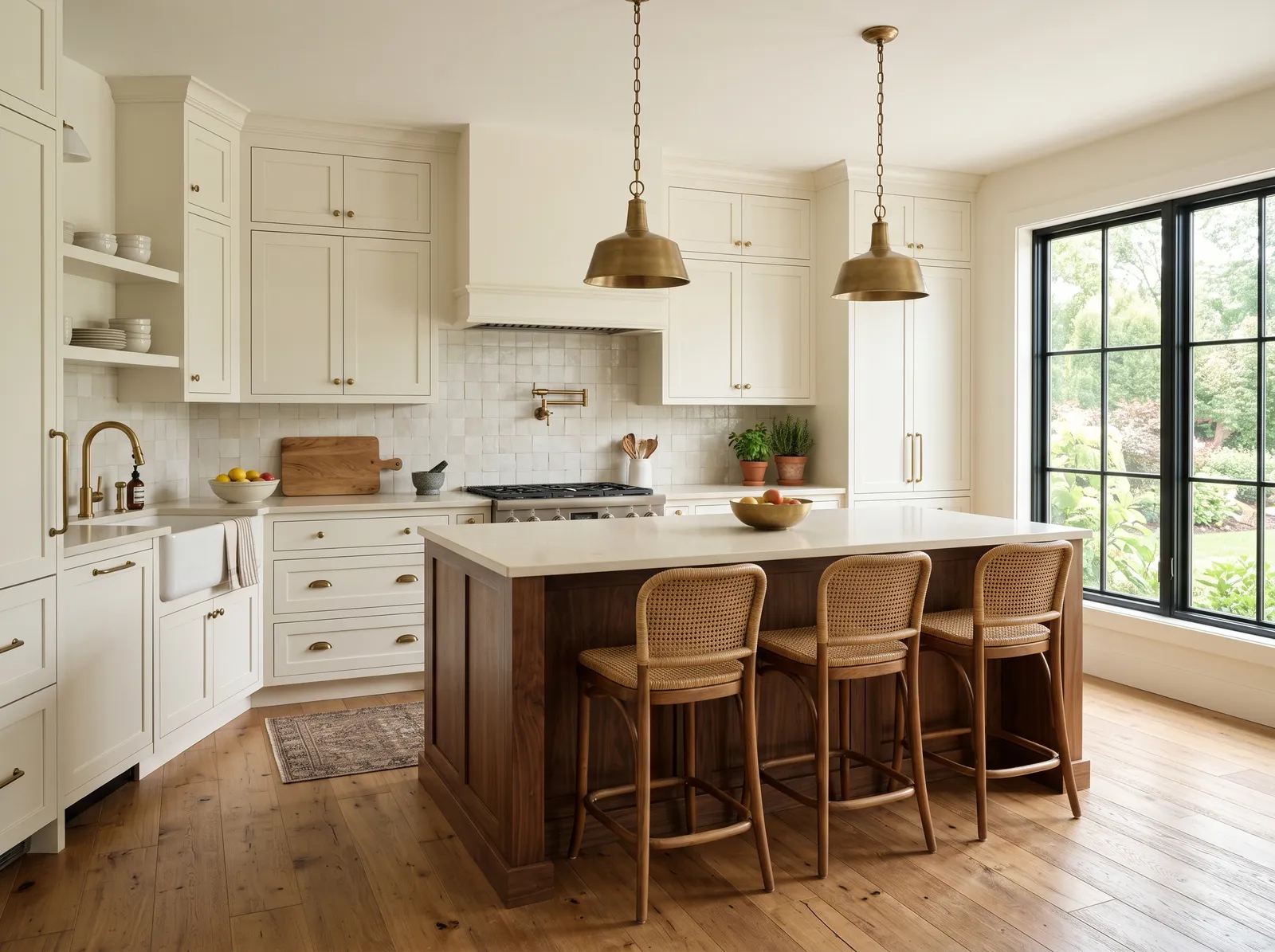
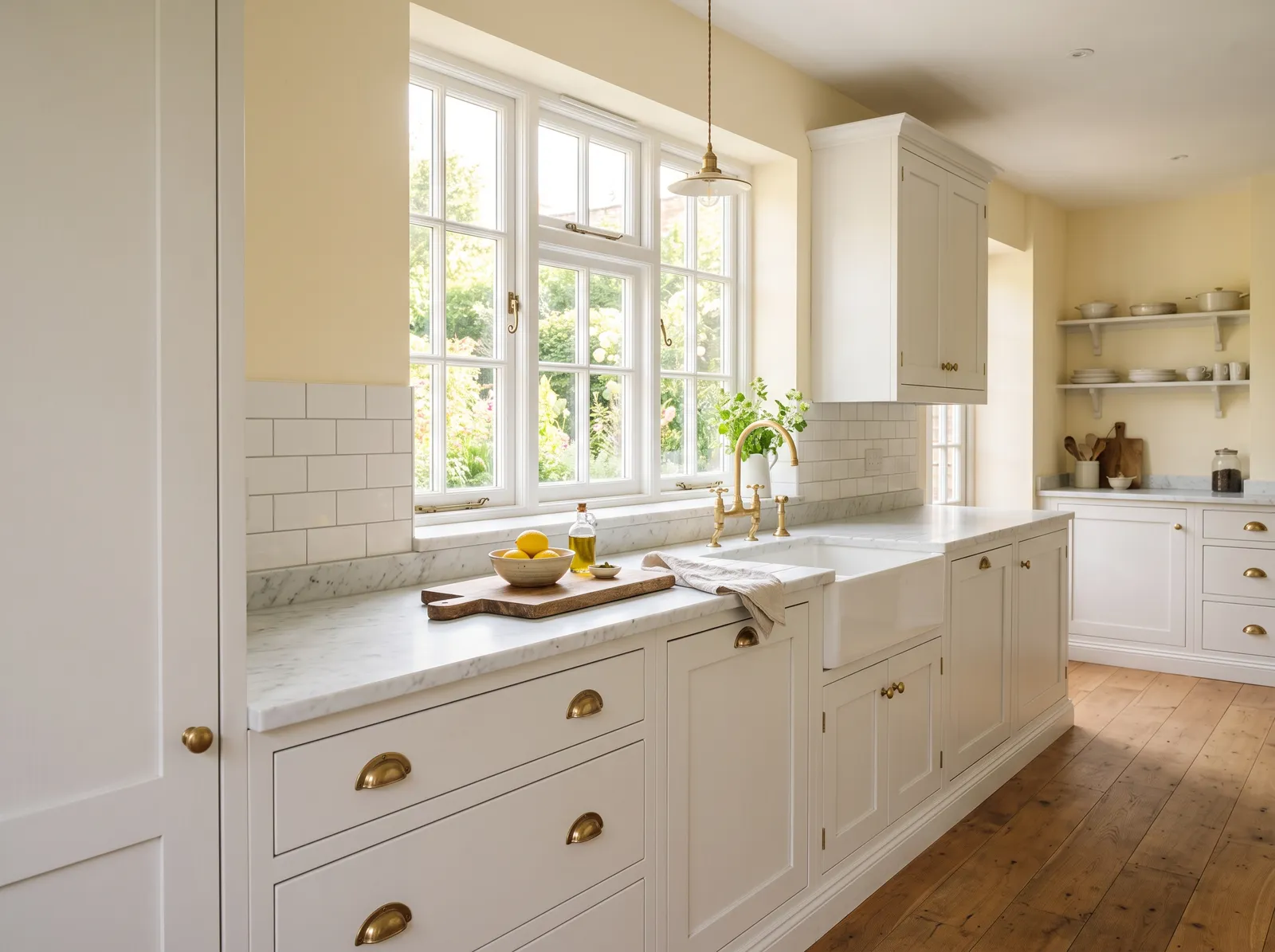
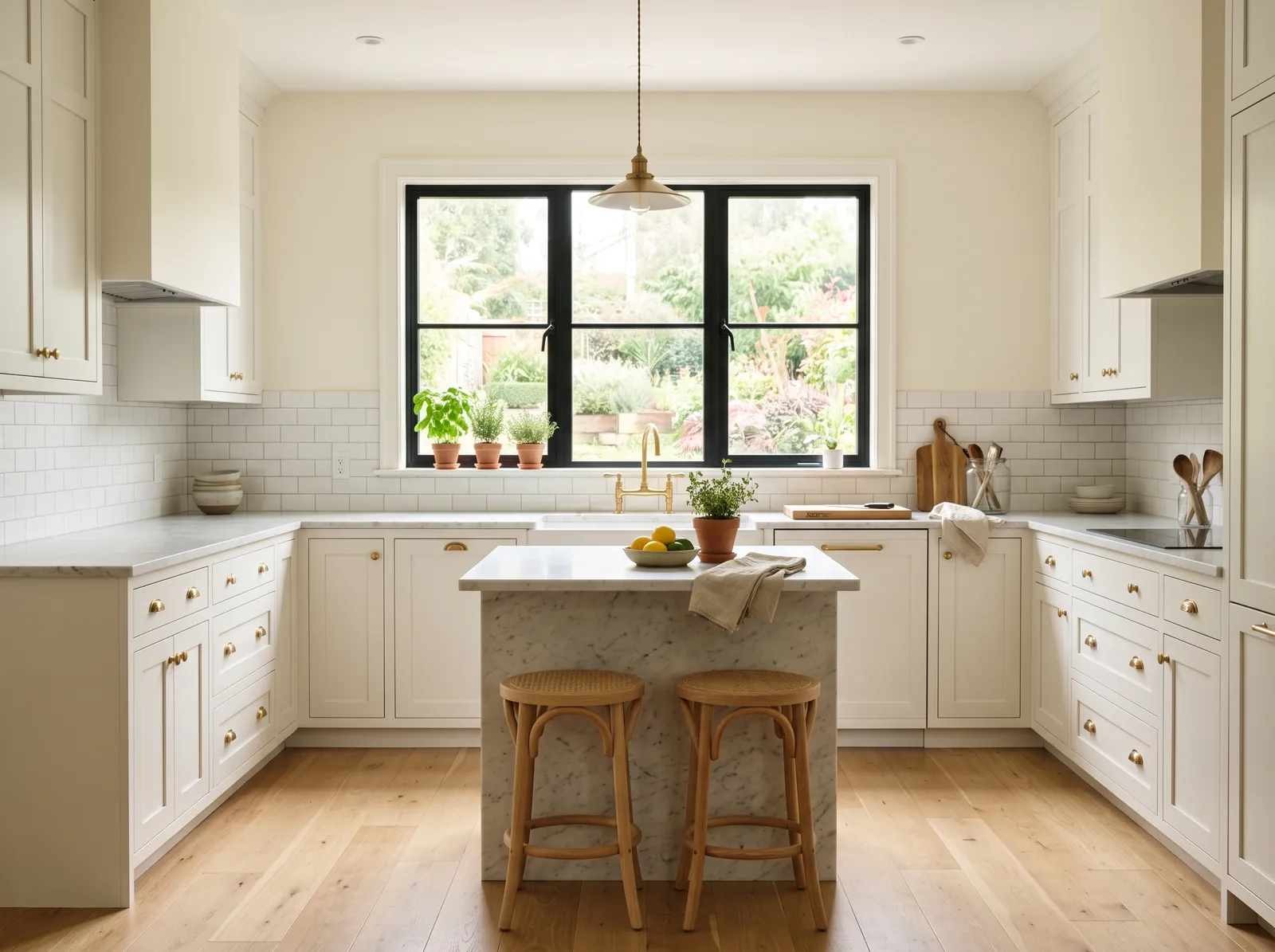
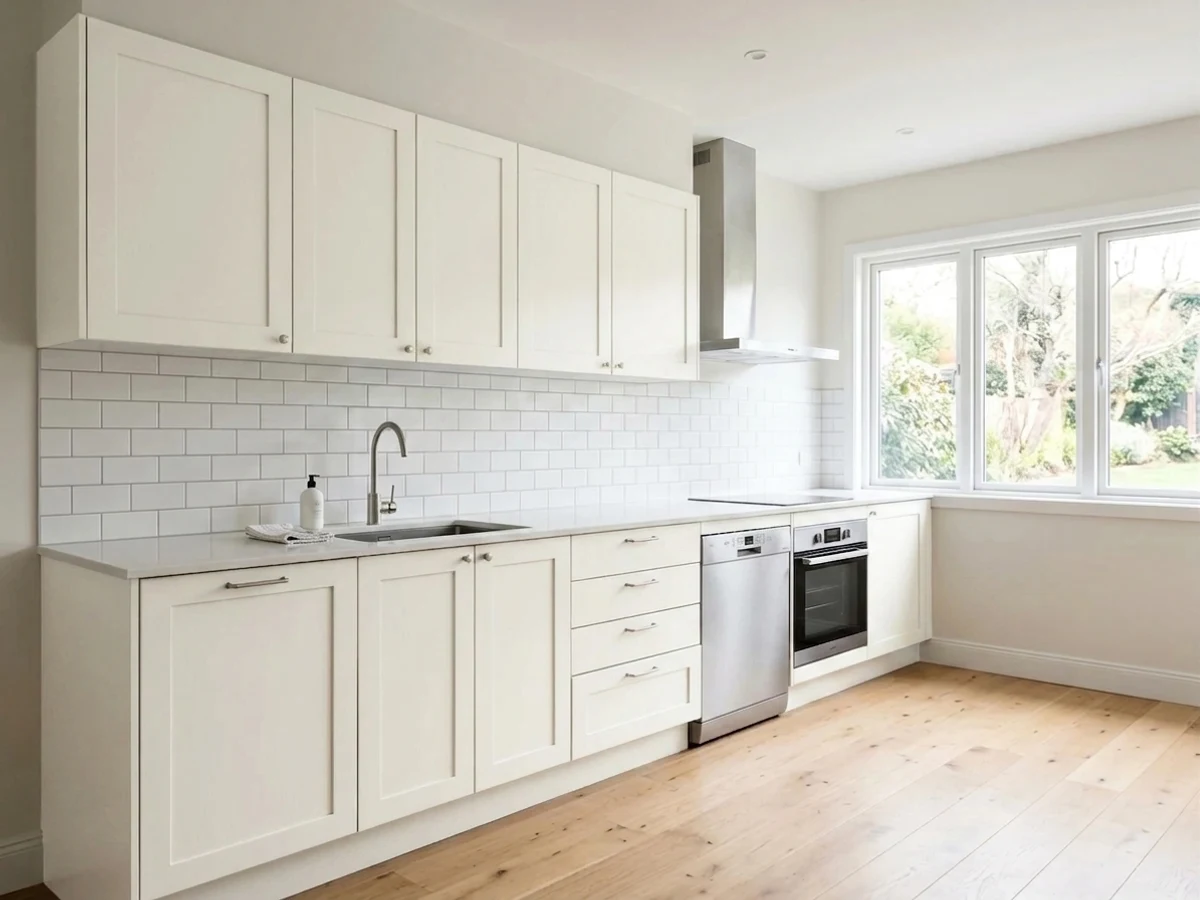
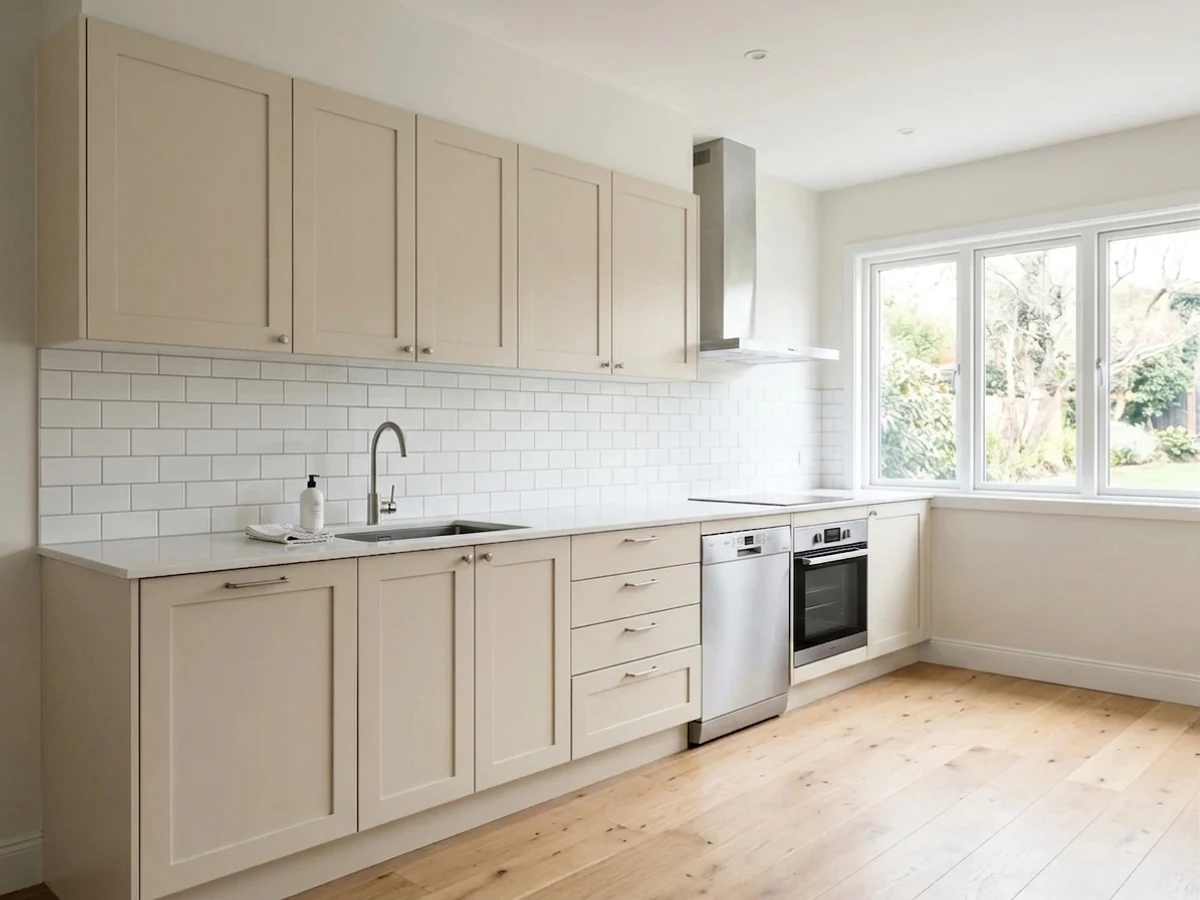
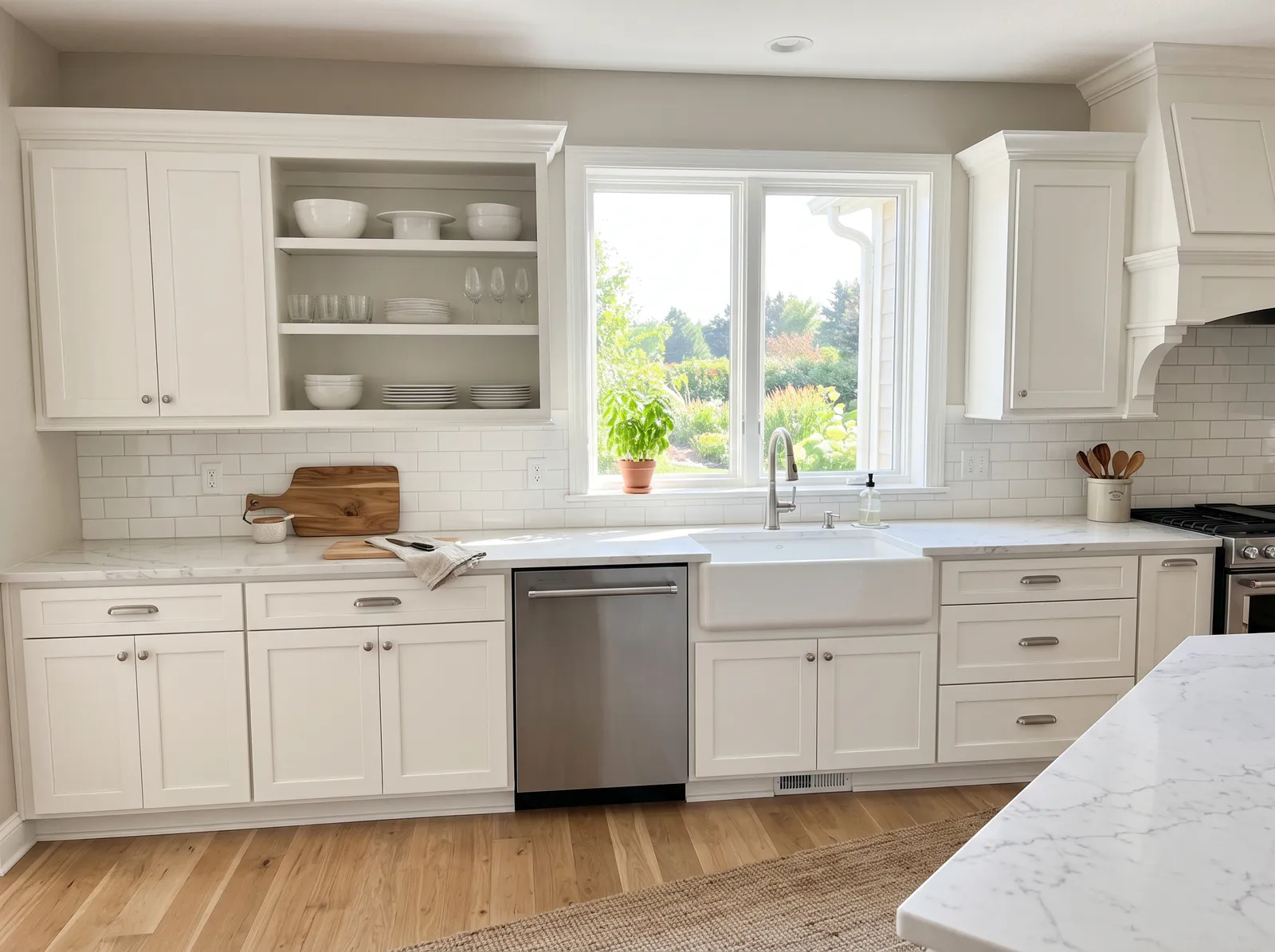
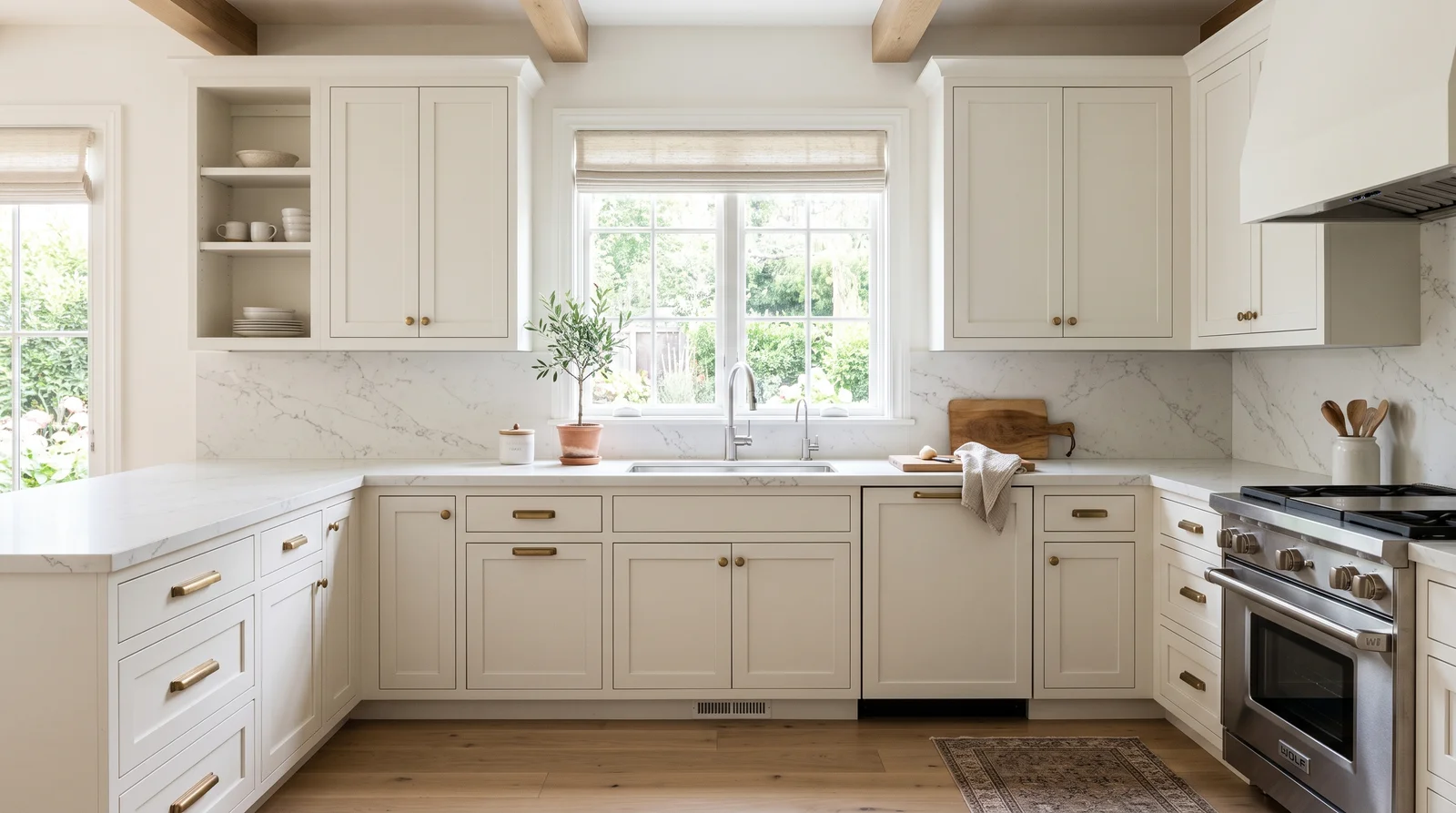
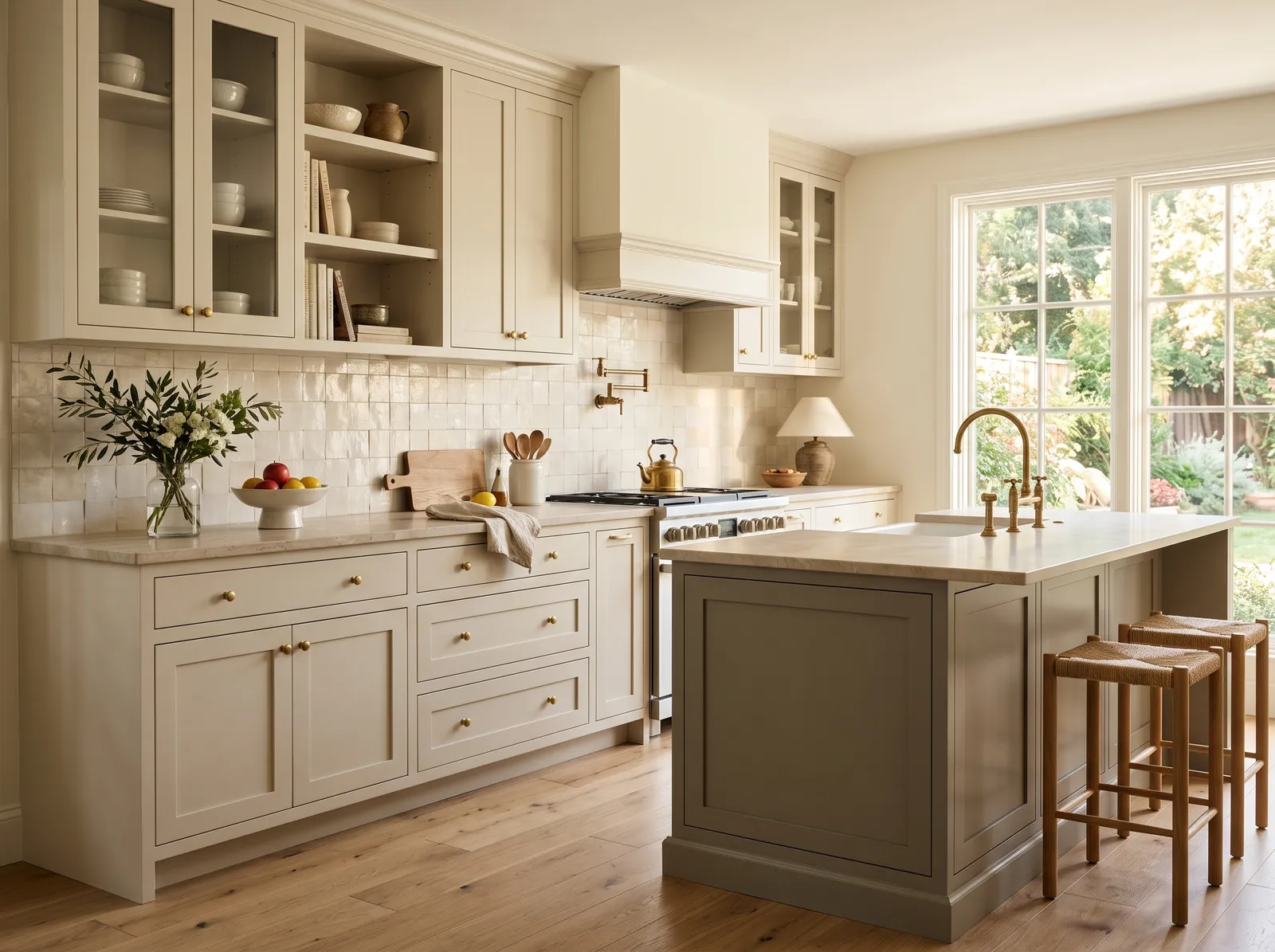
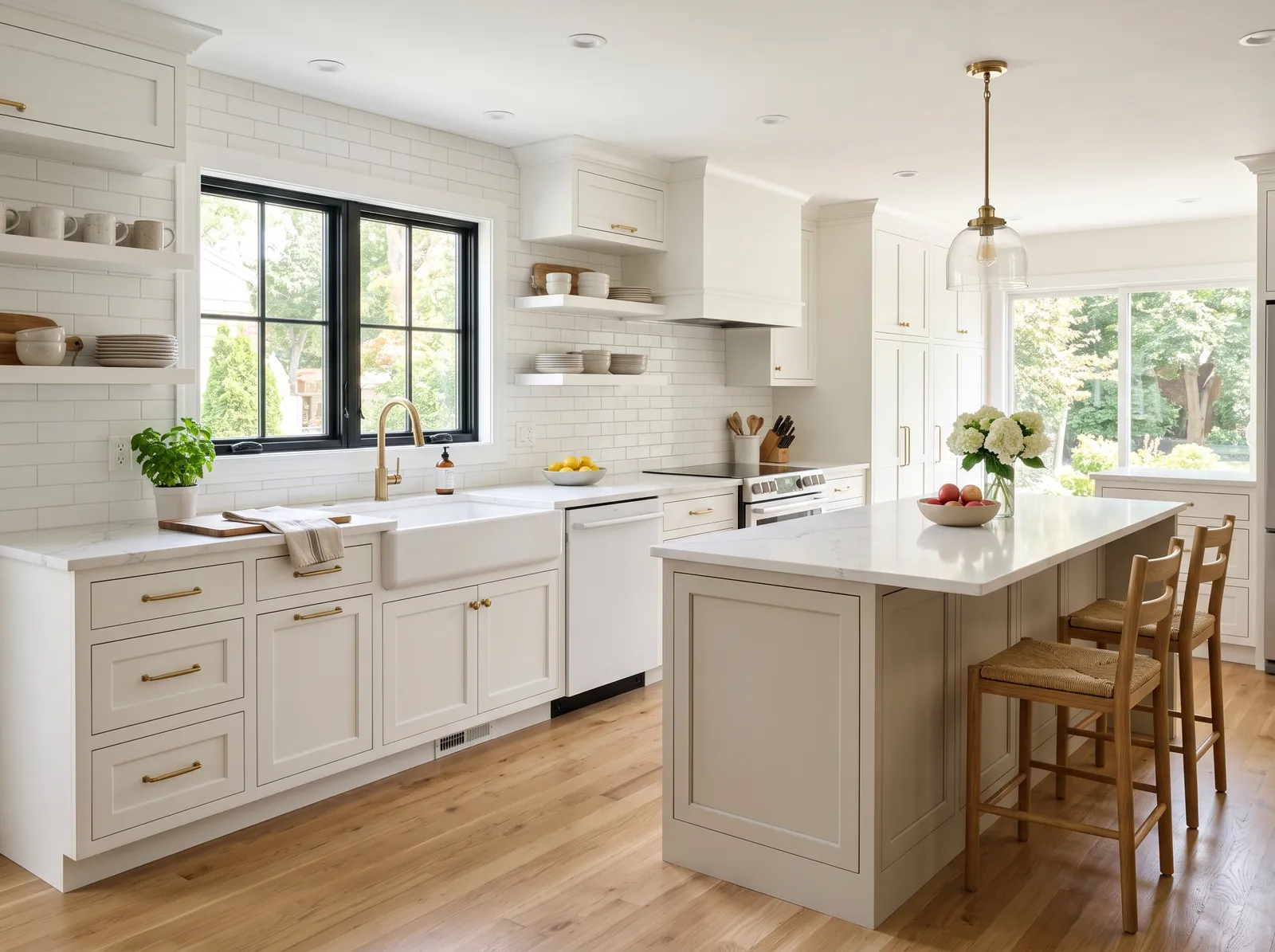
Soft white is the classic kitchen move for good reason. Shades like Alabaster and White Dove read clean and bright without the cold, hospital feel of a stark white, so the room looks fresh but still warm. They let your backsplash, hardware, and food be the color in the room.
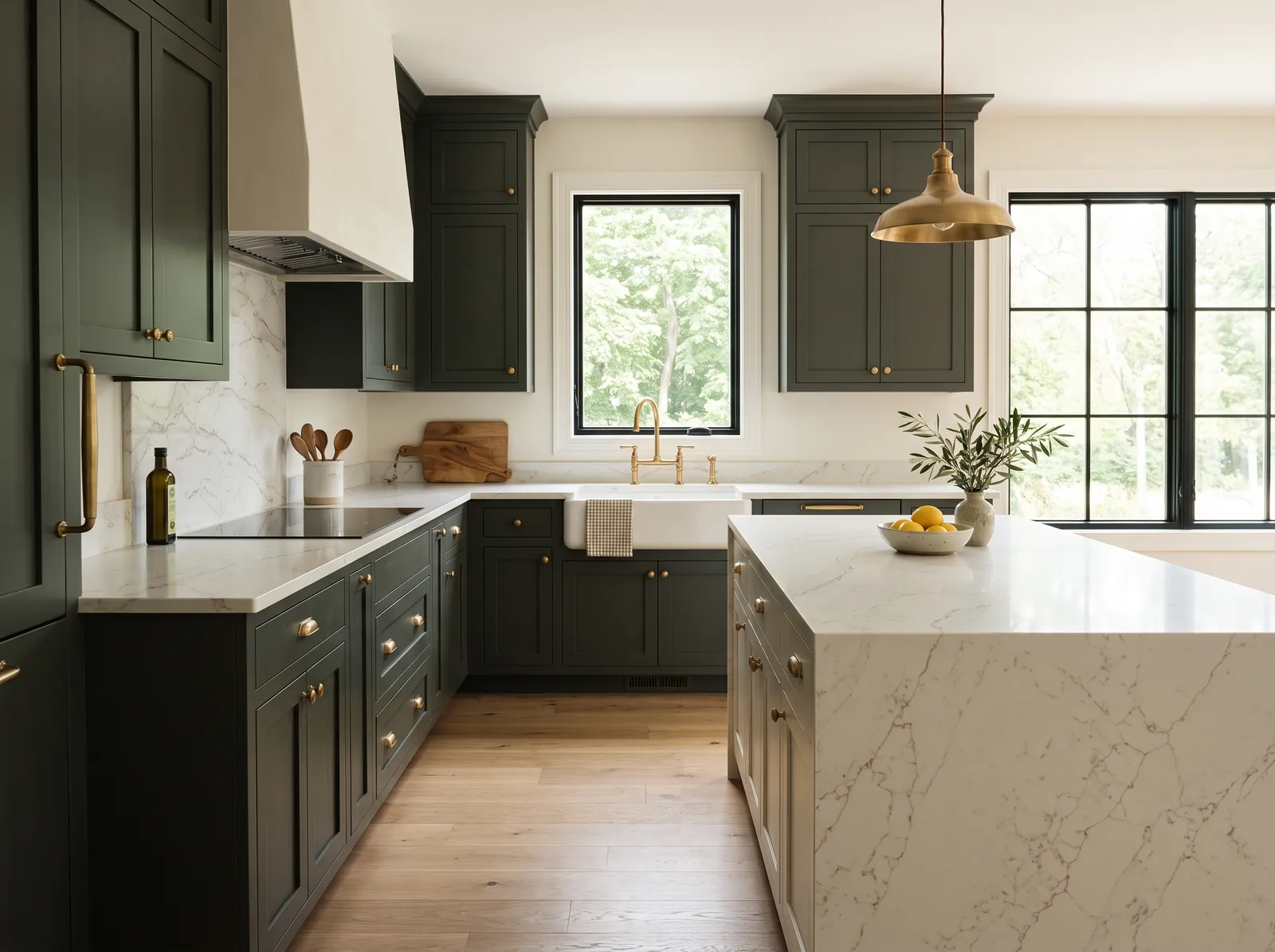
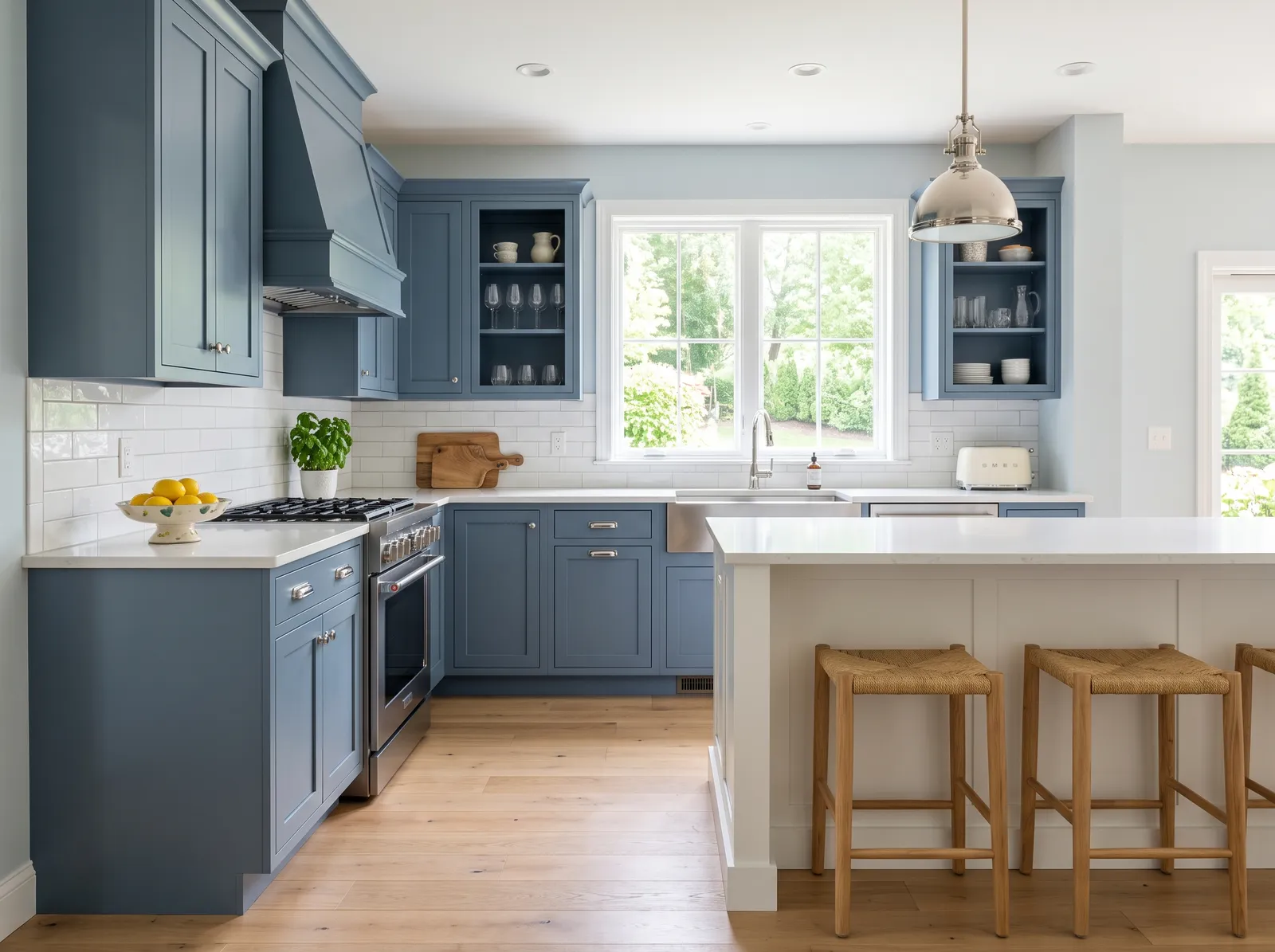
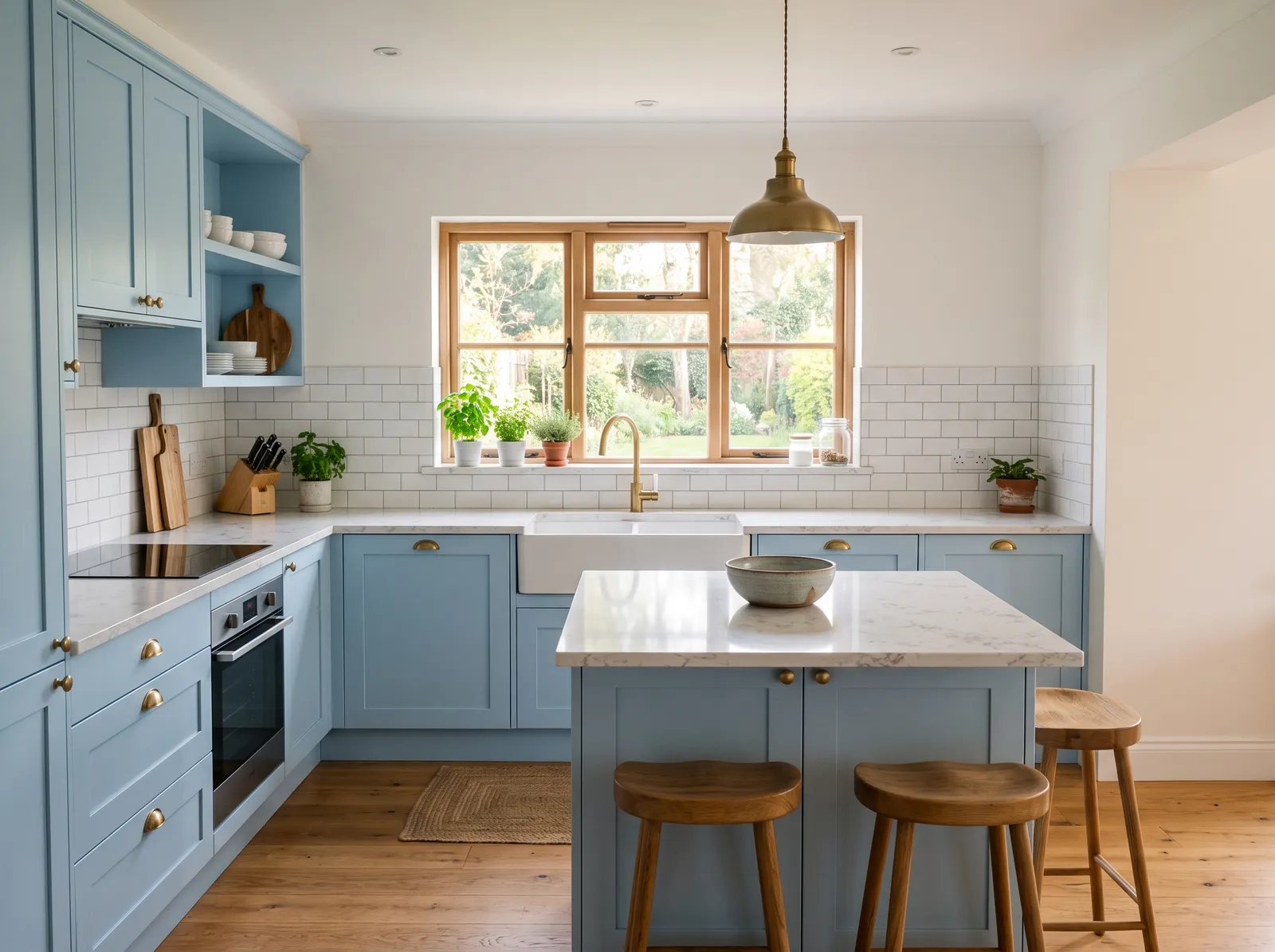
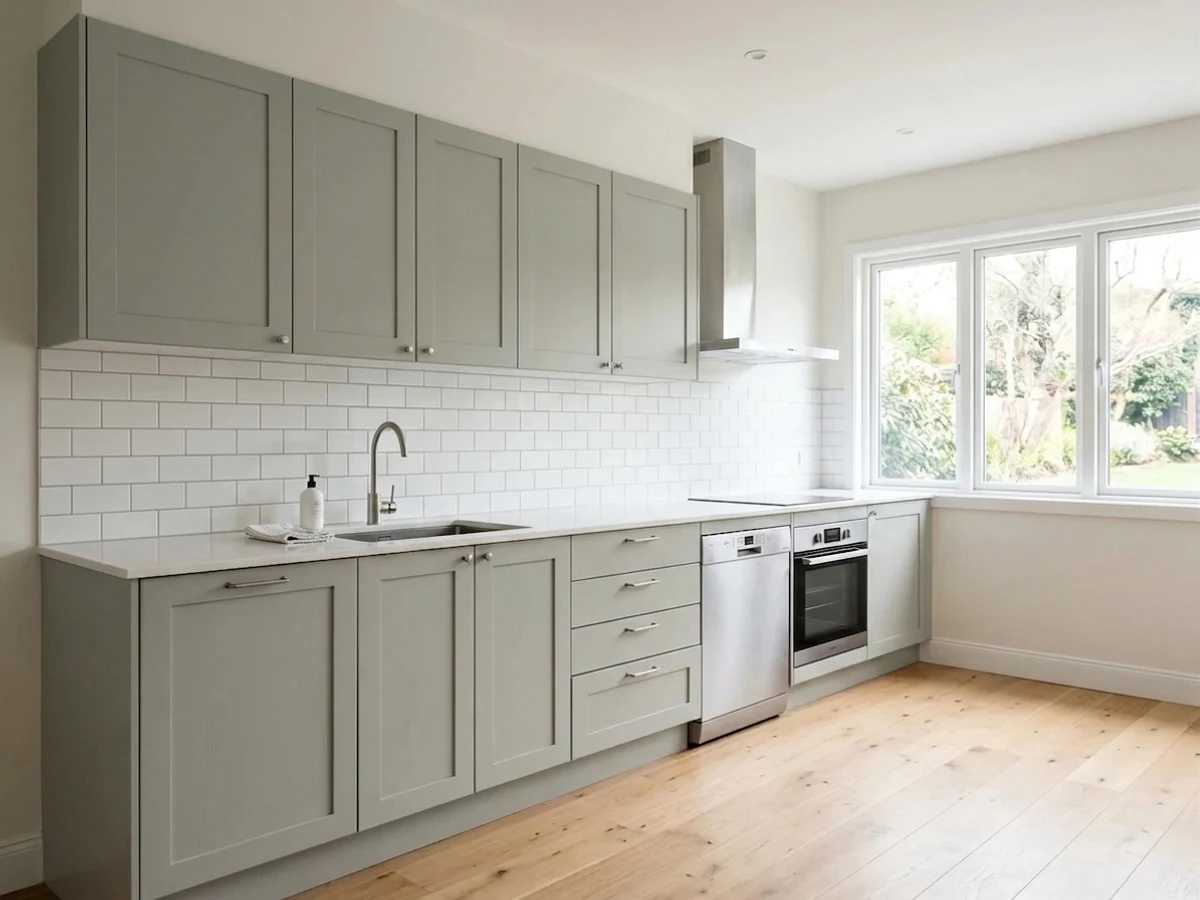
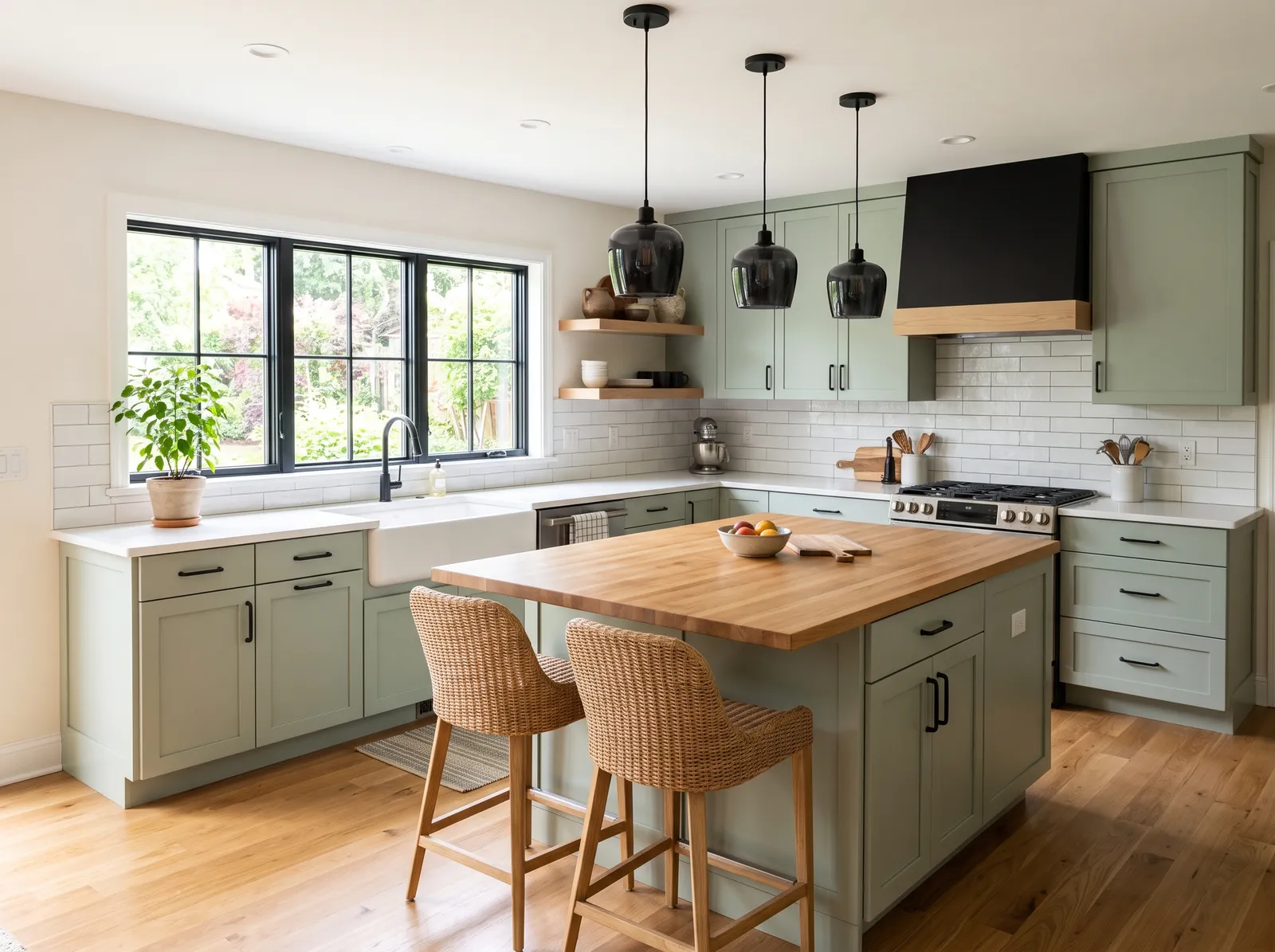
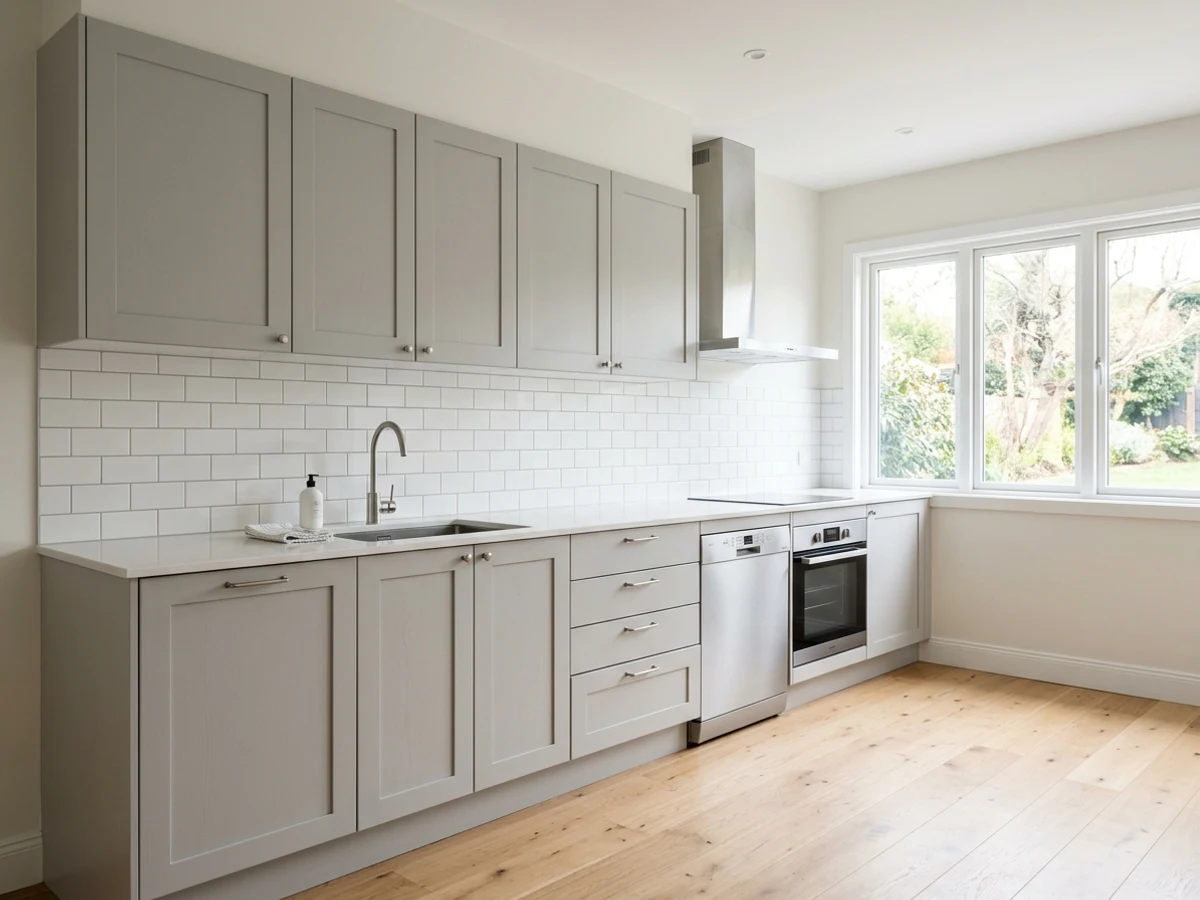
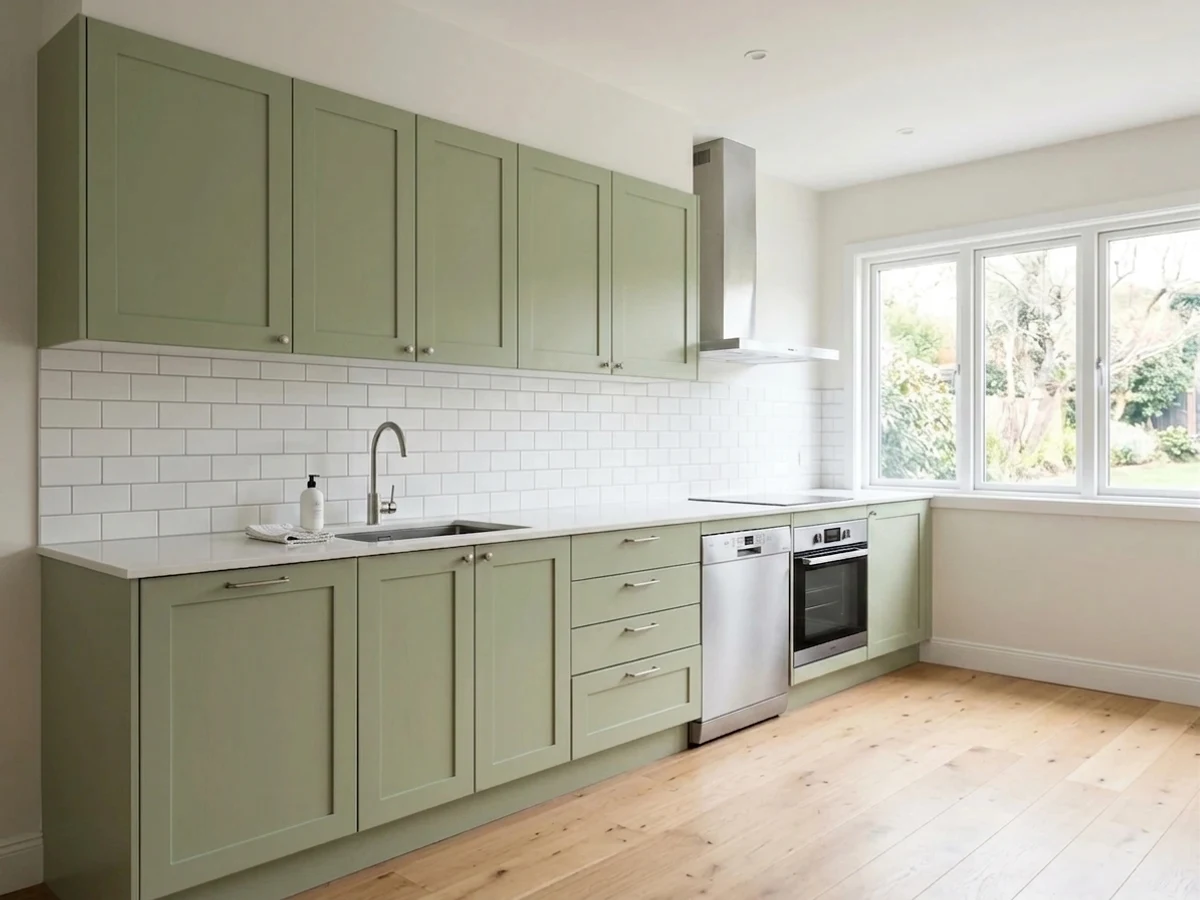
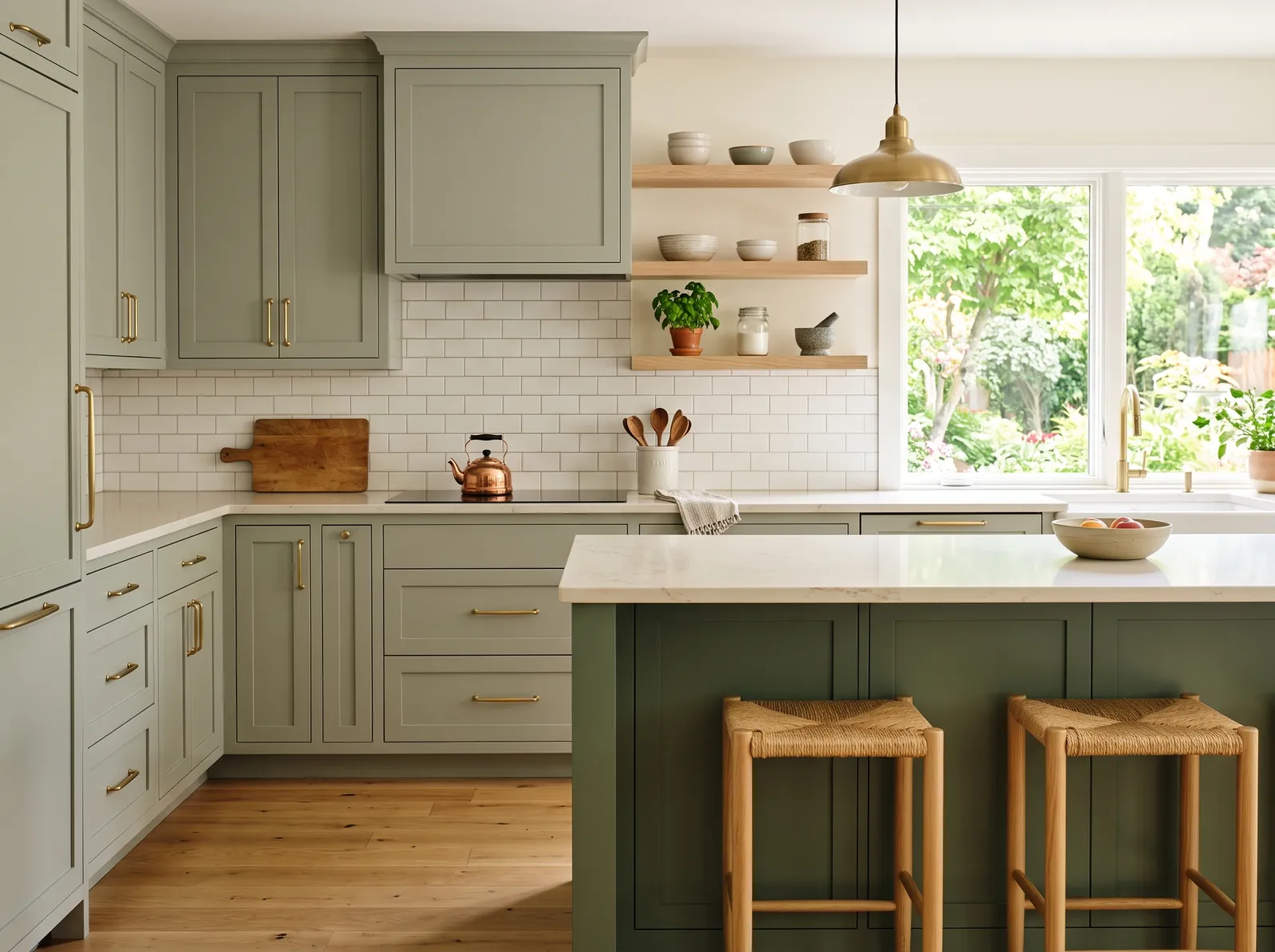
If you want more personality, calm greens and easy blues are the safe bets. A muted green like Sage feels fresh and natural and pairs beautifully with wood and stone, while a deep blue like Hale Navy gives lower cabinets or an island real depth. For warmth without going bold, a neutral like Accessible Beige or a soft gray-green like Pigeon keeps things grounded and cozy.
Let the Light Steer the Color
Kitchen light changes everything, so check which way your windows face before you commit. North-facing kitchens get cool, flat light that can make grays and blues look gloomy, so lean toward warmer whites and neutrals like White Dove or Accessible Beige to push back. South-facing kitchens get warm, generous light all day and can carry cooler greens, blues, and grays like Sage, Hale Navy, or Pigeon without feeling cold.
Night matters too. Most cooking and gathering happens after dark under warm bulbs, which pull color toward yellow and can make a beige look orange or a green look muddy. Always tape a real sample to the wall and look at it in daylight and at night with your actual kitchen lights on before you buy a full can.
The Right Finish for Grease and Splashes
Kitchens need a finish you can wipe down, so flat and matte are usually the wrong call here. Most people are happiest with eggshell or satin on the walls — both clean up well, resist moisture, and hide minor wall flaws better than glossier sheens. Satin leans a touch more wipeable, which is handy near the stove and sink.
For trim, doors, and cabinets, step up to semi-gloss. It takes scrubbing, shrugs off splatter, and gives crisp edges a little polish. Just avoid high-gloss on big wall areas, since it throws glare and shows every bump under direct light.
Using LRV to Keep the Kitchen Bright or Cozy
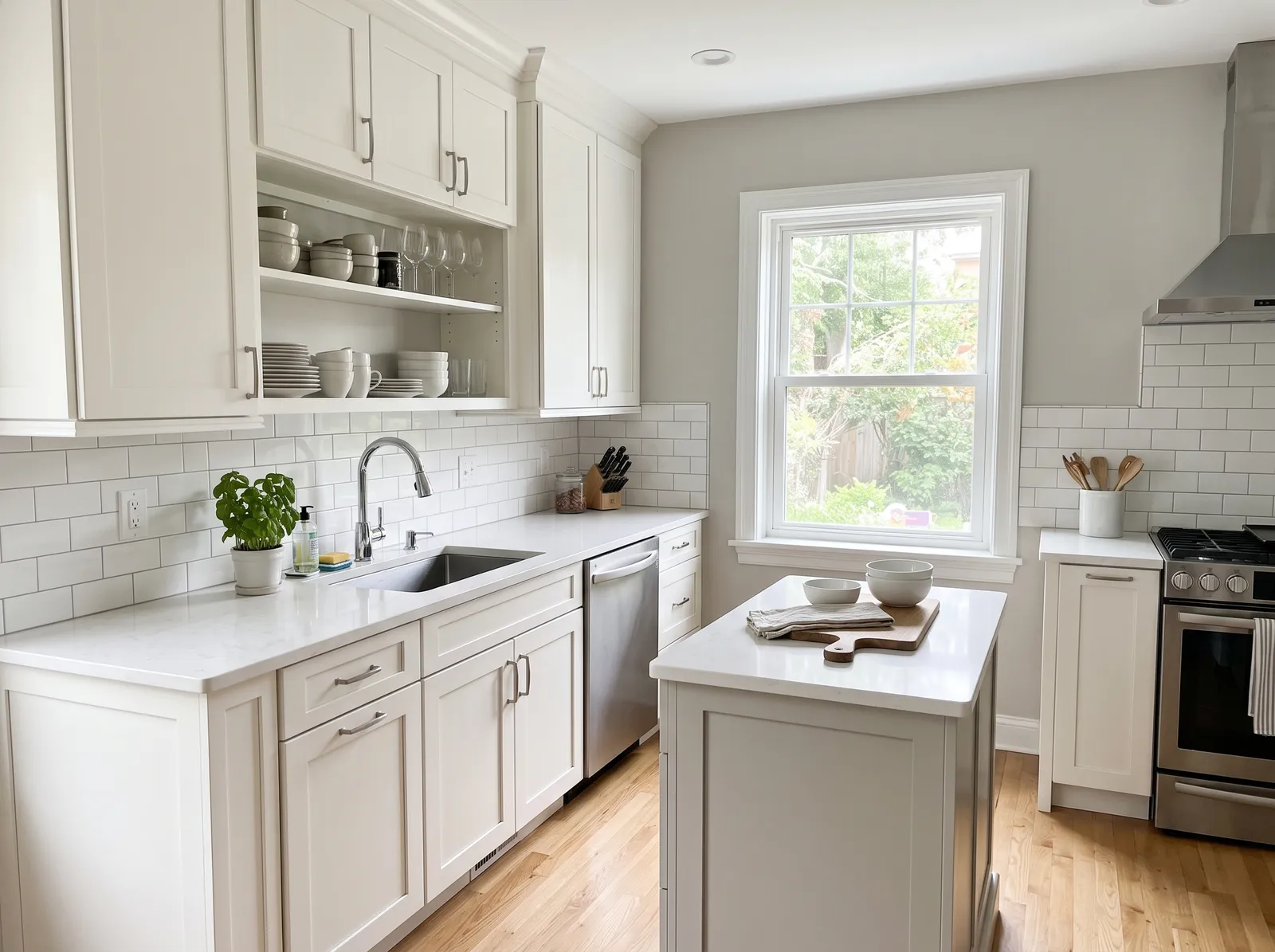
LRV, or light reflectance value, tells you how much light a color bounces back, on a scale from 0 (black) to 100 (pure white). A small or dim kitchen stays brighter with high-LRV colors like Alabaster and White Dove, which reflect light around the room and make tight spaces feel open. This is the easiest way to keep a galley kitchen from feeling like a tunnel.
If your kitchen is large or floods with light, you have room to go cozier and richer. Lower-LRV choices like Hale Navy on an island or Sage on the walls absorb some light and wrap the room in warmth without making it feel dark.
Pairing With Cabinets, Counters, Trim, and Floors
Start with the things you are not changing — your counters, flooring, and cabinet wood usually have an undertone the wall color has to live with. Warm wood floors and cream counters love warm whites and neutrals like Accessible Beige; cool gray tile and stone sit better with Pigeon or a green like Sage. Match the undertone, not just the lightness.
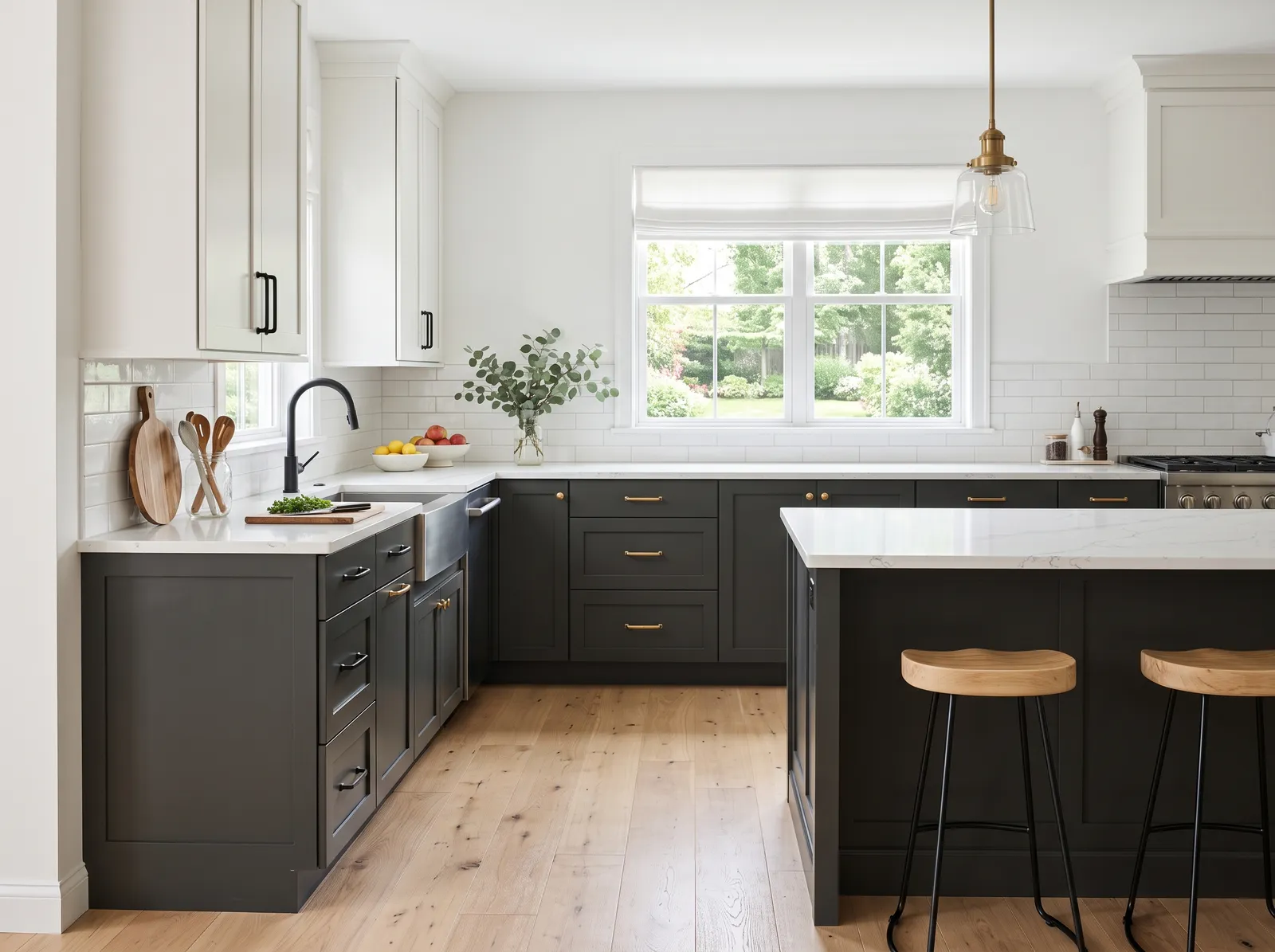
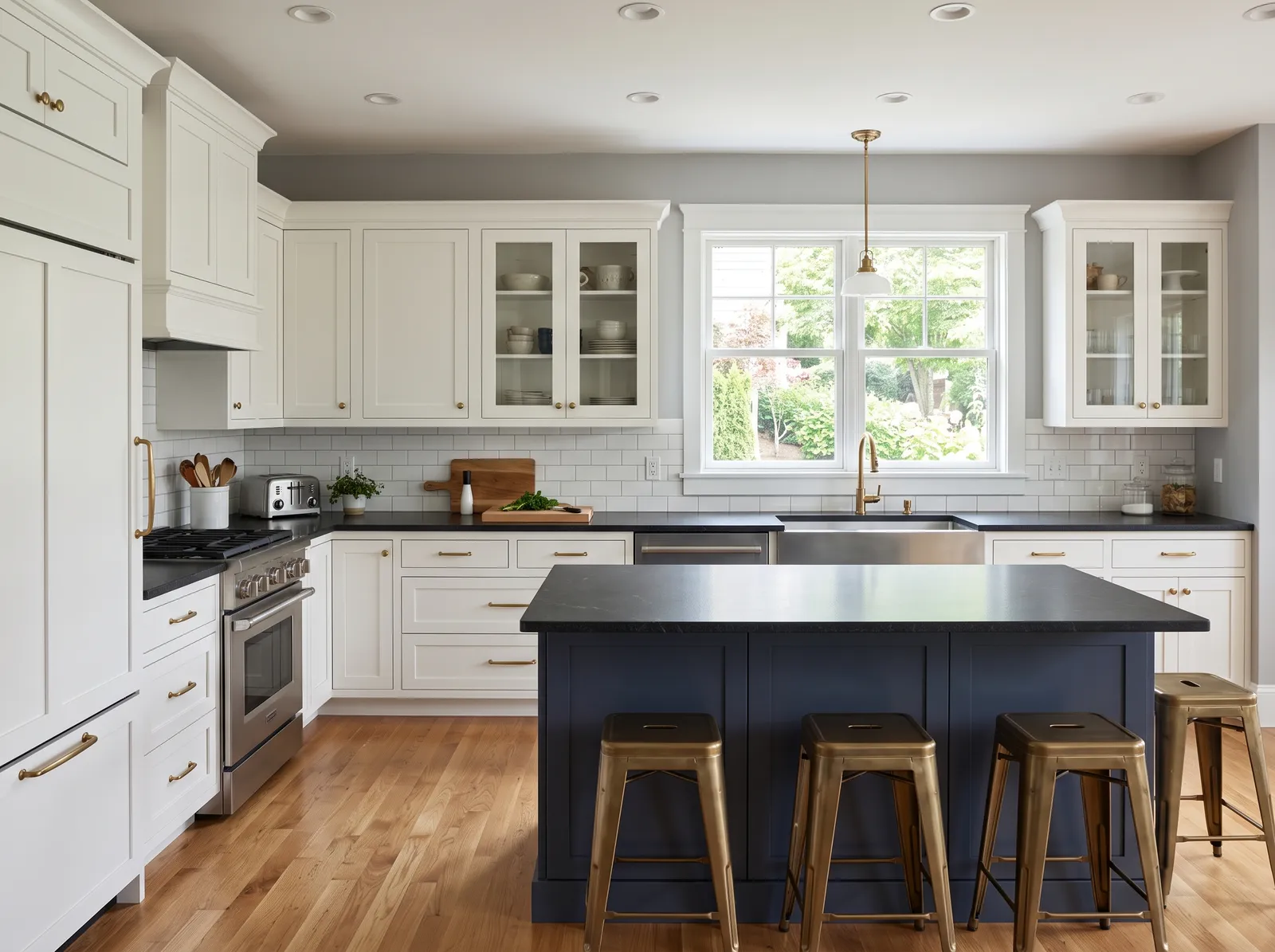
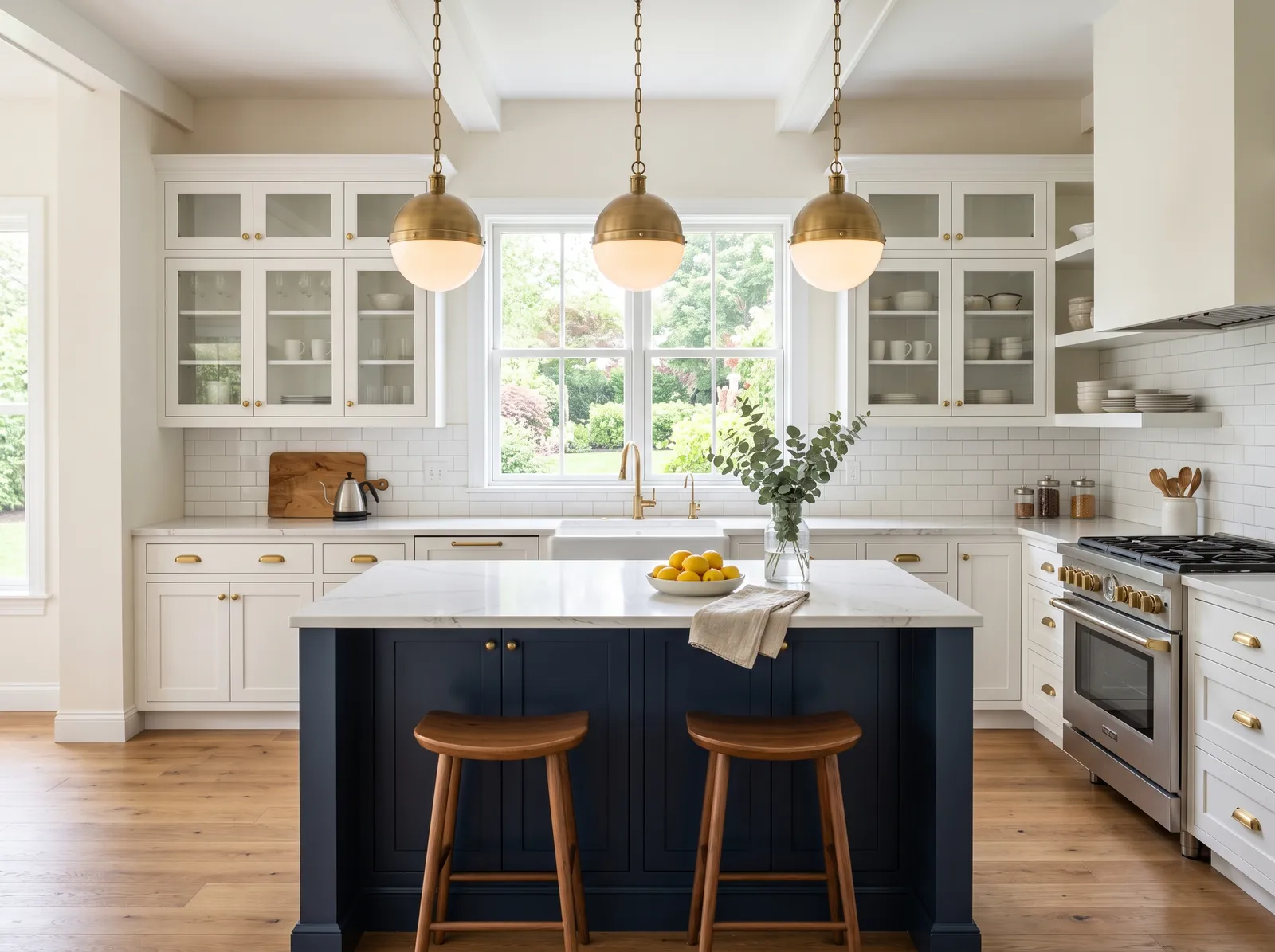
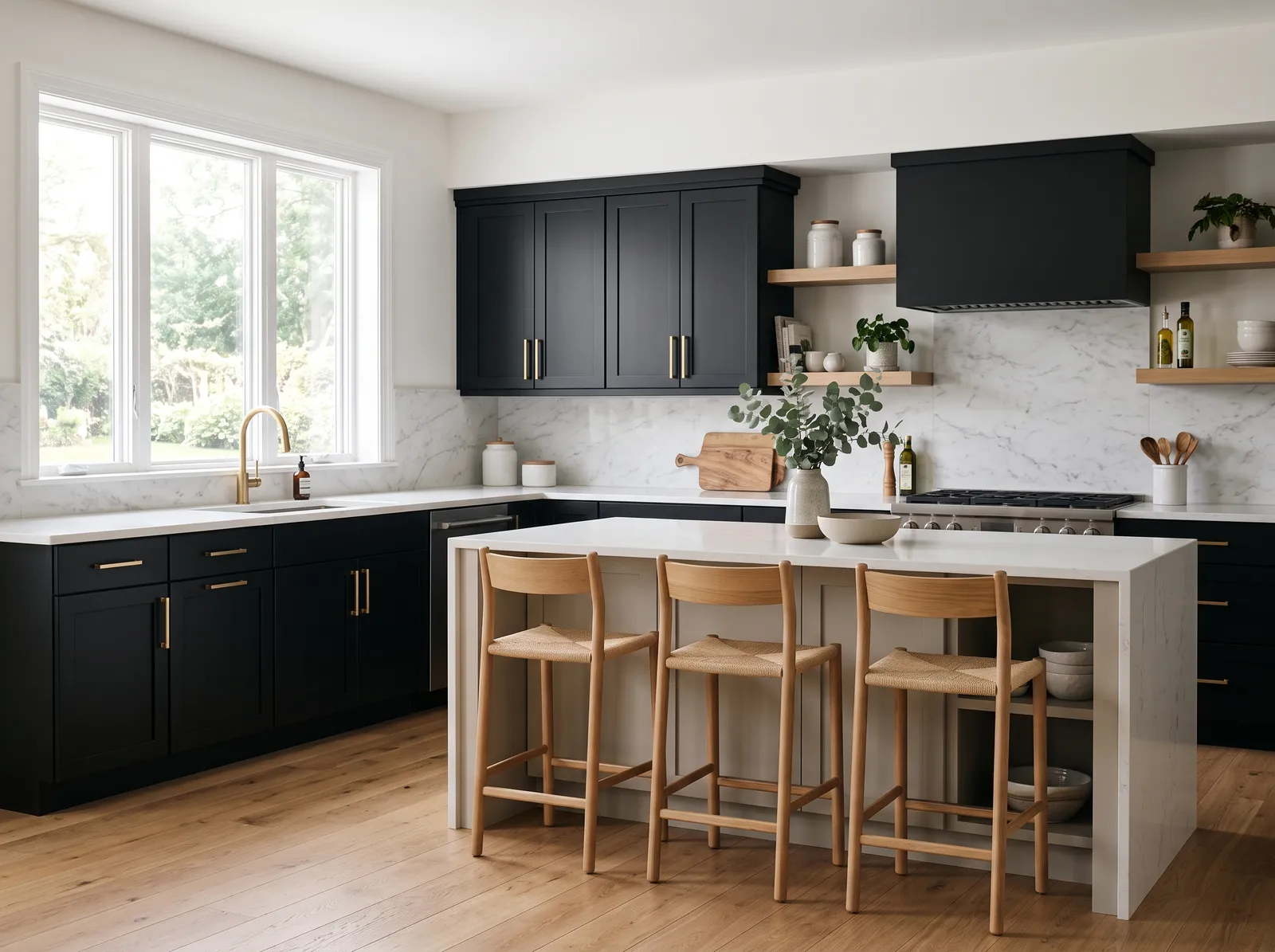
A reliable layout is a soft white on the walls, the same family or a clean white on the trim and ceiling, and a deeper color on the lower cabinets or island. White Dove on cabinets with Hale Navy on the island is a proven pairing, and brushed or black hardware reads sharp against both.
Common Kitchen Painting Mistakes
The biggest mistake is ignoring undertones. A beige that fights warm cabinets or a gray that turns blue under kitchen bulbs can make an expensive renovation feel off, and no finish fixes a clashing undertone. Test against your real surfaces, not a screen.
The other common slips are practical: using flat paint where grease lands, skipping samples on more than one wall, and judging color only in daytime. Paint a poster-sized sample, move it around the room, and live with it for a couple of days before you buy. And remember any color shown here is mixed to order, so you can cross-match a favorite between brands instead of settling.
Kitchen Paint Colors — Frequently Asked Questions
What is the most popular kitchen paint color?+
Soft whites lead the pack because they keep kitchens bright and let cabinets and counters shine. Alabaster and White Dove are two of the most-used because they read clean without feeling cold. After white, calm greens like Sage and deep blues like Hale Navy are the next most popular for adding personality.
What sheen should I use on kitchen walls?+
Eggshell or satin is the sweet spot for kitchen walls. Both wipe clean, handle steam and splashes, and hide small wall flaws. Save semi-gloss for trim, doors, and cabinets, and skip flat paint, which stains and is hard to scrub near a stove or sink.
Is a dark color like Hale Navy a bad idea in a small kitchen?+
Not necessarily. A deep color like Hale Navy works great on lower cabinets or an island even in a small kitchen, where it grounds the room without darkening the whole space. Keep the walls and uppers light so the room still reflects plenty of light.
How do I pick a color for a north-facing kitchen?+
North light is cool and flat, so it can make grays and blues look dull or gray-green colors look muddy. Lean toward warmer whites and neutrals like White Dove or Accessible Beige to balance that cool light. Always test the sample at night under your kitchen bulbs too.
What color goes with white cabinets?+
White cabinets are flexible and pair with almost any wall color. For a calm look, try Sage or a soft neutral like Accessible Beige; for contrast, a deeper blue like Hale Navy on an island looks sharp. Match the undertone of your counters and flooring so everything feels intentional.
Can I get a color from one brand in another brand's paint?+
Yes. Every color shown here is mixed to order at the paint counter, and stores can cross-match a shade from one brand into another brand's paint closely. Pick the color you love first, then choose whichever paint line fits your budget and finish needs.
How many samples should I test before painting?+
Test at least two or three options, and put each on more than one wall. Light changes across the room, so a color can look great by the window and off in a corner. View every sample in daylight and at night before you commit to a full can.