Green Kitchen Cabinet Paint Colors
2,263 green colors that work in kitchen cabinets, drawn from the full ~30,000-color US paint deck. Below: editor's picks specific to kitchen cabinets, then 30 picks spread across the LRV range — narrow further on the brand page when you've shortlisted.
Green has quietly replaced grey as the safe-but-interesting wall color of the late 2020s. Sage Green, the soft grey-green that became the de facto fallback, anchors the family — but the broader green palette runs from olive (warm, earthy, faintly yellow) to forest (deep blue-green) to emerald (saturated jewel tone).
Editor's Picks: Green for Kitchen Cabinets
4 picks30 Green Picks Across the LRV Range
30 of 2,263 · sorted dark → lightLooking for more? All green → covers every brand; brand × family pages show full decks.
Green Kitchen Cabinet Colors at Every US Brand
19 brands · up to 10 picks eachUp to 10 picks per brand spread across the green LRV range, drawn from each brand's full deck. Tap any swatch with a curated guide for full spec; tap the brand title for the brand's complete green deck.
Behr
Benjamin Moore
Glidden
Valspar
Dunn-Edwards
PPG / Glidden
Sherwin-Williams
Dutch Boy
Hirshfield's
Diamond Vogel
Kompozit
C2 Paint
Farrow & Ball
Magnolia Home
Clare
Rodda
Annie Sloan
Backdrop
Other Kitchen Cabinet Color Families
Green Colors in Other Rooms
Green Paint Colors for a Kitchen Cabinet
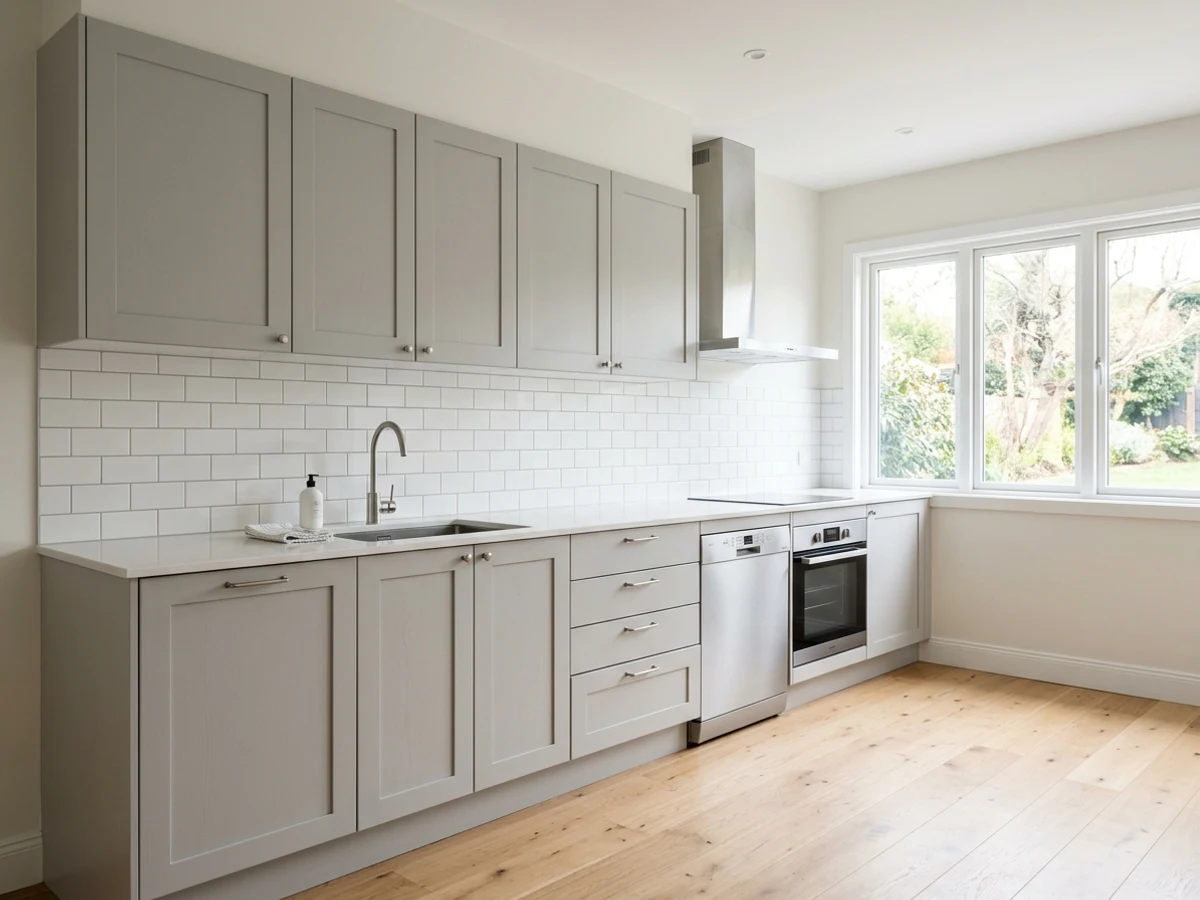
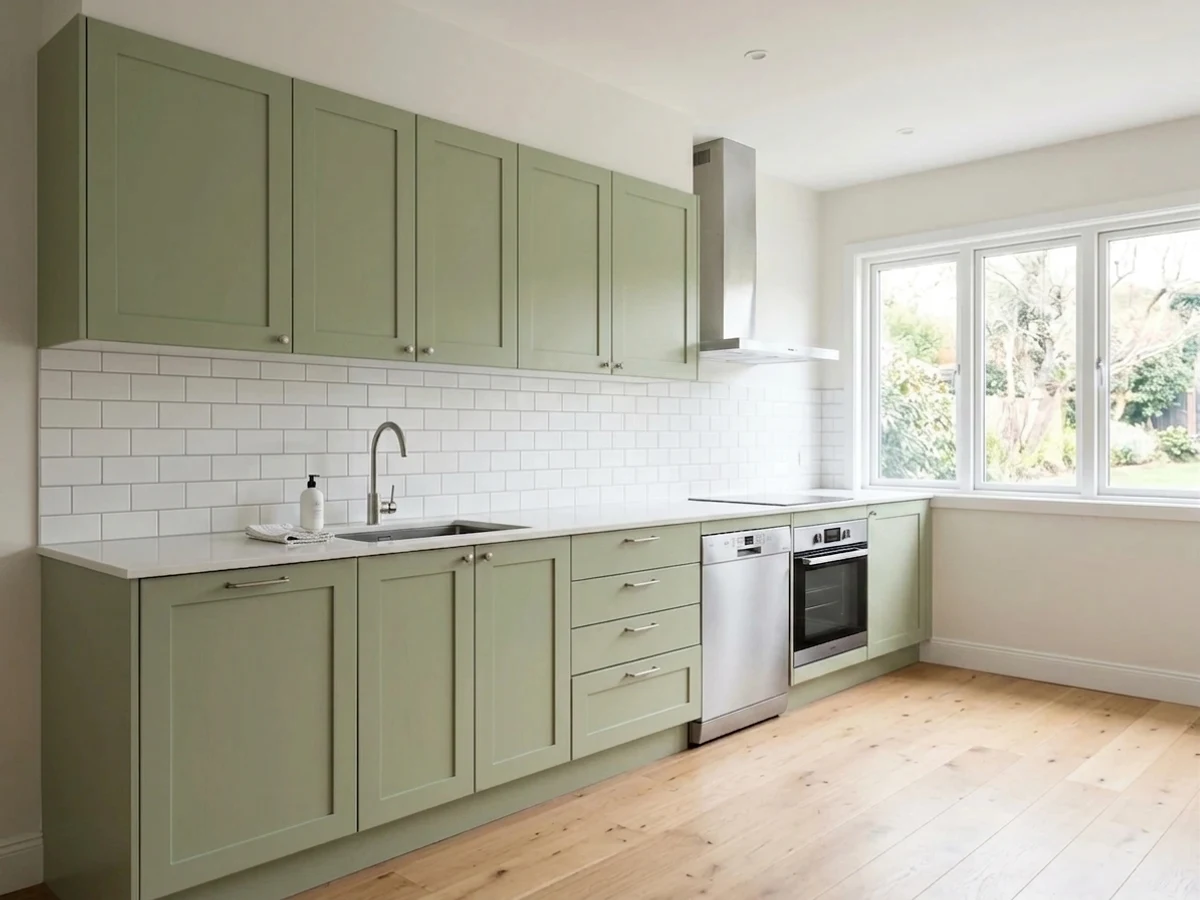
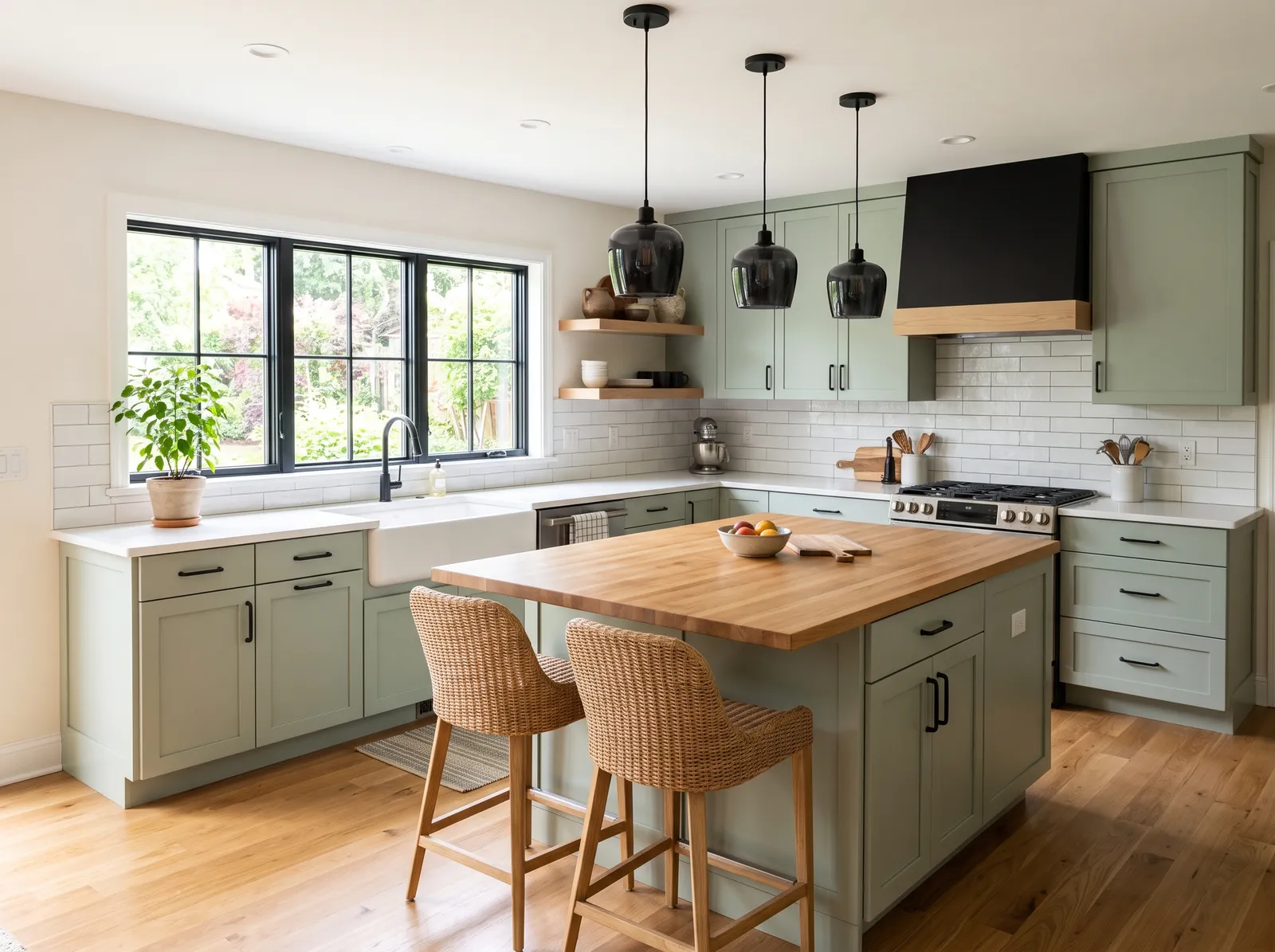
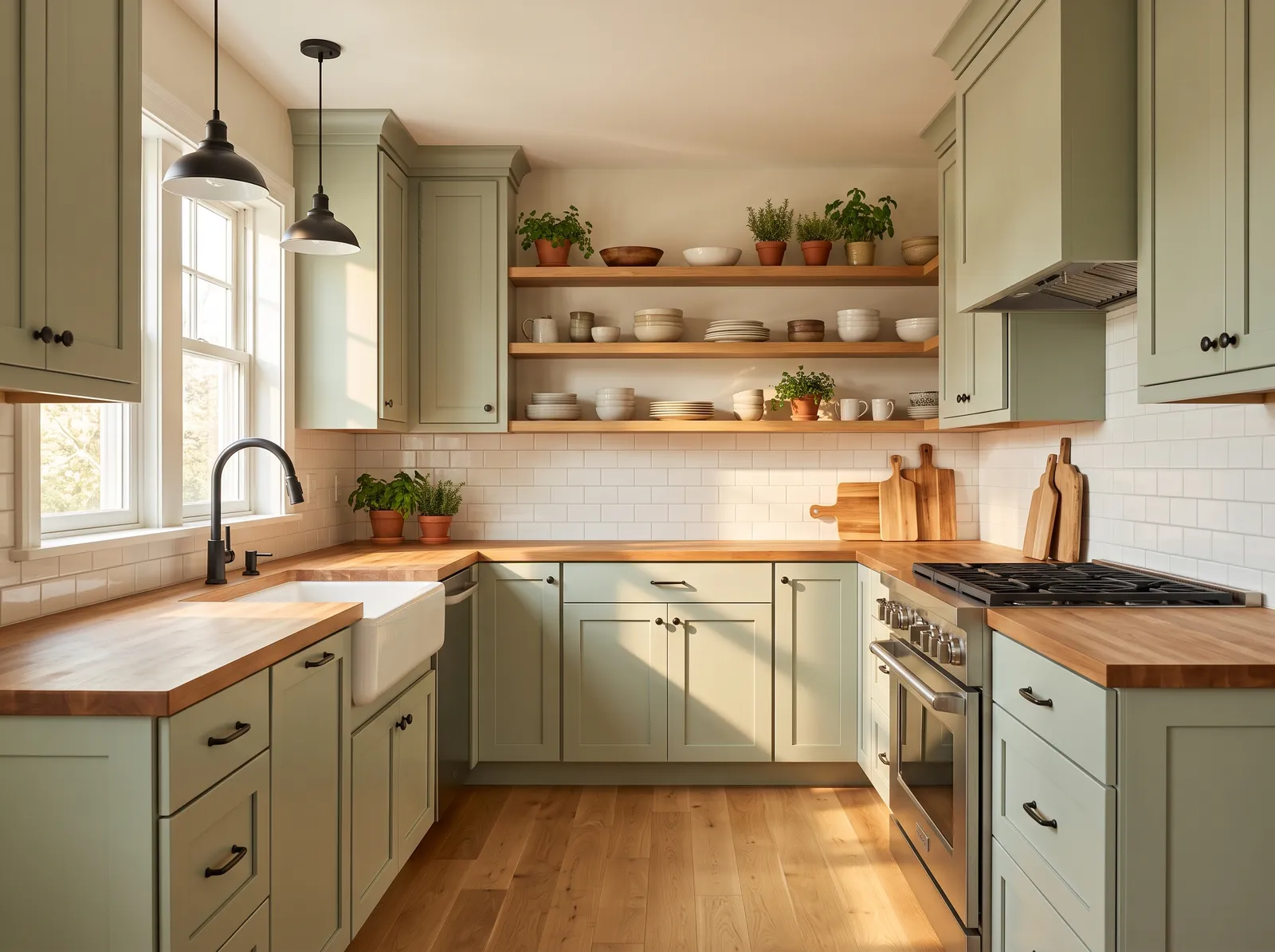
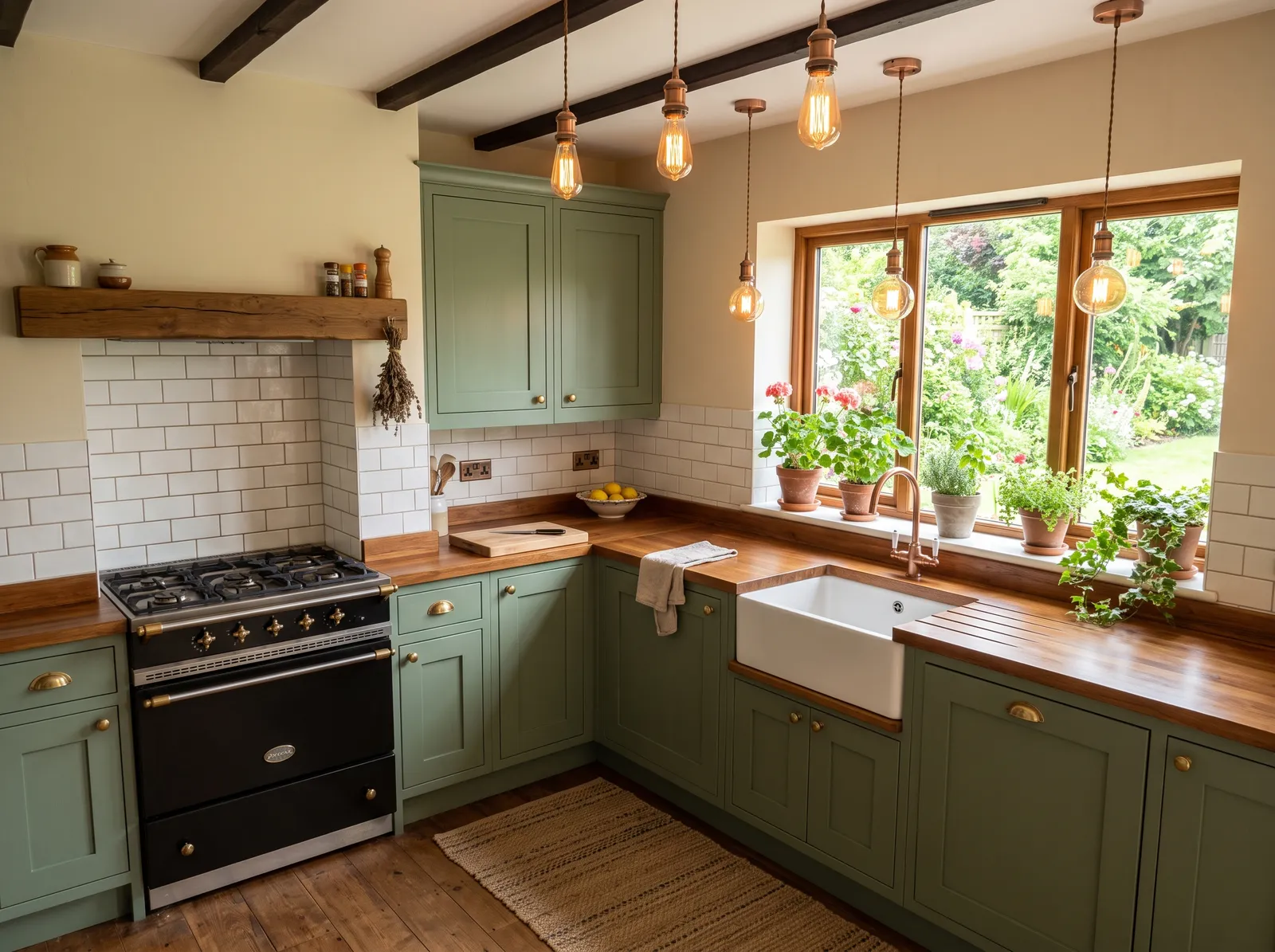
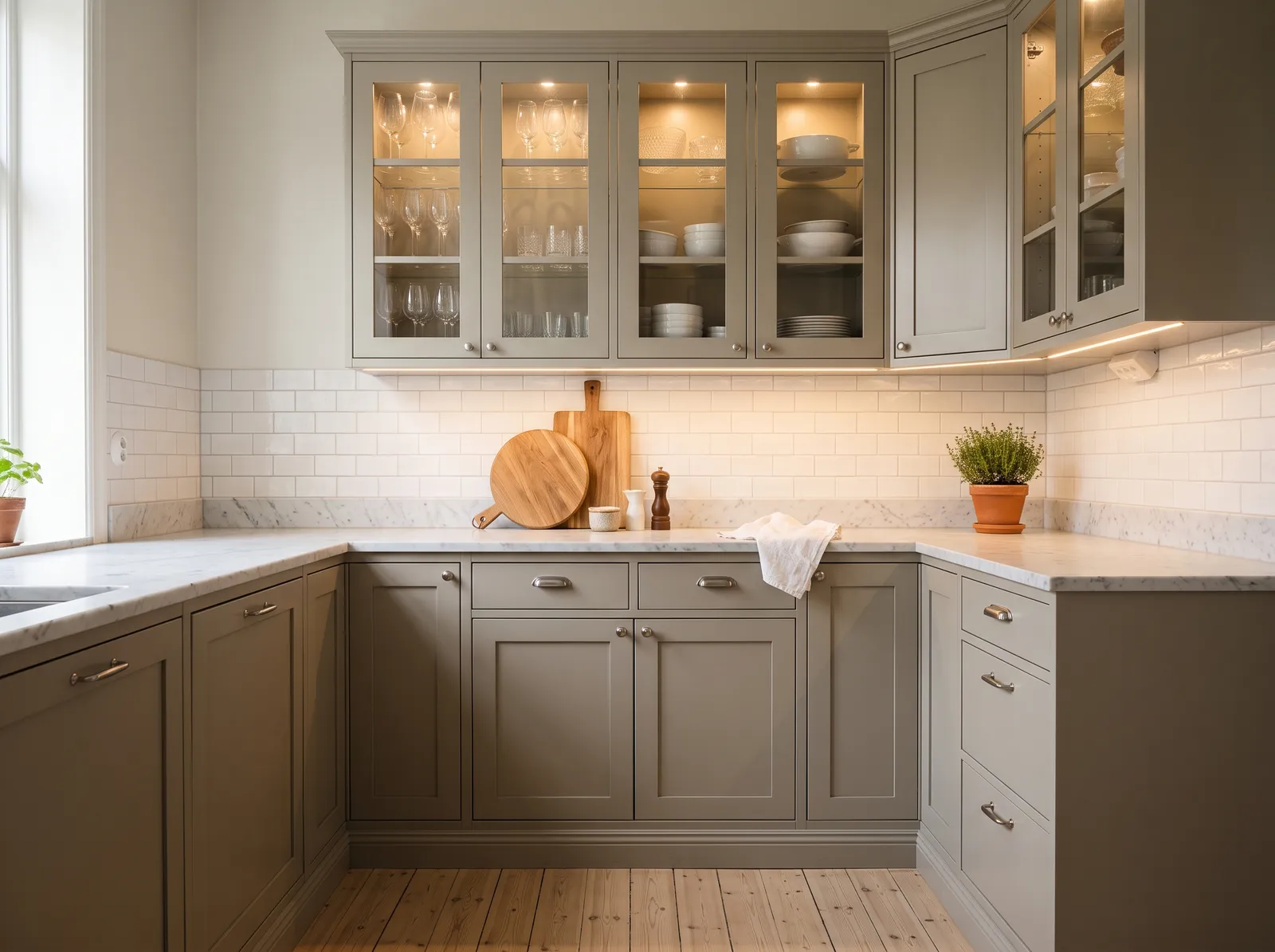
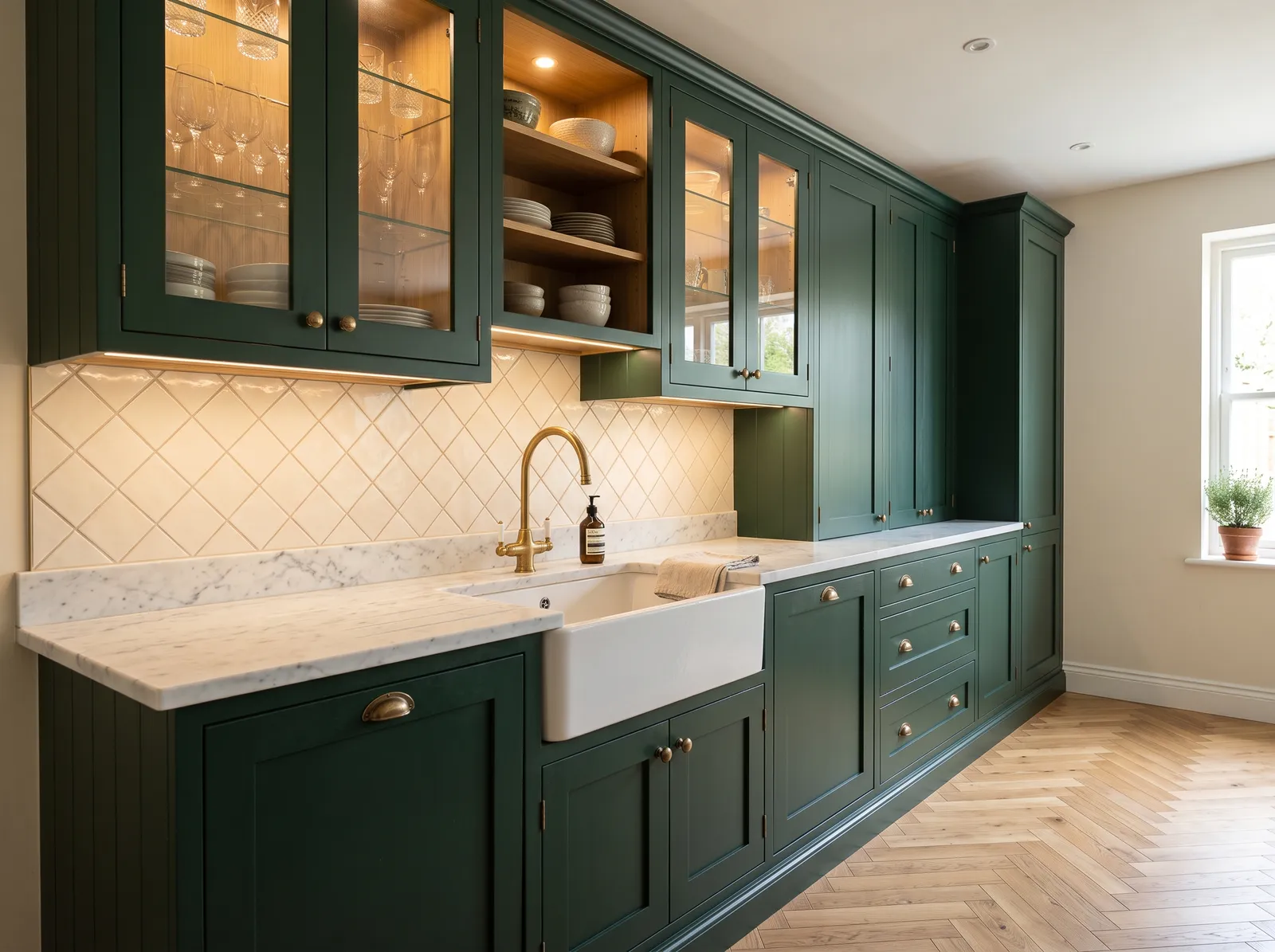
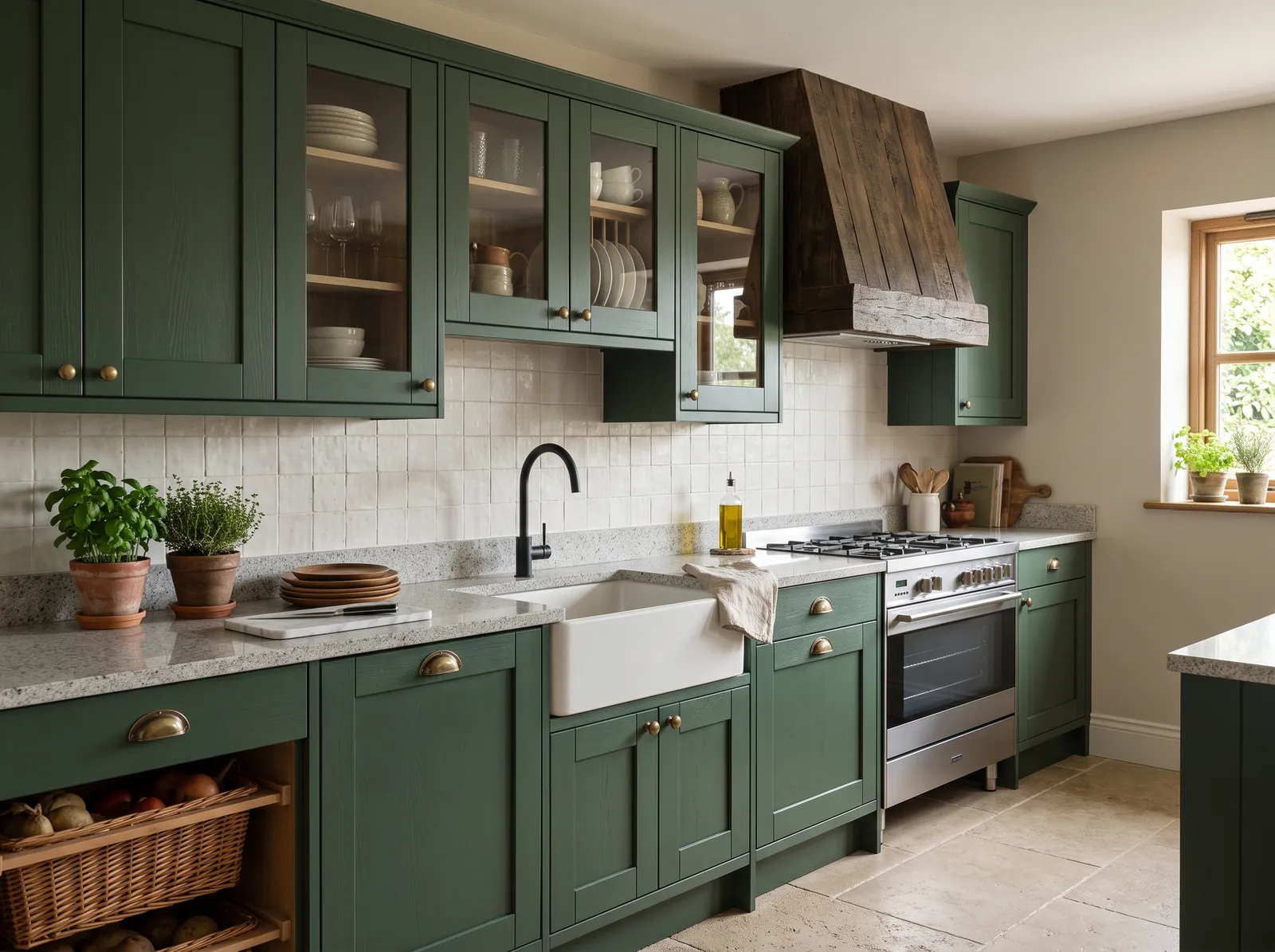
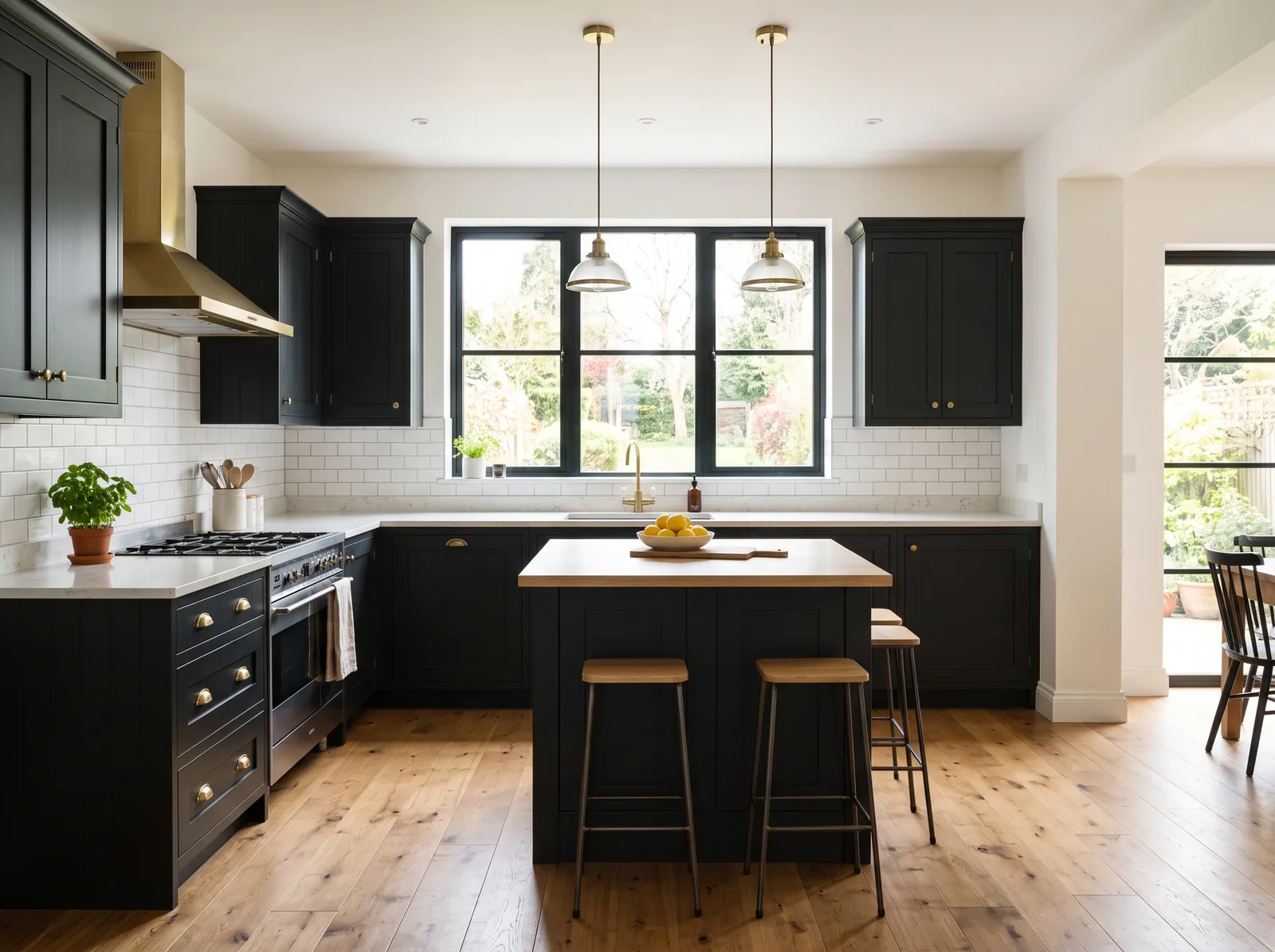
Green on a cabinet is one of the most forgiving ways to add color to a room. A cabinet is a contained surface, so a saturated green that would feel like too much on four walls reads as confident and intentional here. It sits against your walls, counters, and floors as an accent, which means you can push the color further than you normally would and still keep the room calm.
The catch is that a cabinet gets used and touched. Doors open and close, hands and fingers leave marks, and depending on the cabinet you may deal with splashes or steam. So the right green for a cabinet is not just about the shade you love on the swatch. It is about how that green holds up to daily wear, how your room's light changes it, and how it sits next to the hardware and surfaces already in the space. Every green you see here can be mixed to order at a paint counter, and a shade from one brand can almost always be cross-matched to another, so you are free to choose by the color itself rather than the label.
Why Green Works on a Cabinet
Green is the easiest bold color to live with because it reads as natural. It borrows from plants, sage, moss, and forest, so even a deep version feels grounded rather than loud. On a cabinet that means you can go richer than you would dare on the walls and the eye still relaxes.
A cabinet also frames the green nicely. The recessed panels, the shadow lines, and the hardware all give a single color depth and structure. That built-in detail is why a green cabinet looks finished even when the rest of the room stays neutral.
Picking the Right Depth of Green for Your Light
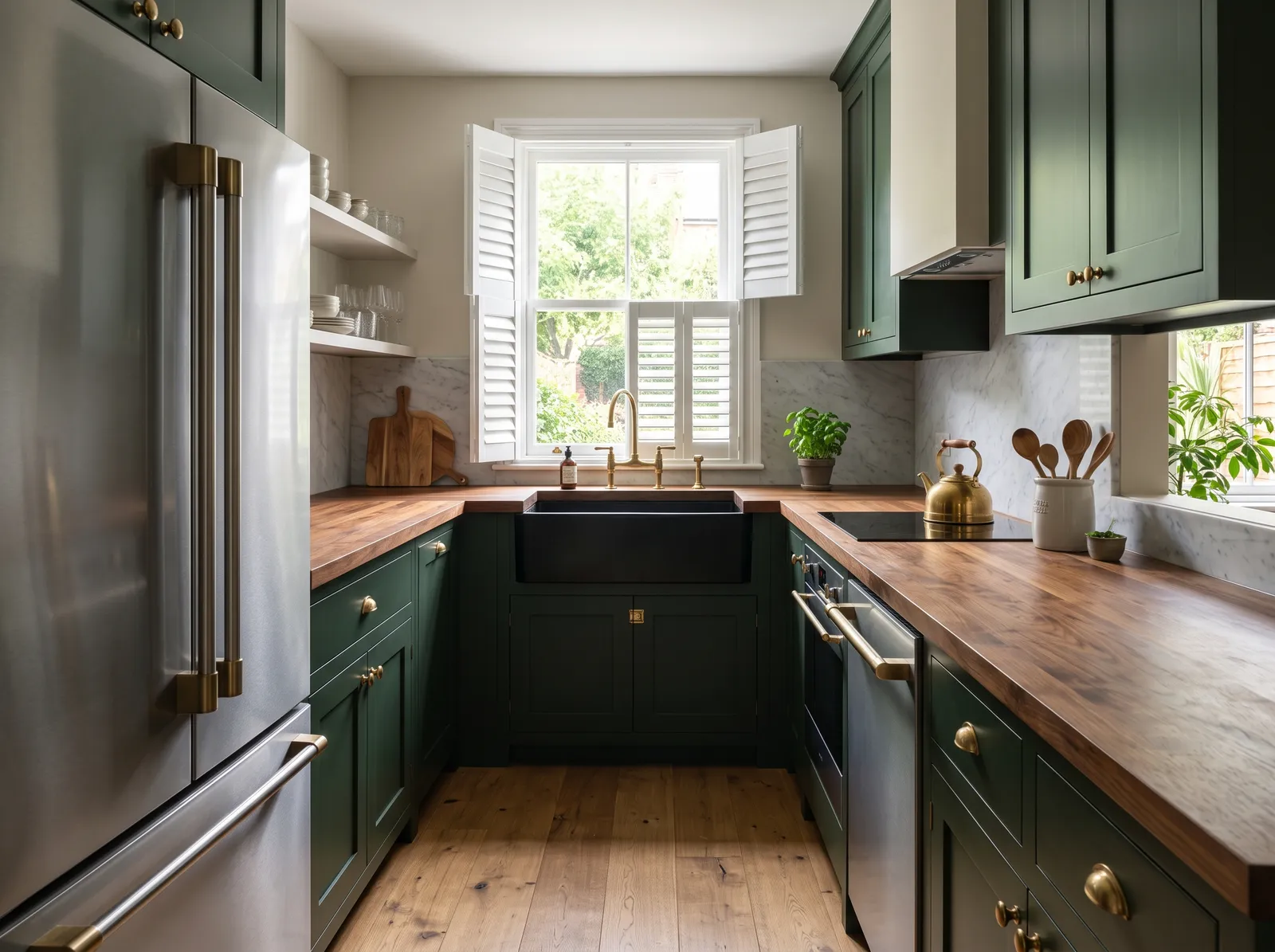
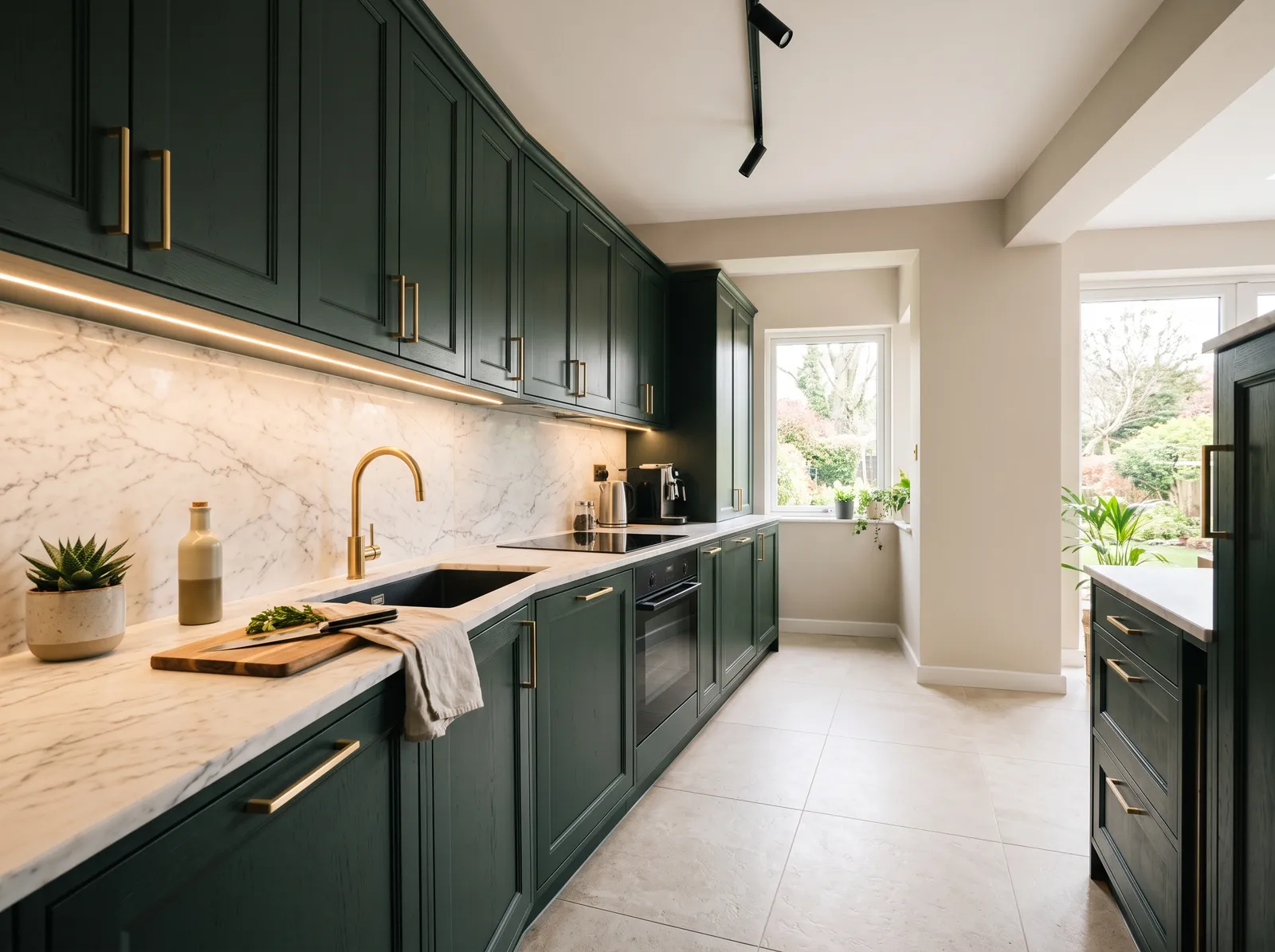
Use LRV, the light reflectance value, as your guide. It runs from 0 (black) to 100 (white) and tells you how much light a color bounces back. Greens in the 45 to 65 range, like soft sage or gentle olive, keep a cabinet feeling fresh and open, while greens down in the 10 to 25 range, like forest or deep fir, give you that dramatic, moody look.
Your light decides which way to lean. A cabinet that sits in a bright spot or near a window can carry a deep low-LRV green without going gloomy, because daylight keeps it from feeling heavy. A cabinet in a dim corner or a north-facing room usually does better with a mid-LRV green, since a very dark shade there can read almost black and lose all its color.
The Right Finish for a Cabinet
Skip flat and matte on a cabinet. A cabinet is a touch surface, and flat finishes hold fingerprints and scuff marks that you cannot wipe clean without leaving a shiny spot. For most cabinets, a satin or semi-gloss is the sweet spot: it shrugs off hands and cleaning, and it gives green a subtle glow that makes the color look richer.
Lean toward semi-gloss if the cabinet sees moisture or heavy use, since the harder, slicker surface wipes down best and resists steam. Lean toward satin if you want less shine and a softer, more modern look. Either way, the small amount of sheen is what lets a deep green stay washable for years instead of marking up.
Pairing Green With Trim, Hardware, and Surfaces
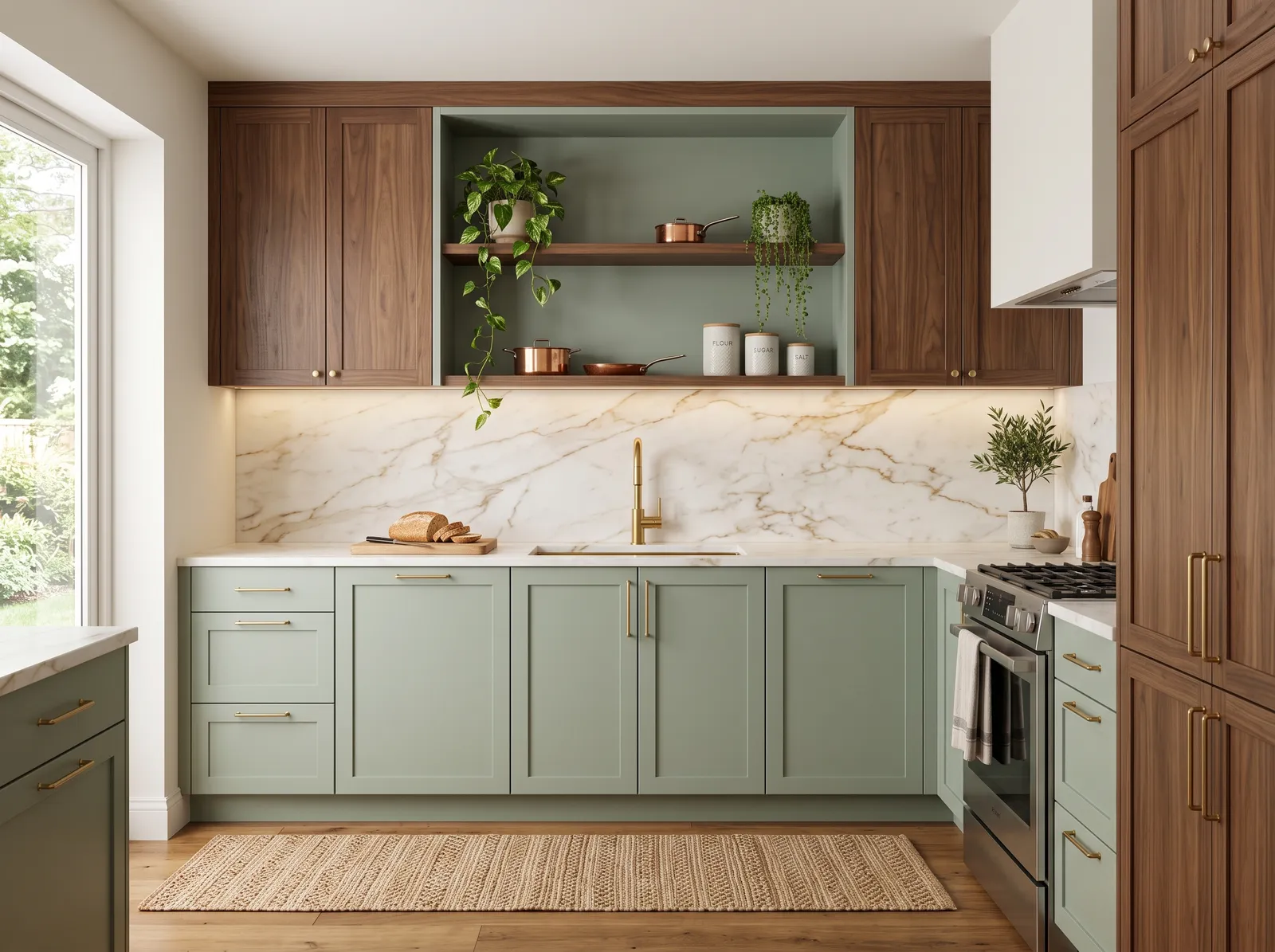
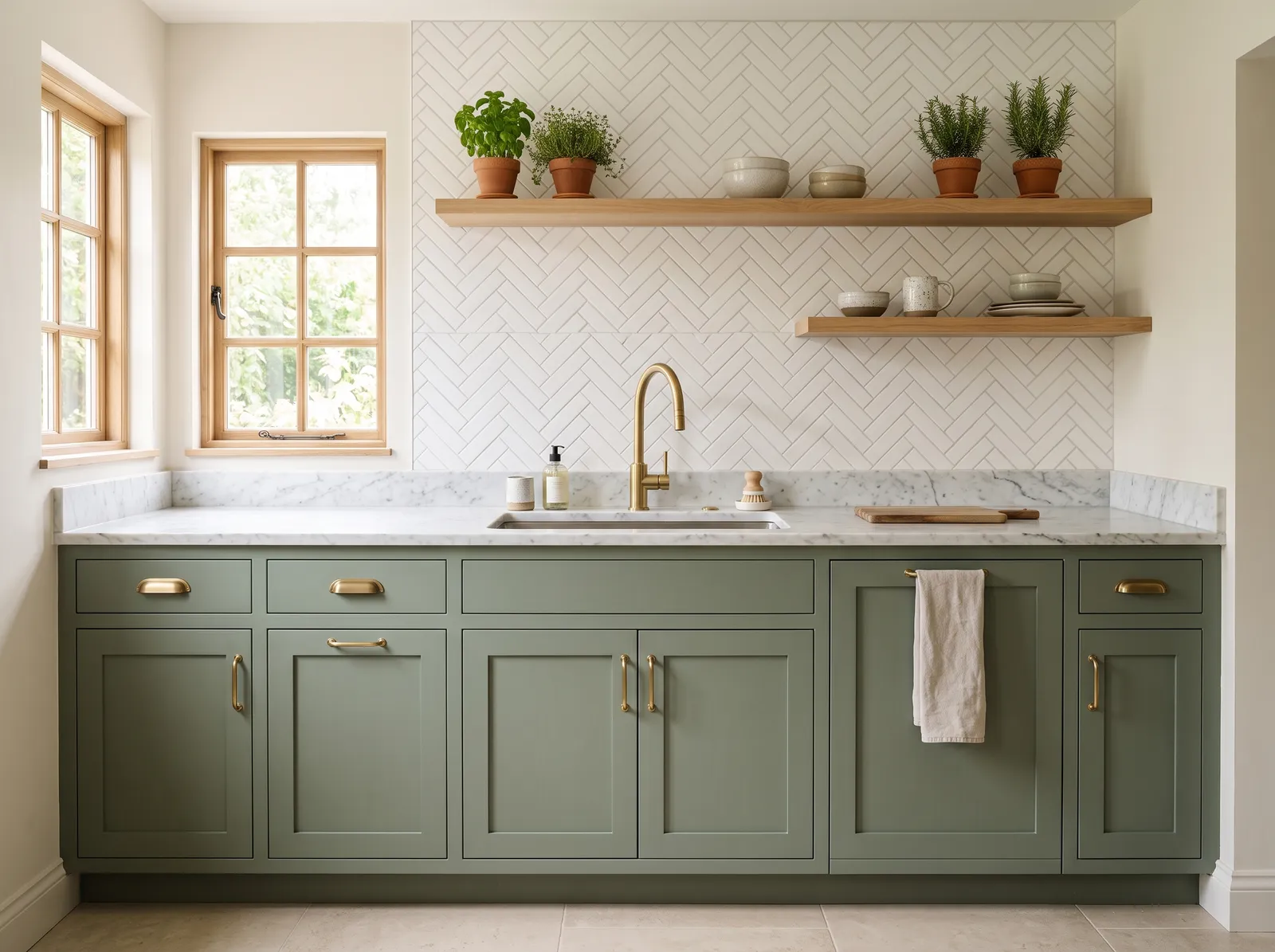
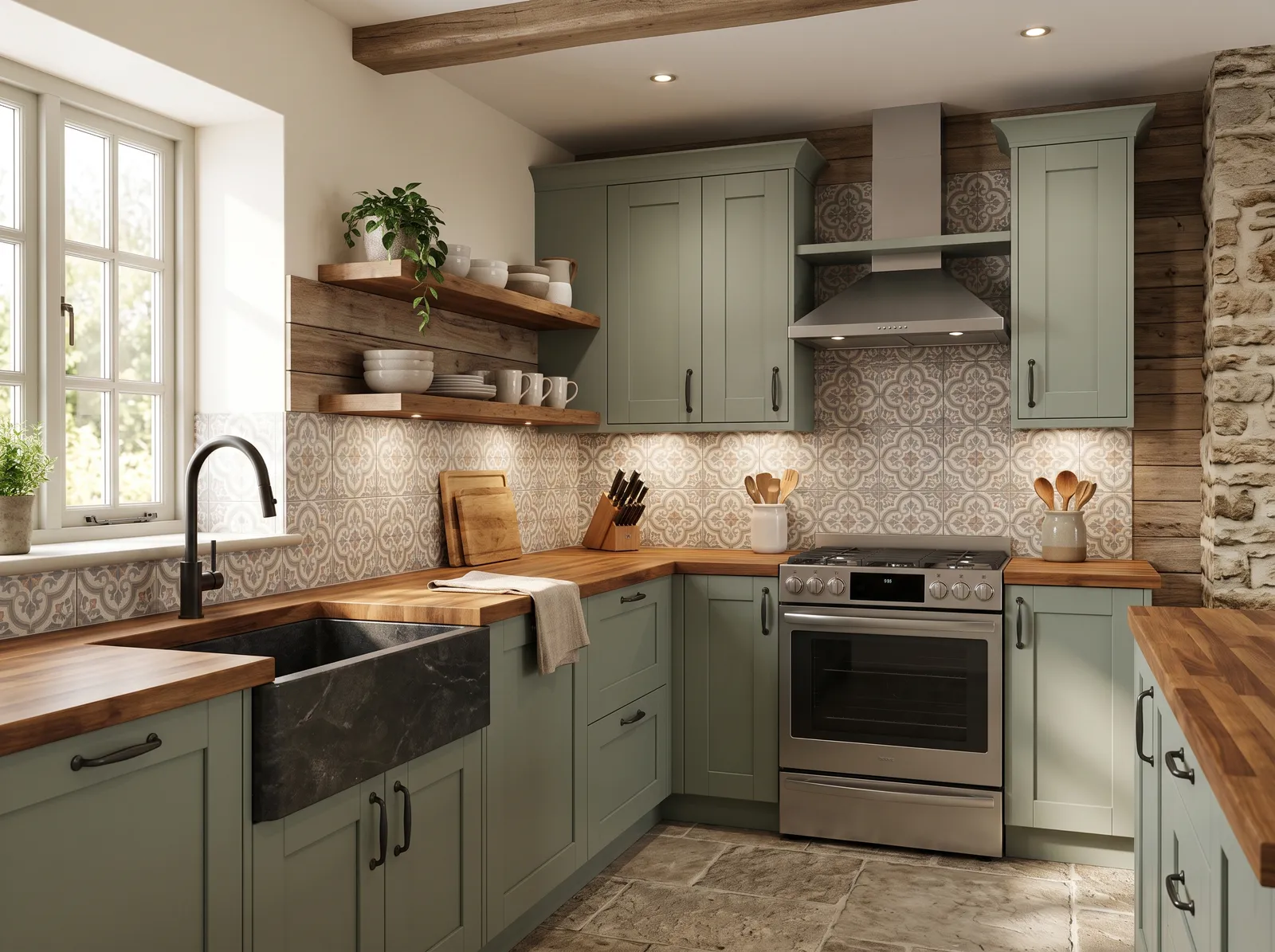
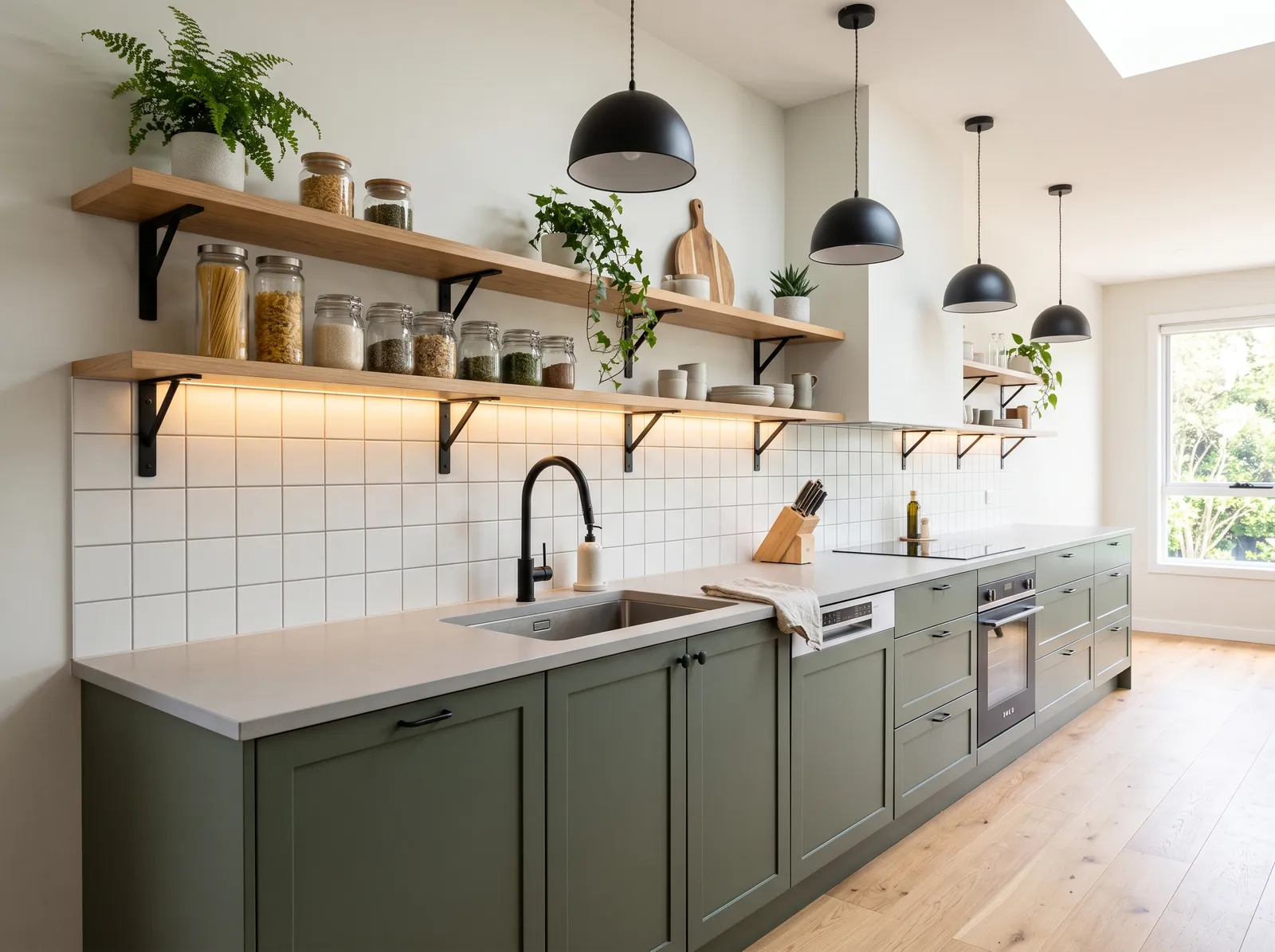
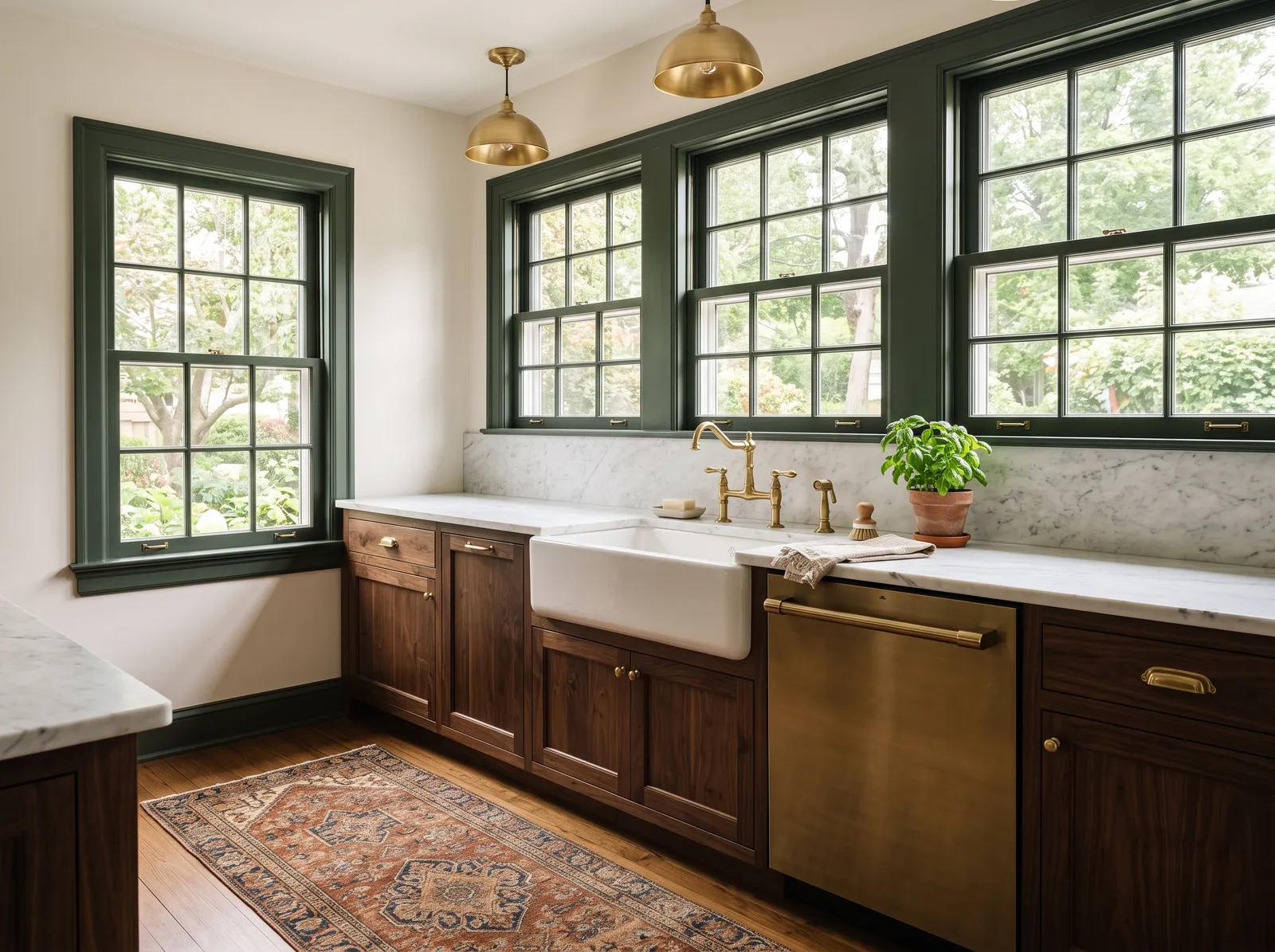
Green plays well with warm metals. Brass, bronze, and gold hardware pop against both sage and forest greens and instantly warm up the color, while matte black hardware gives a deeper green a crisp, graphic edge. Whichever you choose, keep the metal consistent so the cabinet reads as one deliberate choice.
For everything around the cabinet, let the green lead and keep the rest quiet. A soft white or warm off-white on the trim and ceiling keeps the room from competing with the color. Natural wood tones, stone, and unfussy counters all sit comfortably beside green because they share that earthy, organic root.
Common Mistakes With Green on a Cabinet
The biggest mistake is judging the green from a tiny chip under store lighting. Green shifts more than almost any color between daylight and lamplight, and an undertone of yellow, gray, or blue that you barely noticed on the chip can take over on a full cabinet. Always paint a large sample, set it on the actual cabinet, and look at it morning, afternoon, and night before you commit.
The other common slips are choosing too flat a finish, which leaves you with a cabinet you cannot clean, and going too dark for a low-light spot, which drains the green of all its color. Test both the shade and the sheen in place, because the swatch alone will not tell you how the finished cabinet feels.
Green Kitchen Cabinet Paint — Frequently Asked Questions
What shade of green is best for a cabinet?+
It depends on your light and the look you want. Sage and soft olive greens, with an LRV roughly in the 45 to 65 range, keep a cabinet light and easy. Deep forest and fir greens, down around 10 to 25, give you a richer, more dramatic cabinet but need decent light to keep from reading as near-black.
What finish should I use for a green cabinet?+
Satin or semi-gloss. Both wipe clean and stand up to fingerprints and daily use, which a flat or matte finish cannot. Choose semi-gloss for cabinets that see moisture or heavy handling, and satin if you prefer a softer, lower shine.
Will a dark green cabinet make the room feel smaller?+
Not the way dark walls would. Because a cabinet is one contained surface, a deep green acts as a single rich accent rather than closing the room in. In a bright spot it adds depth without shrinking anything, though in a very dim corner a very dark green can lose its color and look flat.
What hardware and trim colors go with a green cabinet?+
Warm metals like brass, bronze, and gold flatter both light and dark greens, while matte black gives deeper greens a sharp, modern edge. For trim and ceiling, a soft white or warm off-white keeps the focus on the green. Natural wood and stone also pair naturally because they share green's earthy feel.
How do I make sure I pick the right green?+
Test it in place before you buy gallons. Paint a large sample, set it against the actual cabinet, and check it in morning light, afternoon light, and lamplight, since green shifts a lot between them. That is the only reliable way to catch an undertone that surprises you.
Can I get the same green across different paint brands?+
Yes. Every green shown here is mixed to order at the paint counter, not pulled off a fixed shelf. A shade from one brand can almost always be cross-matched to another, so you can pick the color you love and have it mixed in whatever line you prefer.