Kitchen Cabinet Paint Colors
Top Picks for the Kitchen Cabinet
4 editor's picksAll Kitchen Cabinet Colors at Every Brand
129 colors · 5 familiesA representative color from every brand that makes this family — most-recognized brands first, with a second pick from the biggest names. Tap any swatch with a curated guide for full spec and cross-brand matches.
Browse by Family Hub
Color is half the decision. The product roundup covers which paint chemistry actually holds up in this room.
About Kitchen Cabinet Paint Colors
Cabinets are the biggest color decision in most kitchens. They cover more surface than the walls, they live at eye level, and they take more abuse than anything else in the room. So the color you pick has to do two jobs at once: set the mood of the whole space and survive years of hands, grease, and water.
The good news is that a handful of color directions almost always work on cabinets, because they flatter food, daylight, and the materials around them. White keeps things bright and timeless. Green and blue add character without going trendy. Black and deep gray ground a kitchen and read as quietly expensive. The trick is matching the color to your light, your finish, and the things you are not repainting, like the floor and the countertop.
Every color shown here is mixed to order, so a shade like White Dove or Hale Navy can be tinted at a paint counter no matter which brand carries it. If you love a color from one line but trust a different brand's paint, it can usually be cross-matched. That means you choose the color you want, then choose the paint that holds up best on cabinets.
The Best Color Directions for Kitchen Cabinets
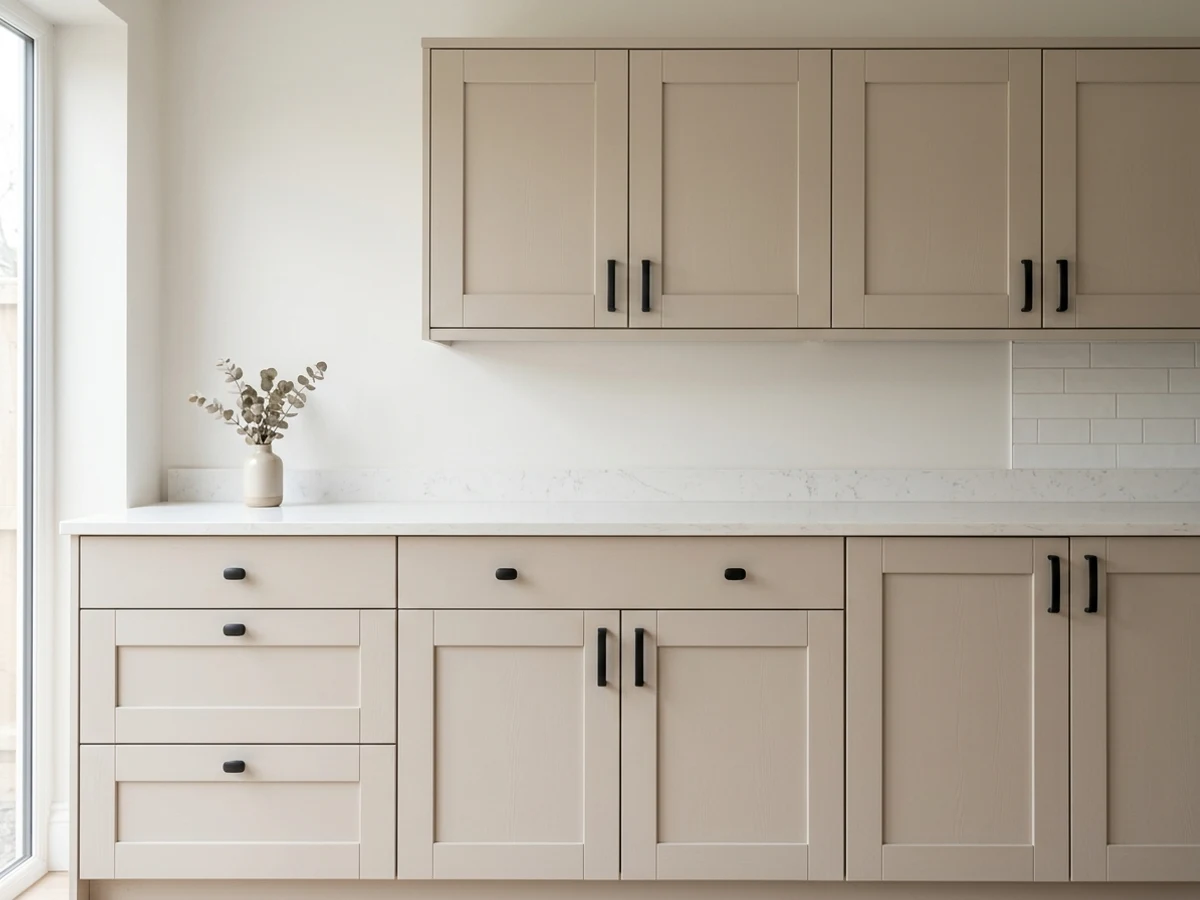
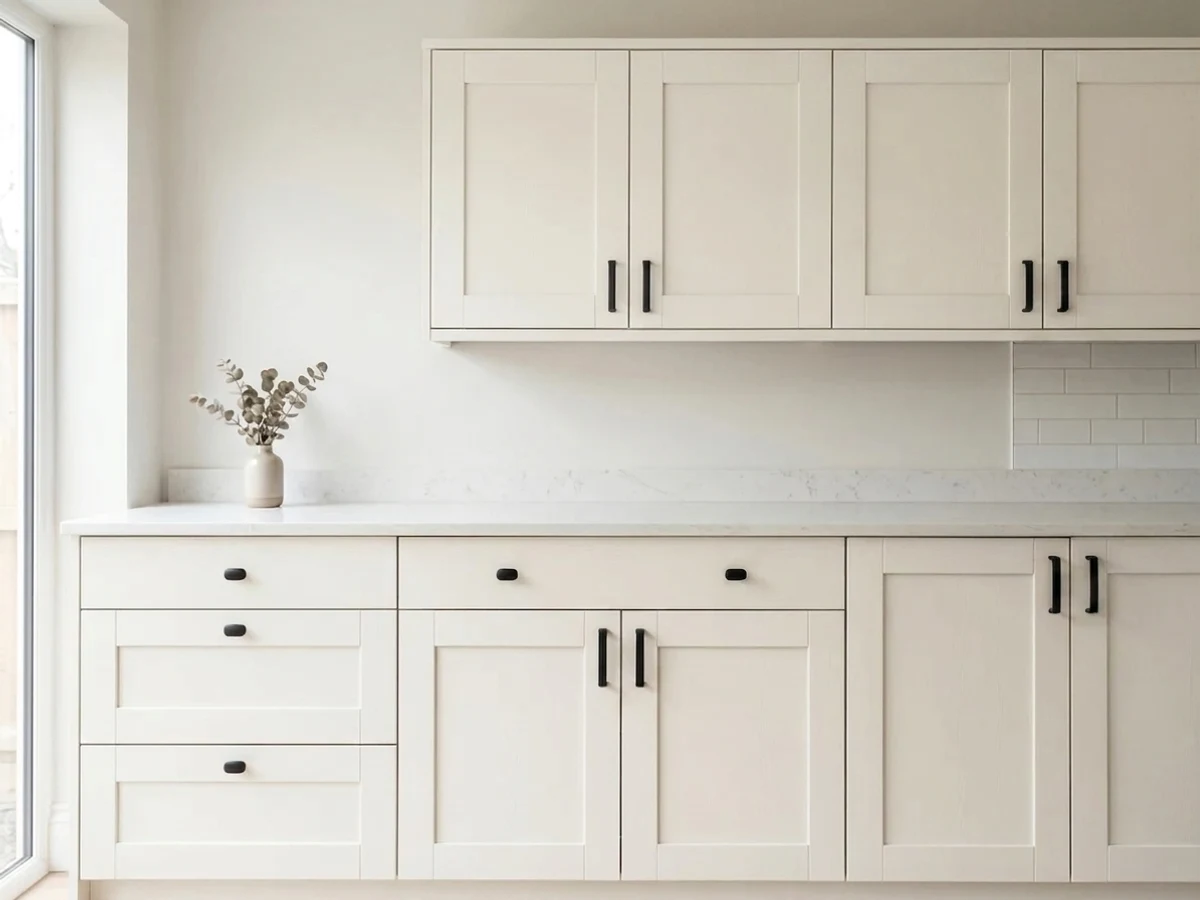
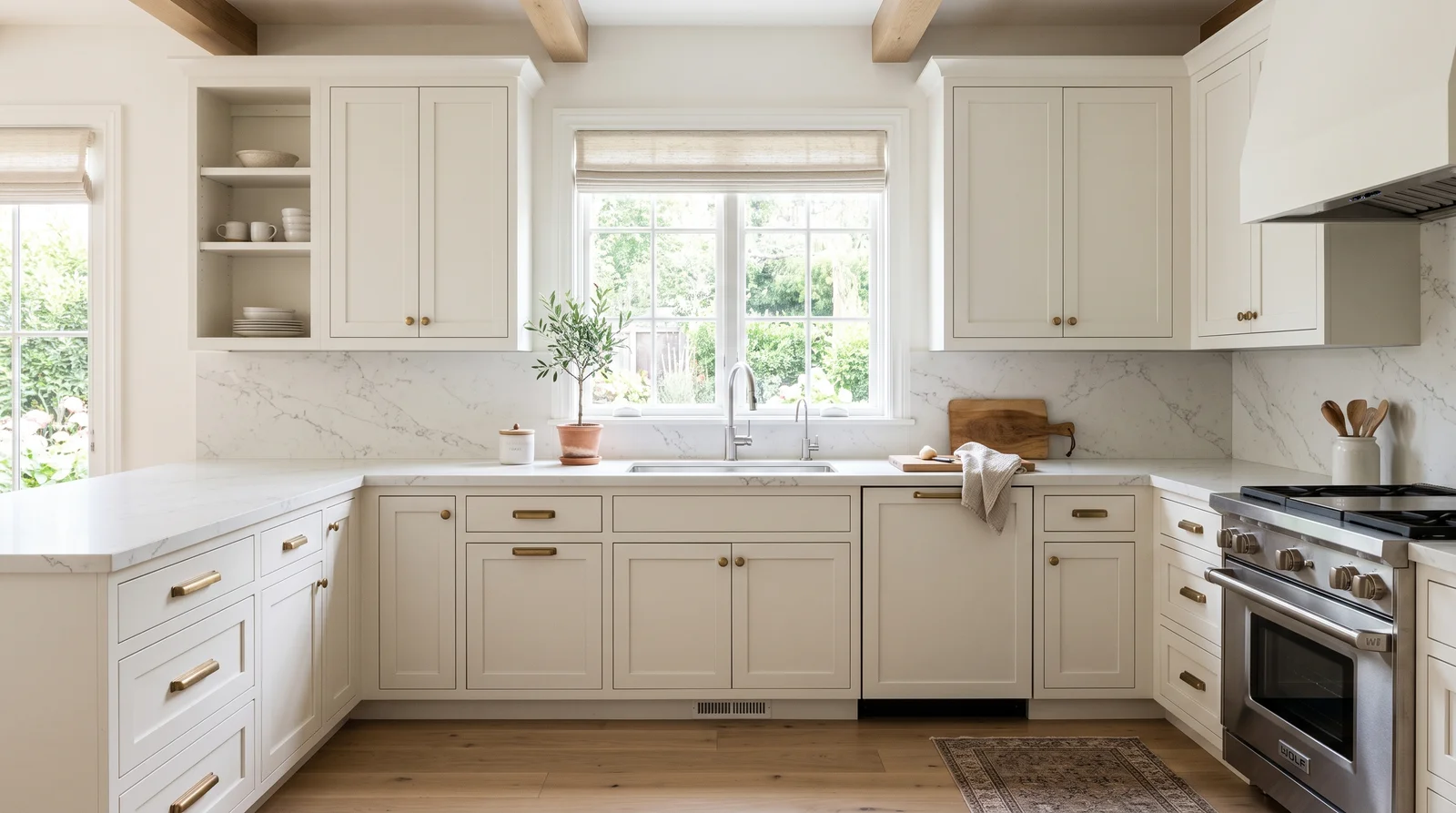
White is the safe, bright, resale-friendly choice, and warm whites like Alabaster and White Dove read soft instead of sterile. They bounce light around a small kitchen and let your counters, backsplash, and hardware do the talking. If you want clean but not stark, these creamy whites are where most people land.
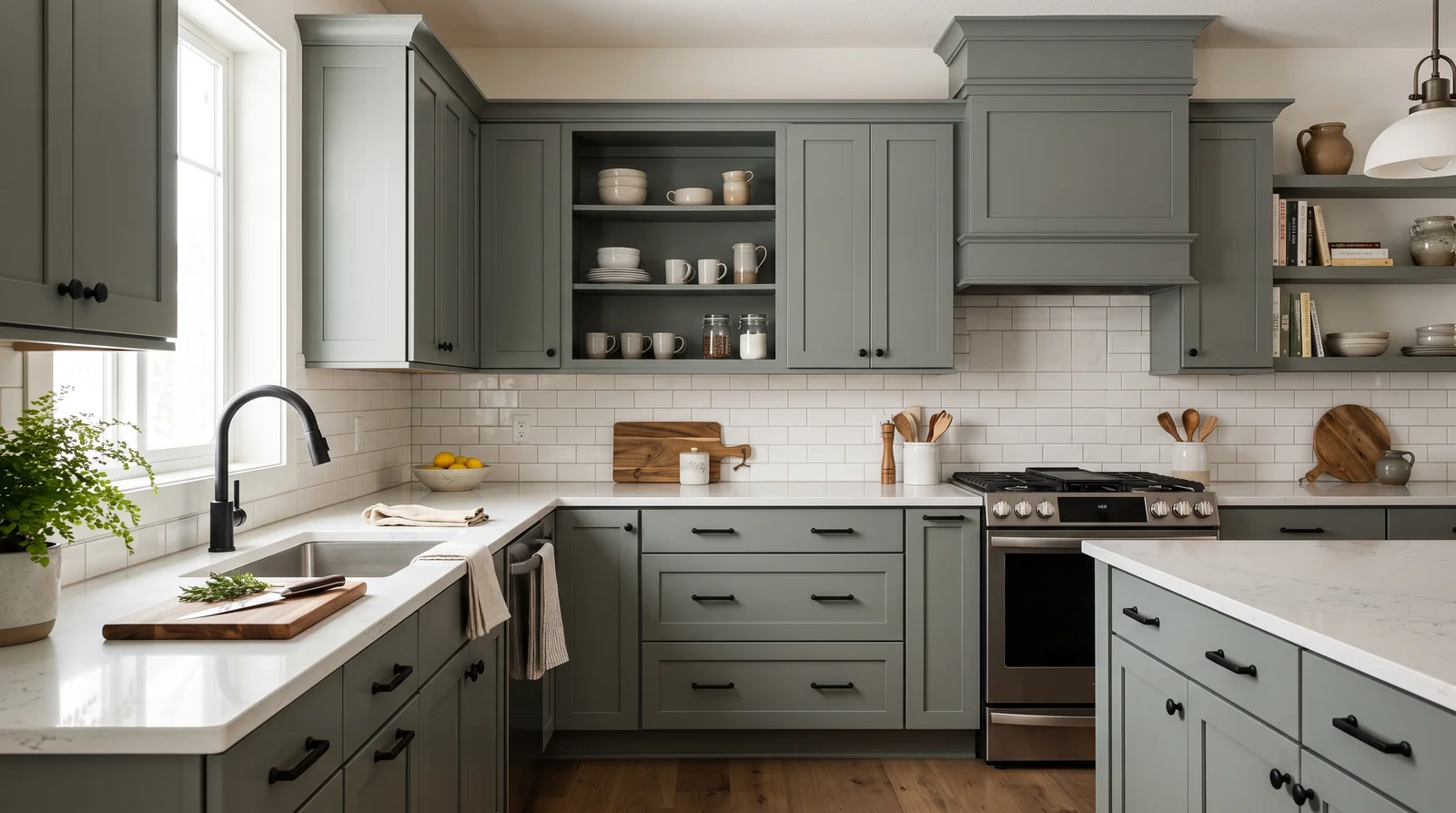
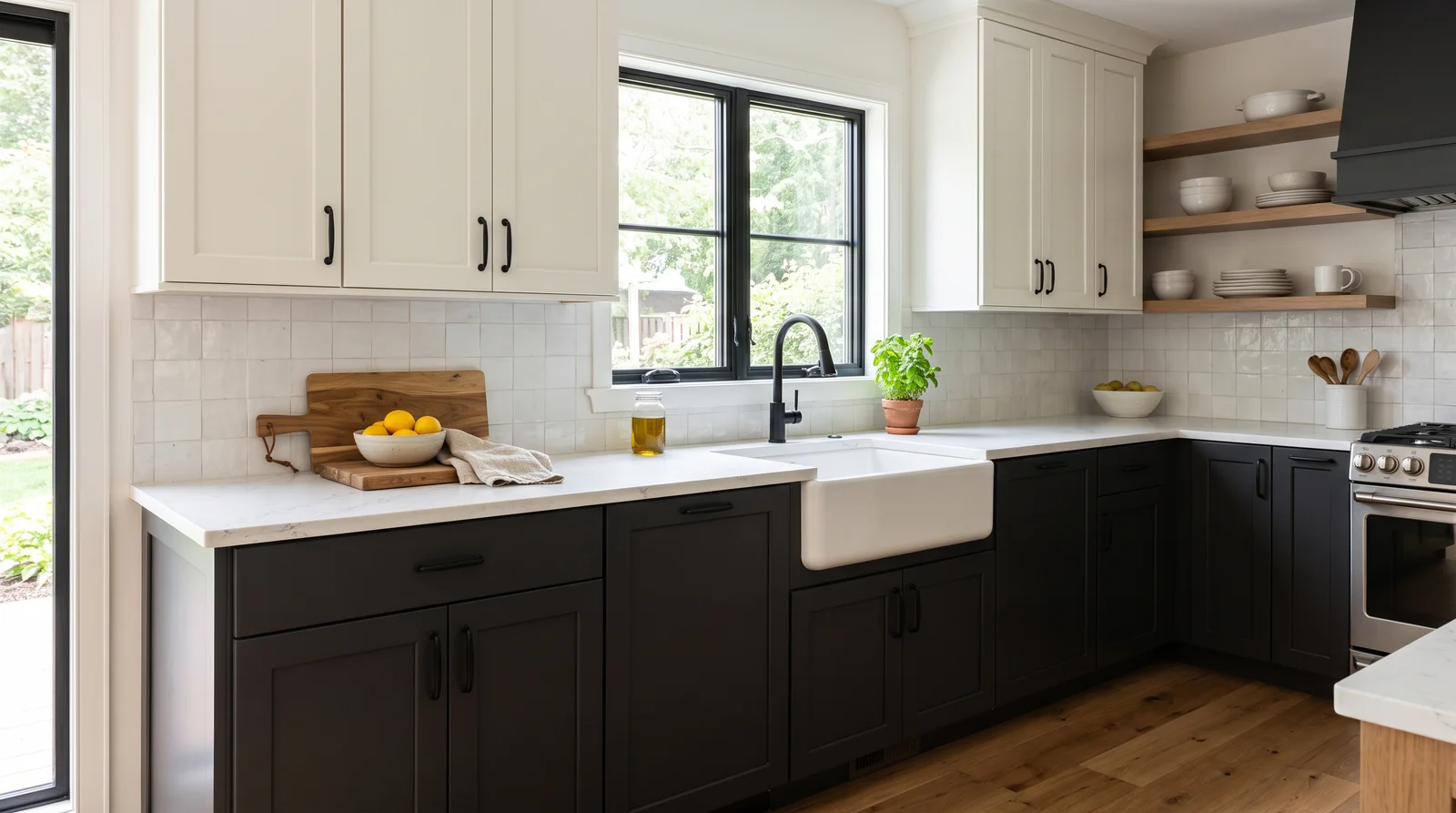
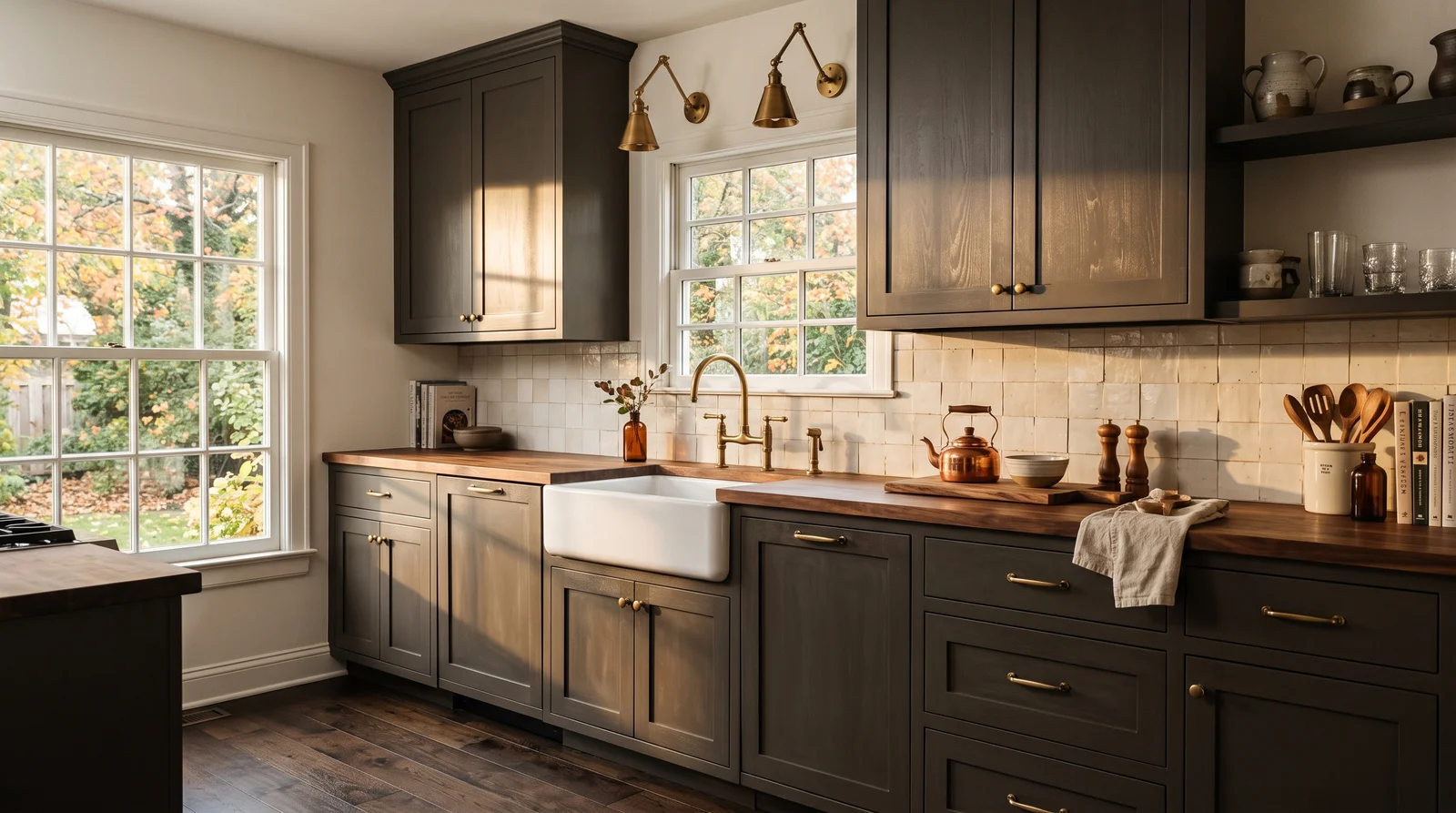
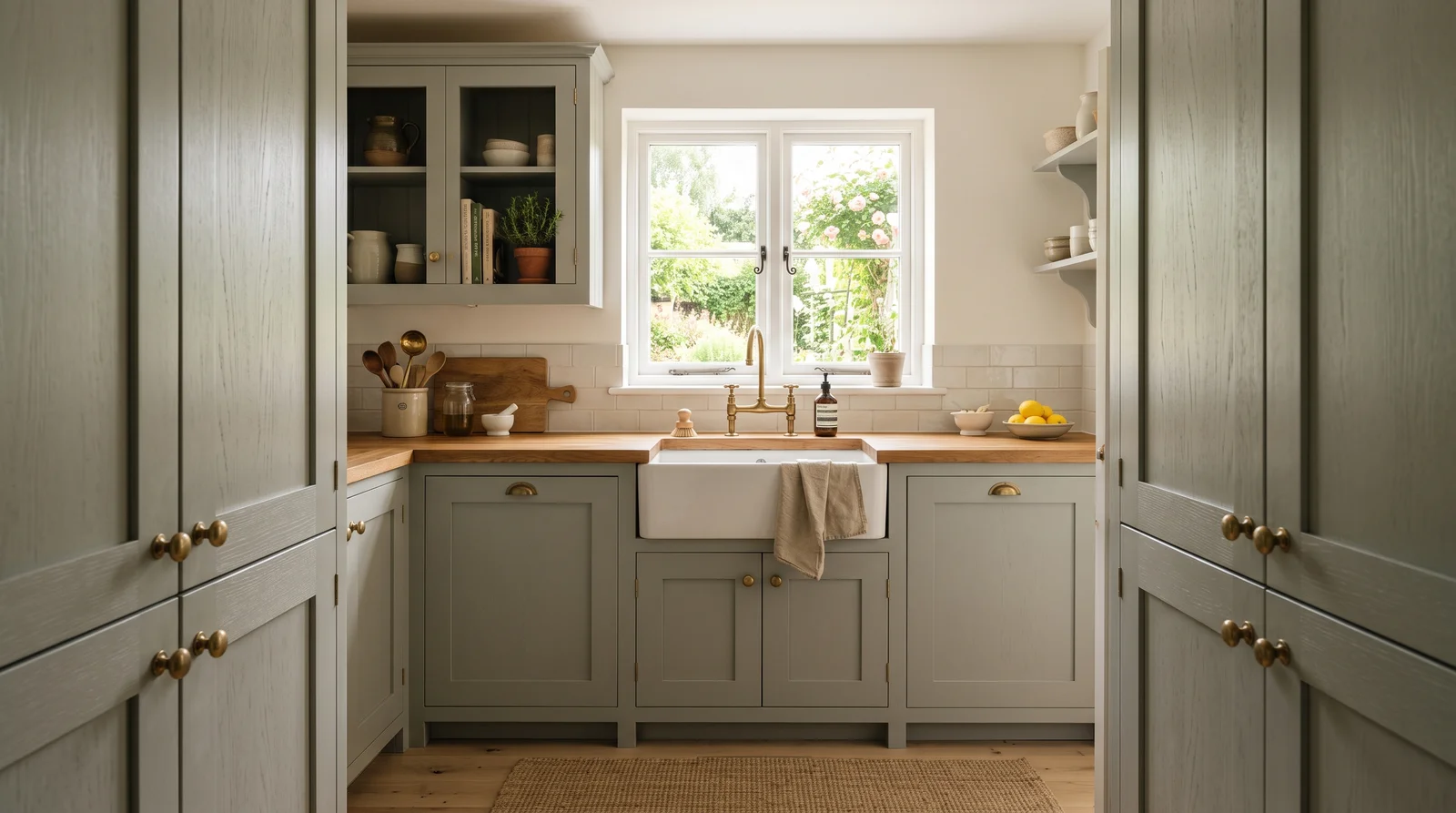
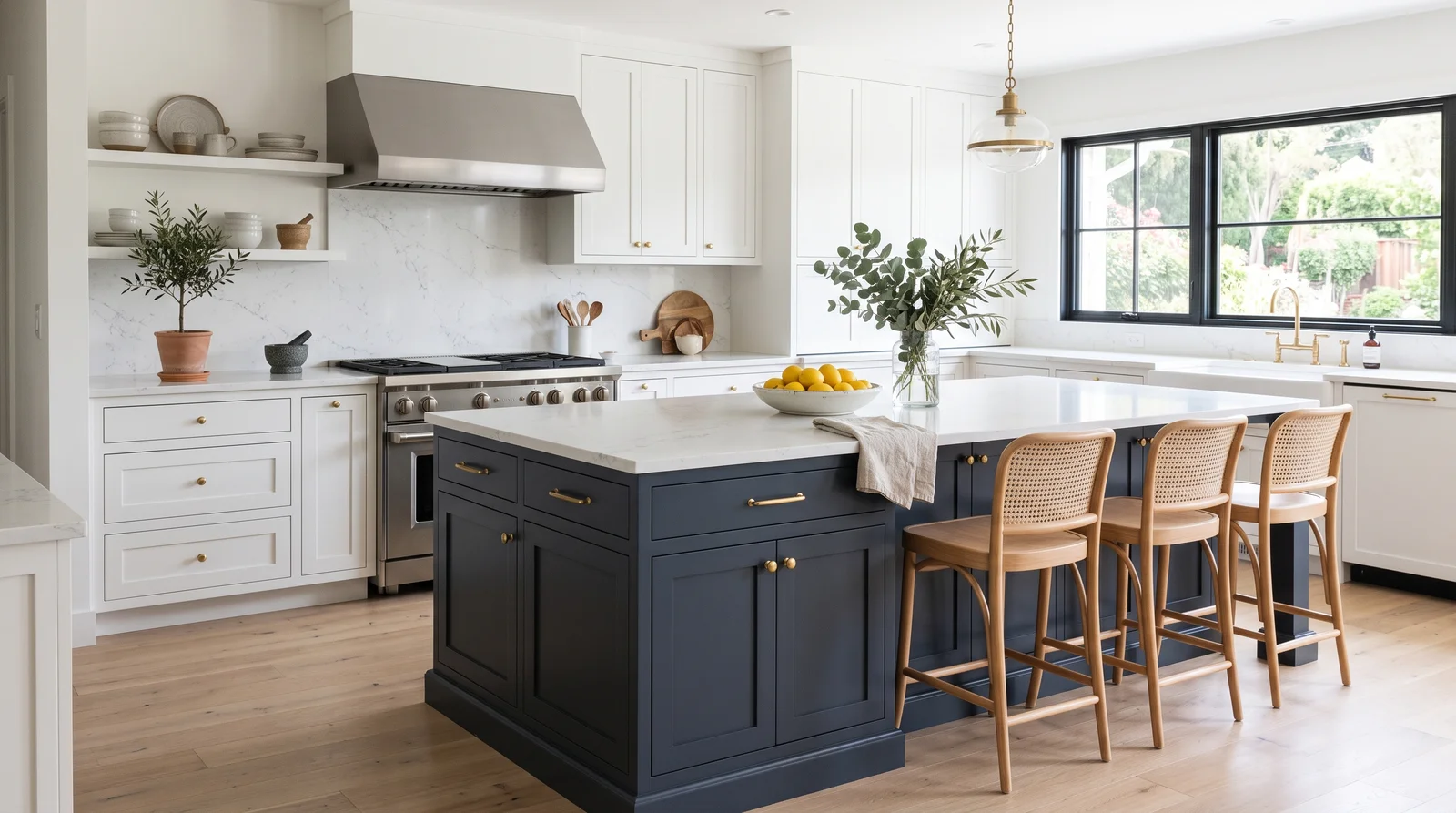
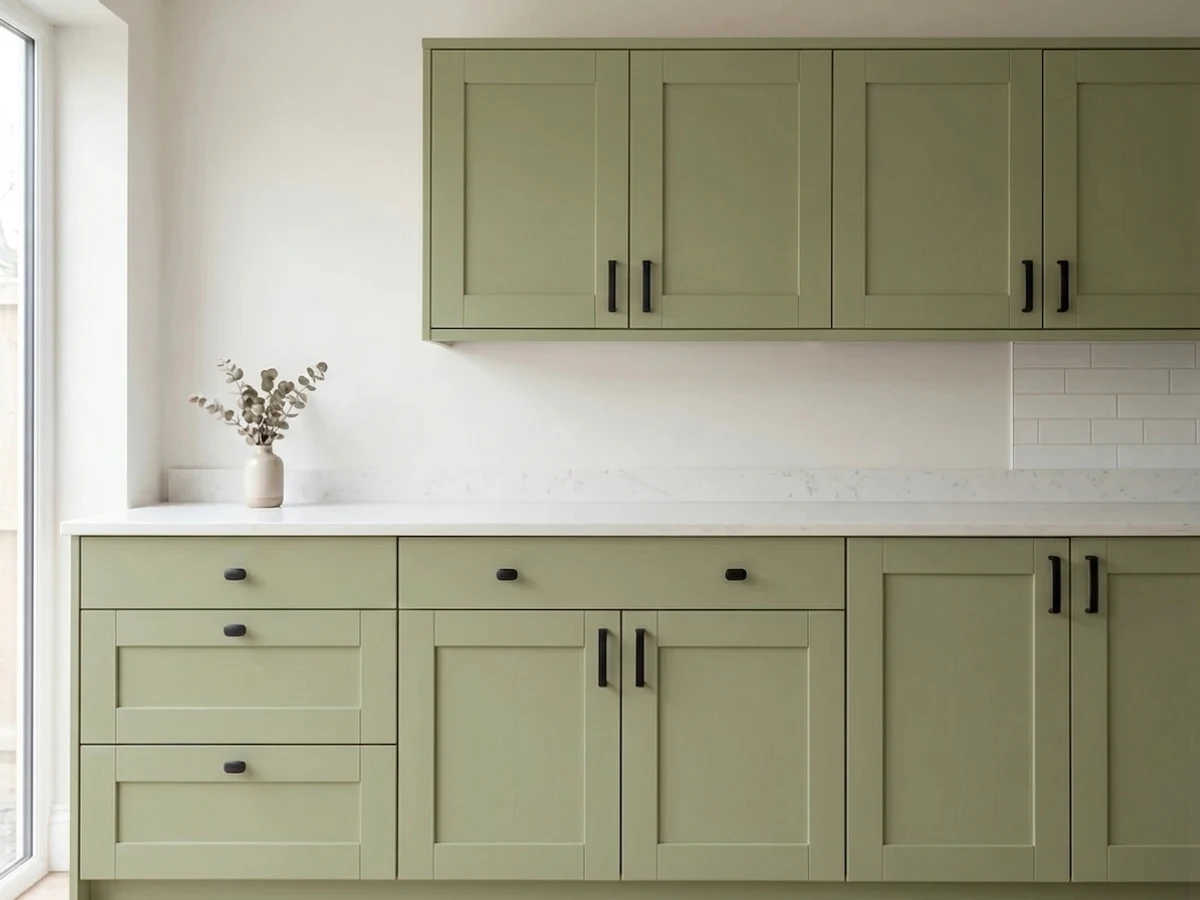
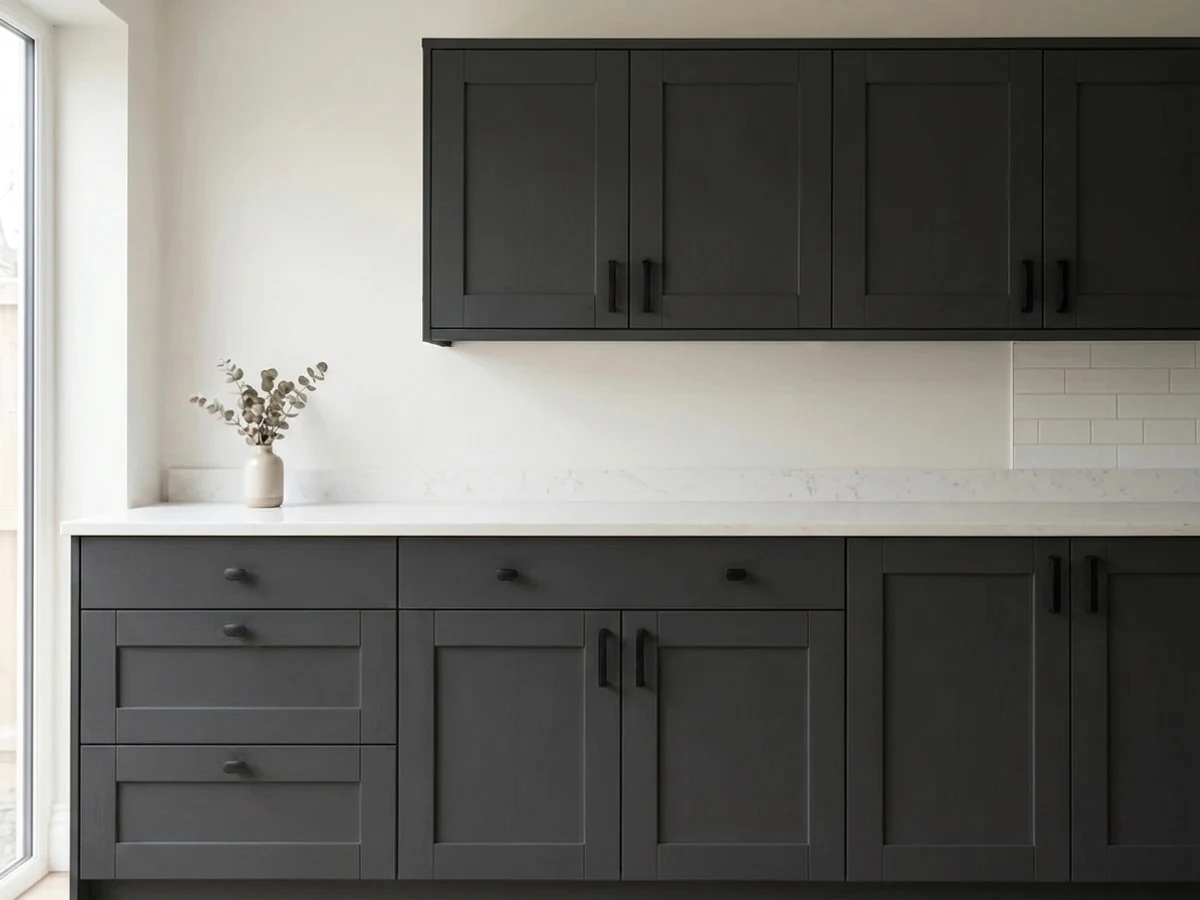
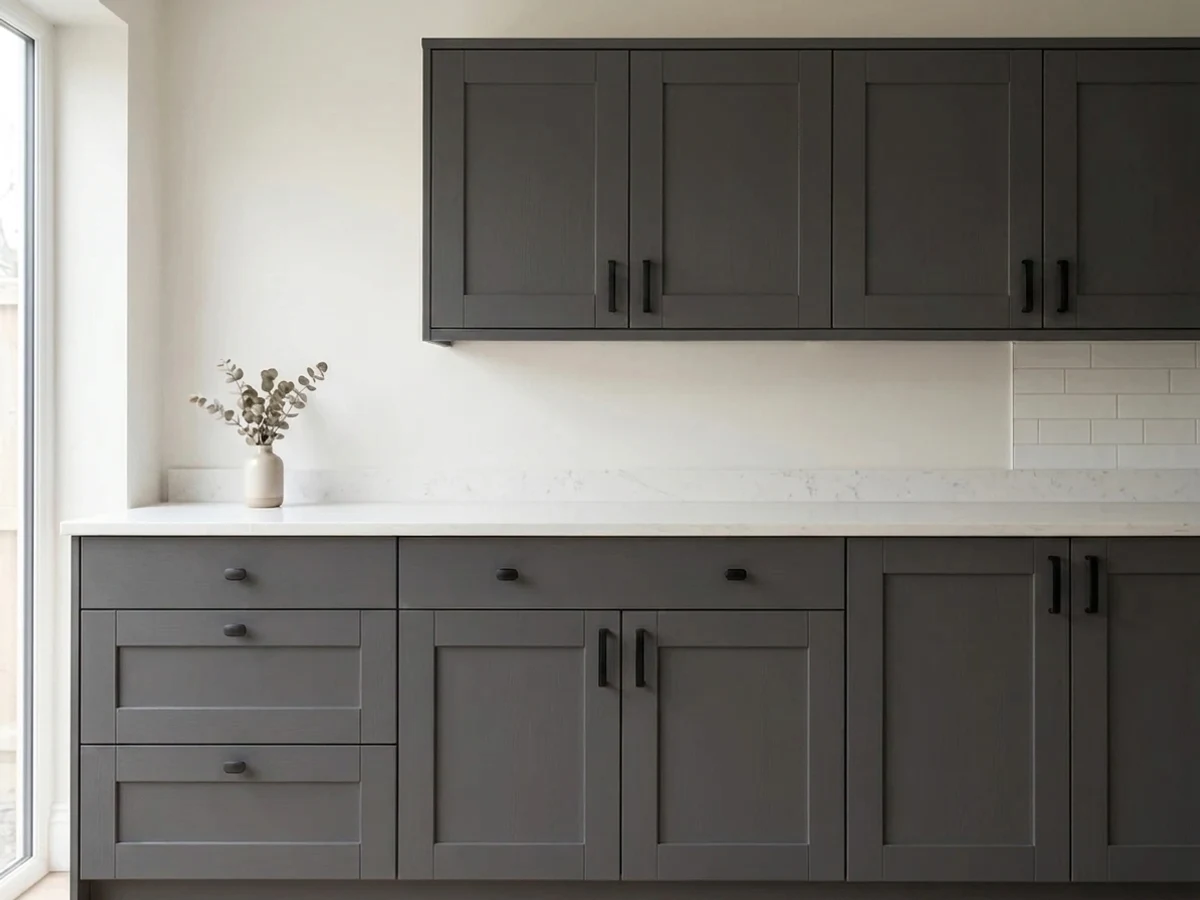
Green, blue, and black are how you add personality. A soft sage like Sage or a leafy Eucalyptus feels calm and organic, almost like a neutral. A deep blue such as Hale Navy looks classic and confident, especially on a lower run of cabinets. Charcoal and true black anchor a room and hide scuffs better than you would think. A popular middle path is two-tone: white uppers to stay airy, a darker color like navy or charcoal on the base cabinets and island.
Let Your Kitchen's Light Pick the Color
Light changes a cabinet color more than the swatch ever suggests. North-facing kitchens get cool, flat light, so warm whites like Alabaster and earthy greens like Sage stay friendly there, while cool grays can turn drab. South-facing kitchens get strong warm light, so they can carry cooler or deeper colors like Hale Navy or Charcoal without feeling heavy.
Always test the color on the actual cabinet doors and look at it morning, midday, and at night. Kitchens run on artificial light for hours every day, and warm LED bulbs push whites yellow while cool bulbs can make a green look gray. Paint a sample door, lean it where the real cabinets sit, and live with it for a few days before you commit.
The Right Finish for Cabinets
Cabinets need a finish that wipes clean, because they catch grease, fingerprints, and splashes daily. Satin and semi-gloss are the standard choices: satin gives a soft, low-glare look that still cleans up, and semi-gloss is the most durable and washable but shows more shine and surface flaws. Most people choose satin for a modern look and semi-gloss when scrubbing matters most.
Skip flat and matte on cabinets. They mark easily and are hard to clean without burnishing. Whatever sheen you pick, surface prep does the heavy lifting: degrease, sand, and prime so the finish actually bonds and lasts.
Using LRV to Keep the Kitchen Bright or Cozy
LRV, or light reflectance value, is just how much light a color throws back, from near 0 for black to near 100 for the brightest white. High-LRV whites like Alabaster and White Dove keep a small or windowless kitchen feeling open, which is why white stays the default for tight galley layouts. If your kitchen is dark, lean high.
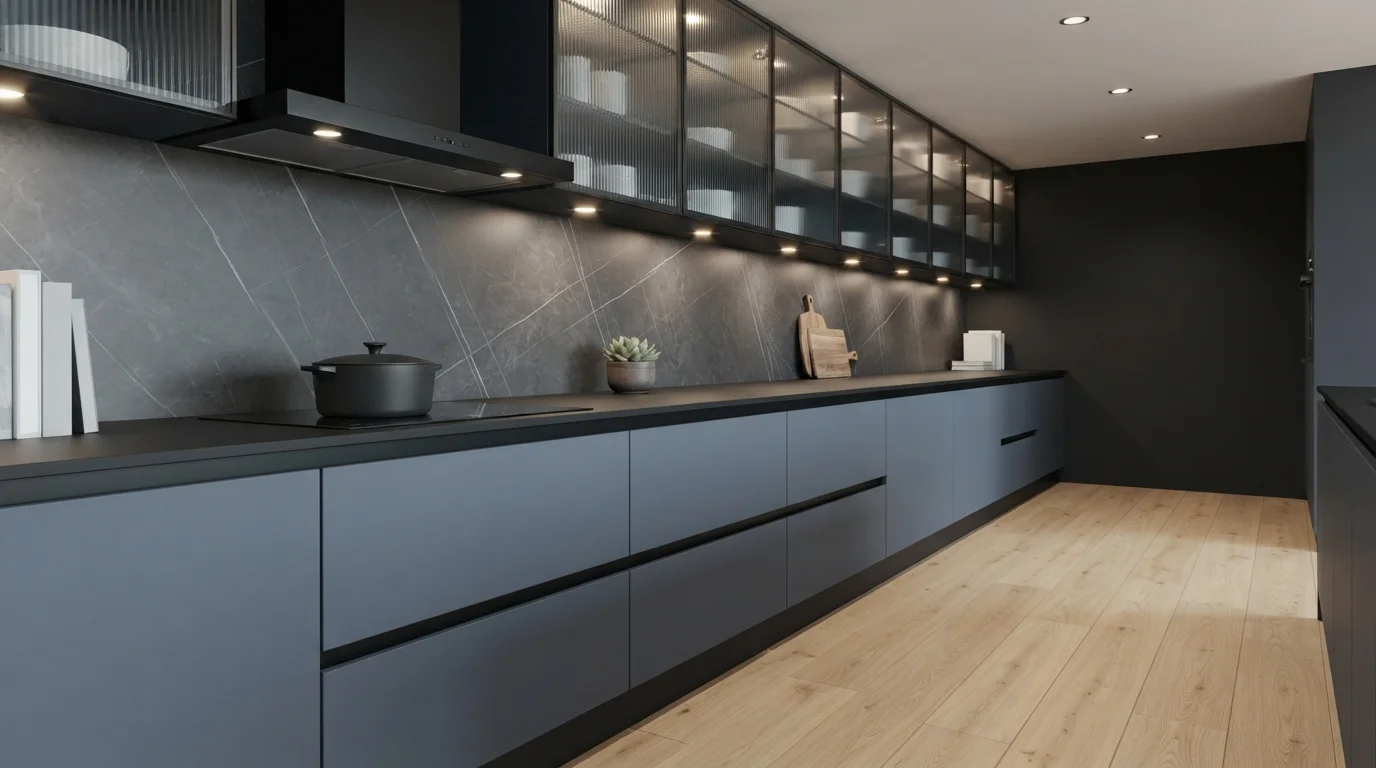
Low-LRV colors like Charcoal, true black, and Hale Navy soak up light and make a room feel cozy and grounded. That is great in a kitchen with big windows or a lot of square footage. In a darker kitchen, use those deep colors only on lower cabinets or an island so the room does not close in.
Pairing Cabinets With Trim, Counters, and Floors
Start from what you are keeping. Match or work with your countertop undertone first, then your floor, then trim and hardware. Warm wood floors and creamy counters love warm whites like Alabaster and soft greens like Sage; cool gray floors and white quartz sit better with crisp whites, blues like Hale Navy, or Charcoal.
For a calm look, keep walls and trim in a quiet companion to the cabinets rather than a hard contrast. White cabinets pair easily with a soft white or light greige wall. Deep cabinets like navy or charcoal look sharp against a warm white wall and ceiling, with brass or matte black hardware to finish the contrast. When in doubt, let the cabinets be the star and keep everything else low-key.
Common Mistakes People Make Painting Cabinets
The biggest mistake is skipping prep. Cabinets are coated in invisible cooking grease, and paint will peel within months if you do not degrease, sand, and prime first. The second is rushing: cabinet paint needs days to cure hard, so closing drawers and stacking dishes too soon leaves dents and sticking.
The other classic errors are color-related. People judge the color from a tiny chip under store lighting instead of a painted sample in their own kitchen, and they pick a trendy gray that reads cold once the cabinets cover half the room. Test big, test in your real light, and choose a finish you can actually clean.
Kitchen Cabinet Paint Colors — Frequently Asked Questions
What is the most popular color for kitchen cabinets?+
White is still the most popular, and warm whites like Alabaster and White Dove lead because they stay bright without looking sterile. After white, soft greens like Sage and deep blues like Hale Navy are the most common upgrades. Navy and charcoal are especially popular on islands and lower cabinets.
What sheen should I use on kitchen cabinets?+
Use satin or semi-gloss. Satin gives a soft, low-glare finish that still wipes clean, and semi-gloss is the most durable and washable but shows more shine. Avoid flat or matte, since they mark easily and are hard to clean on a surface you touch every day.
Should I paint my cabinets a dark color in a small kitchen?+
You can, but be strategic. Dark colors like Charcoal or Hale Navy have a low LRV and absorb light, which can make a small kitchen feel tighter. The usual fix is to put the dark color only on the lower cabinets or island and keep the uppers a high-LRV white like Alabaster to stay airy.
How do I pick a cabinet color that matches my countertops and floors?+
Start with the things you are not changing. Match the undertone of your counters and floors first, then choose the cabinet color to suit them. Warm wood floors and cream counters pair well with warm whites and soft greens; cool gray floors and white quartz suit crisp whites, blues, or charcoal.
Why do my white cabinets look yellow or gray at night?+
It is your light bulbs. Warm LED bulbs push whites toward yellow, and cool bulbs can flatten warm whites into gray. Test a painted sample under your actual kitchen lighting at night before you commit, and consider adjusting your bulb temperature if a white you love looks off.
Do I have to use a specific brand's paint to get a color like Hale Navy or Sage?+
No. These colors are mixed to order, so any of them can be tinted at a paint counter, and a color from one brand can usually be cross-matched into another brand's paint. That lets you pick the exact shade you want and still use the cabinet paint you trust most.
What is the biggest mistake when painting kitchen cabinets?+
Skipping prep. Cabinets carry a thin layer of cooking grease that keeps paint from sticking, so degreasing, sanding, and priming are non-negotiable. The second biggest mistake is using the cabinets before the paint fully cures, which leads to dents, sticking, and chips.