Black Kitchen Cabinet Paint Colors
268 black colors that work in kitchen cabinets, drawn from the full ~30,000-color US paint deck. Below: editor's picks specific to kitchen cabinets, then 30 picks spread across the LRV range — narrow further on the brand page when you've shortlisted.
True black on a wall almost always looks heavier than you expected. The picks below — the "designer blacks" — sit just shy of pure black, with subtle blue, brown, or green undertones that keep them from reading like a void.
Editor's Picks: Black for Kitchen Cabinets
4 picks30 Black Picks Across the LRV Range
30 of 268 · sorted dark → lightLooking for more? All black → covers every brand; brand × family pages show full decks.
Black Kitchen Cabinet Colors at Every US Brand
21 brands · up to 10 picks eachUp to 10 picks per brand spread across the black LRV range, drawn from each brand's full deck. Tap any swatch with a curated guide for full spec; tap the brand title for the brand's complete black deck.
Behr
Benjamin Moore
Sherwin-Williams
Valspar
Dunn-Edwards
Hirshfield's
Kompozit
Dutch Boy
Glidden
C2 Paint
Rodda
PPG / Glidden
Magnolia Home
Diamond Vogel
Portola Paints
Farrow & Ball
Backdrop
Annie Sloan
Rust-Oleum
Clare
Other Kitchen Cabinet Color Families
Black Colors in Other Rooms
Black Paint Colors for a Kitchen Cabinet
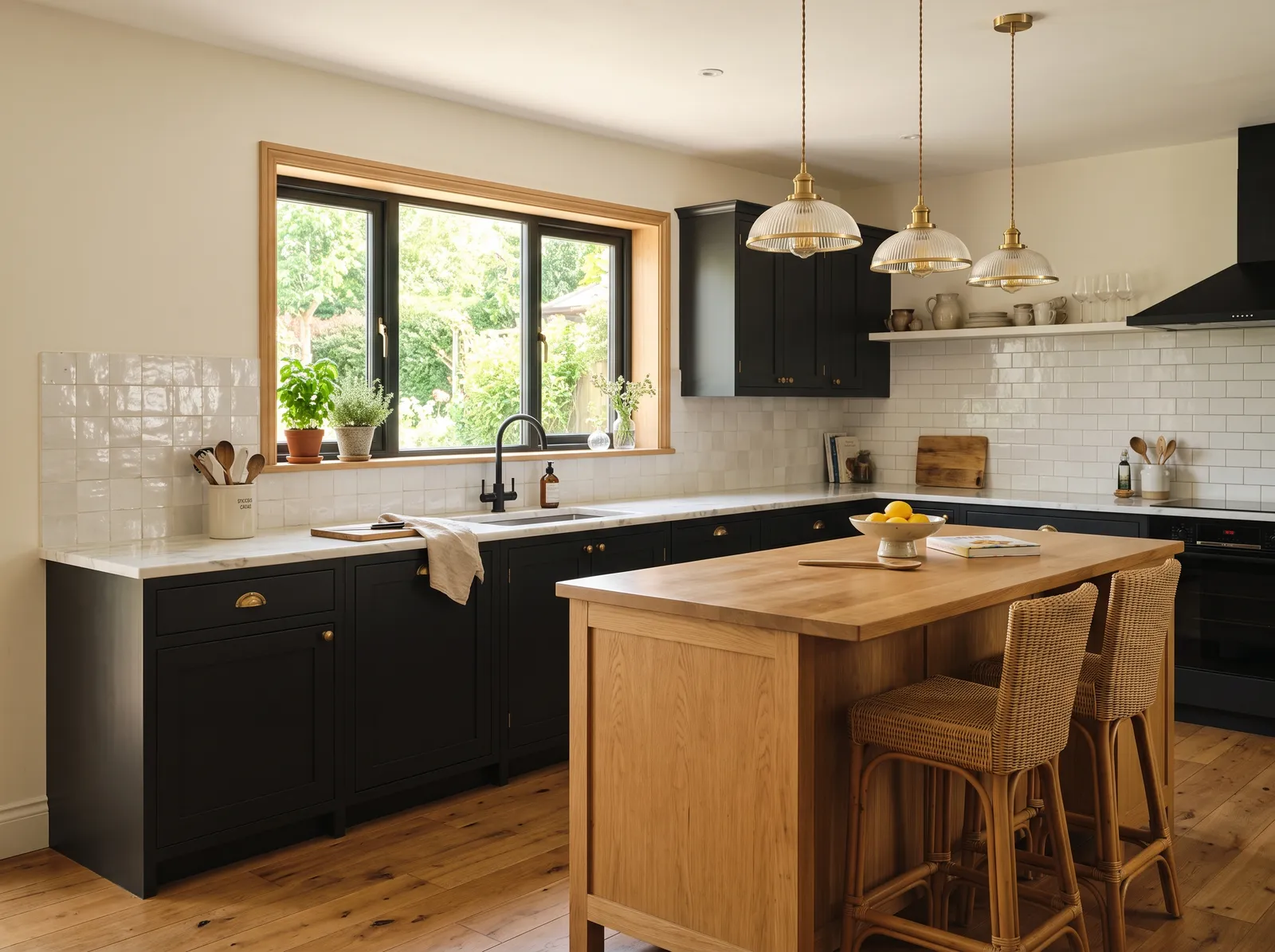
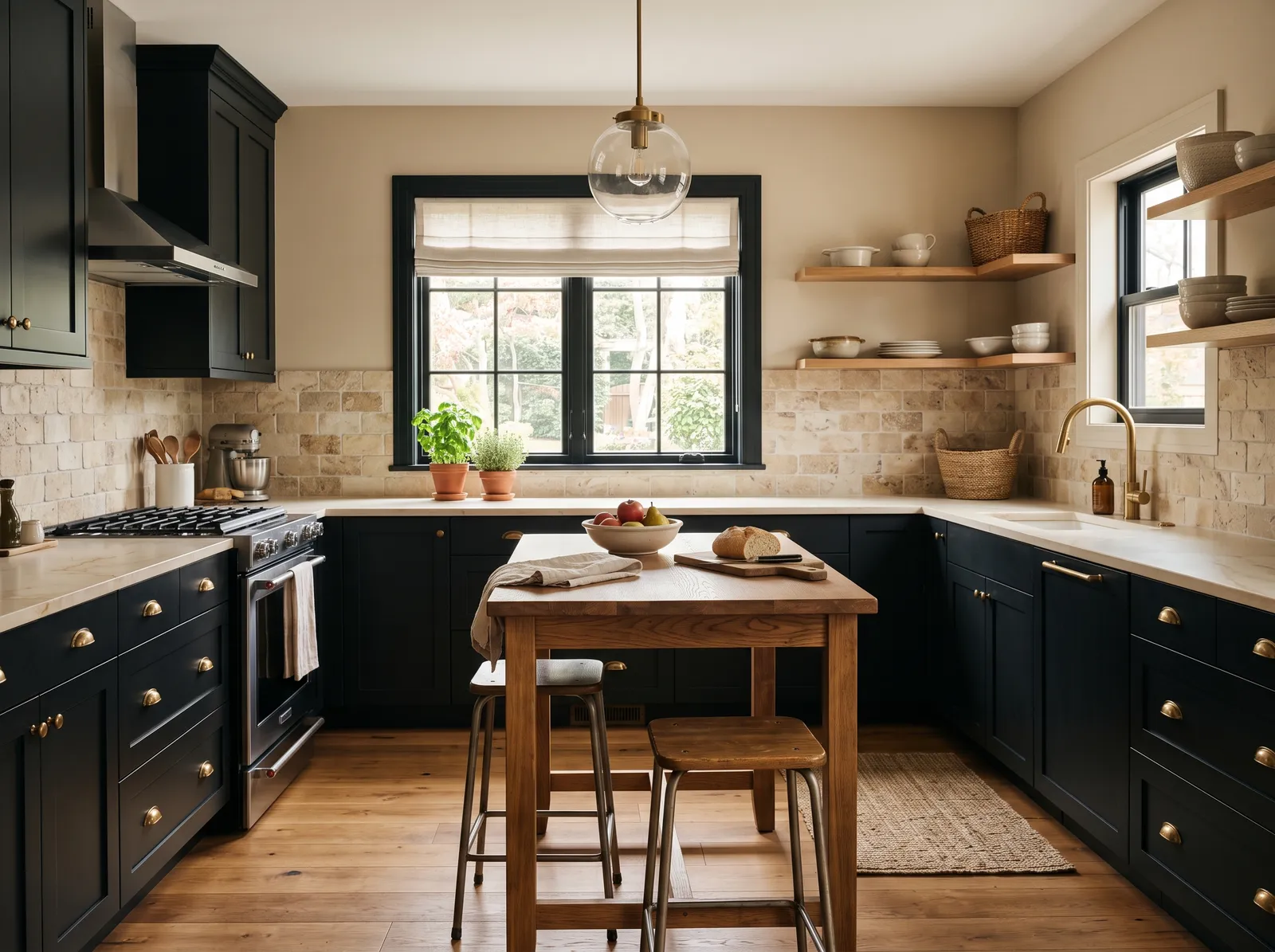
Black on a cabinet is one of the safest big-impact moves you can make. A cabinet is a contained piece of furniture, not a whole room, so a deep color reads as confident instead of cave-like. You get the drama of black with almost none of the risk, because there is always plenty of wall, floor, and ceiling around it to keep the space feeling open.
The trick is matching the depth of black to the cabinet's job and the light it sits in. A black kitchen island, a black bathroom vanity, and a black built-in bookcase all want slightly different things from the same family of color. Below is how to pick the right one, what finish holds up to daily hands and spills, and the small mistakes that make a black cabinet look flat instead of rich.
Why Black Works So Well on a Cabinet
A cabinet gives black a frame. Surrounded by lighter walls and counters, the dark color reads as a deliberate anchor instead of swallowing the room. That contained quality is exactly why black cabinets feel high-end rather than heavy.
Black also hides the things cabinets get hit with most. Fingerprints, scuffs, and the gray haze of daily use disappear on a dark surface far better than on white or pale wood. For a piece you open and close dozens of times a day, that forgiveness is a real, practical win.
Picking the Right Depth of Black for the Light
Most blacks people love on cabinets are not true jet black. They are very dark charcoals, blue-blacks, or green-blacks with a low LRV, usually in the single digits. That faint undertone is what keeps the cabinet from looking like a flat void in person.
Let the light steer the depth. A cabinet in a bright, sun-filled room can take the deepest, near-zero LRV black without feeling closed in. In a dim corner or a windowless bath, step up a notch to a softer black or a warm charcoal so the cabinet still shows its detail instead of turning into a dark hole.
The Right Finish for a Black Cabinet
For cabinets, lean toward satin or semi-gloss. These finishes wipe clean, shrug off splashes near a sink, and stand up to the constant touching that doors and drawer fronts get. Flat or matte black looks gorgeous in a photo but shows every fingerprint and is hard to scrub without burnishing.
Be aware that the glossier you go, the more a black cabinet shows surface flaws and glare. Semi-gloss reflects light and highlights any dents or rough sanding, so prep matters more. Satin is the sweet spot for most kitchens and baths: durable and washable, but soft enough to hide minor imperfections.
Pairing Black With Counters, Hardware, and Trim
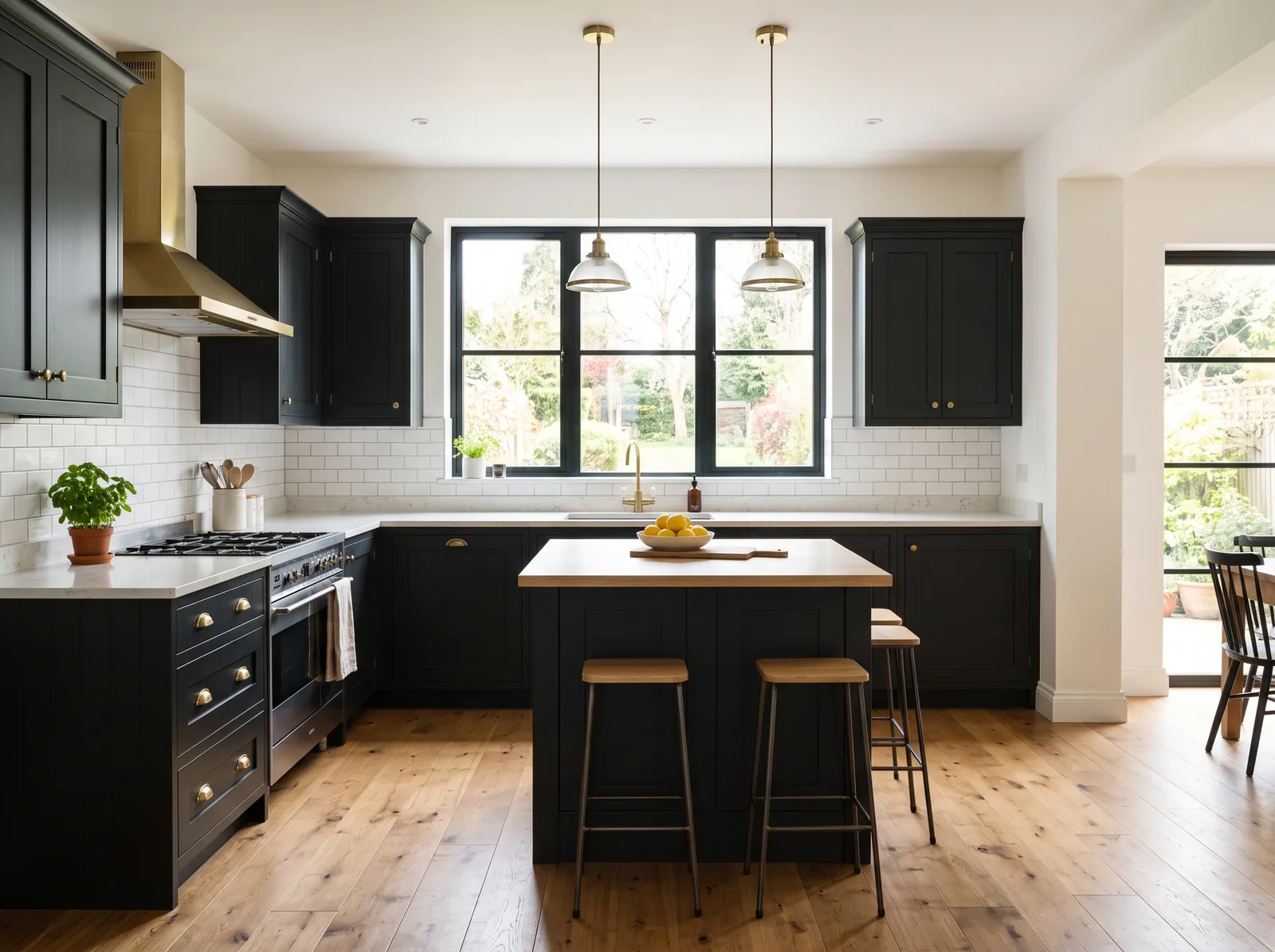
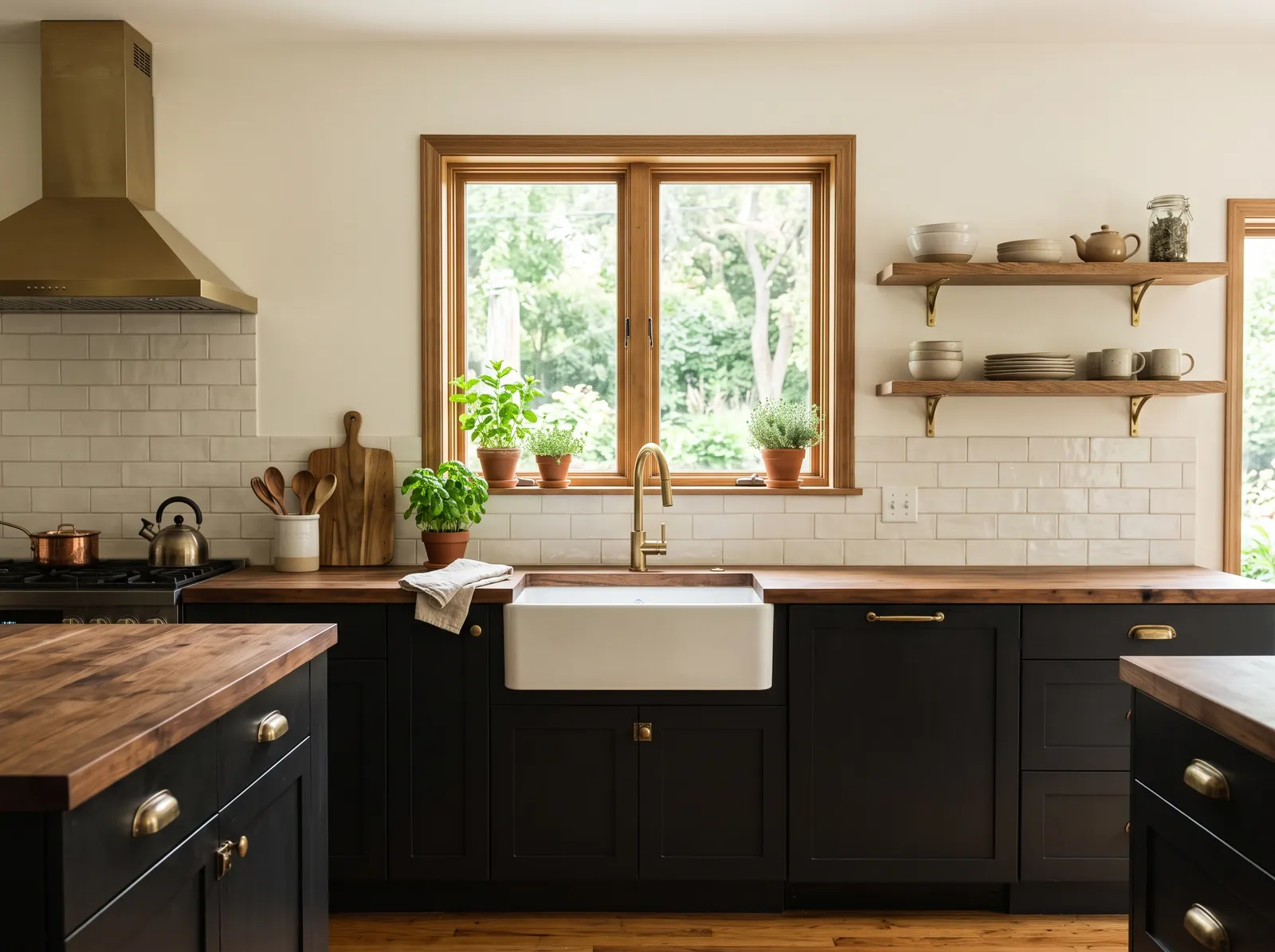
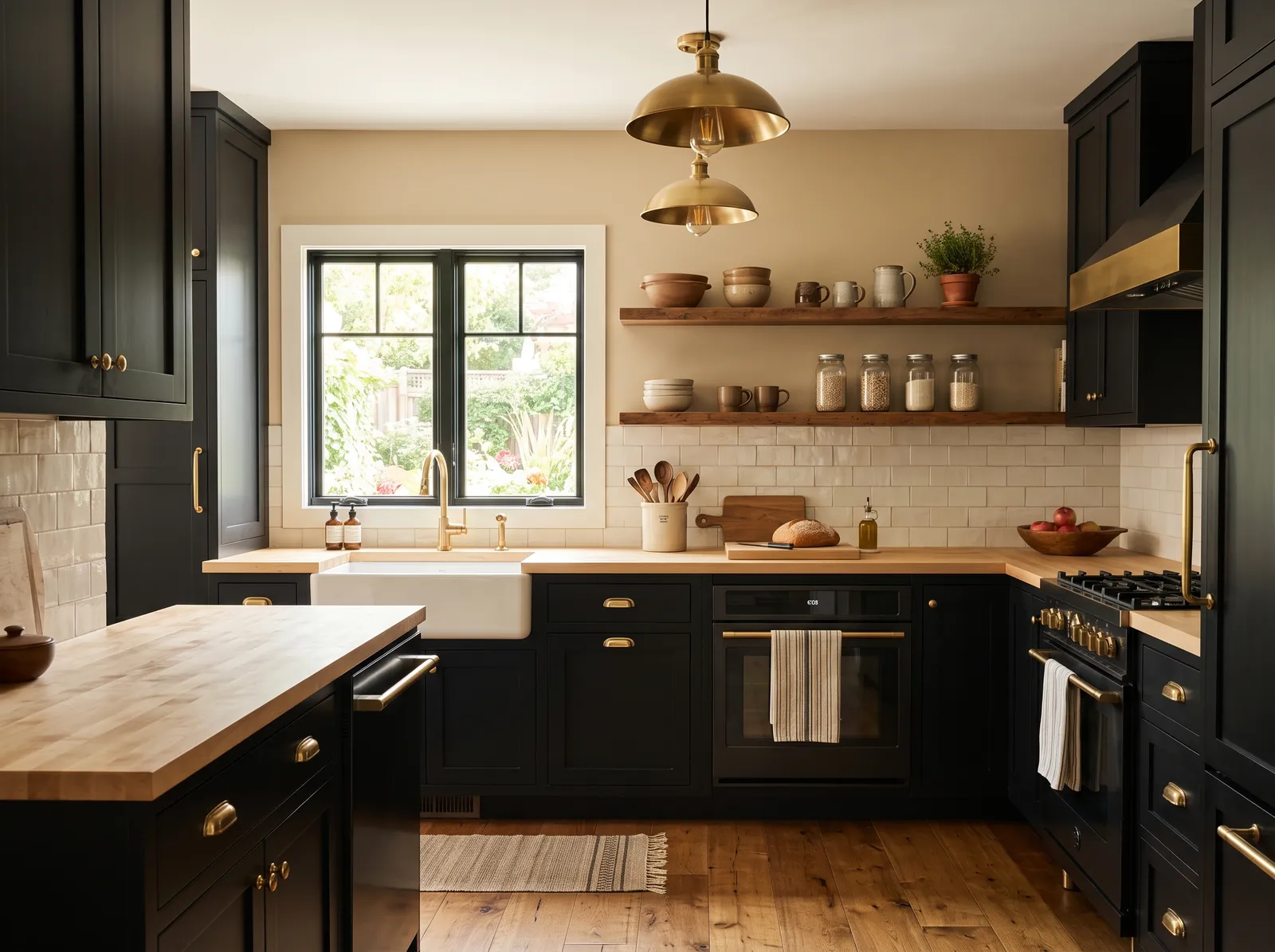
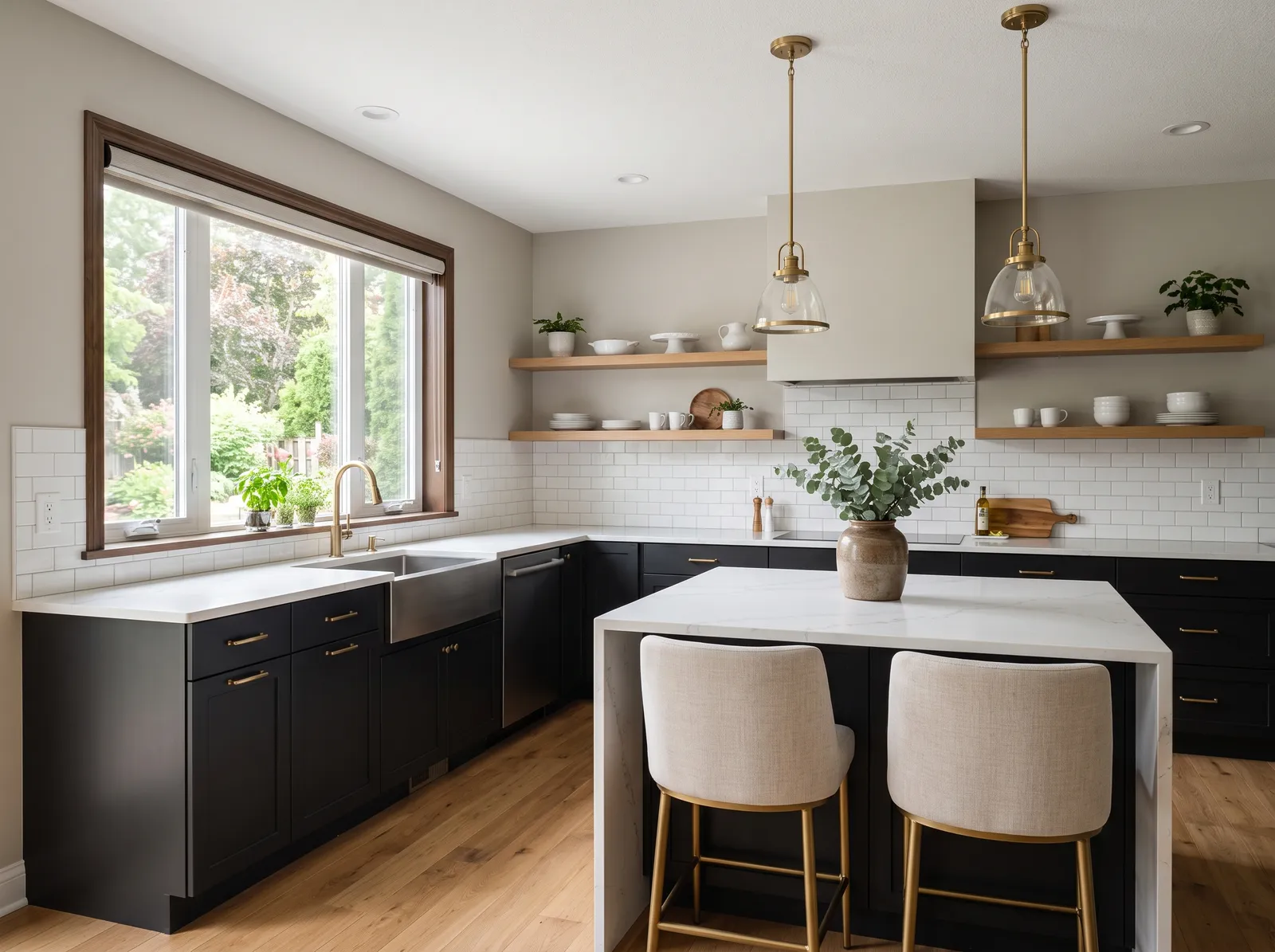
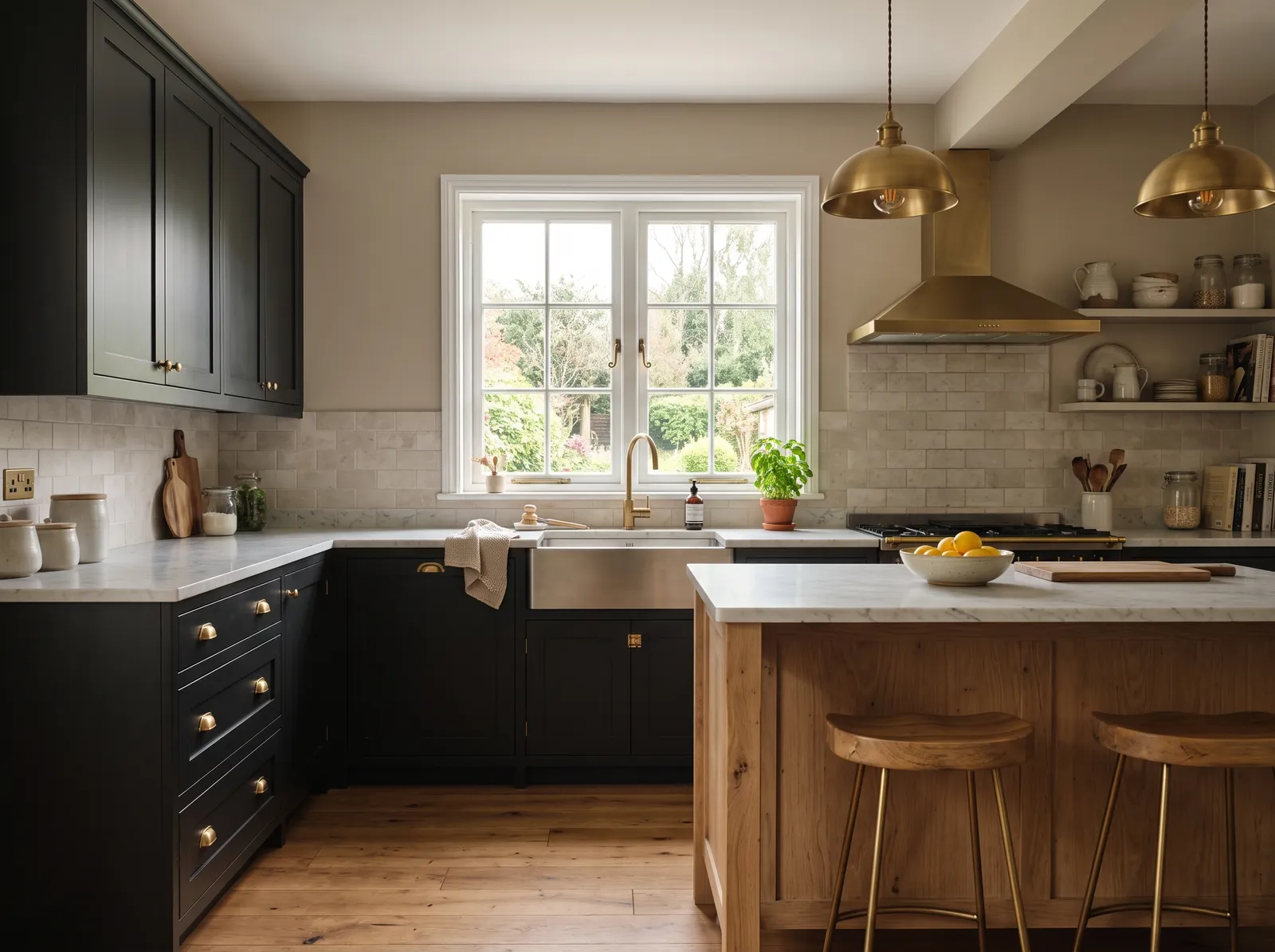
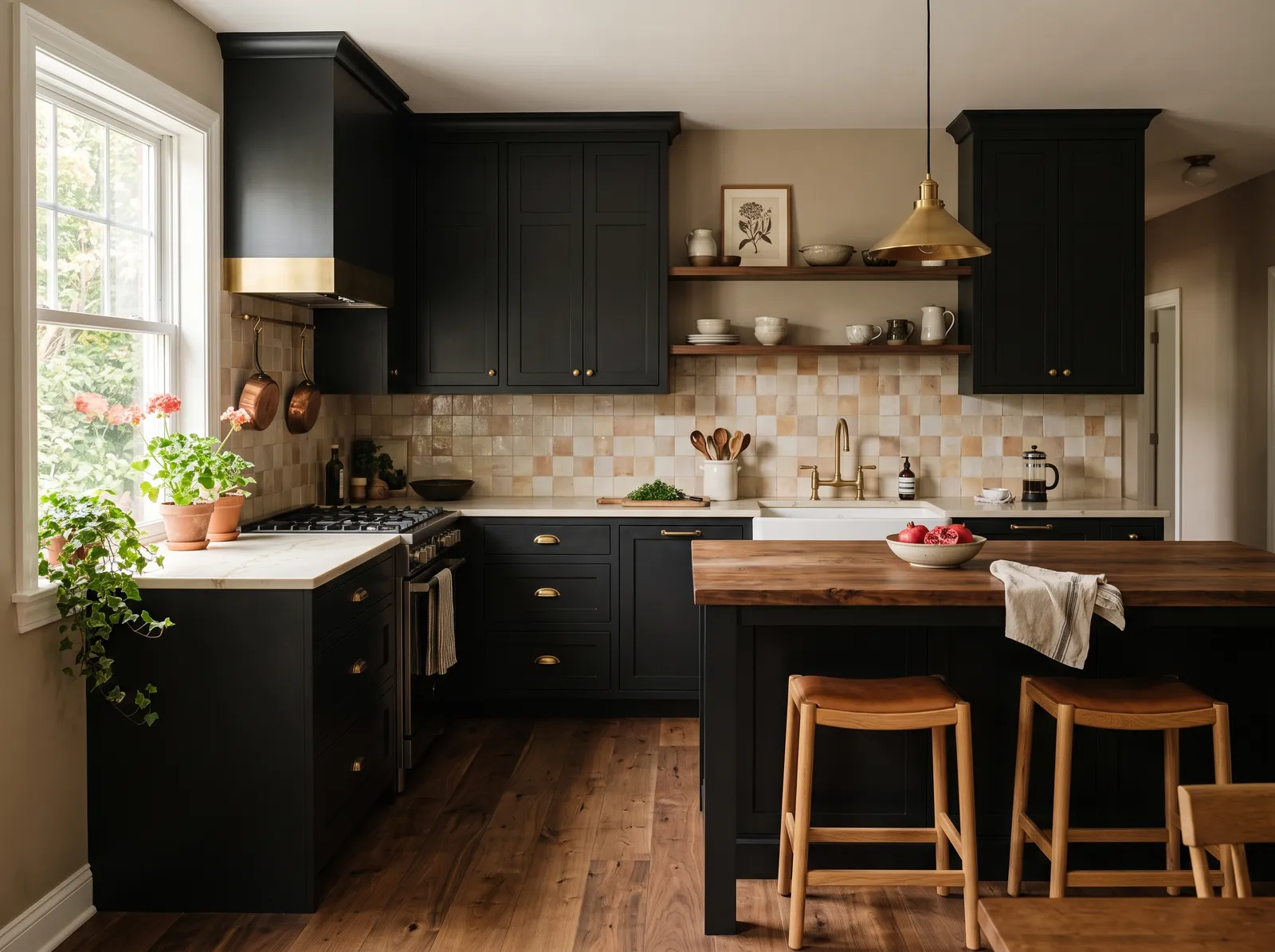
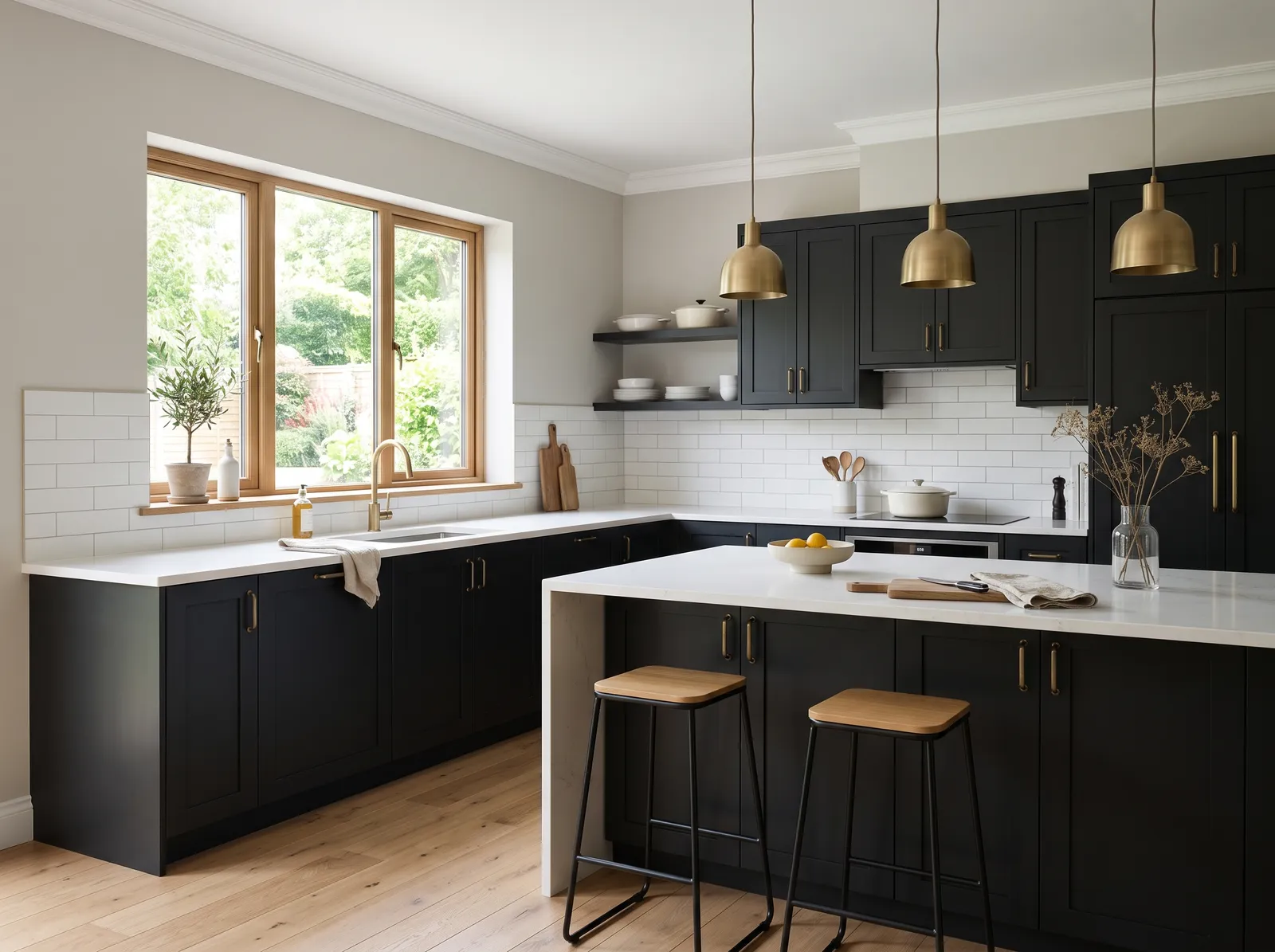
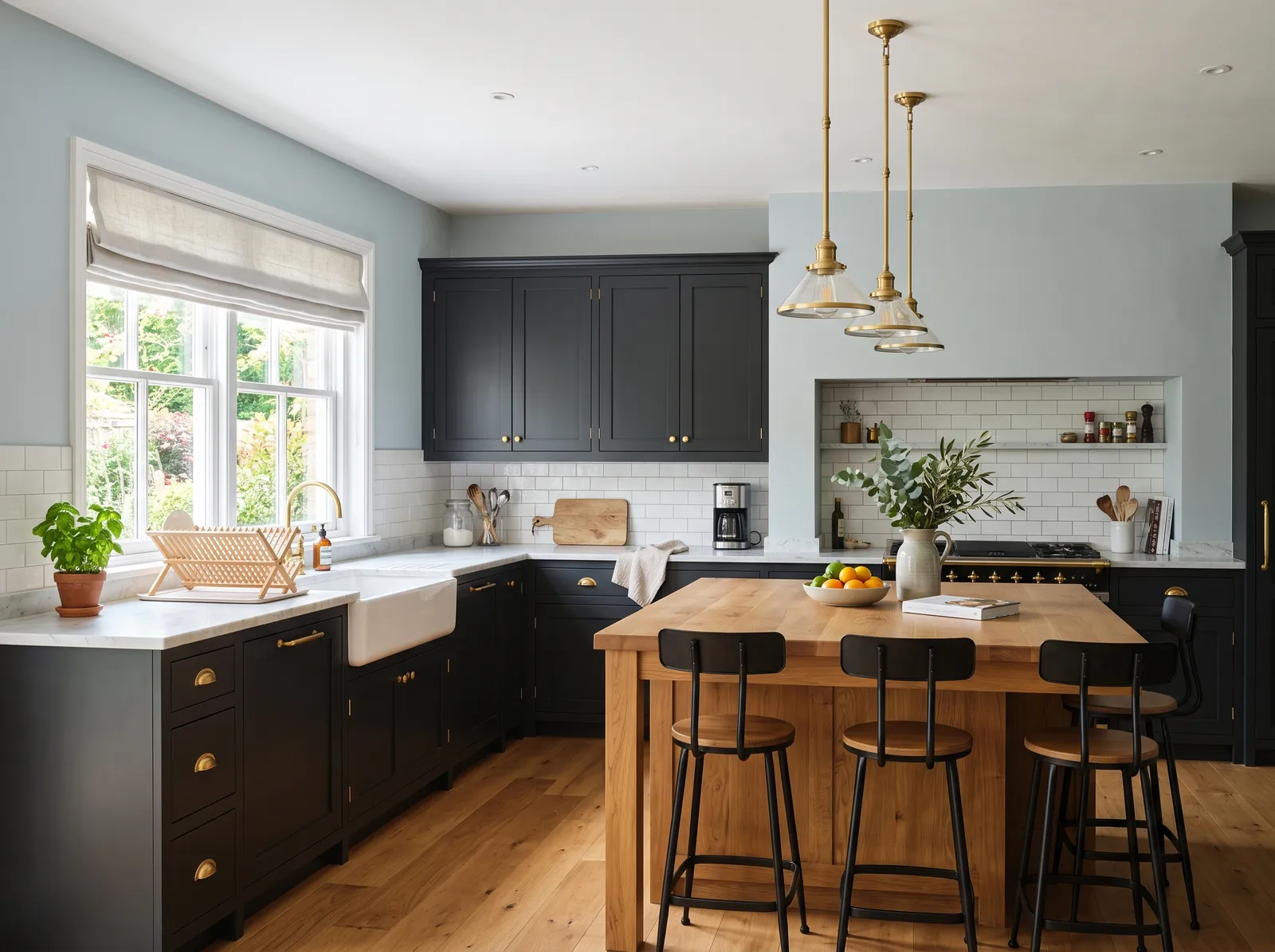
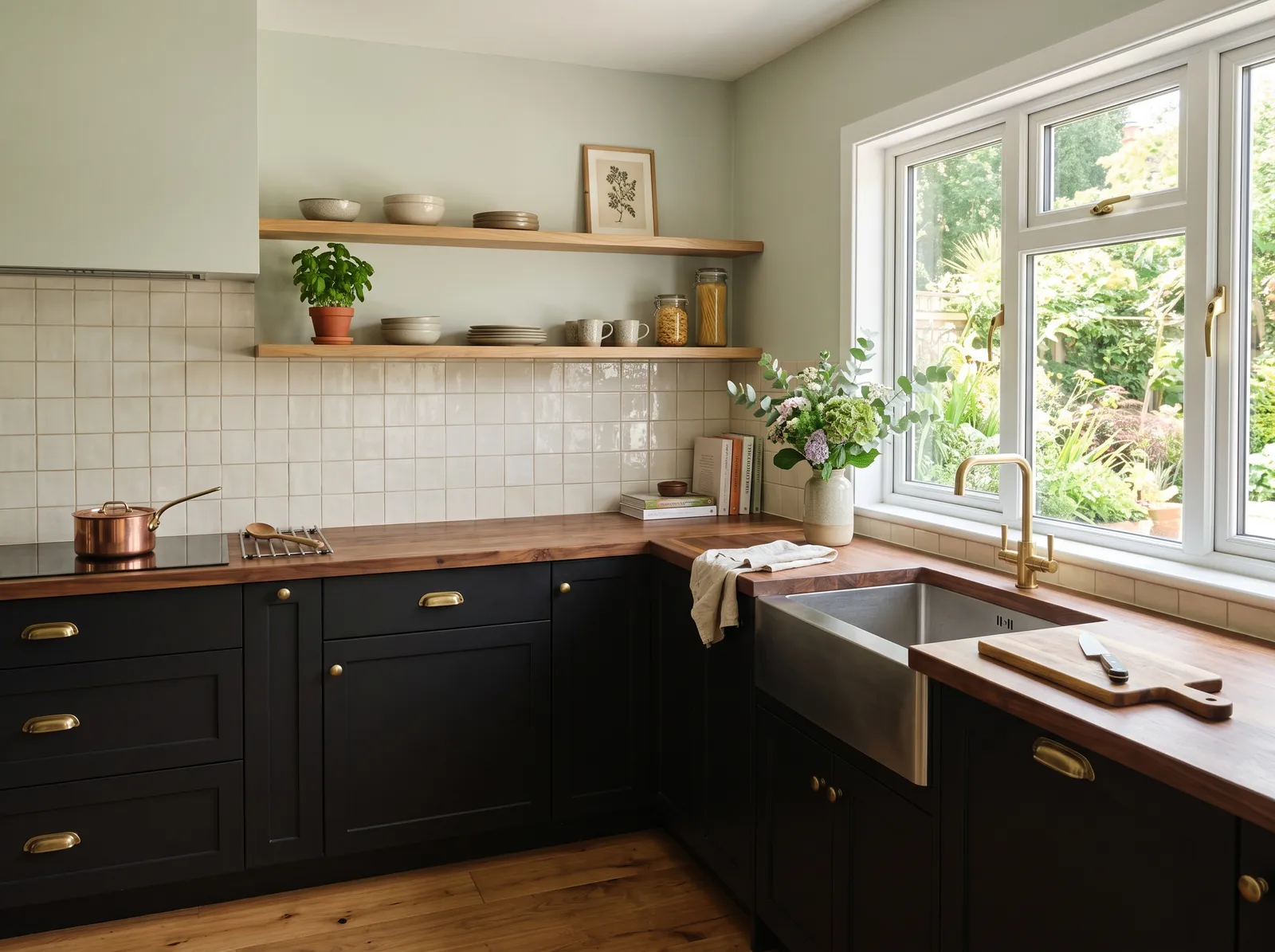
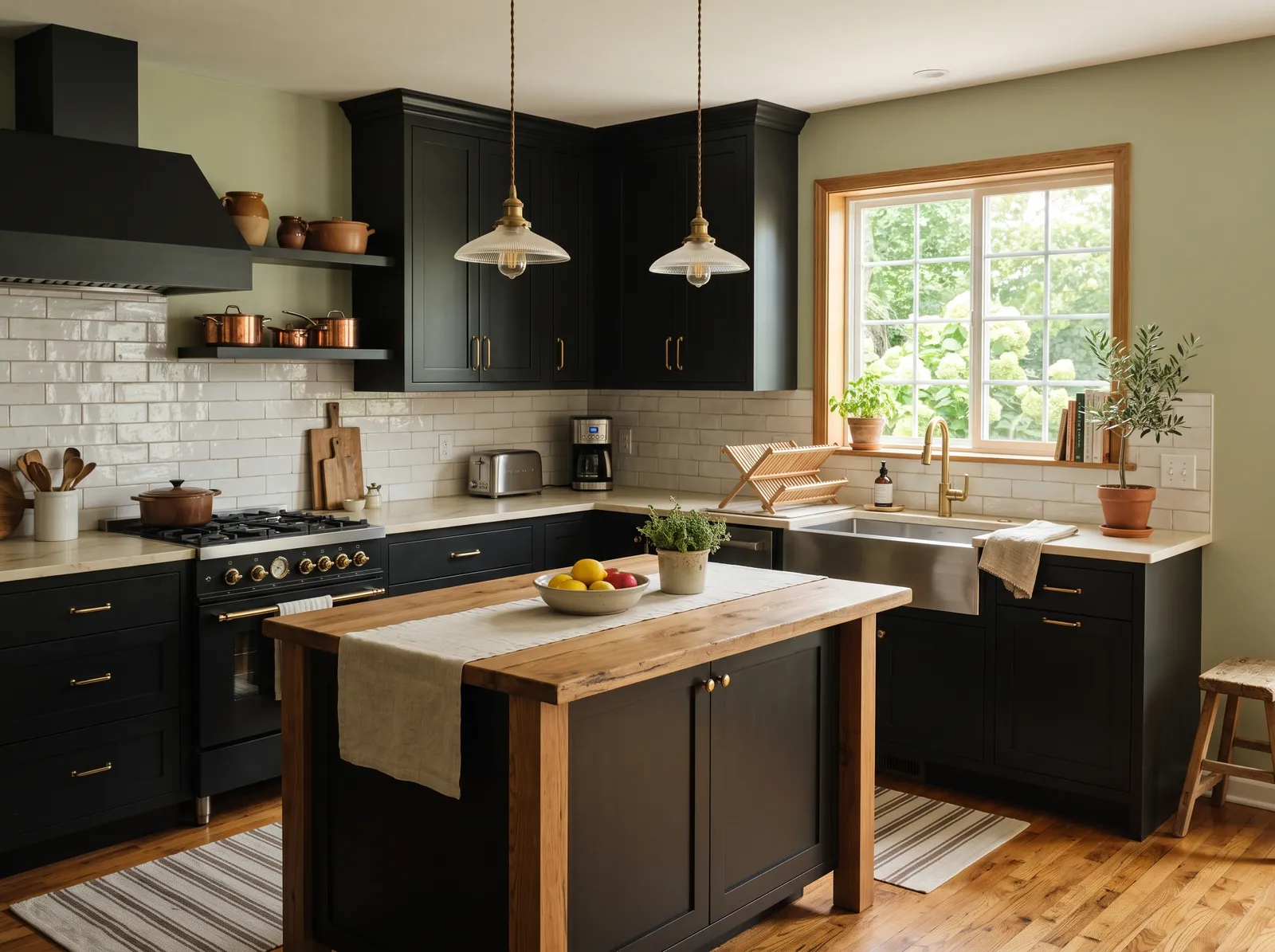
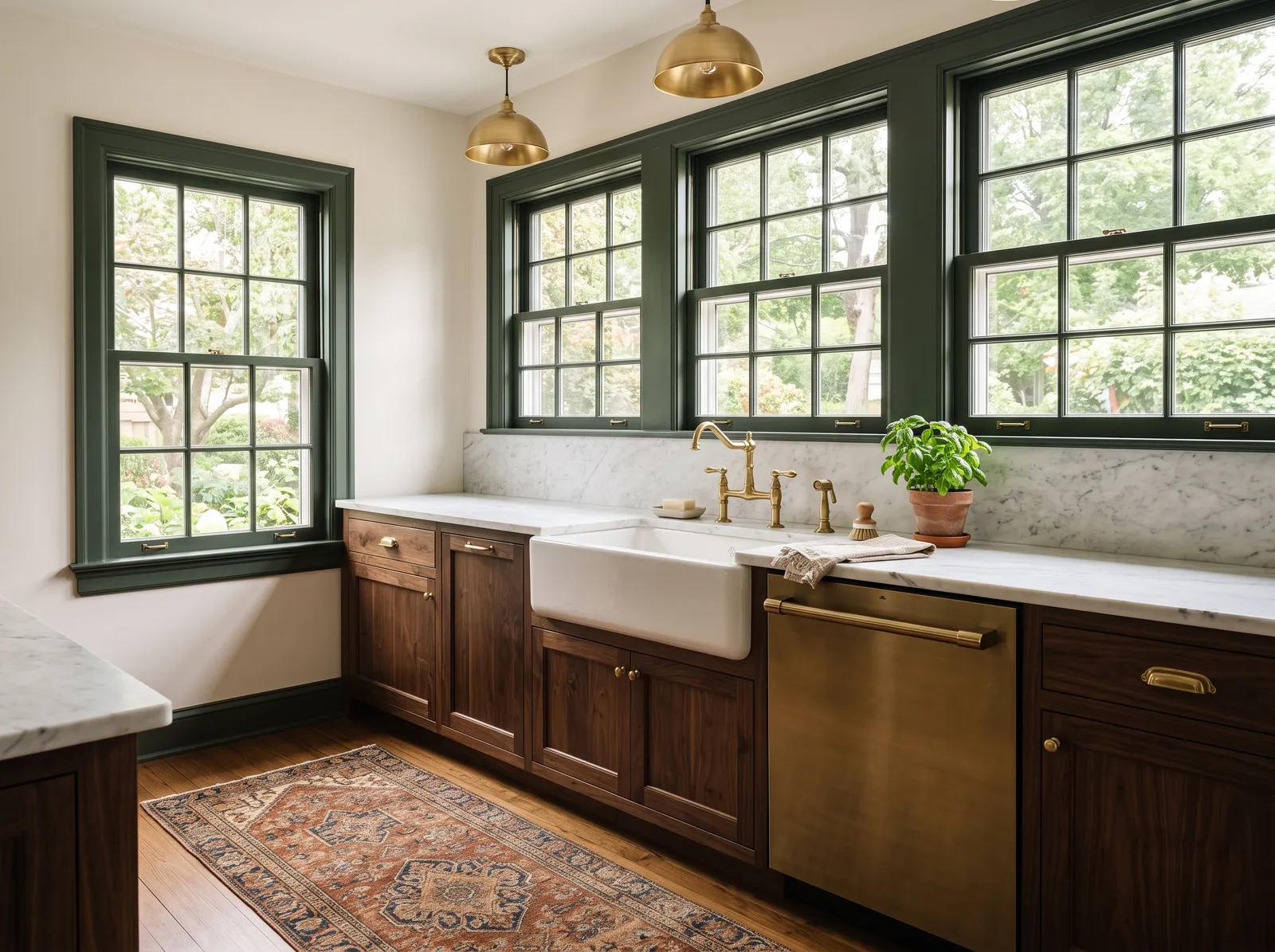
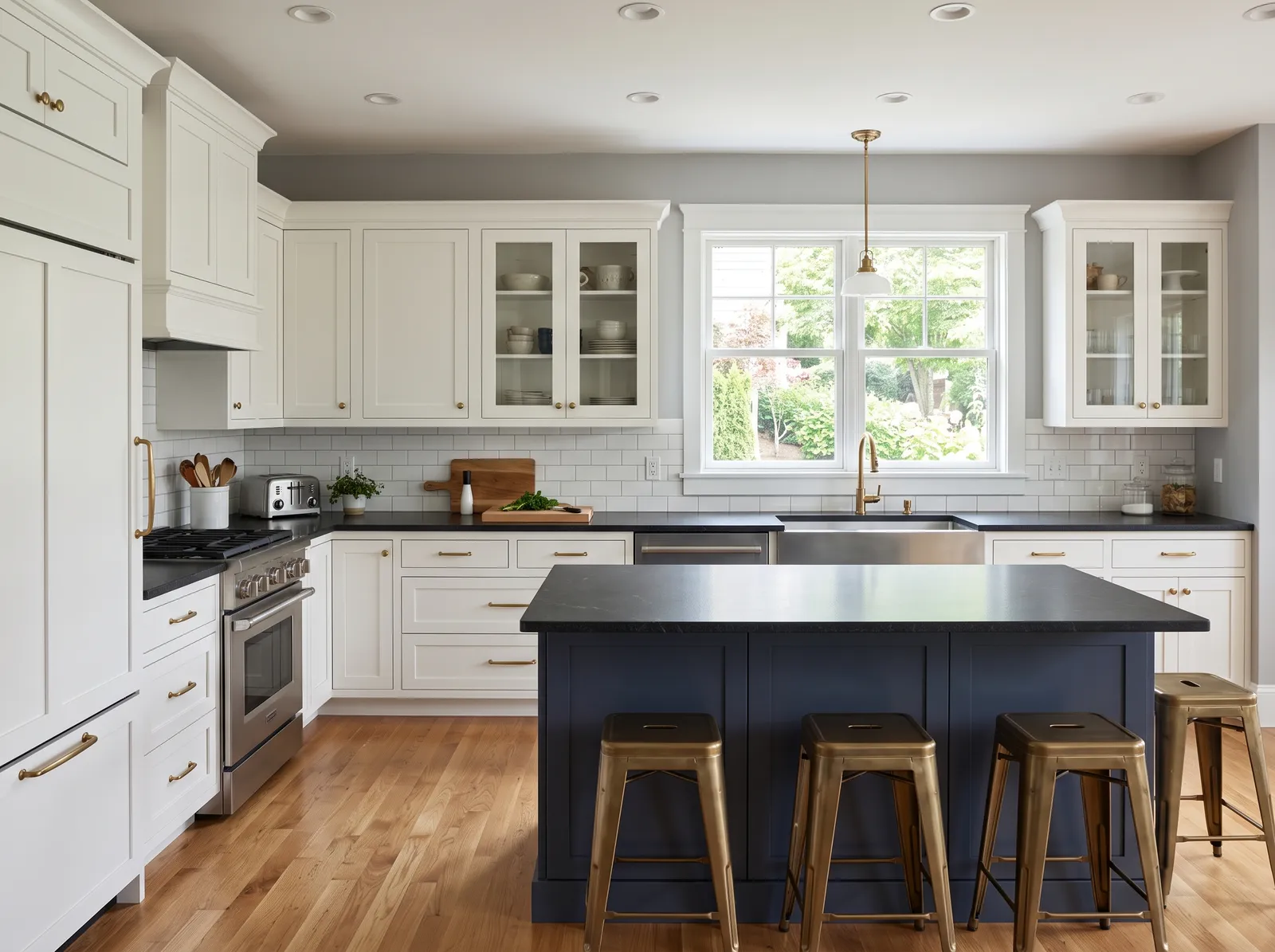
Black cabinets give you room to make the hardware a feature. Brass and gold pop warmly against black, matte black hardware reads quiet and modern, and polished nickel keeps things cool and clean. Pick one metal and repeat it on the faucet and lighting so the look stays pulled together.
For surroundings, a black cabinet loves contrast above and around it. Light or white walls, a stone or butcher-block counter, and crisp trim all let the cabinet stand out. If the cabinet's black leans blue or green, echo that hint somewhere small, like a tile or a counter vein, so the undertone looks intentional.
Common Mistakes With Black on a Cabinet
The biggest mistake is choosing a true flat black and a true dead black at the same time. With no undertone and no sheen, the cabinet loses all dimension and looks like a cutout. A whisper of undertone plus a little sheen brings the surface back to life.
The other common miss is skipping prep and skipping a tinted primer. Black shows brush marks, drips, and patchy coverage more than any other color, and it usually needs a gray or dark-tinted primer to cover evenly. Rushing this is what separates a custom-looking cabinet from one that looks repainted.
Black Kitchen Cabinet Paint — Frequently Asked Questions
Will black cabinets make my kitchen or bathroom feel smaller?+
Not the way painting whole walls black would. A cabinet is a single piece with light walls and counters around it, so the black reads as an anchor, not a closed-in box. In a small room, keep the surrounding surfaces light and let the cabinet be the bold spot.
What sheen should I use on a black cabinet?+
Satin or semi-gloss. Both wipe clean and handle daily hands, splashes, and moisture far better than flat. Satin hides minor surface flaws while semi-gloss is the most washable but shows glare and imperfections more, so pick based on how much wear and how good your prep is.
Is a true black or a soft black better for a cabinet?+
A soft, near-black with a faint undertone usually looks better than a dead true black. The slight charcoal, blue, or green keeps the cabinet from looking like a flat void and gives it depth in real light. Save the deepest blacks for cabinets in bright, well-lit rooms.
Do I need to prime before painting a cabinet black?+
Yes, and a tinted gray or dark primer makes a big difference. Black covers unevenly over light or bare surfaces and can take many coats without primer. A dark-tinted primer plus good sanding gives you full, even color in fewer coats and a more durable finish.
What hardware looks best on black cabinets?+
Brass and gold give a warm, high-contrast pop, matte black keeps things quiet and modern, and nickel or chrome reads cool and clean. Choose one metal and repeat it on your faucet and light fixtures so the whole space looks coordinated rather than mixed.
Can I match a black I like across different paint brands?+
Yes. Any color shown here is mixed to order at the store, so a black you love from one brand can be cross-matched into another brand's paint. That lets you choose your shade and finish, then get it in whatever line or product you prefer for cabinets.