Black Garnet
Behr's near-black named after a red gemstone, reviewed honestly: why the paint on the wall reads cool, not garnet, and where it actually earns its keep.

Jessica has spec'd whites and neutrals for more than 300 rooms and keeps a sample wall of painted drawdowns in her studio. Every color review is checked against real reader rooms in the comments and re-tested when a formula changes. About the testing process →
- 1Cordovan Brown0
- 2Black Garnet6
The Fast Verdict
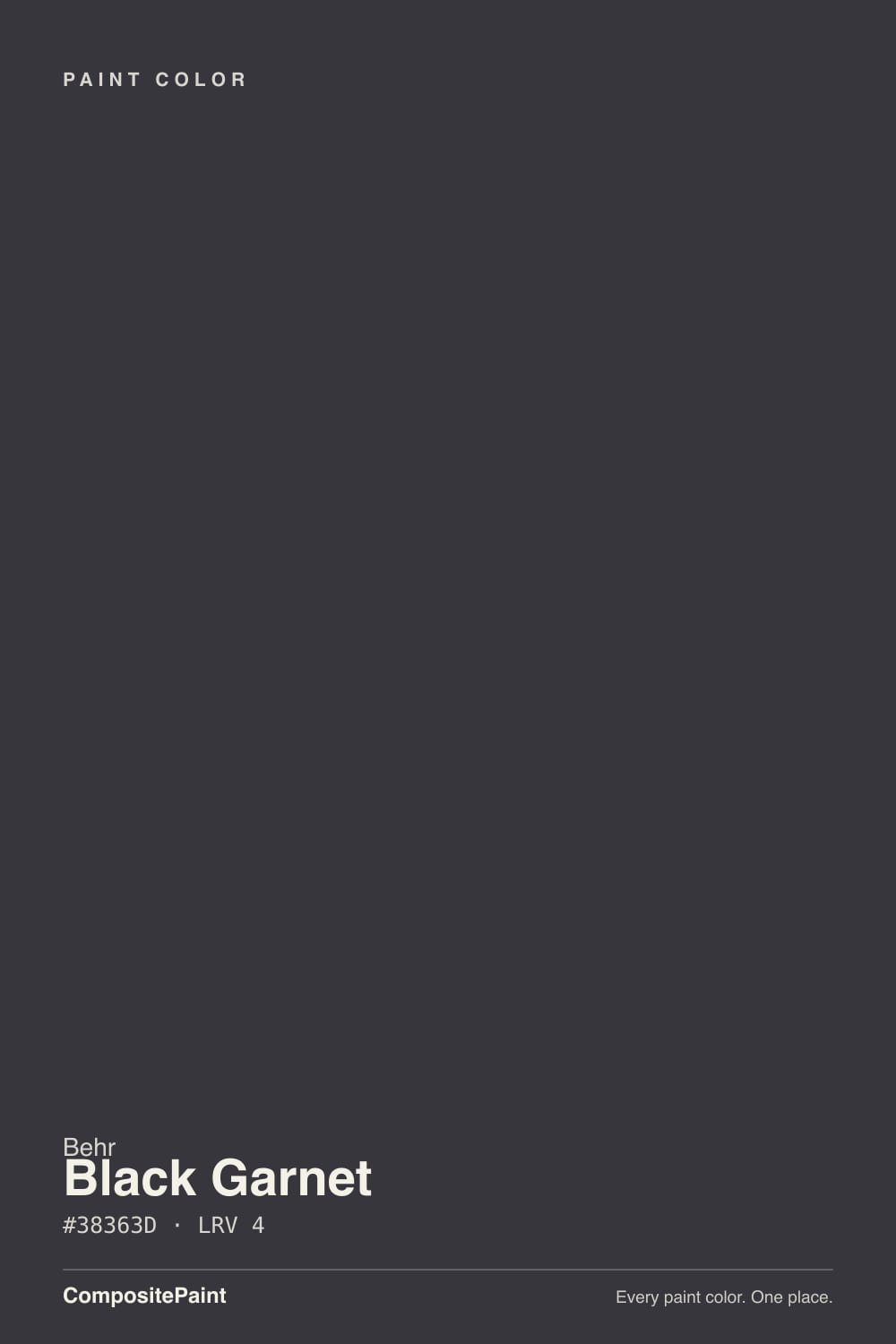
Black Garnet promises a deep, wine-red black — the name is right there, garnet, the gemstone that flashes red under strong light. The paint does not do that. On the wall it reads as a quiet, cool-leaning near-black, closer to ink than wine, with the faintest whisper of blue-violet and almost no red at all. Judge it on what it actually is — a dependable, low-drama true black for doors, cabinets, and one committed accent — and it earns its keep. Judge it by its name and you will be disappointed.
Front doors and shutters · kitchen islands and cabinets · one accent wall or built-in in a room with real daylight · anyone who wants a true black without buying a paint actually labeled "black"
You want the literal wine-red warmth the name suggests · your room is dim or north-facing with no supplemental light · you're painting more than one wall or a whole kitchen · your front door sits in harsh, unshaded south sun with no shade at all
- A genuine near-black without any red or brown warmth to manage
- Reads crisp and modern on doors, shutters, and cabinets
- Deep enough (LRV 6) to hold its color instead of washing out
- A quieter, same-brand alternative to Behr's better-known blacks
- Small-room and accent use hides scuffs and hand marks well
- The name oversells a red-wine warmth the paint does not deliver
- Needs real light to read as anything but flat black
- Too dark for whole-room walls in most homes
- Very dark exterior colors carry a real heat/warping risk on some door and trim materials
What Color Is Black Garnet, Really?
Garnet is a deep red-wine gemstone, and Behr's own marketing copy leans into that: official listings describe "warm garnet undertones" that supposedly show up in bright light. That is not what the paint's own formula data shows. Black Garnet's real hue reads as a cool, low-chroma near-black — blue and violet edge out any red at all — closer to an inked charcoal than a garnet. If you shop this color expecting the gem's color, sample it first; the name is doing more selling than the paint can back up.
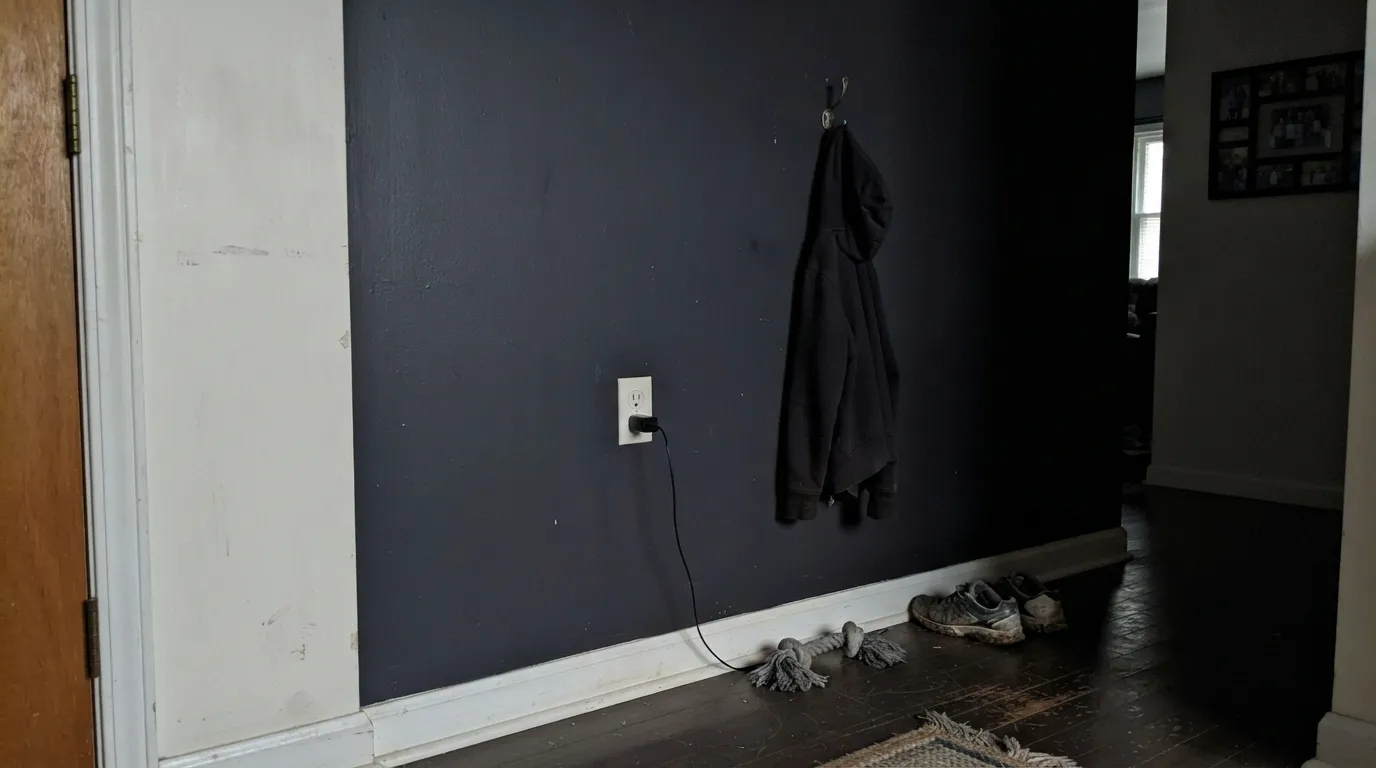
At LRV 6 it is genuinely dark — deeper than most "near-blacks" brands sell, in the same territory as Sherwin-Williams Tricorn Black (LRV 3) and Domino (LRV 3). That depth means it behaves like true black in anything but strong, direct light: shadows swallow it, corners go flat, and in a dim room it can be hard to tell it is painted at all rather than simply unlit. Give it real light and the cool undertone finally shows itself as more than pure void.
Undertone in one line: cool, with a faint blue-violet whisper — never red, never brown. If a listing photo or a screen render shows it warmer, that is color management doing its own thing, not the can. Trust a real sample under your own bulbs before you trust a photo.
Where It Shines
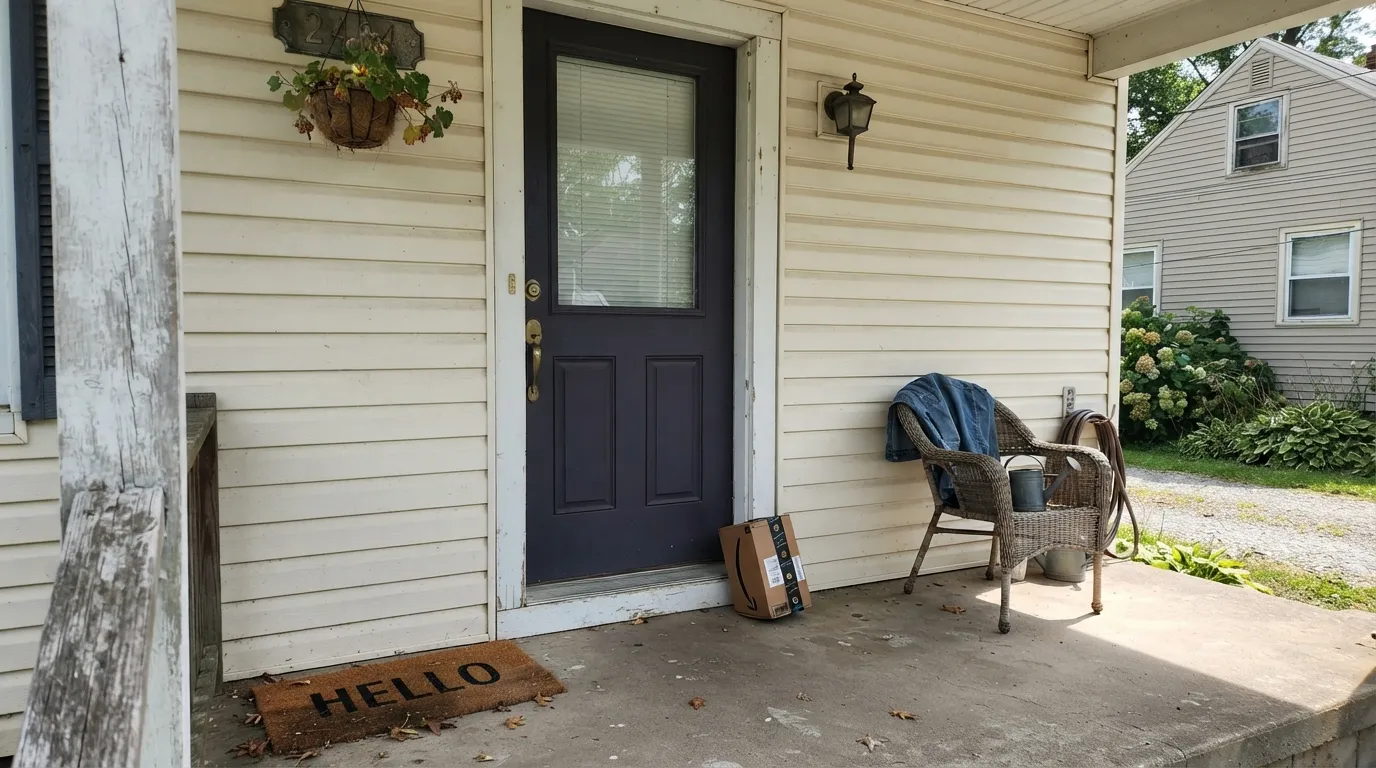
Give it a surface with real shape — a paneled front door, a beveled island edge, a bank of built-ins — and real light hitting it at least part of the day, and Black Garnet does the one thing a true black is supposed to do: it disappears as a "color" and reads as depth. Doors and shutters are its best job, cabinets and islands its second, because both get direct daylight and a hard edge that lets the cool undertone catch instead of vanishing into shadow.
Where It Fails
Almost every disappointing story with Black Garnet comes down to one of three mismatches, and all three are avoidable before you buy the gallon.
The name promises a warm, wine-red black. The actual formula is cool and nearly colorless — no red, no brown, just a faint blue-violet whisper. If you specifically want a black that flashes warm in strong light, look at Behr's own Cracked Pepper instead; Black Garnet will read as a plain, cool black next to it.
At LRV 6 this is one of the darkest colors in any deck. In a dim room — north-facing, small windows, no lamps — it stops reading as a considered near-black and starts reading as a hole in the wall: no visible undertone, no depth, just dark. It needs at least some daylight or warm lamps to prove it is not flat black.
This is not unique to this color — it is true of any very dark paint — but it matters most on a front door: dark colors absorb far more heat than light ones, and door manufacturers commonly warn against their darkest colors on metal and fiberglass doors that sit in full, unshaded sun, because the heat buildup can warp the panel. Check your door's own paint guidelines before committing an LRV 6 color to an exposed south face, or keep the black to shutters and trim instead.
Room by Room
Direct light and a paneled surface are exactly what this color needs. Semi-gloss on the door, semi-gloss or satin on shutters; against light or mid-tone siding it reads crisp and deliberate rather than heavy.
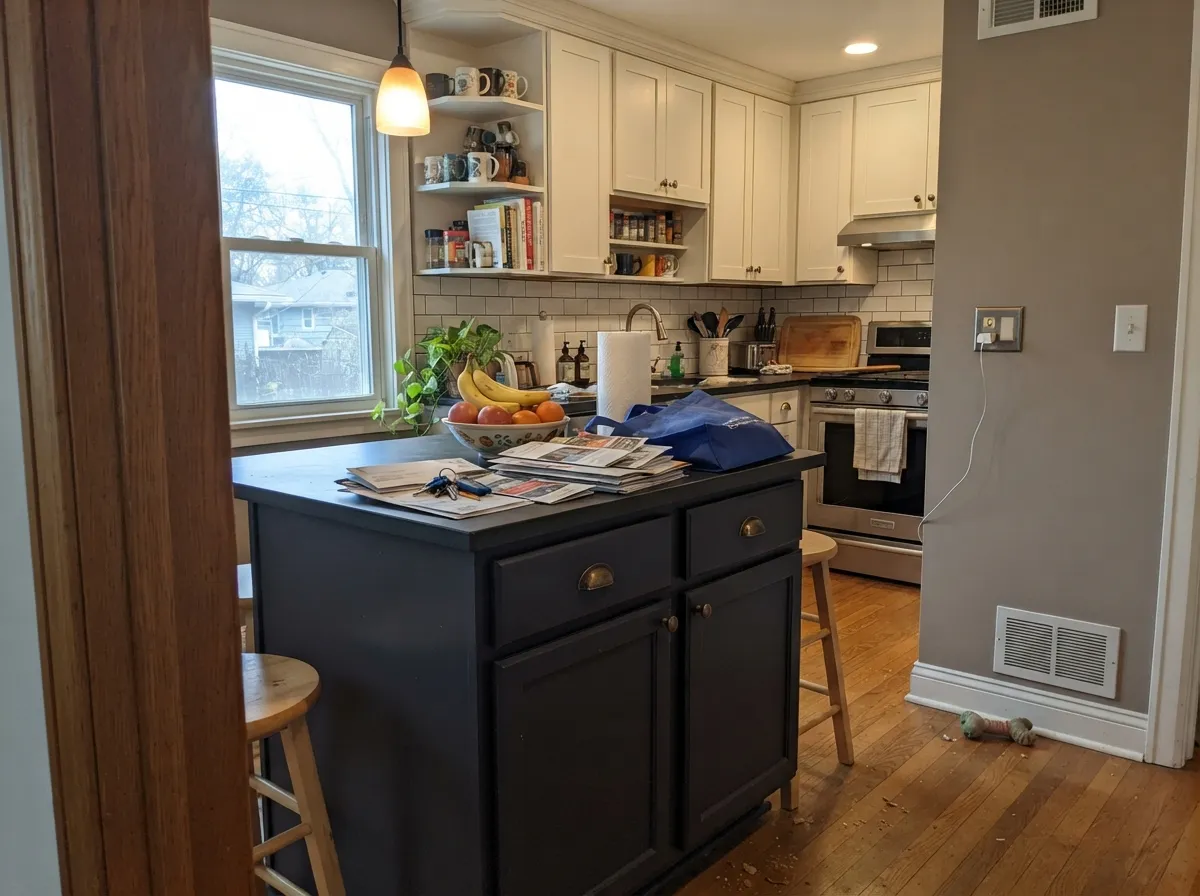
A single island or a run of lower cabinets under lighter upper cabinets is where near-blacks like this earn compliments. Satin, urethane-fortified cabinet enamel; brass or unlacquered hardware warms it up without fighting the cool undertone.
A small room takes deep color well, and the cool cast reads sophisticated rather than gloomy once you add a mirror and real light. Matte or eggshell; keep the trim a genuine warm white so the room doesn't feel like a closet.
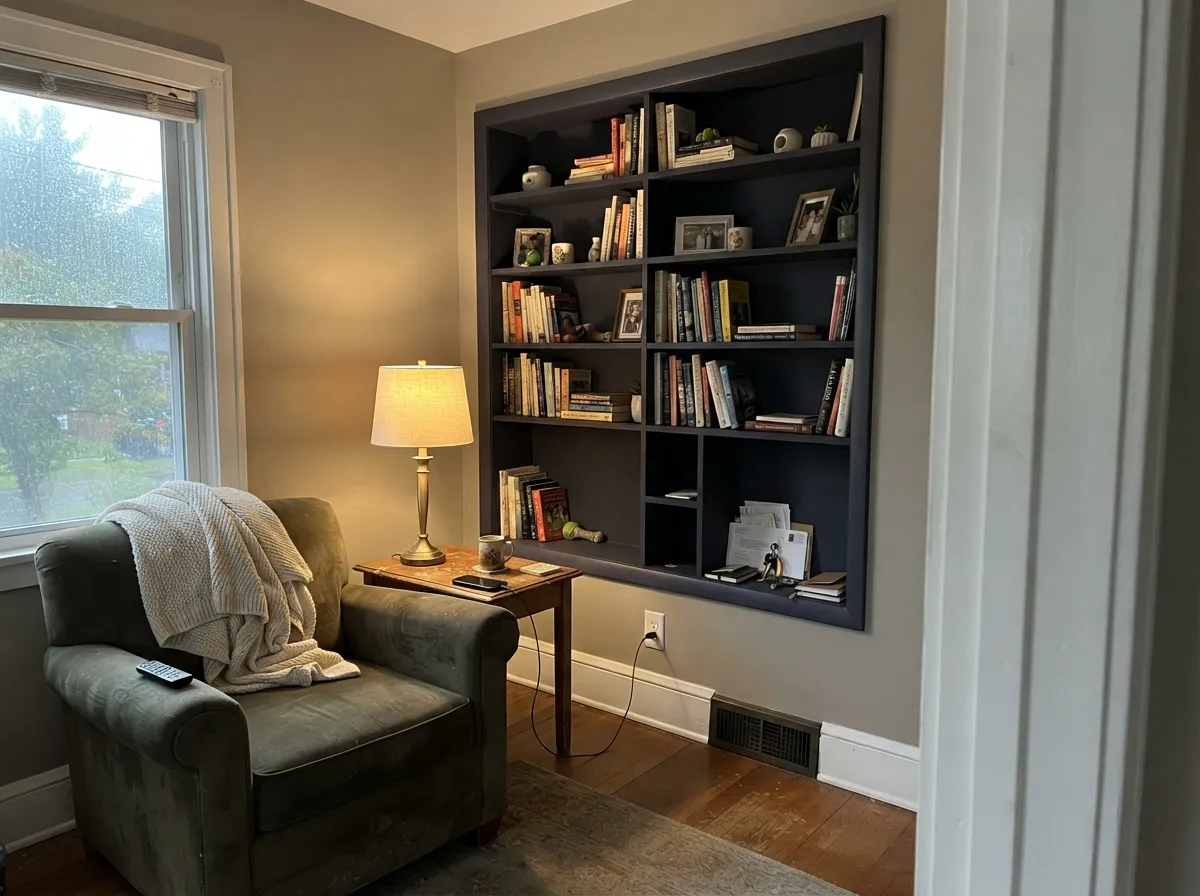
One wall, in a room that gets real daylight or has a lamp aimed at it, can carry this color well. All four walls in the same low-light room is where it goes flat and disappears instead of reading as a deliberate color choice.
The depth that flatters a door or an island swallows a whole bedroom, especially at night when there is no daylight to catch the undertone at all. If you love the idea, use it on a single headboard wall with a dedicated lamp, not on all four walls.
On trim, shutters, or a garage door it is a clean modern black without the warmth of Cracked Pepper. Confirm the door or trim material's dark-color guidelines first if the surface sits in full, unshaded sun.
Your Light Is the Risk
Full sun or strong indirect light is the only condition that lets the cool undertone register instead of pure void black. This is the light to sample it in.
Without real daylight or lamps it collapses into flat black — no undertone, no depth, just dark. Fine if that is genuinely what you want; disappointing if you expected "colored" black.
Cool morning light keeps it nearly void black; midday sun is when the faint blue-violet cast is most visible; by evening it reads as plain black again.
Warm 2700K lamps soften the coolness slightly. Cool white LEDs push it toward an inky blue-black — striking on a door, colder on a wall.
Most complaints about Black Garnet are a light mismatch. Upload a photo of your actual room and see it on your walls — then ask for the same wall in north light or evening lamps before you buy a single sample.
Need It From Another Brand?
Any paint counter can custom-tint Behr N110-7 directly. If you would rather stay in one brand's own deck, these are the closest stock matches, measured as ΔE2000. Under 2 is a difference you will not see on the wall.
| Brand | Closest color | ΔE | LRV | |
|---|---|---|---|---|
| Sherwin-Williams | Plum BrownSW 6272 · Sherwin-Williams | 3.2 | 6 | Color page → |
| Benjamin Moore | Cordovan BrownES-62 · Benjamin Moore | 2.8 | 0 | Color page → |
| PPG / Glidden | Dark GranitePPG1005-7 · PPG / Glidden | 3.7 | 6 | Color page → |
| Glidden | Deep Rum Raisin50RR 06/057 · Glidden | 2.5 | 6 | Color page → |
| Dutch Boy | Desert Fig446-7DB · Dutch Boy | 3.2 | 6 | Color page → |
| HGTV Home by Sherwin-Williams | Plum BrownHGSW 3401 · HGTV Home by Sherwin-Williams | 3.2 | 6 | Color page → |
Similar Behr Colors
The nearest shades to Black Garnet within Behr's own range, ranked by perceptual color distance — useful when you want the same look a touch lighter, darker, or warmer.
WCAG 2.1: AA is 4.5 : 1 for normal text, 3 : 1 for large text, AAA is 7 : 1.
Black Garnet vs the Colors You're Also Considering
Every Black Garnet sample board has the same rivals on it. The numbers show the real lightness gap — then it comes down to which risk you would rather live with.
Pick this for the cooler, more neutral read — Black Garnet's undertone is quieter and reads as true black in most light.
Sherwin-Williams SW 6989 · LRV 3DominoPick this if you want the violet lean confirmed and obvious — Domino owns its purple tint where Black Garnet barely whispers one.
Pick this if you still want a hint of personality in your black — Black Garnet carries a faint cool cast Tricorn doesn't.
Sherwin-Williams SW 6258 · LRV 3Tricorn BlackPick this if you want zero undertone conversation — Tricorn Black is the industry reference and never surprises anyone.
Pick this if you specifically don't want that flash — Black Garnet stays flatter and more consistent across changing light.
Behr PPU18-01 · LRV 5Cracked PepperPick this for the black everyone already knows — Cracked Pepper is Behr's bestseller and flashes its own violet secret in strong sun.
Pick this if "undertone-free" sounds boring — Black Garnet has just enough cool whisper to keep it from feeling like a hardware-store black.
Behr N520-7 · LRV 5CarbonPick this for a completely undertone-free black in the same Behr line — Carbon reads exactly the same in every light.
Within Behr, Catwalk N550-7, hex #343944 at LRV 4, is the more clearly blue near-black. Dark Burgundy Wine BXC-09, hex #353343 at LRV 4, carries a violet lean similar to Black Garnet but slightly deeper. Bitter Chocolate 790B-7, hex #393432, is the warm brown-black and the clearest contrast to Black Garnet's cool base. Spade Black BNC-38 at LRV 3 is darker still and leans green-blue.
Across brands, Dutch Boy Deep Cosmos 444-7DB shares the exact hex #38363D at LRV 4, a deltaE of 0. Sherwin-Williams Black Swan SW 6279 at LRV 4 and deltaE 0.69 is effectively the same color, and HGTV Home by Sherwin-Williams Bohemian Black HGSW 6988 at deltaE 1.56 is visually identical in normal room light.
Valspar Nevermore 8004-48G at LRV 3 and deltaE 2.49 is very close, so sample first. Benjamin Moore After Midnight CSP-630 at deltaE 4.53 is close but visibly different side by side, reading bluer.
Black Garnet Coordinating Colors
The rule with Black Garnet is simple: pair it with warm whites and warm neutrals, and let it do all the color work by itself. It does not need a colored partner — it needs contrast and warmth to keep the cool undertone from reading cold. These are the partners that keep it looking deliberate:
The Garnet Name, and Why the Paint Doesn't Match It
Paint brands lean on mineral and gemstone names to signal richness — garnet, onyx, obsidian, carbon — and the name is usually chosen for the feeling more than a literal color match. Behr's own marketing copy for this color describes "warm garnet undertones" showing up in bright light, but that is not what the paint's own formula data shows: this is a cool-leaning near-black, not a warm one.
That gap is worth knowing before you buy a gallon on the name alone. If the gem's actual deep red-wine color is what you're after, this Behr color will not give it to you — Cracked Pepper or a genuinely warm near-black will get closer. If what you actually want is a quiet, dependable true black, the name stops mattering and Black Garnet does its job well.
Black Garnet on Exterior Doors and Trim
Exteriors are where this color does its best work, and also where the one real caution lives. At LRV 6 it is one of the darkest colors sold — dark colors absorb significantly more heat than light ones, and door and trim manufacturers routinely list minimum-reflectivity guidance for certain fiberglass and metal products, because heat buildup in full, unshaded sun can warp or discolor the panel over time.
Before committing a whole door to this depth, check your specific door's paint guidelines, especially on a south- or west-facing entry with no porch or overhang for shade. If the guidance rules out full-black on your door material, Black Garnet still works well confined to shutters, trim, or a covered entry, where the heat exposure is lower.
Three Ready Palettes Built on Black Garnet
A color is never alone on the wall. These are complete combinations in the 60-30-10 pattern, with the reason each one holds together. Every one opens in the visualizer.
Same-brand consistency start to finish, and enough contrast between the warm off-white body and the cool black door to make the door the obvious focal point without a fight.
Try this palette in your roomTwo soft, warm whites keep the room bright, so the island reads as a single deliberate piece of furniture instead of a hole in the kitchen; brass hardware ties the cool black back to the warm whites.
Try this palette in your roomThe greige wall keeps the room from going cave-dark, the black built-ins carry all the drama, and the warm white trim stops the black from reading cold against the greige.
Try this palette in your roomBlack Garnet FAQ
Is Black Garnet actually red, like a garnet gemstone?
Not really. The name points at the gem's deep wine-red, but the paint itself reads as a cool, low-chroma near-black with a faint blue-violet whisper — no red, no brown. If you want an actual warm, red-leaning black, look at Behr's own Cracked Pepper or a color like Sherwin-Williams Black Bean instead.
Is it a true black or does it have an undertone?
Technically it has one — a faint cool, blue-violet lean — but it is subtle enough that in most light it simply reads as black. Think of it as one of the deck's quietest near-blacks, not a boldly "colored" black.
What trim white goes with Black Garnet?
A genuine warm white — White Dove or Behr's own Swiss Coffee — keeps the pairing from feeling cold. A bright, blue-based white will make the black look colder than it already is; go warm to balance it.
Can I use it on a front door?
Yes, and it is one of its best jobs — but check your door's own paint guidelines first if the door faces full, unshaded sun. Very dark colors absorb more heat than light ones, and some metal and fiberglass door manufacturers warn against their darkest colors on doors that get harsh, all-day sun.
Will it work in a north-facing room?
Only with help. At LRV 6 it needs real daylight or warm lamps to read as anything beyond flat black; a dim north room with no supplemental light swallows it completely and whatever subtle undertone it has disappears.
How many coats does it need?
Plan on two full coats minimum over a mid-tone or light existing color, more if you're covering a bold color or bare wood. Dark colors like this also show roller lap marks more than lighter ones — back-roll in one direction and keep a wet edge.
Have you painted with Black Garnet?
Rate it — one tap helps the next reader decide.
Ask a Question