Black Front Door Paint Colors
268 black colors that work in front doors, drawn from the full ~30,000-color US paint deck. Below: editor's picks specific to front doors, then 30 picks spread across the LRV range — narrow further on the brand page when you've shortlisted.
True black on a wall almost always looks heavier than you expected. The picks below — the "designer blacks" — sit just shy of pure black, with subtle blue, brown, or green undertones that keep them from reading like a void.
Editor's Picks: Black for Front Doors
4 picks30 Black Picks Across the LRV Range
30 of 268 · sorted dark → lightLooking for more? All black → covers every brand; brand × family pages show full decks.
Black Front Door Colors at Every US Brand
21 brands · up to 10 picks eachUp to 10 picks per brand spread across the black LRV range, drawn from each brand's full deck. Tap any swatch with a curated guide for full spec; tap the brand title for the brand's complete black deck.
Behr
Benjamin Moore
Sherwin-Williams
Valspar
Dunn-Edwards
Hirshfield's
Kompozit
Dutch Boy
Glidden
C2 Paint
Rodda
PPG / Glidden
Magnolia Home
Diamond Vogel
Portola Paints
Farrow & Ball
Backdrop
Annie Sloan
Rust-Oleum
Clare
Other Front Door Color Families
Black Colors in Other Rooms
Black Paint Colors for a Front Door
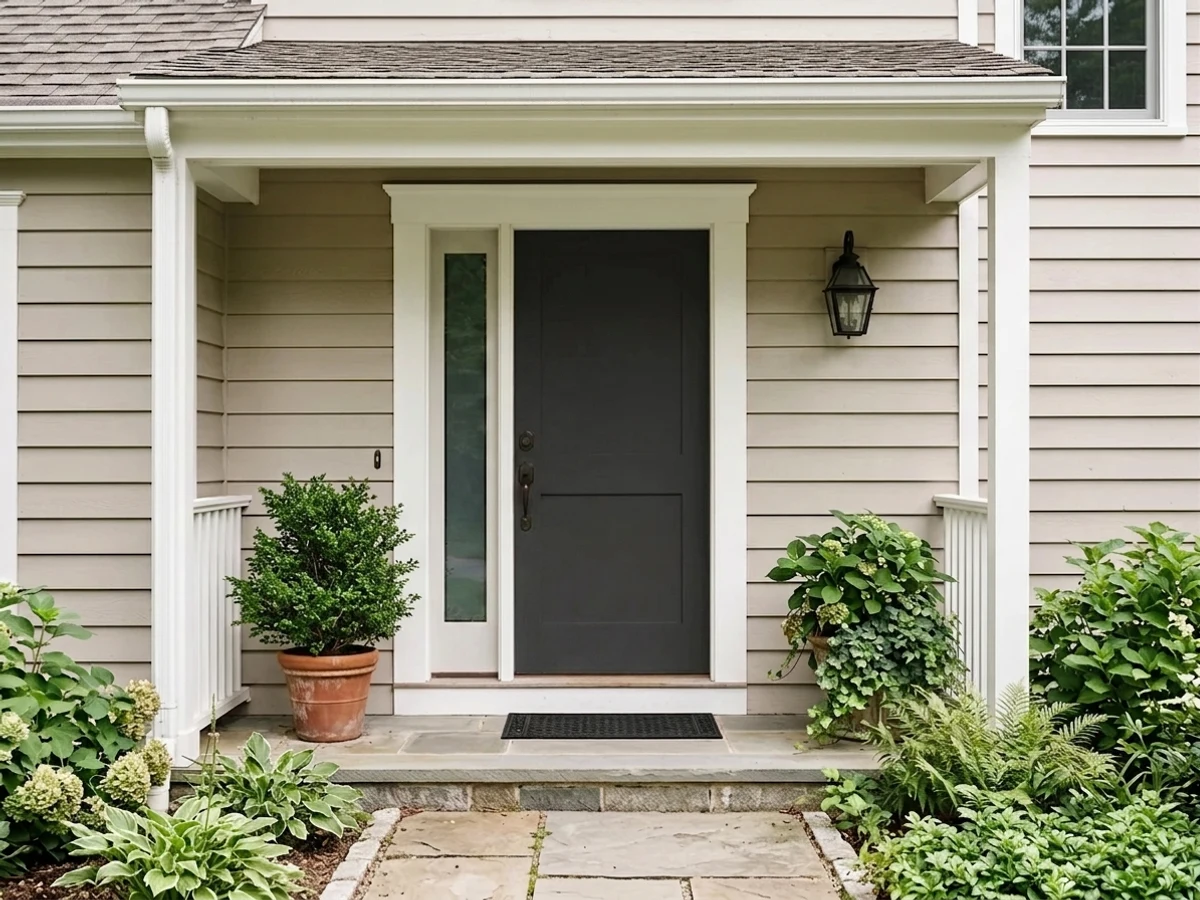
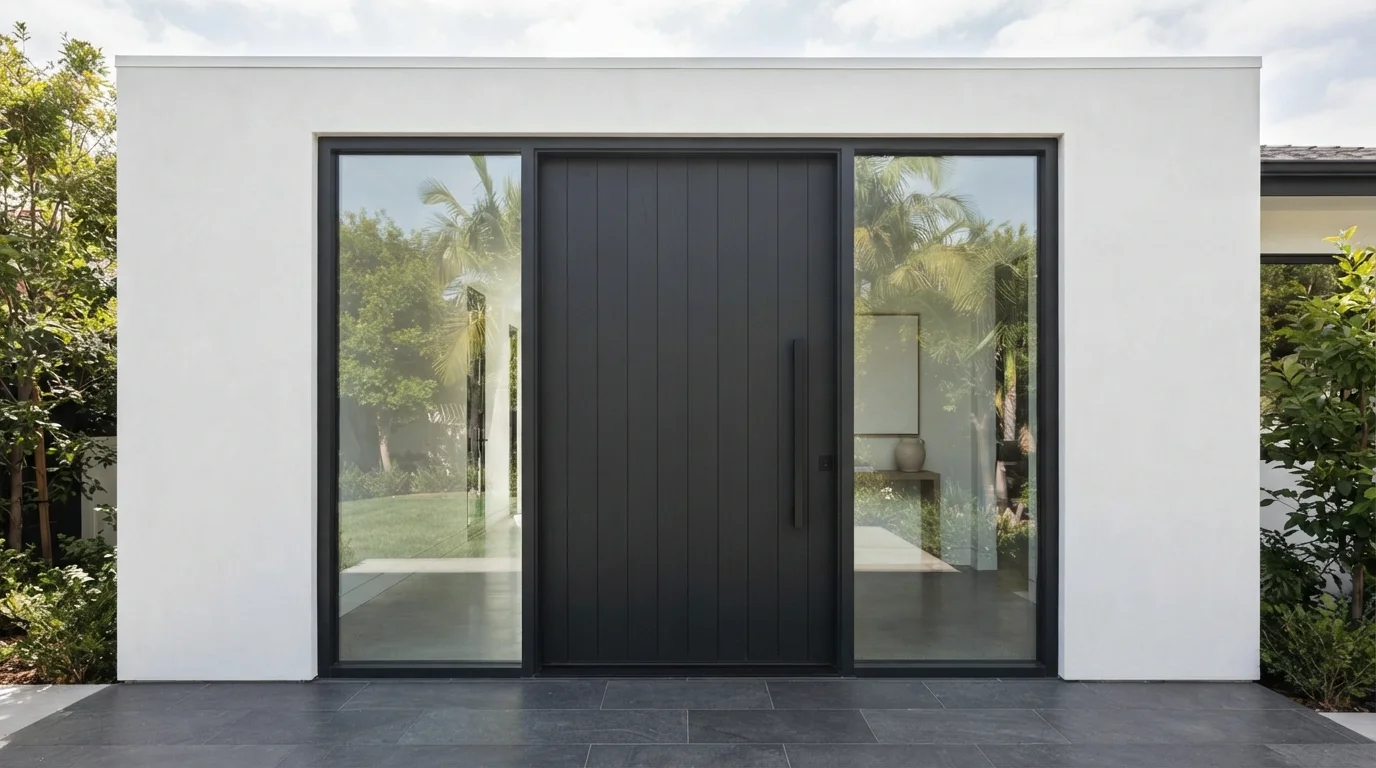
A black front door is one of the highest-impact, lowest-cost upgrades a house can get. It reads as crisp, confident, and a little formal, and it works on almost every architectural style from a brick colonial to a flat-roofed modern. Because the door is small and self-contained, you can go bolder here than anywhere else on the exterior without the color taking over.
The hard part with black is not picking a swatch; it's understanding that exterior light is brutally honest. A front door faces full sun, deep shade, or something in between, and that single fact decides whether your black looks rich and intentional or chalky and flat. The good news: every black shown on this page is mixed to order at the paint counter, so you can match a shade you love across brands and step it up or down in depth without starting over.
Why Black Works On A Front Door
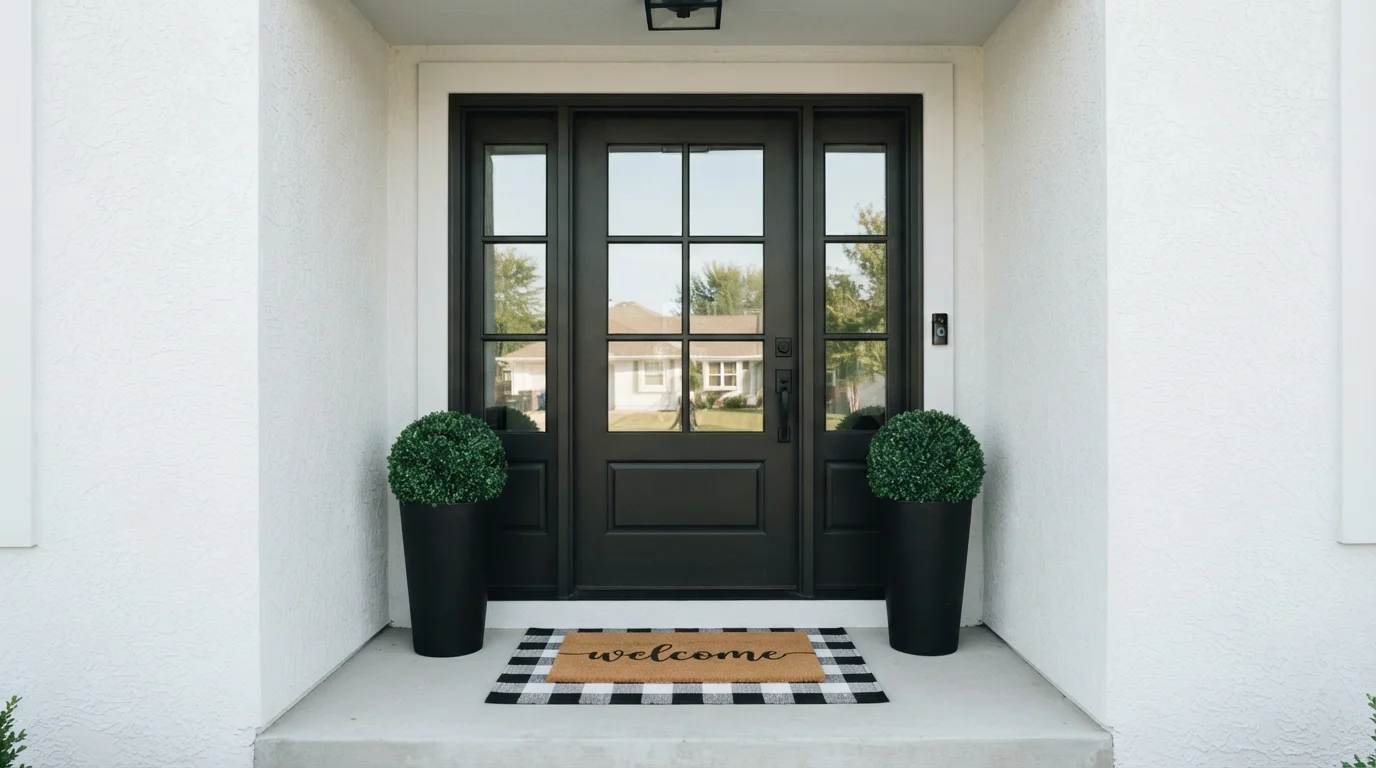
Black gives a front door instant definition. It frames the entry, makes the doorway the focal point, and signals that the rest of the house was thought through. Against light siding, white trim, or warm brick, a black door delivers contrast that a colored door rarely matches, and it stays in style for decades instead of dating in a few years.
It also hides a lot. A door takes scuffs, fingerprints, kicked-in dirt, and weather, and black forgives most of that better than a pale color would. The thing to watch is heat: a black door in direct afternoon sun can get very hot, which can stress cheaper paint and some vinyl or fiberglass doors, so the door's material and the paint's heat rating matter more here than the shade itself.
Choosing The Right Depth Of Black For Your Door's Light
Not all blacks are equal, and the difference comes down to LRV, the number that says how much light a color reflects. A true near-black sits around an LRV of 3 to 6 and reads as deep and almost solid. A softer charcoal or off-black lands closer to 8 to 12 and shows its undertone in sunlight, which can be a warmer brown-black or a cooler blue-black.
Let the door's exposure steer you. A door in heavy shade or under a deep porch loses contrast, so a true low-LRV black keeps it from looking like a gray smudge. A door blasted by full sun will lighten visually and may show undertone, so many people choose a black with a hint of warmth there so it doesn't go cold or washed out. Always test the swatch on the actual door at the time of day it gets the most light.
The Right Finish For A Front Door
A front door wants a finish you can wash and that can take weather, which usually means satin or semi-gloss rather than flat. Satin gives a soft sheen that wipes clean and hides minor surface flaws; semi-gloss is more durable and more reflective, which makes panel detail pop and handles fingerprints and rain better, especially on a door that gets touched dozens of times a day.
Gloss level interacts with black more than with any other color. The higher the sheen, the more the door shows every dent, drip, and brush mark, and the more glare it throws in direct sun. On a smooth modern door, a higher sheen looks sharp; on an older door with imperfections, satin is the safer, more forgiving call.
Pairing Black With Trim, Hardware, And The Rest Of The Entry
Black is a team player. It pairs cleanly with white or off-white trim for the classic high-contrast look, with warm wood tones for something softer, and with brick or stone of almost any color. If your trim is also dark, give the door a slightly different depth or sheen so the two read as separate elements instead of one black blob.
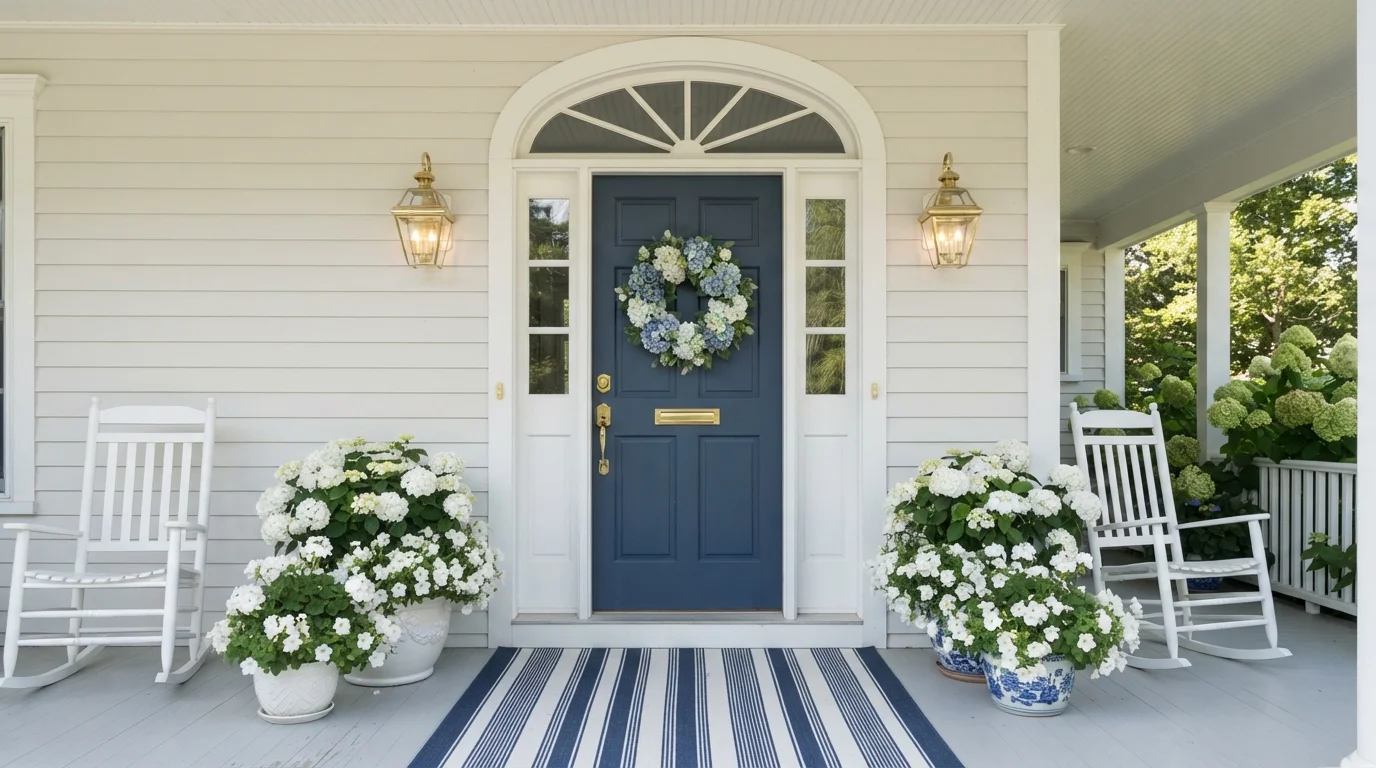
Hardware is where a black door earns its polish. Matte black hardware reads modern and tonal; brass or bronze adds warmth and a traditional feel; satin nickel or chrome keeps it crisp and contemporary. Pick fixtures, the kickplate, house numbers, and a light fixture in the same metal family so the entry looks composed, and remember the door color can be cross-matched between brands if your favorite hardware brand's recommended shade lives in a different paint line.
Common Mistakes With A Black Front Door
The biggest mistake is skipping the test on the real door. A black that looks perfect on a chip in the store can turn blue, brown, or gray once full daylight and the surrounding colors hit it. Paint a large sample, let it dry fully, and look at it morning and afternoon before you commit.
The other common misses are practical. People often choose a flat finish that streaks when washed, ignore the heat issue on a sun-facing door, or rush the prep so the old sheen shows through. Black is unforgiving of poor surface prep and thin coats, so clean, sand, prime if needed, and plan on two coats for an even, deep finish.
Black Front Door Paint — Frequently Asked Questions
Does a black front door make the entry look dark?+
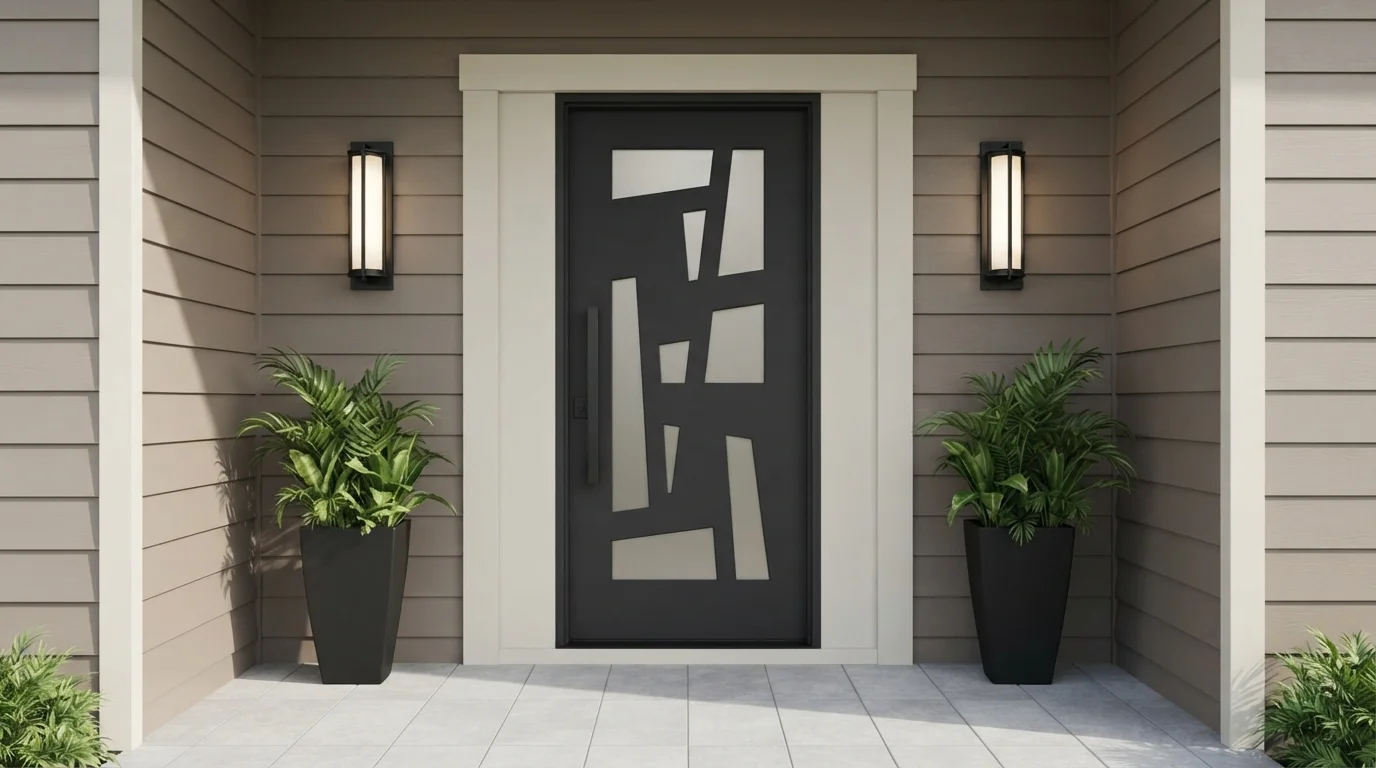
Not usually. A black door against lighter siding and trim actually draws the eye and makes the entry feel framed and intentional. If the doorway is in deep shade and starts to feel heavy, a glass insert, a light fixture, or pale trim around the door opens it back up.
What sheen should I use on a black front door?+
Satin or semi-gloss. Satin wipes clean and hides minor flaws, while semi-gloss is more durable and shows off panel detail but reveals dents and glare more. Avoid flat on a door, since it is hard to clean and shows streaks when wiped.
Will a black front door get too hot in the sun?+
It can, especially on a south or west-facing door in full afternoon sun. Black absorbs heat, which can stress some fiberglass and vinyl doors and lower-grade paint. Check that your door material is rated for dark colors and choose an exterior paint built to handle heat.
How do I keep my black door from looking blue or gray?+
It comes down to undertone and light. Many blacks carry a cool blue or warm brown base that shows up outdoors. If your door gets strong sun and you want it to stay rich, lean toward a black with a touch of warmth, and always test a large sample on the actual door before committing.
What hardware looks best with a black door?+
All of them work, which is the appeal. Matte black is tonal and modern, brass or bronze adds warmth, and satin nickel or chrome keeps it crisp. Pick one metal family and carry it across the handle, kickplate, numbers, and light fixture so the entry looks pulled together.
Can I match a black I like across different paint brands?+
Yes. Every color shown here is mixed to order at the paint counter, and a black from one brand can be cross-matched into another brand's exterior line. That lets you keep the exact shade you want while choosing the paint quality, finish, or heat rating that fits your door.