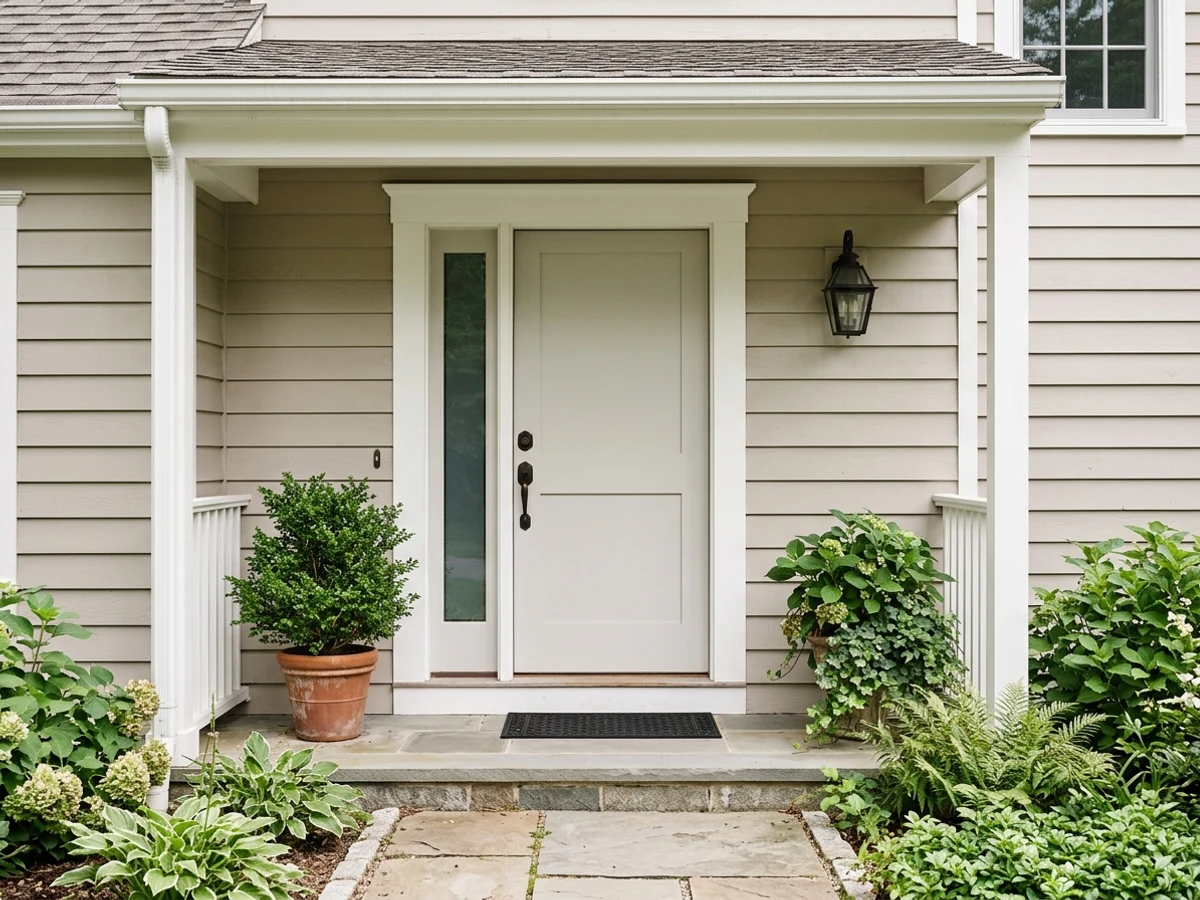
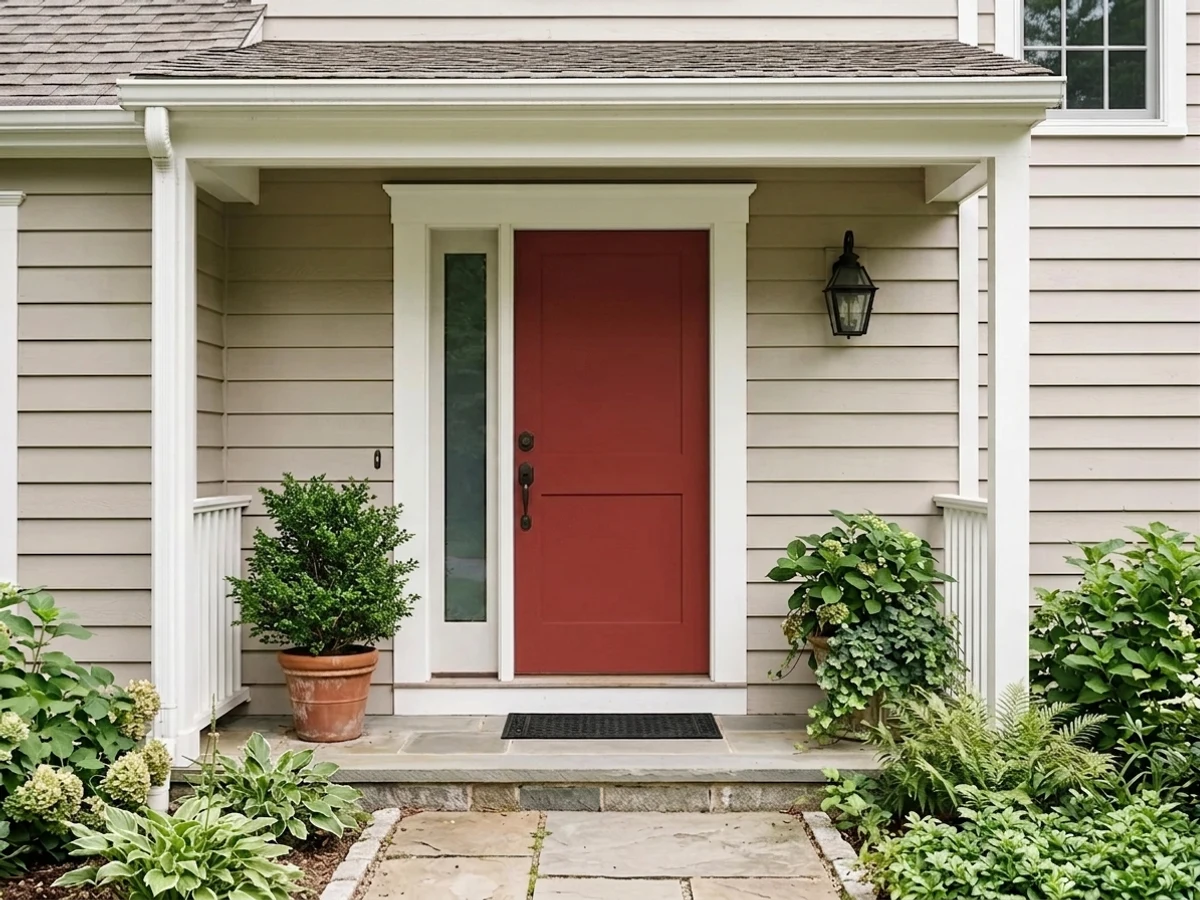
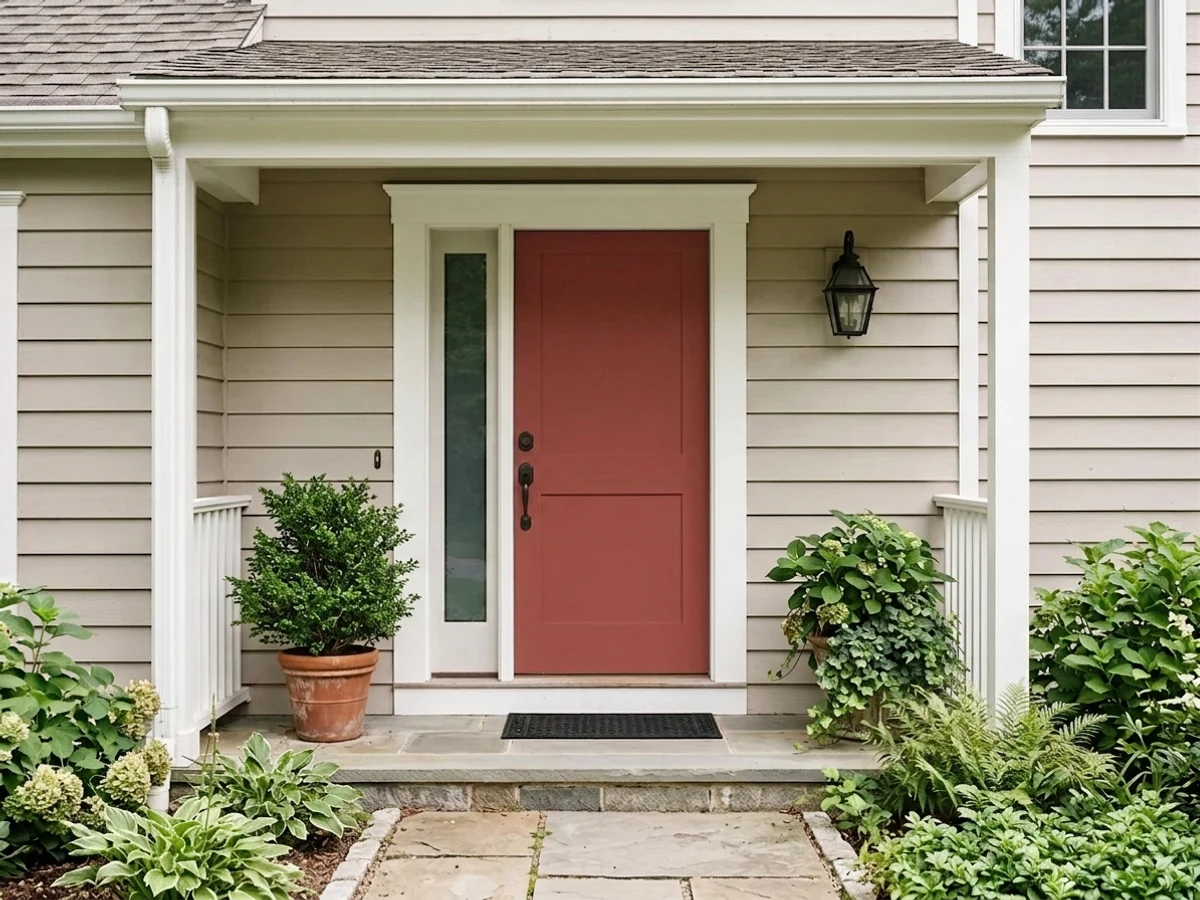
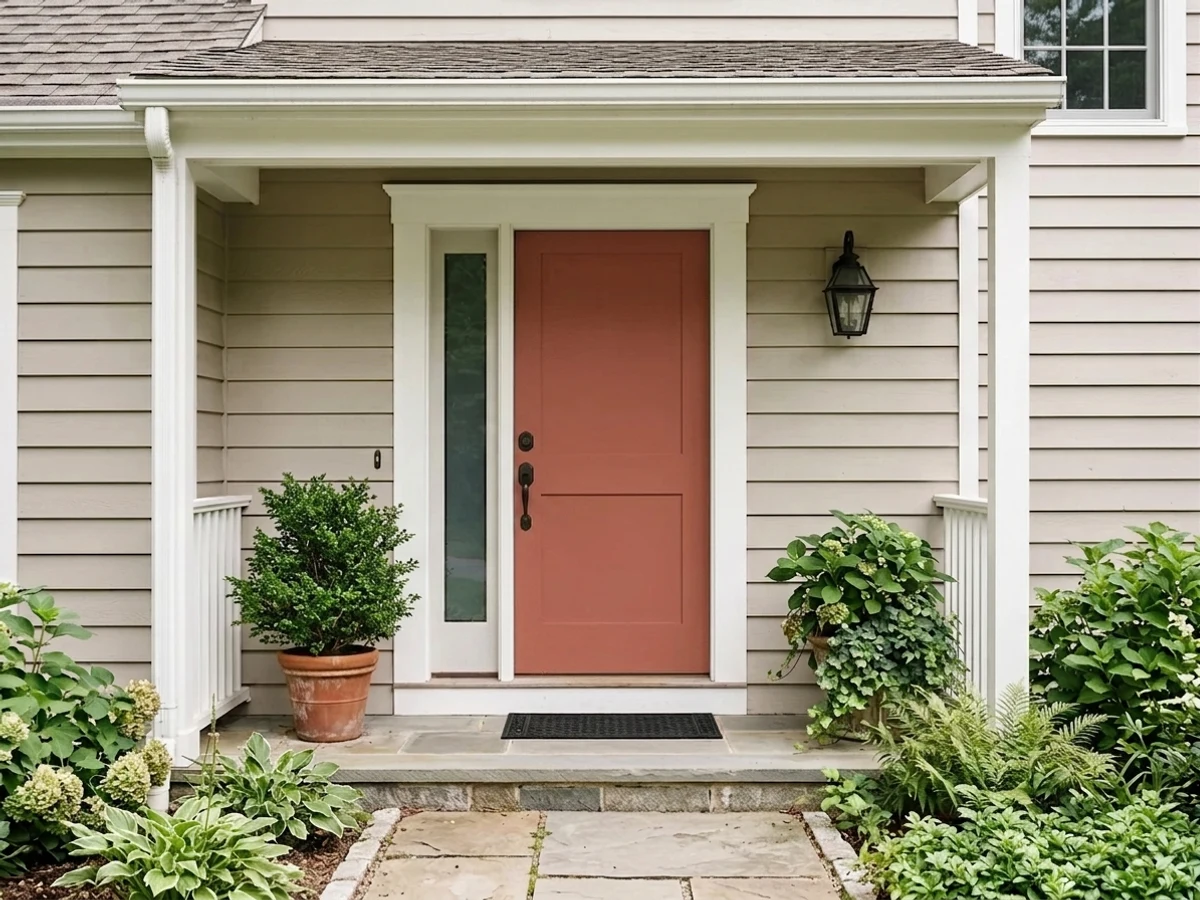
Red Front Door Paint Colors
934 red colors that work in front doors, drawn from the full ~30,000-color US paint deck. Below: editor's picks specific to front doors, then 30 picks spread across the LRV range — narrow further on the brand page when you've shortlisted.
Red is divisive as a wall color, which is exactly why it works so well in the right room — a dining room, a powder room, or a single accent on cabinetry. The family splits into three practical groups: bright reds (crimson, vermilion), deep wine-toned burgundies, and brick reds that lean warmer and earthier.
Editor's Picks: Red for Front Doors
4 picks30 Red Picks Across the LRV Range
30 of 934 · sorted dark → lightLooking for more? All red → covers every brand; brand × family pages show full decks.
Red Front Door Colors at Every US Brand
20 brands · up to 10 picks eachUp to 10 picks per brand spread across the red LRV range, drawn from each brand's full deck. Tap any swatch with a curated guide for full spec; tap the brand title for the brand's complete red deck.
Behr
Benjamin Moore
Glidden
Sherwin-Williams
Dunn-Edwards
Valspar
Hirshfield's
PPG / Glidden
Diamond Vogel
Kompozit
Dutch Boy
C2 Paint
Farrow & Ball
Magnolia Home
Rodda
Annie Sloan
Clare
Backdrop
Rust-Oleum
Other Front Door Color Families
Red Colors in Other Rooms
Red Paint Colors for a Front Door
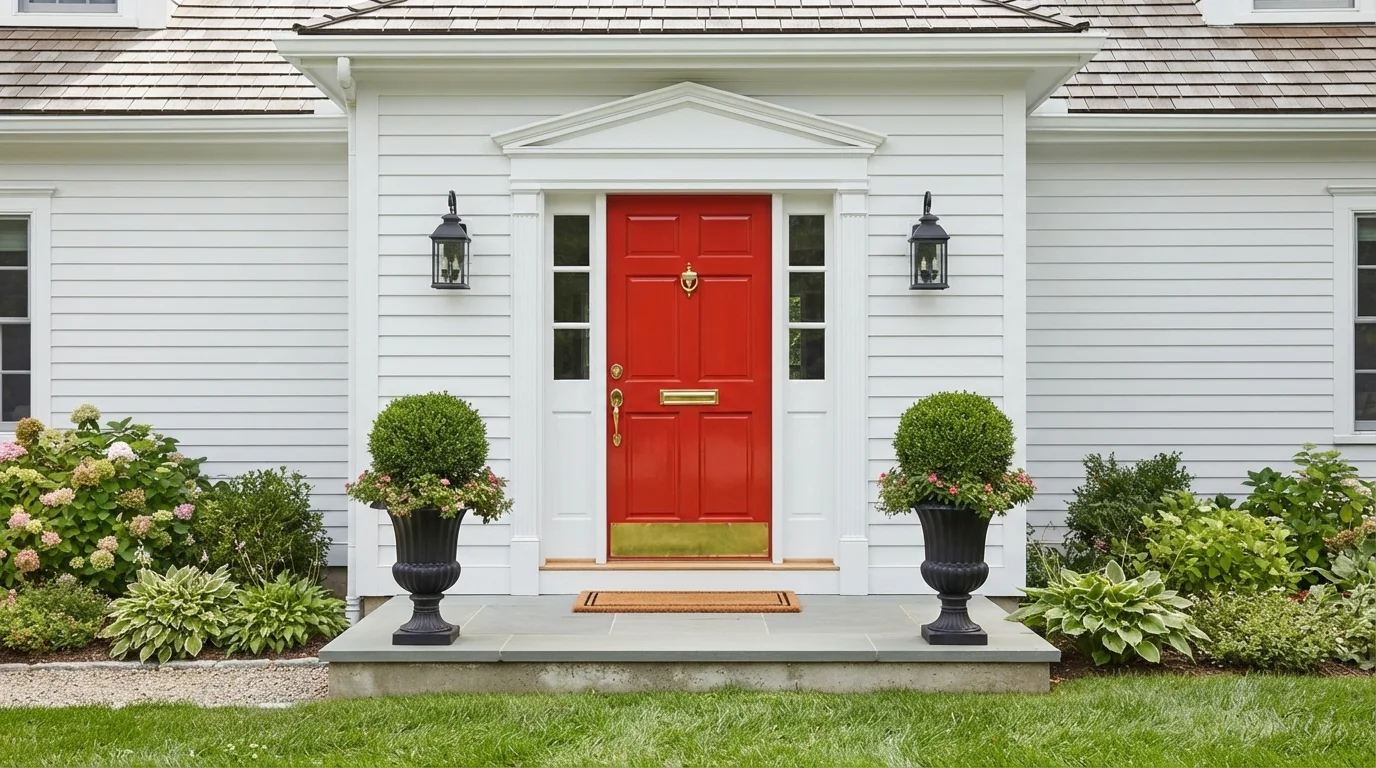
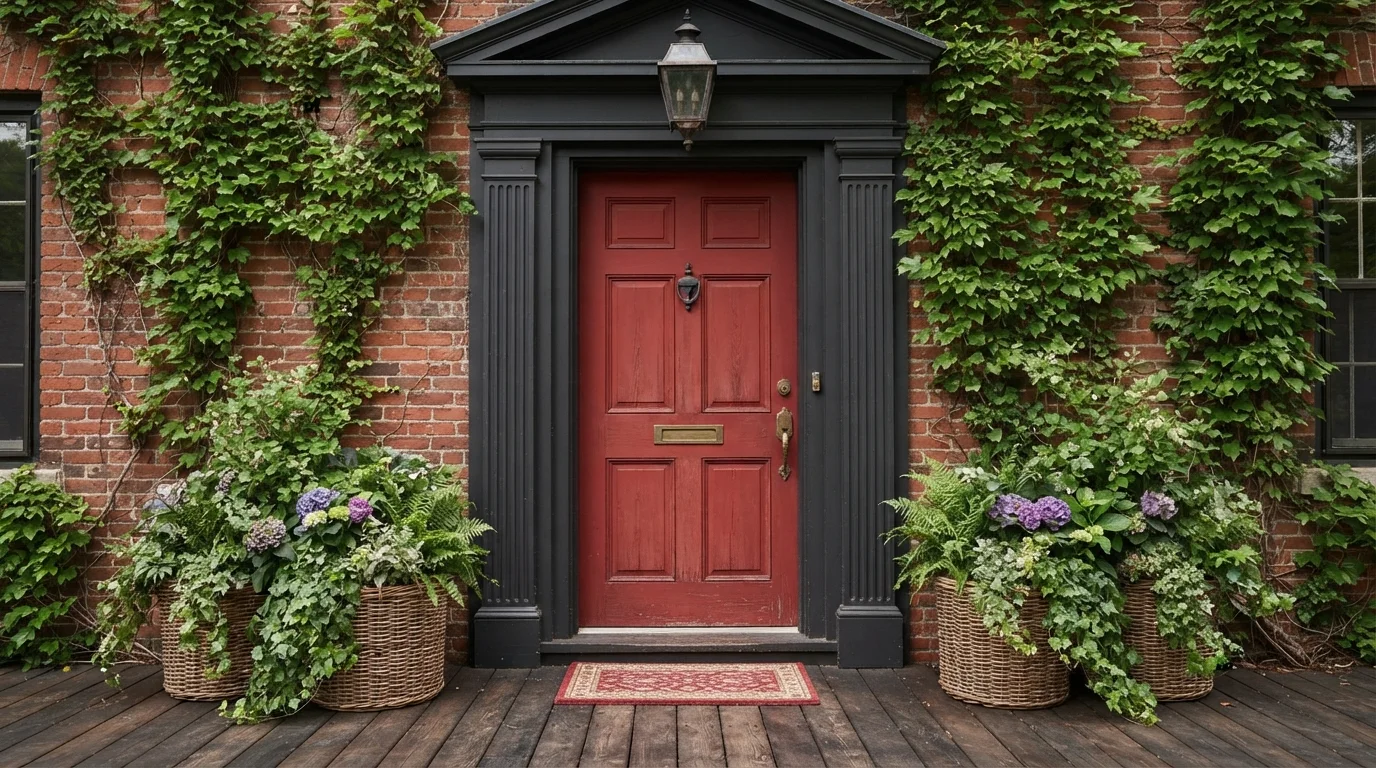
A red front door is one of the oldest tricks in the book, and it still works. It pulls the eye straight to the entry, gives a plain facade a focal point, and reads as warm and welcoming from the curb. Because a door is a small, framed surface, red can be bold here in a way it never could be on a whole wall. That small footprint is exactly what makes red a safe, high-impact choice for an entry.
The catch is that a front door lives outside. It takes full sun, rain, cold snaps, and a hand on the knob every day. So the red you pick has to hold up to weather and stay true under harsh daylight, not just look good on a chip indoors. Below is how to choose the right red, the right depth, and the right finish for an exterior door, plus how to keep it from clashing with everything around it.
Why Red Works on a Front Door
A door is the one spot where a strong color almost always pays off. It's small, it's framed by the door casing, and the surrounding house usually stays neutral, so a saturated red has somewhere to land without overwhelming anything. That contrast is what makes a red door read as a deliberate choice rather than a mistake.
Red also does something practical. It marks the entry instantly, which helps guests, delivery drivers, and your own eye find the door from the street. On a facade that's all siding and trim, a red door is the punctuation that tells you where to go.
Choosing the Right Depth of Red for Your Door
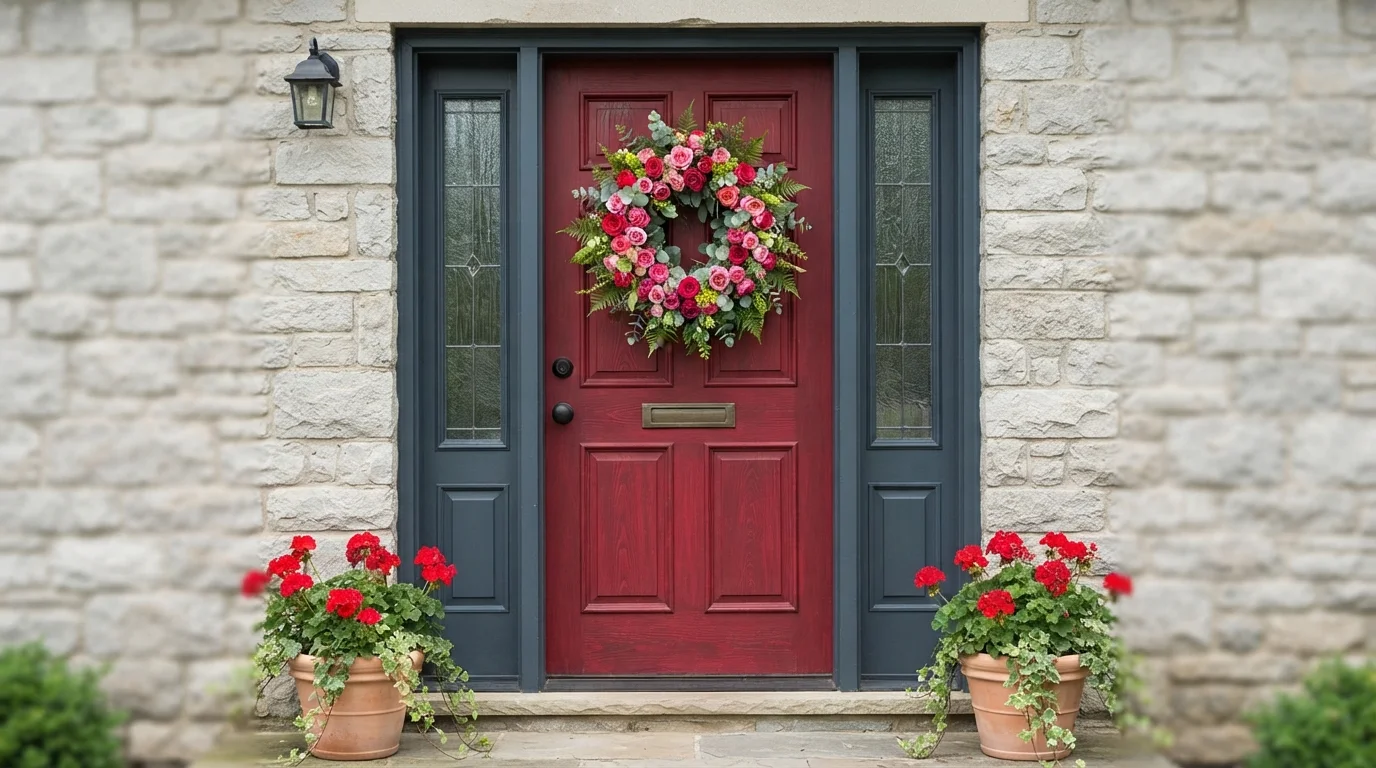
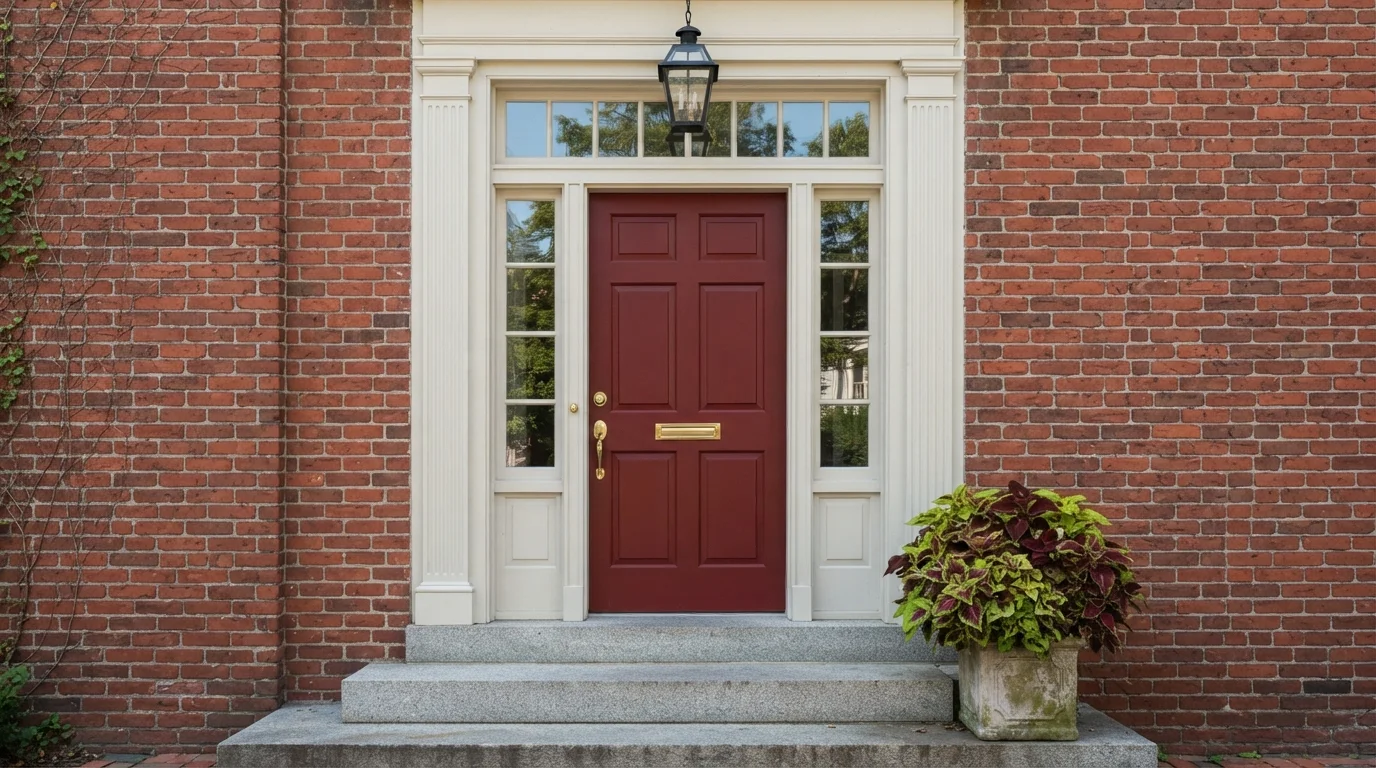
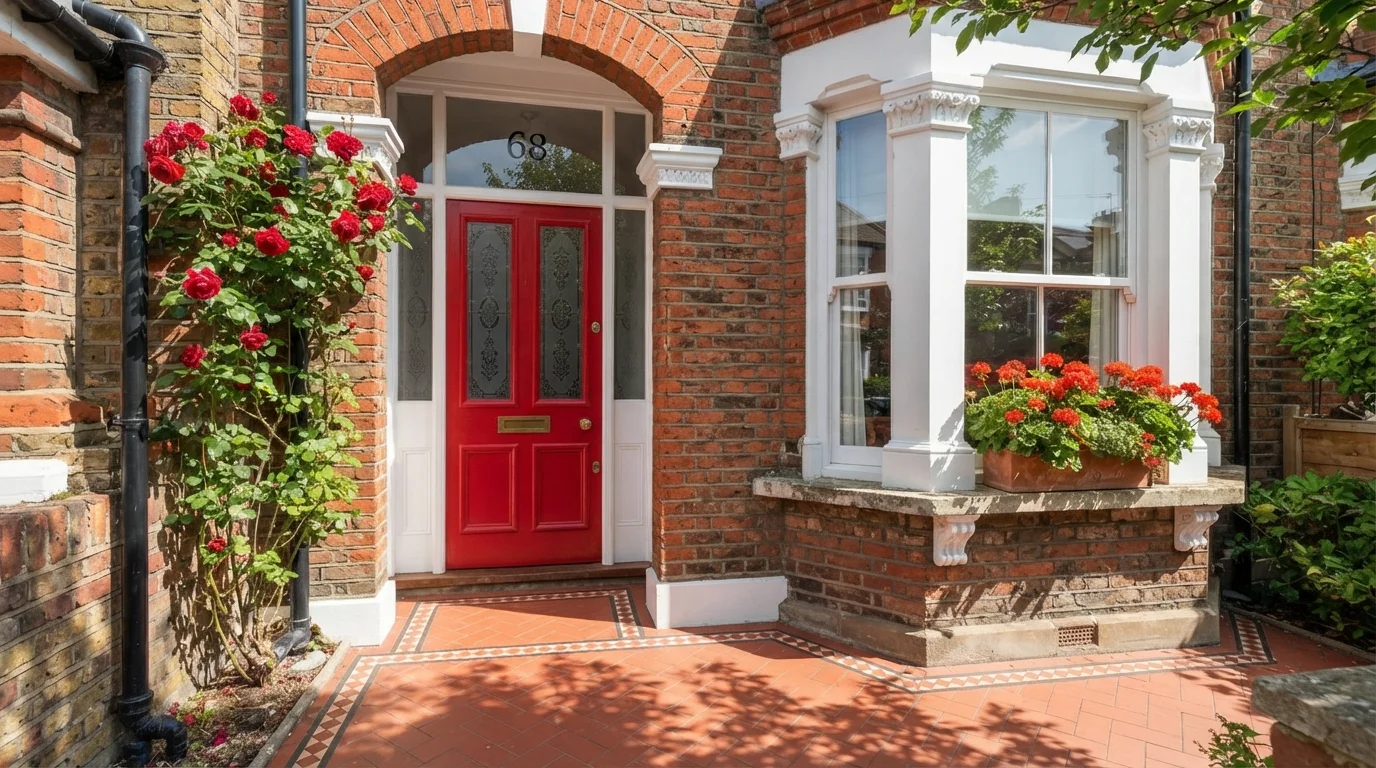
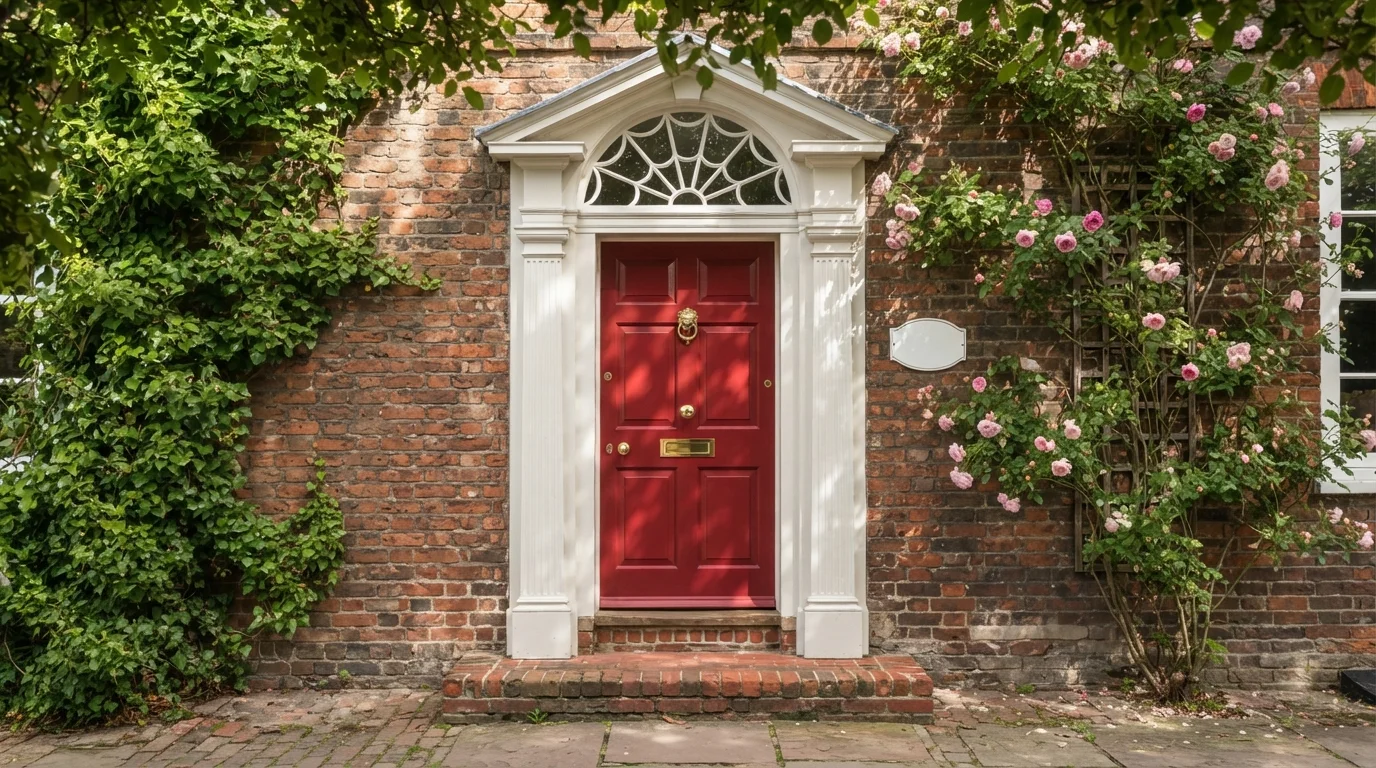
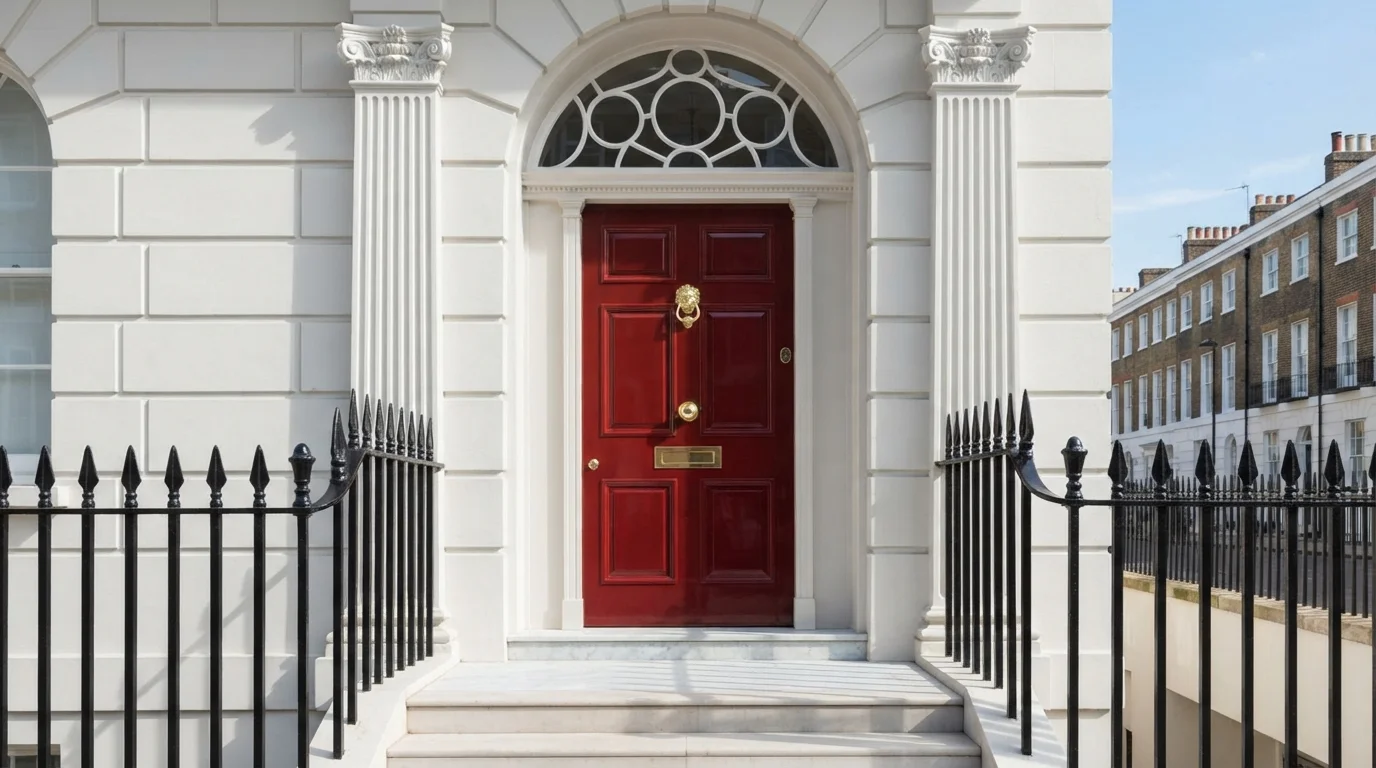
Reds split into roughly three families, and the light hitting your door decides which one to lean toward. True classic reds sit in the low-to-mid 20s on the LRV scale and read clean and confident in most light. Deeper burgundy and brick reds drop into the single digits to low teens; they look rich and grounded but can flatten into near-black on a shaded north-facing entry. Brighter cherry and orange-leaning reds climb higher and can glow, even glare, in full afternoon sun.
Match the red to your exposure. A door in strong direct sun can take a deeper red without going muddy, because the light keeps it alive. A door under a deep porch or facing north needs a slightly brighter, higher-LRV red so it doesn't disappear into shadow.
The Right Finish for an Exterior Door
Skip flat and matte here. A front door gets touched, splashed, and rained on, and flat paint holds dirt and can't be wiped clean. For most doors, a satin or semi-gloss exterior finish is the sweet spot: satin gives a soft sheen that hides minor surface flaws, while semi-gloss is the most washable and the most durable against fingerprints and weather.
Go glossier than you would indoors. The higher sheen sheds water better and stands up to daily handling, and a little shine actually flatters a deep red. The one thing to watch is glare on a west-facing door in late sun, where full high-gloss can throw a hot spot; satin is the safer call in that spot.
Pairing Red With Trim, Hardware, and the Facade
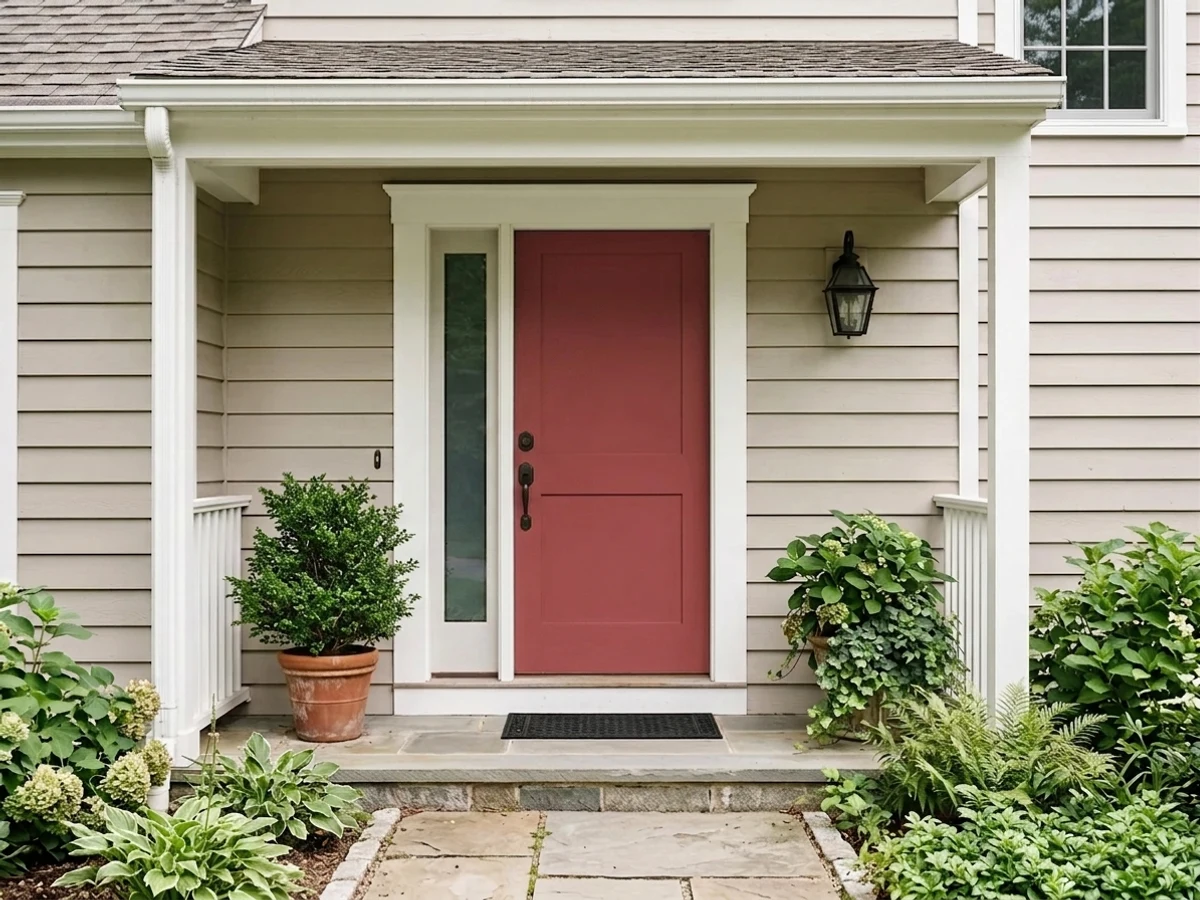
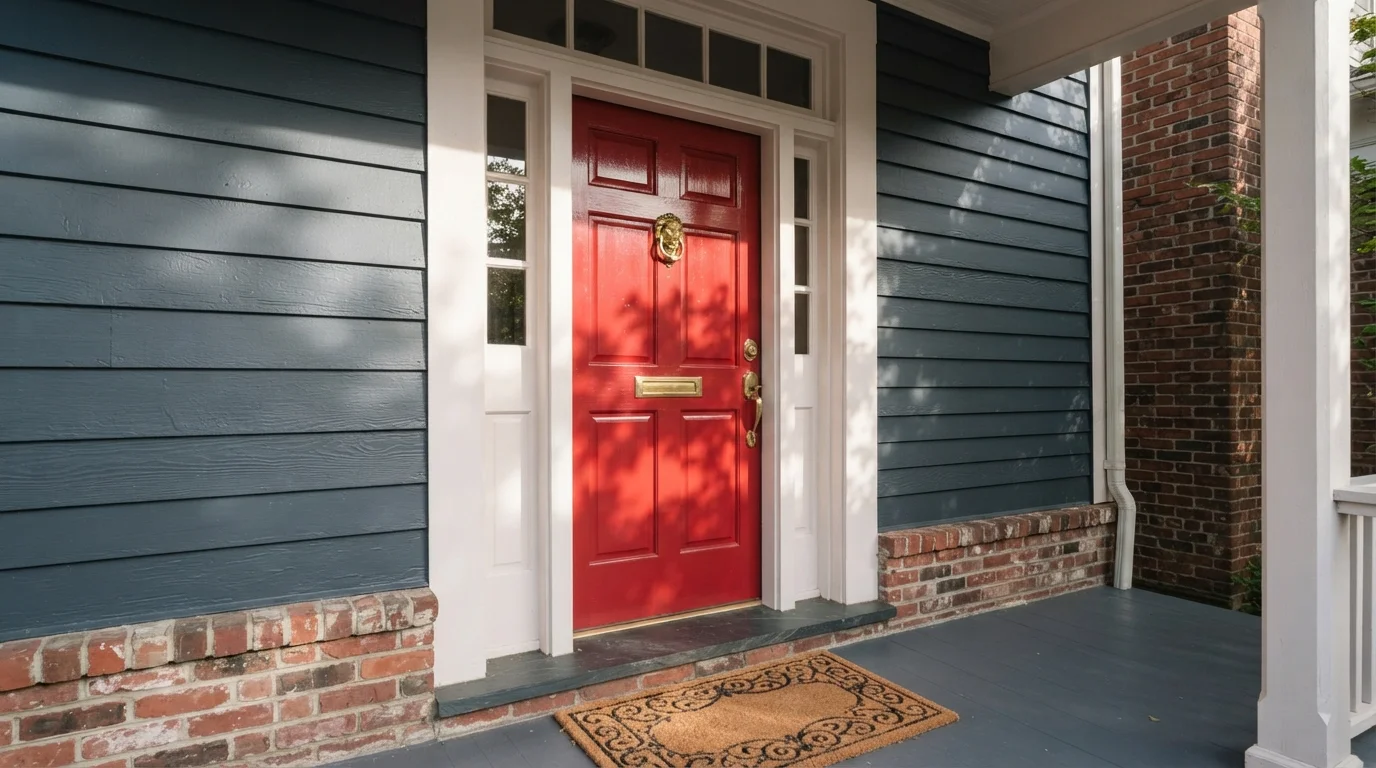
Let the red be the loud one and keep everything around it calm. Crisp white or warm off-white door casing frames a red door cleanly and is the most forgiving pairing. Against a gray or greige house, almost any red looks intentional; against beige or tan siding, lean toward a warmer brick red so the tones agree instead of fighting.
Hardware sets the mood. Oil-rubbed bronze and matte black read traditional and grounded against red, while polished brass or satin nickel feels brighter and more classic. Pick the door red first, then choose the knob, knocker, and light fixtures to match each other, not the door.
Common Mistakes to Avoid With a Red Door
The biggest one is treating an interior color as exterior-ready. A door takes sun and weather, so use a paint built for exterior use; an indoor red will fade and chalk fast outside. The second mistake is skipping a primer or proper prep on a previously coated or metal door, which leaves red looking patchy because red pigments are notoriously thin and need a solid base to cover.
The other trap is undertone clash. A cool, blue-based red next to warm tan siding or a yellow porch light can look off without anyone knowing why. Tape a large sample to the door and check it in morning sun, midday, and dusk before you commit, because a red that's perfect at noon can turn harsh or dull by evening.
Red Front Door Paint — Frequently Asked Questions
Does a red front door make a house look smaller or busier?+
No. Because the door is a small, framed surface, a red door acts as a single focal point rather than adding clutter. It usually makes the entry feel more defined and welcoming, especially when the rest of the facade stays neutral.
What LRV should I look for in a red door color?+
Most classic front-door reds fall in the low-to-mid 20s LRV, which reads clean in average light. Drop into the teens or single digits for a deeper burgundy or brick look, but only if your door gets decent sun, or it can flatten into near-black in shade.
Should a front door be satin or semi-gloss?+
Satin or semi-gloss are both good; flat is not. Semi-gloss is the most washable and durable against weather and fingerprints, while satin hides surface flaws better and cuts glare on a sun-baked door. Either will outlast and outclean a flat finish.
Why does red paint look streaky or patchy on a door?+
Red pigments are thin and don't cover well over a poor base, so a single coat often looks blotchy. Use the right primer for your door's material and plan on two finish coats. Proper prep is what makes a red read solid and even.
What color trim goes best with a red door?+
Crisp white or warm off-white casing is the most foolproof frame for a red door. If your house is gray or greige, nearly any red works; if your siding is beige or tan, choose a warmer brick red so the undertones agree.
Can I get the same red across different paint brands?+
Yes. Every color shown here is mixed to order at the store, so a red you like from one brand can be cross-matched into another brand's exterior-grade paint. Pick the shade first, then choose whichever brand's exterior product and finish you prefer.