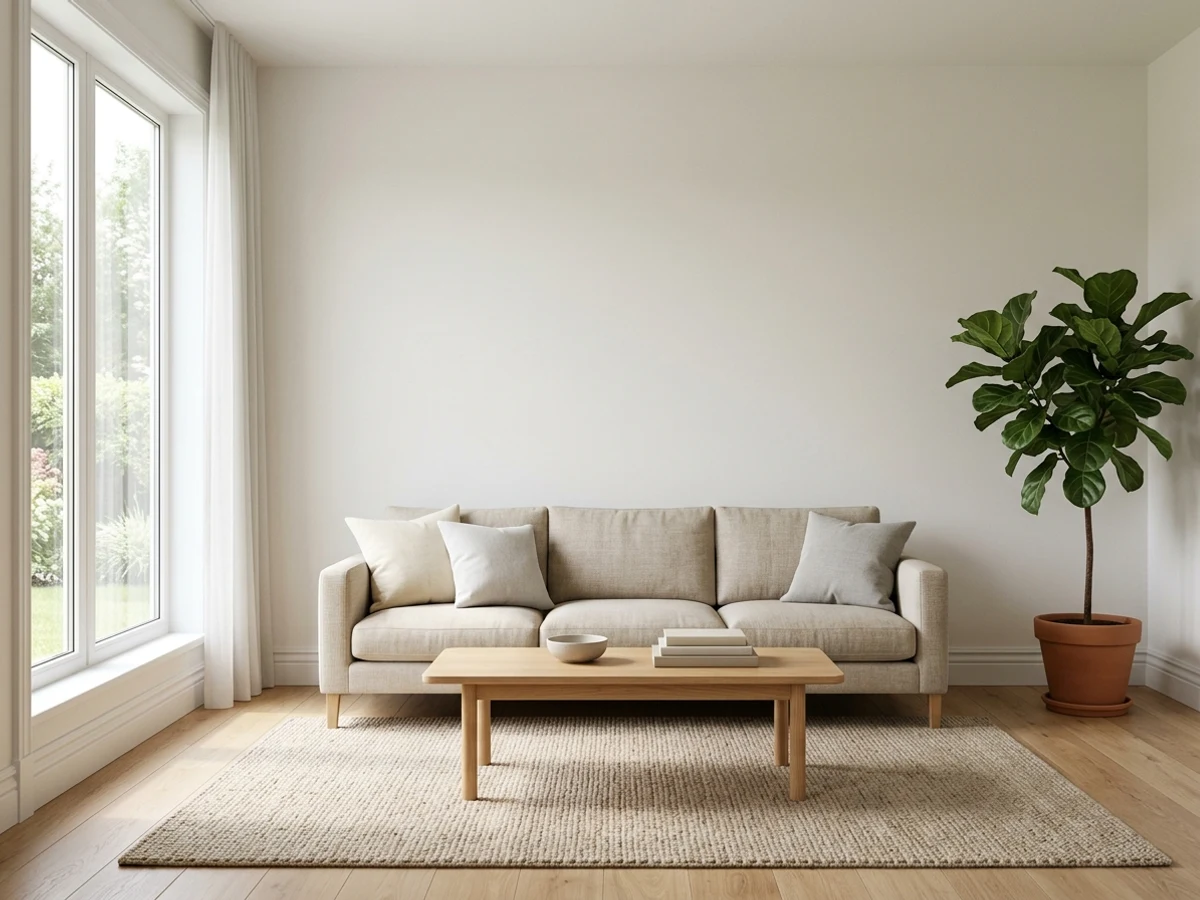
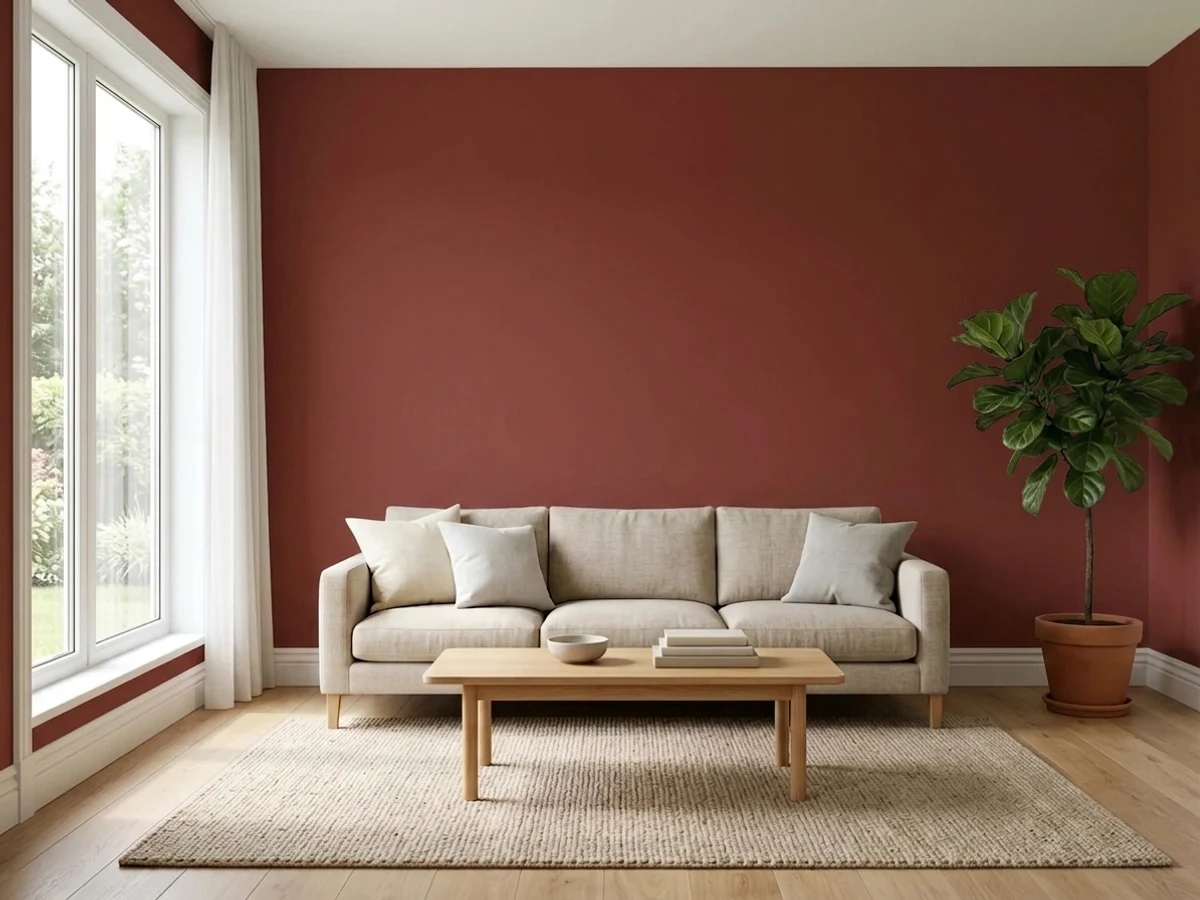
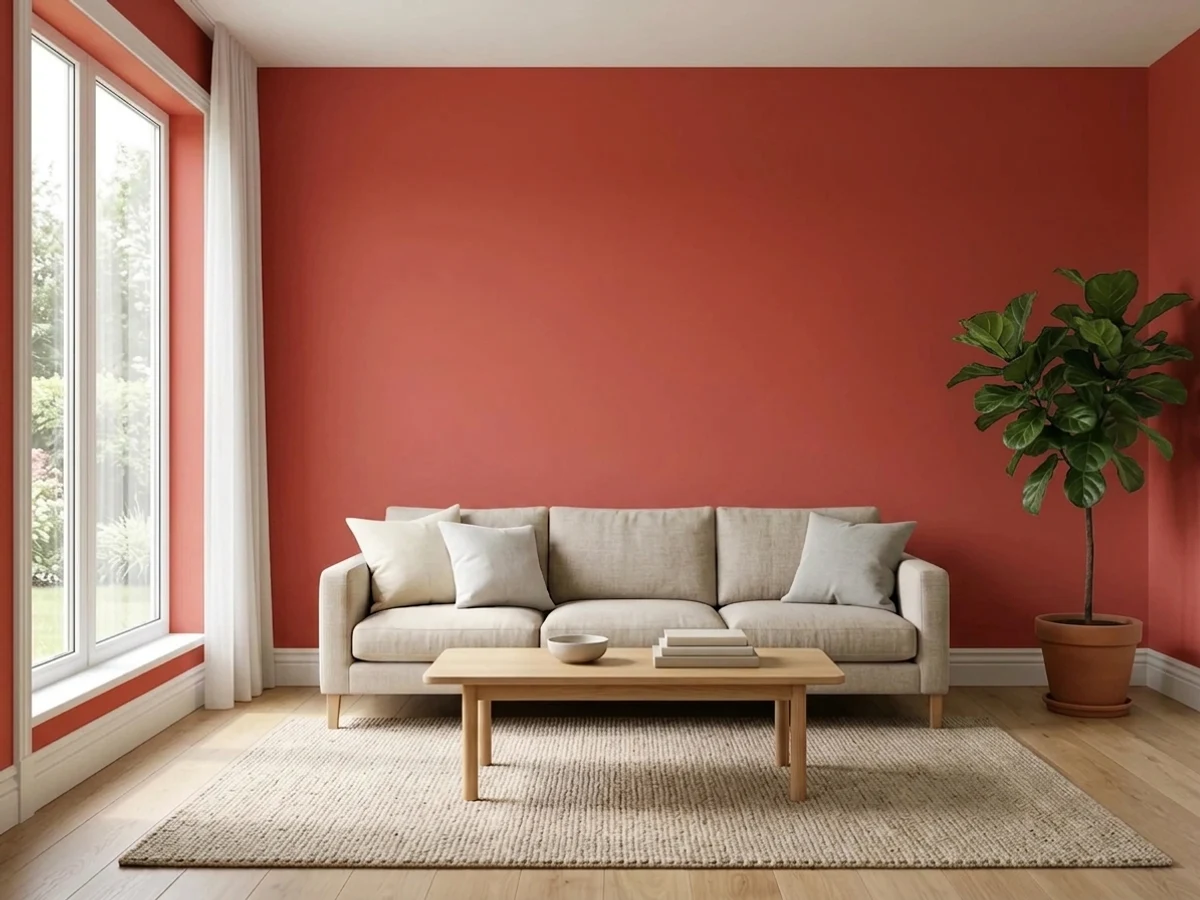
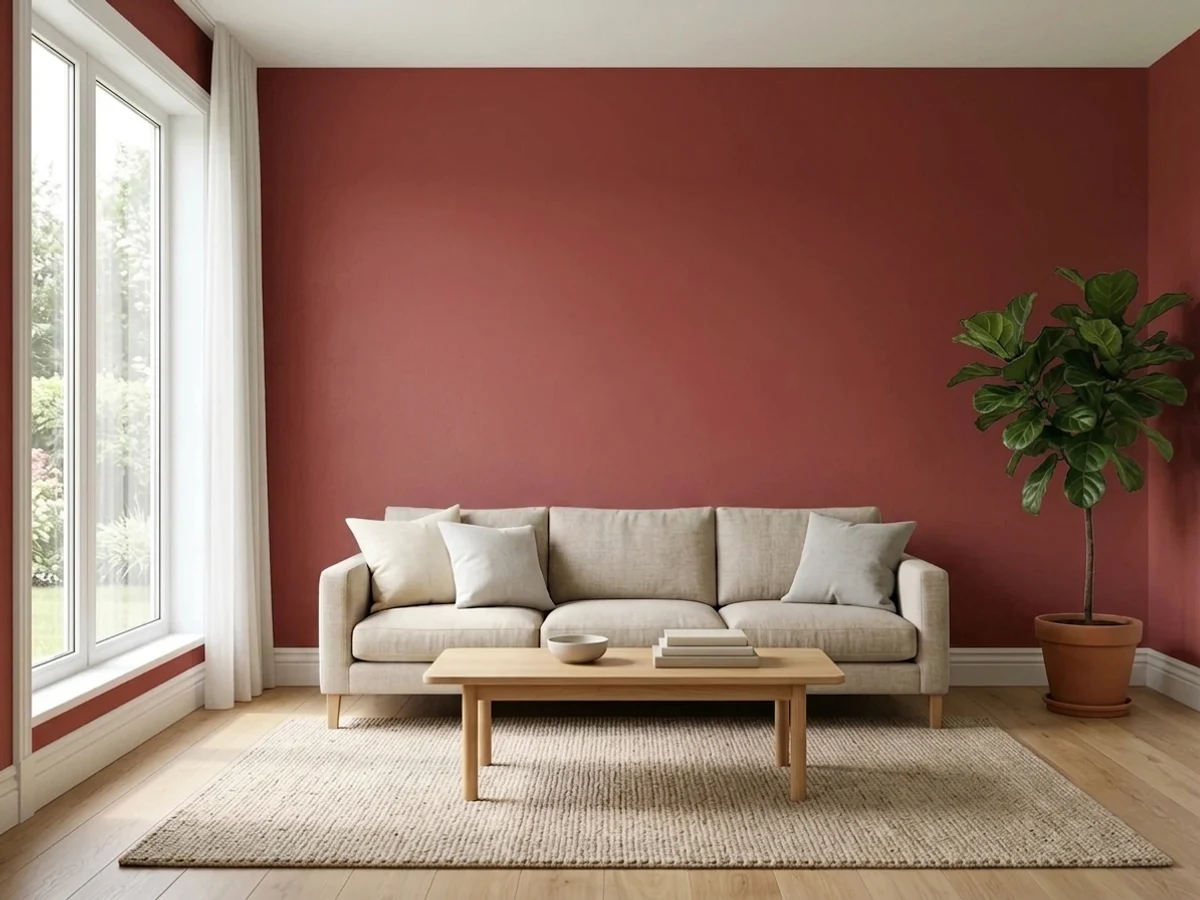
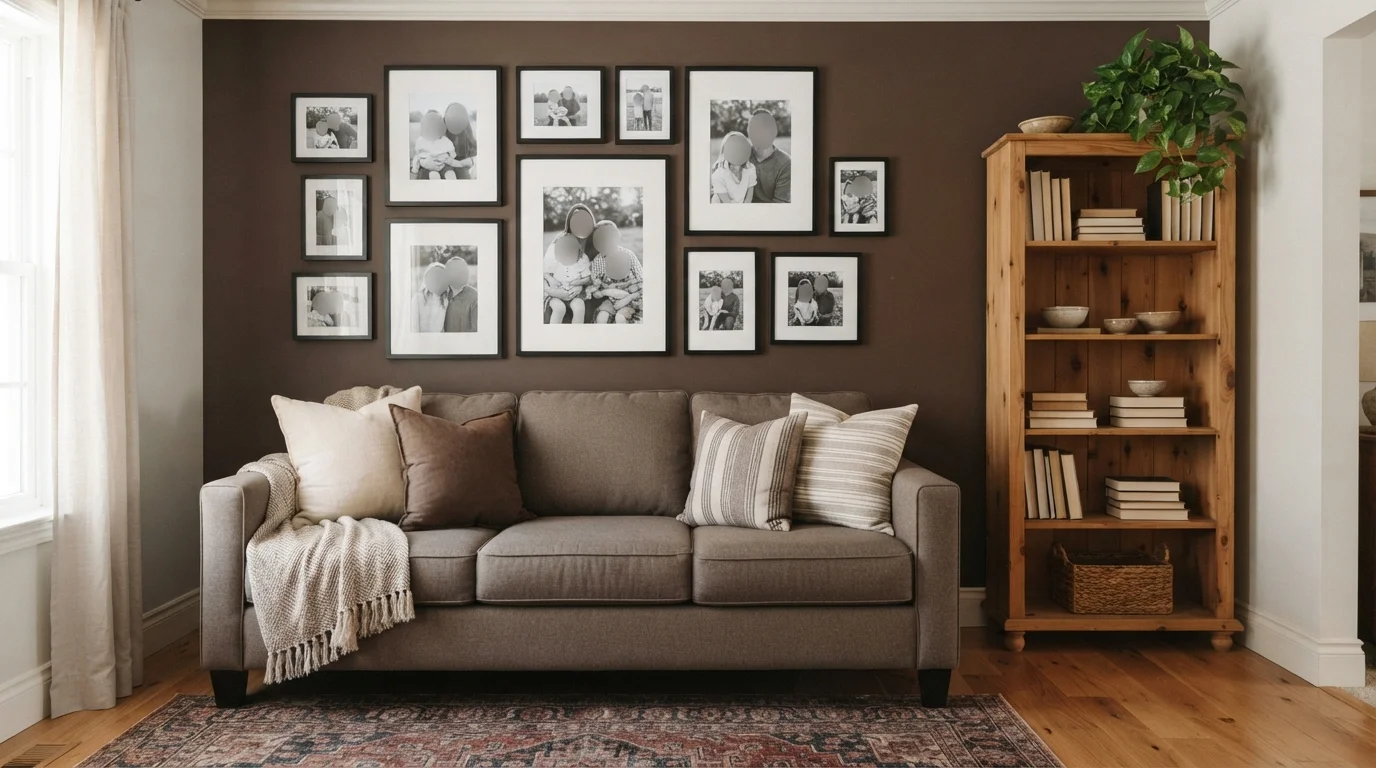
Red Accent Wall Paint Colors
934 red colors that work in accent walls, drawn from the full ~30,000-color US paint deck. Below: editor's picks specific to accent walls, then 30 picks spread across the LRV range — narrow further on the brand page when you've shortlisted.
Red is divisive as a wall color, which is exactly why it works so well in the right room — a dining room, a powder room, or a single accent on cabinetry. The family splits into three practical groups: bright reds (crimson, vermilion), deep wine-toned burgundies, and brick reds that lean warmer and earthier.
Editor's Picks: Red for Accent Walls
4 picks30 Red Picks Across the LRV Range
30 of 934 · sorted dark → lightLooking for more? All red → covers every brand; brand × family pages show full decks.
Red Accent Wall Colors at Every US Brand
20 brands · up to 10 picks eachUp to 10 picks per brand spread across the red LRV range, drawn from each brand's full deck. Tap any swatch with a curated guide for full spec; tap the brand title for the brand's complete red deck.
Behr
Benjamin Moore
Glidden
Sherwin-Williams
Dunn-Edwards
Valspar
Hirshfield's
PPG / Glidden
Diamond Vogel
Kompozit
Dutch Boy
C2 Paint
Farrow & Ball
Magnolia Home
Rodda
Annie Sloan
Clare
Backdrop
Rust-Oleum
Other Accent Wall Color Families
Red Colors in Other Rooms
Red Paint Colors for a Accent Wall
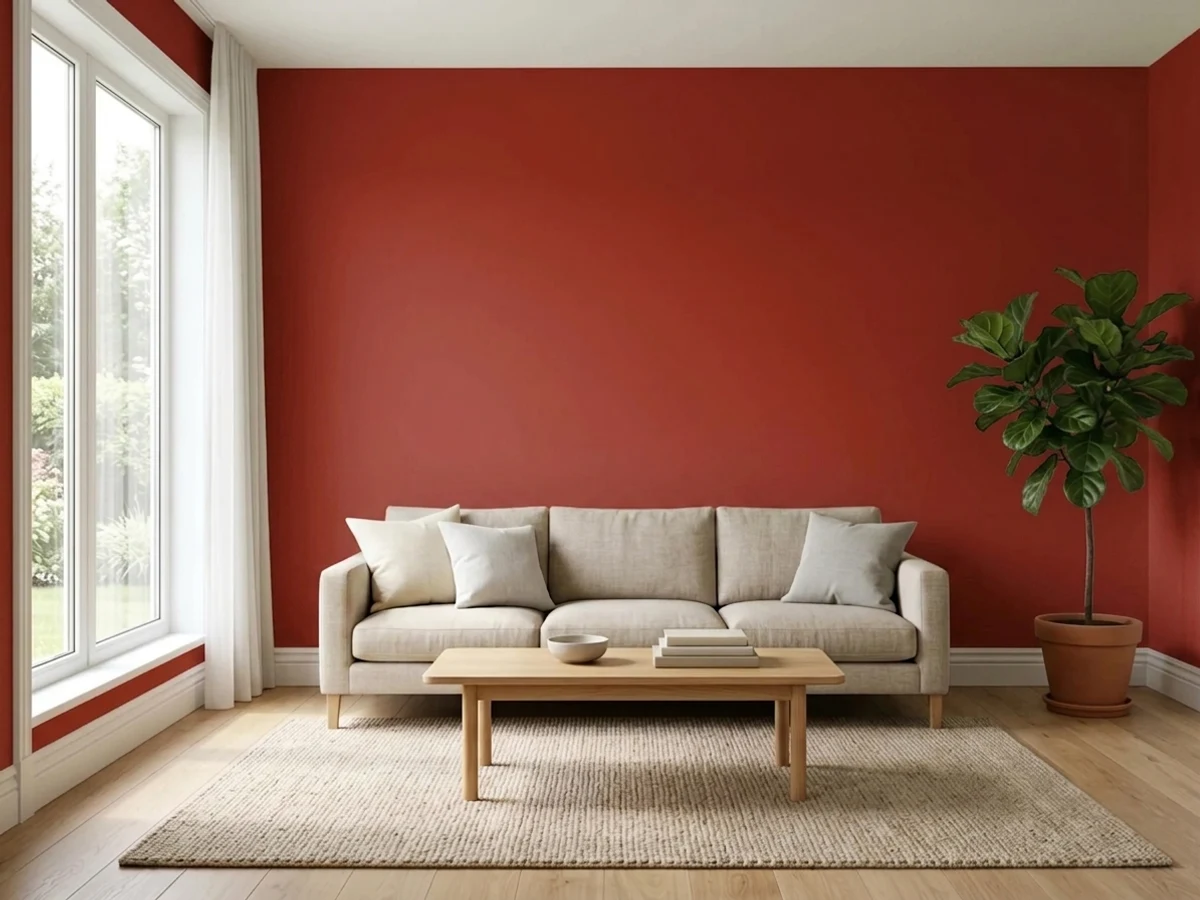
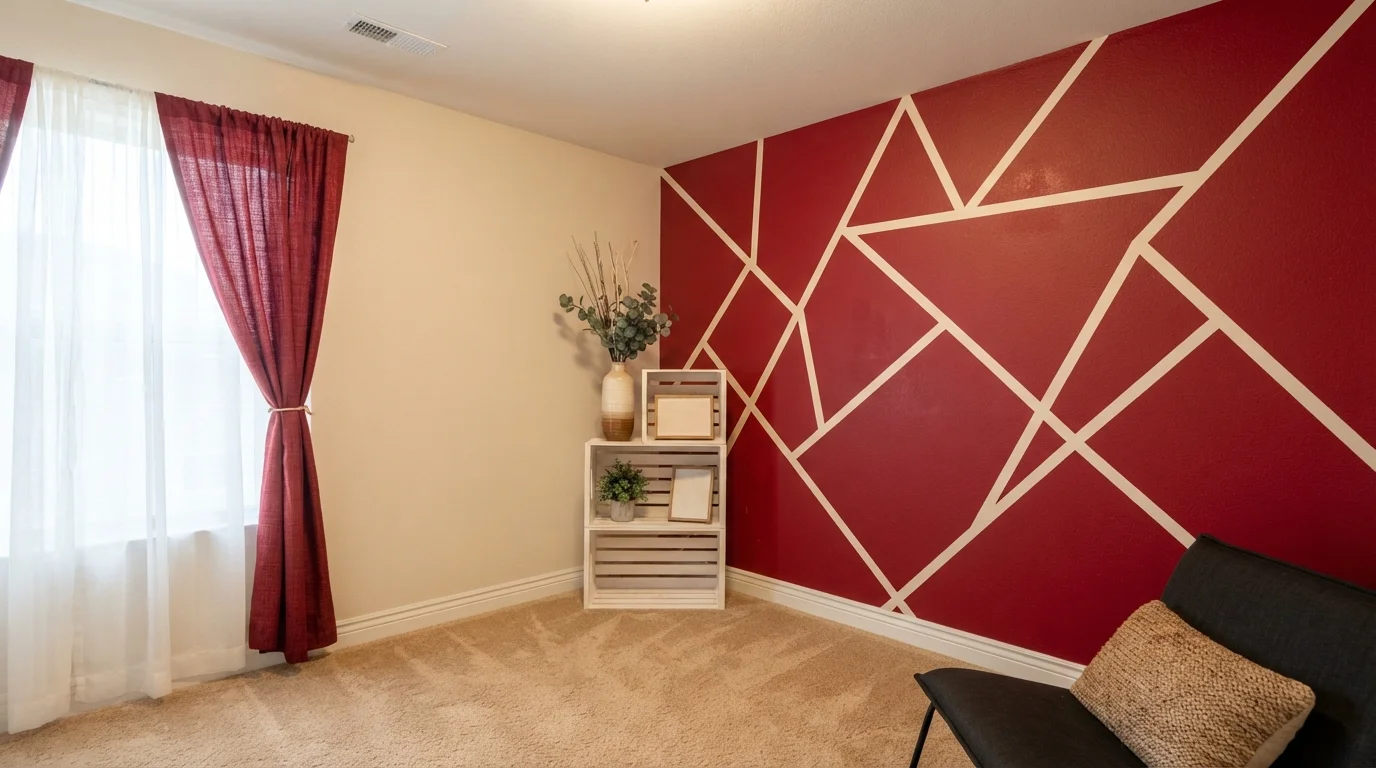
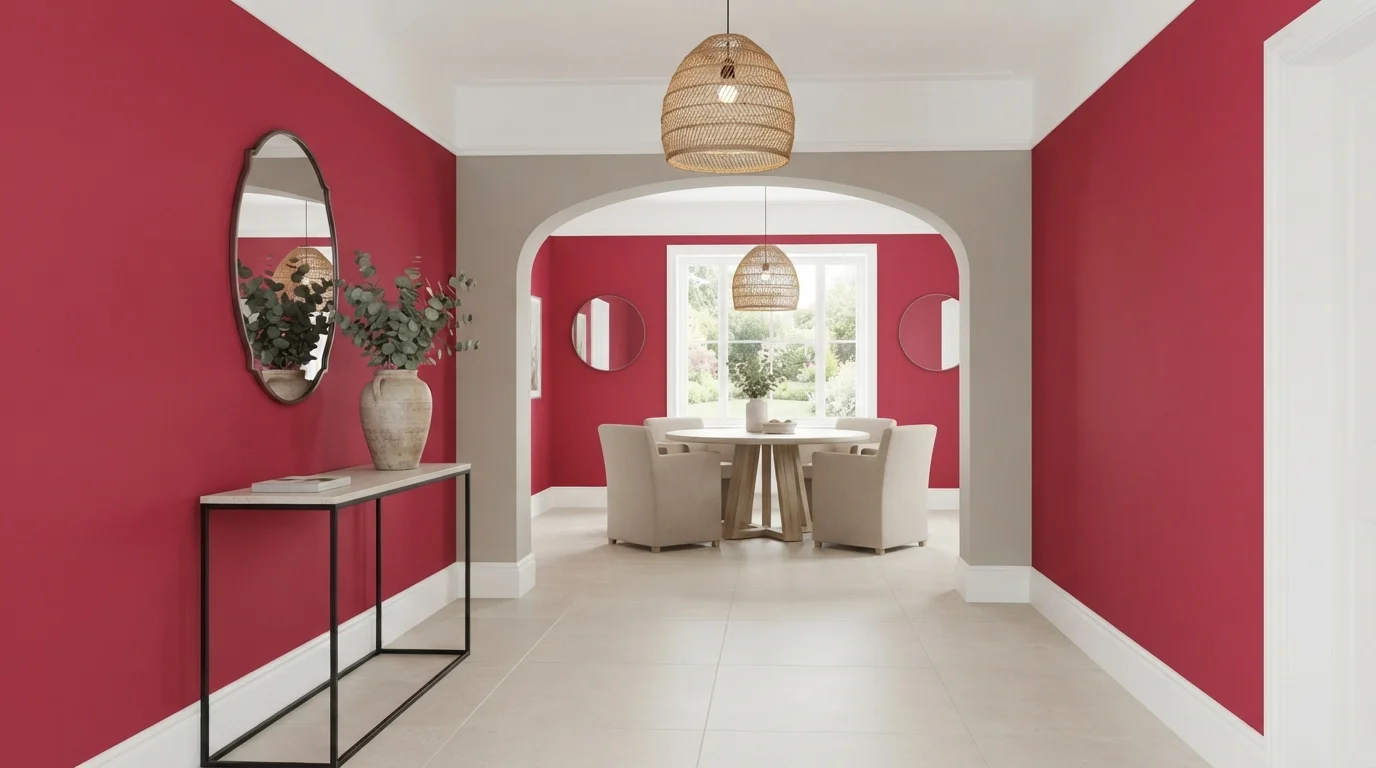
Red is the rare color that earns its place on an accent wall. It pulls the eye, sets a mood, and turns a plain wall into the reason the room works. On a single wall you get all of red's energy without committing the whole space to it, which is exactly why an accent wall is the smartest place to be bold with red.
The trick is matching the right red to the right wall and the right light. A red that looks rich and warm on the wall behind your bed can read harsh and flat on a wall that catches hard afternoon sun. The sections below walk through which wall to choose, how deep to go, what finish holds up, and how to keep the rest of the room calm so the red can do its job.
Why Red Works On An Accent Wall
Red advances. It feels closer to you than cooler colors do, so a red accent wall makes a room feel more intimate and grounded instead of just colorful. That is why one red wall reads as confident, while a whole red room can feel like it is closing in.
The single-wall approach also lets red be its full self. You can use a deep, saturated shade you would never paint on four walls, because the other three walls and the ceiling give your eyes a place to rest. The accent wall carries the drama and the rest of the room stays easy to live with.
Picking The Right Depth Of Red For The Light
Most red accent walls land best in a medium-to-deep range. Look at the LRV, which is a 0-to-100 score of how much light a color reflects. Reds for an accent wall usually fall low, often under 15, and that depth is what gives the wall its richness instead of a flat, painted-over look.
Let the light steer the undertone. A wall that gets warm, direct sun can push a red toward orange, so a slightly cooler, blue-leaning red holds its shape better there. A wall in soft or north-facing light can go warmer and a touch deeper, since low light tends to mute and gray-down red. If you are unsure, paint a big sample on the actual wall and watch it from morning to night before you commit.
The Right Finish For A Red Accent Wall
For a feature wall you want the color to show, not the wall's flaws. Eggshell or matte is the usual pick because it reads soft and hides minor texture and roller marks, which matters more with a dark color where every imperfection catches light. Deep reds especially can look uneven in a shiny finish.
Step up the sheen only where the wall takes abuse. A red accent wall behind a stove, in an entry, or anywhere little hands reach does better in a satin finish so you can wipe it clean. Save high-gloss for trim or a deliberate lacquered-wall look, since glossy red on a big surface shows every flaw and throws glare.
Pairing Red With Trim, Ceiling, And Fixtures
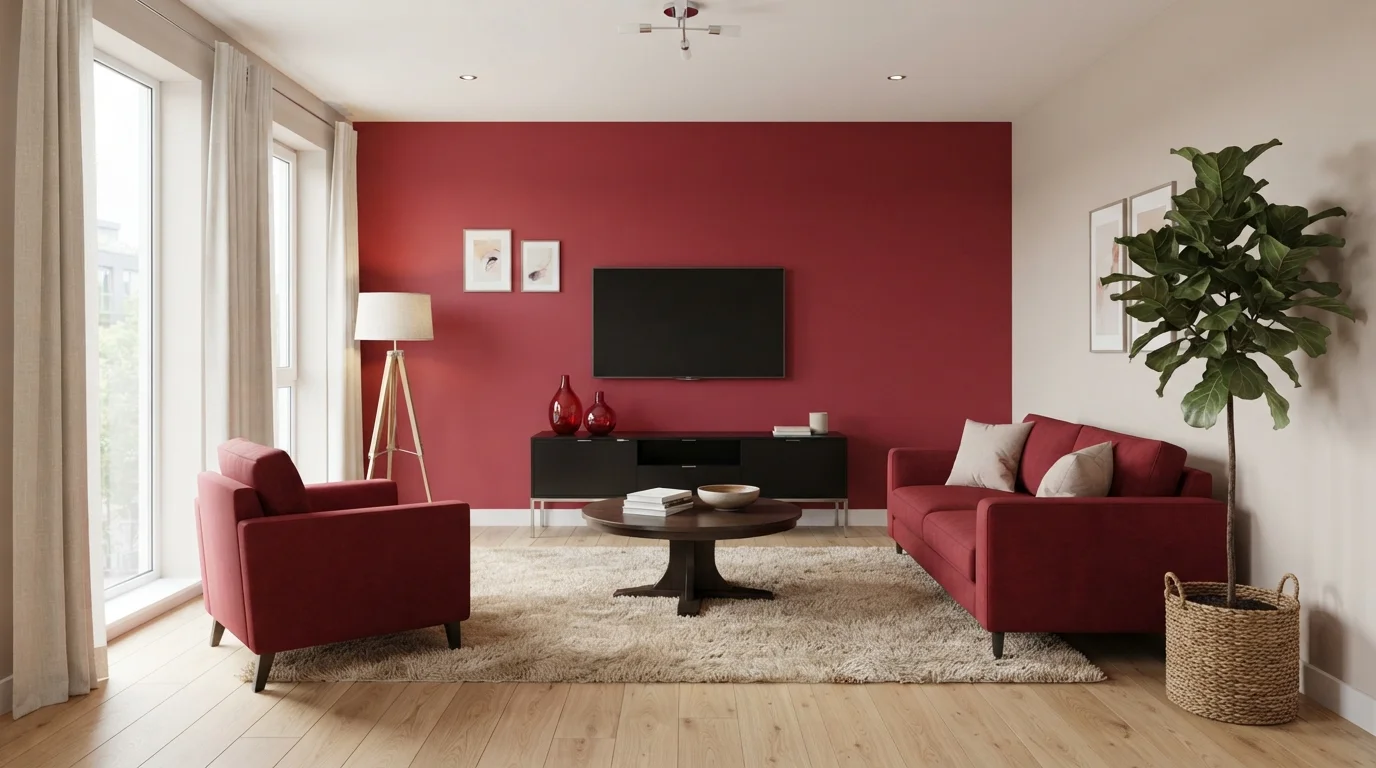
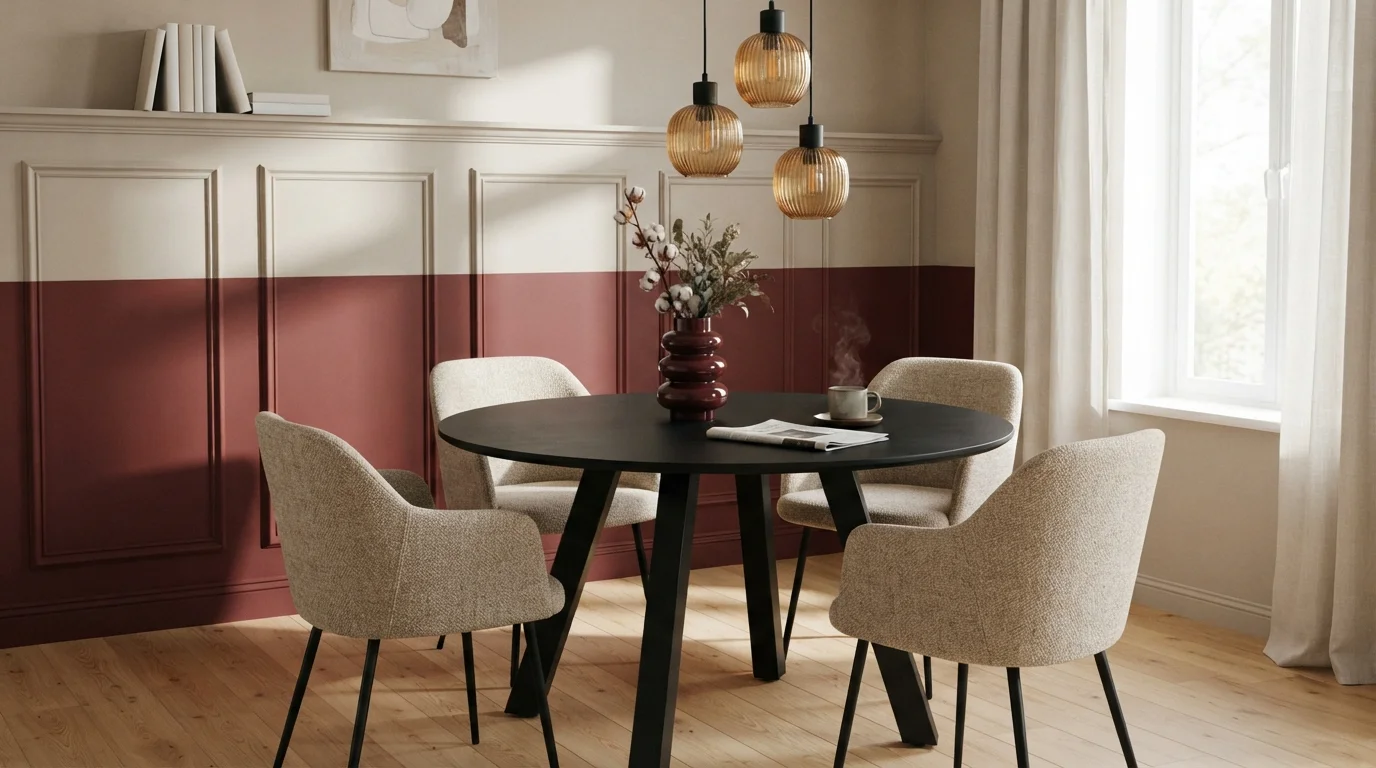
Keep the other surfaces quiet so the red stays the star. Crisp white or soft off-white trim gives a clean edge and a classic look, while a trim color that matches the adjacent walls makes the red wall feel built-in and calm. A plain white or light ceiling keeps the room from feeling heavy.
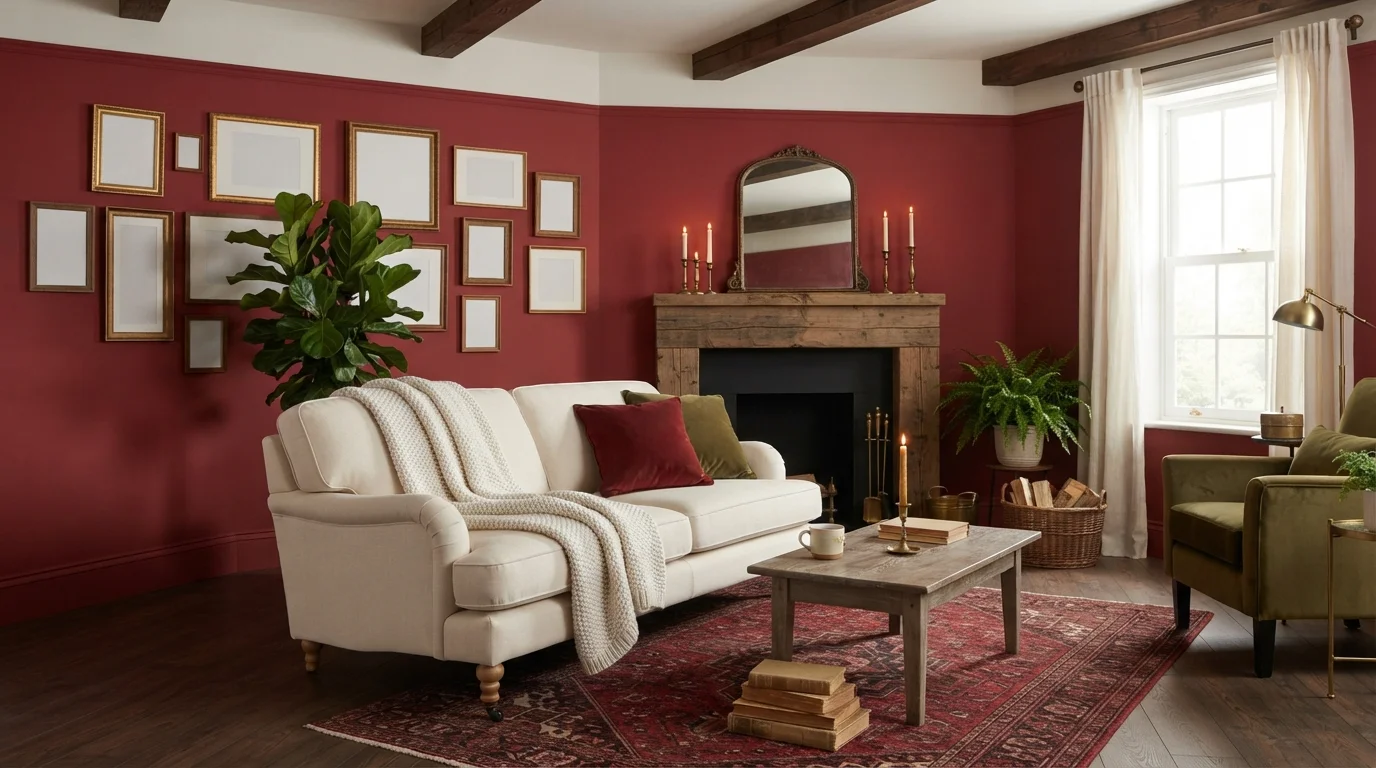
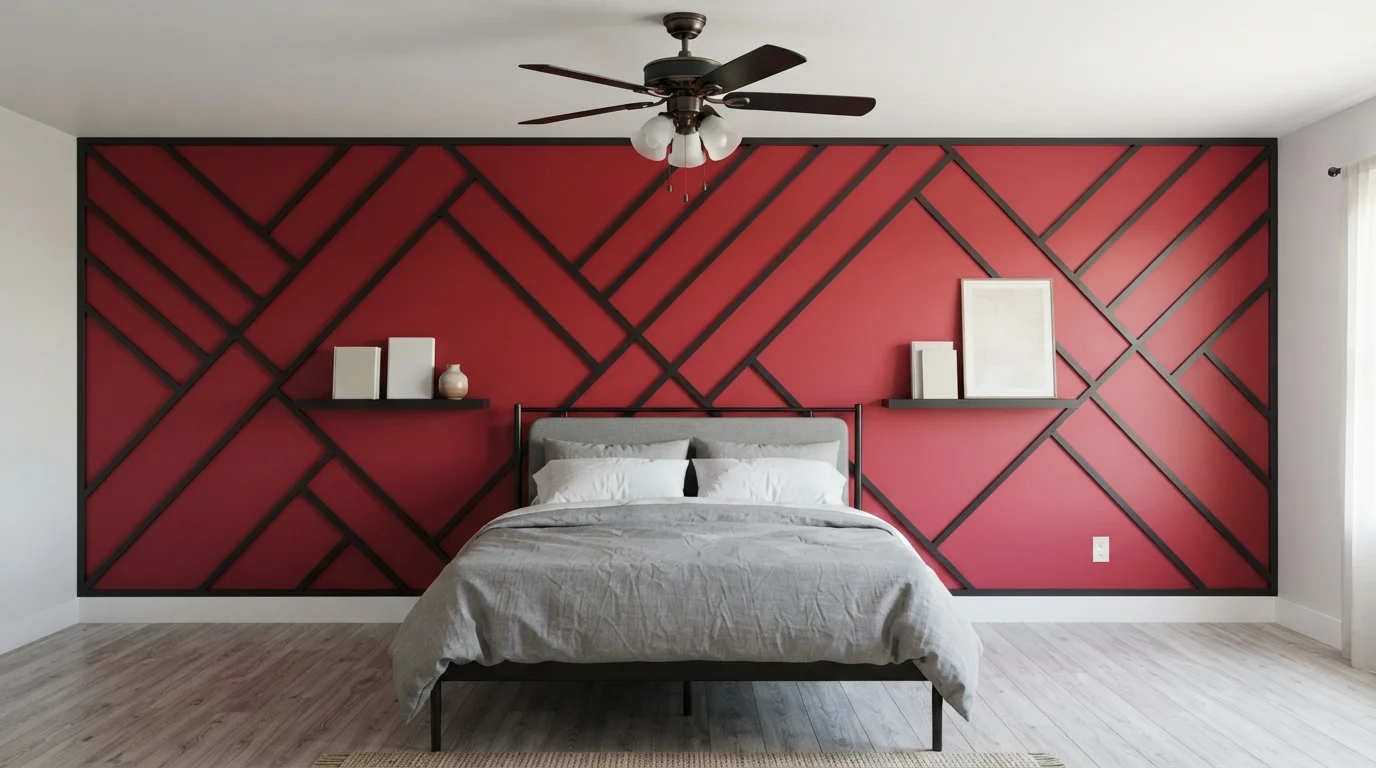
For fixtures and finishes, red pairs warmly with brass, gold, and natural wood, and looks sharp and modern against black or matte metal. Carry the red into nothing else, or echo it in one small thing like a lampshade or a single pillow so the wall feels intentional rather than random.
Common Mistakes To Avoid
The biggest mistake is picking red off a tiny chip. Red shifts more than almost any color between a chip, a sample, and a full wall, and it nearly always reads brighter and more intense at full size. Test large, and test on the exact wall you plan to paint.
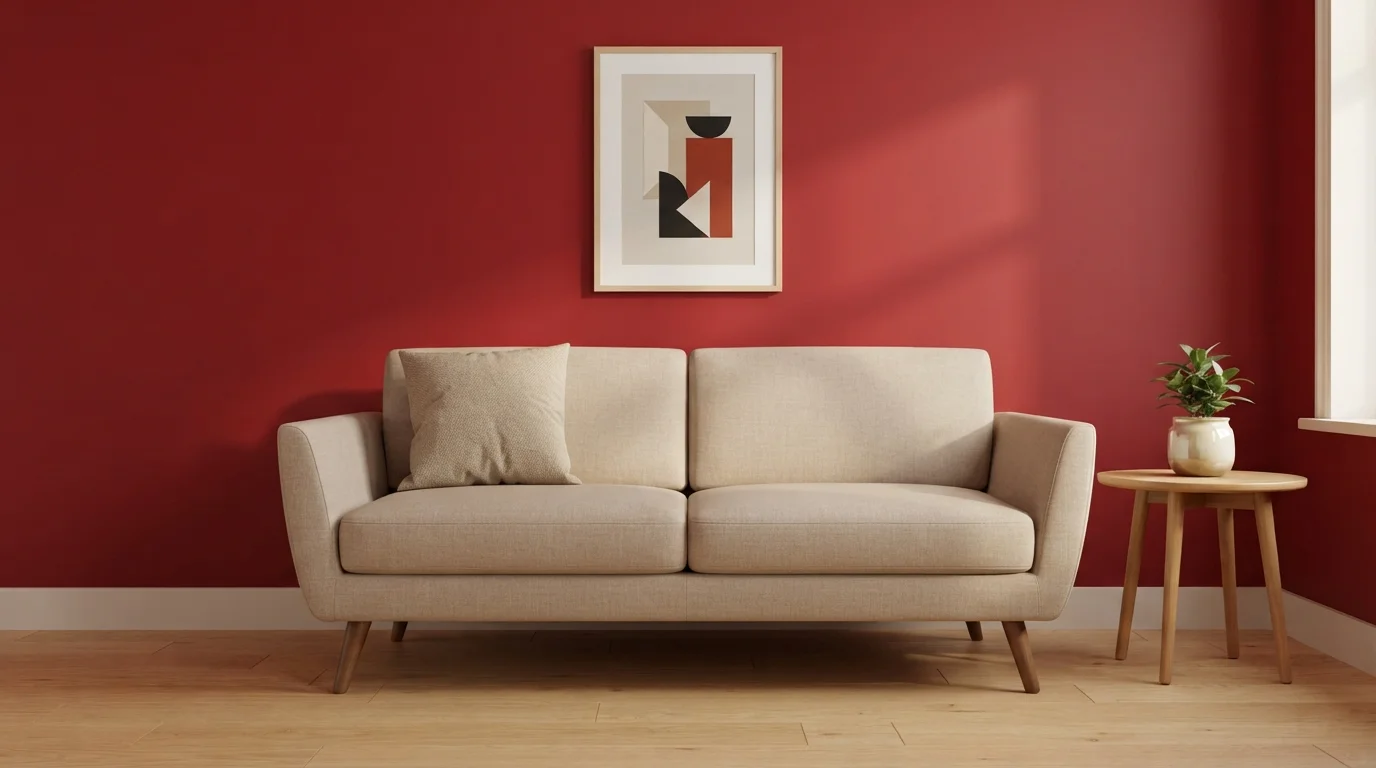
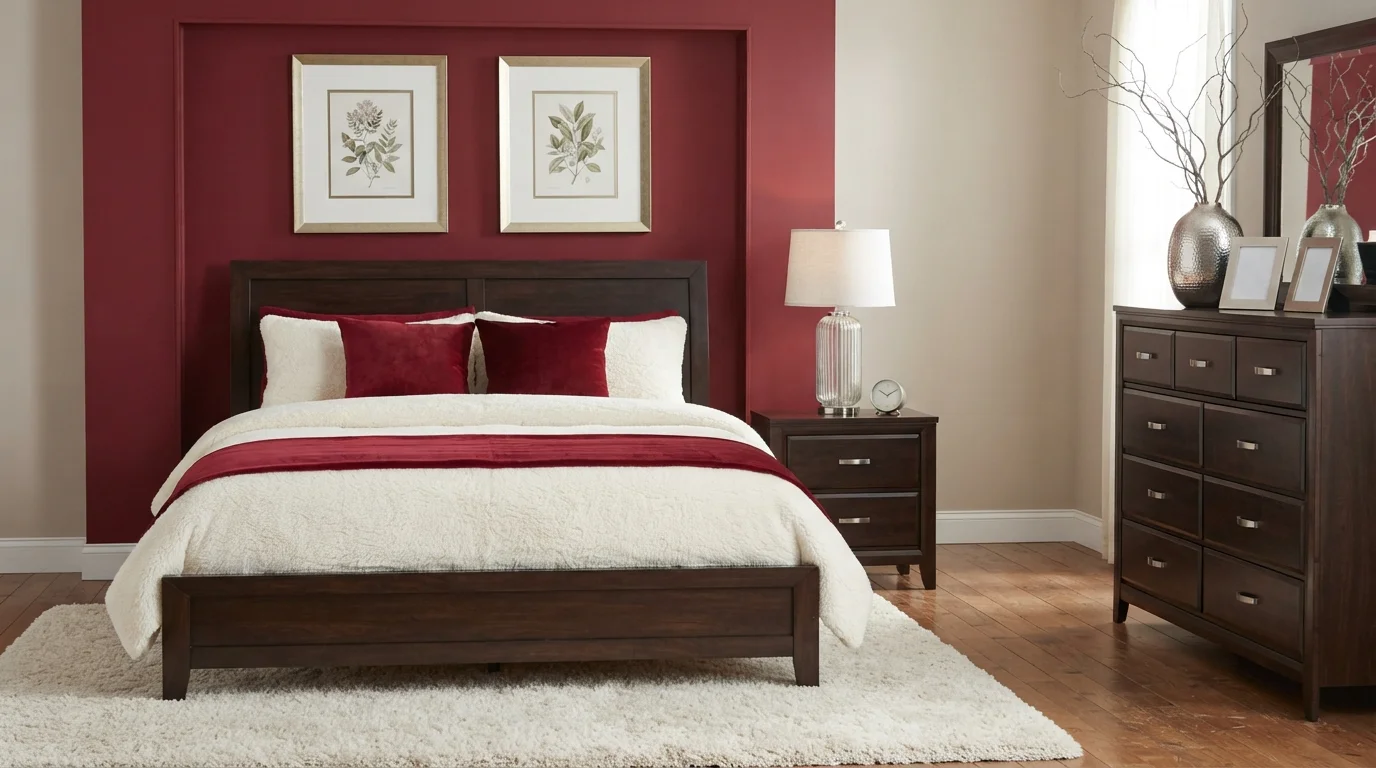
The second is choosing the wall poorly. A red accent wall works best on a wall with a clear focal point, like a bed, a fireplace, or a sofa, and one without a lot of windows or doors chopping it up. A red wall fighting big windows and bright backlight can look muddy, and a busy, broken-up wall wastes the color's impact.
Red Accent Wall Paint — Frequently Asked Questions
Which wall should I paint red in the room?+
Pick the wall your eye already goes to, like the one behind the bed, the sofa, or a fireplace. Choose a wall that is mostly solid, without a lot of windows or doors breaking it up, so the red reads as one strong surface. Avoid making your most window-heavy wall the red one, since backlight can wash the color out.
What shade of red is best for an accent wall?+
A medium-to-deep red usually works best, often with an LRV under 15, because the depth gives the wall richness without overwhelming the space. Let your light decide the undertone: a cooler, blue-leaning red holds up in bright direct sun, while a warmer red suits softer or low light. Always test a large sample on the real wall before deciding.
What finish should I use on a red accent wall?+
Eggshell or matte is the safe choice for most accent walls because it looks soft and hides small flaws, which matters with a dark, light-catching color. Use satin instead if the wall is in an entry, behind a stove, or anywhere it gets touched, so you can wipe it clean. Skip high-gloss on the full wall unless you specifically want a glossy, lacquered look.
What trim and ceiling colors go with a red wall?+
Crisp white or soft off-white trim gives red a clean, classic edge, and a light ceiling keeps the room feeling open. If you want the red wall to feel built-in and calm, match the trim to your other walls instead. Keep the surrounding surfaces simple so the red stays the focal point.
Will a red accent wall make my room feel smaller?+
One red wall makes a room feel cozier and more grounded, not cramped, because the other three walls and the ceiling keep the space open. Red advances visually, so it pulls that wall toward you and adds intimacy. Painting all four walls red is what tends to feel closed in, which is exactly why an accent wall is the better way to use it.
Can I match a red I like across different paint brands?+
Yes. Every color shown here is mixed to order at the store, so the shade matters more than the brand on the label. If you find a red you love from one brand, it can be cross-matched and tinted in another brand's paint, which lets you pick the finish and quality you want and still get the exact red.