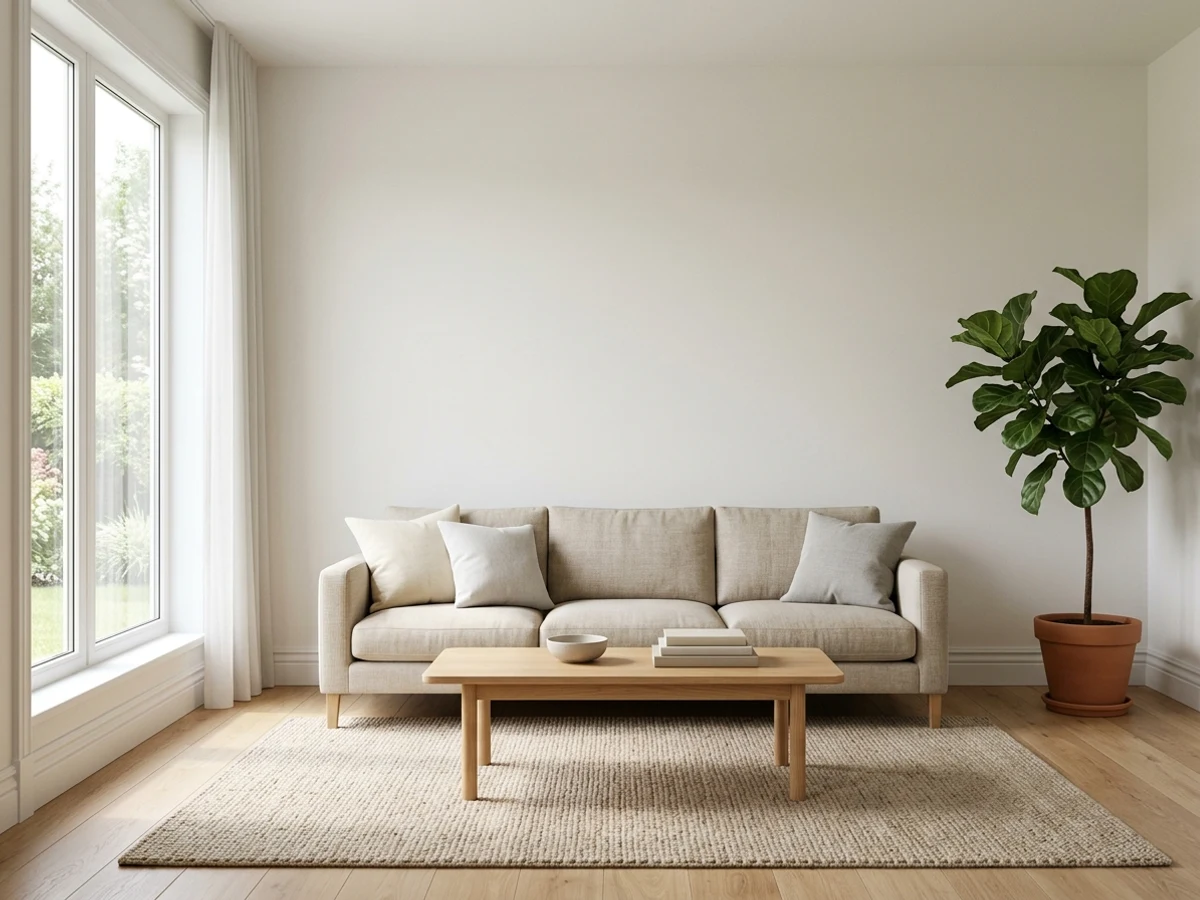
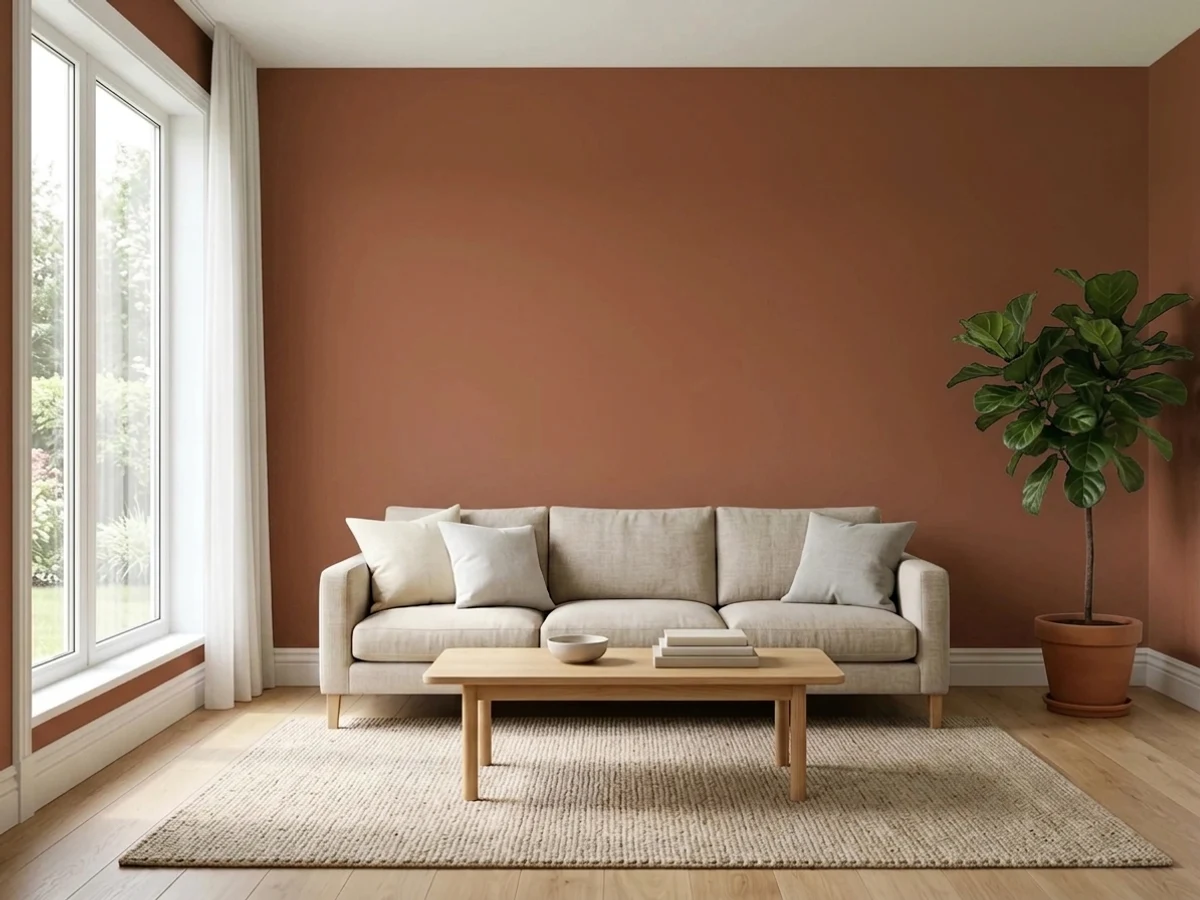
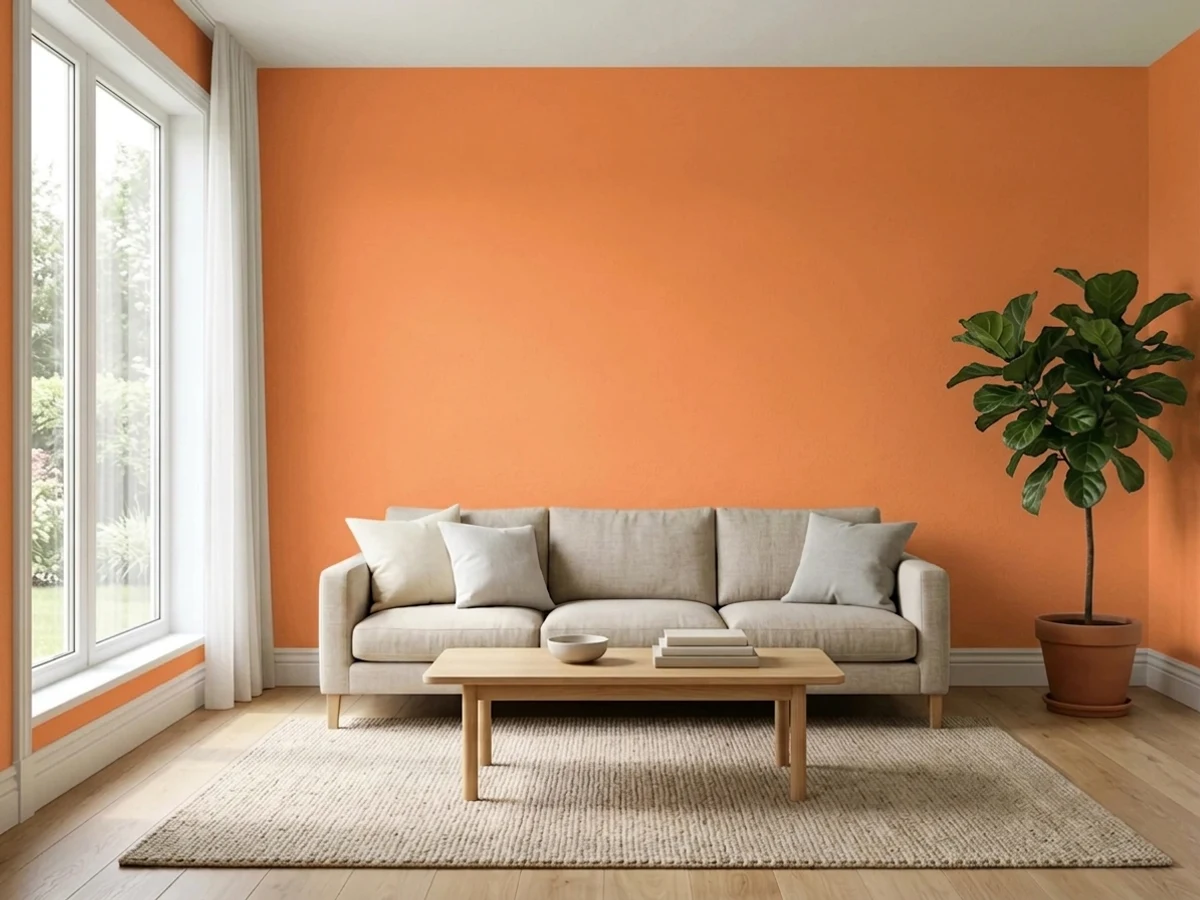
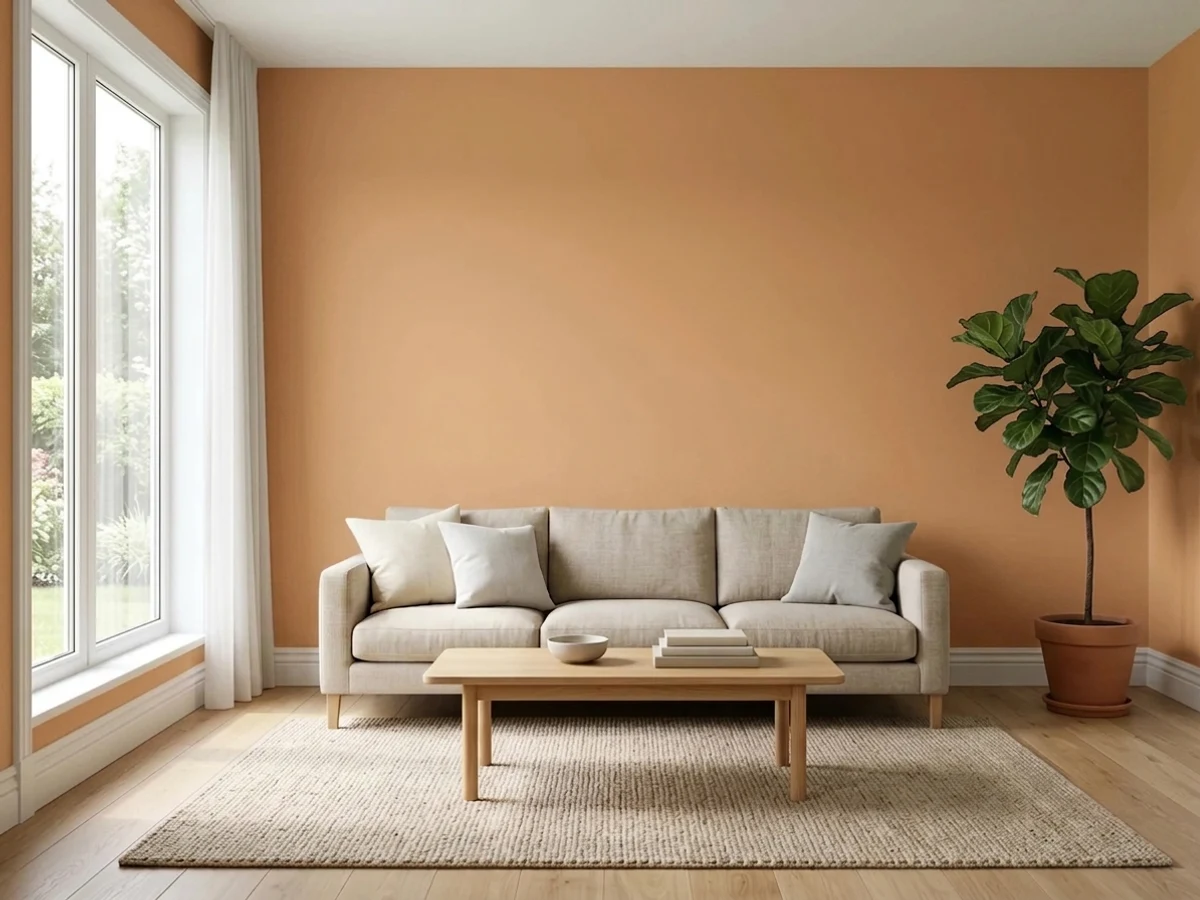
Orange Accent Wall Paint Colors
1,261 orange colors that work in accent walls, drawn from the full ~30,000-color US paint deck. Below: editor's picks specific to accent walls, then 30 picks spread across the LRV range — narrow further on the brand page when you've shortlisted.
Orange is back — not the saturated 1970s shag-carpet orange, but warm earth tones (terracotta, rust, sienna), soft peach and apricot, and the cult-favorite coral and persimmon shades that designers reach for as a softer alternative to red. The family runs from pale peach near-pinks through warm earth oranges to deep rust and burnt-sienna territory.
Editor's Picks: Orange for Accent Walls
4 picks30 Orange Picks Across the LRV Range
30 of 1,261 · sorted dark → lightLooking for more? All orange → covers every brand; brand × family pages show full decks.
Orange Accent Wall Colors at Every US Brand
21 brands · up to 10 picks eachUp to 10 picks per brand spread across the orange LRV range, drawn from each brand's full deck. Tap any swatch with a curated guide for full spec; tap the brand title for the brand's complete orange deck.
Behr
Benjamin Moore
Valspar
Glidden
Sherwin-Williams
Dunn-Edwards
HGTV Home by Sherwin-Williams
Dutch Boy
PPG / Glidden
Hirshfield's
Kompozit
Diamond Vogel
C2 Paint
Farrow & Ball
Rodda
Annie Sloan
Magnolia Home
Clare
Portola Paints
Backdrop
Rust-Oleum
Other Accent Wall Color Families
Orange Colors in Other Rooms
Orange Paint Colors for a Accent Wall
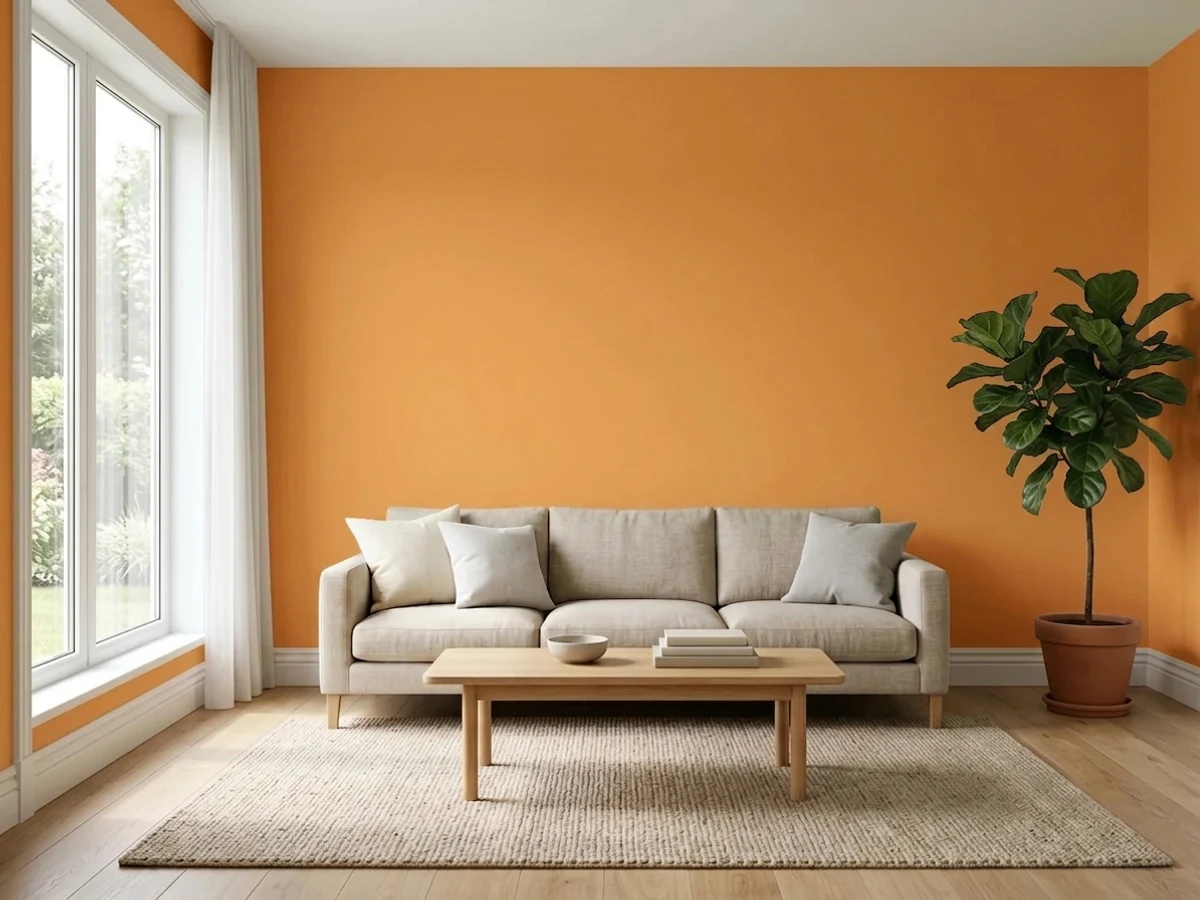
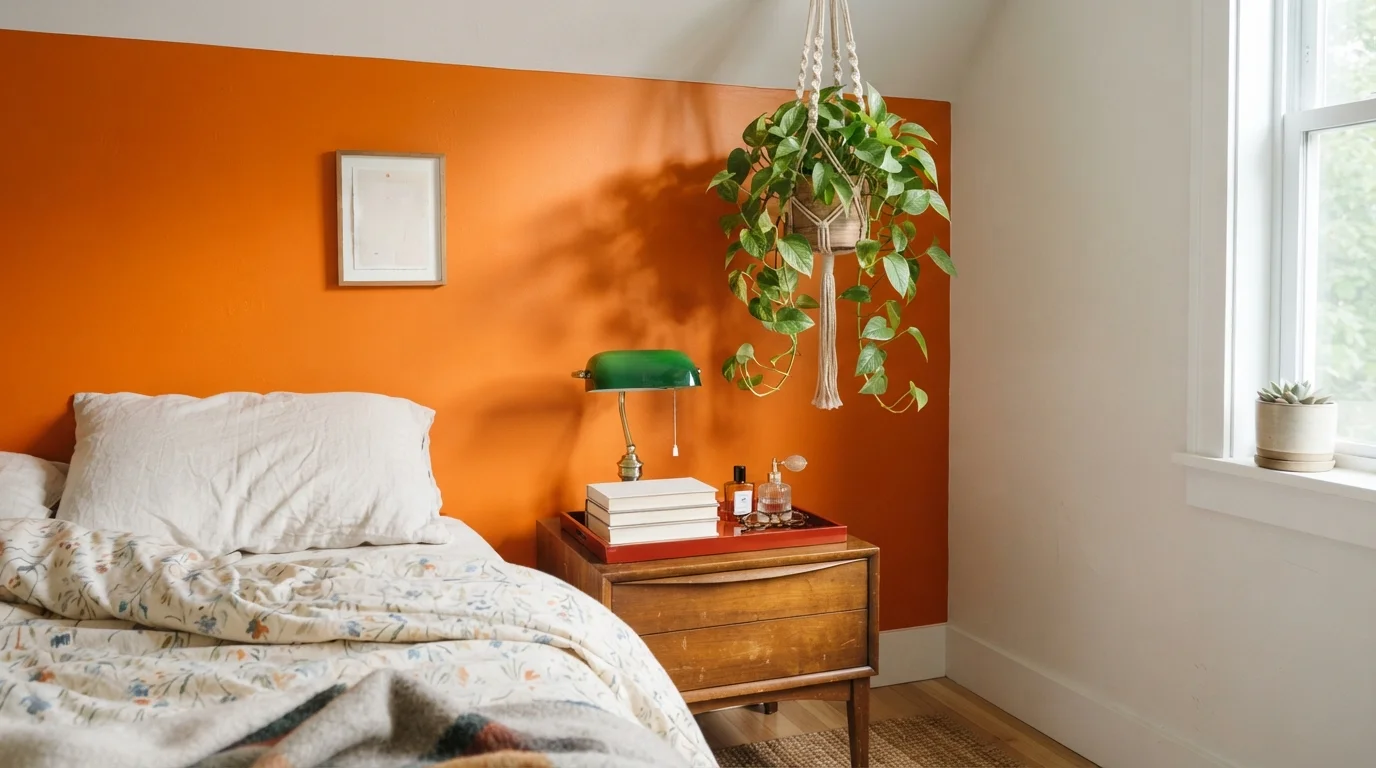
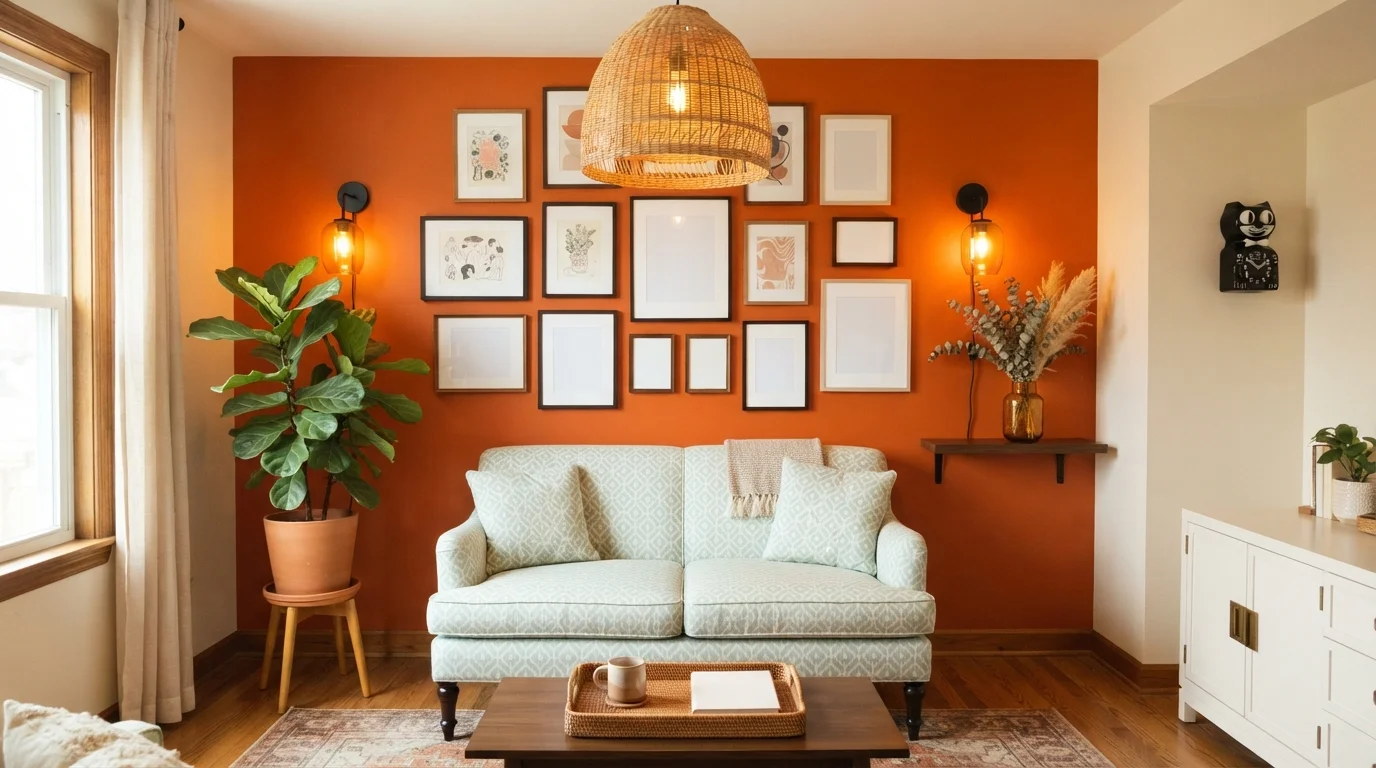
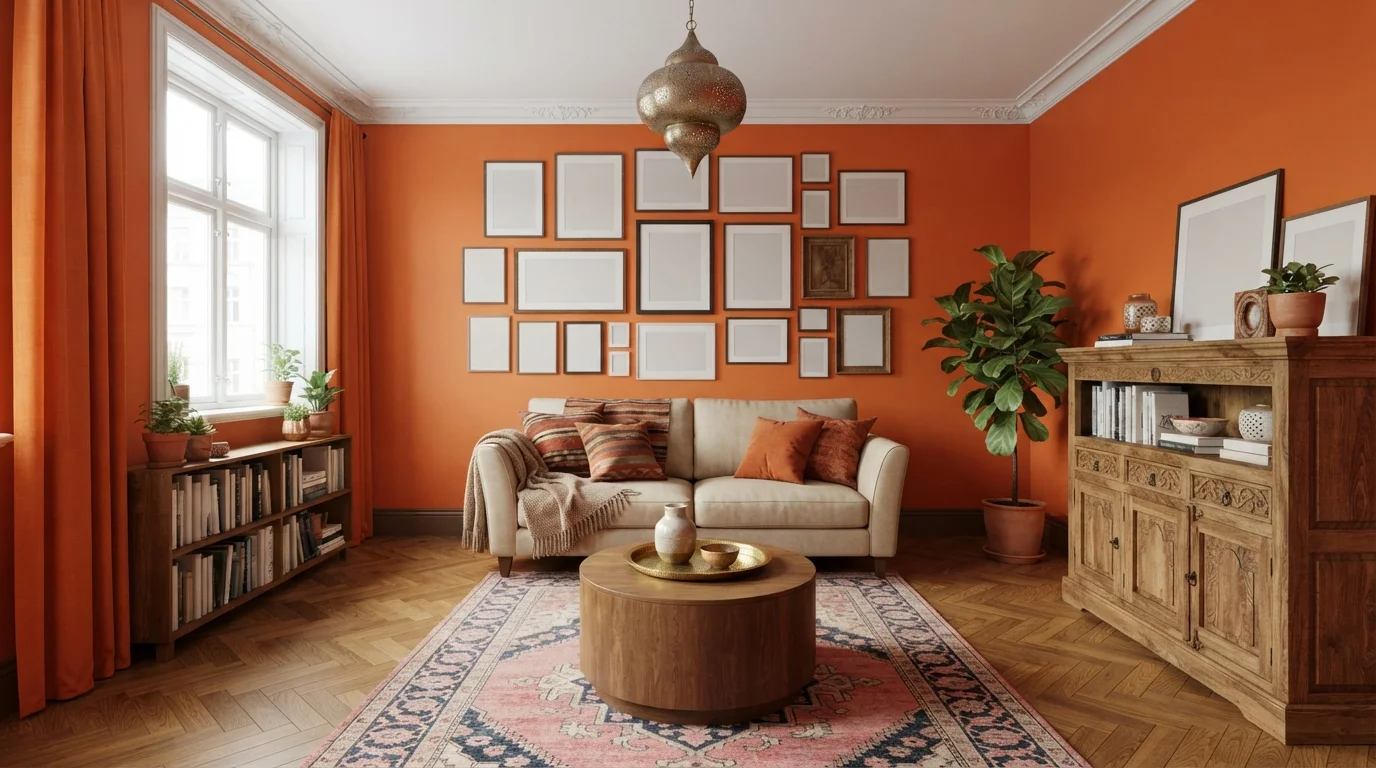
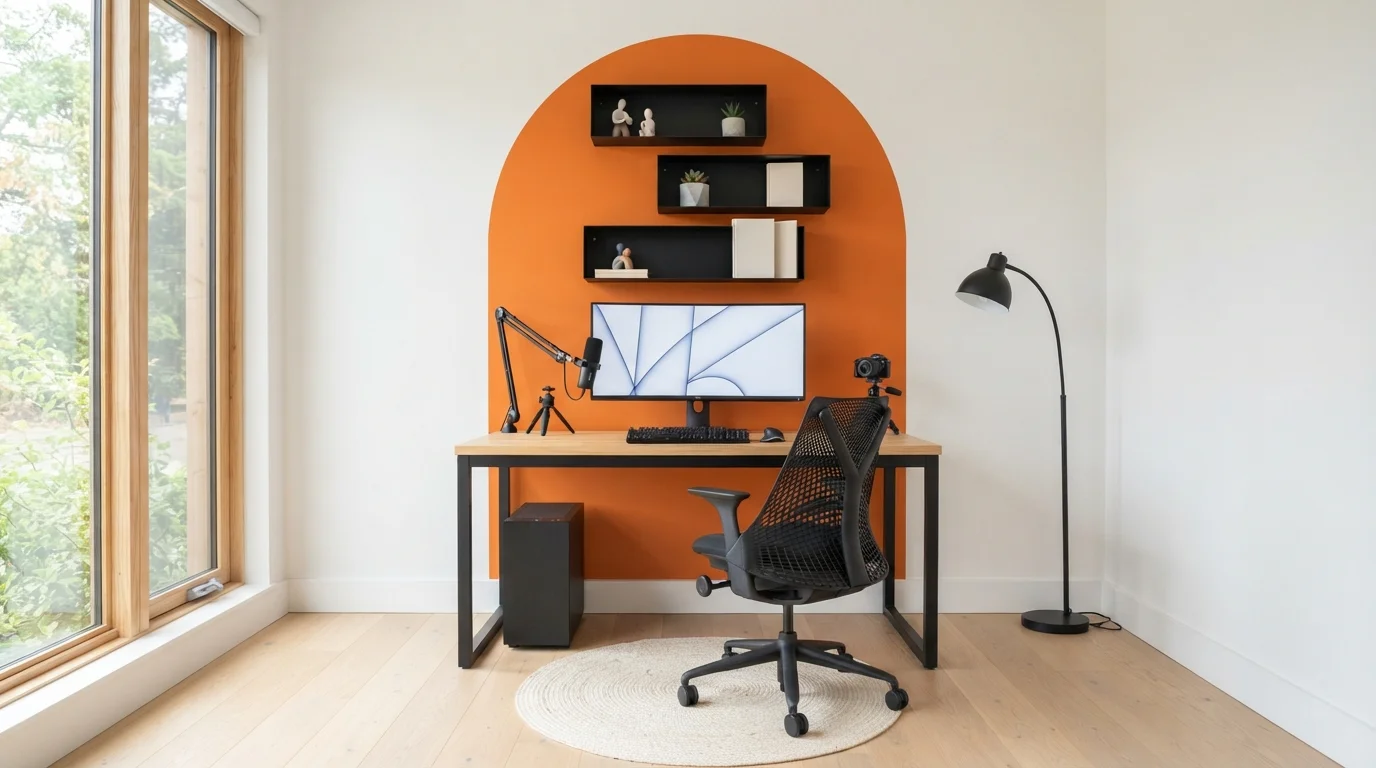
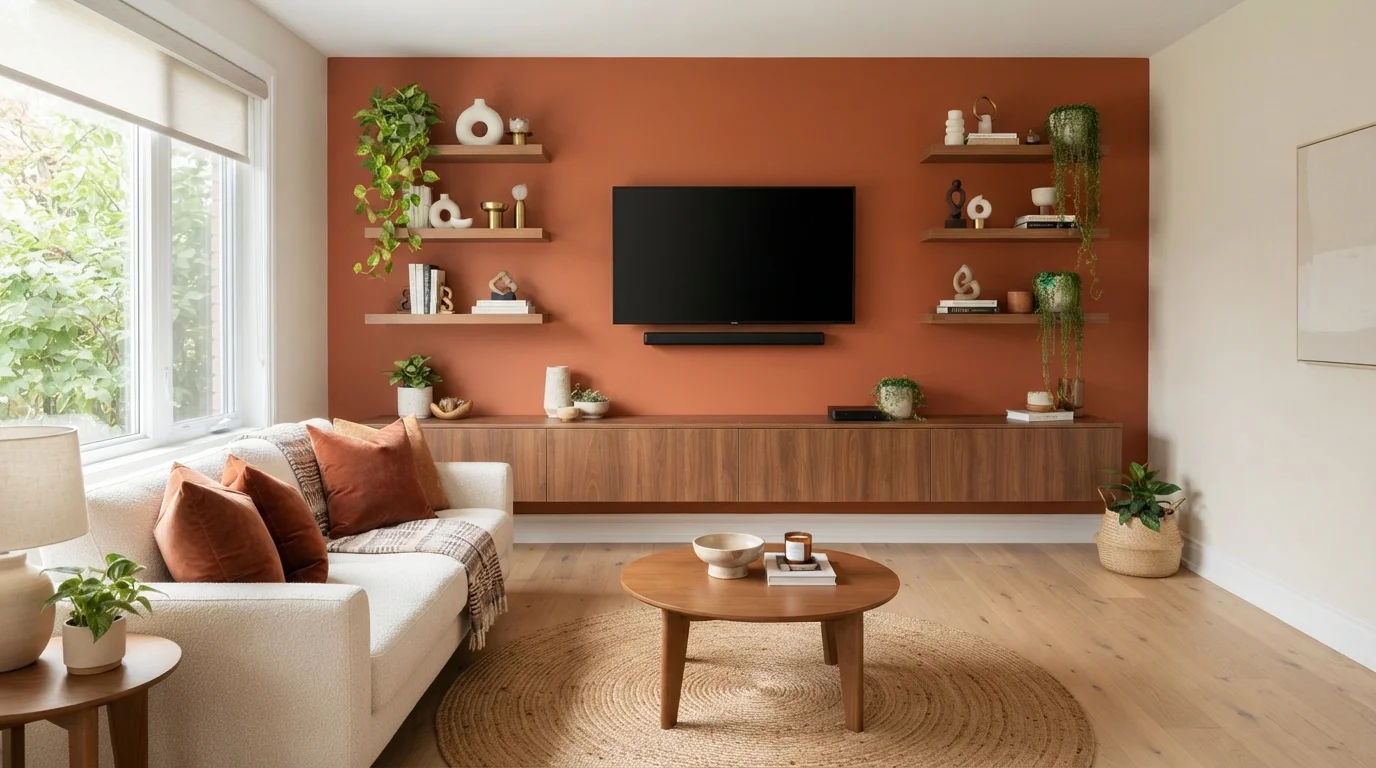
An accent wall is where orange earns its keep. You get one bold wall instead of a whole room of it, so the color reads warm and lively without taking over. That single wall draws the eye, sets a mood, and lets you commit to a strong color you might never paint on all four sides.
Orange covers a huge range, from a soft terracotta to a bright pumpkin to a deep burnt clay. The right one depends on the room, the light, and what sits around it. This page walks through how to pick the shade, the finish, and the pairings so your orange wall looks chosen, not loud.
Every orange swatch you see here is mixed to order at a paint counter, so you are not locked to one brand. If you like a tone but prefer a different brand's paint, it can be cross-matched closely.
Why Orange Works on an Accent Wall
Orange is one of the warmest colors you can put on a wall, and warmth is exactly what an accent wall is for. It pulls a wall forward and makes a space feel alive and welcoming. Because you are only painting one wall, you can go richer than you would dare on the whole room.
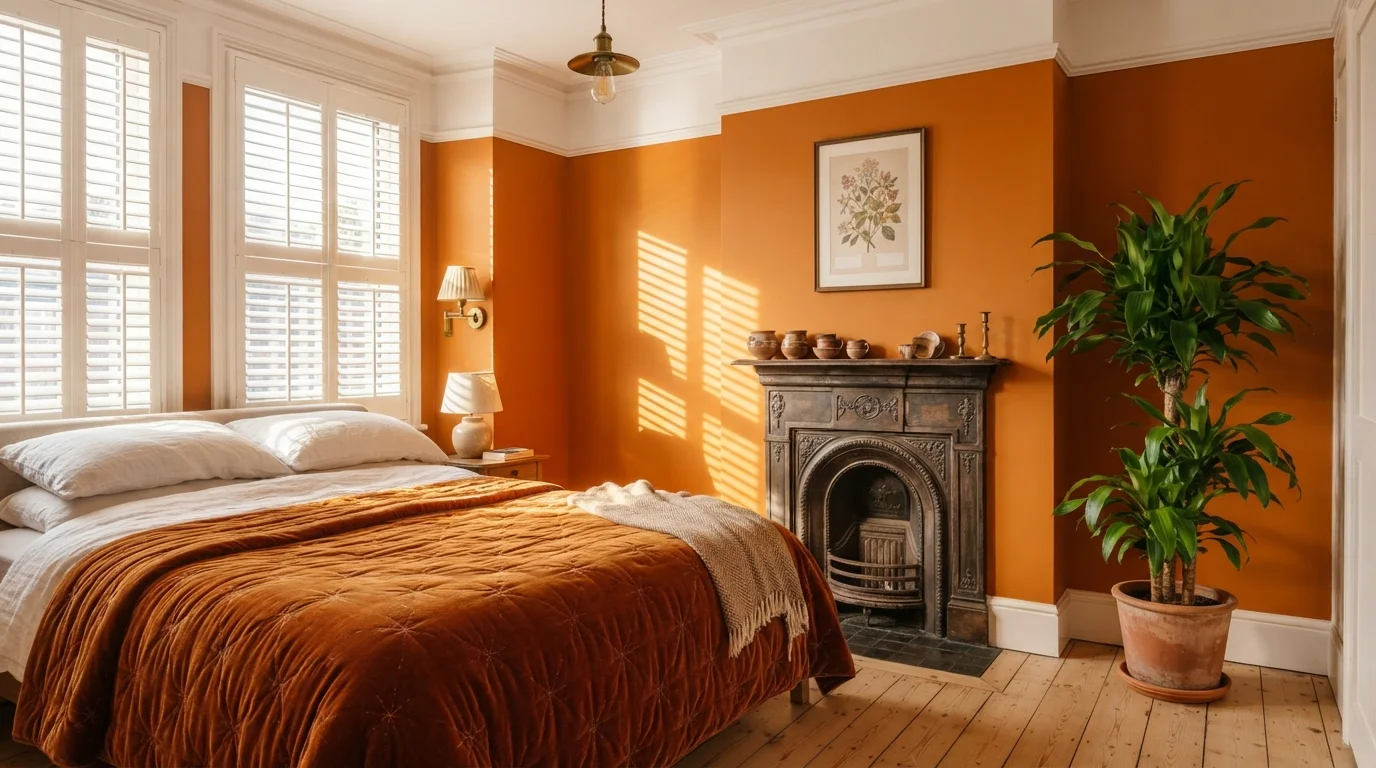
The trick is that orange is high-energy, so the wall you pick matters. Put it behind a bed, a sofa, or a fireplace where it frames something. Avoid the wall full of windows, since the glare can wash a warm color out and make it look orange-pink at the wrong times of day.
Picking the Right Depth of Orange for Your Light
LRV (light reflectance value) tells you how light or dark a color is, from 0 (black) to 100 (white). A soft terracotta might land around 35 to 45, while a deep burnt orange can drop into the teens. On an accent wall, a darker orange (lower LRV) reads as a rich anchor, and a lighter one (higher LRV) feels more open and casual.
Let the room's light steer you. A wall that gets warm afternoon sun will push any orange brighter and hotter, so lean to a more muted, earthy tone there. A wall in cooler north light or shadow can take a warmer, slightly brighter orange without looking neon, because the room's light tones it down.
The Best Finish for an Accent Wall
For most accent walls, eggshell or matte is the sweet spot. A flat-ish sheen lets a saturated orange look deep and even, and it hides small wall flaws that a shiny finish would highlight. Orange is already a bold color, so you usually do not want glare competing with it.
If the wall gets touched a lot or sits in a kitchen or hallway, step up to a satin so you can wipe it clean. Skip semi-gloss on the field of an accent wall unless you want a slick, modern look, since the shine plus the strong color can feel like a lot.
Pairing Orange With Trim, Ceiling, and the Rest of the Room
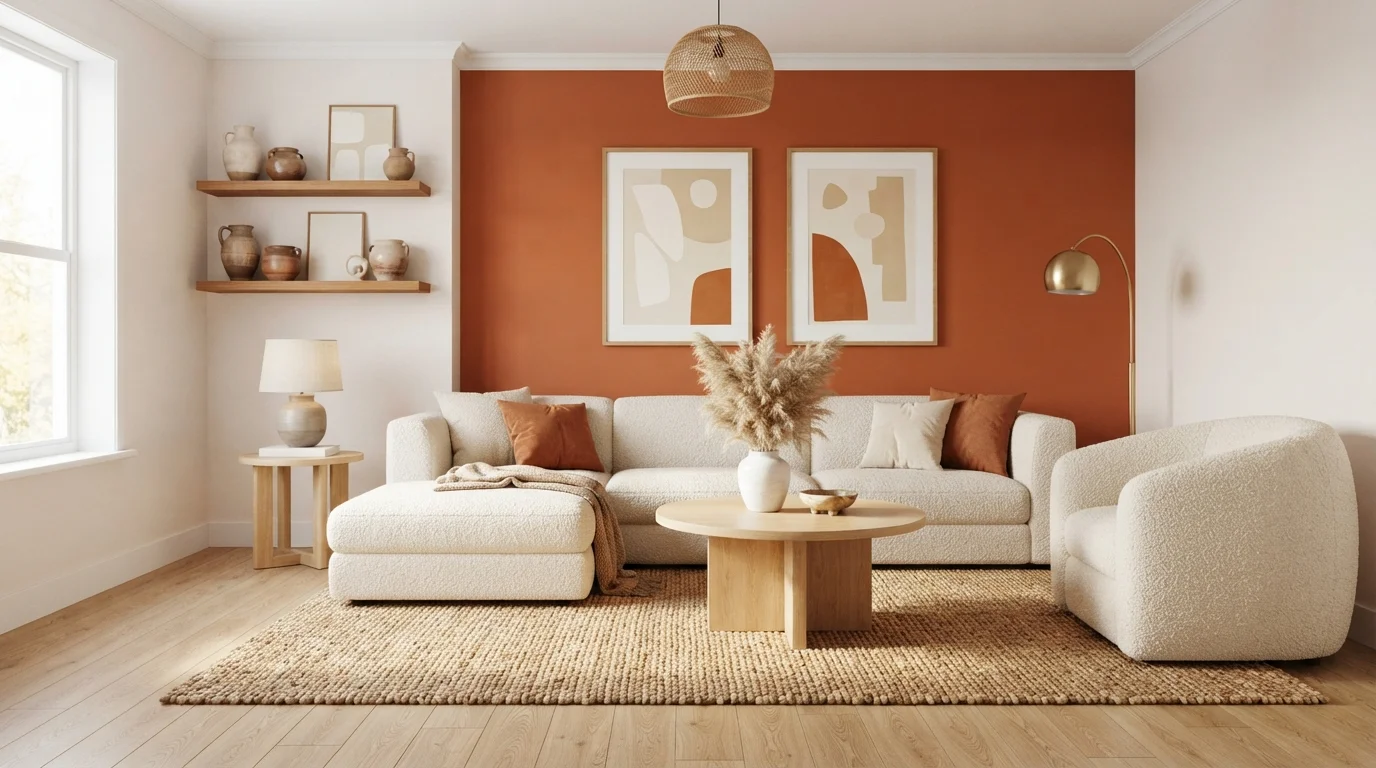
Keep the other three walls calm so the orange stays the star. Soft white, warm greige, or a pale putty on the surrounding walls lets the accent wall pop without a fight. A creamy white trim and ceiling frame the orange cleanly, while a stark blue-white can feel cold against it.
For furniture and finishes, orange loves natural materials. Wood tones, leather, woven textures, and warm metals like brass or bronze all sit well with it. Deep blue, charcoal, and forest green make easy companion colors if you want the rest of the room to hold its own next to the wall.
Common Mistakes to Avoid
The biggest one is picking the orange off a tiny chip. Orange intensifies as it covers more wall, so a tone that looks friendly on a card can turn loud across a full accent wall. Always test a large sample and look at it morning, midday, and night before you commit.
The other common slip is choosing the wrong wall or a clashing white. Painting a window-filled wall fights the light, and a cool blue-white trim makes warm orange look muddy. Match the orange to a calm wall, keep the trim creamy, and let the color do the work.
Orange Accent Wall Paint — Frequently Asked Questions
Is orange too bold for an accent wall?+
Not at all, since an accent wall is the right place for a bold color. You get the energy of orange on one wall while the rest of the room stays calm. If full pumpkin feels like too much, a softer terracotta or burnt clay gives you the warmth with less shout.
What color should I paint the other walls?+
Keep them quiet so the orange leads. Soft white, warm greige, or pale putty are the safest picks. Avoid another strong color on the facing walls, since two loud colors will fight instead of working together.
What sheen is best for an orange accent wall?+
Eggshell or matte for most rooms, because a low sheen makes the color look rich and hides wall flaws. Use satin if the wall is in a kitchen or hallway where you need to wipe it clean. Semi-gloss is usually too shiny for a field of bold color.
How does room light change how the orange looks?+
Warm afternoon sun makes orange brighter and hotter, so pick a more muted, earthy tone for a sunny wall. Cooler or shaded light tones orange down, so you can go a touch warmer there. Always test the real color on the actual wall before deciding.
Can I match this orange across different paint brands?+
Yes. Every color shown is mixed to order at the paint counter, so you are not tied to one brand. If you like a tone but want a different brand's paint, the counter can cross-match it very closely.
What trim color goes with an orange accent wall?+
A creamy or soft white frames orange cleanly and keeps it warm. Steer away from stark blue-whites, which can make the orange look muddy by comparison. Matching your trim to the existing trim in the room usually keeps things consistent.