Red Dining Room Paint Colors
934 red colors that work in dining rooms, drawn from the full ~30,000-color US paint deck. Below: editor's picks specific to dining rooms, then 30 picks spread across the LRV range — narrow further on the brand page when you've shortlisted.
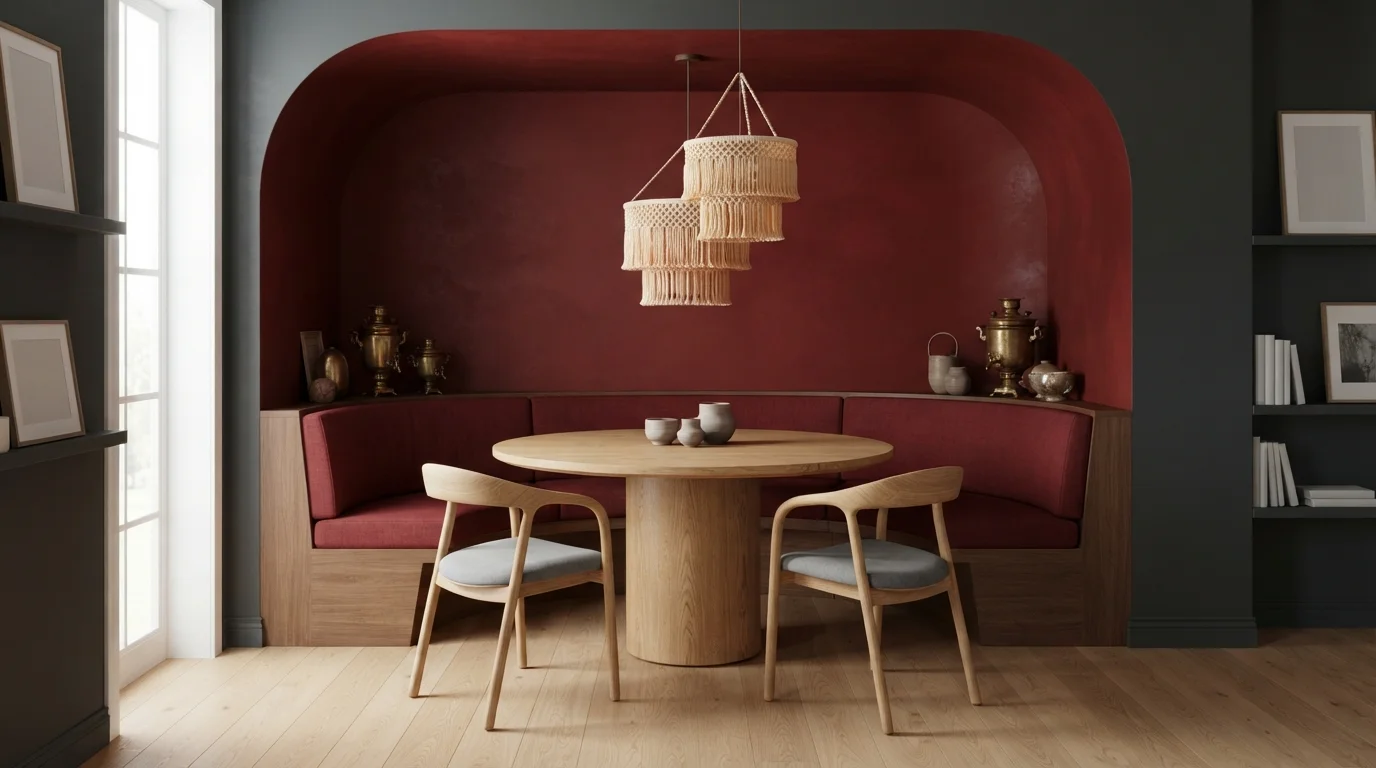
Red is divisive as a wall color, which is exactly why it works so well in the right room — a dining room, a powder room, or a single accent on cabinetry. The family splits into three practical groups: bright reds (crimson, vermilion), deep wine-toned burgundies, and brick reds that lean warmer and earthier.
Editor's Picks: Red for Dining Rooms
4 picks30 Red Picks Across the LRV Range
30 of 934 · sorted dark → lightLooking for more? All red → covers every brand; brand × family pages show full decks.
Red Dining Room Colors at Every US Brand
20 brands · up to 10 picks eachUp to 10 picks per brand spread across the red LRV range, drawn from each brand's full deck. Tap any swatch with a curated guide for full spec; tap the brand title for the brand's complete red deck.
Behr
Benjamin Moore
Glidden
Sherwin-Williams
Dunn-Edwards
Valspar
Hirshfield's
PPG / Glidden
Diamond Vogel
Kompozit
Dutch Boy
C2 Paint
Farrow & Ball
Magnolia Home
Rodda
Annie Sloan
Clare
Backdrop
Rust-Oleum
Other Dining Room Color Families
Red Colors in Other Rooms
Red Paint Colors for a Dining Room
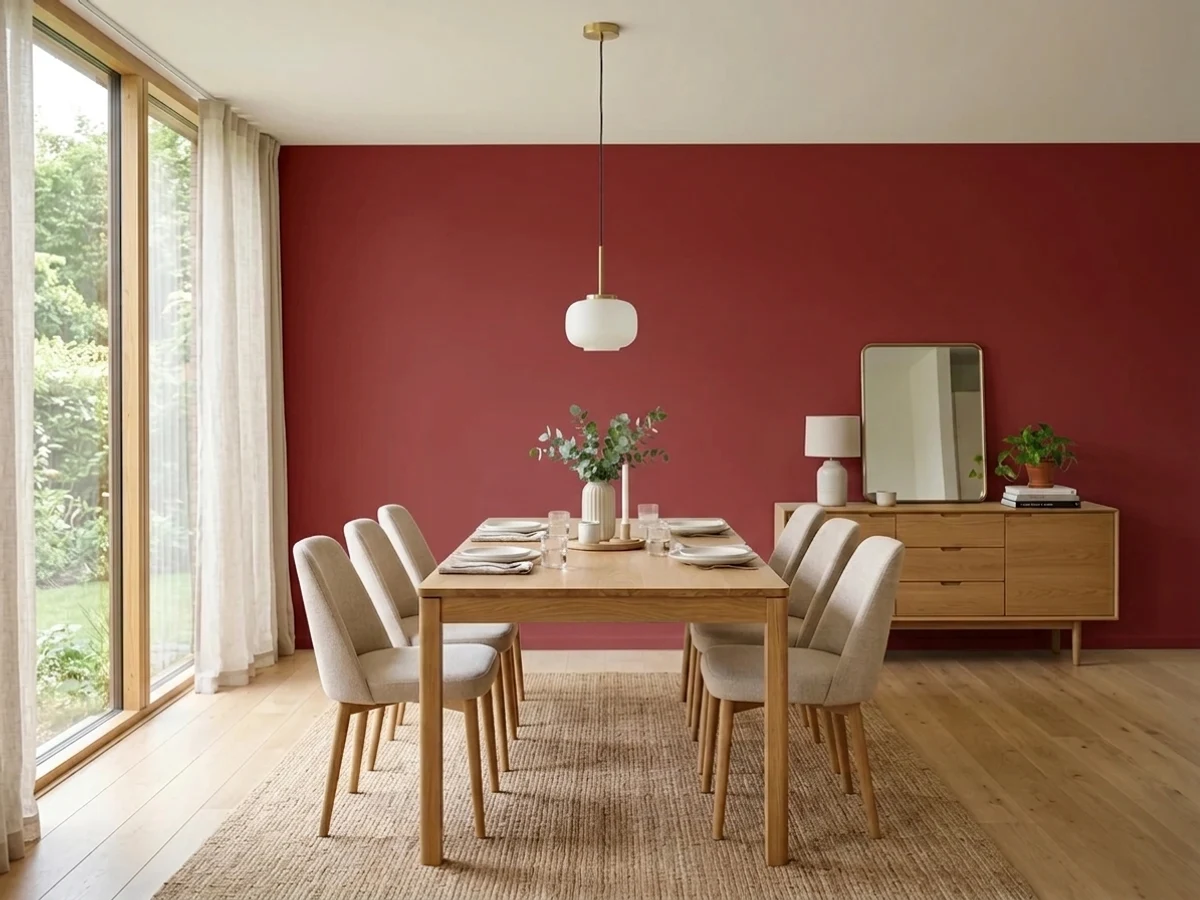
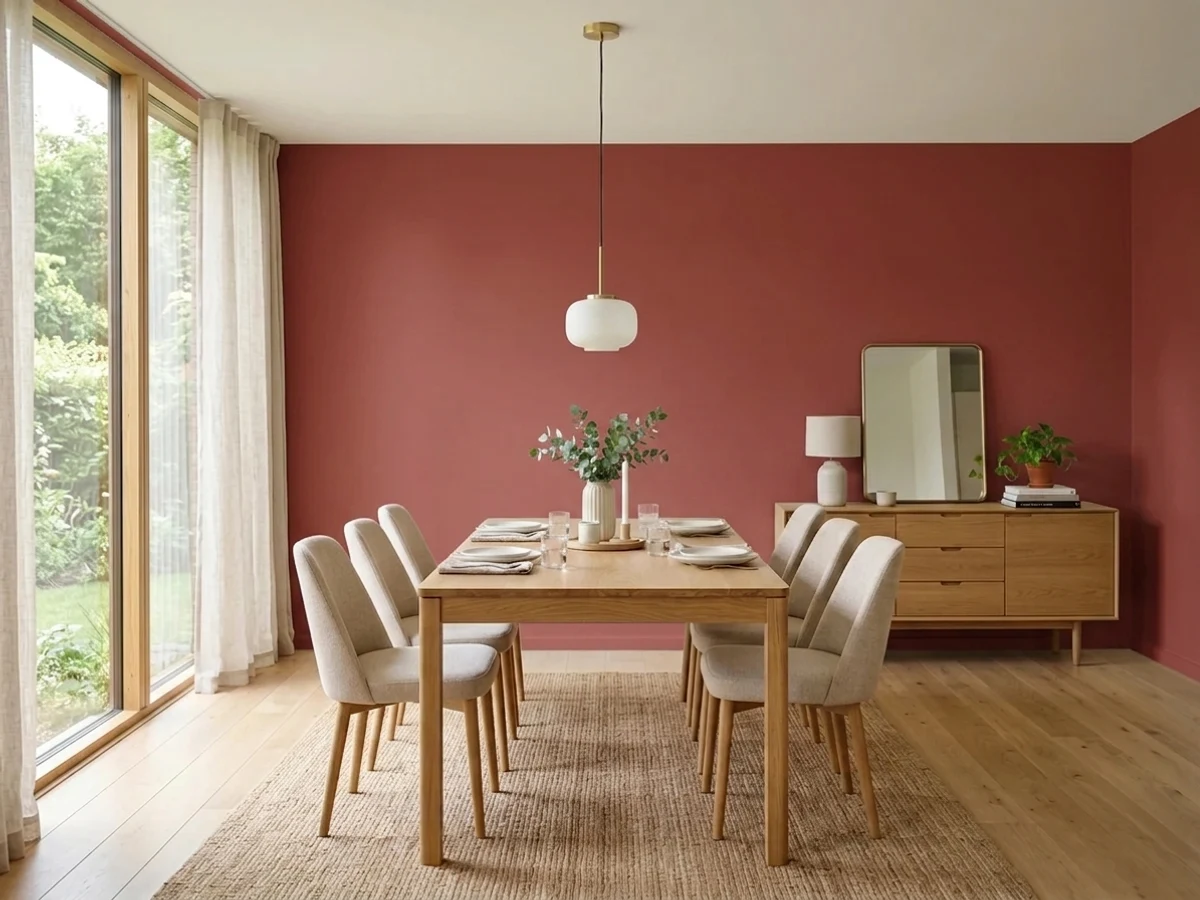
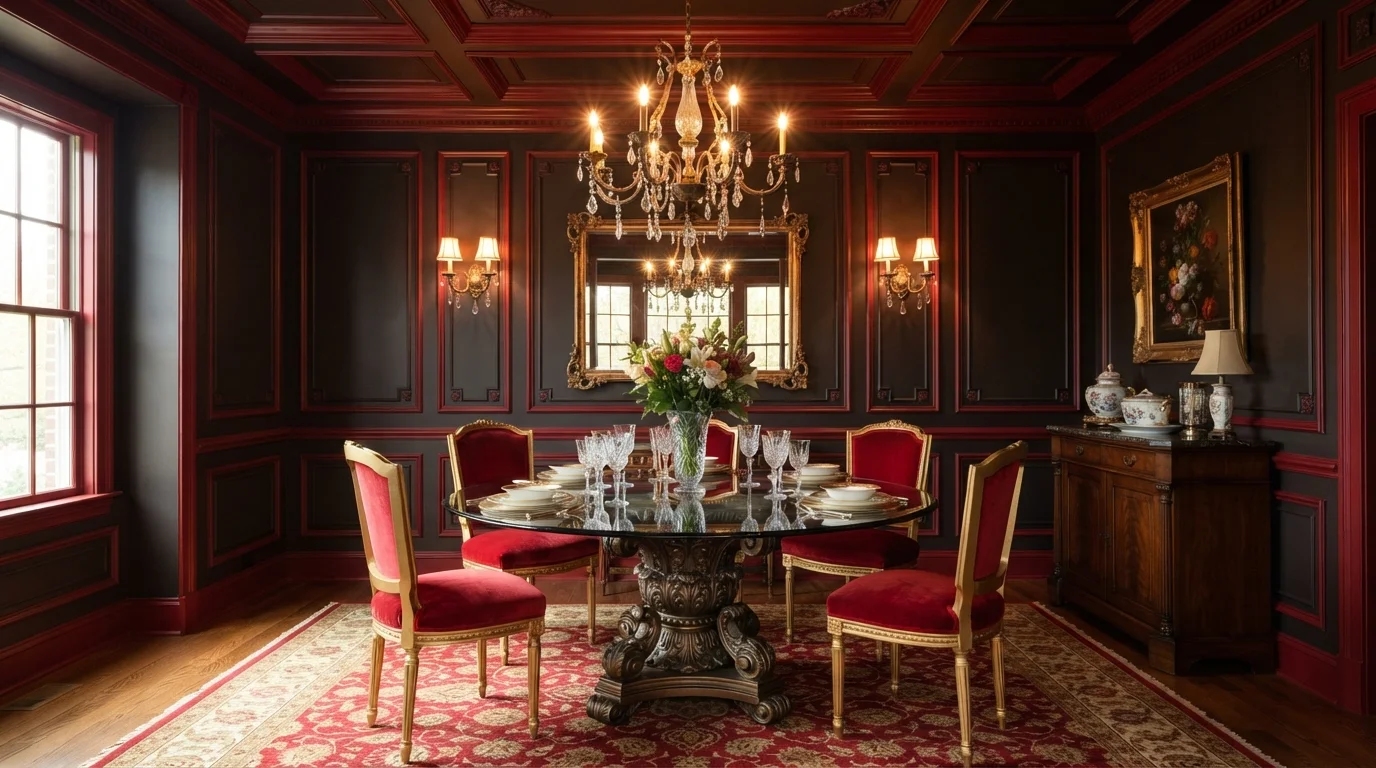
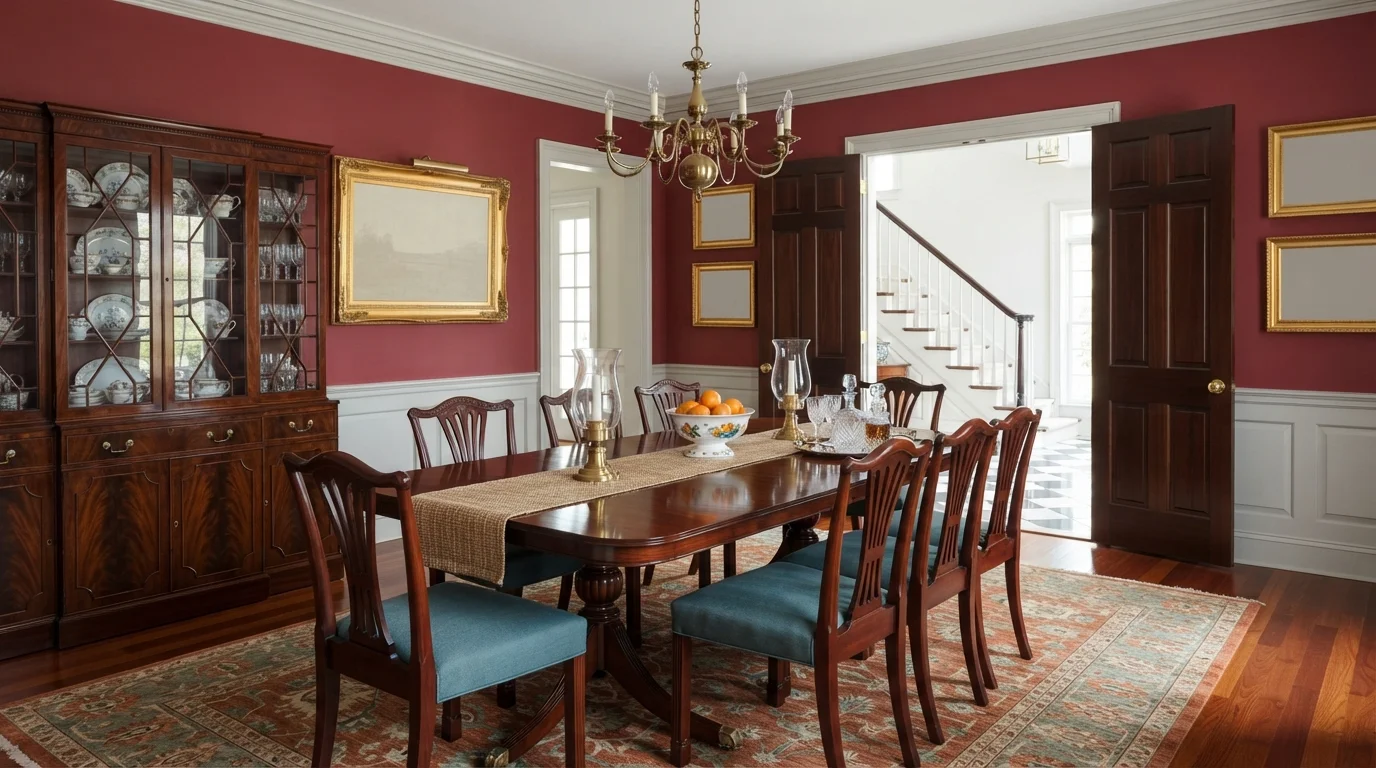
Red has a long history in dining rooms, and it's one of the few rooms where a bold color actually pays off. You don't live in a dining room all day, so a color that would feel intense in a bedroom reads as warm and special when you only sit in it for an hour or two over a meal. Red also flatters food and faces under warm light, which is exactly why old dining clubs and supper rooms leaned on it for so long.
This page is about choosing red specifically for a dining room: how deep to go, how your room's light changes the result, which sheen holds up to chairs and serving, and how to pair red with your trim, ceiling, and any built-in cabinetry. Every red shown here is a real, buyable color that any paint store can mix to order, and the cross-matches let you take a shade you like and find the closest version across other brands.
Why Red Belongs in a Dining Room
A dining room is short-stay and event-driven, so it can carry a stronger color than a space you sit in for hours. Red is stimulating and a little dramatic, which sounds like a downside until you realize that's exactly the mood a dinner gathering wants. It makes the room feel intimate and a touch theatrical, and it photographs warm under the soft lighting most people use at the table.
Red also has a practical edge here. It hides the smudges and scuffs of a working room better than a pale color, and it pulls warm light forward so candlelit and lamp-lit evenings feel cozy instead of dim. If your dining room is a pass-through or sits open to a brighter kitchen, that contrast can make the dining zone feel like its own deliberate space.
Picking the Right Depth of Red for Your Light
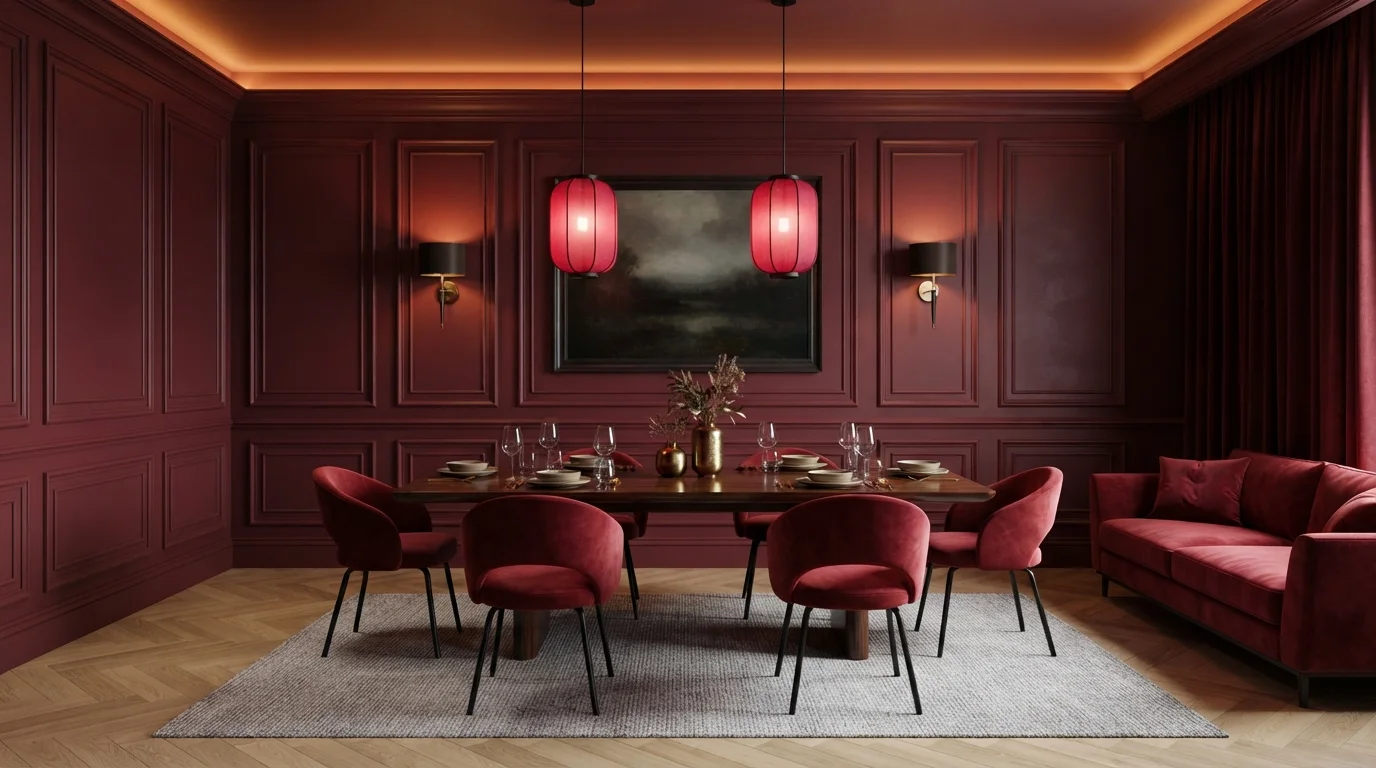
Dining rooms are often used most at night, which is the single biggest reason deep reds work so well here. A dark, low-LRV red (roughly LRV 5 to 12) turns rich and enveloping under lamplight and reads almost brown-black in shadow, which feels expensive rather than loud. If your room mainly sees evening use, lean dark and don't be afraid of it.
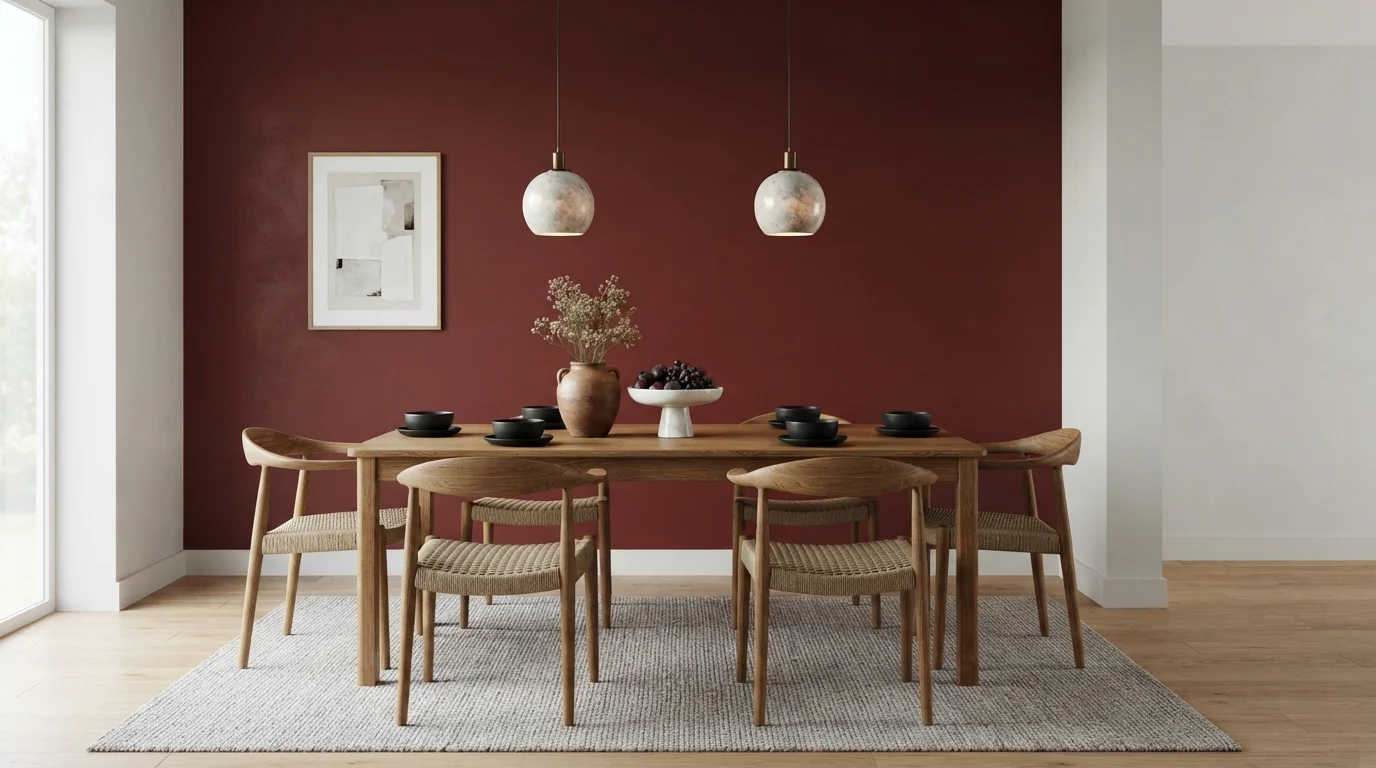
Light steers the undertone, so test before you commit. North-facing and low-light dining rooms cool a red down and can pull a true crimson toward a muddy, purplish cast, so a red with a warm brick or terracotta base holds up better. South- and west-facing rooms with strong afternoon sun can push a red hotter and more orange, so a slightly cooler, more brick-toned red stays balanced. Mid-tone berry and clay reds (LRV around 15 to 25) are the easier middle path if a near-black red feels like too much.
The Right Sheen for a Dining Room Wall
Dining rooms don't have the moisture problem of a kitchen or bath, so washability matters more than scrubbability. An eggshell or satin finish is the sweet spot: it wipes clean when a chair back rubs the wall or a splash of wine lands, but it doesn't throw harsh glare across the room at night the way a glossier sheen would. Deep reds especially benefit from a lower sheen, because dark colors show roller marks and surface flaws when they're shiny.
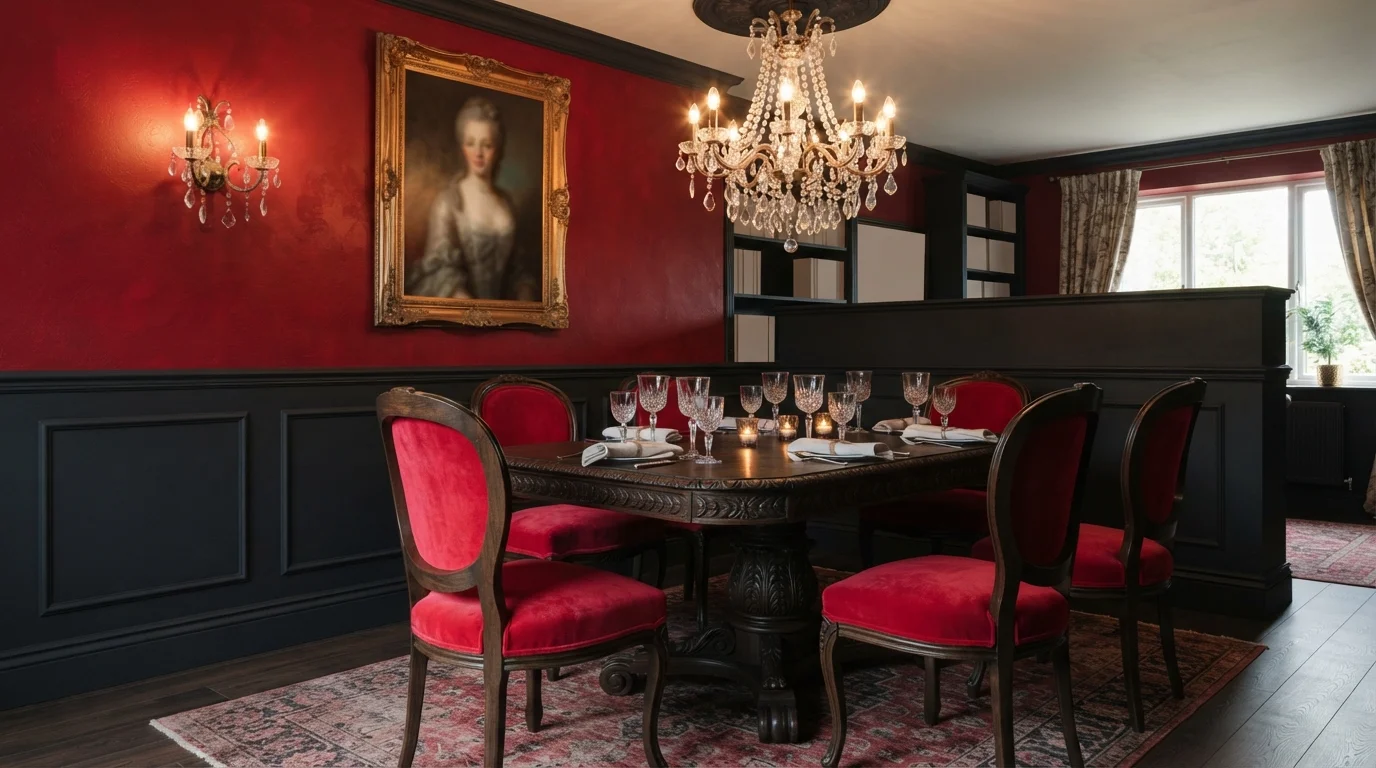
Save the higher gloss for trim, chair rail, and wainscoting, where you want both the durability and the slight contrast against a flatter wall. Many dining rooms with a chair rail run a scrubbable satin or semi-gloss below it and a softer eggshell above. A flat or matte red can look beautiful, but in a high-traffic dining room it's harder to clean, so only choose it if the room is more formal and rarely touched.
Pairing Red With Trim, Ceiling, and Cabinetry
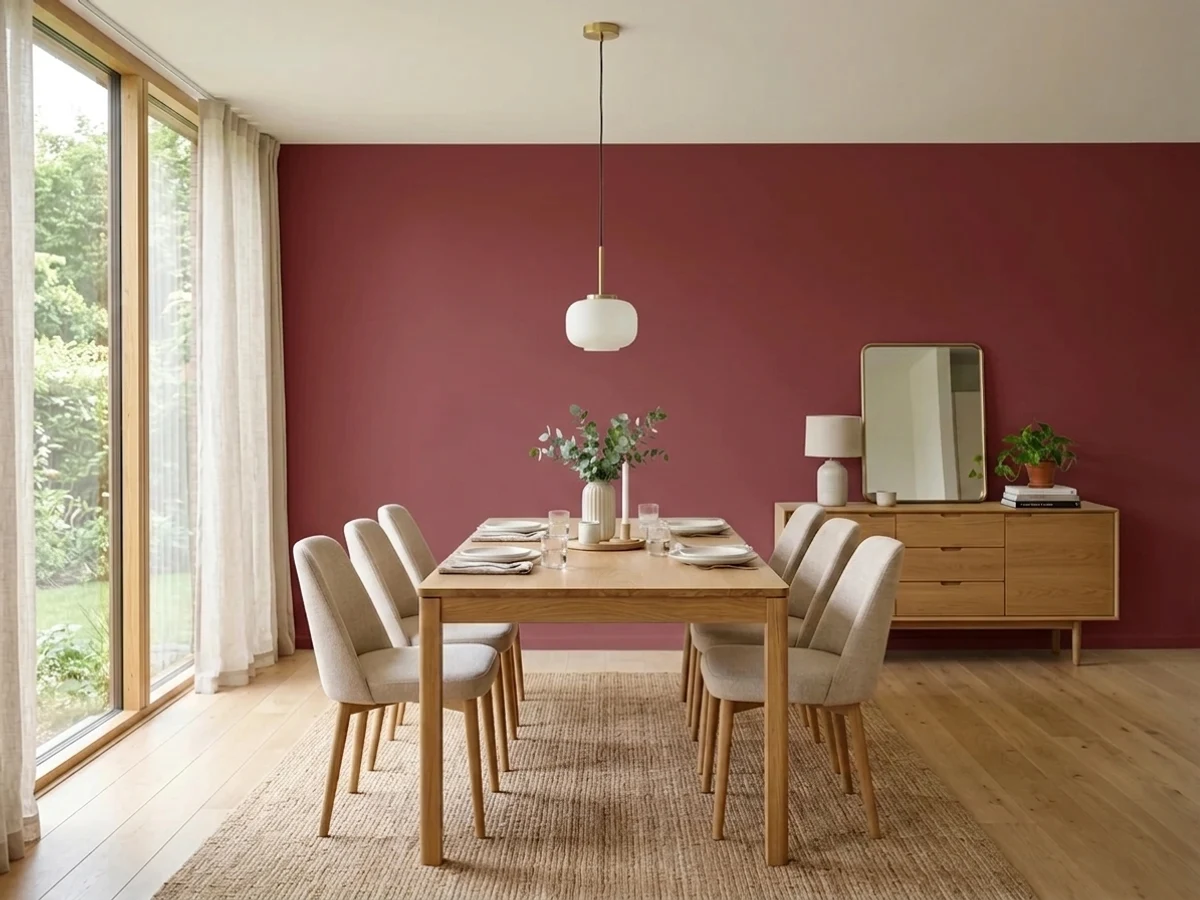
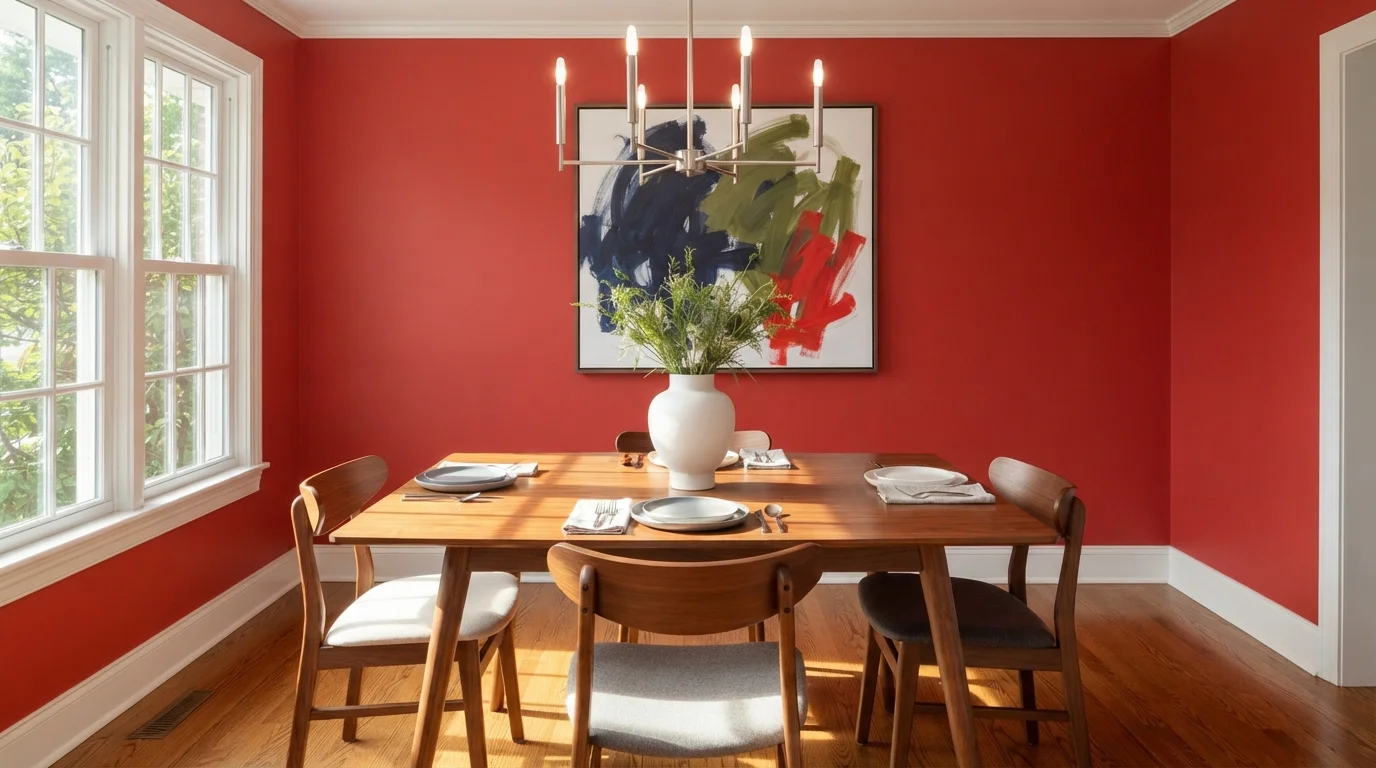
Crisp white trim is the safe, classic move with a deep red, and a slightly warm white keeps the contrast from feeling stark and cold. If you want something quieter and more modern, paint the trim a soft cream or even a muted greige so the red feels grounded instead of holiday-themed. The trim color you skip matters too: a bright, blue-toned white next to a warm brick red can read clashy.
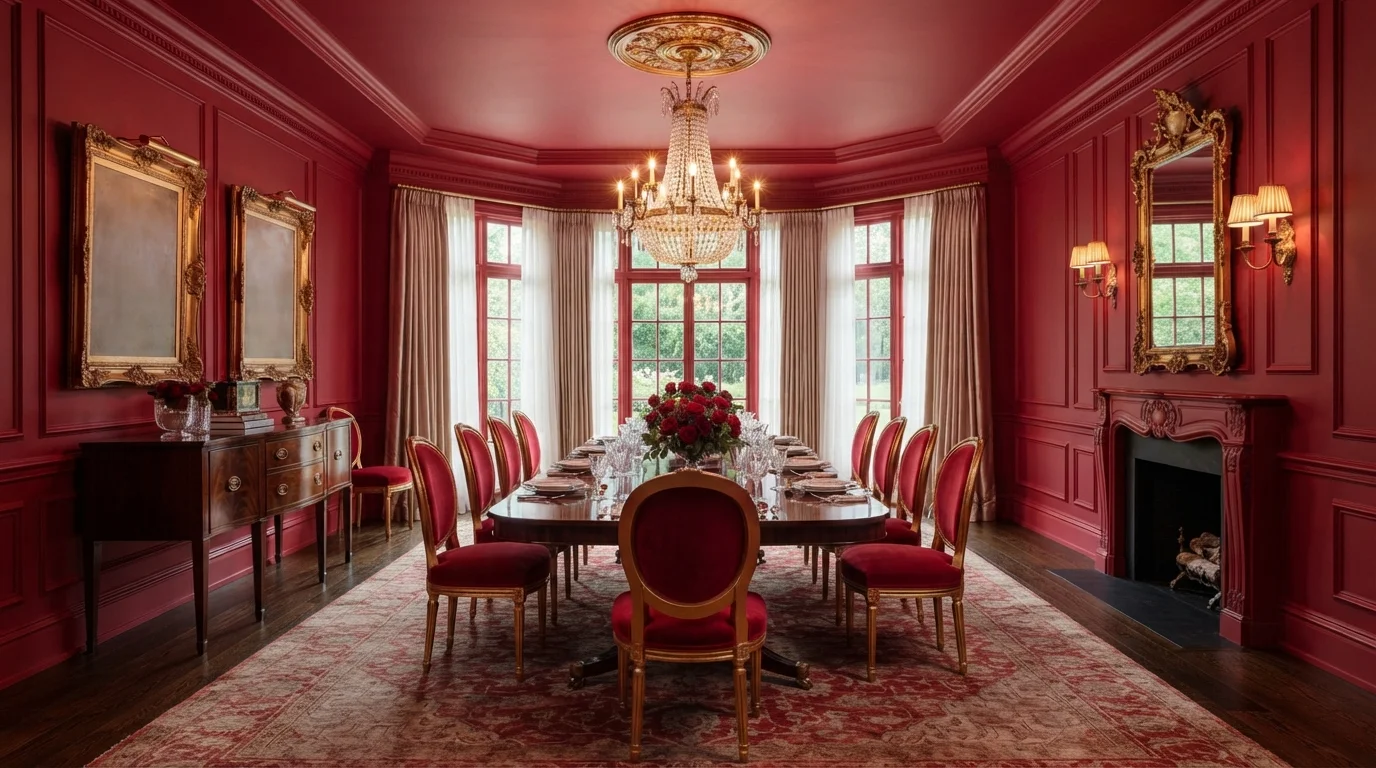
For the ceiling, white keeps a dark-red room from closing in, but a continued red or a deep warm tone on the ceiling makes a small dining room feel like a jewel box at night. Built-in cabinetry and a hutch sit well in white, natural wood, or a deep green or navy that complements red without competing. Brass and warm-metal fixtures flatter red far more than chrome or nickel, and natural wood floors or a warm rug tie the whole scheme together.
Common Mistakes With Red in a Dining Room
The biggest mistake is judging a red from the chip in daylight and skipping the nighttime test. This is an evening room, so paint a large sample and look at it under your actual table lighting after dark, where reds shift dramatically. The second mistake is going too bright: a pure, fire-engine red can feel restless at the table, while a brick, wine, or oxblood red feels grown-up and easy to eat in.
Watch the undertone trap, where a red you loved on the wall turns pink in a sunny room or purplish in a dark one. Sample on two different walls before buying gallons. Finally, don't over-light a red dining room with cool, bright bulbs; warm bulbs let the color do its job. If you find a red you love in one brand, remember it can be mixed to order and cross-matched to a near-identical shade in another, so you're never locked in.
Red Dining Room Paint — Frequently Asked Questions
Is red too bold for a dining room?+
Usually not, because a dining room is a short-stay room you use for meals and gatherings rather than all day. Red reads as warm and dramatic in that setting instead of overwhelming. Going with a deeper, muted red like brick or wine rather than a bright primary red keeps it comfortable to eat in.
What shade of red works best in a dining room?+
Deep, muted reds tend to win here: brick, wine, oxblood, and clay reds feel rich under evening light and flatter food and faces. A near-black red with a low LRV turns enveloping and cozy at night, while a mid-tone berry red is an easier choice if that feels too dark. Avoid a pure bright red, which can feel restless at the table.
How does my dining room's light change the red?+
North-facing and low-light rooms cool a red down and can push it toward muddy or purplish, so choose a red with a warm brick or terracotta base. South- and west-facing rooms with strong sun can make a red look hotter and more orange, so a slightly cooler brick red stays balanced. Since dining rooms are often used at night, always test the color under your actual table lighting after dark.
What sheen should I use for red dining room walls?+
Eggshell or satin is ideal. It wipes clean when chairs rub the wall or a drink splashes, but it avoids the harsh glare a glossier finish creates at night, which matters with dark colors. Use semi-gloss on trim and chair rails for durability, and only choose flat if the room is formal and rarely touched.
What trim and ceiling colors go with a red dining room?+
A slightly warm white trim is the classic pairing and keeps the contrast from feeling cold; a soft cream or muted greige reads more modern. For the ceiling, white keeps the room open, but a continued deep tone makes a small dining room feel like a jewel box at night. Brass and warm-metal fixtures and natural wood flatter red better than chrome or cool nickel.
Can I match a red I like across different paint brands?+
Yes. Every color shown is mixed to order at a paint store, so you're not tied to one brand's stock. If you fall in love with a red in one brand, the cross-match feature finds the closest equivalent in others, so you can buy whichever brand or store is most convenient.