Bahaus
A saturated true red from Backdrop's direct-to-you palette, reviewed honestly: where it earns its glow, the light that turns it muddy, and why you should not order it without a sample first.

Jessica has spec'd whites and neutrals for more than 300 rooms and keeps a sample wall of painted drawdowns in her studio. Every color review is checked against real reader rooms in the comments and re-tested when a formula changes. About the testing process →
- 1Rookwood Dark Red3
- 2Bahaus8
- 3Million Dollar Red13
- 4Cinnamon Slate19
The Fast Verdict
Bahaus is a deep, saturated true red at LRV 8 — dark enough to read almost black-red in shadow, bright enough to catch fire under a porch light or a warm lamp. It sits in the same family as the deck's other benchmark true reds: barely more blue than Benjamin Moore Caliente, barely less orange than Sherwin-Williams Heartthrob. Order it for a door, an accent wall, or a piece of furniture that can carry the weight — not for four walls of a room you sit in every day.
A front door or one committed accent wall · dining rooms and dens used mostly at night · cabinetry, an island, or furniture that can hold saturated color · shoppers already comfortable buying paint online, sight unseen
You want this red across a whole room, not one surface · your room only gets flat, gray north light · you need to hold a physical fan deck before deciding · you want the decades of real-world reviews a legacy brand has and Backdrop, being newer and direct-to-consumer, does not yet have
- A genuine true red — not orange-leaning, not pink-leaning
- Glows convincingly under lamplight, a porch light, or direct sun
- Deep enough (LRV 8) to feel rich and deliberate on a door or accent wall
- Sits in the same trusted true-red family as Caliente and Heartthrob
- Small-batch, curated brand feel fits a design-forward front door or den
- Reads muddy, brownish oxblood in flat north daylight
- Too dark and heavy for four walls of a room you use daily
- Backdrop's thin sample options make an online order riskier for a color this saturated
- Needs a tinted primer and real coverage over any lighter existing wall
What Color Is Bahaus, Really?
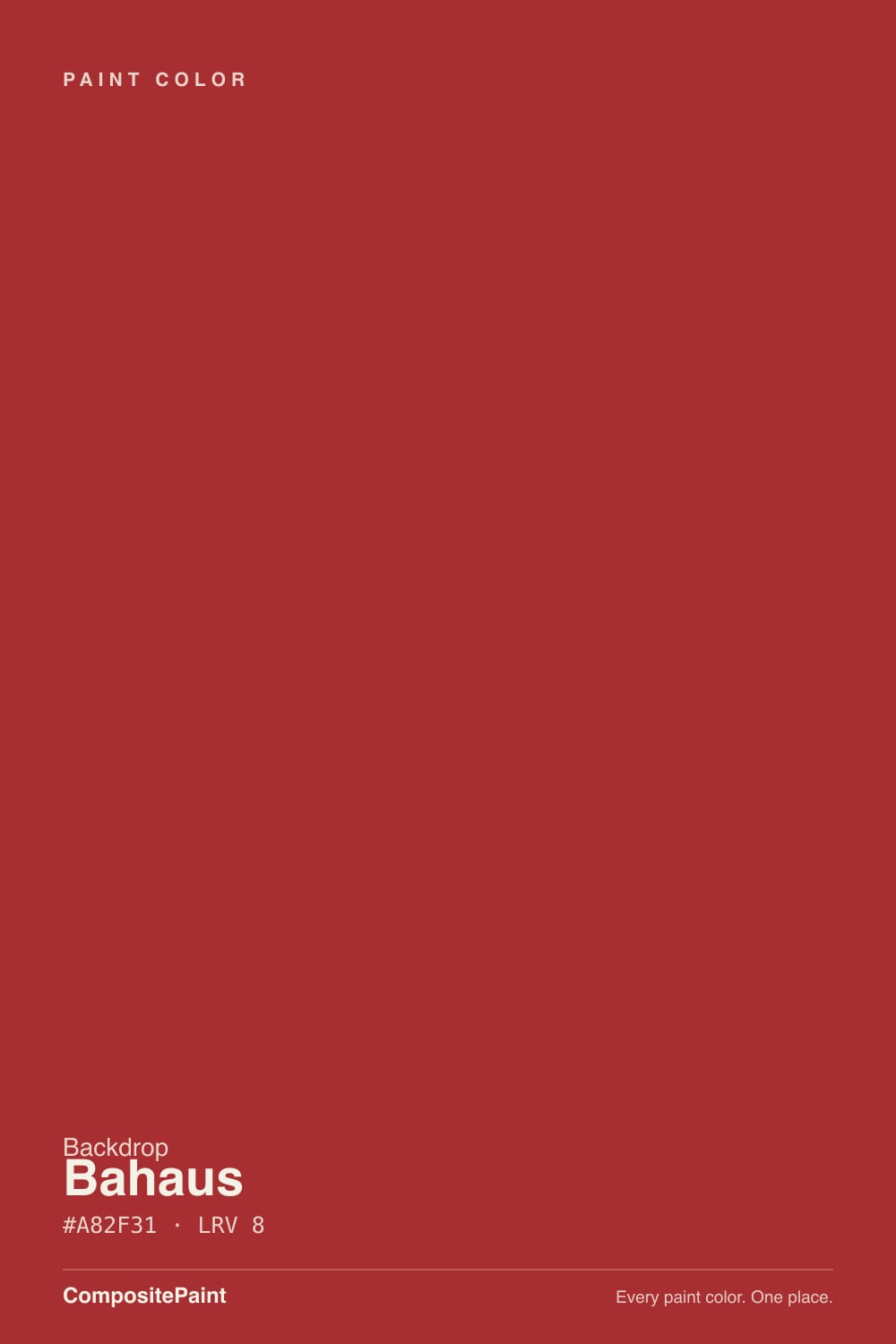
A true red with almost no yellow in it — the RGB reads nearly equal green and blue against a much higher red, the same fingerprint as the benchmark true reds in this deck. Put its hex next to Benjamin Moore Caliente (#A22D31) and the two are close enough to be mixing variance: Bahaus runs a hair more saturated, Caliente a hair cooler. If you have ever loved a Caliente door, Bahaus is Backdrop's answer to the same craving, sold direct instead of through a paint counter.
At LRV 8 it is genuinely dark — deeper than most people picture when they hear "red." That depth is why it reads almost oxblood or brick in shade and only shows its full red character where light actually lands on it: a porch light, a lamp, direct sun through a window. Painted across a whole room with average light, a color this deep will read closer to a dark, warm brown-black than the vivid red on the can lid, and it will need a tinted primer and real coverage to avoid patchy hiding over a lighter wall.
Undertone in one line: true red first, with only the faintest lean toward blue-red — never orange, never pink. If a sample patch looks brick-orange, that is warm 2700K lamplight doing its job; if it looks almost black, that is flat daylight and low LRV doing theirs. Both are the same paint being honest about the room.
Where It Shines
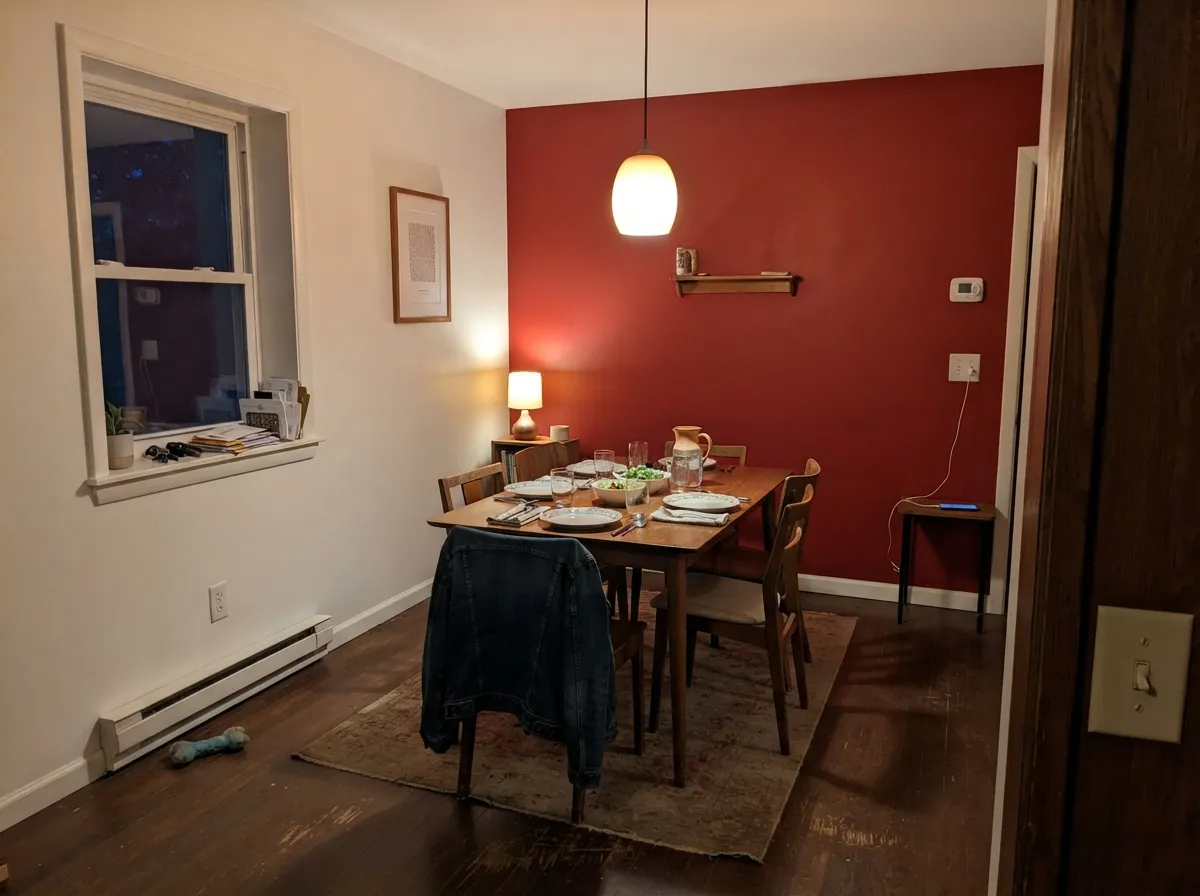
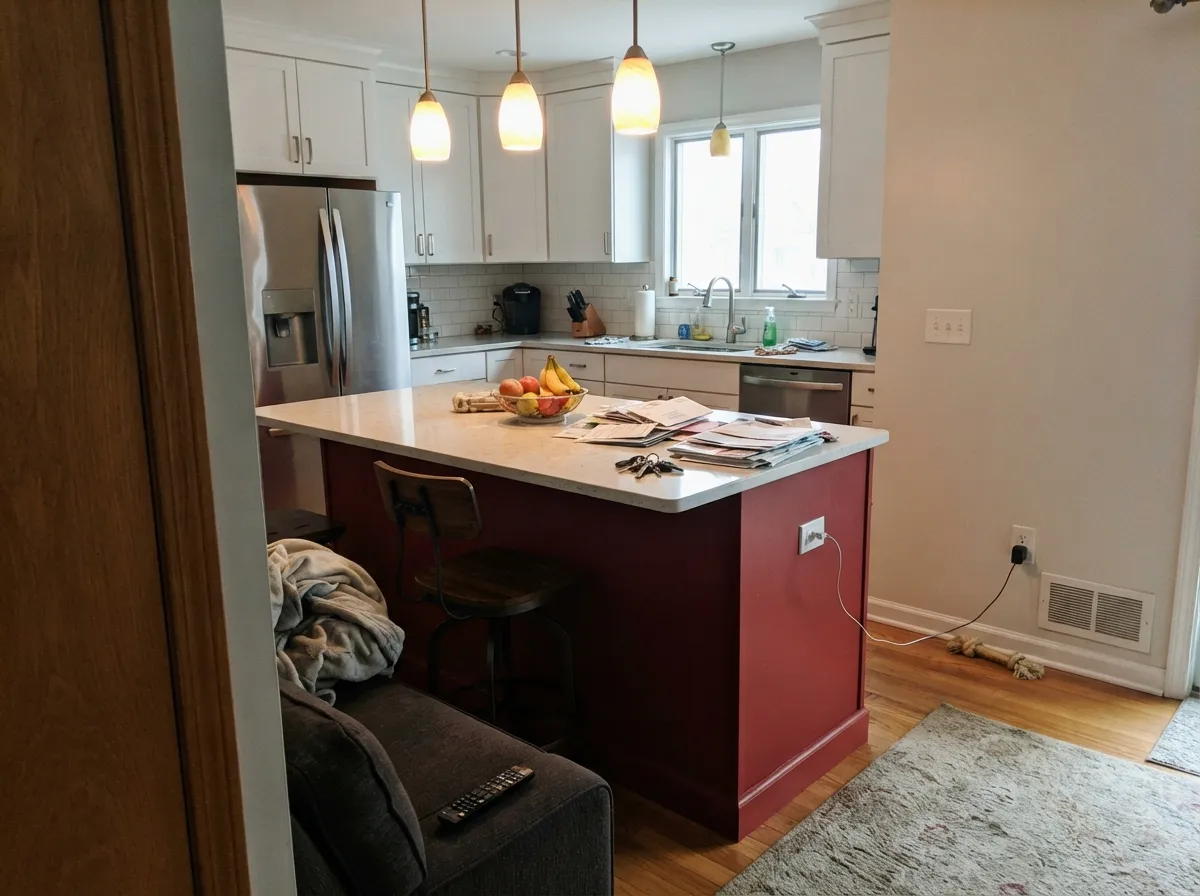
This is a spotlight color, and it wants a job with a spotlight: a front door under porch light, a powder room or dining room lit mostly by lamps at night, a piece of furniture or an island that gets to be the one saturated thing in an otherwise neutral room. Backdrop sells it as part of a curated, minimalist palette meant to be ordered with confidence online rather than sampled in a big-box aisle — which suits a color like this, since the whole appeal is a bold, decisive statement rather than a subtle whole-house neutral.
Where It Fails
The complaints that would follow a color this saturated are predictable, and with a newer direct-to-consumer brand like Backdrop, one of them is specific to how you buy it, not just how you use it.
At LRV 8, four walls of Bahaus turn a room into a dark box fast — it eats light rather than bouncing it back, and a space that felt cozy in the sample chip can feel closed-in and heavy at full scale. If the goal was "a red room I can still read a book in," this is too much depth for that; keep it to one wall, a door, or trim, and let a lighter neutral carry the rest of the room.
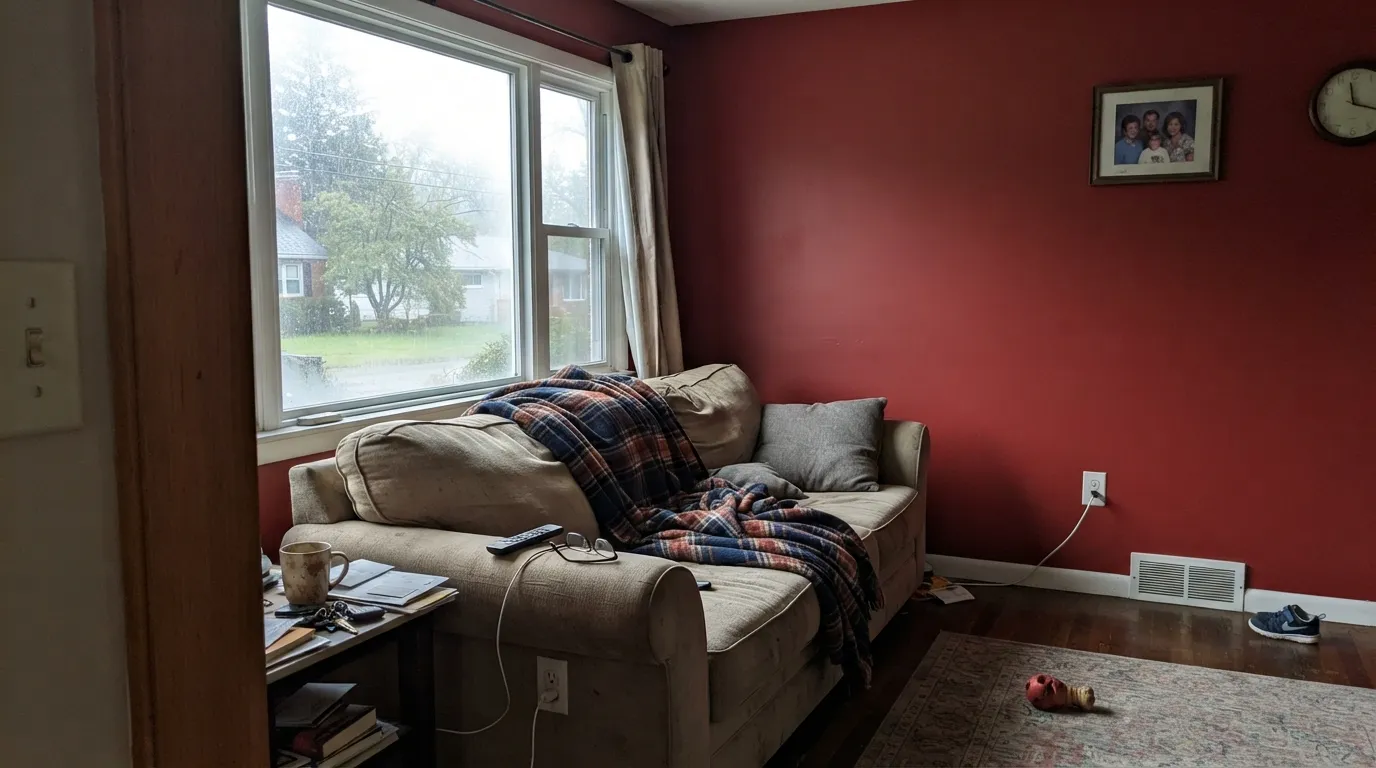
Without direct sun or warm bulbs, this true red loses its brightness and settles into a muddy, brownish oxblood that can look more like a scuffed old brick than the vivid red on the swatch. The paint did not change — the light feeding it back to your eye did. Add a warm lamp or accept the deeper, quieter version before you commit to a north room.
Backdrop sells paint direct through its own site (and Amazon), and reviewers have flagged that the brand's sample options are thin compared to legacy stores — you are largely buying a gallon or half-gallon on faith in a photo on a screen. For a color this saturated and this dependent on light, that is a real risk: paint a large card, move it around the actual room at different hours, before you order the full can.
Room by Room
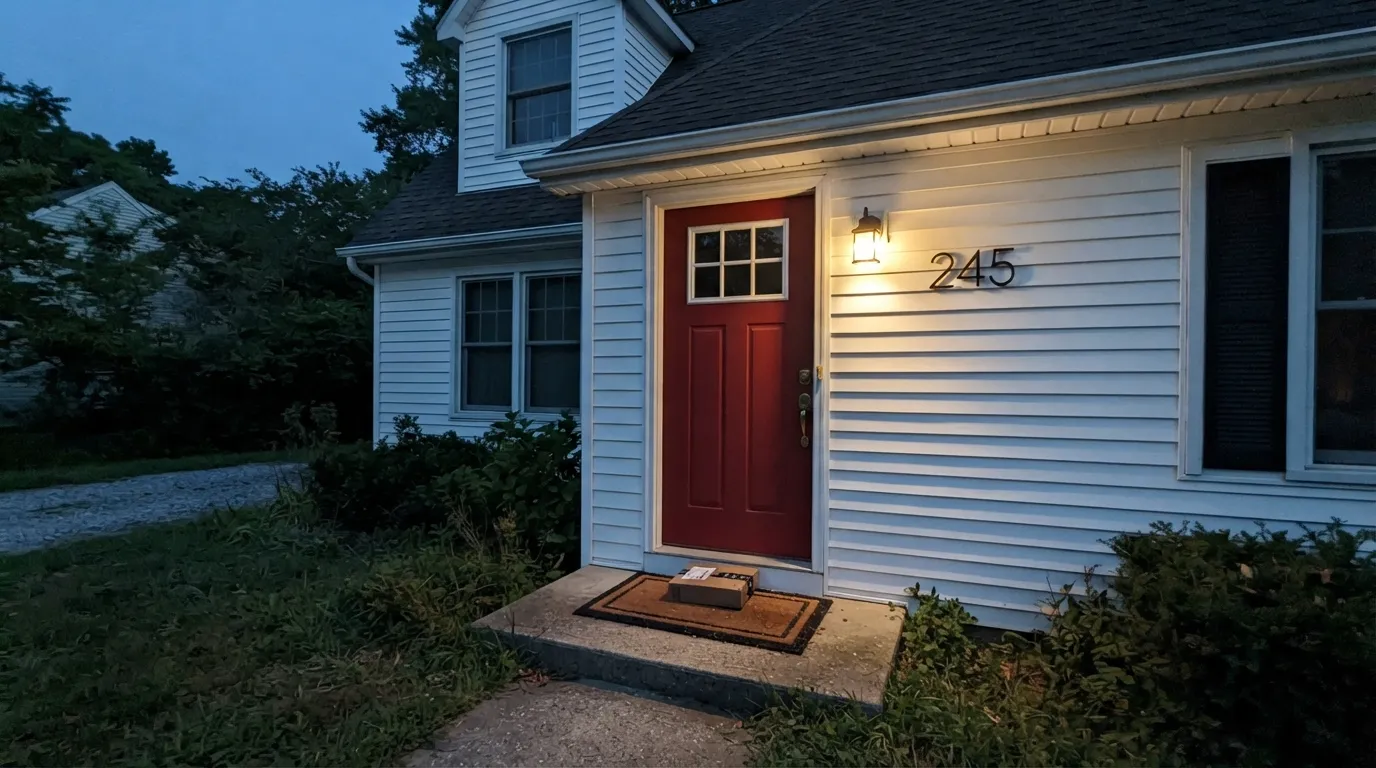
A classic true-red door reads confident and welcoming without tipping into orange or pink. Semi-gloss for wipe-down and weather resistance; confirm Backdrop's exterior-rated finish is available for this color before committing outdoors.
Lamplight and candlelight are this color's best friends. One accent wall behind a table, with the rest of the room in a warm white or greige, gives you the drama without living inside a dark box all evening.
Small windowless rooms take saturated color well precisely because you are never trying to read or relax in them for hours. All four walls in Bahaus with brass hardware and a warm-white ceiling is a genuine "wow" for a half-bath.
A red island or a single bank of lower cabinets under white or cream perimeter cabinets carries the color well. A full kitchen of Bahaus cabinets is a bold, expensive bet against natural light doing the color justice every day.
It works only if the room is lamp-lit in the evening and you are fine with it going dark and heavy during the day. Most bedrooms are better served by a lighter, gentler red-adjacent color, or Bahaus on one accent wall rather than all four.
This is a color for a surface you pass, not a room you occupy for hours in daylight. If the pull toward red is strong, put it on furniture, a door, or a single wall instead of the whole room.
Your Light Is the Risk
2700K bulbs and evening light pull the true red forward and make it glow instead of going flat — the reason to buy a color this deep.
Cool, gray daylight drains the vividness and leaves a dull, muddy oxblood-brown. Fine if you wanted quiet depth; disappointing if you wanted a vivid red door.
Full sun on a front door or exterior wall reads the truest, brightest version of the red — this is the light to sample it in before ordering.
Cool white LEDs flatten the red toward brown-black; warm 2700K bulbs keep it looking like true red after dark. Swap the bulb before you swap the paint.
Most complaints about Bahaus are a light mismatch. Upload a photo of your actual room and see it on your walls — then ask for the same wall in north light or evening lamps before you buy a single sample.
Need It From Another Brand?
Any paint counter can custom-tint Backdrop BD-BH directly. If you would rather stay in one brand's own deck, these are the closest stock matches, measured as ΔE2000. Under 2 is a difference you will not see on the wall.
| Brand | Closest color | ΔE | LRV | |
|---|---|---|---|---|
| Sherwin-Williams | HeartthrobSW 6866 · Sherwin-Williams | 0.8 | 11 | Color page → |
| Behr | IndiscreetUL110-6 · Behr | 1.9 | 12 | Color page → |
| Benjamin Moore | Hot TamaleCSP-1155 · Benjamin Moore | 0.9 | 13 | Color page → |
| Valspar | Très Bien8001-9G · Valspar | 0.8 | 10 | Color page → |
| PPG / Glidden | Red GumballPPG1187-7 · PPG / Glidden | 2.9 | 12 | Color page → |
| Glidden | Rapture Red07YR 10/489 · Glidden | 3.3 | 10 | Color page → |
Similar Backdrop Colors
The nearest shades to Bahaus within Backdrop's own range, ranked by perceptual color distance — useful when you want the same look a touch lighter, darker, or warmer.
WCAG 2.1: AA is 4.5 : 1 for normal text, 3 : 1 for large text, AAA is 7 : 1.
Bahaus vs the Colors You're Also Considering
Every Bahaus sample board has the same rivals on it. The numbers show the real lightness gap — then it comes down to which risk you would rather live with.
Pick this if you are already buying direct from Backdrop and want the same true-red character in their curated palette.
Benjamin Moore AF-290 · LRV 8CalientePick this if you want the established, decades-proven version of this exact true red, sold through a normal paint counter with samples.
Pick this for the cleaner, more neutral true red with the faintest lean toward blue instead of orange.
Sherwin-Williams SW 6866 · LRV 7HeartthrobPick this for a slightly darker, slightly more orange-leaning true red built specifically for doors.
Within Backdrop, the closest color is Punk Rock (BD-PR), also LRV 8. The two are near twins on the wall; Punk Rock is fractionally deeper and less bright, but in a furnished room most people could not tell them apart. Choose between them by sampling both on the same wall, because lighting will separate them more than the formulas do.
Stage Beauty (BD-SB) is the meaningfully different sibling. At LRV 5 it is darker and browner, an oxblood rather than a true red. Stage Beauty is the pick when you want a red that behaves like a dark neutral, in a den or a moody dining room. Bahaus is the pick when you want the red to be unmistakable, on a front door or a feature wall.
If you are tempted by something quieter, Buenos Aires (BD-BA), LRV 14, drops the red almost entirely and lands at a mid-tone brown; it coordinates with Bahaus but does not substitute for it.
Bahaus Coordinating Colors
The rule for coordinating with Bahaus is simple: keep the rest of the room bright and let the red carry the weight alone. Clean whites, warm woods, and one other near-black are its best company; busy competing colors just fight it for attention.
These are the partners that let the red do its job without a rival in the room:
Buying Bahaus Direct From Backdrop
Backdrop is a newer, direct-to-consumer paint brand: no aisle of fan decks at a big-box store, just a curated palette sold through its own website (and Amazon), priced roughly in line with premium brands like Benjamin Moore and Sherwin-Williams. The upside is a simpler shopping experience — resealable cans, easy-pour handles, and a smaller, more decisive color list than a legacy deck of thousands. The tradeoff, reported by reviewers, is thinner sample options than the legacy brands offer, so a color this saturated is worth testing on a large card in your own room's actual light before you commit to a full can.
One honest note on this specific color: we could not independently verify "Bahaus" as a currently listed product name on Backdrop's own site at the time of writing, and found no owner reviews specific to it — the deck data we used (hex, LRV, SKU) is Backdrop's own synced product data, and the color itself is unmistakably a true red in the same family as the deck's other benchmark true reds. Treat any famous-use or trend claims about this specific name with caution until you can confirm them on Backdrop's current site.
Bahaus With Wood Tones and Floors
Dark, warm woods are this color's best floor and furniture partners: walnut, espresso, and aged leather all sit in the same warm-dark register and let the red read as deliberate rather than jarring. Pale white oak and light gray-washed floors are also safe, giving the red a quiet, neutral stage to stand on.
The pairing to test first is honey oak or any orange-leaning wood tone. Because Bahaus is a true red with only a whisper of orange, it can sit oddly next to a strongly orange floor — neither clashing outright nor clearly harmonizing. A large sample against your actual floor, in your actual light, settles this faster than any general rule.
Three Ready Palettes Built on Bahaus
A color is never alone on the wall. These are complete combinations in the 60-30-10 pattern, with the reason each one holds together. Every one opens in the visualizer.
A crisp, bright house body lets the door do all the talking. Kendall Charcoal on shutters keeps the red from feeling like the only dark note on the facade — the classic confident-front-door formula.
Try this palette in your roomWhite Dove keeps the room from closing in around one deep wall, and a near-black piece of furniture gives the red a second dark note to talk to instead of standing alone against pure white.
Try this palette in your roomAlabaster keeps the rest of the kitchen light and workable while the island carries all the color. Black hardware and fixtures echo the island's depth without adding a second competing hue.
Try this palette in your roomBahaus FAQ
Is Bahaus a true red or does it lean orange or pink?
True red, with only the faintest lean toward blue-red — the RGB is almost balanced between green and blue against a much stronger red channel. It never reads orange like a barn red and never reads pink. It sits close enough to Benjamin Moore Caliente's hex value that the two read as the same red family.
Will it look good on a front door?
This is its strongest use case. At LRV 8 it holds real color even in shade and turns genuinely vivid in direct sun or under a porch light. Use a semi-gloss exterior finish and confirm Backdrop offers an exterior-rated version of this color before ordering.
Can I paint a whole room this color?
You can, but be honest with yourself first: at this depth a full room reads dark and closed-in rather than lively, especially without direct sun. Most reviewers of true reds this deep are happier with one accent wall or a door than four walls.
How is buying Backdrop paint different from Benjamin Moore or Sherwin-Williams?
Backdrop sells direct through its own website and Amazon rather than through a network of paint stores, and its sample options are reported to be thinner than legacy brands — often just gallon or half-gallon cans rather than small peel-and-stick or sample-pot options. For a bold, saturated color like this one, painting a large sample card and checking it in your actual room's light before ordering the full can matters more than usual.
What white or trim color goes with Bahaus?
A clean, bright white — Extra White or White Dove — keeps the red from feeling heavy on its own. Near-black accents (Wrought Iron, Black Beauty) give it a second dark note to relate to instead of standing alone against pure white.
Does it work with wood tones?
Walnut, espresso and other dark, red-leaning woods sit comfortably with it since they share the same warm-dark family. Orange-heavy honey oak is the pairing to test carefully first — the oak's yellow-orange can compete with, rather than complement, this true red.
Have you painted with Bahaus?
Rate it — one tap helps the next reader decide.
Ask a Question