Blue Accent Wall Paint Colors
1,741 blue colors that work in accent walls, drawn from the full ~30,000-color US paint deck. Below: editor's picks specific to accent walls, then 30 picks spread across the LRV range — narrow further on the brand page when you've shortlisted.
Blue is the most popular color for accent walls, kitchen islands, and front doors — and also the family with the widest spread, from pale dove-blues that read almost grey, to inky near-black navies, to saturated cobalts that read almost royal. Teal-leaning blues (the green-blue overlap) live next door in the Teal family.
Editor's Picks: Blue for Accent Walls
4 picks30 Blue Picks Across the LRV Range
30 of 1,741 · sorted dark → lightLooking for more? All blue → covers every brand; brand × family pages show full decks.
Blue Accent Wall Colors at Every US Brand
21 brands · up to 10 picks eachUp to 10 picks per brand spread across the blue LRV range, drawn from each brand's full deck. Tap any swatch with a curated guide for full spec; tap the brand title for the brand's complete blue deck.
Behr
Valspar
Glidden
Benjamin Moore
PPG / Glidden
Dunn-Edwards
Sherwin-Williams
Dutch Boy
Hirshfield's
Diamond Vogel
Kompozit
C2 Paint
Portola Paints
Magnolia Home
Rodda
Farrow & Ball
Backdrop
Annie Sloan
Clare
Rust-Oleum
Other Accent Wall Color Families
Blue Colors in Other Rooms
Blue Paint Colors for a Accent Wall
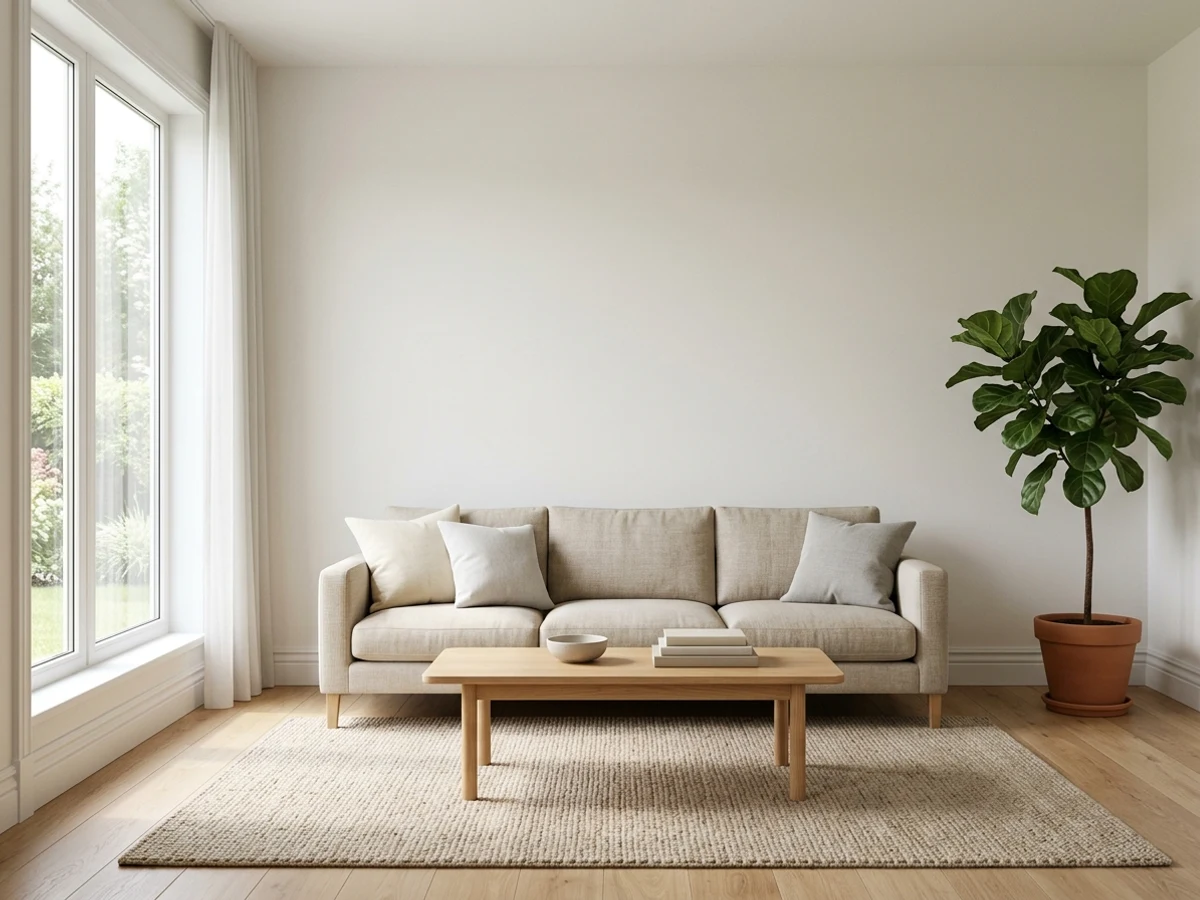
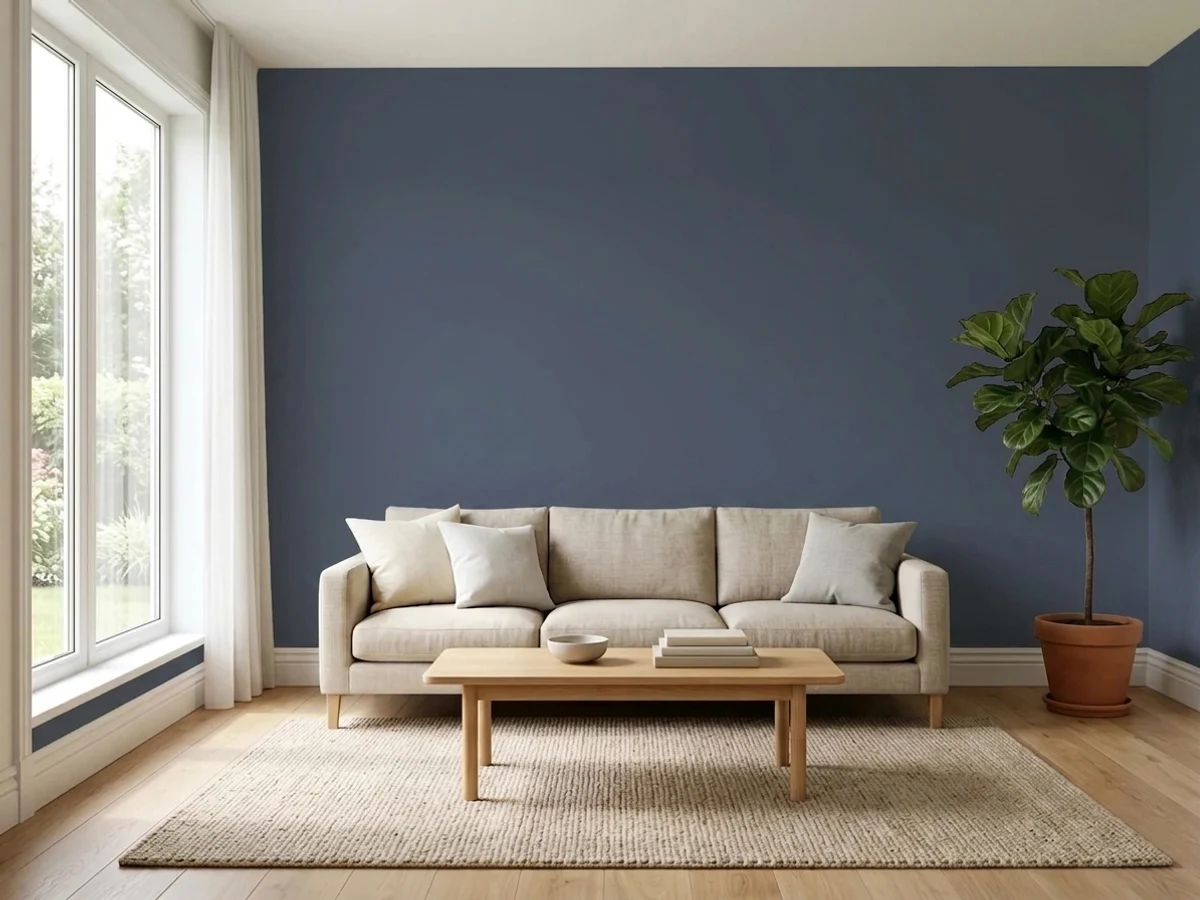
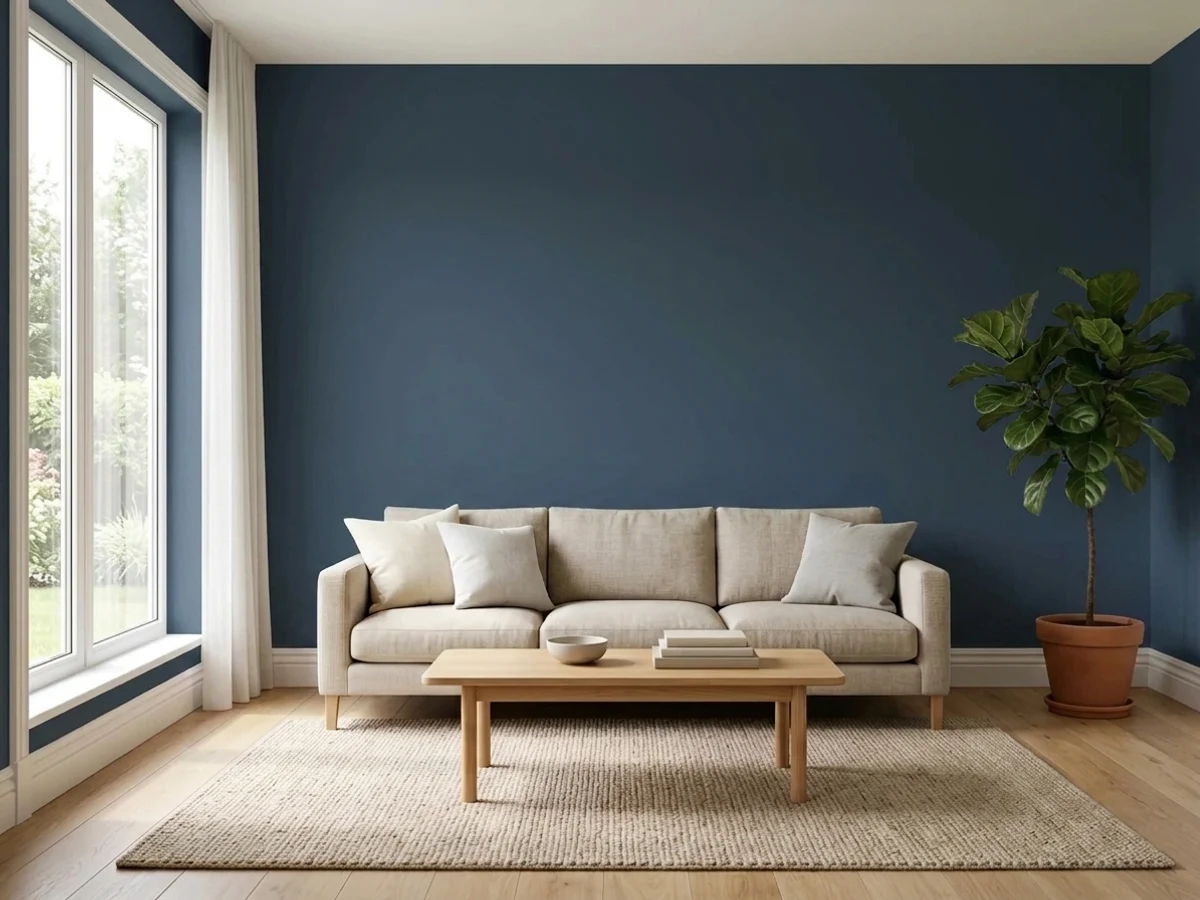
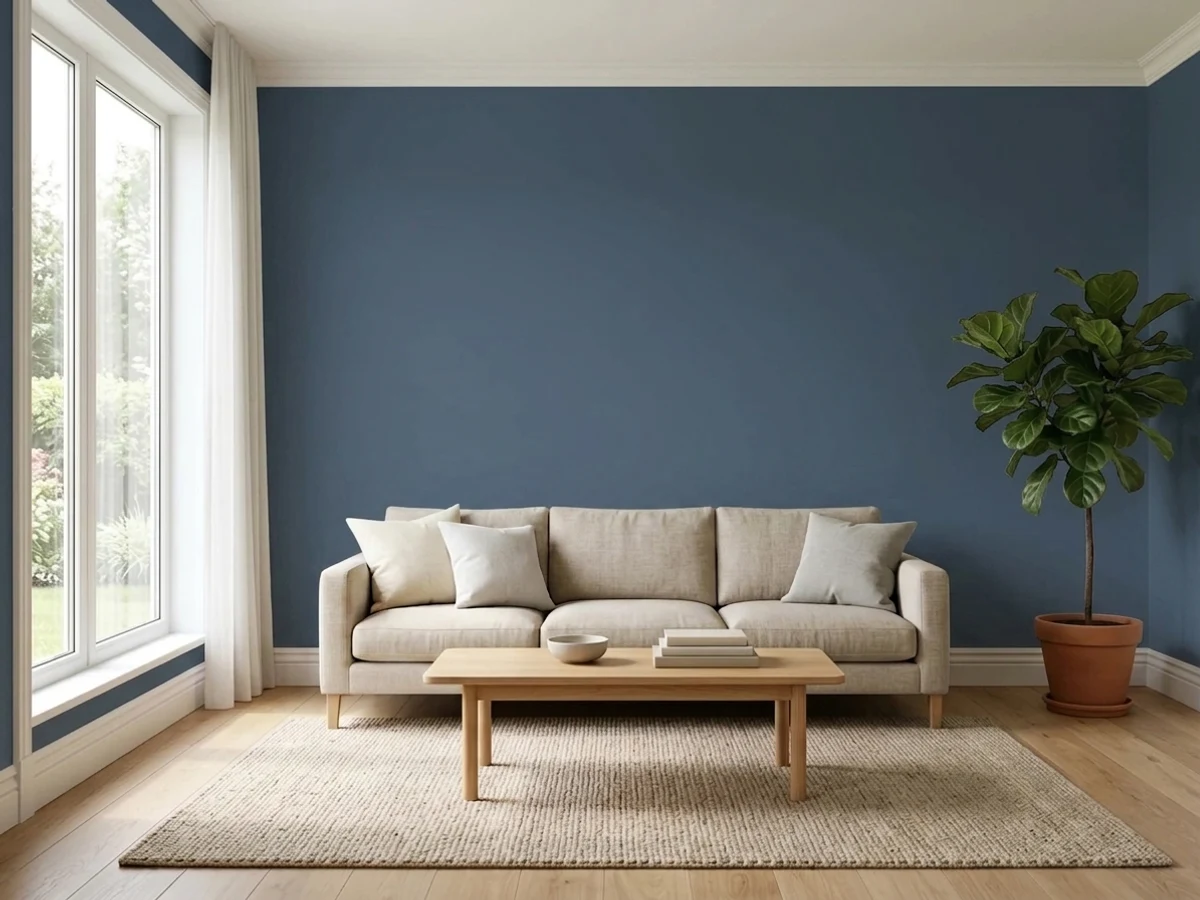
An accent wall is the one wall in a room you want people to notice, and blue is one of the safest, most flattering ways to do it. It reads as calm and confident at the same time, so it works in a bedroom, a living room, behind a sofa, or behind a bed without feeling loud. Because it lives on a single wall, you can go deeper and bolder than you would dare on a whole room, and the three plain walls around it keep the blue from taking over.
The trick is matching the depth of blue to the wall's job and the room's light. A wall that catches afternoon sun can carry a rich navy or denim; a darker corner usually wants a softer, lighter blue so it doesn't turn into a black hole. Every blue you see here is mixed to order at a paint counter, so you can take any shade you like and have it tinted in your preferred brand and finish. The shade is what matters; the label on the can is not.
Why Blue Works So Well on an Accent Wall
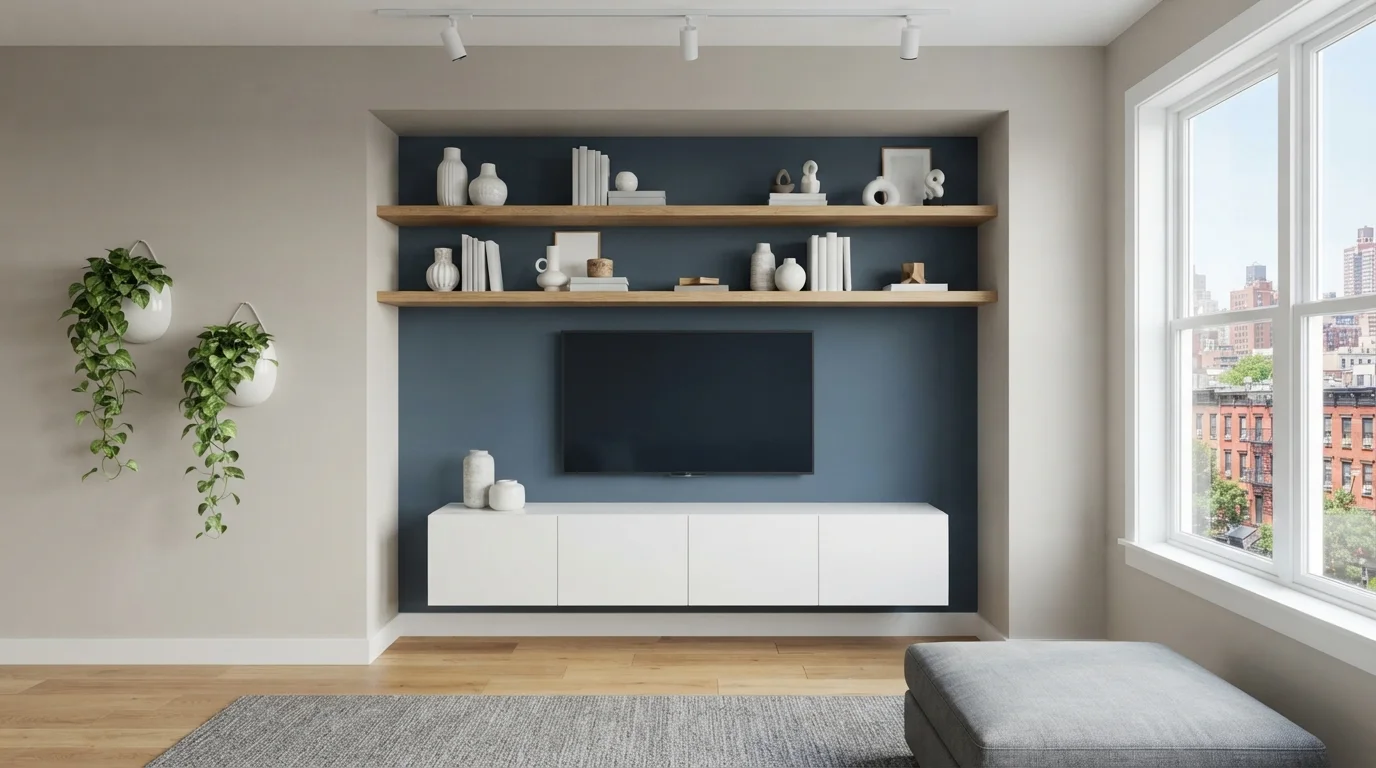
An accent wall only succeeds if it pulls your eye to the right spot, and blue does that without shouting. It recedes a little, which makes a room feel deeper and more restful, but a saturated blue still has enough presence to anchor a headboard, a fireplace, or a media wall. That balance of calm and impact is hard to get from warmer accent colors, which can feel hot or busy on a full wall.
Blue is also one of the most forgiving accent choices because it plays nicely with the white or off-white walls beside it. You get contrast and a clear focal point without a jarring clash. The one thing to watch is undertone: a green-leaning blue and a purple-leaning blue read very differently in the same room, so test before you commit.
Picking the Right Depth of Blue for Your Light
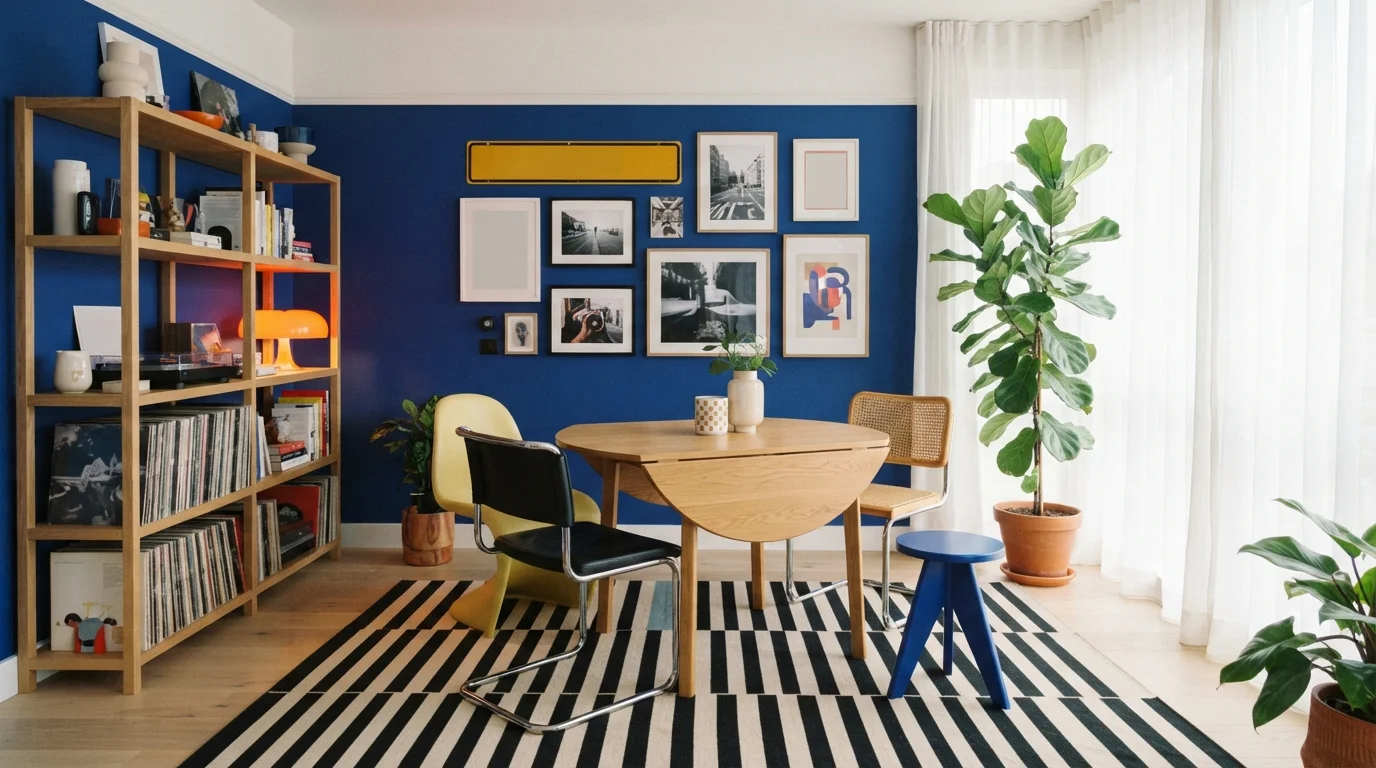
Use LRV (light reflectance value, 0 is black, 100 is white) to judge how a blue will actually behave on the wall. A deep navy or ink blue sits around 5 to 15 LRV and makes a dramatic, cocooning accent, best where the room gets decent daylight so it doesn't go murky. A mid-tone denim or slate blue around 20 to 35 LRV gives strong color with more flexibility and is the easiest all-around accent choice.
Let the room's light steer you. North-facing and low-light walls pull blue cooler and grayer, so a slightly warmer or lighter blue (or one with a touch of green) keeps it from feeling cold. South and west walls flood the blue with warm light, which lets you go darker and richer without losing the color in shadow.
The Right Finish for an Accent Wall
For most accent walls, an eggshell or matte finish is the sweet spot. It gives blue a soft, even depth and hides minor wall flaws, which matters because a single feature wall under good light shows every dent and roller mark. Flat or matte looks especially luxurious on a deep navy, but it's harder to wipe clean.
Step up the sheen when the wall takes abuse. A satin finish is smart behind a sofa, in a child's room, or anywhere hands and furniture touch it, since deep blues show scuffs more than pale colors. Avoid high gloss on a large accent wall unless you want glare; the shine bounces light back and can flatten the color and reveal every imperfection.
Pairing Blue With Trim, Ceiling, and the Rest of the Room
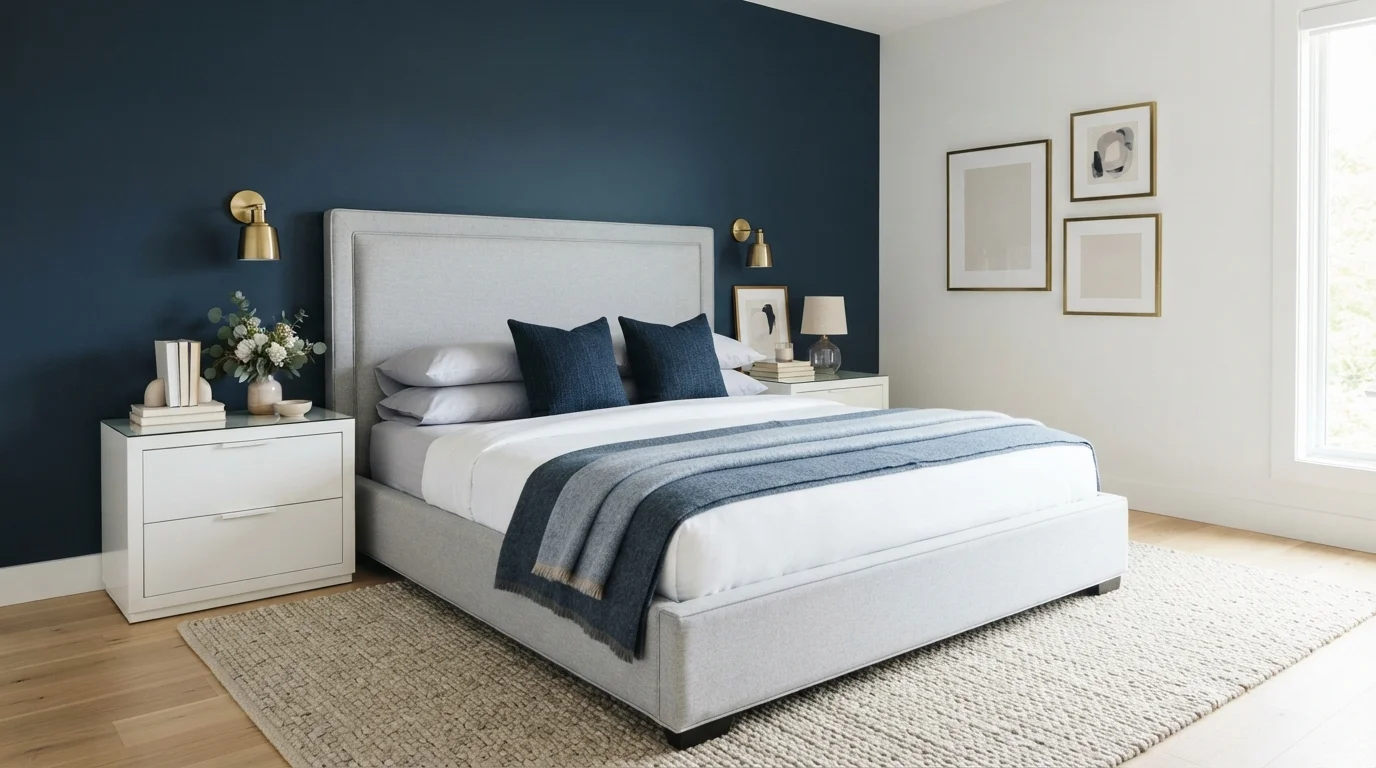
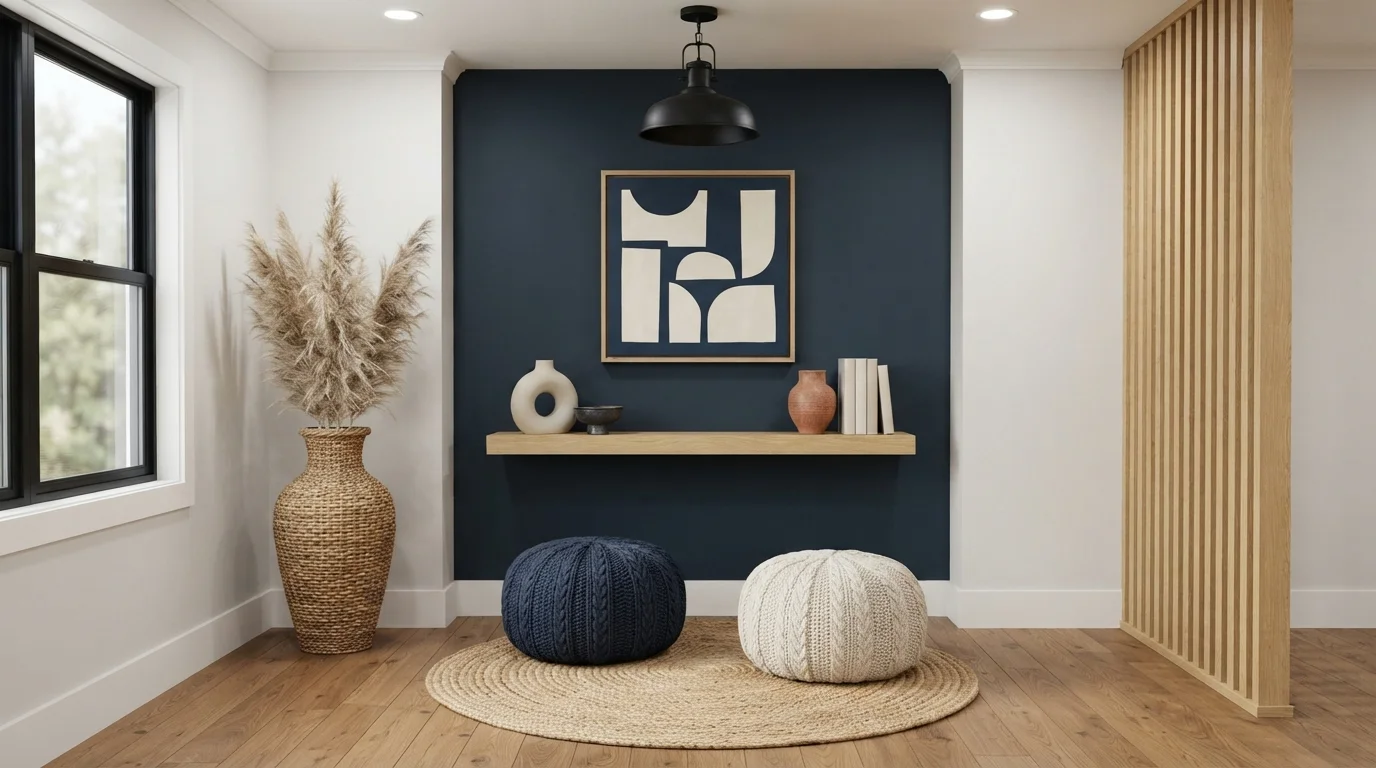
The cleanest look is a crisp white or off-white on the trim, baseboards, and the three surrounding walls, which lets the blue read as the clear feature. Keep the ceiling white or a barely-there off-white so the room stays bright and the blue wall feels intentional rather than heavy. If you want a softer, more enveloping feel, carry the same blue onto the trim of the accent wall only.
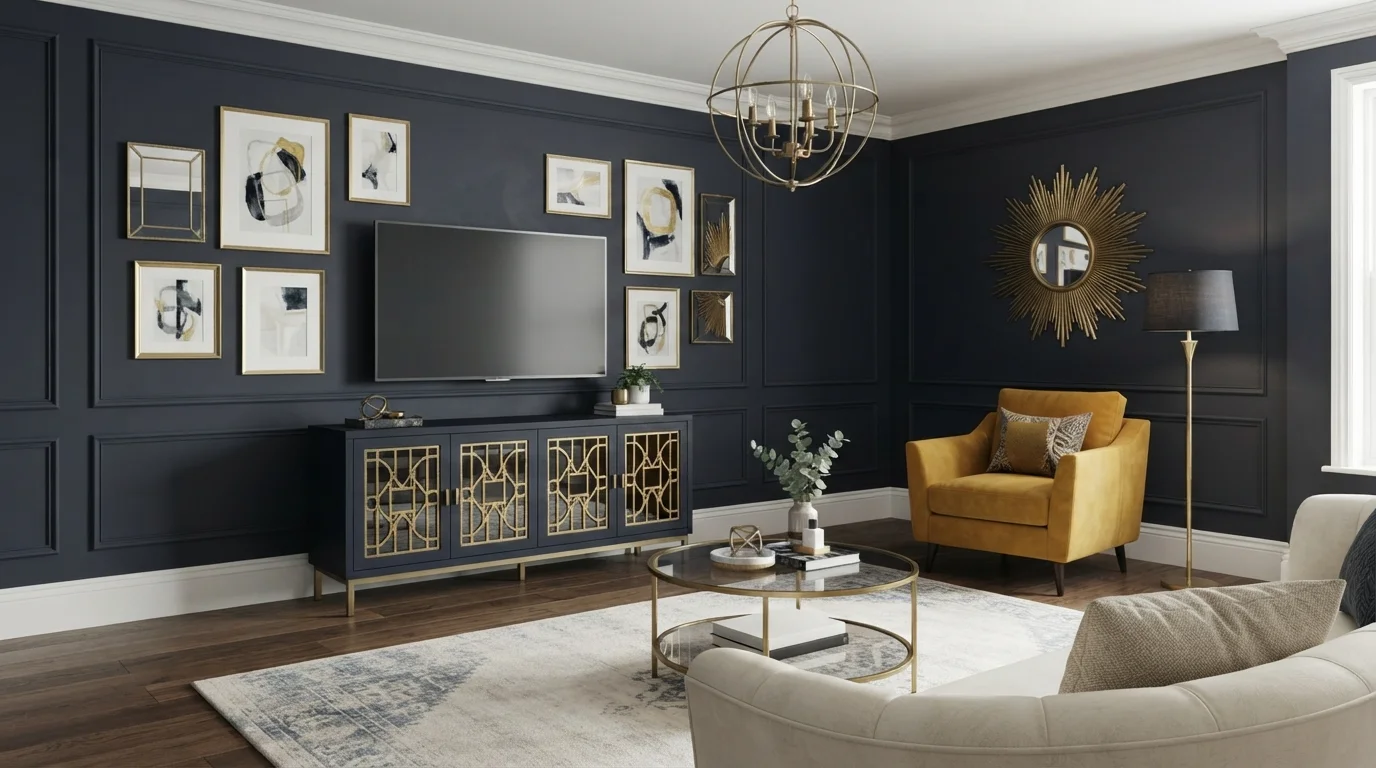
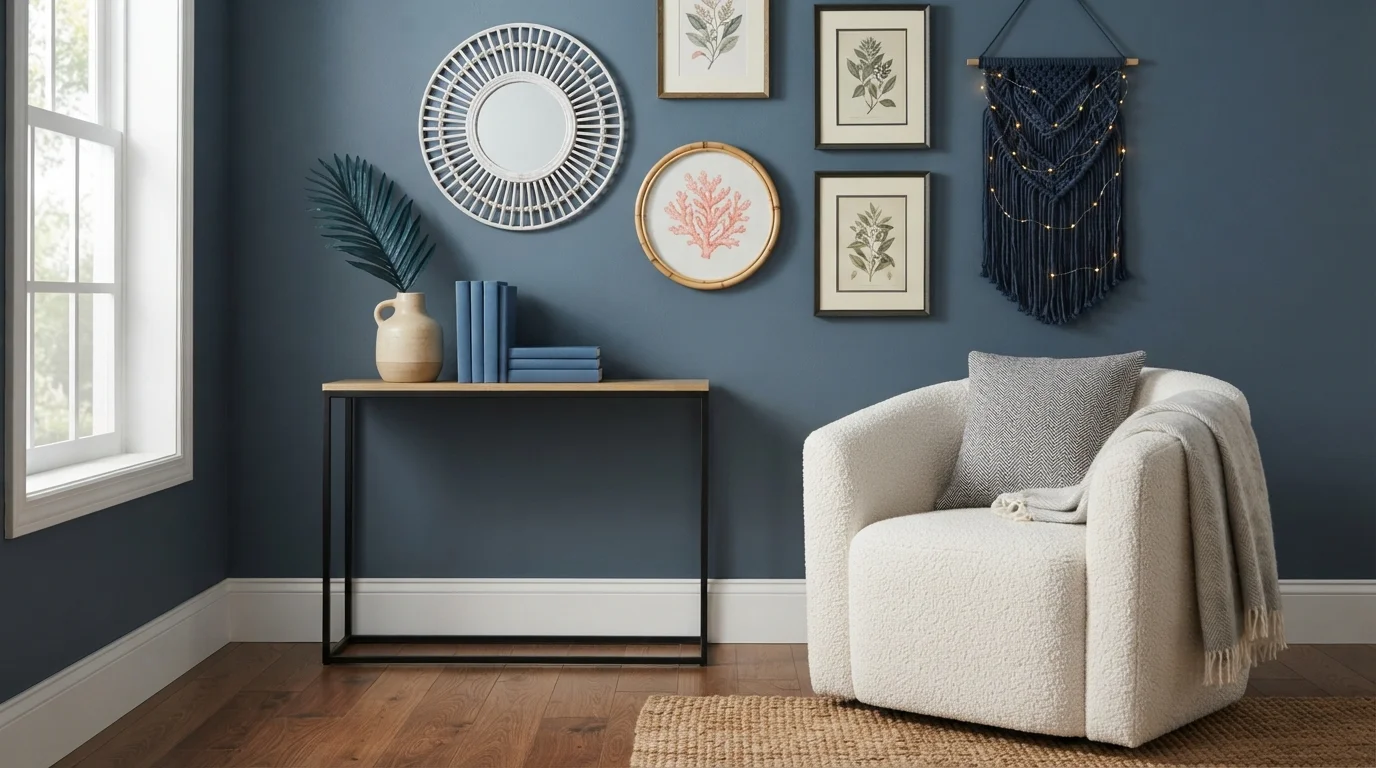
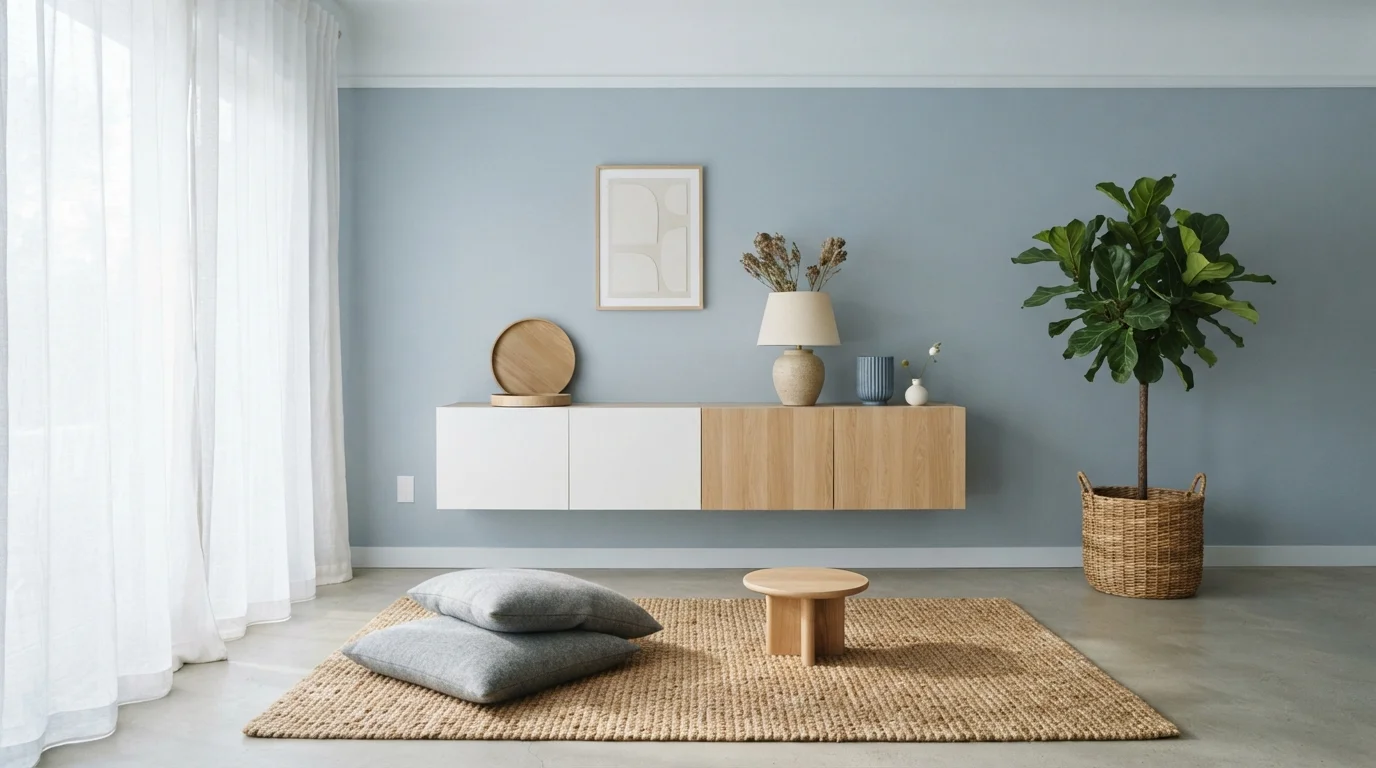
For furnishings, blue is happy next to warm wood tones, brass or matte black hardware, and natural textures like linen and rattan. A navy accent wall makes warm metals and light oak pop; a softer slate blue pairs well with grays, creams, and cooler metals. Repeat the blue in a pillow, art, or a throw on the opposite side of the room so the accent wall feels connected rather than stranded.
Common Mistakes to Avoid
The biggest one is picking the wrong wall. An accent wall should be the natural focal point, usually the wall behind the bed, sofa, or fireplace, and ideally one without doors, windows, or vents chopping it up. Painting a busy, broken wall blue just makes the room look unsettled.
The second mistake is judging the color from the swatch alone. Blues shift hard between daylight and lamplight and can go purple or steel-gray once they're on the wall. Paint a large sample, look at it morning and night, and remember any shade you choose can be mixed to order and cross-matched across brands, so you're never locked into one company's version of the blue you like.
Blue Accent Wall Paint — Frequently Asked Questions
Which wall should I paint blue as the accent?+
Choose the wall your eye lands on first when you walk in, usually the one behind the bed, sofa, or fireplace. Pick a wall that's mostly solid, without lots of doors, windows, or vents breaking it up, so the blue reads as one clean feature.
How dark should the blue be on an accent wall?+
It depends on your light. In a bright, sunny room a deep navy (around 5 to 15 LRV) looks rich and dramatic, while a darker or north-facing wall does better with a mid-tone blue around 20 to 35 LRV so it doesn't feel like a black hole. When in doubt, go one step lighter than the swatch looks in the store.
What finish works best for a blue accent wall?+
Eggshell or matte is the usual pick because it gives blue a soft, even depth and hides small wall flaws. Use satin if the wall gets touched a lot, like behind a sofa or in a kid's room, and skip high gloss on a big wall because it causes glare and shows every imperfection.
What color trim and ceiling go with a blue accent wall?+
A crisp white or off-white on the trim and ceiling keeps the blue as the clear focal point and the room feeling bright. If you want a cozier, more enveloping look, you can paint the trim on that one wall the same blue instead.
Will a blue accent wall make my room feel smaller?+
Not usually. Blue tends to recede, so a single blue wall often makes a room feel deeper rather than boxed in. Just keep the other three walls light, and choose a slightly lighter blue if the room is small or short on natural light.
Do I have to use a specific brand for the blue I like?+
No. Every blue shown here is mixed to order at a paint counter, so the shade is what matters, not the label. You can pick a blue you love and have it cross-matched into your preferred brand and finish.