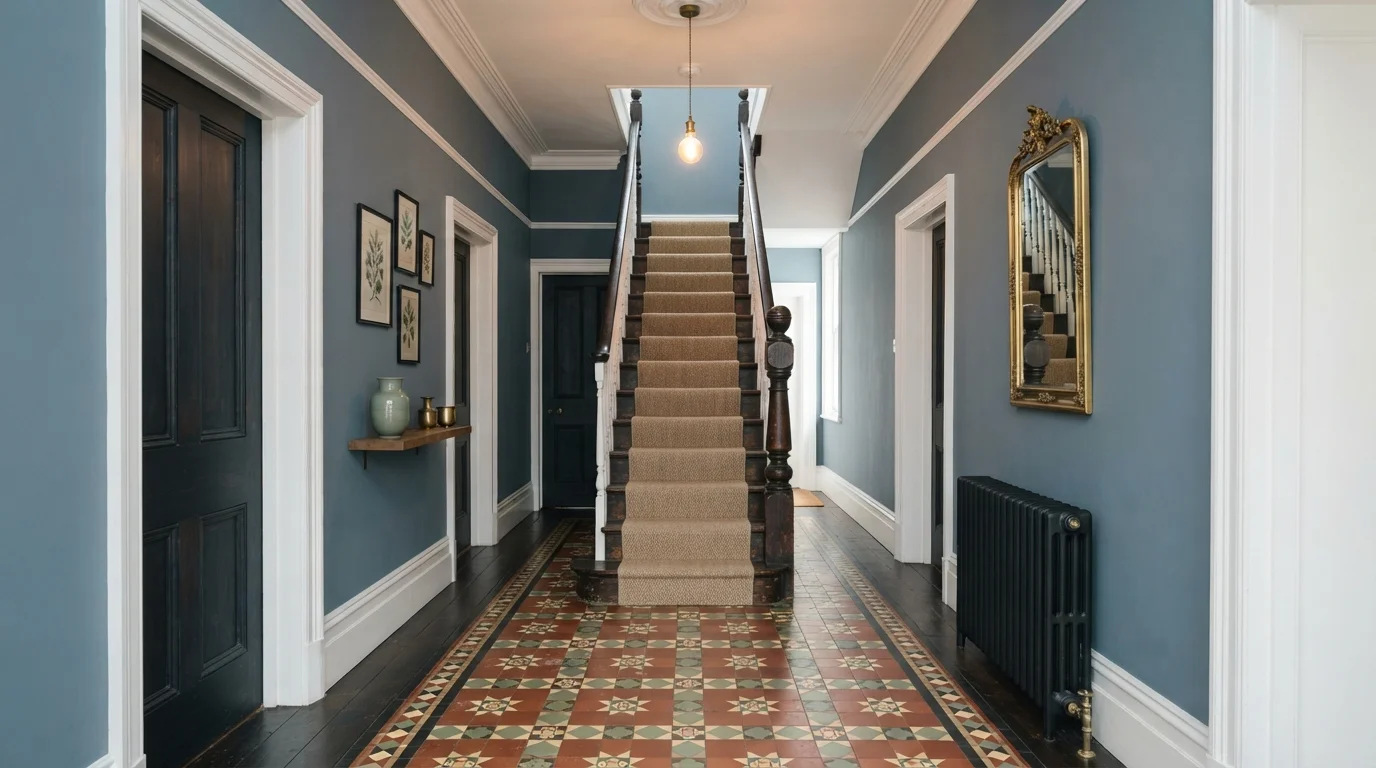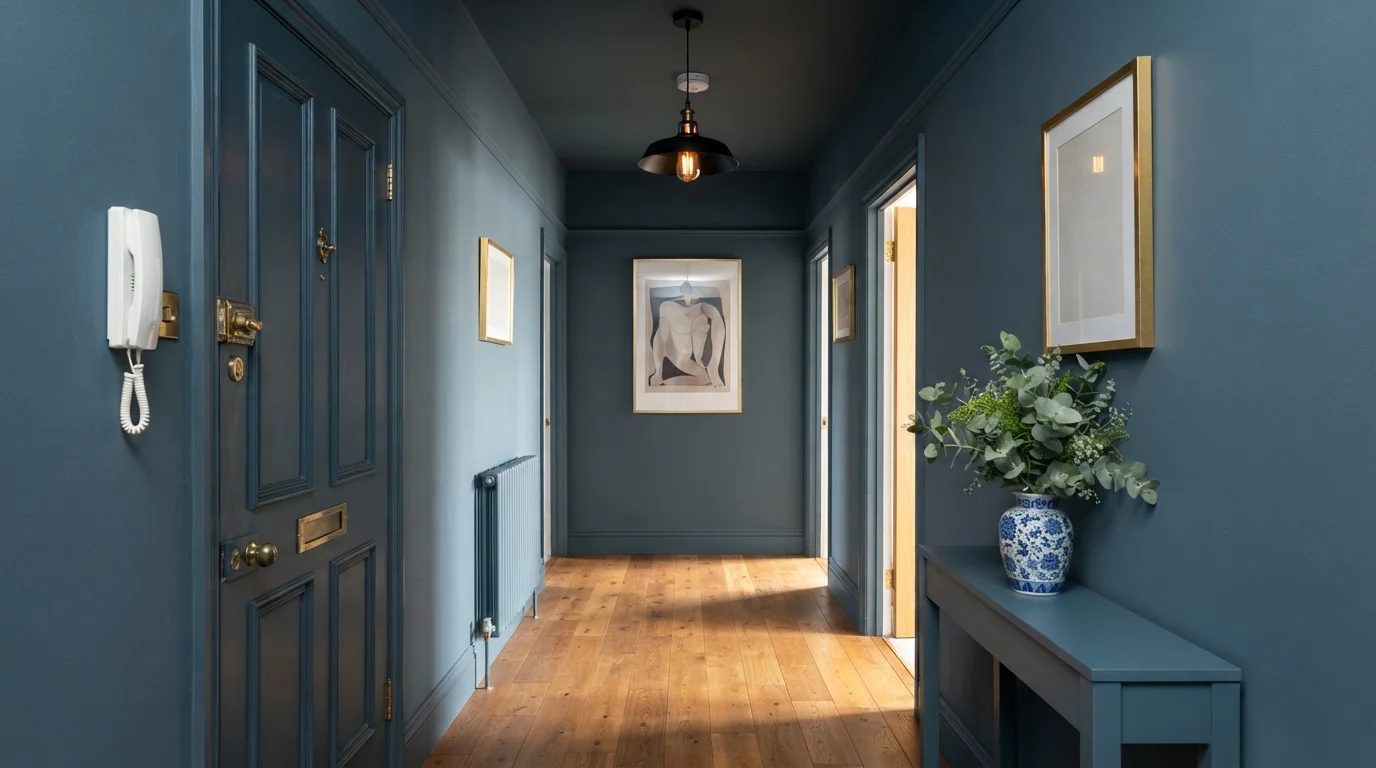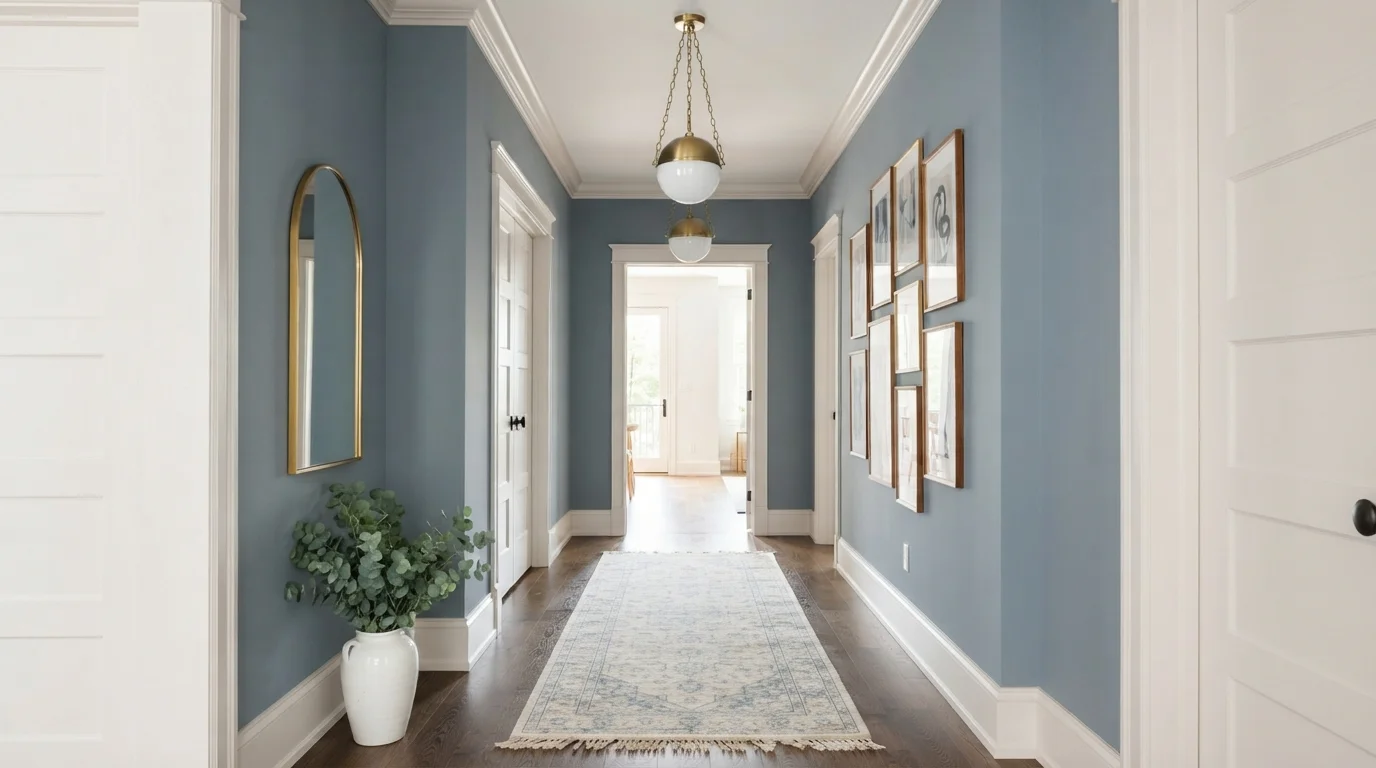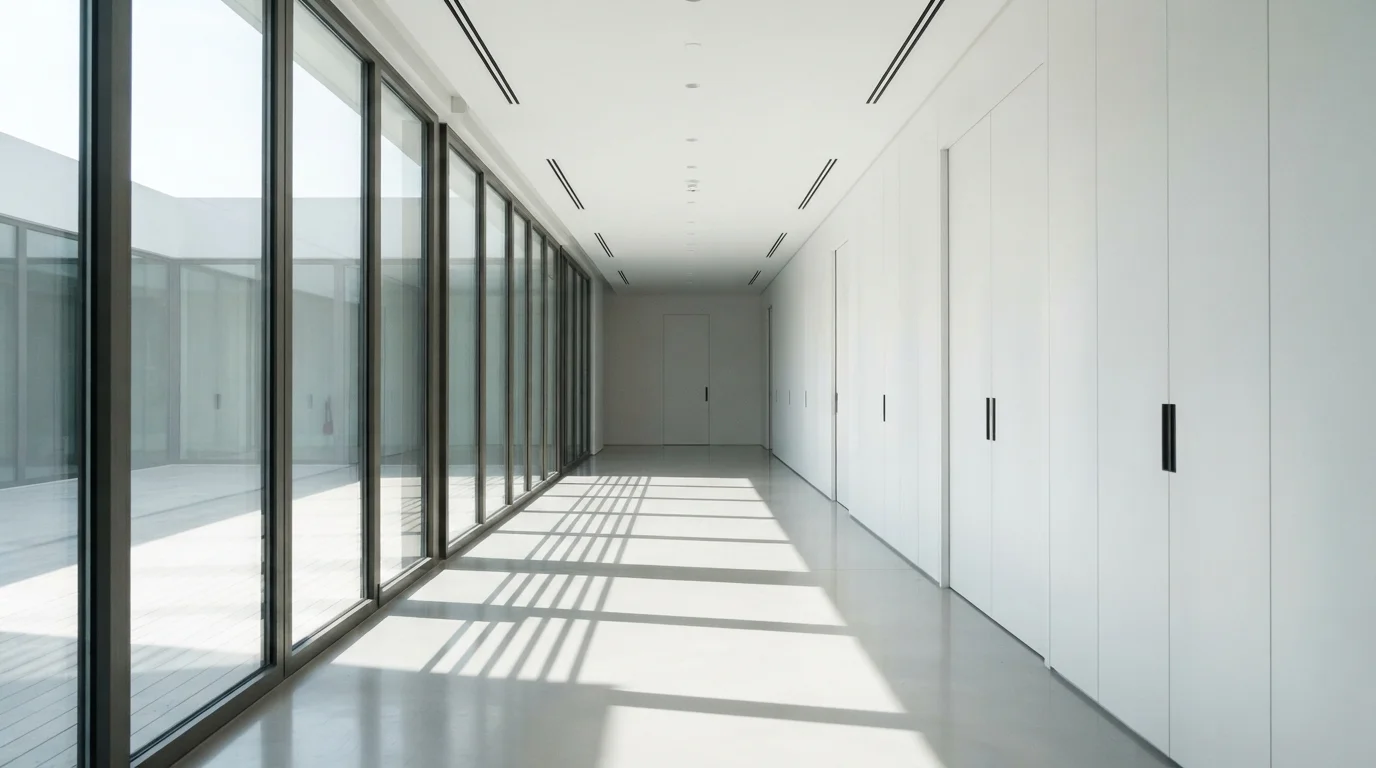
Blue Hallway Paint Colors
1,741 blue colors that work in hallways, drawn from the full ~30,000-color US paint deck. Below: editor's picks specific to hallways, then 30 picks spread across the LRV range — narrow further on the brand page when you've shortlisted.
Blue is the most popular color for accent walls, kitchen islands, and front doors — and also the family with the widest spread, from pale dove-blues that read almost grey, to inky near-black navies, to saturated cobalts that read almost royal. Teal-leaning blues (the green-blue overlap) live next door in the Teal family.
Editor's Picks: Blue for Hallways
4 picks30 Blue Picks Across the LRV Range
30 of 1,741 · sorted dark → lightLooking for more? All blue → covers every brand; brand × family pages show full decks.
Blue Hallway Colors at Every US Brand
21 brands · up to 10 picks eachUp to 10 picks per brand spread across the blue LRV range, drawn from each brand's full deck. Tap any swatch with a curated guide for full spec; tap the brand title for the brand's complete blue deck.
Behr
Valspar
Glidden
Benjamin Moore
PPG / Glidden
Dunn-Edwards
Sherwin-Williams
Dutch Boy
Hirshfield's
Diamond Vogel
Kompozit
C2 Paint
Portola Paints
Magnolia Home
Rodda
Farrow & Ball
Backdrop
Annie Sloan
Clare
Rust-Oleum
Other Hallway Color Families
Blue Colors in Other Rooms
Blue Paint Colors for a Hallway
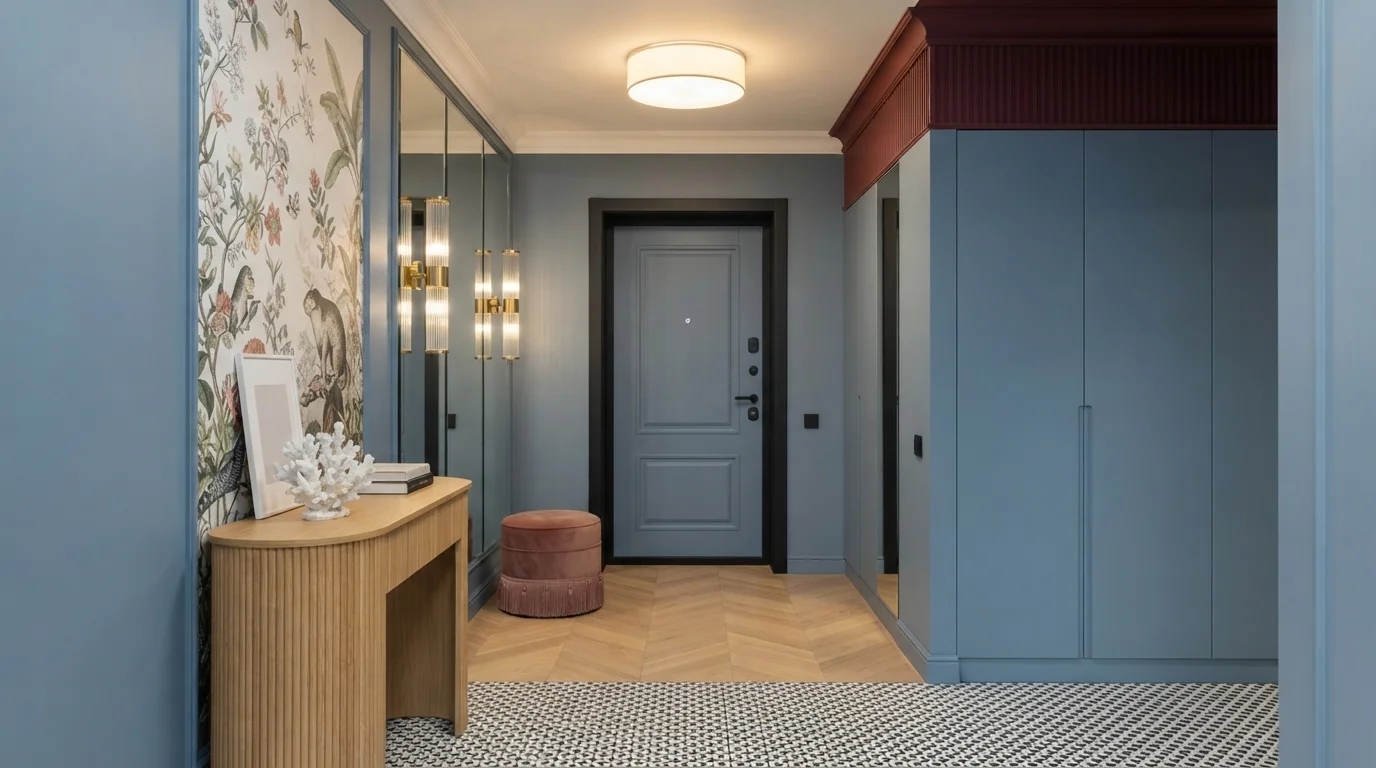
A hallway is a room you pass through, not one you sit in, and that changes how blue behaves here. Most hallways have little or no window, so the blue you fall in love with on a sunny porch can turn cold, gray, or flat once it is surrounded by walls and lit by a single overhead fixture. The good news is that blue is one of the friendliest colors for this space. It reads calm and clean, it hides the scuffs and shadows that hallways collect, and it gives an otherwise forgettable stretch of wall a reason to exist.
The trick is matching the depth of blue to how little light the space gets, then locking in a finish that survives backpacks, shoulders, and wet shoes. Every blue you see on this page can be mixed to order at a paint counter, so you are not tied to one brand. If a shade you like belongs to a brand you would rather not buy, you can cross-match it and have the same color tinted into another company's paint.
Why Blue Works In A Hallway
A hallway is usually a narrow, low-traffic-of-the-eye space that connects the rooms people actually use. Blue suits it because it feels settled and unhurried, which is exactly the mood you want in a pass-through. It also plays well with white trim and natural wood, both of which show up in hallways constantly.
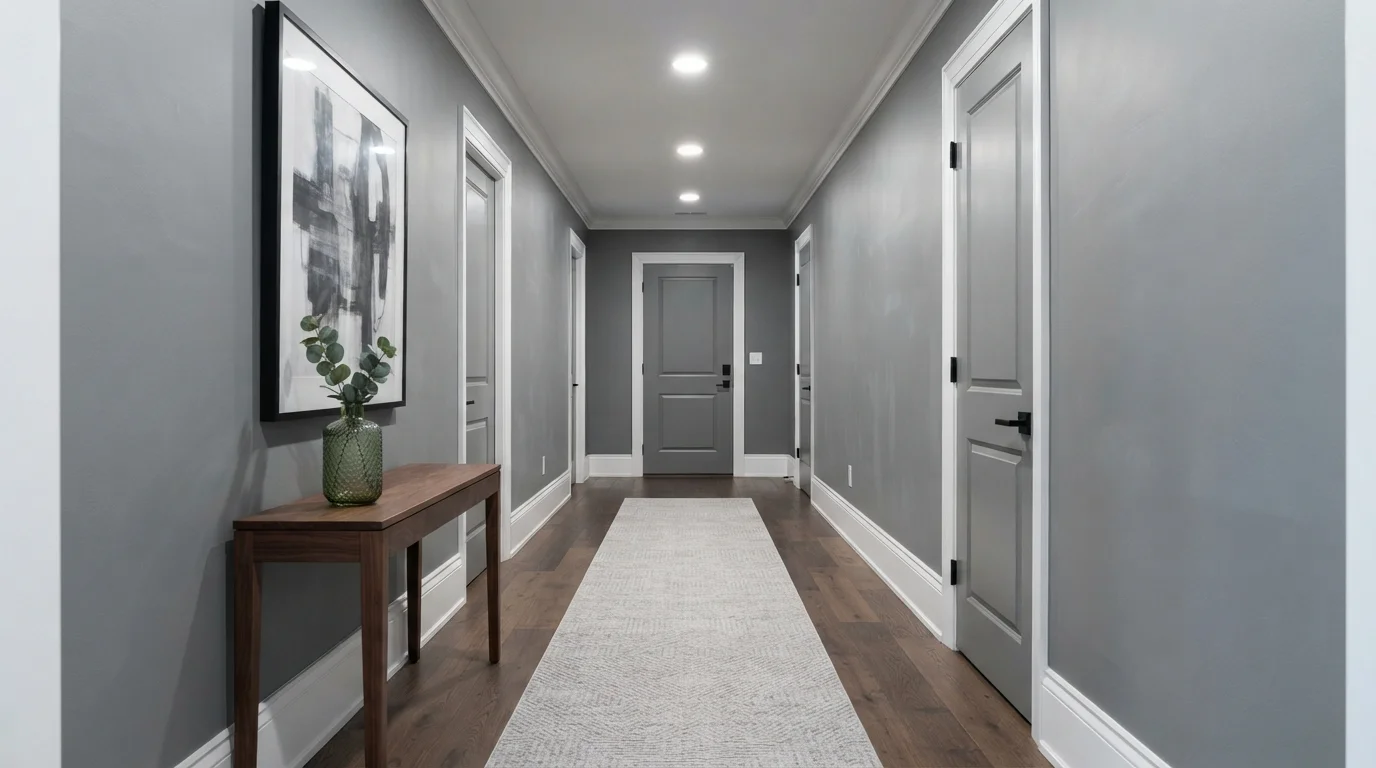
The one thing to watch is temperature. A hallway with no daylight will pull a blue toward its cooler, grayer side, and a very cool blue in a dark hall can feel like a basement. You fix this by leaning warmer than you think you need to, or by choosing a blue with a clear green or gray softness baked in rather than a sharp, icy one.
The Right Depth Of Blue For The Light You Have
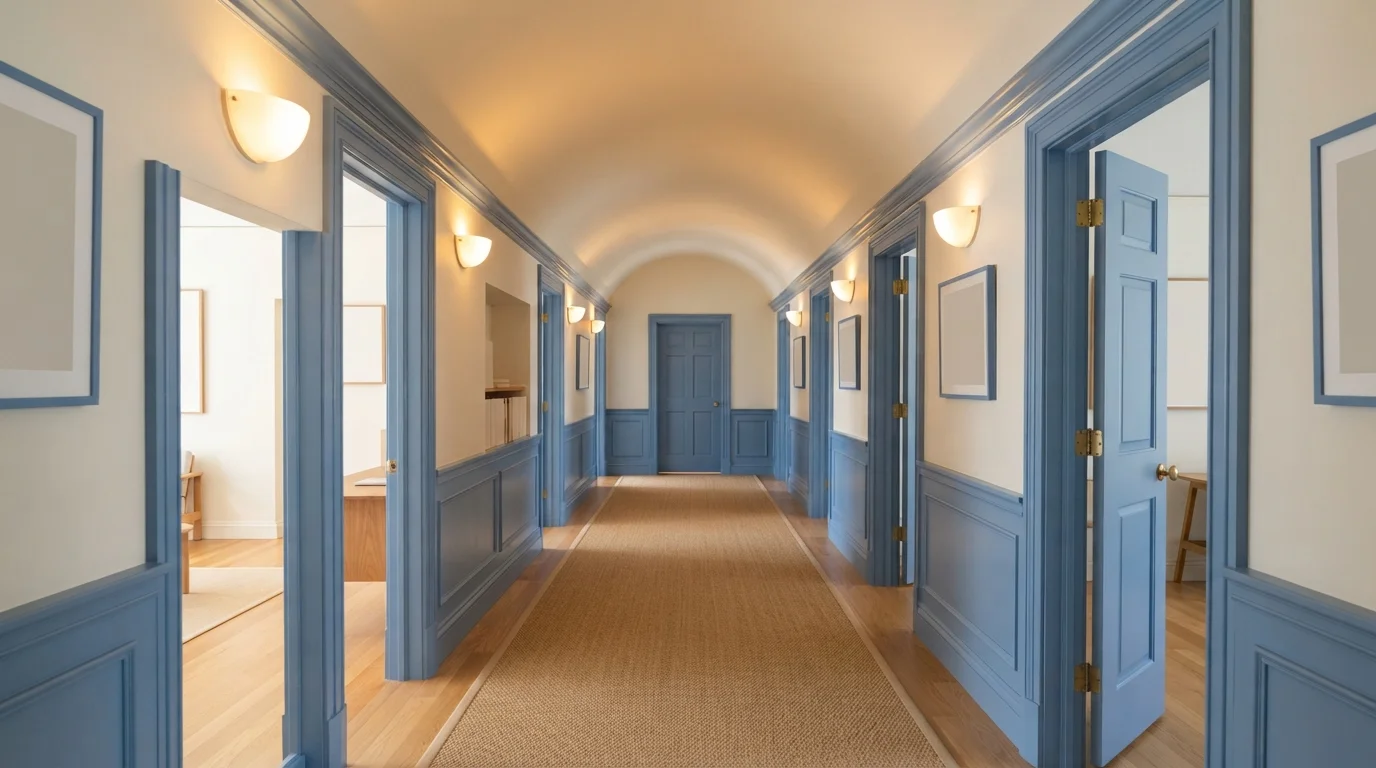
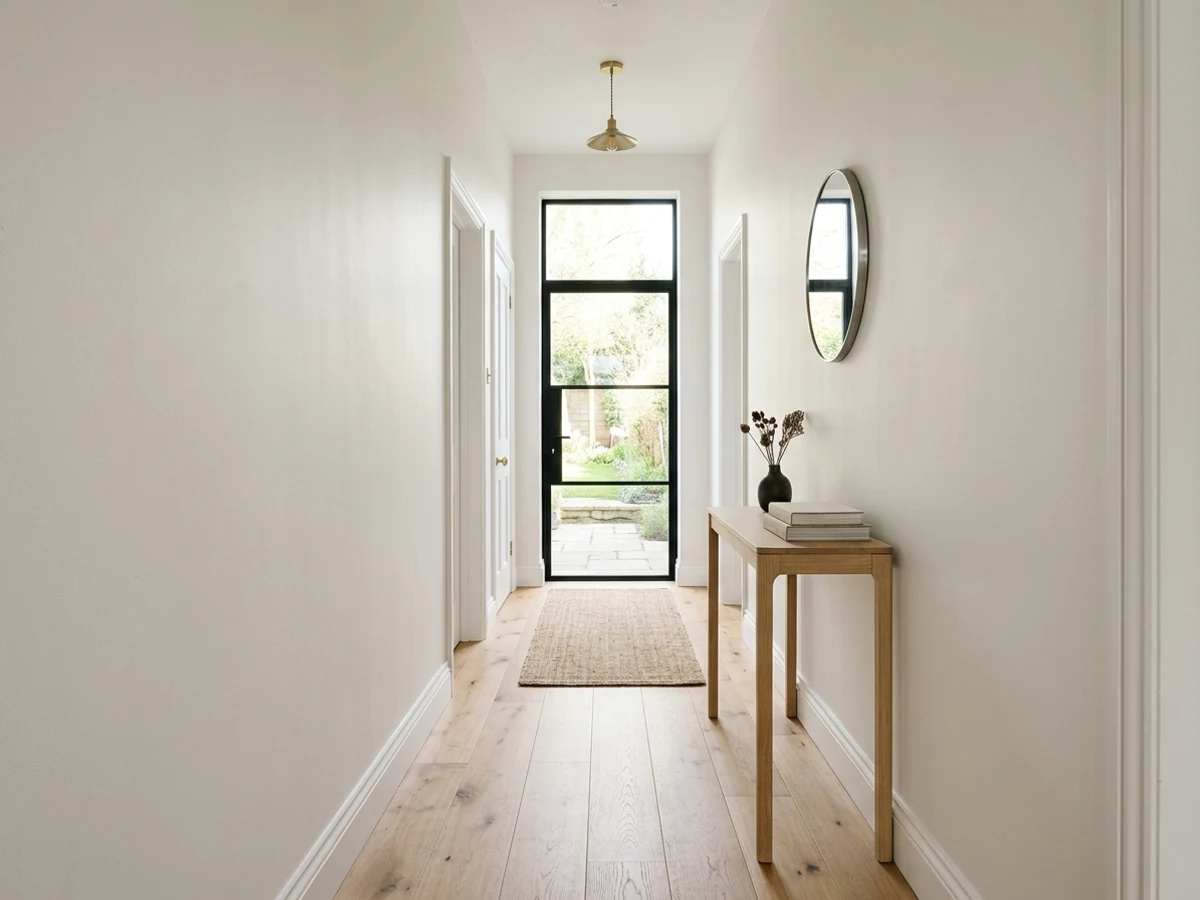
LRV, or light reflectance value, tells you how much light a color bounces back, from near 0 for black to near 100 for white. In a windowless or dim hallway, a higher-LRV blue, soft, hazy, and pale, keeps the space from feeling tight and will read more clearly under artificial light. These light blues stretch a narrow hall and stay friendly even when the only light is a ceiling fixture.
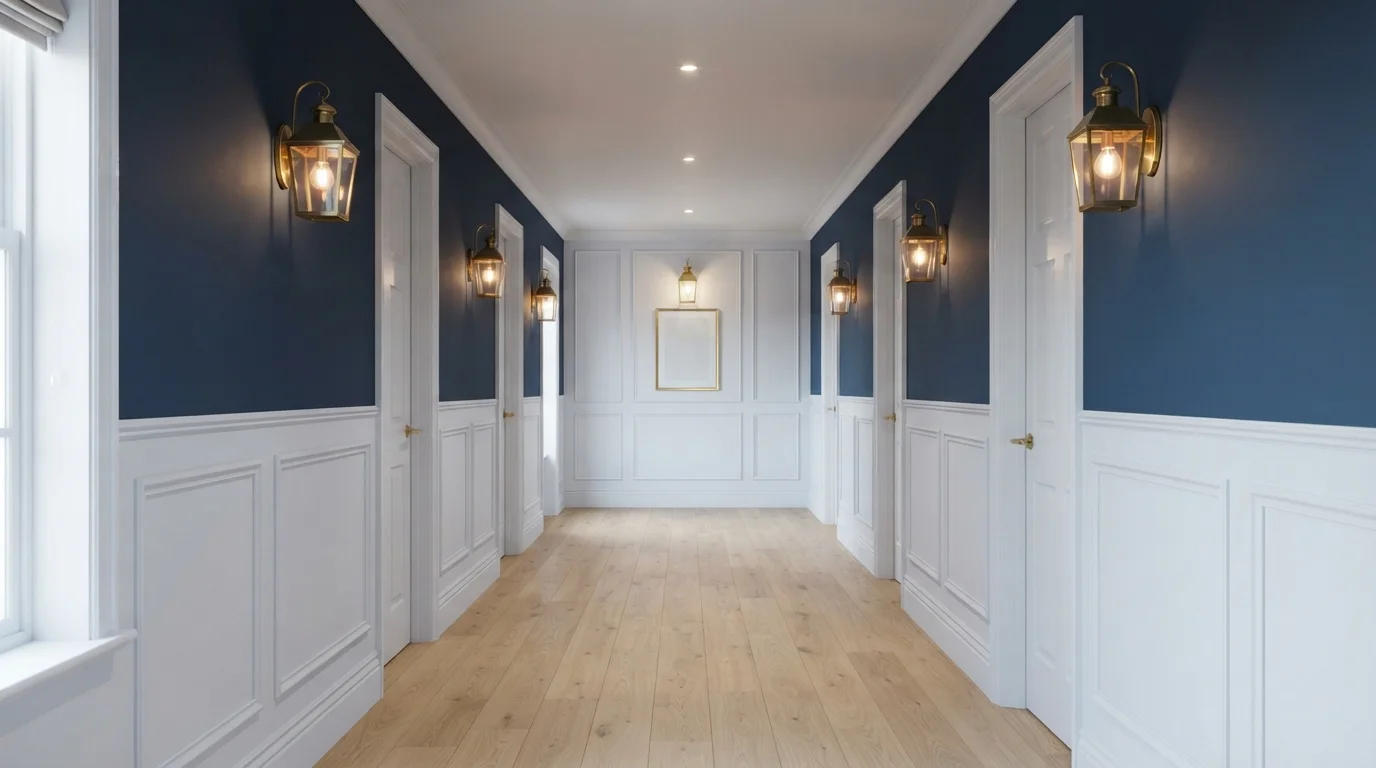
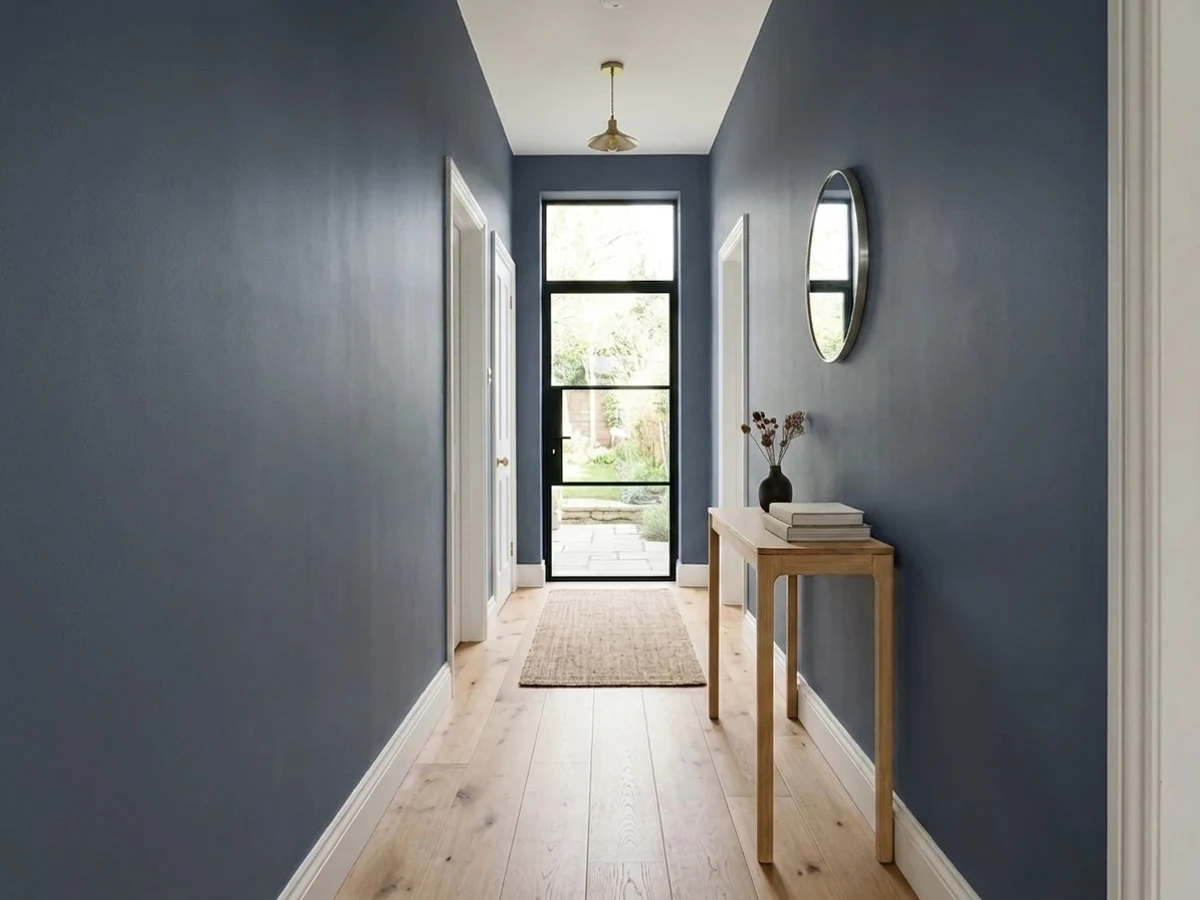
If your hallway catches real daylight from a nearby room or a transom, you have room to go deeper. A mid-tone or even a deep navy can turn a short hall or a stair landing into a deliberate, gallery-like moment instead of dead space. As a rule, the less light the hall gets, the lighter and warmer the blue should be; the more light it borrows, the more saturation it can carry without feeling heavy.
The Best Finish For Hallway Walls
Hallways are touch zones. Shoulders brush the walls, hands steady on the way past, and kids run a palm along the whole length. That argues for a finish you can wipe down, so an eggshell or satin on the walls is the safe default, washable enough to clean and forgiving enough to hide minor wall texture.
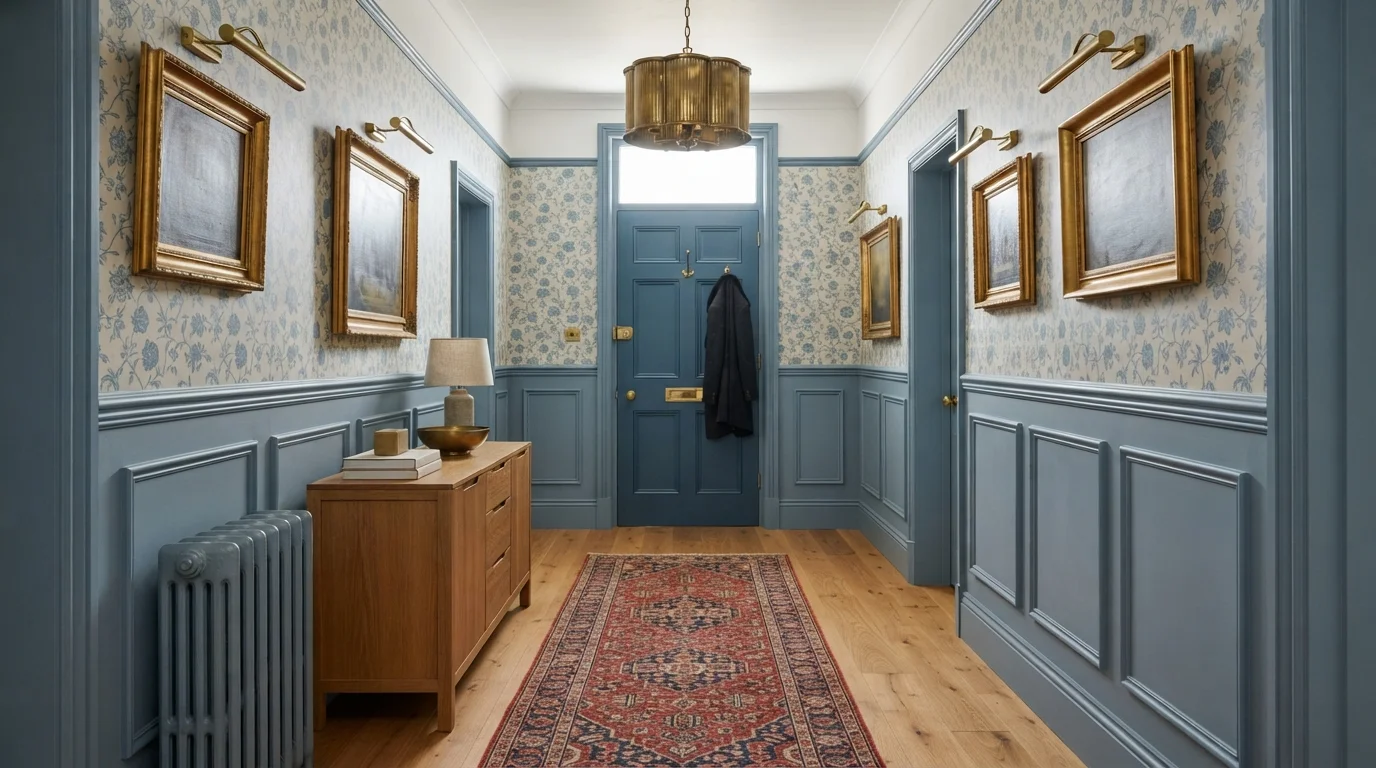
Save higher gloss for the trim, doors, and any wainscoting, where a semi-gloss takes scuffs and cleaning better and gives blue a crisp edge. Skip flat or true matte on hallway walls unless the hall is genuinely untouched; flat looks rich but smears the moment you try to clean a mark off it. In a hall with no natural light, a lower sheen also helps, since a glossy wall under one bright fixture creates glare and hot spots.
Pairing Blue With Trim, Ceiling, And Fixtures
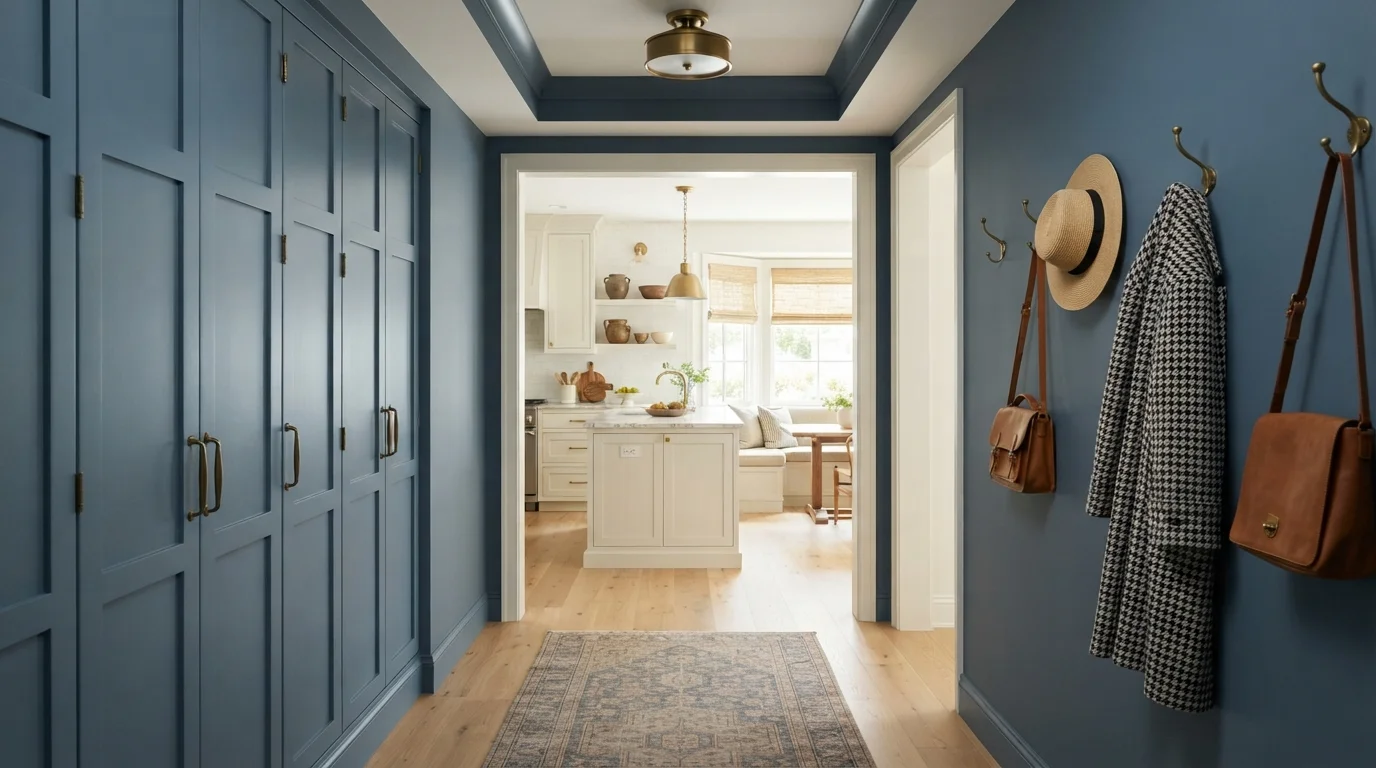
The cleanest hallway pairing is blue walls with crisp white trim and doors. Warm or soft whites flatter blue and keep the space from feeling cold; a stark, blue-white trim next to a cool blue can look clinical in a low-light hall. Wood floors and wood doors are blue's best friend here and add the warmth a hallway often lacks.
For the ceiling, a hallway usually looks best with a white or near-white ceiling to lift a low or narrow space. If you have gone deep navy on the walls and want drama, painting the ceiling the same blue can make a small hall feel like a cocoon, but do that on purpose, not by accident. Metal fixtures and door hardware in warm brass or matte black both sit well against blue, so let the rest of your home's finishes decide which way to go.
Common Mistakes With Blue In A Hallway
The biggest mistake is choosing a blue from a large sample under bright store lighting and never testing it in the actual hall. A hallway's poor light will mute and cool the color, so a swatch that looked like a soft sky on the chip can land gray and dreary on the wall. Always paint a large sample, look at it under your real hallway light, and check it at night.
The other common slip is going too cool and too dark at the same time in a space with no daylight, which reads cave-like rather than calm. People also forget that a long hall shows every roller mark and patch, so a too-high sheen turns a quiet blue into a map of flaws. Pick the depth for your light, keep the wall sheen modest, and let trim do the shine.
Blue Hallway Paint — Frequently Asked Questions
What shade of blue is best for a dark hallway with no windows?+
Go lighter and warmer than you would in a bright room. A soft, slightly grayed or hazy light blue with a higher LRV will reflect what little light you have and avoid the cold, basement feel that sharp cool blues take on in the dark. Test it under your actual hallway fixture before committing, since artificial light shifts blue more than daylight does.
Can I use a dark navy in a hallway?+
Yes, and it can look fantastic, especially on a stair landing or a hall that borrows daylight from a nearby room. Navy turns a forgettable pass-through into a deliberate moment, but it needs some light and crisp white trim to keep it from closing in. In a truly windowless hall, navy can feel heavy, so pair it with a white ceiling and good lighting.
What paint finish should I use on hallway walls?+
Eggshell or satin is the sweet spot for most hallways. Both are washable enough to wipe off scuffs and handprints, which hallways collect, and they hide minor wall imperfections better than a glossier finish. Save semi-gloss for the trim and doors.
What trim color goes with blue in a hallway?+
Crisp white is the easiest and most reliable choice, and a soft or warm white flatters blue better than a stark blue-white, which can look cold in a low-light hall. Natural wood doors and floors also pair beautifully with blue and add warmth. Match your hardware and fixtures to the rest of the home, since both brass and matte black work well against blue.
Will a hallway's lighting change how the blue looks?+
A lot. Hallways usually rely on a single overhead fixture and little or no daylight, and that artificial light pulls blue toward its cooler, grayer side. The same blue can look fresh in a bright room and dull in a dim hall, so always test a large sample in the actual space and view it both day and night.
Am I locked into one brand for the blue I pick?+
No. Every color shown here is mixed to order at the paint counter, so you can take a shade you like and have it cross-matched into another brand's paint. That lets you choose the exact blue you want and the paint line and finish that fit your budget and your hallway's wear.