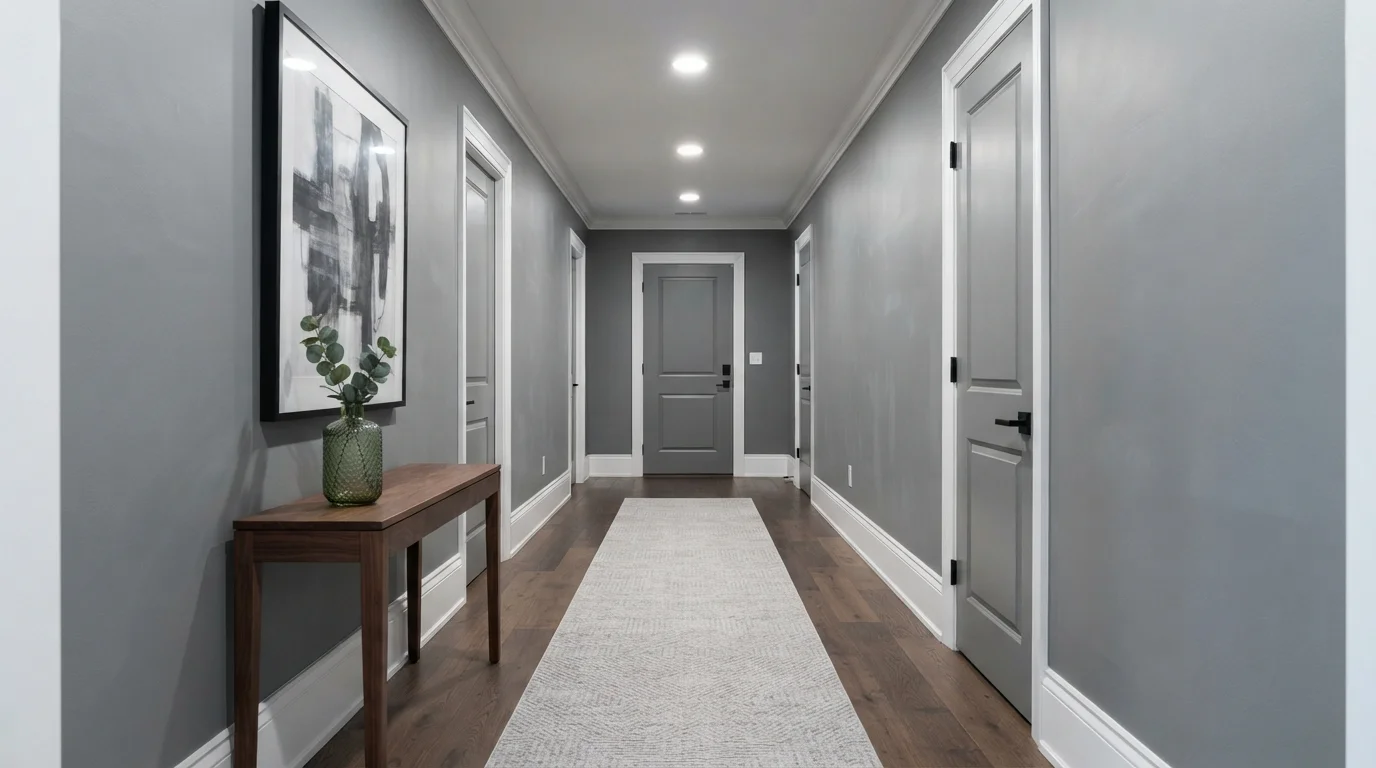
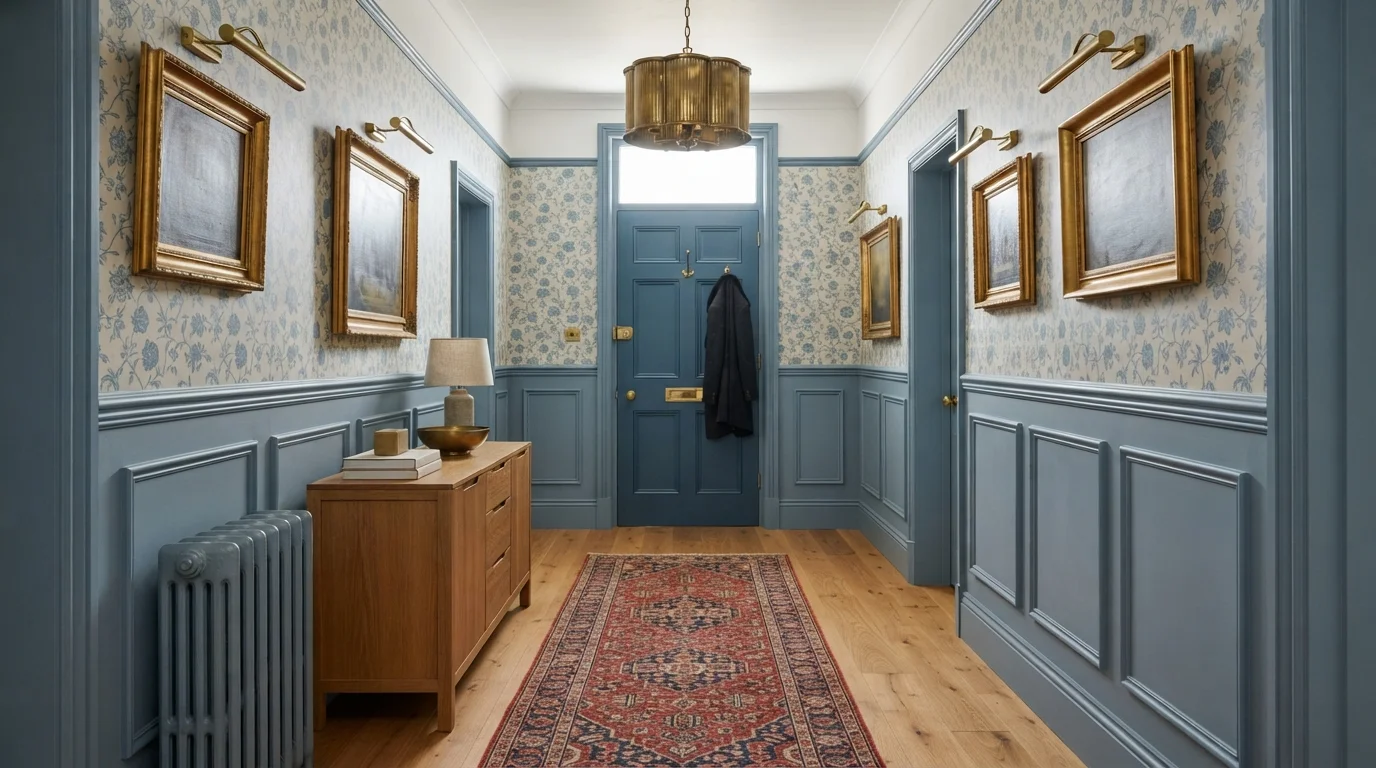
White Hallway Paint Colors
2,064 white colors that work in hallways, drawn from the full ~30,000-color US paint deck. Below: editor's picks specific to hallways, then 30 picks spread across the LRV range — narrow further on the brand page when you've shortlisted.
White is the hardest color to specify well. The right white shifts under daylight, north-facing rooms, and warm-LED bulbs — and most "whites" actually have a strong undertone (yellow, pink, green, or blue) that only shows up once it's on the wall. Below: the warm whites and cool whites we recommend most often, organized so you can compare them at a glance.
Editor's Picks: White for Hallways
4 picks30 White Picks Across the LRV Range
30 of 2,064 · sorted dark → lightLooking for more? All white → covers every brand; brand × family pages show full decks.
White Hallway Colors at Every US Brand
20 brands · up to 10 picks eachUp to 10 picks per brand spread across the white LRV range, drawn from each brand's full deck. Tap any swatch with a curated guide for full spec; tap the brand title for the brand's complete white deck.
Behr
Benjamin Moore
Dunn-Edwards
Glidden
PPG / Glidden
Valspar
Diamond Vogel
Kompozit
Hirshfield's
Sherwin-Williams
Dutch Boy
C2 Paint
Rodda
Farrow & Ball
Magnolia Home
Clare
Portola Paints
Backdrop
Rust-Oleum
Other Hallway Color Families
White Colors in Other Rooms
White Paint Colors for a Hallway
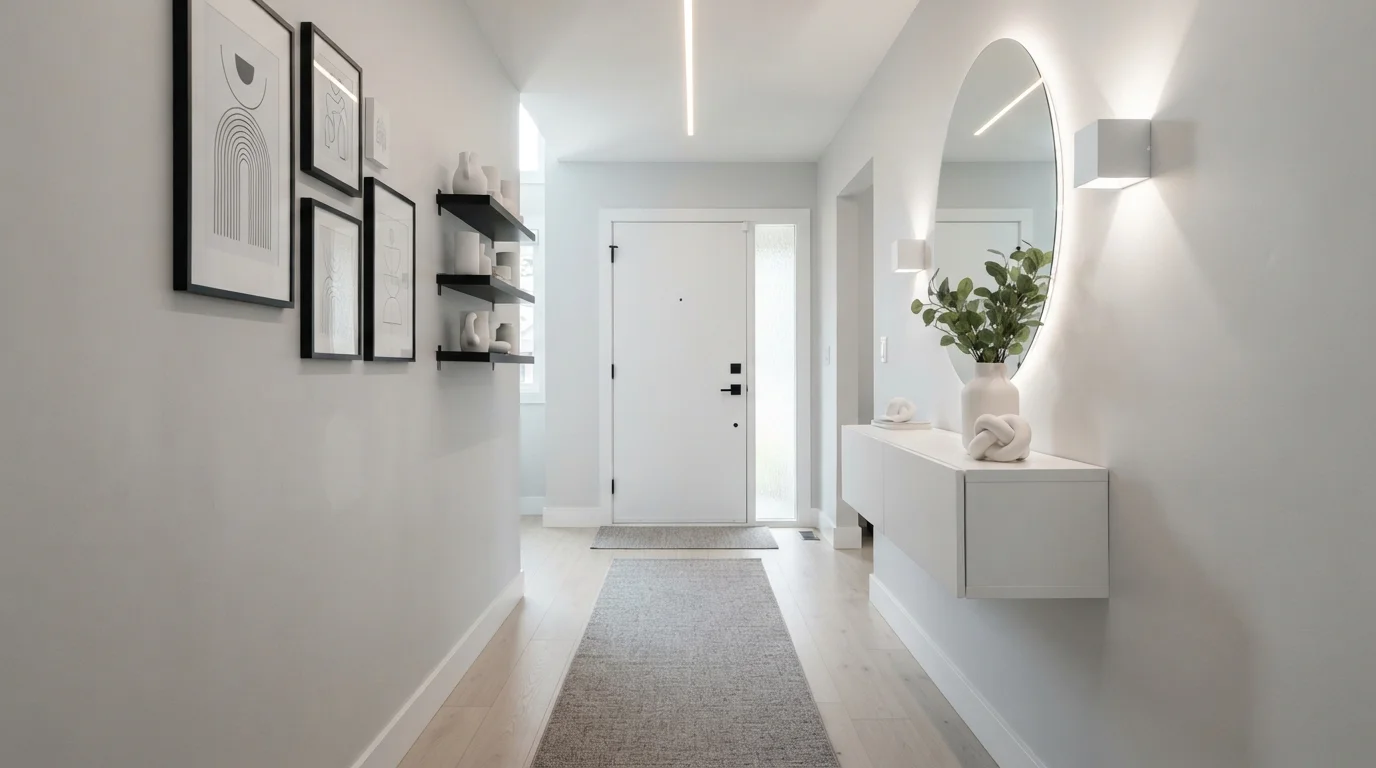
A hallway is mostly walls and not much else. There are few windows, little furniture, and almost no daylight to soften things, which is exactly why white works so well here. White bounces what little light there is, makes a tight space feel wider, and gives every doorway and room it connects to a clean starting point.
But white in a hallway is not as simple as grabbing the brightest one on the shelf. The right white depends on how much light the space gets, what undertone reads in dim corners, and how much scuffing the walls will take from bags, shoulders, and hands. Every white on this page is mixed to order at the store, so once you land on the shade you love, it can be matched across brands no matter where you buy your paint. Below we walk through which whites suit a hallway, how the light steers the shade, the right finish for high-traffic walls, what to pair it with, and the mistakes to avoid.
Why White Is The Safe Bet In A Hallway
Hallways are passageways, not destinations, so the goal is light and flow rather than a statement color. White does both jobs at once. It reflects the small amount of light a hallway gets, makes a narrow run feel less boxed in, and keeps the eye moving toward the rooms on either side.
White also solves the connector problem. A hallway usually touches several rooms with different colors, and a clean white acts as a neutral bridge between them so nothing clashes at the doorways. That is hard for any other color to pull off.
Pick The Right Depth Of White For Low Light
Most hallways are short on daylight, and that changes which white to choose. A crisp, bright white can look gray and flat in a windowless hall because there is no sun to lift it. A soft white with a warm undertone usually holds up better, staying clean without going cold and dingy in the shadows.
If your hallway does catch light from a nearby room or a window at one end, you have more room to use a brighter, cleaner white. Pay attention to the undertone in the darkest spot, not the brightest. Whites with a green or gray base can read dull in dim corners, while a faint warm or creamy base tends to stay friendly all the way down the hall.
Using LRV To Keep The Hallway Bright
LRV, or Light Reflectance Value, runs from 0 for black to 100 for pure white, and it tells you how much light a color throws back into the room. In a dim hallway you want that number high. A white in the low-to-mid 80s and up will work hardest to brighten a space that has little daylight of its own.
That said, very high-LRV whites can feel stark and show every scuff under bright fixtures. If your hallway is well lit, a slightly softer white in the upper 70s to low 80s still reads as white but is easier on the eye and more forgiving of marks. Tape a real sample on the wall and check it in the dimmest corner before you commit.
The Right Finish For A High-Traffic Wall
Hallway walls take a beating. Bags, sleeves, shoulders, and hands brush them every day, so washability matters more here than in almost any other room. Skip flat on the walls. An eggshell or satin finish wipes clean and stands up to scrubbing where a flat white would smudge and burnish.
Keep the trim and any doors in semi-gloss so they shrug off fingerprints and the bump of a passing bag. If your hallway has a high ceiling or strong overhead lights, lean toward eggshell rather than satin on the walls, since a higher sheen will throw glare and highlight every roller mark and patch.
Pairing White Walls With Trim, Doors, And Floors
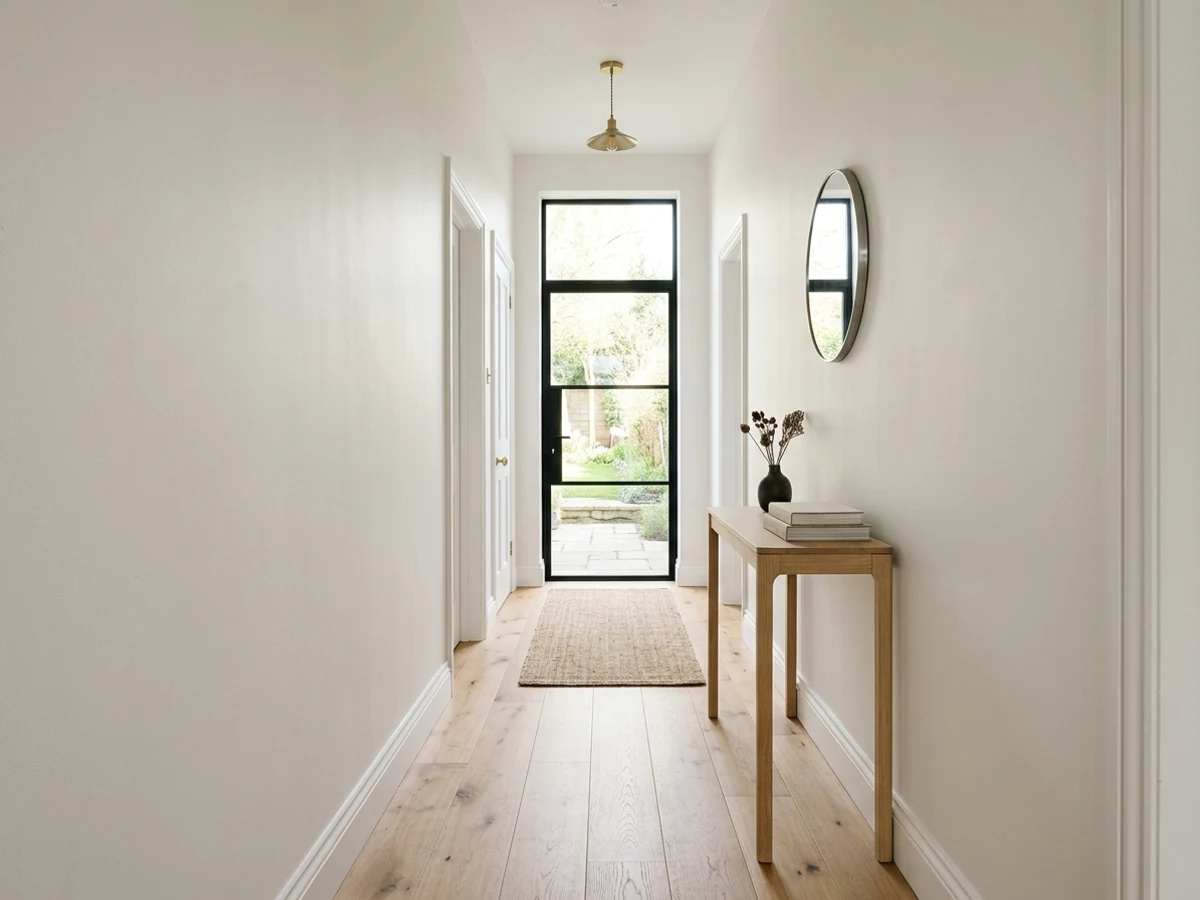
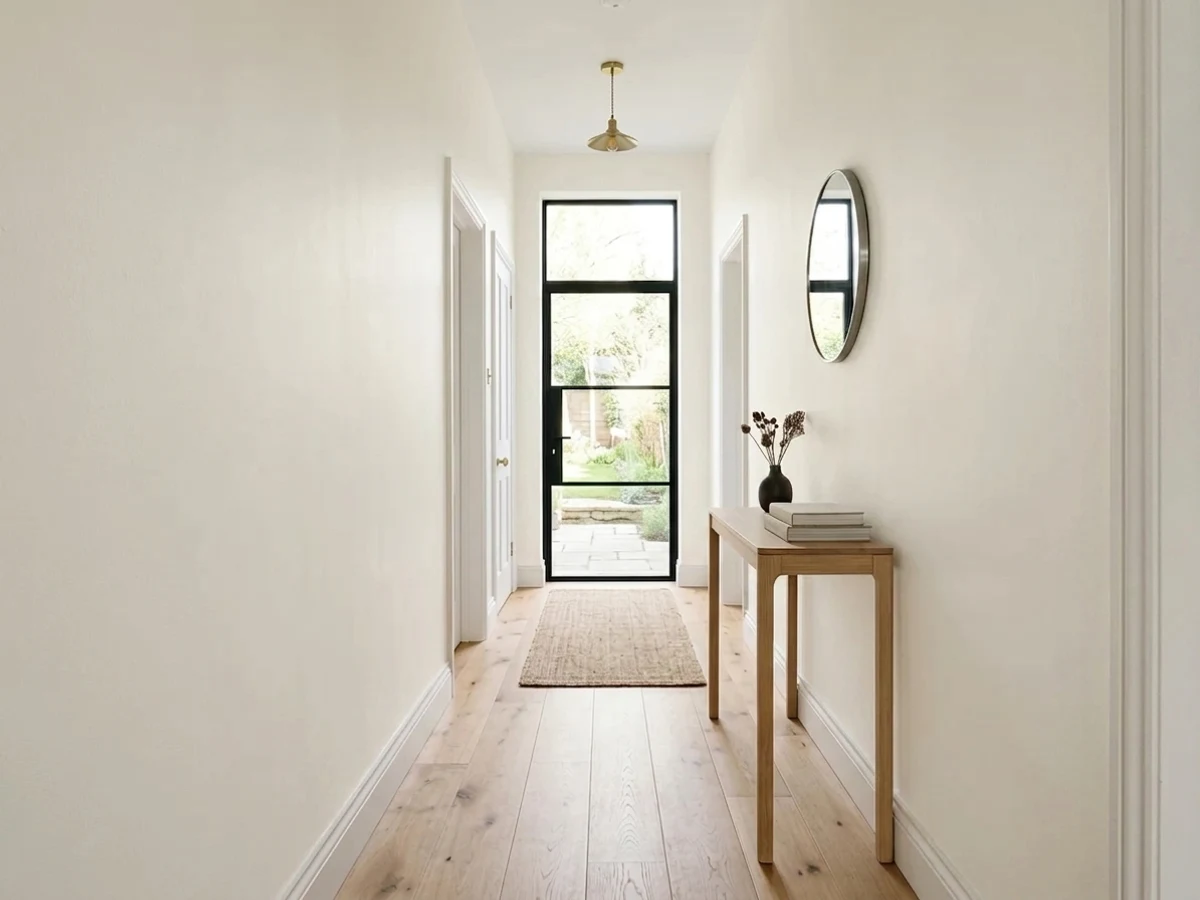
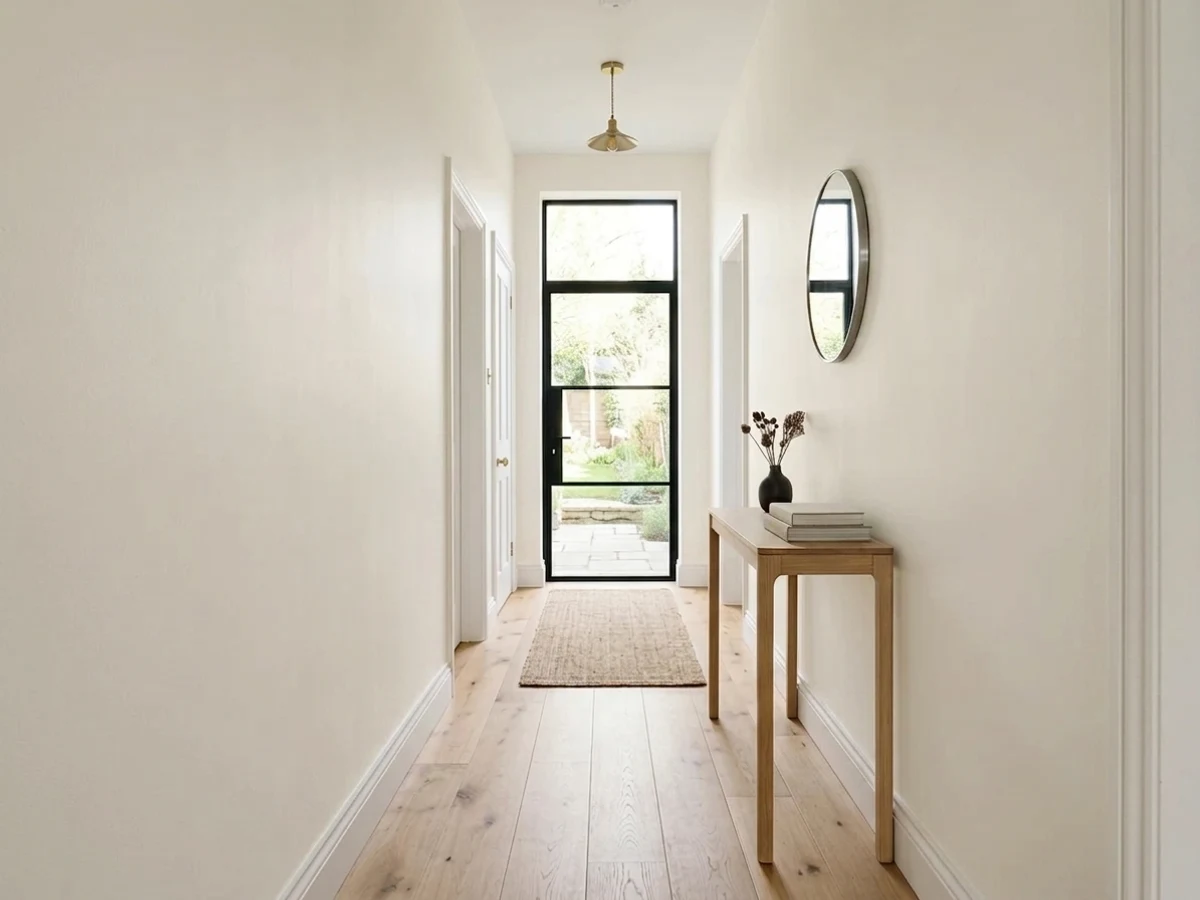
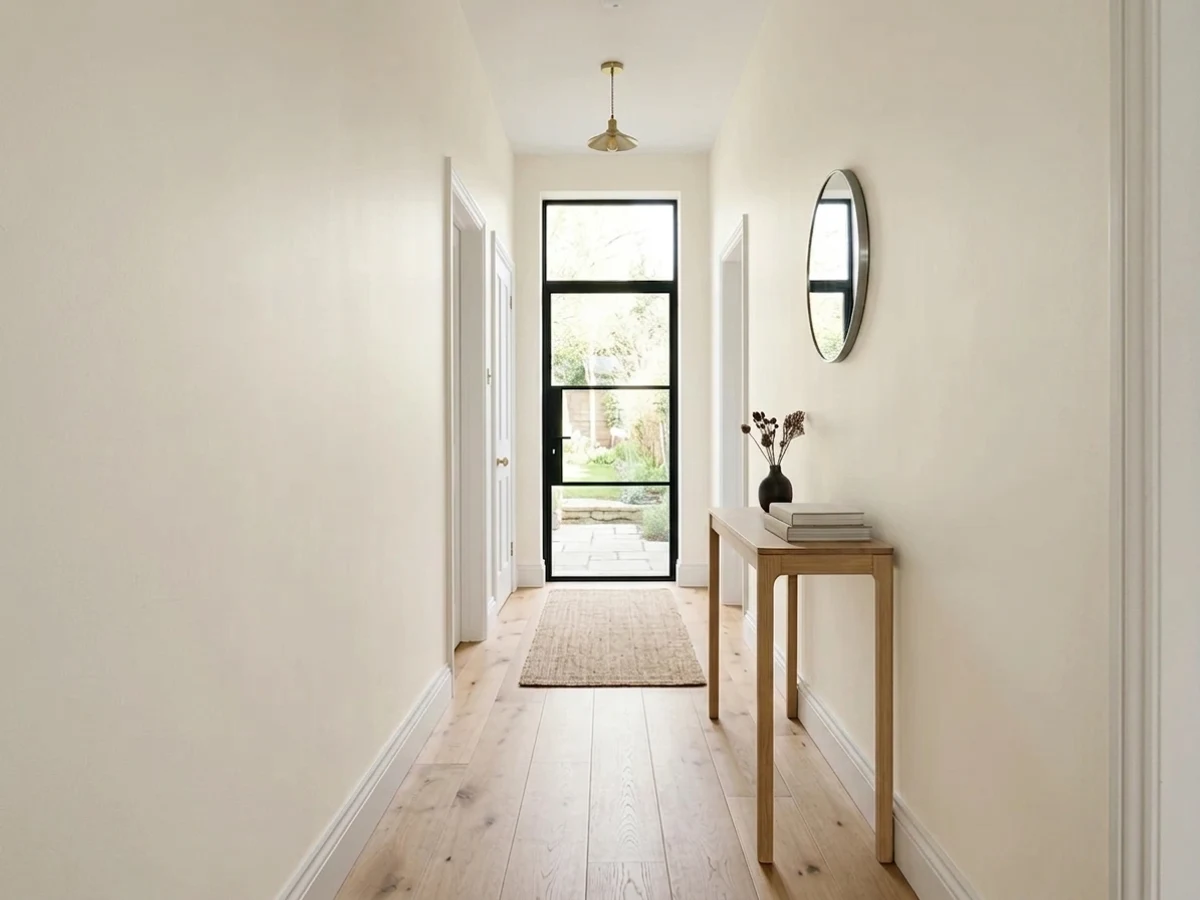
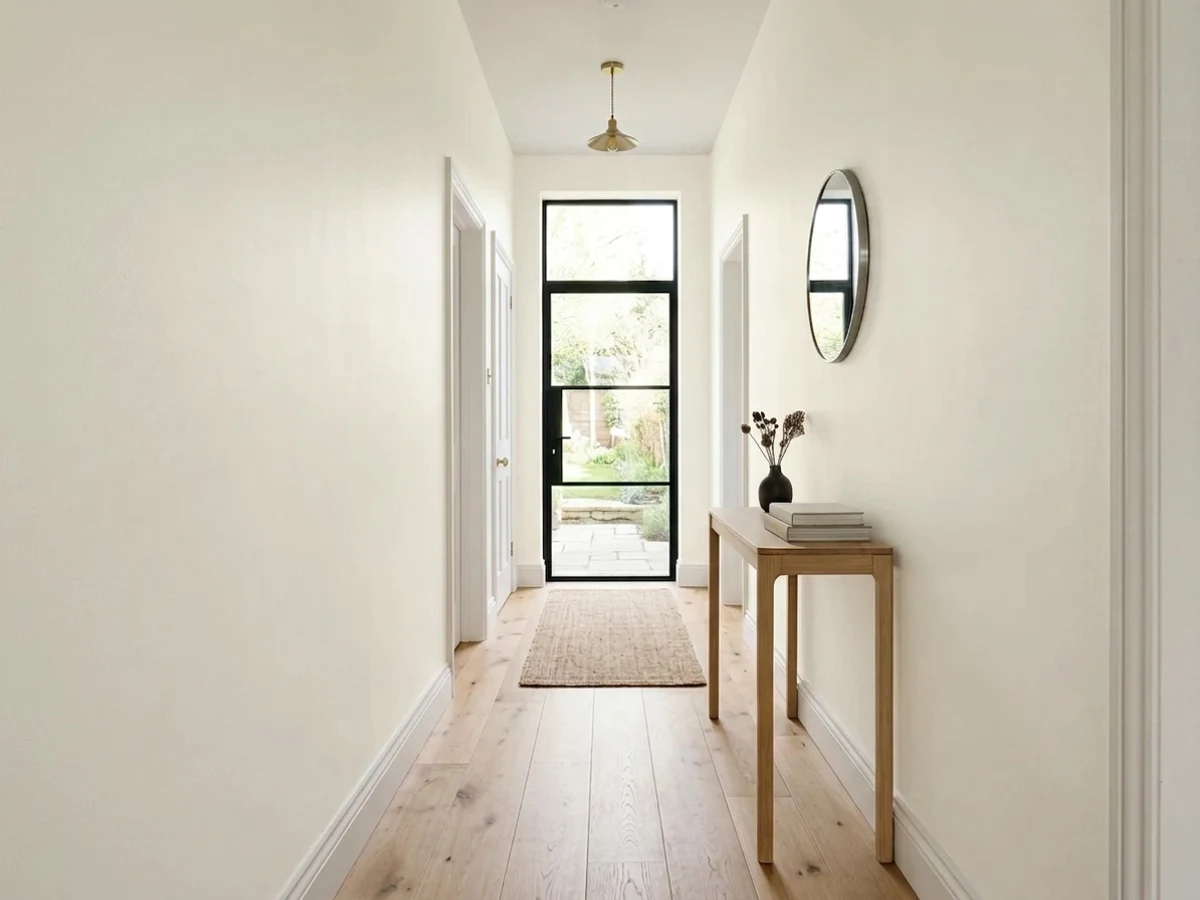
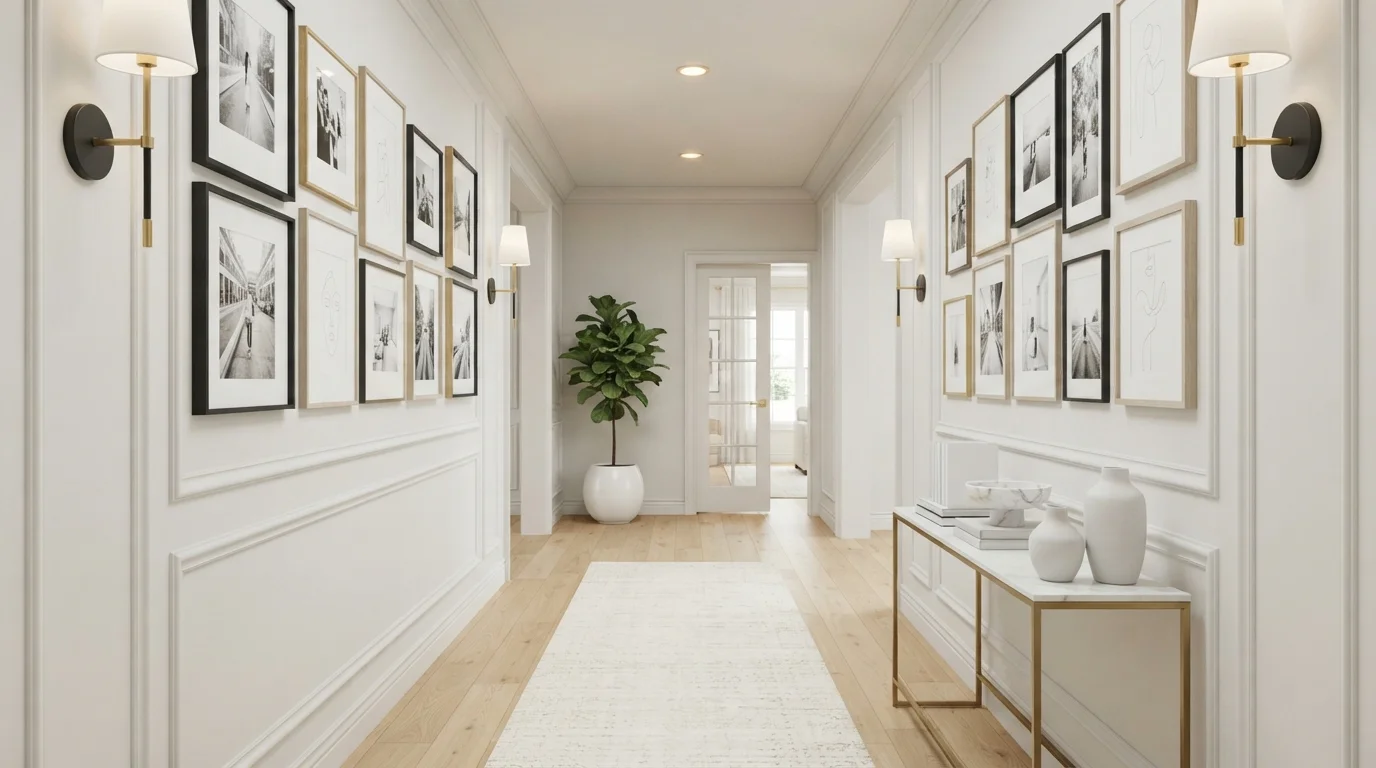
White-on-white is a classic hallway look, but it only works if the trim white differs from the wall white. Use a crisper, brighter white on the baseboards and door casings so the millwork reads as a clean line against softer white walls. Same family, slightly different depth.
For warmth, let the floor and fixtures carry it. A wood floor, a runner, or warm metal sconces and door handles all keep a white hallway from feeling clinical. If doors connect to bold rooms, a white hallway lets those colors pop through the openings without a fight. Any white you choose can be cross-matched between brands, so your trim and wall whites can come from whatever paint line you trust most.
White Hallway Paint — Frequently Asked Questions
what is the best white for a hallway with no windows?+
Go with a soft, slightly warm white rather than a bright stark one. In a windowless hall there is no sun to lift a cool white, so it can look gray and flat. A white with a faint warm or creamy undertone and a high LRV stays clean and bright in the shadows. Always test it in the darkest part of the hall.
does white make a narrow hallway look bigger?+
Yes. White reflects light and blurs the edges of a tight space, so a narrow hallway feels wider and less boxed in. The effect is strongest with a higher-LRV white in an eggshell or satin finish that bounces light down the run. Keeping the ceiling and trim in a related white opens it up even more.
what sheen should I use on hallway walls?+
Use eggshell or satin, not flat. Hallway walls get touched and scuffed constantly, and those finishes wipe clean and handle scrubbing. Keep trim and doors in semi-gloss for the toughest, most washable surface. Save flat for the ceiling only.
should hallway trim be a different white than the walls?+
It usually looks best if it is. Pair softer white walls with a crisper, brighter white on the baseboards and casings so the trim reads as a clean line. Staying in the same white family keeps it cohesive while the slight difference in depth gives the millwork definition.
what is the most common mistake with white in a hallway?+
Choosing the white in a bright store or by a sunny window, then putting it in a dim hall where it turns gray or dingy. The other big one is using flat paint, which scuffs and burnishes on high-traffic walls. Test the actual white in the hallway's real light, and pick a washable eggshell or satin.
can I match a hallway white across different paint brands?+
Yes. Every white shown here is mixed to order at the store, so any shade can be matched across brands. That lets you use one brand for the walls and another for the trim or doors, or simply buy whatever line is easiest for you to get, all in the same white.