White Bathroom Paint Colors
2,064 white colors that work in bathrooms, drawn from the full ~30,000-color US paint deck. Below: editor's picks specific to bathrooms, then 30 picks spread across the LRV range — narrow further on the brand page when you've shortlisted.
White is the hardest color to specify well. The right white shifts under daylight, north-facing rooms, and warm-LED bulbs — and most "whites" actually have a strong undertone (yellow, pink, green, or blue) that only shows up once it's on the wall. Below: the warm whites and cool whites we recommend most often, organized so you can compare them at a glance.
Editor's Picks: White for Bathrooms
4 picks30 White Picks Across the LRV Range
30 of 2,064 · sorted dark → lightLooking for more? All white → covers every brand; brand × family pages show full decks.
White Bathroom Colors at Every US Brand
20 brands · up to 10 picks eachUp to 10 picks per brand spread across the white LRV range, drawn from each brand's full deck. Tap any swatch with a curated guide for full spec; tap the brand title for the brand's complete white deck.
Behr
Benjamin Moore
Dunn-Edwards
Glidden
PPG / Glidden
Valspar
Diamond Vogel
Kompozit
Hirshfield's
Sherwin-Williams
Dutch Boy
C2 Paint
Rodda
Farrow & Ball
Magnolia Home
Clare
Portola Paints
Backdrop
Rust-Oleum
Other Bathroom Color Families
White Colors in Other Rooms
White Paint Colors for a Bathroom
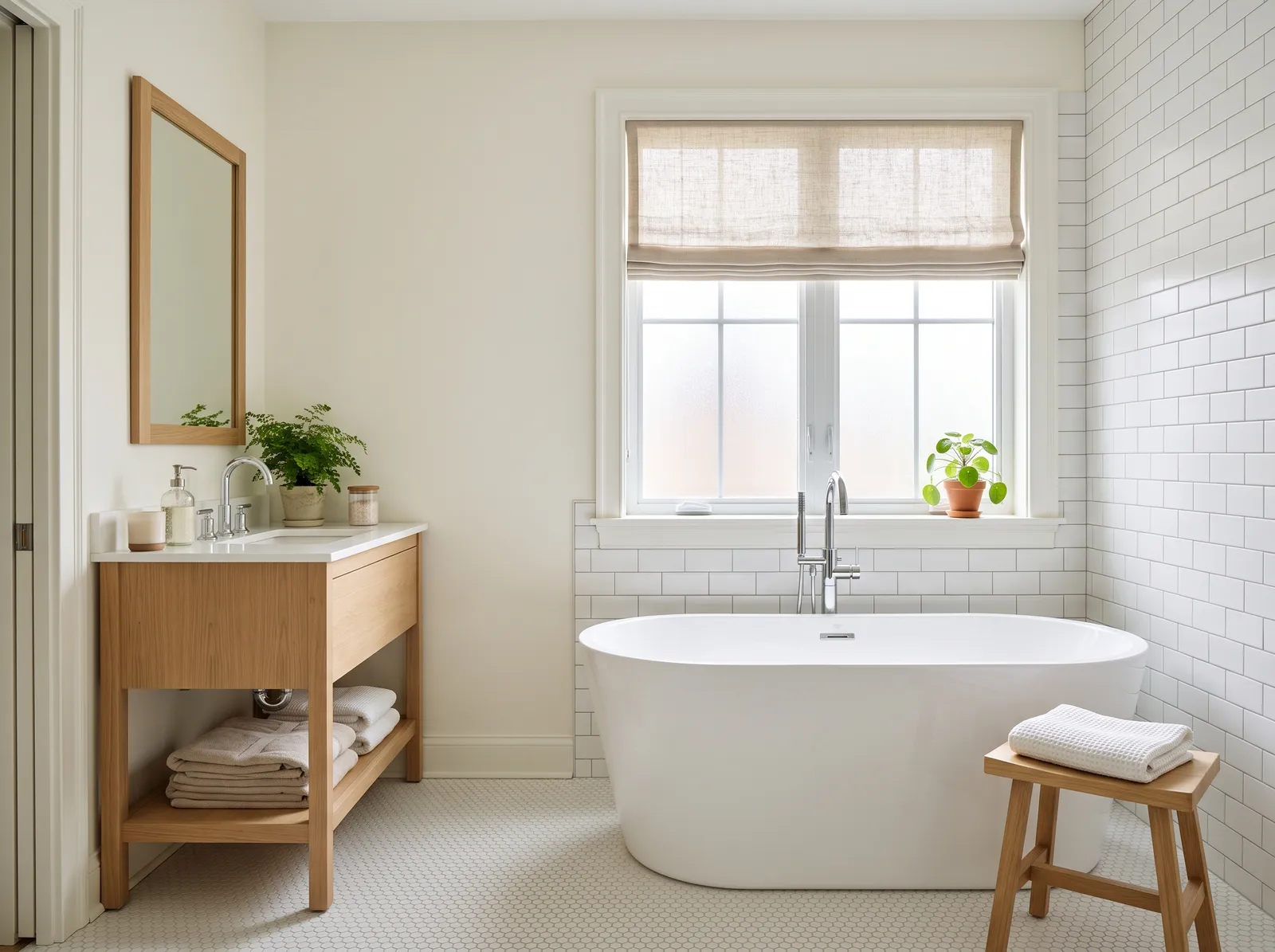
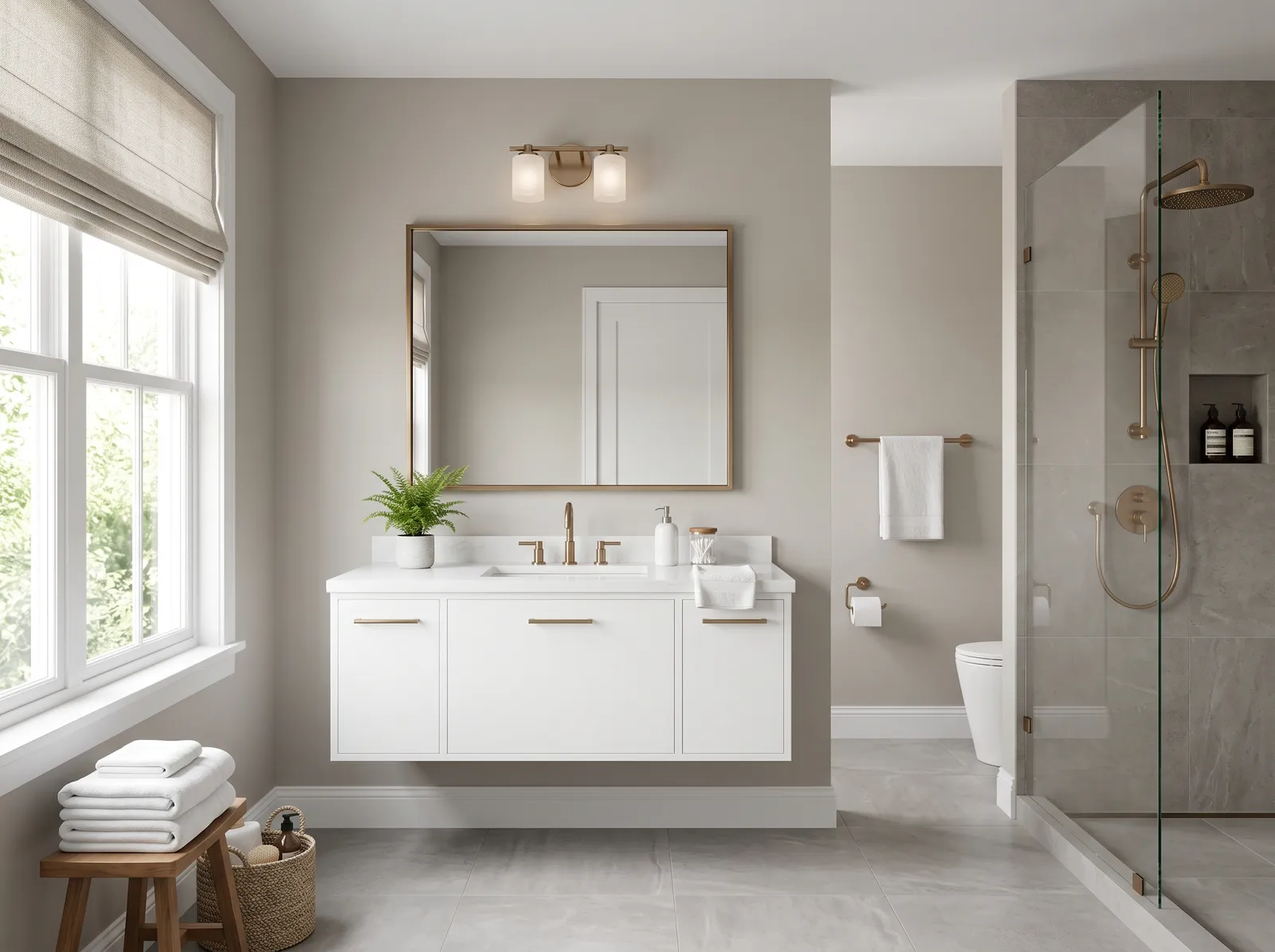
White is the most natural fit for a bathroom, and there's a good reason it shows up in more bathrooms than any other color. It reads clean, it makes a small or windowless room feel bigger and brighter, and it bounces around whatever light you do have. In a space full of white fixtures, white subway tile, and chrome or nickel, a white wall ties everything together instead of fighting it.
But "white" is not one color. The white that looks crisp in a bright, north-facing bathroom can turn gray and cold in a windowless powder room, and a warm white that feels cozy by a window can look dingy under blue-white LED bulbs. The trick is matching the depth and undertone of the white to your bathroom's light and tile, then choosing a finish that can handle steam and splashes. Every white on this page can be mixed to order at a paint counter, and you can cross-match the same shade across brands, so pick the white you like and get it in whatever brand you prefer.
Why White Works So Well in a Bathroom
Bathrooms are usually the smallest, darkest rooms in the house, and they're packed with white already — the tub, the toilet, the sink, the tile. White paint keeps the whole room reading as one bright, calm surface instead of chopping it into mismatched blocks. It also reflects light better than any other color, which matters in a room that often has one small window or none at all.
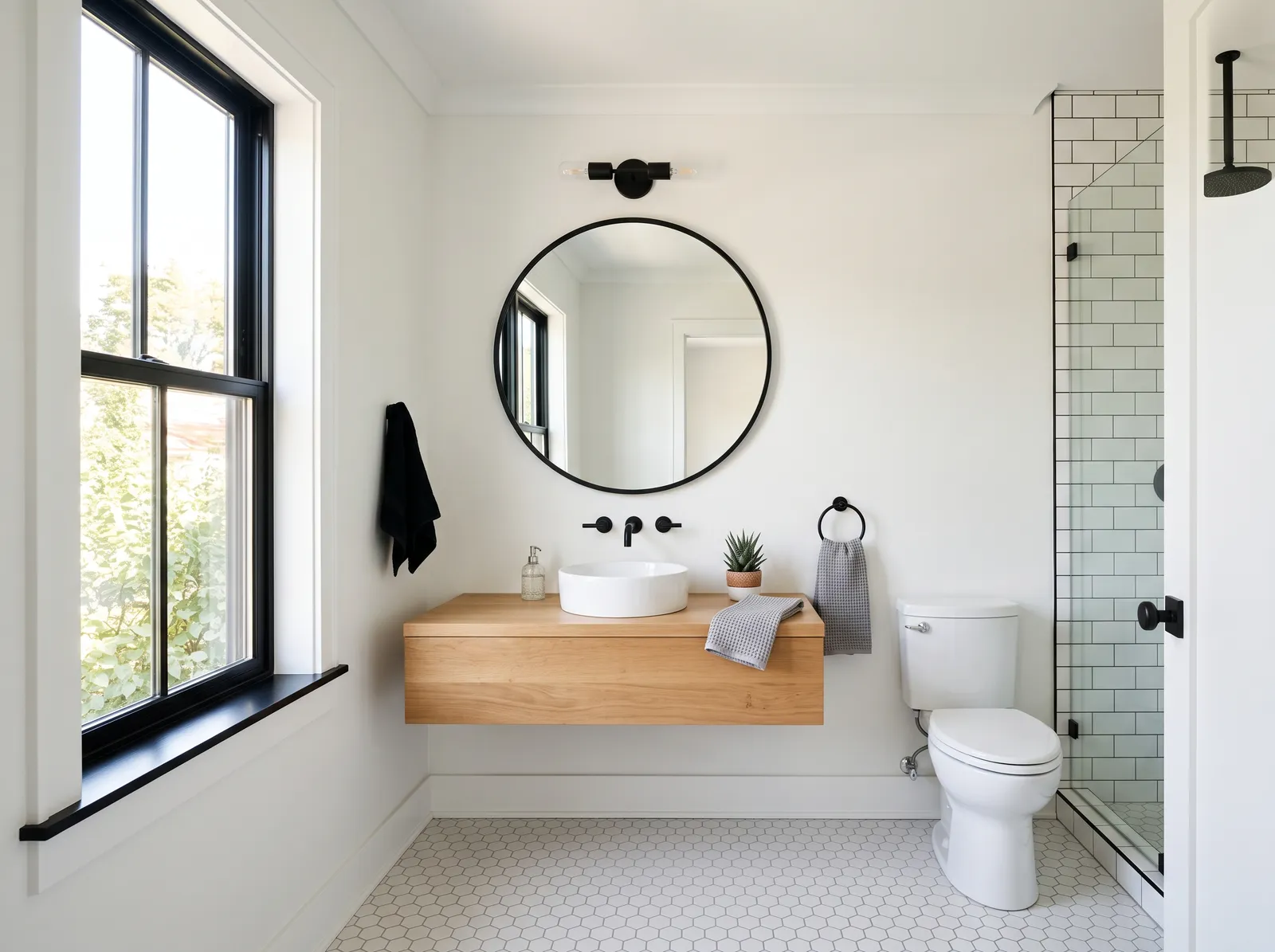
White is also the most forgiving backdrop for everything else a bathroom collects: towels, a wood vanity, a black faucet, a patterned floor. It lets those pieces be the color story while the walls stay quiet. The one thing to watch is that white shows water spots, toothpaste flecks, and soap splatter more than a mid-tone, so the finish you choose matters as much as the shade.
Picking the Right Depth of White for Your Light
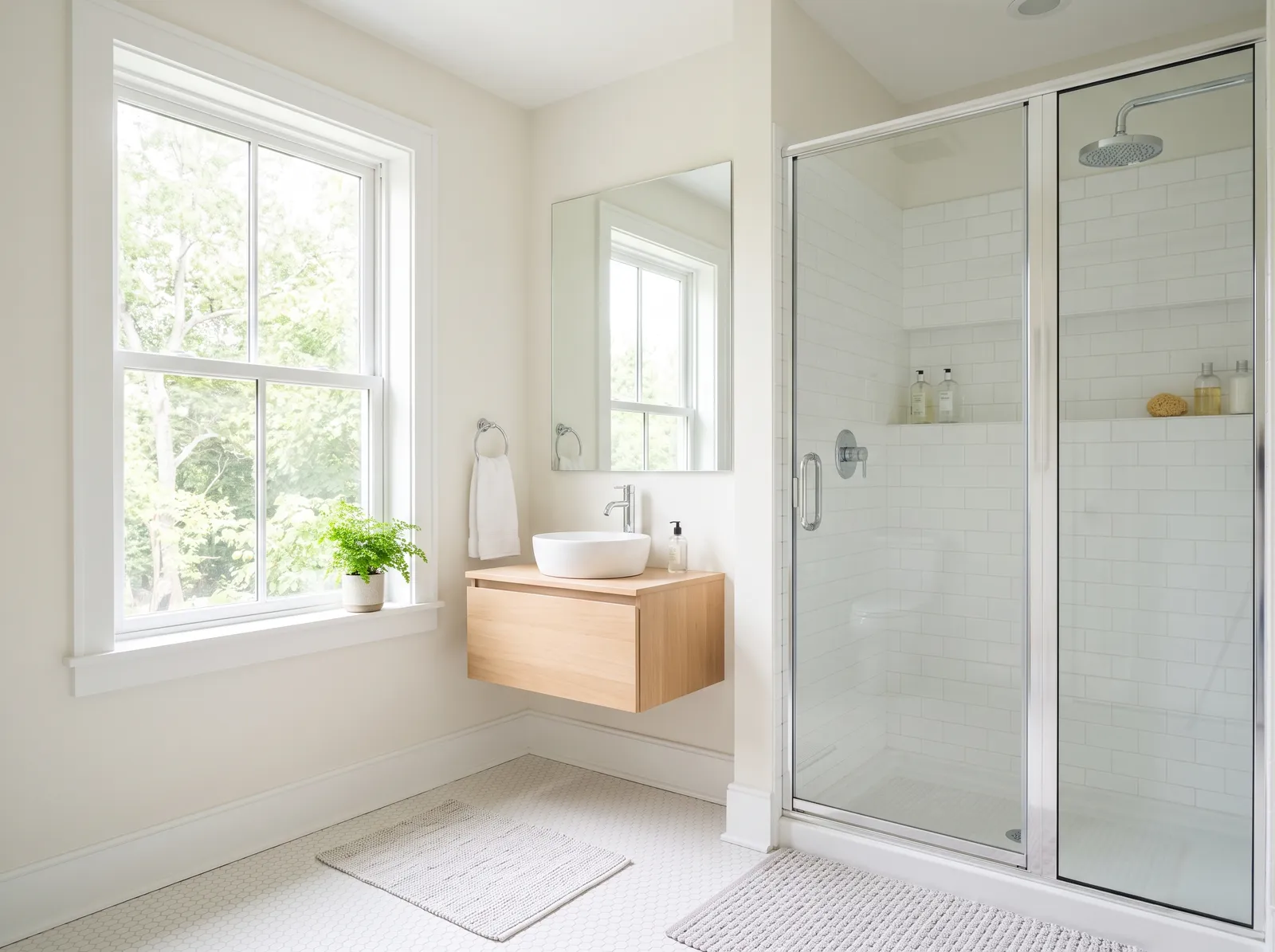
LRV (light reflectance value) tells you how bright a white is on a 0–100 scale, where higher bounces back more light. For a small or dim bathroom, a high-LRV white in the upper 80s or 90s keeps the room feeling open and airy. In a bright bathroom with a big window, you can drop a little lower and use a softer white without the room feeling dark.
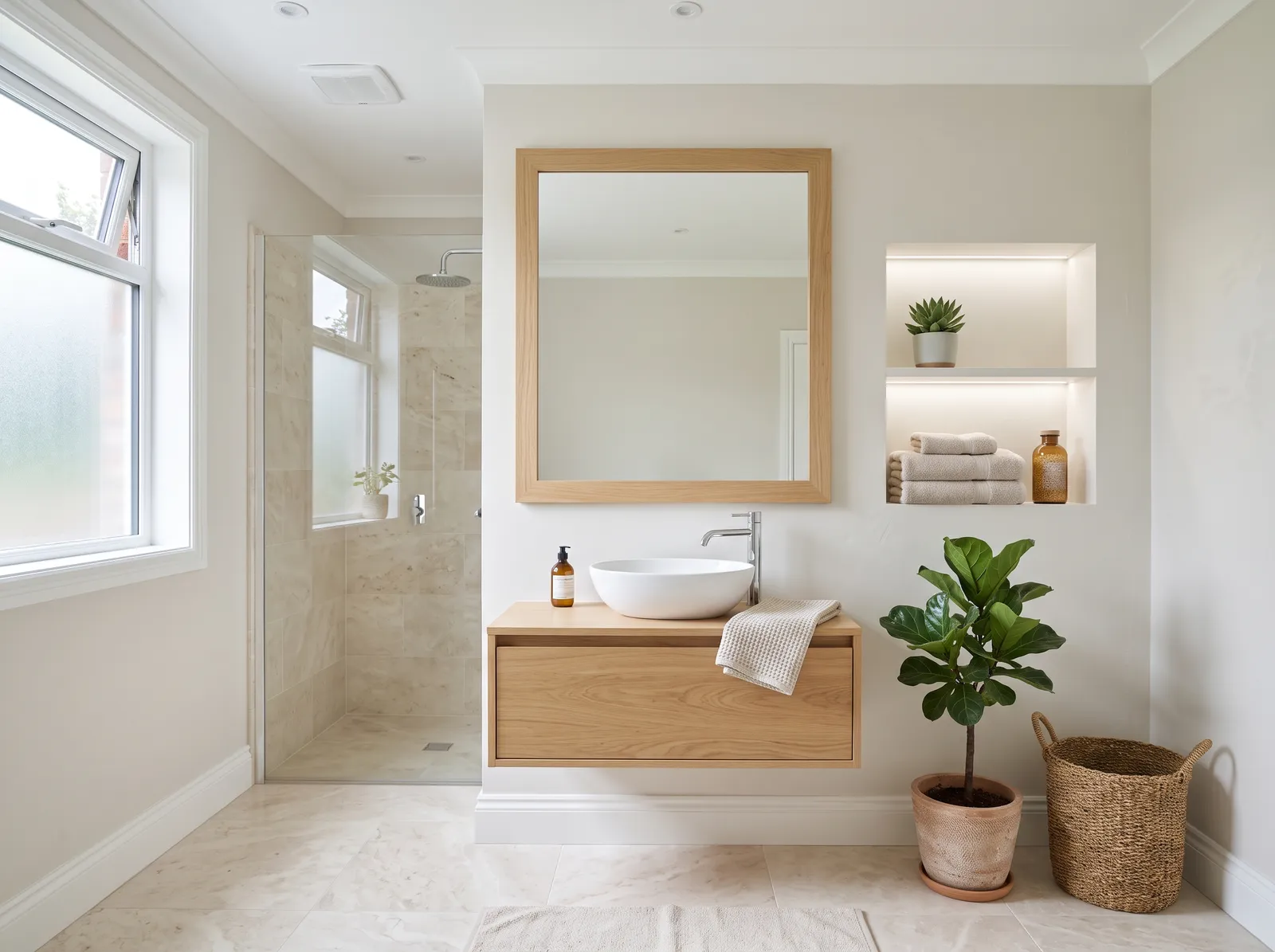
Light direction steers the undertone. North-facing and windowless bathrooms get cool, flat light that makes pure or blue-leaning whites look gray and clinical, so a white with a faint warm or creamy undertone reads cleaner there. South- and west-facing bathrooms get warm light, so a crisp, near-neutral white stays balanced instead of turning yellow. Always test a sample on the wall and look at it under your actual bulbs, since bathroom LEDs swing cool and can shift a white hard.
The Right Finish for Steam and Splashes
A bathroom is the one room where finish is not optional. Steam, humidity, and frequent wiping mean flat and matte finishes are usually a mistake on the walls — they hold moisture, can grow spots, and don't wipe clean. An eggshell or satin finish on the walls gives you enough sheen to shed moisture and survive a damp cloth without looking glossy.
For trim, doors, and the vanity, step up to semi-gloss, which is the most washable and moisture-resistant. The ceiling is the exception worth thinking about: a flat ceiling hides imperfections but can struggle in a shower-heavy bathroom, so many people use a scrubbable matte or even eggshell on the ceiling above a tub or shower. Keep the wall sheen consistent so glare from the vanity light stays even across the room.
Pairing White With Trim, Tile, and Fixtures
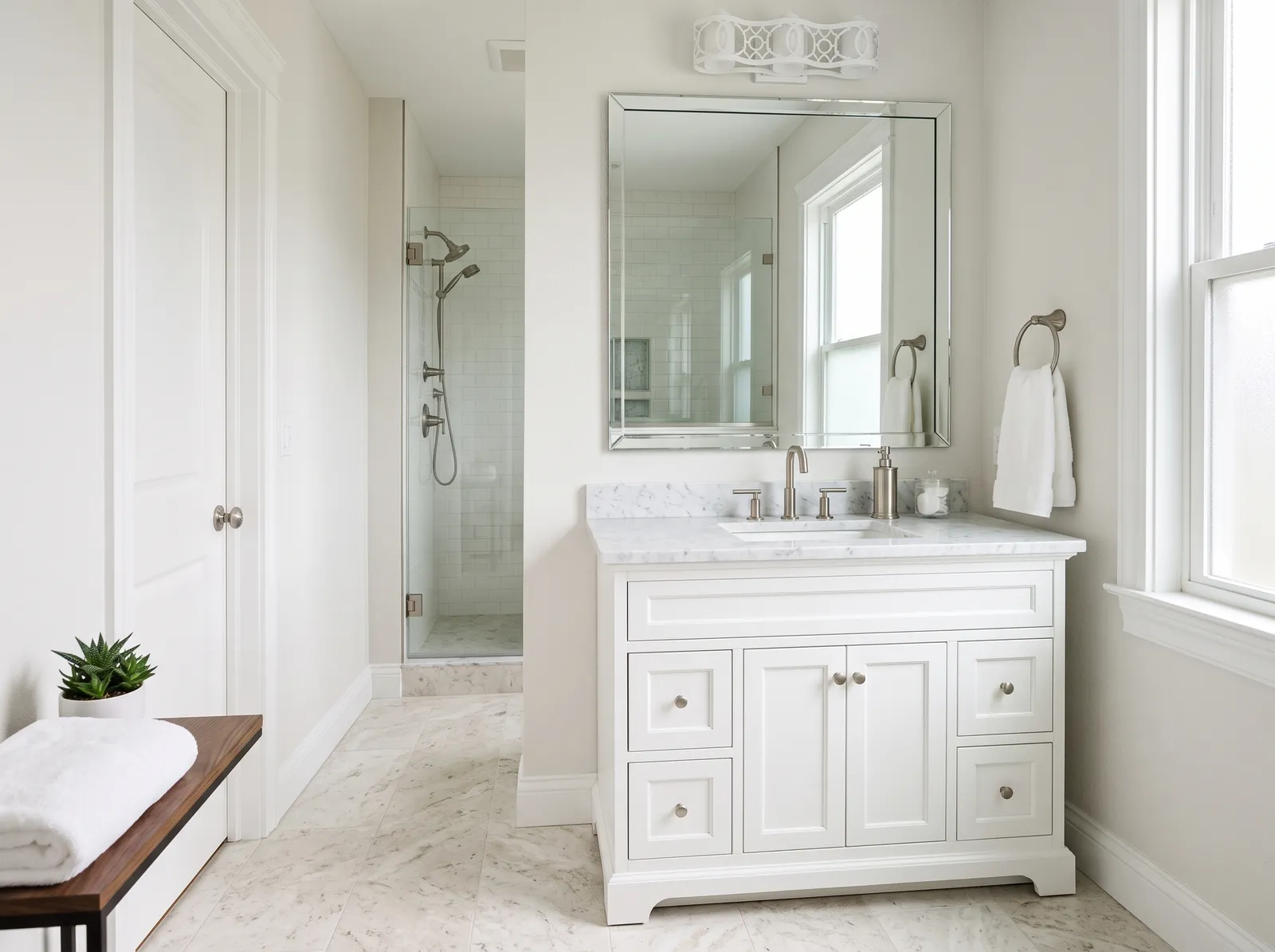
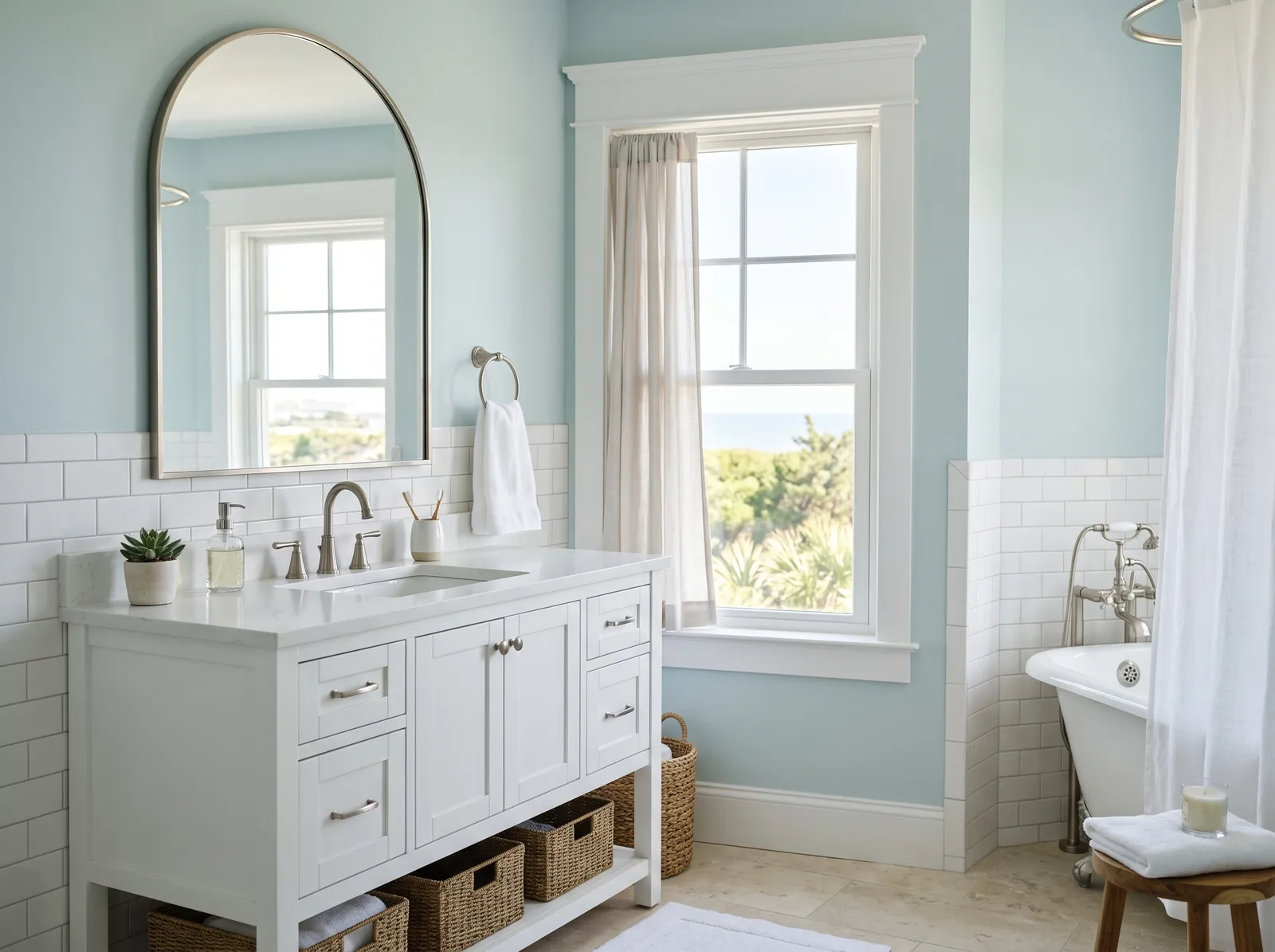
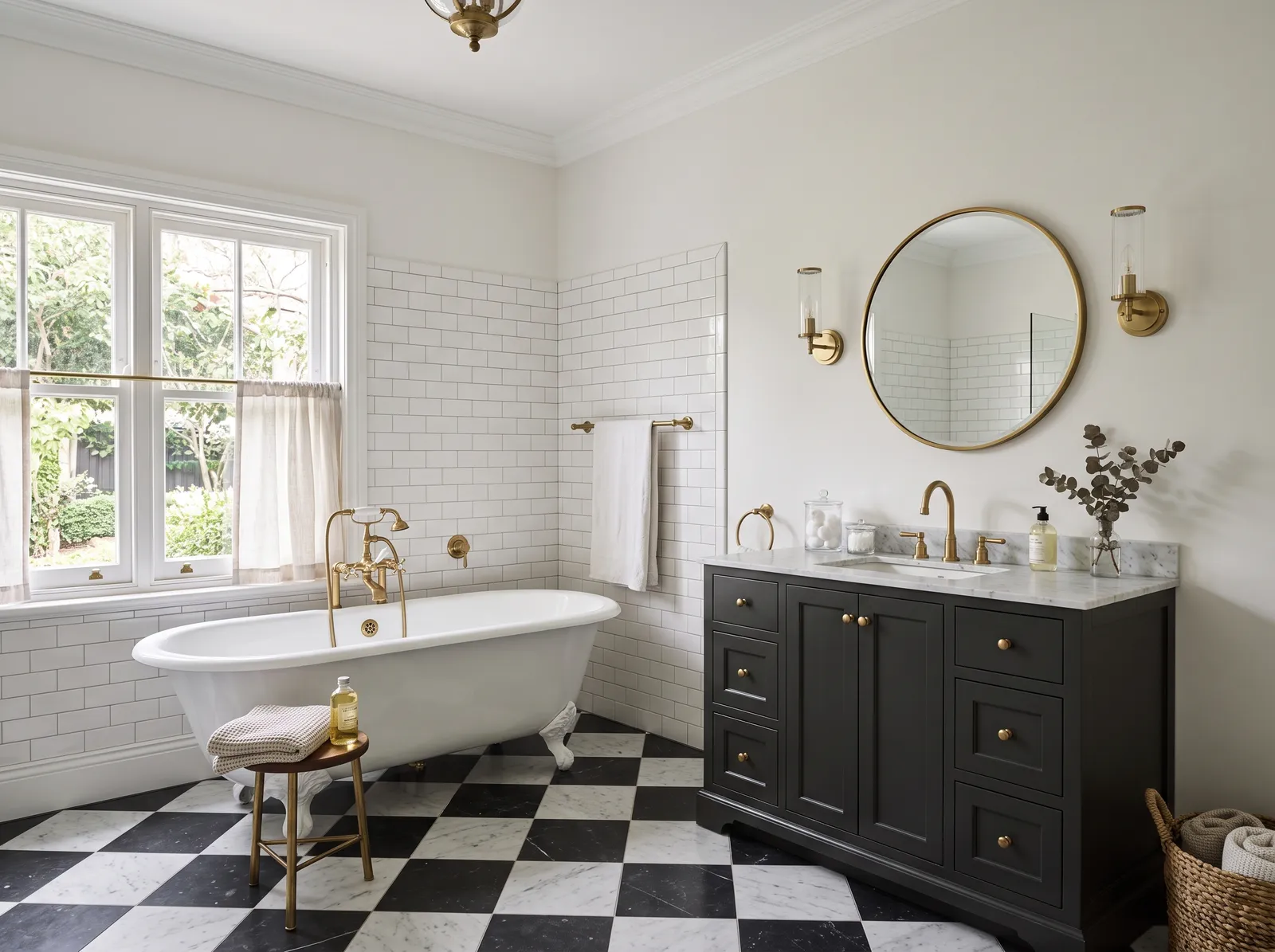
The classic bathroom move is white walls with white trim in a higher sheen — same color, different finish — so the trim crisps up the edges without introducing a second undertone. If you want more contrast, a slightly cooler or brighter white on the trim against a warmer wall white reads clean and tailored. Just keep both whites in the same temperature family so they don't clash under the same light.
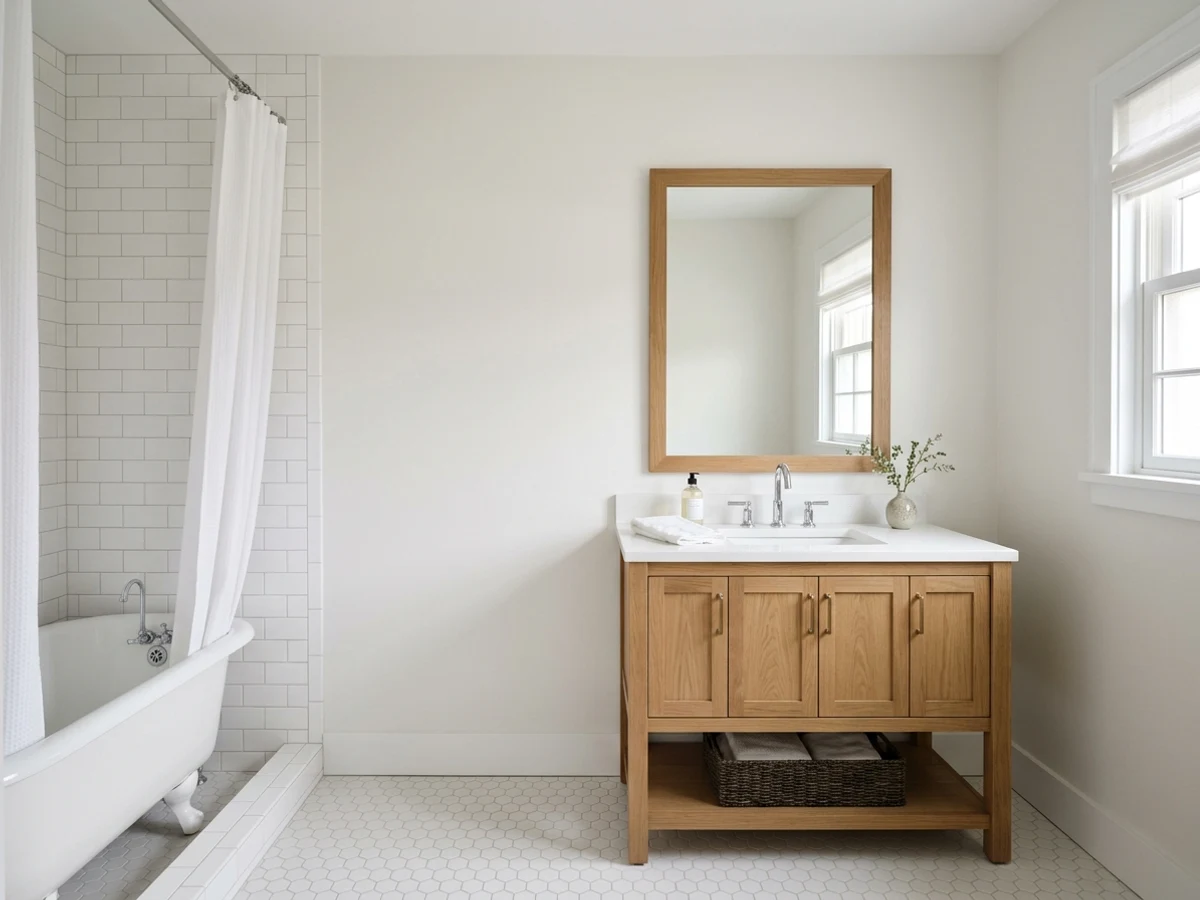
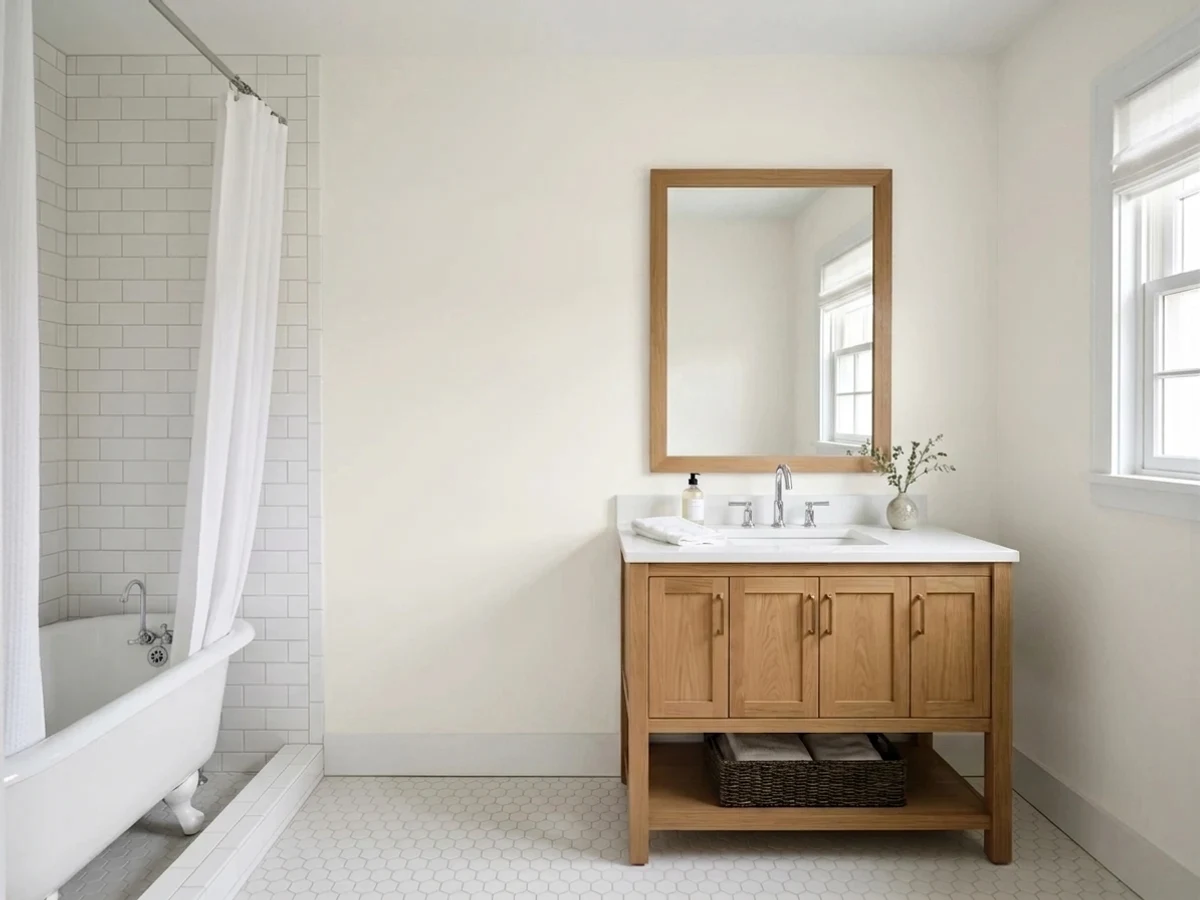
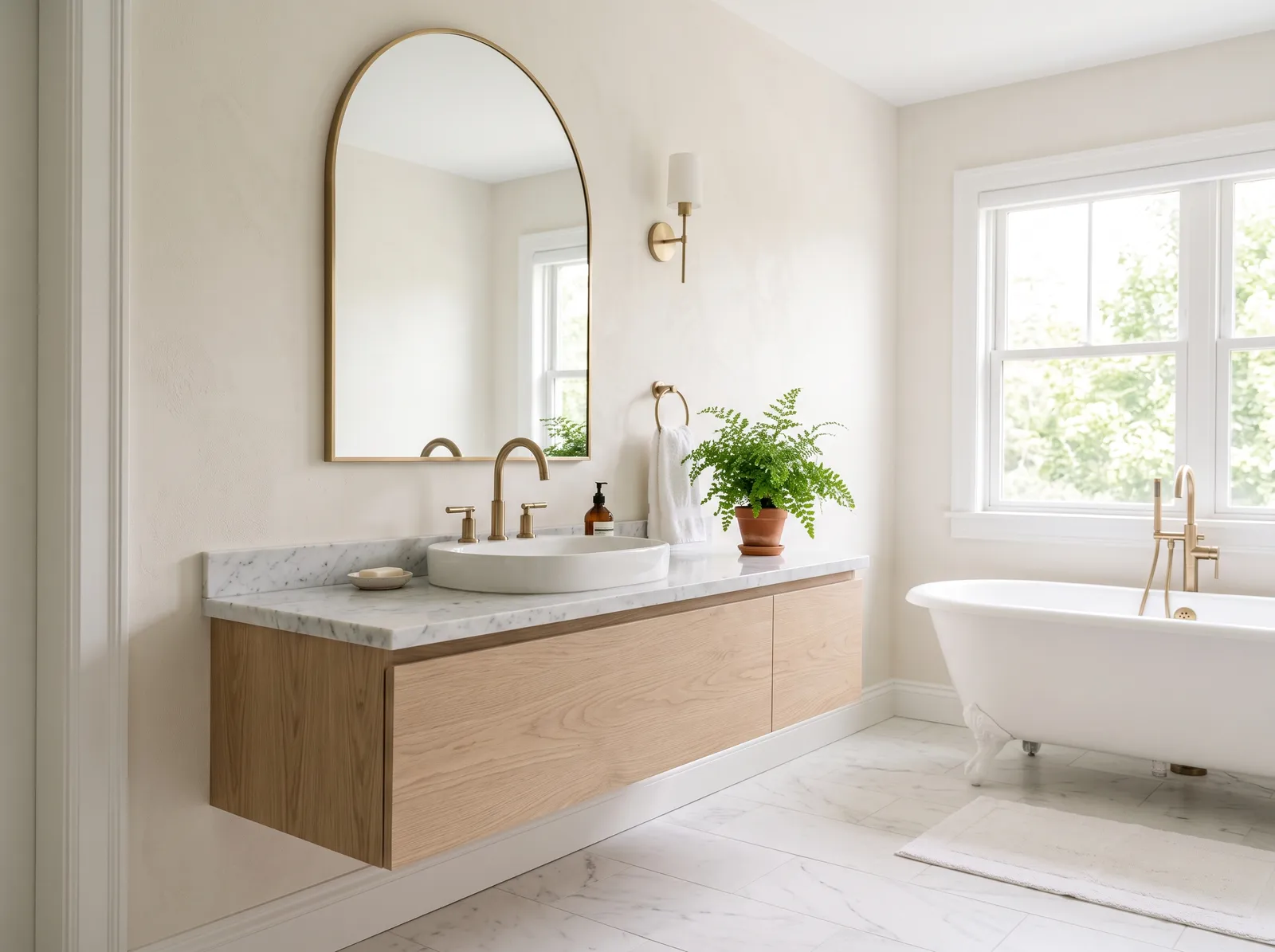
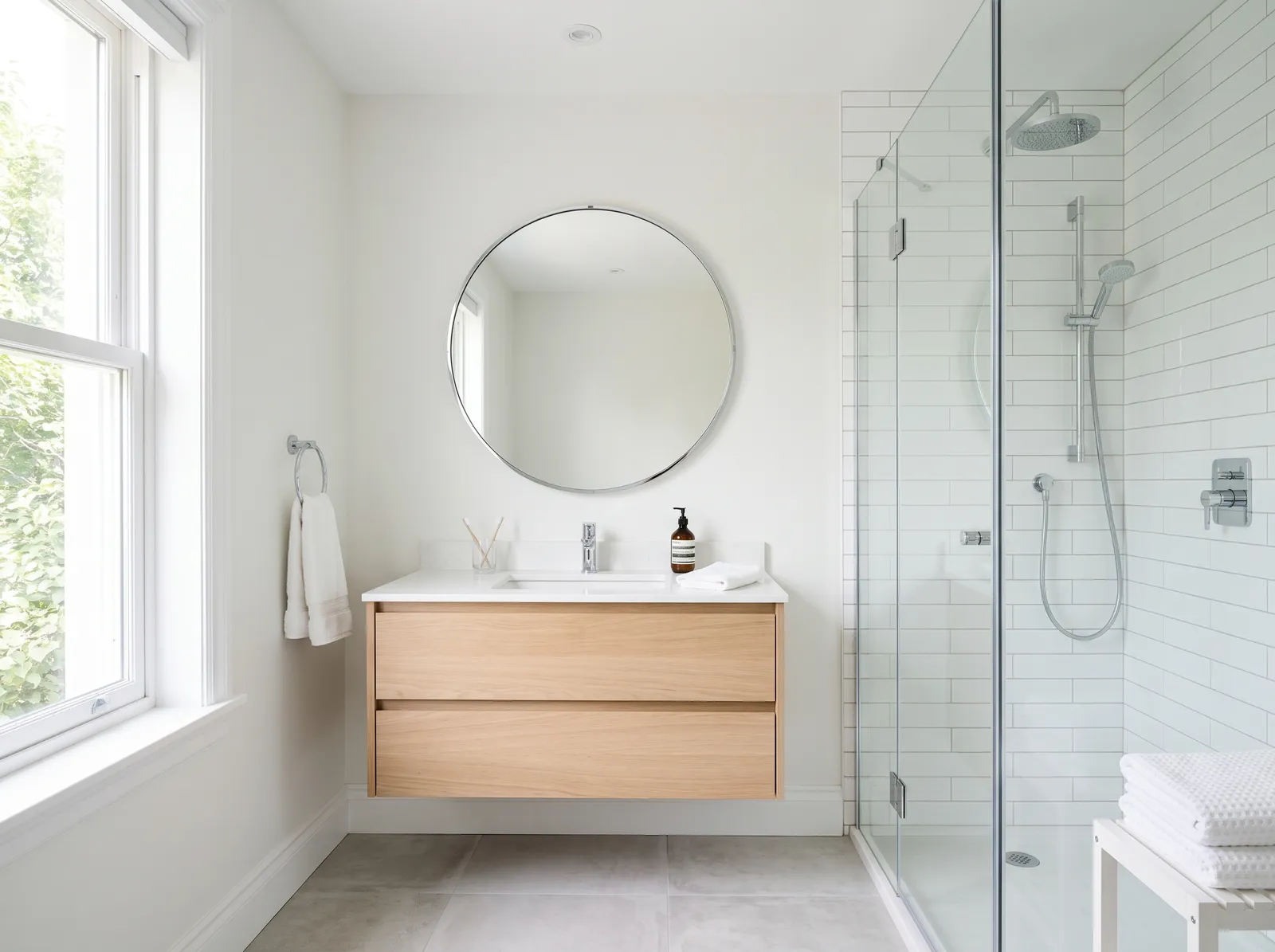
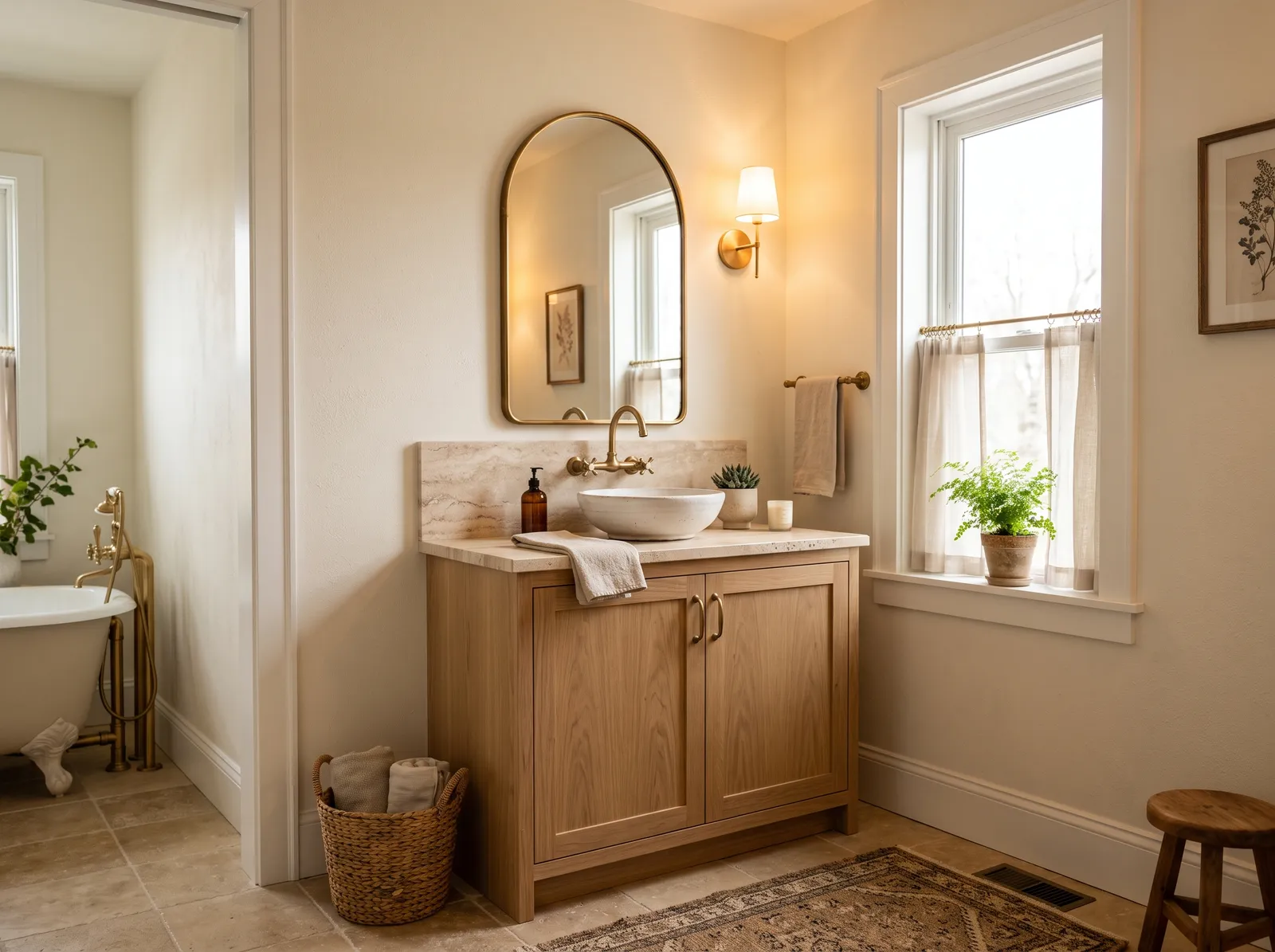
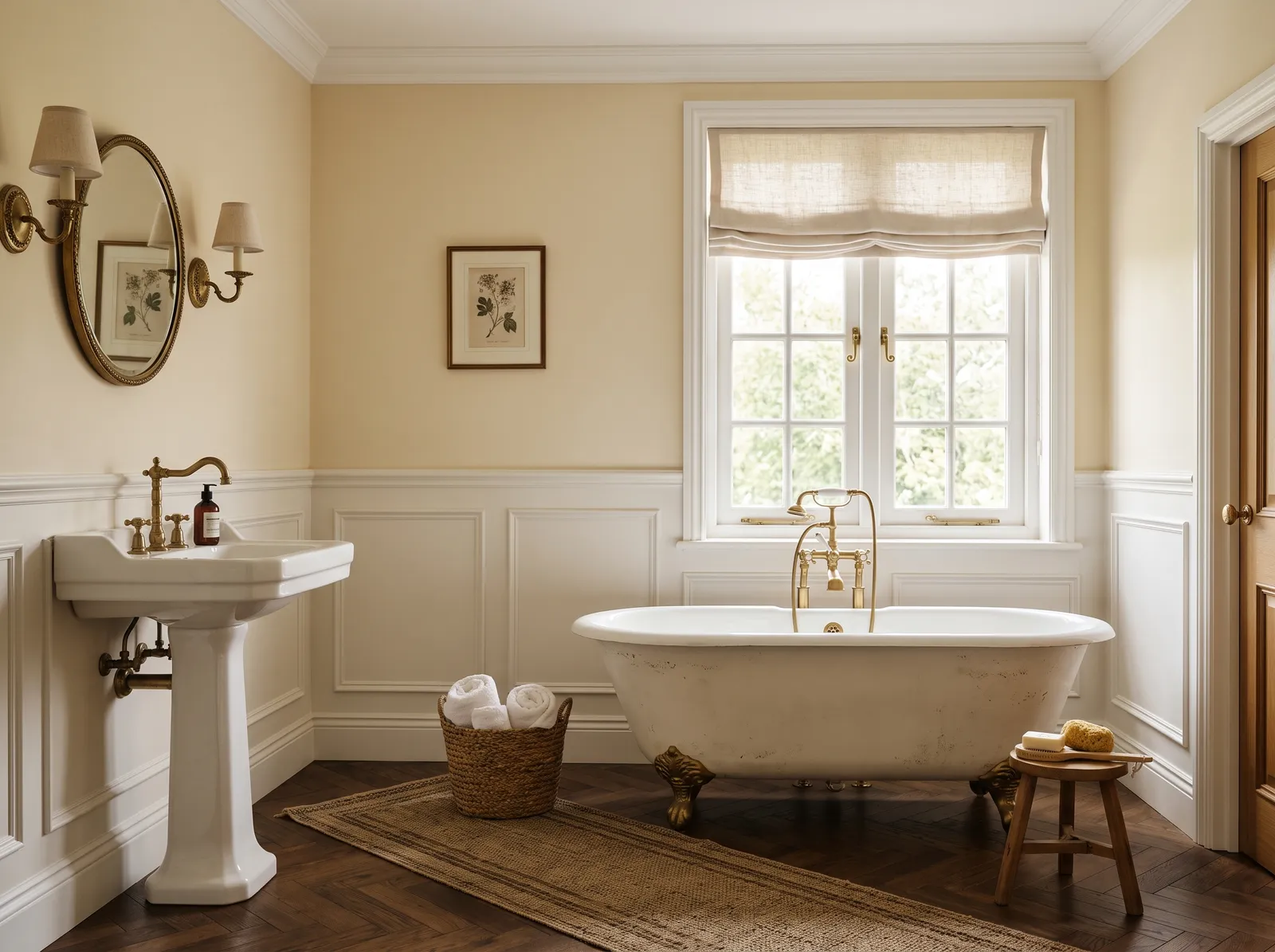
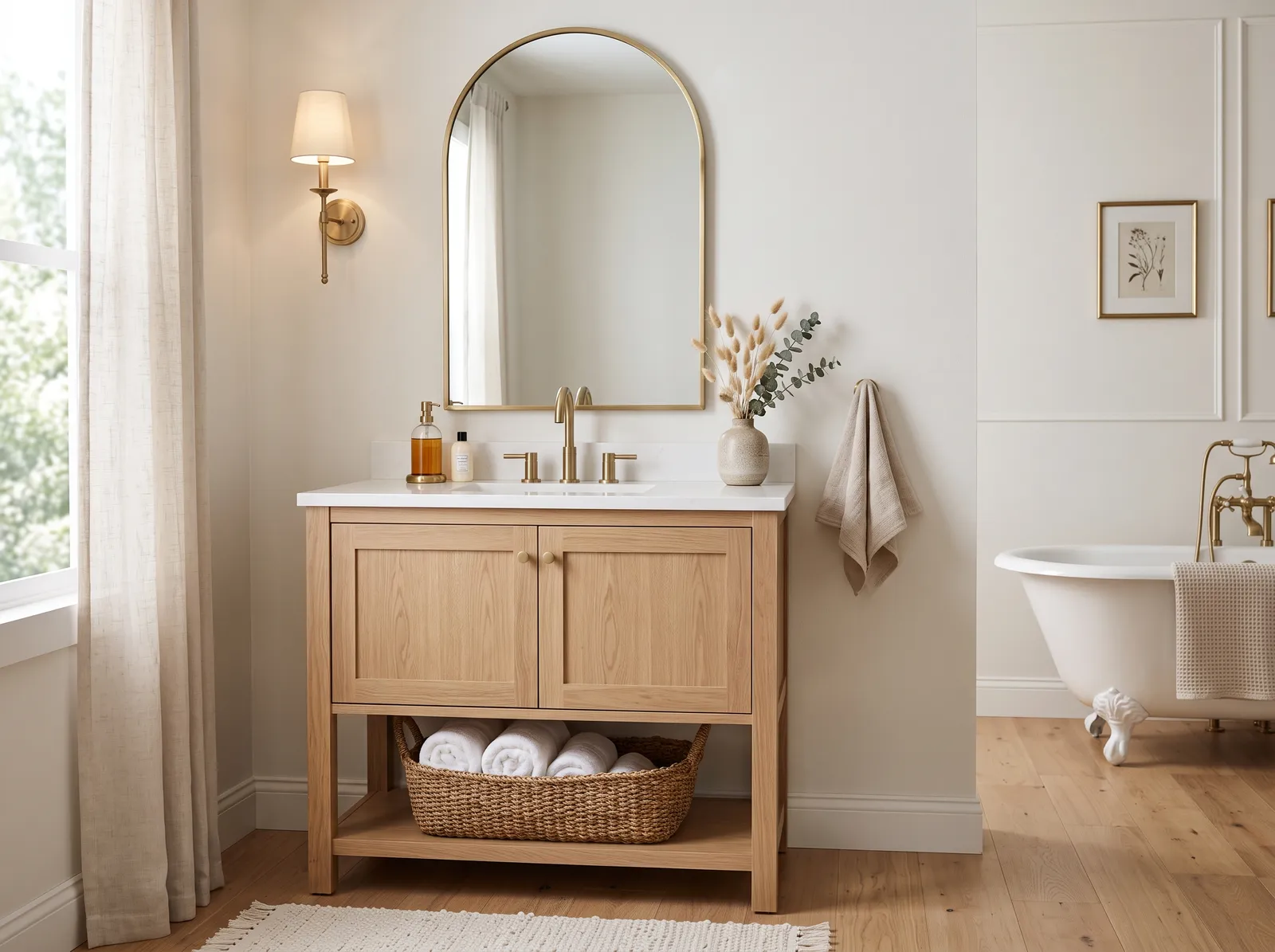
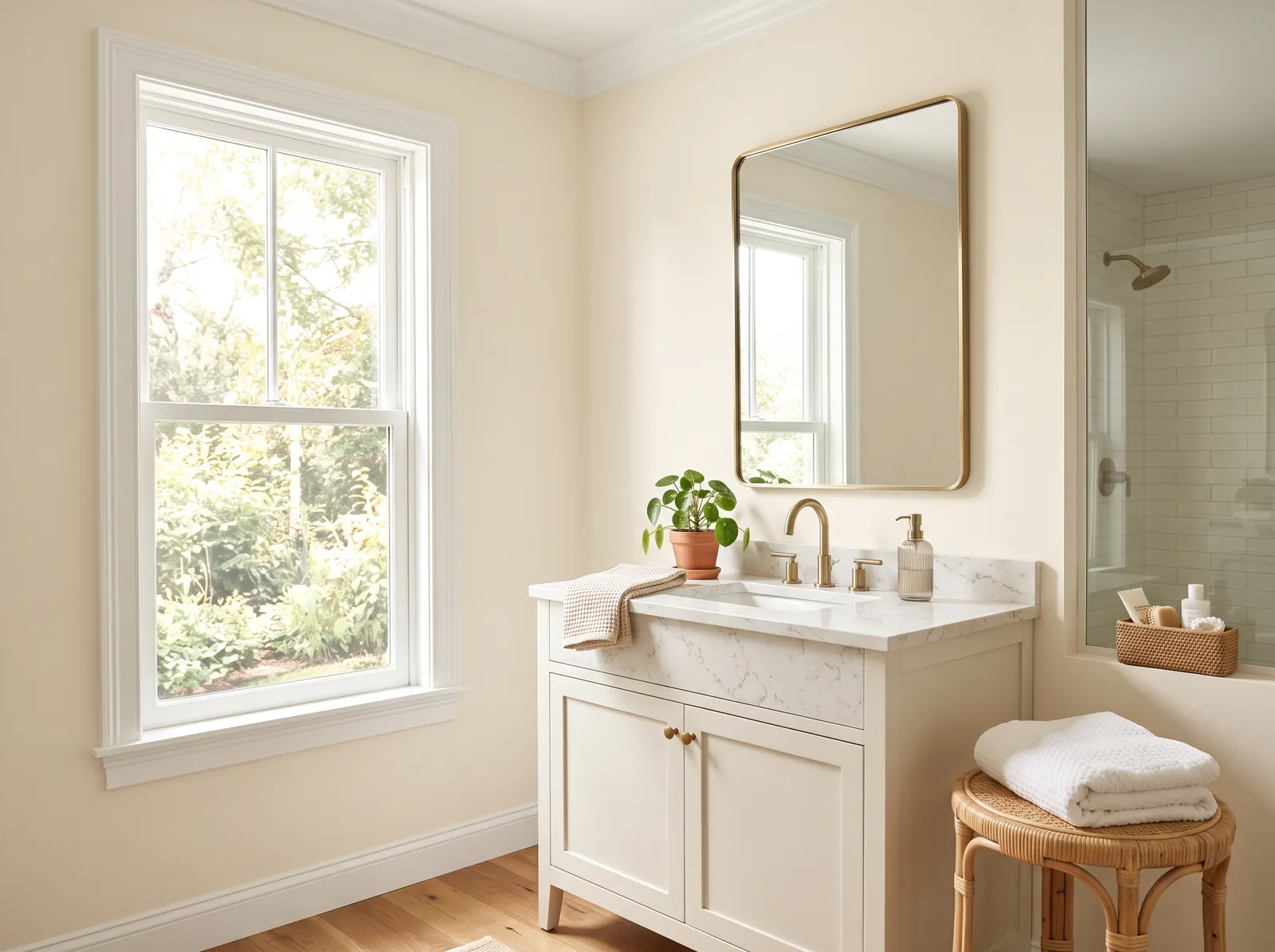
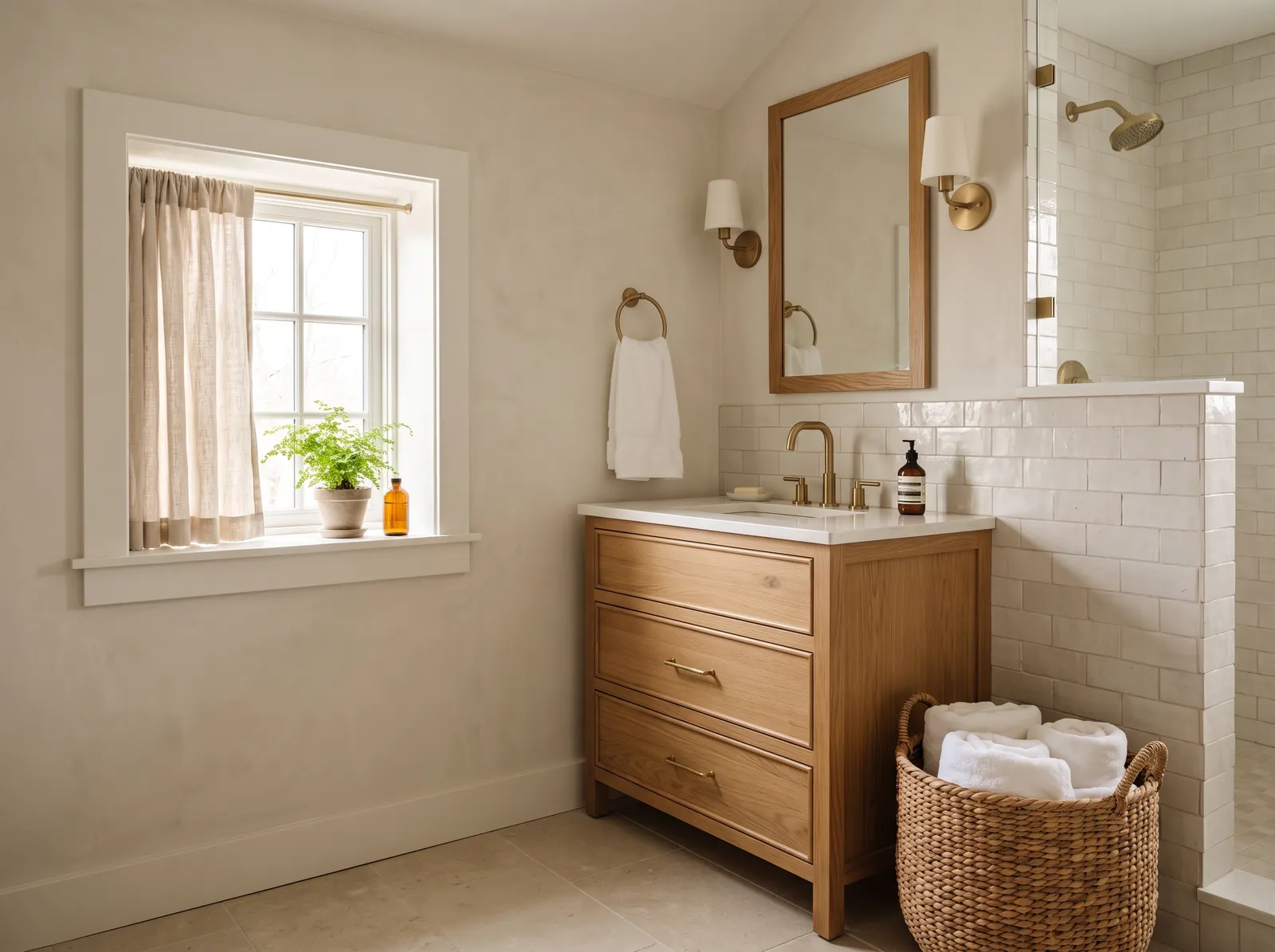
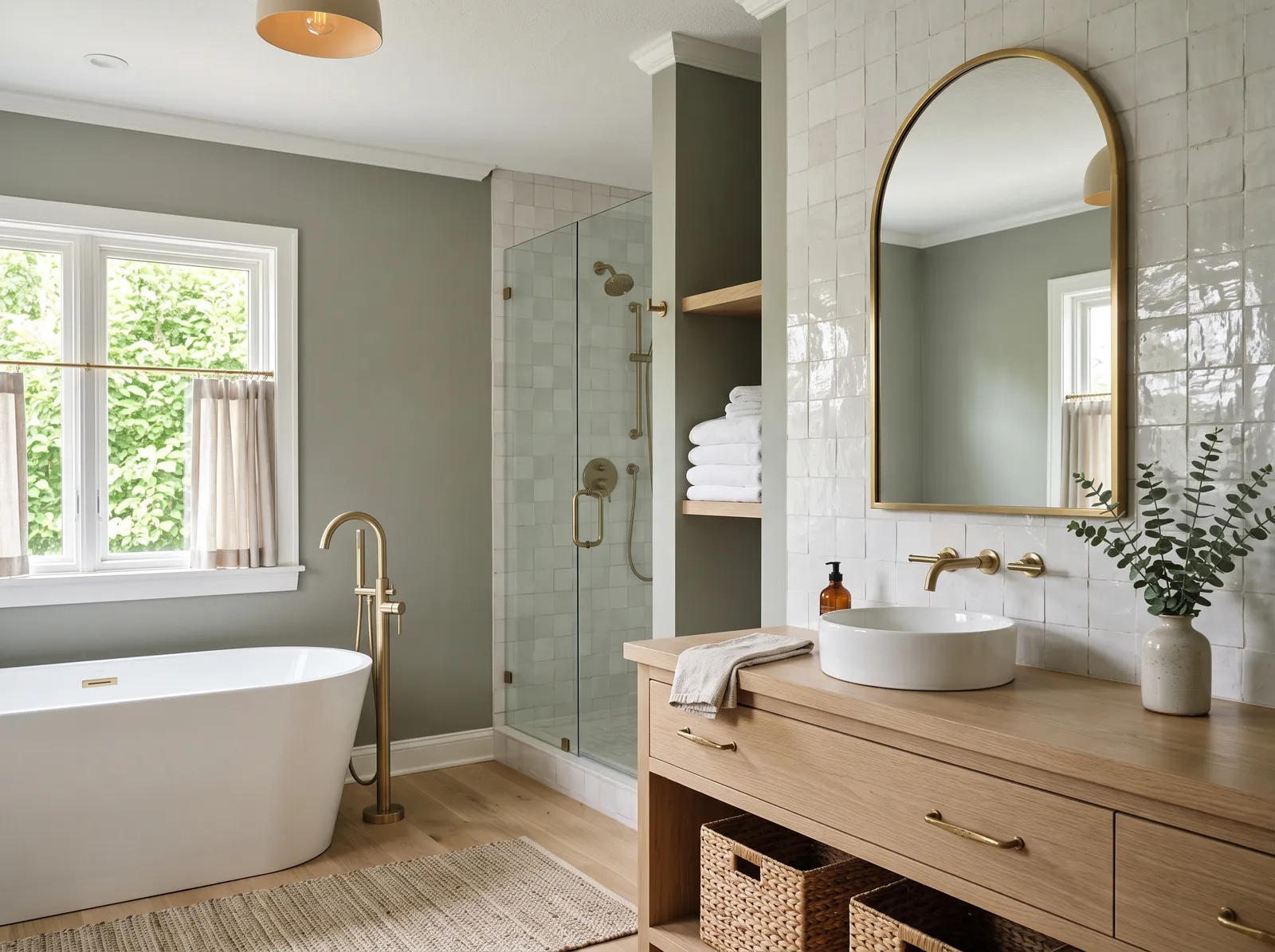
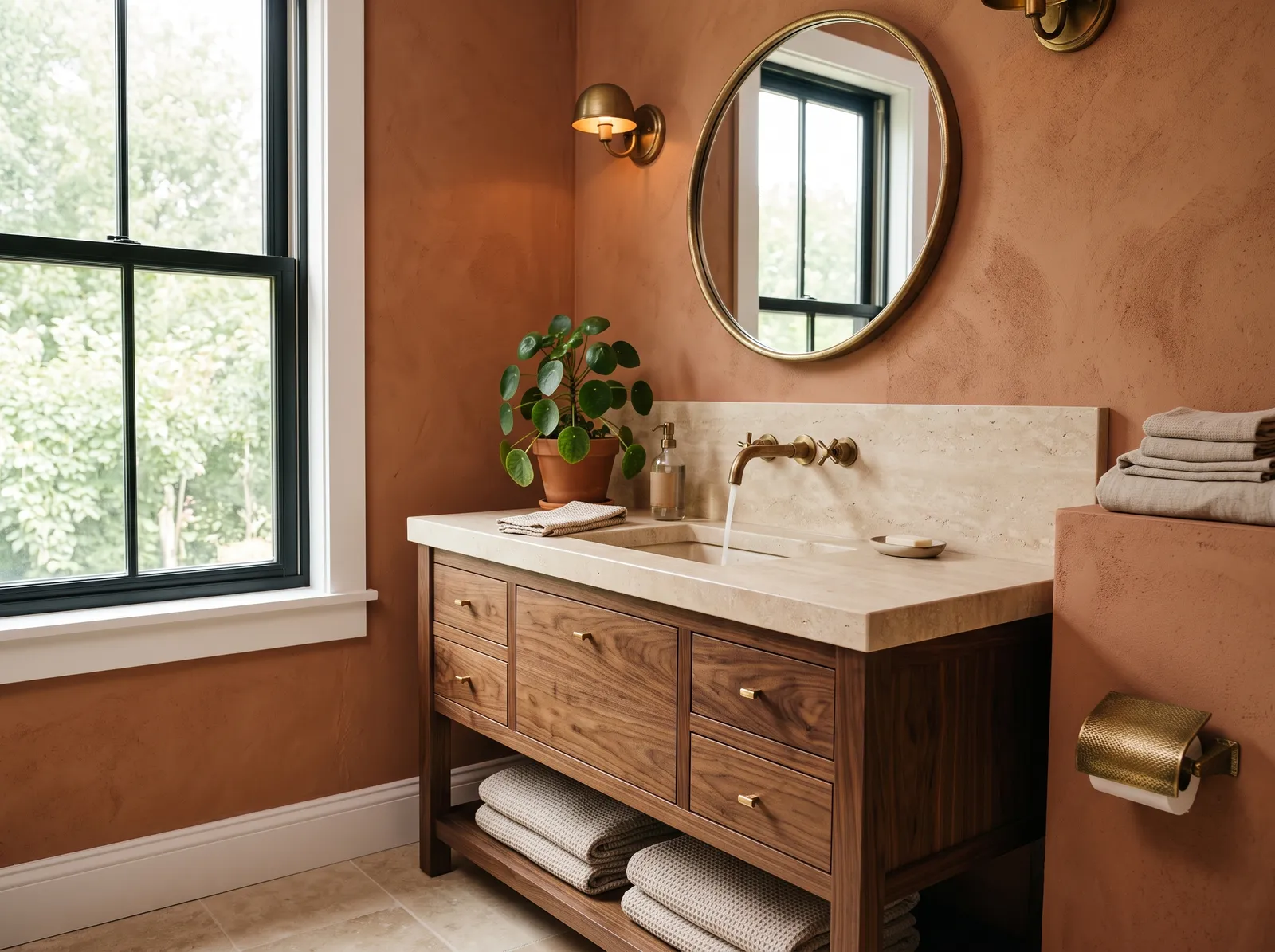
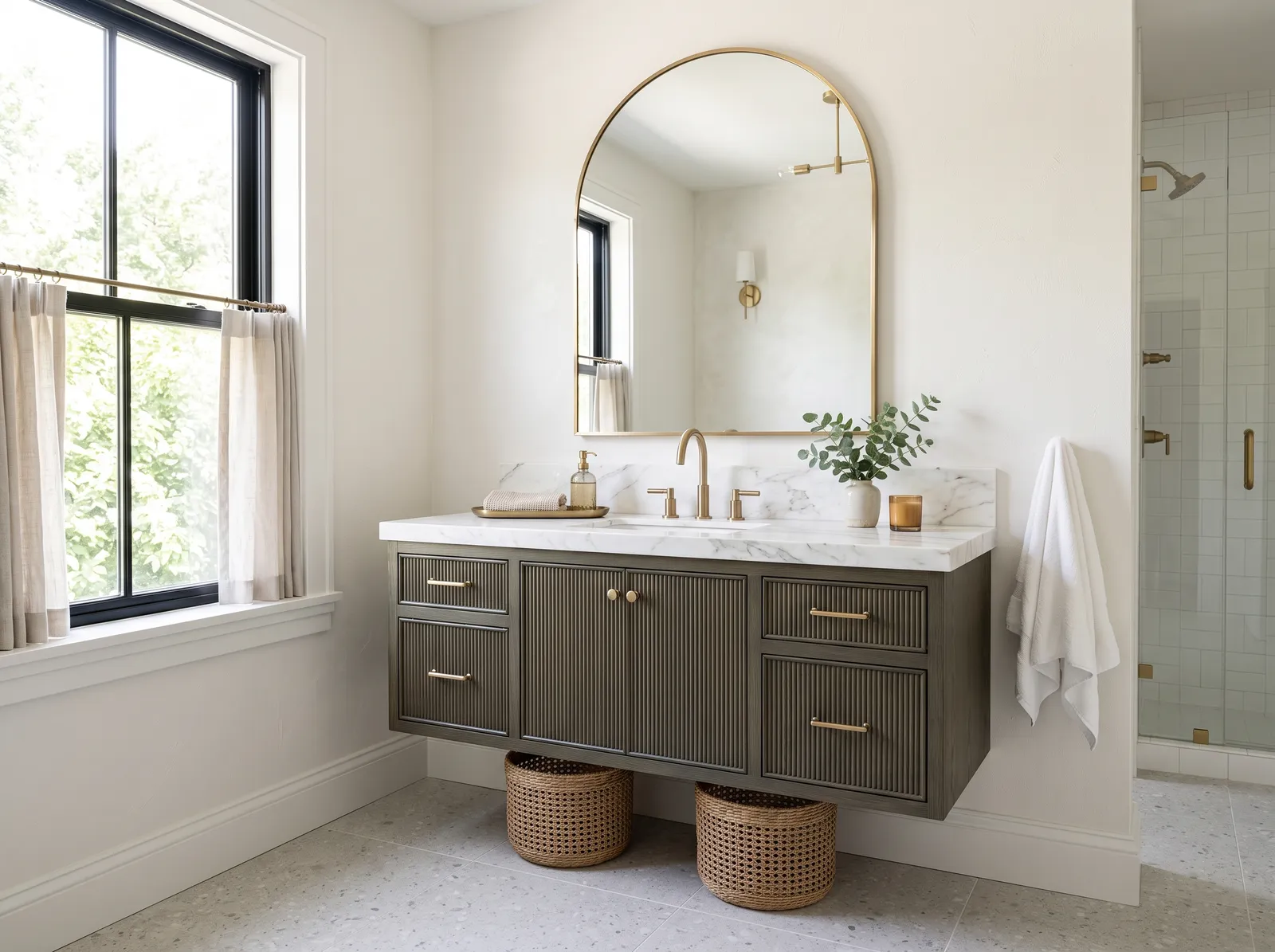
Match your white's undertone to your fixed elements, not the other way around. Cool-toned chrome, marble, and bright white tile sit happily next to a crisp, neutral white. Warmer materials — brass or gold fixtures, wood vanities, cream or beige floor tile — look better against a soft, warm white that doesn't make them look orange or dirty. Pull the undertone toward the thing you can't easily change.
Common Mistakes With White in a Bathroom
The biggest mistake is grabbing a pure, stark white and assuming it will look clean. In flat bathroom light it often reads cold and hospital-like, and next to slightly warm tile or fixtures it can make them look dingy by comparison. The second mistake is the opposite — a creamy white that turns yellow and dirty under white LED bulbs, which is the light most bathrooms actually use.
The other common slip is using a flat or matte wall paint to save money or hide flaws, then watching it spot and streak within months. Test before you commit: paint a sample square, live with it for a day under the real bathroom lighting, and check it both with the window light and with the vanity lights on. Any white you settle on here can be mixed to order and cross-matched between brands, so once you find the right one you're not locked into a single store.
White Bathroom Paint — Frequently Asked Questions
What is the best white for a small or windowless bathroom?+
Reach for a high-LRV white in the upper 80s or 90s so it bounces the most light around a tight, dim space. In a windowless bathroom the light is usually cool and flat, so pick a white with a faint warm or soft undertone — a stark pure white tends to look gray and clinical there. Always test it under your actual vanity bulbs before committing.
What sheen should I use for bathroom walls?+
Eggshell or satin is the sweet spot for bathroom walls. It has enough sheen to resist moisture and wipe clean after splashes, but it isn't so glossy that it throws glare from the vanity light. Save flat and matte for low-moisture rooms, and use semi-gloss on the trim, doors, and vanity where washability matters most.
Should the bathroom ceiling be the same white as the walls?+
It can be, but it doesn't have to be. Many people use the same white as the walls in a flat finish on the ceiling for a seamless, airy look. In a shower-heavy bathroom, consider a scrubbable matte or eggshell on the ceiling instead of true flat, since steam can spot a flat ceiling over time.
How do I keep my white from looking yellow or dingy?+
Yellowing usually comes from a creamy white sitting under cool white LED bulbs, which is the most common bathroom lighting. If your bulbs are bright and cool, lean toward a crisper, more neutral white. If you have warm light or warm fixtures and tile, a soft warm white will look clean rather than dirty — match the white to the light and materials you already have.
What white pairs best with brass or gold fixtures?+
Warm metals like brass and gold look best against a soft, warm white rather than a cold blue-white, which can make the metal look harsh or the wall look dingy beside it. A gently warm white lets the brass read as a rich accent. Pull your wall white toward the temperature of the fixtures and tile you can't easily swap out.
Can I get the same white in a different paint brand?+
Yes. Every color shown on this page is mixed to order at the paint counter, and the same shade can be cross-matched across brands. So if you fall in love with a particular white but prefer a different brand's paint or finish, you can have that exact color mixed in the line you want.