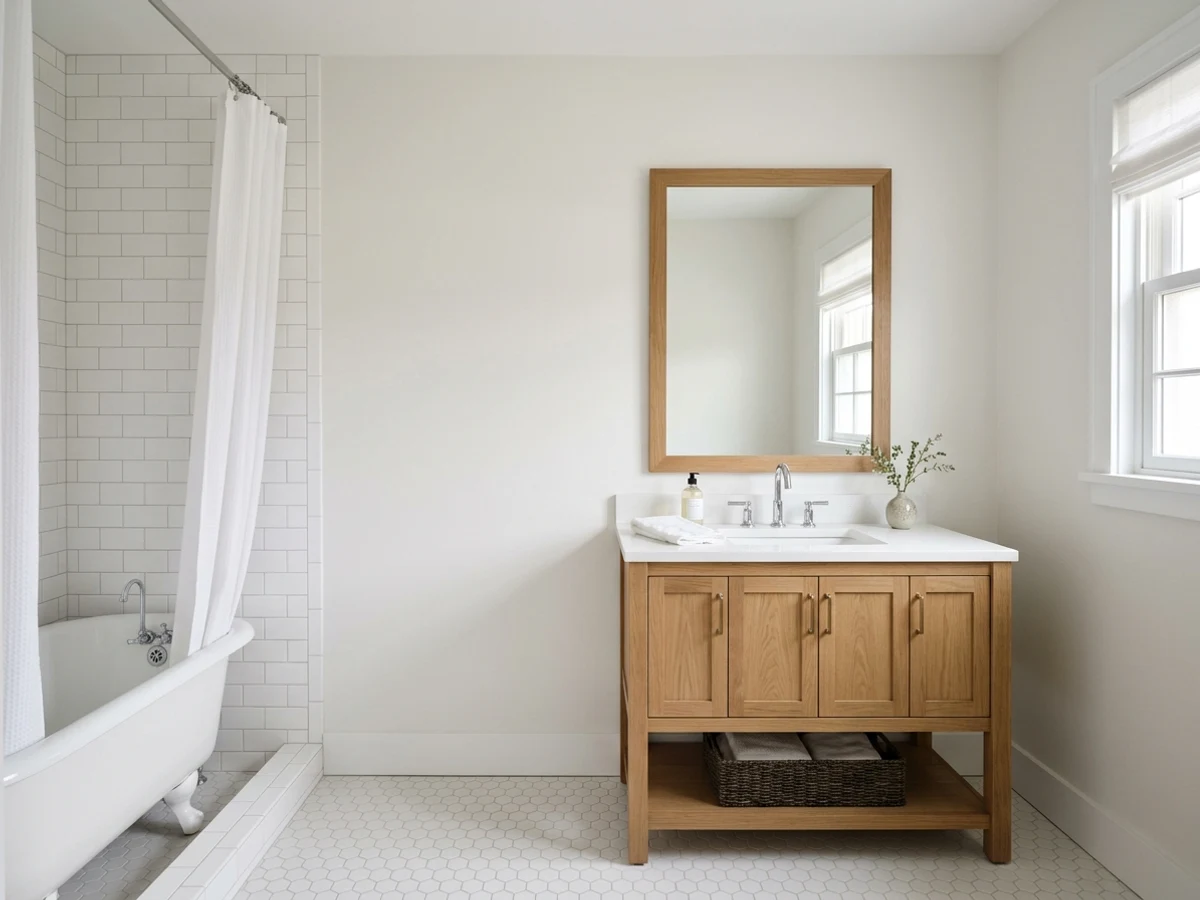
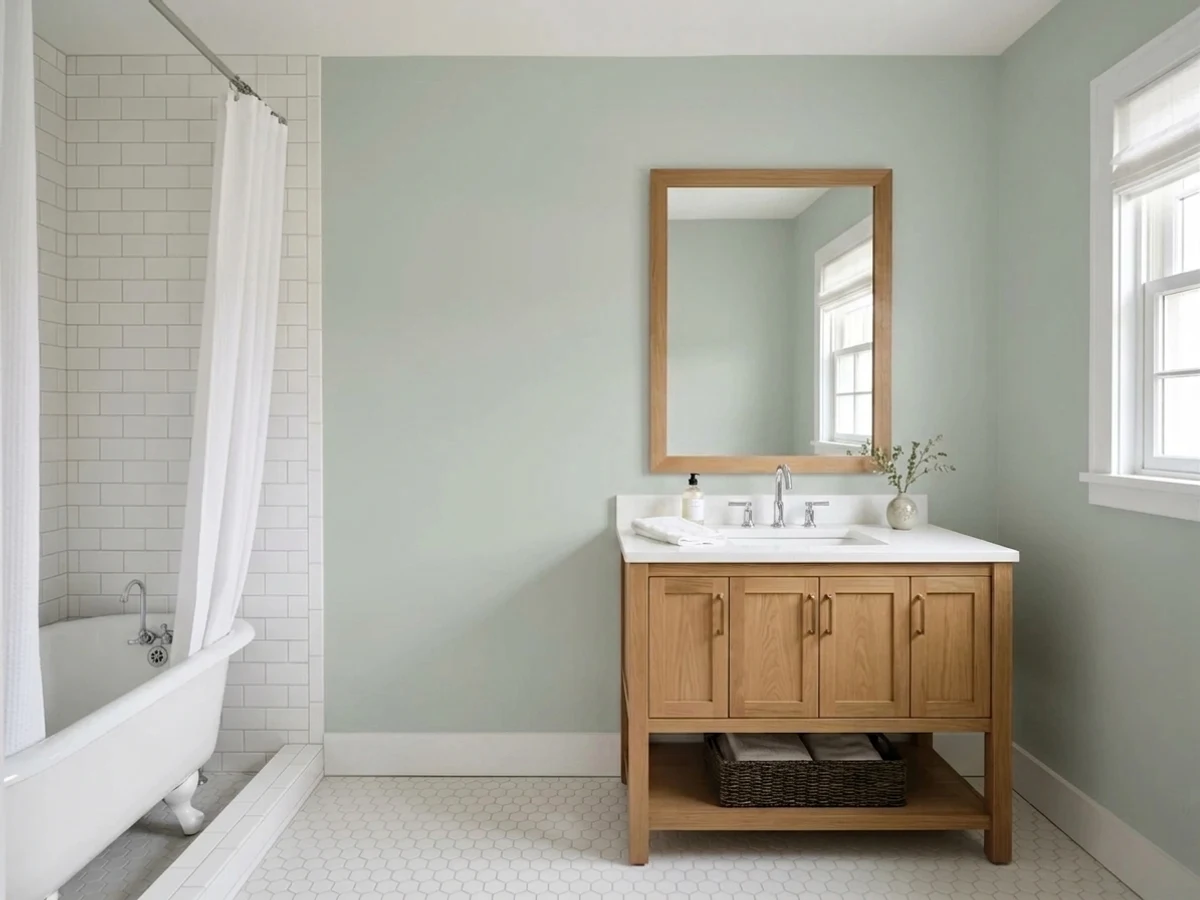
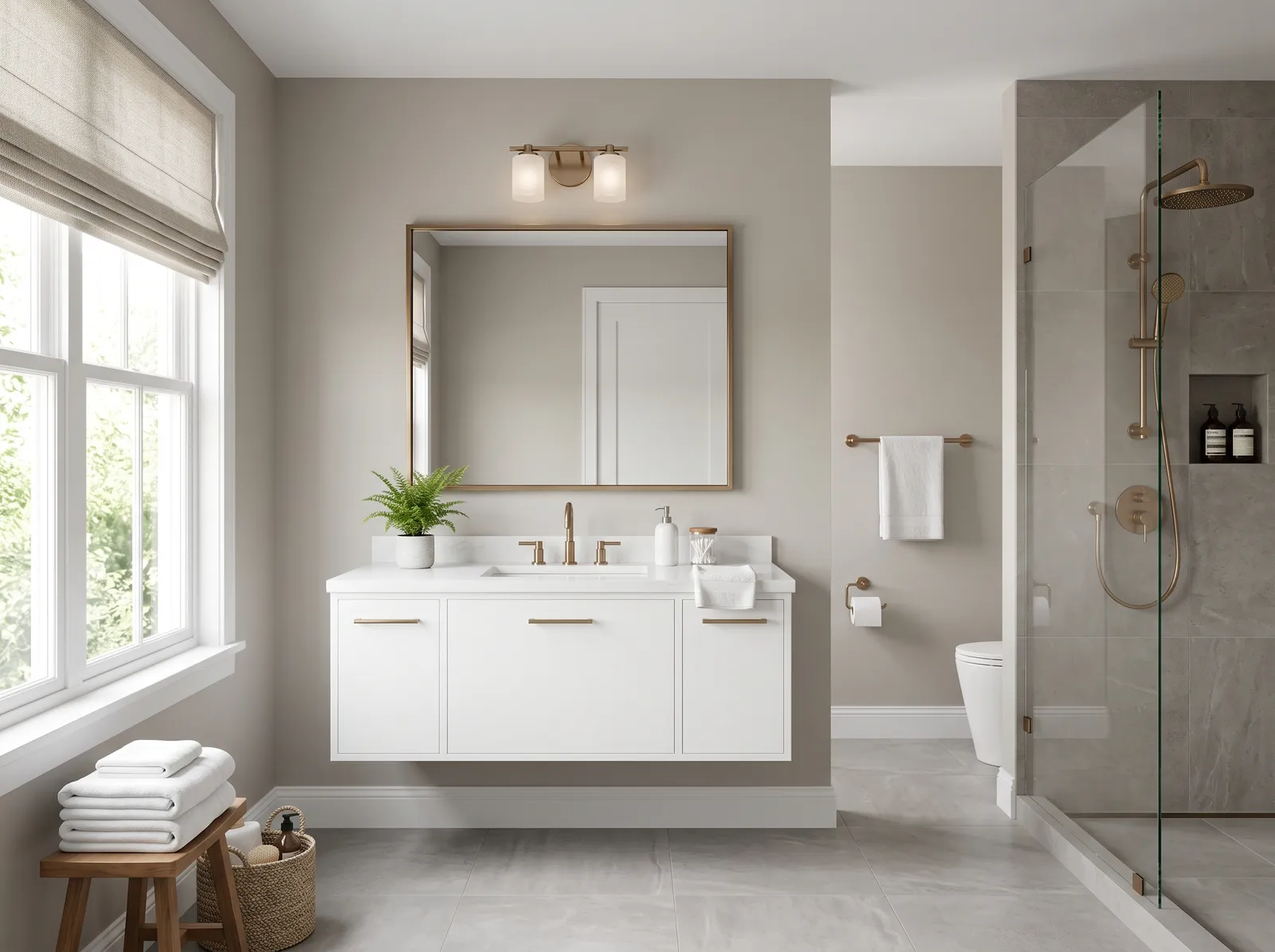
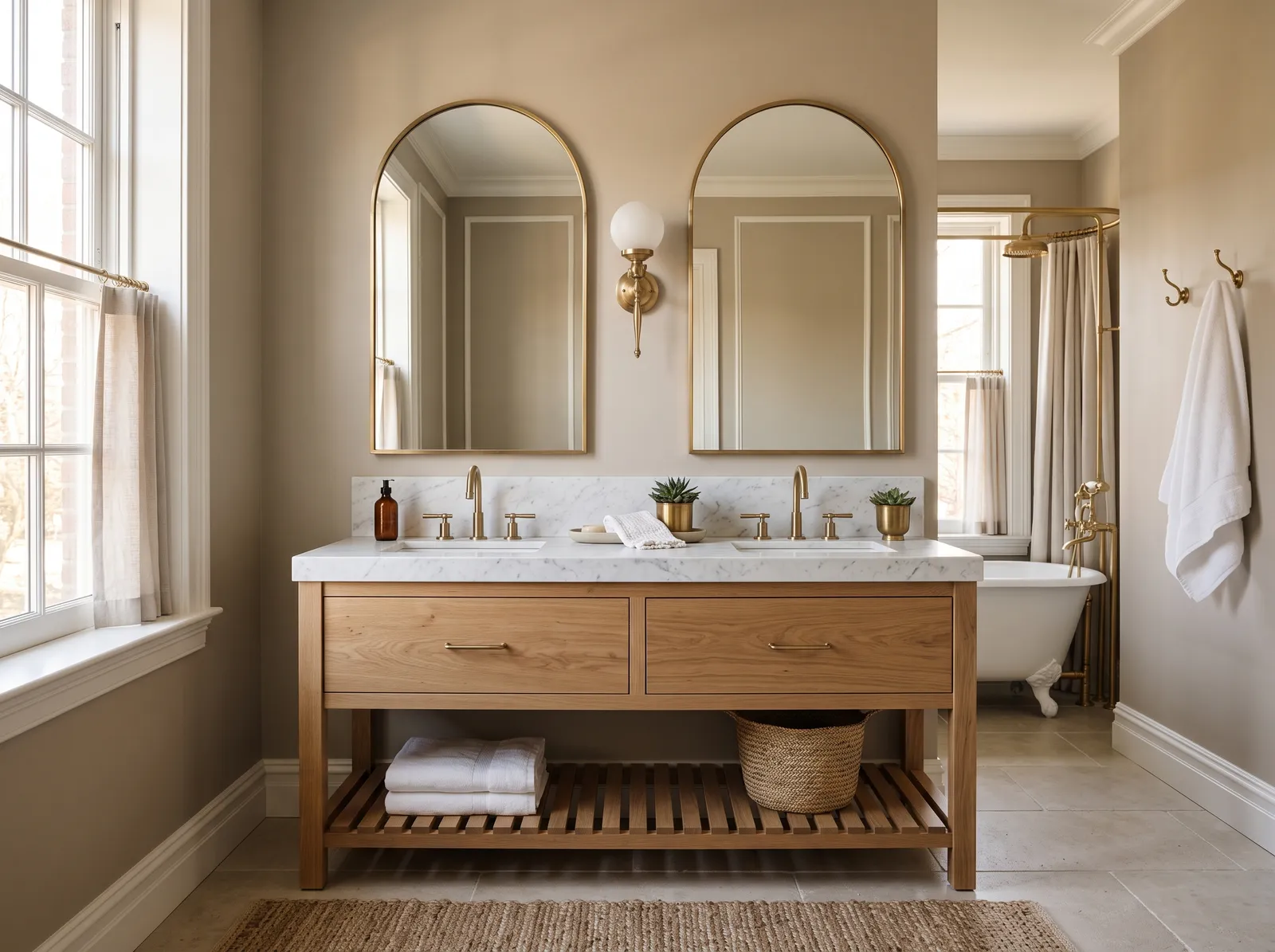
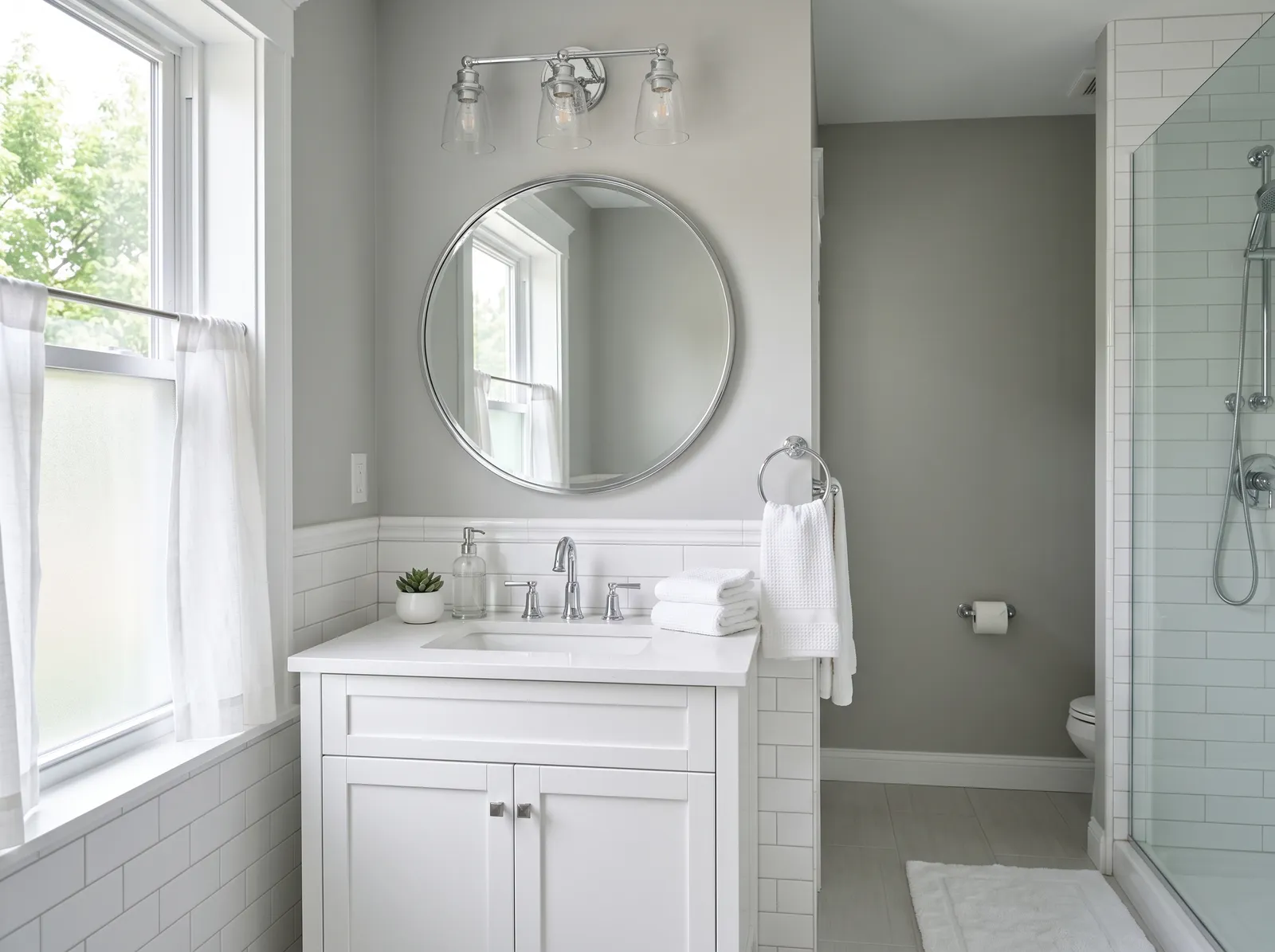
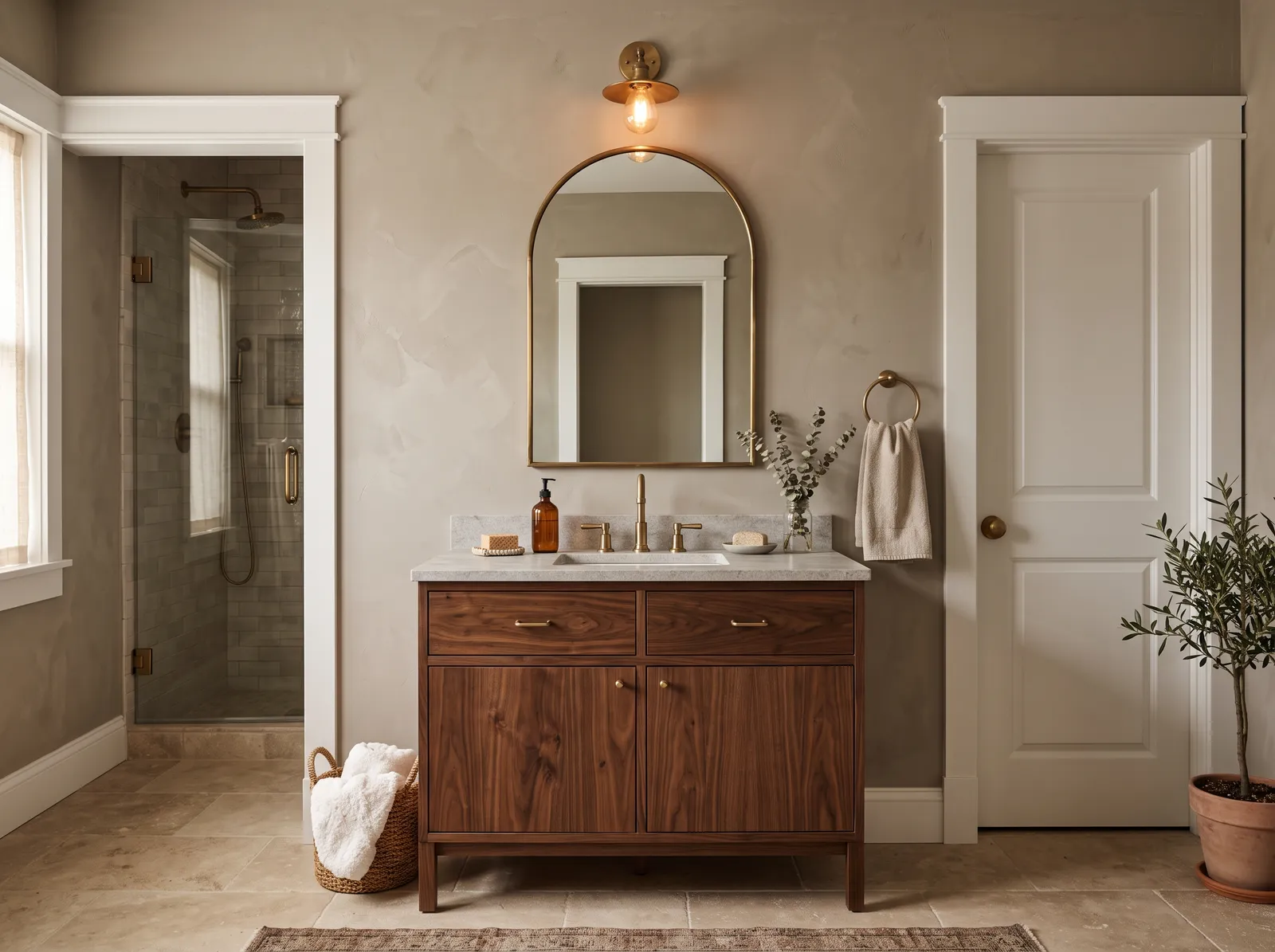
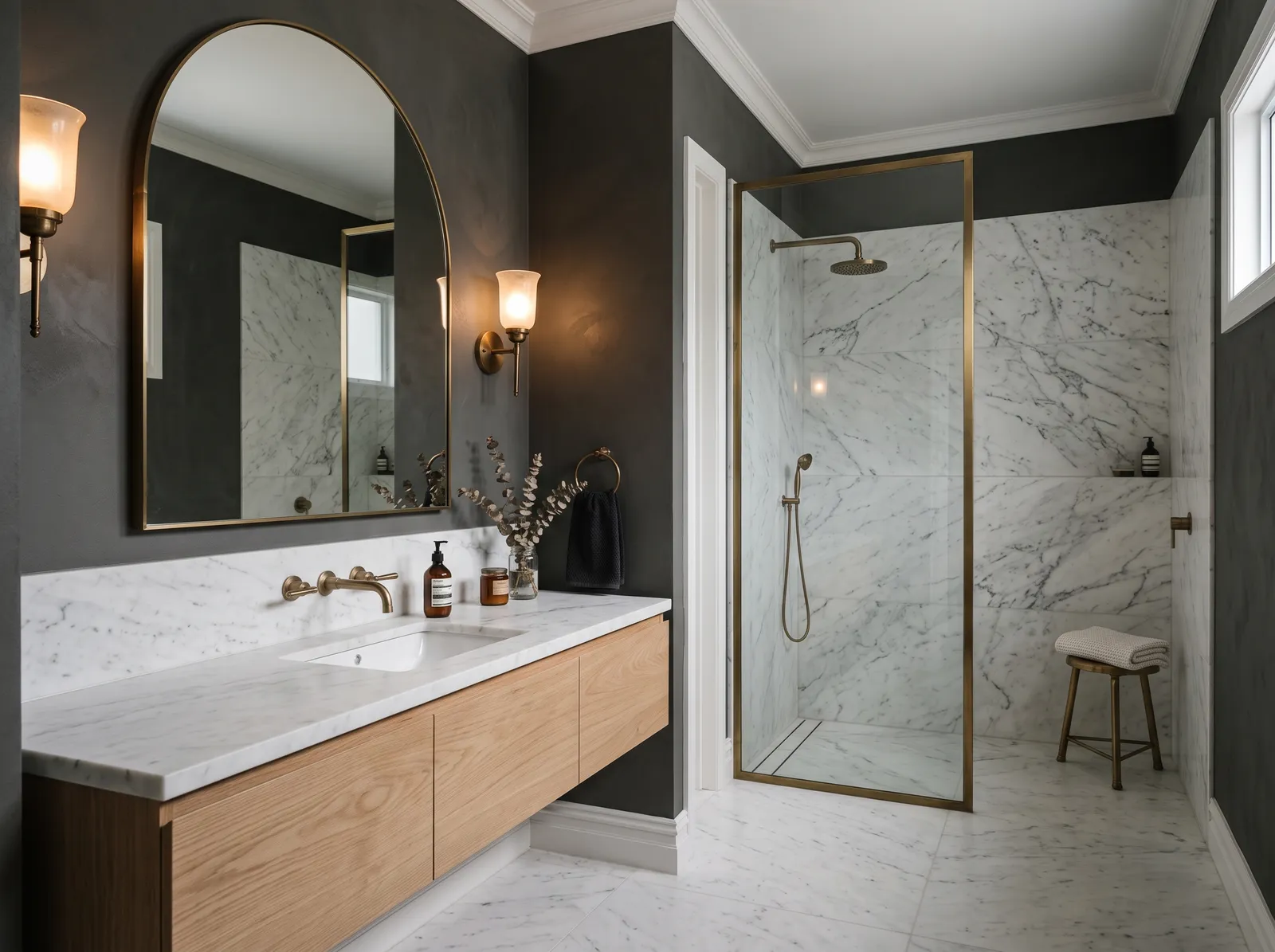
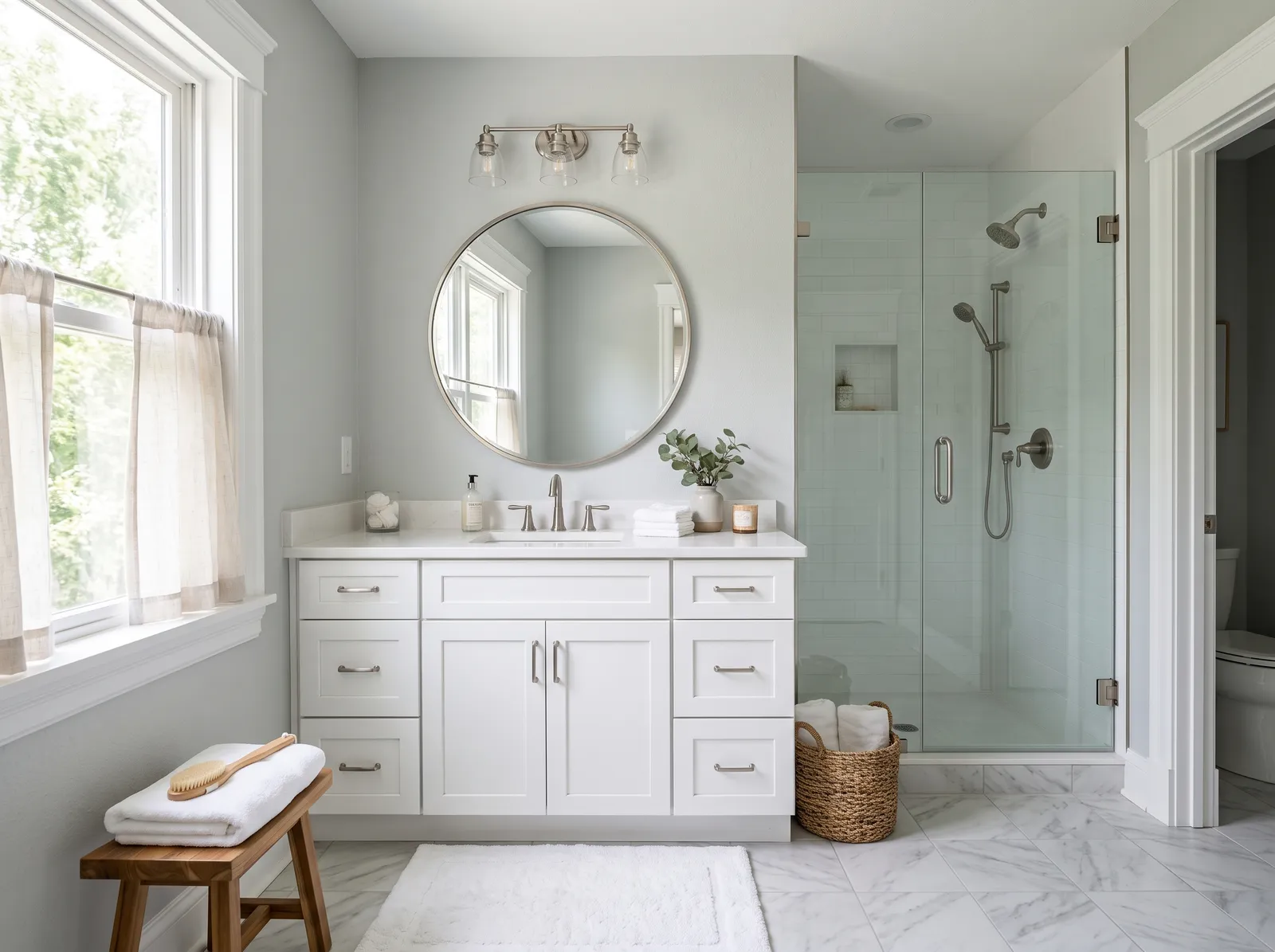
Gray Bathroom Paint Colors
3,425 gray colors that work in bathrooms, drawn from the full ~30,000-color US paint deck. Below: editor's picks specific to bathrooms, then 30 picks spread across the LRV range — narrow further on the brand page when you've shortlisted.
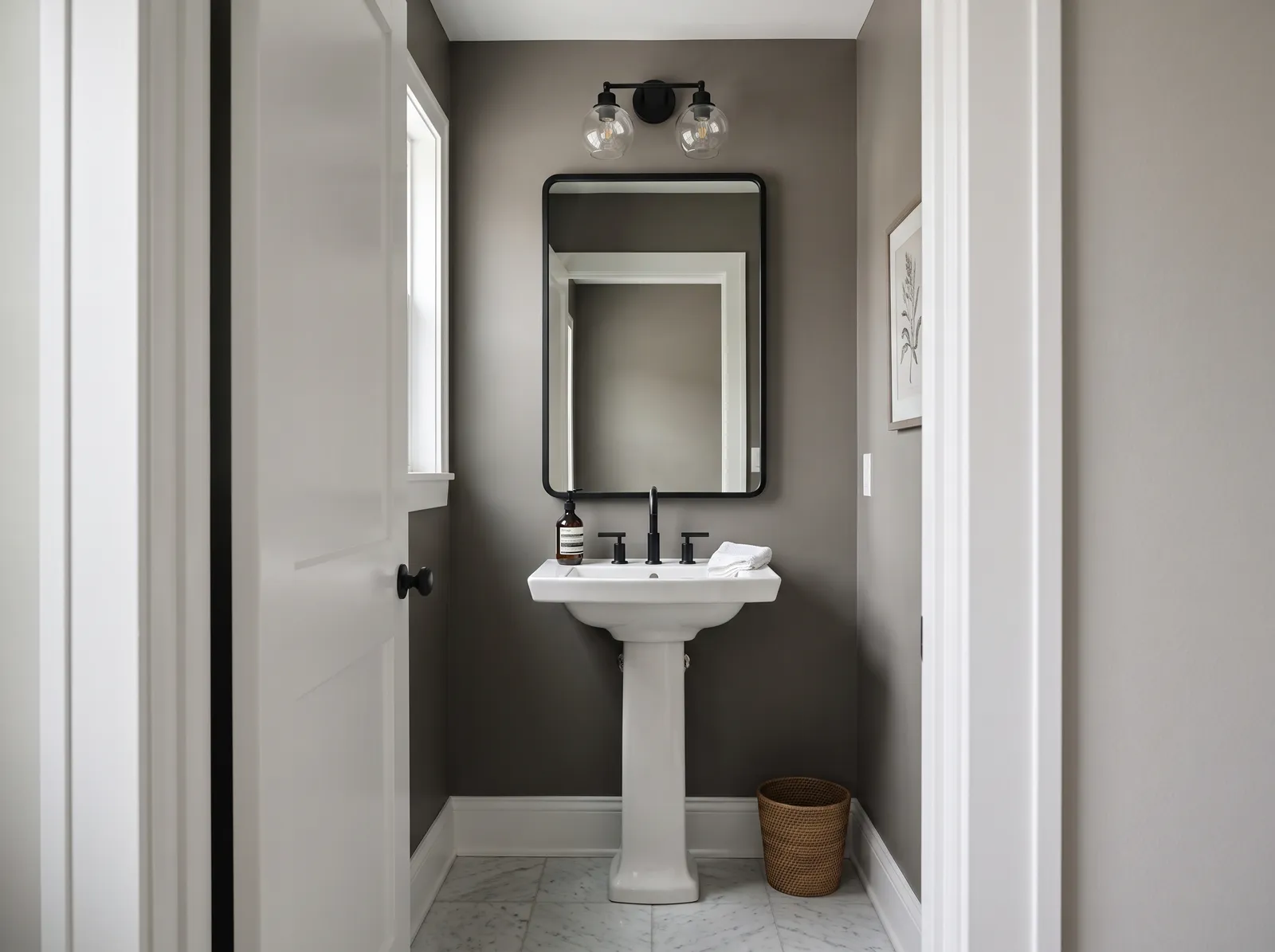
Gray is the most-recommended neutral in American interiors — the safe choice that anchors a room without committing to a strong color. The "true" grays here lean cool (blue or violet undertone) or stay almost dead-neutral. The warm-leaning grays (taupe, mushroom, greige) live in the Neutral family next door because they read closer to beige than to true gray on the wall.
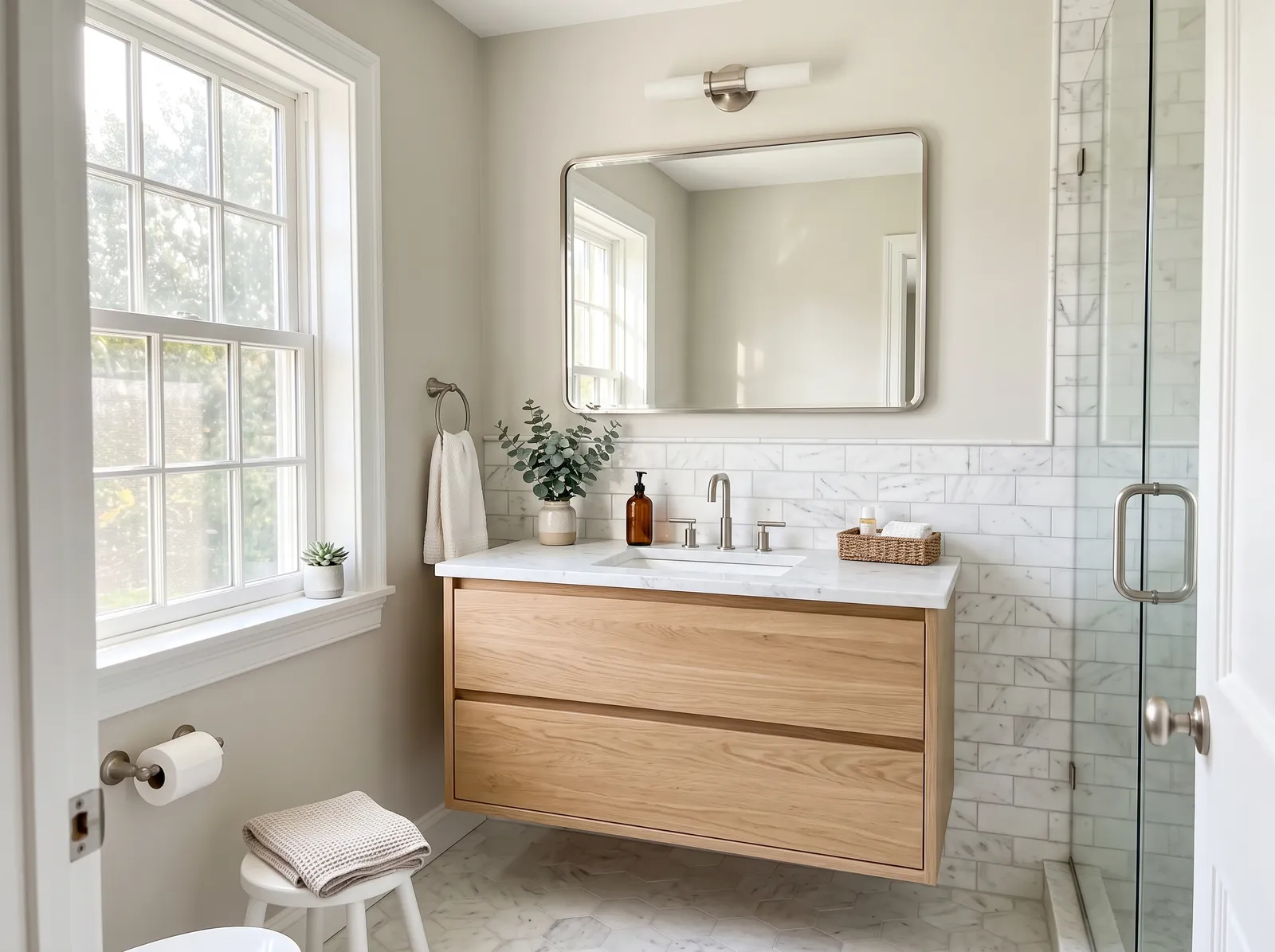
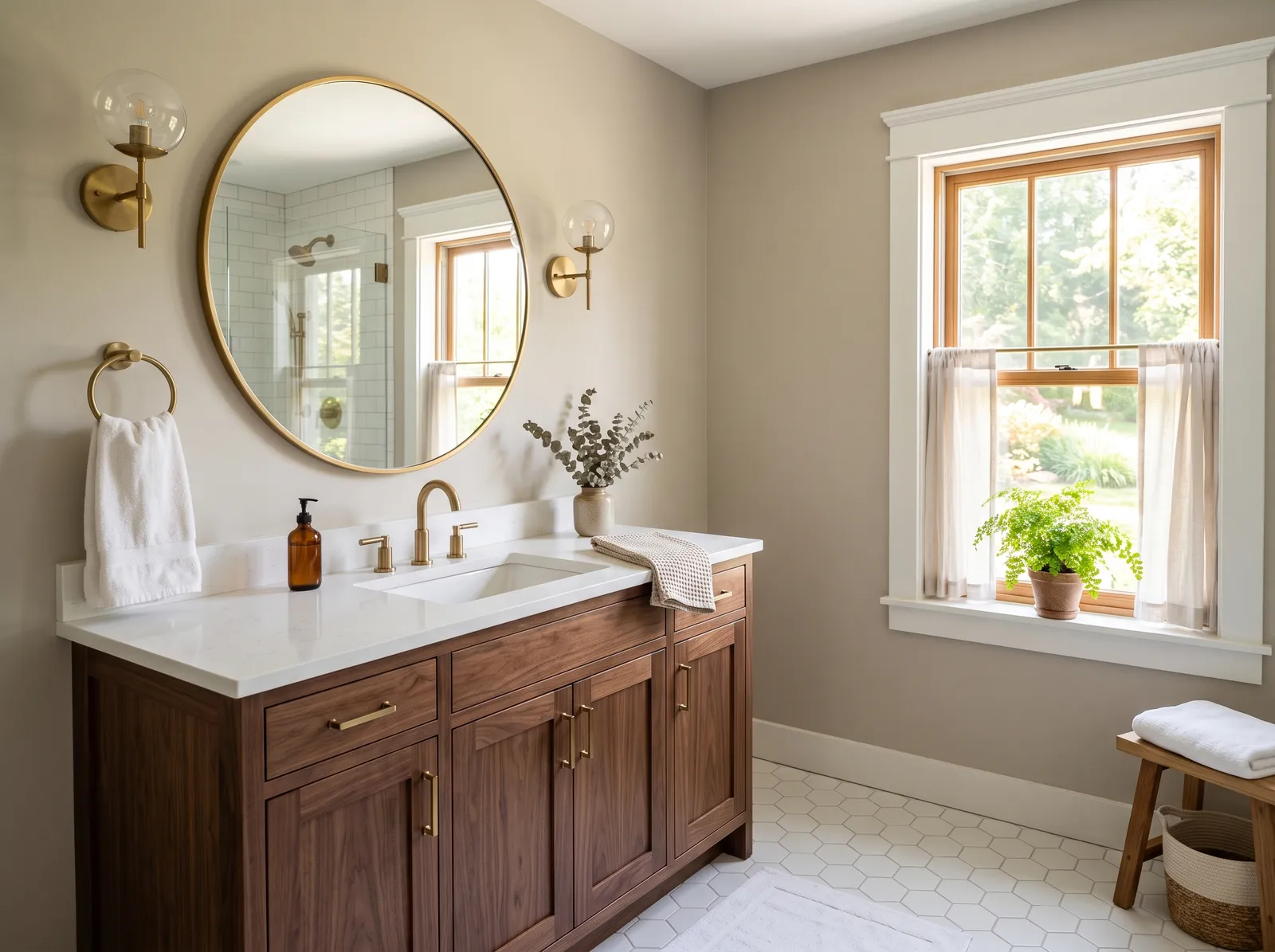
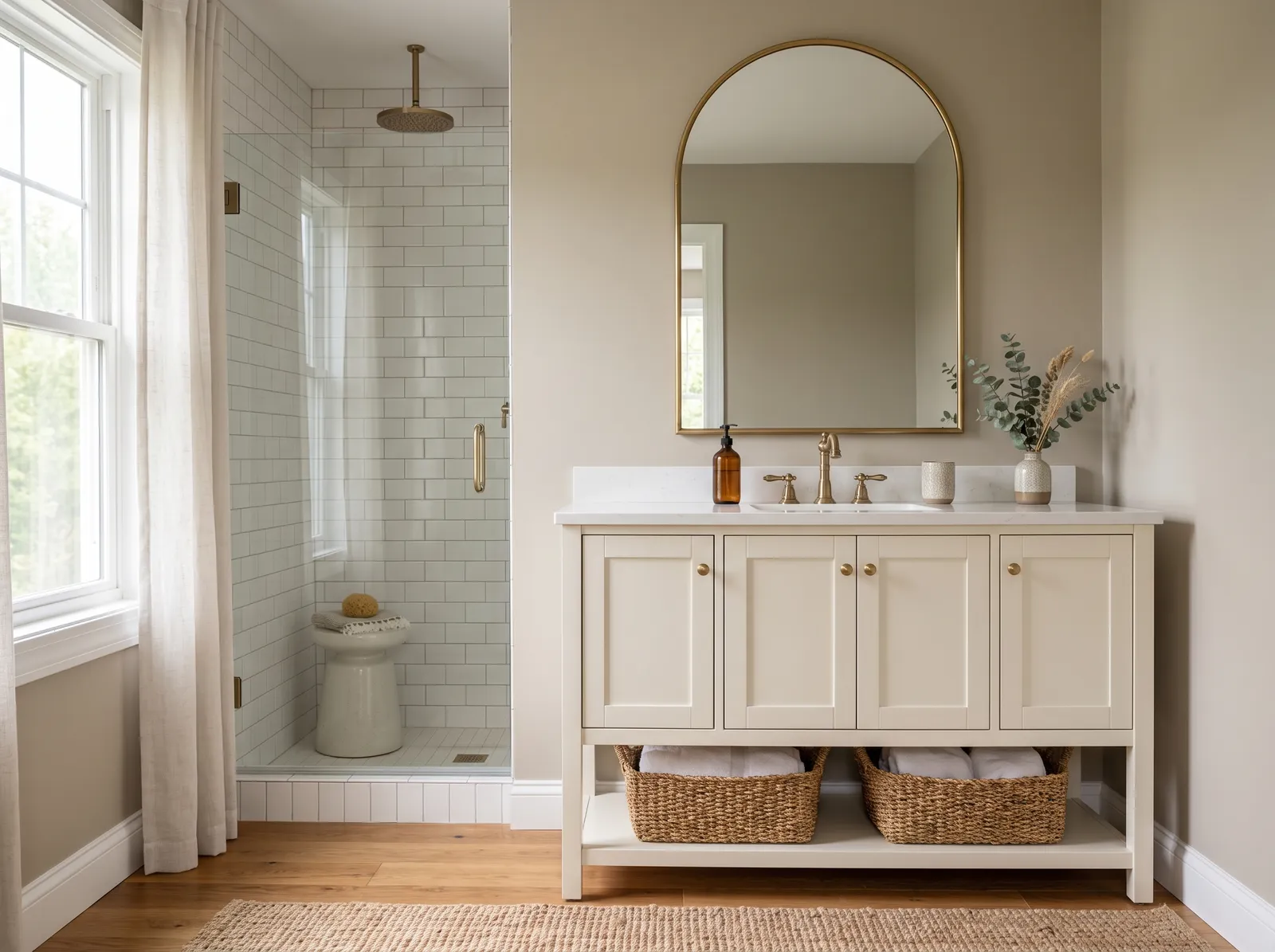
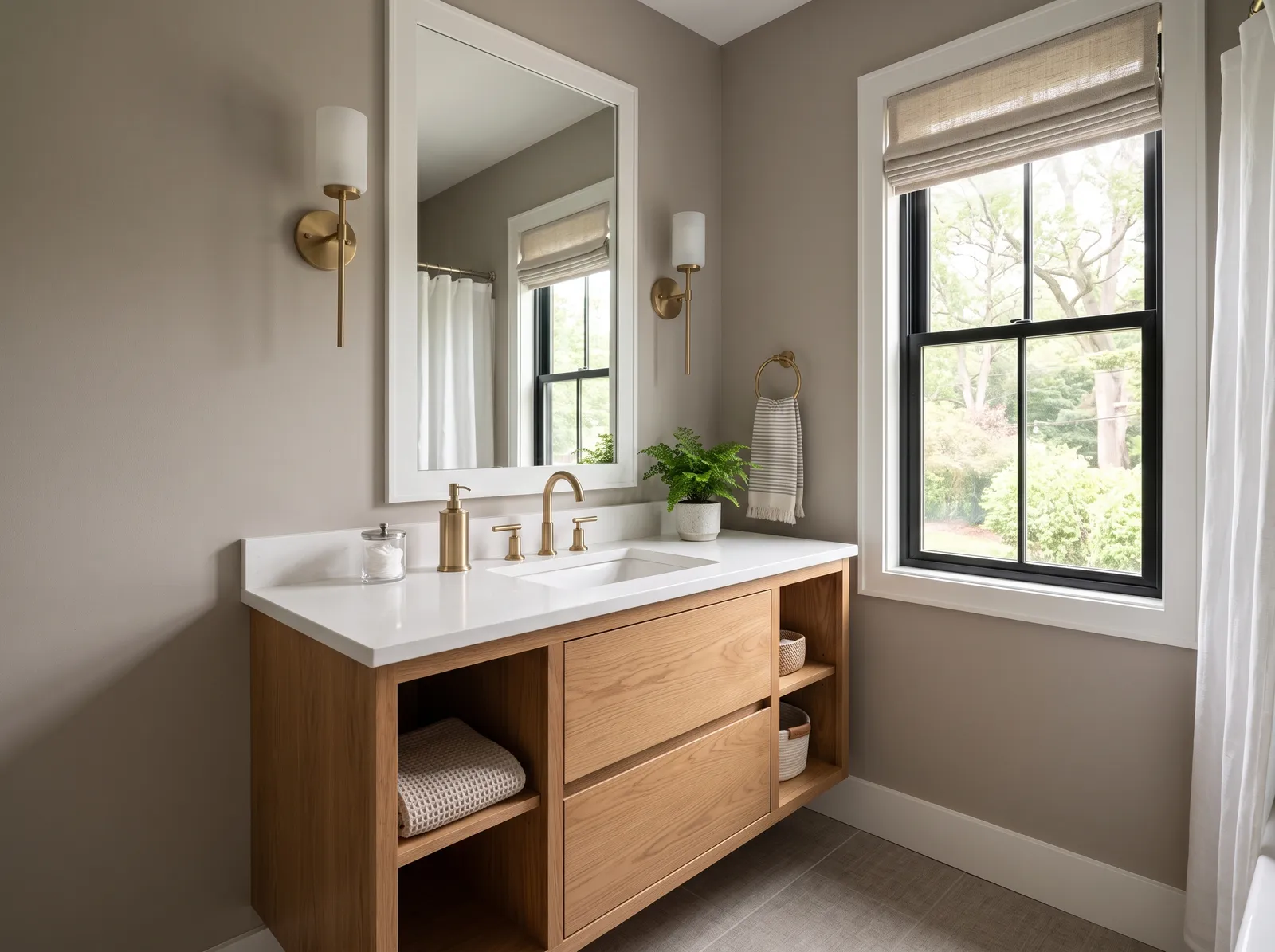
Editor's Picks: Gray for Bathrooms
4 picks30 Gray Picks Across the LRV Range
30 of 3,425 · sorted dark → lightLooking for more? All gray → covers every brand; brand × family pages show full decks.
Gray Bathroom Colors at Every US Brand
21 brands · up to 10 picks eachUp to 10 picks per brand spread across the gray LRV range, drawn from each brand's full deck. Tap any swatch with a curated guide for full spec; tap the brand title for the brand's complete gray deck.
Behr
Glidden
Valspar
Benjamin Moore
PPG / Glidden
Sherwin-Williams
Dunn-Edwards
Dutch Boy
Diamond Vogel
Hirshfield's
Kompozit
C2 Paint
Rodda
Magnolia Home
Farrow & Ball
Clare
Portola Paints
Annie Sloan
Backdrop
Rust-Oleum
Other Bathroom Color Families
Gray Colors in Other Rooms
Gray Paint Colors for a Bathroom
Gray is one of the easiest colors to live with in a bathroom, but it is also one of the easiest to get wrong. The room is small, the light is often artificial or filtered, and almost every surface around the paint is hard and reflective: tile, glass, chrome, porcelain. All of that bounces light back at the walls and pushes a gray to read cooler, bluer, or more washed-out than it looked on the chip.
The good news is that gray is flexible enough to work in almost any bathroom once you account for its undertone, its depth, and the finish you put it in. This page walks through how to pick a gray that flatters a bathroom specifically, how the room's light should steer that choice, which sheen survives steam and splashes, and the pairing and mistake traps that trip people up. Every gray you see here can be mixed to order at a paint counter and cross-matched between brands, so you are choosing a look, not locking into one company.
Why Gray Works In A Bathroom
Gray reads clean and calm, which is exactly the mood most people want from a bathroom. It also sits quietly behind the busy stuff a bathroom already has going on, like patterned tile, a vanity, and metal fixtures, instead of competing with it. That makes gray a safe backdrop in a room where you rarely want the walls to be the loudest thing.
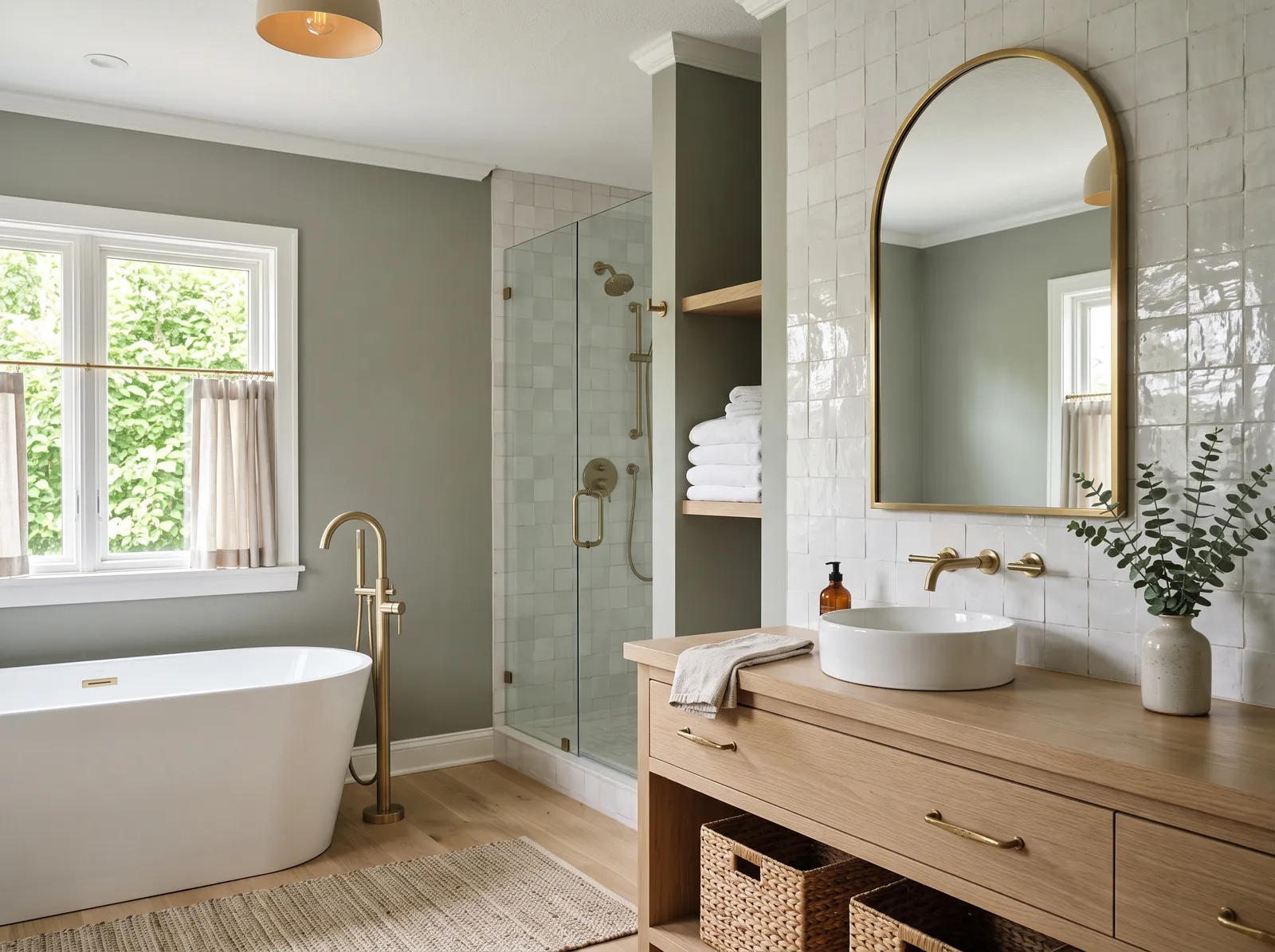
The thing to watch is undertone. Bathrooms are full of cool, hard surfaces, so a gray with a blue or green base can tip cold and clinical fast, especially under white LED light. If your bathroom has little natural light, lean toward a gray with a warm or greige base so the room feels soft rather than sterile.
The Right Depth Of Gray For This Room
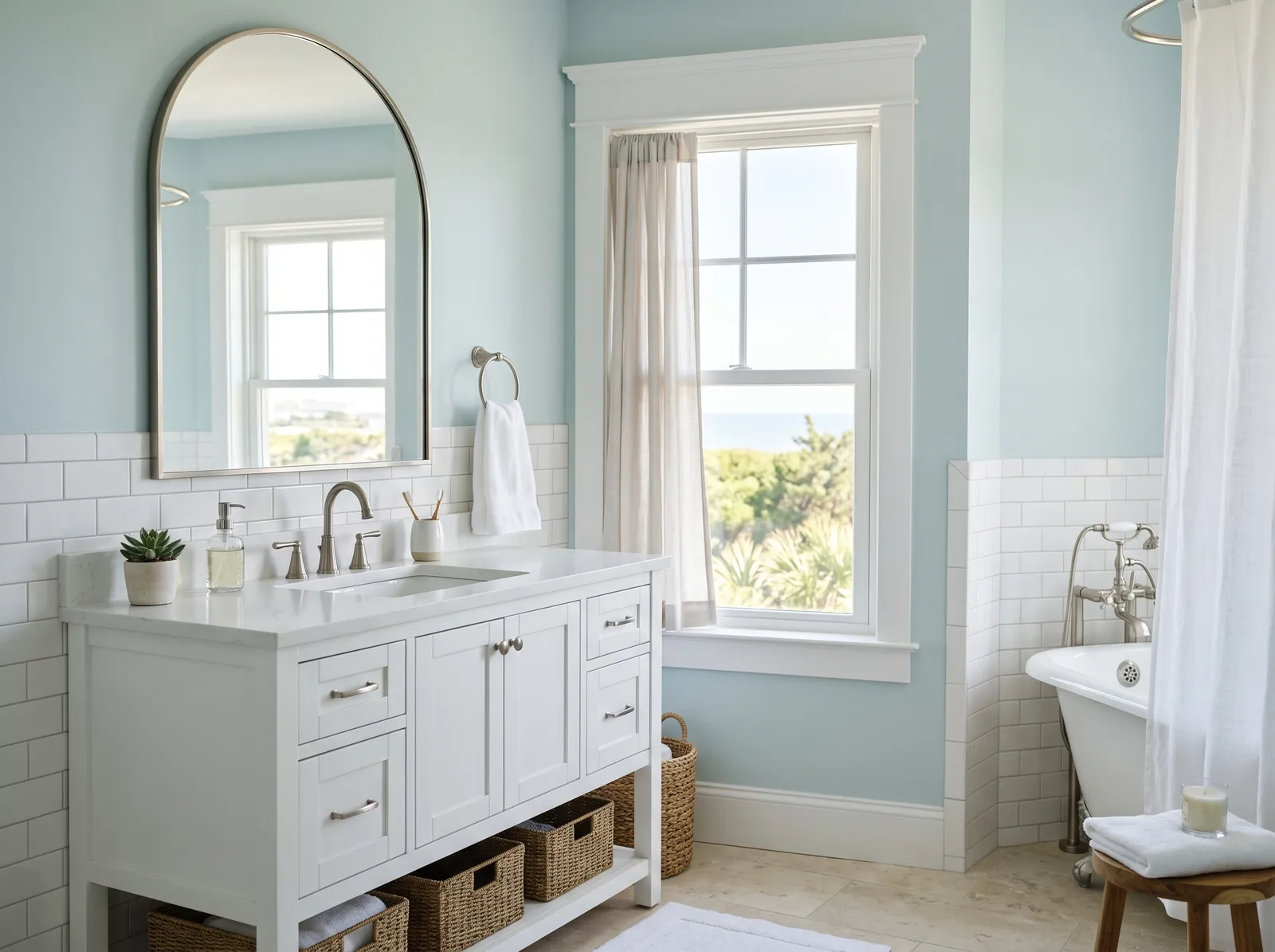
Light and depth matter more in a bathroom than almost anywhere else because the room is small and the surfaces are reflective. LRV (light reflectance value) tells you how much light a color bounces back, on a scale from 0 (black) to 100 (white). For a small or windowless bathroom, a soft gray in the roughly 55 to 70 LRV range keeps the space open and bright without going stark white.
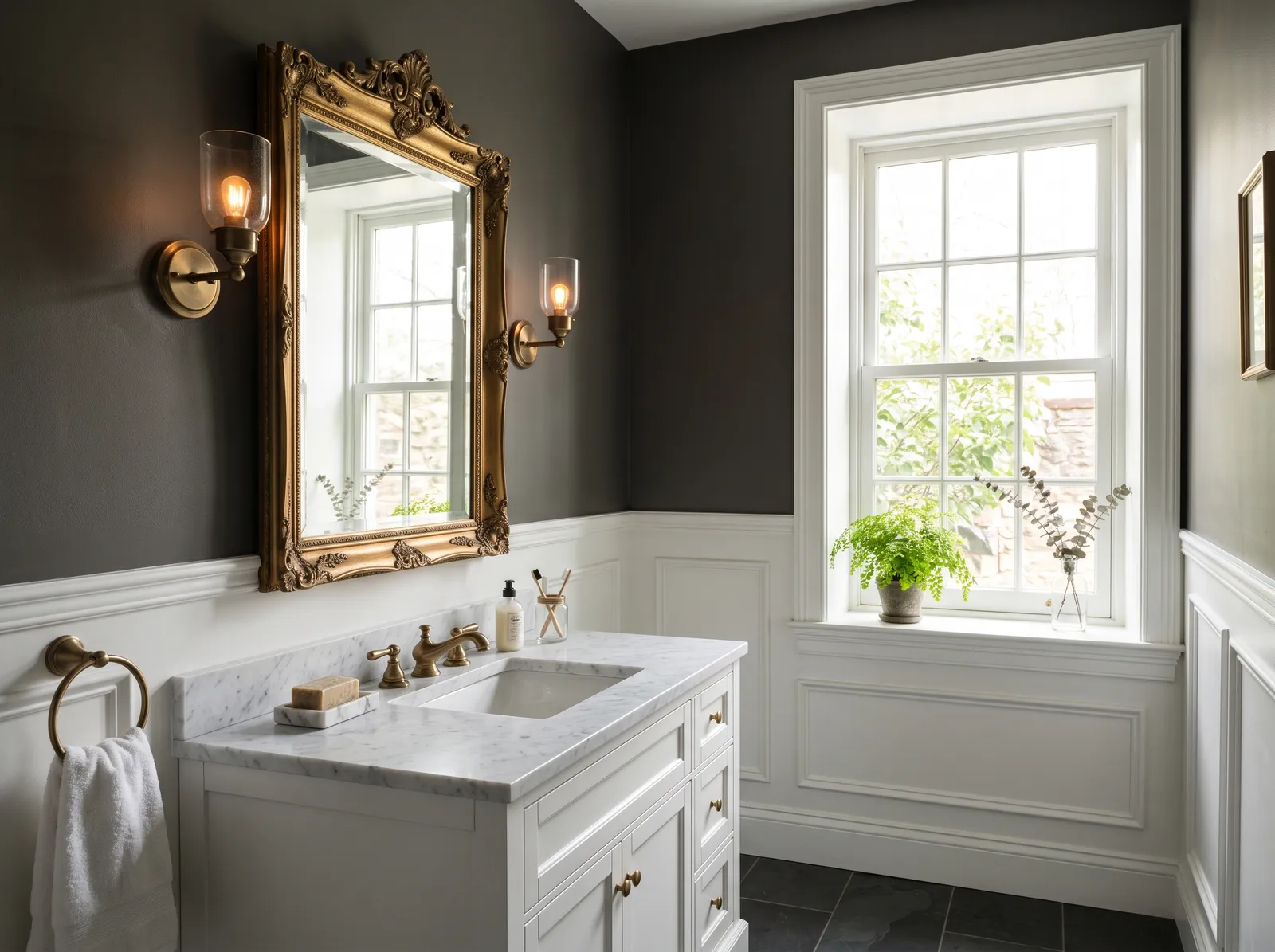
If your bathroom has a real window or good daylight, you have more room to go deeper. A mid-tone gray around 35 to 50 LRV can feel like a spa and handle the light without looking gloomy. Save the darkest charcoals for powder rooms or a bathroom you want to feel dramatic and cocoon-like, where you are not relying on the walls to brighten the space.
How Bathroom Light Steers The Shade
Bathroom light is rarely neutral. North-facing windows add a cool blue cast that can make a gray look icy, while warm bulbs over a vanity can pull the same gray toward beige or muddy. Always test a gray on the actual wall and look at it under your real bathroom lighting, both day and night, before you commit.
The surfaces reinforce whatever the light is doing. White subway tile, a glass shower door, and a mirror all bounce extra cool light around, which can amplify any blue in the paint. If your bathroom is cool by nature, a warm gray or greige is your friend; if it already runs warm, a true neutral gray will balance it.
The Best Finish For Bathroom Walls
A bathroom needs a finish that shrugs off steam, splashes, and frequent wiping, so flat and true matte are usually too fragile here. A satin or eggshell finish is the sweet spot for most bathroom walls: it resists moisture, cleans up easily, and still hides minor wall flaws. Gray shows water spots and grime less than a stark white, but you still want a sheen you can scrub.
For trim, doors, and any wood vanity, step up to semi-gloss, which is the most moisture-resistant and wipeable of the common sheens. The one place to be careful is glare. In a small bright bathroom, a high sheen on a large wall can throw harsh reflections, so keep the shiniest finishes on the woodwork and the wall on satin.
Pairing Gray With Trim, Tile, And Fixtures
Gray plays well with almost any fixture metal, which is part of why it is so popular in bathrooms. Chrome and polished nickel lean cool and look crisp against a true gray, while brass, bronze, and matte black warm things up and pair beautifully with a greige or warm gray. Match your gray's undertone to your hardware so they feel intentional together rather than slightly off.
For trim and ceiling, a soft white keeps the gray feeling fresh and the room feeling taller. Carry your wall gray's undertone into your tile and grout choices too, so a warm gray wall does not fight against a cool blue-gray tile. When you find a gray you love, remember it can be mixed to order and matched across brands, so you can pull the exact shade no matter which paint line your store carries.
Gray Bathroom Paint — Frequently Asked Questions
Will gray make my small bathroom feel even smaller?+
Not if you pick the right depth. A light, soft gray in the 55 to 70 LRV range reflects plenty of light and keeps a small bathroom feeling open. Pair it with a soft white ceiling and trim, and the room will read airy, not closed-in.
What sheen should I use for gray bathroom walls?+
Satin or eggshell is the best choice for the walls because it resists moisture and wipes clean while still hiding small flaws. Use semi-gloss on trim, doors, and the vanity for the toughest, most washable surface. Keep the highest sheens off large walls to avoid glare in a small bright room.
How do I keep my gray from looking cold or clinical?+
Choose a gray with a warm or greige undertone, since bathrooms are full of cool, hard surfaces that already push gray toward blue. Warm bulbs, brass or bronze fixtures, and wood accents also take the chill off. Test the color on the wall under your real bathroom light before committing.
Does my bathroom's light change which gray I should pick?+
Yes, a lot. North-facing or windowless bathrooms add a cool cast that makes gray look icy, so a warmer gray balances it. A bright south-facing bathroom can handle a deeper, cooler gray without feeling gloomy. Always view a sample at different times of day.
What are the most common mistakes with gray in a bathroom?+
The biggest one is ignoring undertone, which leaves the room looking either cold and blue or muddy and beige under bathroom light. Other common slips are going too dark in a windowless space, using a fragile flat finish that cannot handle moisture, and mismatching the gray's undertone with the tile or fixture metal.
Can I get the same gray no matter which brand my store sells?+
Yes. Every gray shown here is mixed to order at the paint counter, and the shade can be cross-matched between brands. That means you can pick the look you want and have it tinted in whatever paint line your local store carries.