Gray Deck Paint Colors
3,425 gray colors that work in decks, drawn from the full ~30,000-color US paint deck. Below: editor's picks specific to decks, then 30 picks spread across the LRV range — narrow further on the brand page when you've shortlisted.
Gray is the most-recommended neutral in American interiors — the safe choice that anchors a room without committing to a strong color. The "true" grays here lean cool (blue or violet undertone) or stay almost dead-neutral. The warm-leaning grays (taupe, mushroom, greige) live in the Neutral family next door because they read closer to beige than to true gray on the wall.
Editor's Picks: Gray for Decks
4 picks30 Gray Picks Across the LRV Range
30 of 3,425 · sorted dark → lightLooking for more? All gray → covers every brand; brand × family pages show full decks.
Gray Deck Colors at Every US Brand
21 brands · up to 10 picks eachUp to 10 picks per brand spread across the gray LRV range, drawn from each brand's full deck. Tap any swatch with a curated guide for full spec; tap the brand title for the brand's complete gray deck.
Behr
Glidden
Valspar
Benjamin Moore
PPG / Glidden
Sherwin-Williams
Dunn-Edwards
Dutch Boy
Diamond Vogel
Hirshfield's
Kompozit
C2 Paint
Rodda
Magnolia Home
Farrow & Ball
Clare
Portola Paints
Annie Sloan
Backdrop
Rust-Oleum
Other Deck Color Families
Gray Colors in Other Rooms
Gray Paint Colors for a Deck
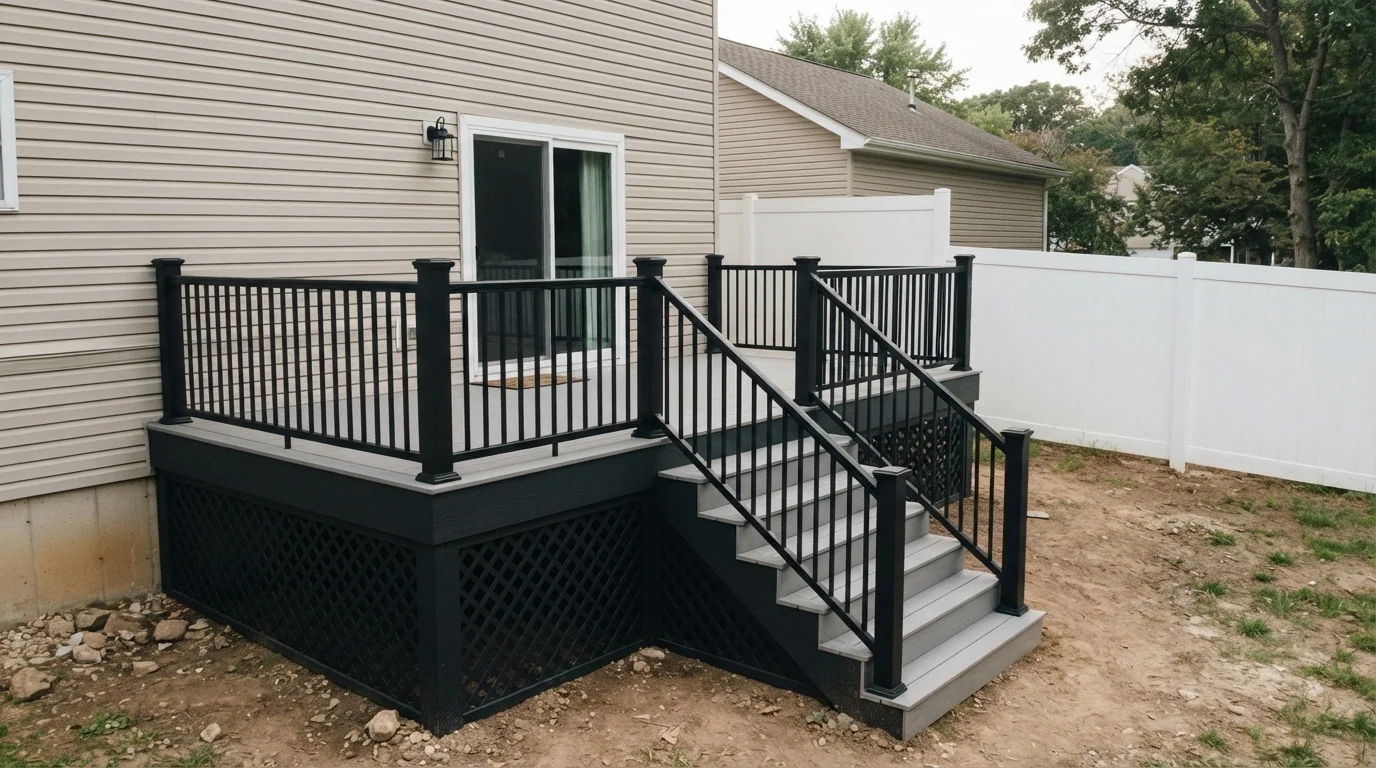
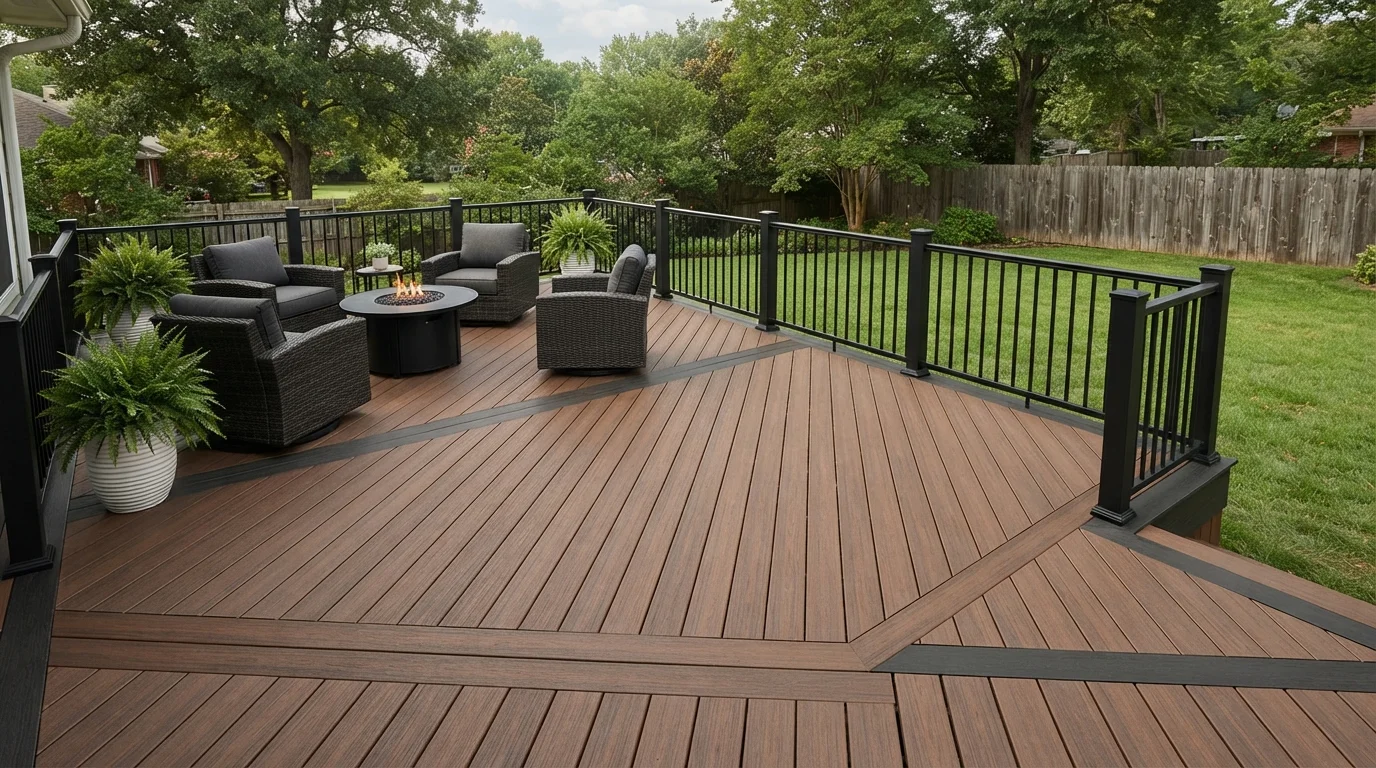
Gray is one of the smartest colors you can put on a deck. It hides dirt, dust, and pollen far better than tan or white, it shrugs off sun-fade better than bold colors, and it works with almost any house siding behind it. Whether you have a covered porch, an open platform, or stairs down to the yard, a gray deck reads clean and modern without trying too hard.
The catch is that a deck lives outdoors, so the color choice is really a finish choice too. The right gray on the wrong product will peel, gray-out, or get slippery. On this page we cover which depth of gray holds up in full sun versus shade, the finish that survives foot traffic and rain, and how to tie the deck color to your railings, trim, and house. Every gray you see in the swatches is mixed to order at a paint counter, so you can match the same shade across brands and pick the product line that's actually built for floors.
Why Gray Works On a Deck
A deck takes more abuse than any wall in your house. Sun, rain, snow, dragged chairs, and muddy shoes all land on the same surface. Gray handles that life well because it sits between the extremes: it doesn't show dust like a dark floor or every leaf-stain like a pale one, and it doesn't bounce harsh glare back at you on a bright afternoon.
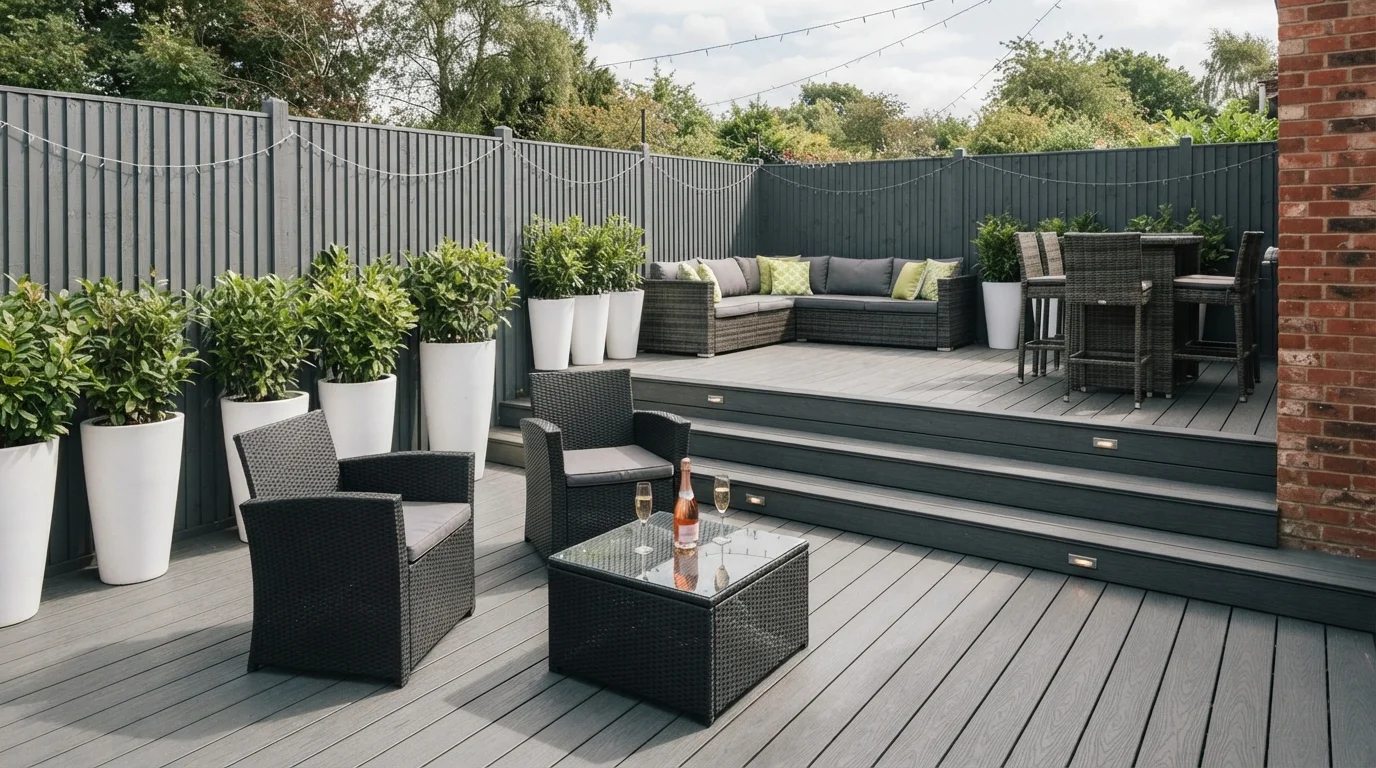
Gray also plays neutral with your surroundings. It pairs with green grass, wood railings, brick, and almost any siding color without fighting them. That makes it a safe, long-lived choice on a surface you can't easily repaint every season.
The Right Depth Of Gray For Outdoor Light
Outdoor light is far stronger than indoor light, so a gray that looked perfect on a chip indoors will read a shade or two lighter once the sun hits it. Use LRV (light reflectance value, 0 is black, 100 is white) to steer the pick. A mid-tone gray in the 30 to 50 LRV range is the sweet spot for most decks: dark enough to hide dirt, light enough to stay cool underfoot.
Let the deck's exposure decide. A deck in full all-day sun can take a deeper gray in the 25 to 40 range without looking heavy, and the depth helps mask fading over time. A shaded or north-facing deck does better with a lighter gray above 45 LRV so it doesn't turn gloomy and damp-looking. Skip very dark grays in hot, sunny climates, since they soak up heat and can get uncomfortable for bare feet.
Choosing The Right Finish For a Deck Floor
On a deck the finish matters as much as the color. You want a product built for floors and exterior wear, not a wall paint. Solid deck stains and porch-and-floor coatings are made to flex with the wood, shed water, and survive being walked on. Look for a low-sheen or satin finish, which hides minor surface flaws and resists scuffing better than a high gloss.
Avoid a glossy finish outdoors for two reasons. Gloss shows every footprint and water spot, and it gets slick when wet, which is a real hazard on stairs and rainy days. Many deck products also let you add a fine grit for traction, which is worth it on steps and any spot that stays shaded and damp.
Pairing Gray With Railings, Trim, And Furniture
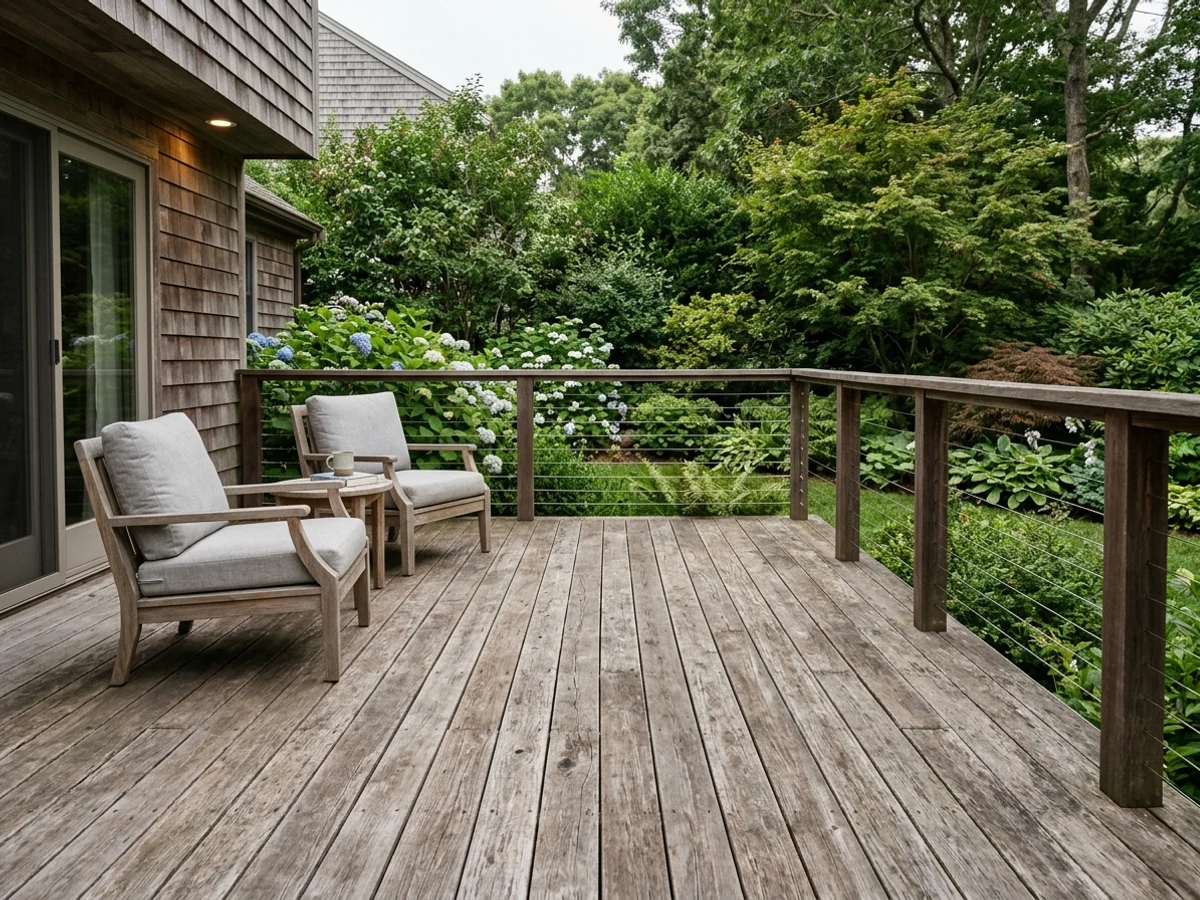
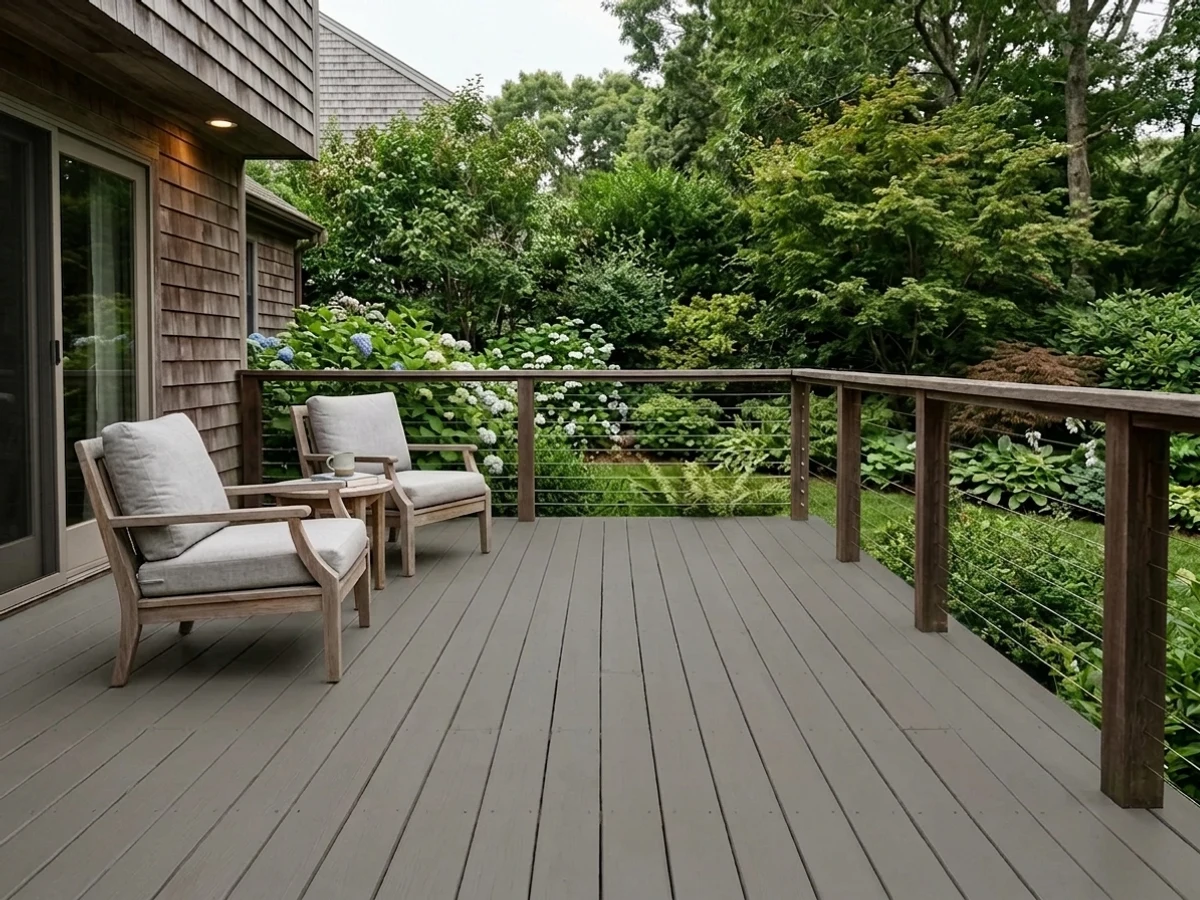
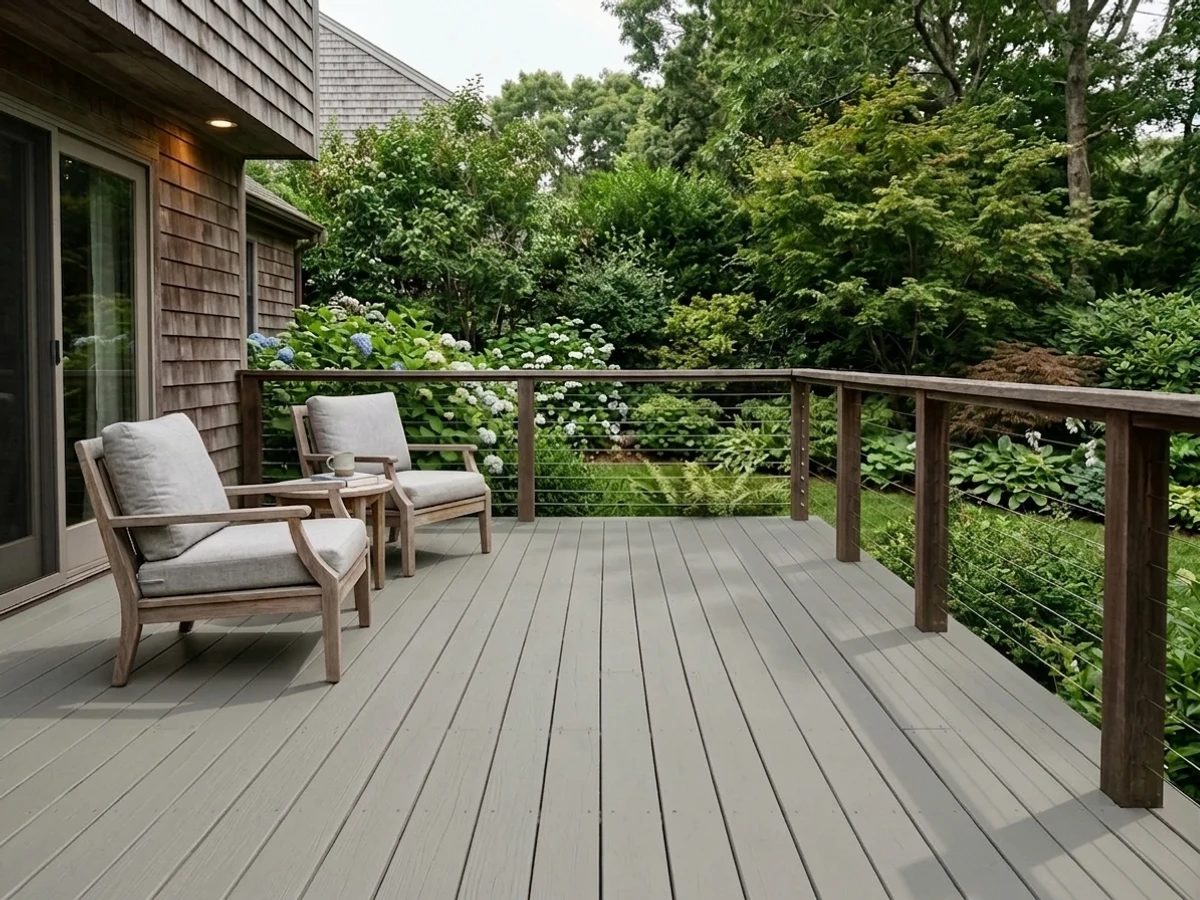
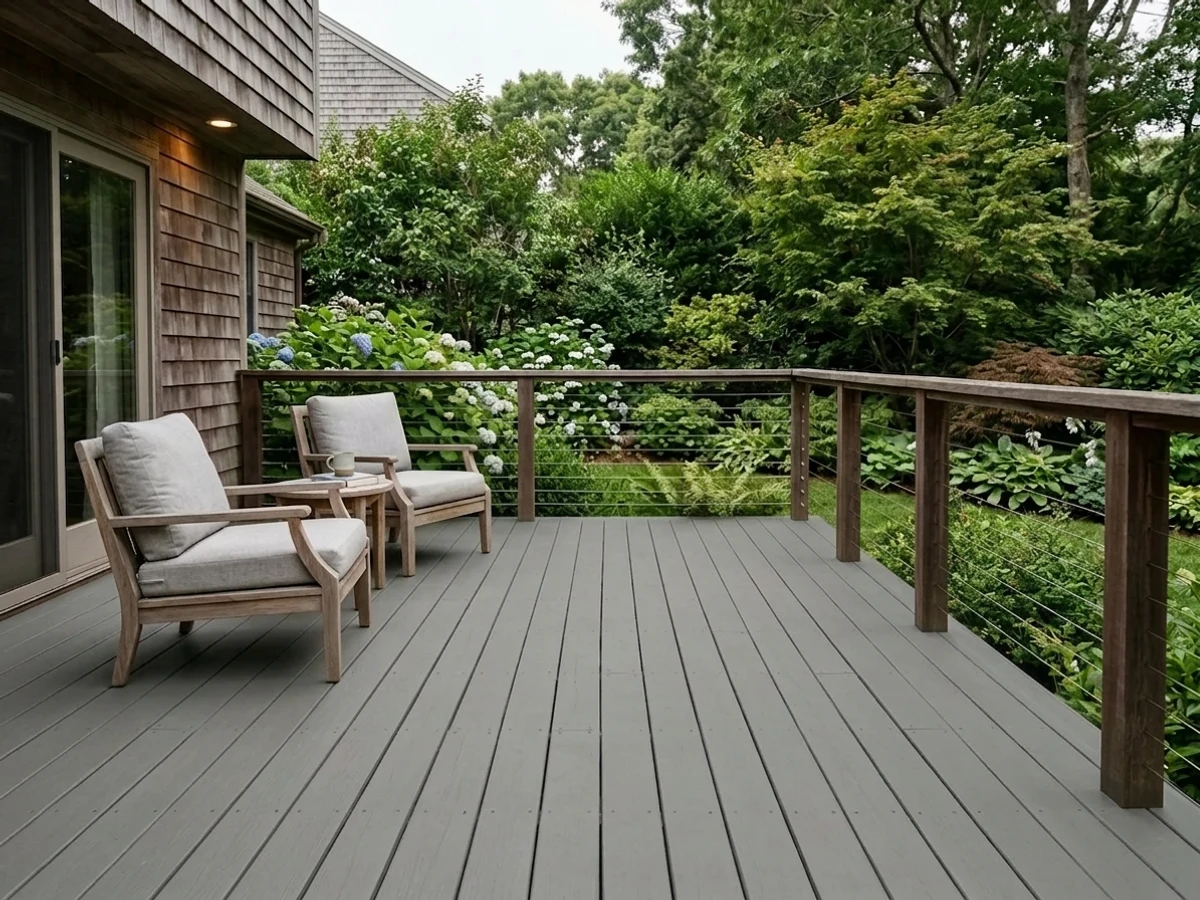
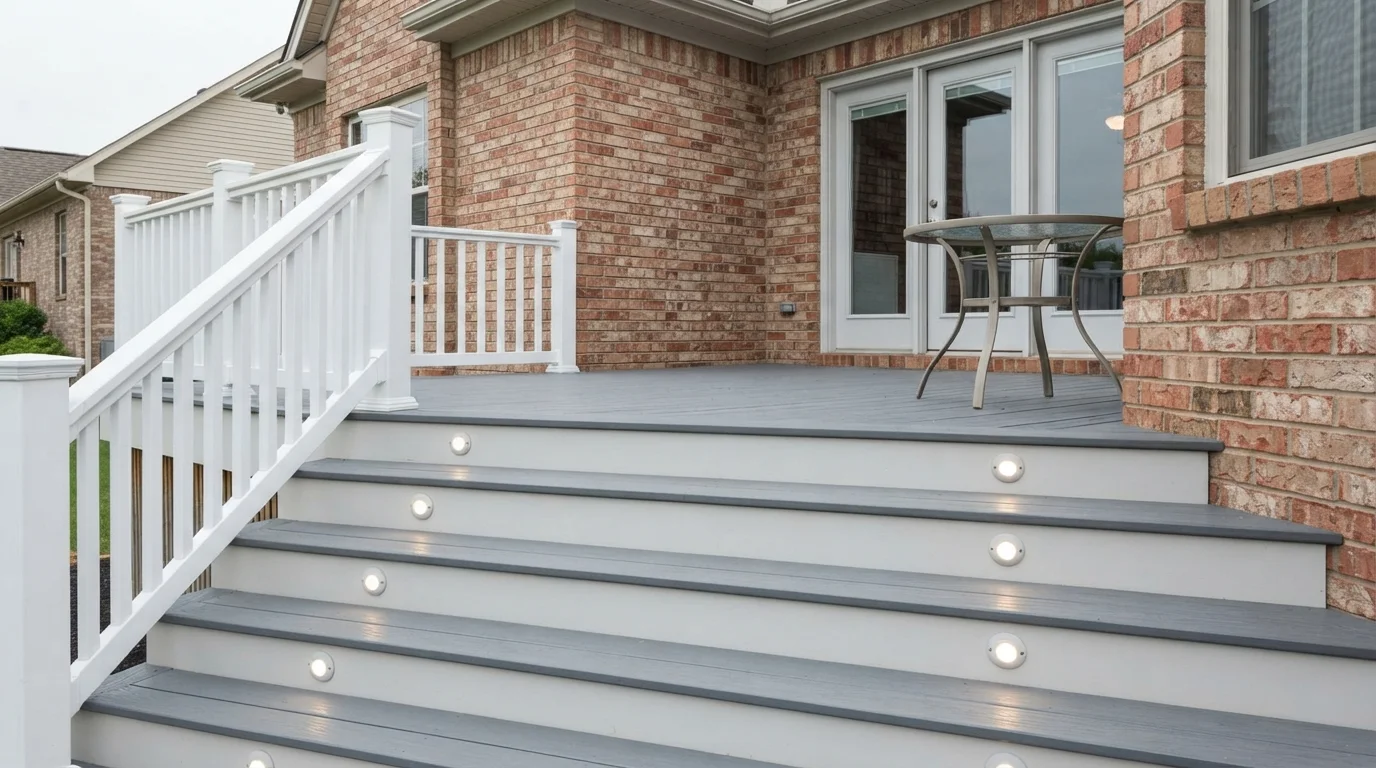
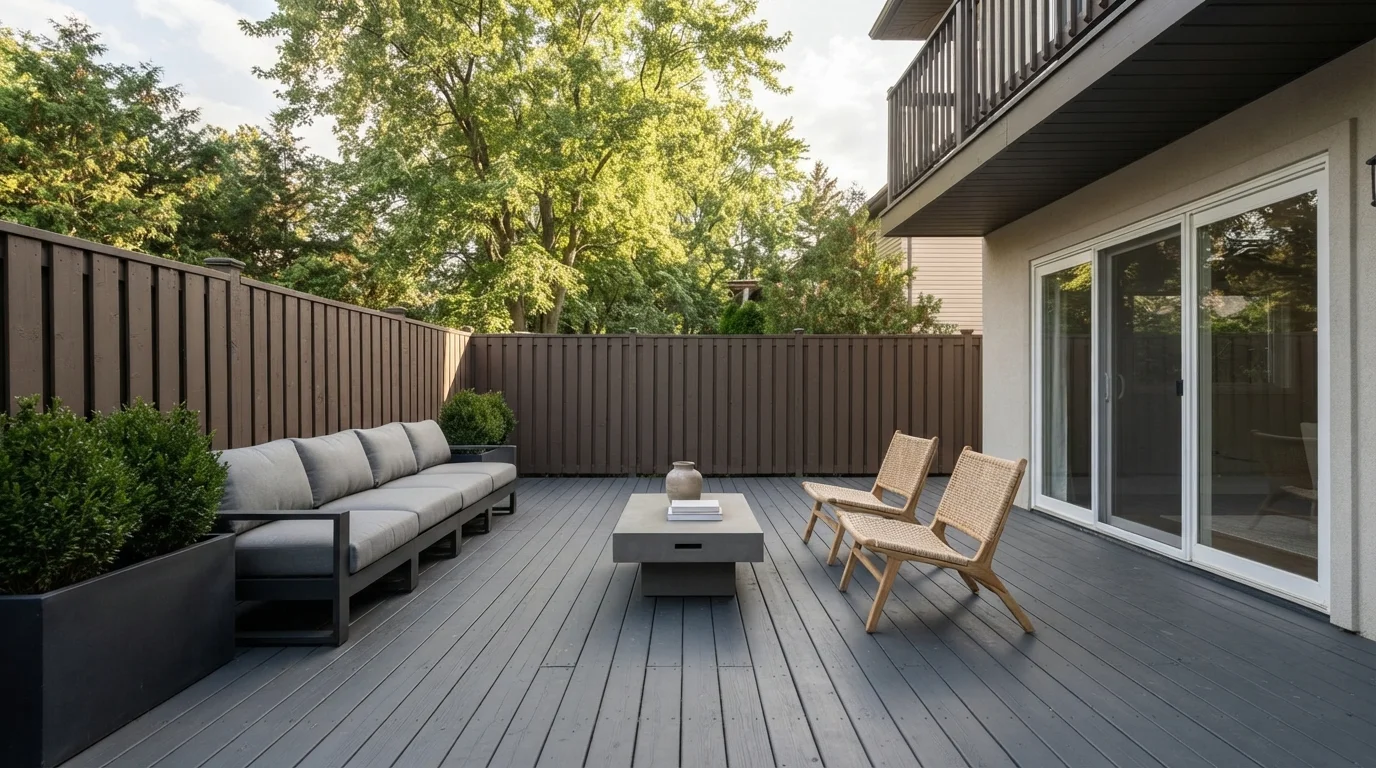
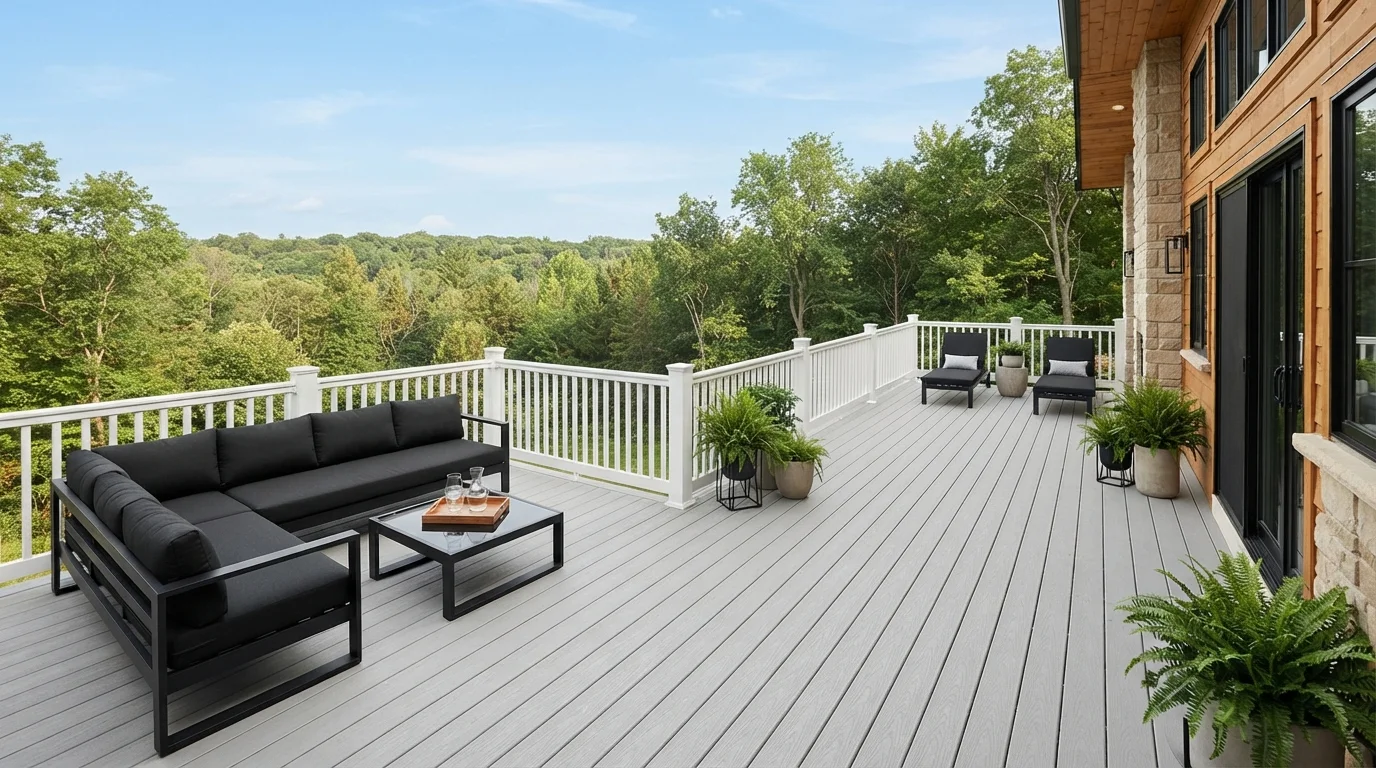
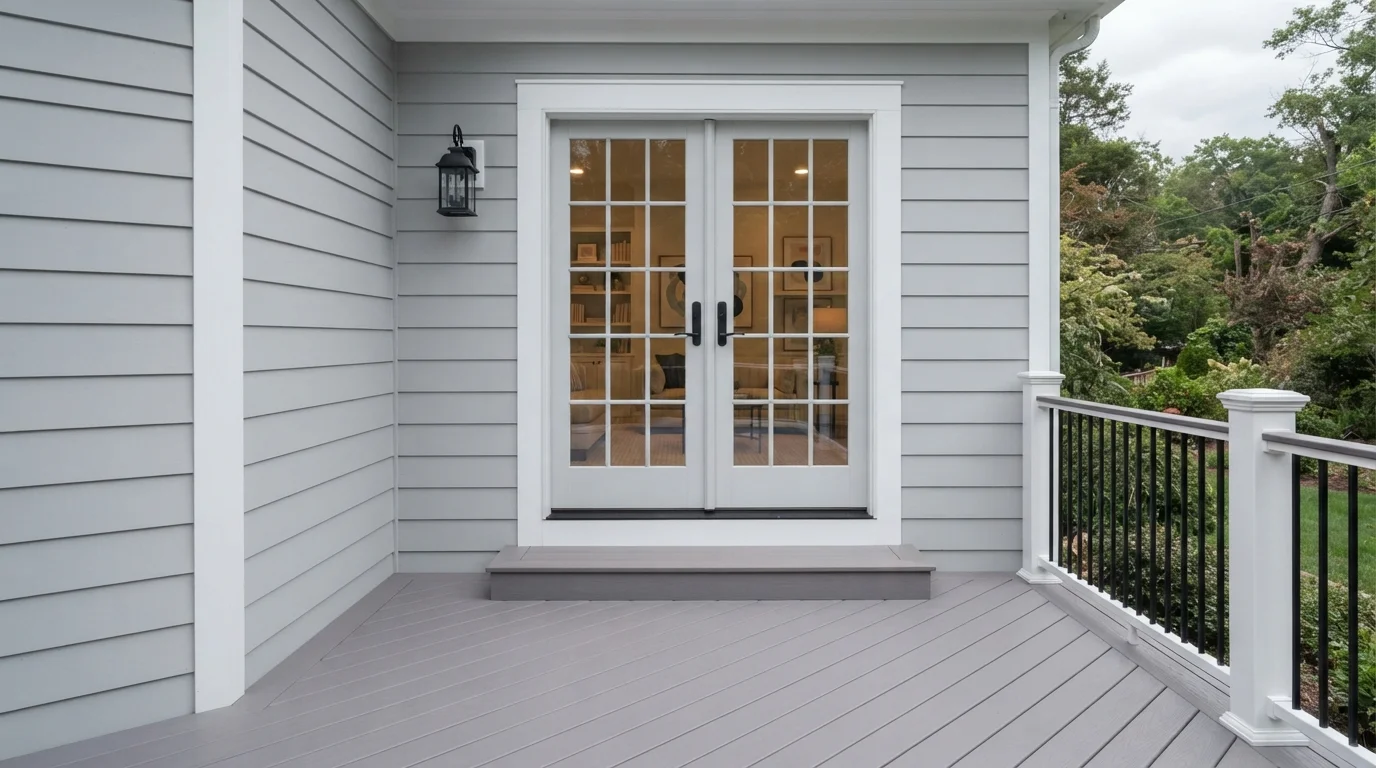
A gray deck floor gives you an easy base to build on. Crisp white railings and trim are the classic move and keep the look fresh and clean. For something warmer, natural or honey-toned wood railings against a gray floor read modern and relaxed, and the contrast keeps the gray from feeling flat.
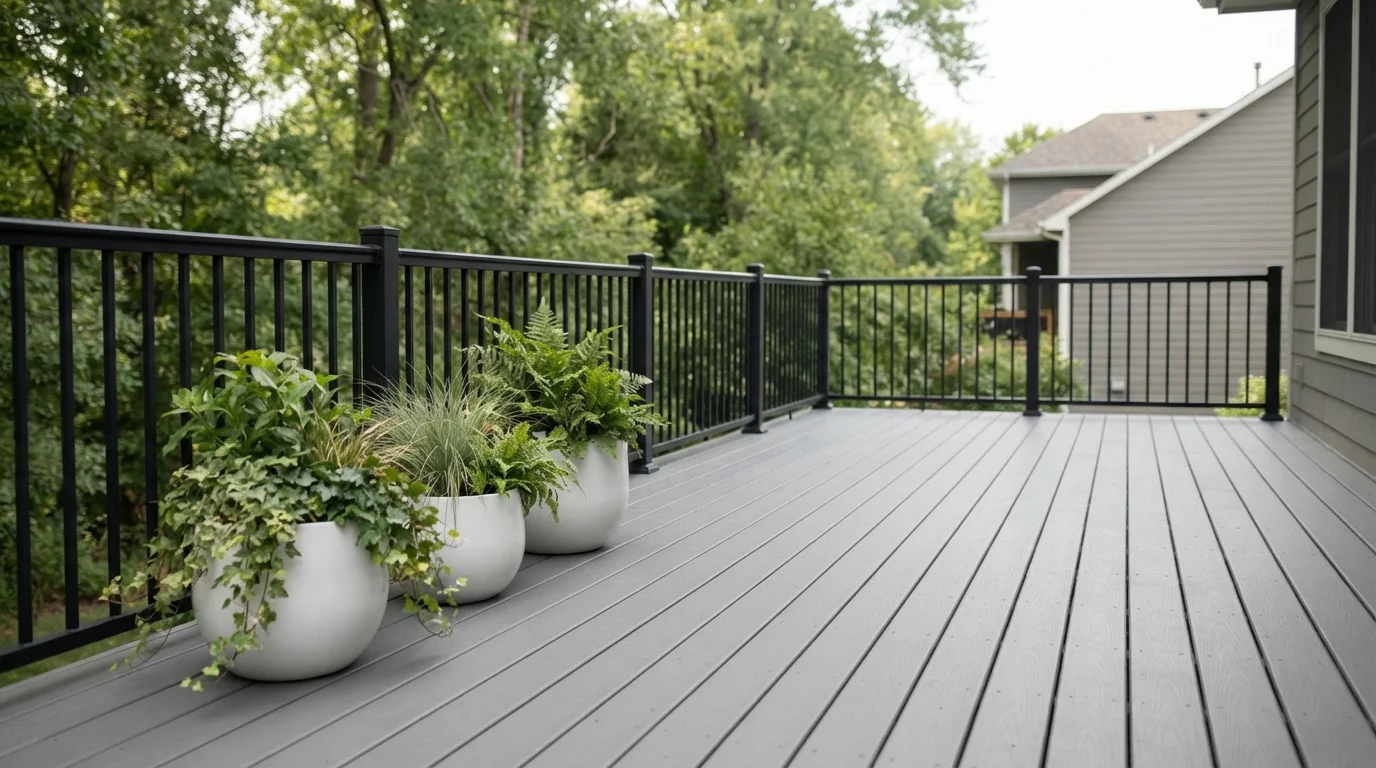
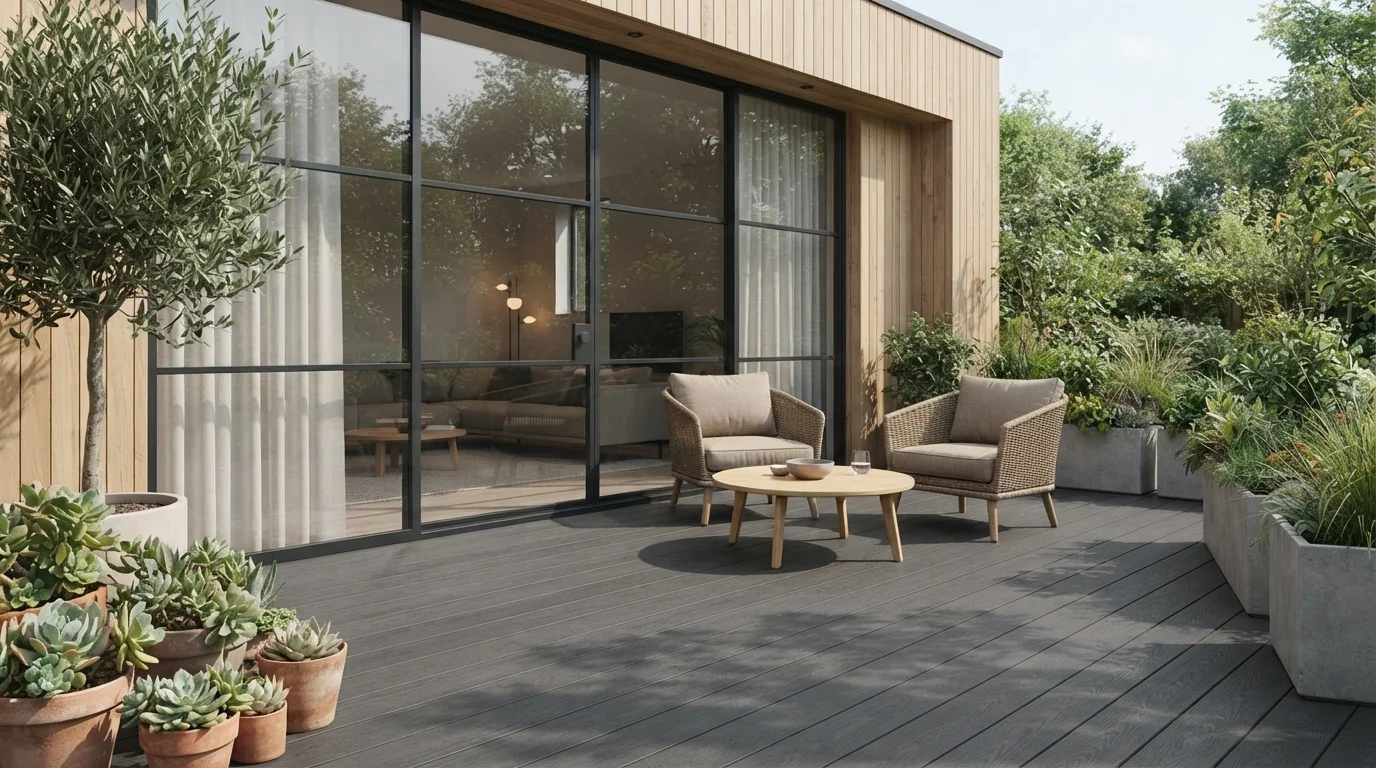
For a covered porch ceiling, a soft pale blue or a clean off-white overhead keeps things bright and airy above the gray floor. With furniture and planters, gray is forgiving: black metal looks sharp and architectural, while teak, jute, and greenery soften it. Pull your accent colors from the house siding so the deck reads as part of the home, not a bolt-on.
Common Mistakes To Avoid With a Gray Deck
The biggest mistake is judging the gray indoors. Always test a sample board in the actual spot and look at it in morning, midday, and evening light, because many grays flip cool blue in shade or pull purple and tan in direct sun. A second common slip is going too cool: a steel or blue-gray can look cold and uninviting on a deck where you want people to relax, so a gray with a touch of warmth usually wears better outdoors.
The other big one is using the wrong product. Wall paint or a thin stain on a horizontal floor will peel and wear through fast under foot traffic and standing water. Prep matters too. Skipping a clean, dry, properly primed surface is the top reason deck color fails early, no matter how good the color is. Whatever gray you choose, it's mixed to order at the counter and can be matched across brands, so pick the floor-grade product line first and carry your exact shade into it.
Gray Deck Paint — Frequently Asked Questions
What shade of gray is best for a deck?+
A mid-tone gray in roughly the 30 to 50 LRV range is the safest bet for most decks. It's dark enough to hide dirt and pollen but light enough to stay cool underfoot. Go a little deeper on a full-sun deck and a little lighter on a shaded one.
What finish should I use for a gray deck?+
Use a low-sheen or satin floor-grade product, like a solid deck stain or porch-and-floor coating. It hides scuffs, sheds water, and stays grippy. Skip gloss outdoors, since it shows every footprint and turns slippery when wet.
Will a gray deck get too hot in the sun?+
Very dark grays can absorb heat and feel hot on bare feet in sunny, warm climates. If your deck bakes in full sun, lean toward a mid-tone gray rather than a near-black one. A lighter gray stays noticeably cooler underfoot.
Why does my gray deck look blue or purple outside?+
Outdoor light is much stronger and cooler than indoor light, so undertones show up that you never saw on the chip. Cool grays often flip blue in shade, and some pull purple or tan in direct sun. Always test a sample board in the real spot at different times of day before committing.
What color railings and trim go with a gray deck?+
Crisp white railings and trim are the easy classic and keep the look clean. Natural wood railings against gray feel warm and modern. Black metal reads sharp and architectural, and a soft pale blue or off-white works well on a covered porch ceiling above.
Can I match the same gray across different paint brands?+
Yes. Every gray shown here is mixed to order at the paint counter, so the same shade can be matched across brands. That lets you choose the deck or floor product line that performs best and still get your exact color in it.