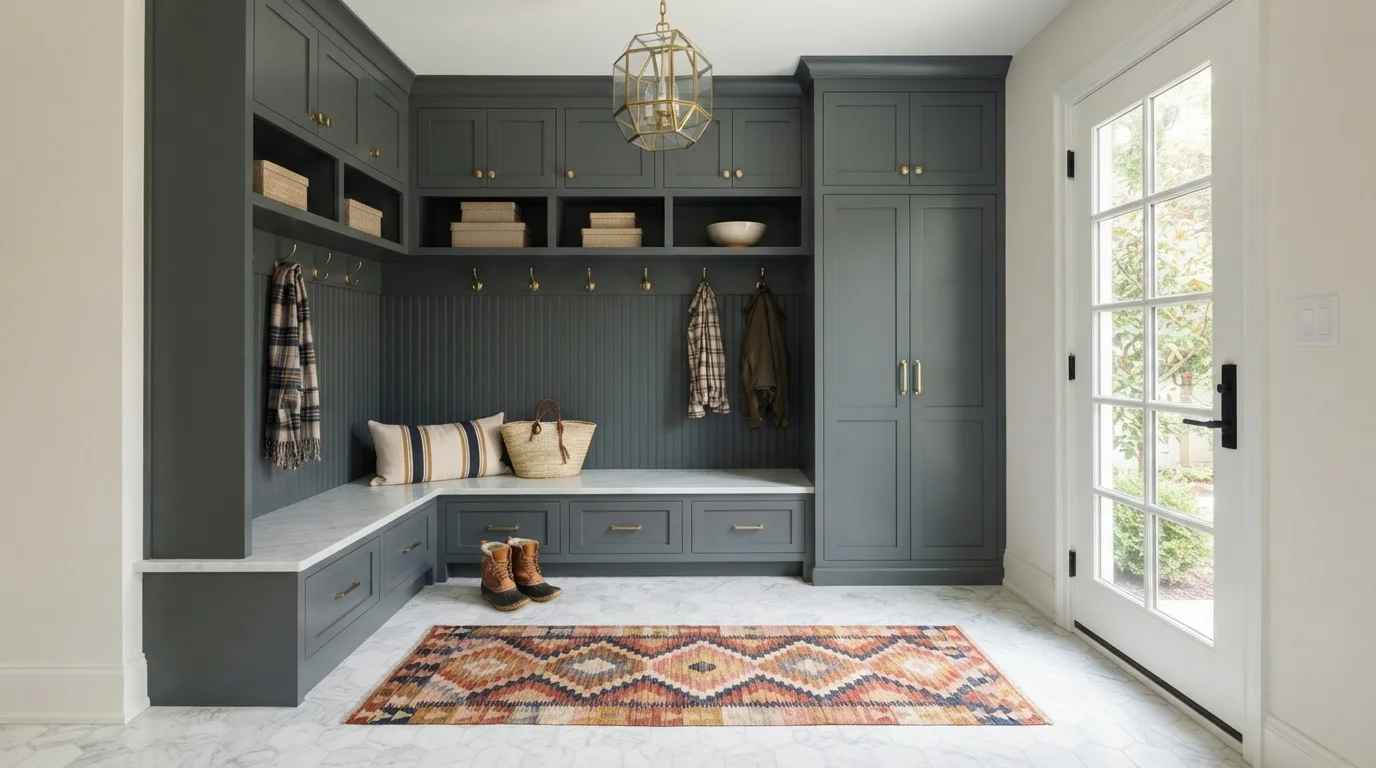
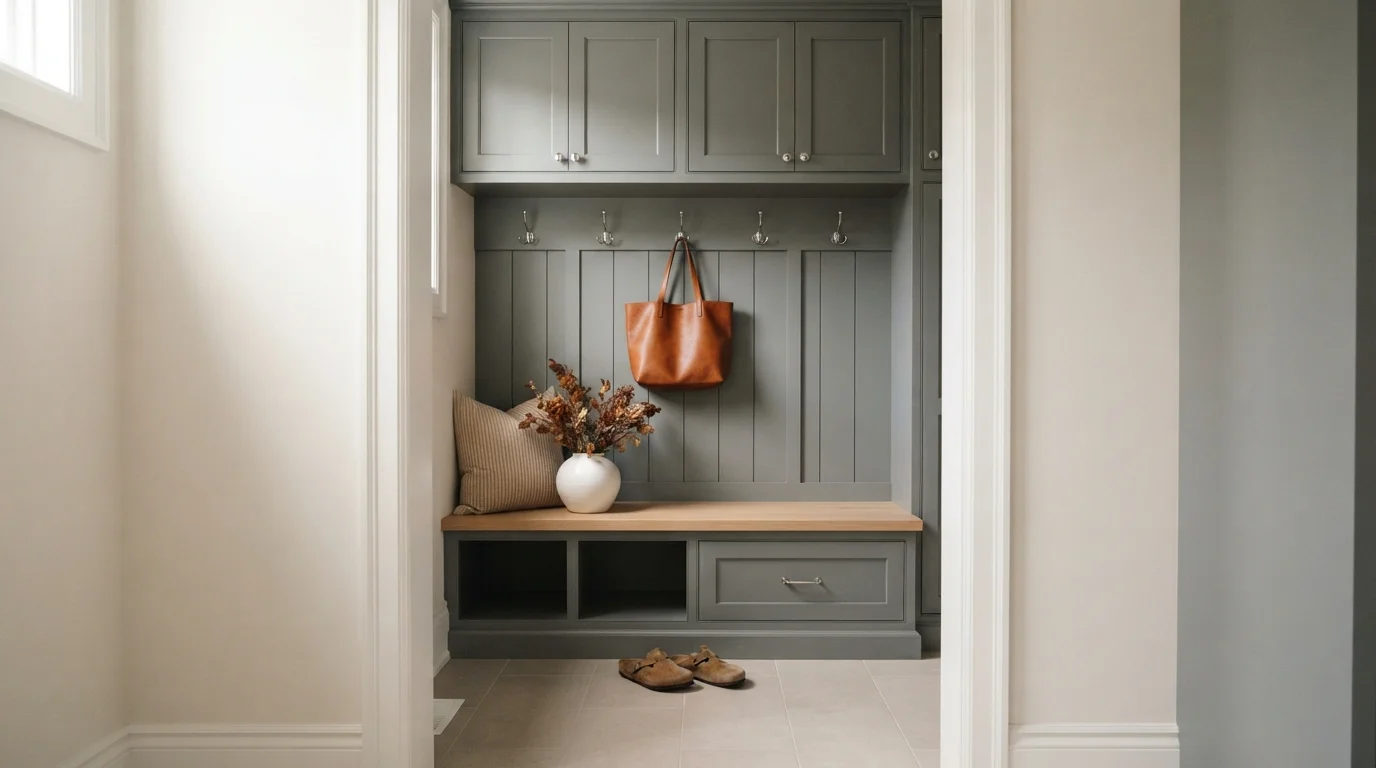
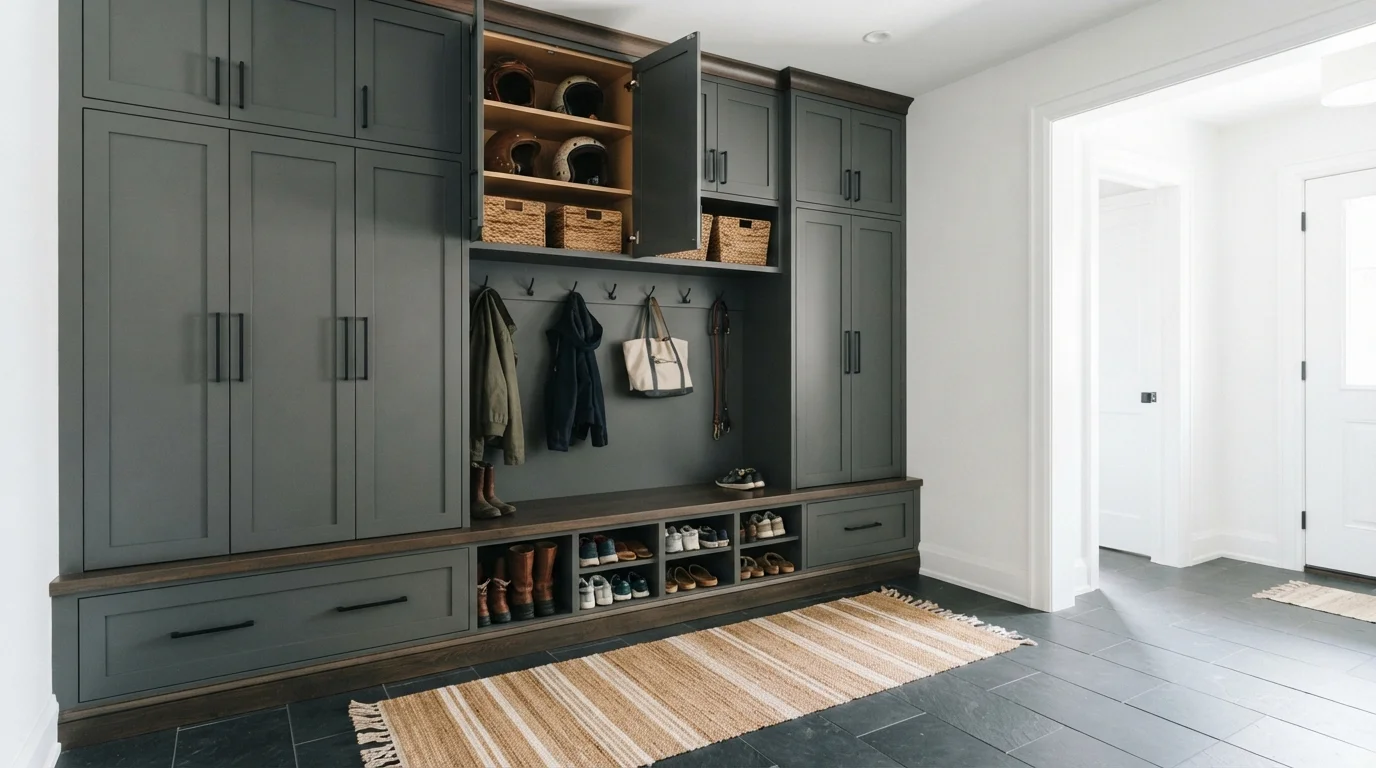
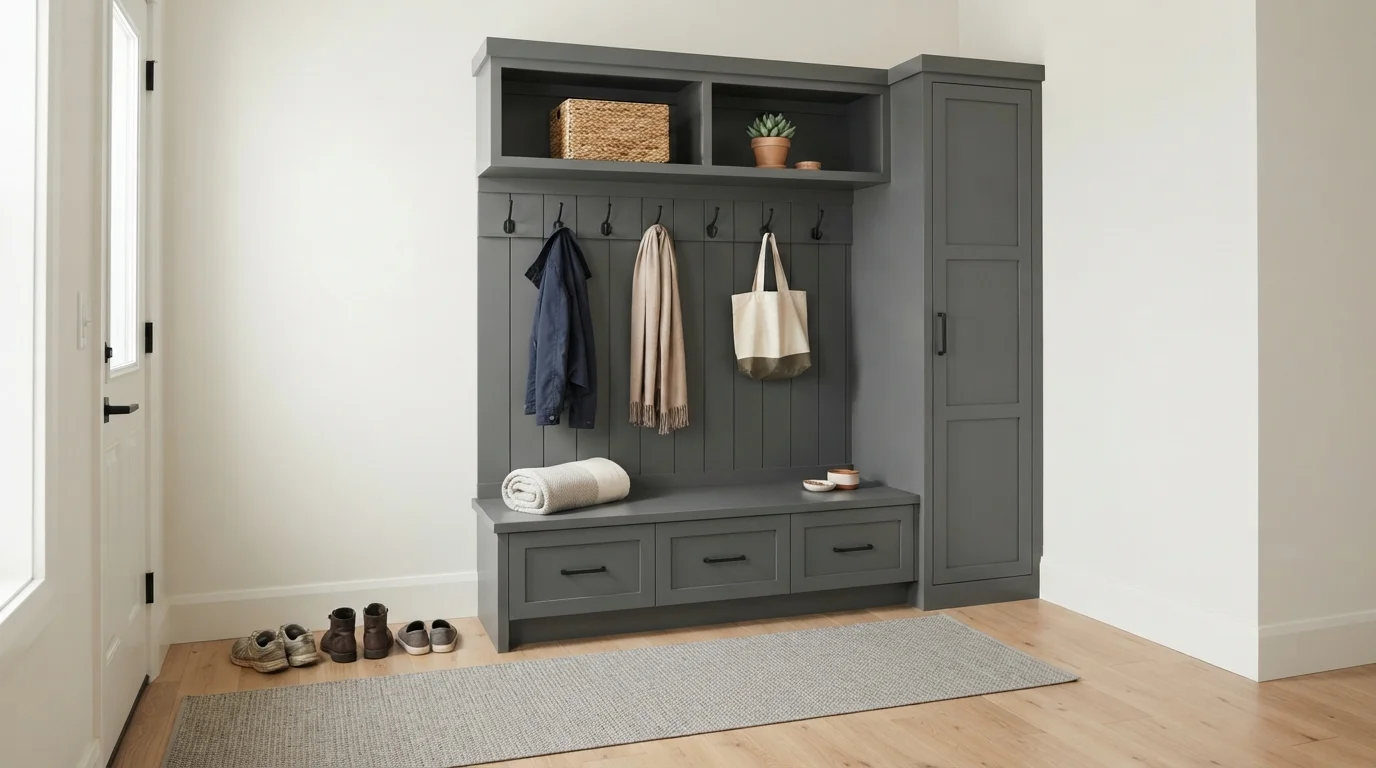
Gray Mudroom Paint Colors
3,425 gray colors that work in mudrooms, drawn from the full ~30,000-color US paint deck. Below: editor's picks specific to mudrooms, then 30 picks spread across the LRV range — narrow further on the brand page when you've shortlisted.
Gray is the most-recommended neutral in American interiors — the safe choice that anchors a room without committing to a strong color. The "true" grays here lean cool (blue or violet undertone) or stay almost dead-neutral. The warm-leaning grays (taupe, mushroom, greige) live in the Neutral family next door because they read closer to beige than to true gray on the wall.
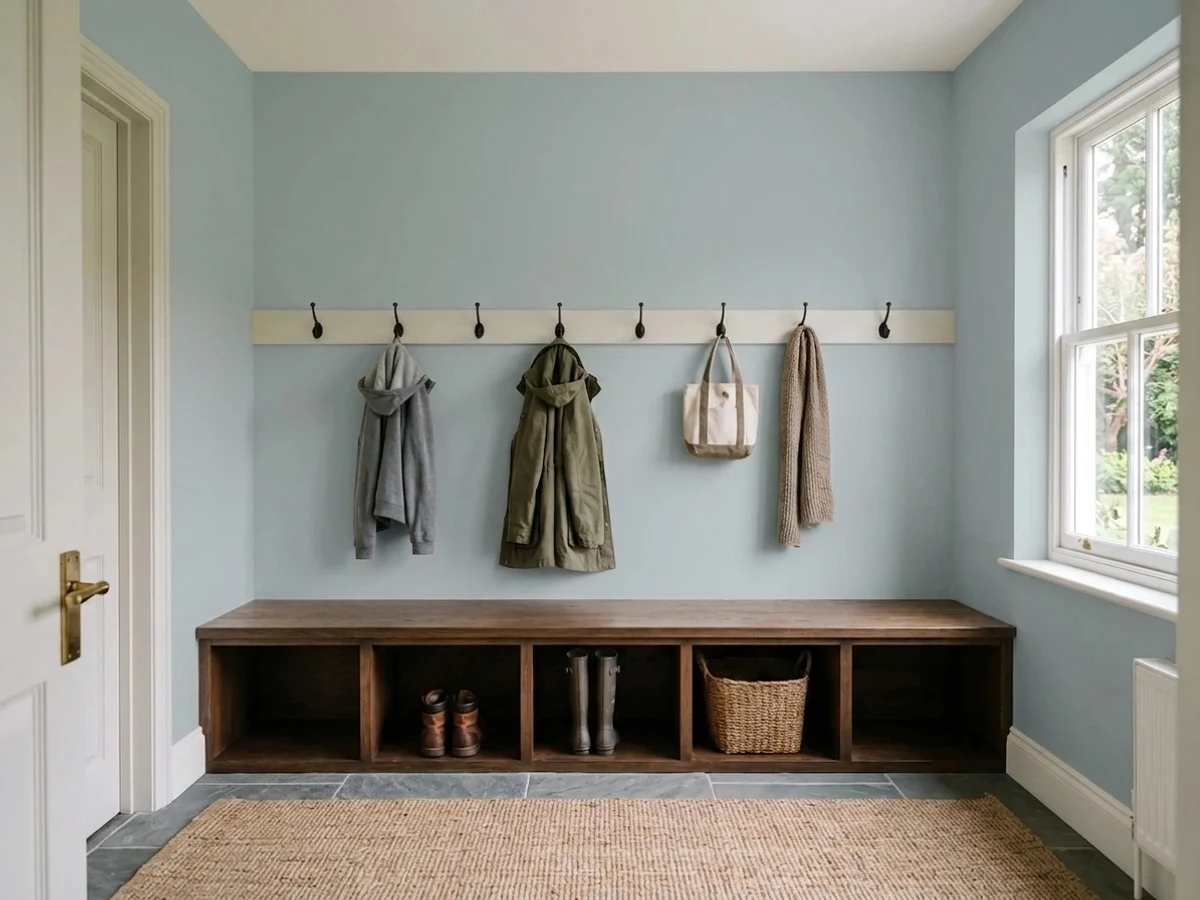
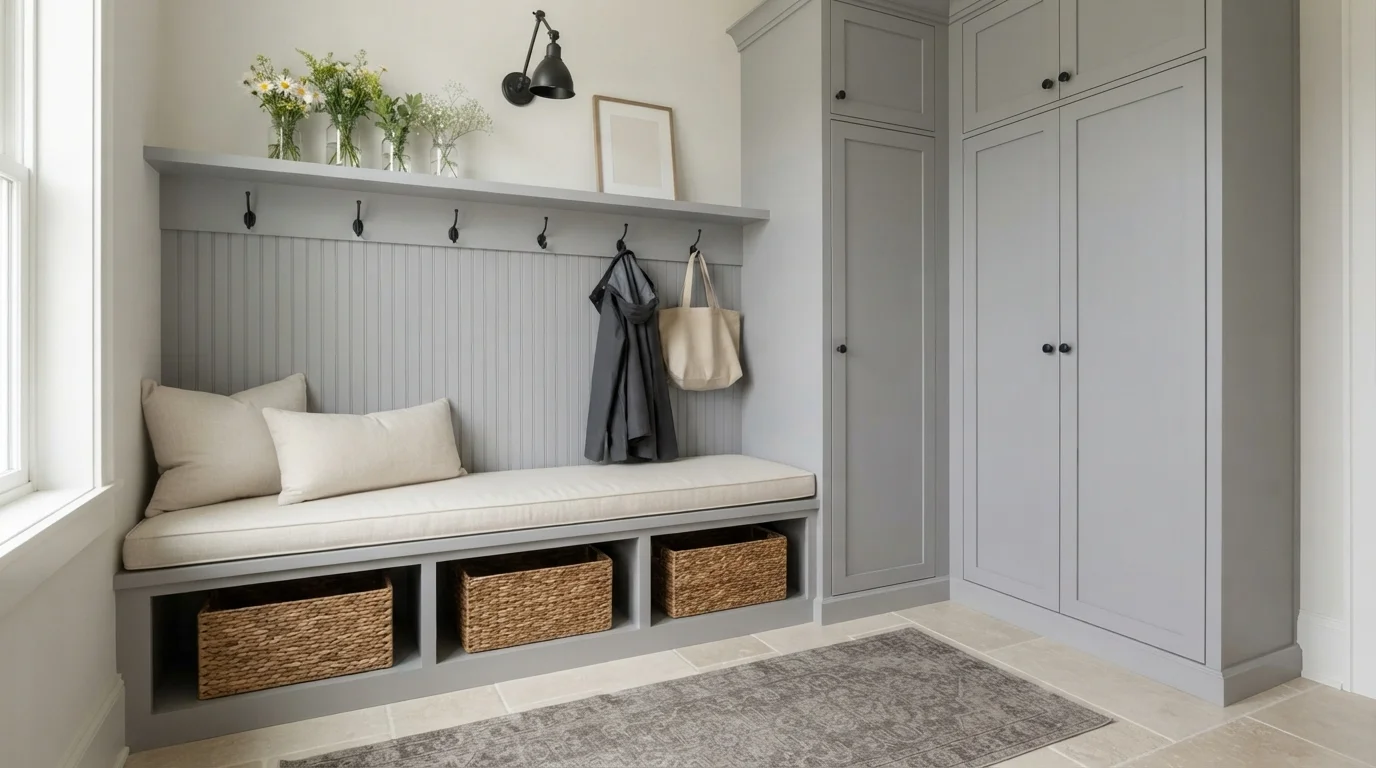
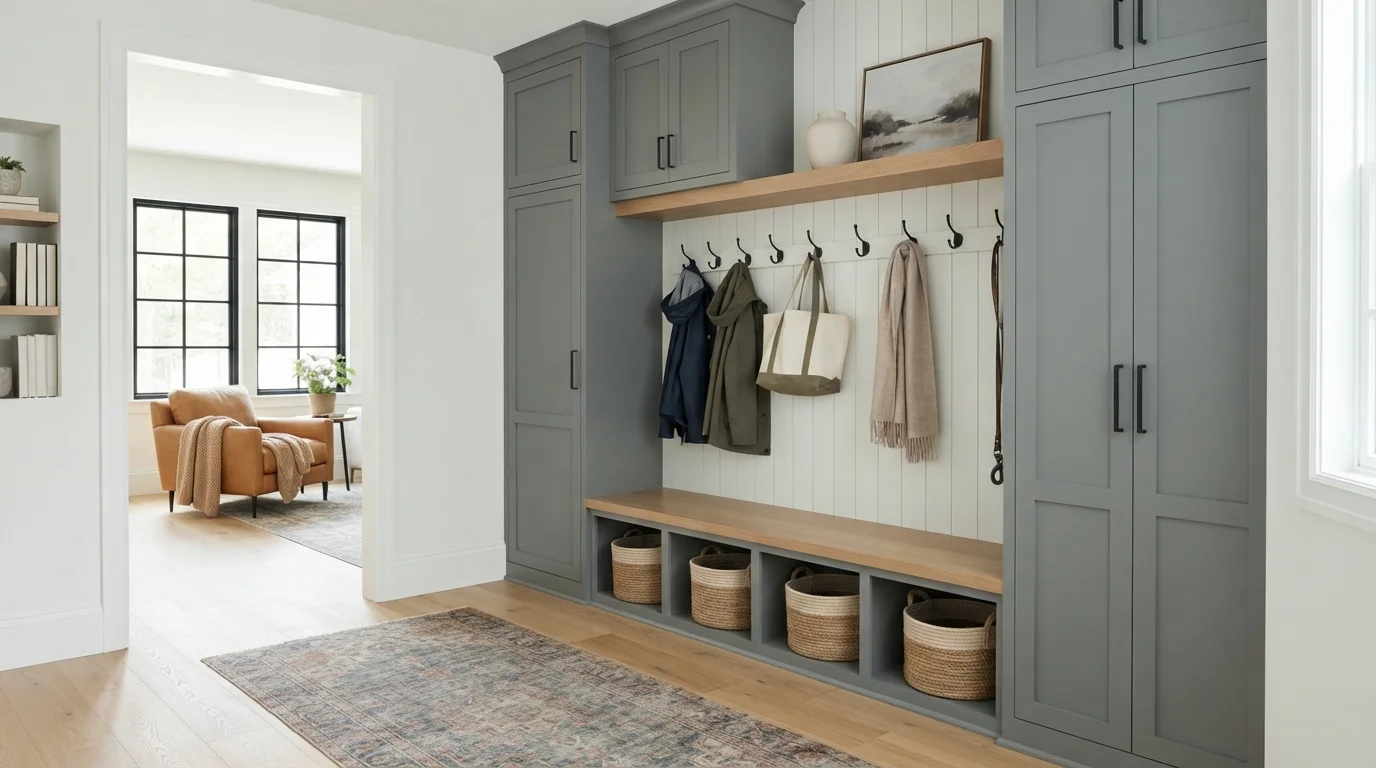
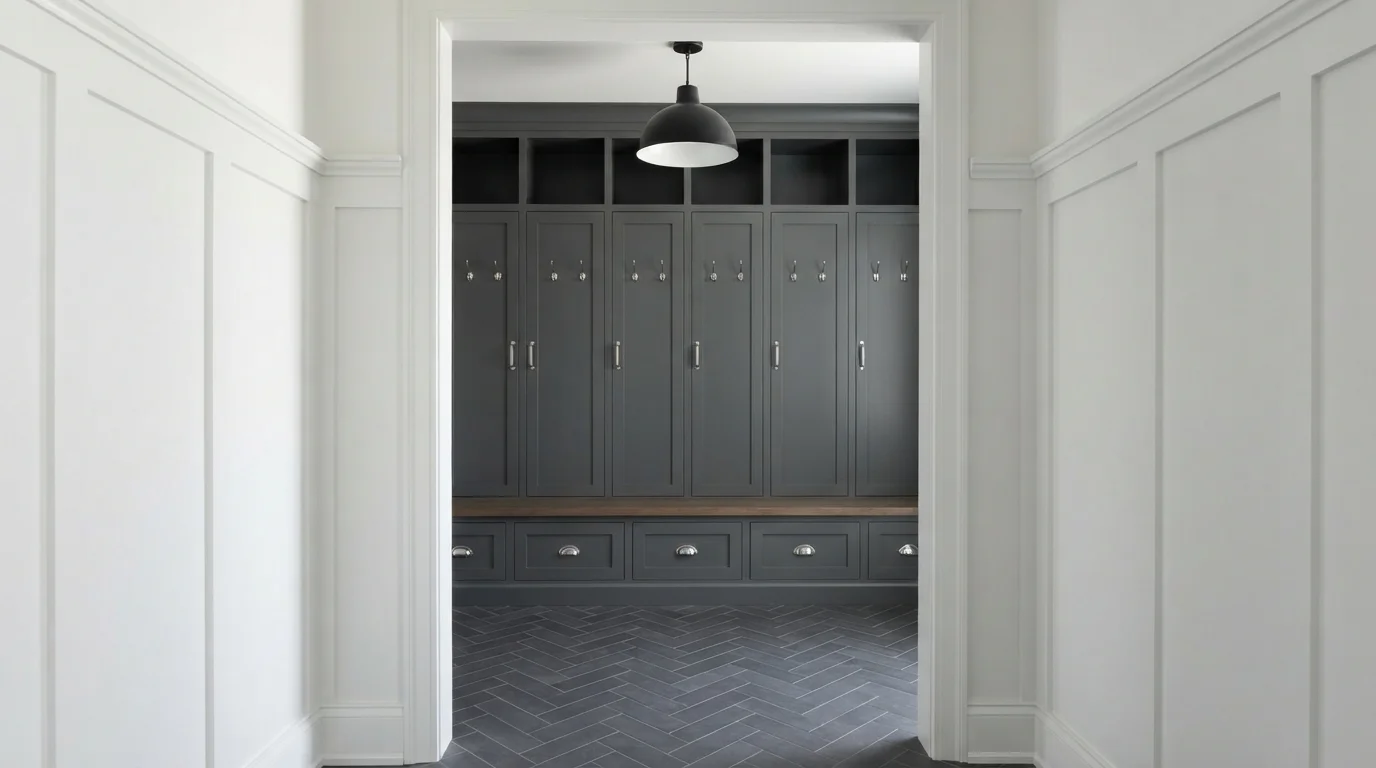
Editor's Picks: Gray for Mudrooms
4 picks30 Gray Picks Across the LRV Range
30 of 3,425 · sorted dark → lightLooking for more? All gray → covers every brand; brand × family pages show full decks.
Gray Mudroom Colors at Every US Brand
21 brands · up to 10 picks eachUp to 10 picks per brand spread across the gray LRV range, drawn from each brand's full deck. Tap any swatch with a curated guide for full spec; tap the brand title for the brand's complete gray deck.
Behr
Glidden
Valspar
Benjamin Moore
PPG / Glidden
Sherwin-Williams
Dunn-Edwards
Dutch Boy
Diamond Vogel
Hirshfield's
Kompozit
C2 Paint
Rodda
Magnolia Home
Farrow & Ball
Clare
Portola Paints
Annie Sloan
Backdrop
Rust-Oleum
Other Mudroom Color Families
Gray Colors in Other Rooms
Gray Paint Colors for a Mudroom
A mudroom is the hardest-working entry in the house. Boots scuff the baseboards, wet coats drip on the walls, and bags swing into corners all day long. Gray is a smart pick here because it hides the gray-brown grime that mud, salt, and dust leave behind better than a bright white or a warm cream ever could. It reads clean and calm without showing every smudge the first week.
The trick is that "gray" covers a huge range, and a mudroom is usually a small, low-light space tucked between the garage and the kitchen. The wrong gray can turn flat and cold, or pull blue and clinical, or go muddy in dim light. This page walks through how to pick the right depth and undertone for your mudroom specifically, what sheen actually survives the abuse, and how to pair gray with the trim, lockers, and floors you already have. Every color shown is mixed to order at the paint counter, so you can match a shade across brands and buy it wherever you already shop.
Why Gray Works in a Mudroom
Gray is forgiving in the one room that takes the most punishment. Scuffs from shoes, splashes from a dog bowl, and the gray film that road salt and dust leave behind all blend into a gray wall instead of standing out against it. That means you wipe and touch up far less often than you would with white or a pale warm tone.
Gray also plays the supporting role a mudroom needs. This is a pass-through space, not a room you sit in, so a neutral that quietly frames your hooks, bench, and baskets is exactly right. It lets the practical stuff do its job without the walls competing for attention.
Picking the Right Depth and Undertone for Your Light
LRV (light reflectance value) tells you how much light a color bounces back, from 0 for black to 100 for pure white. Most mudrooms are small and short on windows, so a gray that looks perfect in the store can go dim and heavy on your wall. If your mudroom is dark, lean toward a lighter gray in the roughly 55 to 70 LRV range so the space doesn't close in on you.
If you have decent daylight or want a cozier, more grounded feel, a mid-depth gray around 35 to 50 LRV can look rich rather than gloomy. Watch the undertone too. North-facing and artificial-only light pull cool grays toward blue and can feel cold, so a gray with a soft warm or greige lean usually wears better in an entry. Tape a sample to the wall and look at it morning and night before you commit.
The Right Sheen for an Entry That Takes Abuse
Skip flat in a mudroom. It looks nice but it won't survive scrubbing, and this is the room you'll scrub most. Go with eggshell or satin on the walls so you can wipe off mud and handprints without rubbing a dull spot into the finish.
For trim, doors, the bench, and any built-in lockers or cubbies, step up to semi-gloss. It's the most washable and stands up to boots, bags, and wet gloves knocking into it. A slightly higher sheen also handles the humidity that comes in with wet coats and umbrellas better than a flat finish, which can get patchy where moisture sits.
Pairing Gray with Trim, Floors, and Built-Ins
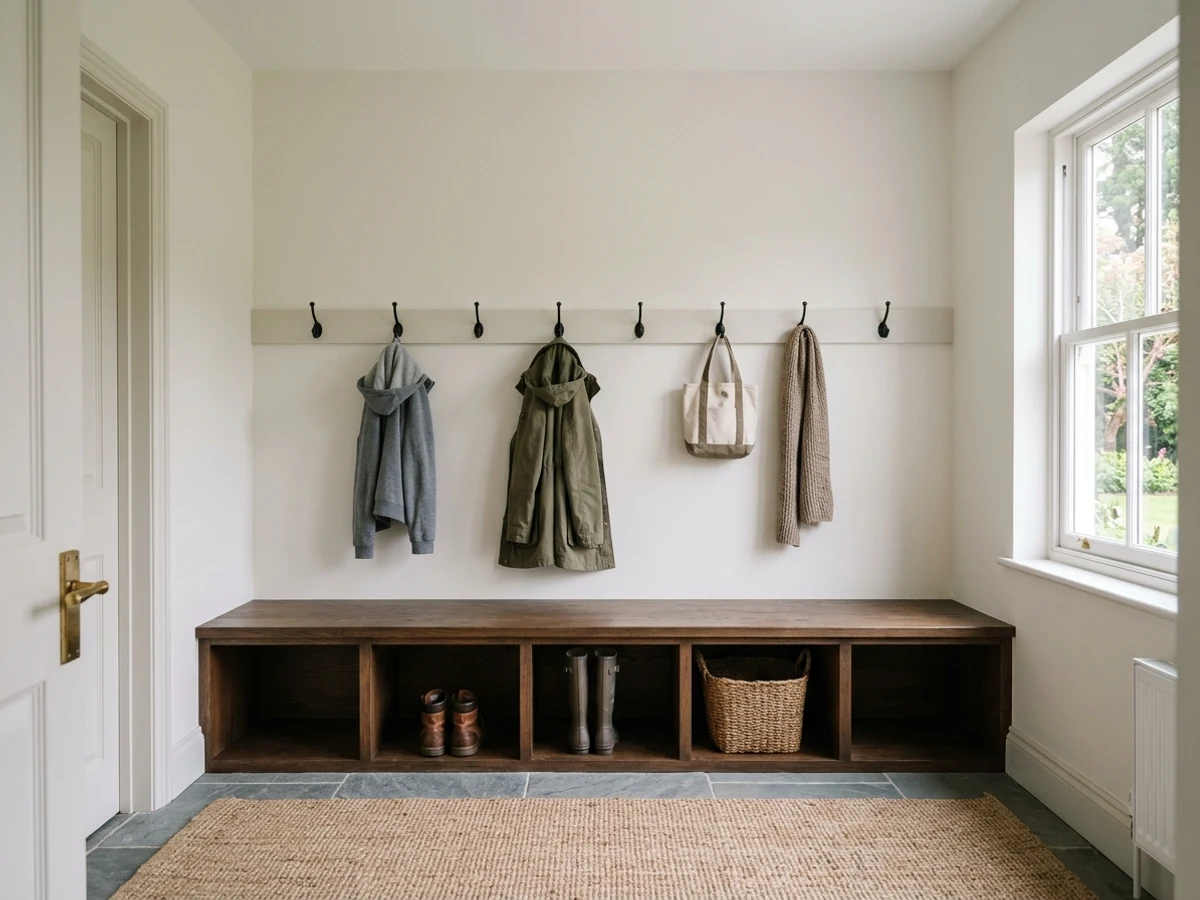
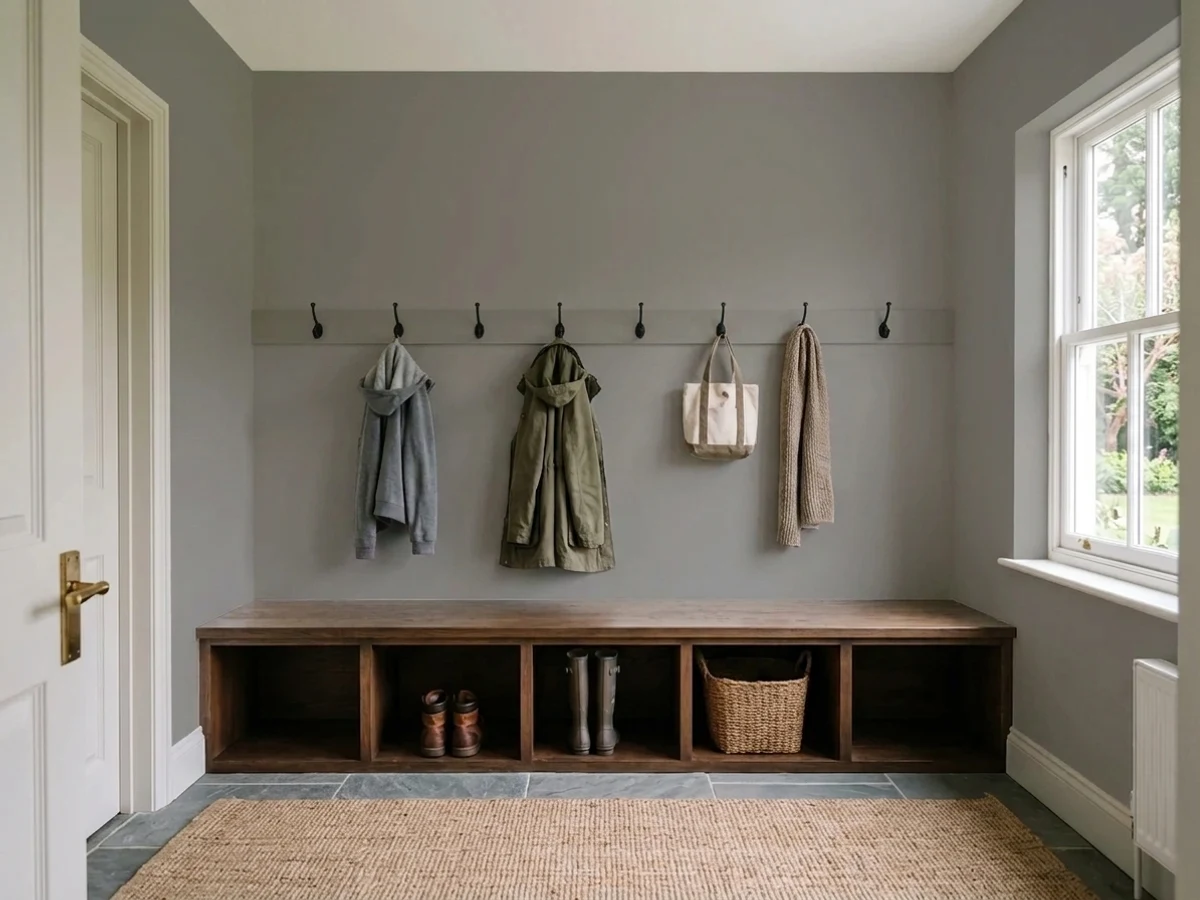
A clean white trim and ceiling keep a gray mudroom from feeling like a cave, and the contrast makes the bench and hooks read as intentional rather than random. If your gray leans warm or greige, pick a trim white with a touch of warmth so the two don't fight. If the gray is cooler, a crisp bright white looks sharper.
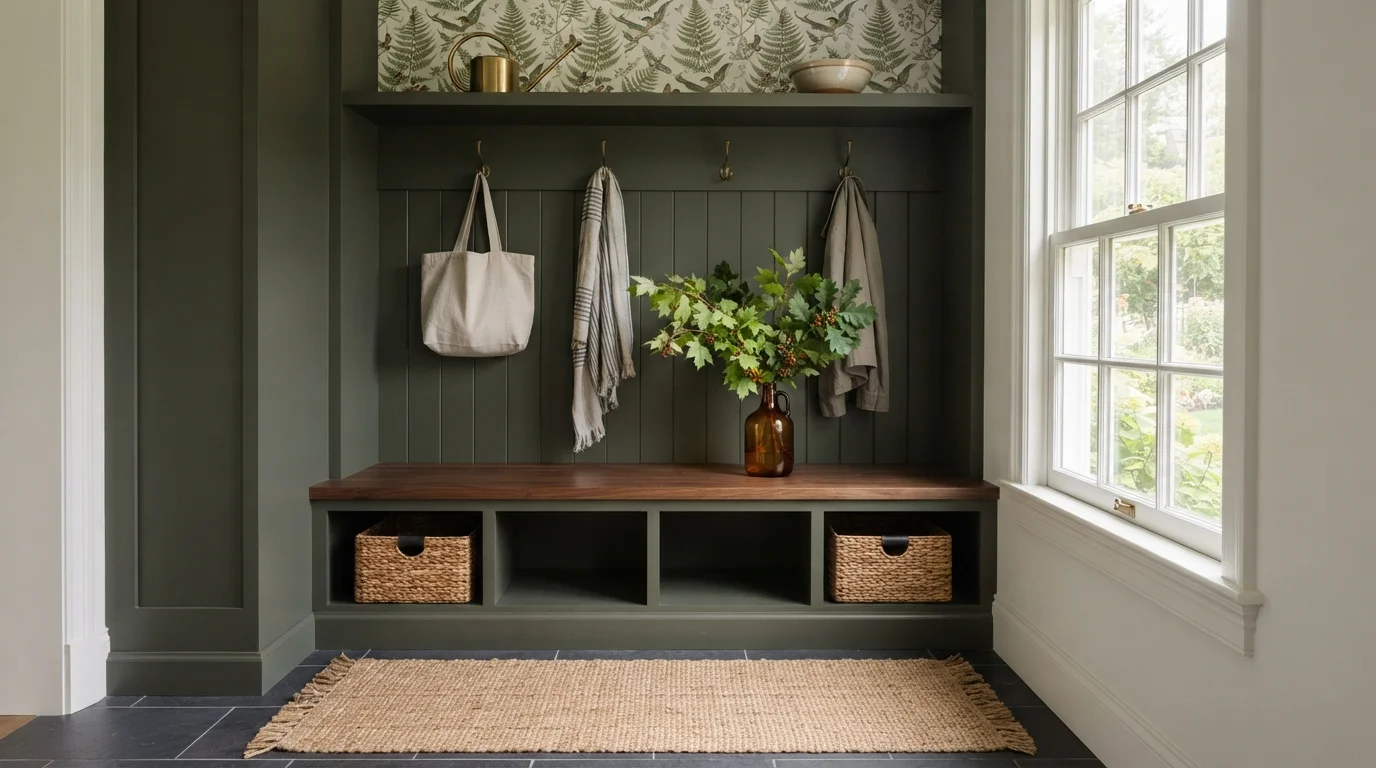
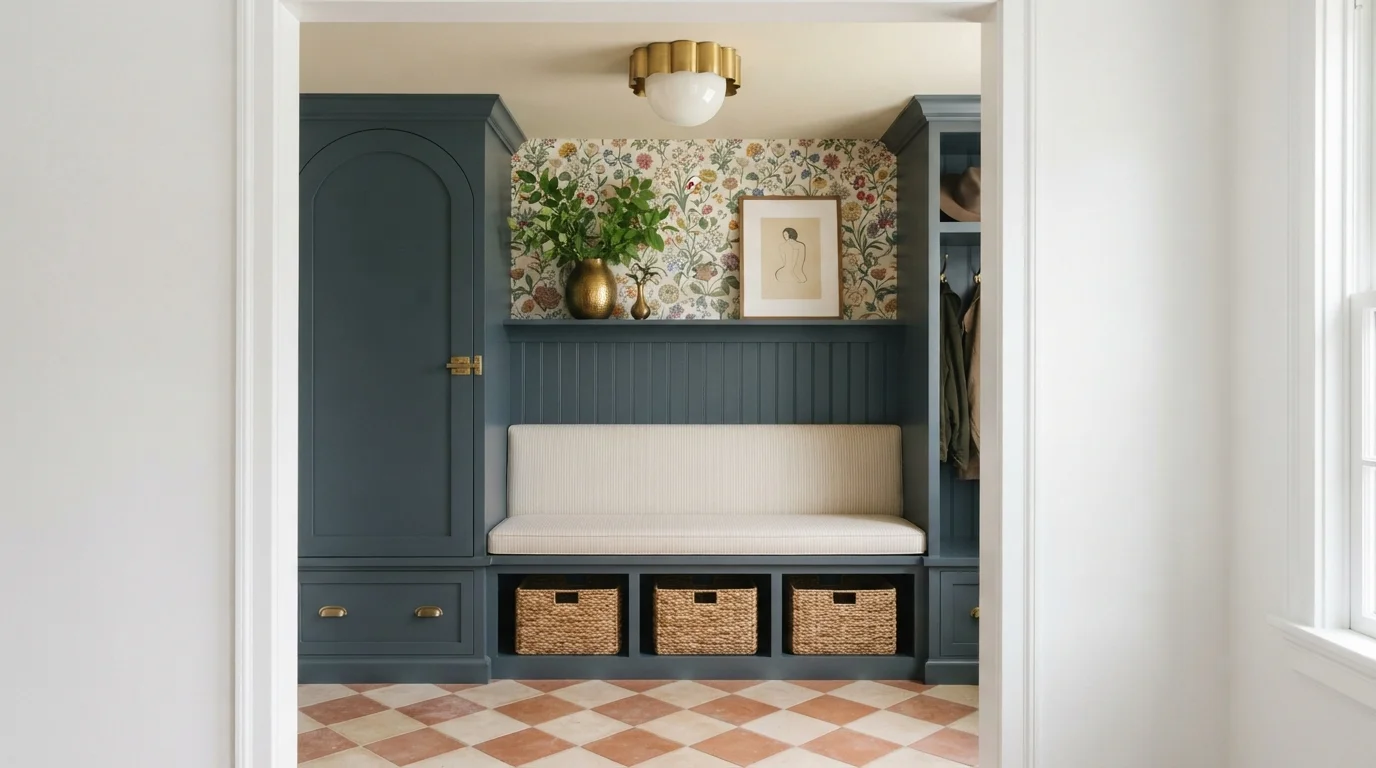
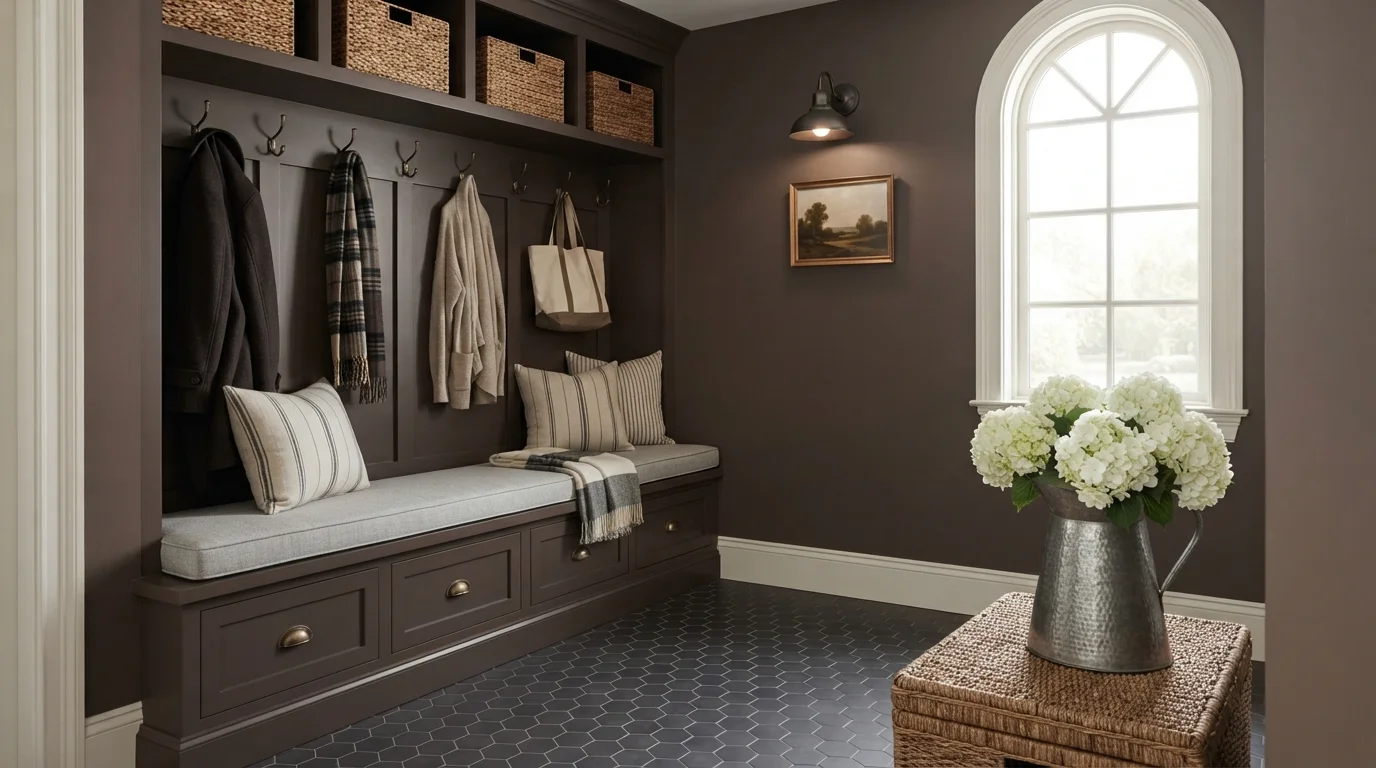
For lockers, cubbies, or a built-in bench, you have two easy paths. Paint them the same gray as the walls for a calm, seamless look that makes a small room feel bigger, or go a few shades darker on the built-ins for a grounded, more tailored feel that hides scuffs at boot height. Tile or wood floors in a warm tone pair well with greige; cooler gray floors or concrete sit better under a true neutral gray. Black or oil-rubbed bronze hooks and brushed-nickel fixtures both look at home against gray.
Common Mistakes to Avoid
The biggest one is going too cool. A blue-gray that looked sophisticated on a chip can feel cold and clinical in a windowless entry, especially under standard bulbs. The second is choosing a gray that's too light and chalky on the lower walls, where it shows every scuff and needs constant touch-ups.
Another common miss is testing only in daylight. Mudrooms run on artificial light half the time, so check your sample under the actual bulbs you use at night. And don't forget sheen: a beautiful gray in flat will frustrate you within a month here. Since every shade is mixed to order, you can match the exact gray you love across brands and buy the version that comes in the durable finish your entry needs.
Gray Mudroom Paint — Frequently Asked Questions
what is the best shade of gray for a mudroom?+
There's no single answer, but a soft greige or a warm-leaning mid-gray tends to work best because it hides dirt and stays cozy in a low-light entry. If your mudroom is dark, choose a lighter gray so the space doesn't feel closed in. Sample two or three depths on the wall before deciding.
what sheen should I use on mudroom walls?+
Use eggshell or satin on the walls so you can wipe off mud and handprints without leaving dull marks. For trim, doors, and built-in lockers or benches, use semi-gloss because it's the most washable and best at handling knocks and moisture. Avoid flat finishes in this room.
will gray make a small mudroom feel smaller?+
Not if you pick the right depth. A lighter gray in roughly the 55 to 70 LRV range keeps a small entry feeling open, while painting the built-ins the same color reduces visual clutter and makes the room feel larger. A very dark gray can shrink a tight space, so save deeper tones for accents or built-ins.
what trim color goes with gray in a mudroom?+
White trim is the easy, reliable choice and keeps the room from feeling heavy. Match the warmth of your white to your gray: a warm or greige gray pairs with a softer white, while a cooler gray looks sharp with a crisp bright white.
why does my gray mudroom look blue or cold?+
Cool grays pull toward blue in north-facing rooms and under standard artificial bulbs, which is common in entries with little daylight. Switching to a gray with a soft warm or greige undertone usually fixes it. Always test your sample under the actual lights you use at night, not just in daylight.
can I match a gray I like across different paint brands?+
Yes. Every color shown here is mixed to order at the paint counter, so a gray from one brand can be cross-matched and tinted by another. That lets you pick the shade you love and buy it in the durable finish you need, wherever you already shop.