Neutral Mudroom Paint Colors
4,152 neutral colors that work in mudrooms, drawn from the full ~30,000-color US paint deck. Below: editor's picks specific to mudrooms, then 30 picks spread across the LRV range — narrow further on the brand page when you've shortlisted.
Neutrals are the colors that aren't quite gray and aren't quite tan — the warm, low-saturation in-between bucket where greige, taupe, mushroom, bone, and accessible beige all live. They've replaced cool grays as the default safe wall color of the late 2020s, particularly in open-plan homes where one color flows through multiple rooms.
Editor's Picks: Neutral for Mudrooms
4 picks30 Neutral Picks Across the LRV Range
30 of 4,152 · sorted dark → lightLooking for more? All neutral → covers every brand; brand × family pages show full decks.
Neutral Mudroom Colors at Every US Brand
21 brands · up to 10 picks eachUp to 10 picks per brand spread across the neutral LRV range, drawn from each brand's full deck. Tap any swatch with a curated guide for full spec; tap the brand title for the brand's complete neutral deck.
Behr
Benjamin Moore
Glidden
Sherwin-Williams
Valspar
PPG / Glidden
HGTV Home by Sherwin-Williams
Dunn-Edwards
Diamond Vogel
Hirshfield's
Kompozit
Dutch Boy
C2 Paint
Rodda
Farrow & Ball
Magnolia Home
Portola Paints
Clare
Annie Sloan
Backdrop
Rust-Oleum
Other Mudroom Color Families
Neutral Colors in Other Rooms
Neutral Paint Colors for a Mudroom
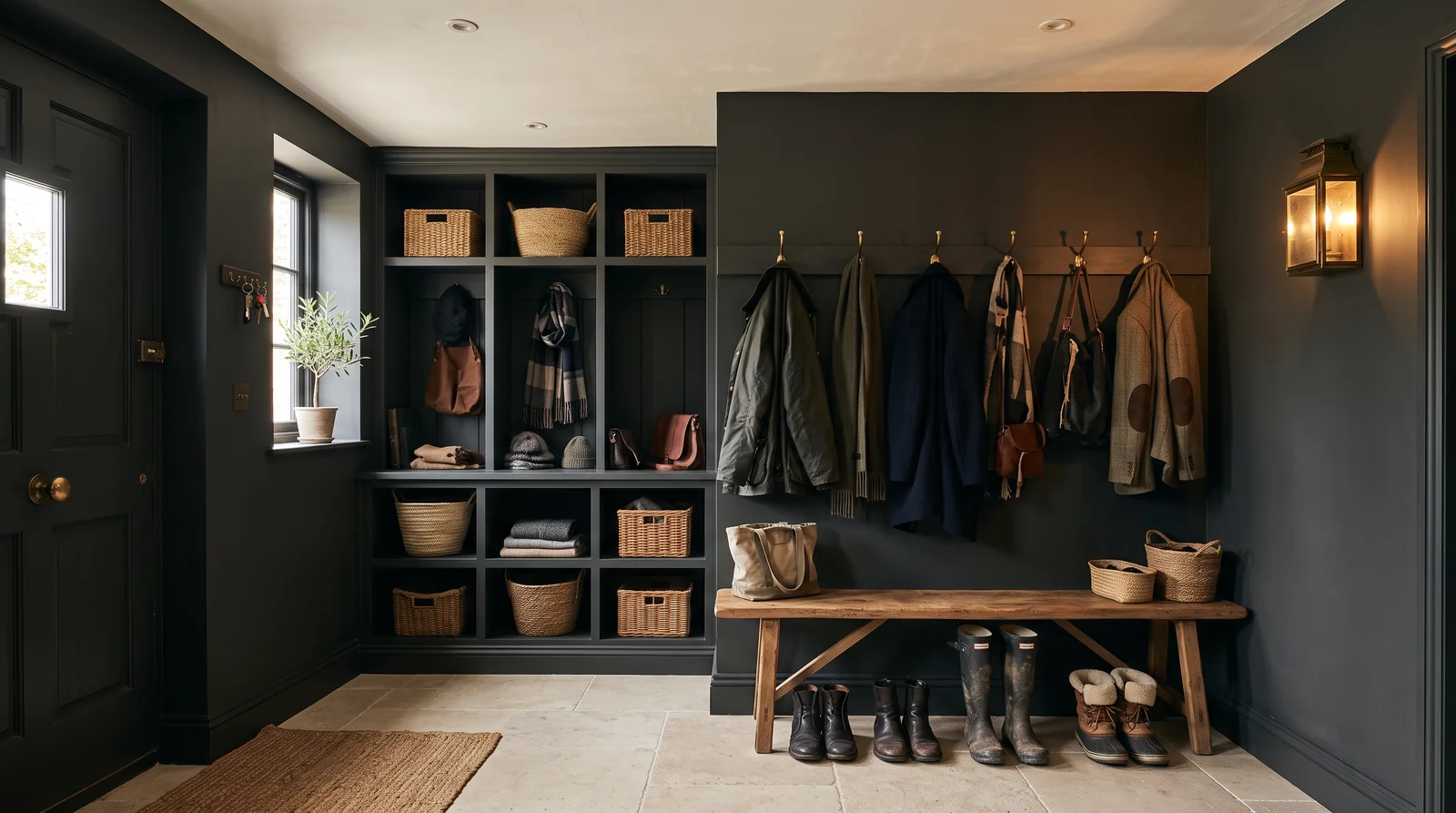
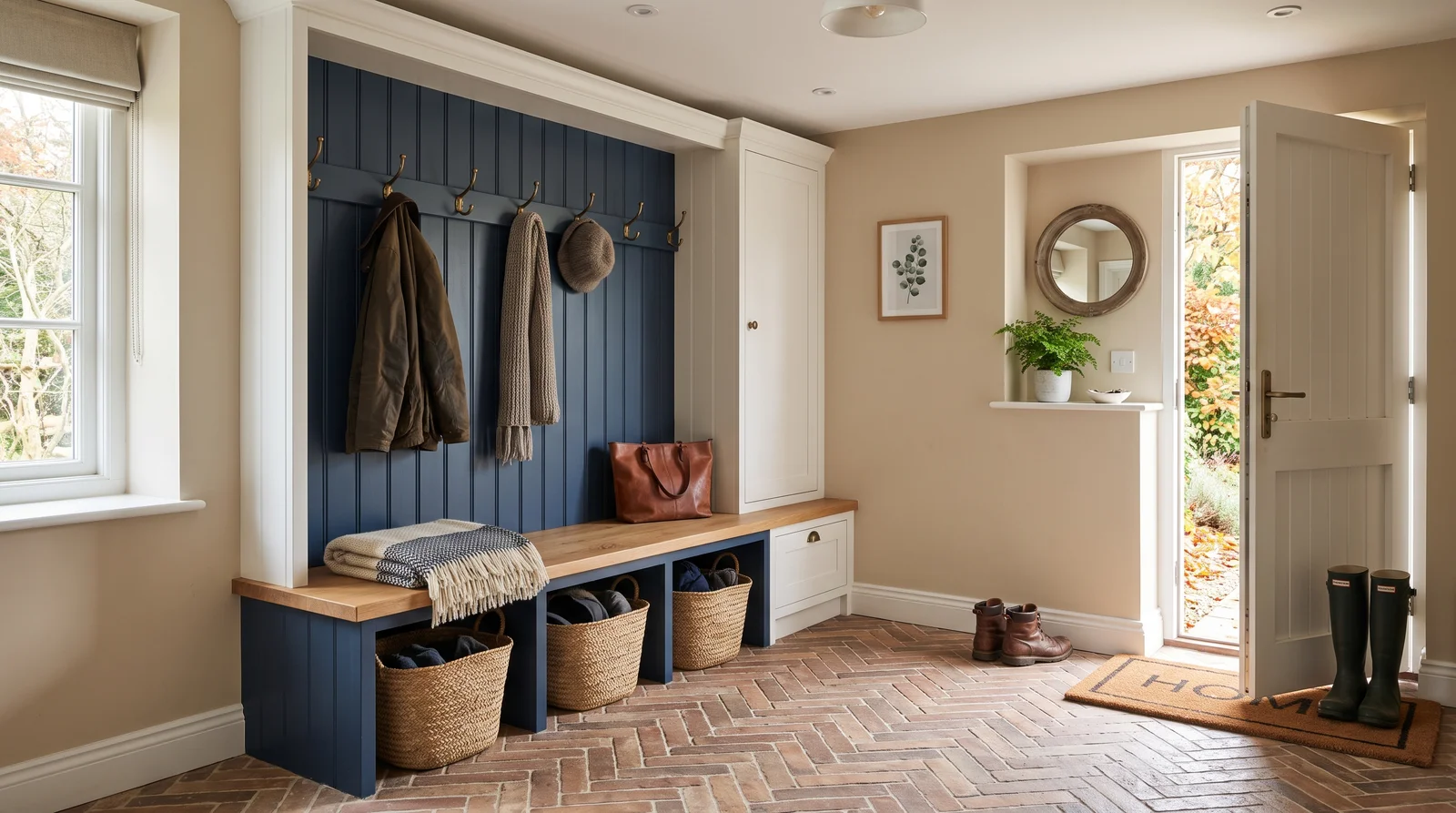
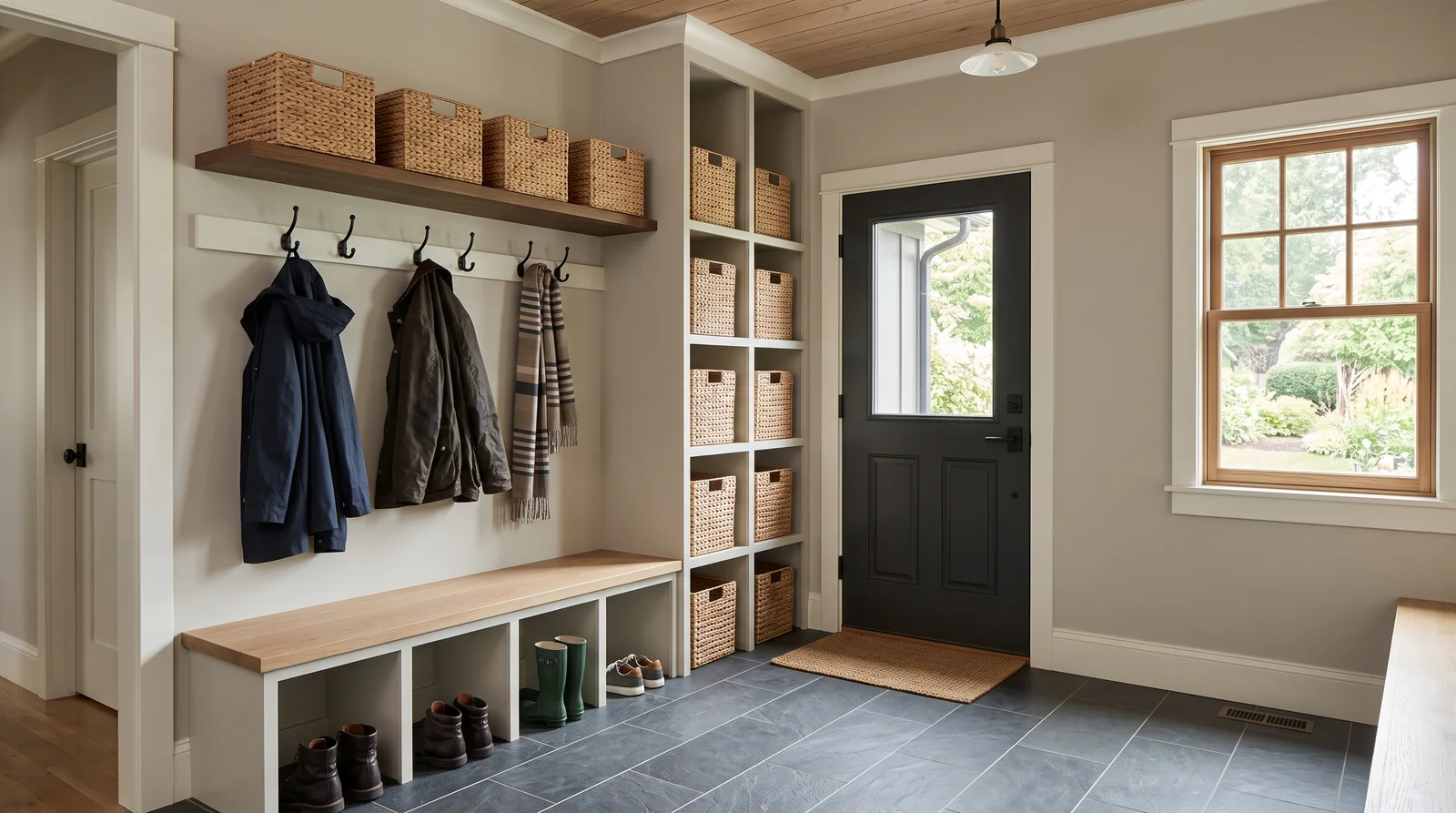
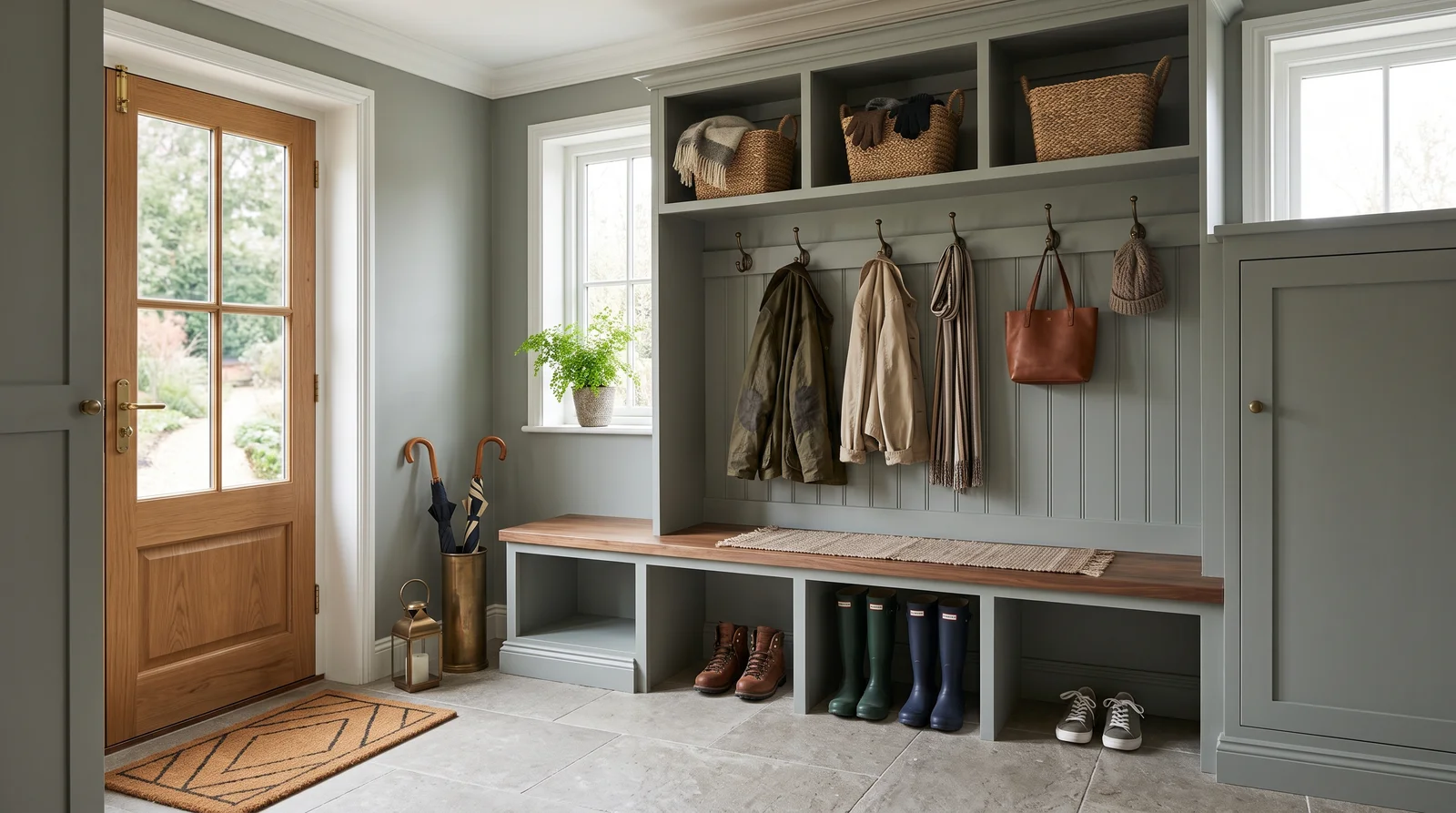
A mudroom is the hardest-working room in the house. Wet boots, dripping coats, backpacks, the dog, and a constant stream of people moving through it. A neutral color is the smart default here because it hides a lot, takes a beating without looking dated, and lets you swap out hooks, baskets, and bench cushions over the years without ever clashing.
But "neutral" in a mudroom is not the same as neutral in a living room. This space usually has little natural light, a lot of scuffs at hand and boot height, and moisture coming in off wet gear. The right neutral, in the right depth and finish, makes the room feel clean and intentional instead of dim and grubby. Below is how to choose one, what to pair it with, and the mistakes worth avoiding.
Why Neutral Just Works in a Mudroom
A mudroom takes more abuse than almost any room, so the color needs to forgive grime, not fight it. Neutrals do that better than bold or trendy shades because dirt, scuffs, and salt streaks read as wear on a strong color but blend quietly into a soft tan, greige, or warm gray.
Neutral also keeps the room flexible. You will change out the bench, the baskets, the seasonal coats, and maybe the floor tile long before you repaint. A neutral wall is the steady backdrop that makes all of that look coordinated instead of accidental.
Picking the Right Depth for the Light You Have
Most mudrooms are short on natural light, tucked off a garage or back entry with one small window or none. In a dim room, very pale neutrals can go flat and gray, while very dark ones close the space in. A mid-light neutral with an LRV roughly in the 55 to 70 range usually hits the sweet spot, bouncing what light you have without washing out.
If your mudroom does get good daylight, you have more room to go deeper, an LRV in the 40s on a greige or warm gray reads cozy and grounded rather than gloomy. Watch the undertone in this room especially: north-facing or fluorescent-lit spaces pull cool, so a neutral with a touch of warmth keeps it from turning cold and clinical.
The Finish Matters More Than the Color
This is the one room where sheen is not optional. Walls get touched, splashed, and scrubbed constantly, so skip flat. An eggshell or satin on the walls wipes clean and stands up to a damp cloth, which a flat finish cannot.
For the trim, bench, and any built-in cubbies or lockers, go up to semi-gloss. Those surfaces take the worst of the boot scuffs and wet-bag contact, and the harder finish both resists moisture and lets you wash marks off without leaving a dull spot. The ceiling is the only place a flat or matte still makes sense.
Pairing Neutral with Trim, Cubbies, and Hardware
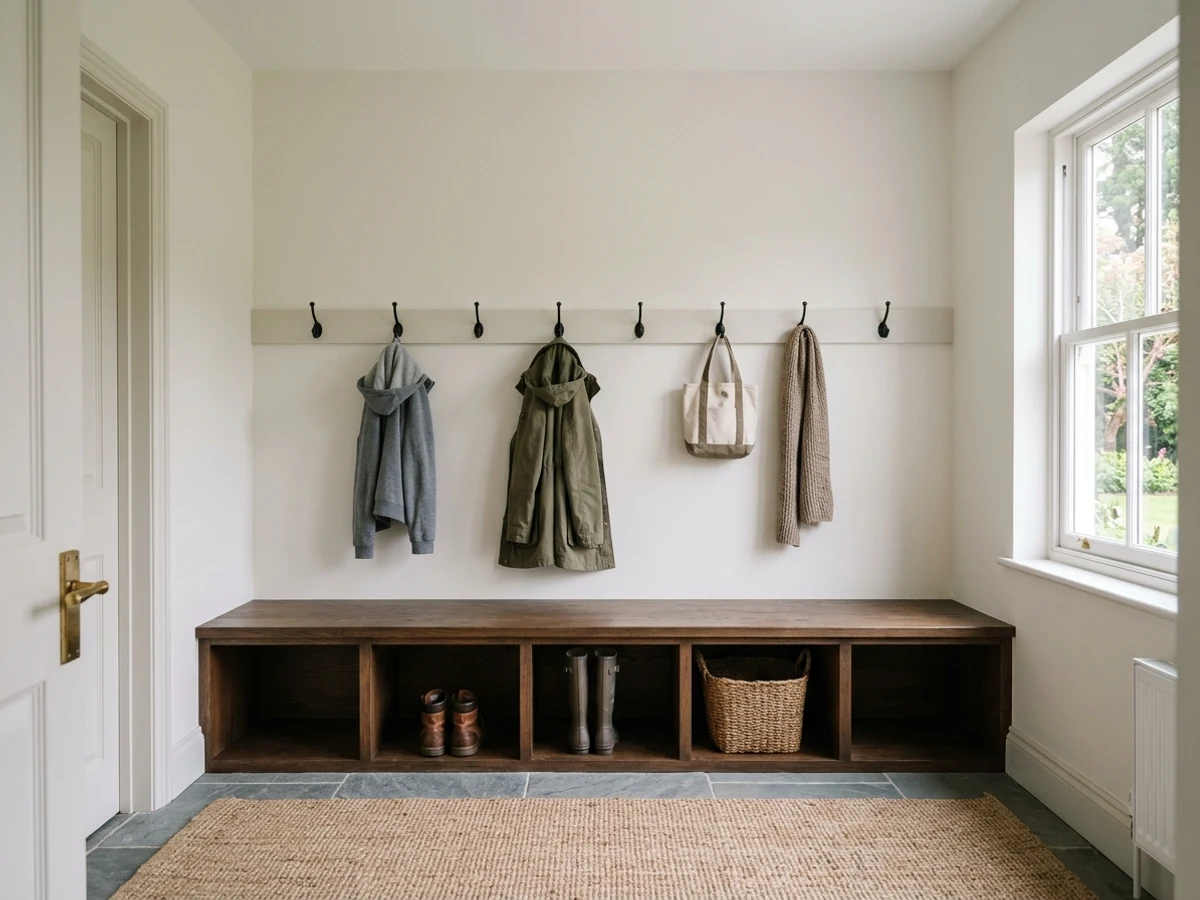
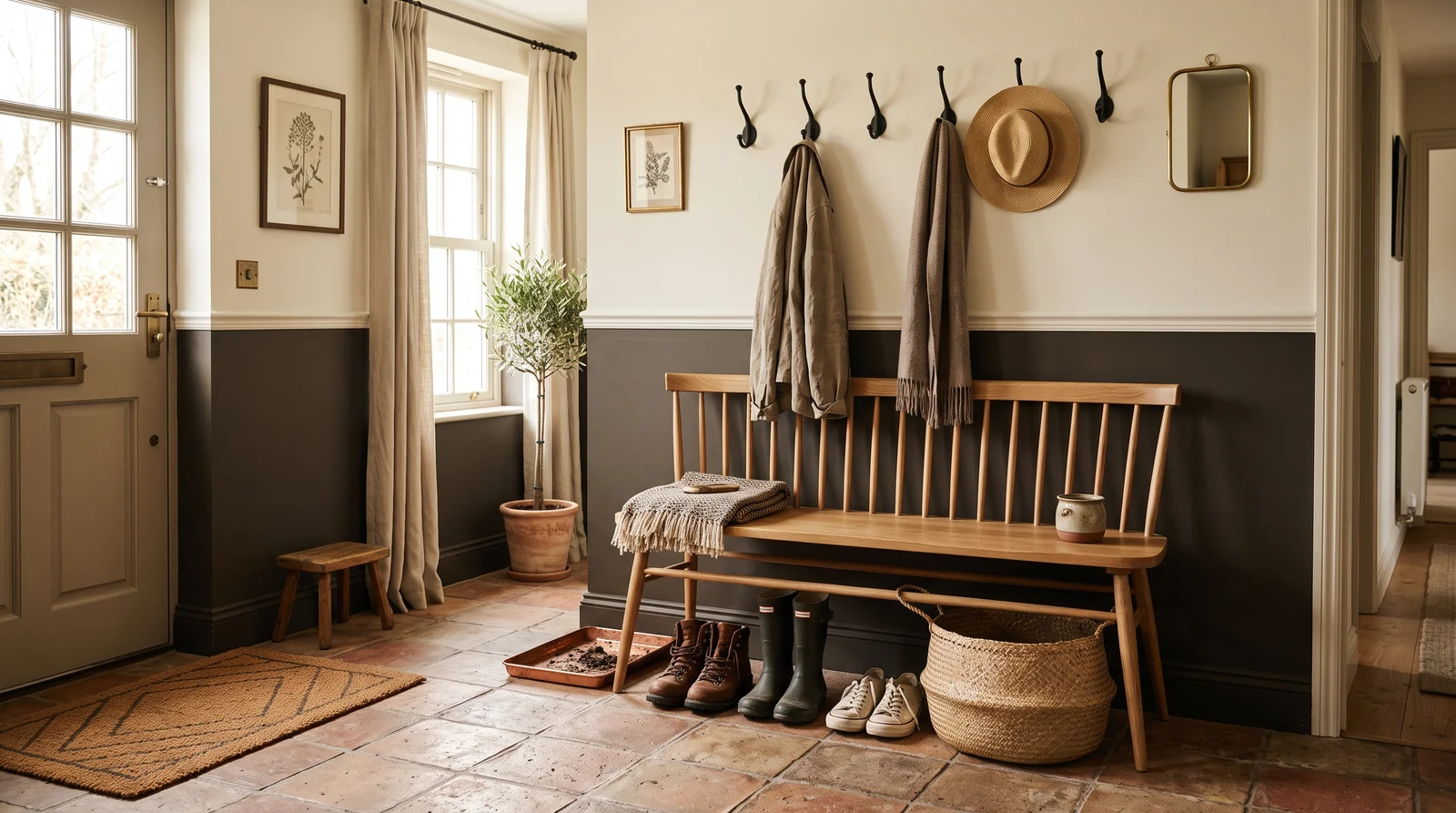
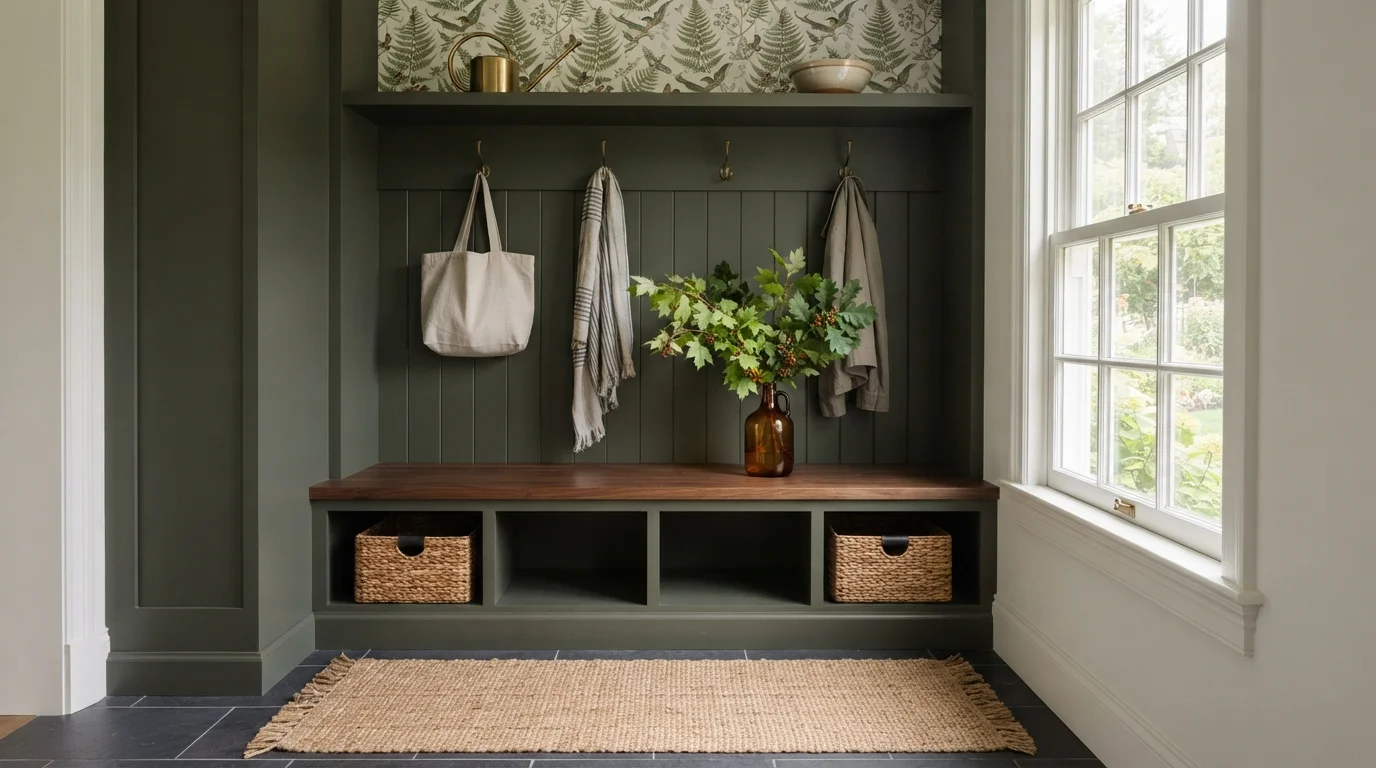
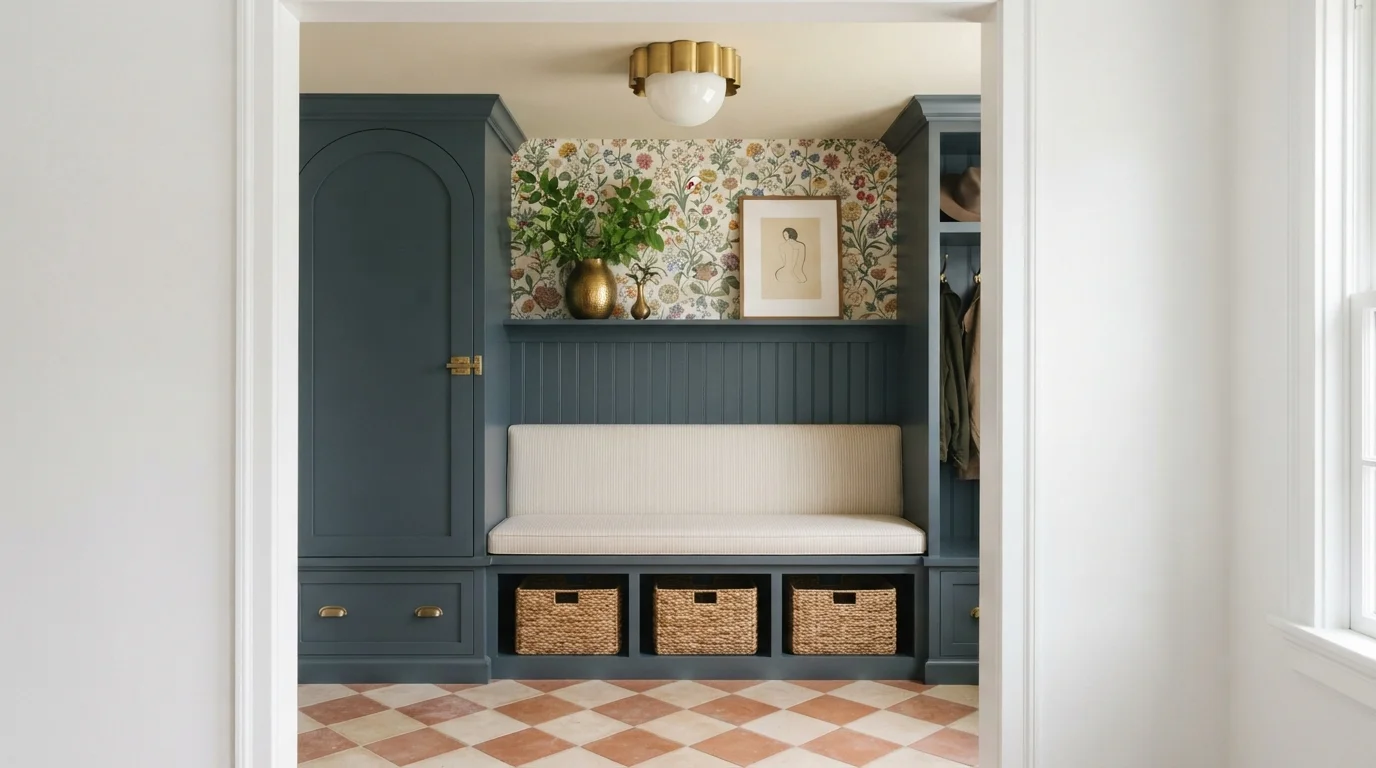
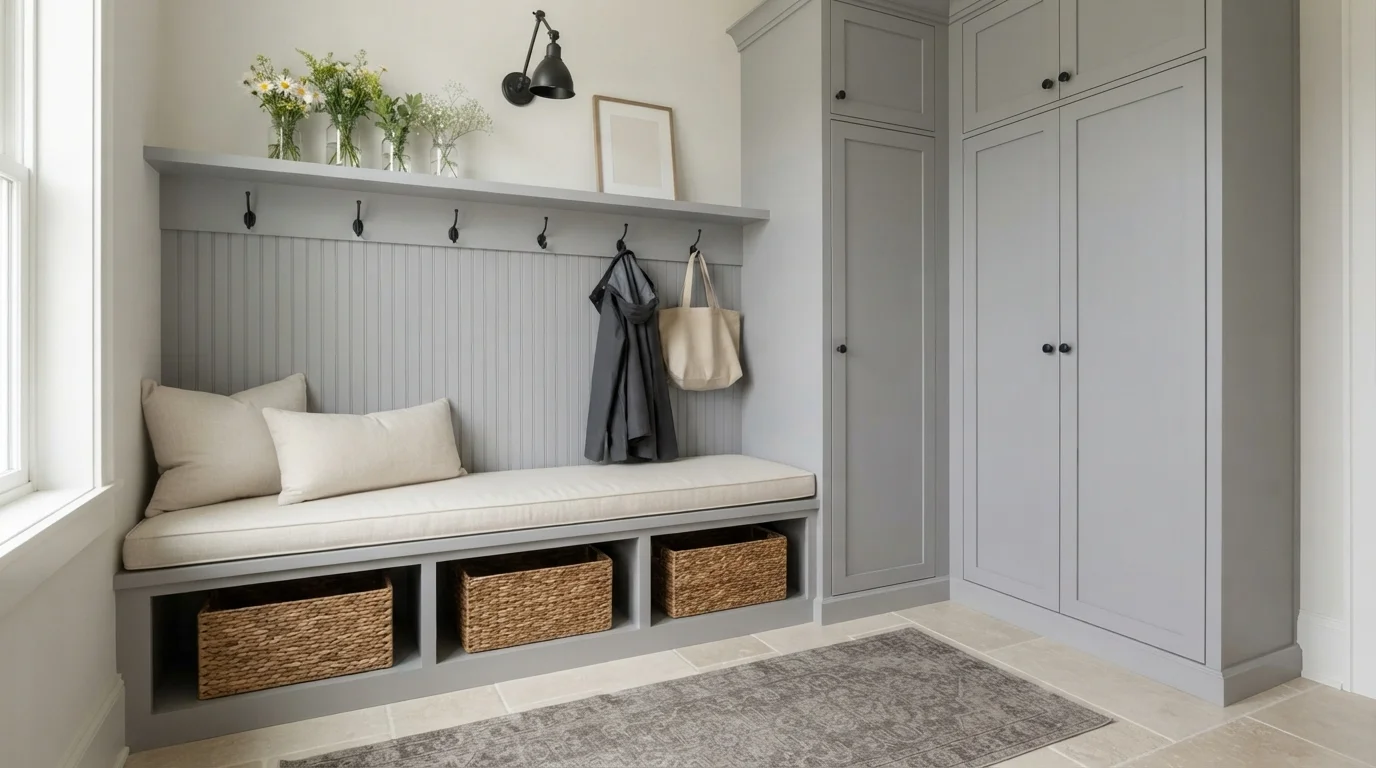
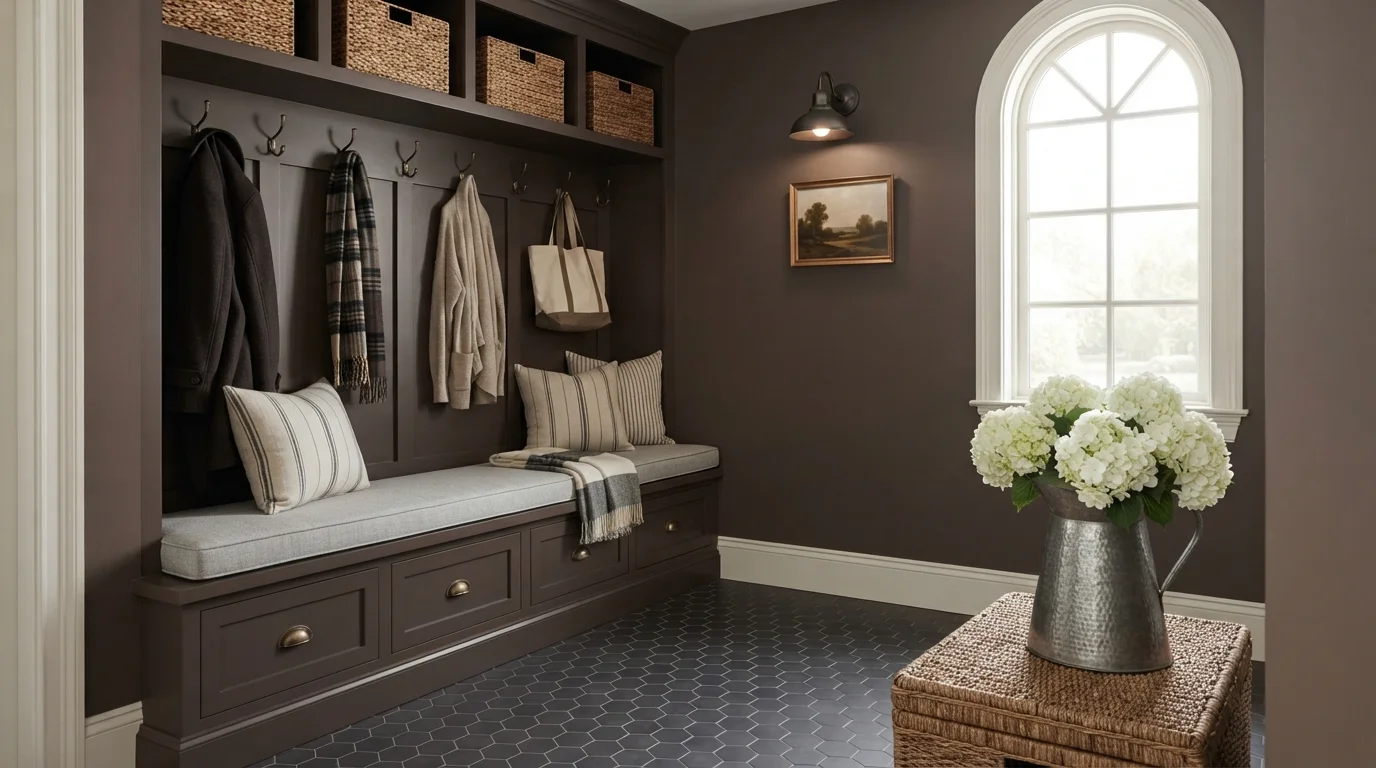
The cleanest look pairs your neutral walls with a crisp off-white trim and bench, then lets the floor and metals do the contrast. A warm neutral wall with creamy trim feels welcoming, while a cooler greige with a brighter white trim reads more modern, match your trim's warmth to the wall so it looks deliberate.
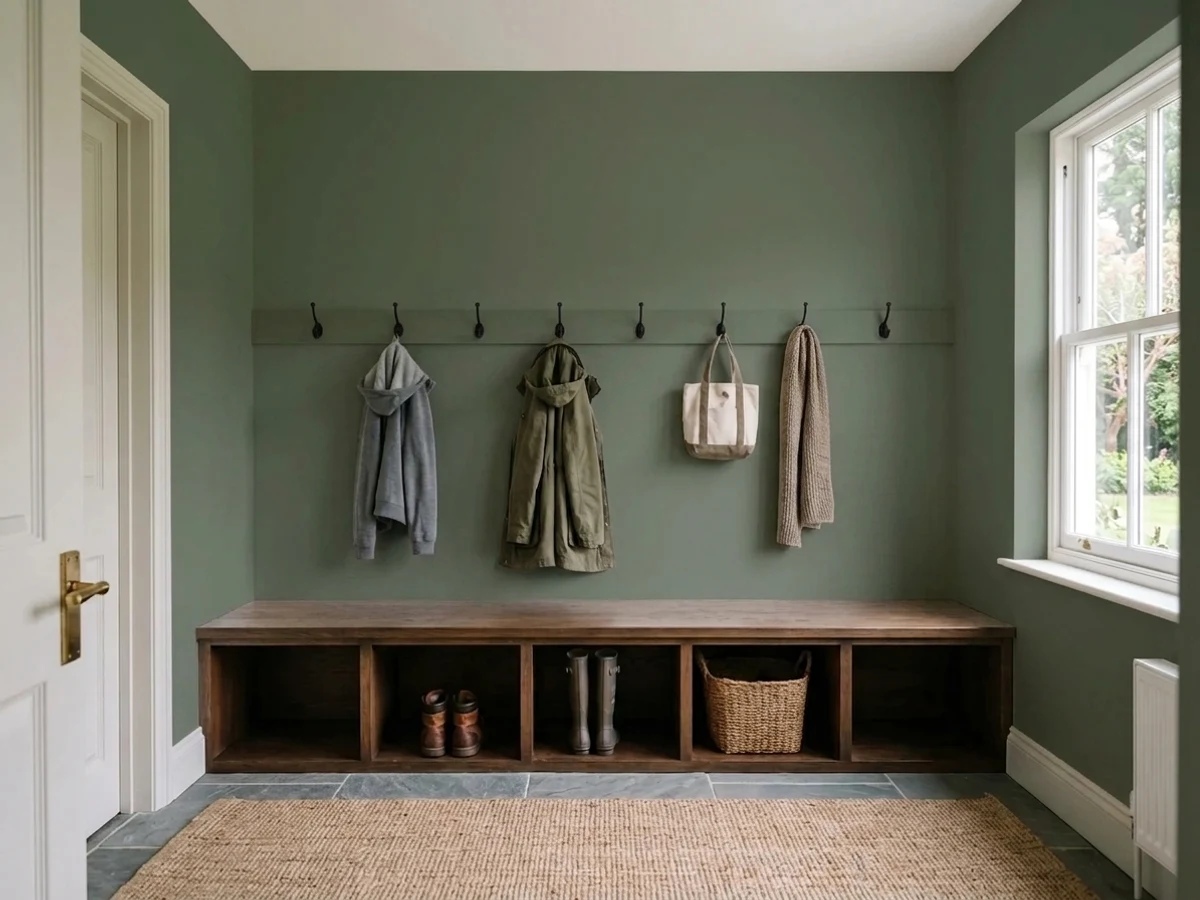
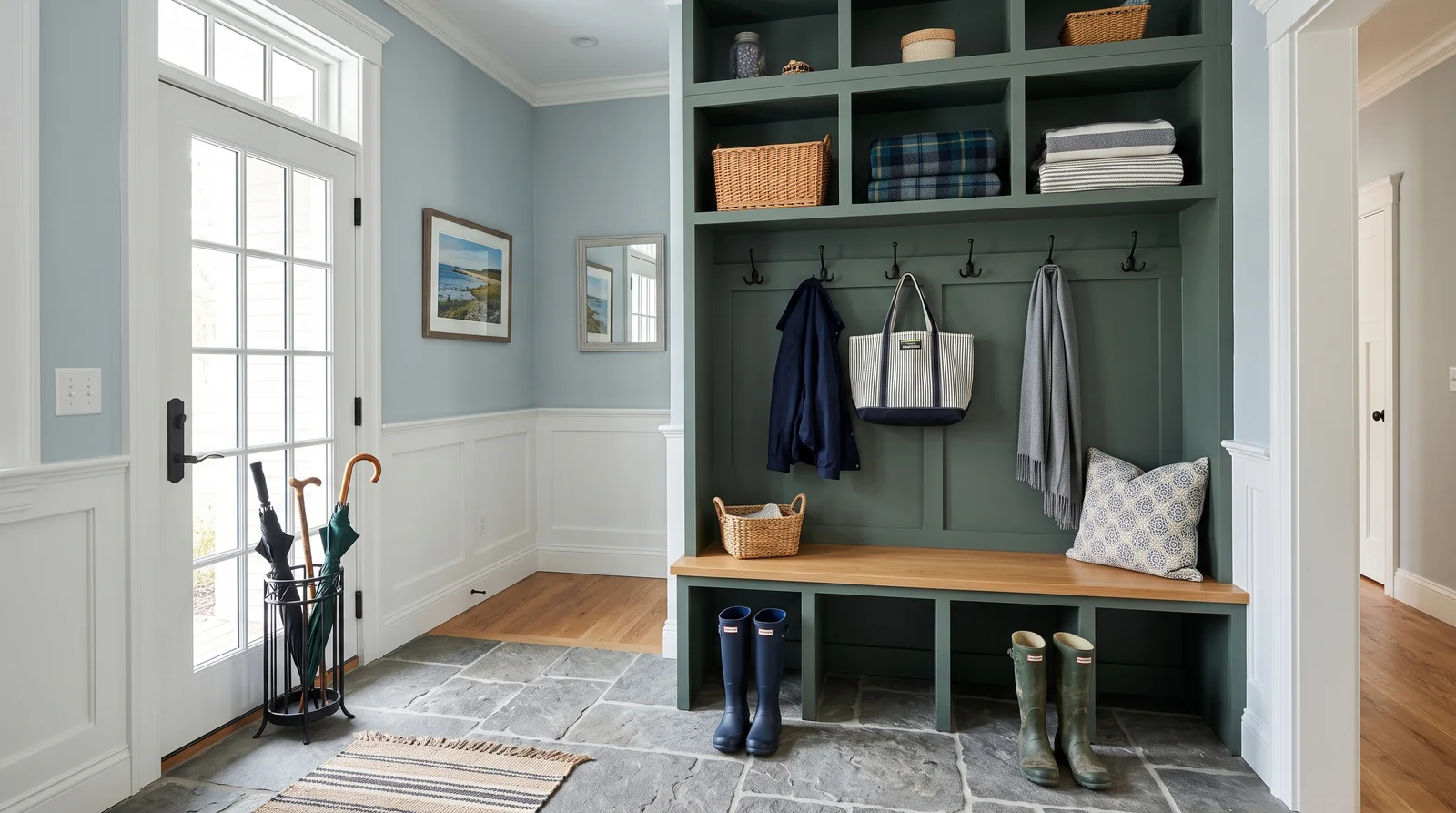
For hooks, brackets, and a bench frame, almost any metal works against a true neutral, which is part of the appeal. Black hardware gives a sharp, graphic edge, while brushed nickel or aged brass softens it. A patterned cement-look or slate floor tile also sits comfortably under a neutral wall without competing.
Common Mistakes to Avoid
The biggest one is choosing flat paint because it looked good in a bedroom, then watching every scuff become permanent. The second is picking a neutral that is too pale and cool in a dark room, which leaves the space feeling like a dingy hallway rather than a clean drop zone.
Also resist matching the wall and the lockers to the exact same neutral, a slight step in depth or sheen between them keeps the built-ins from disappearing. And always test a sample on the actual mudroom wall in evening light, since this room often runs on artificial light when you use it most. Every color shown here is mixed to order at the store, so once you find the shade you like you can cross-match it across brands and get the same result in whatever line you prefer.
Neutral Mudroom Paint — Frequently Asked Questions
What sheen should I use for mudroom walls?+
Go with eggshell or satin on the walls. Both wipe clean and handle a damp cloth, which a flat finish cannot. For trim, the bench, and any cubbies or lockers, step up to semi-gloss so boot scuffs and wet gear wash off without leaving a dull mark.
What is the best depth of neutral for a dark mudroom?+
In a dim mudroom, aim for a mid-light neutral with an LRV around 55 to 70. That range reflects enough light to keep the room from feeling like a closet, while still hiding dirt better than a stark white. Lean slightly warm in the undertone so the low light doesn't pull it cold.
Should the mudroom be lighter or darker than the rest of the house?+
It can go either way, but a neutral that's a touch deeper than your main living areas actually helps here. A slightly darker, warmer neutral disguises scuffs and salt stains better and gives this transitional space its own grounded feel without clashing with adjoining rooms.
What undertone should I avoid in a mudroom?+
Be careful with cool, gray-blue undertones in a room with little natural light or fluorescent fixtures. They can read cold and dingy. A neutral with a hint of warmth, a soft greige or warm gray, stays inviting under both daylight and artificial light.
How do I keep neutral walls and built-in lockers from looking flat together?+
Don't paint them the exact same color and sheen. Put eggshell or satin on the walls and semi-gloss on the lockers and bench, or step the built-ins a shade lighter or darker. That small difference gives the cubbies definition so they don't blend into the wall.
Can I get the same mudroom color in a different paint brand?+
Yes. Every color shown on this page is mixed to order at the paint counter, and it can be cross-matched across brands. So if you find the right neutral in one line but prefer another brand's paint, you can have it color-matched and get essentially the same result.