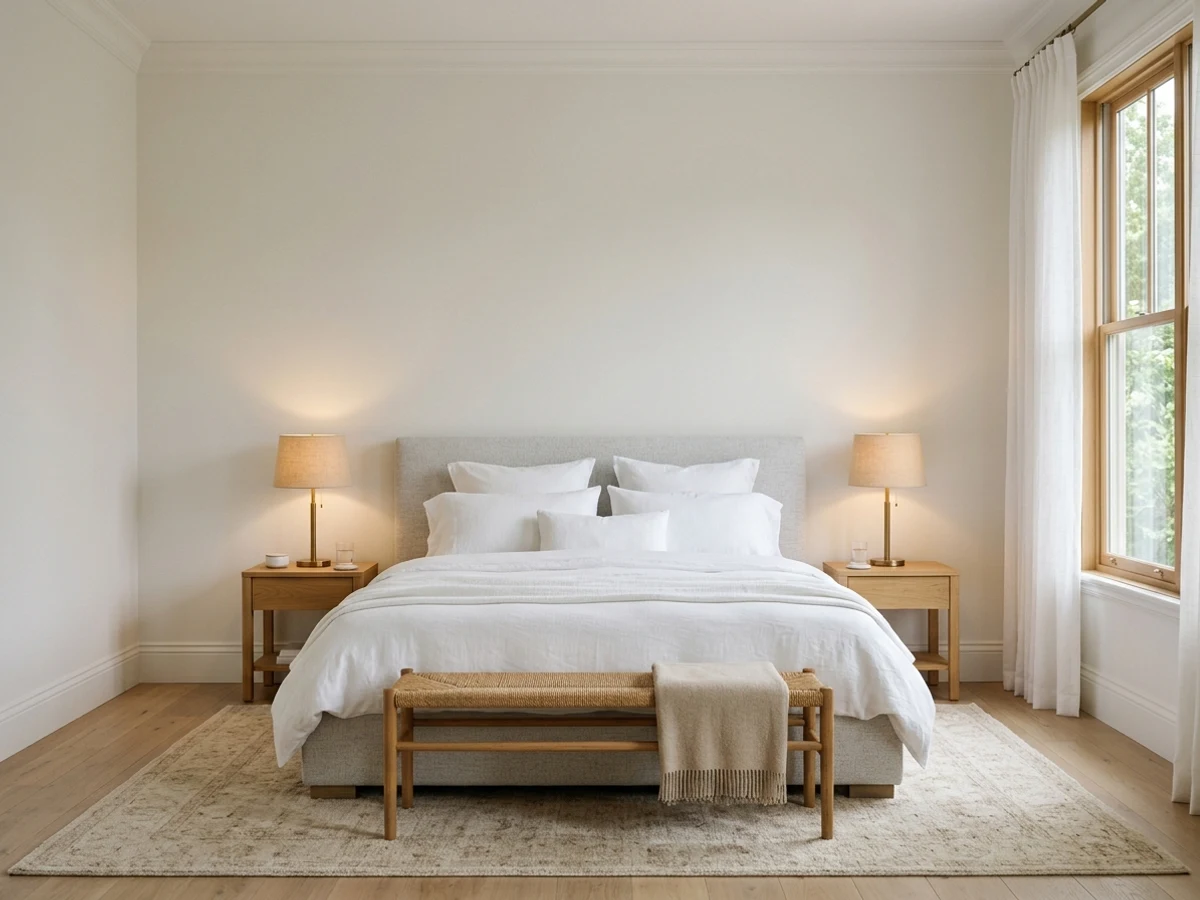
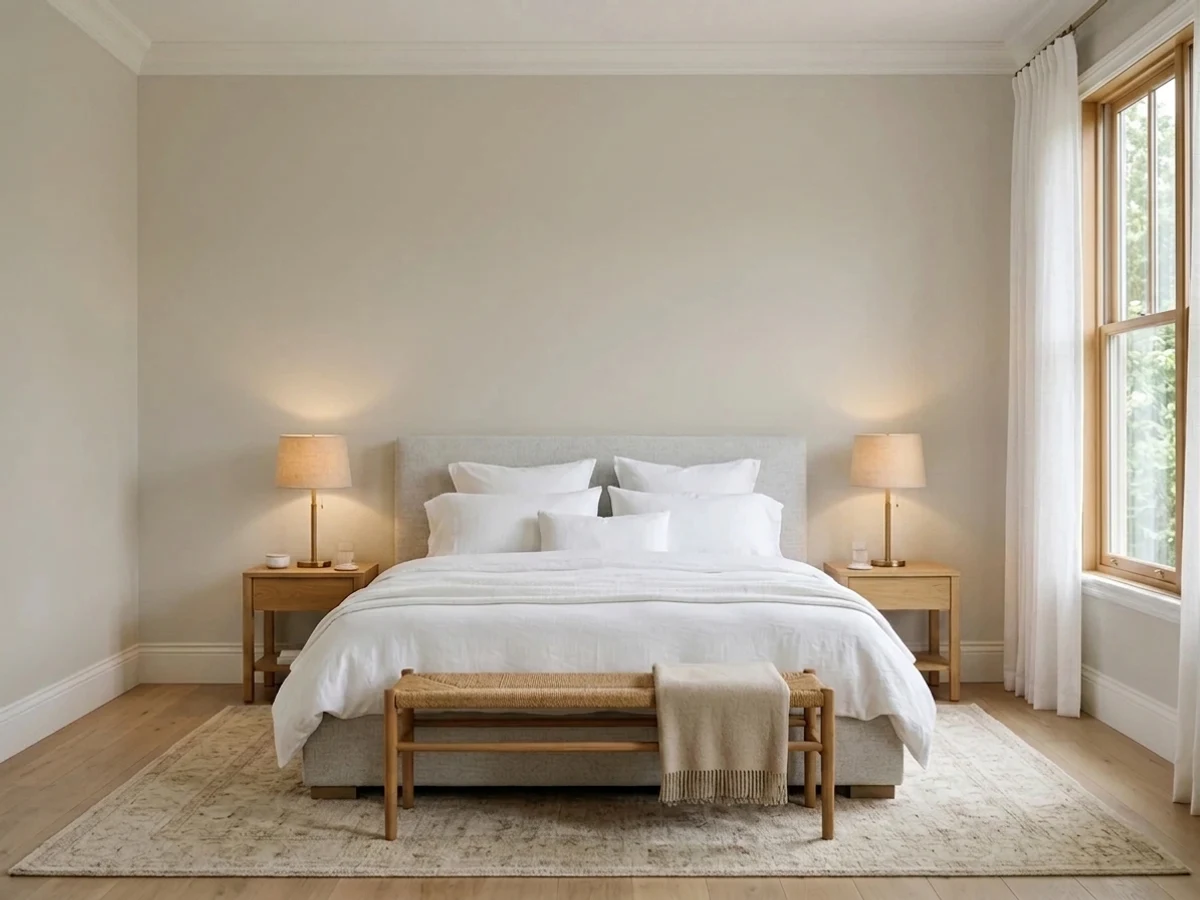
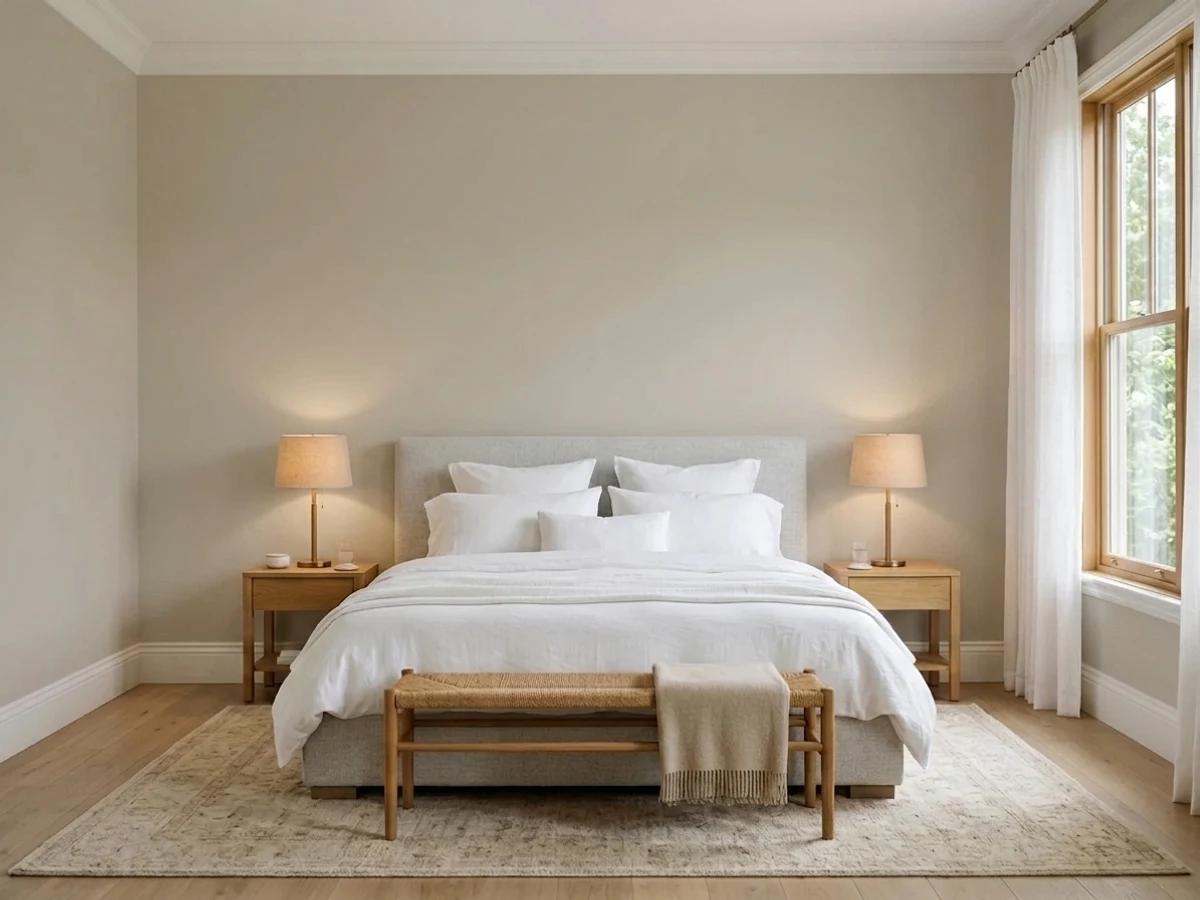
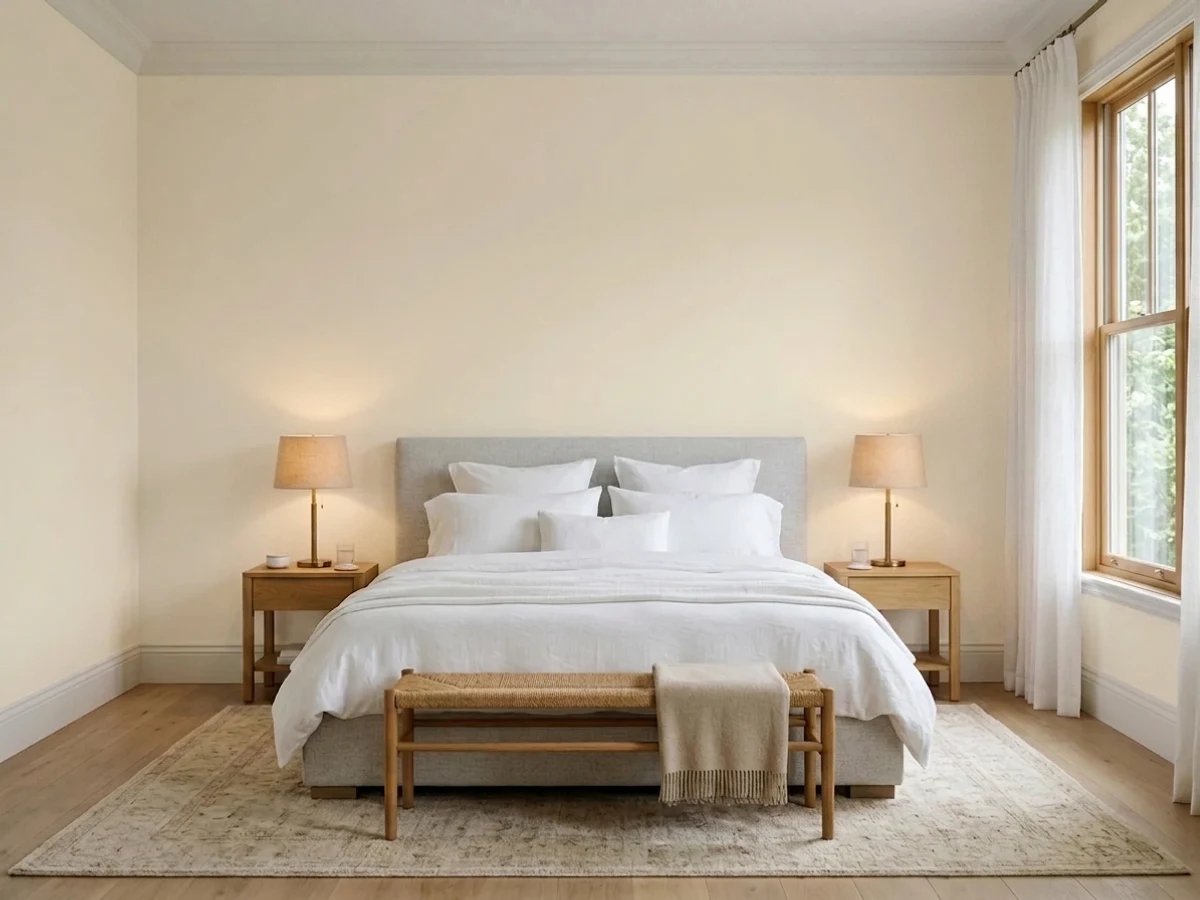
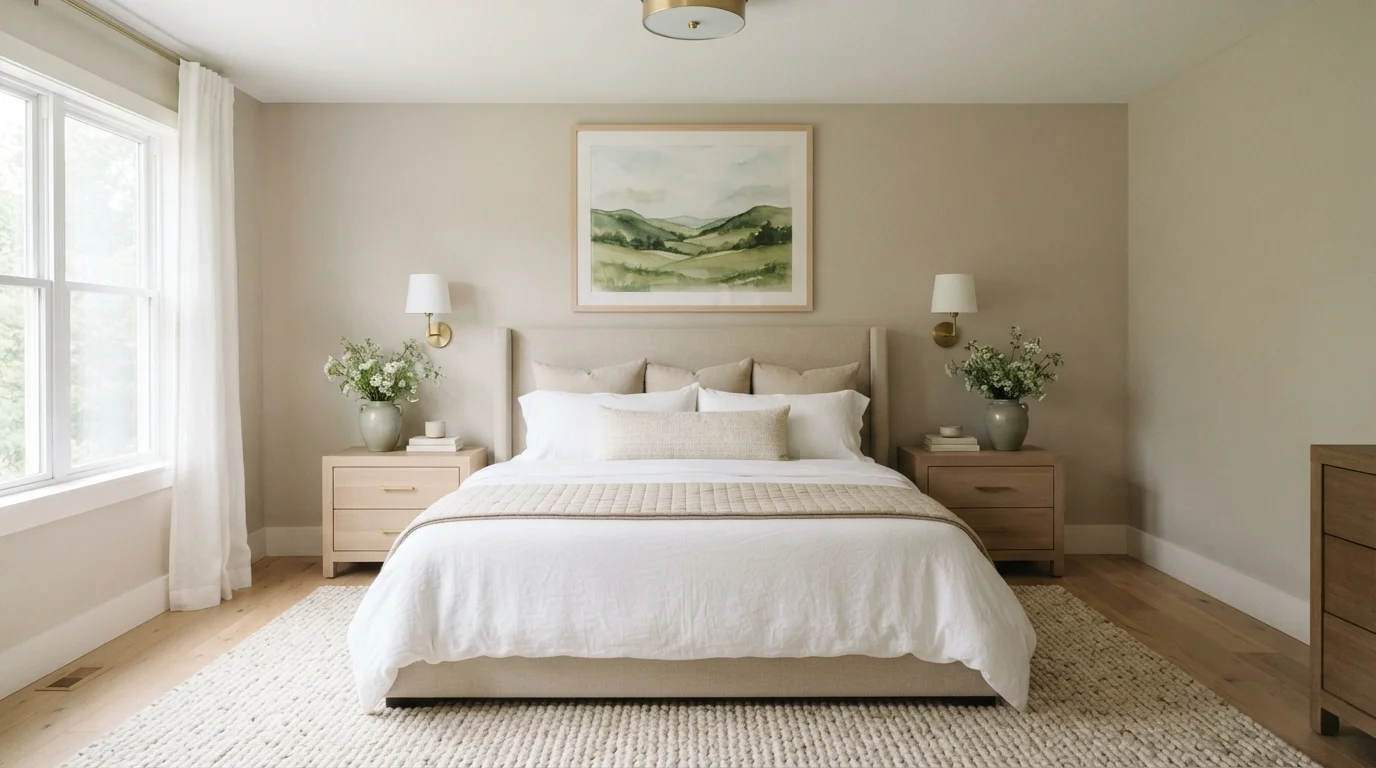
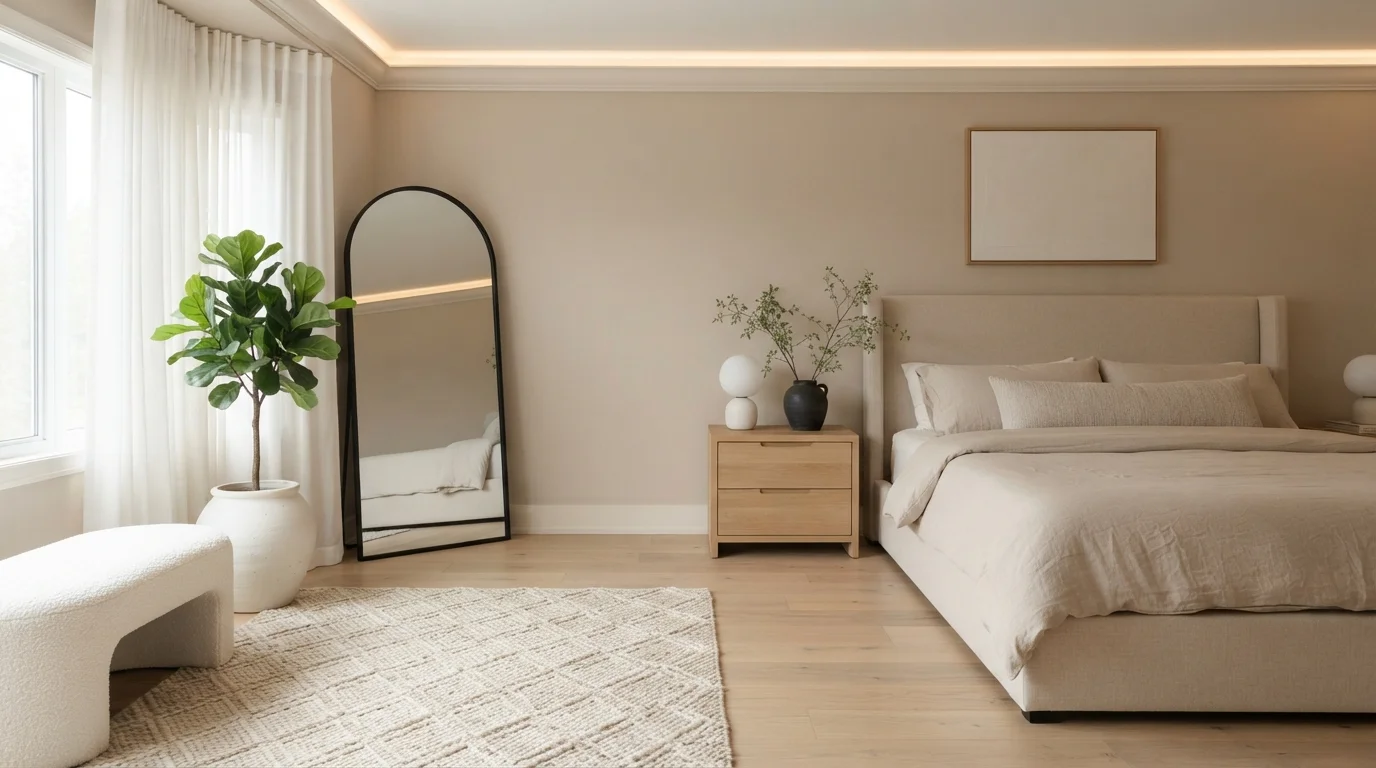
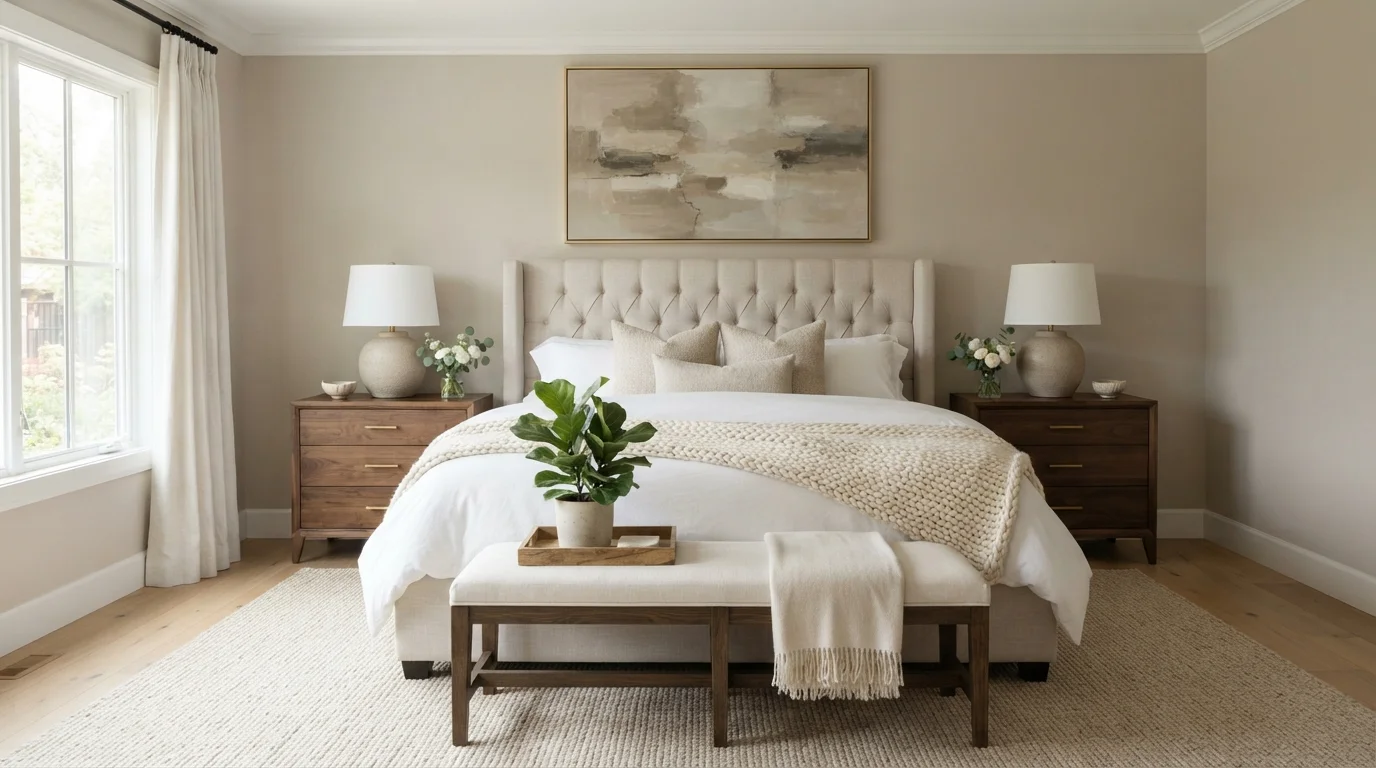
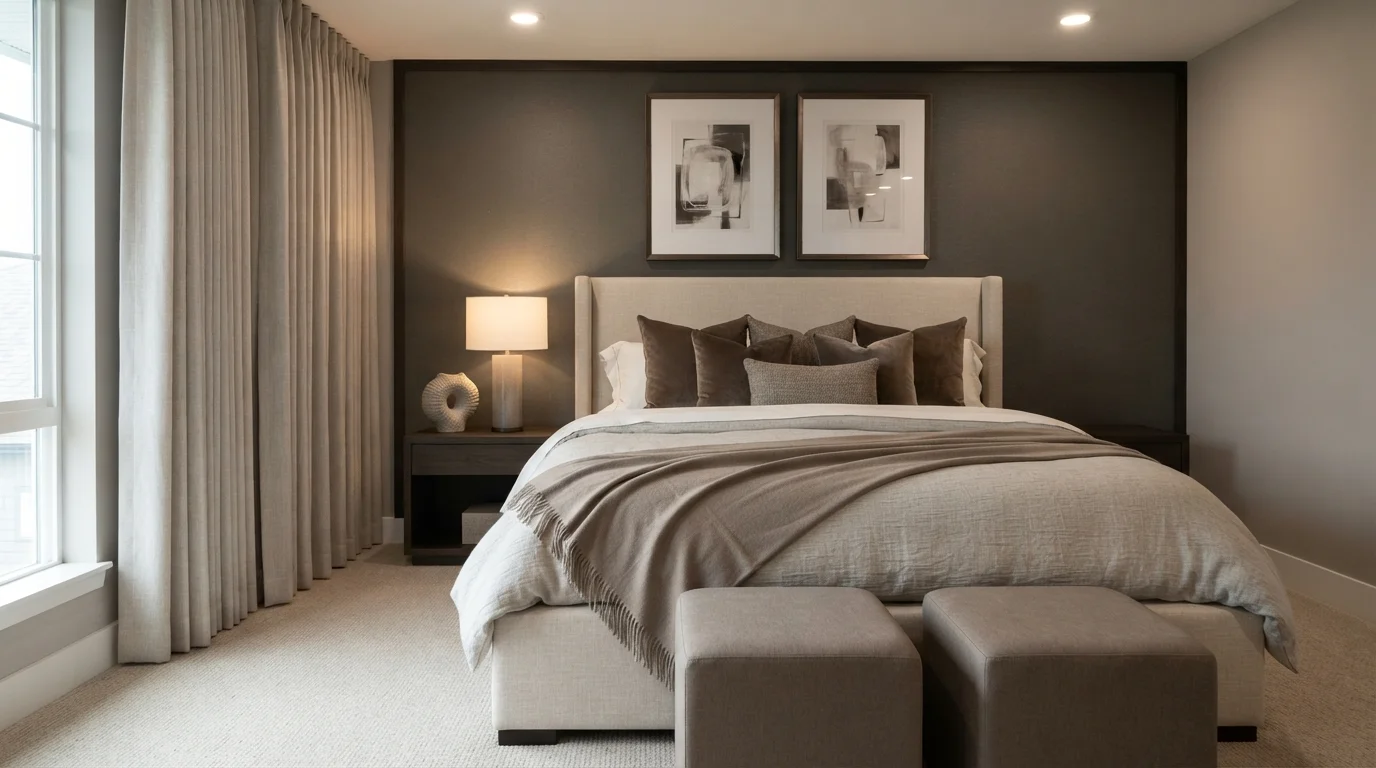
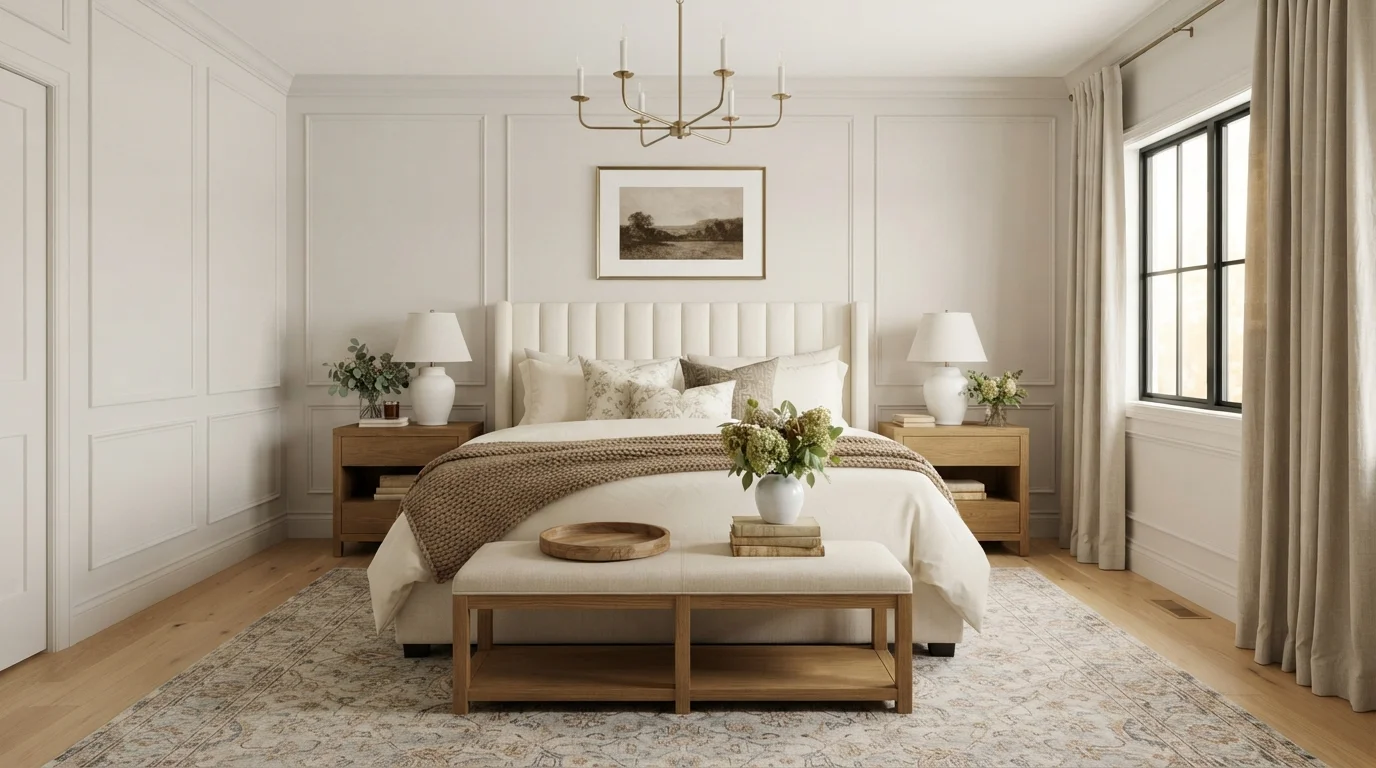
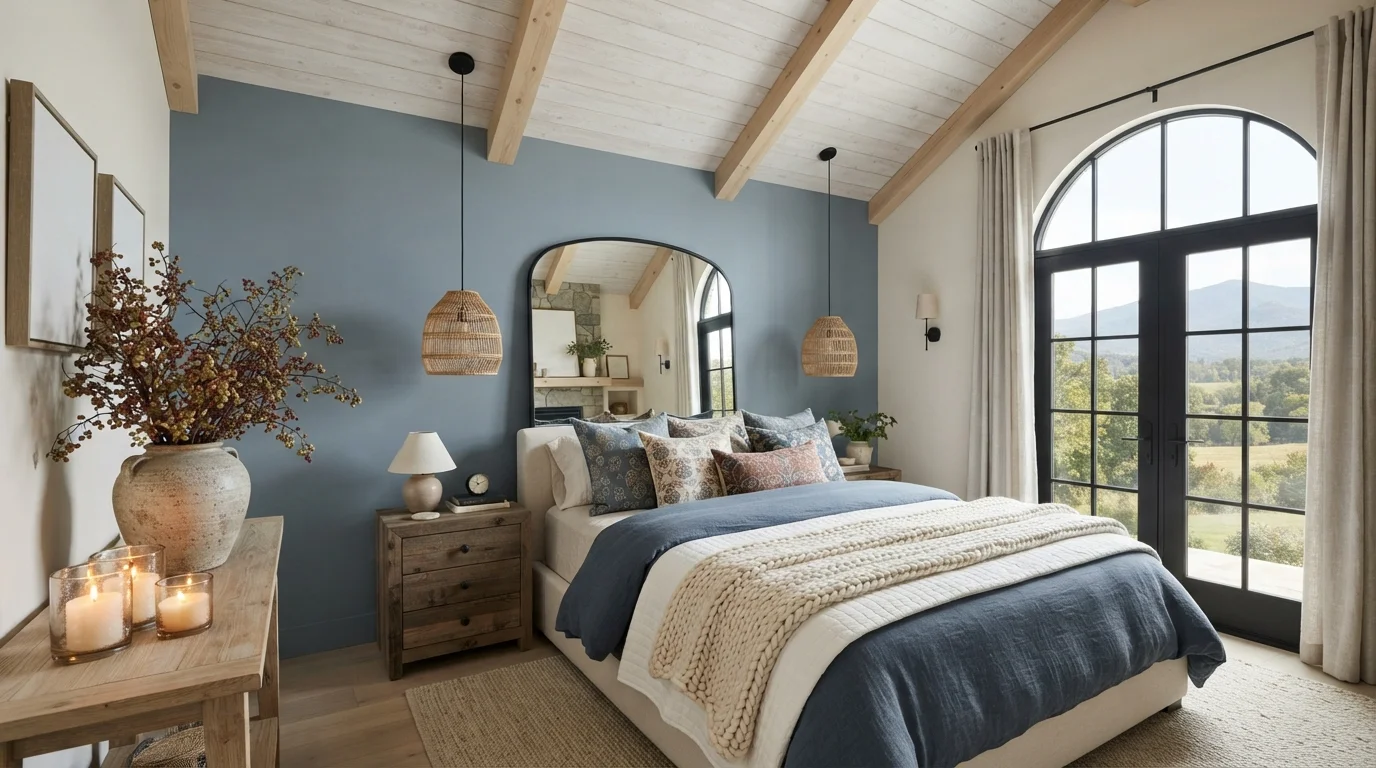
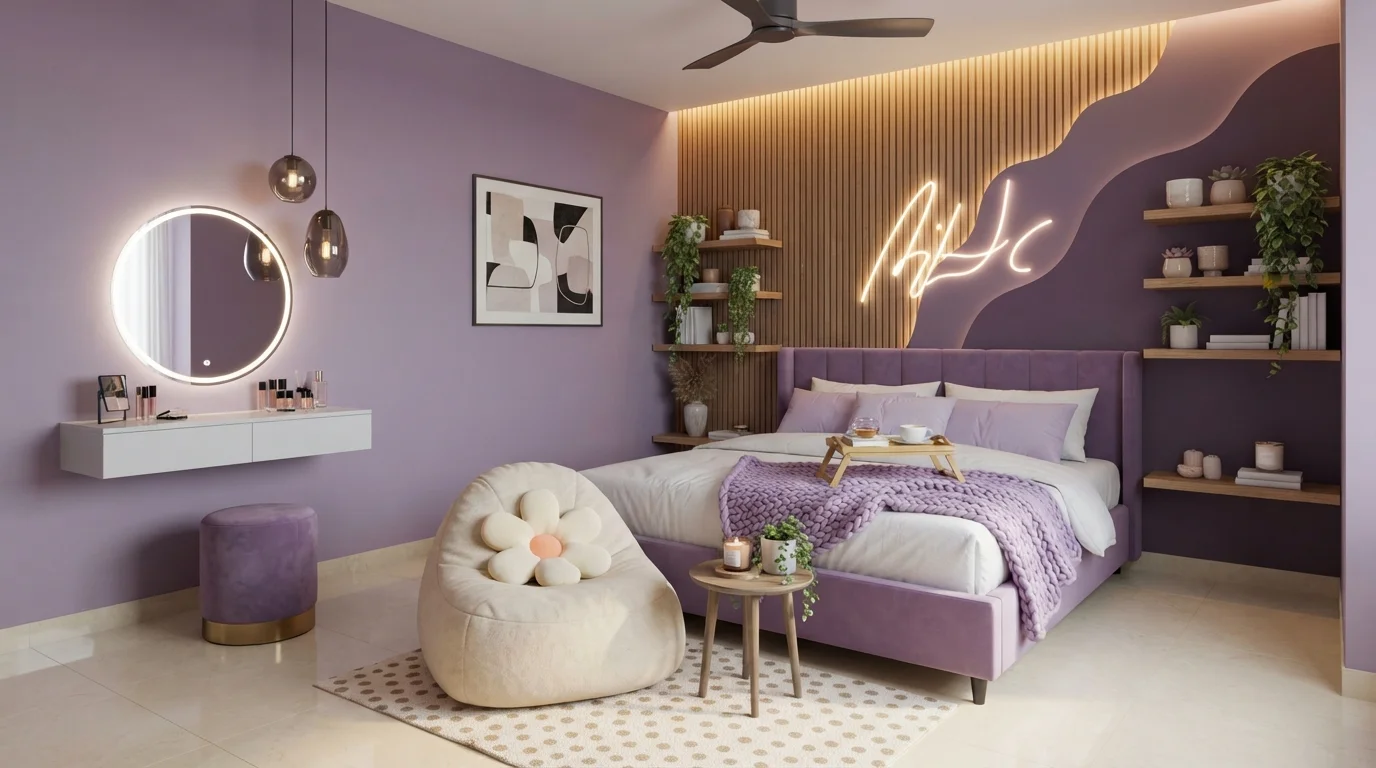
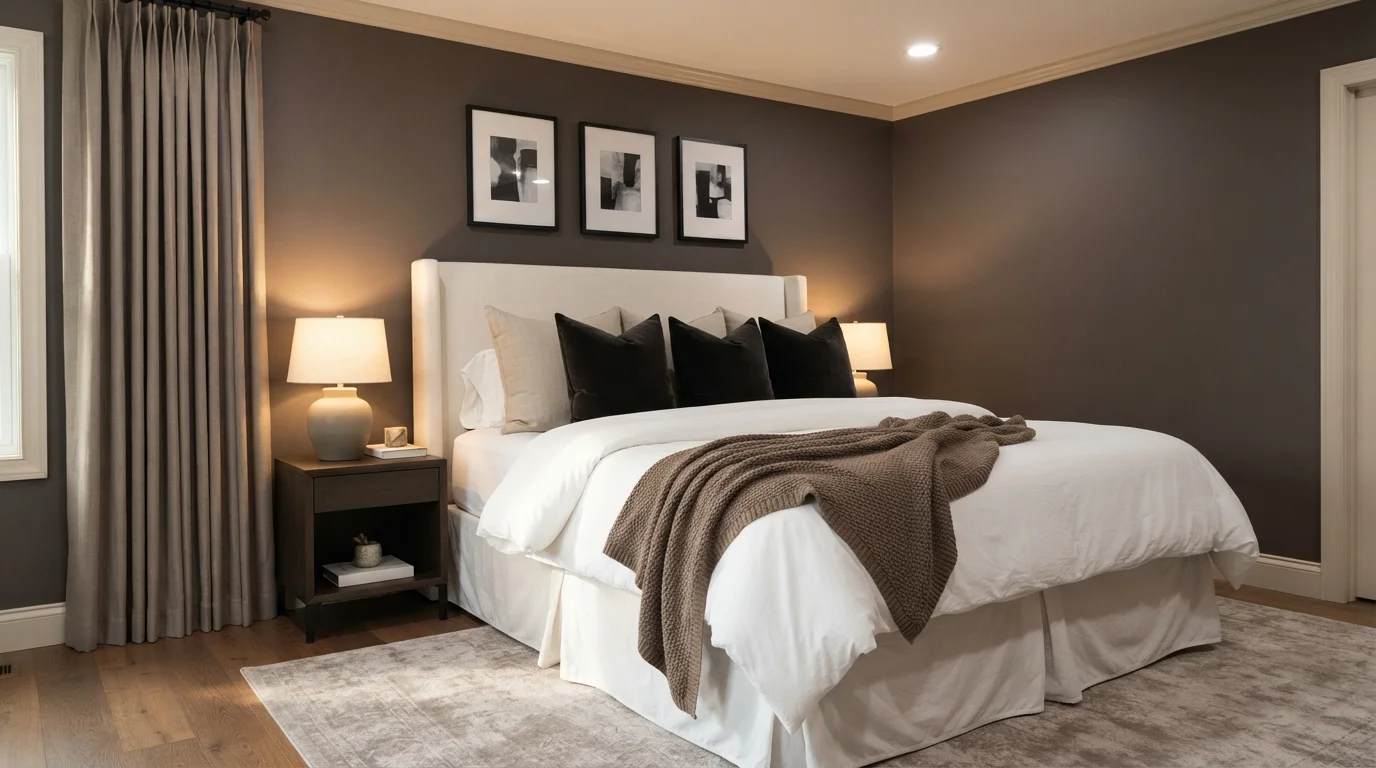
Neutral Master Bedroom Paint Colors
4,152 neutral colors that work in master bedrooms, drawn from the full ~30,000-color US paint deck. Below: editor's picks specific to master bedrooms, then 30 picks spread across the LRV range — narrow further on the brand page when you've shortlisted.
Neutrals are the colors that aren't quite gray and aren't quite tan — the warm, low-saturation in-between bucket where greige, taupe, mushroom, bone, and accessible beige all live. They've replaced cool grays as the default safe wall color of the late 2020s, particularly in open-plan homes where one color flows through multiple rooms.
Editor's Picks: Neutral for Master Bedrooms
4 picks30 Neutral Picks Across the LRV Range
30 of 4,152 · sorted dark → lightLooking for more? All neutral → covers every brand; brand × family pages show full decks.
Neutral Master Bedroom Colors at Every US Brand
21 brands · up to 10 picks eachUp to 10 picks per brand spread across the neutral LRV range, drawn from each brand's full deck. Tap any swatch with a curated guide for full spec; tap the brand title for the brand's complete neutral deck.
Behr
Benjamin Moore
Glidden
Sherwin-Williams
Valspar
PPG / Glidden
HGTV Home by Sherwin-Williams
Dunn-Edwards
Diamond Vogel
Hirshfield's
Kompozit
Dutch Boy
C2 Paint
Rodda
Farrow & Ball
Magnolia Home
Portola Paints
Clare
Annie Sloan
Backdrop
Rust-Oleum
Other Master Bedroom Color Families
Neutral Colors in Other Rooms
Neutral Paint Colors for a Master Bedroom
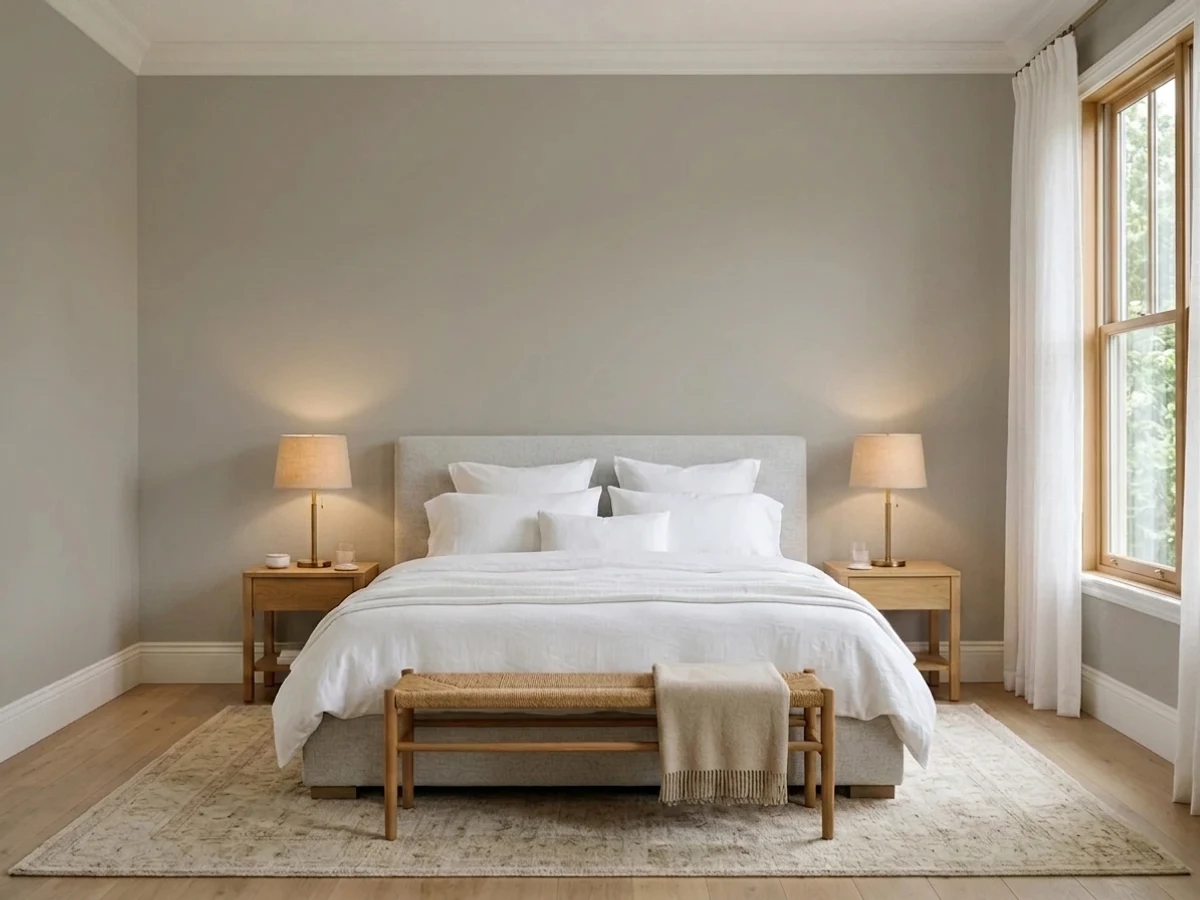
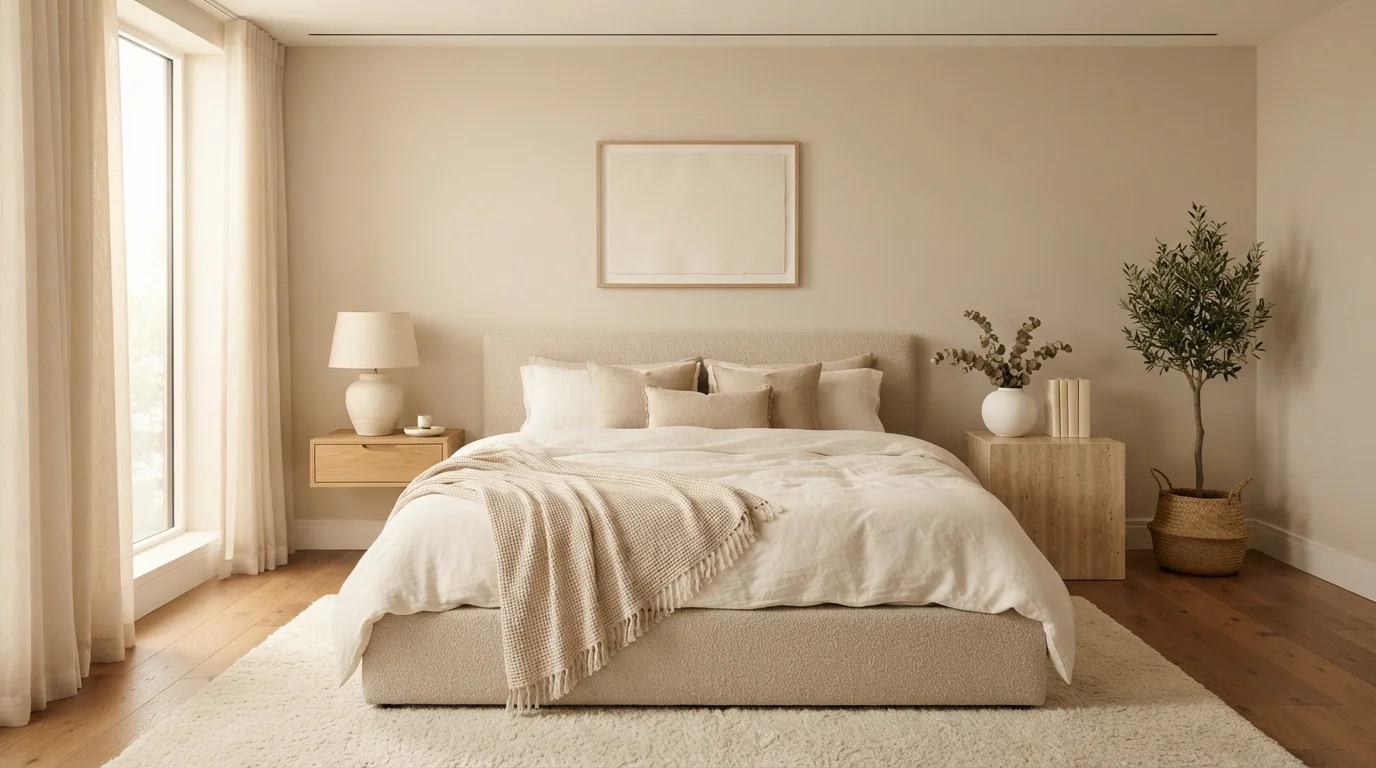
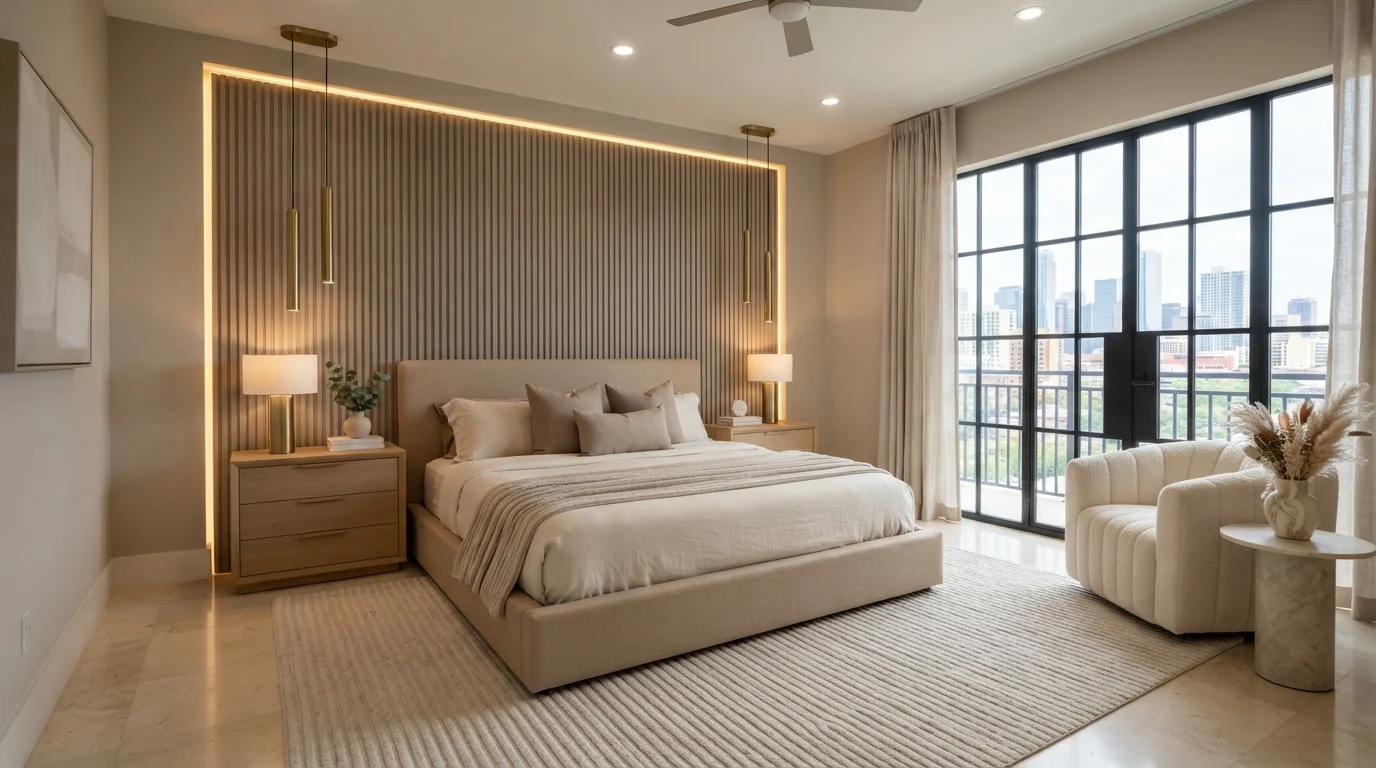
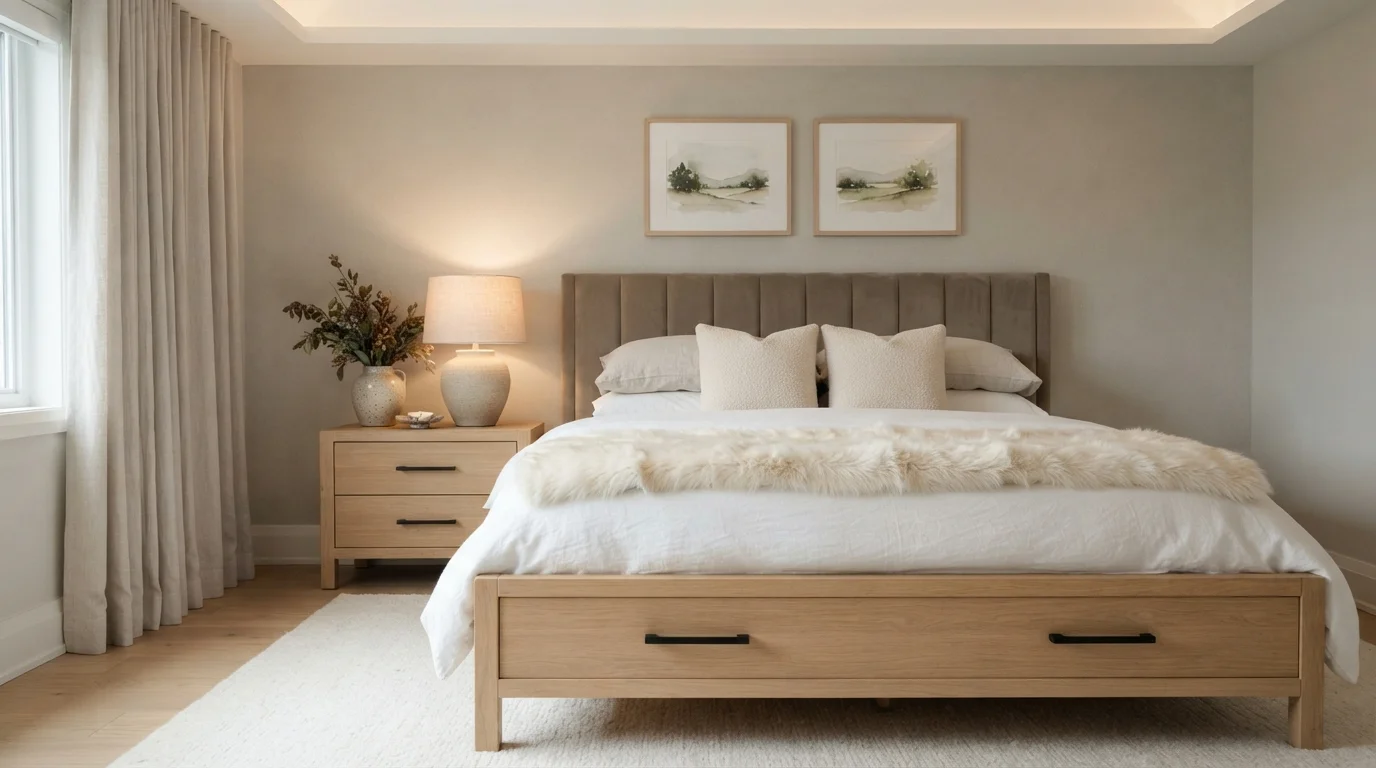
A master bedroom is the one room you wake up in and wind down in, so neutral paint does a lot of quiet work here. It keeps the walls calm enough to rest against, flexible enough to live with bedding and art that change over the years, and soft enough that the room feels like a retreat instead of a showroom. The trick with neutral in a bedroom is not picking a "safe" color, it is picking the right warmth and depth for how the room actually feels at the end of the day.
Every color you see on this page is mixed to order at the paint counter, so the shade matters more than the brand name on the can. That means you can take the exact neutral you like and have it matched across brands, then choose whichever line fits your budget and finish. Below is how to steer a neutral toward a bedroom that feels restful, and the small mistakes that quietly make a bedroom feel colder or busier than you wanted.
Why Neutral Just Works in a Master Bedroom
A bedroom is mostly about rest, and neutral walls let your eye settle instead of pulling focus. They stay out of the way of the things you actually want to notice — your bed, soft textures, a window with morning light — and they age well as your taste shifts.
Neutral also takes the pressure off every other choice in the room. You can swap bedding, change a headboard, or hang new art without repainting, because a good neutral reads as a backdrop rather than a statement. That flexibility is worth more in a bedroom than almost any other room in the house.
Picking the Right Depth and Warmth for Your Light
For most master bedrooms, a soft mid-to-light neutral in the LRV 55 to 70 range feels best — light enough to stay restful, deep enough to feel cozy rather than washed out. Pure-white walls can feel sterile in a room meant for sleep, and very dark neutrals can close the space in unless the room is large and well-lit.
Let the light steer the warmth. A bedroom with north-facing or weak afternoon light leans cool and a little gray, so a warmer greige or soft taupe keeps it from feeling chilly. A bright south- or west-facing bedroom can take a cooler, grayer neutral without going cold. Always test the color on the wall you face from bed, in both morning and lamplight, before you commit.
The Right Finish for Bedroom Walls
A bedroom does not take the scrubbing or moisture that a kitchen or bath does, so you do not need a high-sheen wall paint here. A flat or matte finish is the natural choice — it hides small wall flaws, soaks up glare from bedside lamps, and gives the neutral that soft, velvety look that reads as calm.
If the room gets handled more — kids, pets, or a wall behind a headboard that gets bumped — step up to an eggshell for a little more washability without much shine. Save satin and semi-gloss for the trim and doors, where you want the durability and the slight contrast against the matte wall.
Pairing Neutral with Trim, Ceiling, and Fixtures
The simplest, most restful look is a soft white trim and ceiling against the neutral wall, with the ceiling kept a touch lighter so it feels like it lifts. Match the white's undertone to the wall — a warm greige wants a warm white trim, a cooler neutral wants a cleaner white — or the trim can look dingy or oddly blue next to the wall.
For a quieter, more enveloping bedroom, you can paint the trim and ceiling the same neutral as the walls, just in a different finish. Then let your warm wood furniture, brass or matte-black fixtures, and natural-fiber textures bring the contrast, so the room feels layered without a single loud color.
Common Mistakes with Neutral in a Bedroom
The biggest one is judging the color from a tiny chip in the store. Bedroom light is softer and warmer than store light, so a neutral that looked clean on the rack can turn pink, green, or gray on the wall — always paint a large sample and look at it across the day.
The other common slip is going too light and too cool at the same time, which leaves a bedroom feeling flat and a little cold instead of restful. If your test patch feels lifeless, you usually want a hair more warmth or depth, not a different color family. A small step warmer often turns a bland neutral into one that feels like a retreat.
Neutral Master Bedroom Paint — Frequently Asked Questions
What is the best neutral paint color for a master bedroom?+
There is no single best one, because it depends on your light. For most bedrooms a soft greige or warm taupe in the LRV 55 to 70 range is the safest bet — restful but not washed out. Start there, then adjust warmer if the room runs cool or lighter if it runs dark.
Should I use a warm or cool neutral in my bedroom?+
Match it to the room's light. Bedrooms with weak or north-facing light feel better with a warmer neutral that keeps them from going chilly, while bright sunny rooms can handle a cooler, grayer neutral. When in doubt for a bedroom, lean slightly warm — it reads as cozier and more restful at night.
What sheen should I use on bedroom walls?+
Flat or matte is usually best for a bedroom. It hides wall imperfections and cuts glare from lamps, which keeps the room calm. Step up to eggshell only if the walls get bumped or need occasional wiping, and keep the higher sheens for trim and doors.
Is a light neutral going to make my bedroom feel too plain?+
It can if the color is also too cool and you skip texture. The fix is usually a half-step more warmth or depth in the paint, plus layered bedding, wood tones, and soft fixtures. A neutral wall is meant to be the backdrop — the room's interest comes from what you put against it.
Can I match a neutral I like to a different paint brand?+
Yes. Every color shown here is mixed to order at the paint counter, so the shade is what matters, not the brand on the label. Pick the neutral you like, and you can have it cross-matched across brands and choose whichever line fits your budget and finish.
How do I test a bedroom neutral the right way?+
Paint a large sample patch — at least a couple of feet square — on the wall you see from your bed. Look at it in morning light, afternoon light, and under your bedside lamps, since bedroom light shifts the color a lot. Only commit once it still looks right at night, when you actually use the room most.