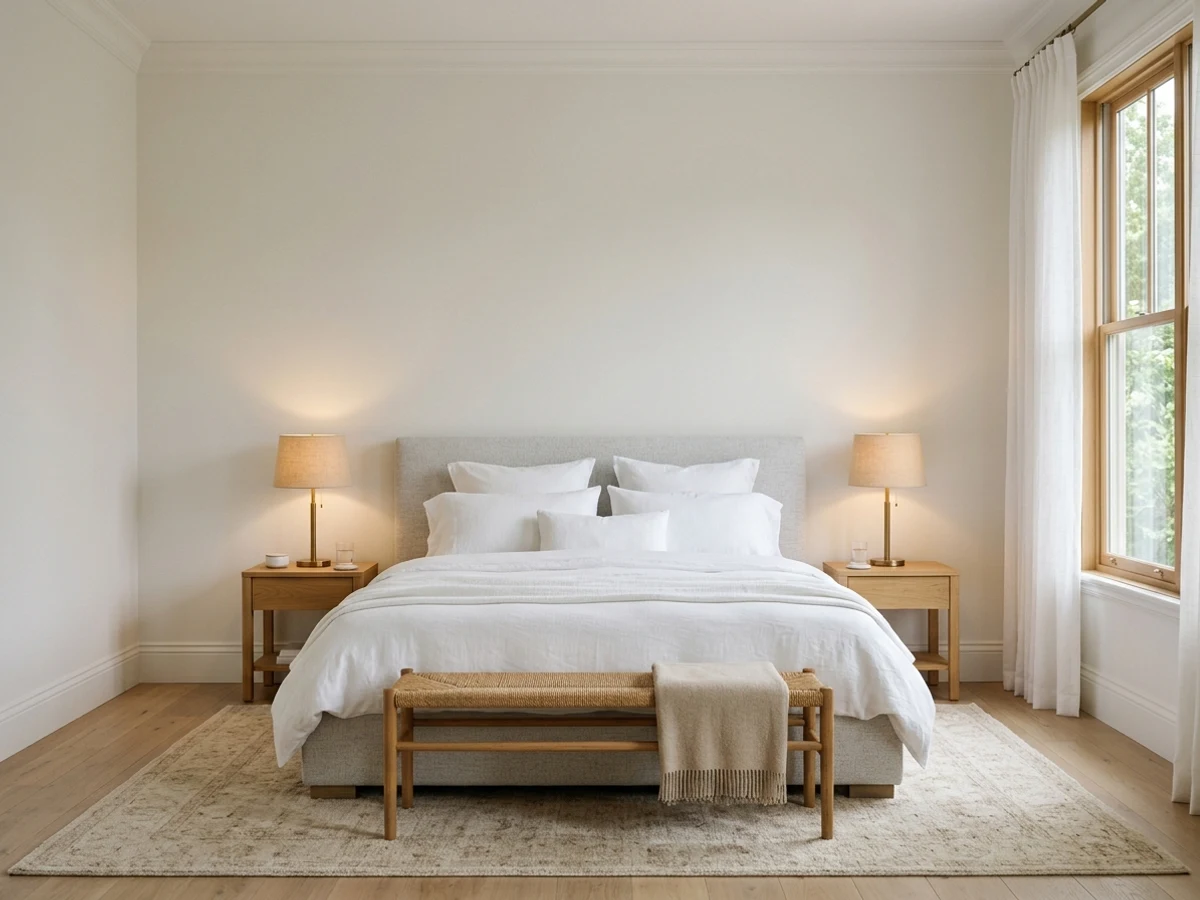
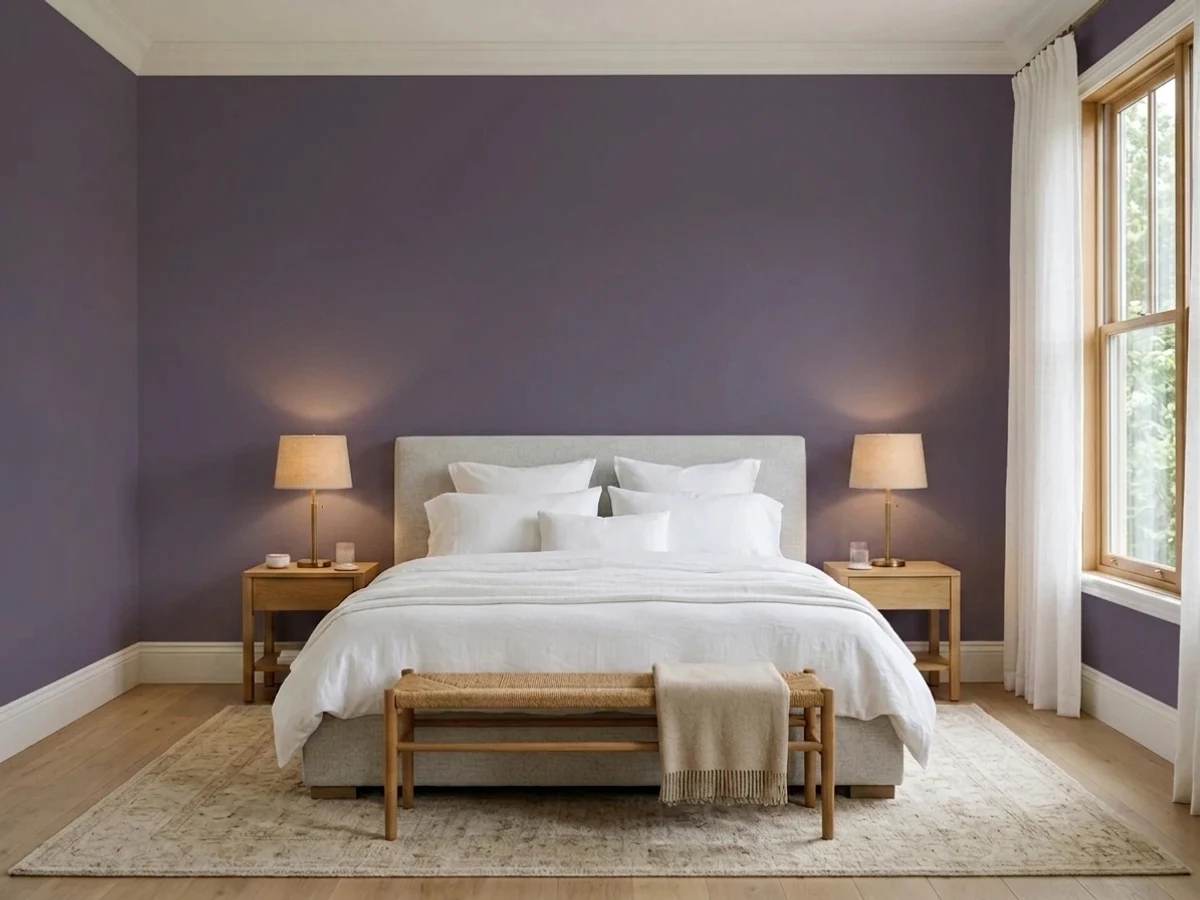
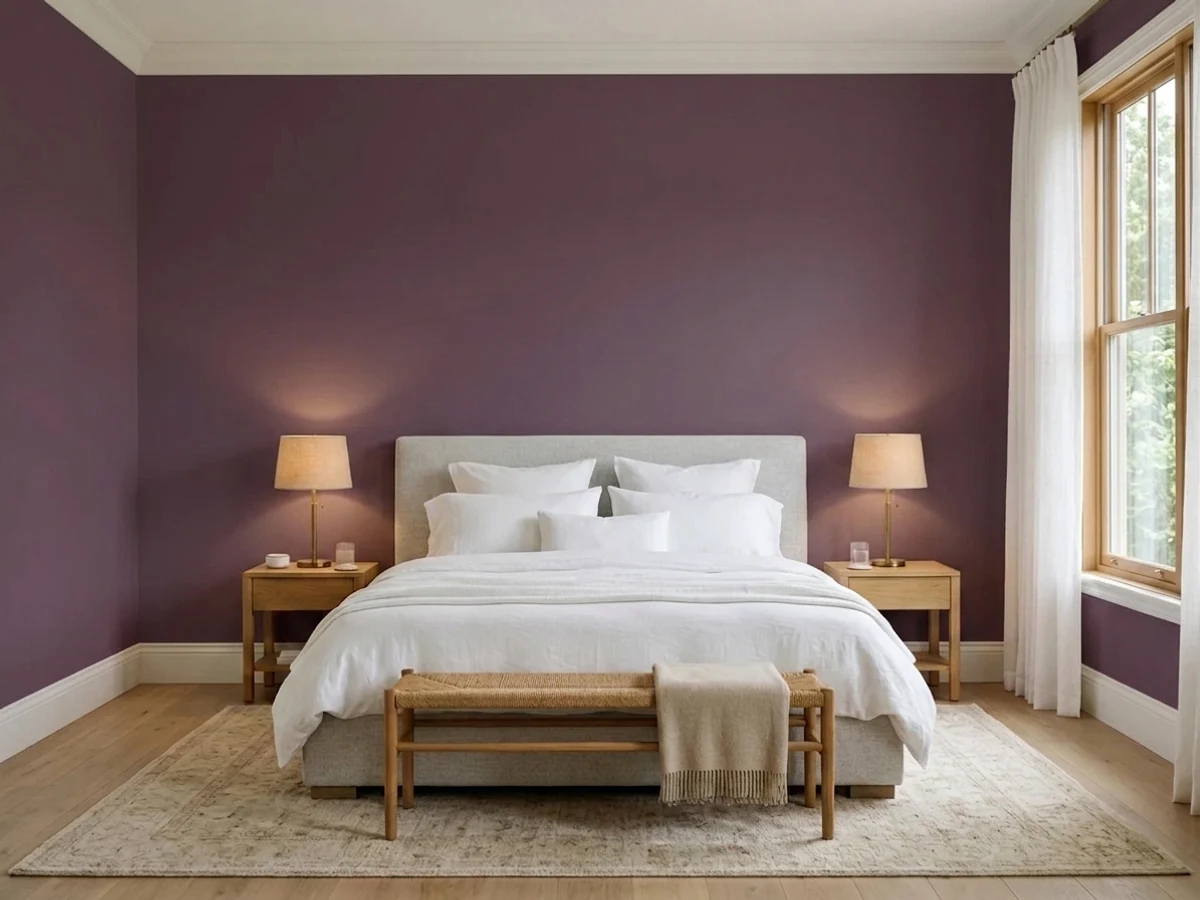
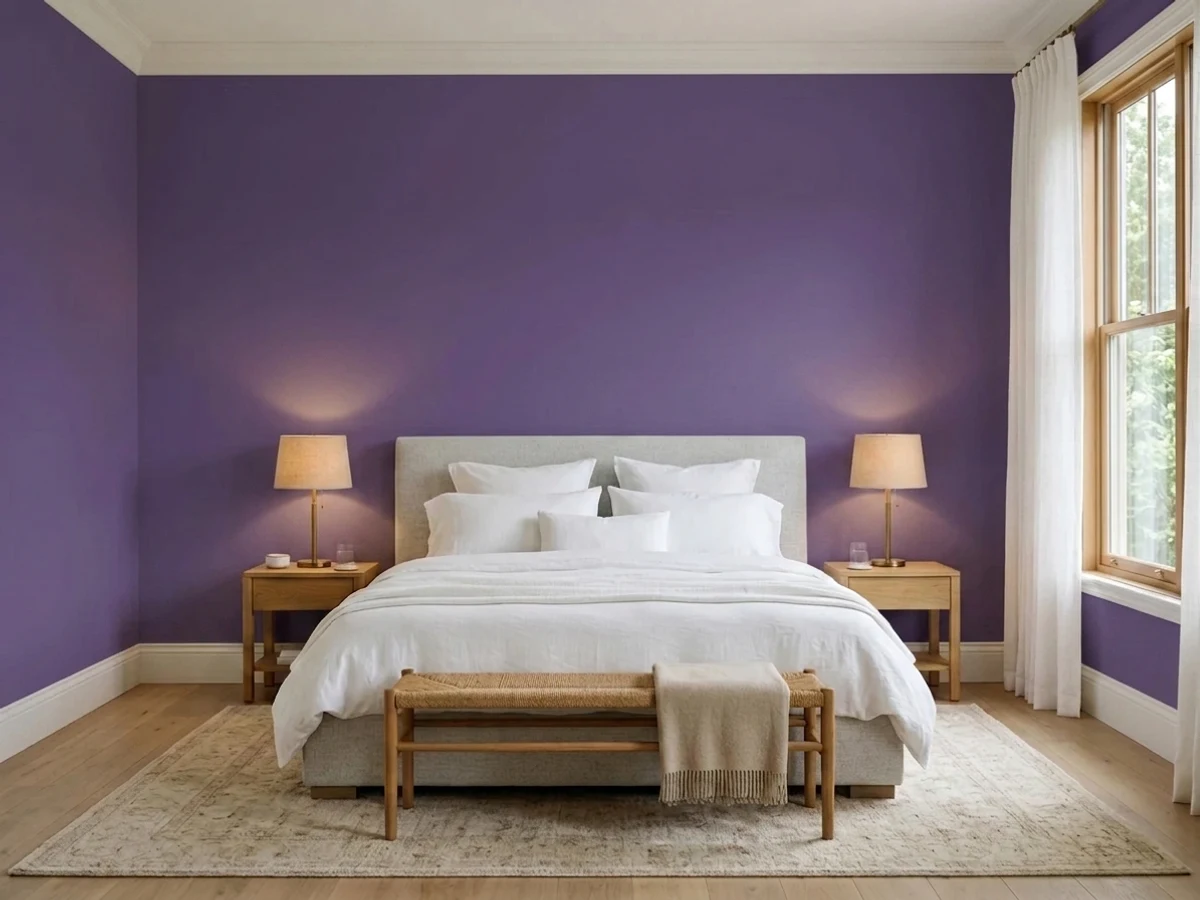
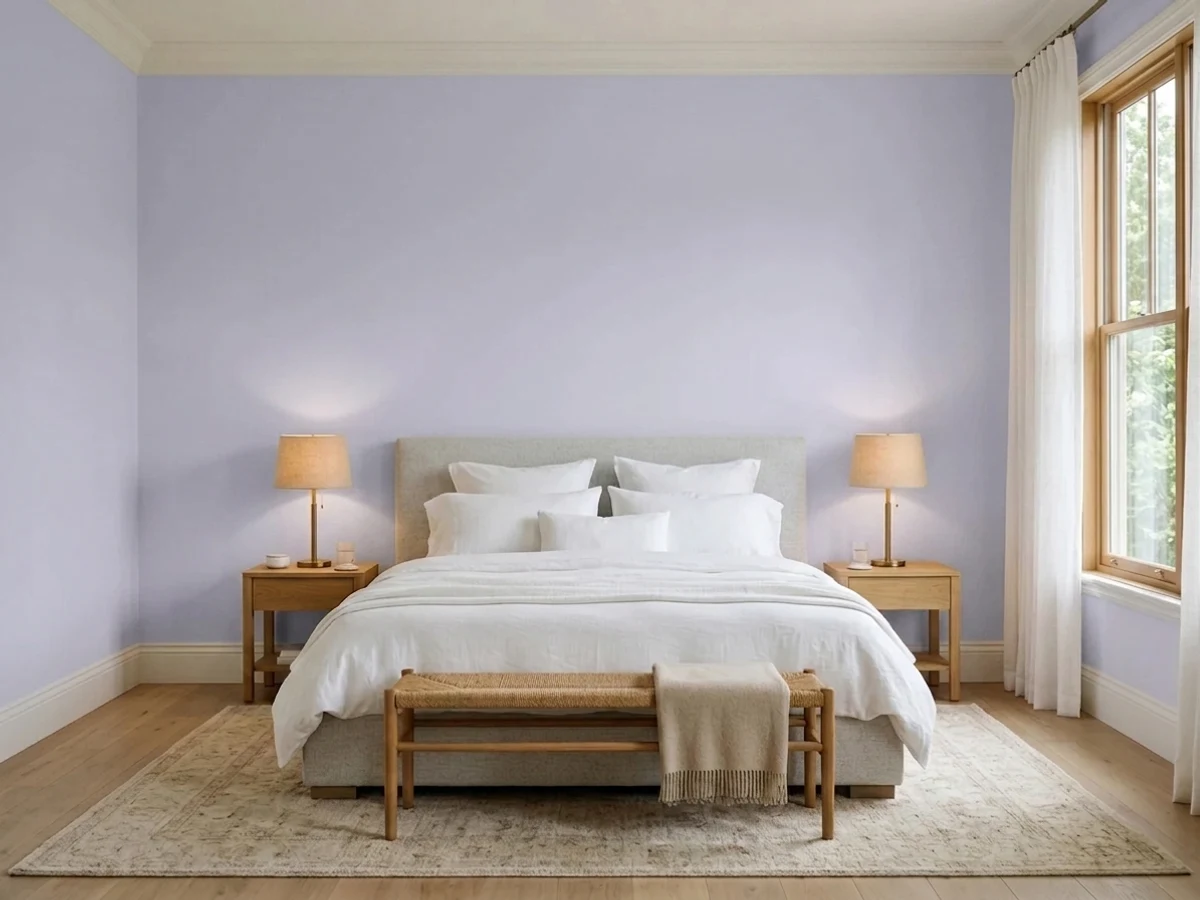
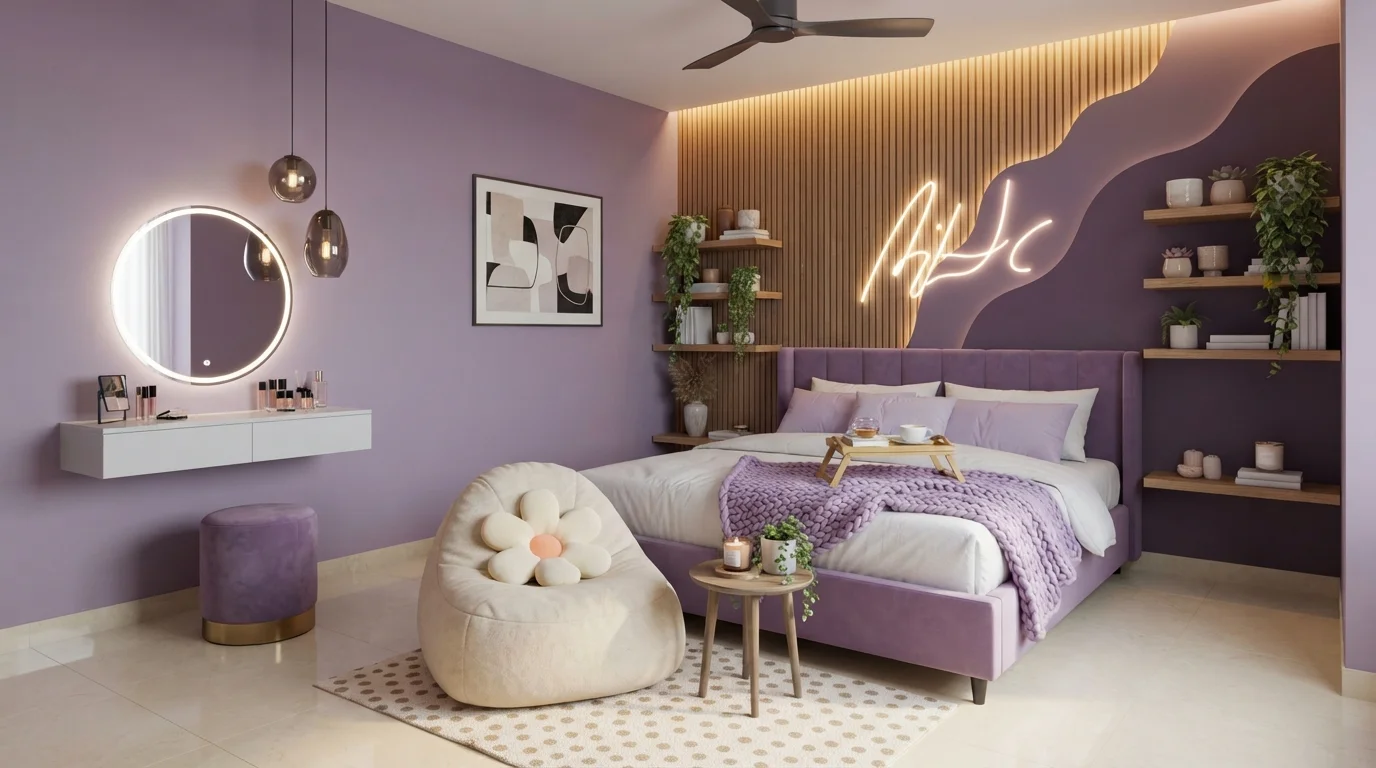
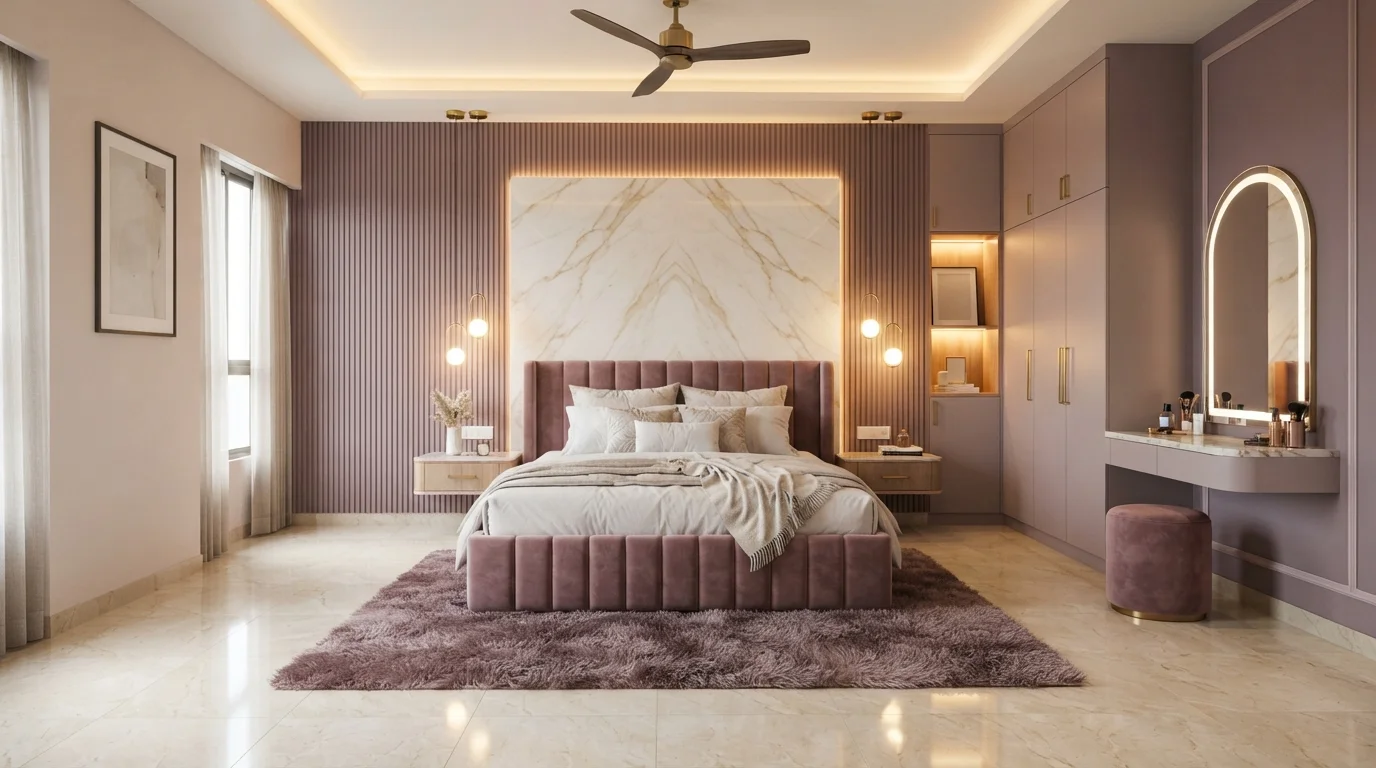
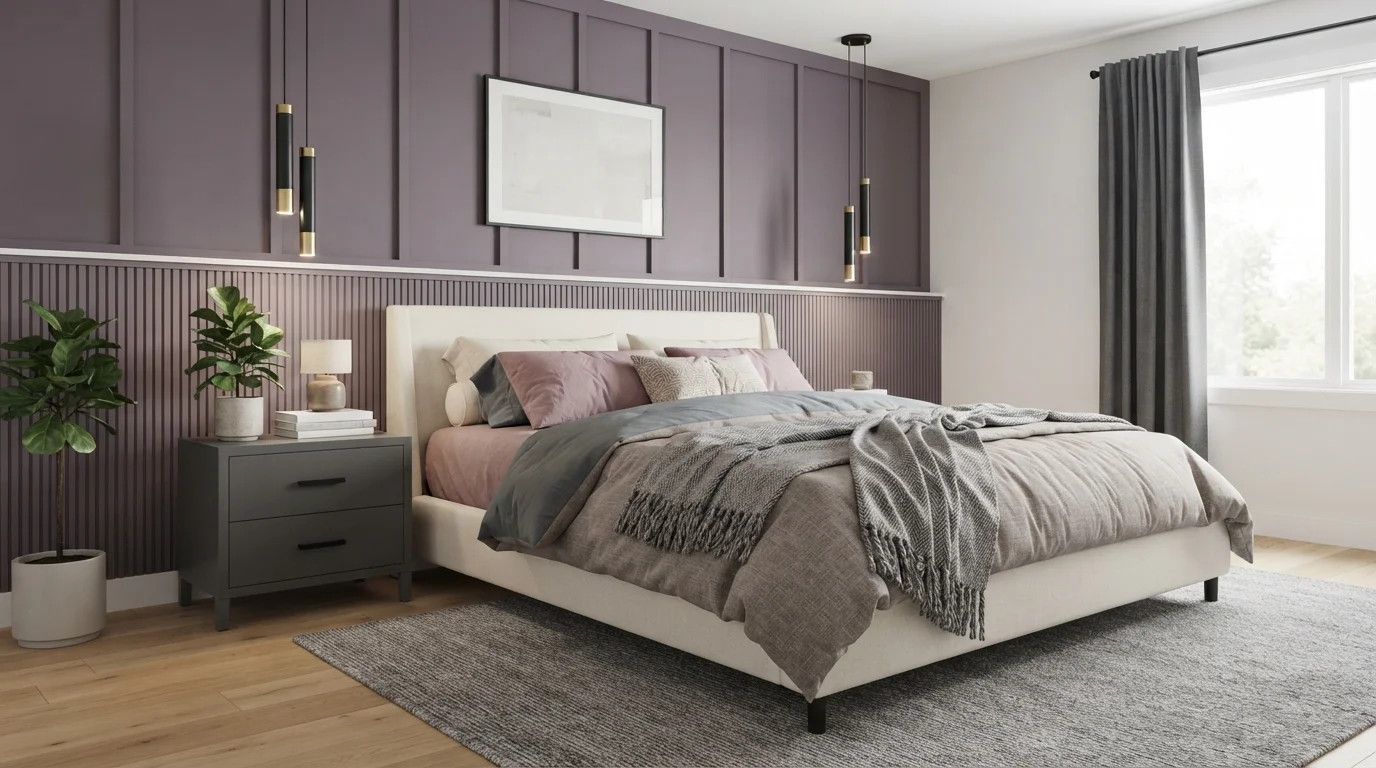
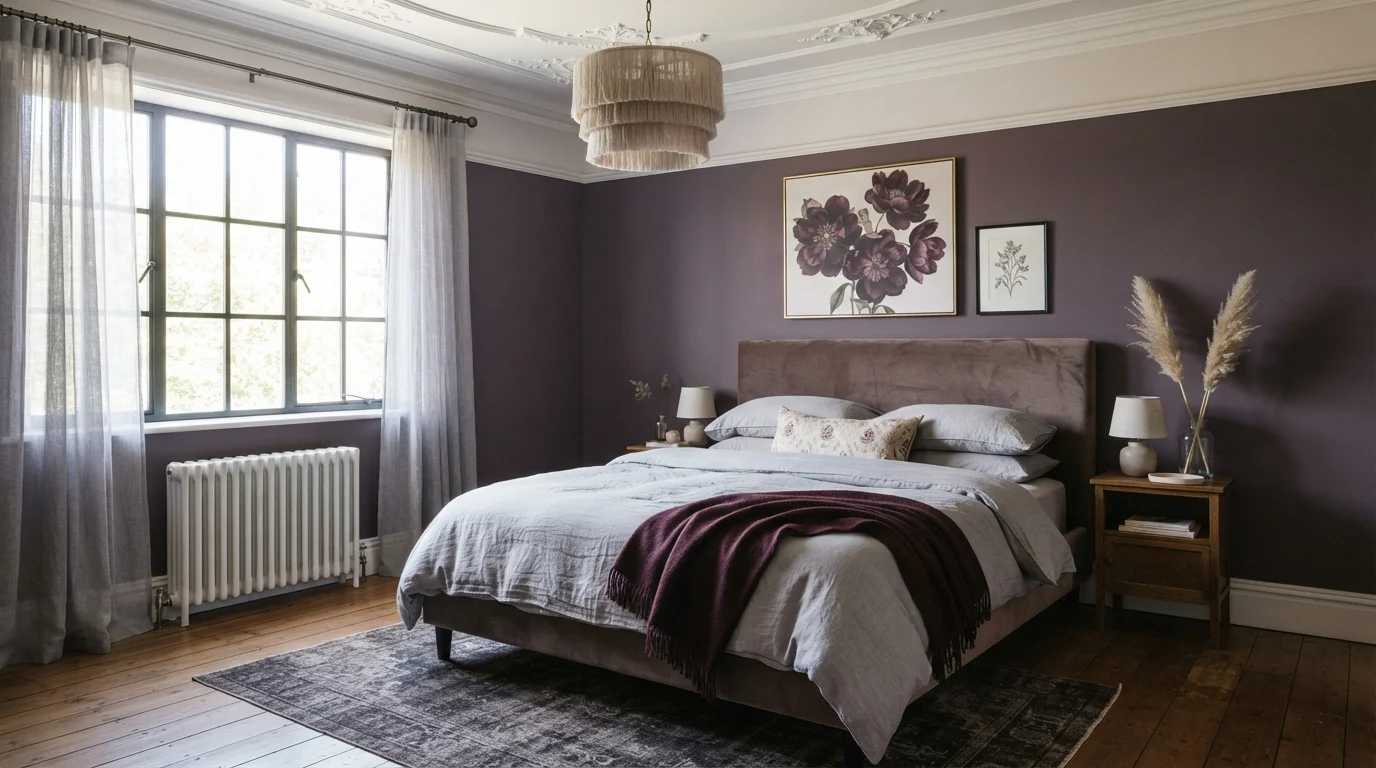
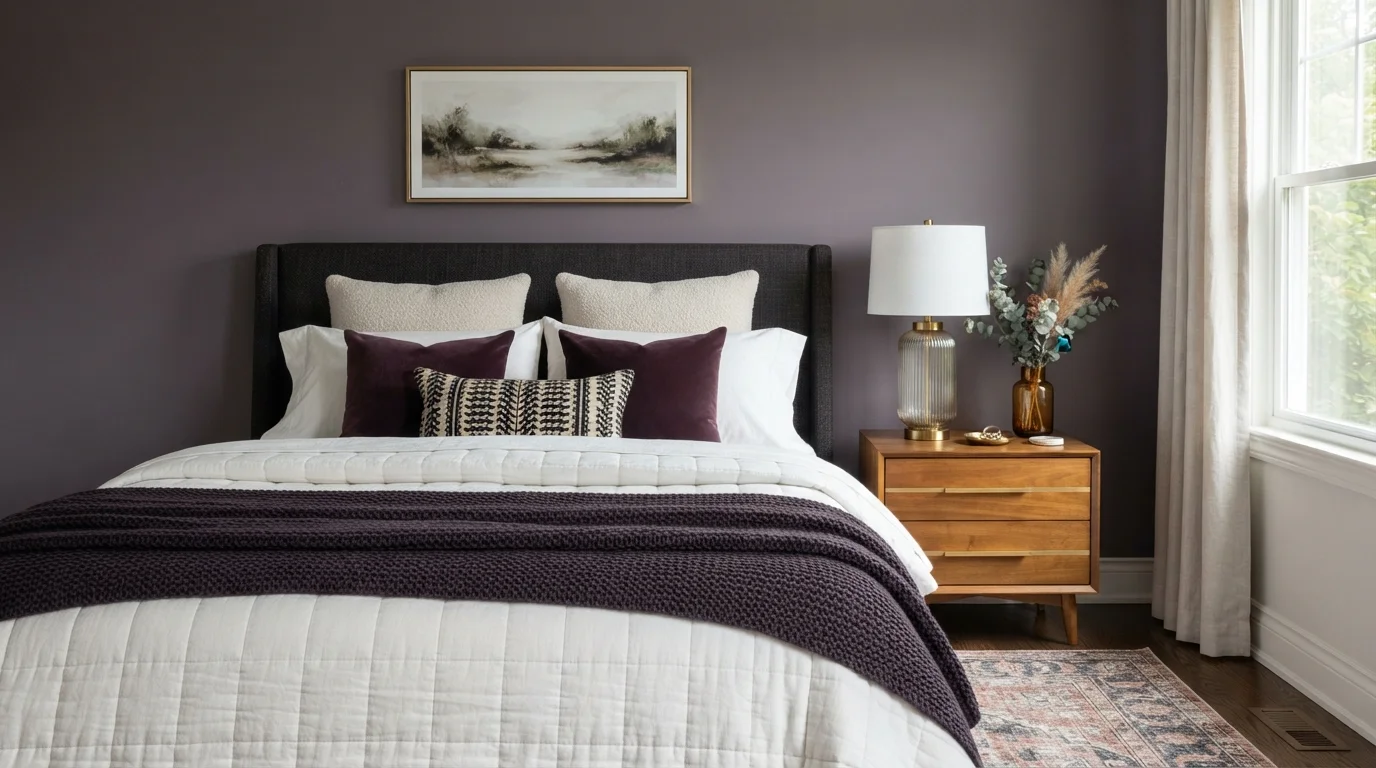
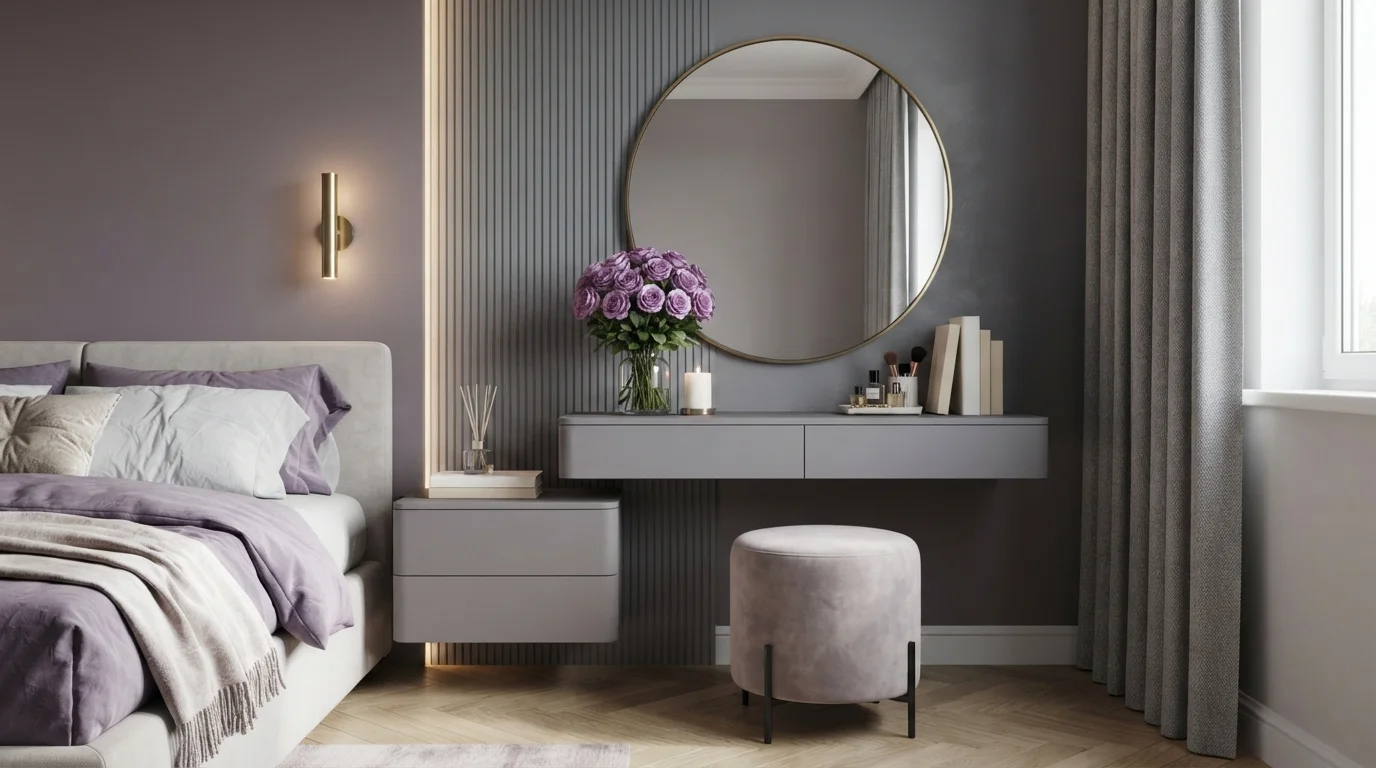
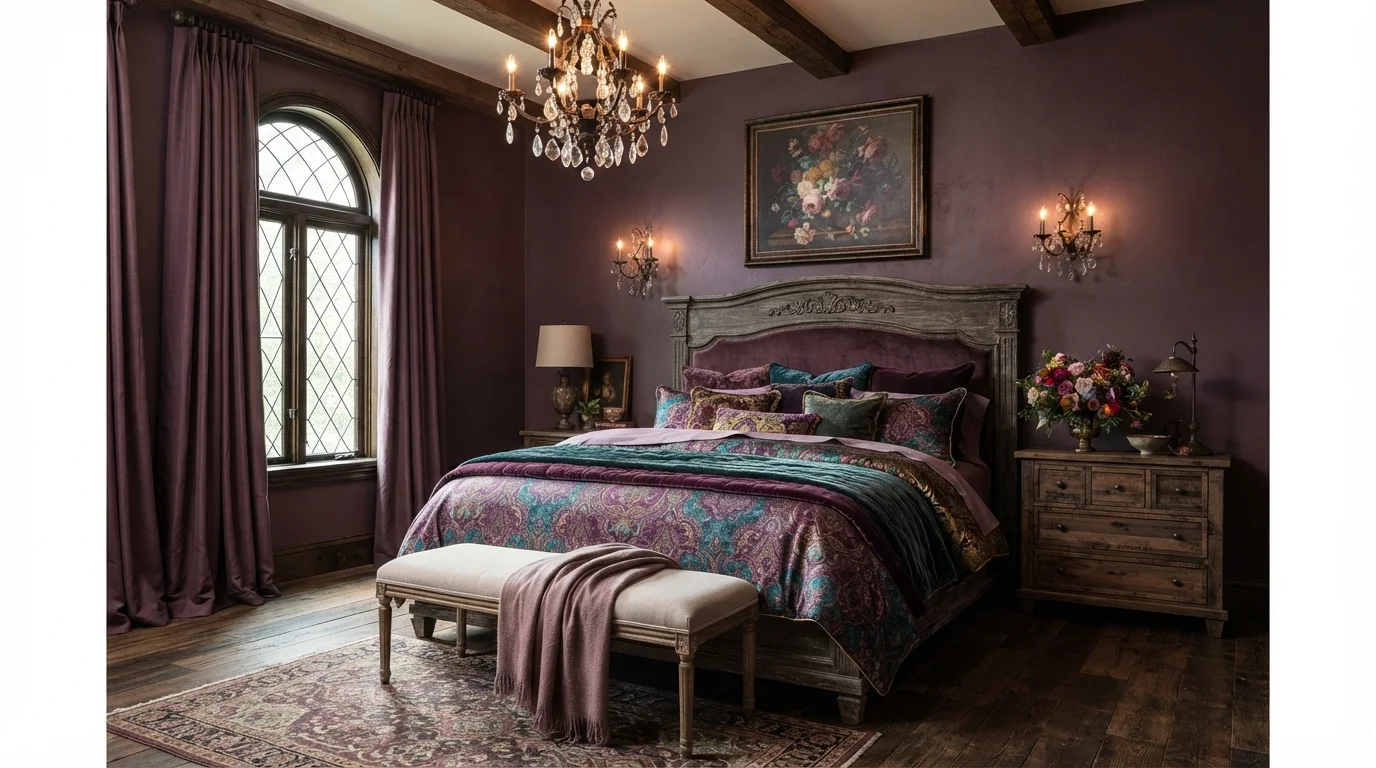
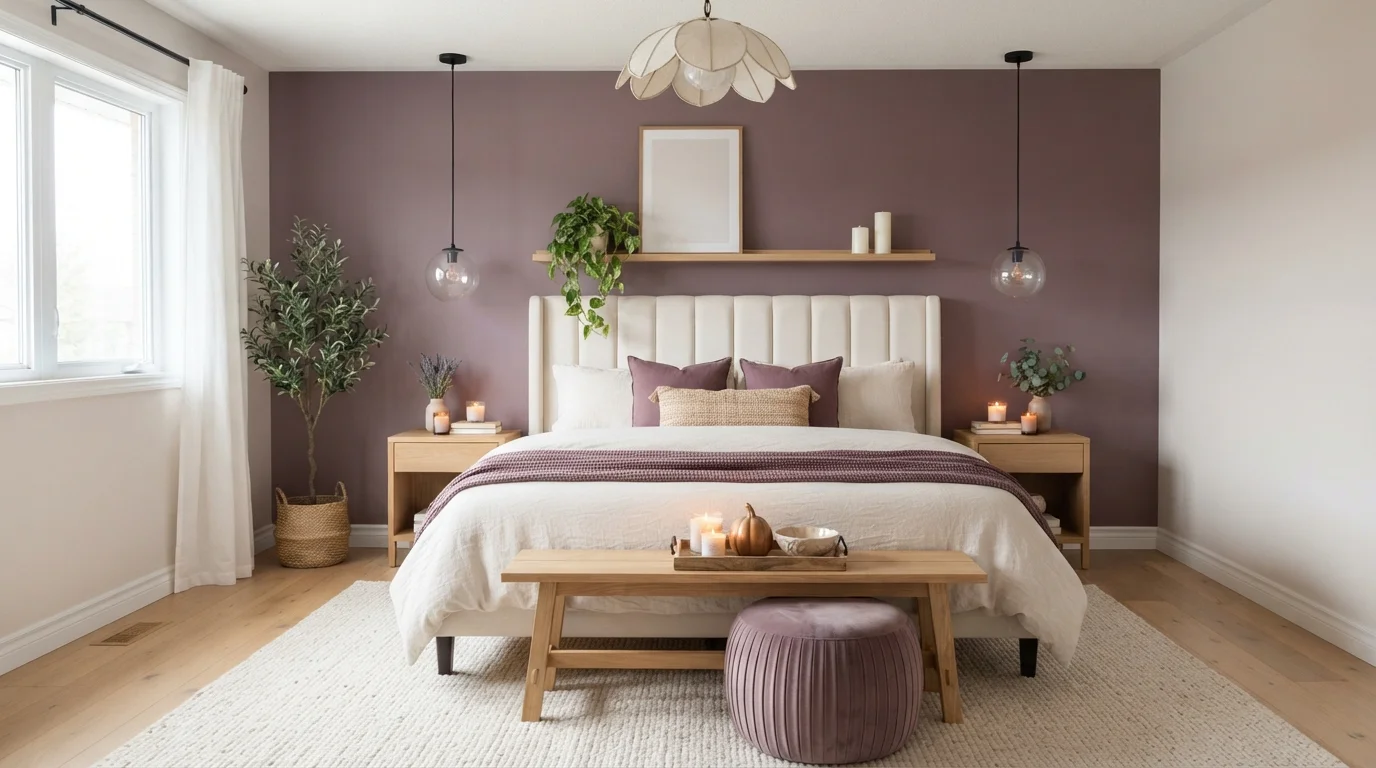
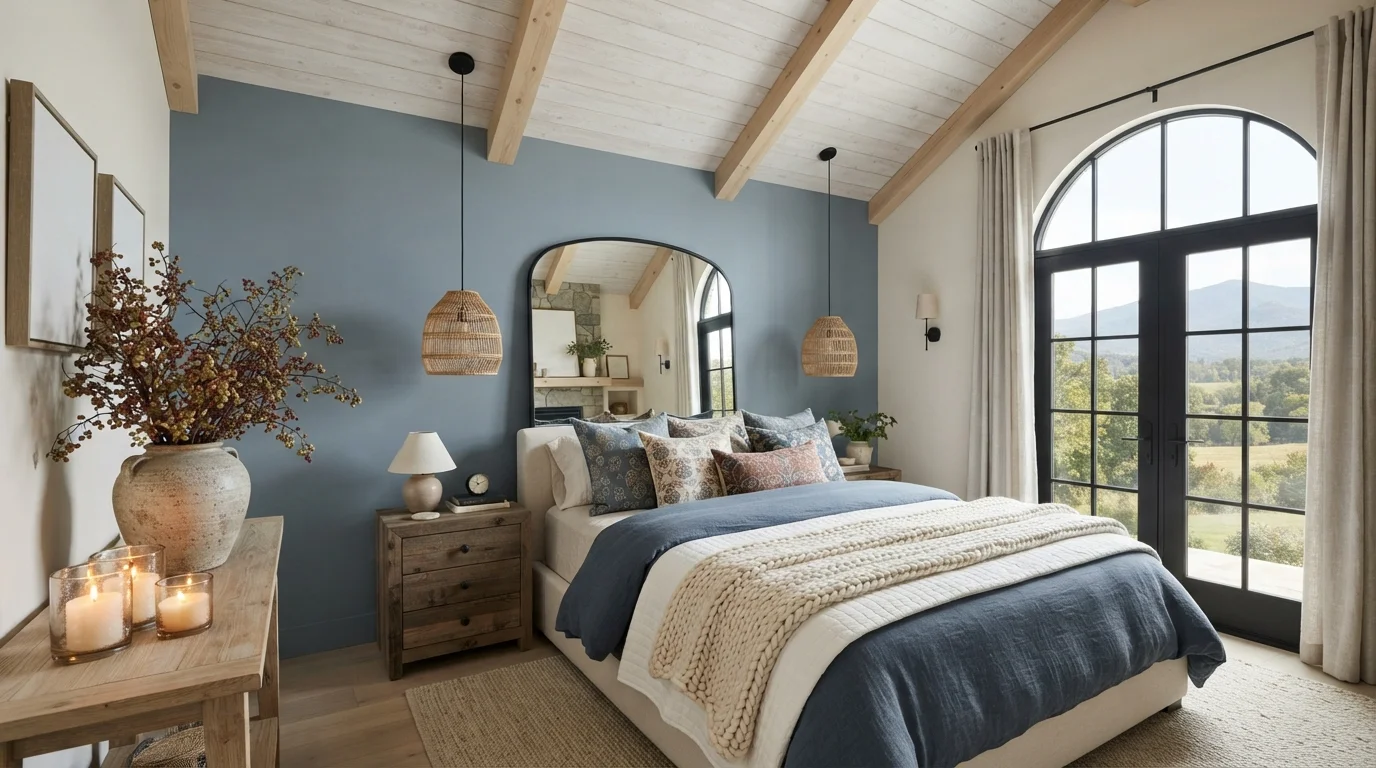
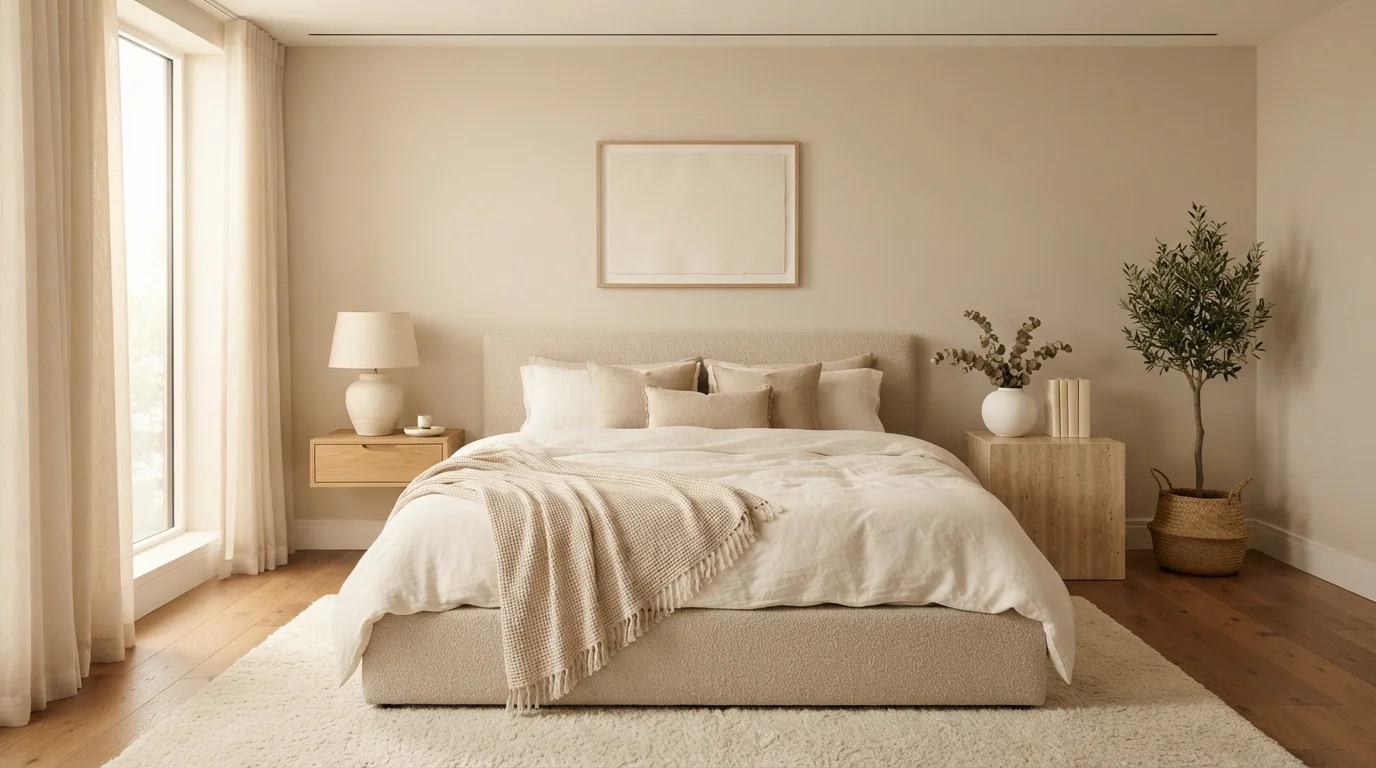
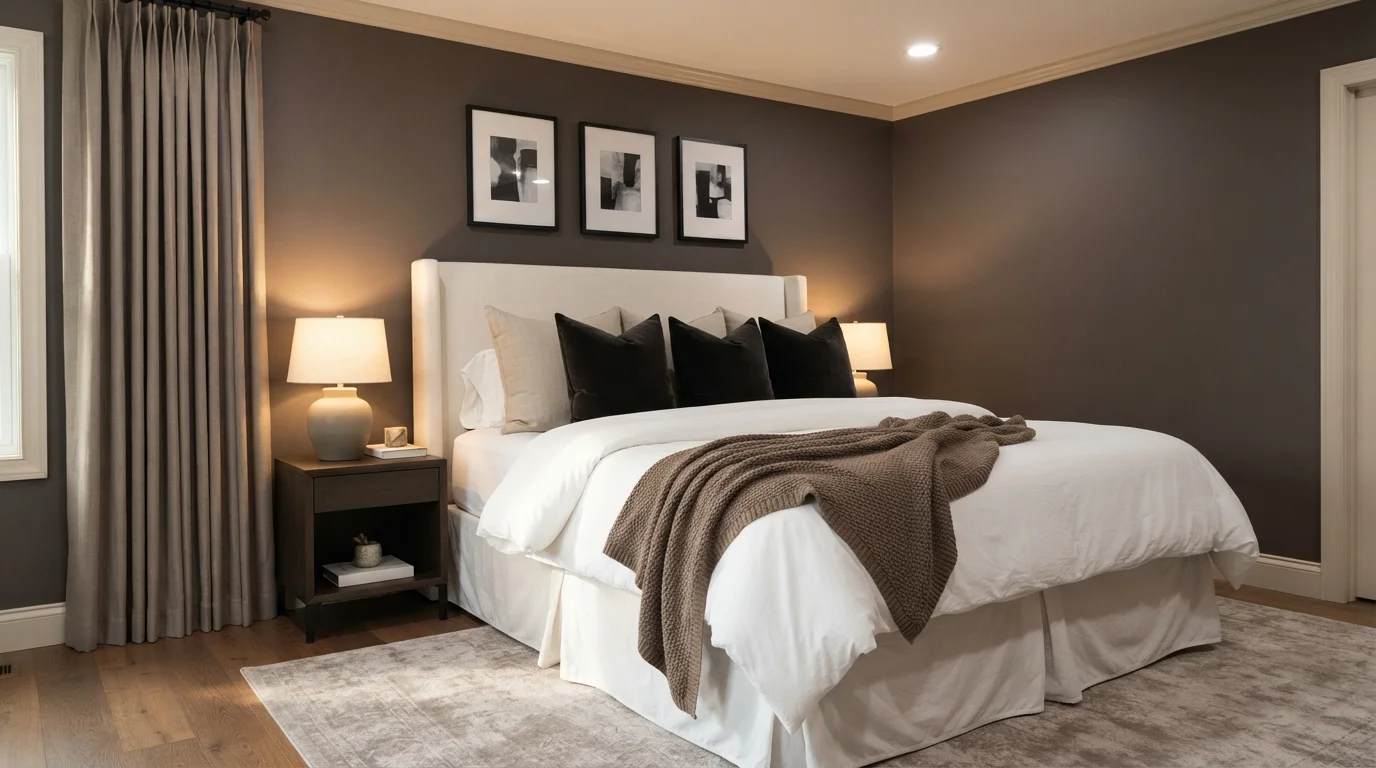
Purple Master Bedroom Paint Colors
1,435 purple colors that work in master bedrooms, drawn from the full ~30,000-color US paint deck. Below: editor's picks specific to master bedrooms, then 30 picks spread across the LRV range — narrow further on the brand page when you've shortlisted.
Purple is the most under-used wall color in American interiors — and that's exactly why it lands when it does. The family splits cleanly: pale lavenders (LRV 70+) read like a soft cool gray with the lights on, and become unmistakably purple at golden hour; mid-tone lilacs work on accent walls in bedrooms; deep plums and aubergines (LRV under 15) anchor moody dining rooms and libraries.
Editor's Picks: Purple for Master Bedrooms
4 picks30 Purple Picks Across the LRV Range
30 of 1,435 · sorted dark → lightLooking for more? All purple → covers every brand; brand × family pages show full decks.
Purple Master Bedroom Colors at Every US Brand
17 brands · up to 10 picks eachUp to 10 picks per brand spread across the purple LRV range, drawn from each brand's full deck. Tap any swatch with a curated guide for full spec; tap the brand title for the brand's complete purple deck.
Behr
Glidden
Valspar
Hirshfield's
Kompozit
Diamond Vogel
PPG / Glidden
Dunn-Edwards
Benjamin Moore
Dutch Boy
Sherwin-Williams
C2 Paint
Farrow & Ball
Magnolia Home
Portola Paints
Clare
Other Master Bedroom Color Families
Purple Colors in Other Rooms
Purple Paint Colors for a Master Bedroom
Purple has a quiet power in a master bedroom that it rarely gets to show anywhere else in the house. This is the one room built for rest, and the soft, grayed purples sit right in the calm zone between cool blue and warm rose. Used at the right depth, purple reads as restful and a little luxurious instead of loud or childish, which is exactly what most people want from the space they wake up in.
The catch is that purple is one of the trickiest families to get right, because the same paint can swing lavender, mauve, gray, or even blue depending on the light and what surrounds it. A master bedroom usually has soft light, fabric, and wood in the mix, so the room itself does half the steering. This page walks through how to pick the depth and undertone that holds up, what sheen makes sense for a bedroom, and how to pair it with your trim, ceiling, and furniture. Every color shown here is mixed to order at the store, so you can match a shade across brands if your favorite lives in another line.
Why Purple Works in a Master Bedroom
A master bedroom is the rare room where you actually want the walls to make you feel something quiet. Soft purples carry a built-in sense of calm and retreat, and the grayed versions feel grown-up and serene rather than playful. That mood fit is the main reason purple lands so well here when it falls flat in a kitchen or hallway.
The risk is depth. A bright, saturated purple reads as energetic and can fight the whole point of the room. Lean toward muted, dusty, or smoky purples and the color does the relaxing work for you while still feeling like a real choice, not a beige compromise.
The Right Depth and Shade for Your Light
Master bedrooms often have less daylight than living spaces, and many people keep the curtains drawn part of the day. In a darker room, a deep purple can turn muddy and gloomy, so a soft mid-to-light purple with an LRV around 45 to 60 keeps the walls feeling rested but not heavy. If your room gets strong, steady daylight, you can drop into a richer purple in the 25 to 40 LRV range without it closing in.
Light direction also pulls the undertone. North light and evening lamplight push purple cooler and grayer, sometimes toward blue, while warm west or south light pulls it toward mauve and rose. Test a large sample on more than one wall and look at it in lamplight too, since that is the light you will actually sleep in.
Picking the Sheen for a Bedroom
A master bedroom is low-traffic and stays fairly dry, so you do not need the scrubbable finishes a kitchen or bath demands. A flat or matte sheen is the easy default here. It hides wall imperfections, kills glare from windows and lamps, and gives purple that soft, velvety look that suits a restful room.
If you have kids or pets coming through, an eggshell finish adds a little washability without much shine. Save satin and semi-gloss for the trim and doors, where the slight contrast in sheen frames the purple walls and stands up to handling.
Pairing Purple with Trim, Ceiling, and Furniture
The safest anchor for purple walls is a soft white or warm off-white on the trim and ceiling, which keeps things from feeling tinted top to bottom and lets the purple stay the star. A cool, bright white can make a grayed purple look dingy, so match the white's warmth to the wall's undertone. For a calmer, more enveloping look, paint the ceiling a paler version of the wall purple instead of stark white.
Wood furniture is purple's best friend in a bedroom. Warm oak and walnut tones balance the coolness and add natural warmth, while black metal fixtures and dark hardware give a soft purple some welcome contrast. Brass and aged gold pair especially well, picking up the warmth that keeps the room from feeling cold.
Common Mistakes to Avoid
The biggest mistake is going too bright. A purple that looked perfect on a paint chip can feel intense across four full walls in a small bedroom, so size down the saturation when in doubt. The second is ignoring the undertone, painting a whole room before checking how the color behaves in evening lamplight, then living with a wall that turns blue or pink at night.
Avoid pairing purple with a cool, blue-white trim, which tends to make the walls look gray and tired. And resist the urge to surround it with too many other colors. Purple is happiest as the lead with quiet neutrals and natural wood around it, not competing with a second bold shade.
Purple Master Bedroom Paint — Frequently Asked Questions
Is purple too bold for a master bedroom?+
Not if you pick the right depth. Soft, grayed, or dusty purples read as calm and restful, which suits a bedroom perfectly. The bold, saturated versions are the ones to avoid here, since they add energy you do not want where you sleep.
What shade of purple is best for a bedroom with low light?+
Go lighter than you think. In a darker room, a soft mid-to-light purple in roughly the 45 to 60 LRV range stays restful without turning muddy or gloomy. Deep purples need strong, steady daylight to look rich instead of heavy.
What sheen should I use on bedroom walls?+
Flat or matte is the easy choice for a master bedroom. It hides wall flaws, cuts glare from windows and lamps, and gives purple a soft, velvety look. Bump up to eggshell only if you need a little extra washability for kids or pets.
What trim color goes with purple walls?+
A soft or warm off-white is the safest anchor and keeps the purple as the focus. Match the white's warmth to your wall, since a cool blue-white can make a grayed purple look dingy. For a cozier feel, paint the ceiling a paler version of the wall color.
Why does my purple paint look blue or gray at night?+
Purple shifts with light. North light and warm lamplight push it cooler and grayer, sometimes toward blue, while warm daylight pulls it toward mauve. Always test a large sample in evening lamplight, because that is the light you sleep in.
Can I get the same purple in a different brand?+
Yes. Every color shown here is mixed to order at the store, so the shade matters more than the label. If your favorite lives in another brand's line, you can cross-match it and have it tinted in the brand or finish you prefer.