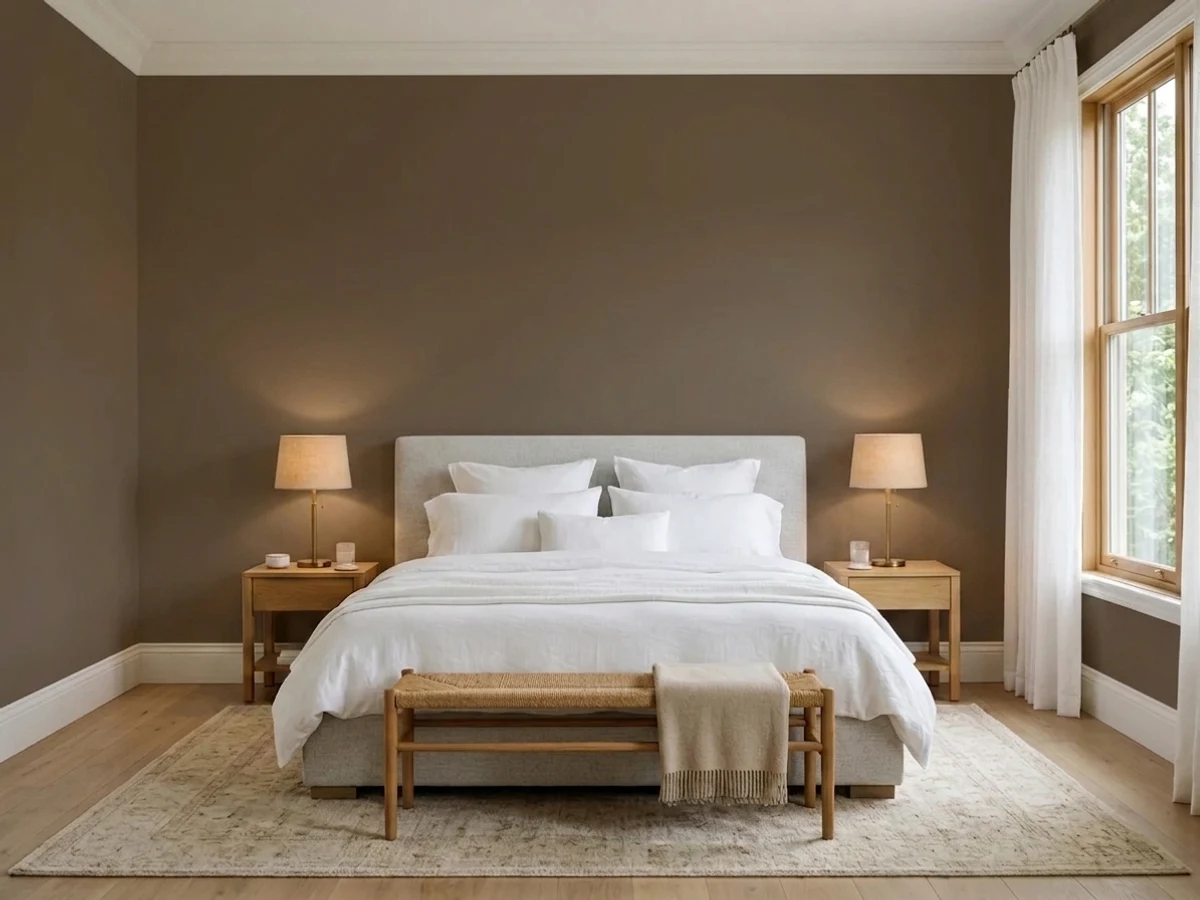
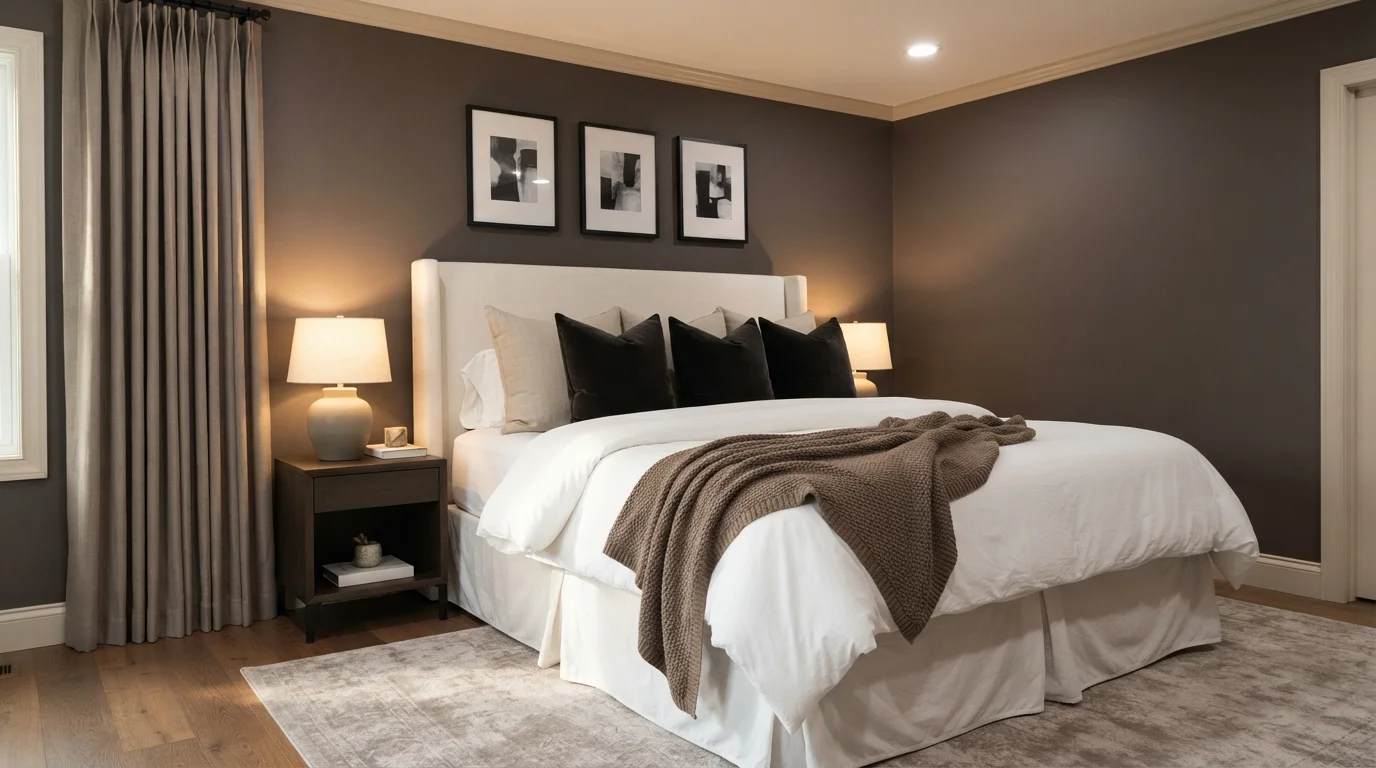
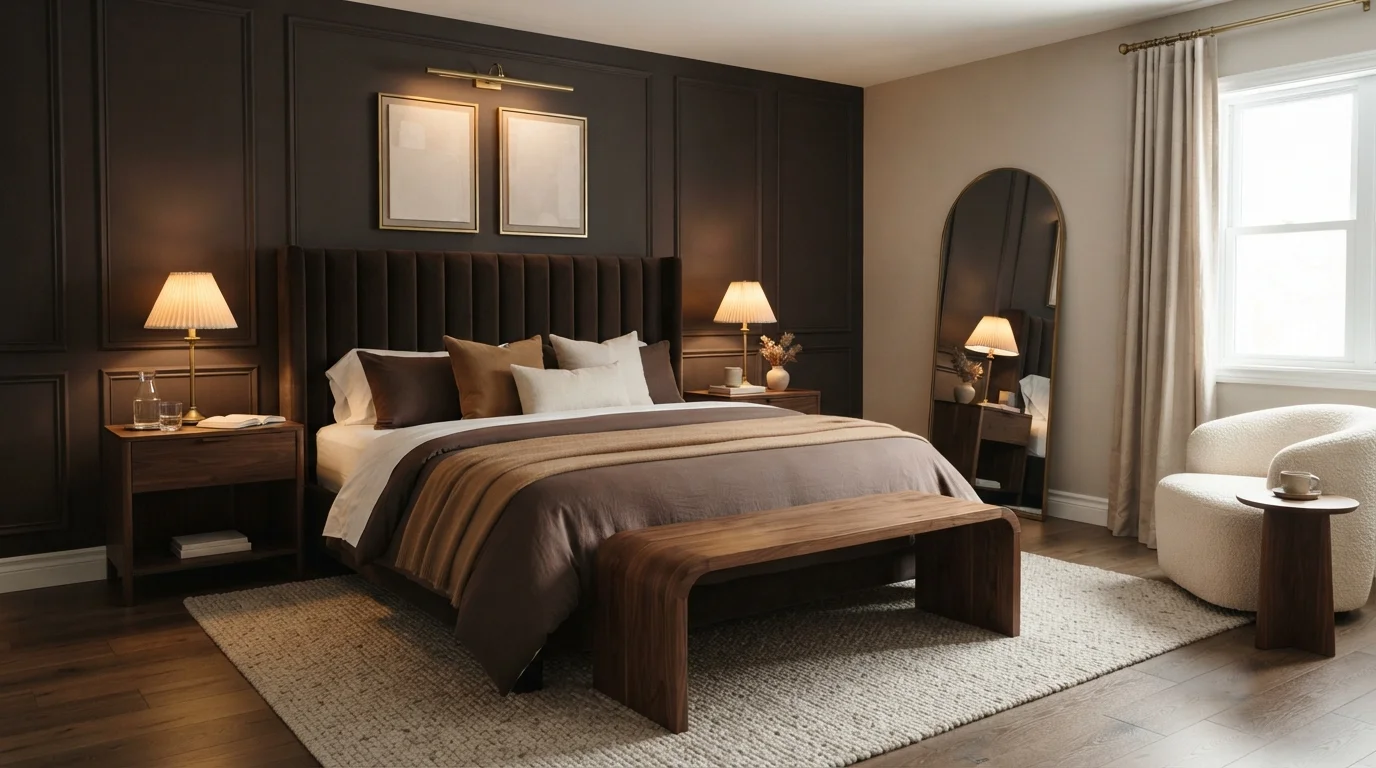
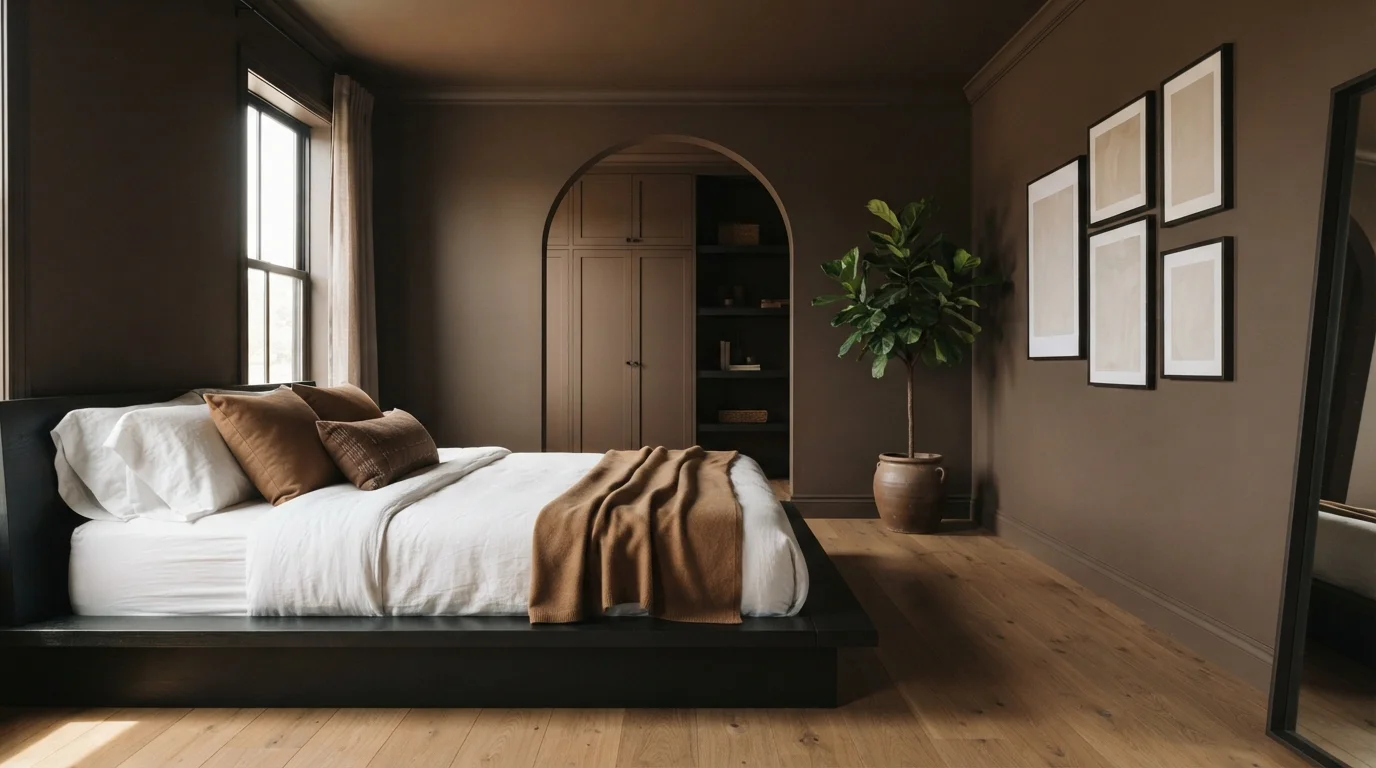
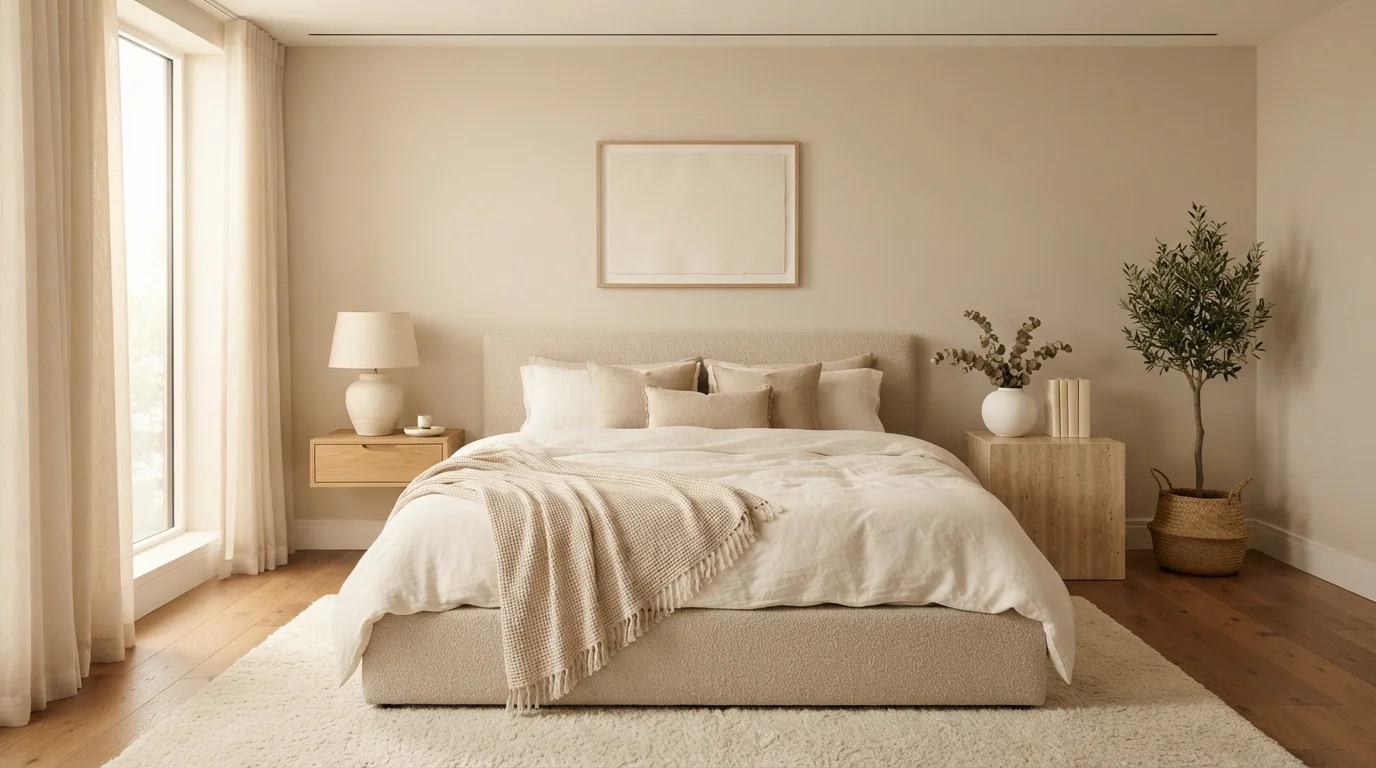
Brown Master Bedroom Paint Colors
1,766 brown colors that work in master bedrooms, drawn from the full ~30,000-color US paint deck. Below: editor's picks specific to master bedrooms, then 30 picks spread across the LRV range — narrow further on the brand page when you've shortlisted.
Brown is in. Pantone naming Mocha Mousse the 2025 Color of the Year confirmed what designers had been spec'ing for two years already — a return to warm, grounded earth tones after a decade of cool greys. The family runs from milky lattes (light, near-cream) through mid-tone taupes and mochas to deep espresso and cocoa at the saturated end.
Editor's Picks: Brown for Master Bedrooms
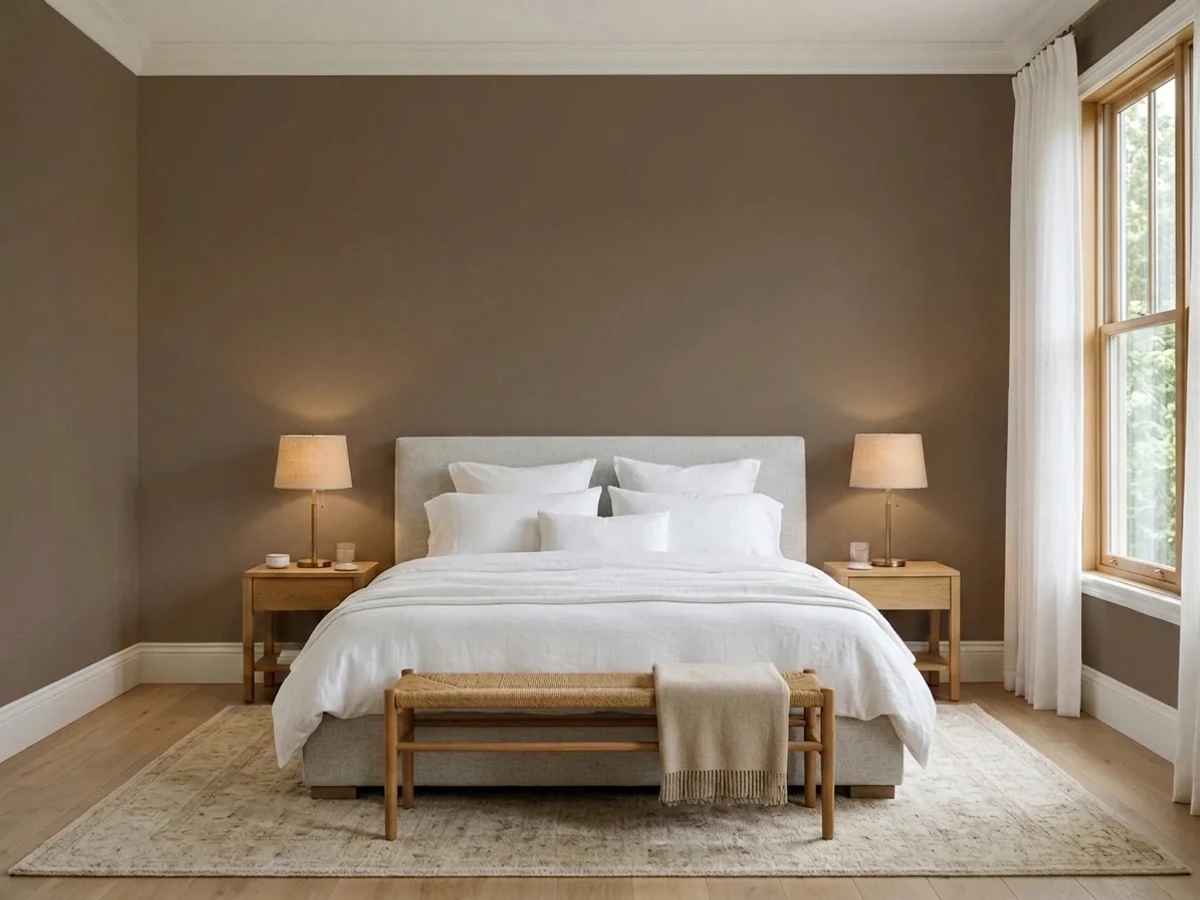
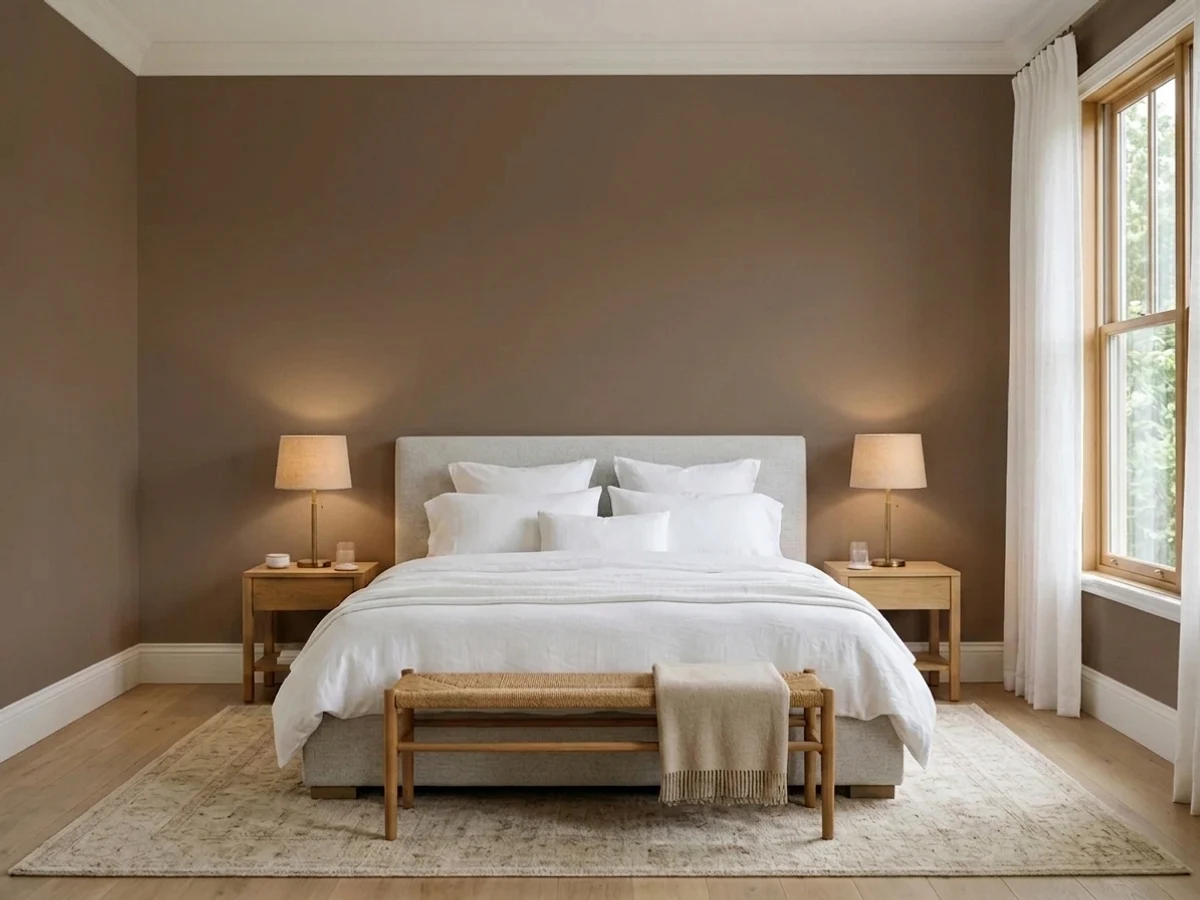
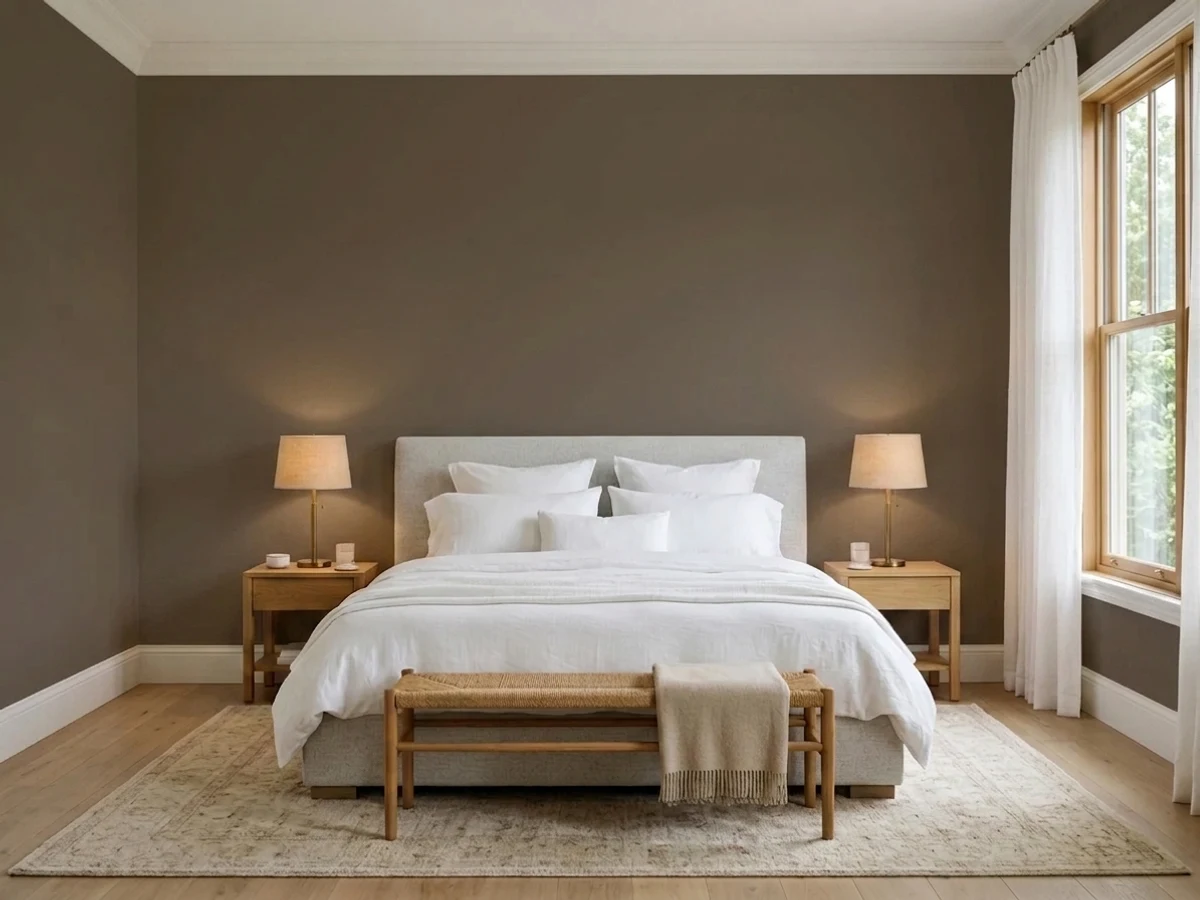
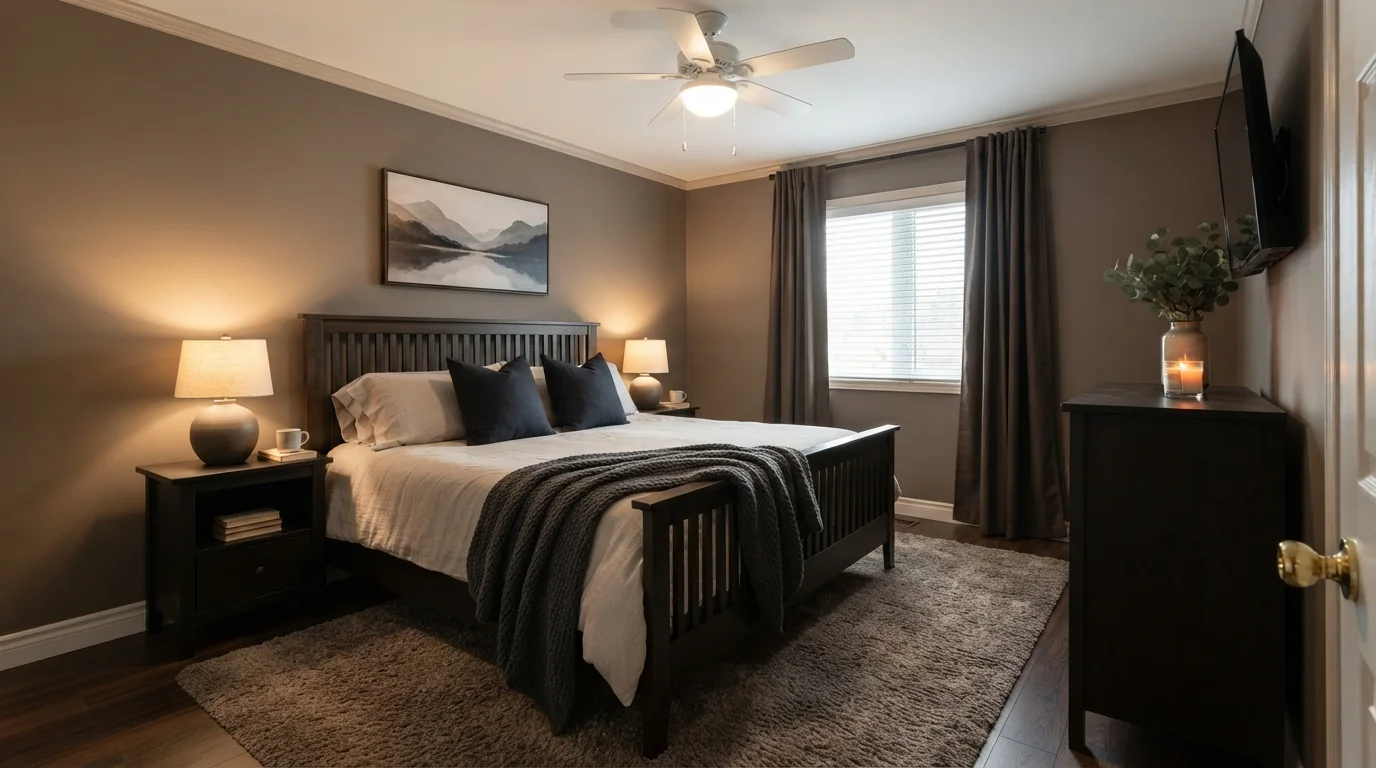
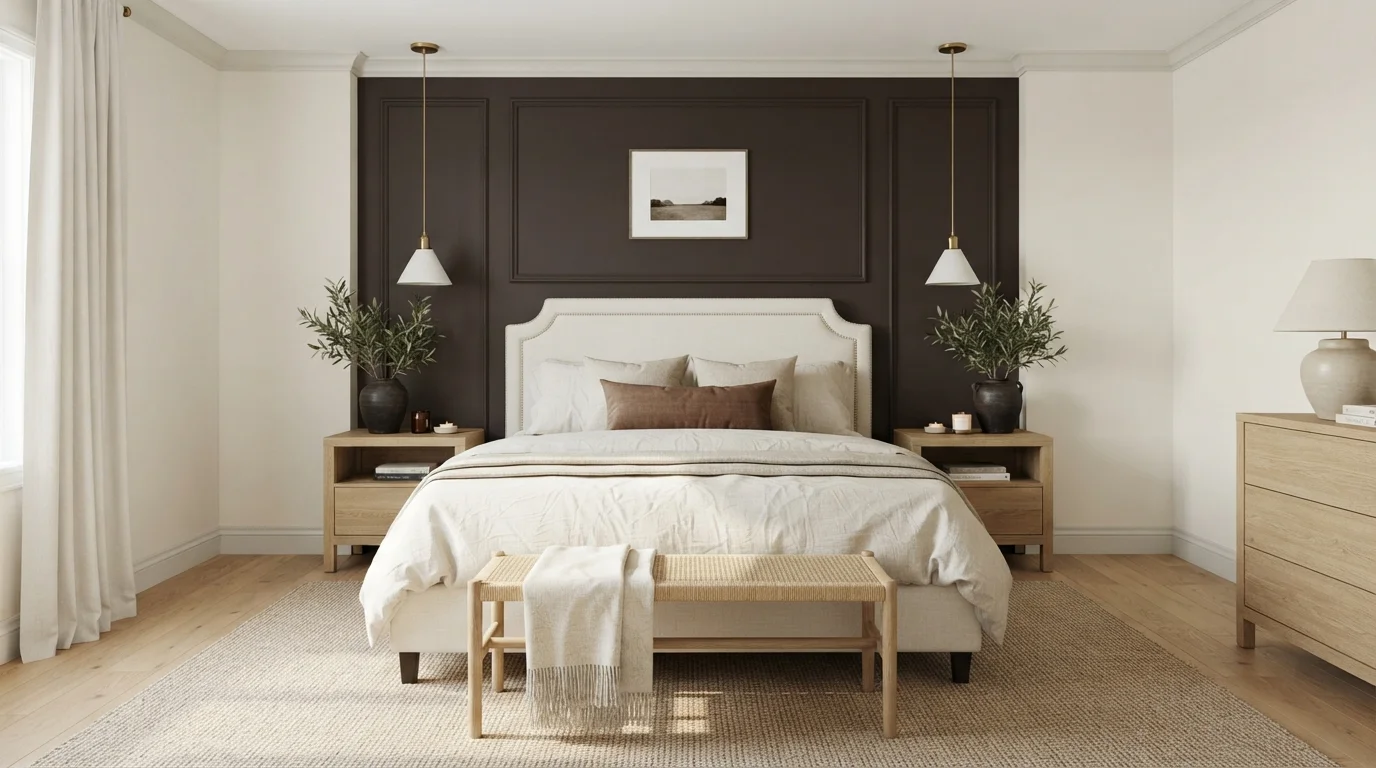
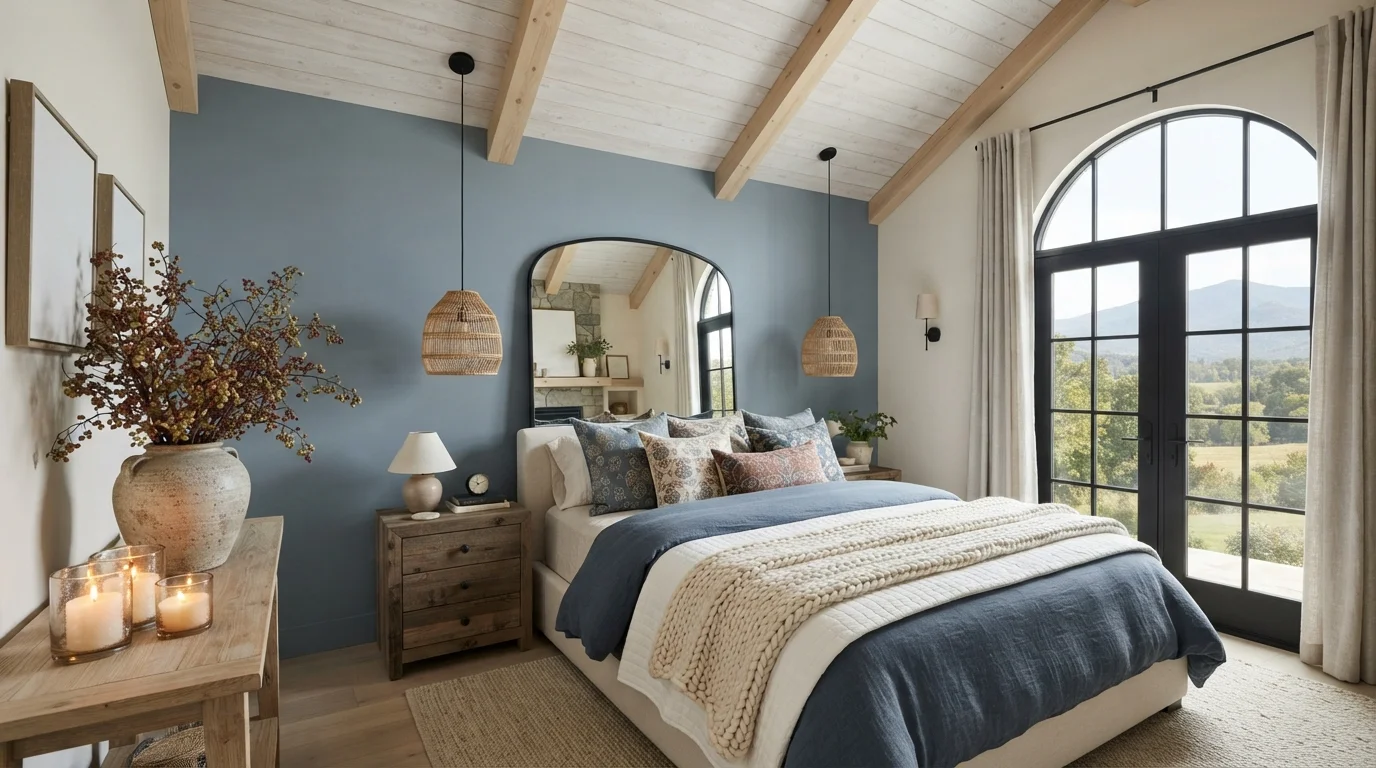
4 picks30 Brown Picks Across the LRV Range
30 of 1,766 · sorted dark → lightLooking for more? All brown → covers every brand; brand × family pages show full decks.
Brown Master Bedroom Colors at Every US Brand
19 brands · up to 10 picks eachUp to 10 picks per brand spread across the brown LRV range, drawn from each brand's full deck. Tap any swatch with a curated guide for full spec; tap the brand title for the brand's complete brown deck.
Behr
Benjamin Moore
Valspar
Glidden
Dunn-Edwards
Sherwin-Williams
PPG / Glidden
Hirshfield's
Kompozit
Dutch Boy
Diamond Vogel
C2 Paint
Rodda
Farrow & Ball
Portola Paints
Magnolia Home
Backdrop
Annie Sloan
Other Master Bedroom Color Families
Brown Colors in Other Rooms
Brown Paint Colors for a Master Bedroom
Brown is one of the most underrated colors for a master bedroom. It reads as calm and grounded rather than loud, and it surrounds you in something that feels like warmth at the end of the day. That makes it a natural fit for the one room in the house built for rest, where you want the walls to settle the mind instead of demanding attention.
The trick with brown in a bedroom is choosing the right depth and undertone for your light, then backing it up with the right finish and pairings. A brown that looks cozy in the showroom can turn flat or muddy on a north-facing wall, and the wrong sheen can throw glare across the room at the worst time of day. Below is how to get it right, plus how the colors you see here can be mixed to order and matched across brands.
Why Brown Works in a Master Bedroom
A master bedroom asks for a color that lowers the volume. Brown does that better than almost anything because it carries warmth without the energy of a red or orange, so the room feels enveloping instead of stimulating. Surrounded by a soft brown, the space reads more like a retreat than a passageway, which is exactly the mood most people want where they sleep.
Brown also forgives the realities of a bedroom. Shadows from a headboard, a heavy curtain, or a tall dresser blend into a brown wall instead of fighting it. That lived-in, layered quality is a feature here, not a flaw, and it's part of why brown ages so gracefully in a space you spend the most relaxed hours in.
Picking the Right Depth for Your Light
Light is what decides which brown actually belongs in your room, and LRV (Light Reflectance Value, a 0–100 scale of how much light a color bounces back) is the fastest way to predict it. A bright, south-facing bedroom can carry a deep, true brown in the LRV 10–25 range and still feel rich rather than cave-like, because there's enough daylight to keep it from going heavy. A north-facing or smaller bedroom usually does better with a lighter, warmer brown around LRV 30–50, which holds onto cozy without swallowing the room.
Undertone matters as much as depth. North light leans cool and can pull a brown gray or muddy, so a brown with a warm red or gold base will look truer there. West-facing rooms glow warm in the evening, which can push an already-warm brown toward orange, so a brown with a touch of gray or green underneath stays balanced. Always test a large sample on more than one wall and look at it morning, midday, and night before you commit.
The Right Finish for Bedroom Walls
A master bedroom is low-traffic and low-moisture, so you don't need a scrubbable, high-sheen finish here the way you would in a bathroom or hallway. Matte or eggshell is the sweet spot. Both soften the look of a deep brown and, just as important, kill glare from a bedside lamp or a morning window so the wall never shines back at you when you're trying to wind down.
Matte gives the most depth and hides minor wall imperfections, which deep browns tend to highlight, so it's the better pick if your walls aren't perfectly smooth. Save the slightly tougher eggshell or satin for the trim, doors, and any spot near a light switch that gets touched often. On the ceiling, a flat finish keeps the eye calm overhead.
Pairing Brown With Trim, Ceiling, and Fixtures
Brown plays well with almost everything, which is why it anchors a master bedroom so easily. A soft warm white on the trim and ceiling keeps the room from feeling closed in and gives the brown a crisp edge to lean against. If you want a more enveloping, hotel-suite feel, paint the trim and ceiling a lighter tint of the same brown so the whole room reads as one quiet wrap of color.
For the rest of the room, let the metals and woods do the pairing. Brass, bronze, and aged gold fixtures bring out the warmth in a brown wall, while matte black adds contrast without coldness. Natural wood furniture and a layered, textured bed in cream, oatmeal, or rust keep a brown bedroom from reading flat and make the color feel intentional rather than dark.
Common Mistakes to Avoid
The most common misstep is going too dark for the light you have. A deep brown that looked striking on a chip can press in on a dim, north-facing bedroom and make it feel smaller at night, so match the depth to the room before you fall for the swatch. The second mistake is ignoring undertone — a brown that turns gray, purple, or muddy against your light will quietly drag the whole room down even if the depth is right.
The other big one is pairing a warm brown with a stark, cool white on the trim, which can make the brown look dirty by comparison. Reach for a warm or creamy white instead. And don't skip the large sample step: brown shifts more between daylight and lamplight than most colors, and a bedroom is judged mostly after dark.
Brown Master Bedroom Paint — Frequently Asked Questions
Will brown make my master bedroom feel too dark?+
Not if you match the depth of the brown to your light. A bright, sunny room can handle a deep brown and still feel rich, while a darker or north-facing room stays cozy rather than gloomy with a lighter, warmer brown in roughly the LRV 30–50 range. The key is testing a large sample on your actual walls at night, not just judging it from a small chip in the store.
What sheen should I use for brown bedroom walls?+
Matte or eggshell is best for a master bedroom. A bedroom is low-traffic and dry, so you don't need a glossy, scrubbable finish, and a flatter sheen kills glare from lamps and morning light. Matte also adds depth to a deep brown and hides small wall flaws that darker colors tend to show.
What trim color goes with brown walls in a bedroom?+
A soft, warm or creamy white is the safest and most flattering choice — it keeps the room from feeling closed in and gives the brown a clean edge. Avoid a stark, cool white, which can make a warm brown look muddy. For a more enveloping look, paint the trim and ceiling in a lighter tint of the same brown.
What undertone of brown should I look for?+
It depends on your light. North-facing rooms run cool and can pull a brown gray or muddy, so a brown with a warm red or gold base looks truer there. West-facing rooms glow warm at night, so a brown with a slight gray or green underneath stays balanced instead of tipping orange.
Can I get any of these brown colors matched to my brand of paint?+
Yes. Every color shown here is mixed to order at the paint counter, so it isn't tied to a single brand. If you've fallen for a brown from one brand, you can have it cross-matched into another brand's paint, which lets you keep your preferred finish or formula while still getting the exact shade you want.
Is a brown bedroom hard to redecorate around later?+
No — brown is one of the easiest backdrops to live with. It pairs with warm metals like brass and bronze, with matte black, and with natural wood, and it reads as a warm neutral, so cream, rust, oatmeal, and deep green bedding all work against it. That flexibility means you can refresh the room with textiles and fixtures without repainting.