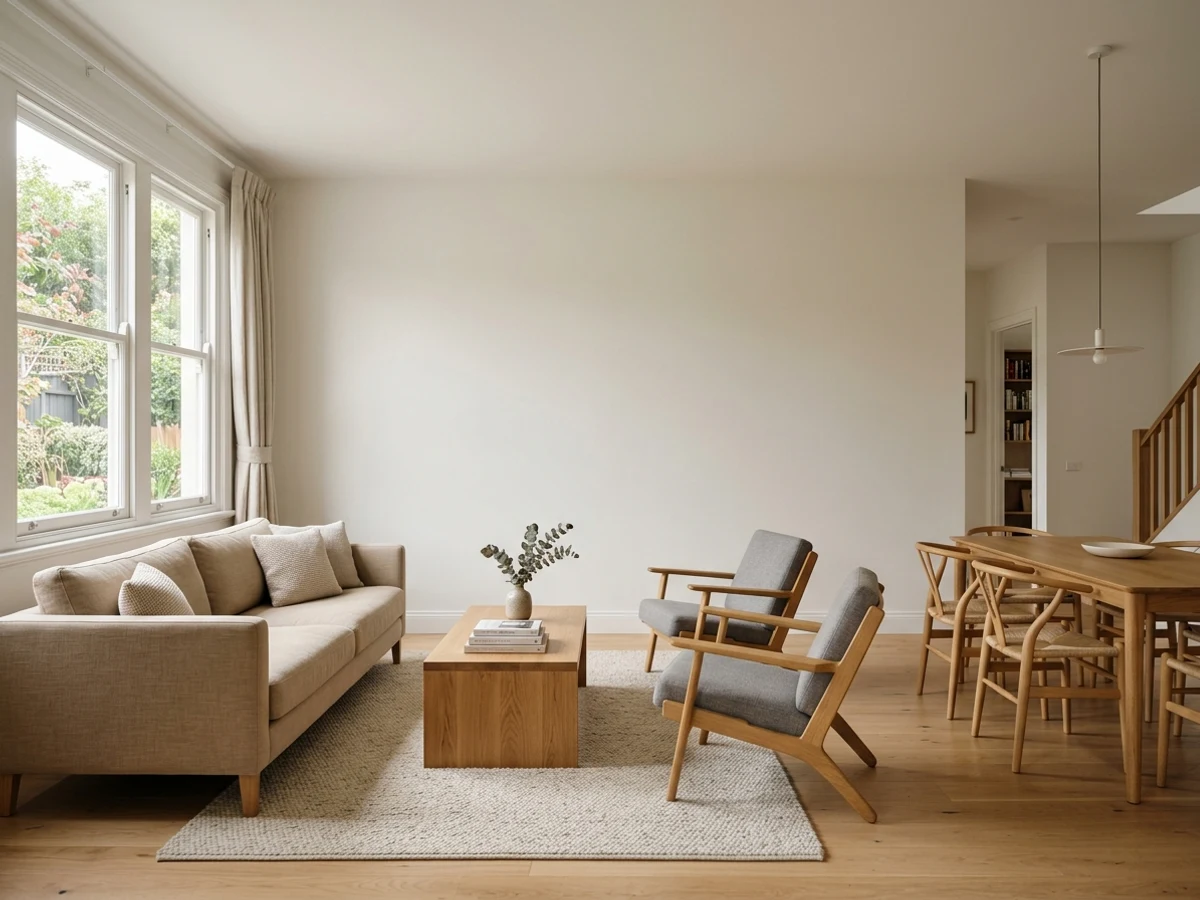
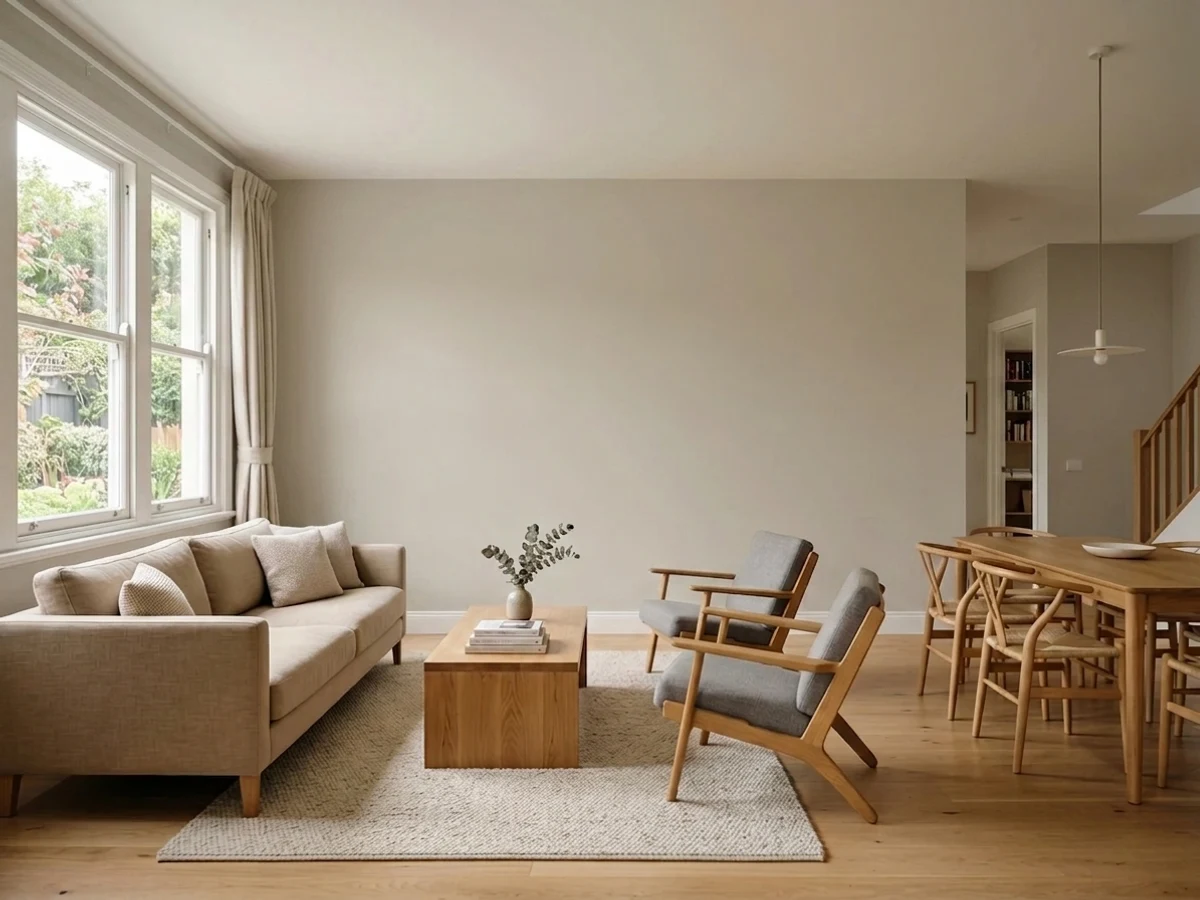
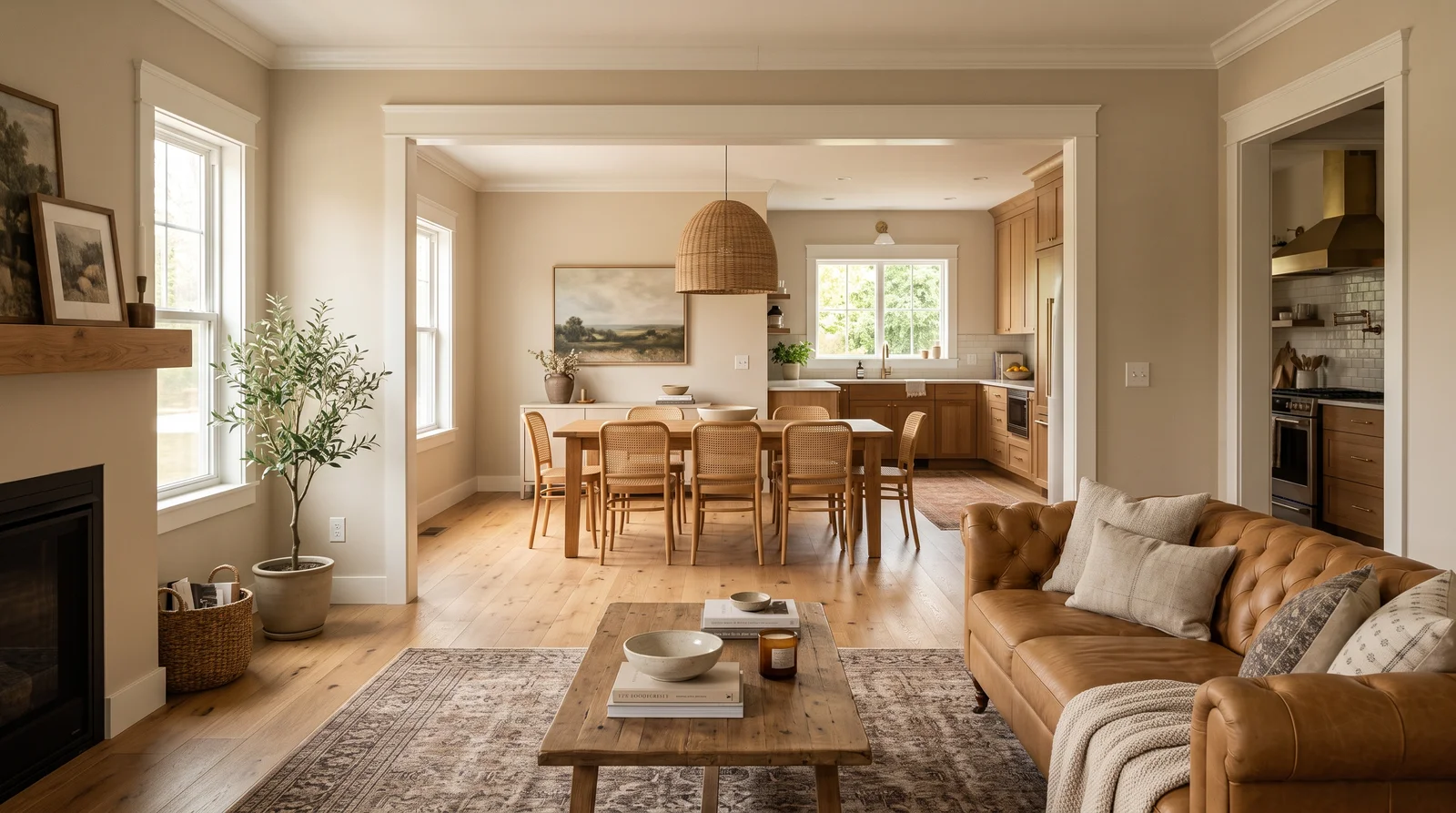
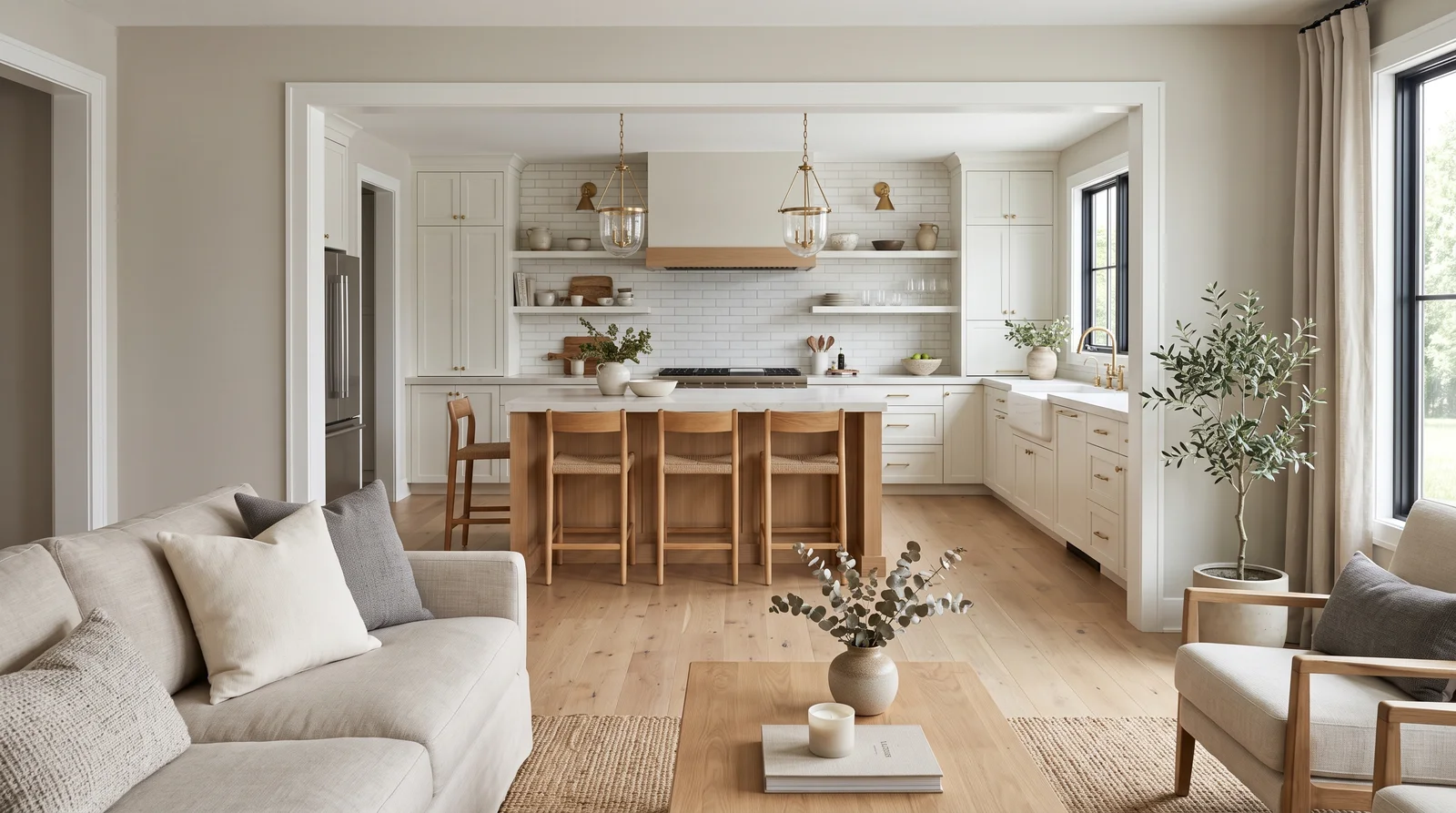
Neutral Whole House Paint Colors
4,152 neutral colors that work in whole houses, drawn from the full ~30,000-color US paint deck. Below: editor's picks specific to whole houses, then 30 picks spread across the LRV range — narrow further on the brand page when you've shortlisted.
Neutrals are the colors that aren't quite gray and aren't quite tan — the warm, low-saturation in-between bucket where greige, taupe, mushroom, bone, and accessible beige all live. They've replaced cool grays as the default safe wall color of the late 2020s, particularly in open-plan homes where one color flows through multiple rooms.
Editor's Picks: Neutral for Whole Houses
4 picks30 Neutral Picks Across the LRV Range
30 of 4,152 · sorted dark → lightLooking for more? All neutral → covers every brand; brand × family pages show full decks.
Neutral Whole House Colors at Every US Brand
21 brands · up to 10 picks eachUp to 10 picks per brand spread across the neutral LRV range, drawn from each brand's full deck. Tap any swatch with a curated guide for full spec; tap the brand title for the brand's complete neutral deck.
Behr
Benjamin Moore
Glidden
Sherwin-Williams
Valspar
PPG / Glidden
HGTV Home by Sherwin-Williams
Dunn-Edwards
Diamond Vogel
Hirshfield's
Kompozit
Dutch Boy
C2 Paint
Rodda
Farrow & Ball
Magnolia Home
Portola Paints
Clare
Annie Sloan
Backdrop
Rust-Oleum
Other Whole House Color Families
Neutral Colors in Other Rooms
Neutral Paint Colors for a Whole House
A neutral whole-house color is the one decision that ties every room together. Instead of picking a different color for each space, you carry one warm or cool neutral down the hallways and into most rooms, then let furniture, art, and trim do the talking. It is the easiest way to make a home feel calm, bigger, and intentional rather than chopped up room by room.
The catch is that one color has to work in a lot of different light. North-facing rooms, sunny south rooms, dim stair landings, and bright kitchens will all show the same paint differently. The goal of this page is to help you choose a neutral that holds up across all of that, pick the right sheen for each surface, and pair it cleanly with your trim and ceilings. Every color shown here is mixed to order at the paint counter, so you can match the same shade across brands if your favorite lives in another line.
Why One Neutral Across the Whole House Works
Running a single neutral through most of the house removes the visual breaks you get when every room is a different color. Sightlines stay quiet, open-plan spaces read as one room, and the flow from hall to living room to bedroom feels seamless. It also makes future touch-ups and repaints far simpler, because you are buying and storing one color instead of six.
The thing to watch is that a whole-house neutral lives next to itself in long runs and corners, so any strong undertone gets repeated everywhere. A beige that leans pink or a gray that turns blue will do it in every room at once. Pick a neutral with a quiet, balanced undertone and test it in at least three rooms with different light before you commit.
The Right Depth and How Your Light Steers It
For a whole house, a mid-to-light neutral in the roughly 55 to 70 LRV range is the safe, flexible zone. It is bright enough to keep dim hallways and north rooms from feeling gloomy, but not so pale that it washes out in your sunniest spaces. LRV is just how much light a color bounces back, from 0 (black) to 100 (pure white), and a higher number means a lighter, more forgiving color across mixed light.
Let your home's overall light pull the choice. If most of your rooms face north or you have few windows, lean to the warmer, slightly higher-LRV end so the house never feels cold or cavelike. If you have big south and west windows that flood the place with warm light, a cooler or more balanced neutral keeps things from going yellow by afternoon.
Choosing Sheen Surface by Surface
A whole house touches every level of wear, so vary the sheen by surface rather than using one finish everywhere. Use a matte or eggshell on most walls for a soft, even look that hides drywall flaws in long hallway runs. Step up to a scrubbable eggshell or satin in the kitchen, bathrooms, mudroom, and any high-traffic hallway where hands, bags, and pets hit the walls.
Keep trim, doors, and baseboards in satin or semi-gloss so they wipe clean and read crisp against the flatter walls. Ceilings stay flat to kill glare and hide unevenness. Matching the same neutral across these sheens still looks cohesive because the color is identical; only the light bounce changes.
Pairing Neutral With Trim, Ceilings, and Cabinetry
The simplest whole-house move is one wall neutral with a clean trim that is a shade or two lighter, plus a ceiling in a soft white. That gentle step-up frames each room without introducing a new color story you have to manage in every space. If your neutral is warm, keep the trim and ceiling warm too, or the white will look stark and gray next to it.
Cabinetry and built-ins give you room to play. You can carry the same neutral onto cabinets for a quiet, blended look, or go a few shades deeper on an island or library wall for contrast that still belongs to the same family. Tie it together with fixtures and hardware in one consistent metal so the through-line reads on purpose.
The Mistakes That Trip People Up
The most common error is choosing the neutral from a tiny chip in one room and assuming it behaves the same everywhere. It won't. The same can of paint can look greige in the living room and faintly purple on a dim landing, so you have to test it where the light is worst, not just where it is best.
The other big one is mismatched whites. People nail the wall color, then pair a cool bright-white trim with a warm wall and wonder why a corner looks dirty. Sample your trim white against the actual neutral, fix any clashing undertones, and remember every shade here is mixed to order, so you can match your chosen neutral across brands instead of settling for a close-but-off substitute.
Neutral Whole House Paint — Frequently Asked Questions
Is it boring to paint a whole house one neutral?+
Not if you let texture and contrast carry the interest. One neutral on the walls becomes a calm backdrop, and your trim, ceilings, art, rugs, and furniture provide the variety. Stepping a few shades deeper in one or two rooms keeps it from feeling flat without breaking the flow.
Should I really use the same color in every single room?+
Use it as your base in the shared and connected spaces, then feel free to deviate where a room stands on its own. Bedrooms, a powder room, or a study can go deeper or different because they aren't in the main sightline. The trick is keeping anything in the open-plan core consistent.
Warm or cool neutral for a whole house?+
Match it to your dominant light. North-facing, low-light homes feel best with a warm neutral that adds coziness, while bright south- and west-facing homes can handle a cooler or balanced neutral without going cold. Whichever you pick, carry the same undertone through your whites so nothing clashes.
What LRV should a whole-house neutral be?+
A range of about 55 to 70 LRV works for most homes. It stays light enough to keep dim hallways and north rooms bright, but holds enough color to not wash out in full sun. Go higher if your home is dark overall, lower if it is flooded with light.
Do I have to use one sheen everywhere?+
No, and you shouldn't. Keep walls matte or eggshell, bump up to satin in kitchens, baths, and busy hallways for washability, and use satin or semi-gloss on trim and doors. The color stays the same across all of them, so it still looks unified.
Can I match this neutral if my brand carries a different one?+
Yes. Every color shown is mixed to order at the paint counter, and you can cross-match the same neutral between brands. If you love a shade in one line but prefer another brand's paint, the counter can tint it to match closely.