White Whole House Paint Colors
2,064 white colors that work in whole houses, drawn from the full ~30,000-color US paint deck. Below: editor's picks specific to whole houses, then 30 picks spread across the LRV range — narrow further on the brand page when you've shortlisted.
White is the hardest color to specify well. The right white shifts under daylight, north-facing rooms, and warm-LED bulbs — and most "whites" actually have a strong undertone (yellow, pink, green, or blue) that only shows up once it's on the wall. Below: the warm whites and cool whites we recommend most often, organized so you can compare them at a glance.
Editor's Picks: White for Whole Houses
4 picks30 White Picks Across the LRV Range
30 of 2,064 · sorted dark → lightLooking for more? All white → covers every brand; brand × family pages show full decks.
White Whole House Colors at Every US Brand
20 brands · up to 10 picks eachUp to 10 picks per brand spread across the white LRV range, drawn from each brand's full deck. Tap any swatch with a curated guide for full spec; tap the brand title for the brand's complete white deck.
Behr
Benjamin Moore
Dunn-Edwards
Glidden
PPG / Glidden
Valspar
Diamond Vogel
Kompozit
Hirshfield's
Sherwin-Williams
Dutch Boy
C2 Paint
Rodda
Farrow & Ball
Magnolia Home
Clare
Portola Paints
Backdrop
Rust-Oleum
Other Whole House Color Families
White Colors in Other Rooms
White Paint Colors for a Whole House
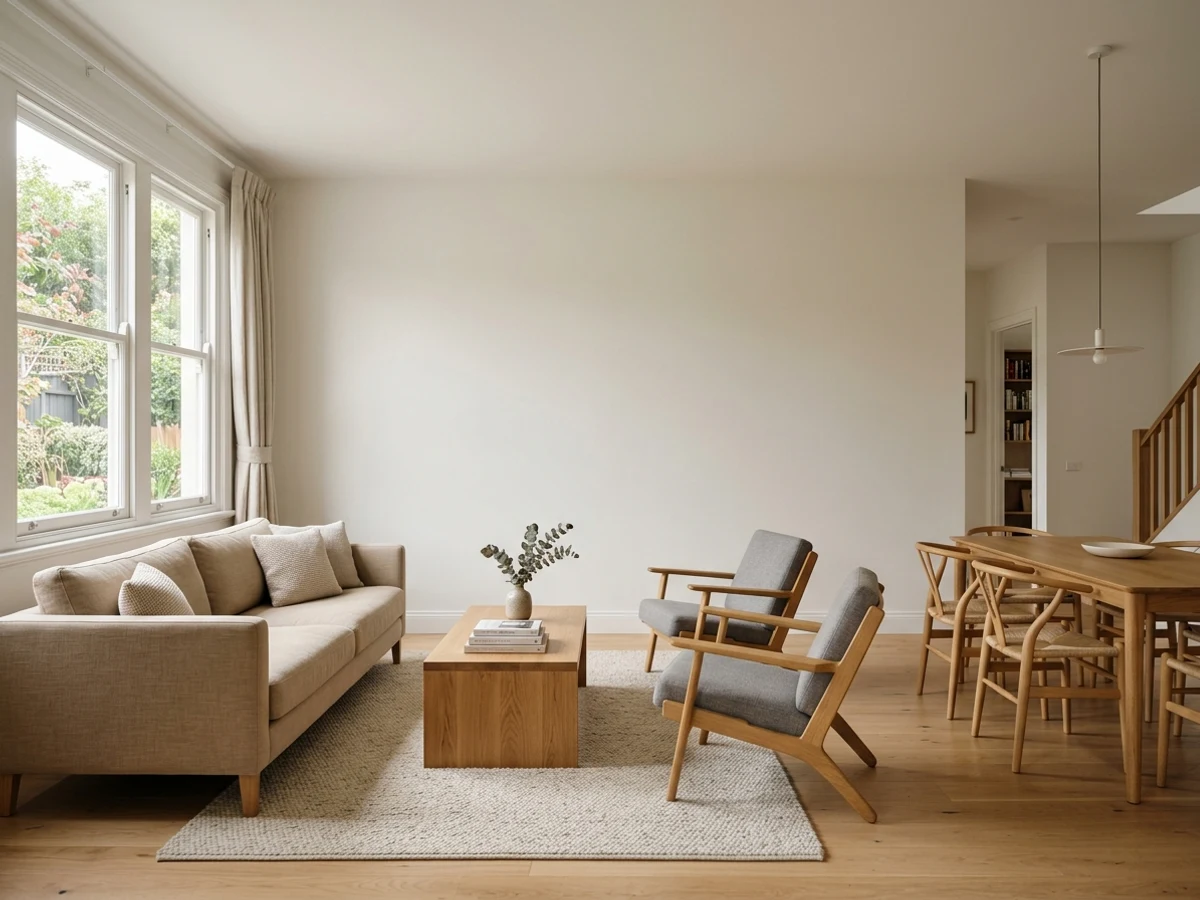
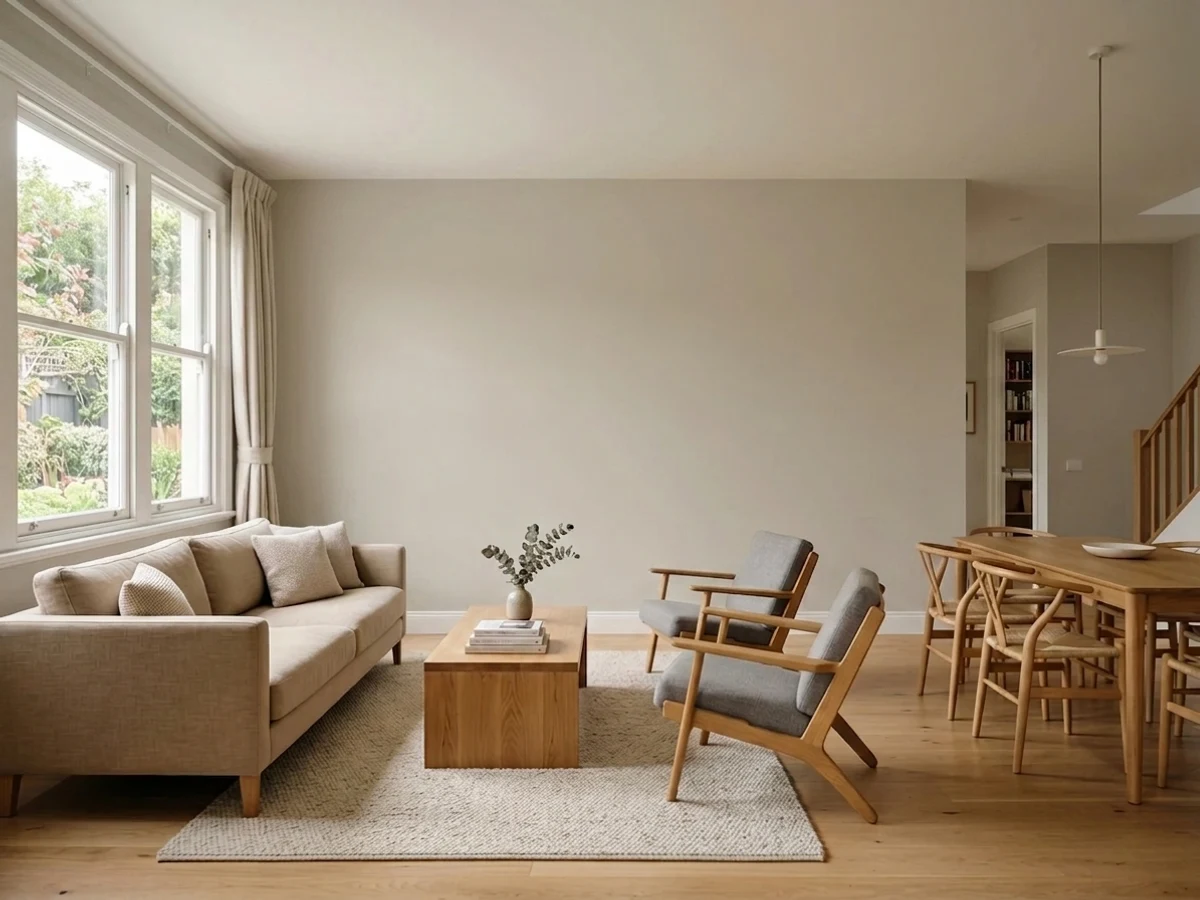
White is the one color that can run through an entire house without ever feeling repetitive, and that is exactly why it works so well as a whole-house base. When the same white flows from the entryway into the kitchen, down the hall, and through the bedrooms, the house reads as bigger, calmer, and more deliberate. It also makes furniture, art, and trim the things people notice, instead of a patchwork of paint choices changing room to room.
The catch is that "white" behaves differently in every room it touches. North-facing rooms cool it down, west light warms it at sunset, and a dark hallway can drain it gray. The goal for a whole house is to pick a white with enough body and the right undertone to hold up under all of that light at once, then keep it consistent. This page walks through how to choose that white, what sheen to use where, and how to pair it with trim and ceilings. Every white shown here is mixed to order at the store, so you can match the same shade across brands and finishes.
Why One White Works for a Whole House
A single white carried through every room is the easiest way to make a house feel finished and connected. Open floor plans especially benefit, because the kitchen, dining area, and living room share sightlines and any color shift between them looks like a mistake. One white removes those visual seams and lets your light, floors, and furniture do the talking.
The thing to watch is that white is not forgiving. It picks up the undertone of everything near it, so the same gallon can look crisp in a sunny room and slightly dingy in a dark one. Choosing a white that handles a range of light gracefully matters more than chasing the perfect white for one favorite room.
Picking the Right Depth of White by Light and LRV
Most whole-house whites land between an LRV of about 80 and 90. LRV, or light reflectance value, runs 0 to 100 and tells you how much light a color bounces back, so a white in that range stays bright without going flat and stark. Go much above 90 and the white can feel clinical in bright rooms; drop below the upper 70s and it starts reading as a soft greige instead of white.
Let your worst-lit rooms steer the pick, not your best-lit ones. North-facing and interior rooms pull whites cooler and grayer, so a white with a faint warm undertone keeps them from looking sterile. South- and west-facing rooms run warm, so if your house leans sunny you can choose a cleaner, slightly cooler white and trust the light to soften it.
The Right Sheen for Walls, Trim, and Wet Rooms
For whole-house walls, a matte or eggshell finish is the safe call. It hides drywall flaws and roller marks across long hallways and big open walls, and a quality eggshell still wipes clean enough for everyday living. Flat reads richest but is harder to scrub, so save true flat for ceilings and low-traffic rooms.
Step up the sheen where life gets messy. Use a scrubbable eggshell or satin in kitchens, bathrooms, mudrooms, and kids' rooms, where moisture and fingerprints are constant. Reserve semi-gloss for trim, doors, and cabinetry, since the higher sheen takes scuffs and cleaning while quietly framing the walls.
Pairing White Walls with Trim, Ceilings, and Fixtures
The cleanest whole-house move is keeping trim and ceilings in the same white family as the walls, just shifted in sheen. White walls with white trim in a higher gloss looks intentional and lets architecture read without hard lines. If you want trim to pop, choose a crisper, cooler white for trim and a slightly warmer white for walls rather than two random whites.
White also gives you freedom with the fixed finishes you can't repaint. Warm-toned floors, brass, and wood cabinets all read cozier against a white with a soft undertone, while black hardware, chrome, and cool stone look sharpest against a cleaner white. Pick your white to flatter the metals, counters, and flooring that are already staying put.
Common Mistakes With Whole-House White
The biggest mistake is testing white on a single sunny wall and rolling it everywhere. Paint large samples in your darkest room, your brightest room, and one in between, and look at them morning and night before you commit. A white that looks perfect at noon can turn blue, pink, or gray somewhere else in the house.
The second mistake is mixing undertones by accident. A warm white wall next to a cool white ceiling or a different white trim makes both look off, even if no one can say why. Keep the whole house in one undertone lane, and remember any white you like can be mixed to order and cross-matched between brands, so you are never locked into one company to stay consistent.
White Whole House Paint — Frequently Asked Questions
Should I use the same white in every room of my house?+
Using one white throughout is the easiest way to make a home feel connected and larger, and it is the most common approach. You can still vary the sheen by room and let trim or accent rooms differ, but keeping the wall white consistent avoids awkward color shifts in open sightlines.
What LRV is best for a whole-house white?+
Aim for an LRV in the low 80s to high 80s for most homes. That range stays bright and clean without feeling stark, and it holds up across both your dark and sunny rooms. Going much higher can feel clinical, while dropping into the 70s starts reading more like a soft neutral than a true white.
Warm white or cool white for the whole house?+
If your house has a mix of light or several dark rooms, a white with a faint warm undertone is the safer choice because it keeps shadowy spaces from looking gray. If your home is mostly sunny and you have lots of cool metals and stone, a cleaner, slightly cooler white can look crisp without going cold.
What sheen should I use for white walls throughout the house?+
Matte or eggshell works for most walls because it hides imperfections on big open surfaces and still wipes clean. Step up to a scrubbable satin in kitchens, baths, and high-traffic areas, and use semi-gloss on trim, doors, and cabinets so they take cleaning and scuffs.
How do I keep white trim from clashing with white walls?+
Keep the trim and walls in the same undertone family and let sheen do the separating, with higher-gloss trim against eggshell walls. If you want more contrast, pair a crisper, cooler white on trim with a slightly warmer white on the walls rather than choosing two unrelated whites.
Can I match the same white across different paint brands?+
Yes. Every white shown here is mixed to order at the store, and the same shade can be cross-matched between brands. That means you can keep one consistent white through the whole house even if you buy paint from different companies or in different finishes.