White Sunroom Paint Colors
2,064 white colors that work in sunrooms, drawn from the full ~30,000-color US paint deck. Below: editor's picks specific to sunrooms, then 30 picks spread across the LRV range — narrow further on the brand page when you've shortlisted.
White is the hardest color to specify well. The right white shifts under daylight, north-facing rooms, and warm-LED bulbs — and most "whites" actually have a strong undertone (yellow, pink, green, or blue) that only shows up once it's on the wall. Below: the warm whites and cool whites we recommend most often, organized so you can compare them at a glance.
Editor's Picks: White for Sunrooms
4 picks30 White Picks Across the LRV Range
30 of 2,064 · sorted dark → lightLooking for more? All white → covers every brand; brand × family pages show full decks.
White Sunroom Colors at Every US Brand
20 brands · up to 10 picks eachUp to 10 picks per brand spread across the white LRV range, drawn from each brand's full deck. Tap any swatch with a curated guide for full spec; tap the brand title for the brand's complete white deck.
Behr
Benjamin Moore
Dunn-Edwards
Glidden
PPG / Glidden
Valspar
Diamond Vogel
Kompozit
Hirshfield's
Sherwin-Williams
Dutch Boy
C2 Paint
Rodda
Farrow & Ball
Magnolia Home
Clare
Portola Paints
Backdrop
Rust-Oleum
Other Sunroom Color Families
White Colors in Other Rooms
White Paint Colors for a Sunroom
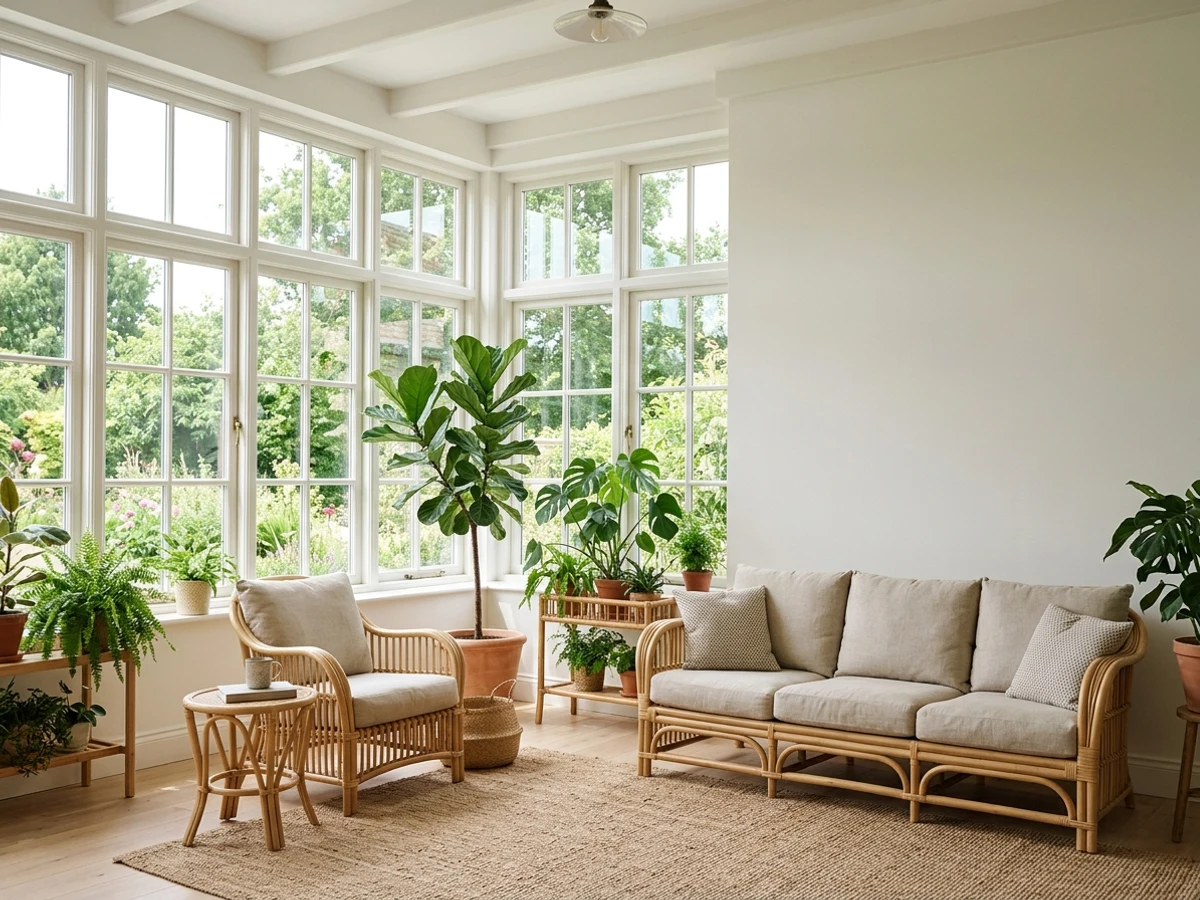
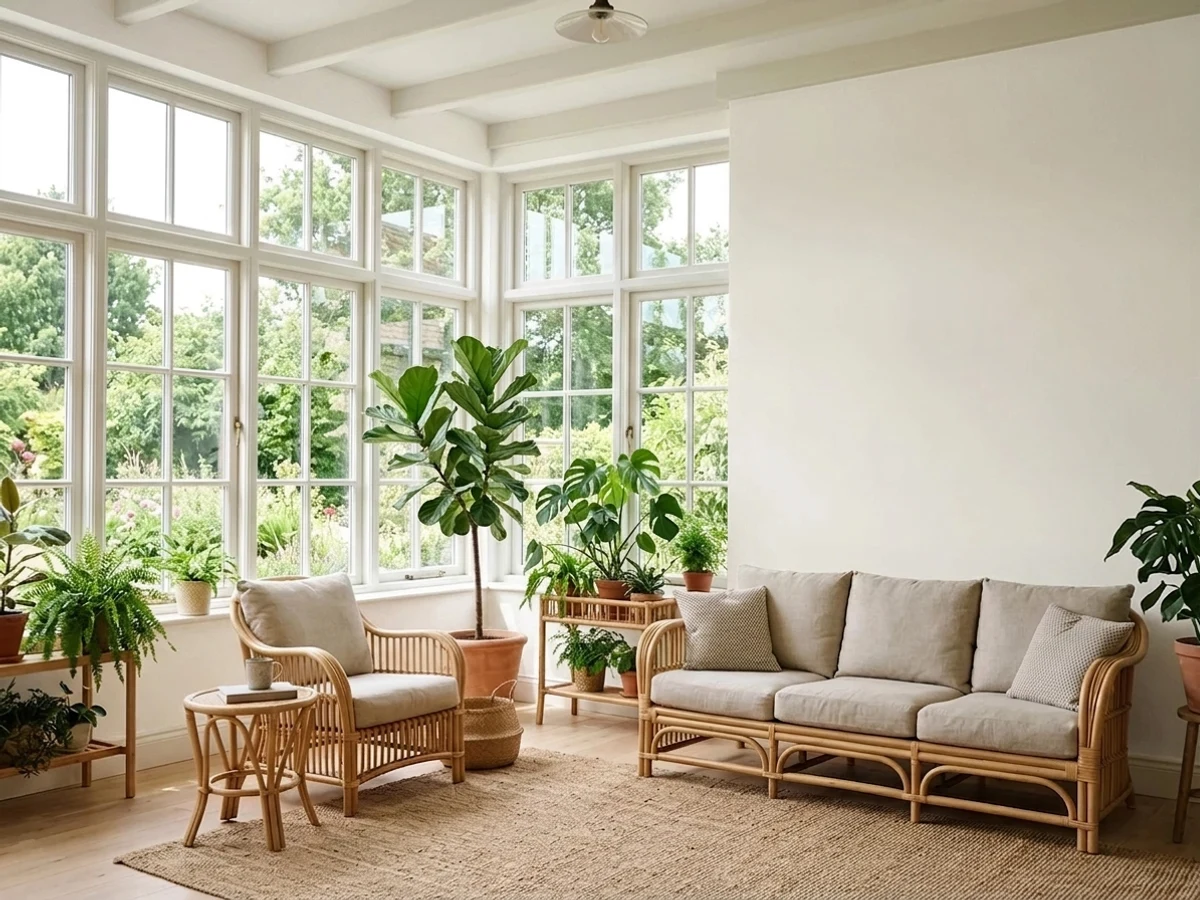
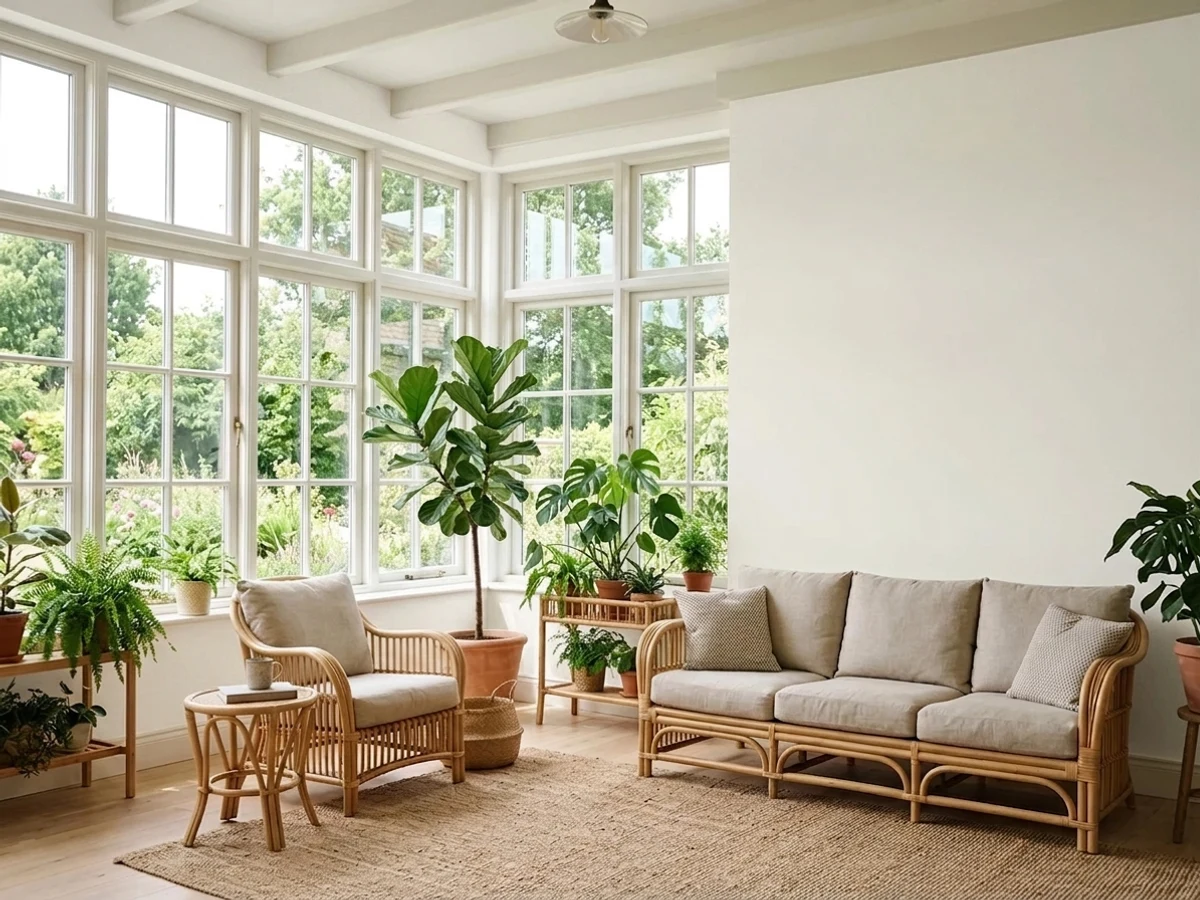
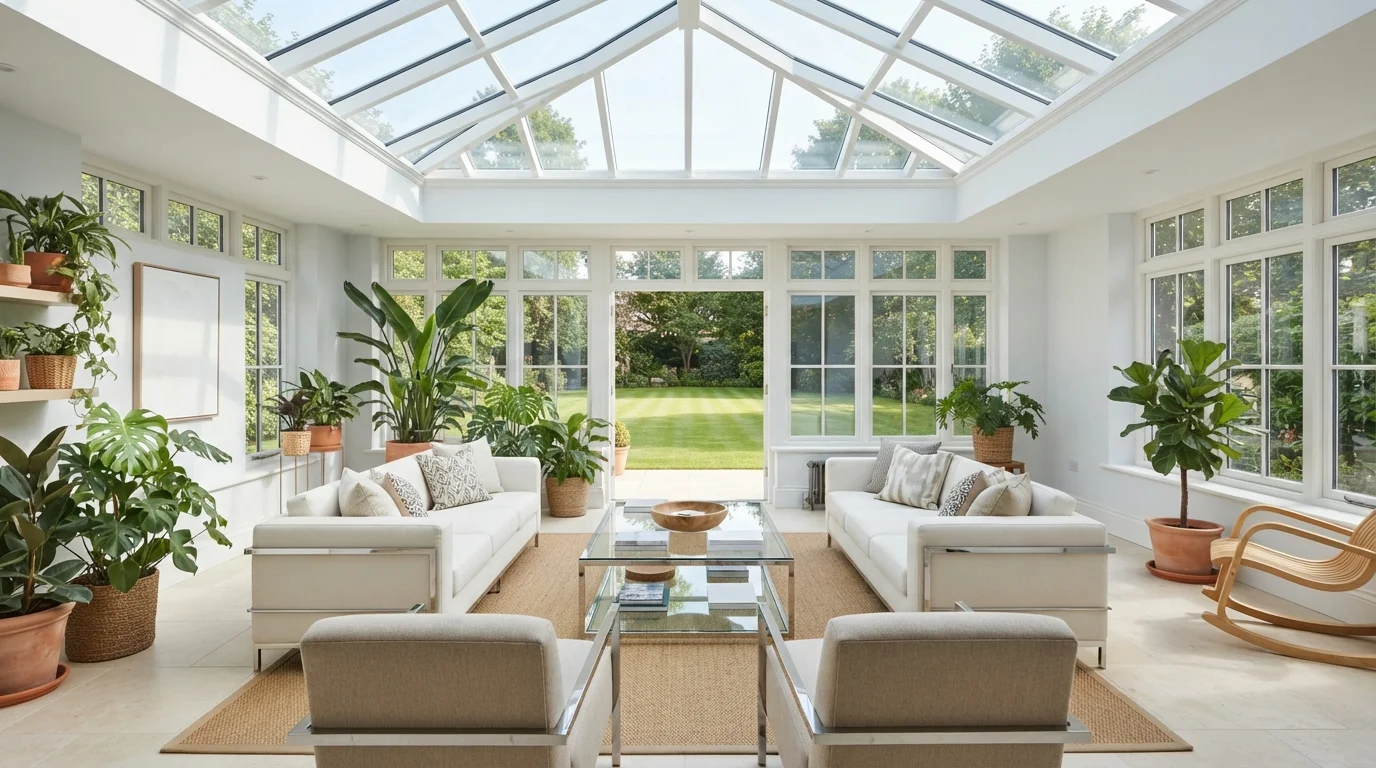
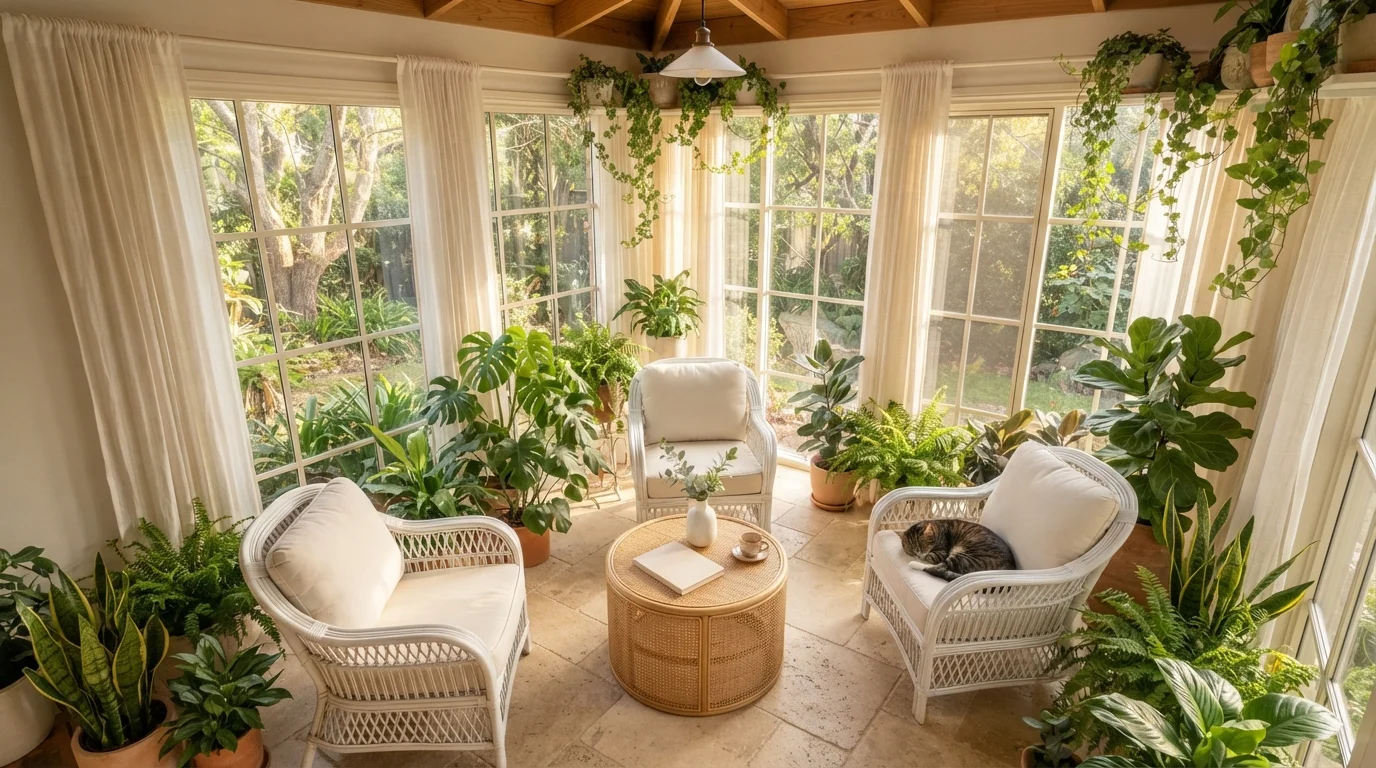
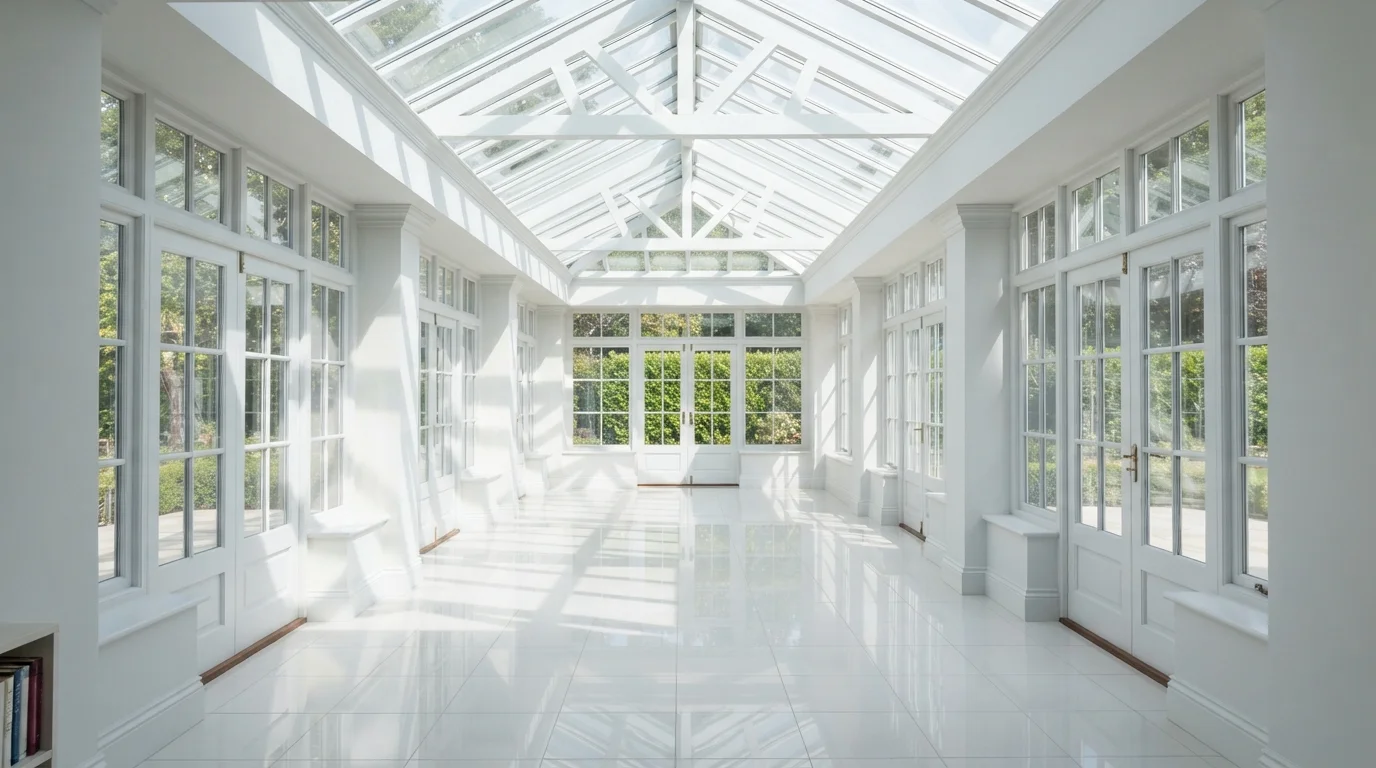
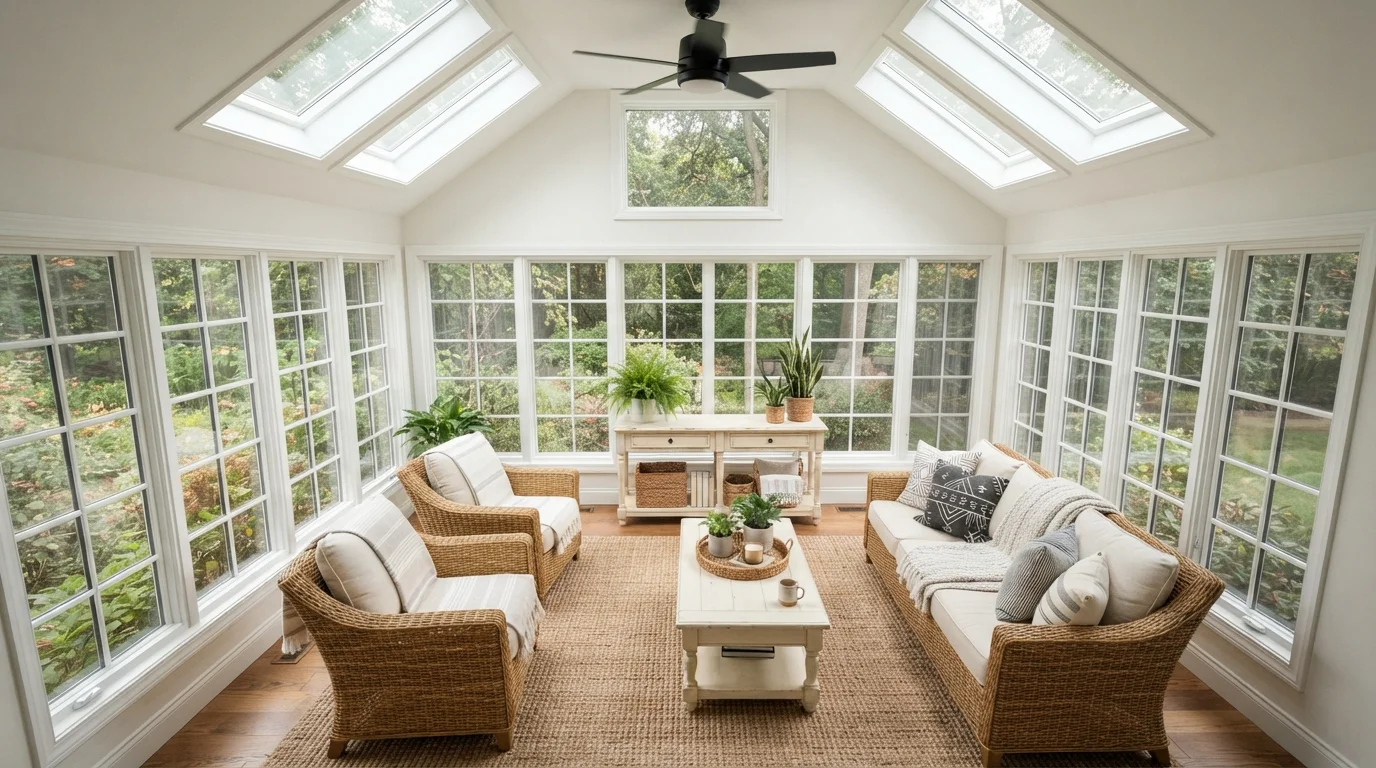
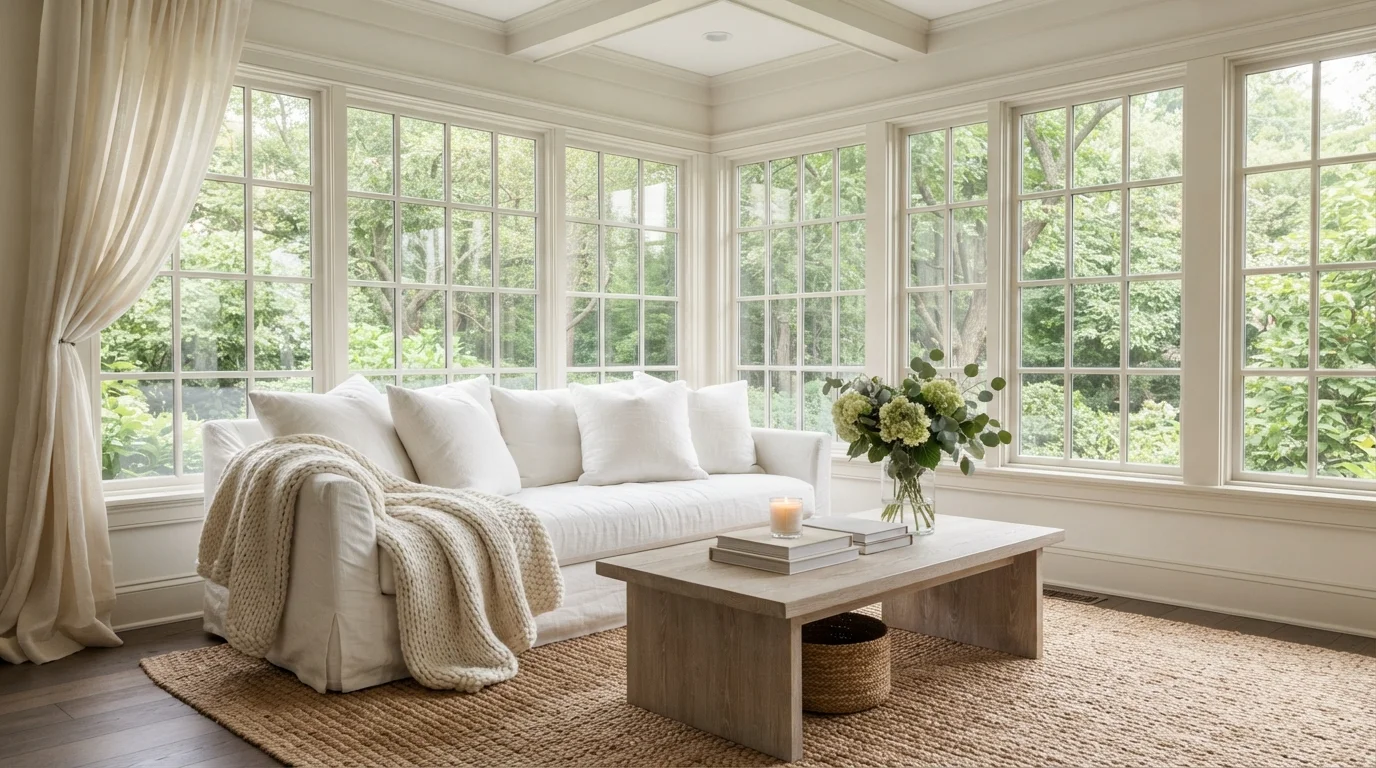
A sunroom is the one room built to drink in daylight, and white paint is what lets that light do its job. White bounces sun off the walls and ceiling so the whole space feels bright, open, and a little larger than it really is. But a sunroom also throws more light at your walls than any other room in the house, and that flood of sun does strange things to white. The shade that looked clean and crisp on a chip can read icy at noon, then turn warm and golden by late afternoon.
So the trick in a sunroom is not just picking a white, it's picking a white that behaves well under a lot of changing light. The right one keeps the room feeling fresh without going stark or sterile, and it plays nicely with all the glass, trim, and outdoor views that make a sunroom what it is. Below is how to choose the depth, the finish, and the pairings that hold up in a room this bright. Every white you see here is mixed to order at the paint counter, so you can match the exact shade across brands and finishes.
Why White Works So Well in a Sunroom
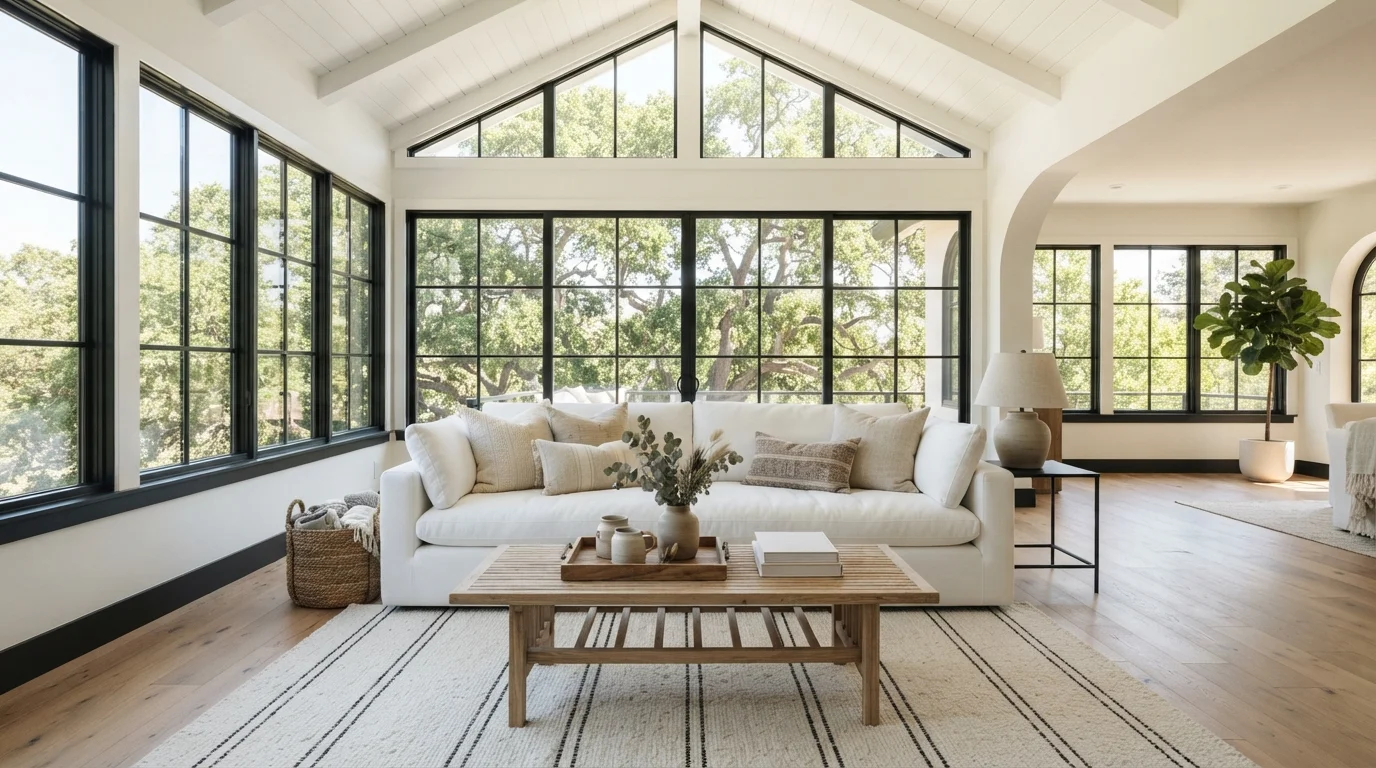
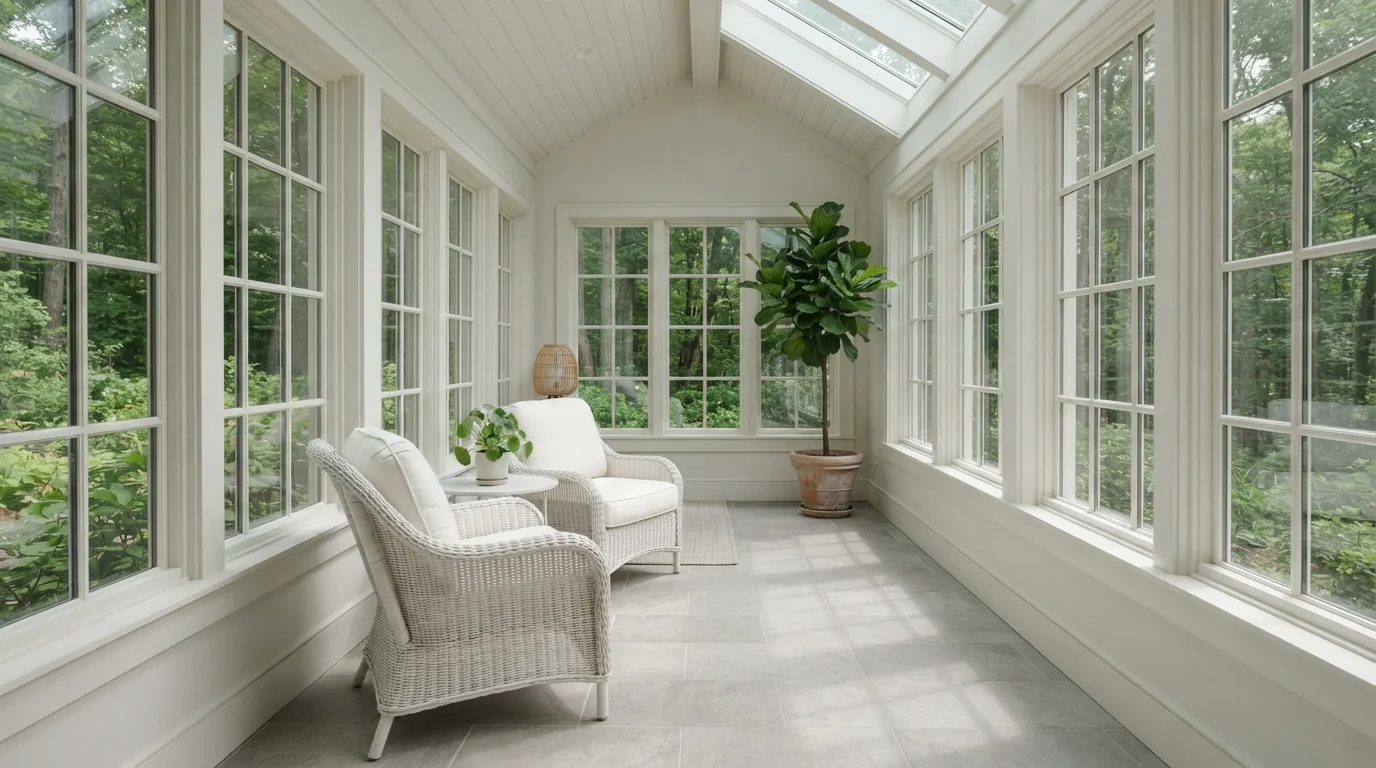
A sunroom usually has walls full of windows and not much wall left over, so the paint mostly lives in the corners, the ceiling, and the trim. White is the most forgiving choice here because it reflects light instead of soaking it up, which keeps the room glowing even on gray days. It also gets out of the way and lets the real star, the view outside, take over.
The one thing to watch is that all that glass means all that sun, and sun exaggerates undertones. A white with a strong base color will show it loudly in a sunroom, so you want a white that stays calm and balanced as the light shifts through the day.
The Right Depth of White and How LRV Guides You
Light Reflectance Value, or LRV, tells you how much light a color bounces back, on a scale from 0 (black) to 100 (pure white). Most usable whites land between about 80 and 92. In a sunroom that already overflows with light, you rarely need to chase the very top of that range, because the room itself does the brightening for you.
If your sunroom faces south or west, it takes hard, warm afternoon light, so a softer white in the low-to-mid 80s keeps glare down and feels easy on the eyes. A north-facing or shaded sunroom gets cooler, flatter light, so a brighter white in the upper 80s helps it feel sunny even when the sky is dull. A white with a faint warm undertone is the safe middle ground for most sunrooms, since it reads clean in strong light without turning cold or blue.
Choosing the Right Finish for a Bright, Sometimes Humid Room
Sunrooms see temperature swings, sun exposure, and sometimes moisture from plants, hot tubs, or a door left open to the yard. That points you toward a finish that wipes clean and resists humidity, so an eggshell or satin is usually the sweet spot on the walls. They give you enough washability for a high-traffic, plant-filled room without throwing harsh reflections.
Glare matters more here than in any other room, because direct sun on a shiny wall is hard to look at. Skip high-gloss and even semi-gloss on big wall surfaces, and save the higher sheens for trim and doors where the durability helps. On the ceiling, a flat or matte white hides imperfections and cuts down on the bounce-back from all those windows.
Pairing White With Trim, Ceiling, and Sunroom Finishes
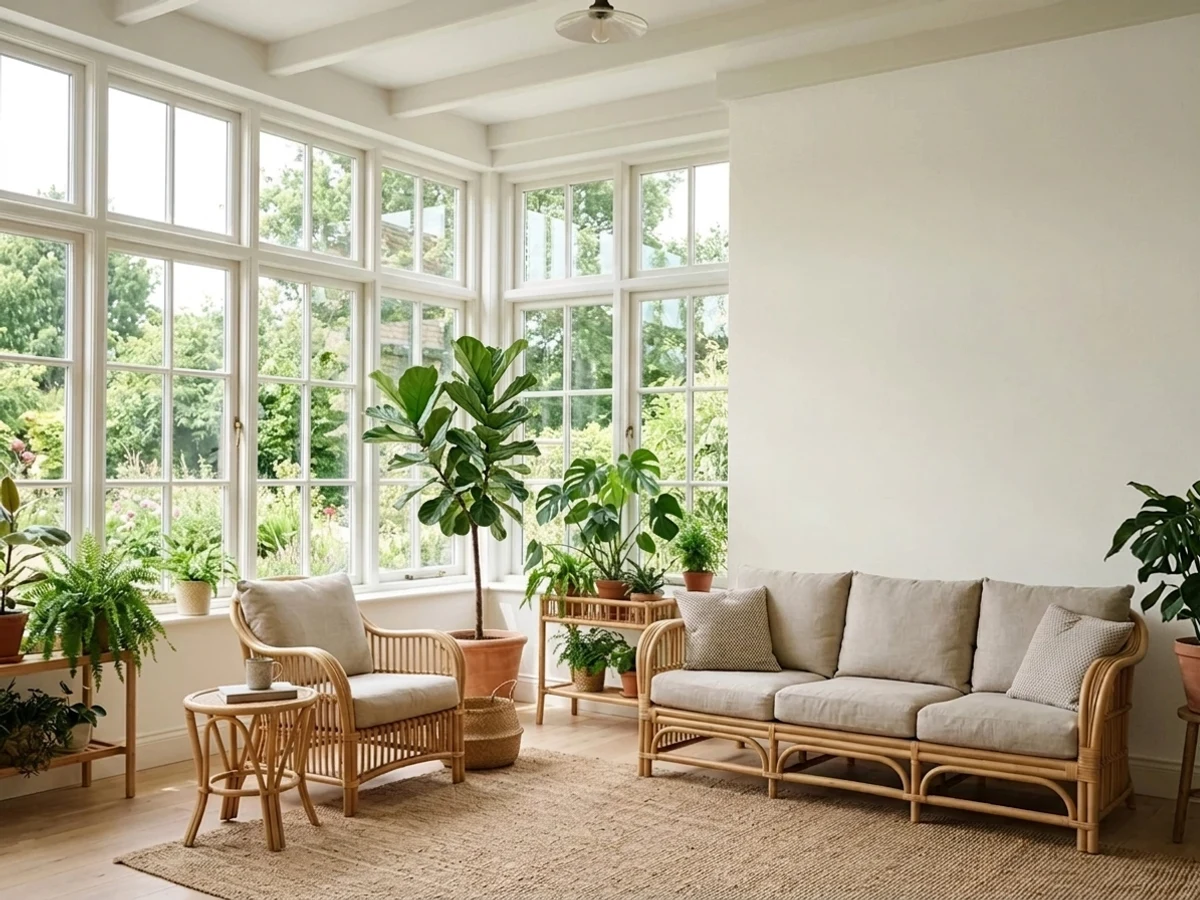
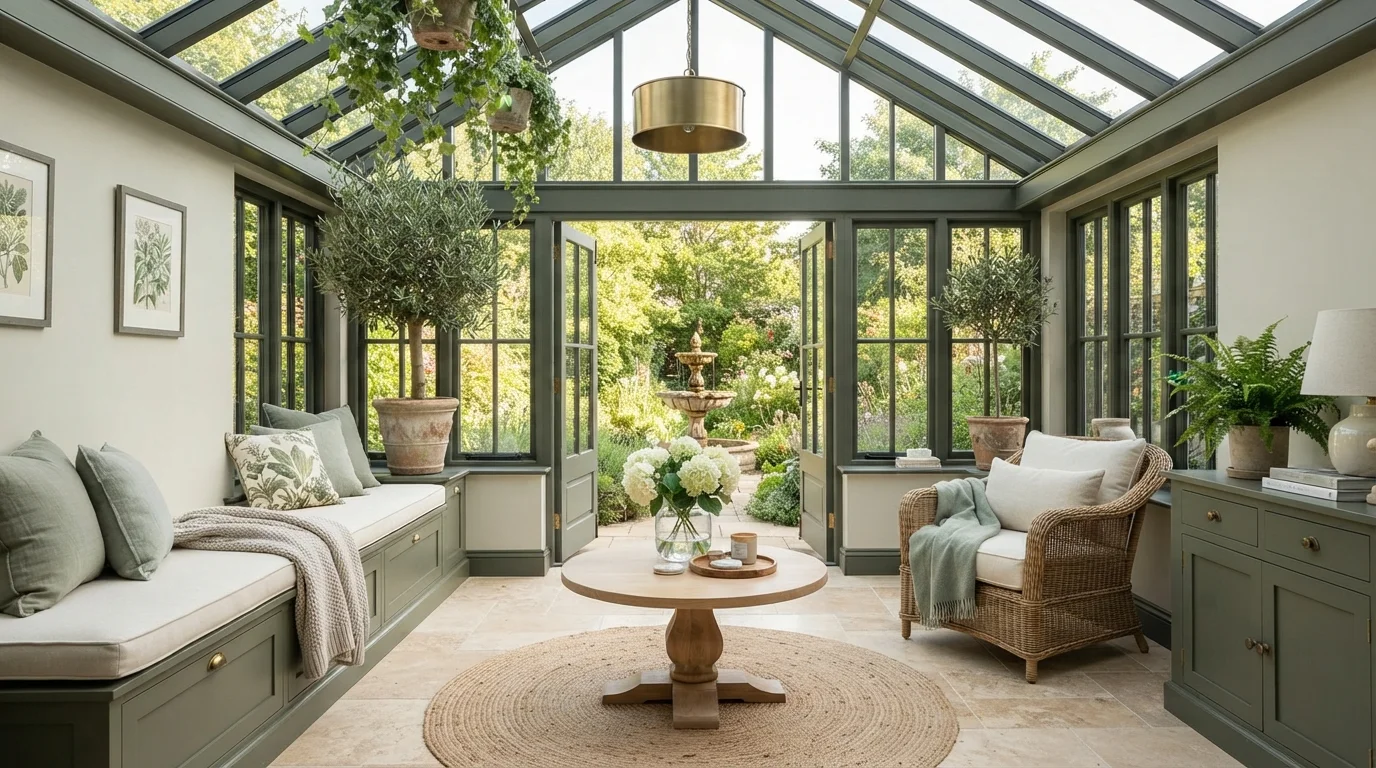
A classic sunroom move is to keep the walls and ceiling in the same white family so the room reads as one airy envelope, then push the trim a half step crisper for a little definition. If you have wood beams, wicker, rattan, or natural-fiber furniture, a warm white flatters those tones far better than a stark blue-white, which can make wood look orange by contrast.
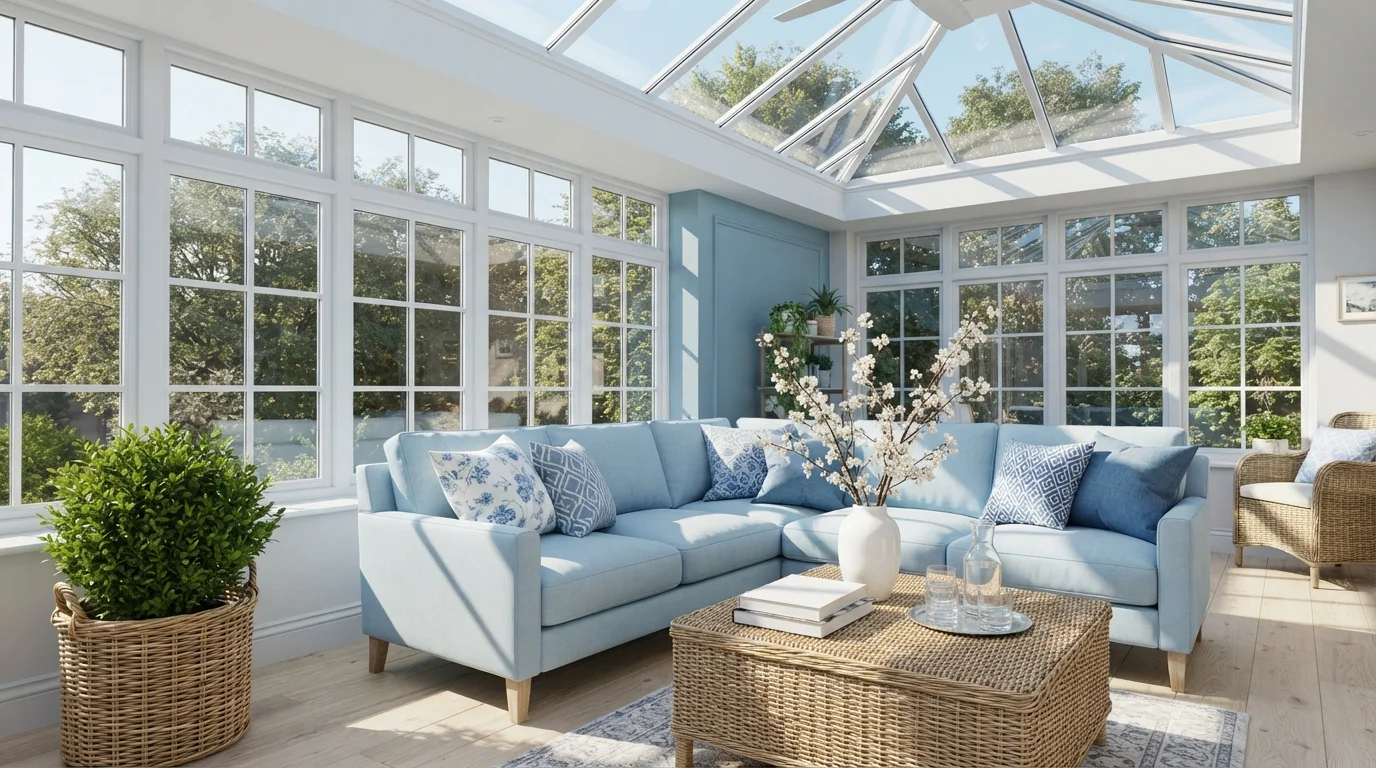
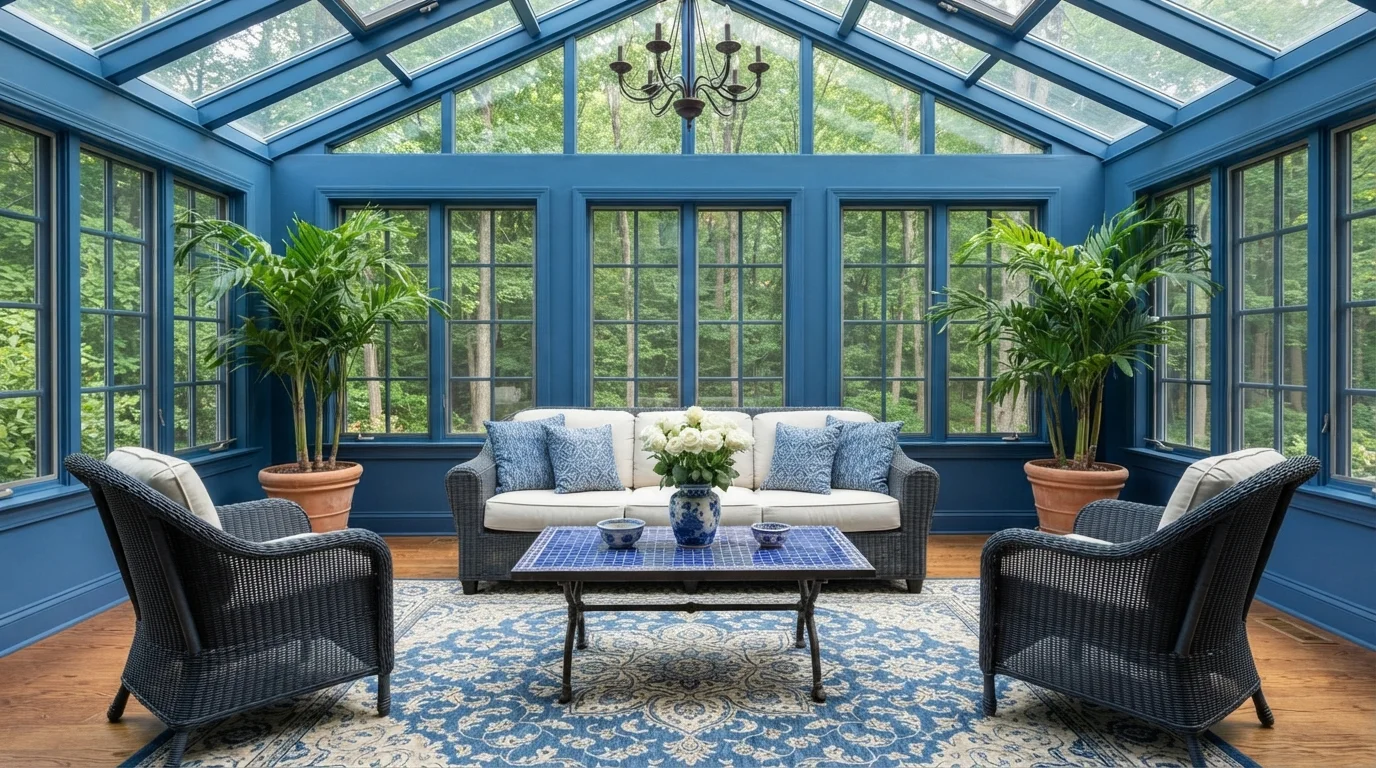
White also lets you bring in color through everything that isn't paint: green plants, terracotta pots, woven textures, and the changing sky outside. For window frames and the framing around all that glass, a slightly brighter or crisper white than the walls keeps the lines looking sharp against bright daylight.
Common Mistakes With White in a Sunroom
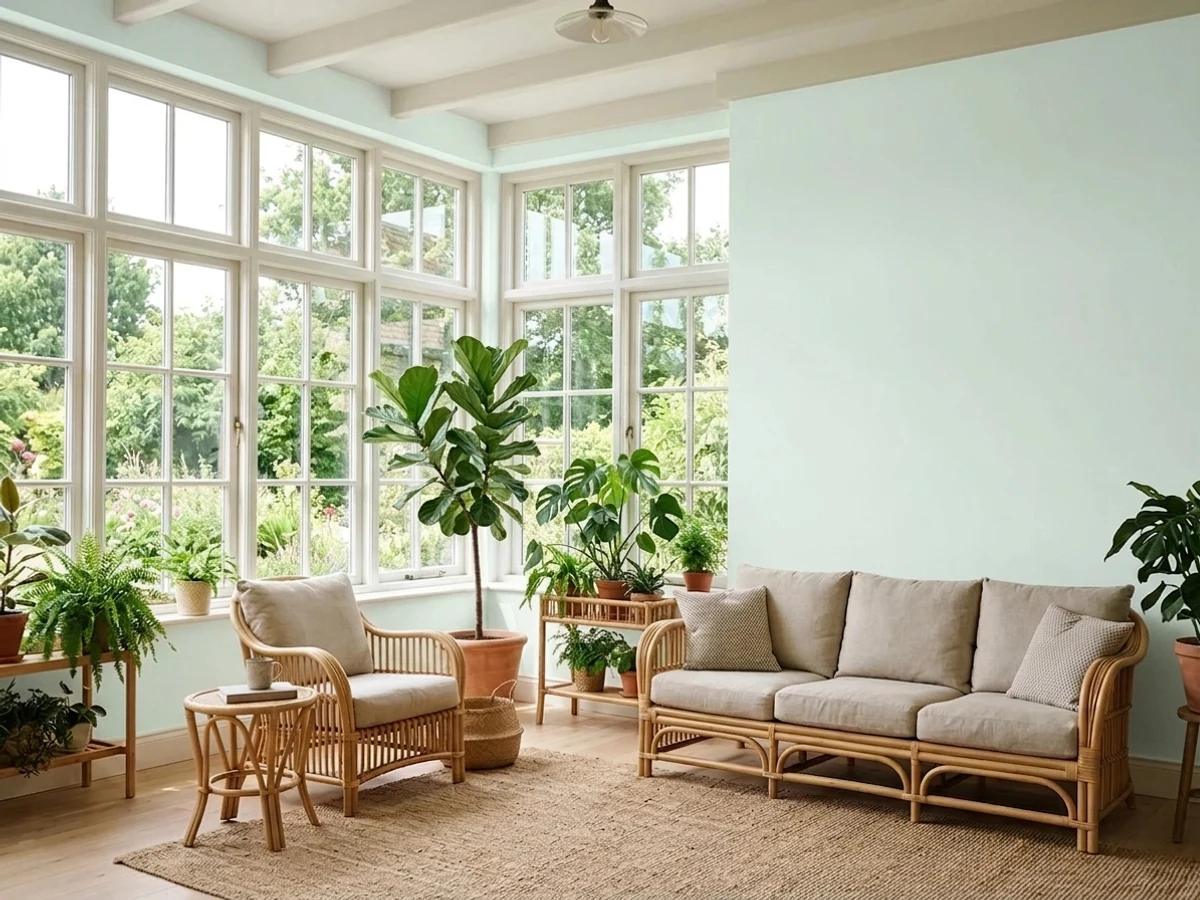
The biggest mistake is choosing a cool, blue-leaning white hoping it will look clean, then watching it turn cold and clinical under bright sun. The second is picking the absolute brightest white you can find, which can wash out completely and cause glare in a room this sunny. A gentler, slightly warm white almost always wears better here.
The other classic error is testing the color only once. Sunroom light changes dramatically from morning to evening and from clear days to cloudy ones, so paint a large sample on more than one wall and live with it for a couple of days. What looks perfect at 9 a.m. can look like a different paint entirely by 5 p.m.
White Sunroom Paint — Frequently Asked Questions
what is the best shade of white for a sunroom?+
A soft white with a faint warm undertone is the safest pick for most sunrooms. It stays clean and bright in strong sun without going stark or cold. If your sunroom faces north and gets cooler light, you can lean a touch brighter to keep it feeling sunny.
should sunroom walls be a brilliant pure white?+
Usually not. A sunroom already floods the walls with light, so a pure, ultra-bright white can wash out and create glare. A white in the low-to-mid 80s LRV range often feels brighter and more comfortable than the whitest white on the shelf.
what finish should I use on sunroom walls?+
Eggshell or satin works best on the walls. It wipes clean for a room with plants and high traffic, resists humidity, and doesn't throw harsh reflections the way glossier finishes do. Save semi-gloss for trim and doors, and use flat or matte on the ceiling.
why does my white sunroom paint look different throughout the day?+
All the glass in a sunroom lets light change constantly, and that shifting light pulls out a white's undertones. Cool morning light can make a white look crisp, while warm afternoon sun can make the same white look golden. Test a large sample over a full day before you commit.
what color trim goes with white sunroom walls?+
Keeping trim in the same white family, just a half step crisper than the walls, gives clean definition without breaking up the airy feel. A slightly brighter white on window frames helps the lines stay sharp against bright daylight. Match the trim's warmth to any wood or wicker in the room.
can I match the same white across different paint brands?+
Yes. Every color shown here is mixed to order at the paint counter, so the same white can be tinted in any brand's base and finish. That lets you cross-match a shade you like and pick the brand and sheen that fit your sunroom best.