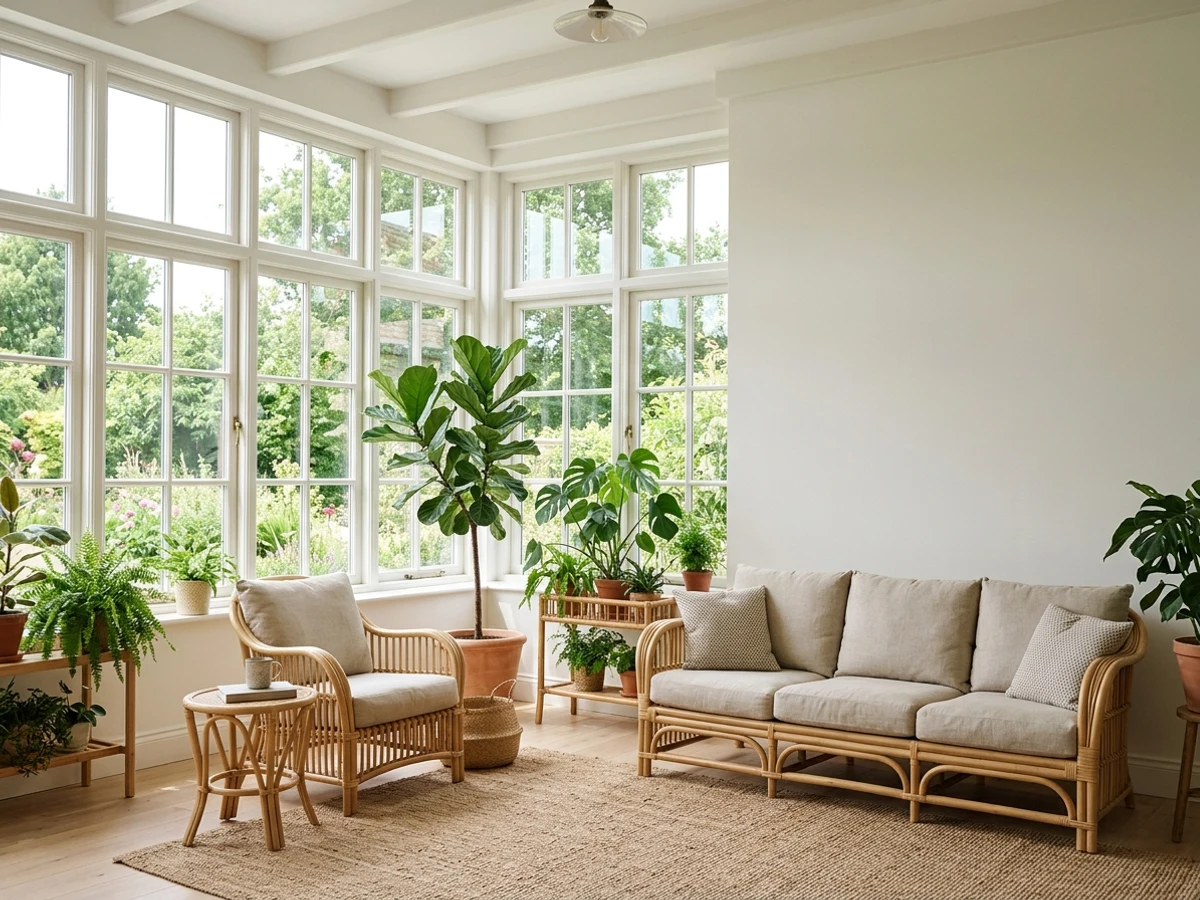
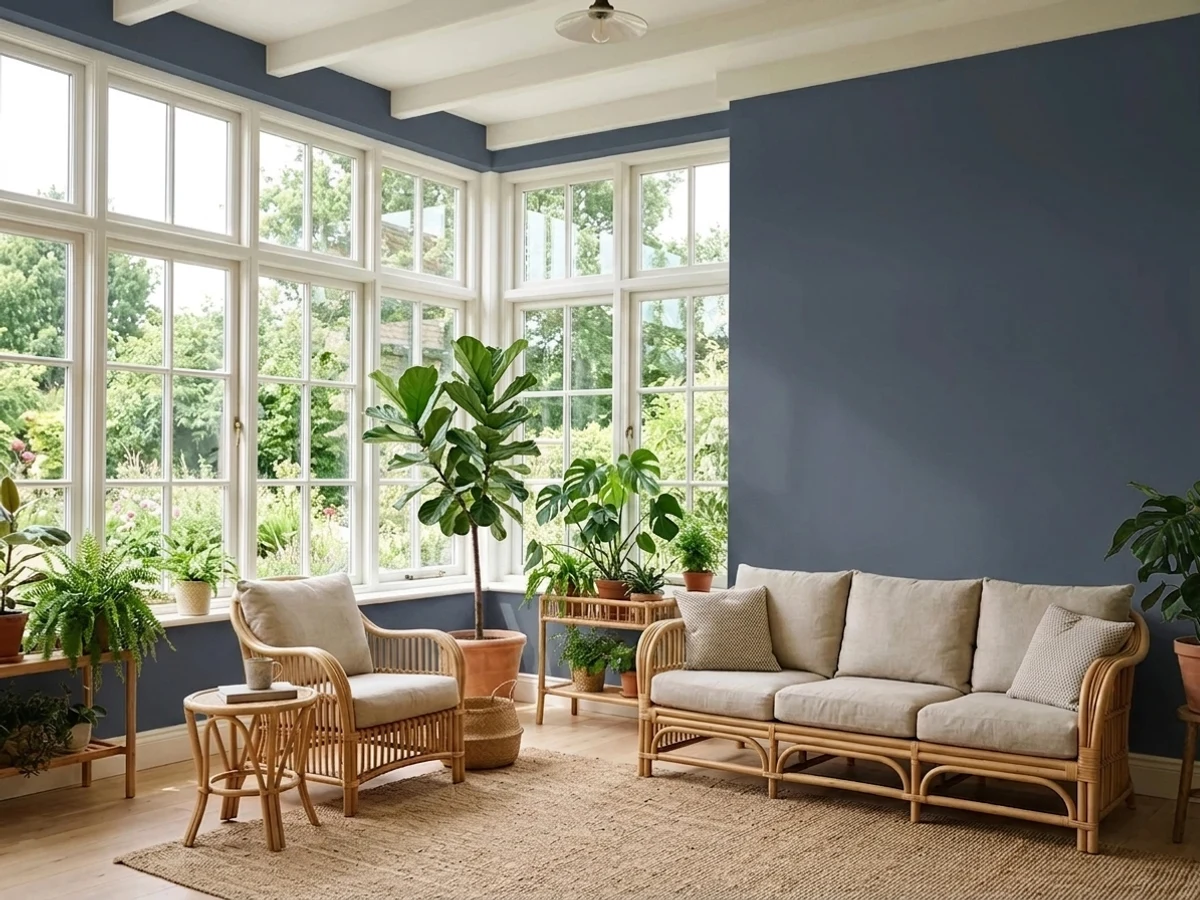
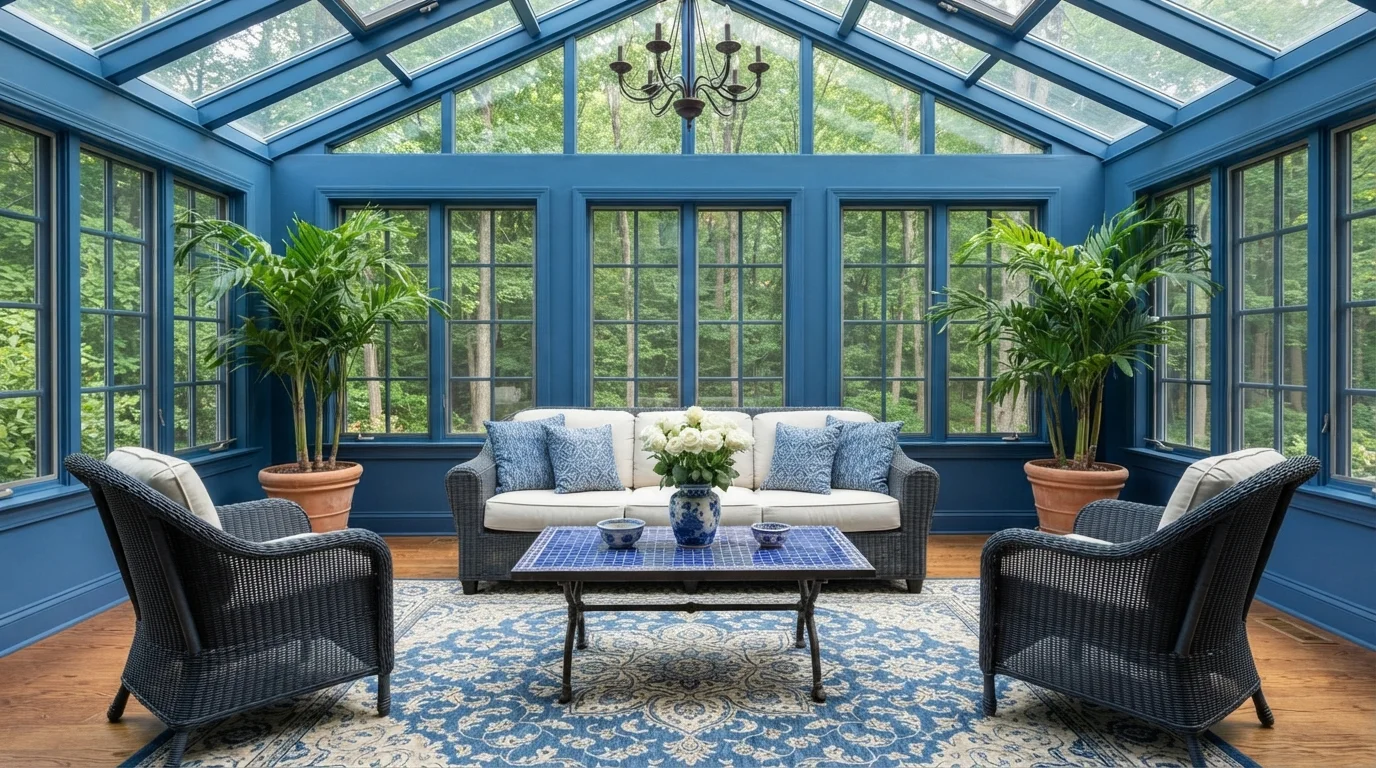
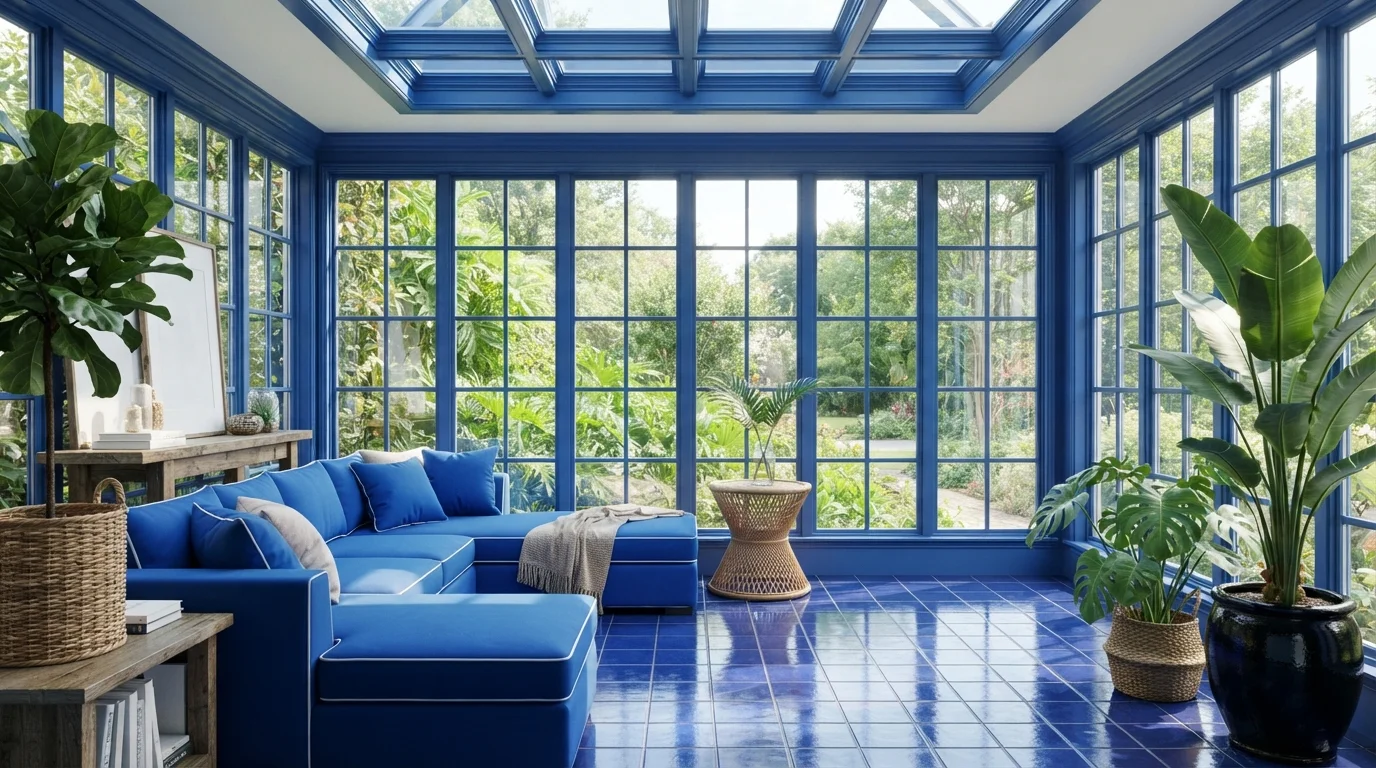
Blue Sunroom Paint Colors
1,741 blue colors that work in sunrooms, drawn from the full ~30,000-color US paint deck. Below: editor's picks specific to sunrooms, then 30 picks spread across the LRV range — narrow further on the brand page when you've shortlisted.
Blue is the most popular color for accent walls, kitchen islands, and front doors — and also the family with the widest spread, from pale dove-blues that read almost grey, to inky near-black navies, to saturated cobalts that read almost royal. Teal-leaning blues (the green-blue overlap) live next door in the Teal family.
Editor's Picks: Blue for Sunrooms
4 picks30 Blue Picks Across the LRV Range
30 of 1,741 · sorted dark → lightLooking for more? All blue → covers every brand; brand × family pages show full decks.
Blue Sunroom Colors at Every US Brand
21 brands · up to 10 picks eachUp to 10 picks per brand spread across the blue LRV range, drawn from each brand's full deck. Tap any swatch with a curated guide for full spec; tap the brand title for the brand's complete blue deck.
Behr
Valspar
Glidden
Benjamin Moore
PPG / Glidden
Dunn-Edwards
Sherwin-Williams
Dutch Boy
Hirshfield's
Diamond Vogel
Kompozit
C2 Paint
Portola Paints
Magnolia Home
Rodda
Farrow & Ball
Backdrop
Annie Sloan
Clare
Rust-Oleum
Other Sunroom Color Families
Blue Colors in Other Rooms
Blue Paint Colors for a Sunroom
A sunroom is the one room built to chase daylight, and that changes how blue behaves on the walls. Glass on two or three sides floods the space with shifting, often cool light, so a blue that looked calm on a chip can turn icy and flat by midday, then warm up at sunset. The trick is matching the depth of blue to how much light pours in and which direction it faces, not just picking a shade you like in the store.
Done right, blue is one of the most natural fits for a sunroom. It reads like sky and water, it cools down a glassed-in space that bakes in summer, and it holds its character against strong daylight better than warmer pastels that wash out. Below is how to choose the depth, the finish, and the pairings that make blue work in this specific room, plus the mistakes that quietly ruin it.
Why Blue Just Works In A Sunroom
A sunroom already feels like the outdoors pulled inside, so blue extends that instead of fighting it. It echoes the sky and any water or greenery beyond the glass, which makes the room feel larger and calmer rather than boxed in. That connection to the view is the main reason blue beats most other families here.
Blue also solves a real comfort problem. All that glass means a sunroom can overheat and feel glaring on a bright day, and cool blue tones visually drop the temperature of the room. The eye reads blue as restful, so the space stays a place you want to linger in even at high noon.
Picking The Right Depth Of Blue For Your Light
Light Reflectance Value, or LRV, tells you how much light a color bounces back on a 0-to-100 scale, and it is your best guide in a room this bright. A sunroom rarely needs help staying light, so you have more freedom to go deeper than you would in a dim interior room. Mid-range blues in roughly the 30 to 55 LRV band tend to hold their color and feel grounded without going dark.
Direction matters too. South- and west-facing sunrooms get warm, intense light that can flatten a pale blue into near-white, so a fuller, slightly grayed or green-leaning blue keeps its identity. North- and east-facing rooms get cooler, bluer light, which can push an already-cool blue toward cold and sterile, so lean toward softer, warmer blues with a touch of gray or a hint of green to stay friendly. Always tape a large sample to more than one wall and watch it from morning to dusk before you commit.
The Right Finish For All That Glass And Sun
Sheen does two jobs in a sunroom: it fights glare and it stands up to moisture and sun. With light hitting the walls from every angle, a high-gloss or even semi-gloss wall will throw hot reflections and show every roller mark, so keep the walls in a matte or eggshell finish to soften the light. Eggshell is the safe middle ground because it still wipes clean from pollen, condensation, and the occasional muddy paw.
Trim, sills, and any built-ins are a different story. Window sills and frames in a sunroom take real abuse from sun, humidity, and condensation, so put them in satin or semi-gloss, which sheds moisture and cleans easily. If your sunroom runs humid or doubles as a plant room, ask for a paint rated for higher moisture and scrubbability rather than a flat builder-grade product.
Pairing Blue With Trim, Ceiling, And Sunroom Finishes
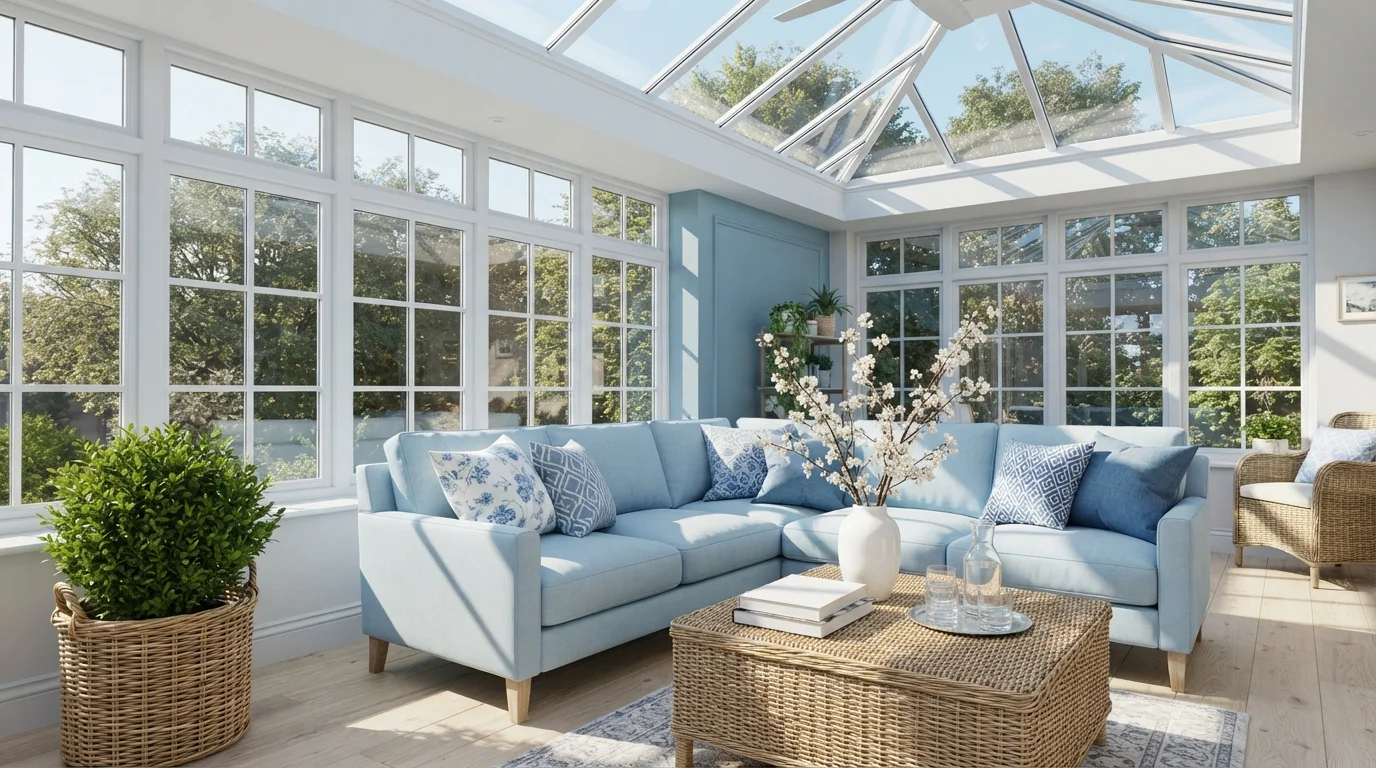
The fastest way to keep blue feeling fresh and bright is a clean, soft white on the trim and window frames, since a sunroom is mostly framing and glass. A warm white trim keeps a cool blue from tipping cold, while a crisp white plays up a coastal, airy look. For the ceiling, a paler tint of the wall blue or a soft sky tone keeps the room feeling open and reinforces that indoor-outdoor mood.
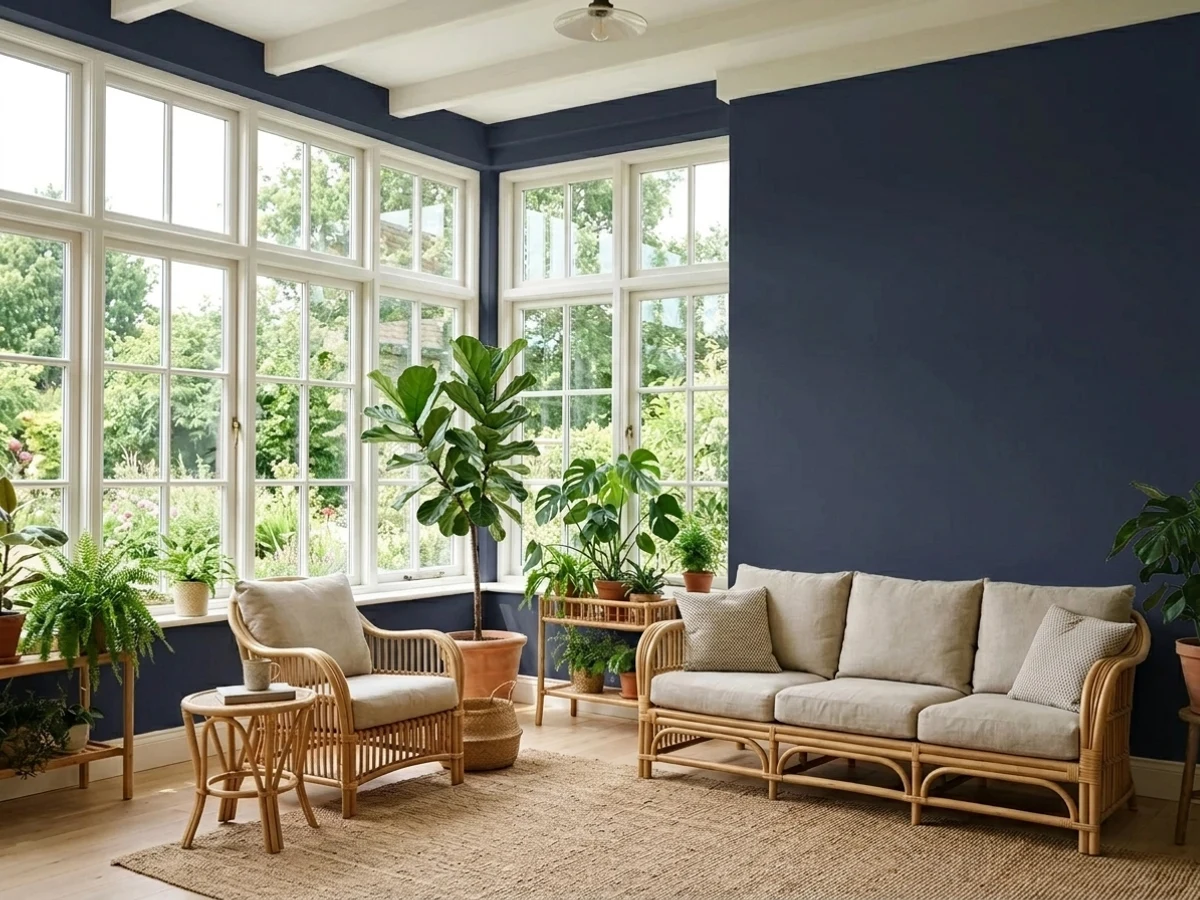
Blue is forgiving with the natural materials a sunroom usually carries. It loves rattan, jute, teak, and weathered wood, and it sits beautifully next to greenery and terracotta pots. For metals and fixtures, brass and warm bronze add a needed bit of heat against cool blue, while black or matte iron sharpens a more modern, graphic version of the room.
Common Mistakes With Blue In A Sunroom
The biggest mistake is judging the color indoors at the paint counter, then watching it turn cold and gray once that flood of natural light hits it. Sunroom light is far stronger and cooler than a hallway, so blues consistently read lighter and chillier than the chip. Sample on the actual walls, not on a card held up in the store.
Two more traps: choosing a flat, washable-but-glary high-sheen on the walls, and going too pale across every surface so the room reads washed-out at midday. Pure, primary blues can also feel cold and clinical in a space this bright, so a blue with a little gray or green almost always wears better. And remember the color you fall for is mixed to order at the store, so a shade you saw under another brand's name can be cross-matched and tinted into the line and finish you actually want.
Blue Sunroom Paint — Frequently Asked Questions
What shade of blue is best for a sunroom?+
Aim for a mid-depth blue, roughly 30 to 55 LRV, with a slight gray or green undertone. A sunroom's strong light will lighten and cool whatever you pick, so a blue that looks a touch deeper and softer on the chip usually lands just right on the wall. Pure, icy blues tend to feel cold in this room, while grayed or green-leaning blues stay warm and livable.
What sheen should I use for sunroom walls?+
Use matte or eggshell on the walls to cut glare from all the glass and hide roller marks. Eggshell is the practical pick because it still wipes clean from pollen, dust, and condensation. Save satin or semi-gloss for trim, window sills, and built-ins, where you need moisture resistance and easy cleaning.
Does the direction my sunroom faces change which blue I should pick?+
Yes. South- and west-facing sunrooms get warm, intense light, so a fuller or slightly grayed blue holds its color instead of washing out. North- and east-facing rooms get cooler light that can make blue feel cold, so lean toward softer blues with a hint of warmth or green. Test any color on more than one wall across a full day before deciding.
What trim and ceiling colors go with blue in a sunroom?+
A soft white trim is the easiest match and keeps the room bright and airy. Use a warm white if your blue runs cool, or a crisp white for a coastal feel. For the ceiling, a paler tint of your wall blue or a soft sky tone keeps the space feeling open and connected to the view.
Will blue make my sunroom feel cold?+
It can if you choose a pure, primary blue in a room that already gets cool light. To avoid that, pick a blue with a bit of gray or green, and add warmth through the room itself: brass or bronze fixtures, wood and rattan furniture, and warm white trim all balance the coolness. Done this way, blue reads calm and restful rather than chilly.
Can I get the exact blue I saw under a different brand?+
Yes. Every color shown here is mixed to order at the paint store, so a shade you liked under one brand's name can be cross-matched and tinted into another brand's paint. That means you can keep the exact blue you want while choosing the line, finish, and moisture rating that suits a sunroom best.