Blue Ceiling Paint Colors
1,741 blue colors that work in ceilings, drawn from the full ~30,000-color US paint deck. Below: editor's picks specific to ceilings, then 30 picks spread across the LRV range — narrow further on the brand page when you've shortlisted.
Blue is the most popular color for accent walls, kitchen islands, and front doors — and also the family with the widest spread, from pale dove-blues that read almost grey, to inky near-black navies, to saturated cobalts that read almost royal. Teal-leaning blues (the green-blue overlap) live next door in the Teal family.
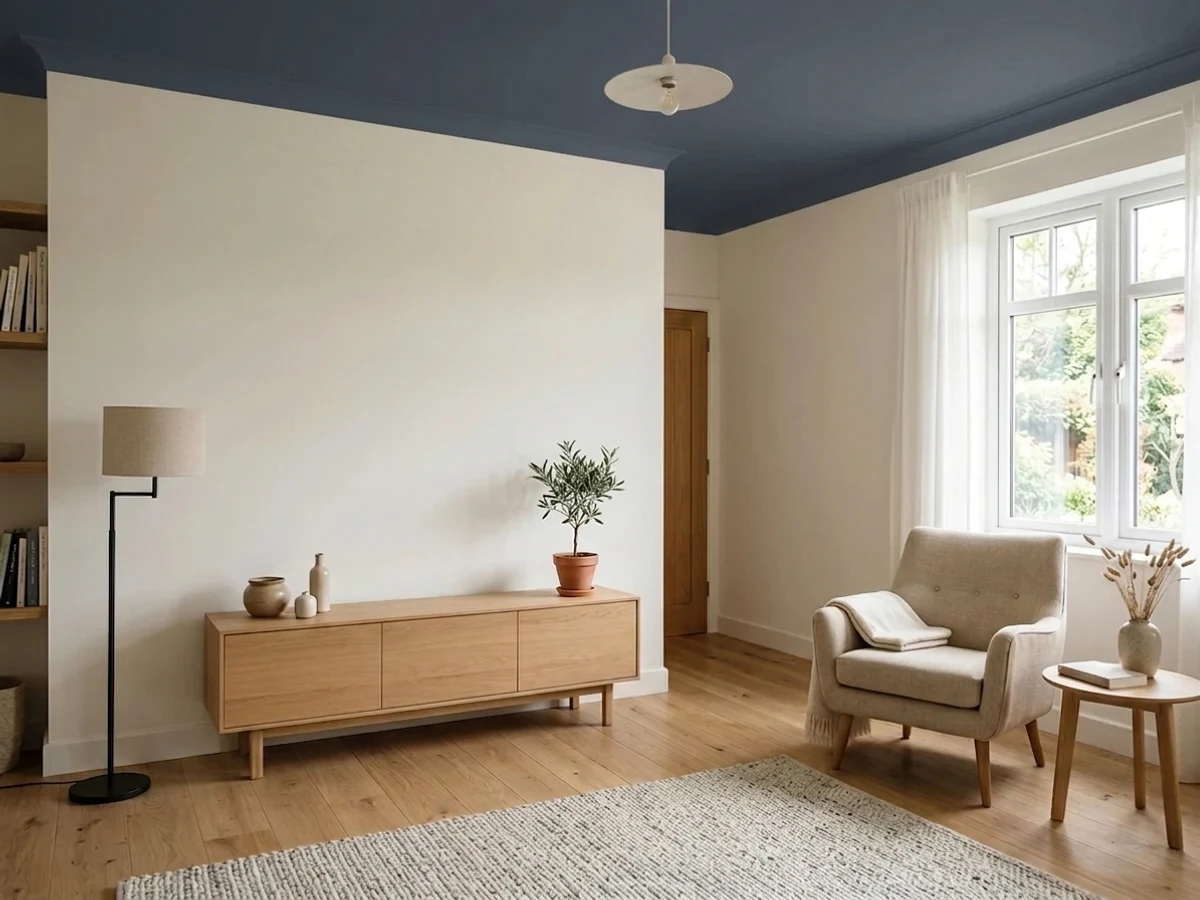
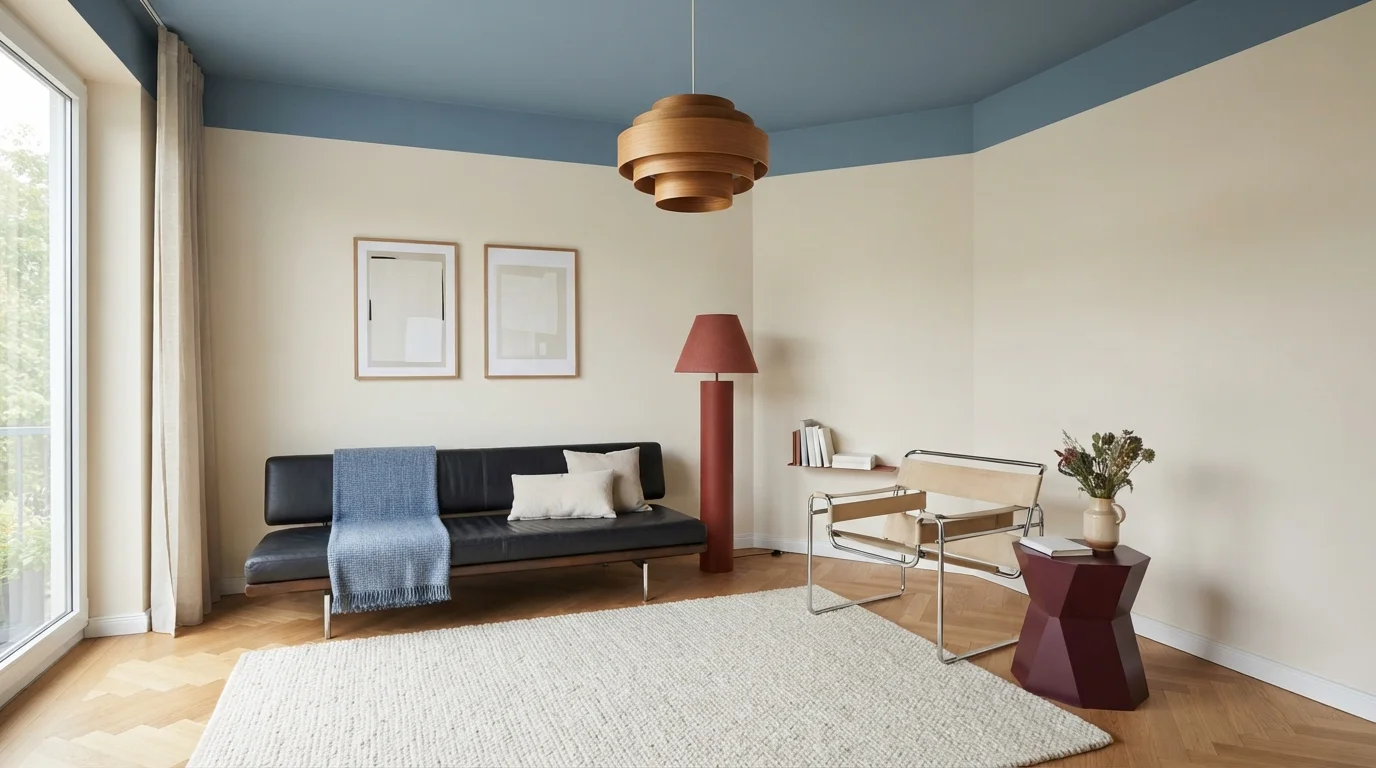
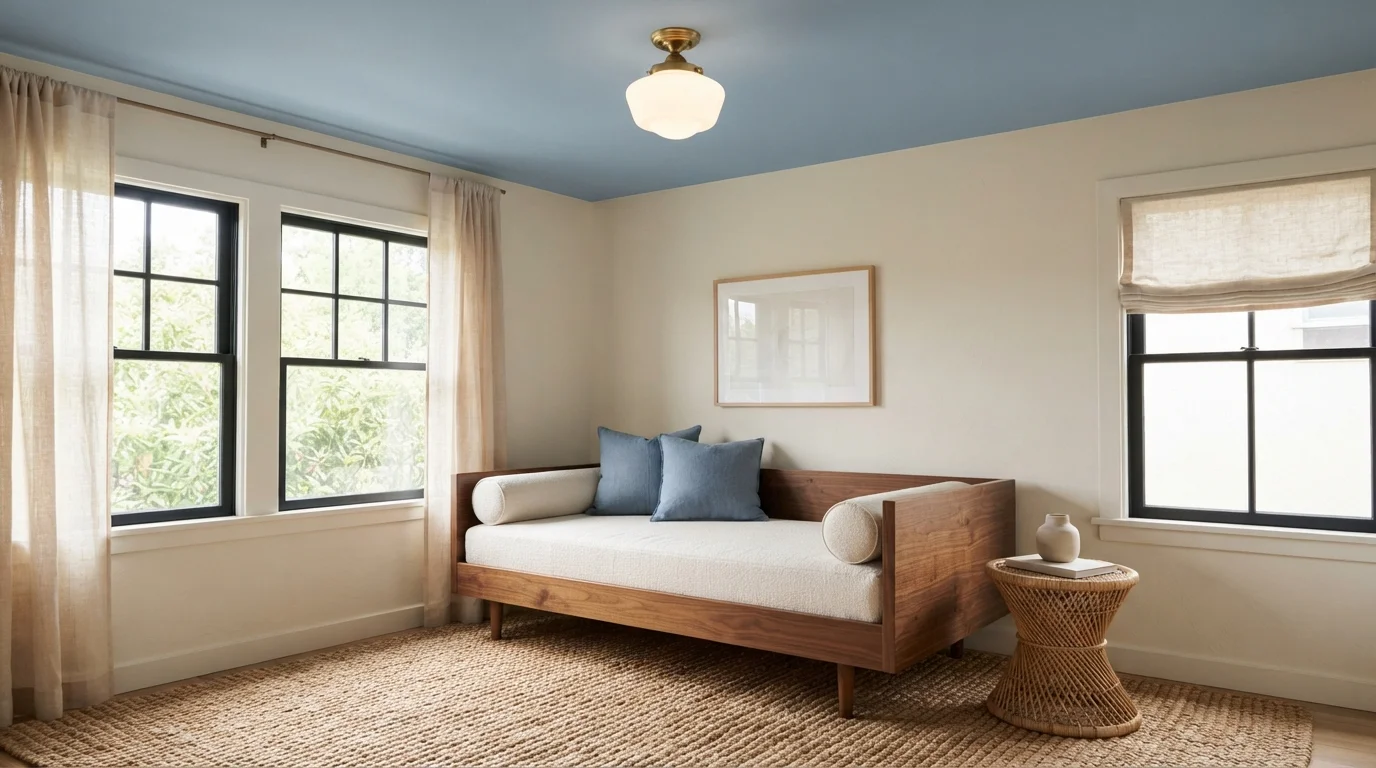
Editor's Picks: Blue for Ceilings
4 picks30 Blue Picks Across the LRV Range
30 of 1,741 · sorted dark → lightLooking for more? All blue → covers every brand; brand × family pages show full decks.
Blue Ceiling Colors at Every US Brand
21 brands · up to 10 picks eachUp to 10 picks per brand spread across the blue LRV range, drawn from each brand's full deck. Tap any swatch with a curated guide for full spec; tap the brand title for the brand's complete blue deck.
Behr
Valspar
Glidden
Benjamin Moore
PPG / Glidden
Dunn-Edwards
Sherwin-Williams
Dutch Boy
Hirshfield's
Diamond Vogel
Kompozit
C2 Paint
Portola Paints
Magnolia Home
Rodda
Farrow & Ball
Backdrop
Annie Sloan
Clare
Rust-Oleum
Other Ceiling Color Families
Blue Colors in Other Rooms
Blue Paint Colors for a Ceiling
A blue ceiling changes a room more than almost any other paint decision, because the ceiling is the one surface you never put furniture against. It reads as pure color, all day, in whatever light the room gives it. Done right, blue overhead feels calm and a little unexpected — like the porch-ceiling tradition that everyone quietly loves but few can explain. Done wrong, it closes the room in or turns gray and cold.
This page is about blue on a ceiling specifically, not blue in general and not ceilings in general. We'll cover which depth of blue actually works above your head, how the room's light pushes it warm or cold, the finish that holds up overhead, and what to put it next to. Every swatch you see here is mixed to order at the paint counter, so you can match a blue across brands and still get the same color in the can.
Why Blue Works Overhead
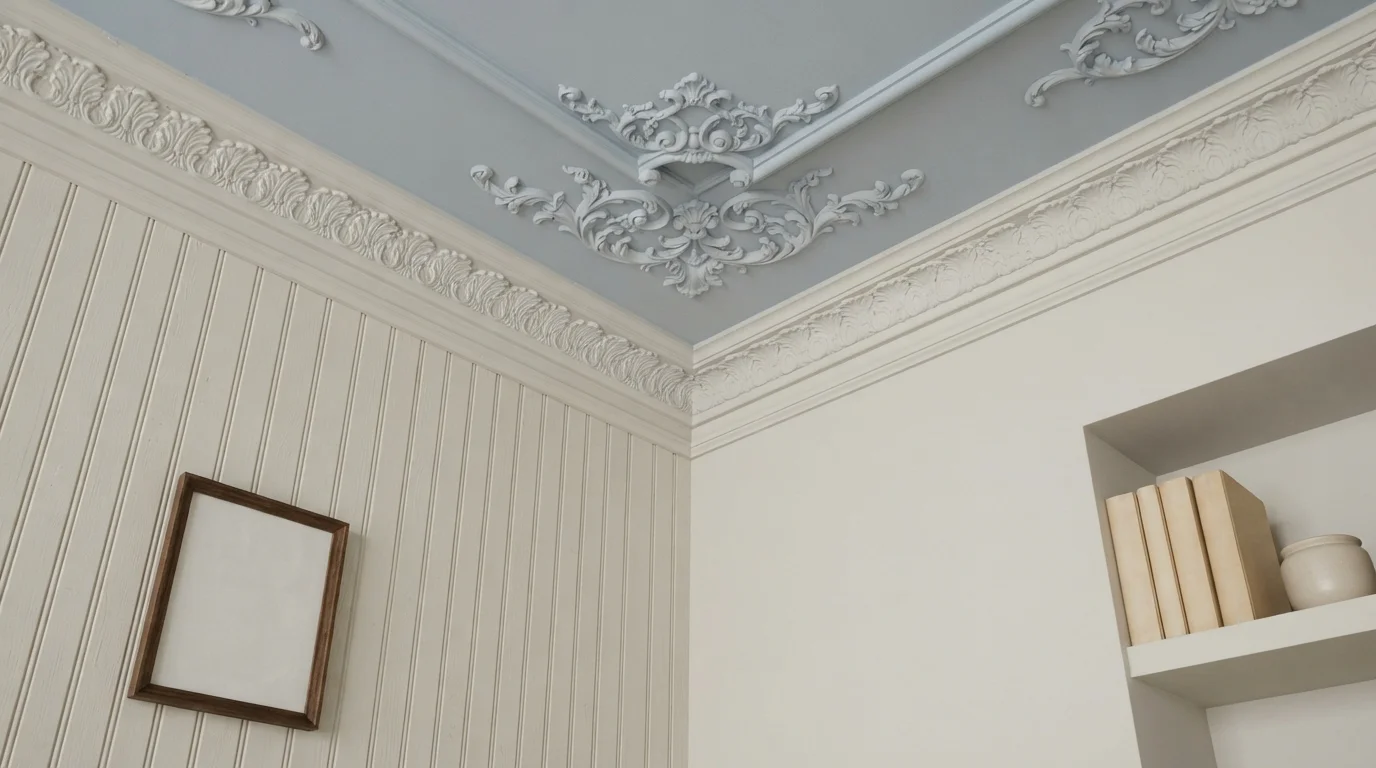
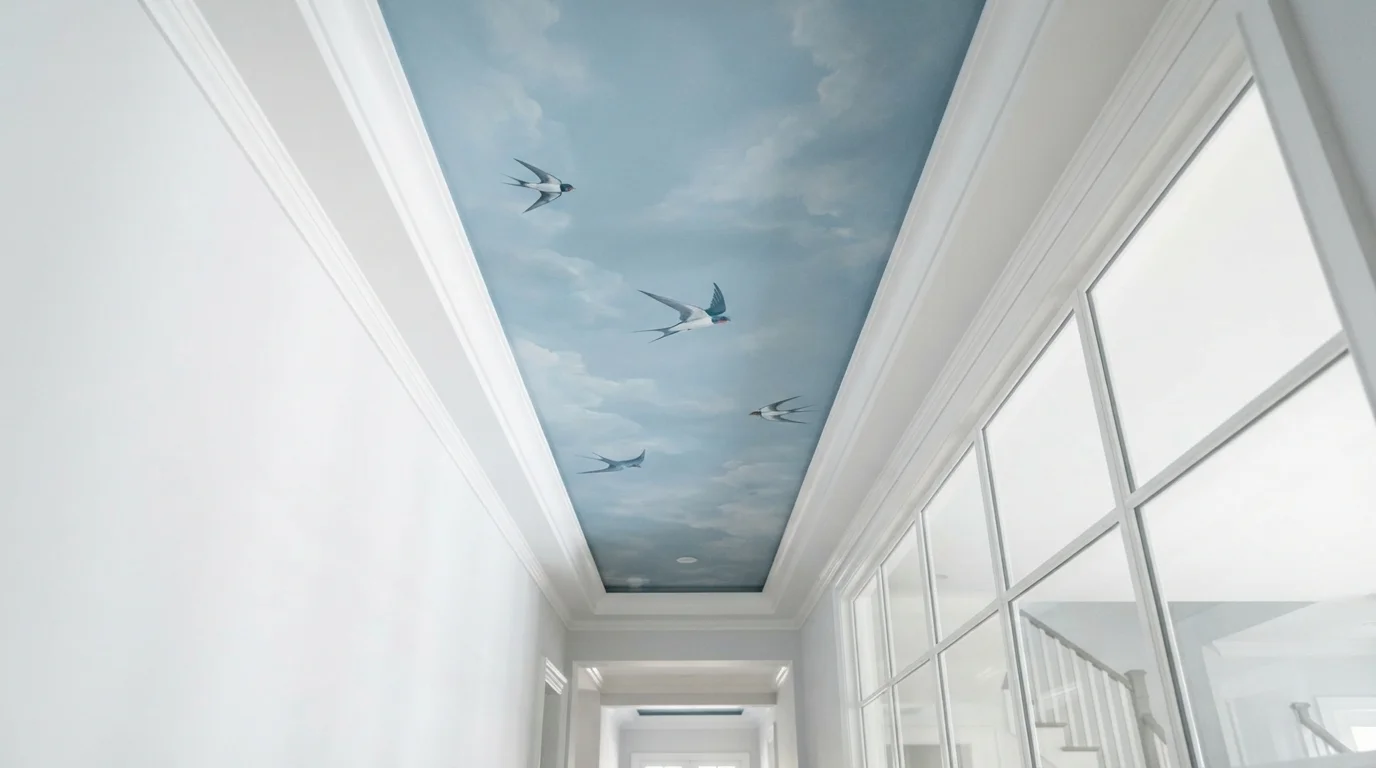
A ceiling is the surface we read as "sky," so blue there feels natural in a way it doesn't on a wall. It draws the eye up, makes a flat ceiling feel a touch higher, and gives a plain room a quiet focal point without any extra trim or detail. This is the whole idea behind the old painted-blue porch ceiling, and it carries indoors just as well.
The thing to watch is weight. A ceiling has no baseboards or furniture to break it up, so a deep blue overhead can press down on a room and make it feel lower, not higher. Save the dark, dramatic blues for rooms with real ceiling height and skip them in a standard eight-foot space.
The Right Depth Of Blue For Up High
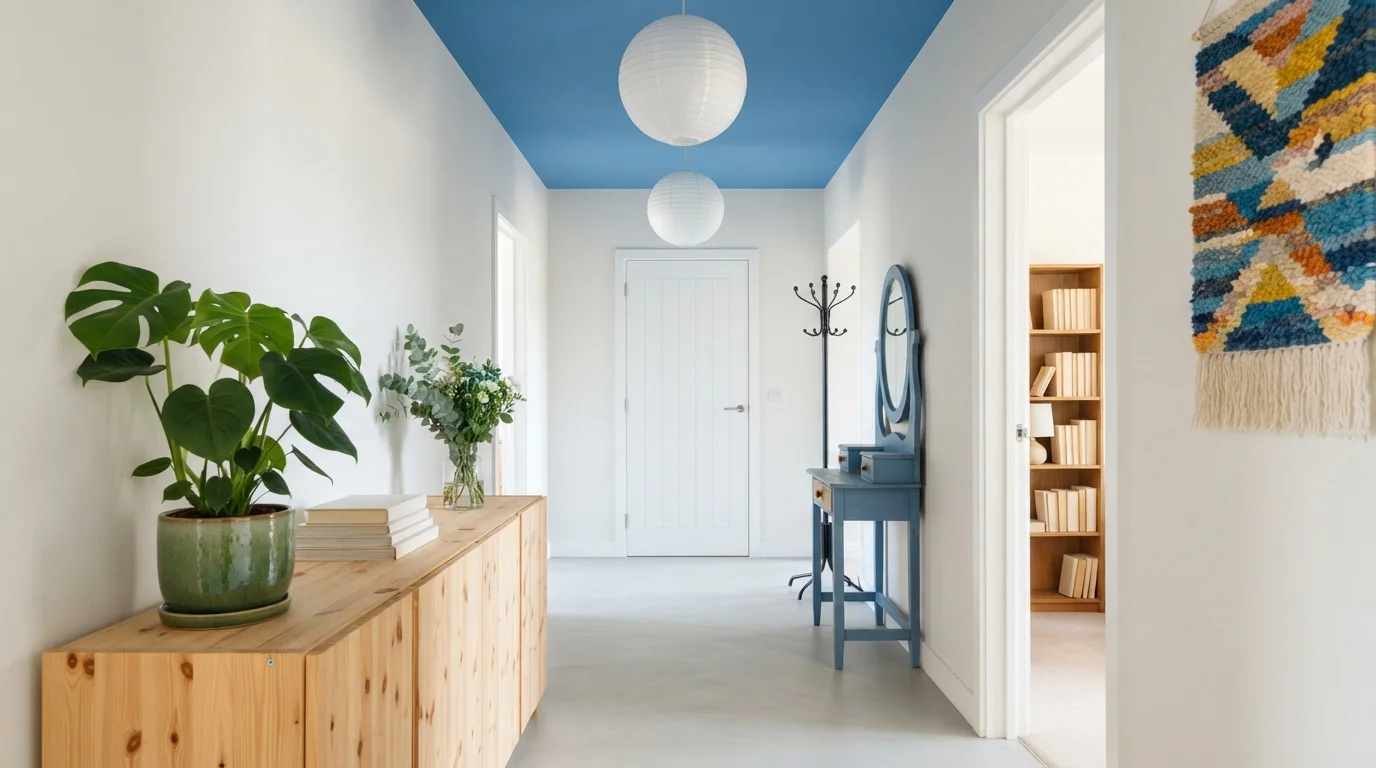
For most ceilings, a soft, light blue does the work — something pale enough that it never feels like a lid. In practical terms, look for a blue with an LRV in roughly the 65 to 80 range. That keeps the surface bouncing light back into the room instead of swallowing it, which matters more overhead than anywhere else.
If you want something with more presence, a mid-tone blue in the 40s to 50s LRV can work, but only in a room with height and good light. Below that, you're into deep blues that suit a tall stairwell or a cozy den ceiling on purpose — not a default choice for an average room.
How The Room's Light Steers The Shade
Light hits a ceiling differently than a wall. Most of the daylight in a room bounces up off the floor and walls before it ever reaches the ceiling, so the color overhead almost always reads cooler and grayer than the chip suggests. Plan for that and pick a blue a step warmer or a shade lighter than you think you want.
North-facing rooms make this worse — they pull blue toward cold and gray, so lean on blues with a soft green or a hint of warmth in them. South- and west-facing rooms get warm light that flatters a cleaner sky-blue. Always tape a sample to the ceiling and look at it morning, midday, and under your lamps at night, because ceiling color shifts more than wall color does.
The Right Finish For A Ceiling
For a ceiling, flat or matte is almost always the answer. A ceiling catches raking light from windows and fixtures, and any sheen will throw glare and put every roller mark and drywall seam on display. A flat finish soaks that up and keeps the surface looking even and quiet.
The exception is a damp room. In a bathroom or above a kitchen, step up to an eggshell or a finish labeled for moisture and scrubbing, so steam and the occasional wipe-down don't leave marks. You give up a little glare control, but you avoid mildew and streaking, which matters more in those rooms.
Pairings And Mistakes To Avoid
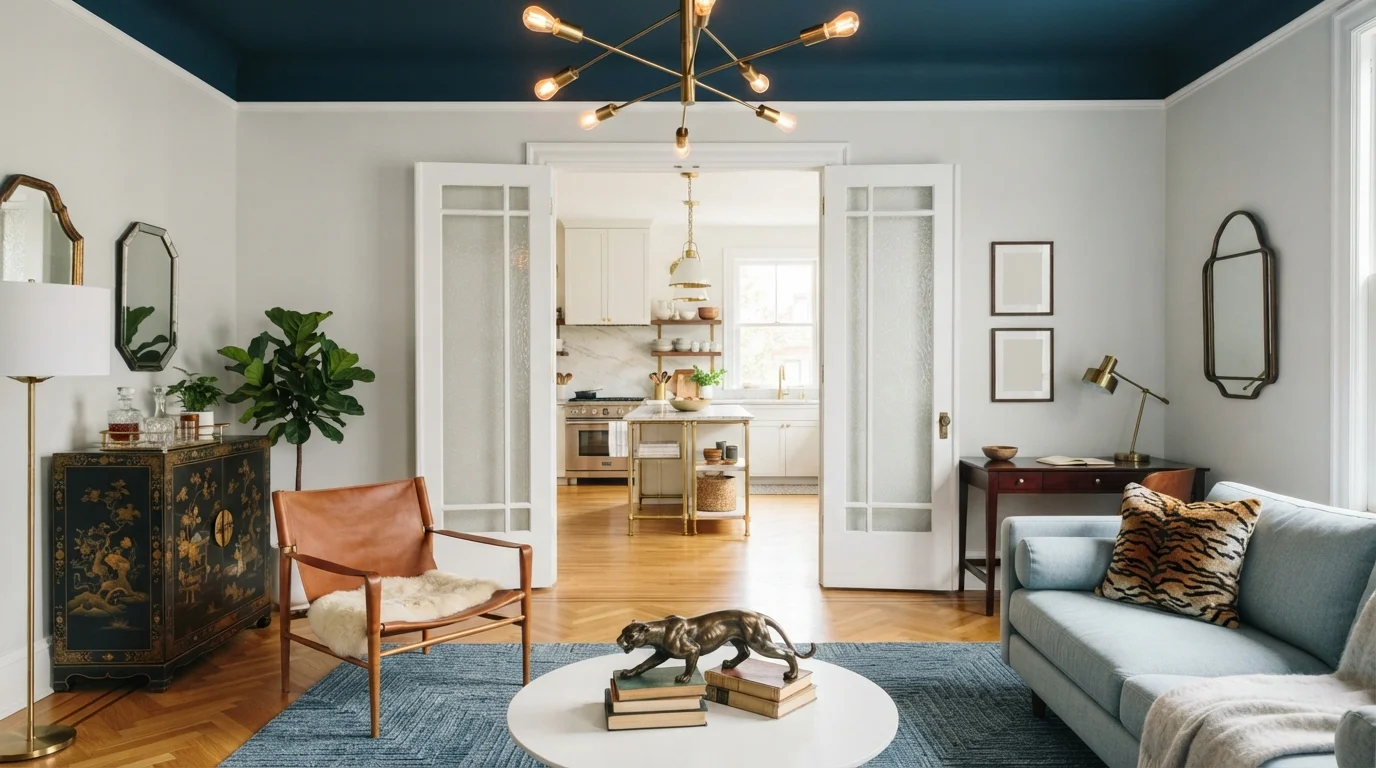
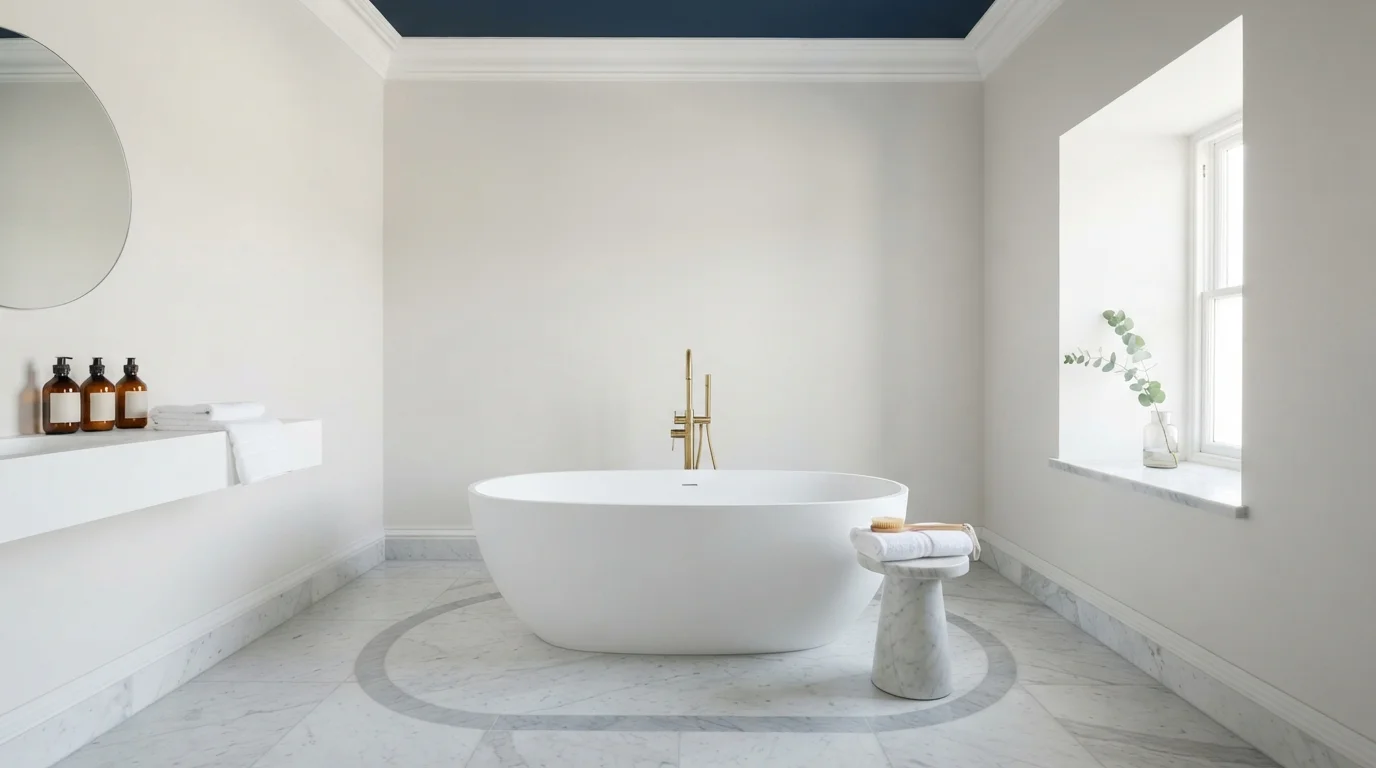
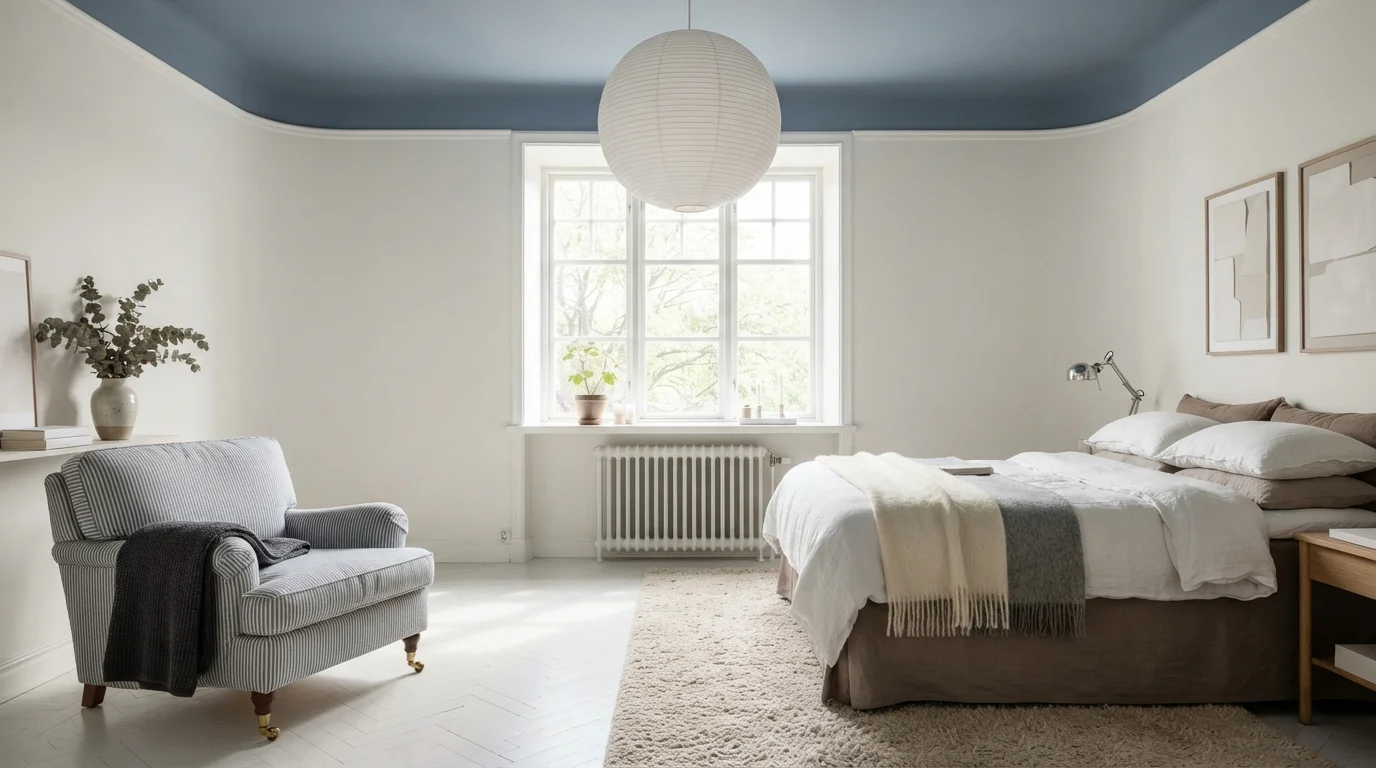
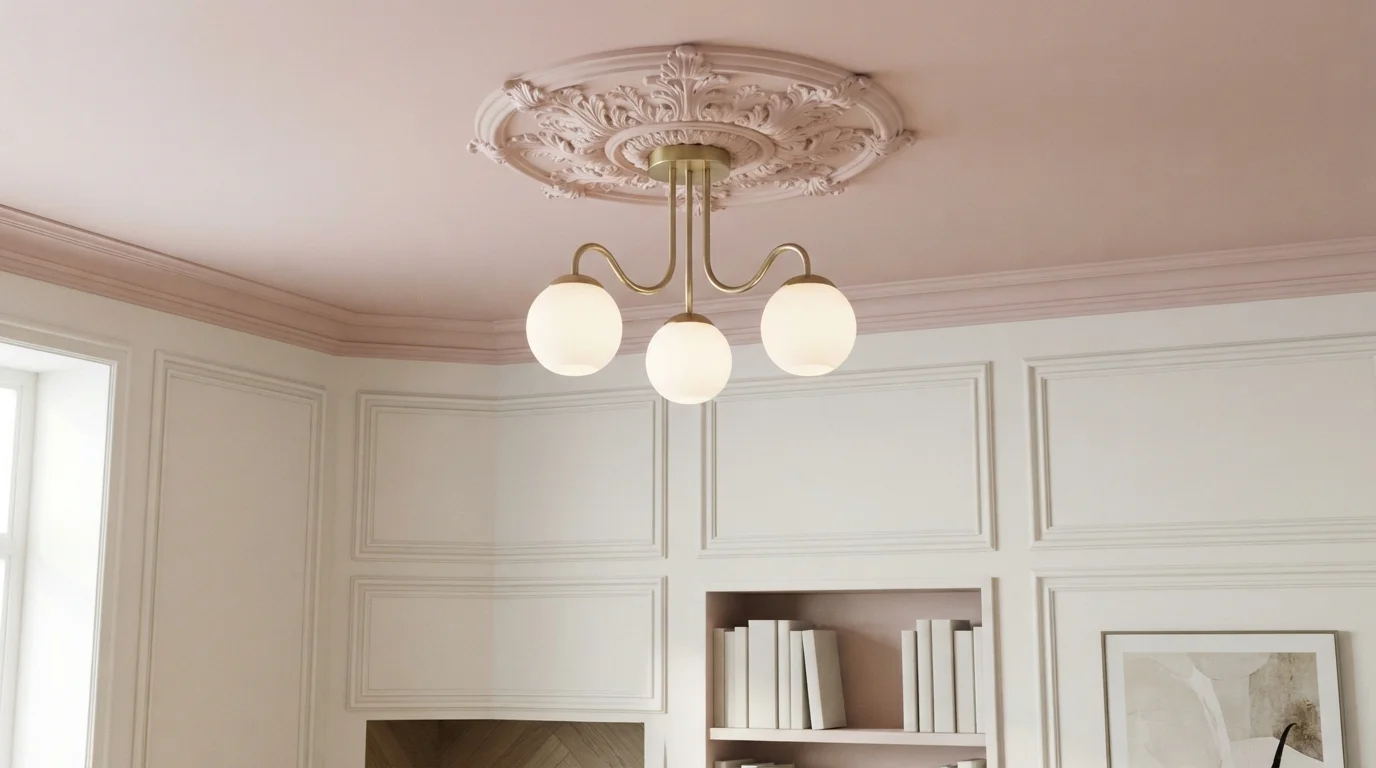
The cleanest pairing is a soft blue ceiling over crisp white walls and white trim — it reads fresh and lets the ceiling be the quiet surprise. For a cozier feel, pull a warm off-white or greige onto the walls so the blue feels tucked in, and keep the trim a touch whiter than the wall to give the blue a clean edge. Warm metals like brass and aged bronze look great hanging against blue, and matte black reads sharp and modern.
The common mistakes are going too dark in a short room, which feels like a low cloud, and forgetting the ceiling will read cooler and grayer than the chip, which leaves the blue looking dingy. Add the wrong sheen and sloppy cut-in lines where the ceiling meets the wall — both of which a colored ceiling shows far more than a white one — and you've covered every trap. Sample on the actual ceiling, drop the sheen, and take your time on the edges.
Blue Ceiling Paint — Frequently Asked Questions
Will a blue ceiling make my room feel smaller?+
A light, soft blue will not — it reads like sky and can make a flat ceiling feel slightly higher. A deep, saturated blue is what closes a room in, especially in a standard-height room, so save dark blues for spaces with real ceiling height.
What's the best shade of blue to paint a ceiling?+
For most rooms, a pale sky-blue with an LRV around 65 to 80 is the safe, flattering choice because it keeps light bouncing around the room. Because daylight reaches the ceiling cooler and grayer, pick a blue a touch warmer or lighter than the chip looks in your hand.
What finish should I use on a blue ceiling?+
Flat or matte in almost every room, since it hides drywall seams and roller marks and kills glare from windows and lights. In a bathroom or above a stove, step up to an eggshell or a moisture-rated finish so steam and wipe-downs don't leave streaks or mildew.
What wall and trim colors go with a blue ceiling?+
Crisp white walls and white trim give the cleanest, freshest look and let the blue be the surprise overhead. For a cozier feel, use a warm off-white or greige on the walls, and keep the trim slightly whiter than the wall so the blue has a clean edge.
Why does my blue ceiling look grayer than the sample?+
Light reaches a ceiling secondhand — it bounces up off the floor and walls first — so the color almost always reads cooler and grayer up high than it does on a chip. The fix is to choose a blue that's a step warmer or lighter, and to tape a sample to the actual ceiling before committing.
Can I match a blue ceiling color across different paint brands?+
Yes. Every blue shown here is mixed to order at the paint counter, so a color you like from one brand can be cross-matched into another brand's base. You're choosing a blue, not locking into a single store.