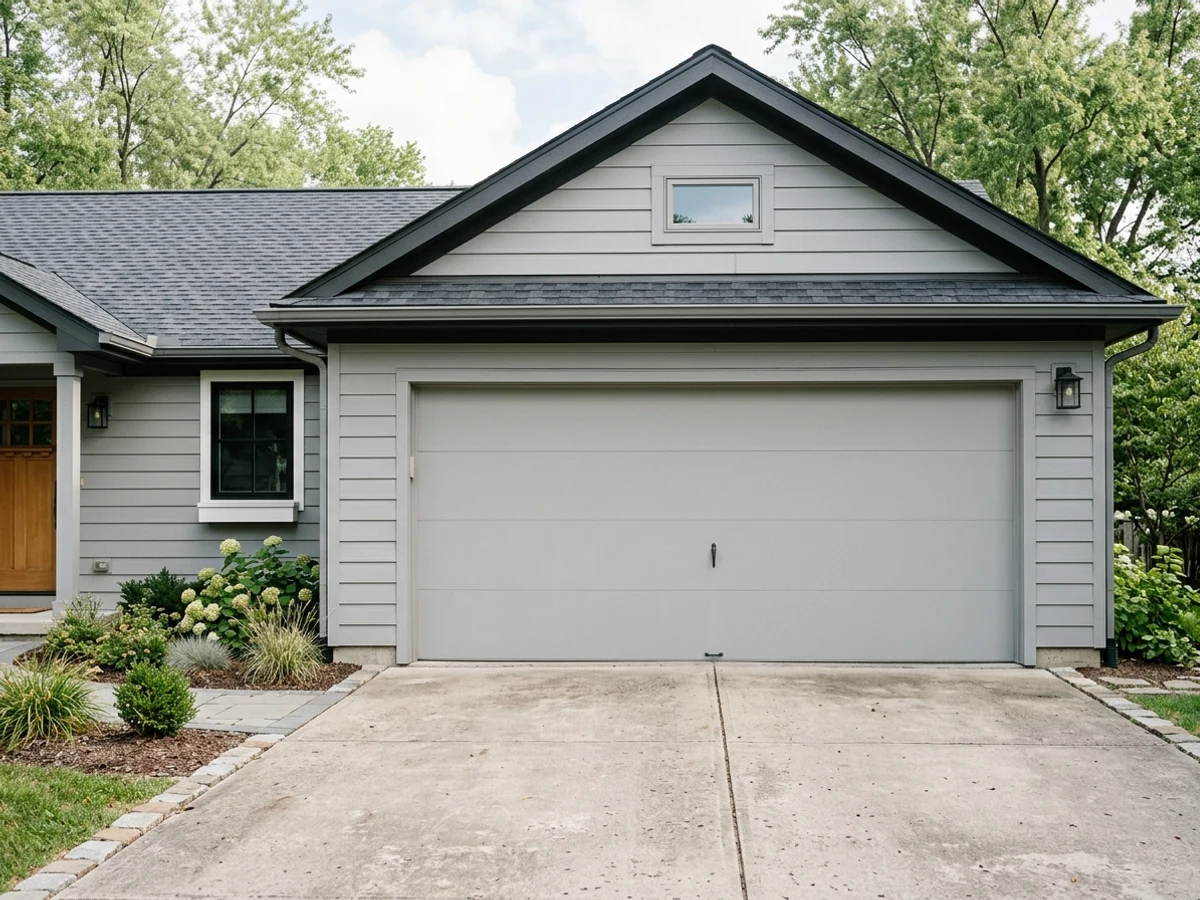
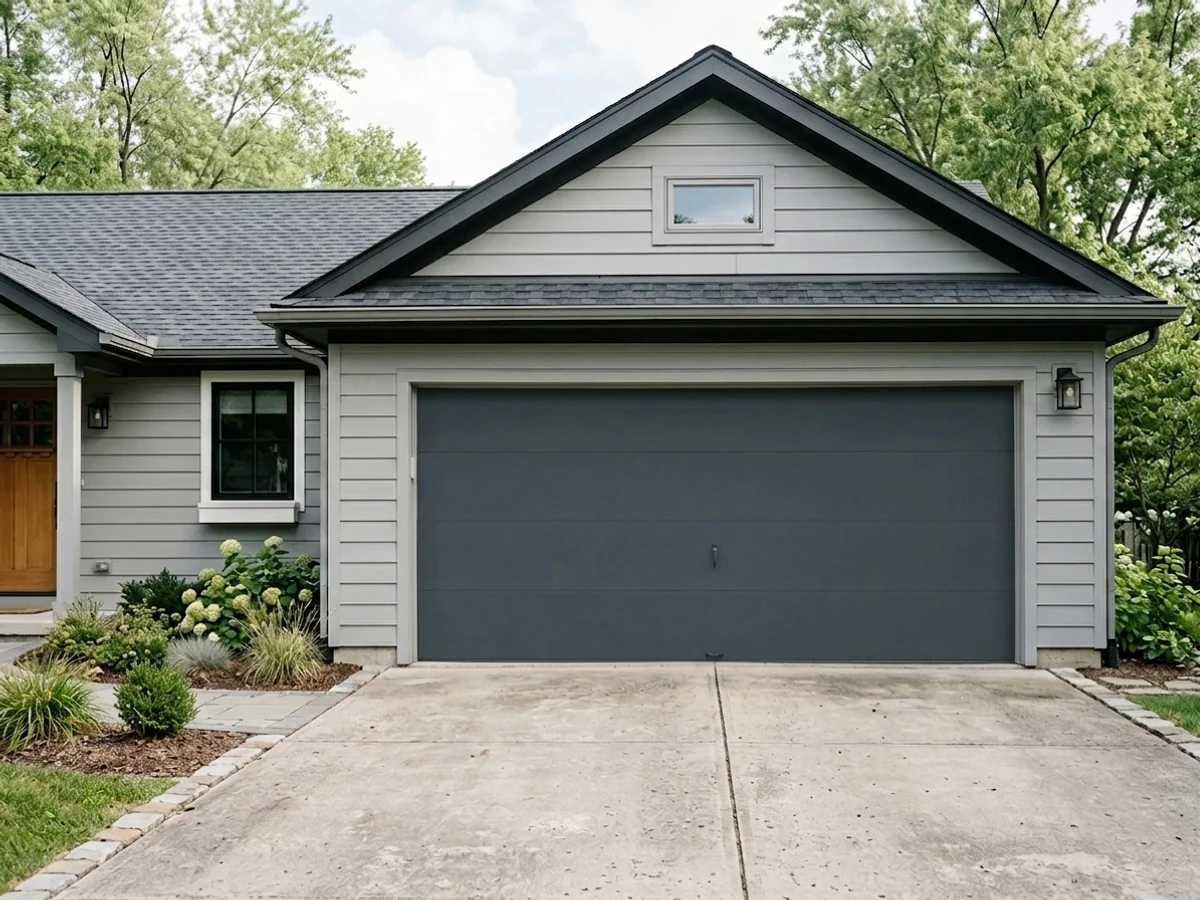
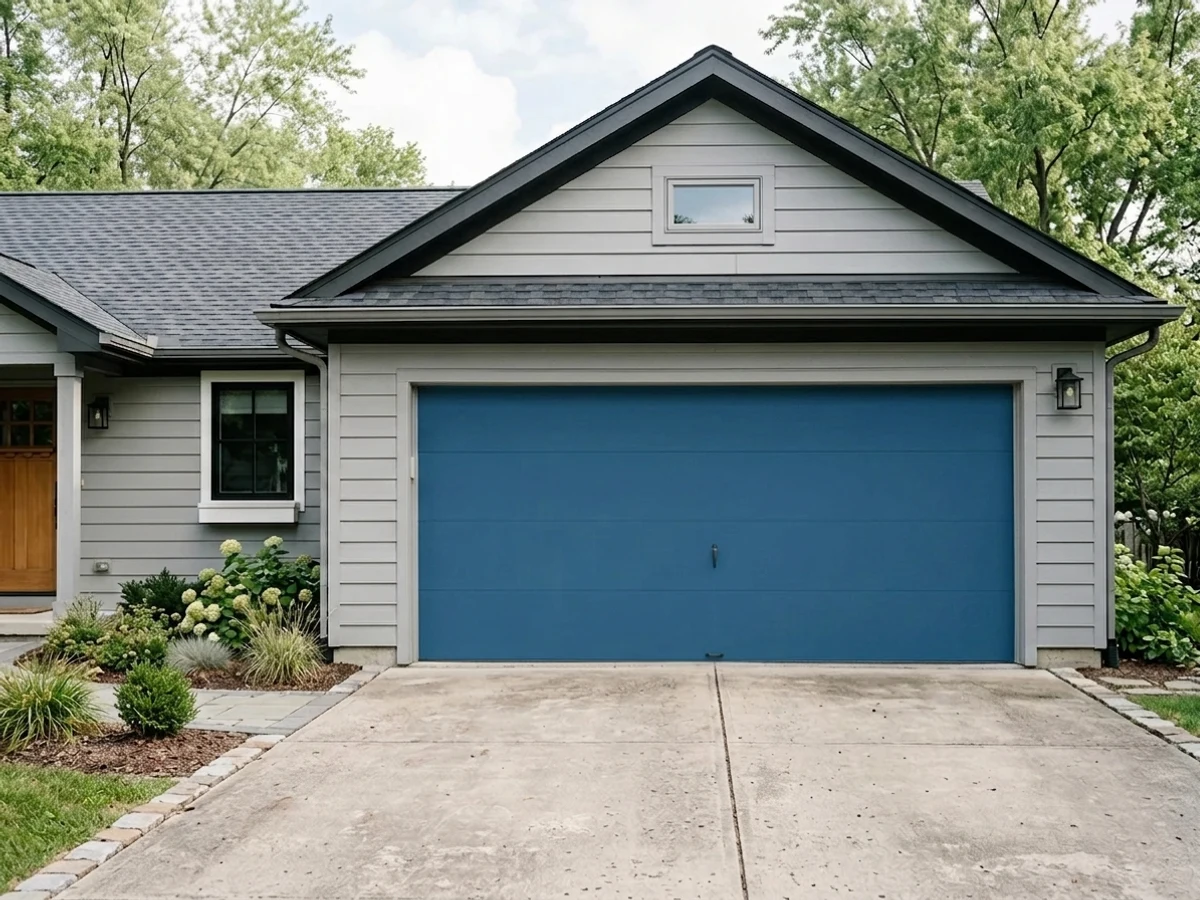
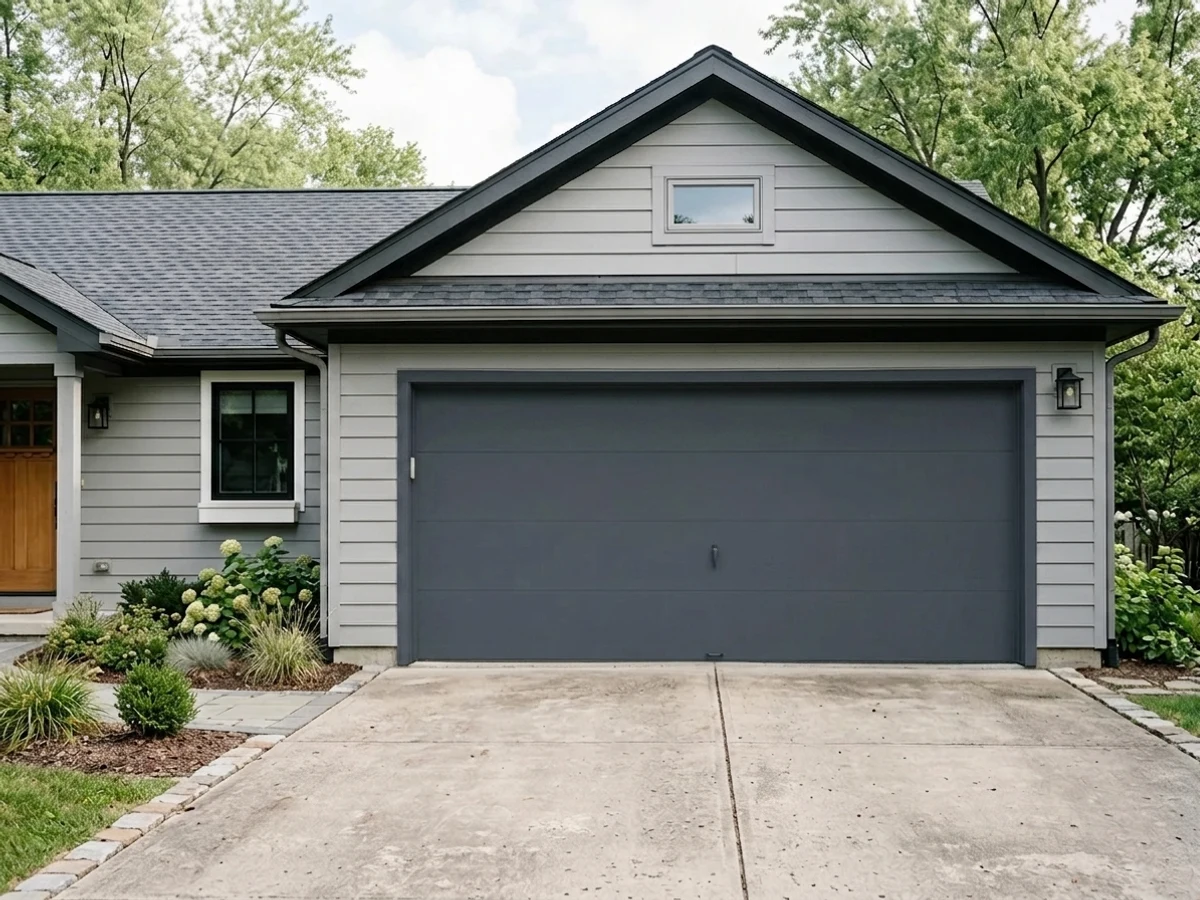
Blue Garage Door Paint Colors
1,741 blue colors that work in garage doors, drawn from the full ~30,000-color US paint deck. Below: editor's picks specific to garage doors, then 30 picks spread across the LRV range — narrow further on the brand page when you've shortlisted.
Blue is the most popular color for accent walls, kitchen islands, and front doors — and also the family with the widest spread, from pale dove-blues that read almost grey, to inky near-black navies, to saturated cobalts that read almost royal. Teal-leaning blues (the green-blue overlap) live next door in the Teal family.
Editor's Picks: Blue for Garage Doors
4 picks30 Blue Picks Across the LRV Range
30 of 1,741 · sorted dark → lightLooking for more? All blue → covers every brand; brand × family pages show full decks.
Blue Garage Door Colors at Every US Brand
21 brands · up to 10 picks eachUp to 10 picks per brand spread across the blue LRV range, drawn from each brand's full deck. Tap any swatch with a curated guide for full spec; tap the brand title for the brand's complete blue deck.
Behr
Valspar
Glidden
Benjamin Moore
PPG / Glidden
Dunn-Edwards
Sherwin-Williams
Dutch Boy
Hirshfield's
Diamond Vogel
Kompozit
C2 Paint
Portola Paints
Magnolia Home
Rodda
Farrow & Ball
Backdrop
Annie Sloan
Clare
Rust-Oleum
Other Garage Door Color Families
Blue Colors in Other Rooms
Blue Paint Colors for a Garage Door
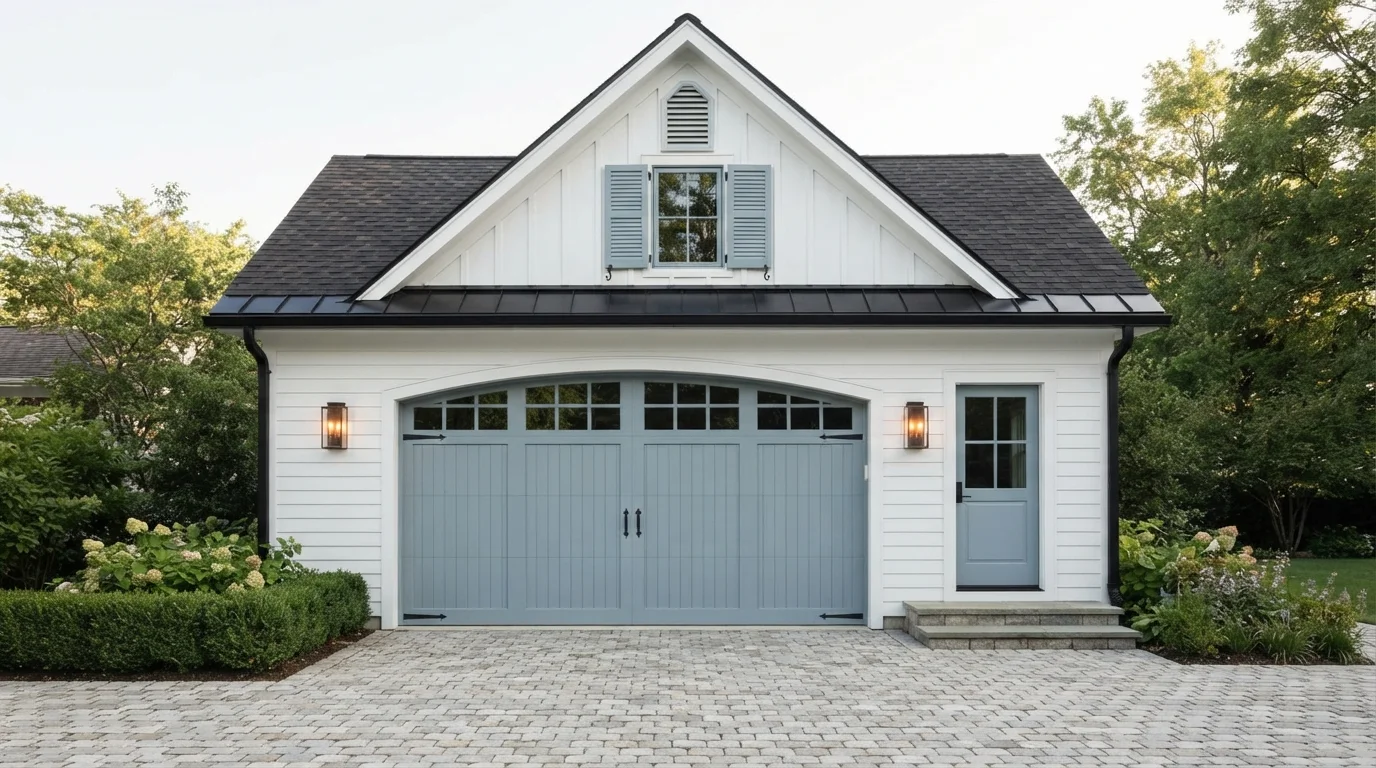
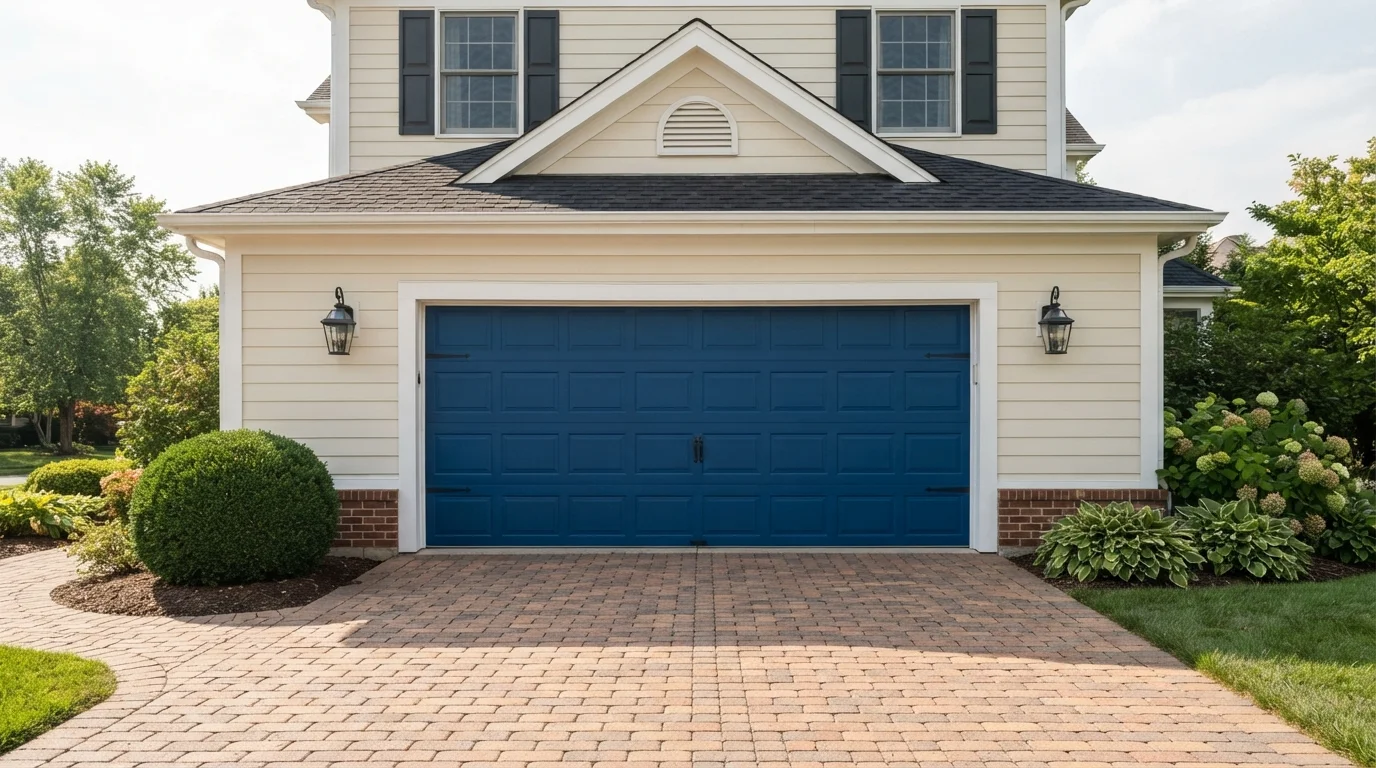
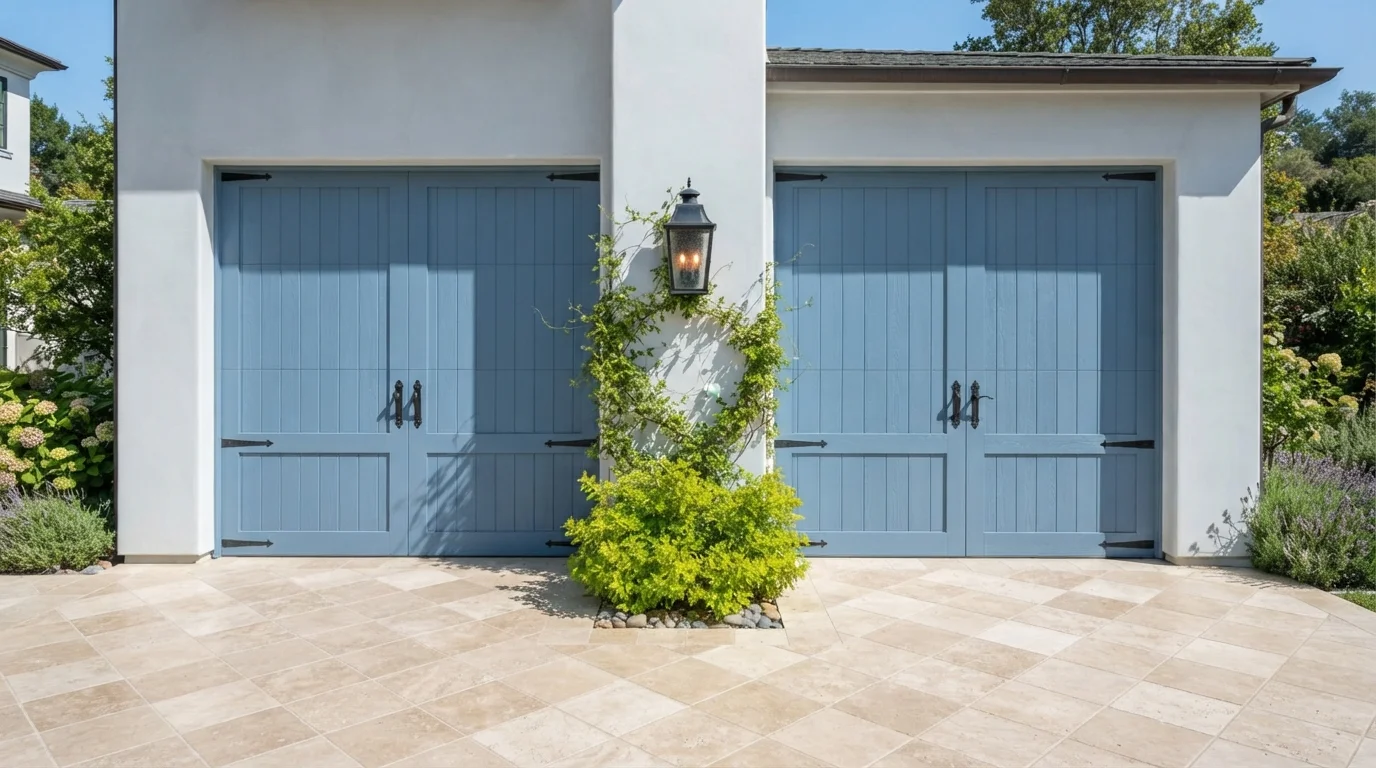
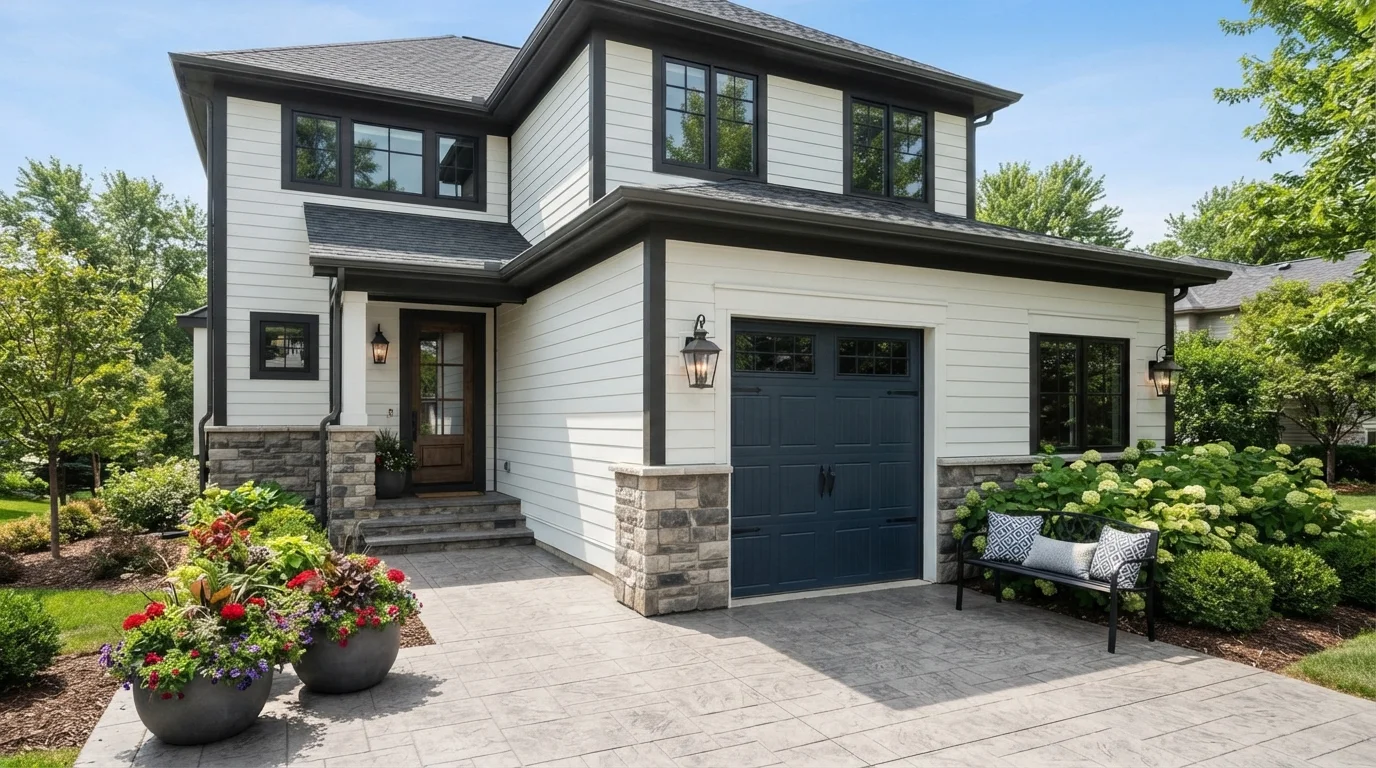
A blue garage door is one of the easiest ways to give the front of a house some personality without repainting the whole exterior. The door is a big flat panel that sits right at street level, so the color you pick reads loud and clear from the curb. Blue is a popular choice here because it pairs cleanly with white, gray, brick, and warm wood without fighting them. The trick is matching the depth of the blue to your siding and the way light hits that wall.
This guide is about blue on a garage door specifically, not blue in general. A garage door faces full weather, takes direct sun for hours, and gets splashed and scuffed more than almost any other painted surface on a house. That changes which shade looks right and which finish actually holds up. Every blue you see on this page is mixed to order at the store, so once you settle on a shade you can have it tinted in any brand's exterior paint and cross-matched if you already like a color from somewhere else.
Why Blue Works On A Garage Door
The garage door is usually the largest single feature on the front of a house, so it sets the tone before anyone reaches the front porch. Blue gives that big panel a clear identity while still feeling calm and settled, which is why it reads as classic rather than trendy. It sits comfortably next to the colors most houses already have: white trim, gray siding, red brick, and natural wood.
The thing to watch is scale. A color that looks gentle on a small sample chip can feel much stronger across a 16-foot door in full sun. Always test the actual shade on the door itself, not just on paper, and look at it from the street where it really lives.
Picking The Right Depth Of Blue For The Light
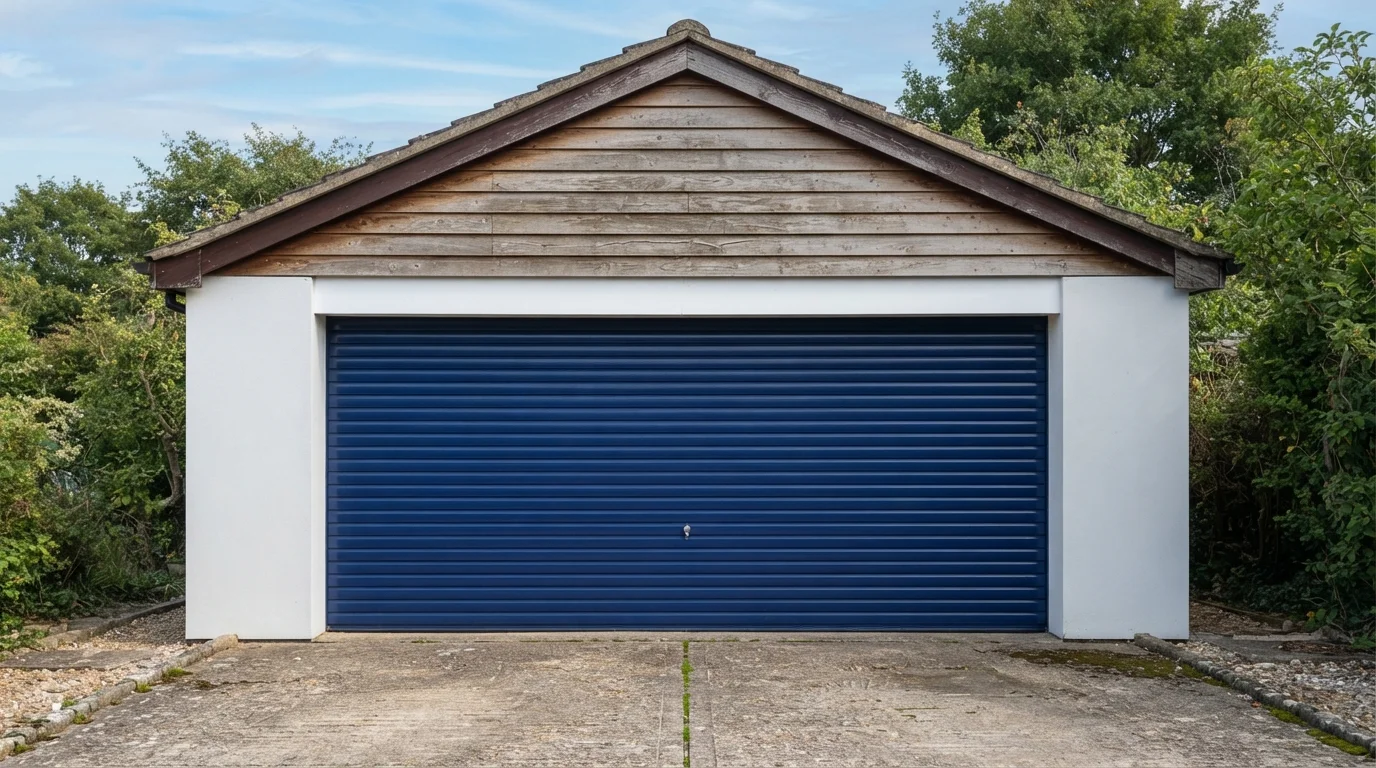
How much sun the door gets should drive how deep you go. A door in strong afternoon light can carry a deep navy or a dusty mid-blue without looking heavy, because the sun keeps it from going too dark. A door that sits in shade most of the day, under a deep overhang or facing north, will make the same deep blue look almost black, so a lighter, clearer blue usually reads better there.
LRV, or light reflectance value, is the simple number that tells you how light or dark a color is from 0 to 100. For a garage door in shade, a blue in the 30s to 50s keeps it from disappearing. For a bright, sun-washed front, you can drop into the teens and 20s and still see plenty of color and depth.
The Right Finish For A Garage Door
A garage door takes weather, sun, and the occasional bounced basketball, so the finish matters as much as the color. A satin or low-luster exterior finish is the safe choice for most doors. It sheds rain, wipes clean, and resists fading, while staying soft enough that it doesn't throw harsh glare back at the street on a sunny day.
Skip flat finishes here because they hold dirt and are hard to scrub without leaving marks. Go up to a semi-gloss only if you want a crisper, more reflective look and your door is smooth and in good shape, since shinier finishes show every dent and brush mark. On metal doors especially, a quality exterior product over the right primer is what keeps a blue from chalking and fading after a couple of summers.
Pairing Blue With Trim, Siding, And Hardware
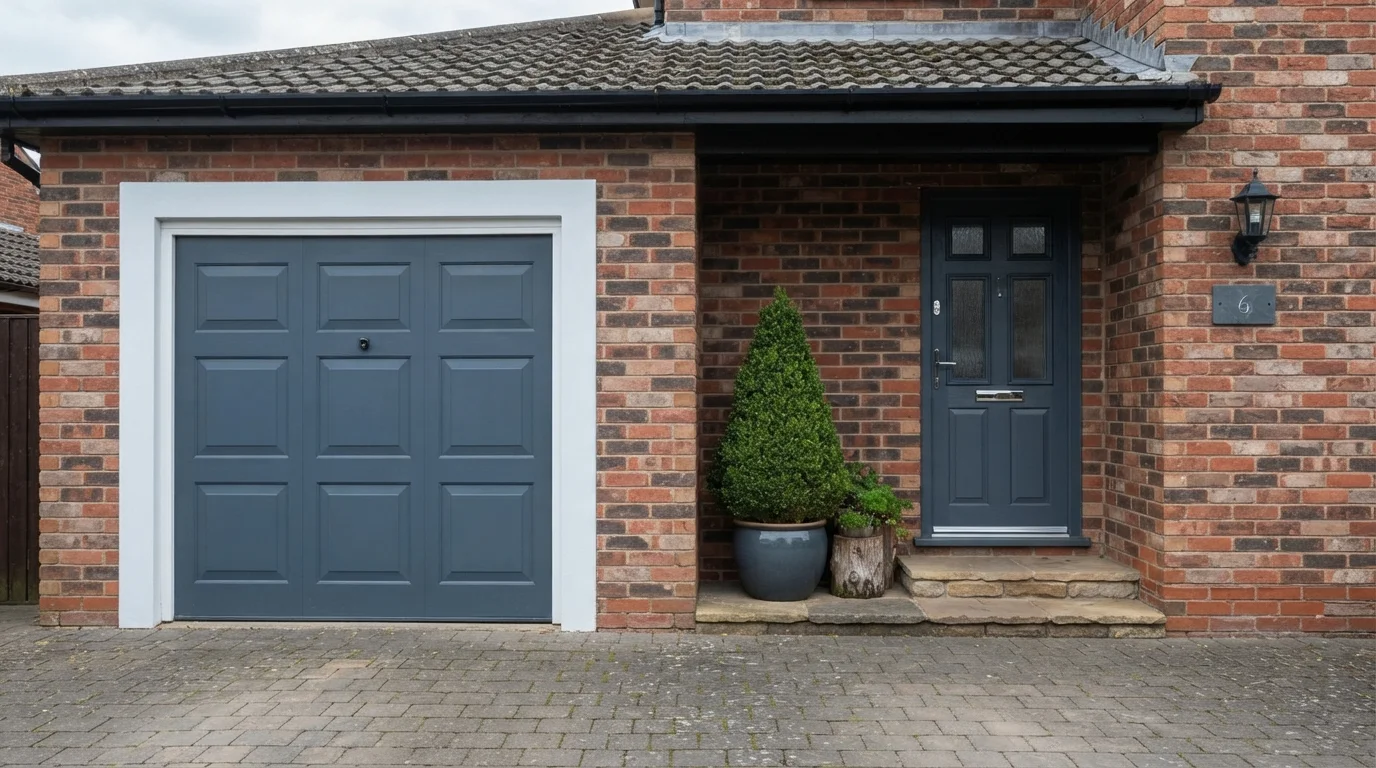
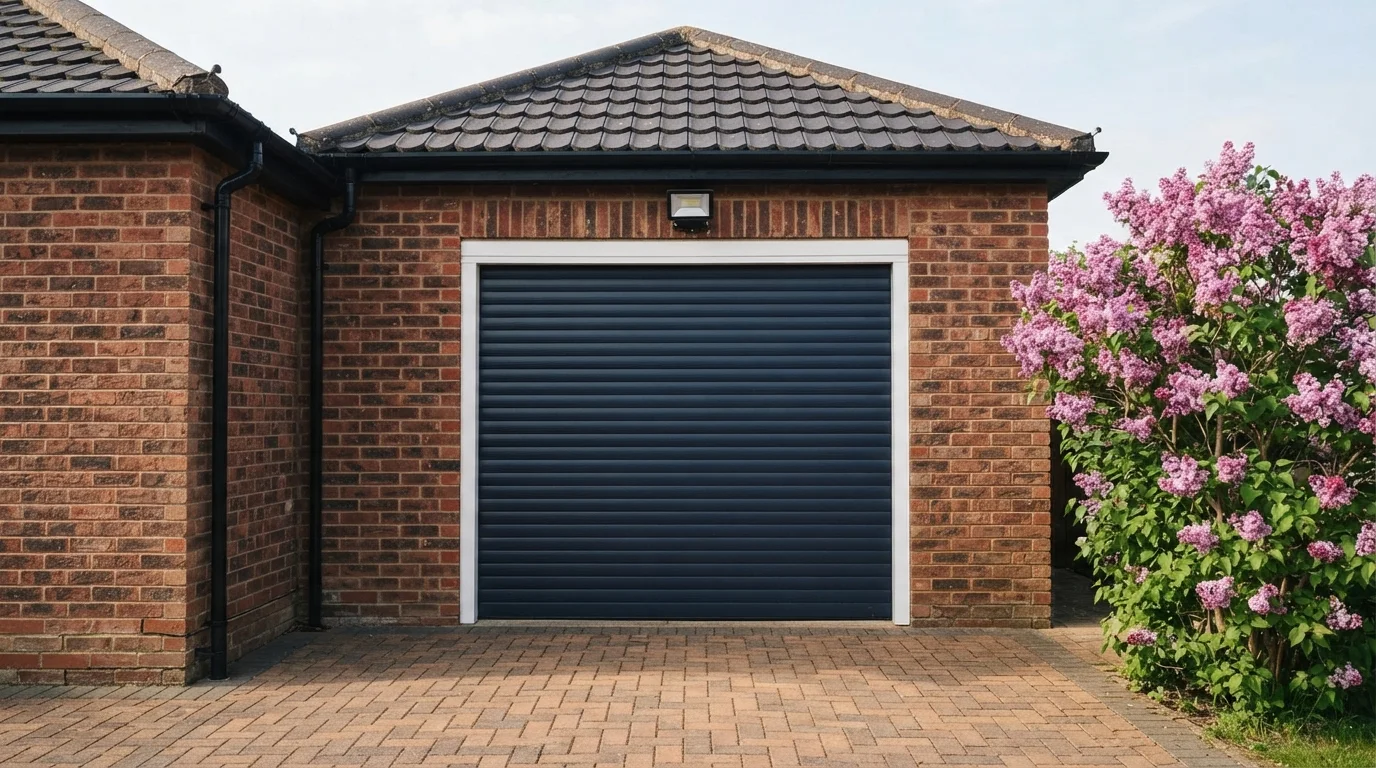
Blue doors look best when the surrounding colors stay simple. Crisp white trim around the door frame gives a navy or mid-blue a clean edge, while a warm off-white softens the contrast on a more traditional house. Against gray or greige siding, blue feels natural and pulls the whole front together; against red brick, a deeper blue gives a confident, timeless contrast.
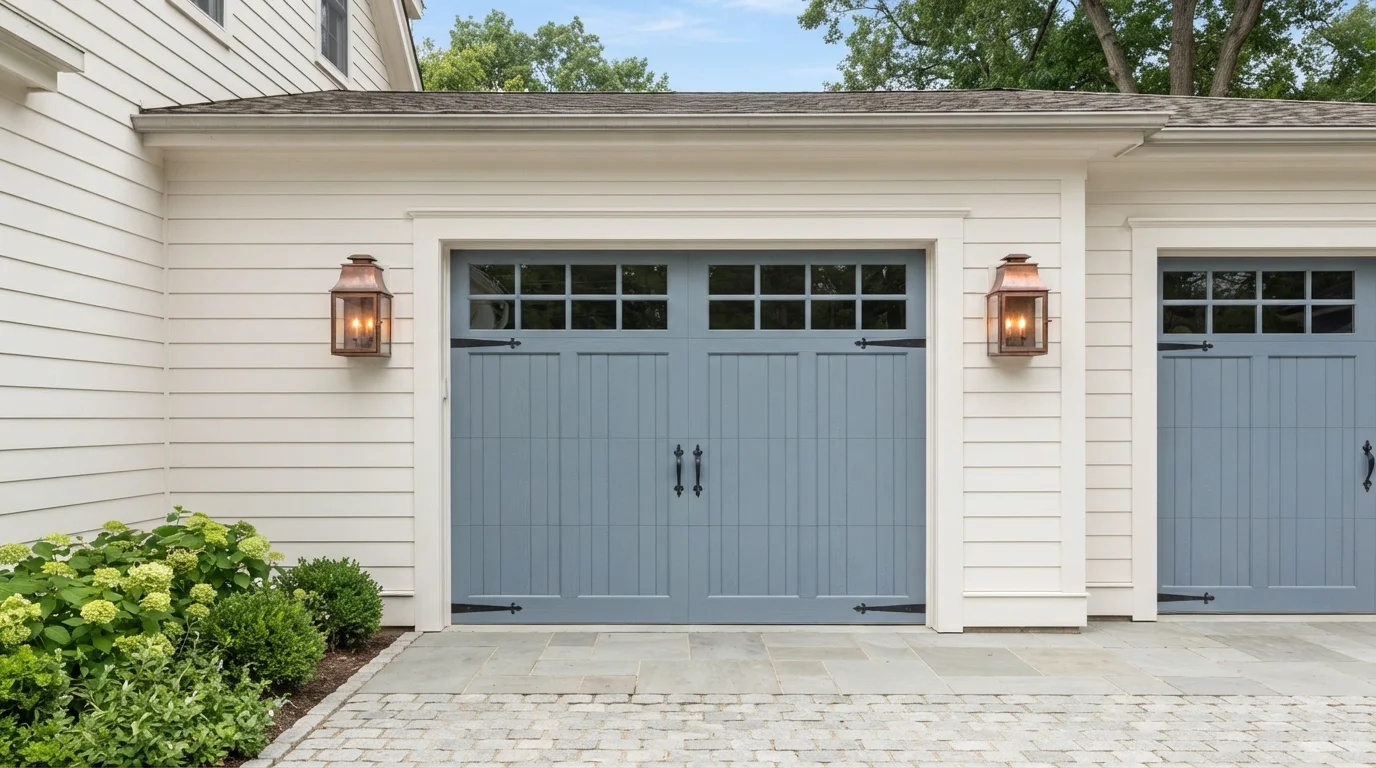
Hardware is the easy upgrade people forget. Black or oil-rubbed bronze handles and hinges sharpen a deeper blue, while brushed metal keeps a lighter blue feeling fresh and current. Match or echo the door color in one small place, like the front door or a window box, so the blue feels intentional rather than random.
Common Mistakes With Blue On A Garage Door
The most common miss is choosing the blue from a tiny chip and skipping a real test on the door. Garage doors are huge and sit in changing light all day, so a shade that looked perfect indoors can turn purple at dusk or steely gray in shade. Brush a sample on the actual door and check it morning, midday, and evening.
The other frequent mistake is going too dark on a door that bakes in afternoon sun. Very deep blues absorb heat, which can stress the paint and the door over time, and they can look flat and bottomless against bright siding. When in doubt, step the blue up a notch in lightness and keep the finish in the satin range so the color stays readable and the panel stays cool.
Blue Garage Door Paint — Frequently Asked Questions
What shade of blue is best for a garage door?+
It depends on light and siding. A door in full sun can carry a deep navy or a dusty mid-blue, while a shaded door reads better in a clearer, lighter blue so it doesn't look black. Match the depth to your siding and always test it on the door first.
What finish should I use on a blue garage door?+
A satin or low-luster exterior finish is the best all-around choice. It sheds rain, wipes clean, resists fading, and avoids harsh glare. Save semi-gloss for smooth, dent-free doors, and avoid flat because it holds dirt and is hard to scrub.
What LRV works for a garage door?+
For a shaded or north-facing door, a blue with an LRV in the 30s to 50s keeps it from disappearing into the dark. For a bright, sun-washed front, you can go down into the teens and 20s and still see rich color and depth.
What trim and hardware colors go with a blue garage door?+
Crisp white trim suits navy and mid-blue, while warm off-white softens the look on traditional homes. For hardware, black or oil-rubbed bronze sharpens deeper blues, and brushed metal keeps lighter blues feeling fresh.
Will a dark blue garage door fade or overheat in the sun?+
Very deep blues absorb more heat and can stress the paint and door over time on a sun-baked front. Use a quality exterior product over the right primer, choose a satin finish, and consider stepping the blue slightly lighter if the door takes strong afternoon sun.
Can I match a blue I like from another brand?+
Yes. Every blue shown here is mixed to order at the store, so you can have it tinted in any brand's exterior paint. If you already have a favorite blue from another brand, it can be cross-matched so you get the same look in the product you want.