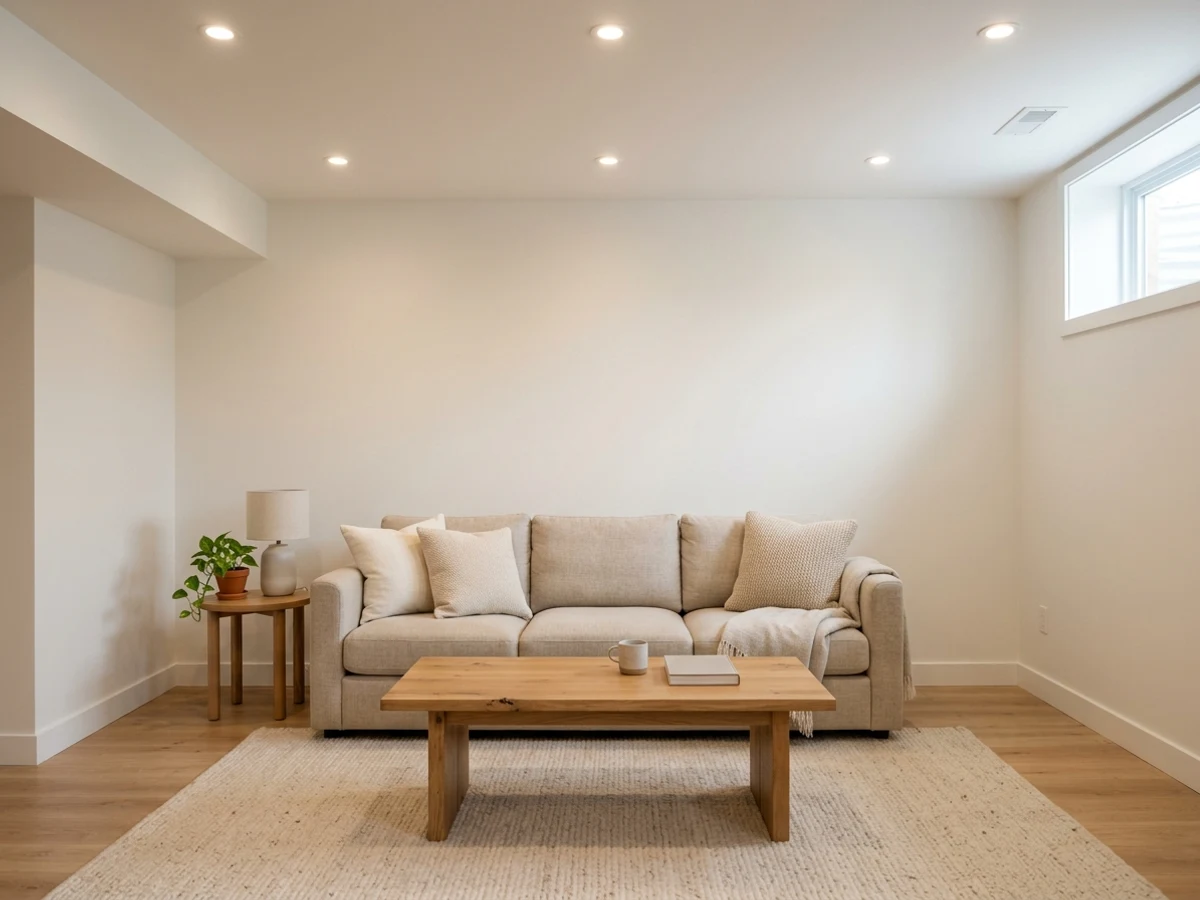
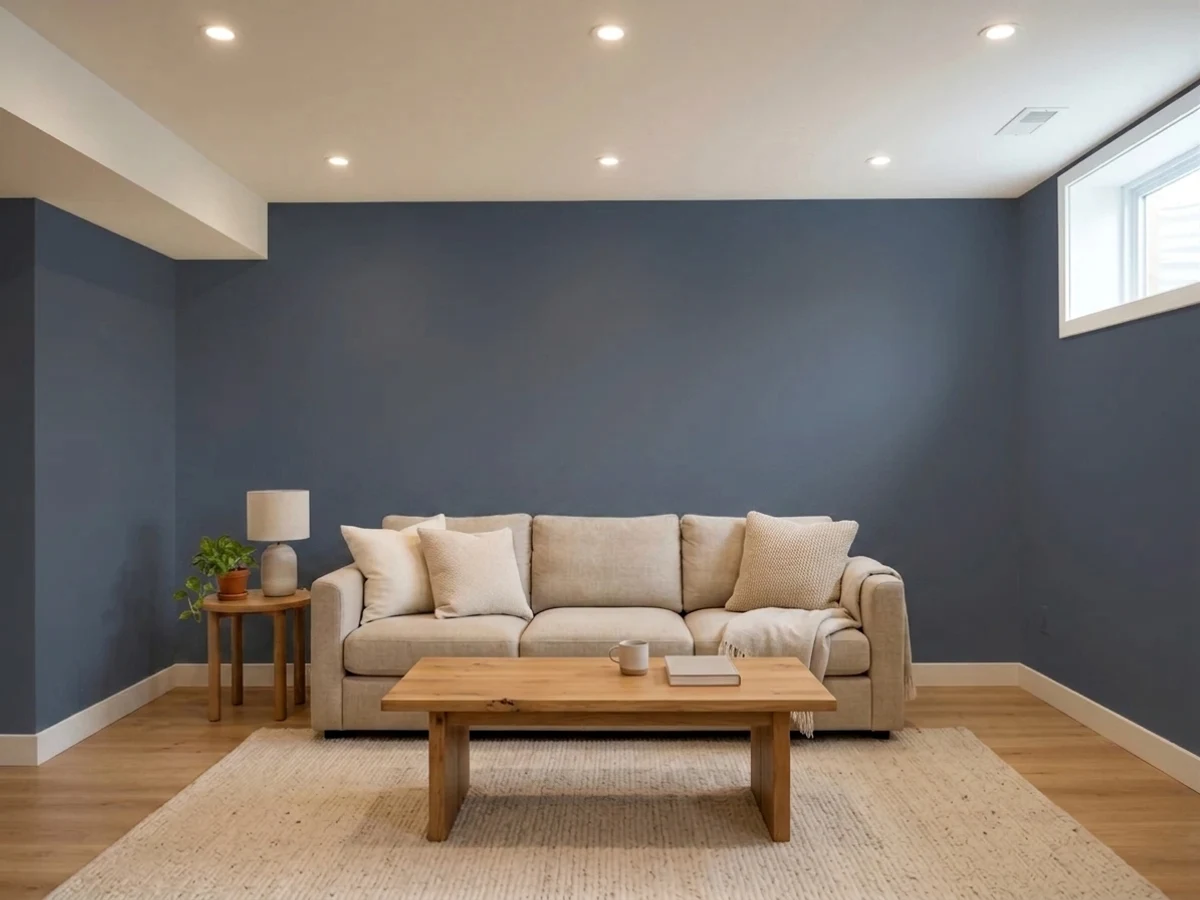
Blue Basement Paint Colors
1,741 blue colors that work in basements, drawn from the full ~30,000-color US paint deck. Below: editor's picks specific to basements, then 30 picks spread across the LRV range — narrow further on the brand page when you've shortlisted.
Blue is the most popular color for accent walls, kitchen islands, and front doors — and also the family with the widest spread, from pale dove-blues that read almost grey, to inky near-black navies, to saturated cobalts that read almost royal. Teal-leaning blues (the green-blue overlap) live next door in the Teal family.
Editor's Picks: Blue for Basements
4 picks30 Blue Picks Across the LRV Range
30 of 1,741 · sorted dark → lightLooking for more? All blue → covers every brand; brand × family pages show full decks.
Blue Basement Colors at Every US Brand
21 brands · up to 10 picks eachUp to 10 picks per brand spread across the blue LRV range, drawn from each brand's full deck. Tap any swatch with a curated guide for full spec; tap the brand title for the brand's complete blue deck.
Behr
Valspar
Glidden
Benjamin Moore
PPG / Glidden
Dunn-Edwards
Sherwin-Williams
Dutch Boy
Hirshfield's
Diamond Vogel
Kompozit
C2 Paint
Portola Paints
Magnolia Home
Rodda
Farrow & Ball
Backdrop
Annie Sloan
Clare
Rust-Oleum
Other Basement Color Families
Blue Colors in Other Rooms
Blue Paint Colors for a Basement
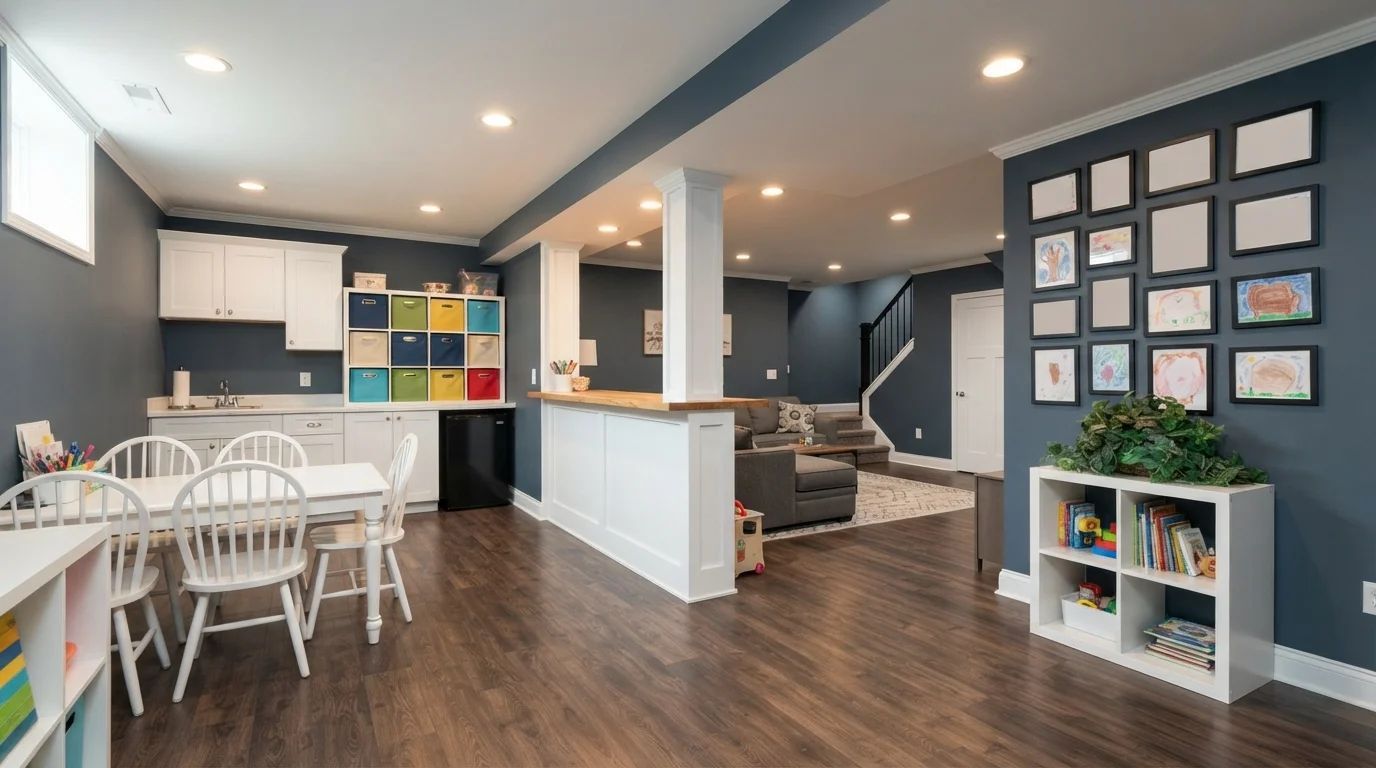
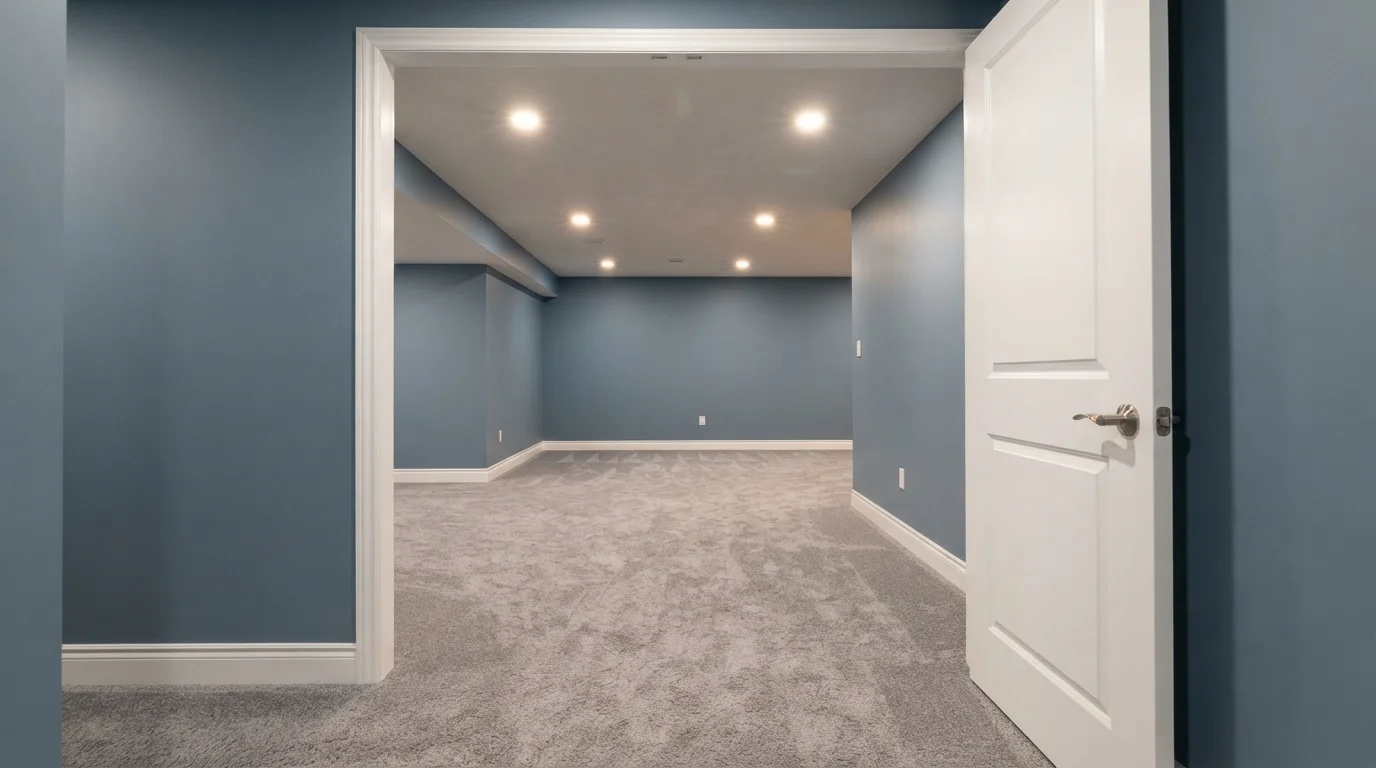
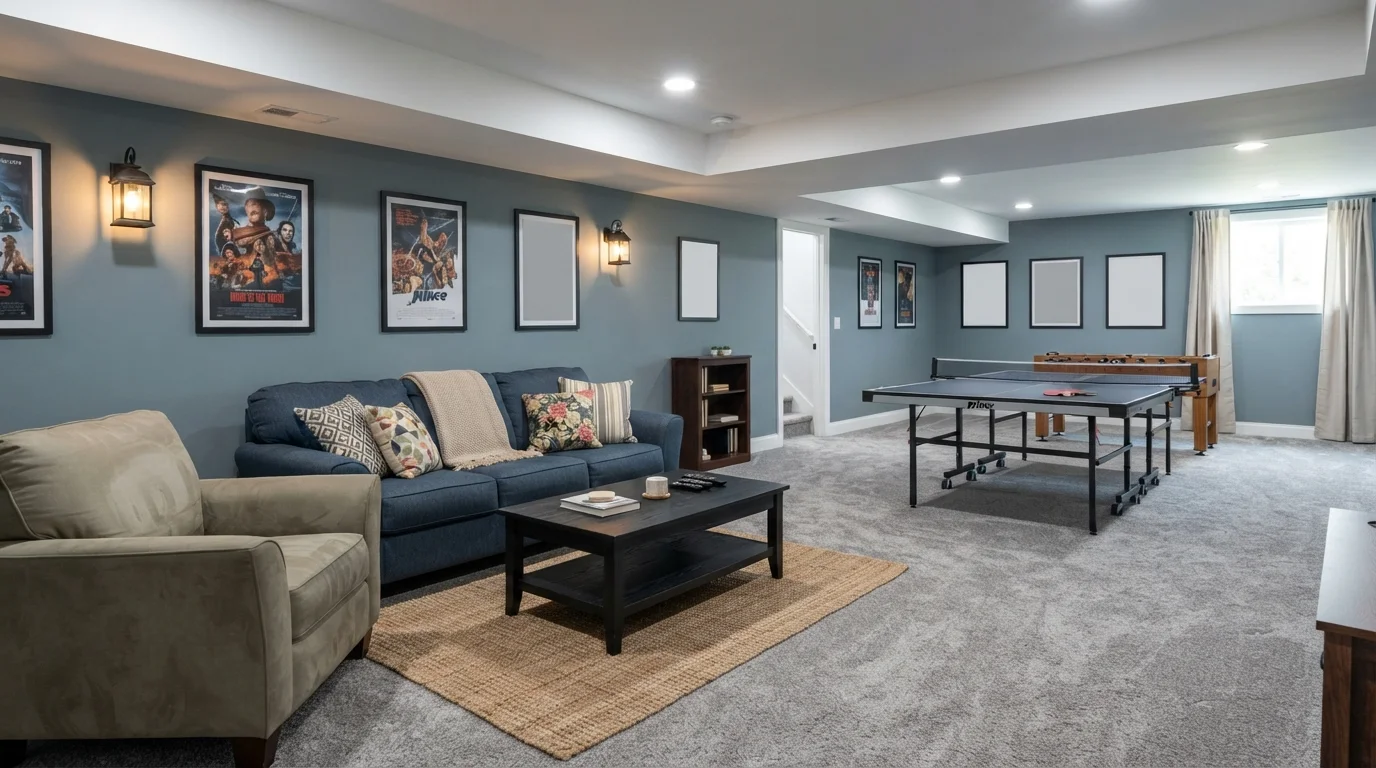
Blue can do something special in a basement. Most basements feel a little dim, a little cool, and a little closed-in, and blue leans into that instead of fighting it. A soft, slightly grayed blue reads calm and clean down there, which is exactly what you want in a den, a guest room, a home gym, or a finished hangout space.
The trick is picking the right blue for low light and pairing it with the trim, ceiling, and floors that basements usually come with. The swatches and brand cross-matches on this page show you the colors and where to find a close version in any major US line. The notes below help you choose the depth, sheen, and pairings that actually hold up in a basement.
Why Blue Works In A Basement
Basements rarely get strong, direct sun, so the light tends to be flat and a bit cool. Blue is already a cool color, so it settles into that light naturally instead of looking off. A grayed or muted blue in particular feels grounded and quiet, which suits a room used for sleeping, working out, or relaxing.
The thing to watch is going too cold. A clean, icy blue in a sunless room can start to feel like a basement clinic. You usually want a blue with a little warmth or softness in it so the space feels lived-in, not chilly.
The Right Depth Of Blue For Low Light
LRV (light reflectance value) tells you how much light a color bounces back, from 0 (black) to 100 (white). In a dim basement, a higher-LRV blue, roughly in the 55 to 70 range, keeps the room feeling open and helps stretch what little light you have. A soft, dusty, or chalky blue in that range is the safest all-around choice for most basements.
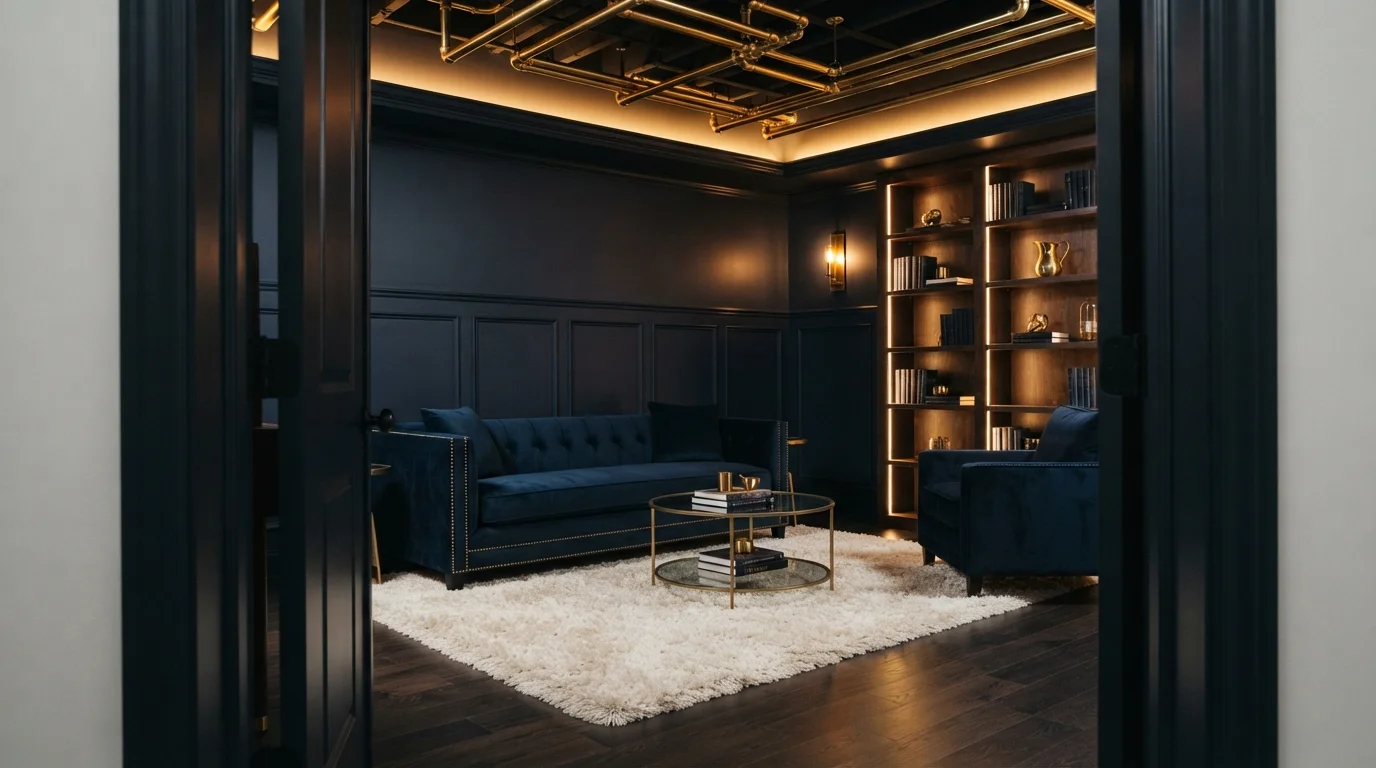
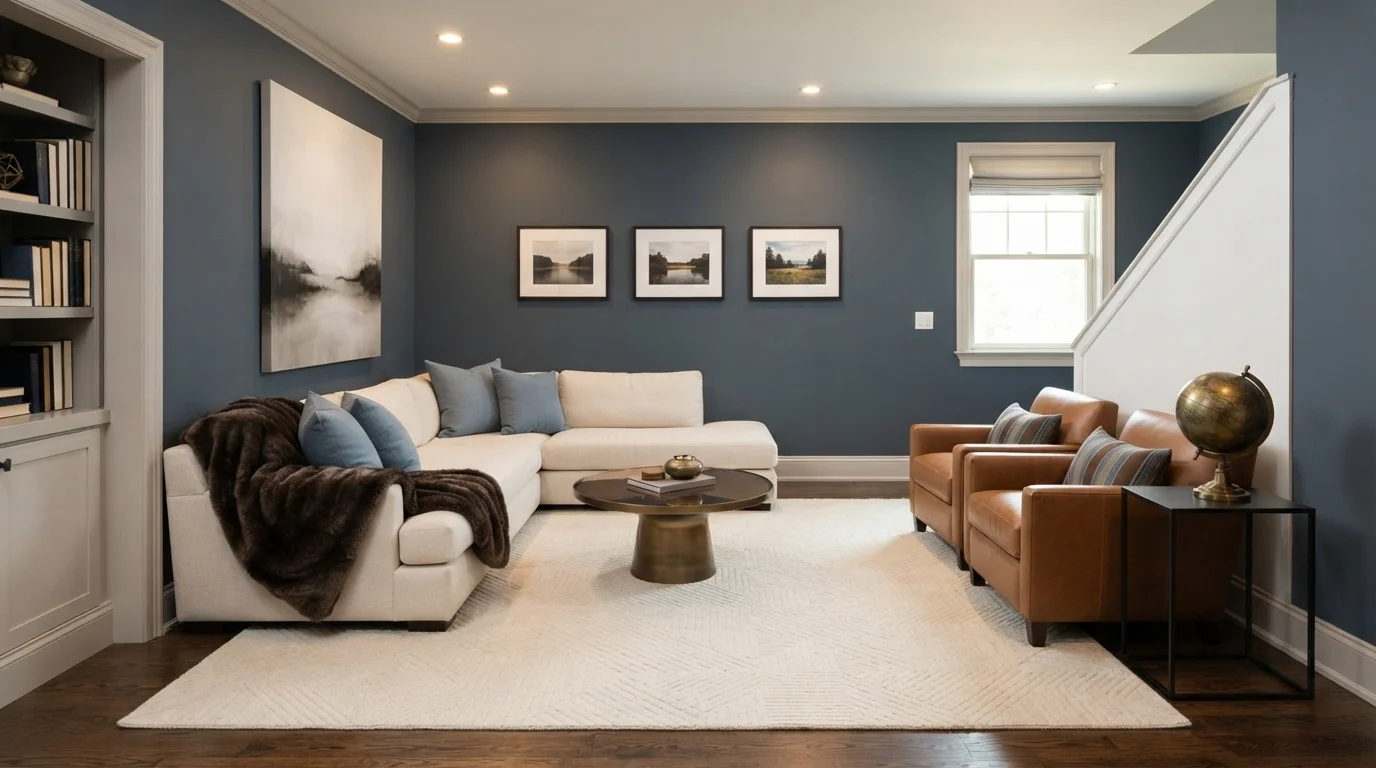
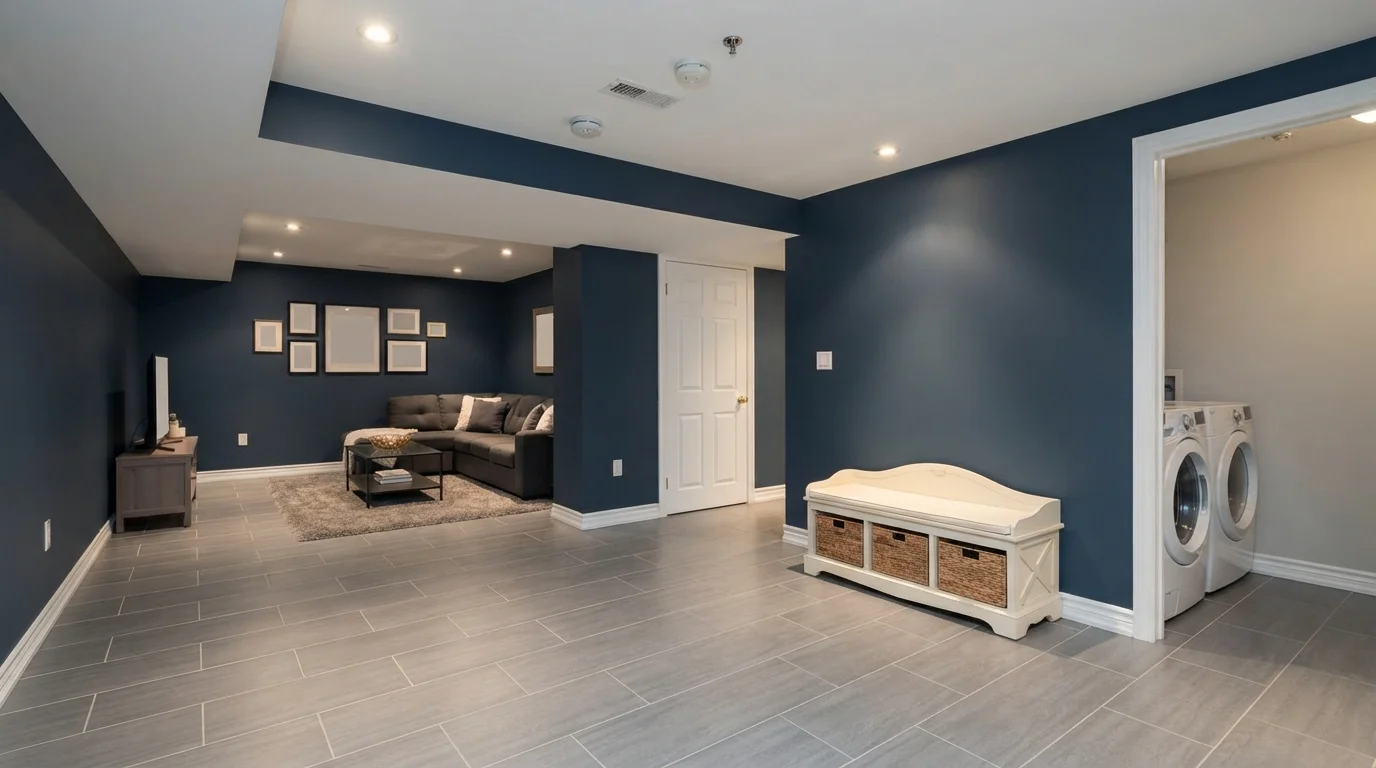
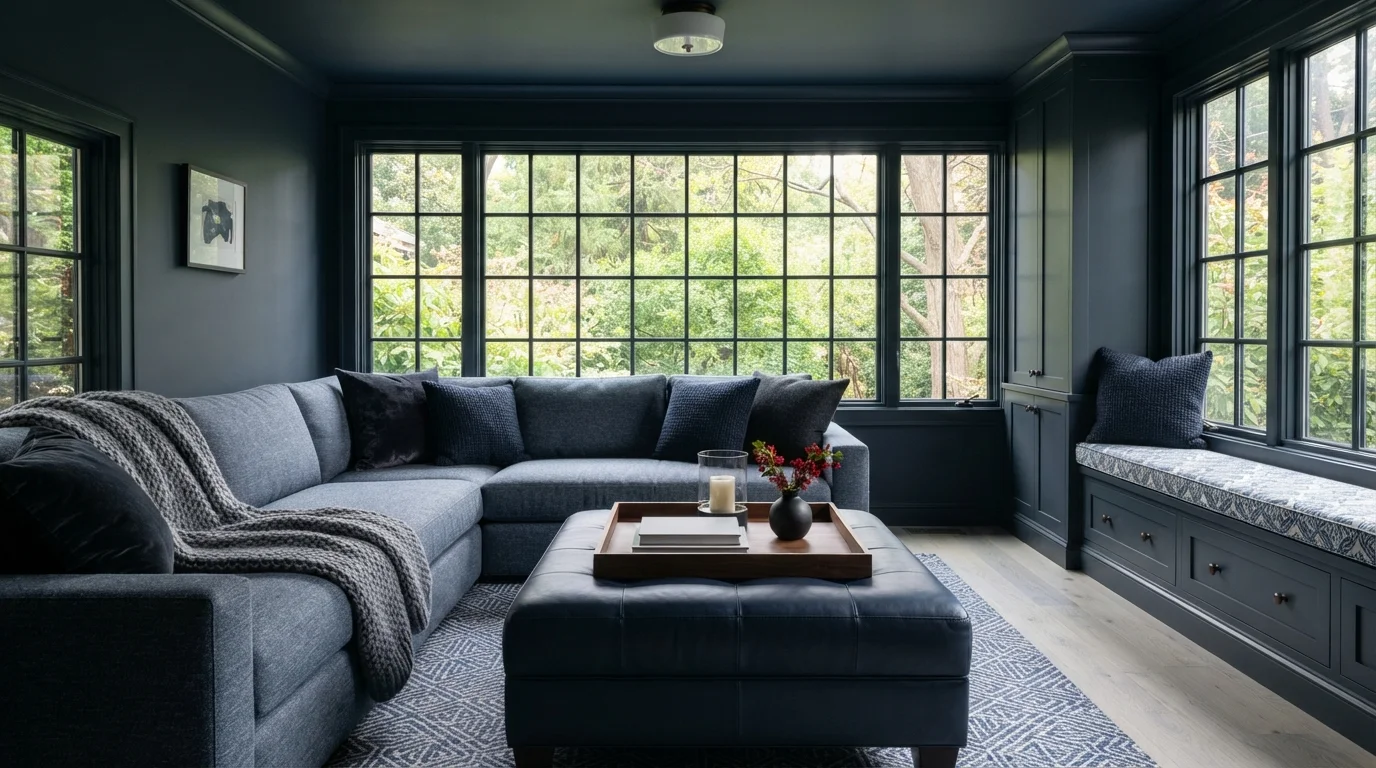
Deep navy and moody blues, down in the teens and twenties, can look fantastic, but only if the basement has decent lighting. In a darker space, save those for an accent wall, a built-in, or a bar nook, and keep the main walls lighter. Always test the swatch down in the basement itself, under the lamps you actually use, because basement blues shift hard once they leave the daylight of an upstairs room.
The Best Finish For Basement Walls
Basements deal with more moisture and stale air than the rest of the house, so washability matters. An eggshell or satin finish wipes down without much fuss and resists the occasional damp spot better than a flat finish. It also gives the blue a small amount of life under artificial light, which a dead-flat finish can swallow.
For a basement bathroom, laundry corner, or anywhere near pipes, step up to satin or semi-gloss so moisture beads instead of soaking in. Keep flat or matte for low-traffic ceilings only. If your basement has any history of dampness, prime properly first; sheen and a good primer matter more than the exact blue you land on.
Pairing Blue With Trim, Ceiling, And Floors
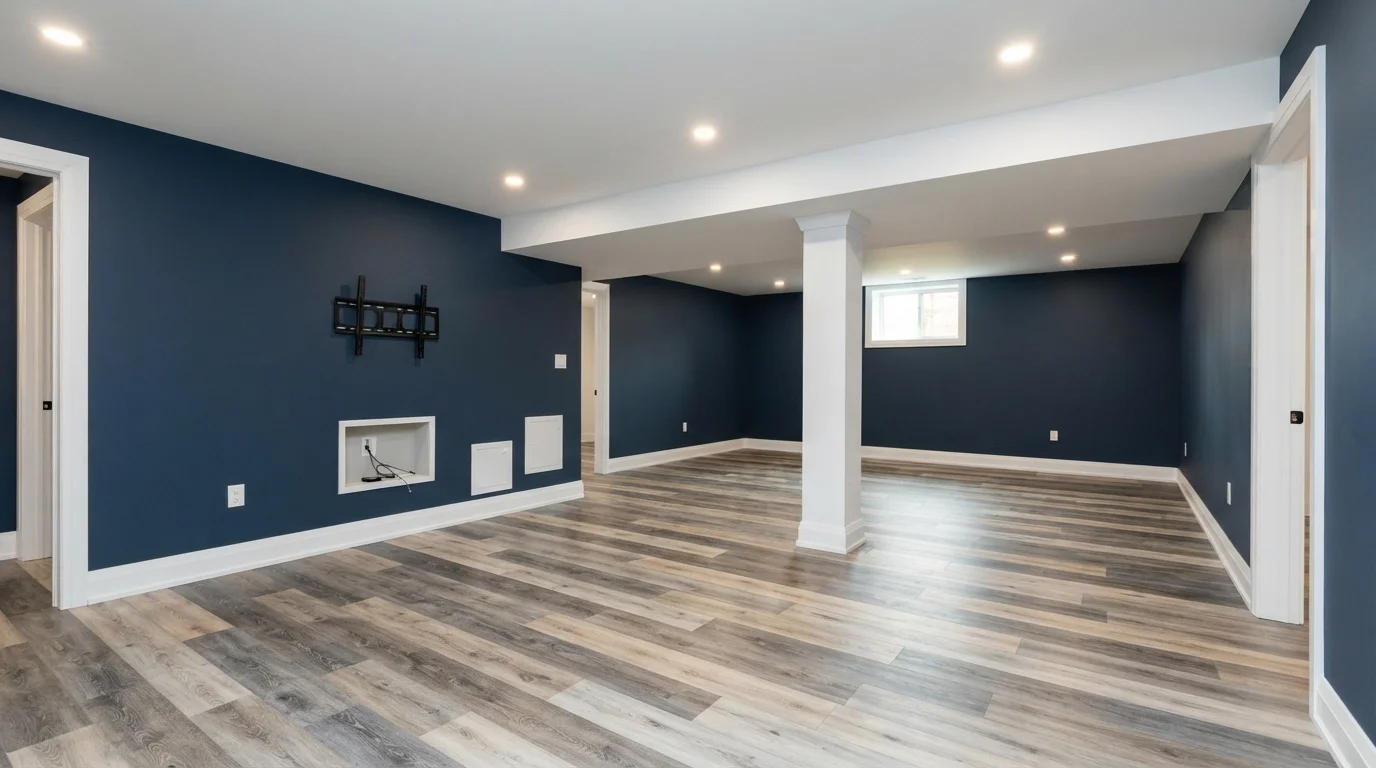
Crisp white trim is the easy win with basement blue. It sharpens the edges and reflects light, which a low room needs. If your basement has a low ceiling, painting the ceiling a soft white or the palest version of your wall blue keeps it from pressing down on you.
Basement floors are often gray concrete, vinyl plank, or neutral carpet, and a grayed blue sits comfortably over all of them. Warm wood shelving, brass or black fixtures, and a few warm textiles keep the cool blue from feeling cold. For a finished bar or built-in, a deeper blue on the cabinetry against lighter blue walls looks intentional and rich.
Common Mistakes To Avoid
The most common miss is choosing the blue upstairs in bright daylight and being surprised when it goes flat, gray, or purple in the basement. The room's lighting, often warm bulbs over cool walls, changes everything, so judge the color in place. The second mistake is going too dark across every wall in an already-dim room, which makes it feel like a cave.
Also be careful pairing a cool blue with a cool gray floor and cool white trim all at once; the whole space can tip icy and unwelcoming. Add one warm element to break it up. Every color shown here is mixed to order at the store, so you can match the same blue across brands and grab a quart to test before committing to gallons.
Blue Basement Paint — Frequently Asked Questions
Is blue a good color for a basement?+
Yes, especially a soft or grayed blue. Basements have cool, low light and blue settles into that naturally, reading calm and clean rather than fighting the room. Just avoid the iciest, coldest blues in a sunless space, and add a warm accent or two.
What shade of blue works best in a low-light basement?+
A lighter, muted blue with an LRV around 55 to 70 is the safest pick because it keeps a dim room feeling open. Save deep navy and moody blues for an accent wall, built-in, or bar nook unless your basement is well lit.
What paint finish should I use on basement walls?+
Eggshell or satin is the sweet spot for basement walls because it wipes clean and handles the occasional damp spot better than flat. Step up to satin or semi-gloss near bathrooms, laundry, or pipes, and prime well if there's any history of moisture.
What trim and ceiling color goes with blue in a basement?+
Crisp white trim works best; it sharpens the room and reflects light. For a low ceiling, paint it soft white or the palest version of your wall blue so it doesn't feel like it's pressing down.
Why does my basement blue look different than the swatch?+
Basement lighting is usually flat and often warm-bulbed over cool walls, which shifts blue toward gray or purple. Always test the actual swatch down in the basement under the lamps you use, not upstairs in daylight.
Can I get the same basement blue in any paint brand?+
Yes. Every color shown here is mixed to order at the paint counter, and the cross-match shows the closest version in each major brand. Grab a quart to test in the basement before buying gallons.