Basement Paint Colors
Top Picks for the Basement
4 editor's picksAll Basement Colors at Every Brand
106 colors · 4 familiesA representative color from every brand that makes this family — most-recognized brands first, with a second pick from the biggest names. Tap any swatch with a curated guide for full spec and cross-brand matches.
Browse by Family Hub
About Basement Paint Colors
A basement is the trickiest room in the house to paint, and the reason is almost always light. Most basements get little or no direct sun, so a color that looks soft and warm in a bright living room can turn flat, gray, or even slightly green down here. The good news is that a well-chosen color does the heavy lifting a window can't, making the space feel finished instead of forgotten.
For basements, the colors that work best fall into four families: clean whites, soft grays, gentle blues, and warm neutrals. Each one solves a different problem. Whites and pale neutrals push back against the cave feeling, grays keep things calm and modern, and a soft blue can make a low-light room feel intentional rather than dim.
Every color on this page is mixed to order at a paint counter, so you are never locked into one brand. If you fall for White Dove but your store stocks a different line, the same shade can be cross-matched and tinted for you. Pick the color you love first, then sort out where to buy it.
The Best Color Directions for a Basement
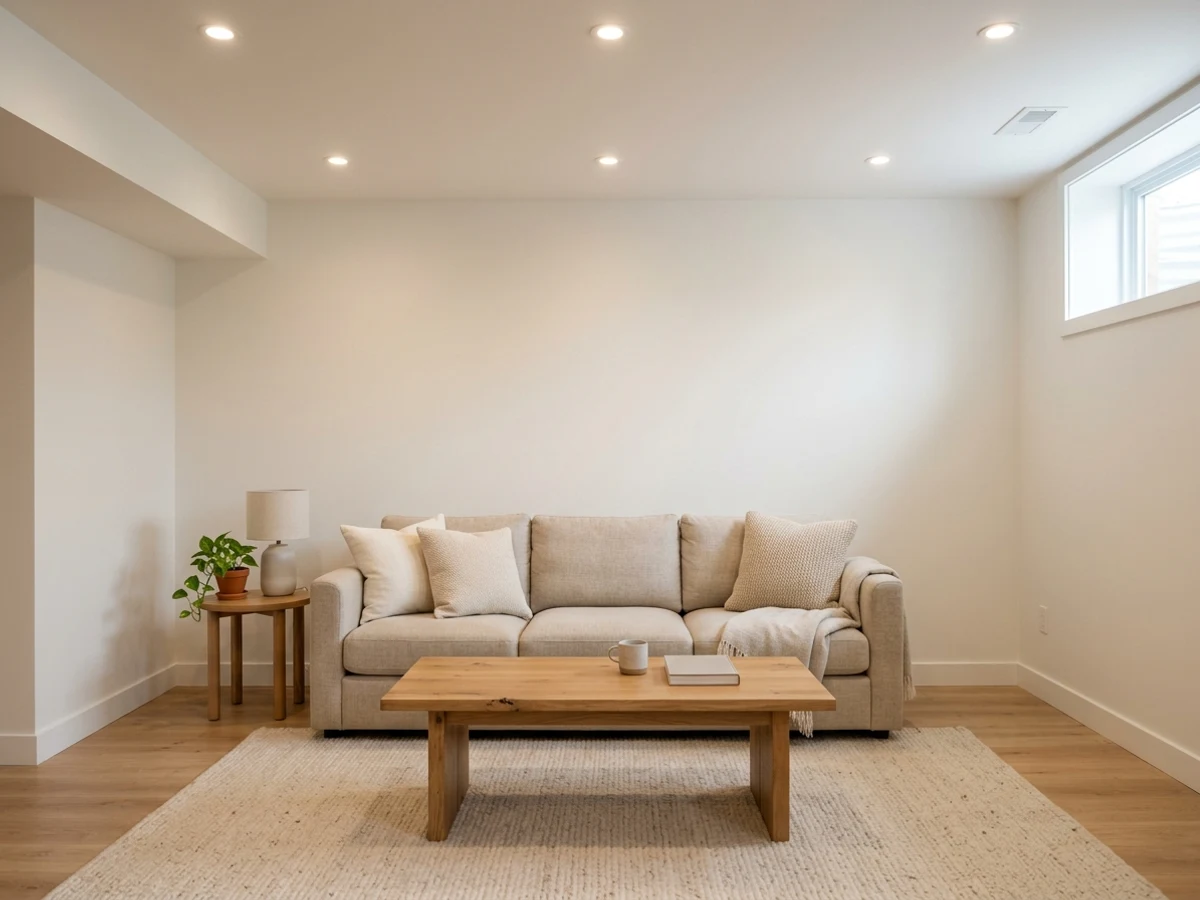
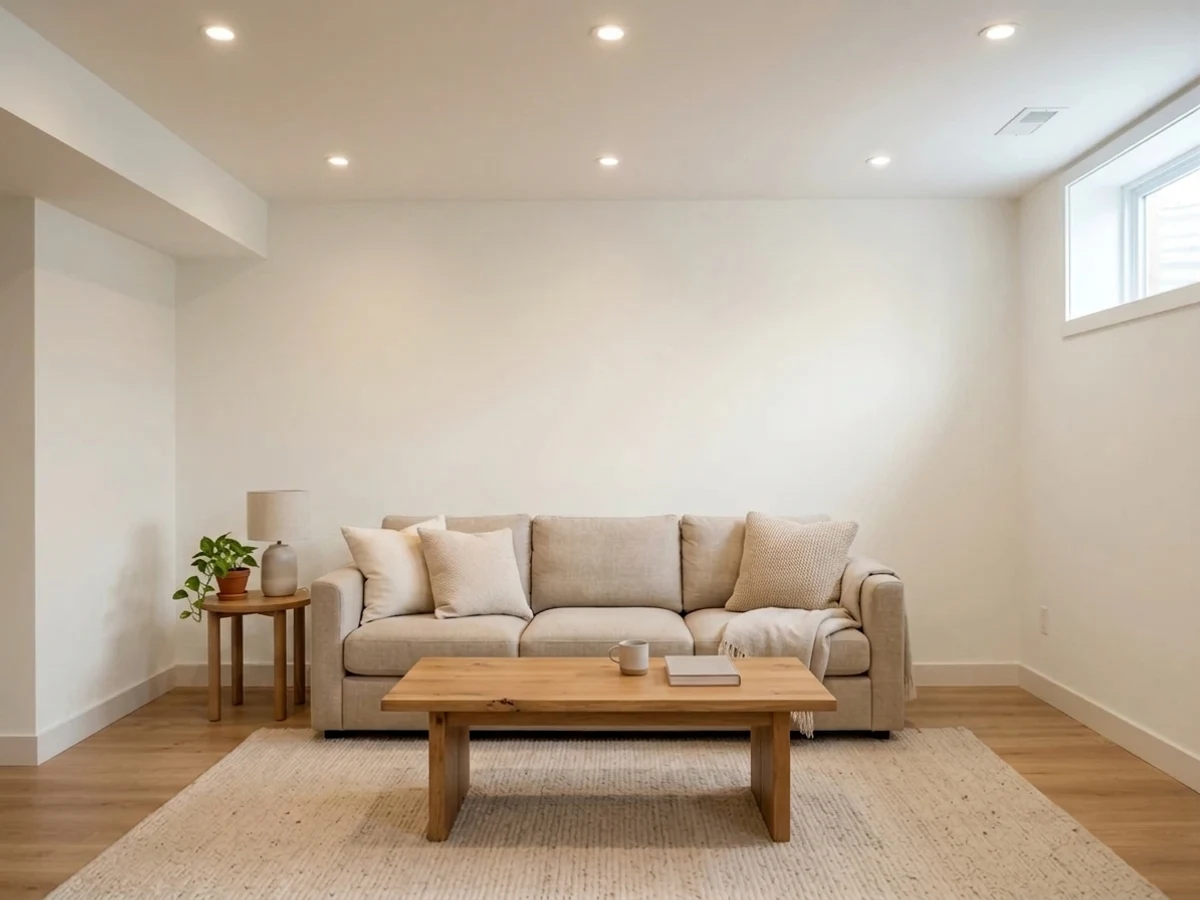
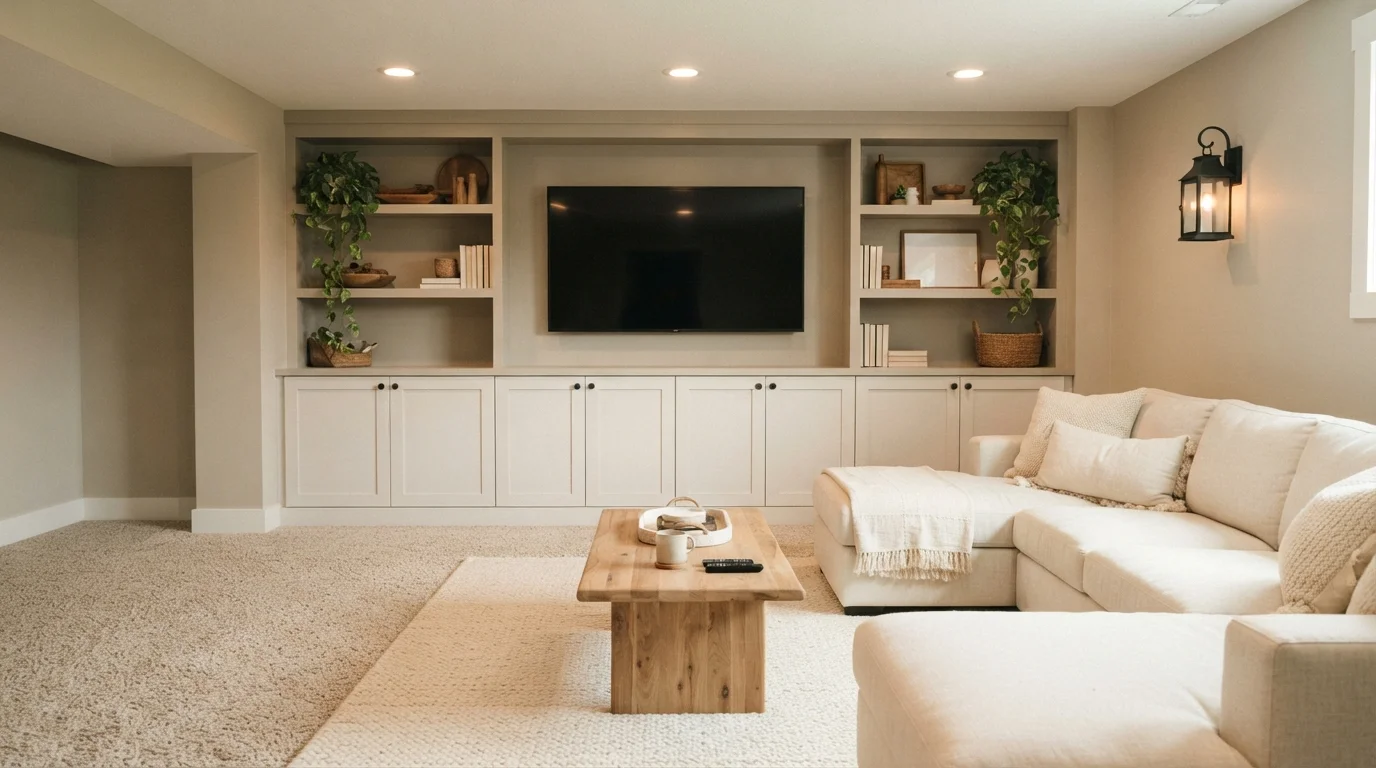
If your basement is a hangout, gym, or guest space, lean into light. Warm off-whites like Alabaster, White Dove, or Snow bounce what little light you have and make low ceilings feel taller. They read clean without going stark, which matters in a room that can feel cold.
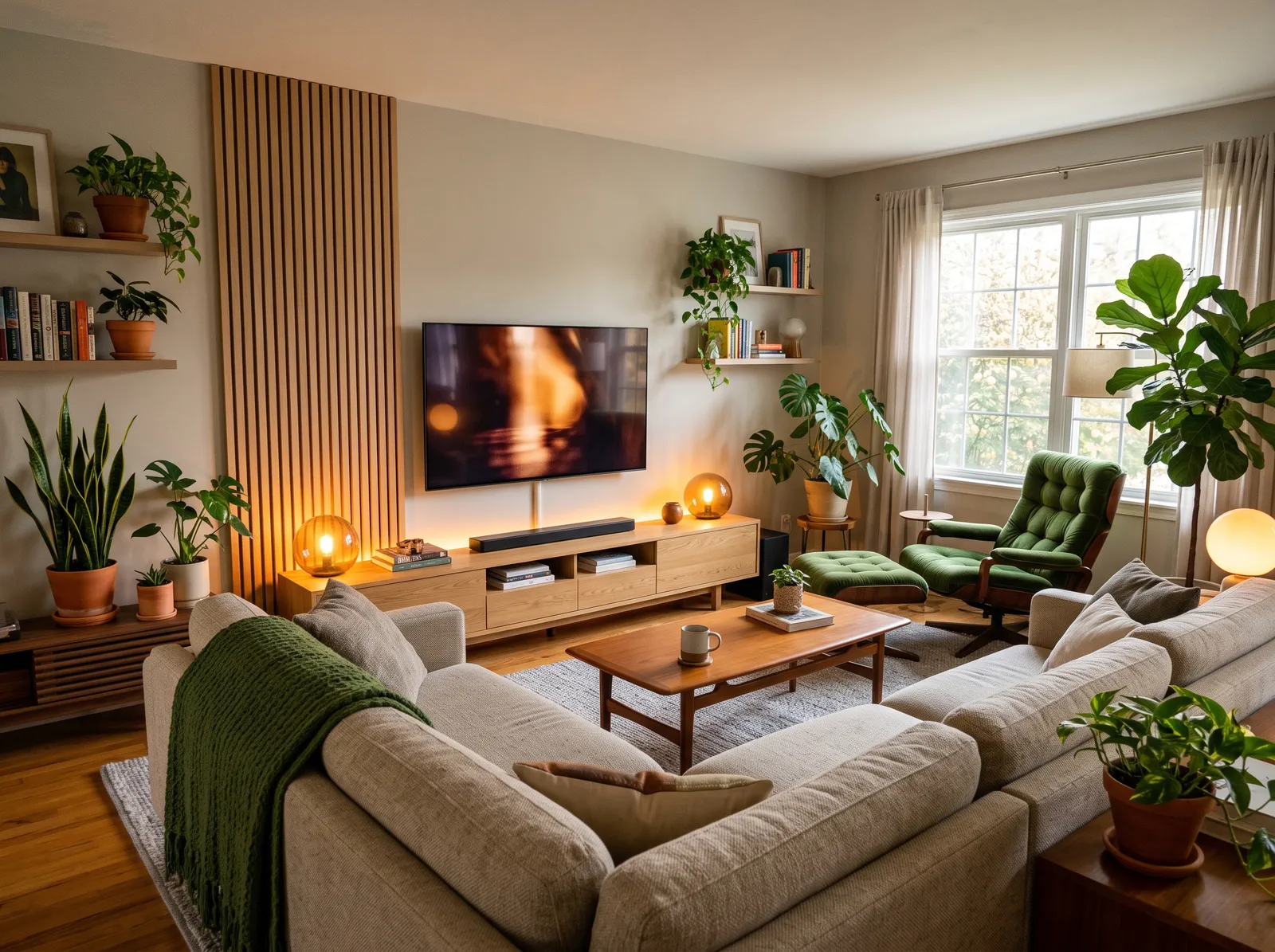
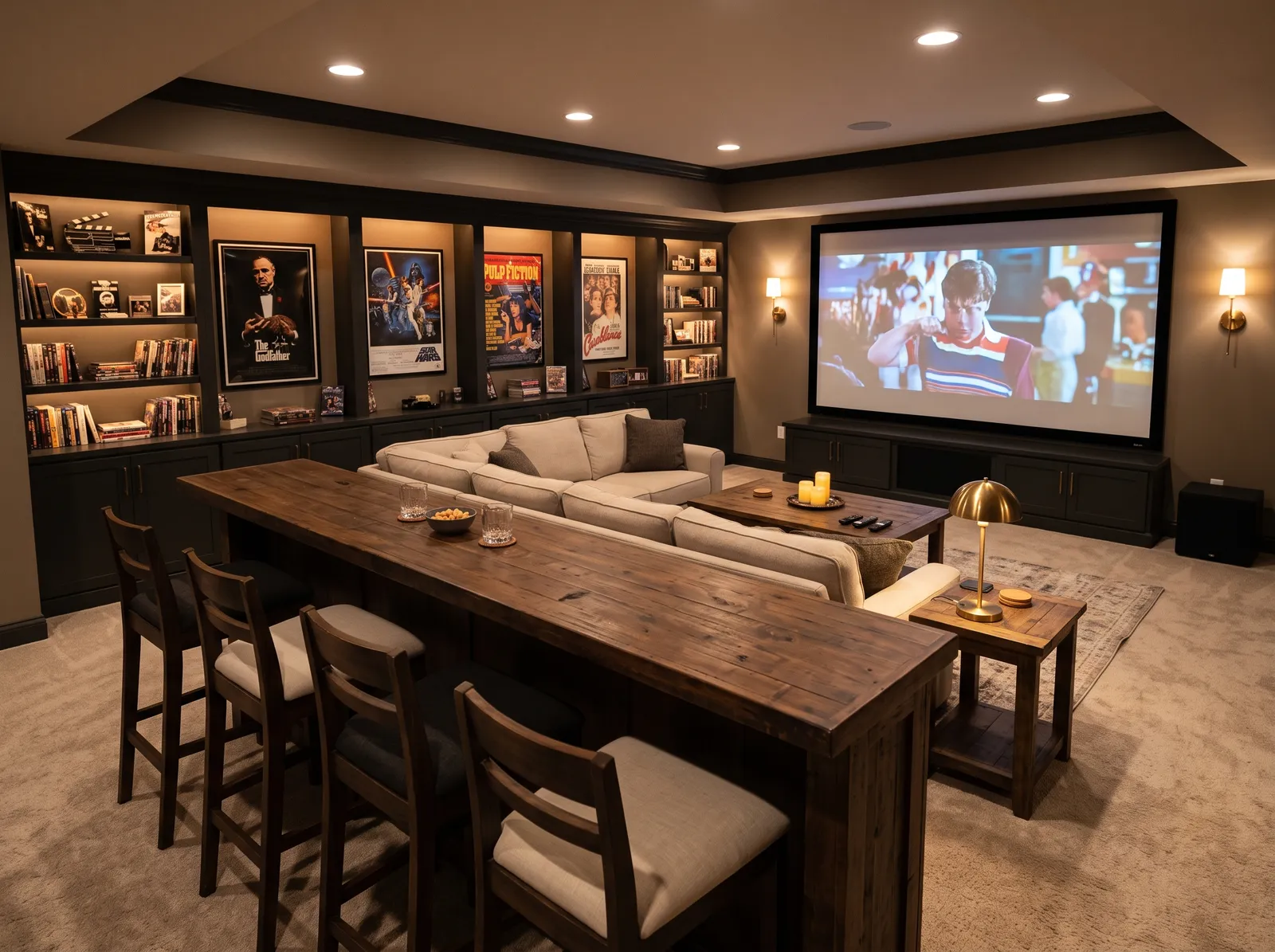
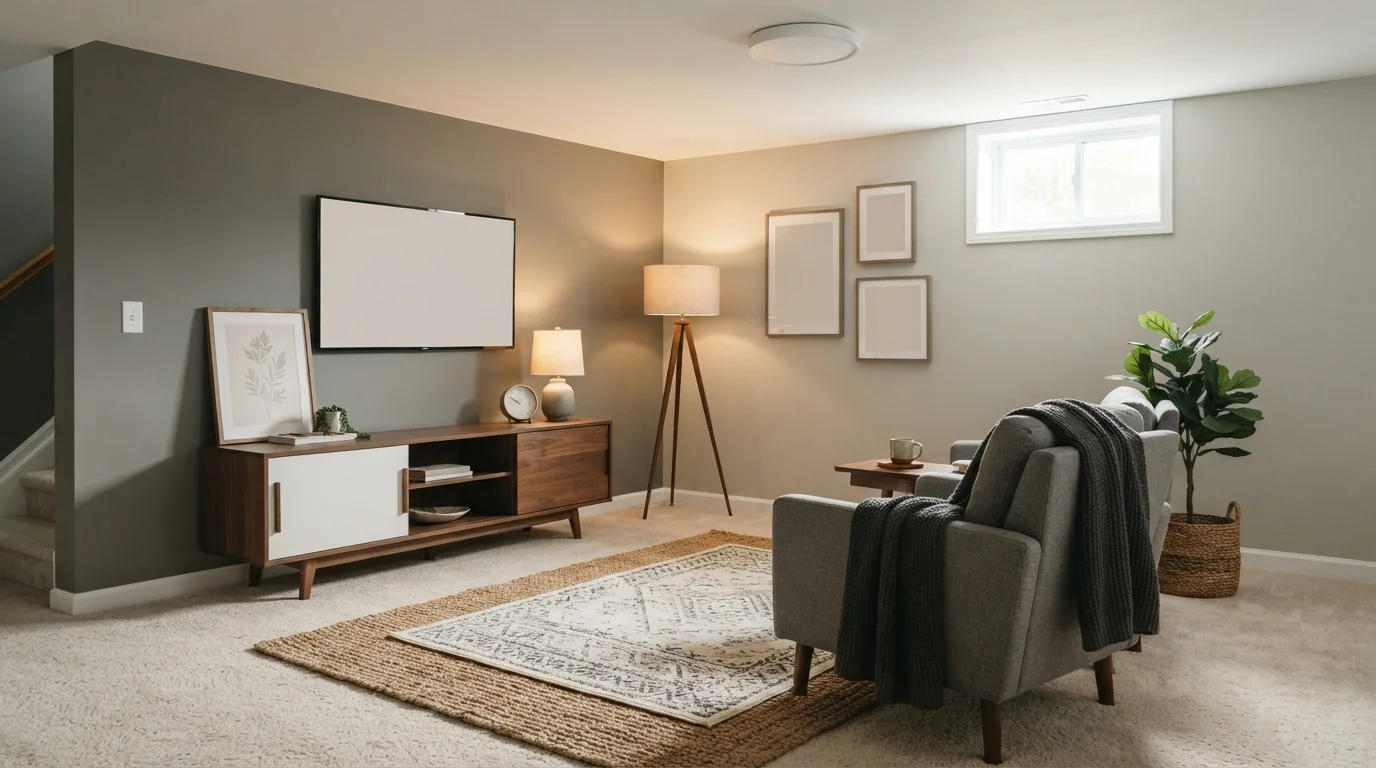
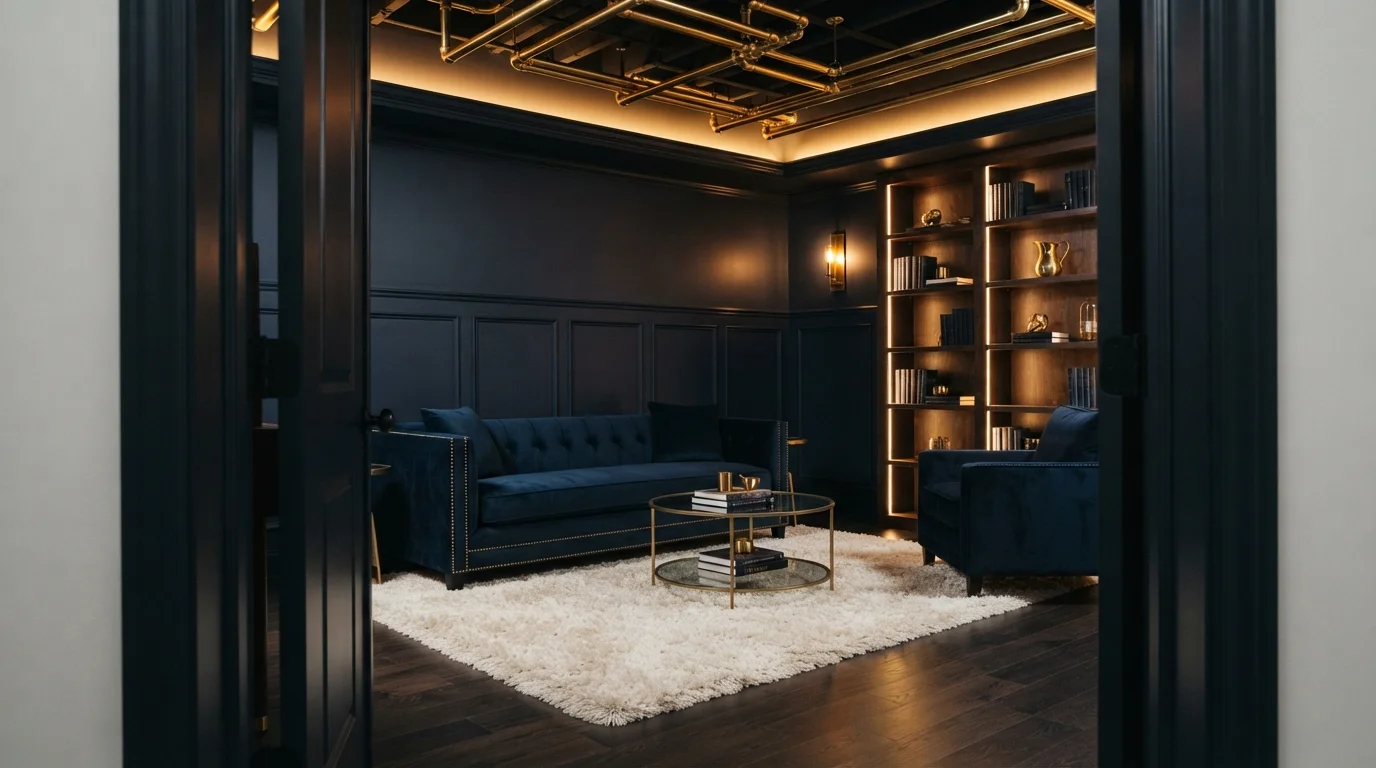
If you want cozy instead of bright, a soft warm gray like Repose Gray or a creamy neutral like Cashmere wraps the room without darkening it. For a media room or a moody den, a gentle blue like Ice Blue adds character and hides the slightly dim quality of basement light instead of fighting it.
How Basement Light Should Steer Your Choice
Basement light is mostly artificial, and that changes everything. Whatever bulbs you have will shift the color far more than they would upstairs, so test your sample under the exact lights you actually use at night, not by a window.
Warm white bulbs (around 2700K) make whites and neutrals look creamy and can push grays toward beige. Cooler bulbs (4000K and up) make the room feel crisper but can leave warm colors looking flat. A safe move in low light is to pick a color one step warmer and one step lighter than you think you want, because basements drink up both warmth and brightness.
The Right Finish for a Basement
Moisture is the deciding factor down here. Basements hold humidity even when they feel dry, so skip flat paint, which soaks up moisture and stains. An eggshell or satin finish on the walls is the sweet spot: it wipes clean, resists the occasional damp spot, and doesn't throw harsh glare under overhead lights.
For trim, doors, and any built-ins, step up to satin or semi-gloss so they take scuffs and cleaning without showing wear. If your basement has any history of dampness, start with a quality primer or a moisture-resistant primer before color, no matter how good the paint is.
Using LRV to Keep It Bright or Cozy
LRV (light reflectance value) tells you how much light a color bounces back, from 0 (black) to 100 (pure white). In a basement, this number matters more than almost anywhere else because you have so little light to work with.
For a bright, open feel, aim high: whites like Snow, Alabaster, and White Dove sit in the 80s and reflect light around the room. For a cozy, grounded space, a mid-range color like Repose Gray or Cashmere in the 50s to 60s still holds enough light to avoid feeling like a cave. Going below the 40s in a windowless basement usually reads as dark and closed-in, so save the deep tones for a single accent wall.
Pairing Trim, Ceiling, Floor, and Fixtures
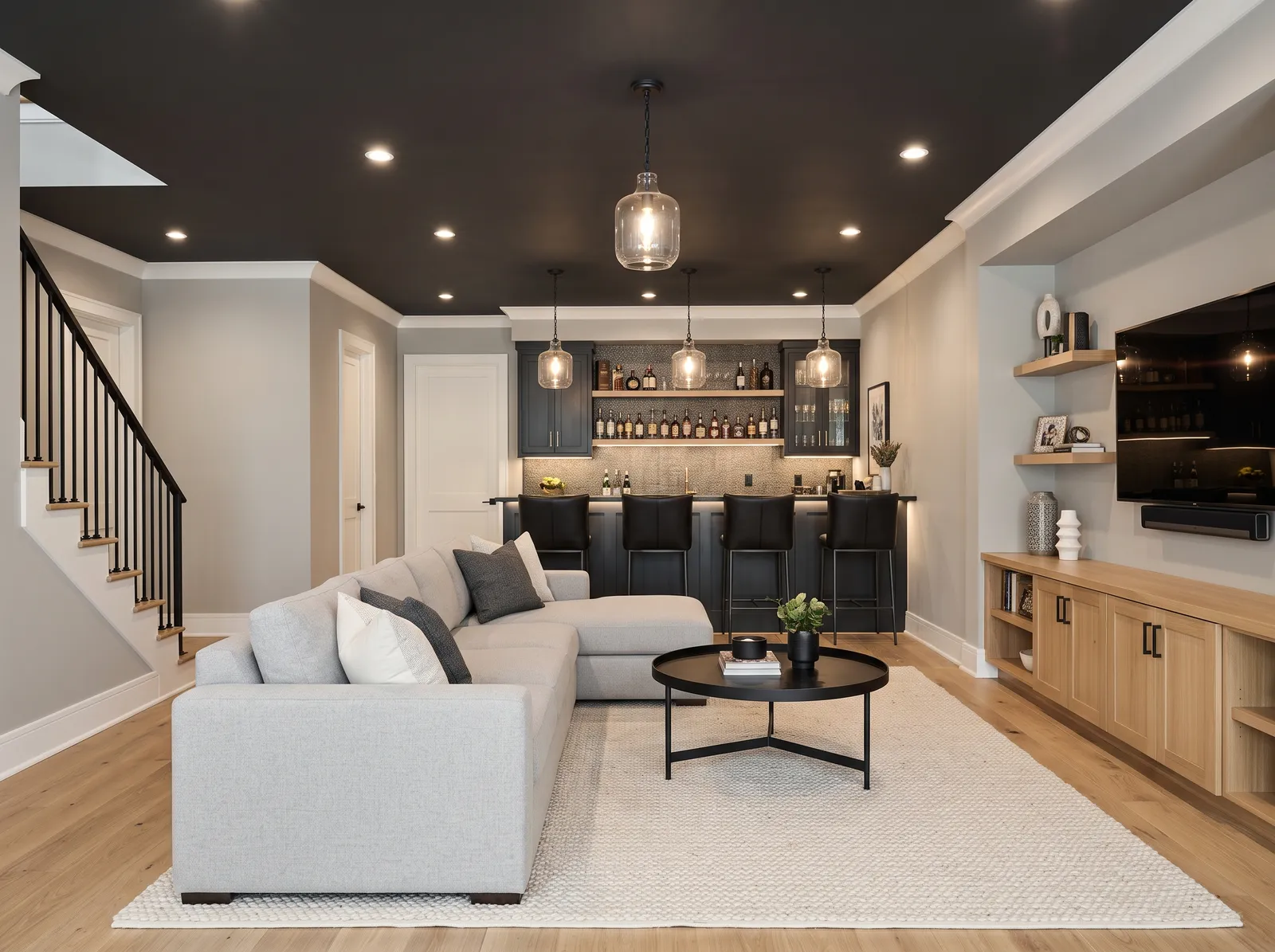
Basement ceilings are often the problem area: exposed pipes, ductwork, or a low drop ceiling. Painting the ceiling the same color as the walls, or one shade lighter, blurs those lines and makes the whole room feel taller and calmer. A crisp white ceiling over colored walls also works and feels clean.
For trim, a soft white like White Dove or Snow pairs with nearly everything and frames the room. Most basement floors are concrete, vinyl plank, or low-pile carpet in grays and tans, so cool grays like Repose Gray and Ice Blue sit naturally over them. If you have warm wood-look flooring, a creamy neutral like Cashmere ties it together better than a cool gray would.
Common Basement Paint Mistakes
The biggest mistake is choosing color in the store or online instead of on the actual wall. Basement light is so different that the swatch you loved upstairs can look completely wrong below. Always brush a real sample on two walls and check it morning and night under your own lights.
The other common misses: painting everything bright white and ending up with a cold, clinical room; using flat paint that traps moisture and won't wipe clean; and going too dark in a windowless space, which turns cozy into gloomy. When in doubt, pick a warm, light color and let it carry the room.
Basement Paint Colors — Frequently Asked Questions
What is the best paint color for a basement with no windows?+
Go for a warm, light color that reflects what artificial light you have. Off-whites like Alabaster, White Dove, or Snow keep a windowless basement from feeling like a cave, while a creamy neutral like Cashmere adds warmth without darkening the room. Avoid deep or cool colors on every wall when there are no windows to balance them.
Should a basement be painted light or dark?+
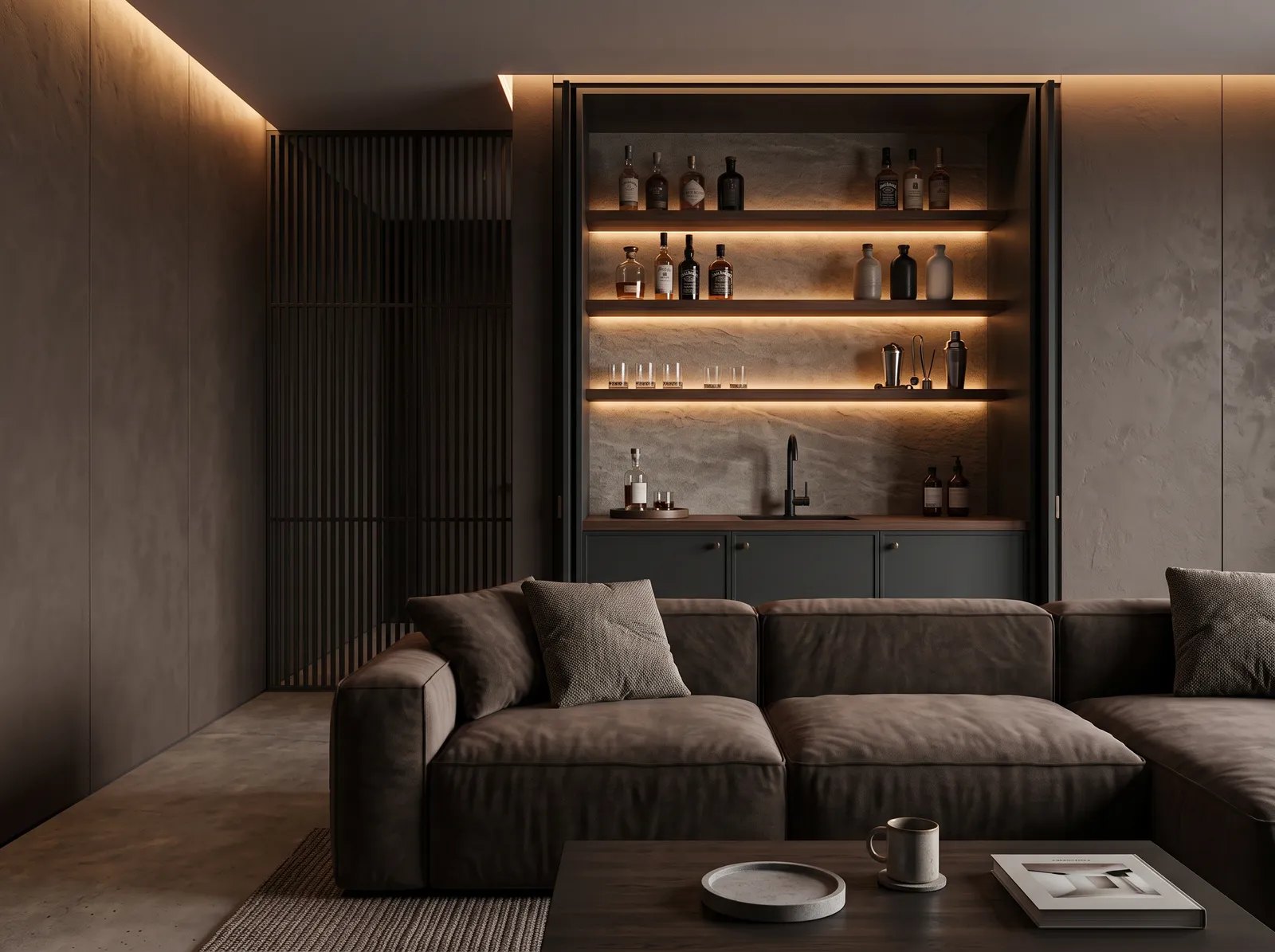
For most basements, light wins because the room already lacks natural light. Light colors with a high LRV bounce your bulbs around and open the space up. Dark colors can look great in a basement that has good lighting or a specific moody purpose, like a media room, but in a typical low-light basement they read as closed-in.
What sheen should I use on basement walls?+
Use eggshell or satin. Basements hold humidity, and flat paint absorbs moisture, stains easily, and is hard to clean. Eggshell and satin wipe down without showing much glare under overhead lights, which makes them the practical choice for walls. Save semi-gloss for trim, doors, and built-ins.
Why does my basement paint look gray or dull?+
It is almost always the light. Basements get little daylight, and cool or flat colors can go gray or muddy under dim artificial bulbs. Pick a color slightly warmer and lighter than you think you need, and test it under your actual lights at night. Switching to warmer bulbs can also bring a flat color back to life.
Can I use a blue color in a basement?+
Yes, a soft blue like Ice Blue works well in a basement and can make a low-light room feel intentional and calm rather than just dim. The key is to choose a gentle, slightly grayed blue rather than a bright or icy one, and to pair it with warm white trim so the room doesn't feel cold.
Do I need to prime basement walls before painting?+
In most basements, yes. Concrete, block, and previously damp walls all benefit from a quality primer, and a moisture-resistant primer is smart if you have any history of dampness. Priming gives you a clean, even base so the color looks true and the finish holds up against basement humidity.
Are these basement colors tied to one paint brand?+
No. Every color shown, from White Dove to Repose Gray to Ice Blue, is mixed to order at the paint counter. If your store carries a different brand than the one a color is known for, the shade can be cross-matched and tinted in the line you prefer. Choose the color you love first, then pick where to buy it.