Blue Bedroom Paint Colors
1,741 blue colors that work in bedrooms, drawn from the full ~30,000-color US paint deck. Below: editor's picks specific to bedrooms, then 30 picks spread across the LRV range — narrow further on the brand page when you've shortlisted.
Blue is the most popular color for accent walls, kitchen islands, and front doors — and also the family with the widest spread, from pale dove-blues that read almost grey, to inky near-black navies, to saturated cobalts that read almost royal. Teal-leaning blues (the green-blue overlap) live next door in the Teal family.
Editor's Picks: Blue for Bedrooms
4 picks30 Blue Picks Across the LRV Range
30 of 1,741 · sorted dark → lightLooking for more? All blue → covers every brand; brand × family pages show full decks.
Blue Bedroom Colors at Every US Brand
21 brands · up to 10 picks eachUp to 10 picks per brand spread across the blue LRV range, drawn from each brand's full deck. Tap any swatch with a curated guide for full spec; tap the brand title for the brand's complete blue deck.
Behr
Valspar
Glidden
Benjamin Moore
PPG / Glidden
Dunn-Edwards
Sherwin-Williams
Dutch Boy
Hirshfield's
Diamond Vogel
Kompozit
C2 Paint
Portola Paints
Magnolia Home
Rodda
Farrow & Ball
Backdrop
Annie Sloan
Clare
Rust-Oleum
Other Bedroom Color Families
Blue Colors in Other Rooms
Blue Paint Colors for a Bedroom
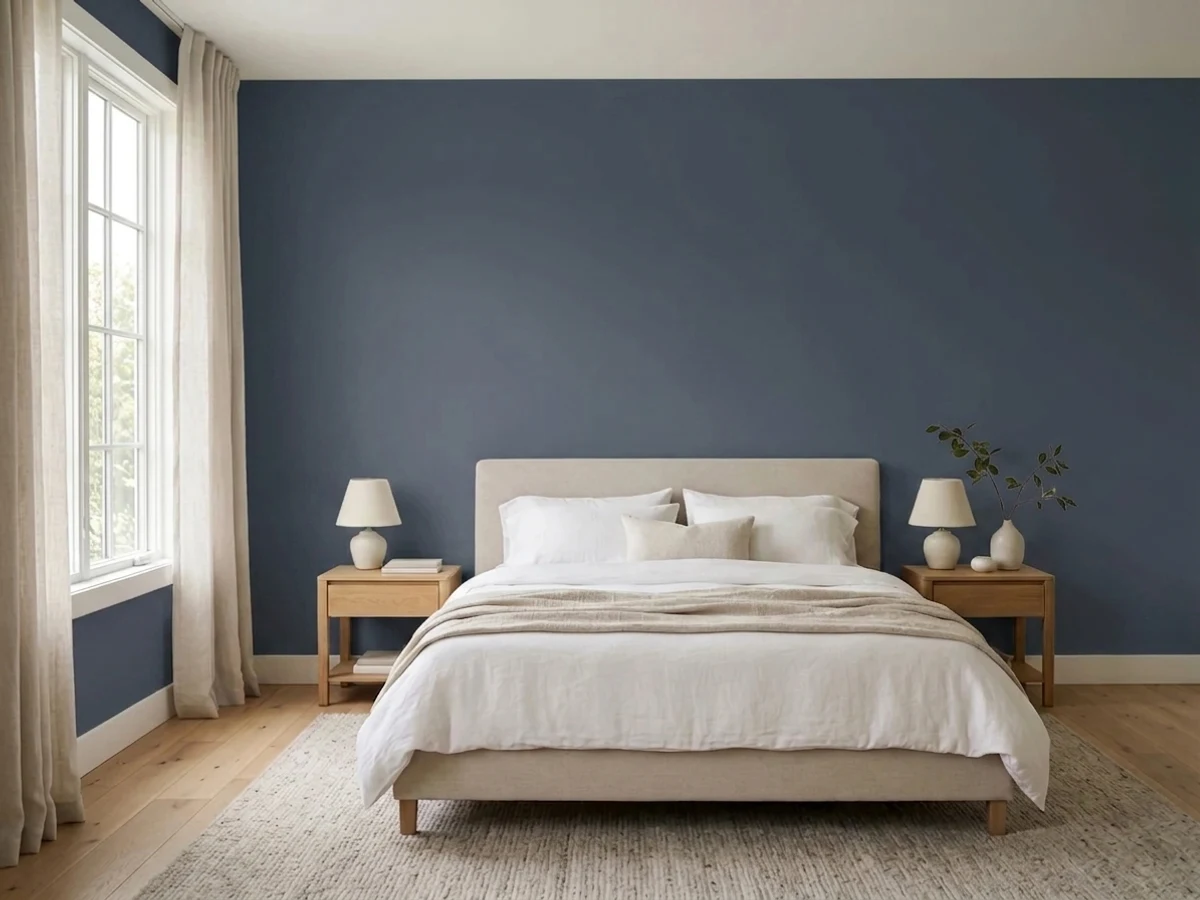
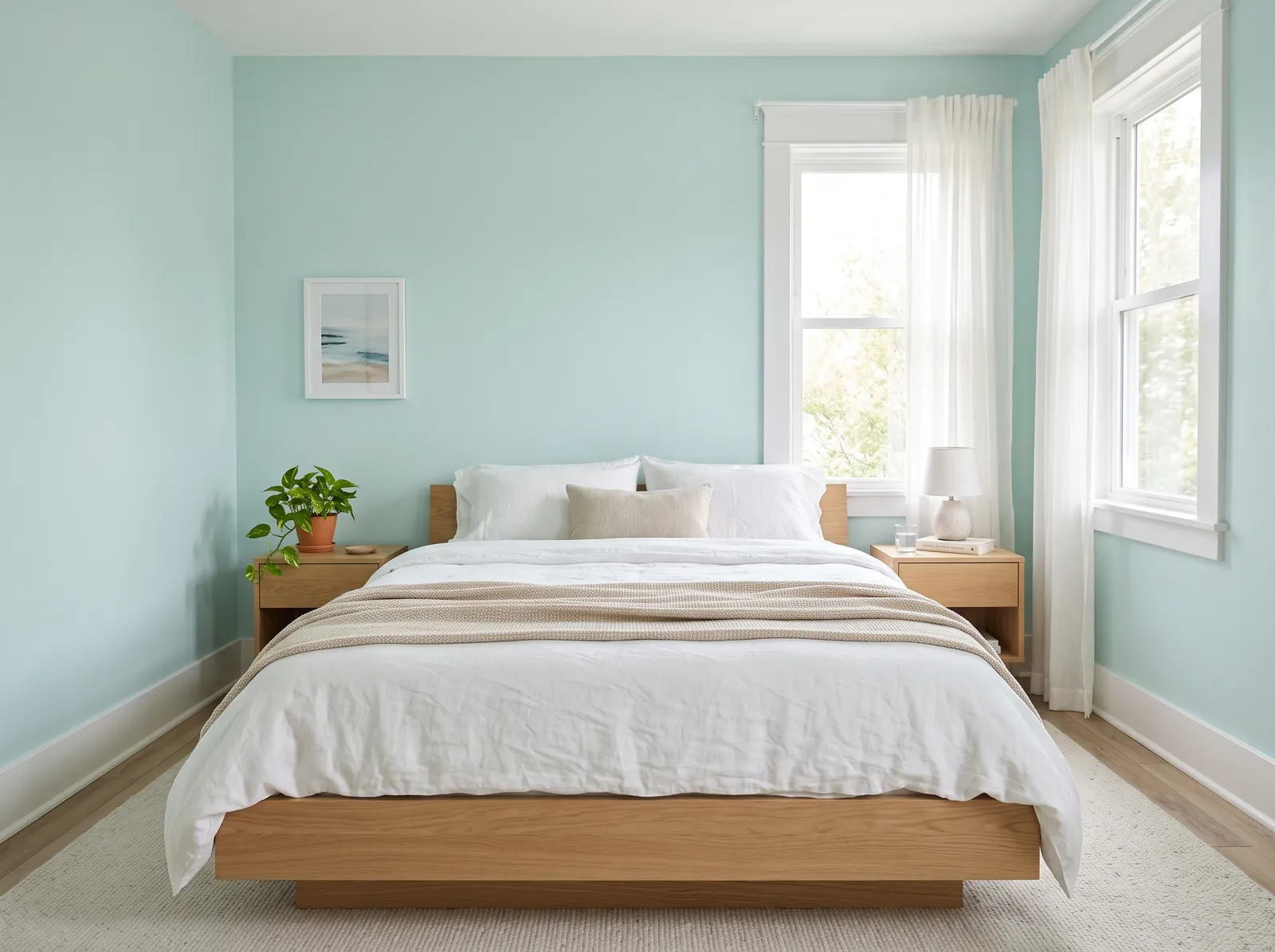
Blue is the rare color that almost everyone finds easy to sleep in, which is exactly why it shows up in more bedrooms than any other shade. It reads calm and a little cool, it never feels loud, and it works whether you want a barely-there wash on the walls or a deep, cocooning navy. The trick in a bedroom isn't picking "a blue" — it's picking the right depth and undertone for the light your room actually gets, so it stays restful instead of turning cold or gloomy after dark.
Every color you see on this page is mixed to order at the paint counter, so you're never locked into one brand. If you fall for a shade but already buy a different label, it can be cross-matched and tinted into the line you trust. That frees you up to choose a blue by how it behaves in your bedroom, not by whose can it lives in.
Why Blue Just Works In A Bedroom
A bedroom has one main job, and blue supports it better than almost any other color. It lowers the visual temperature of a room and tends to make people feel settled, which is why soft and mid blues are such a safe bet over a bed. You don't get the buzz that a warm red or bright yellow can bring, so the room feels like a place to wind down.
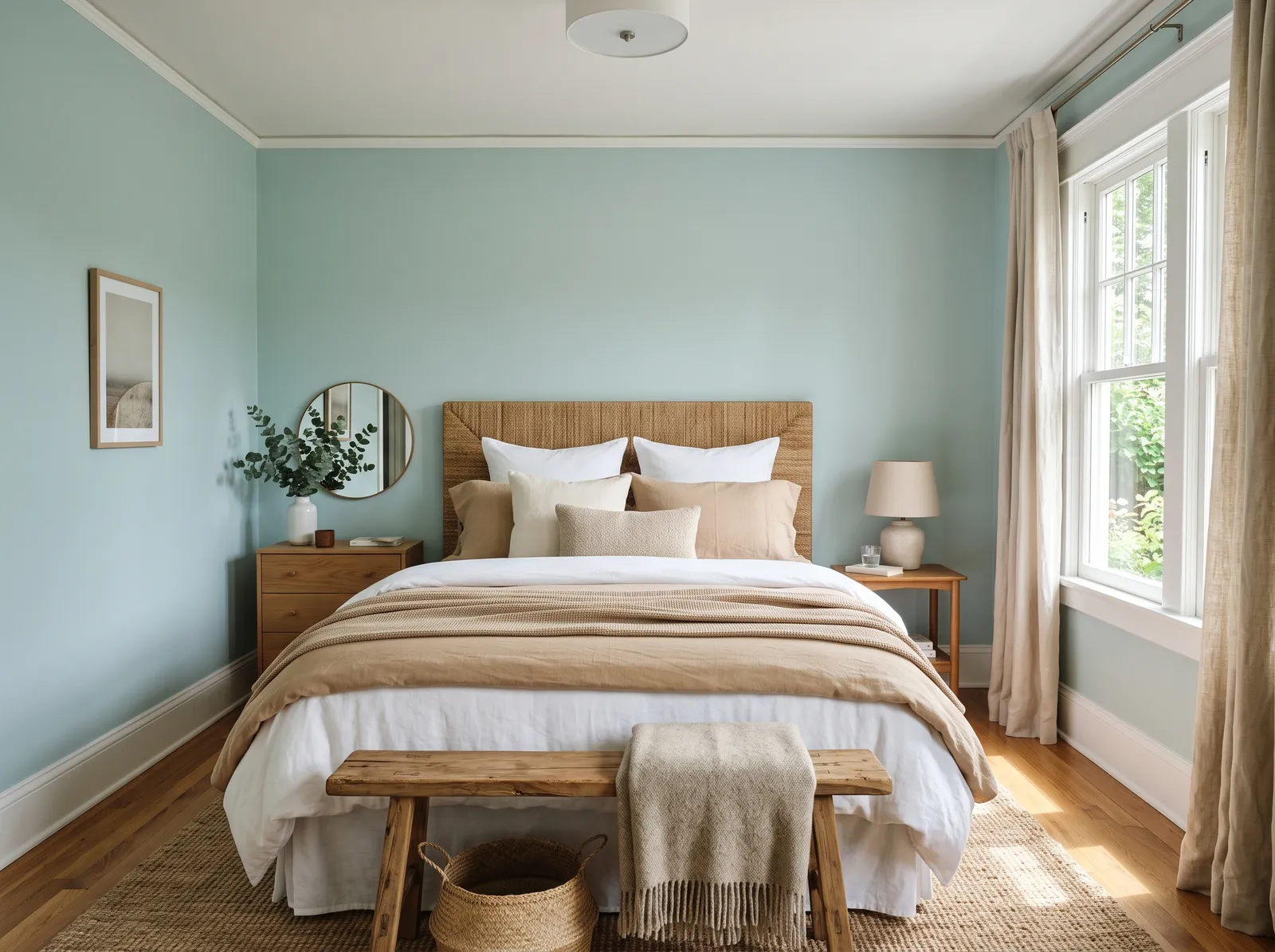
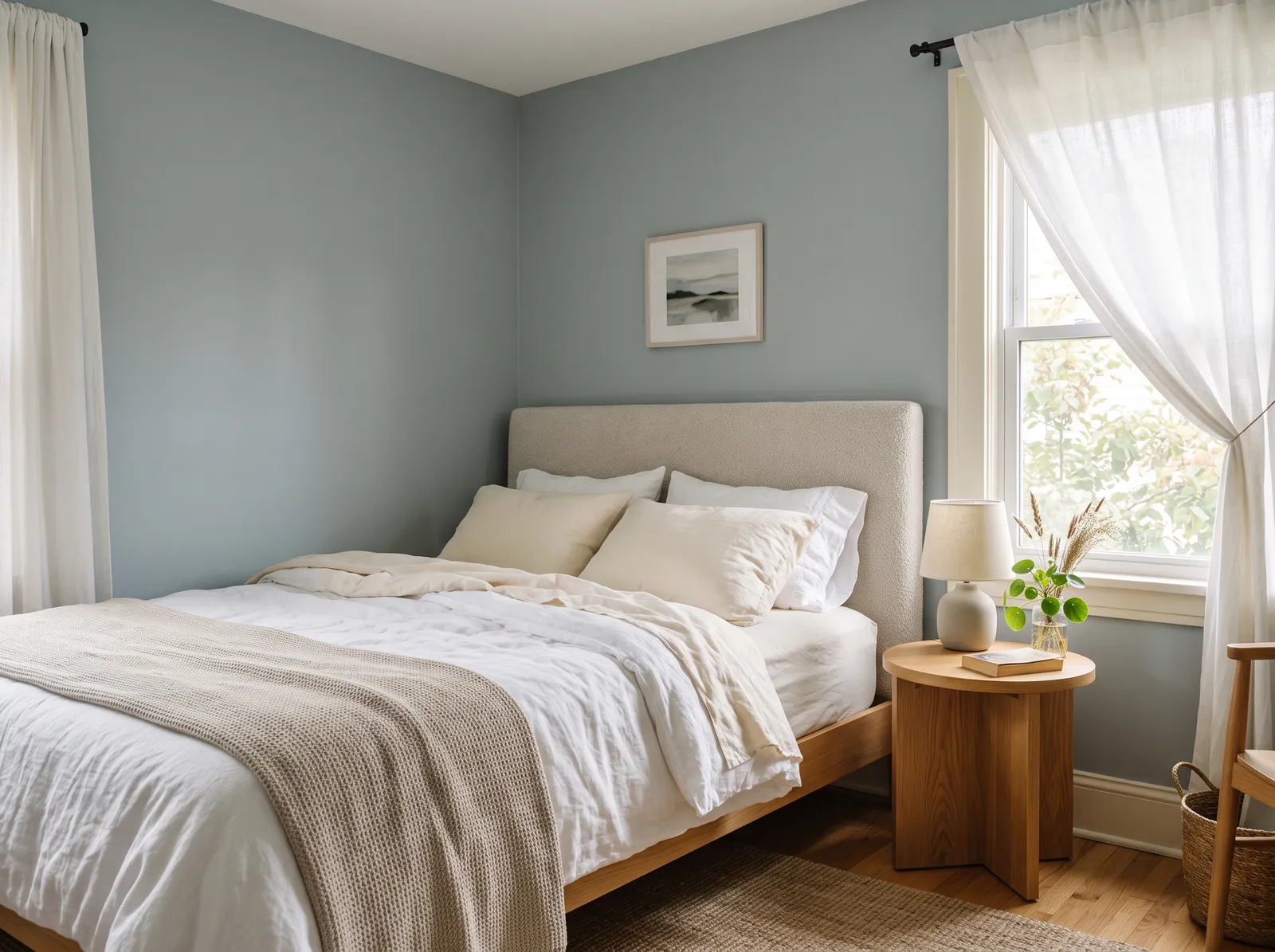
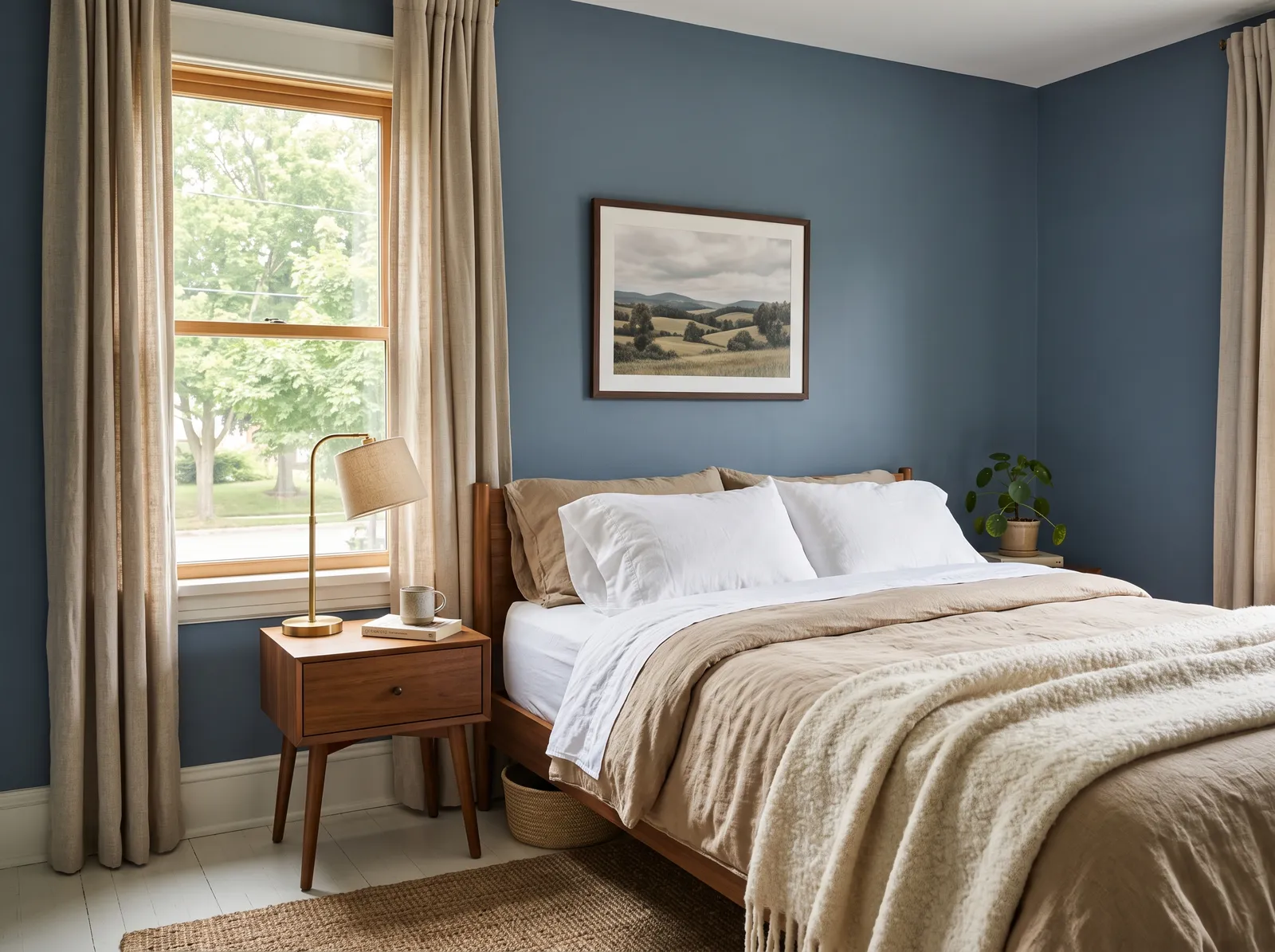
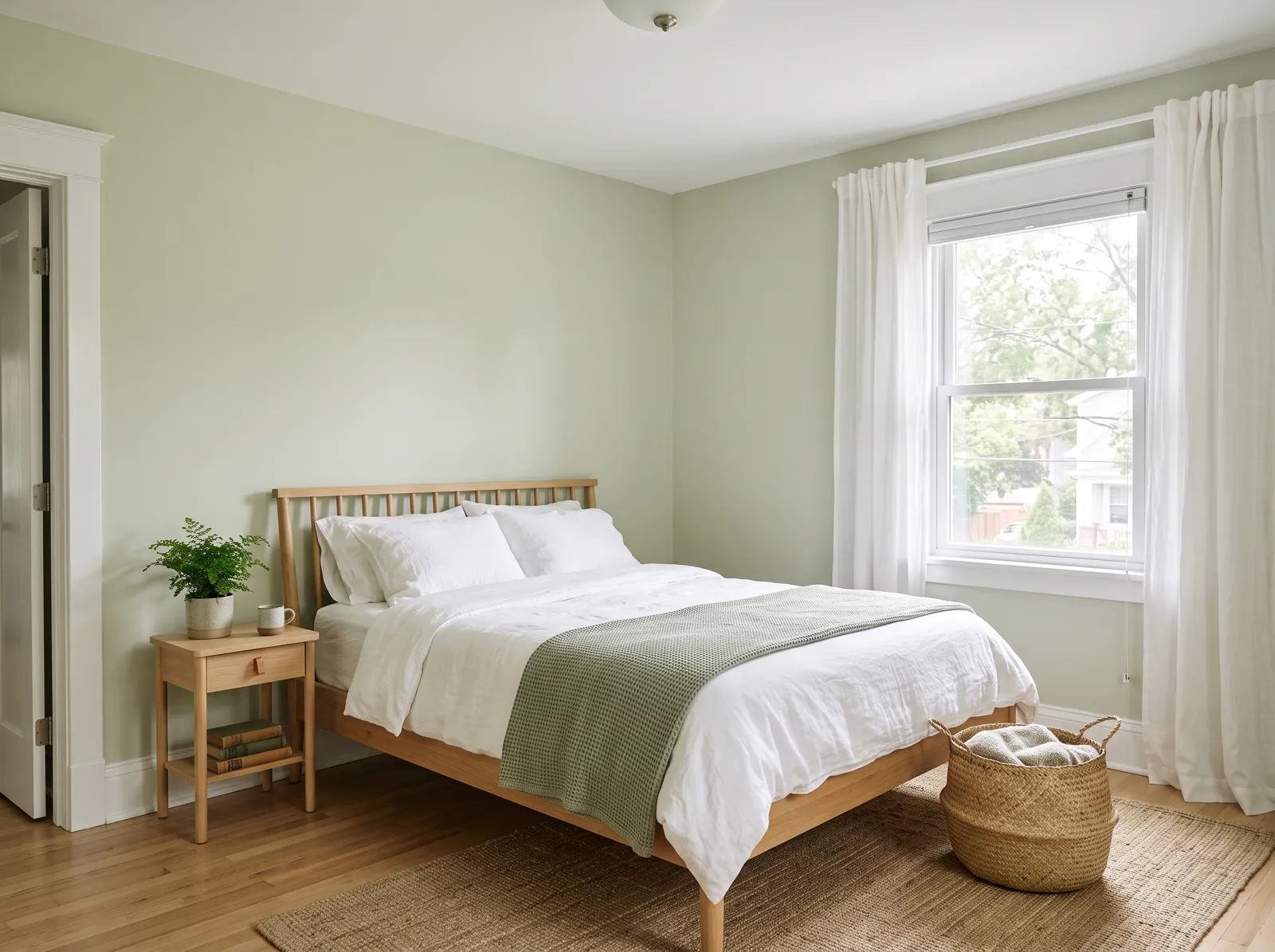
The one thing to watch is that blue is a cool color by nature. In a bedroom that already feels chilly or sees little sun, a very cool, gray-blue can tip into stark or sad. The fix is undertone, not avoiding blue altogether — lean toward blues with a touch of green or a soft gray warmth so the room still feels like a retreat.
Choosing The Right Depth Of Blue For Your Light
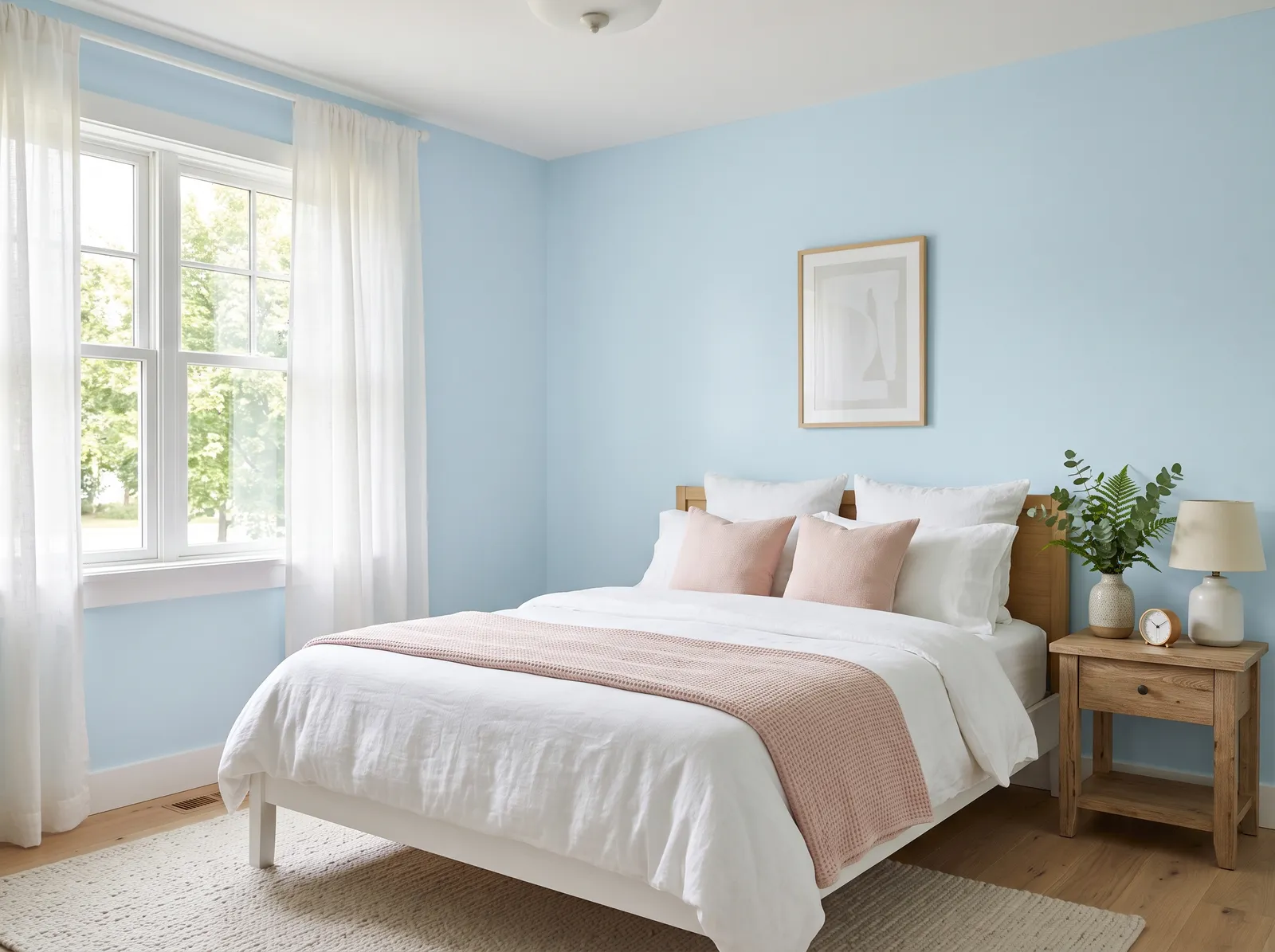
Bedrooms range from bright street-facing rooms to dim back corners, and the room's light should decide how light or dark your blue goes. LRV (light reflectance value, a 0–100 scale of how much light a color bounces back) is the quick way to judge this. A pale, airy blue might sit around an LRV of 60–75 and keep a small or north-facing bedroom from feeling like a cave, while a deep navy down near 5–15 will read almost black at night and needs good lamp light to come alive.
If your bedroom faces north or gets mostly indirect light, the cool light will pull any blue cooler — so pick a blue with a warmer or greener lean and don't go too dark. A south- or west-facing bedroom can carry a moodier, deeper blue beautifully, because warm afternoon light keeps the color from feeling cold. Always test a sample on the wall and look at it at bedtime under your actual lamps, since that's when you'll see the room most.
The Right Finish For Bedroom Walls
Bedrooms are low-traffic and low-moisture, so you don't need a tough, shiny finish here the way you would in a kitchen or bath. A matte or eggshell sheen is the sweet spot: it hides small wall flaws, soaks up glare from your bedside lamp, and gives blue that soft, velvety look that feels calm. Flat or matte in particular keeps a deep blue from looking plasticky.
Save the higher-sheen finishes for the parts that take wear. Trim, baseboards, and doors do well in satin or semi-gloss because they wipe clean and frame the wall color crisply. If you have a humid climate or a bedroom that backs onto a bathroom, a washable matte or eggshell gives you a little extra cleanability without the shine.
Pairing Blue With Trim, Ceiling, And Furnishings
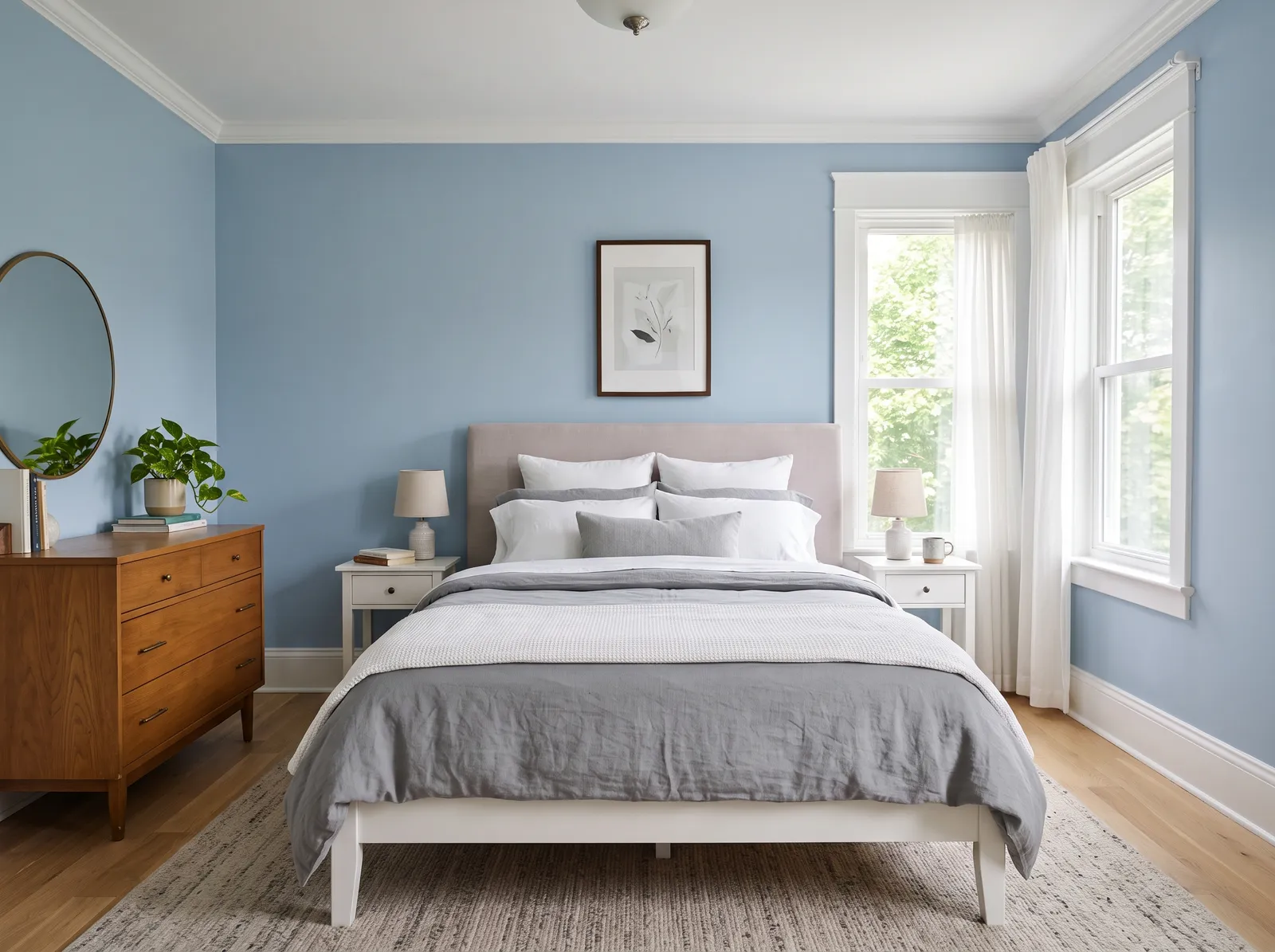
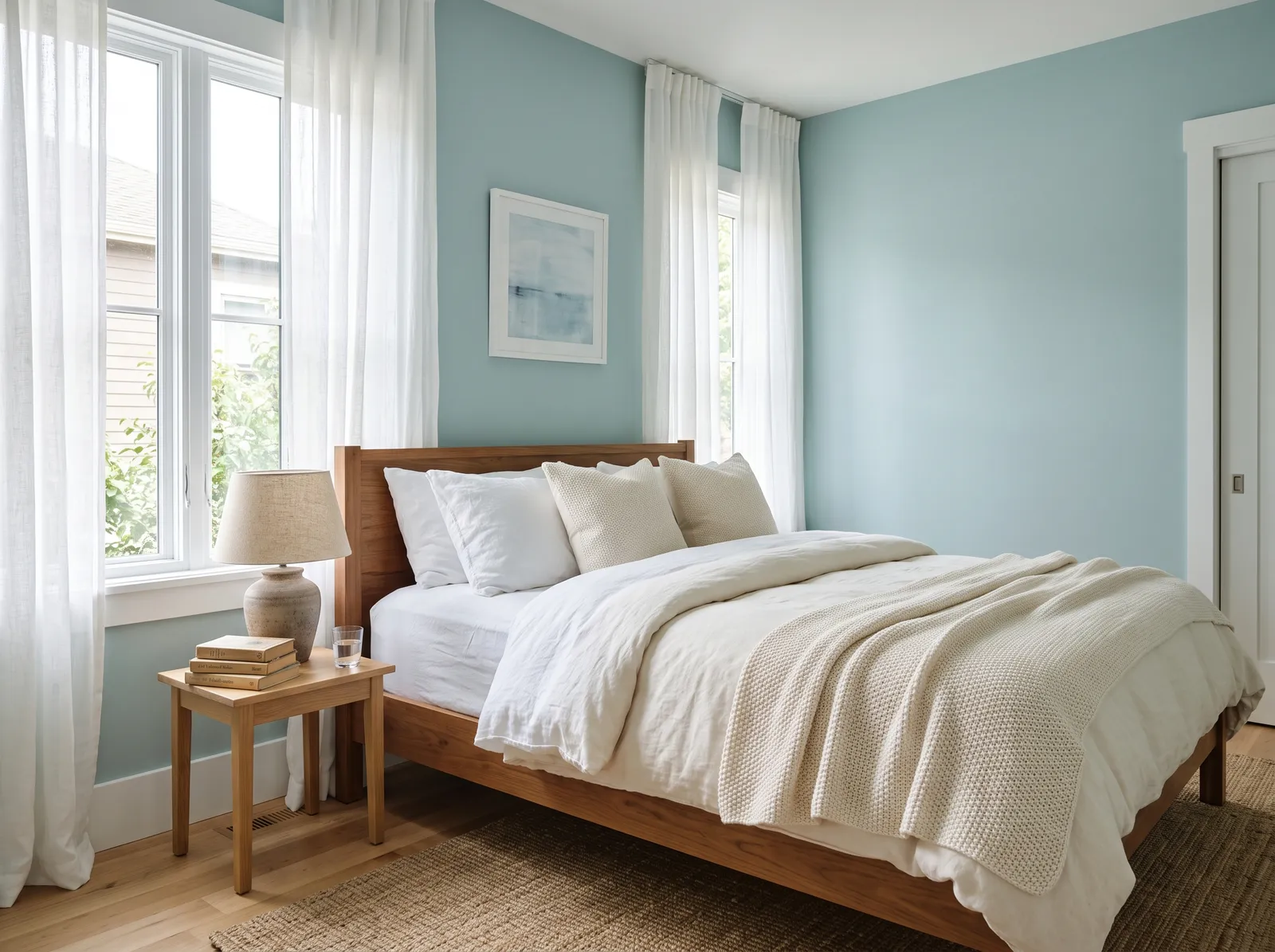
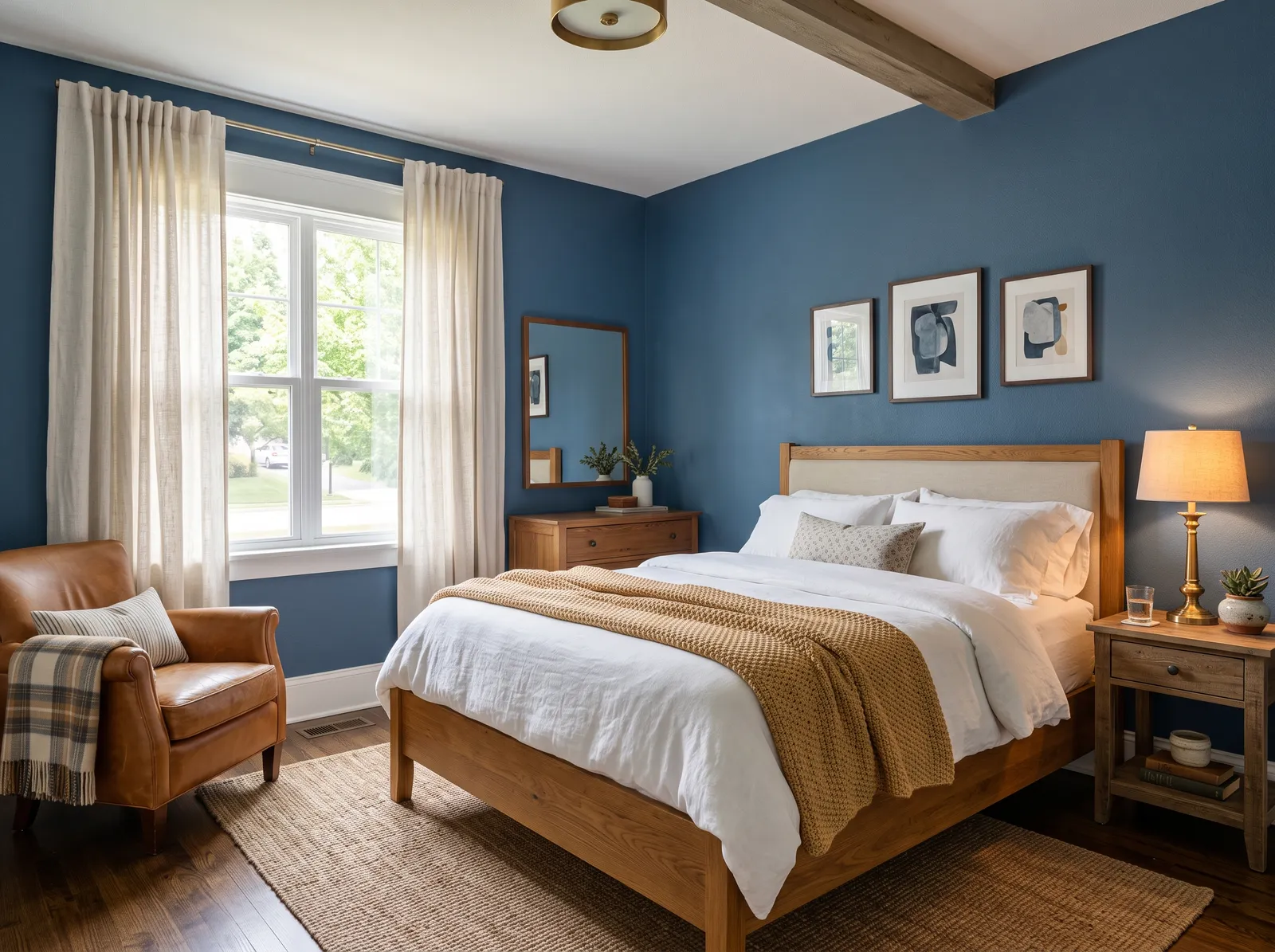
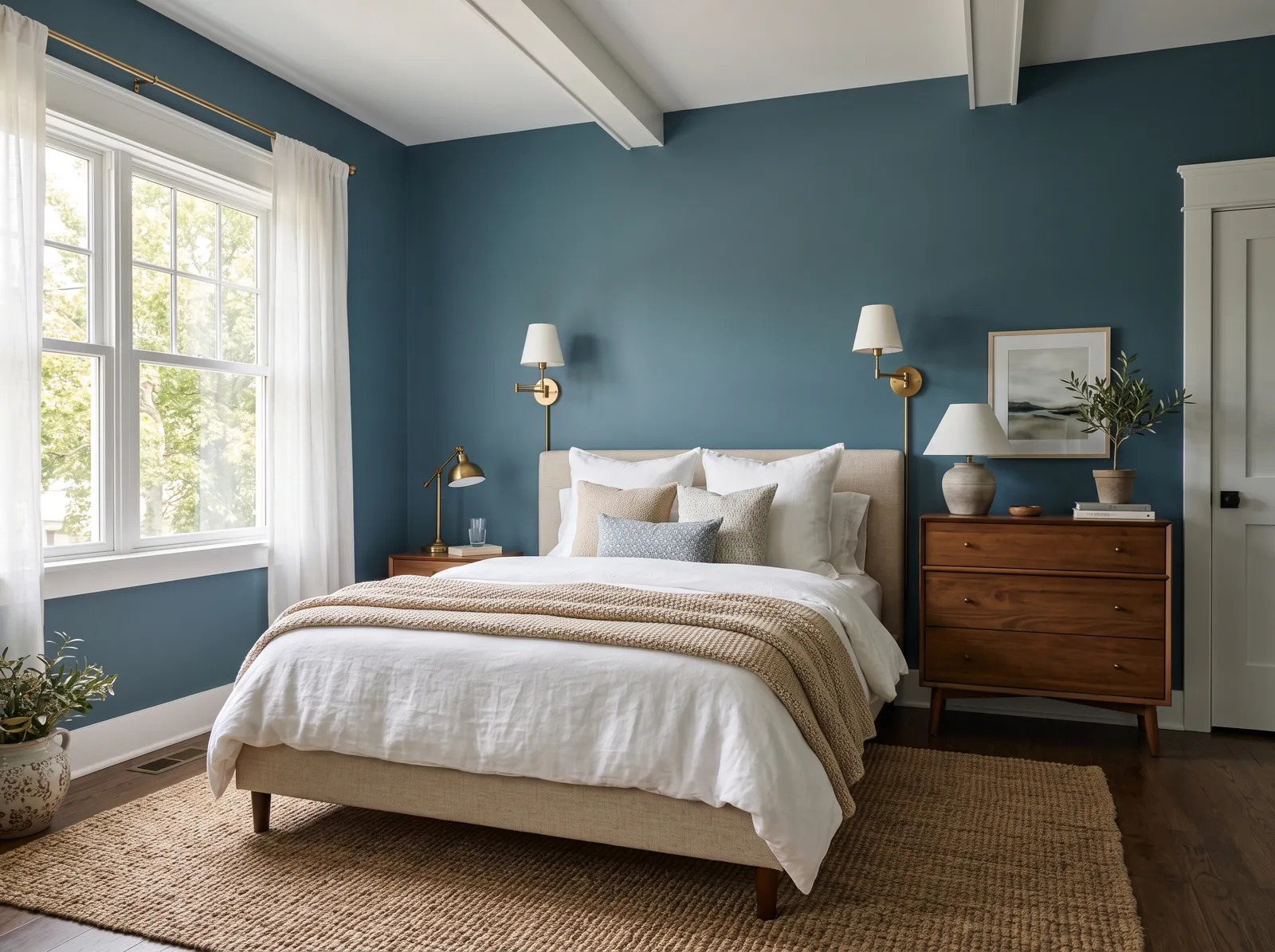
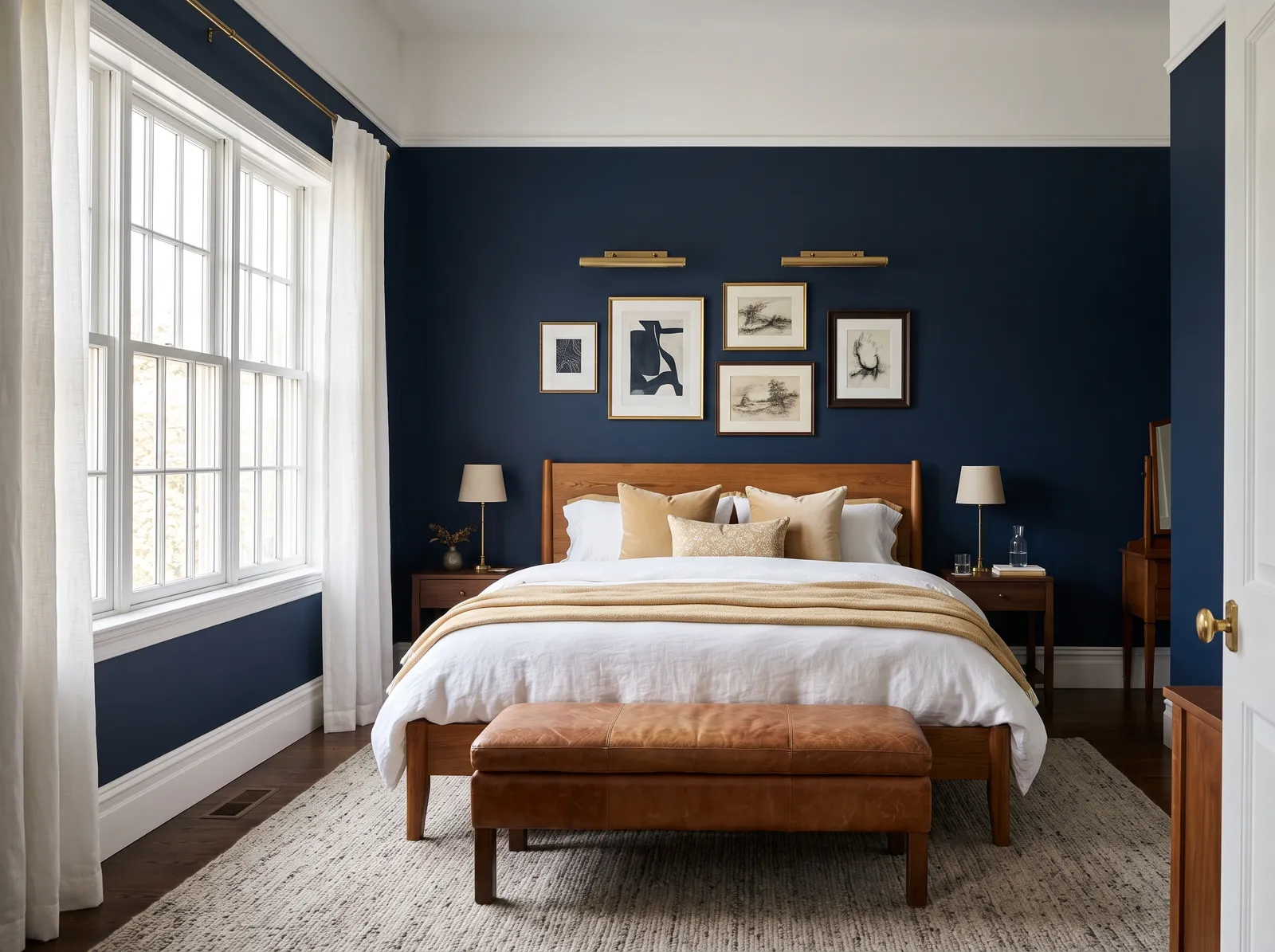
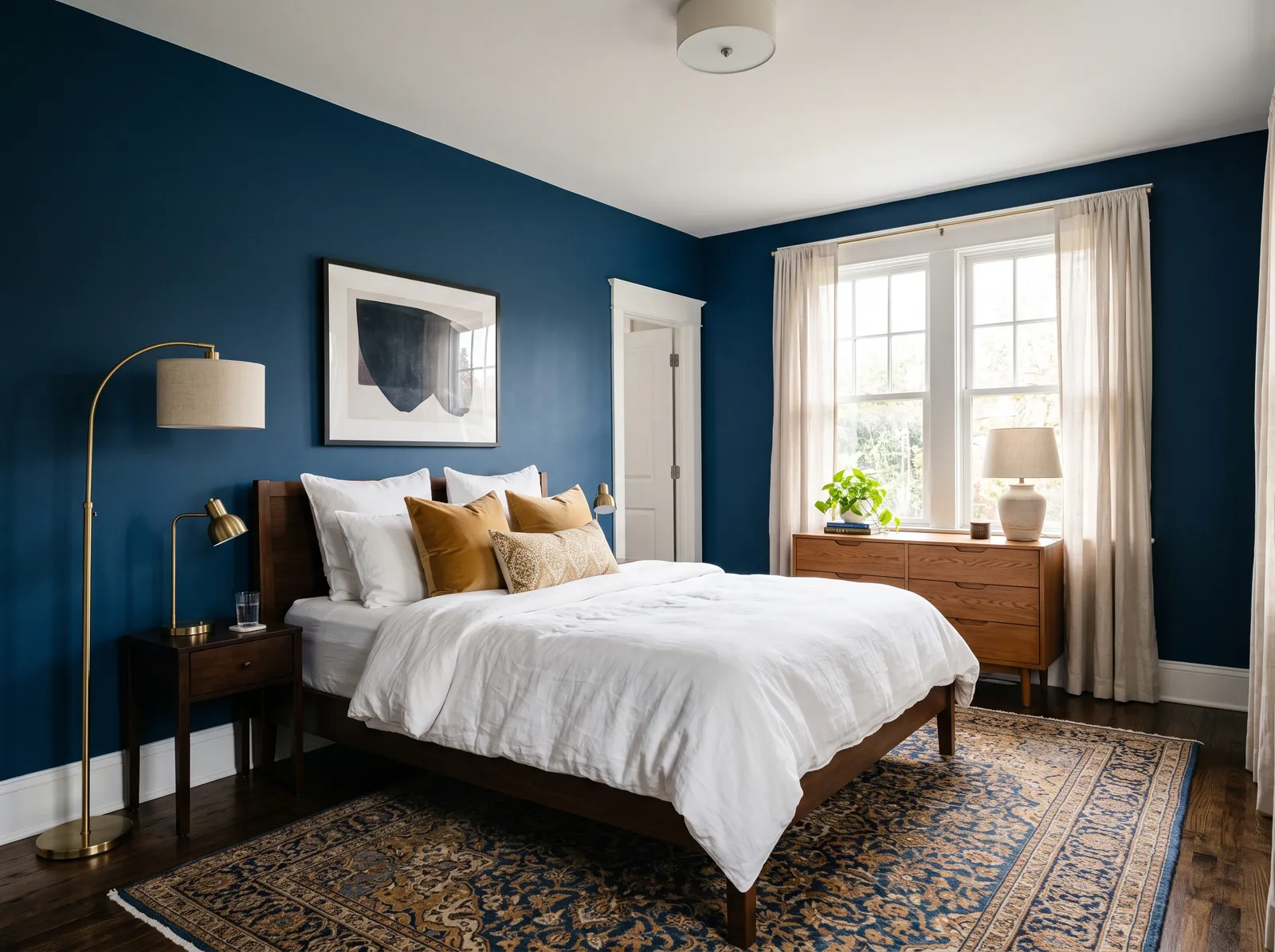
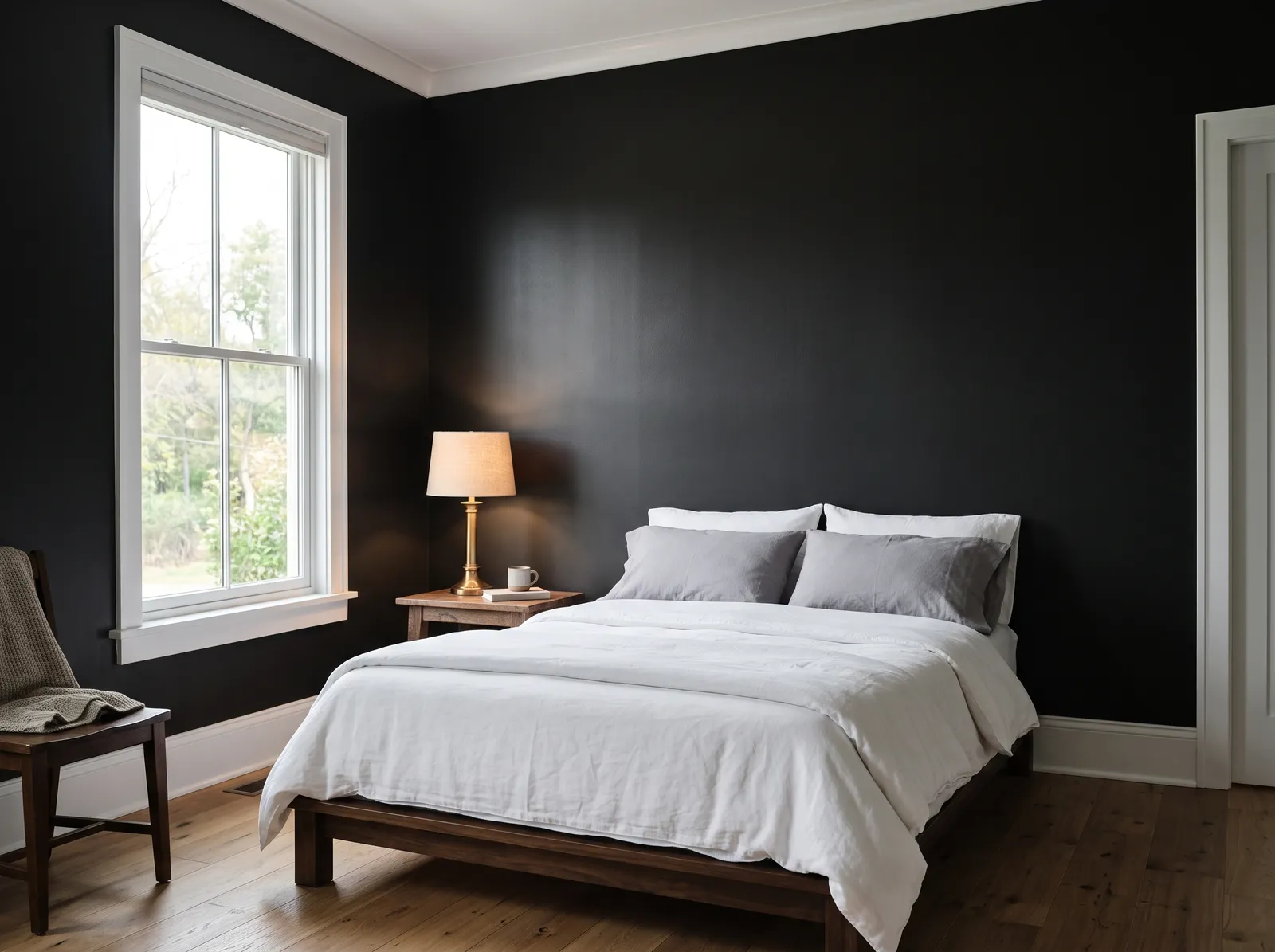
The easiest, most timeless pairing for a blue bedroom is a soft white trim and ceiling — it keeps things crisp and lets the blue be the star. For a more enveloping, hotel-like feel, paint the trim and even the ceiling the same blue as the walls; it erases hard lines and makes a small bedroom feel intentional rather than cramped. Warm metals like brass or aged bronze on lamps and hardware are flattering against blue and add the warmth a cool color can lack.
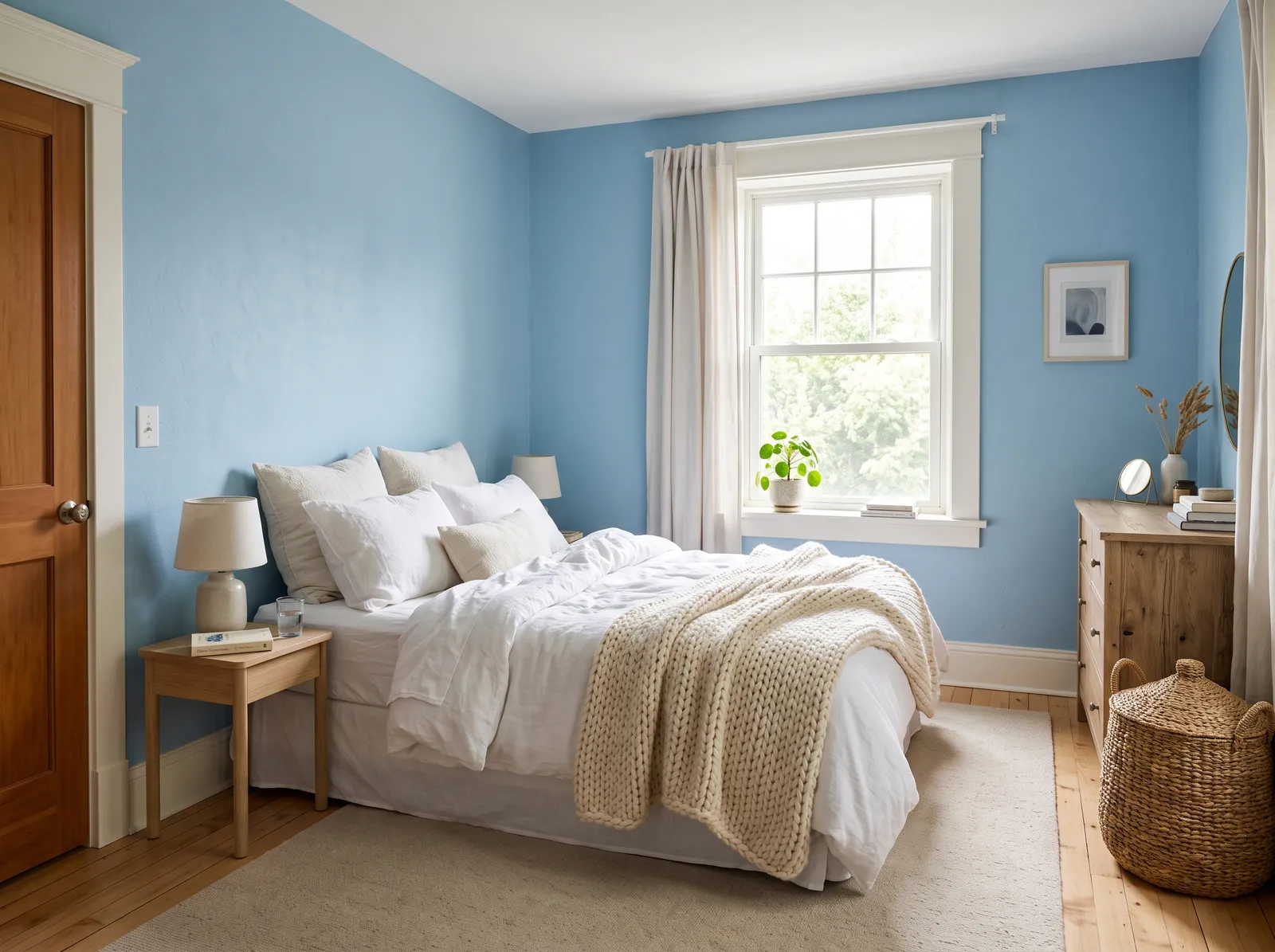
For furniture and textiles, blue is forgiving. Natural wood tones, oatmeal and cream linens, and a little black for contrast all read warm and grounded next to it. If you have built-ins or a closet wall, painting them a deeper blue than the walls creates a quiet, layered look that still feels restful.
Common Mistakes With Blue In A Bedroom
The most common miss is going too cool and too bright at the same time. A clean, saturated blue that looks great on a chip can feel cold and almost clinical across a full bedroom wall, especially under daytime light. If you want energy, get it from a saturated accent wall or bedding, and keep the main walls in a softer, slightly muted blue.
The second mistake is skipping the nighttime test. A blue that reads fresh at noon can go dull, gray, or even purple under warm bulbs at 10 p.m., which is exactly when you're in the room. Test a real sample, live with it for a few days, and check it after dark before you commit the whole room.
Blue Bedroom Paint — Frequently Asked Questions
Is blue too cold for a bedroom?+
It can be, but only if you pick the wrong blue for your light. In a dim or north-facing room, choose a blue with a soft gray or green warmth and pair it with warm wood, brass, and cream textiles. That keeps the room calm and restful instead of chilly.
What shade of blue is best for sleep?+
Soft to mid-depth blues with a slightly muted, grayed quality tend to feel the most restful, because they're calm without being stark. Very bright, clean blues can feel a bit energetic for a bedroom. If you love a deep navy, it works beautifully as long as you have good lamp light for the evenings.
Can I use a dark navy in a small bedroom?+
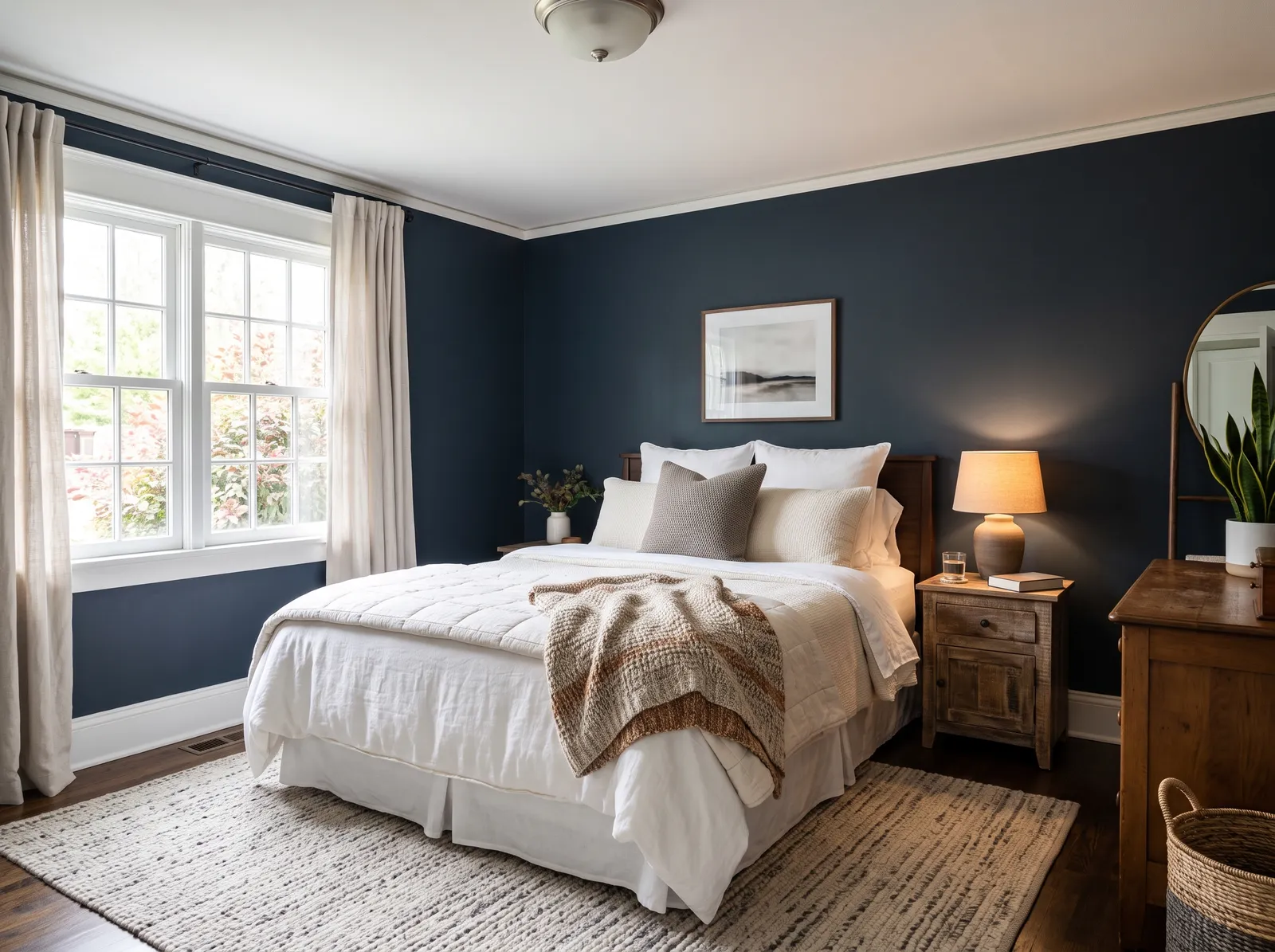
Yes, and it can actually make a small bedroom feel cozy and intentional rather than cramped. Painting the trim and ceiling the same deep blue blurs the edges of the room and adds to that cocooning effect. Just make sure you have enough lamp light, since a low-LRV navy reads almost black after dark.
What finish should I use on blue bedroom walls?+
A matte or eggshell finish is ideal for a bedroom. It hides minor wall flaws, cuts glare from bedside lamps, and gives blue a soft, calm look. Use a satin or semi-gloss only on trim and doors, where the wipe-clean durability matters.
What trim color goes with blue bedroom walls?+
A soft white trim is the classic, crisp choice and lets the blue stand out. For a more enveloping feel, paint the trim the same blue as the walls so the lines disappear. Warm metal fixtures and natural wood help balance the coolness either way.
If I like a blue from one brand, can I get it in another?+
Yes. Every color shown here is mixed to order at the paint counter, so a shade can be cross-matched and tinted into whichever brand you prefer. Pick the blue by how it looks in your bedroom, then have it made up in the line you already trust.