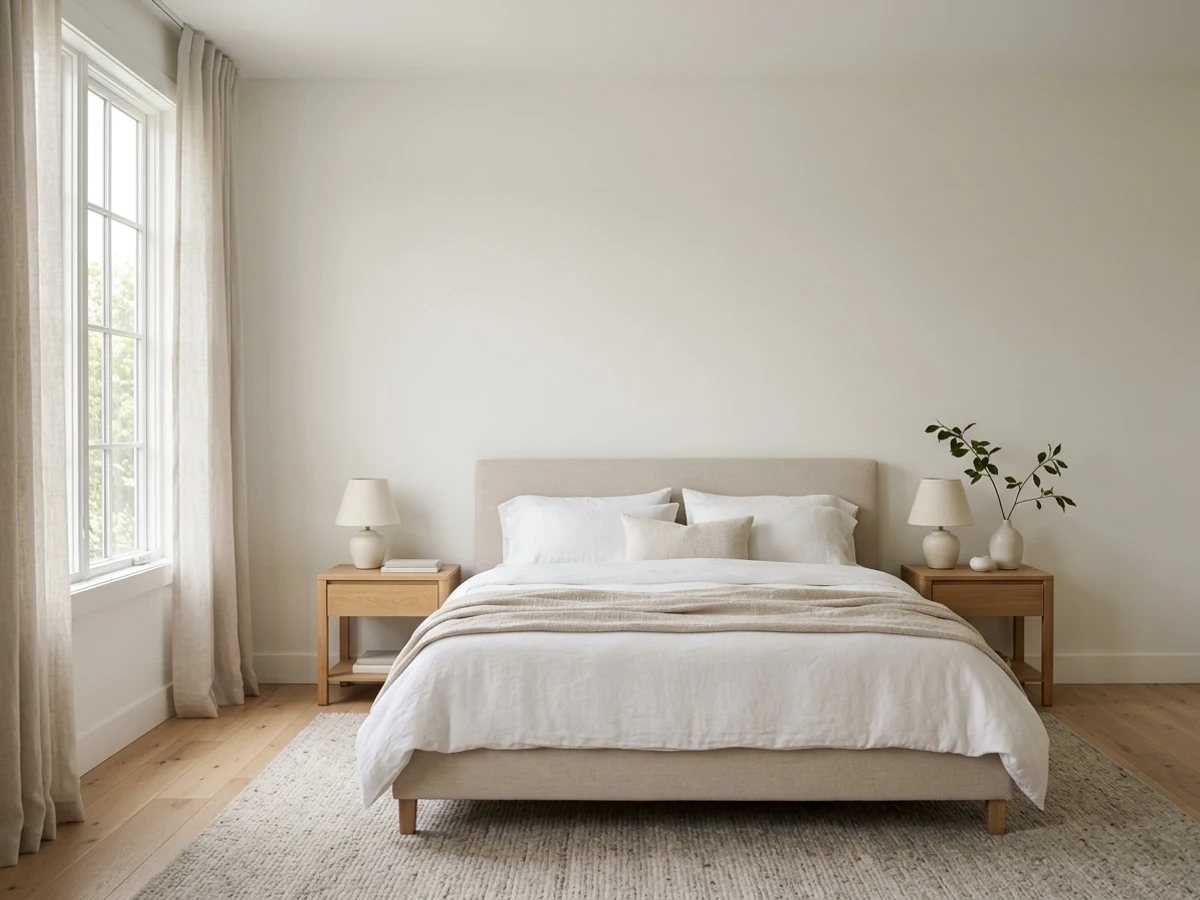
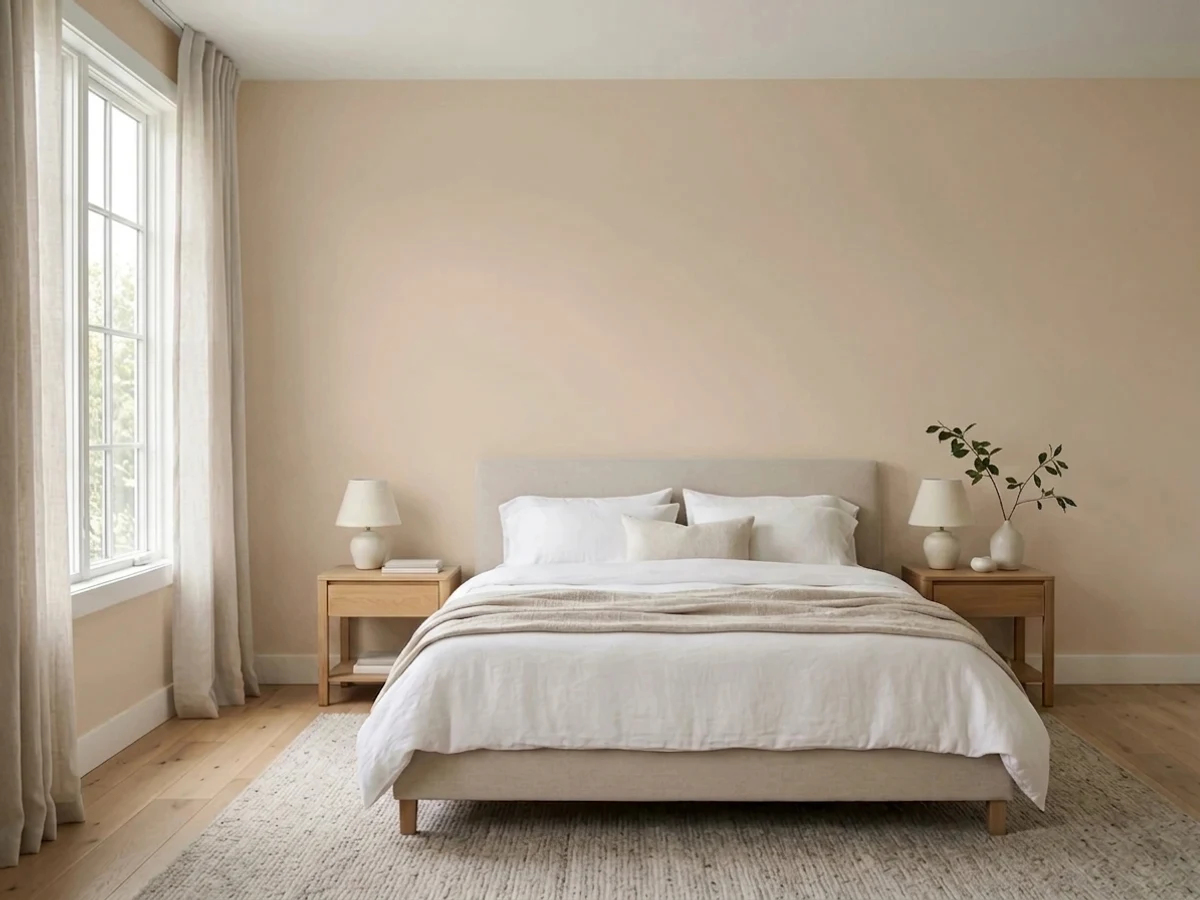
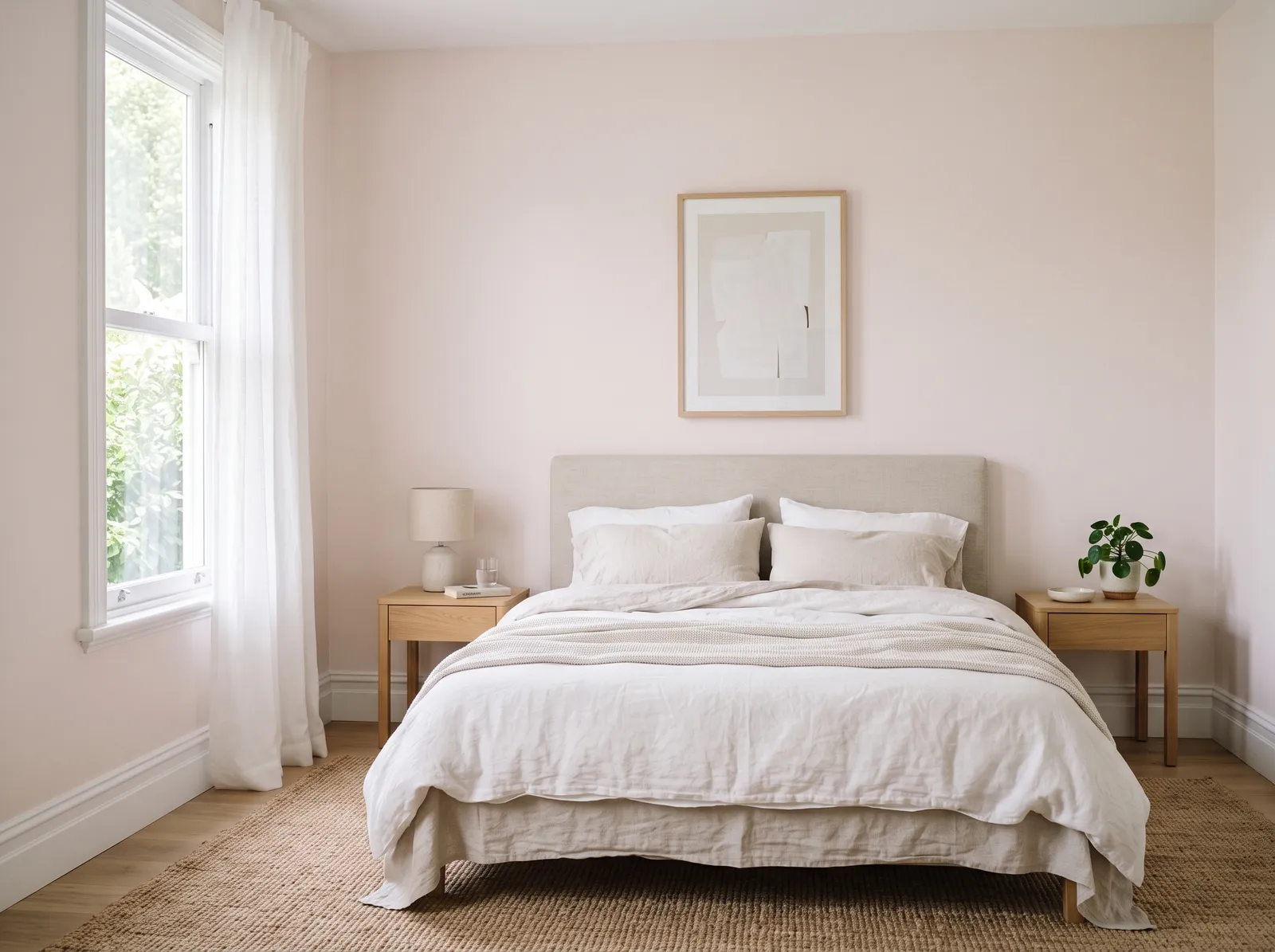
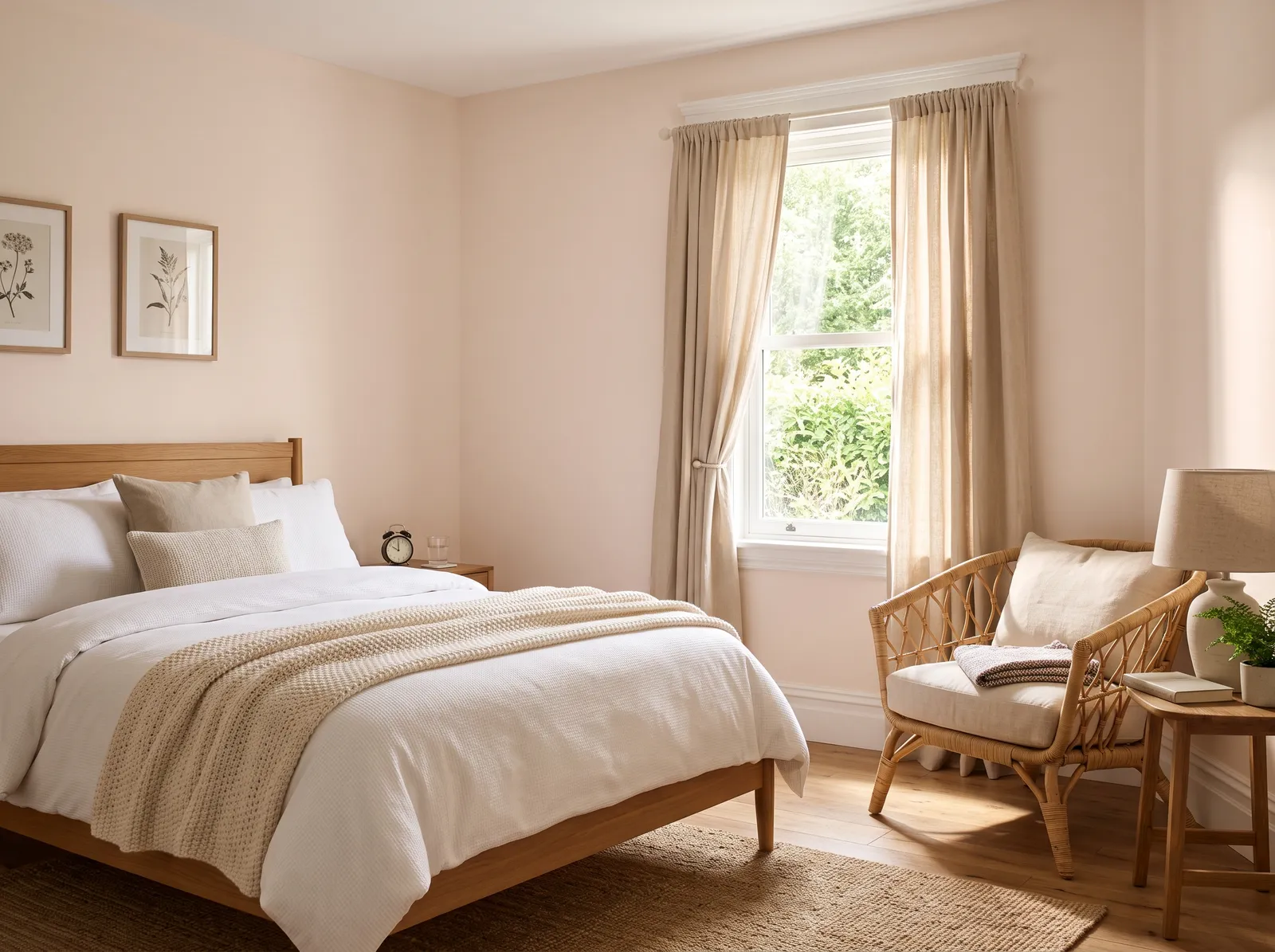
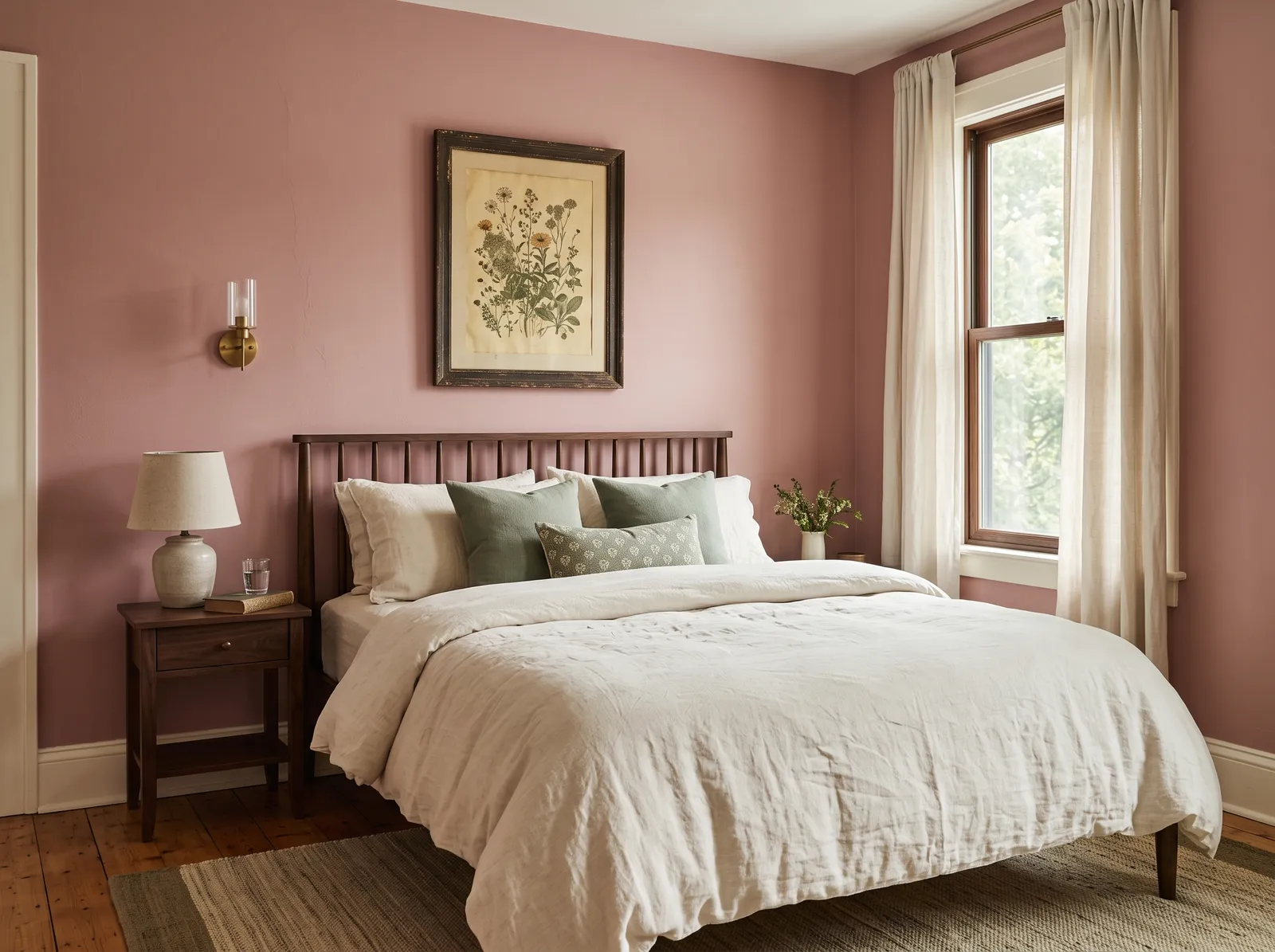
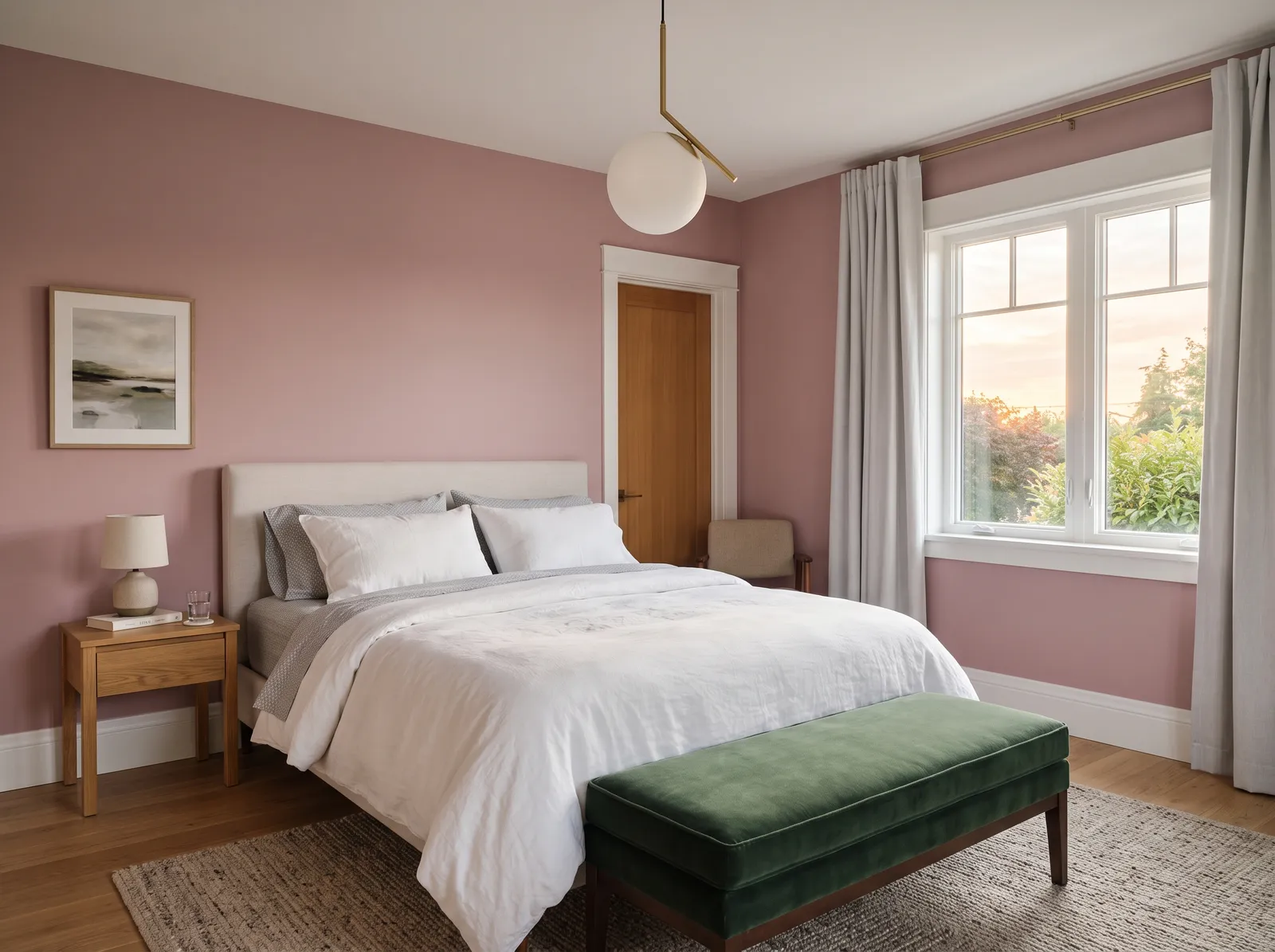
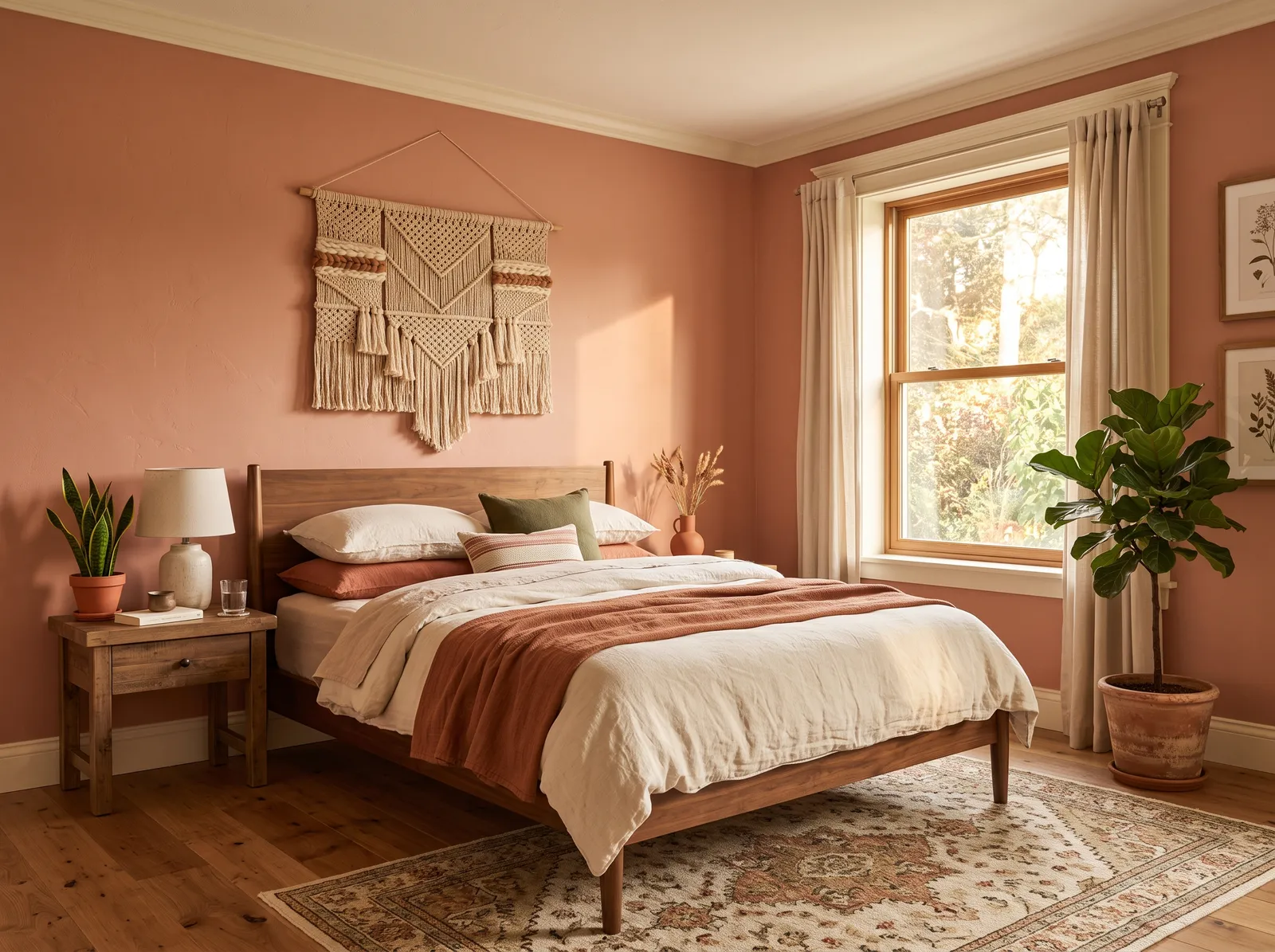
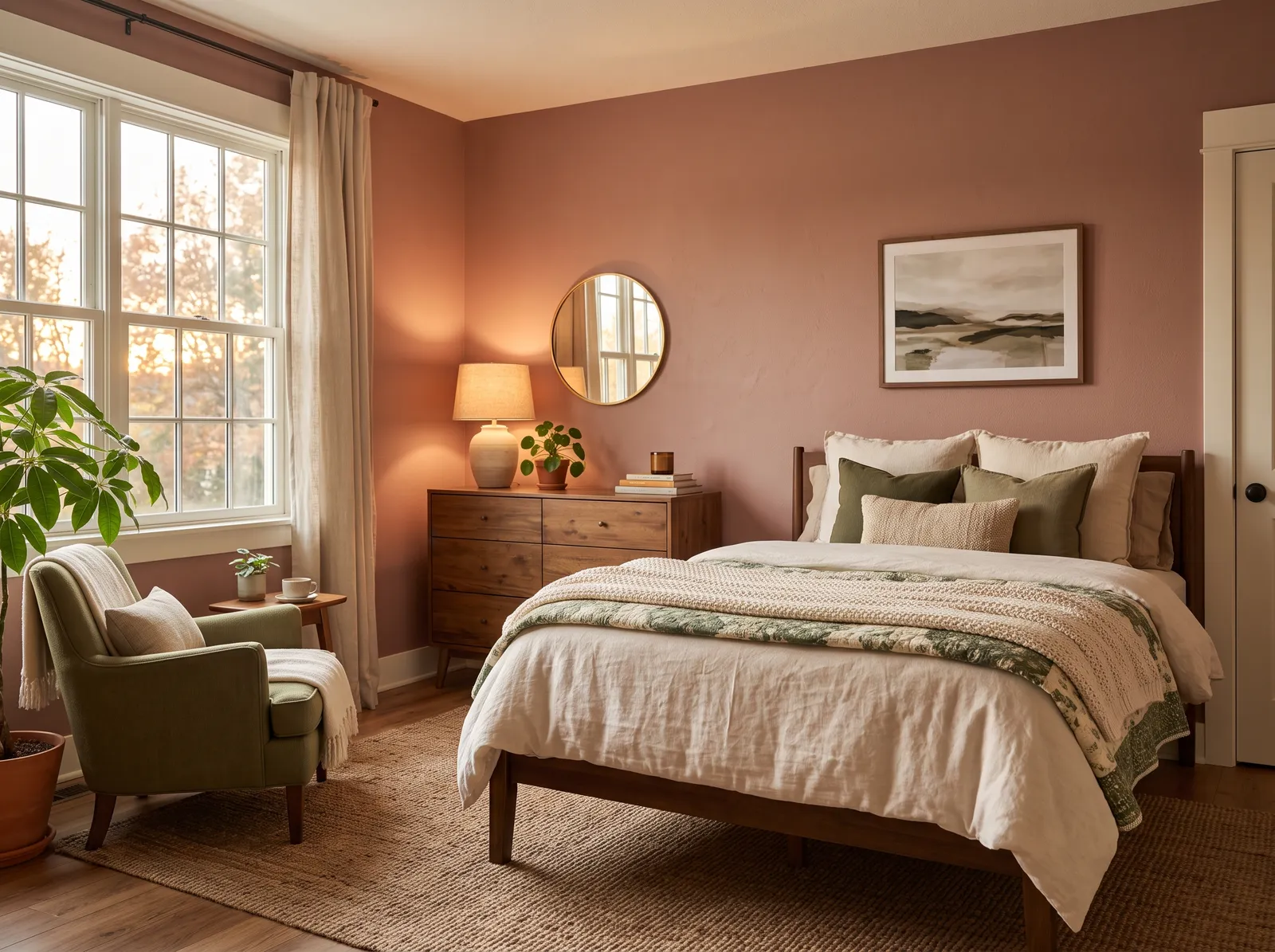
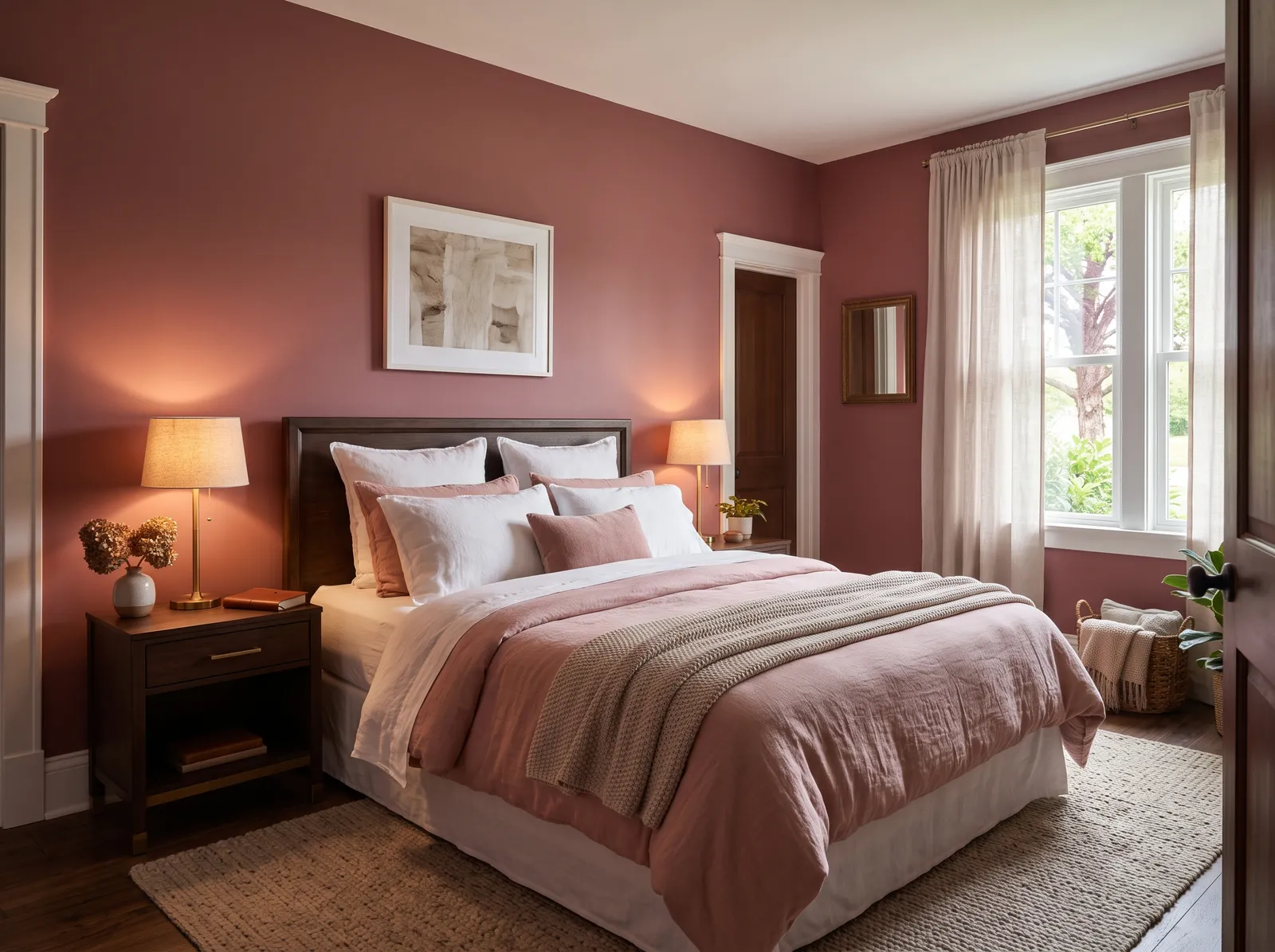
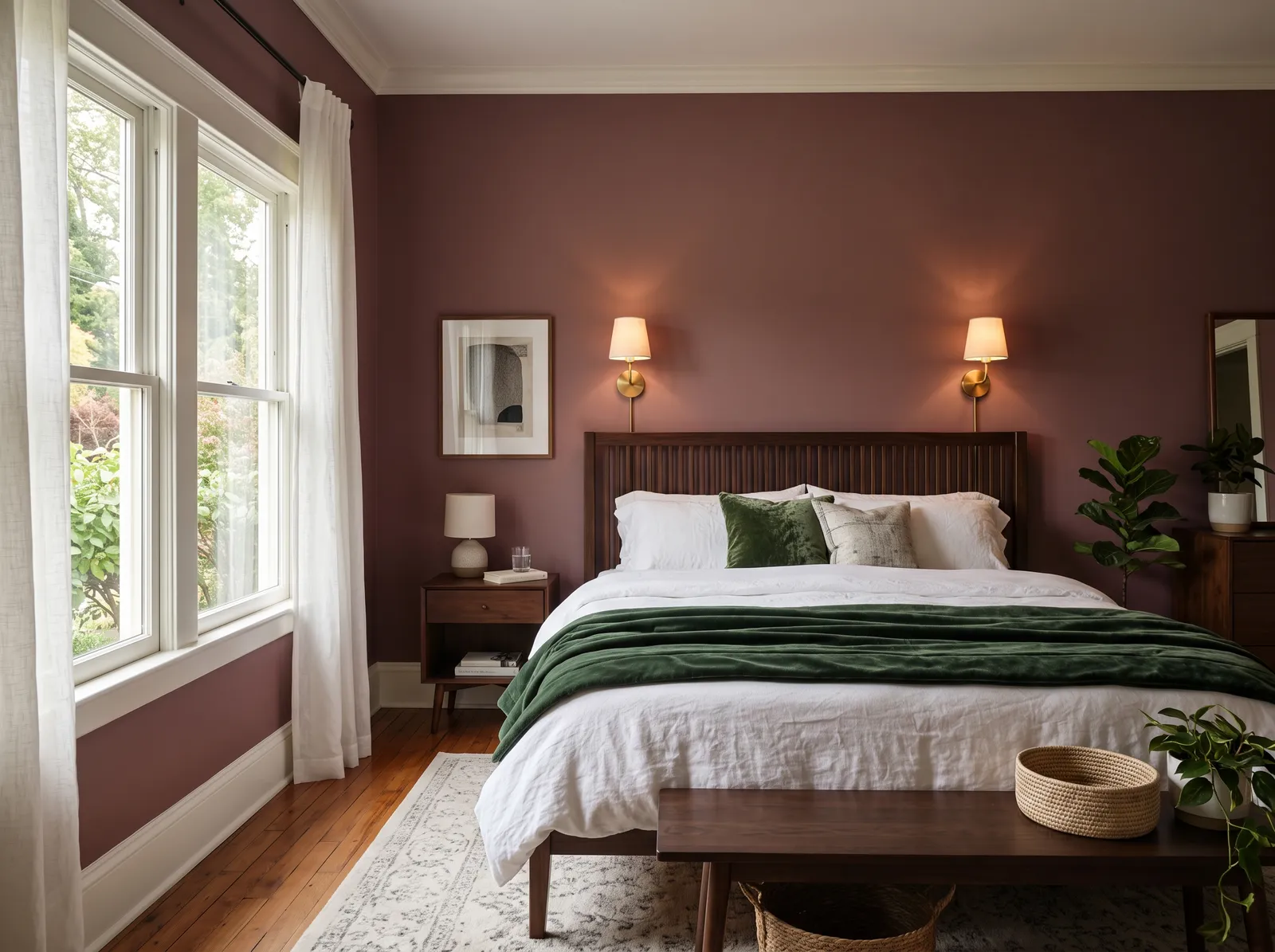
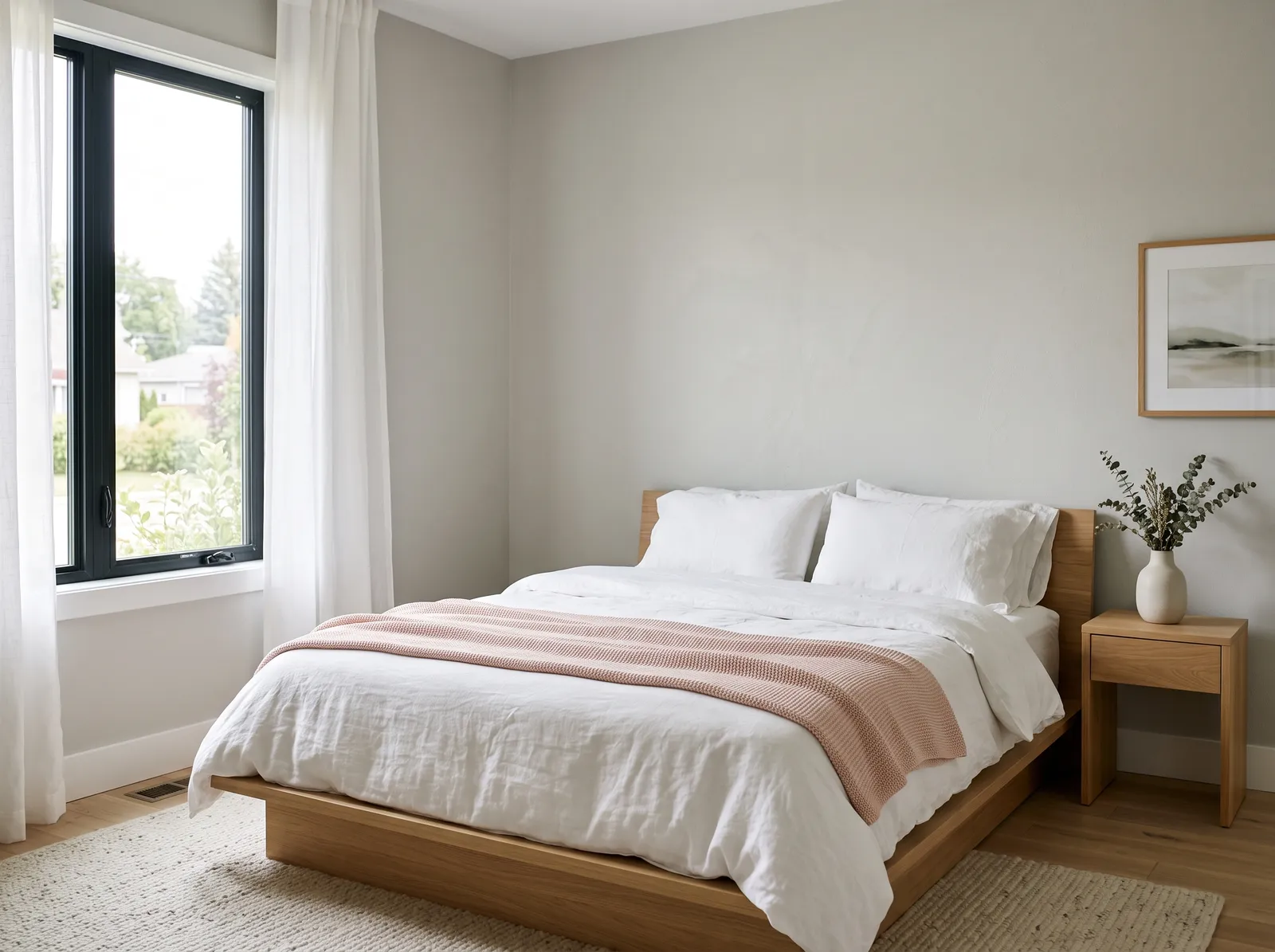
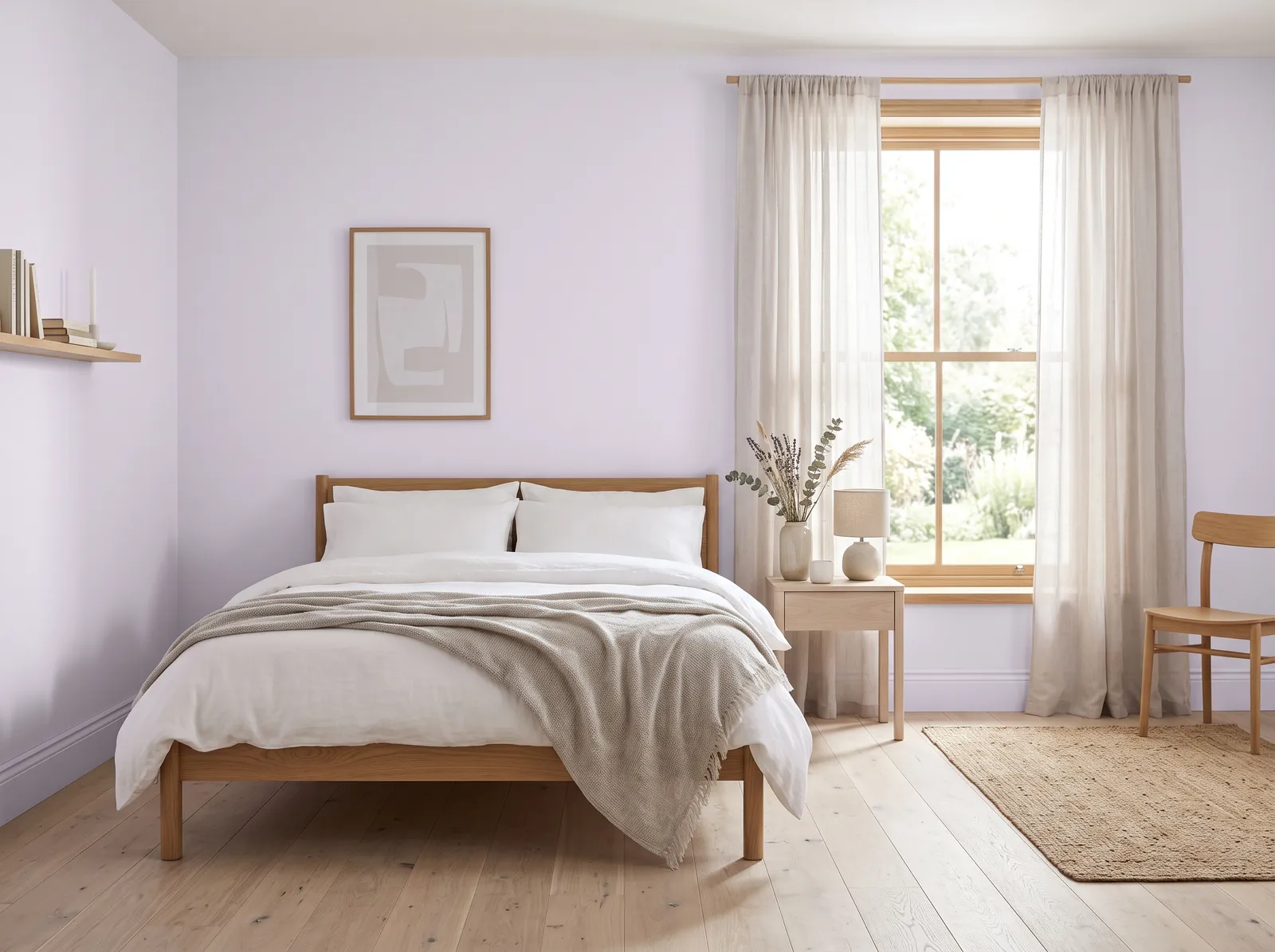
Pink Bedroom Paint Colors
2,660 pink colors that work in bedrooms, drawn from the full ~30,000-color US paint deck. Below: editor's picks specific to bedrooms, then 30 picks spread across the LRV range — narrow further on the brand page when you've shortlisted.
Pink stopped being a kids-room-only color around 2018, when "millennial pink" started showing up on dining-room walls and powder-room cabinetry. The family runs from soft, almost-white blush (think peach-tinted off-whites) through dusty rose (a true muted pink) to coral (warmer, more orange-leaning), and peaks in the saturated true pinks reserved for accent walls.
Editor's Picks: Pink for Bedrooms
4 picks30 Pink Picks Across the LRV Range
30 of 2,660 · sorted dark → lightLooking for more? All pink → covers every brand; brand × family pages show full decks.
Pink Bedroom Colors at Every US Brand
21 brands · up to 10 picks eachUp to 10 picks per brand spread across the pink LRV range, drawn from each brand's full deck. Tap any swatch with a curated guide for full spec; tap the brand title for the brand's complete pink deck.
Behr
Benjamin Moore
Glidden
Valspar
PPG / Glidden
Dunn-Edwards
Diamond Vogel
Hirshfield's
Sherwin-Williams
Kompozit
Dutch Boy
C2 Paint
Rodda
Farrow & Ball
Portola Paints
Clare
Magnolia Home
Backdrop
Annie Sloan
Rust-Oleum
Other Bedroom Color Families
Pink Colors in Other Rooms
Pink Paint Colors for a Bedroom
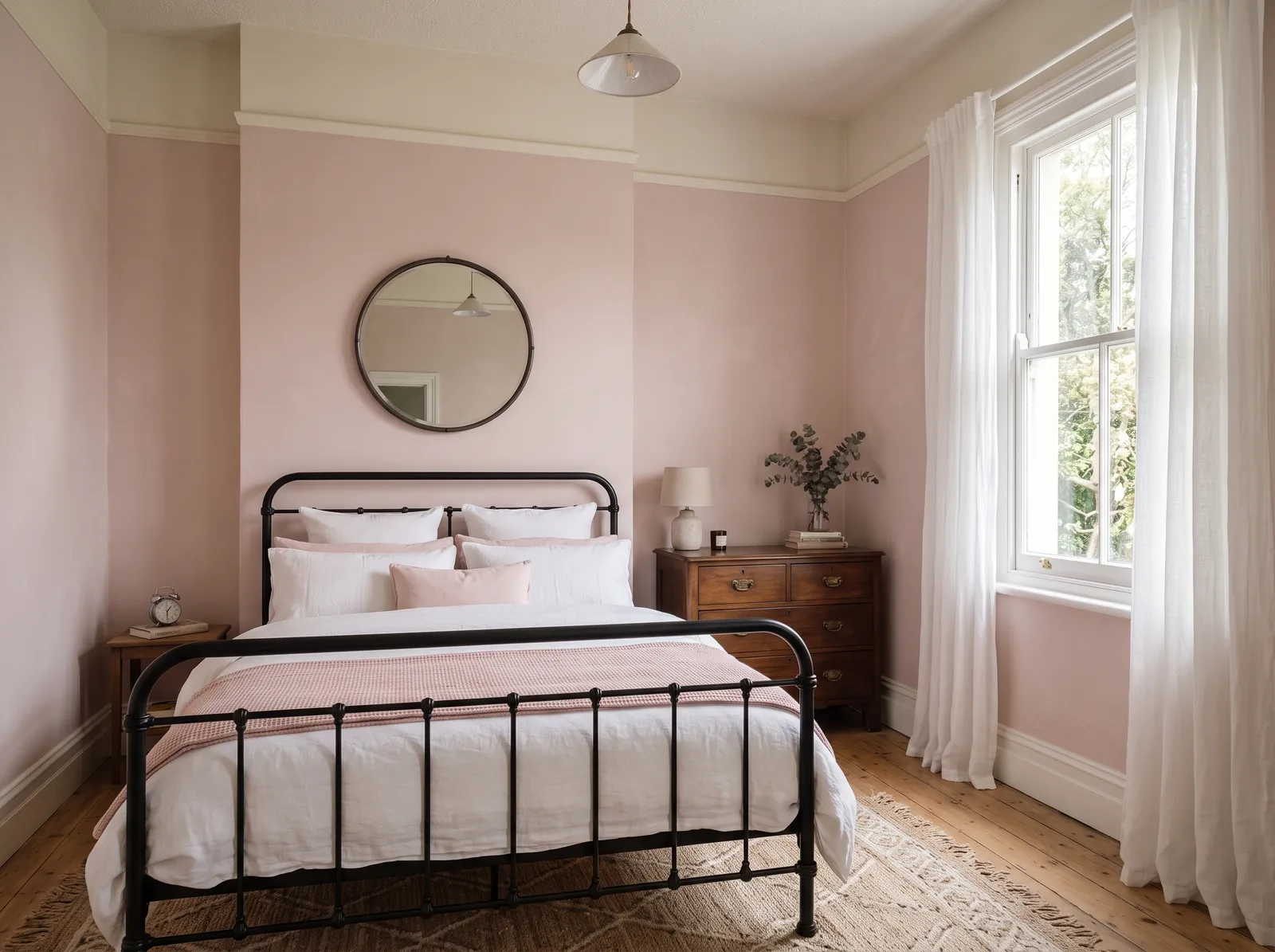
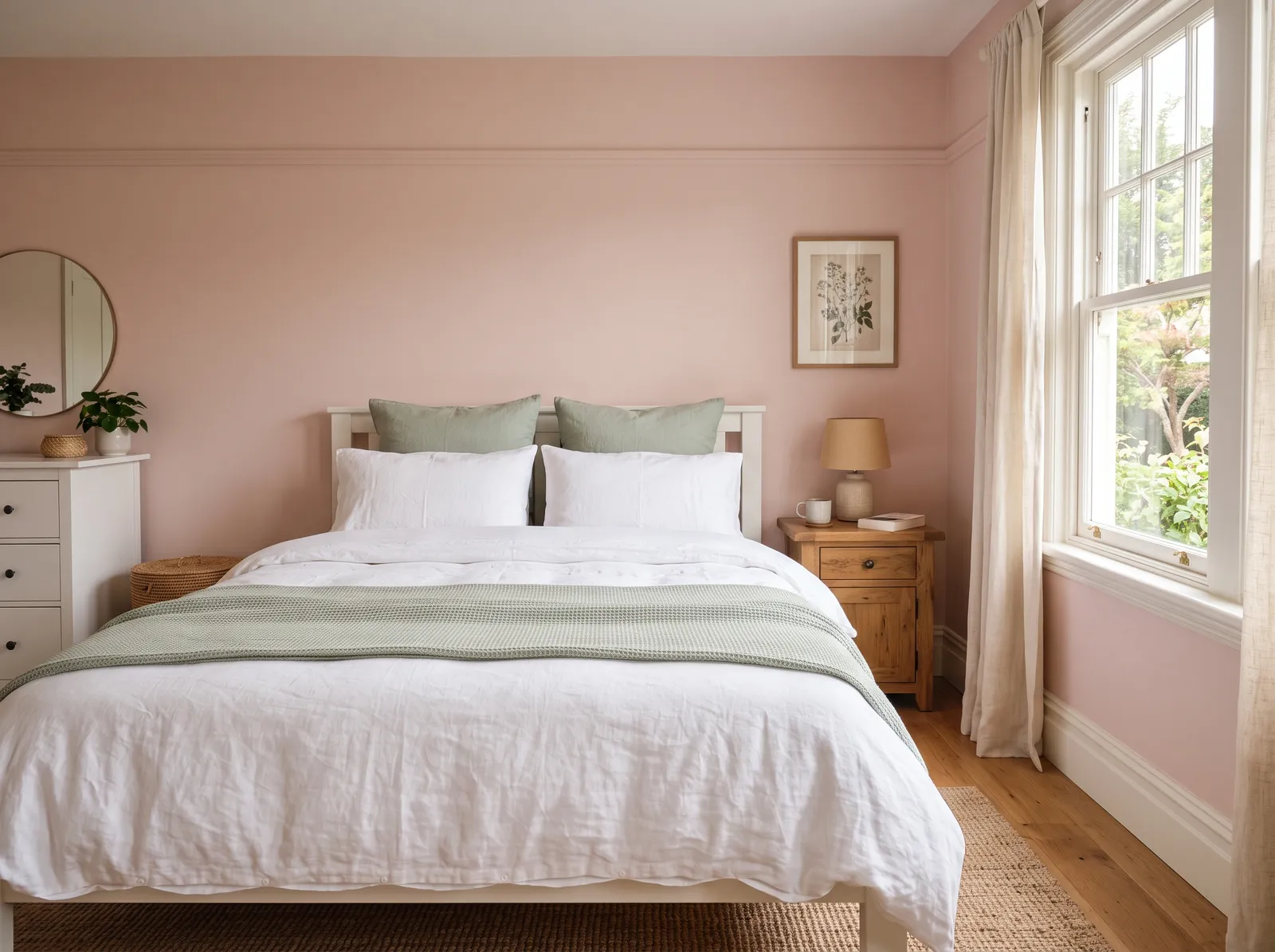
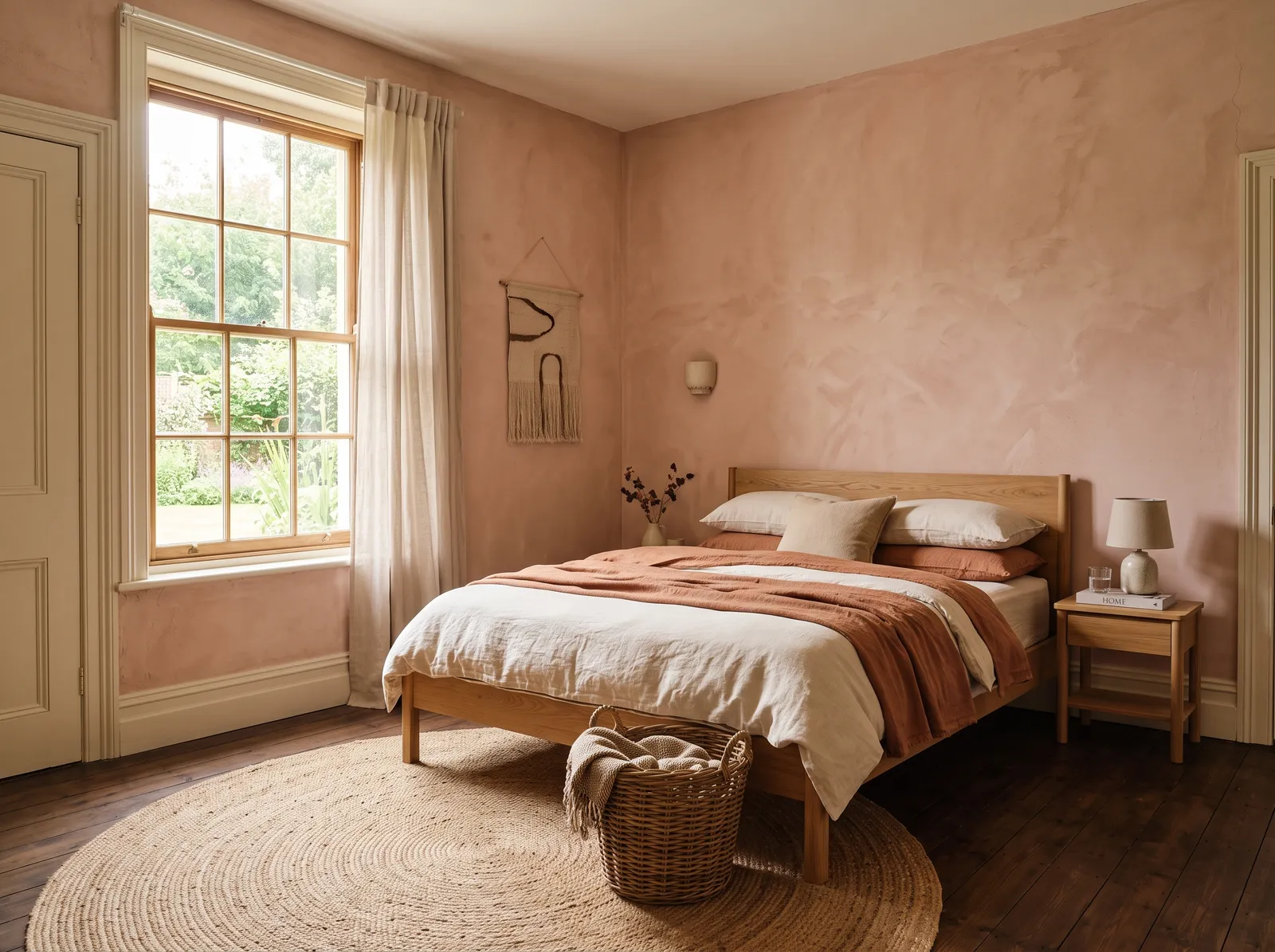
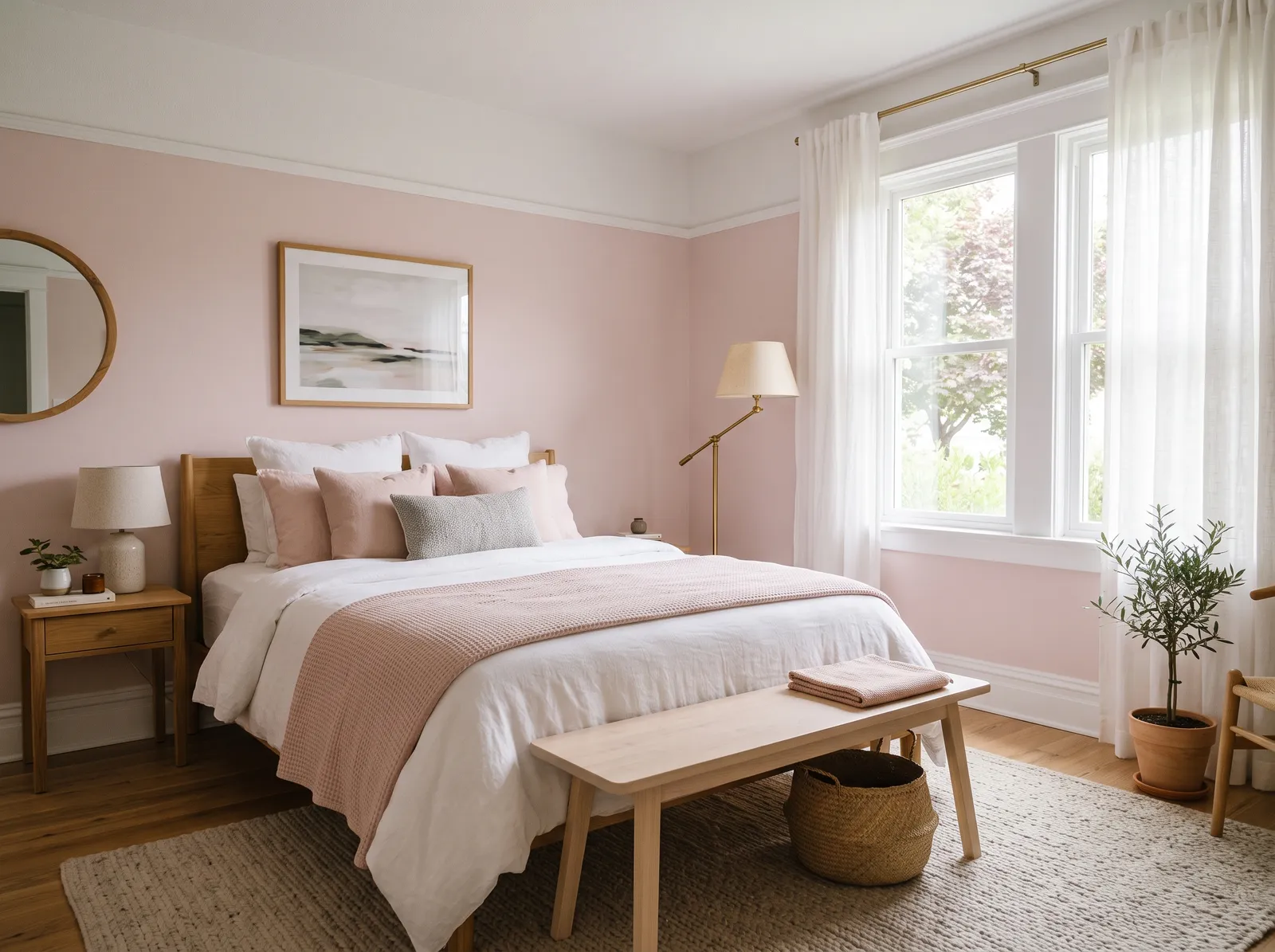
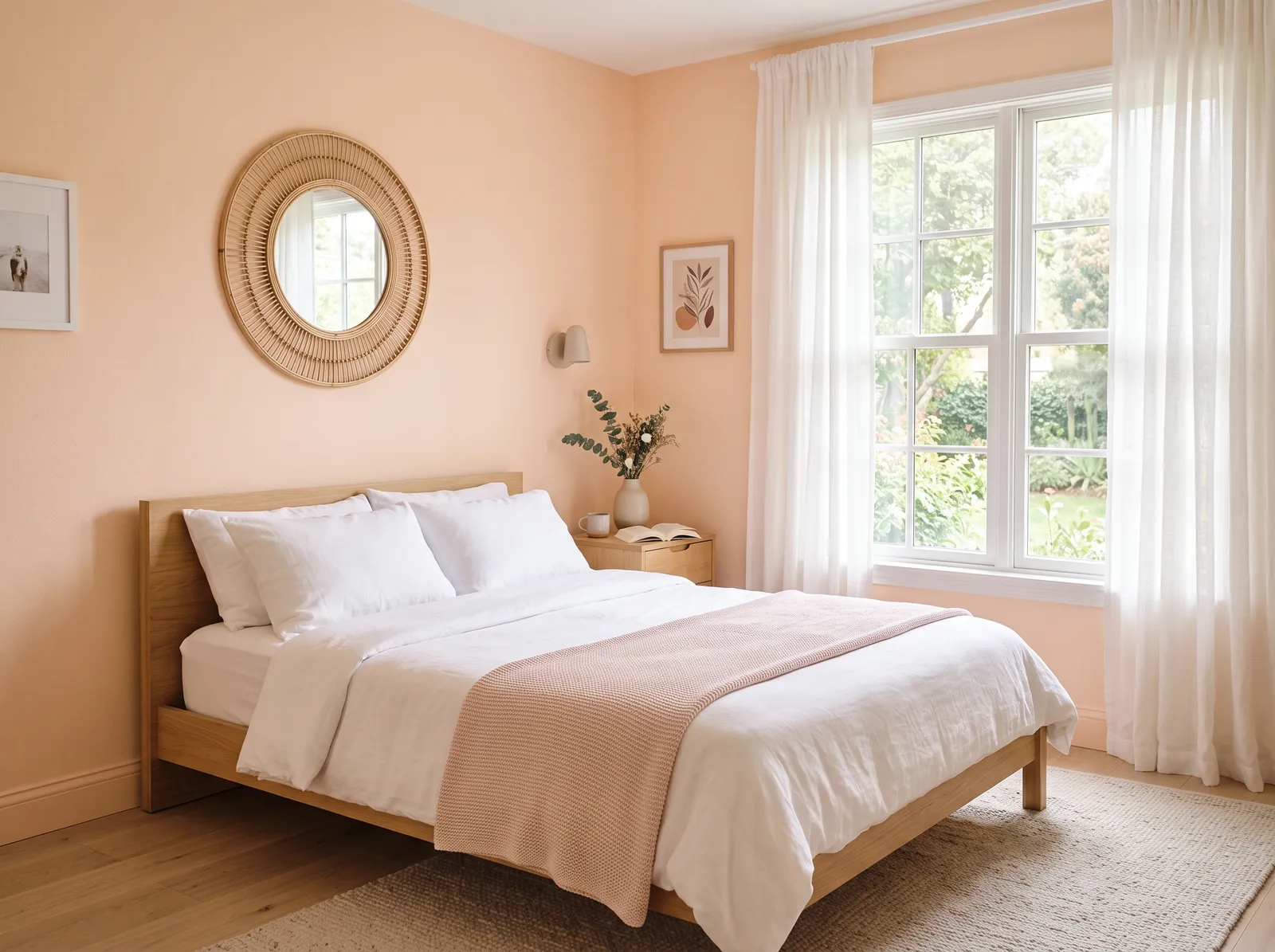
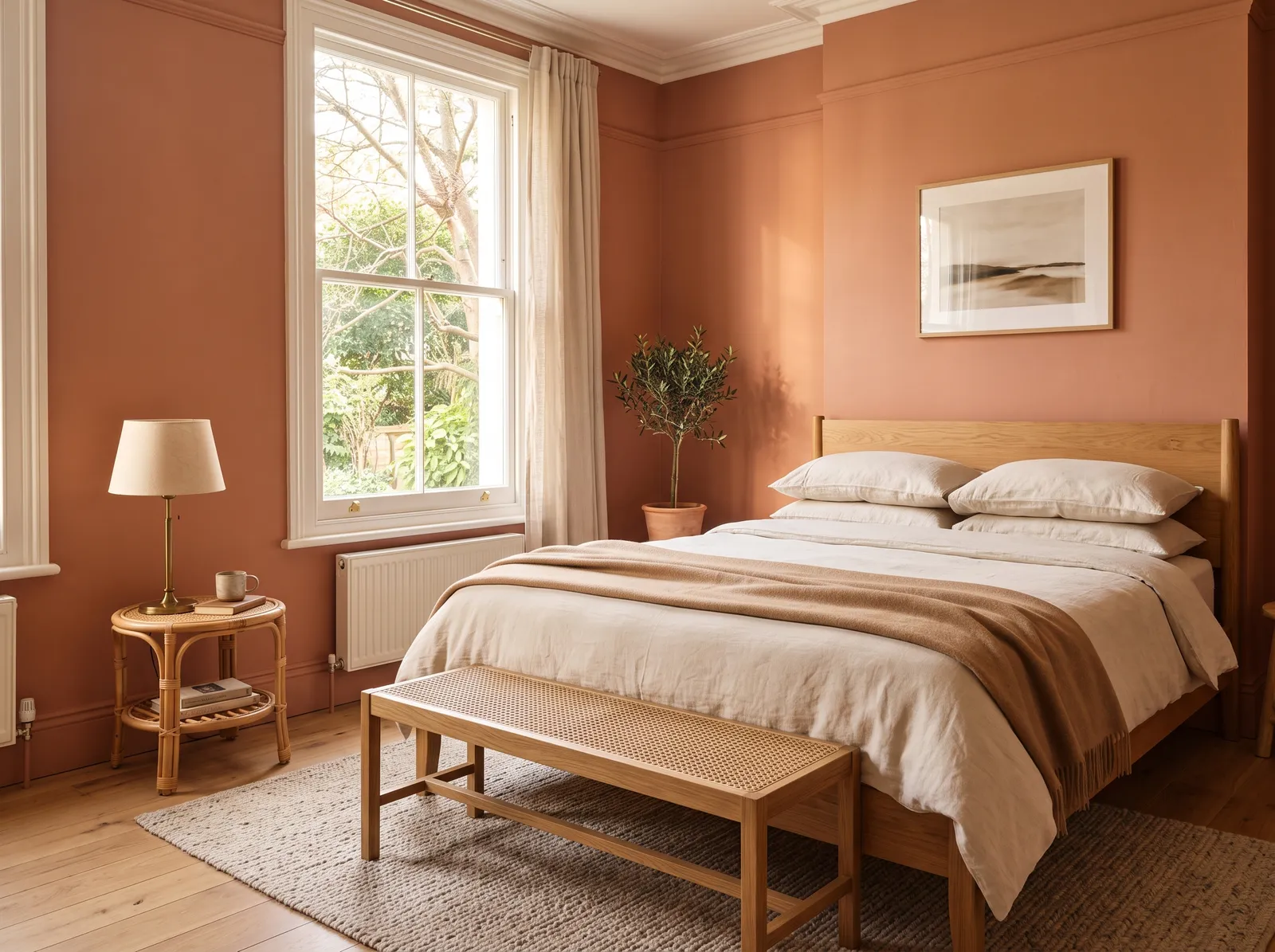
Pink is one of the most forgiving colors a bedroom can wear. Stripped of its old "little girl" reputation, a well-chosen pink reads as warm, calm, and grown-up — closer to a soft plaster or a faded rose than anything sugary. Because a bedroom is a room you mostly see at the edges of the day, in low morning light and warm lamp light, pink's natural warmth works with you instead of against you. It makes white bedding look crisp, wood furniture look richer, and the whole room feel a few degrees warmer without turning loud.
The trick in a bedroom is restraint. The same pink that feels soothing in a sample can turn sweet or pepto-bright once it covers four walls and bounces light around at night. The notes below walk through how deep to go, how your room's light steers the undertone, what sheen to put on bedroom walls, and how to pair pink with the trim, ceiling, and bedding you already own. Every shade you see here is mixed to order at the paint counter, so you can match the exact pink you like across any brand we list.
Why Pink Actually Works In A Bedroom
A bedroom is the one room where warmth beats brightness. You want it to feel restful, a little enveloping, and flattering in soft light — and pink does all three because it carries red's warmth at a fraction of red's intensity. In low evening light a muted pink reads as a warm neutral, which is exactly the mood most people want before sleep.
Pink is also kind to skin and to white linens. Morning light through a pink-washed room looks gentle rather than clinical, and that same warmth keeps the space from feeling cold the way a pure gray or stark white bedroom often can. The watch-out is saturation: the more colorful the pink, the more energetic the room, which is the opposite of what a bedroom usually needs.
The Right Depth Of Pink For The Room And Its Light
For a bedroom, aim soft and grayed rather than clear and bright. Pinks with an LRV in the rough 55 to 78 range tend to land as a quiet, restful wash, while anything much higher can wash out to near-white and anything lower starts to feel like a moody accent wall instead of a calm room. A touch of gray or brown in the mix (think dusty rose or pink-beige) keeps it adult and easy to sleep in.
Let the light steer the undertone. North-facing and low-light bedrooms cool everything down, so a pink with a warm peachy or beige lean holds its color instead of going gray and flat. South- and west-facing rooms pour in warm light, so a pink with a cooler, slightly mauve undertone keeps it from tipping into hot or orange — especially in afternoon and sunset light. Always live with a big sample on two different walls for a full day before you commit.
The Best Sheen For Bedroom Walls
Bedrooms are low-traffic and low-moisture, so you do not need the scrubbable, shiny finishes a kitchen or bath demands. A matte or eggshell is the sweet spot: matte hides wall imperfections and old patches beautifully and keeps the soft, plaster-like quality that makes pink feel calm, while eggshell adds just a little wipeability for fingerprints near switches and headboards.
Skip satin and semi-gloss on bedroom walls. Higher sheens bounce light, and a glossy pink wall can flare bright and glary under a bedside lamp at exactly the time you want the room to wind down. Save the satin or semi-gloss for the trim and doors, where you do want a little durability and contrast.
Pairing Pink With Trim, Ceiling, And Bedding
The safest, most timeless pairing is a soft white trim and ceiling. A warm white keeps everything cohesive and lets the pink stay the star, while a crisp cooler white adds a little fresh contrast if your pink leans dusty. Painting the ceiling the same pink in a lighter strength, or a hair of the wall color, makes a small bedroom feel taller and more wrapped-in.
For everything else, lean into natural materials. Warm wood headboards, rattan, and brass or aged-gold fixtures flatter pink and read cozy, while black hardware or an iron bed frame grounds it so the room never feels precious. White or cream bedding is foolproof; if you want more, pull greens, terracotta, or deep burgundy from the warm side of the wheel rather than icy brights.
The Most Common Pink Bedroom Mistakes
The biggest one is going too saturated. A pink that looks perfect on a one-inch chip can read three shades brighter across a full wall, so most people should choose a sample that looks almost too soft on paper. The second mistake is ignoring the undertone — a pink that goes peach in warm light or muddy-mauve in cold light will fight your bedding and your skin tone, so test it where it actually lives.
Two more to avoid: a high-gloss sheen that glares under lamps, and pairing a warm pink with a cold blue-white trim that makes the wall look dingy by contrast. And remember you are not locked to one brand's version — any pink you fall for can be color-matched and mixed to order, so pick the exact shade and depth you want and have it made at the counter.
Pink Bedroom Paint — Frequently Asked Questions
Will a pink bedroom look too childish?+
Not if you keep it muted. Dusty rose, pink-beige, and grayed-down blush read as warm, grown-up neutrals rather than candy pink. The clearer and brighter the pink, the younger it feels, so choose a soft, slightly gray version and pair it with natural wood, white linens, and simple trim.
What sheen should I use on bedroom walls?+
Matte or eggshell. Bedrooms are low-traffic and dry, so you do not need a tough, shiny finish, and a flat sheen keeps pink soft and hides wall flaws. Eggshell adds a little wipeability near switches and the headboard if you want it. Save satin or semi-gloss for the trim and doors.
How does my bedroom's light change the pink?+
A lot. North-facing and dim rooms cool and gray a color down, so a pink with a warm peach or beige lean holds up best. South- and west-facing rooms add warm light, so a slightly cooler, mauve-leaning pink keeps it from going hot or orange in the afternoon. Always test a large sample for a full day before deciding.
What LRV is best for a pink bedroom?+
For a soft, restful wall, roughly 55 to 78 works well. Higher than that and the pink can wash out to near-white, lower and it starts to feel like a dark accent rather than a calm room. A mid-range LRV keeps the color visible but easy to sleep in.
What trim and ceiling color go with pink?+
A soft white trim and ceiling is the safest, most timeless choice and lets the pink lead. A warm white keeps things cozy and cohesive; a crisper white adds fresh contrast if your pink is dusty. Painting the ceiling a lighter version of the wall pink can make a small bedroom feel taller.
Can I match a pink I like across different paint brands?+
Yes. Every color shown here is mixed to order at the paint counter, and a shade from one brand can be color-matched and tinted in another brand's base. Pick the exact pink and depth you want, then have it made wherever you buy your paint.