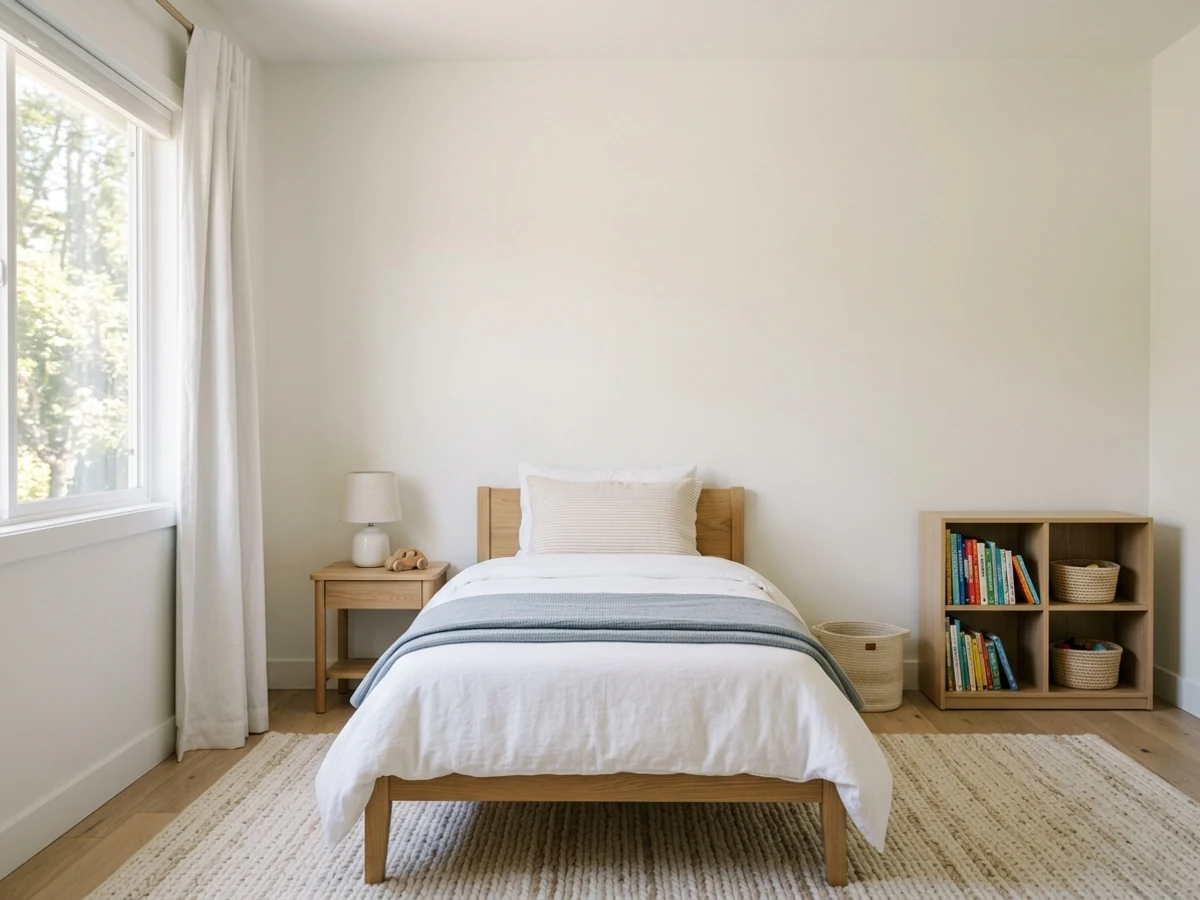
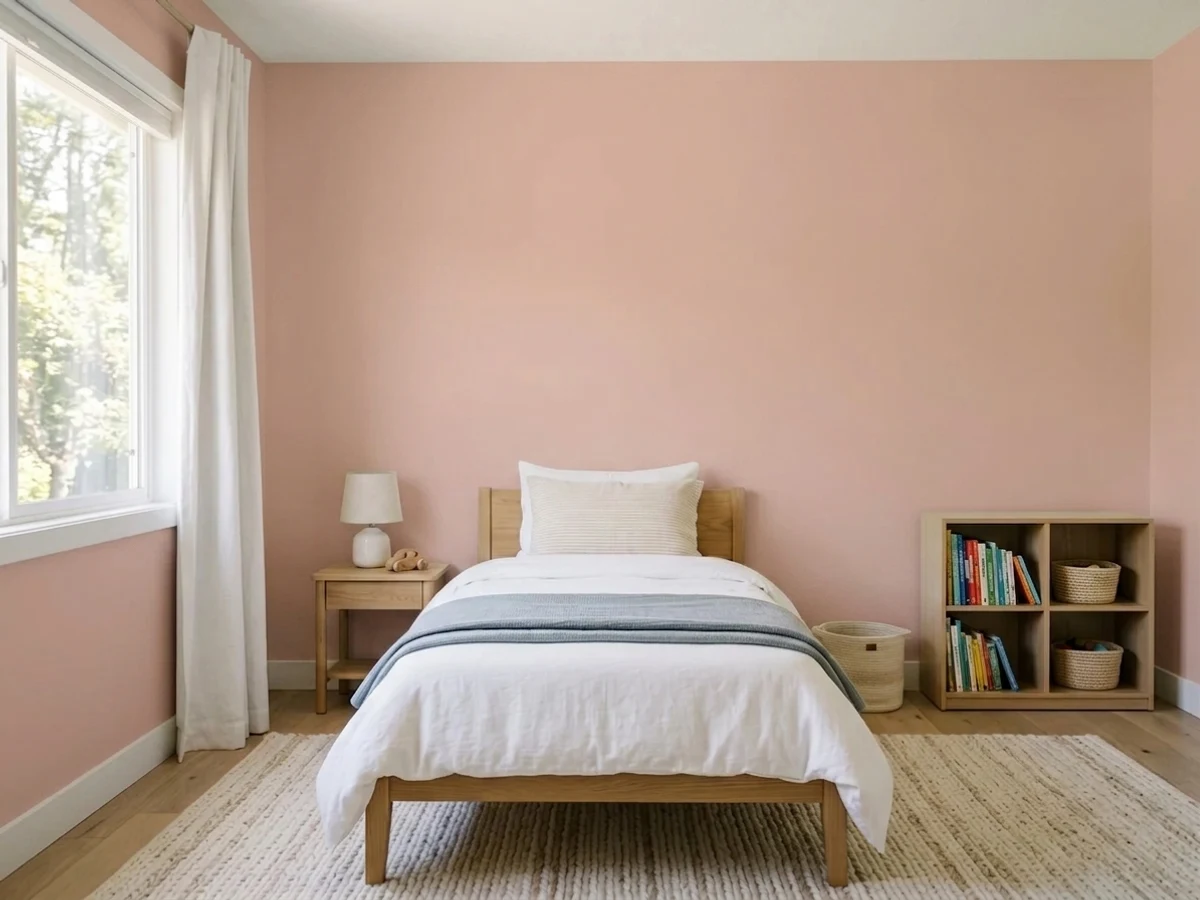
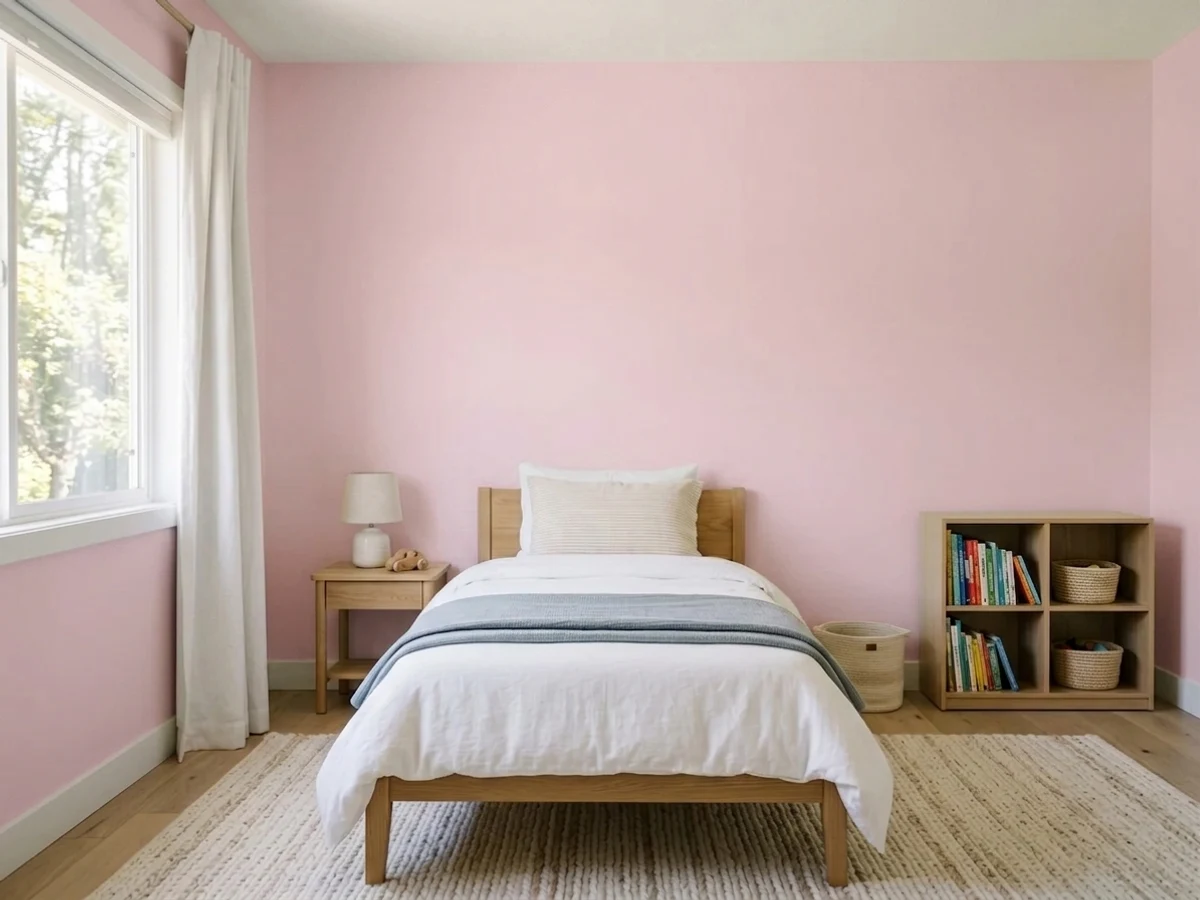
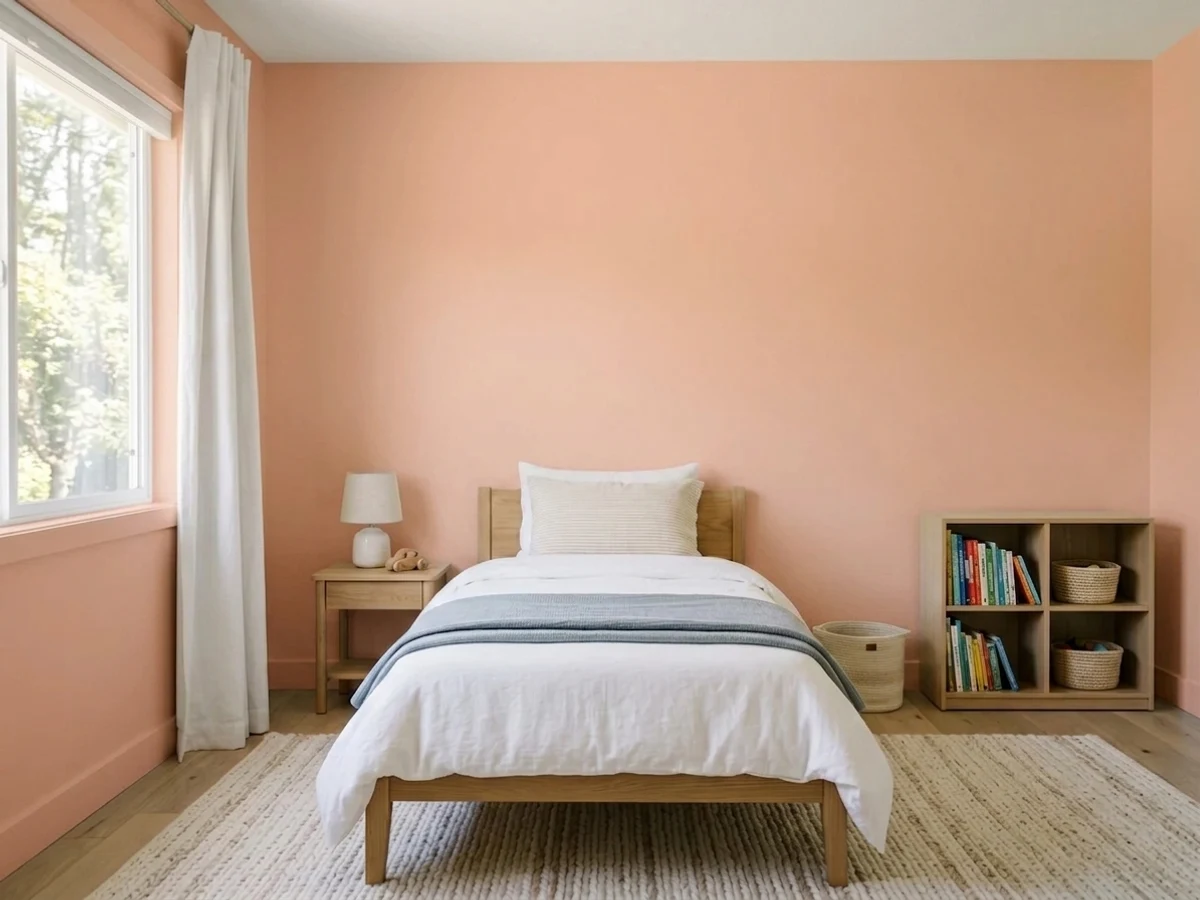
Pink Kids Room Paint Colors
2,660 pink colors that work in kids rooms, drawn from the full ~30,000-color US paint deck. Below: editor's picks specific to kids rooms, then 30 picks spread across the LRV range — narrow further on the brand page when you've shortlisted.
Pink stopped being a kids-room-only color around 2018, when "millennial pink" started showing up on dining-room walls and powder-room cabinetry. The family runs from soft, almost-white blush (think peach-tinted off-whites) through dusty rose (a true muted pink) to coral (warmer, more orange-leaning), and peaks in the saturated true pinks reserved for accent walls.
Editor's Picks: Pink for Kids Rooms
4 picks30 Pink Picks Across the LRV Range
30 of 2,660 · sorted dark → lightLooking for more? All pink → covers every brand; brand × family pages show full decks.
Pink Kids Room Colors at Every US Brand
21 brands · up to 10 picks eachUp to 10 picks per brand spread across the pink LRV range, drawn from each brand's full deck. Tap any swatch with a curated guide for full spec; tap the brand title for the brand's complete pink deck.
Behr
Benjamin Moore
Glidden
Valspar
PPG / Glidden
Dunn-Edwards
Diamond Vogel
Hirshfield's
Sherwin-Williams
Kompozit
Dutch Boy
C2 Paint
Rodda
Farrow & Ball
Portola Paints
Clare
Magnolia Home
Backdrop
Annie Sloan
Rust-Oleum
Other Kids Room Color Families
Pink Colors in Other Rooms
Pink Paint Colors for a Kids Room
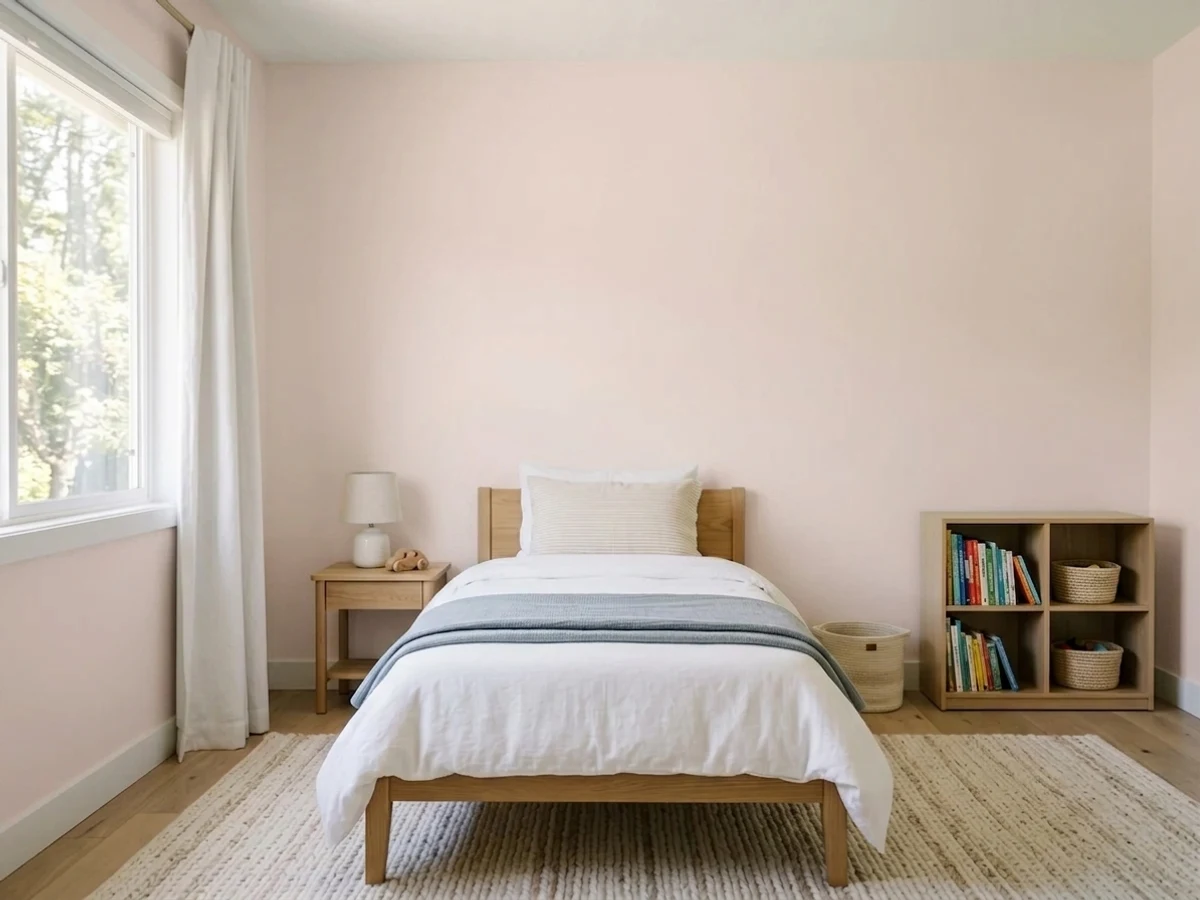
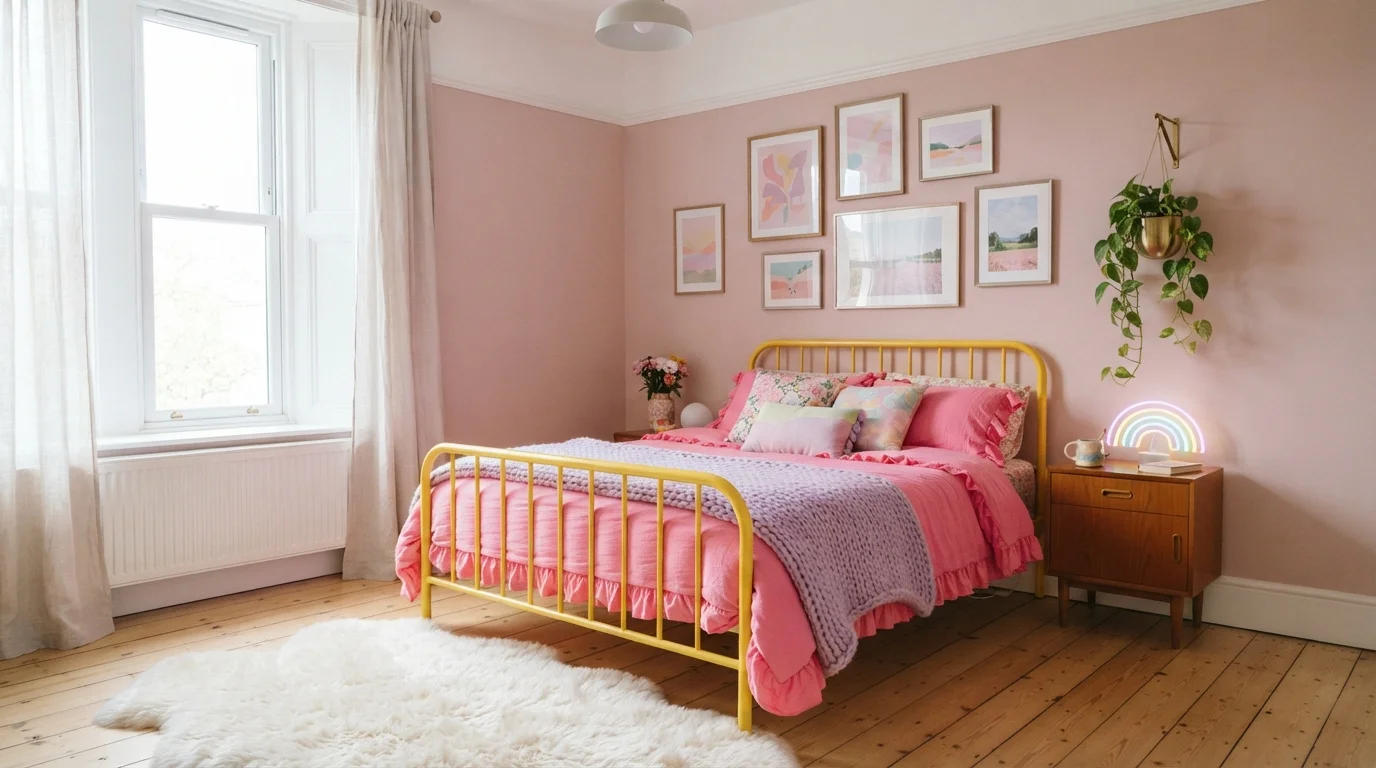
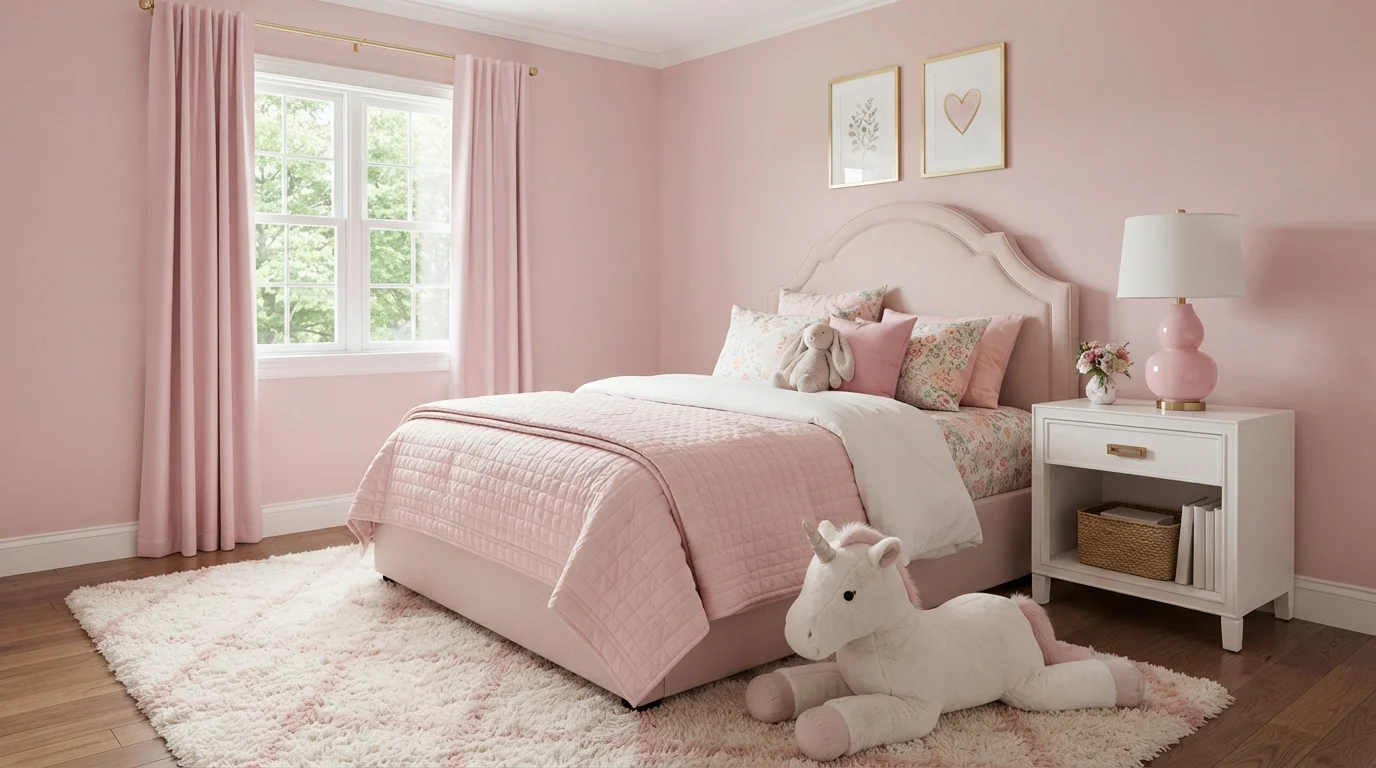
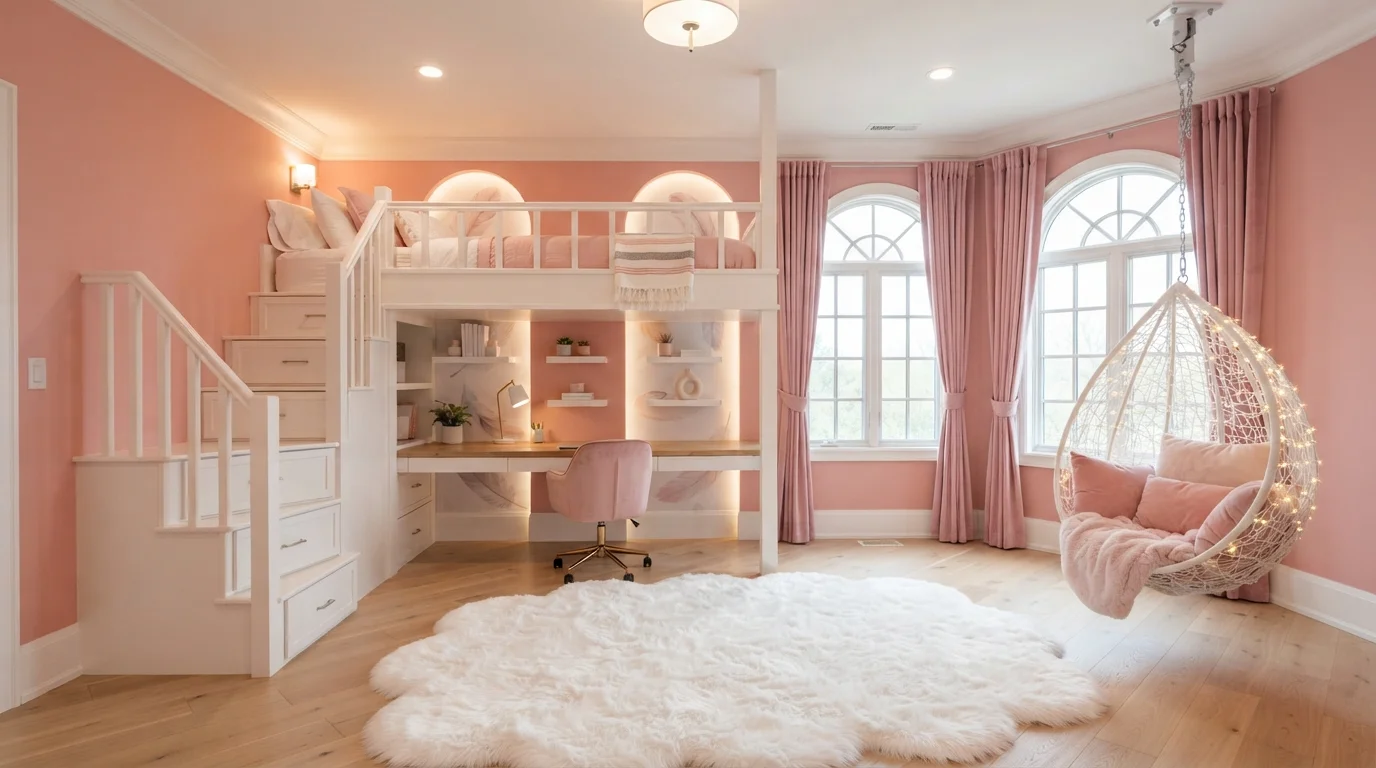
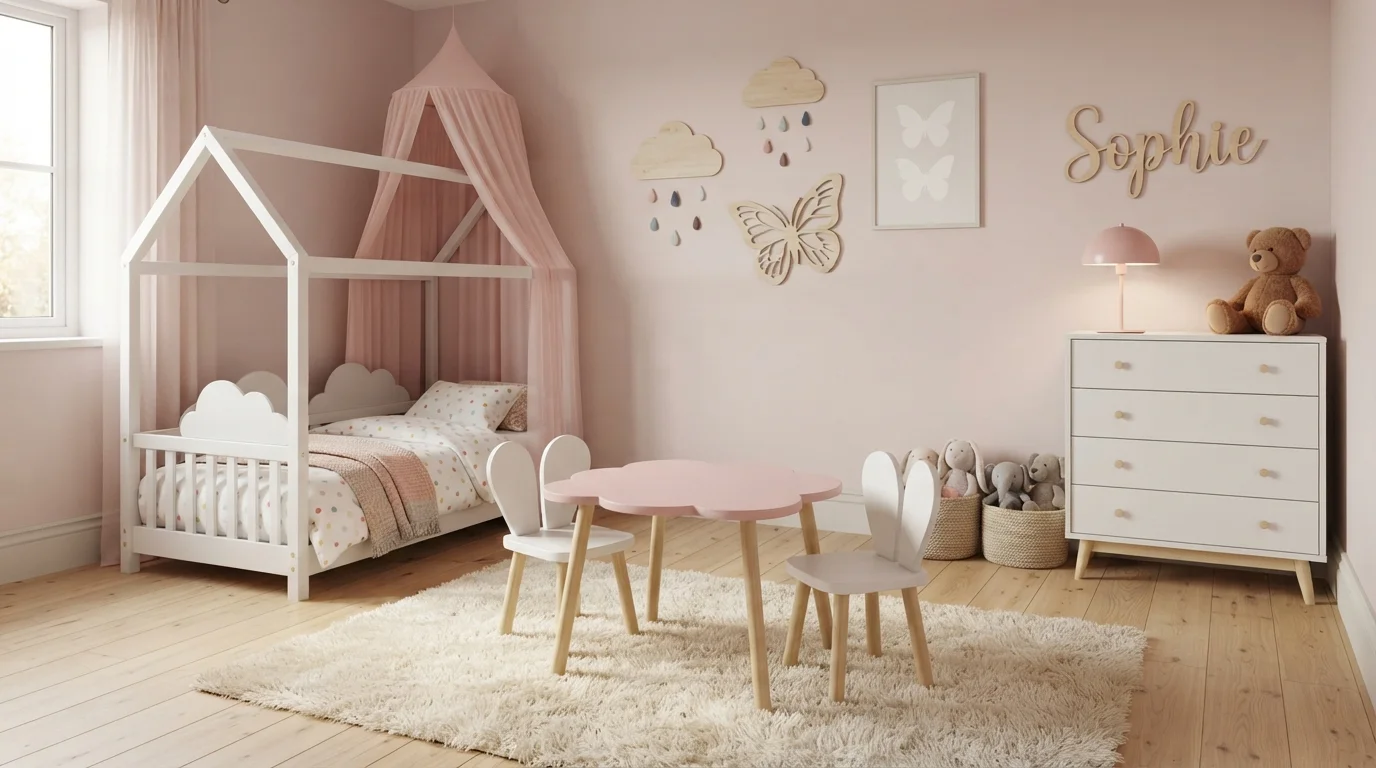
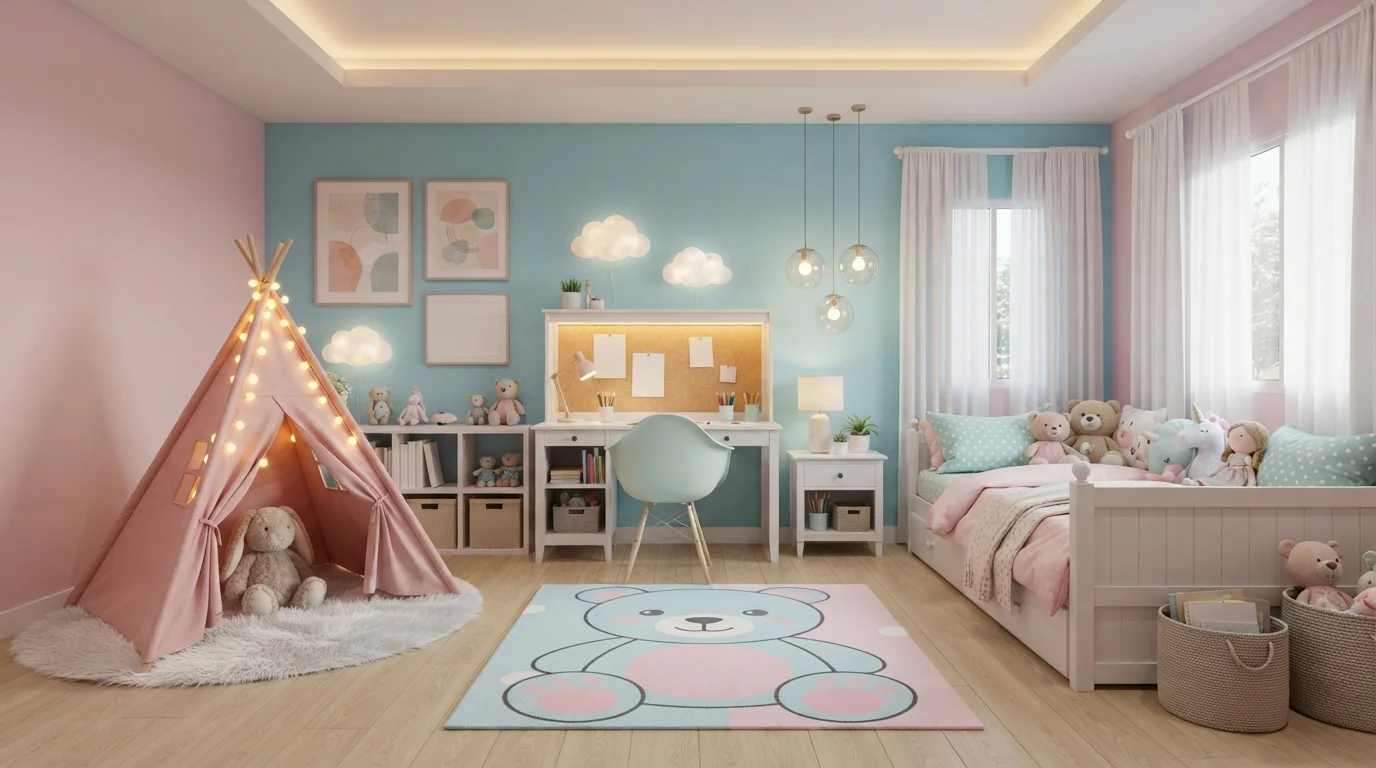
Pink gets pigeonholed as a "girl's room" color, but in a kids room it actually pulls a lot of weight. A soft pink reads warm and calm at bedtime, while a brighter coral or bubblegum can wake a space up for play. The trick is matching the depth of pink to what the room is for and how old the child is, because a shade that feels sweet at age four can feel babyish by age nine.
This page is about choosing pink for a kids room specifically: how the room's light changes the color, which sheen survives sticky hands and scrubbing, and how to pair pink with white trim, ceilings, and the furniture kids rooms tend to collect. Every swatch shown here is mixed to order at the paint counter, so once you find a pink you like you can have it tinted in any brand and cross-matched if you'd rather buy elsewhere.
Why Pink Works In A Kids Room
Pink is one of the easiest colors to live with in a kids room because it leans warm and friendly without being loud. A muted, dusty pink keeps a small bedroom feeling cozy and helps wind a child down at night, which is the opposite of what a high-energy primary color does. That makes soft pink a smart pick for a room that doubles as a sleep space.
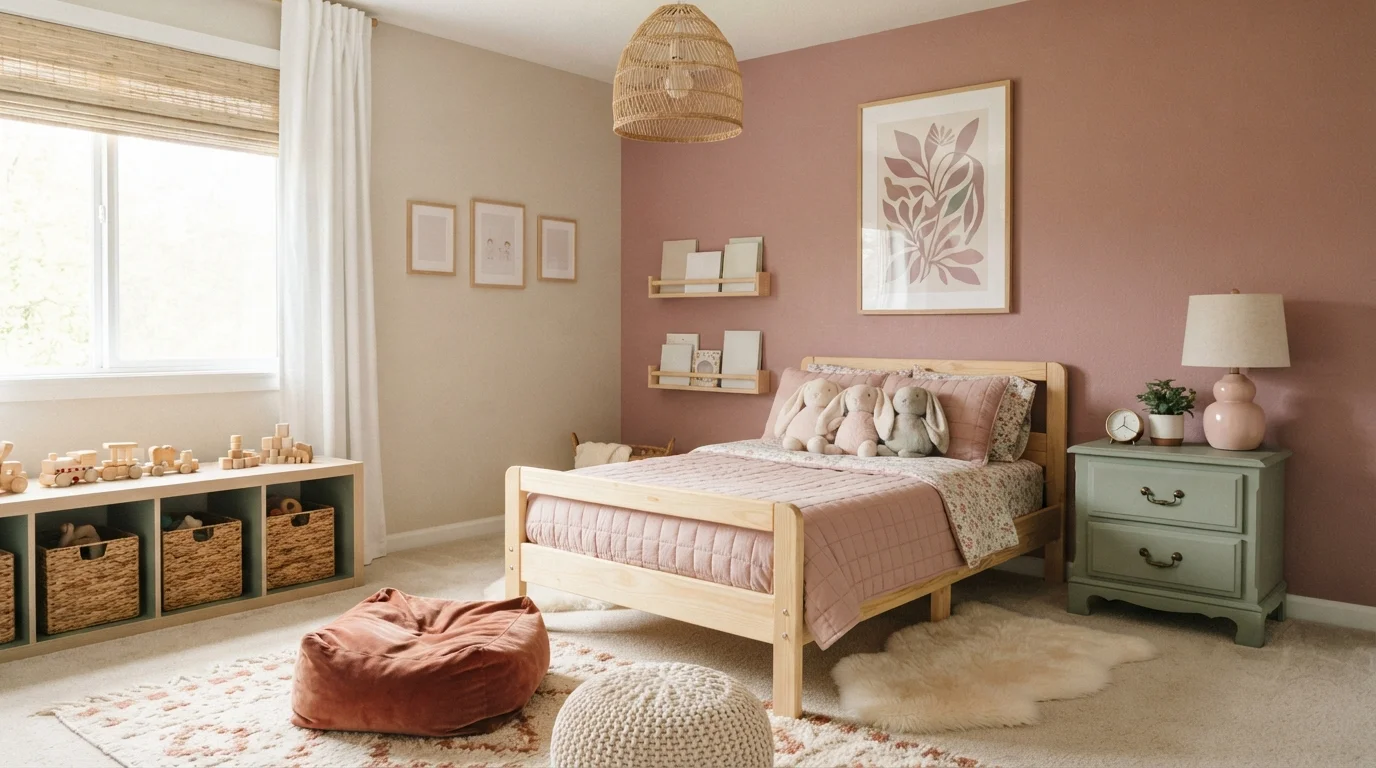
The thing to watch is how fast pink can date or skew too young. A pale baby pink is lovely on a nursery wall but can feel outgrown quickly, so if you want the room to last, lean toward a grounded pink with a little gray or clay in it. That kind of pink grows up with the child and still photographs sweet.
Picking The Right Shade For The Room's Light
Light decides everything with pink, and a kids room is often a smaller room with one window, so the effect is strong. A north-facing or low-light room pushes pink cooler and can make it read mauve or even a little purple, so you'll usually want a warmer, peachier pink to keep it cheerful. A bright south- or west-facing room can make the same pink look hot and intense by afternoon, so a softer, grayer pink holds up better there.
LRV (light reflectance value, a 0–100 scale of how much light a color bounces back) is your shortcut here. For a kids room, a pink in the roughly 55–75 LRV range stays light and airy without going invisible, while anything below about 45 starts to feel like a moody accent rather than a whole-room color. Always tape a sample up and look at it morning, noon, and night before you commit.
The Right Sheen For A Kids Room
A kids room takes abuse, so sheen matters more than the exact shade. Eggshell or satin is the sweet spot for the walls: both wipe down when crayon, fingerprints, or juice show up, but they don't throw harsh glare or spotlight every bump and ding the way a glossier finish does. Flat looks beautiful but it's hard to clean, so save it for ceilings only.
For trim, doors, and any built-ins, step up to satin or semi-gloss because those surfaces get kicked, grabbed, and scuffed the most. The slightly higher sheen takes repeated scrubbing without wearing through. If the room has a closet that doubles as a play nook or any spot near a bathroom, the more washable finish is worth it there too.
Pairing Pink With Trim, Ceiling, And Furniture
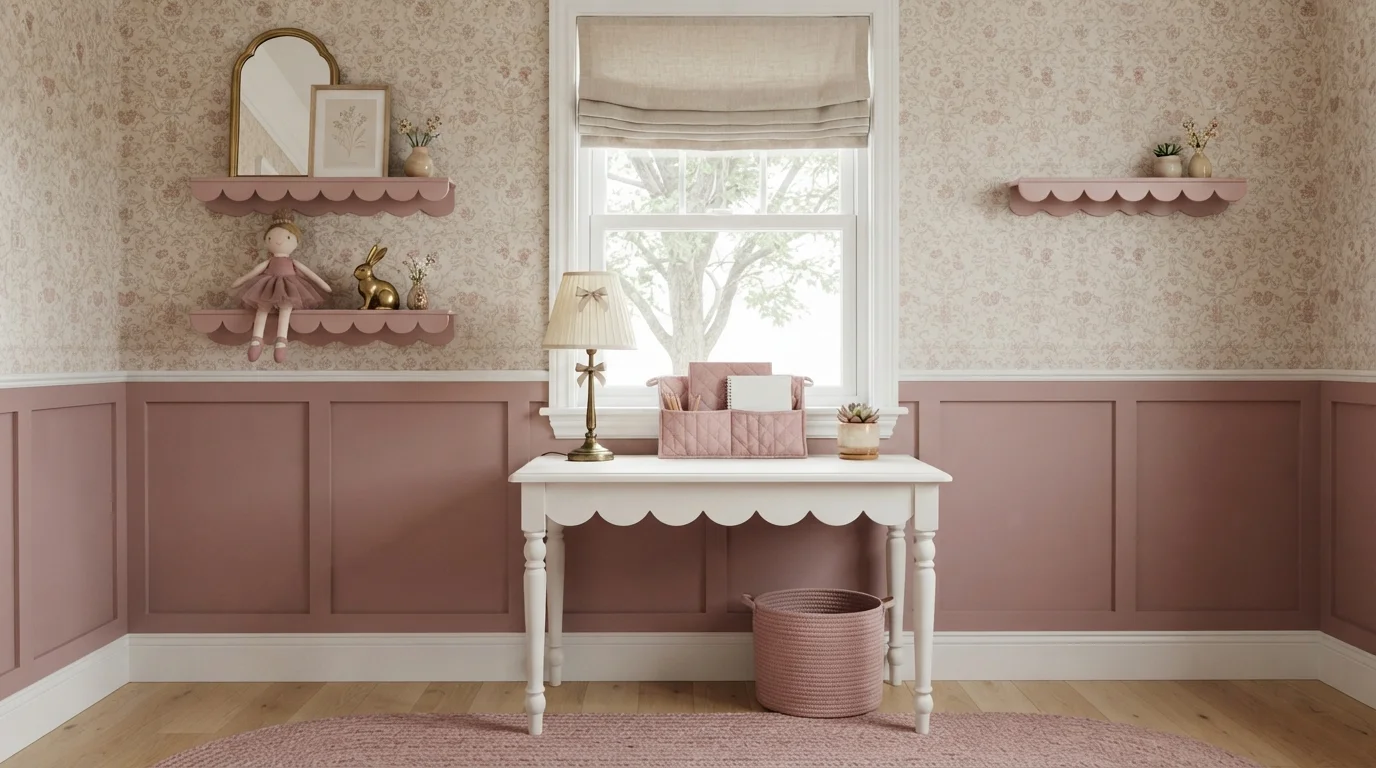
Clean white trim and a white ceiling are the safest partners for pink in a kids room because they keep the look fresh and let the wall color be the star. A soft warm white feels gentle next to a dusty pink, while a crisp bright white sharpens up a brighter pink and stops it from feeling syrupy. Painting the ceiling a hair lighter than the walls, or just plain white, keeps a small room feeling tall.
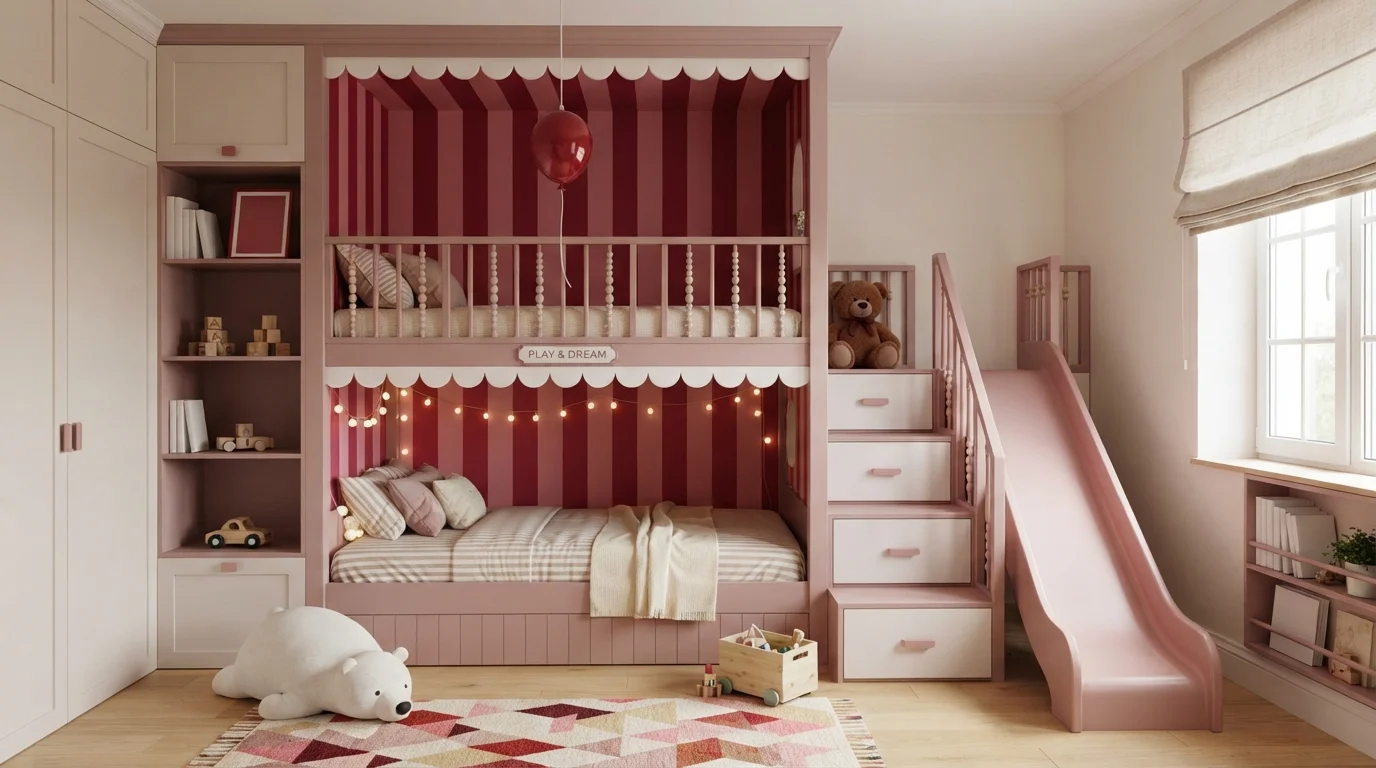
Kids rooms fill up with wood furniture, white shelving, and a lot of colorful clutter, so let the pink play backdrop. Natural wood warms a pink room nicely, black or brass hardware adds a grown-up note that ages well, and you can let bedding, art, and toys carry the bolder accent colors. That way you repaint a $40 quilt instead of the whole room when tastes change.
Common Mistakes With Pink In A Kids Room
The biggest mistake is going too saturated. A vivid hot pink looks fun on a paint chip but wraps a whole room in an overwhelming amount of color that's hard to sleep in and harder to undo. Pull back a step or two from the chip you're drawn to, because color always intensifies once it's on four walls.
The other common misses are skipping samples and ignoring undertone. Pinks carry hidden peach, coral, mauve, or gray, and the wrong undertone fights with the flooring or clashes with the kid's favorite bedding. Test a real sample on the actual wall, and remember any pink you like can be mixed to order and cross-matched across brands, so you're never stuck choosing the right color from the wrong brand.
Pink Kids Room Paint — Frequently Asked Questions
Is pink only for girls' rooms?+
No. A muted dusty pink, a warm clay pink, or a peachy coral all read as calm, cheerful colors rather than gendered ones. Pairing pink with natural wood, black, or brass instead of frilly accents keeps the room feeling fresh for any kid.
What shade of pink is best for a small or dark kids room?+
In a low-light or north-facing room, choose a warmer, peachier pink with a higher LRV, roughly in the 60–75 range, so it stays light and doesn't drift cool toward mauve. Avoid deep or grayed-down pinks in a dark room, since they'll lose their cheer and read muddy.
What paint finish should I use in a kids room?+
Use eggshell or satin on the walls so you can wipe off crayon and fingerprints without harsh glare, and go up to satin or semi-gloss on trim, doors, and built-ins that take the most scuffing. Save flat for the ceiling, where cleaning isn't a concern.
What trim and ceiling color goes with pink?+
White is the easiest and most flexible choice. A soft warm white flatters a dusty pink, a crisp bright white sharpens a brighter pink, and a white or near-white ceiling keeps a small kids room feeling open and tall.
How do I keep a pink room from looking too babyish?+
Skip the pale baby pinks and pick a grounded pink with a little gray or clay in it, then add grown-up touches like wood furniture and black or brass hardware. Let removable things like bedding and art carry the playful accents so the room can grow with your child.
Can I get the same pink in a different paint brand?+
Yes. Every pink shown here is mixed to order at the paint counter, and a color from one brand can be cross-matched to another. Pick the shade you love first, then have it tinted in whichever brand you prefer to buy.