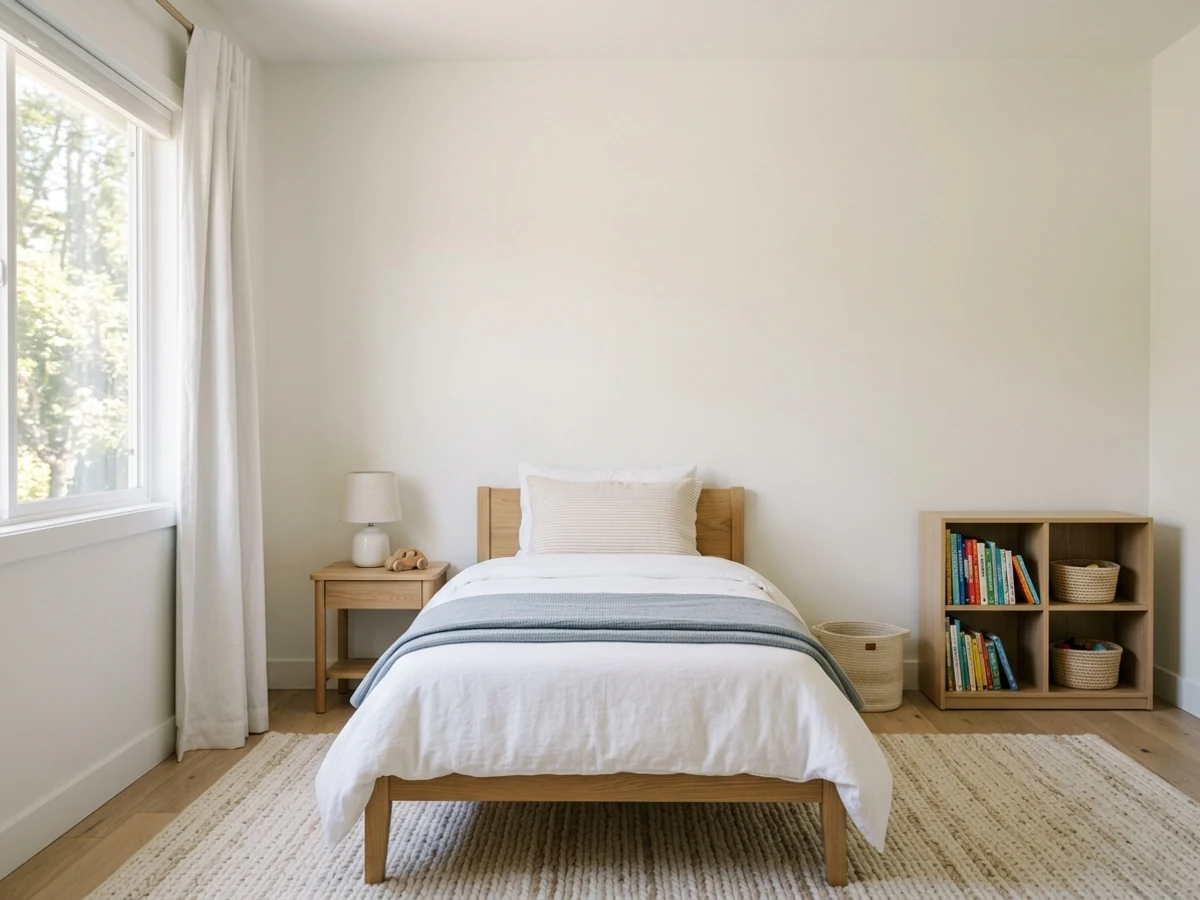
Green Kids Room Paint Colors
2,263 green colors that work in kids rooms, drawn from the full ~30,000-color US paint deck. Below: editor's picks specific to kids rooms, then 30 picks spread across the LRV range — narrow further on the brand page when you've shortlisted.
Green has quietly replaced grey as the safe-but-interesting wall color of the late 2020s. Sage Green, the soft grey-green that became the de facto fallback, anchors the family — but the broader green palette runs from olive (warm, earthy, faintly yellow) to forest (deep blue-green) to emerald (saturated jewel tone).
Editor's Picks: Green for Kids Rooms
4 picks30 Green Picks Across the LRV Range
30 of 2,263 · sorted dark → lightLooking for more? All green → covers every brand; brand × family pages show full decks.
Green Kids Room Colors at Every US Brand
19 brands · up to 10 picks eachUp to 10 picks per brand spread across the green LRV range, drawn from each brand's full deck. Tap any swatch with a curated guide for full spec; tap the brand title for the brand's complete green deck.
Behr
Benjamin Moore
Glidden
Valspar
Dunn-Edwards
PPG / Glidden
Sherwin-Williams
Dutch Boy
Hirshfield's
Diamond Vogel
Kompozit
C2 Paint
Farrow & Ball
Magnolia Home
Clare
Rodda
Annie Sloan
Backdrop
Other Kids Room Color Families
Green Colors in Other Rooms
Green Paint Colors for a Kids Room
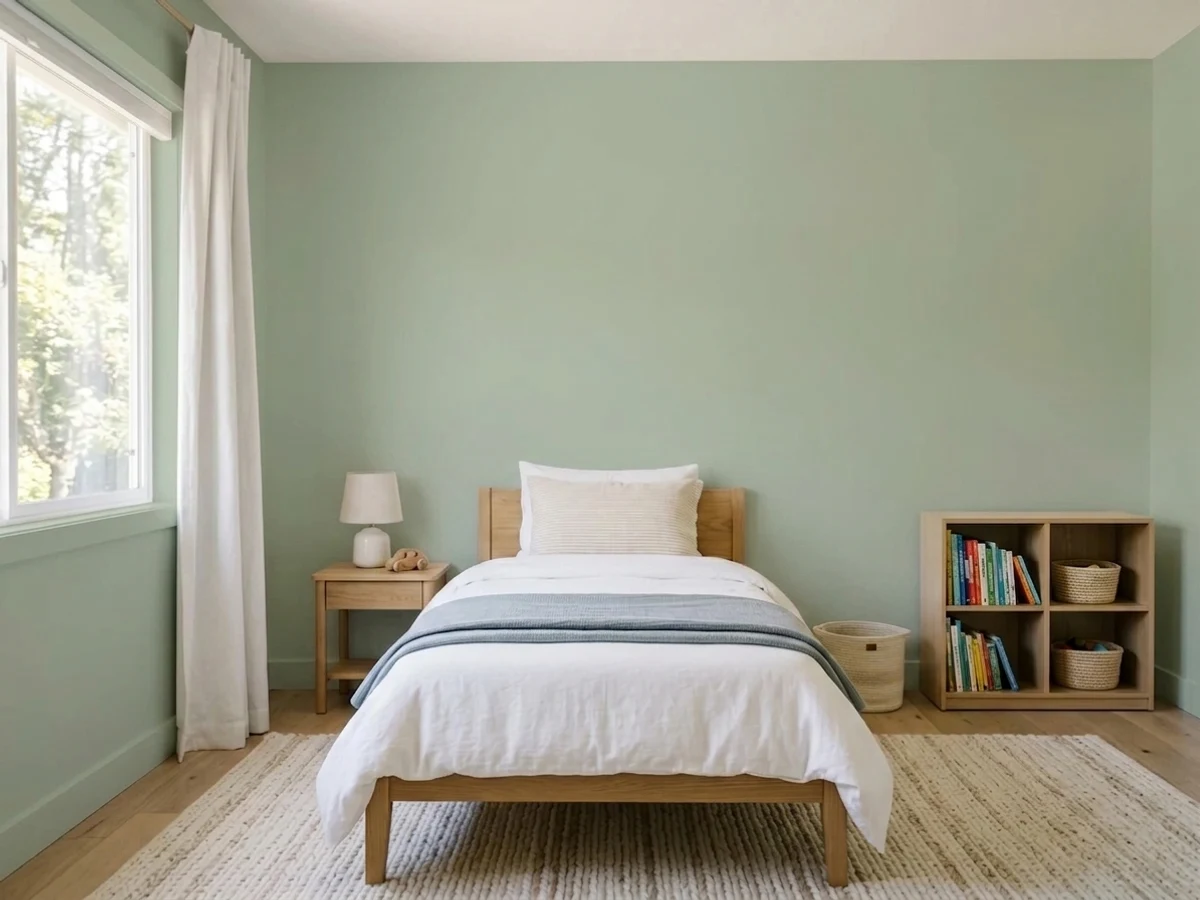
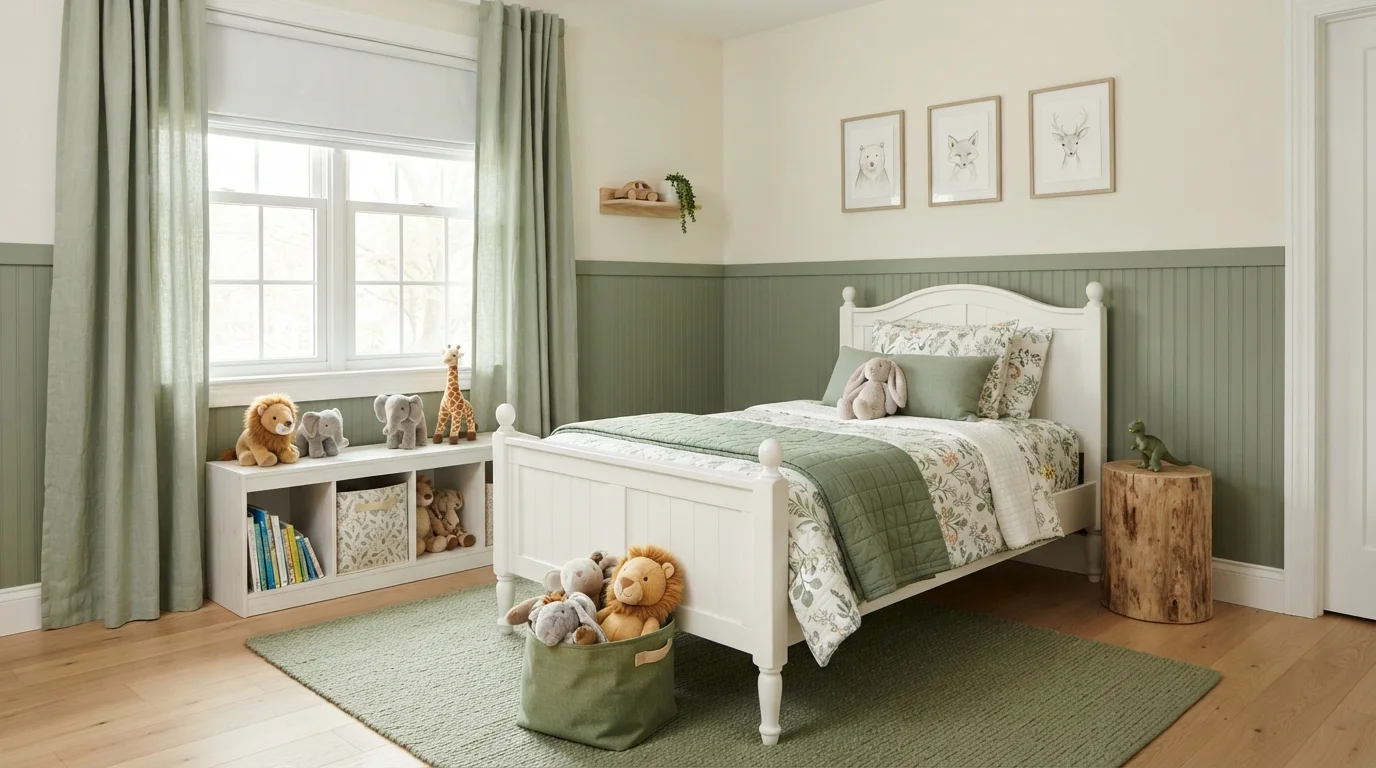
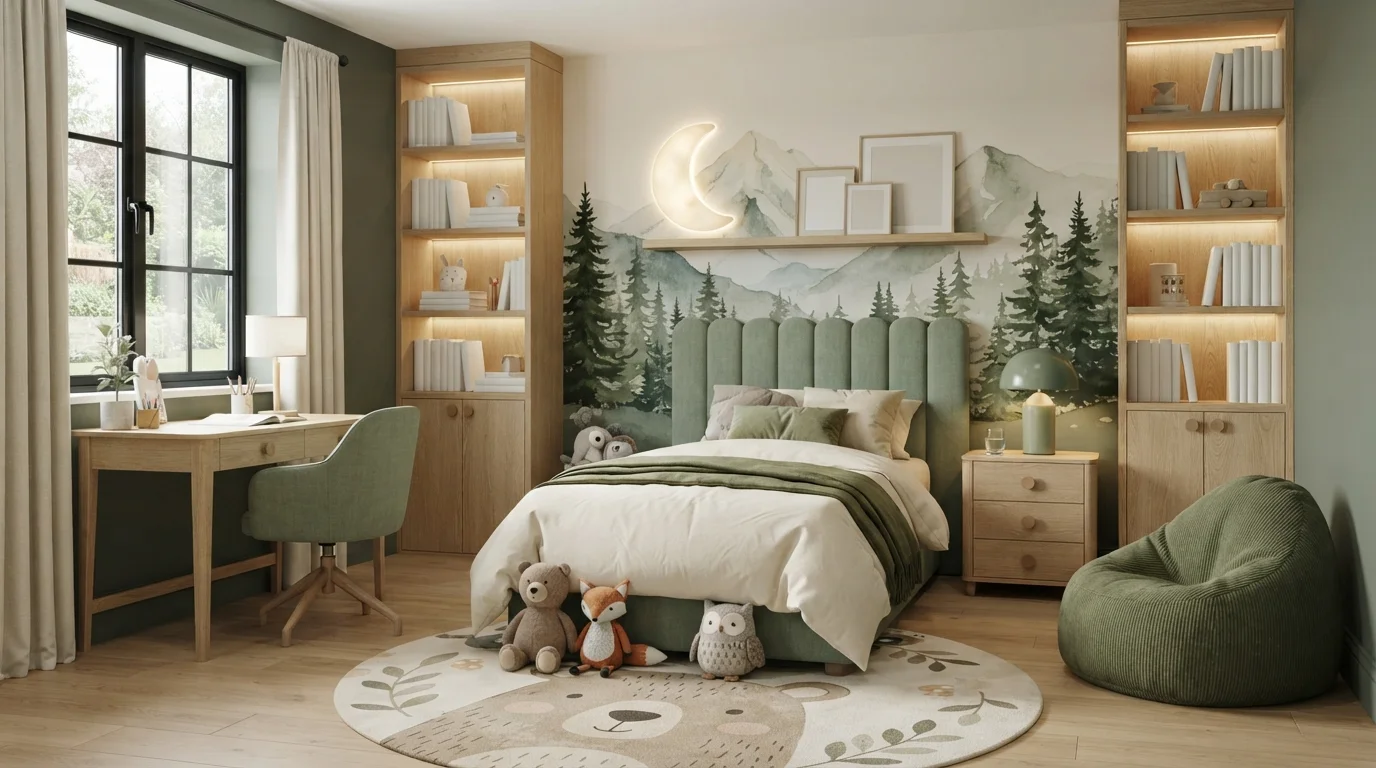
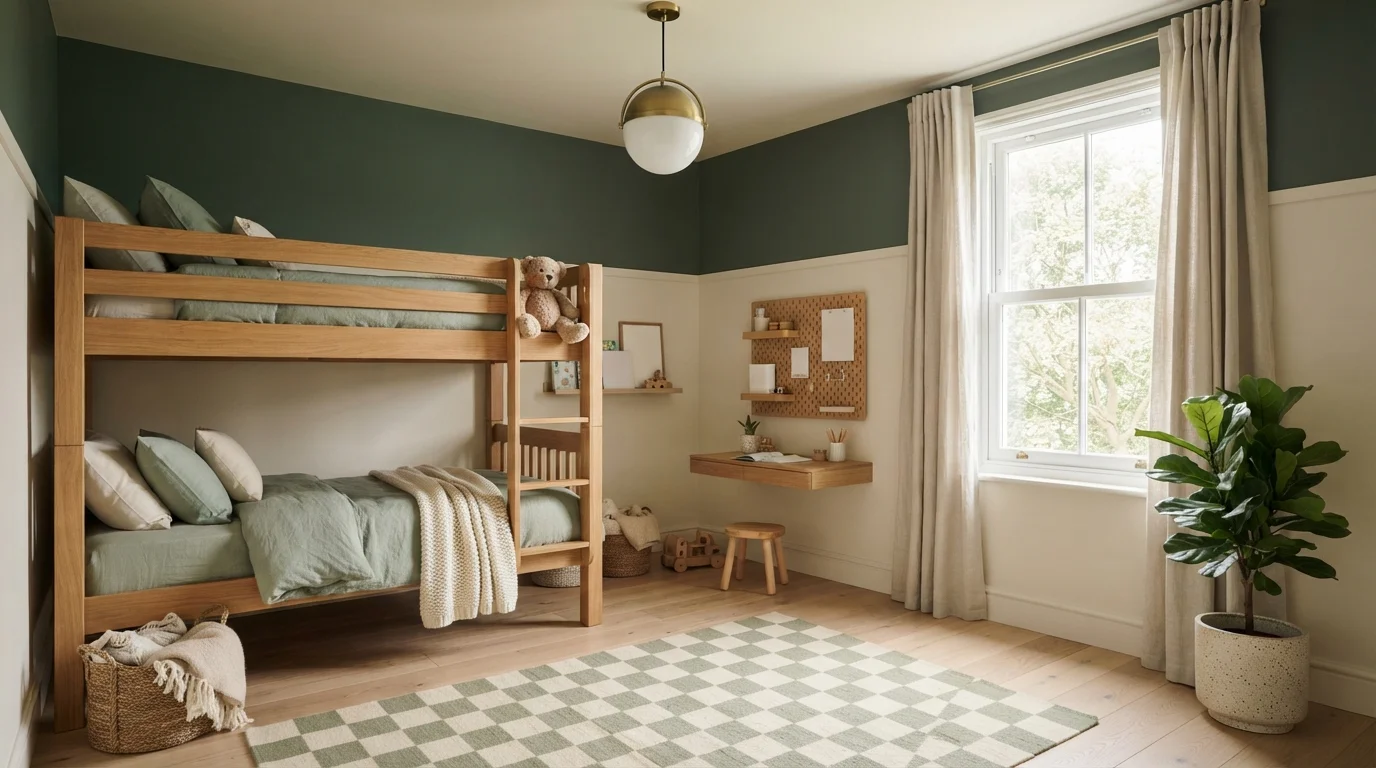
Green is one of the easiest colors to live with in a kids room. It reads calm but still feels alive, so it works for a quiet nursery and an energetic eight-year-old without picking a side. It also bridges the gap between "baby" and "big kid" better than pink or blue, which means the walls can stay put for years instead of getting repainted every birthday.
The trick is choosing the right green for the actual room, not the green you saw on a screen. A kids room has its own demands: it gets hard use, it often has limited or north-facing light, and the color has to survive crayons, sticky hands, and a rotating cast of toys and bedding. Below is how to pick a green that fits the space, the light, and the wear.
Why Green Works in a Kids Room
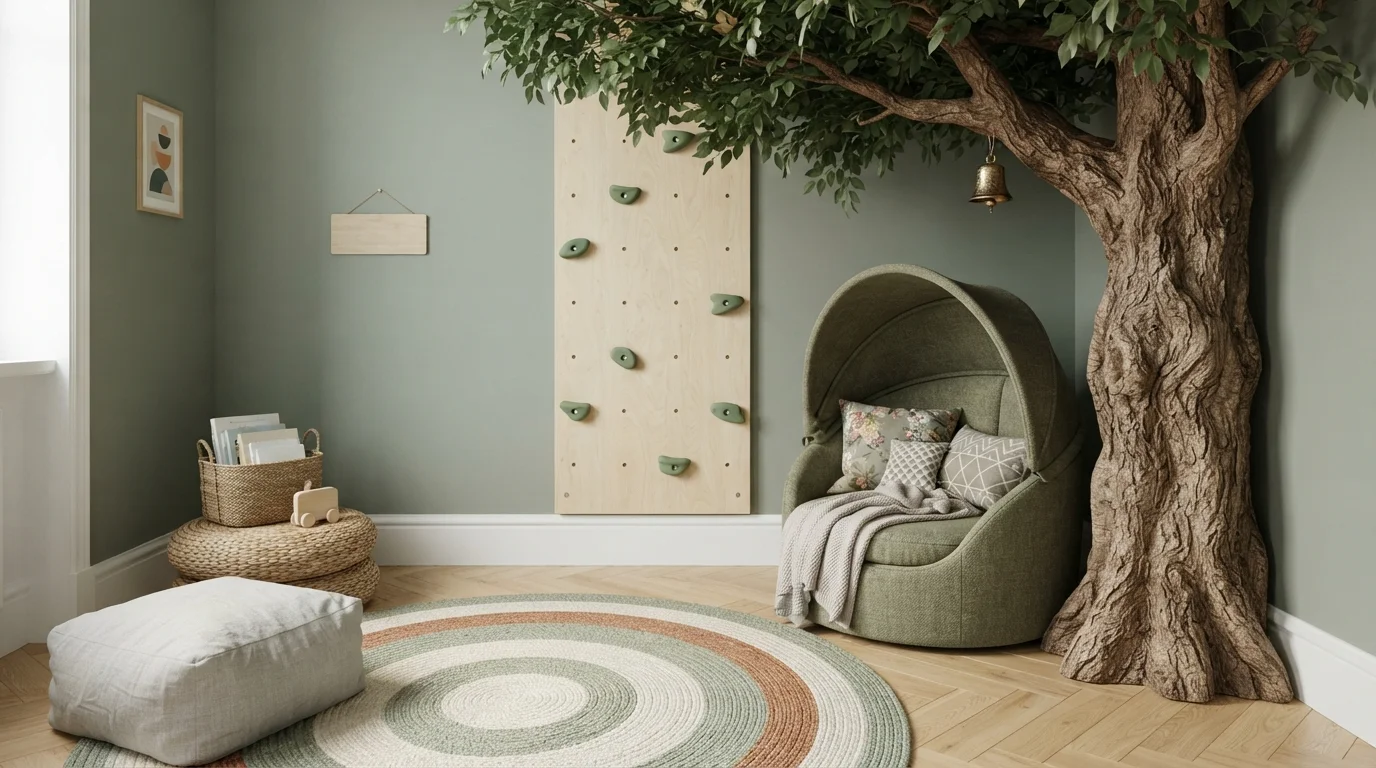
Green sits in the middle of the color wheel, so it feels balanced rather than too sweet or too cool. That neutrality is why it suits a child of almost any age and works for a boy's room, a girl's room, or a shared room without leaning one way. Kids also respond well to it because it reads like the outdoors, which keeps a room feeling fresh instead of closed in.
The other big advantage is longevity. Soft sage and muted leafy greens grow up with a child, pairing just as easily with crib bedding as with a teenager's posters. Painting a kids room is one of the few times you can pick a color the child likes today that you won't resent in five years.
Picking the Right Depth and Letting the Light Decide
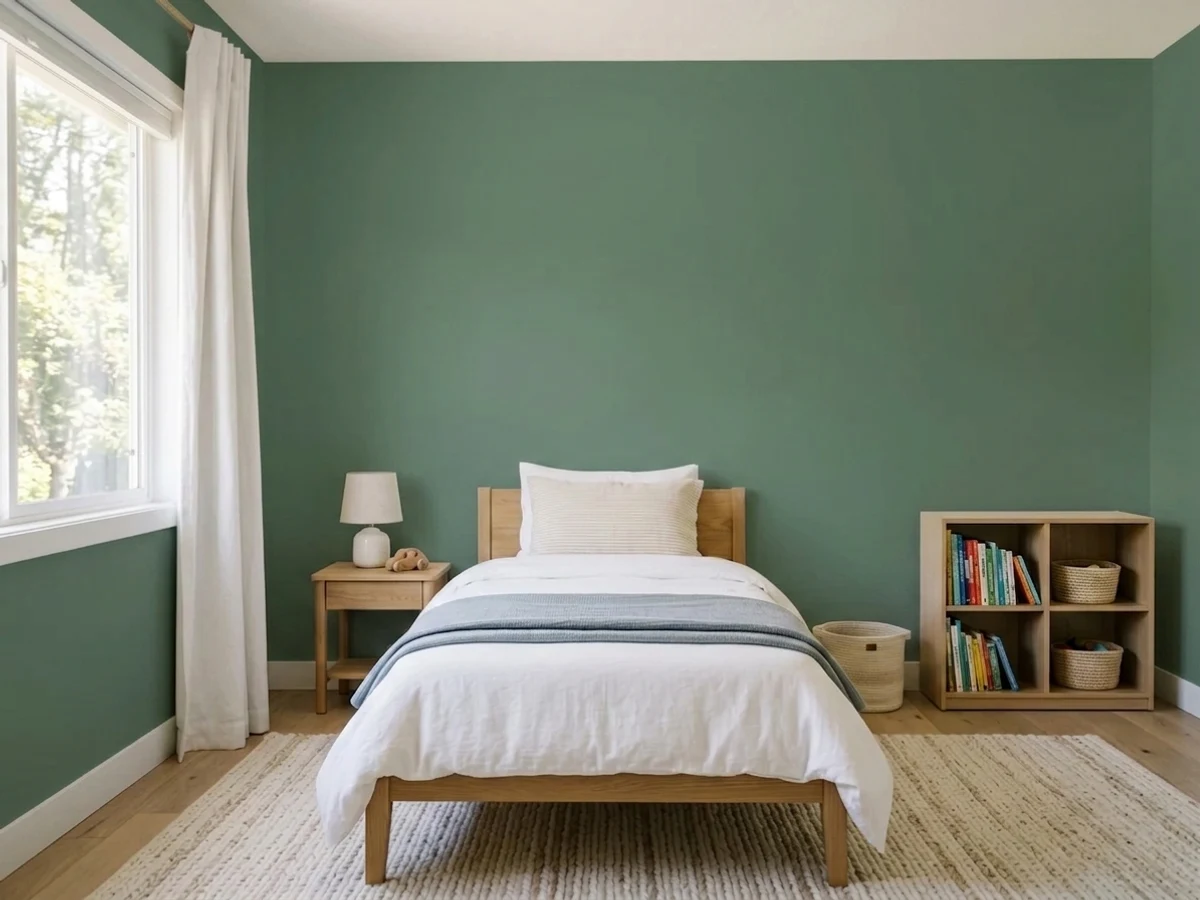
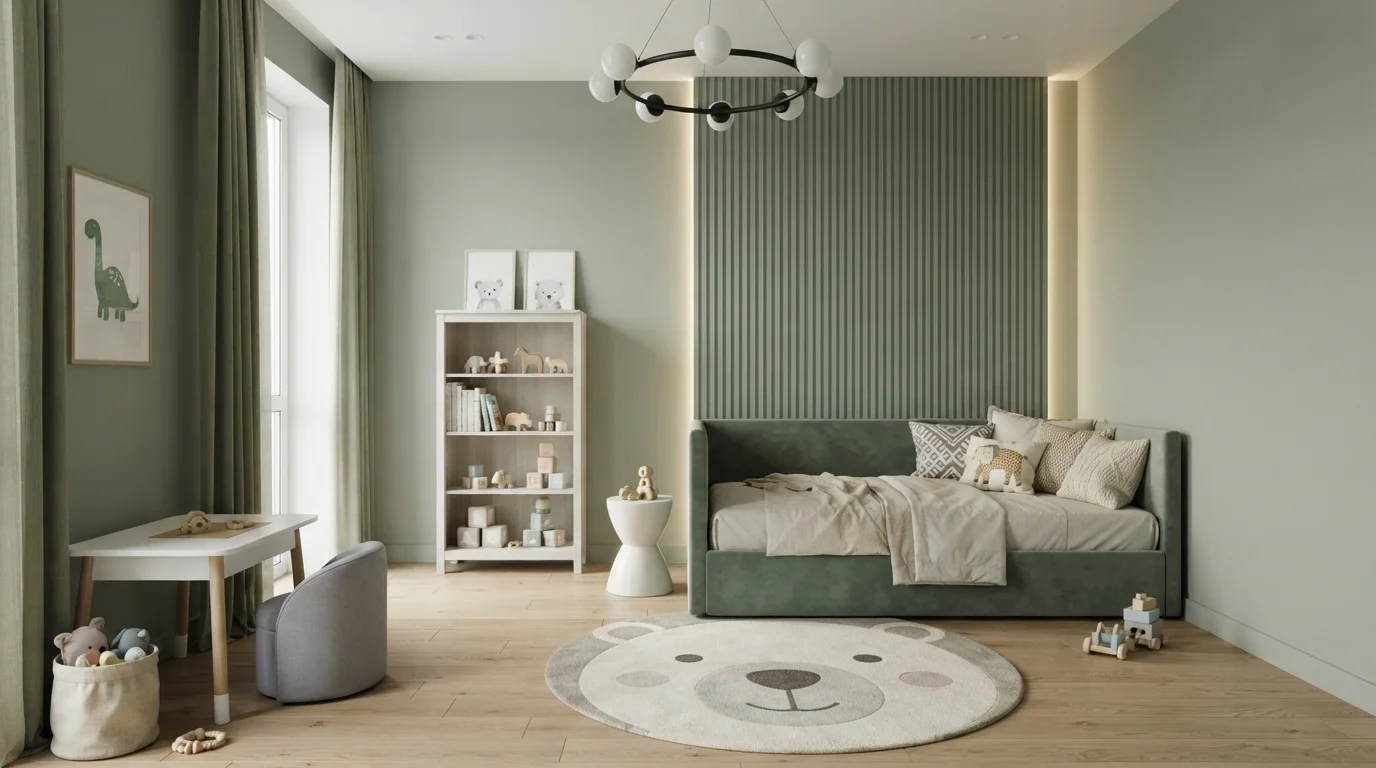
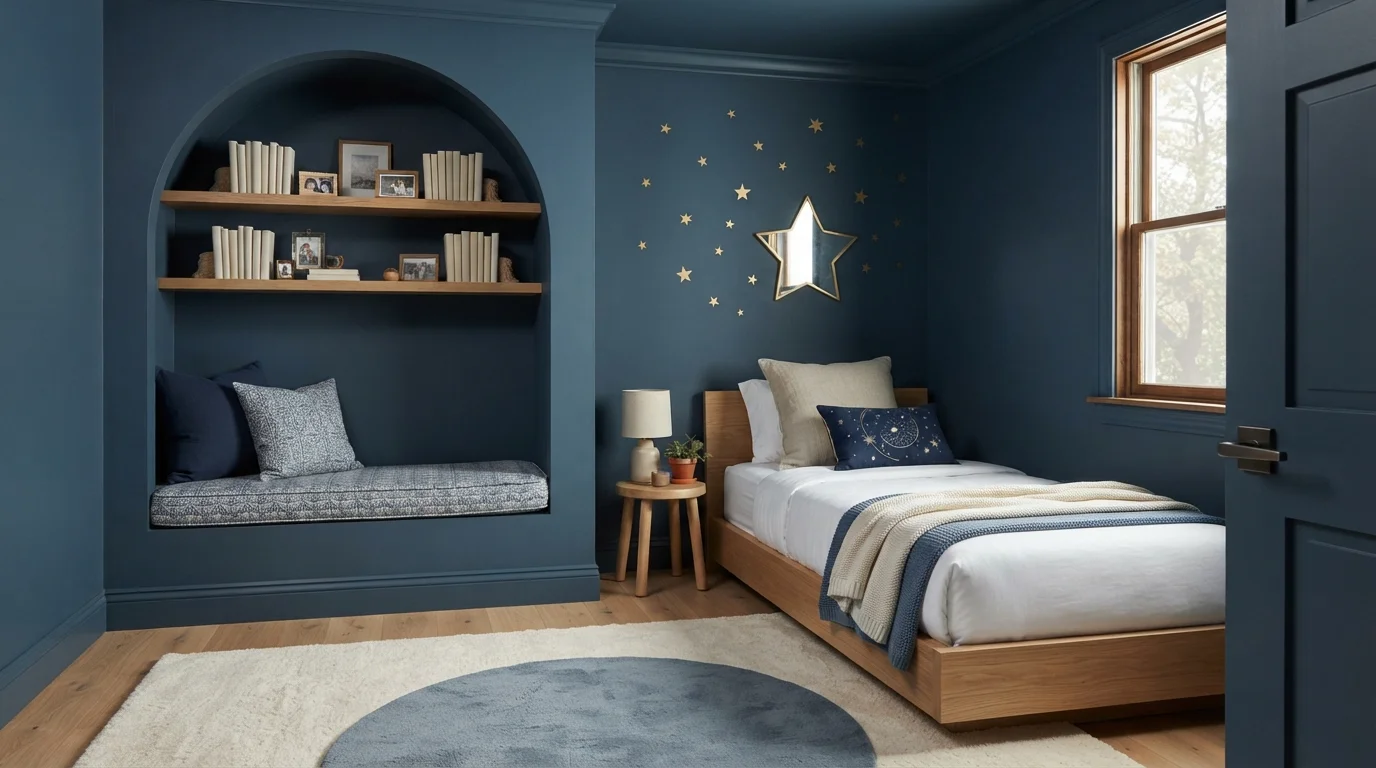
For most kids rooms, a soft to mid green is the safe lane. Look for a green with an LRV roughly in the 55 to 70 range: light enough to keep the room bright and bedtime-friendly, deep enough to feel like a real color and not a wash. Very pale greens near 75 and up can drift toward institutional or sickly, while deep forest greens under 30 eat the light and can make a small room feel like a cave.
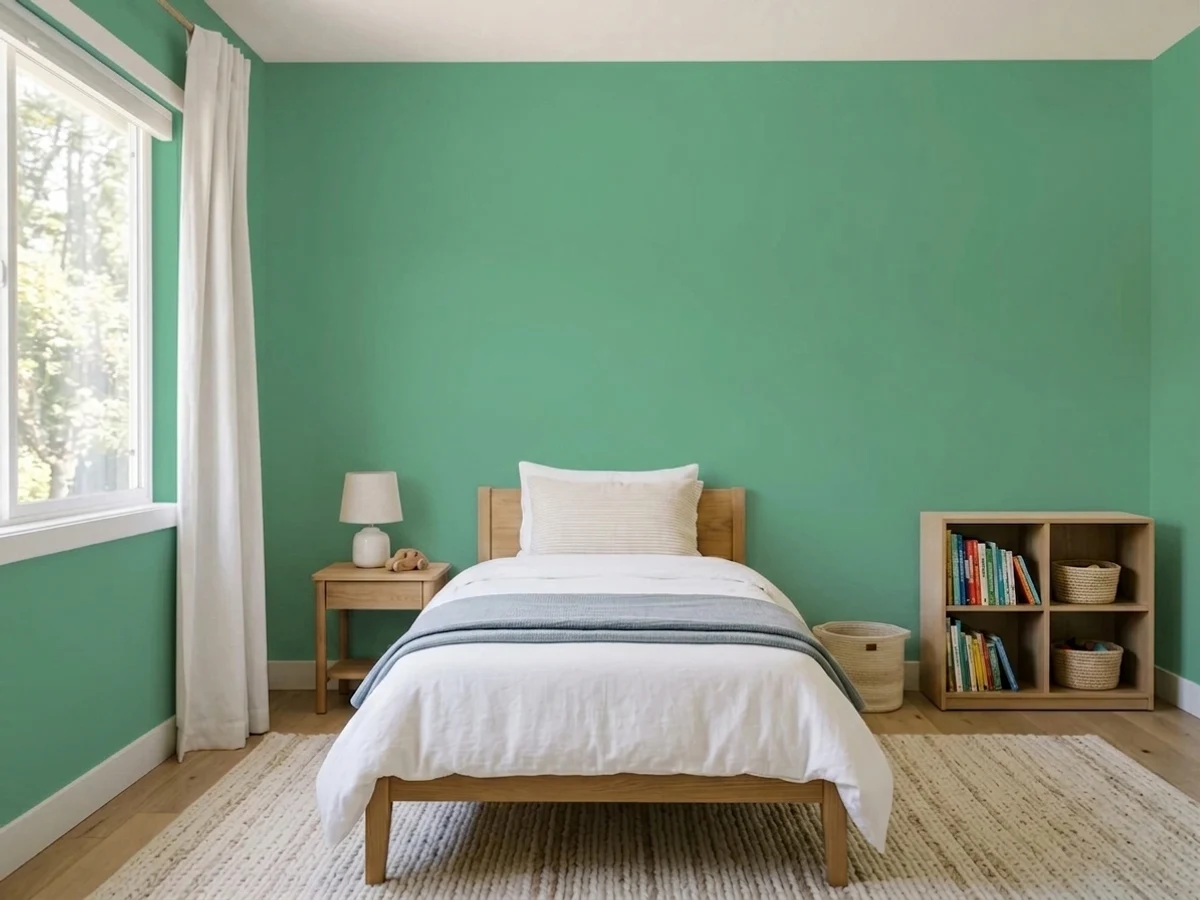
Light steers the undertone more than the depth does. A north-facing or low-light kids room pulls cool greens grayer and flatter, so warmer greens with a touch of yellow keep it from feeling cold. A bright south- or west-facing room can take a cooler, mintier green without it going dull. Always tape a sample on two walls and watch it at naptime, after school, and after dark, since that's when the room is actually used.
The Right Finish for Hard Use
Skip flat and matte on kids room walls. Children touch, lean, and draw on walls, and flat paint can't be scrubbed without leaving a burnished mark. An eggshell or satin finish is the sweet spot: it has just enough sheen to wipe down crayon and fingerprints, but not so much that it throws glare or spotlights every bump and old nail hole.
Use semi-gloss on the trim, door, and any wainscoting, since those are the highest-contact, most-scrubbed surfaces in the room. For the ceiling, stick with flat to hide imperfections. If the room has had moisture issues or sits next to a bathroom, lean toward satin on the walls for the extra washability.
Pairing Green With Trim, Ceiling, and the Rest of the Room
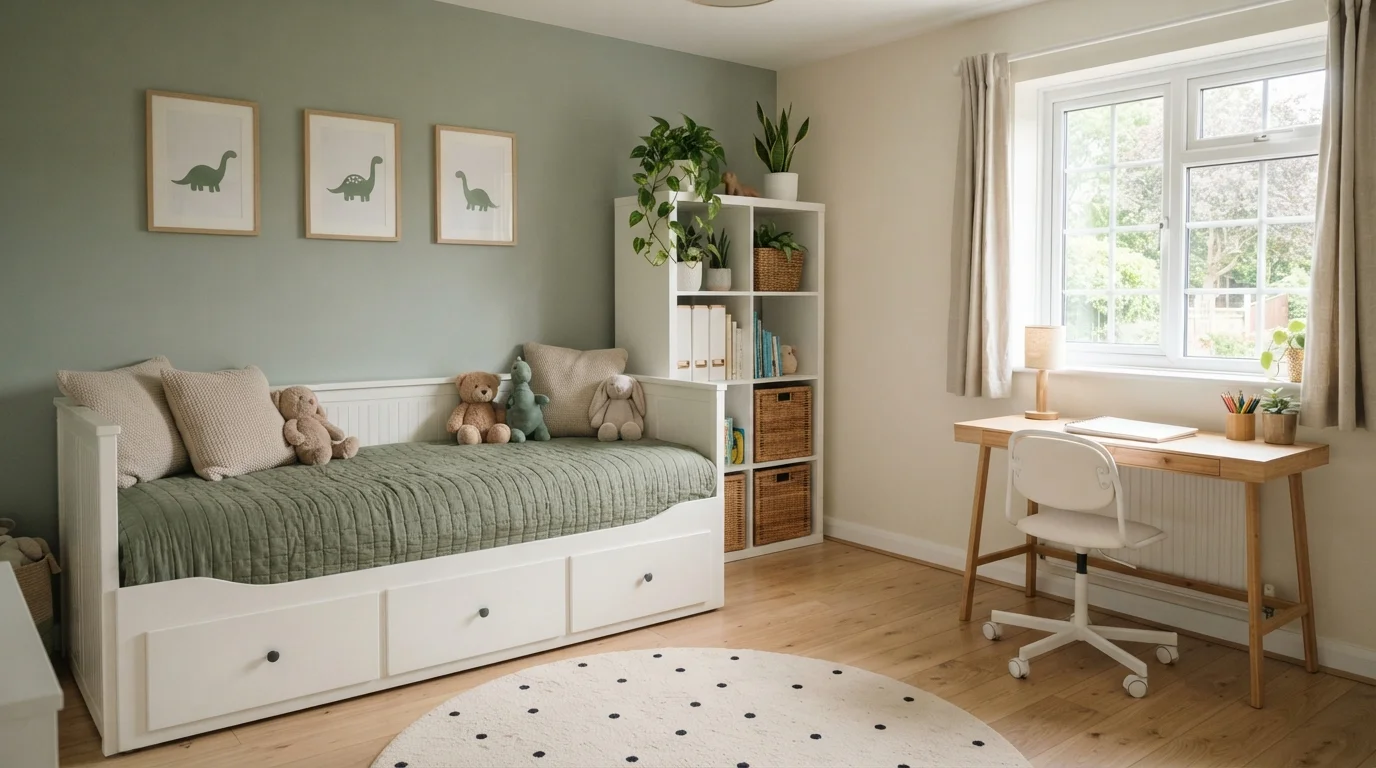
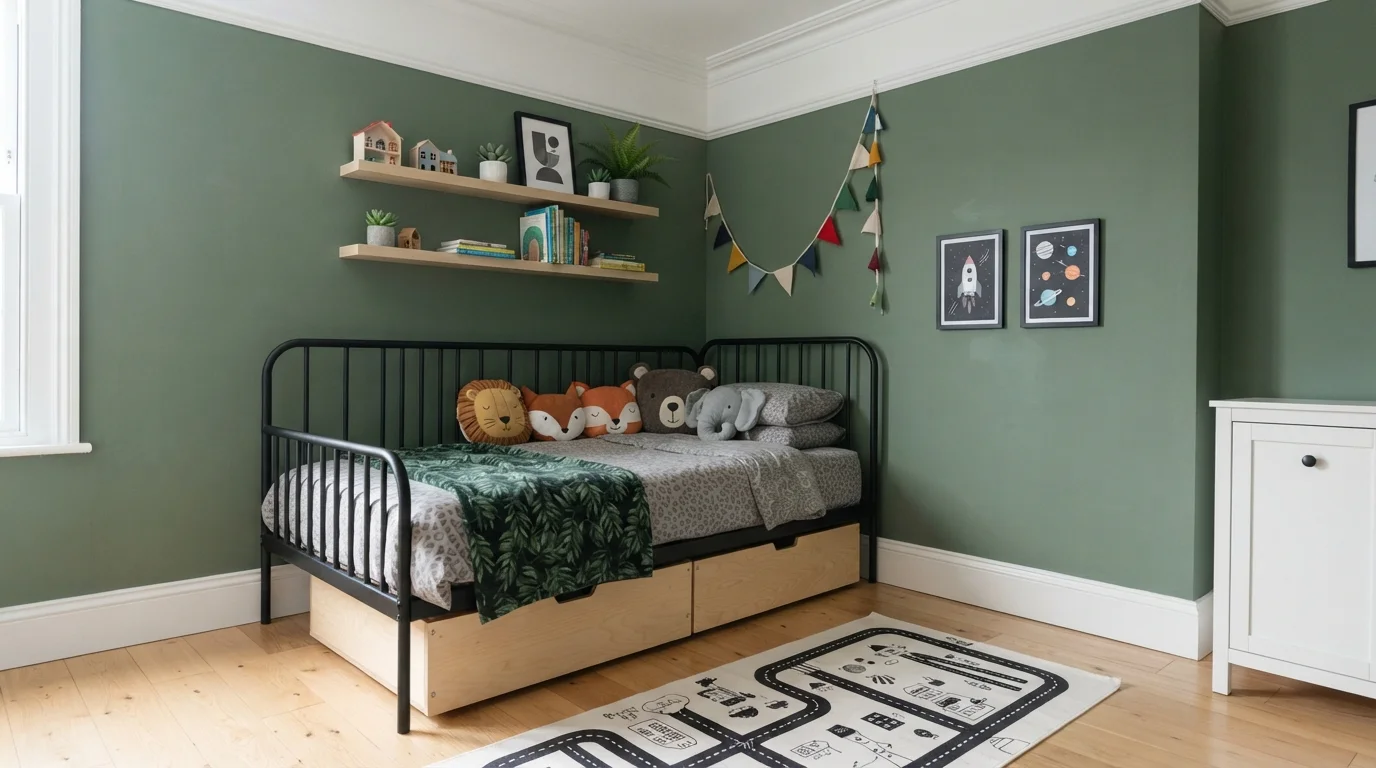
Crisp white trim is the failsafe with green and keeps the room feeling clean and light. If your green is warm and earthy, a soft warm white or creamy white on the trim flatters it more than a stark blue-white, which can look like a mismatch. A simple white ceiling almost always works, but a barely-there tint of the wall green up top can make a low nursery feel softer.
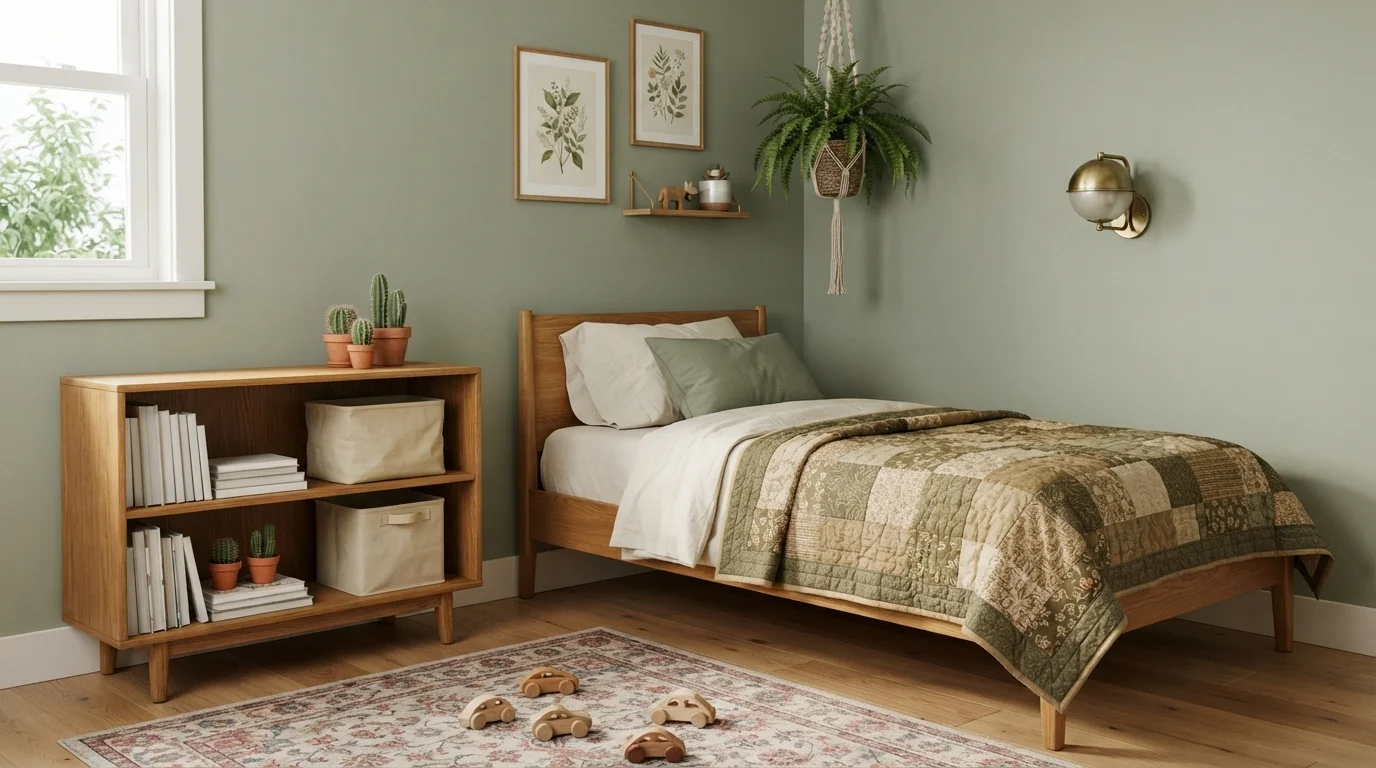
Green plays well with natural wood, so cribs, dressers, and oak or rattan furniture all warm it up. For accents, pick one direction and commit: warm greens love terracotta, mustard, soft pink, and brass hardware, while cooler greens pair cleanly with navy, gray, and black fixtures. Let the bedding and rug carry the bold pattern and keep the walls as the calm backdrop.
Common Mistakes to Avoid
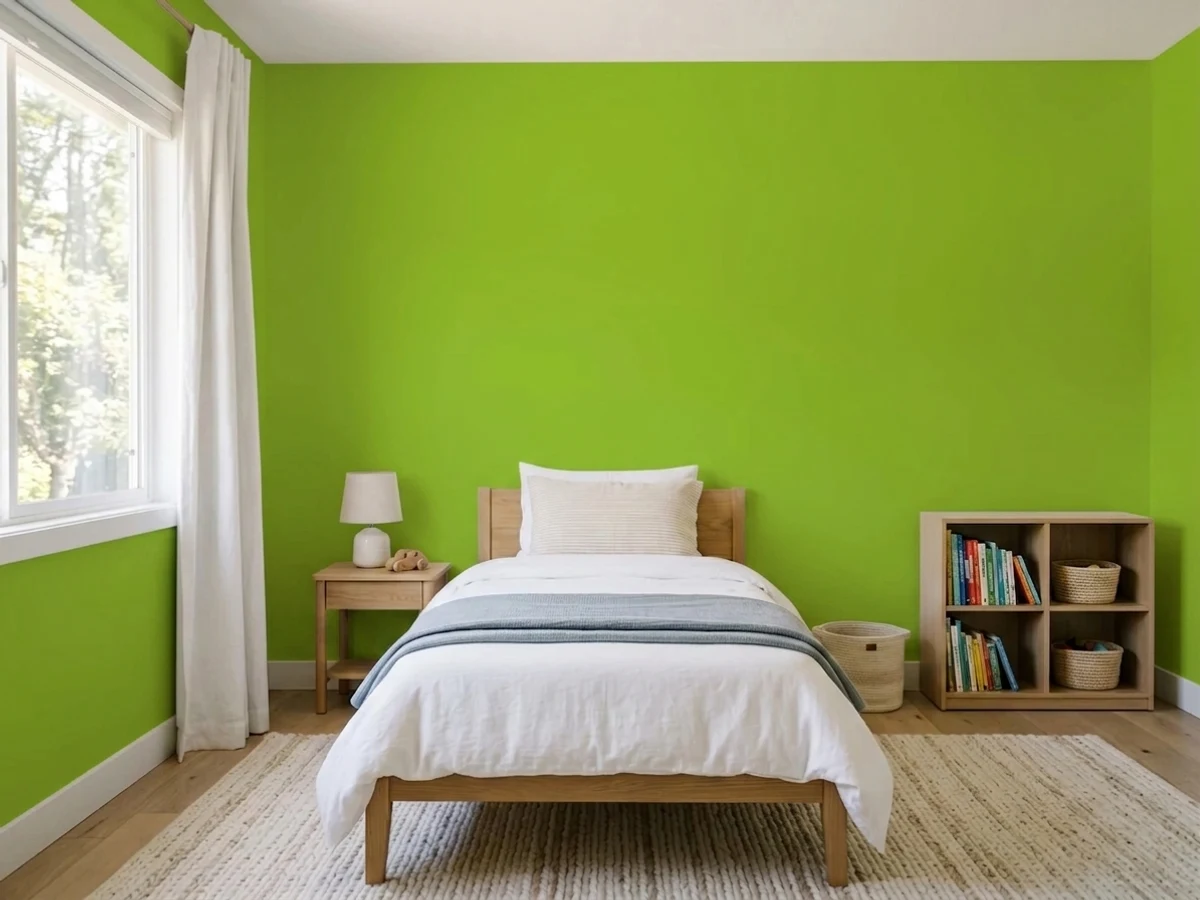
The biggest miss is going too bright or too saturated. A punchy lime or apple green looks fun on a chip but can feel relentless on four walls and make it hard for a child to settle down. If you want energy, put the loud green on one accent wall or in the decor and keep the rest soft.
The second mistake is judging green by the chip alone. Green shifts hard against carpet, bedding, and the room's specific light, and a sample that looked perfect at the store can turn gray, yellow, or minty once it's up. Never skip a real sample, and remember any green you like can be mixed to order at a paint counter and cross-matched between brands, so you're not locked into one company to get the exact shade.
Green Kids Room Paint — Frequently Asked Questions
Is green a good color for a kids room?+
Yes. Green is calm but cheerful, works for any age and any gender, and pairs with almost any bedding or furniture. A soft or mid green is one of the most forgiving choices you can make for a room a child will use for years.
What shade of green is best for a kids room?+
A soft sage or muted leafy green with an LRV around 55 to 70 is the safe pick. It keeps the room bright enough for play and bedtime while still feeling like a real color. Save the bright, saturated greens for an accent wall or the decor.
What paint finish should I use in a kids room?+
Use eggshell or satin on the walls so you can wipe off crayon and fingerprints. Put semi-gloss on the trim and door for durability, and keep the ceiling flat to hide imperfections. Avoid flat or matte on the walls because it can't be scrubbed clean.
What trim color goes with green in a kids room?+
White trim is the easy default. Match the white to the green's undertone: a warm or creamy white for earthy greens, and a cooler white for mintier greens. Natural wood furniture also pairs beautifully with green.
Will green make a small kids room feel smaller?+
Not if you keep it light. Soft, higher-LRV greens reflect light and keep a small room feeling open. Deep forest greens absorb light and can close in a small space, so use those only on an accent wall or in a room with good natural light.
Can I get the same green from different paint brands?+
Yes. Every color shown here is mixed to order at the paint counter, and a green from one brand can be cross-matched to an equivalent at another. Pick the shade you love first, then choose the brand or store that's most convenient for you.