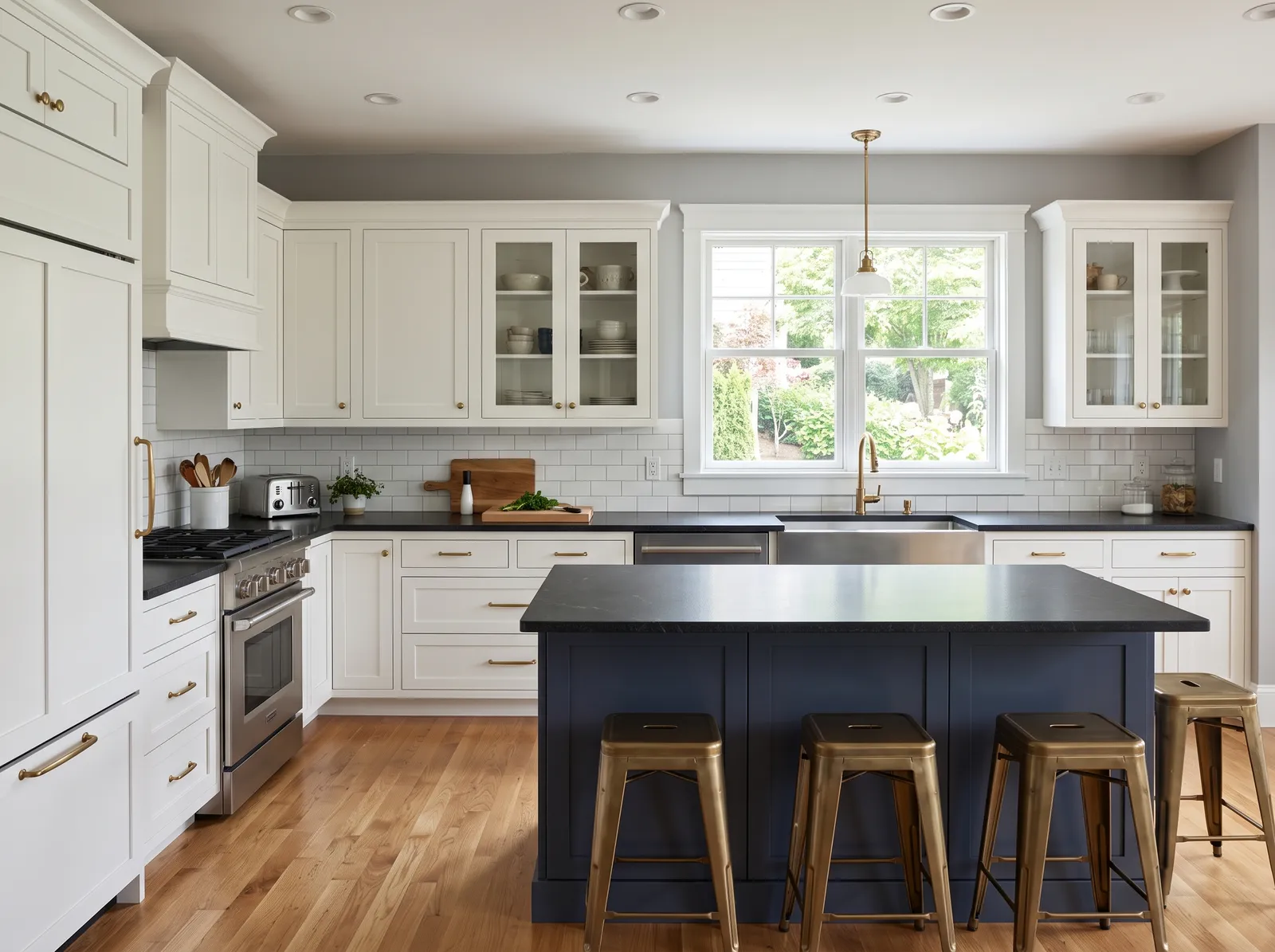
Green Kitchen Paint Colors
2,263 green colors that work in kitchens, drawn from the full ~30,000-color US paint deck. Below: editor's picks specific to kitchens, then 30 picks spread across the LRV range — narrow further on the brand page when you've shortlisted.
Green has quietly replaced grey as the safe-but-interesting wall color of the late 2020s. Sage Green, the soft grey-green that became the de facto fallback, anchors the family — but the broader green palette runs from olive (warm, earthy, faintly yellow) to forest (deep blue-green) to emerald (saturated jewel tone).
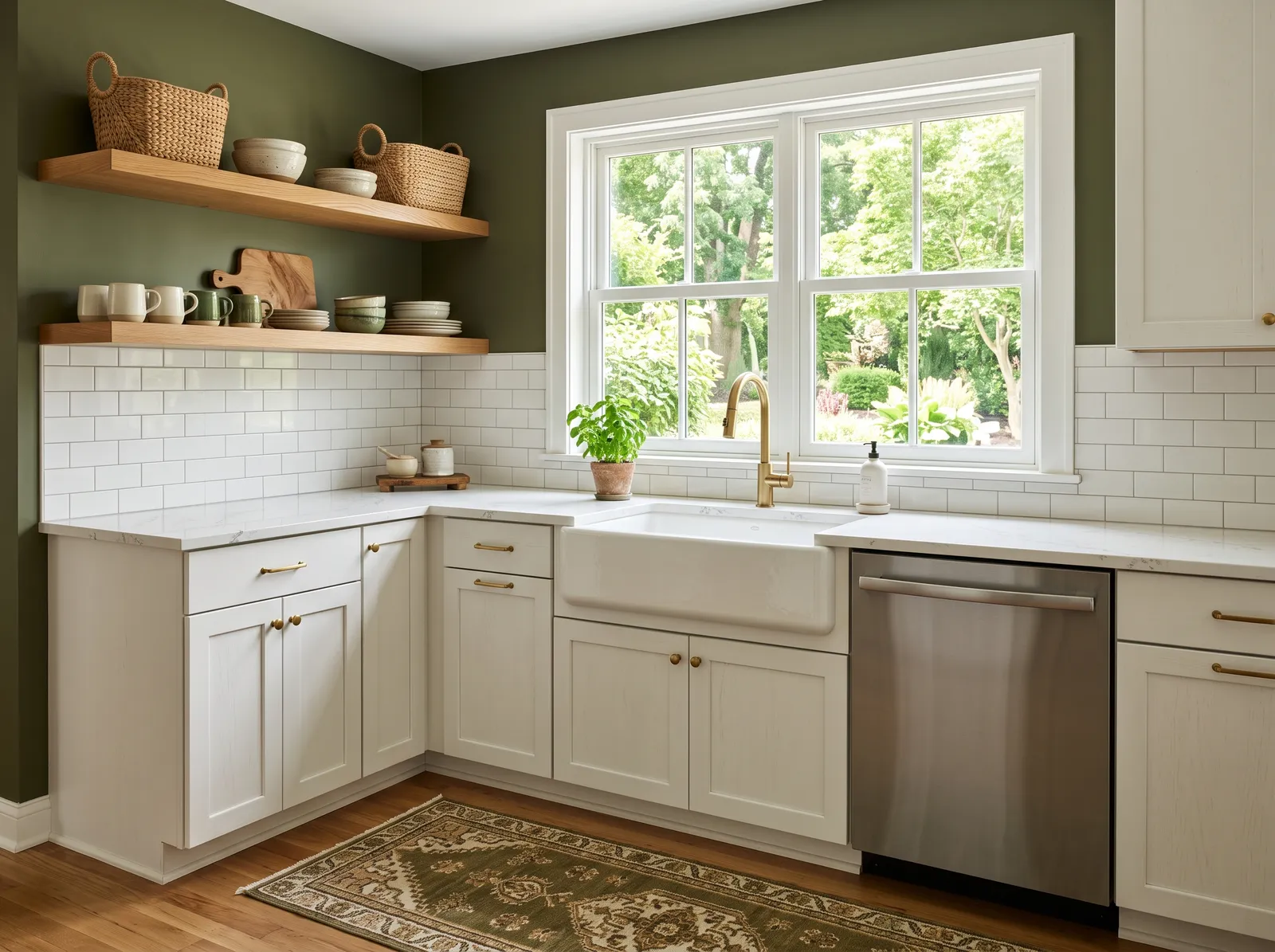
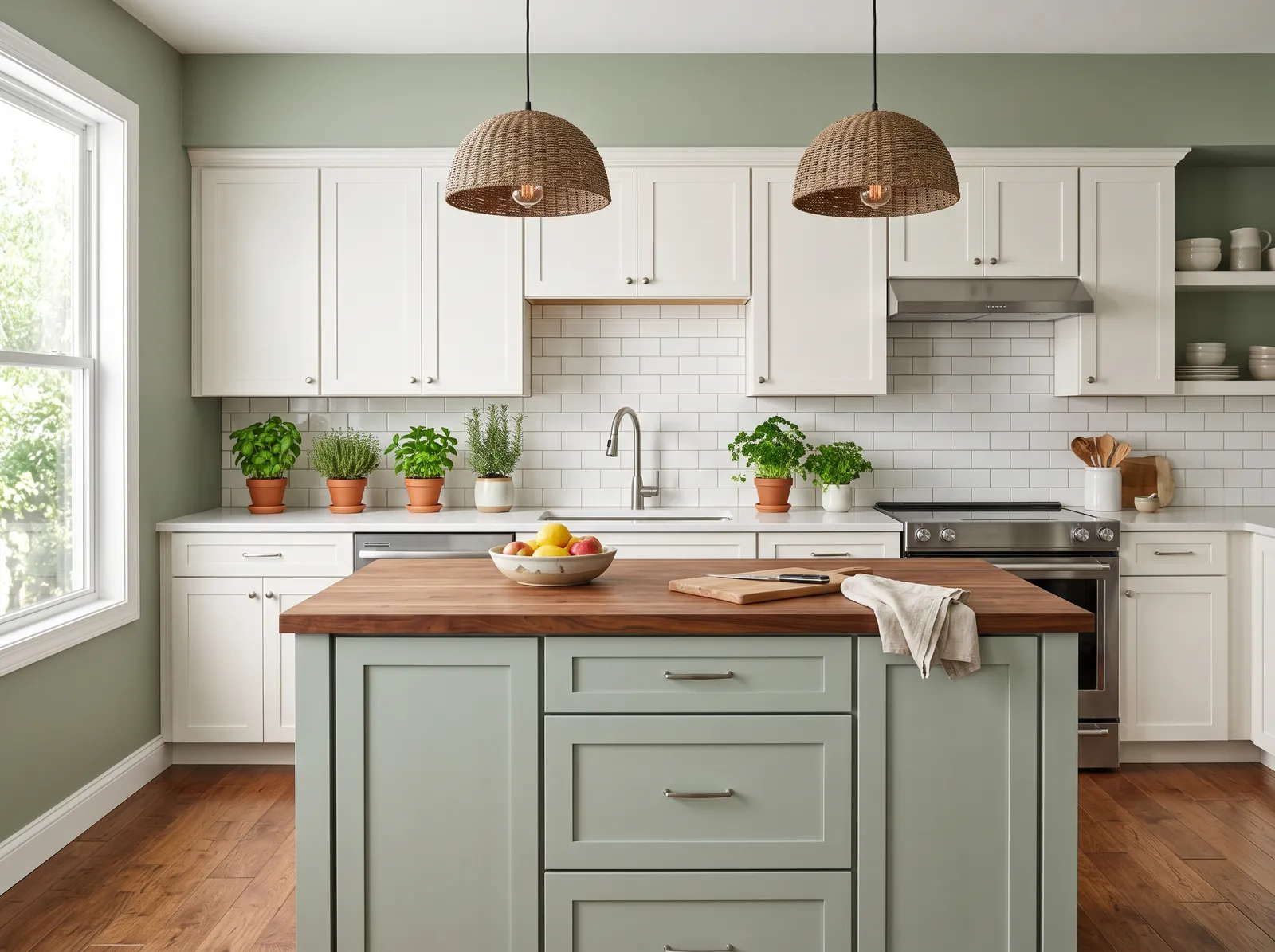
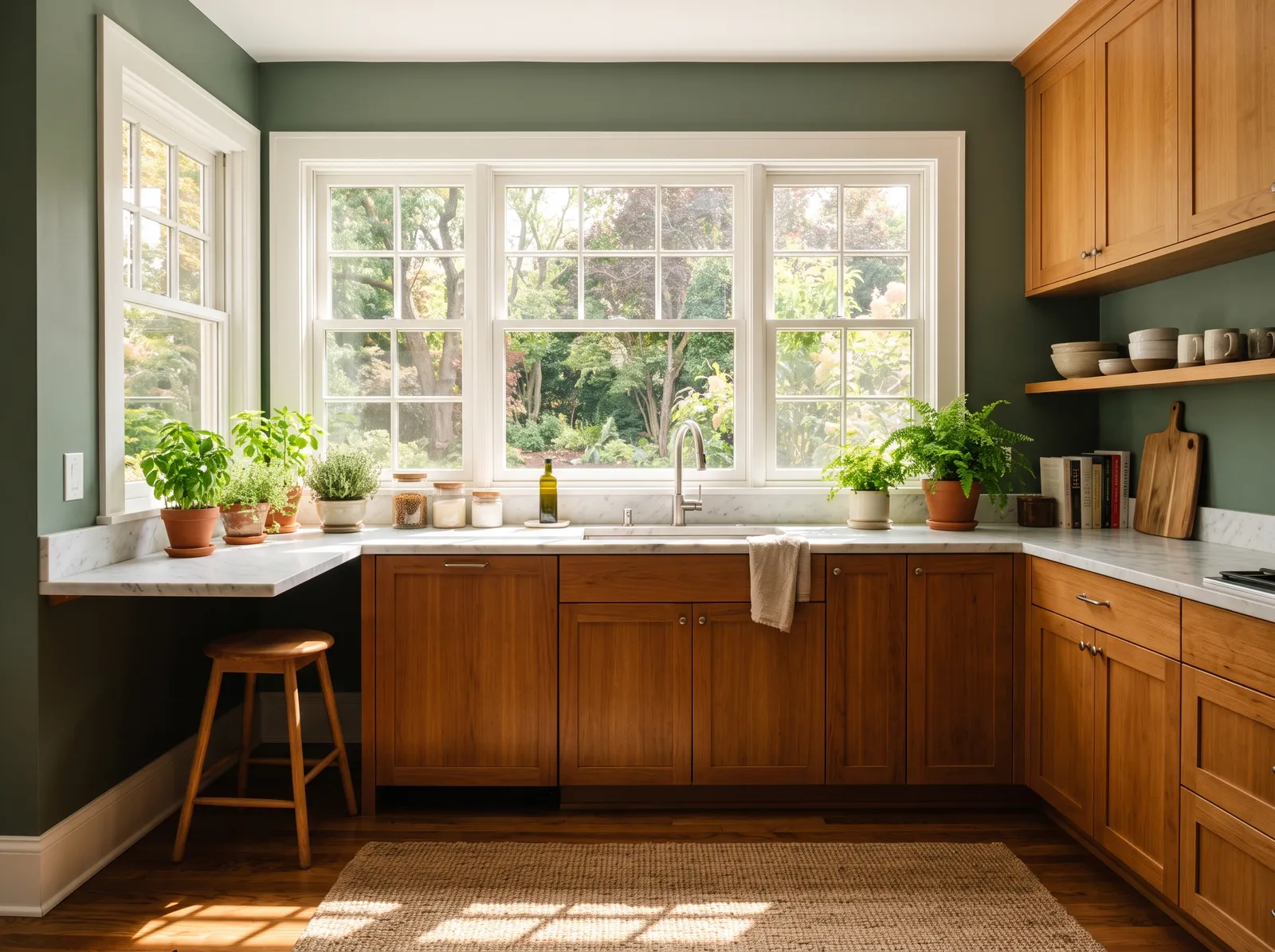
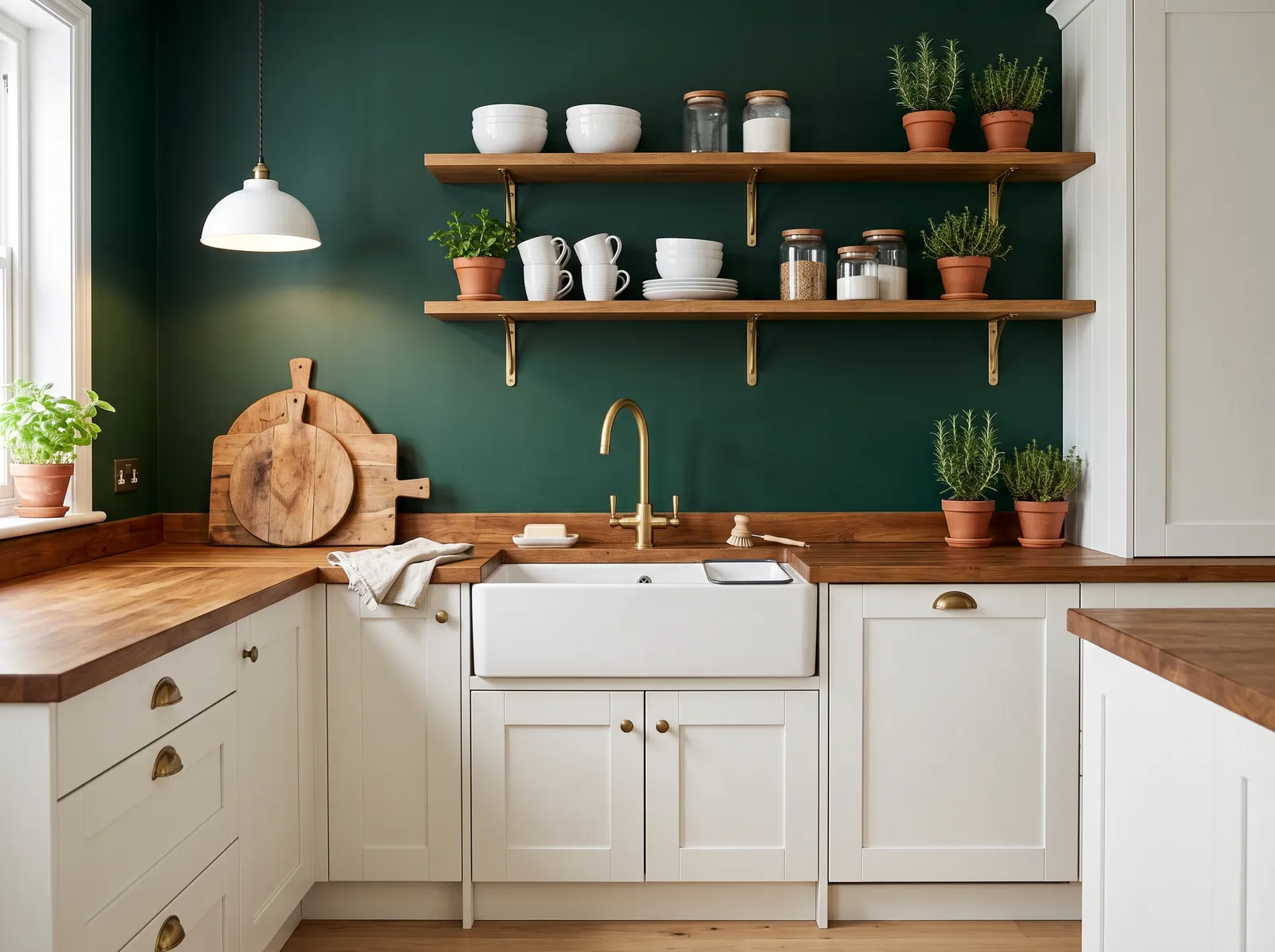
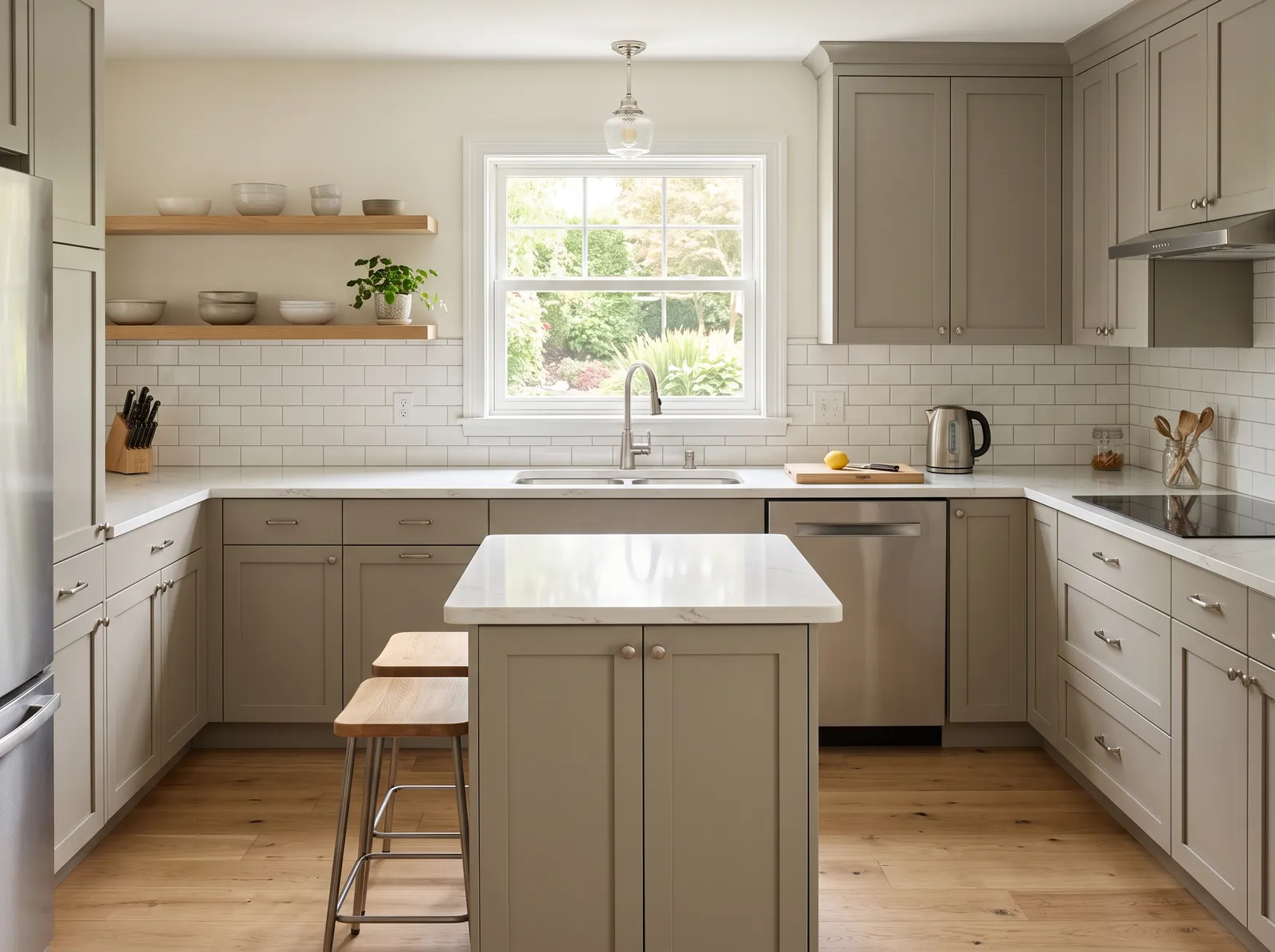
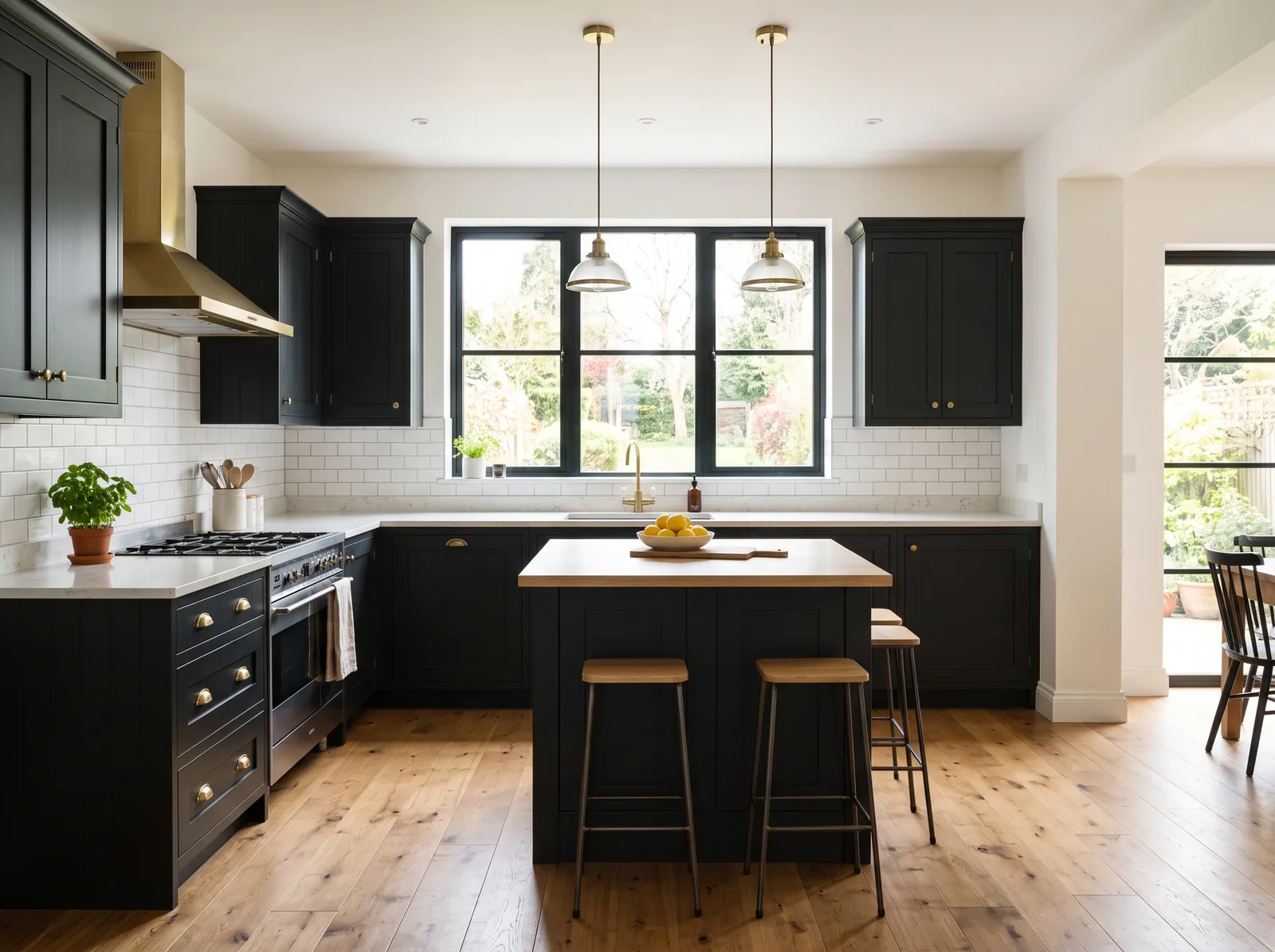
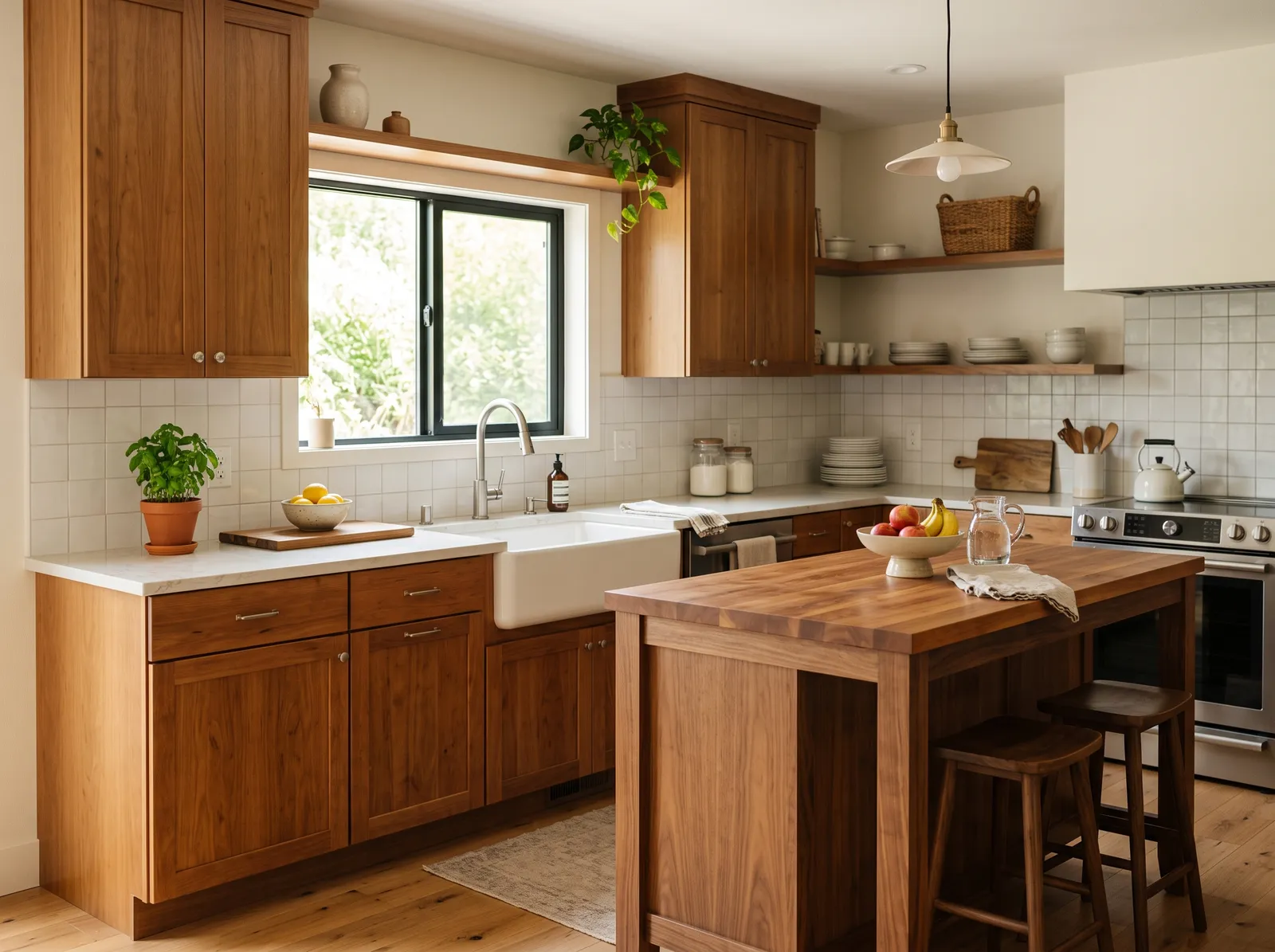
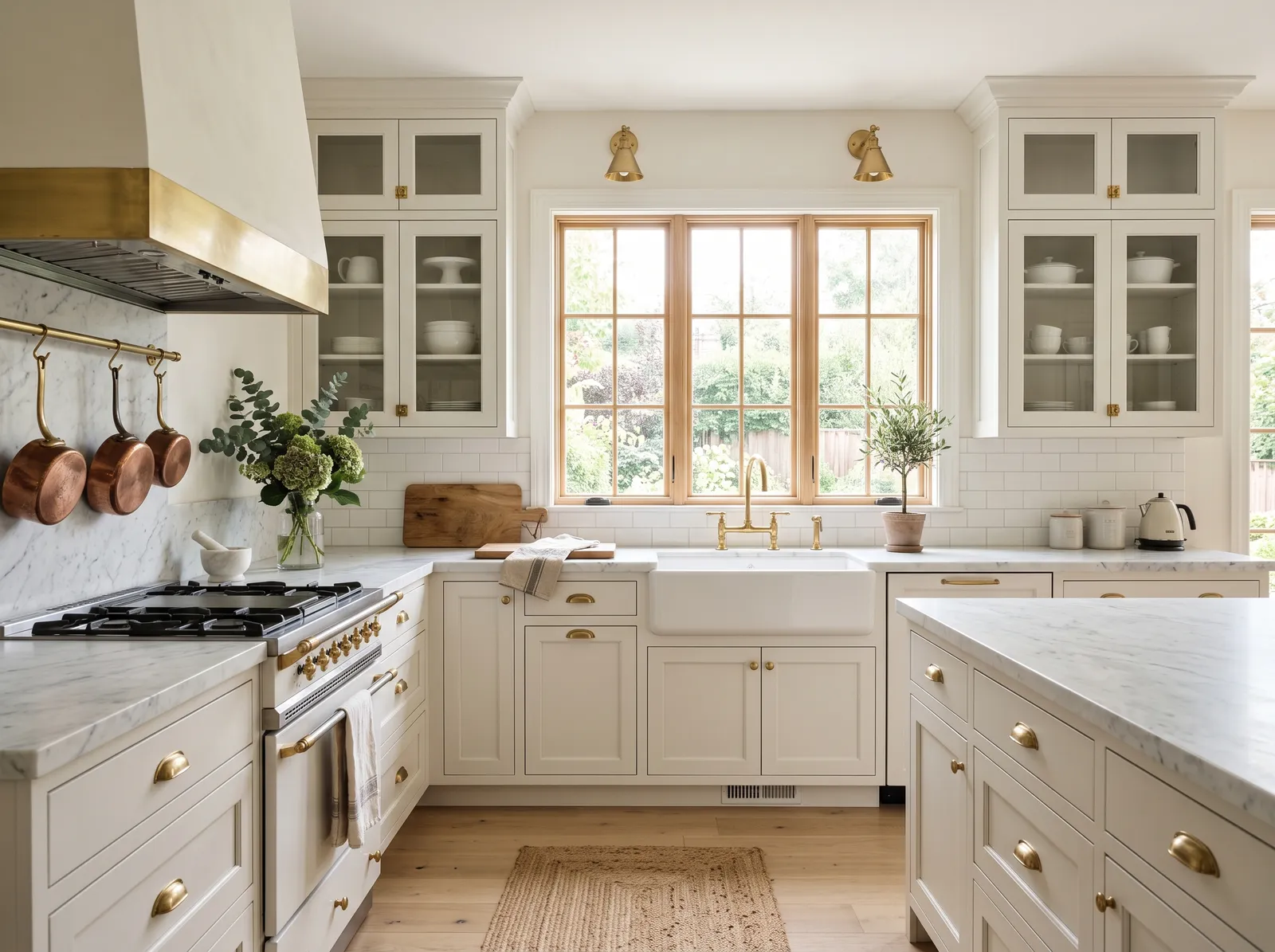
Editor's Picks: Green for Kitchens
4 picks30 Green Picks Across the LRV Range
30 of 2,263 · sorted dark → lightLooking for more? All green → covers every brand; brand × family pages show full decks.
Green Kitchen Colors at Every US Brand
19 brands · up to 10 picks eachUp to 10 picks per brand spread across the green LRV range, drawn from each brand's full deck. Tap any swatch with a curated guide for full spec; tap the brand title for the brand's complete green deck.
Behr
Benjamin Moore
Glidden
Valspar
Dunn-Edwards
PPG / Glidden
Sherwin-Williams
Dutch Boy
Hirshfield's
Diamond Vogel
Kompozit
C2 Paint
Farrow & Ball
Magnolia Home
Clare
Rodda
Annie Sloan
Backdrop
Other Kitchen Color Families
Green Colors in Other Rooms
Green Paint Colors for a Kitchen
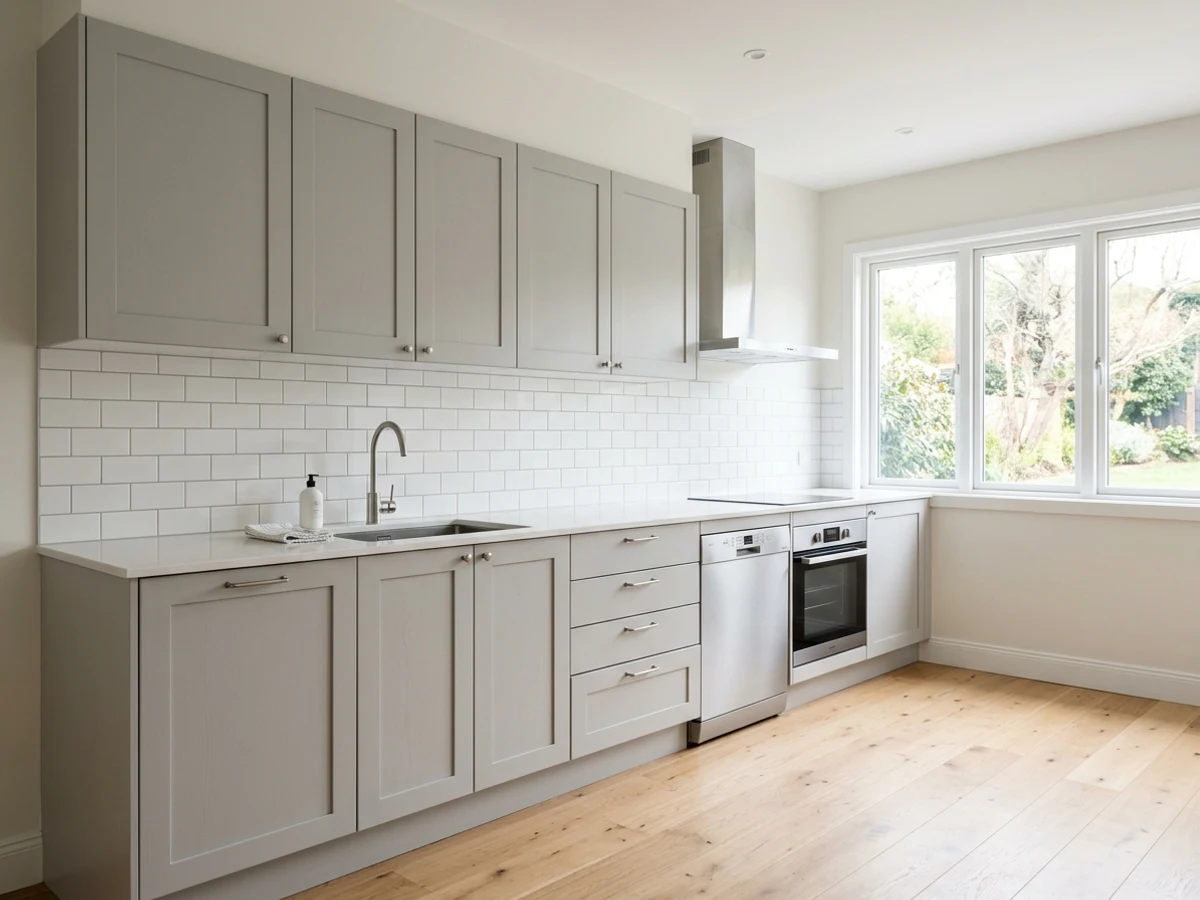
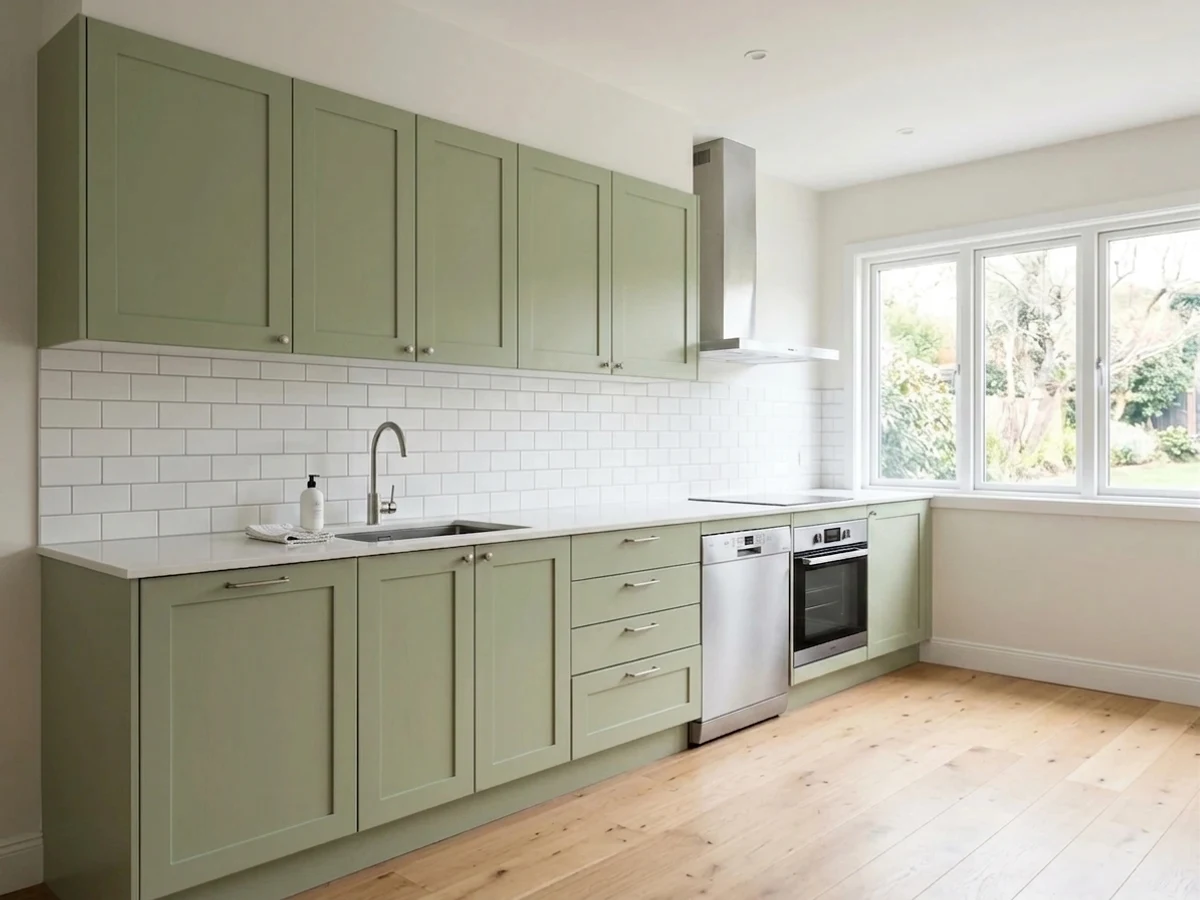
Green is one of the easiest colors to live with in a kitchen because it sits between warm and cool, and a kitchen is a room where you actually need that balance. You cook, you wash up, you sit with coffee in the morning and dinner at night, so the color has to hold up under bright task lighting and soft evening light. Green also pairs naturally with the things already in most kitchens: wood, white counters, stainless steel, and the green of real food and plants. That is why a sage or muted green on cabinets or walls almost always reads calm and intentional rather than trendy.
The trick in a kitchen is choosing the right depth of green and the right finish, because this room gets splashes, grease, steam, and a lot of light bouncing off hard surfaces. A green that looks perfect on a chip can turn gray, minty, or harsh once it is up next to white cabinets and under your specific bulbs. The sections below walk through how to pick the shade, how the room's light steers it, what sheen actually survives kitchen life, and how to pair green with trim, counters, and metal. Every color you see here is mixed to order at the store, so you can take any green you like and have it cross-matched into your preferred brand.
Why Green Works in a Kitchen
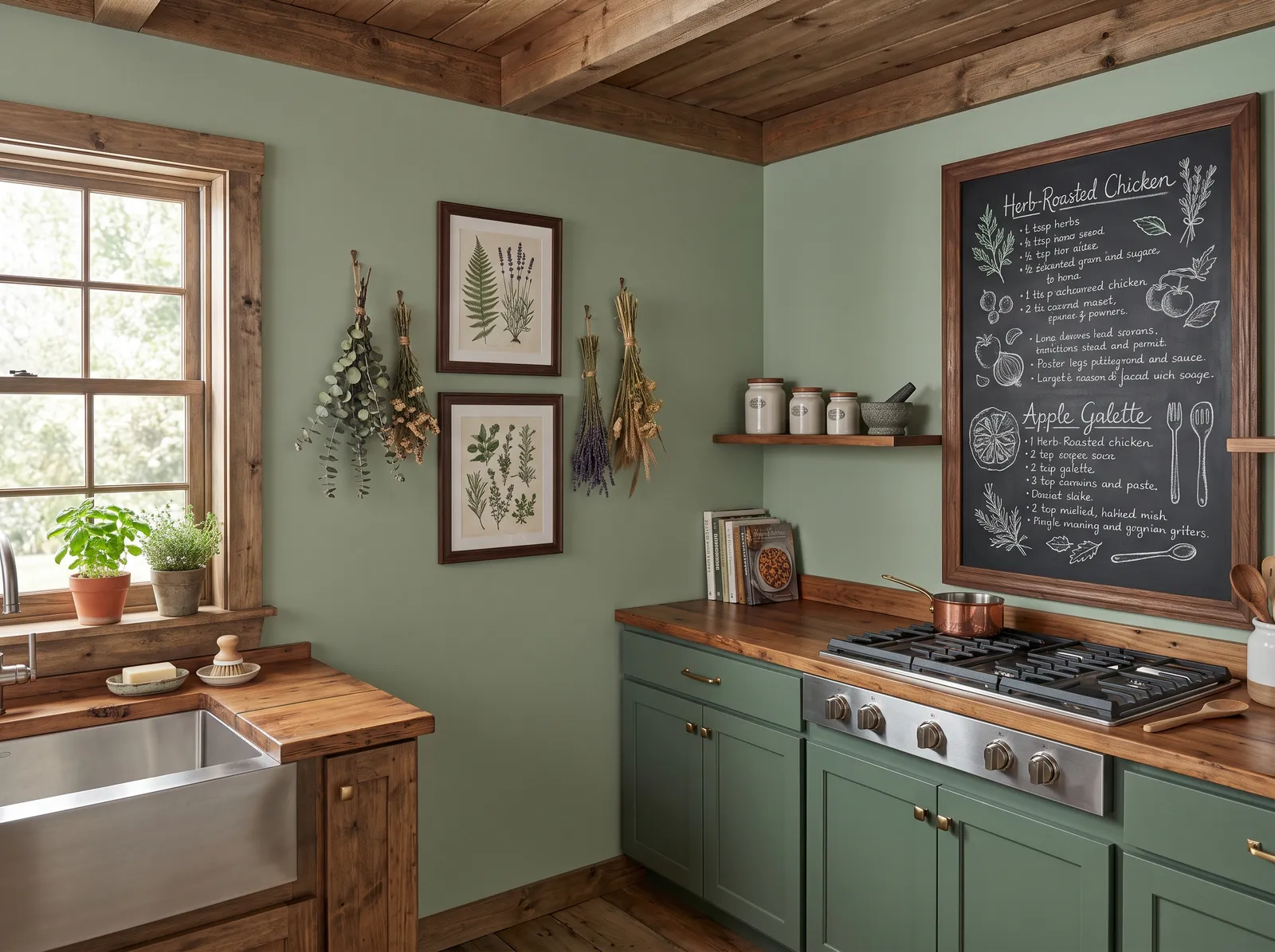
Green has a quiet advantage in a kitchen: it is the color of the food and plants you already keep there, so it never feels out of place. It softens the hard, shiny surfaces a kitchen is full of, and it gives an alternative to the white-or-gray default without feeling loud. A muted green on lower cabinets with lighter walls is a popular move because it grounds the room and hides the scuffs that lowers take.
The one thing to watch is undertone. Greens lean either warm (toward yellow and olive) or cool (toward blue and gray), and a kitchen full of stainless steel and white counters will push a cool green toward cold or clinical. If your space already feels bright and hard, a green with a touch of warmth or gray keeps it from going sterile.
Picking the Right Shade and Reading the Light
For most kitchens, a mid-to-soft green in the sage or muted olive range is the safe, livable choice. A useful guide is LRV, the light reflectance value printed near most chips: it runs 0 (black) to 100 (white). Greens in the roughly 40 to 60 LRV range read as color without darkening the room, while a deep green below about 25 LRV is striking on an island or lower cabinets but needs good light to avoid feeling heavy.
Let the room's light make the call. North-facing and low-light kitchens cool everything down, so a green with warm or gray in it stays friendly there; a cool, minty green can turn gray and flat. South- and west-facing kitchens get strong warm light that intensifies green, so a softer or grayer green keeps it from going acid. Always tape a sample to more than one wall and look at it morning, midday, and under your kitchen bulbs before you commit.
The Right Finish for a Kitchen
A kitchen is the hardest-working room for paint, so sheen matters as much as color. Walls do best in eggshell or satin: both wipe clean when grease and splatter land on them, and they shrug off the steam from the stove and sink far better than a flat finish. Flat or matte hides wall flaws but holds onto stains and rubs through when you scrub it, which is exactly what you end up doing in a kitchen.
For green cabinets, step up to satin or semi-gloss. Cabinet doors get touched, bumped, and cleaned constantly, and a harder sheen takes that abuse and washes off without dulling. Just know that the glossier you go, the more the finish shows brush marks and bounces light, so a deep green island in high gloss needs a clean spray or careful roll to look right.
Pairing Green with Trim, Counters, and Metal
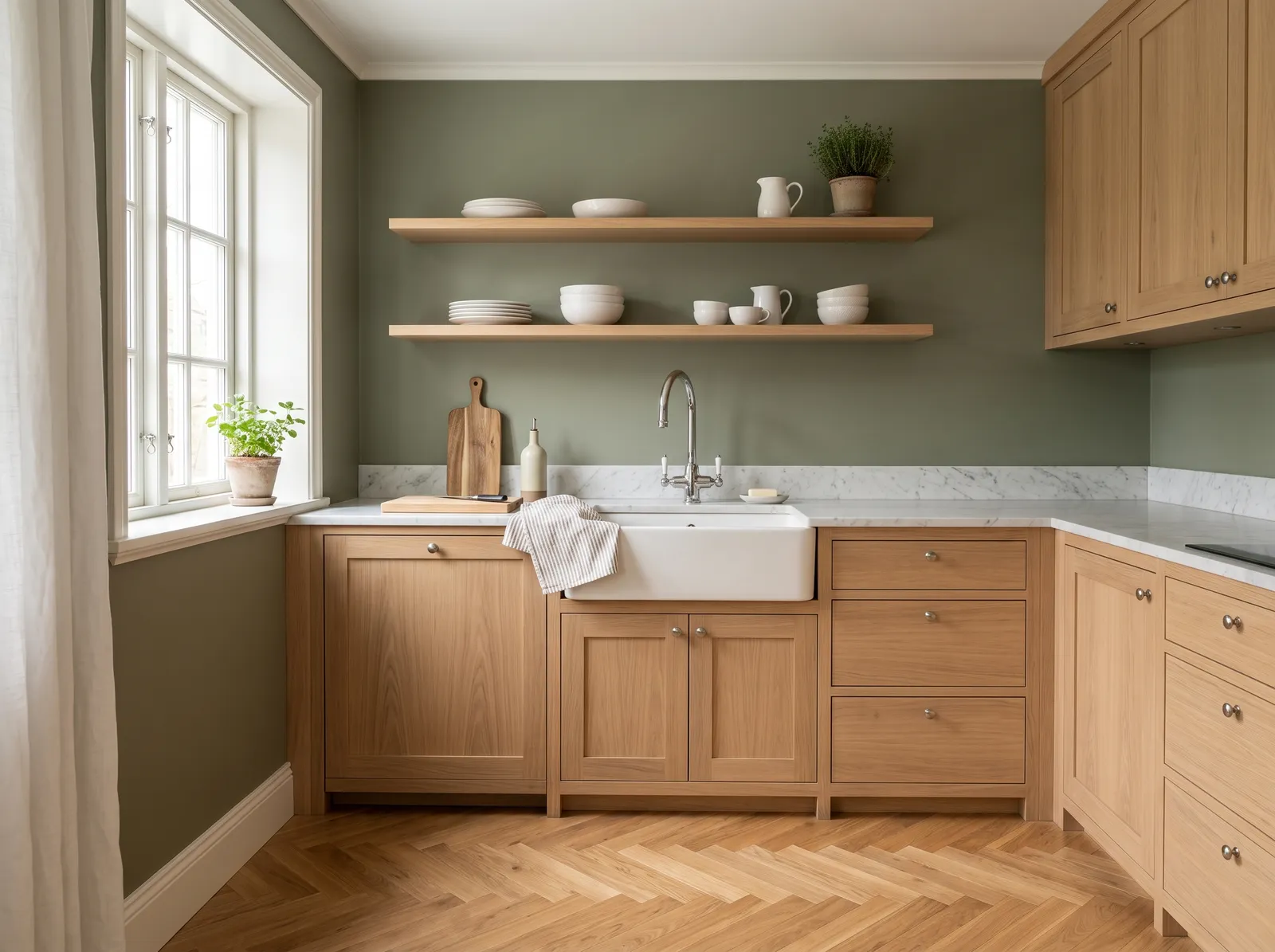
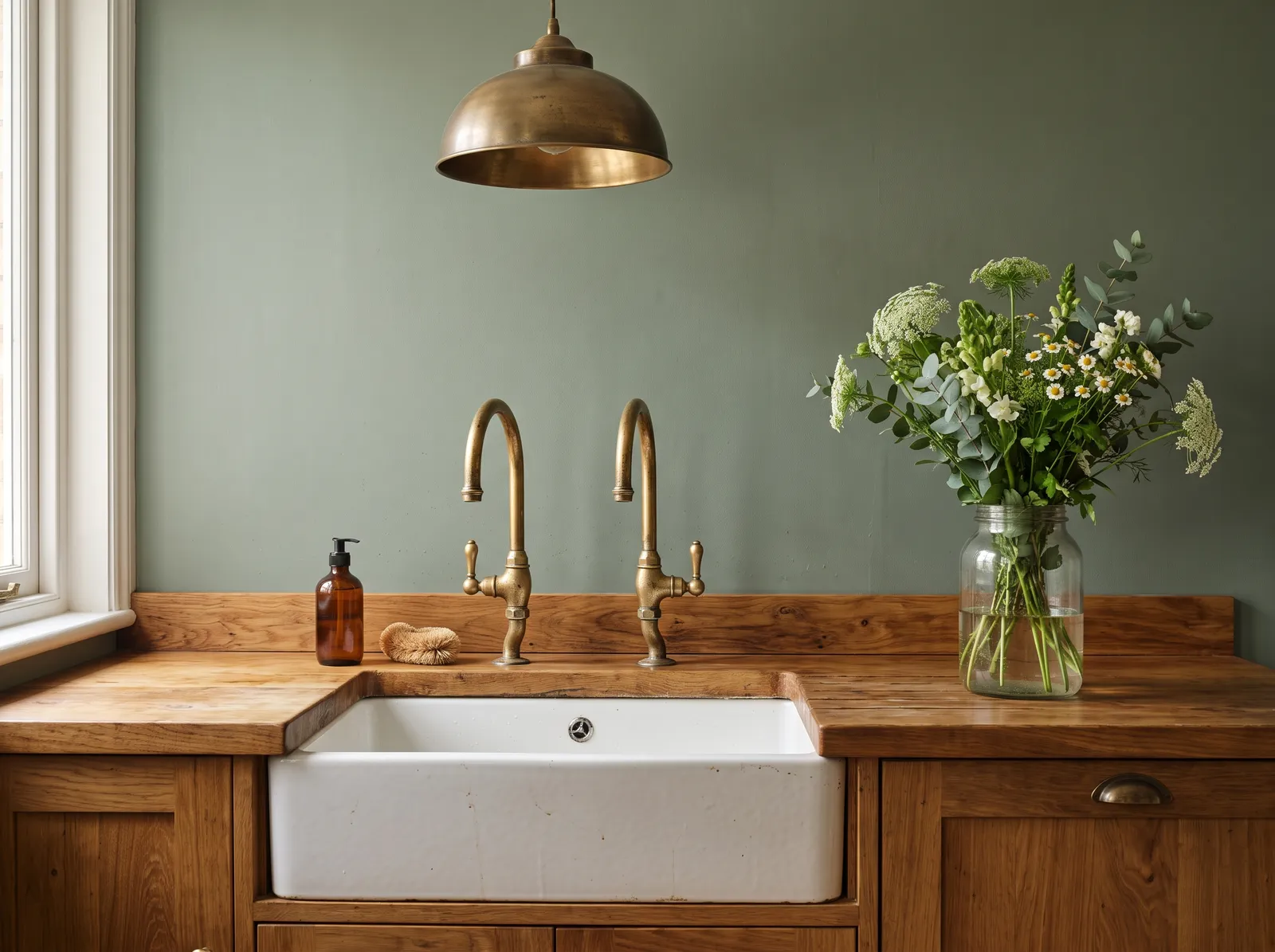
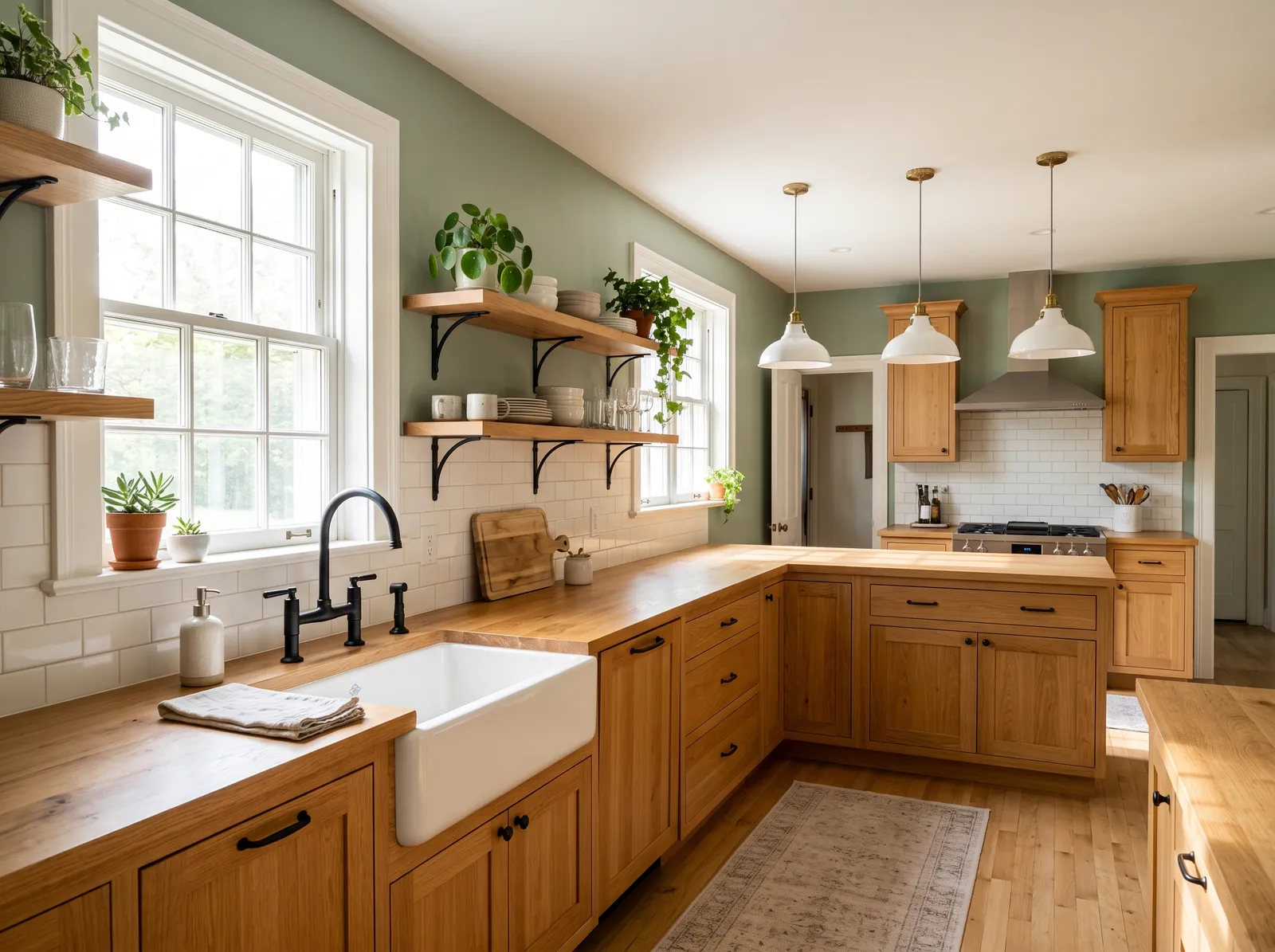
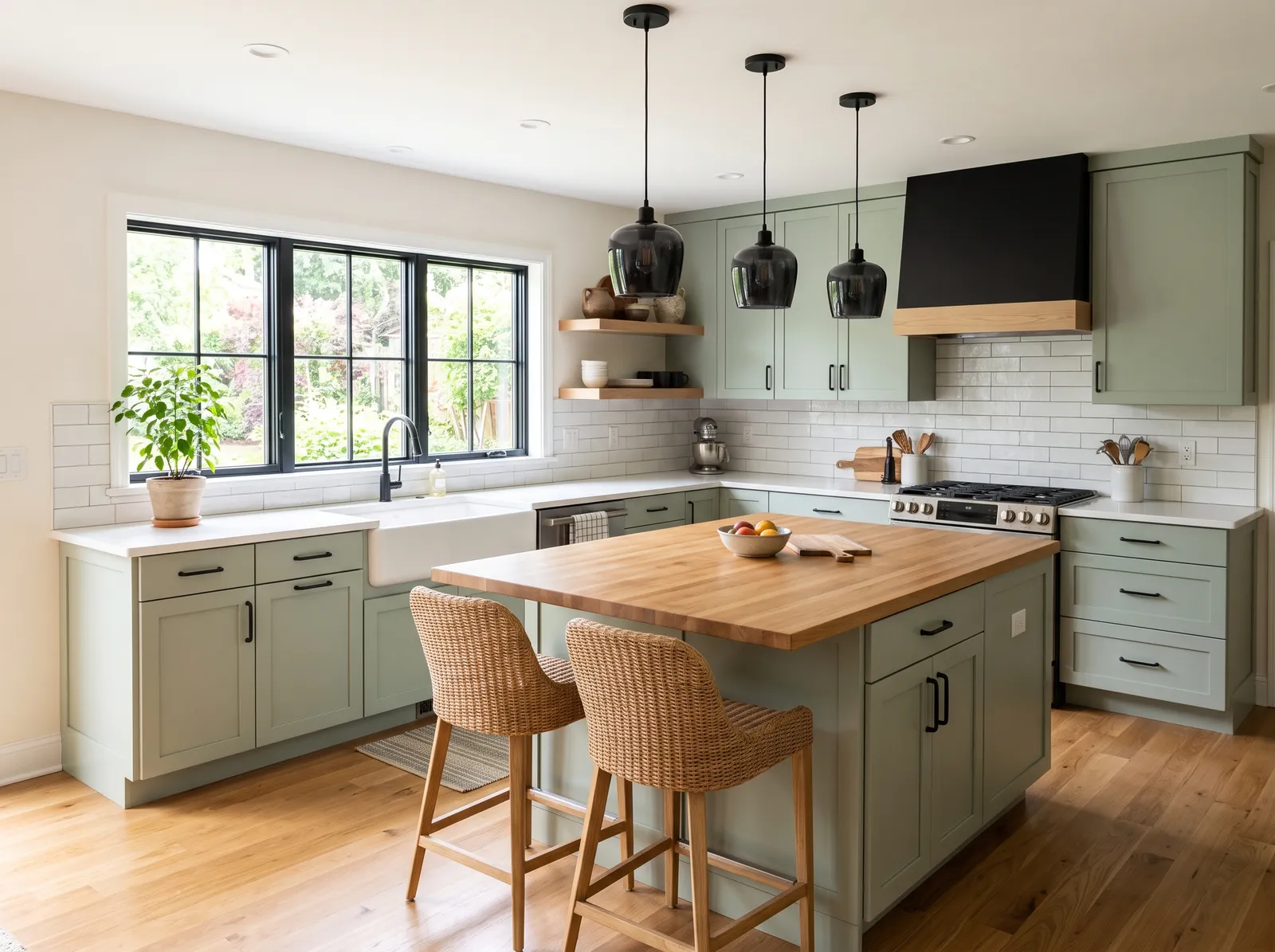
Green plays well with warm wood, so butcher block, oak floors, or wood open shelving make a sage or olive kitchen feel grounded rather than cold. With white counters, a soft white or warm-white trim keeps the look gentle; a stark bright-white trim against a warm green can fight the green's undertone and make it look muddy. If you want a true crisp edge, match the white to the undertone of the green rather than grabbing the whitest paint on the shelf.
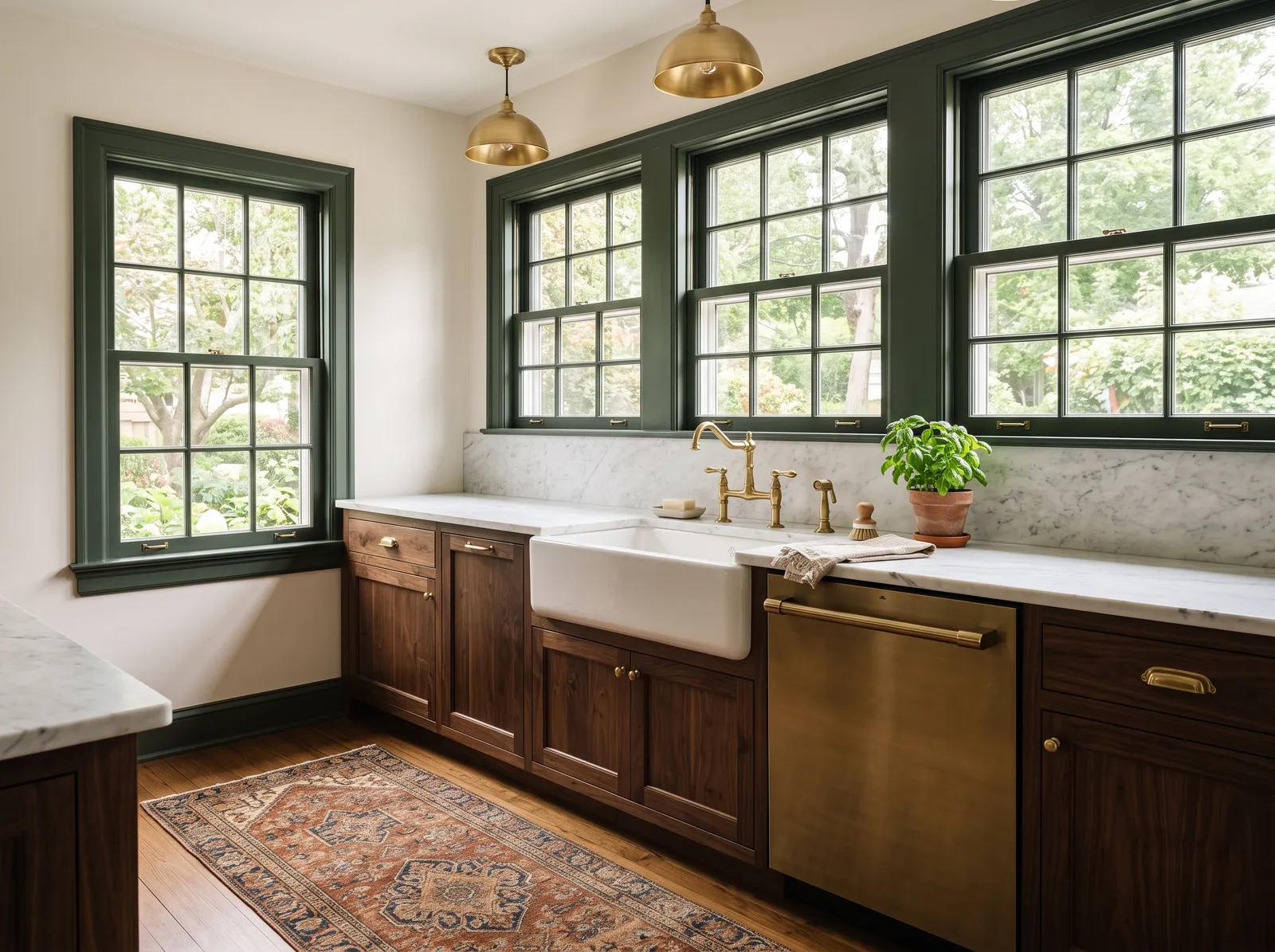
Metal finishes set the mood. Brass and unlacquered gold hardware warm a green kitchen and lean classic, while matte black and stainless keep it modern and a little cooler. A common, low-risk combo is green lowers, lighter or white uppers, wood open shelves, and brass pulls, since it spreads the color without surrounding you in it. The ceiling usually looks best in a soft white in flat or matte, which keeps the eye on the cabinets and reflects light back down.
Common Mistakes with Green in a Kitchen
The biggest mistake is skipping samples and judging green from a chip in the store. Kitchen lighting and all that white and steel will shift a green hard, and a chip that looked like soft sage can read mint or gray on the wall. Paint a large sample, view it across the day, and check it against your actual cabinets and counter, not the showroom.
The other frequent misses are choosing a green that is too cool for a room full of stainless, using flat paint where grease and steam demand a wipeable eggshell or satin, and pairing a warm green with an icy bright-white trim that makes it look dirty. If you find the exact green you want on one brand's swatch but use another brand's paint, that is fine: any color shown here is mixed to order and can be cross-matched between brands, so you are choosing a shade, not locking into a label.
Green Kitchen Paint — Frequently Asked Questions
What shade of green is best for a kitchen?+
For most kitchens, a soft to mid-tone green like sage or muted olive is the most livable, usually in the 40 to 60 LRV range. It adds color without darkening the room and pairs easily with white counters, wood, and stainless. Deep forest greens look great on an island or lower cabinets but need good light so they don't feel heavy.
What paint finish should I use for green kitchen walls and cabinets?+
Use eggshell or satin on walls so you can wipe off grease and splatter and handle the steam from cooking. For green cabinets, go a step glossier with satin or semi-gloss, since doors get touched and cleaned constantly and need a harder, washable finish. Avoid flat or matte on kitchen walls because it stains and rubs through when you scrub it.
Does green make a small or dark kitchen feel smaller?+
It depends on the depth and the light. A soft green in a higher LRV keeps a small or low-light kitchen feeling open, while a deep green can close it in if the room is already dark. In a north-facing or dim kitchen, pick a green with a little warmth or gray so it stays friendly instead of turning cold.
What trim and ceiling color goes with green kitchen cabinets?+
A soft or warm white trim usually flatters green better than a stark bright white, which can make a warm green look muddy. Match the white to the green's undertone for a clean edge. For the ceiling, a soft white in flat or matte keeps the focus on the cabinets and bounces light back down.
What hardware and metals look good with a green kitchen?+
Brass and warm gold hardware make a green kitchen feel classic and cozy, while matte black or stainless keeps it modern and a bit cooler. Greens are flexible, so the metal you choose sets the overall mood more than it clashes. A popular safe combo is green cabinets with brass pulls and a little wood.
If I like a green on one brand, can I get it in another brand's paint?+
Yes. Every color shown here is mixed to order at the paint counter, so you are really choosing a shade, not a specific brand product. You can take a green you like and have it cross-matched into whatever brand and line you prefer.