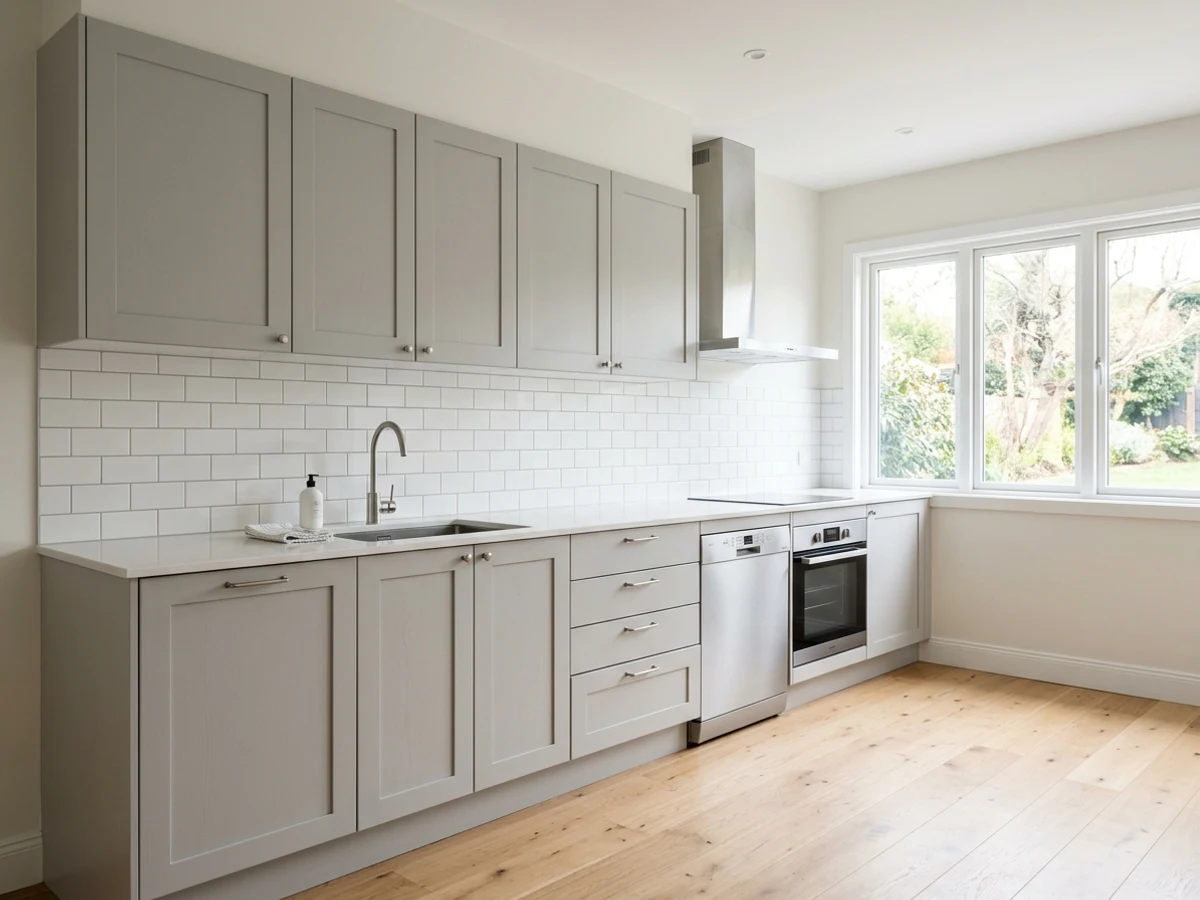
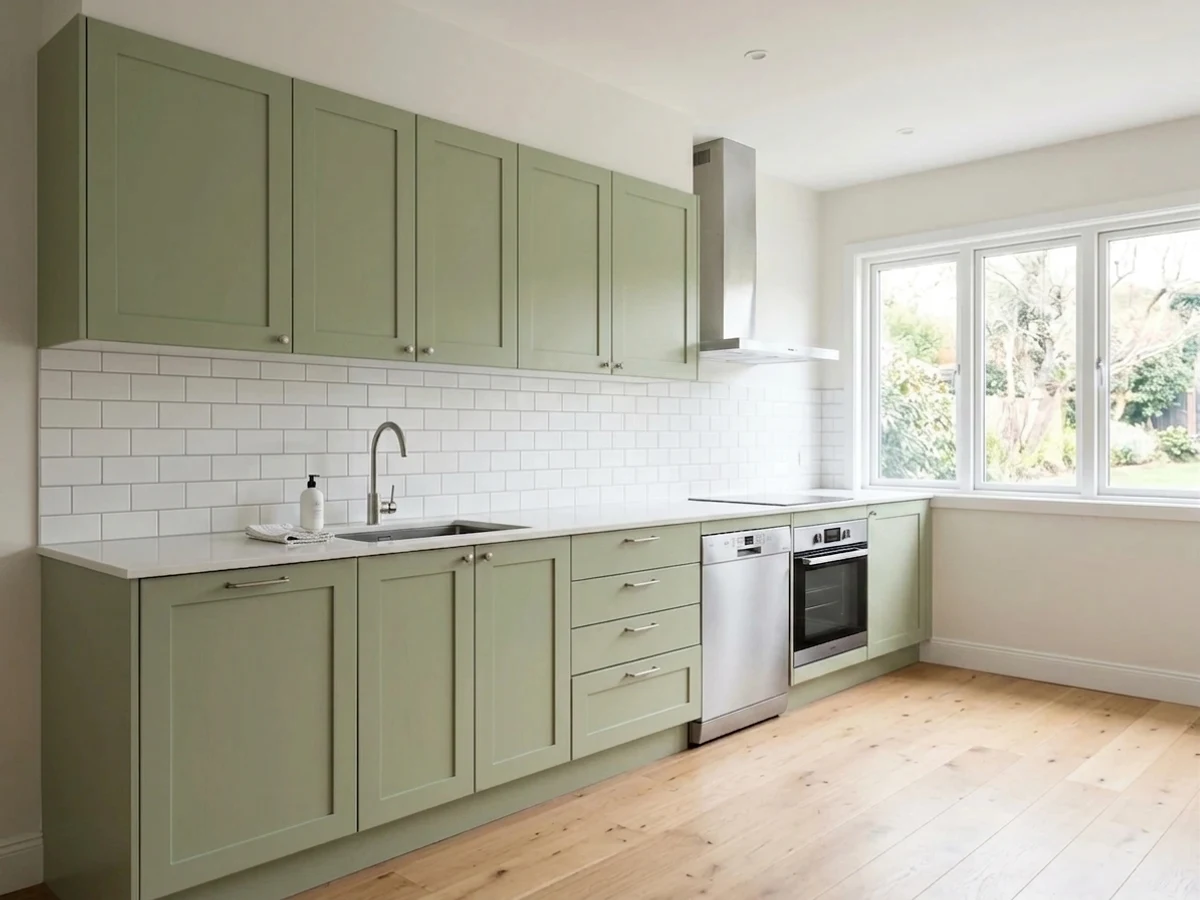
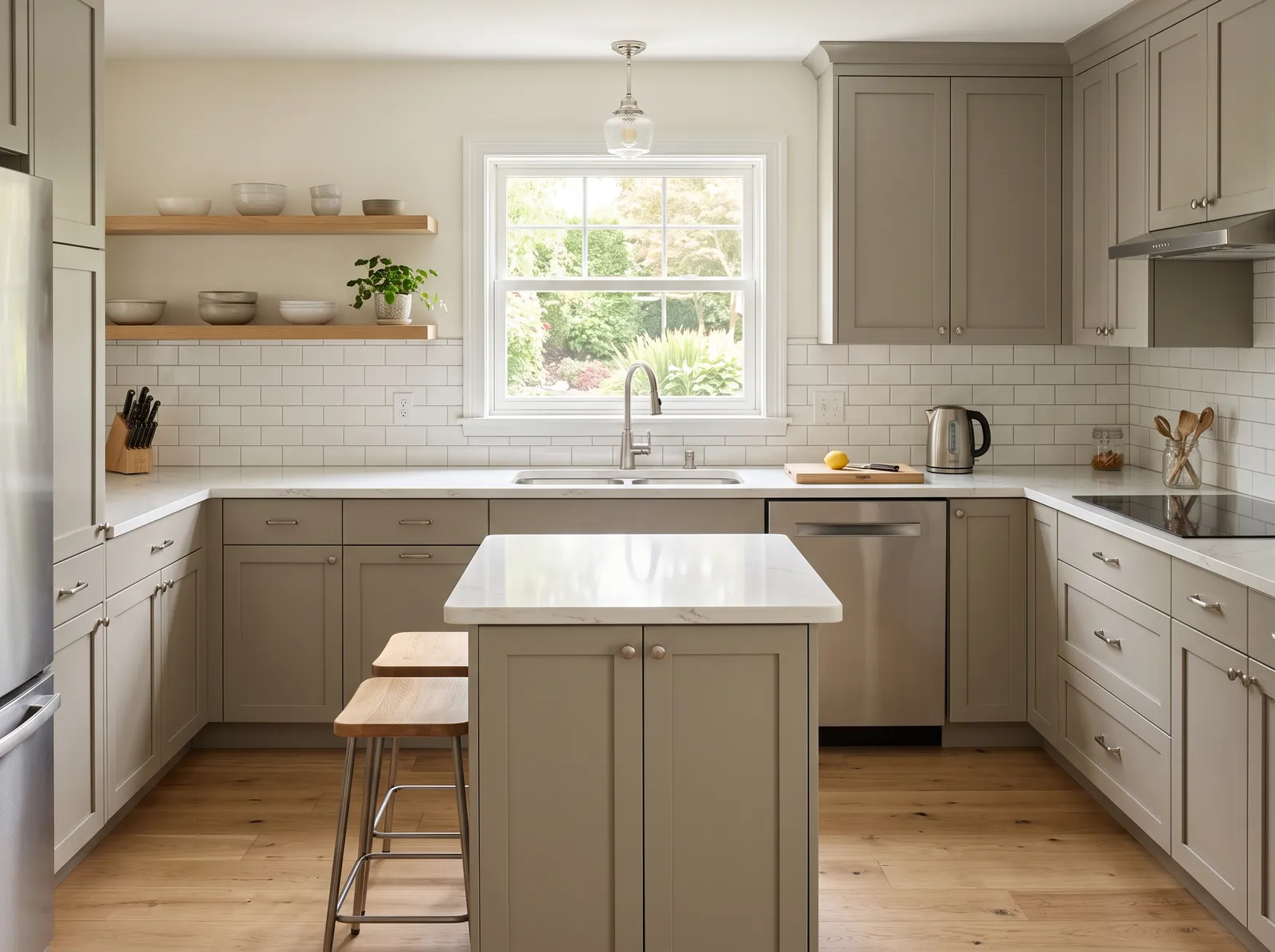
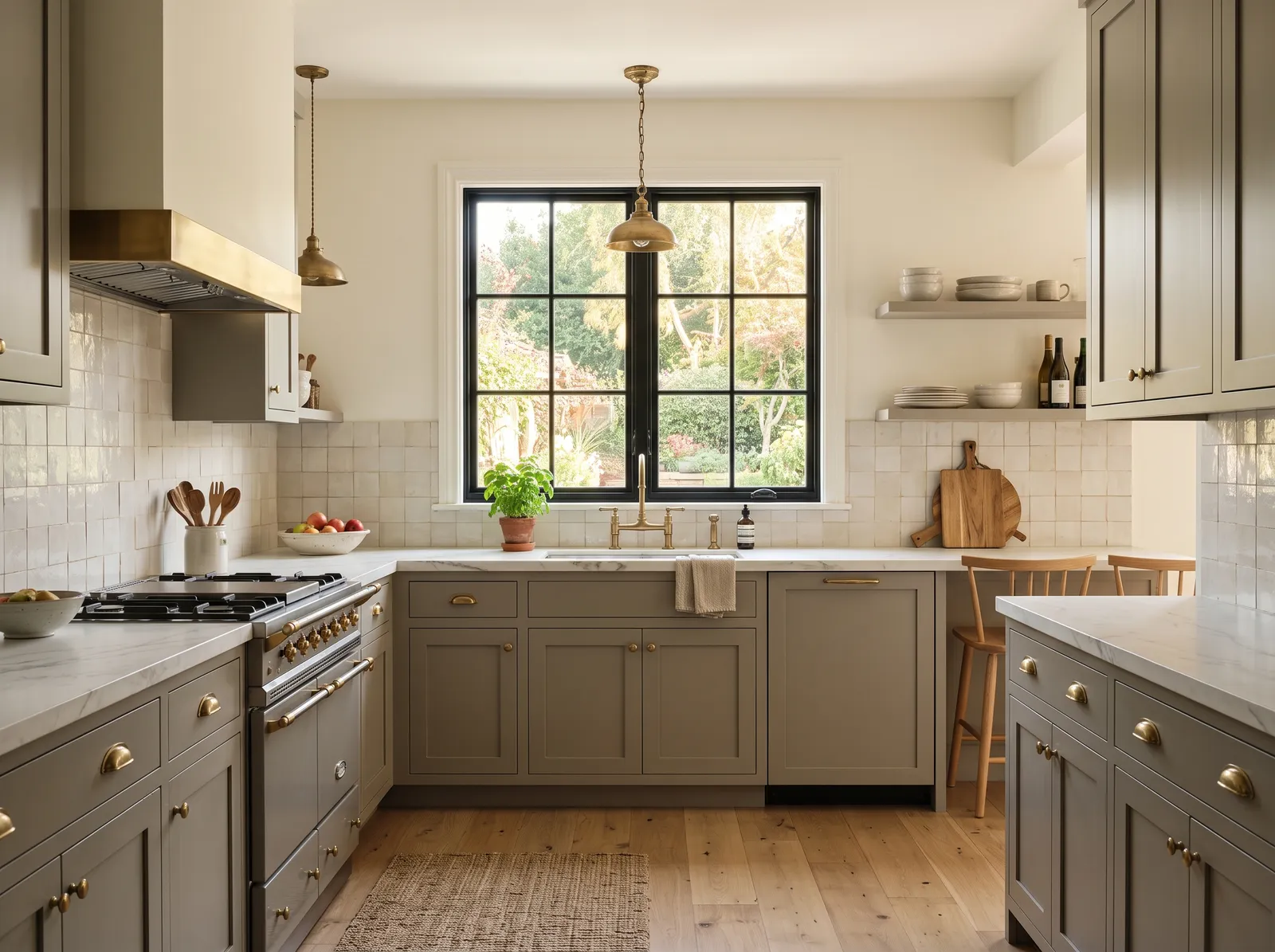
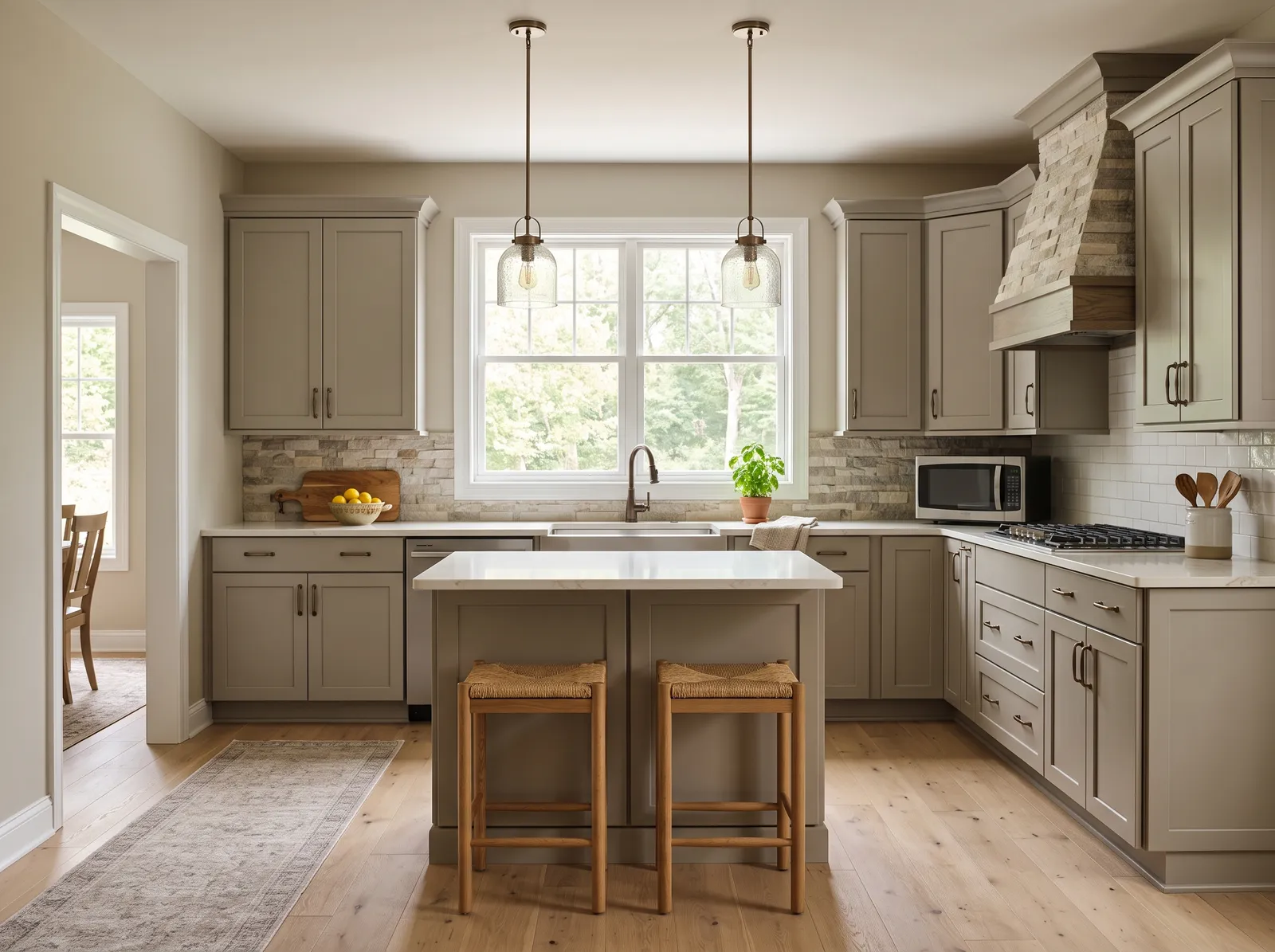
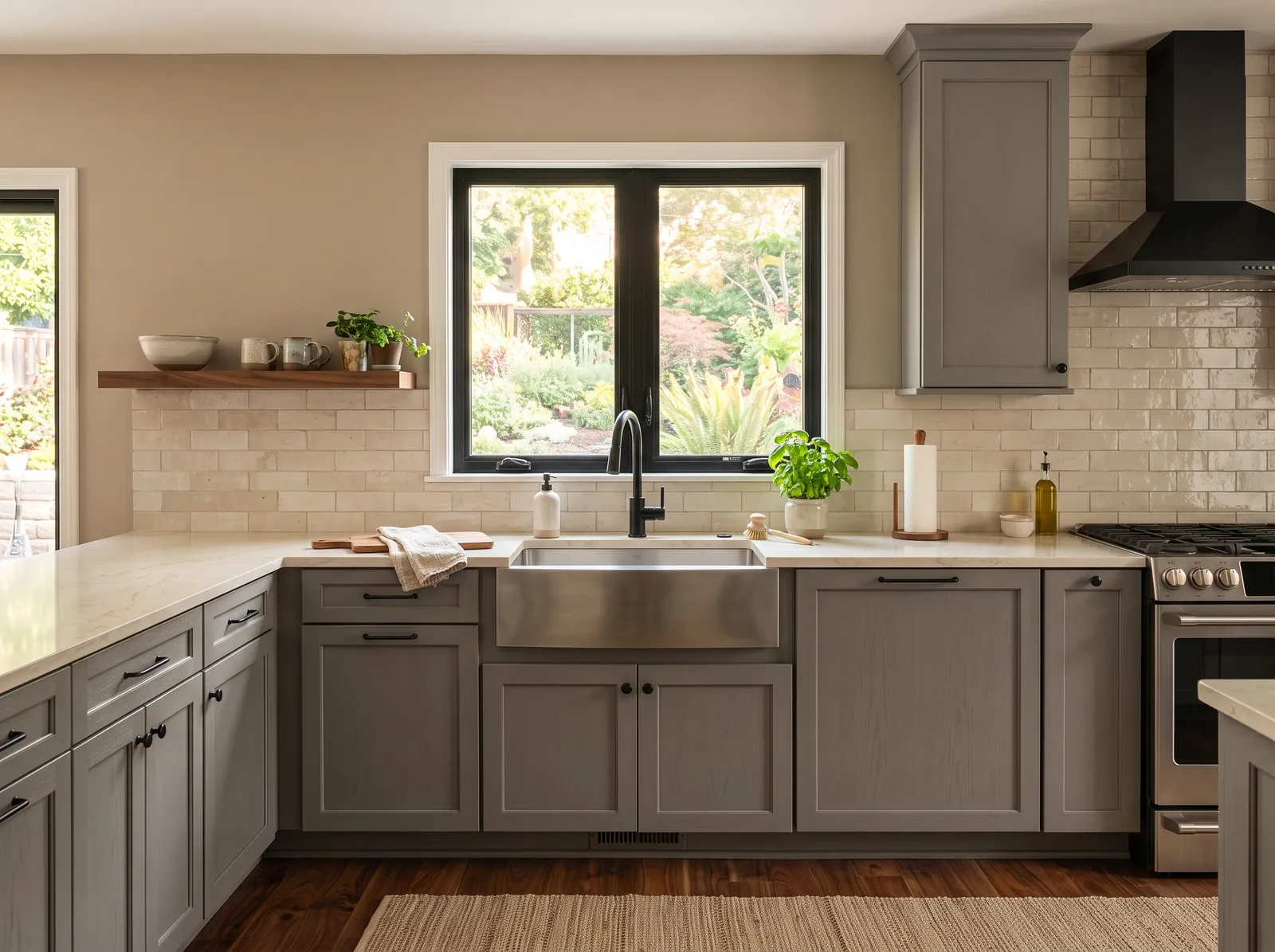
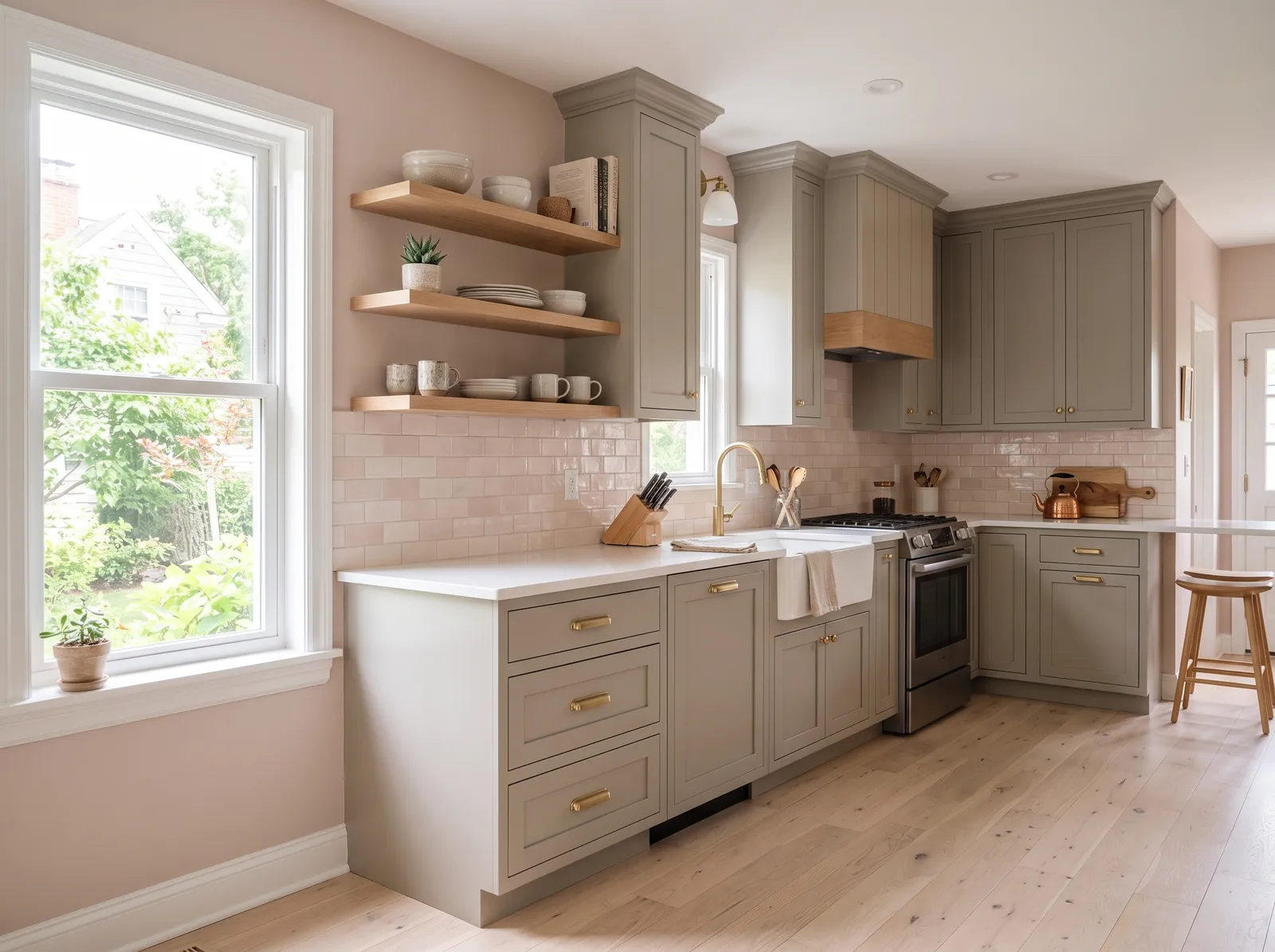
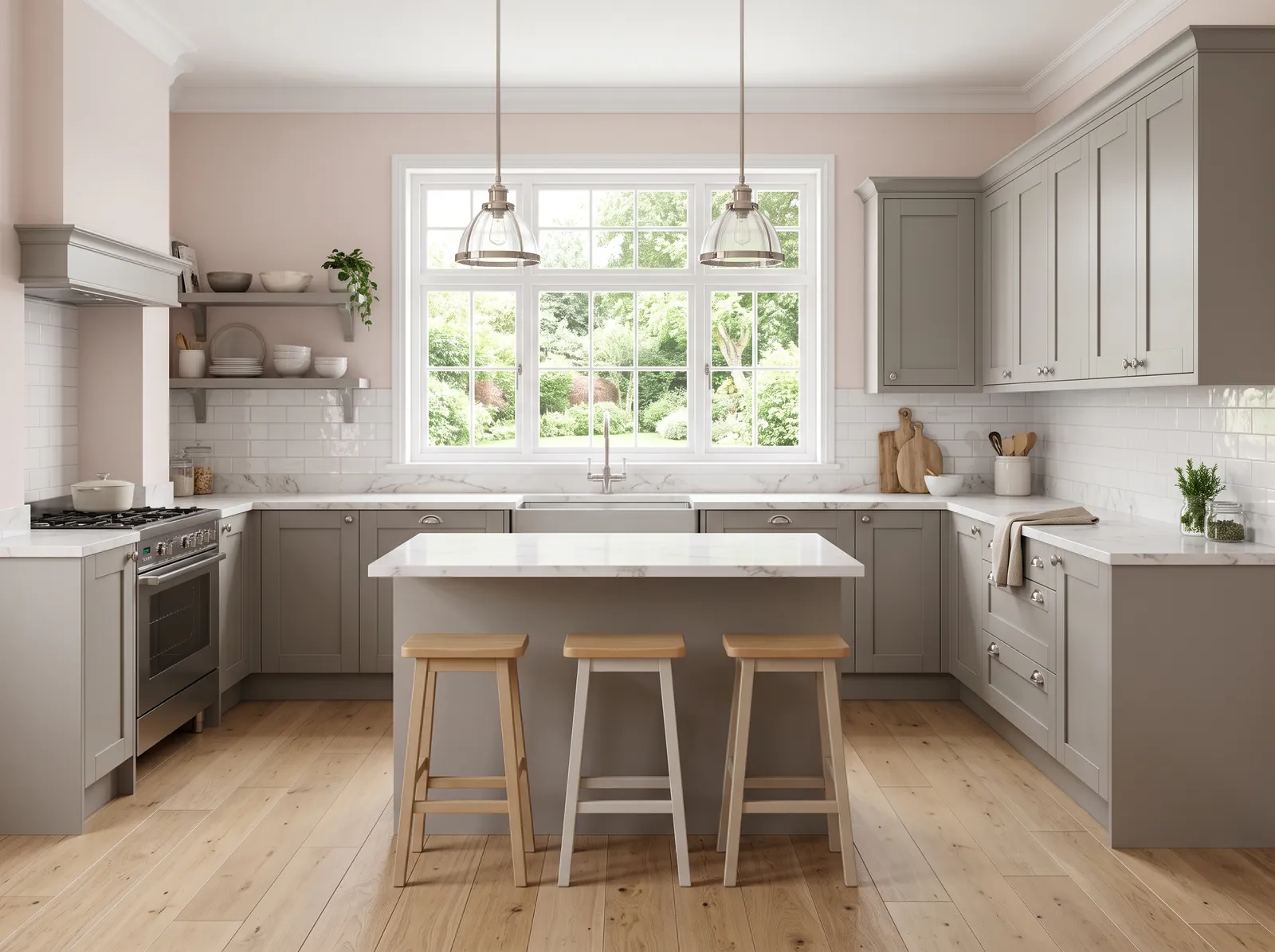
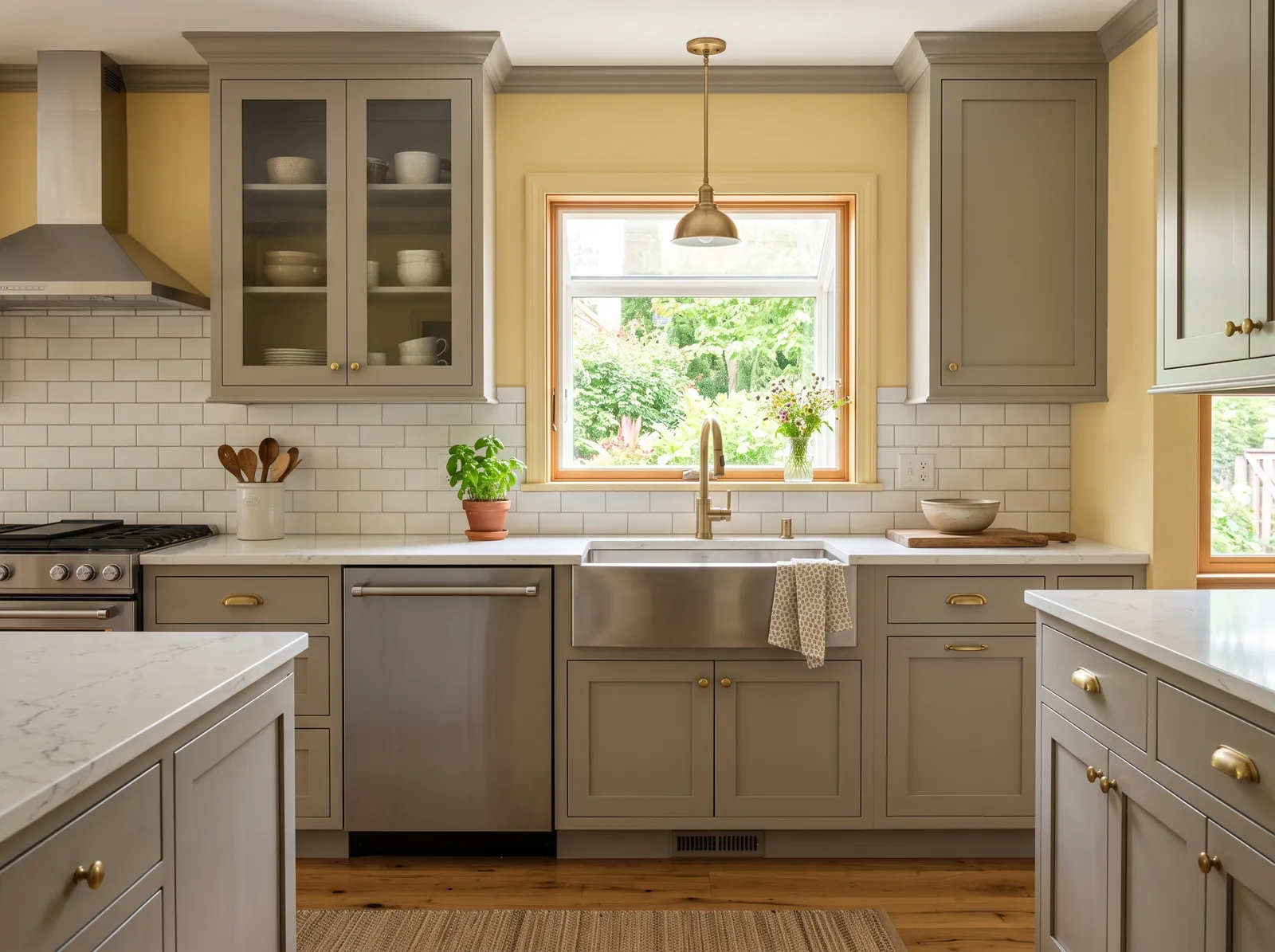
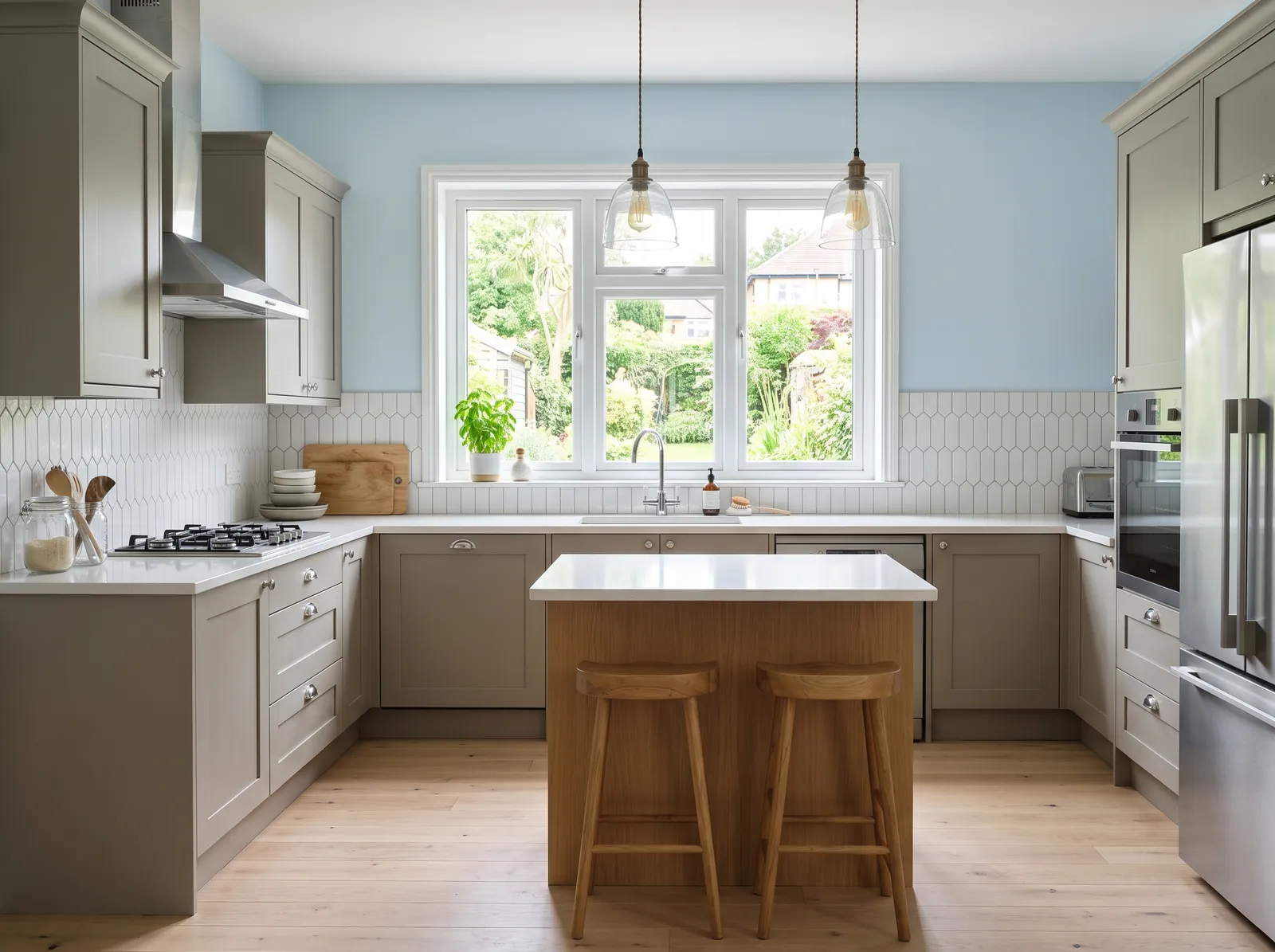
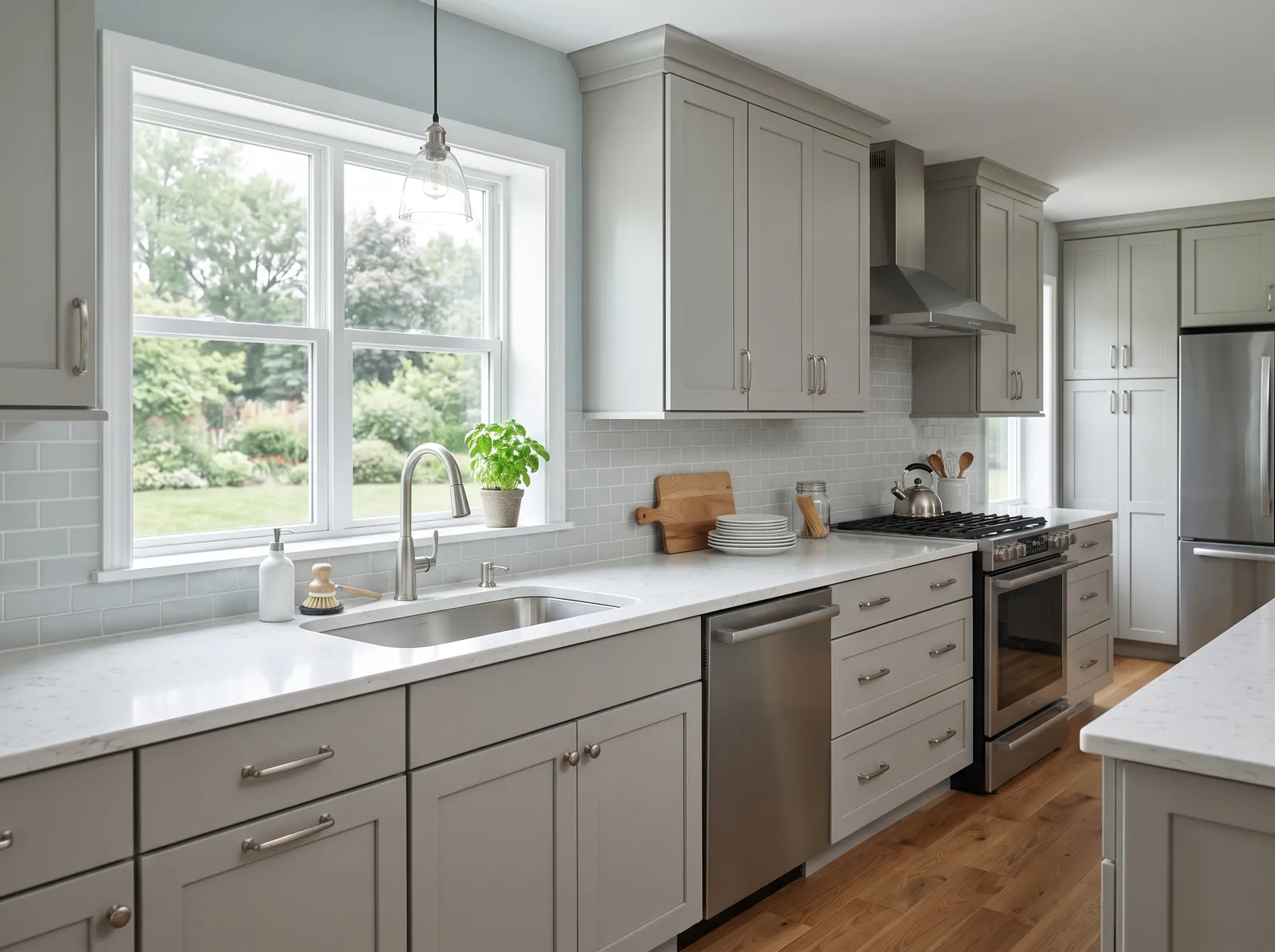
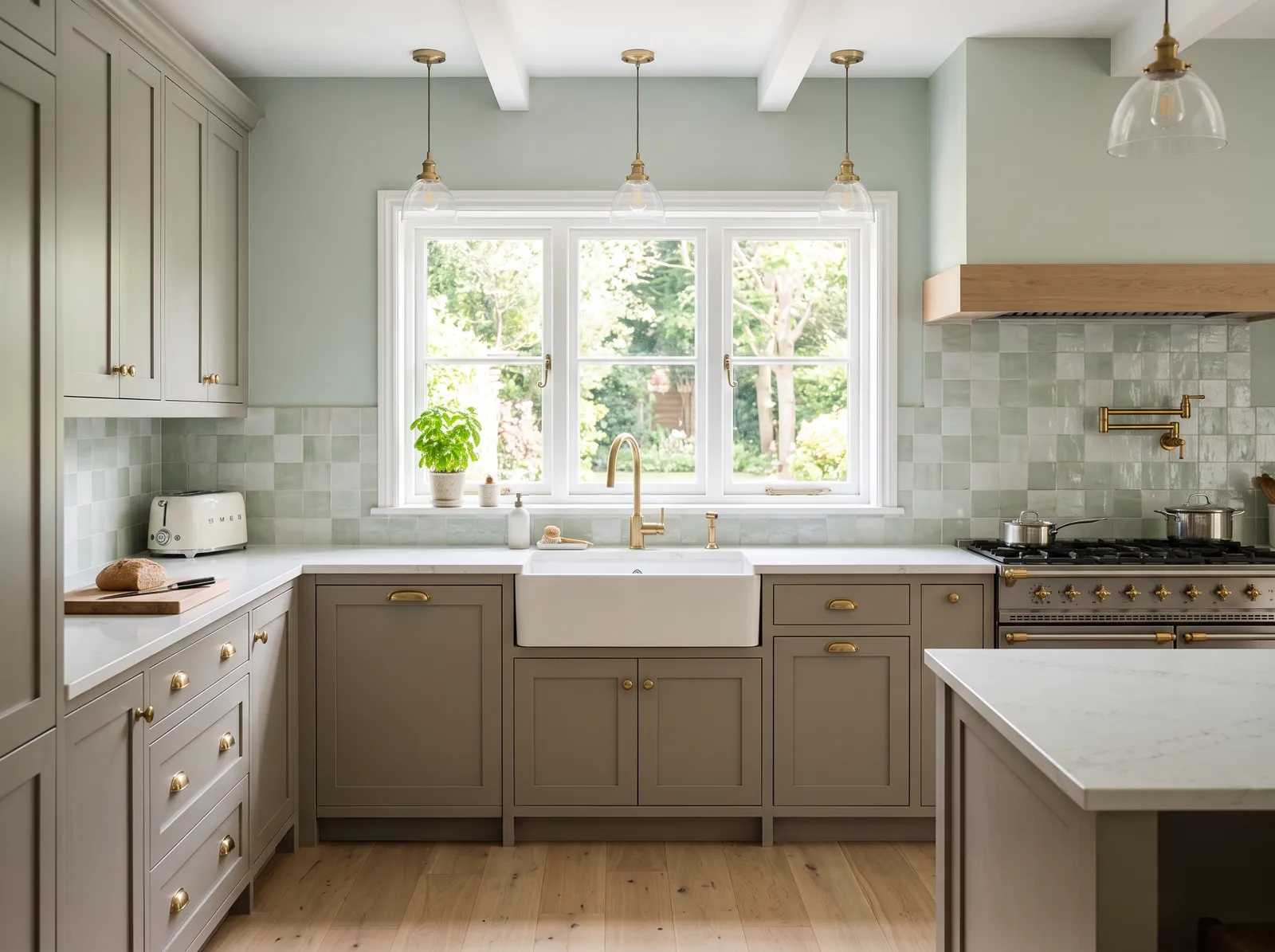
Gray Kitchen Paint Colors
3,425 gray colors that work in kitchens, drawn from the full ~30,000-color US paint deck. Below: editor's picks specific to kitchens, then 30 picks spread across the LRV range — narrow further on the brand page when you've shortlisted.
Gray is the most-recommended neutral in American interiors — the safe choice that anchors a room without committing to a strong color. The "true" grays here lean cool (blue or violet undertone) or stay almost dead-neutral. The warm-leaning grays (taupe, mushroom, greige) live in the Neutral family next door because they read closer to beige than to true gray on the wall.
Editor's Picks: Gray for Kitchens
4 picks30 Gray Picks Across the LRV Range
30 of 3,425 · sorted dark → lightLooking for more? All gray → covers every brand; brand × family pages show full decks.
Gray Kitchen Colors at Every US Brand
21 brands · up to 10 picks eachUp to 10 picks per brand spread across the gray LRV range, drawn from each brand's full deck. Tap any swatch with a curated guide for full spec; tap the brand title for the brand's complete gray deck.
Behr
Glidden
Valspar
Benjamin Moore
PPG / Glidden
Sherwin-Williams
Dunn-Edwards
Dutch Boy
Diamond Vogel
Hirshfield's
Kompozit
C2 Paint
Rodda
Magnolia Home
Farrow & Ball
Clare
Portola Paints
Annie Sloan
Backdrop
Rust-Oleum
Other Kitchen Color Families
Gray Colors in Other Rooms
Gray Paint Colors for a Kitchen
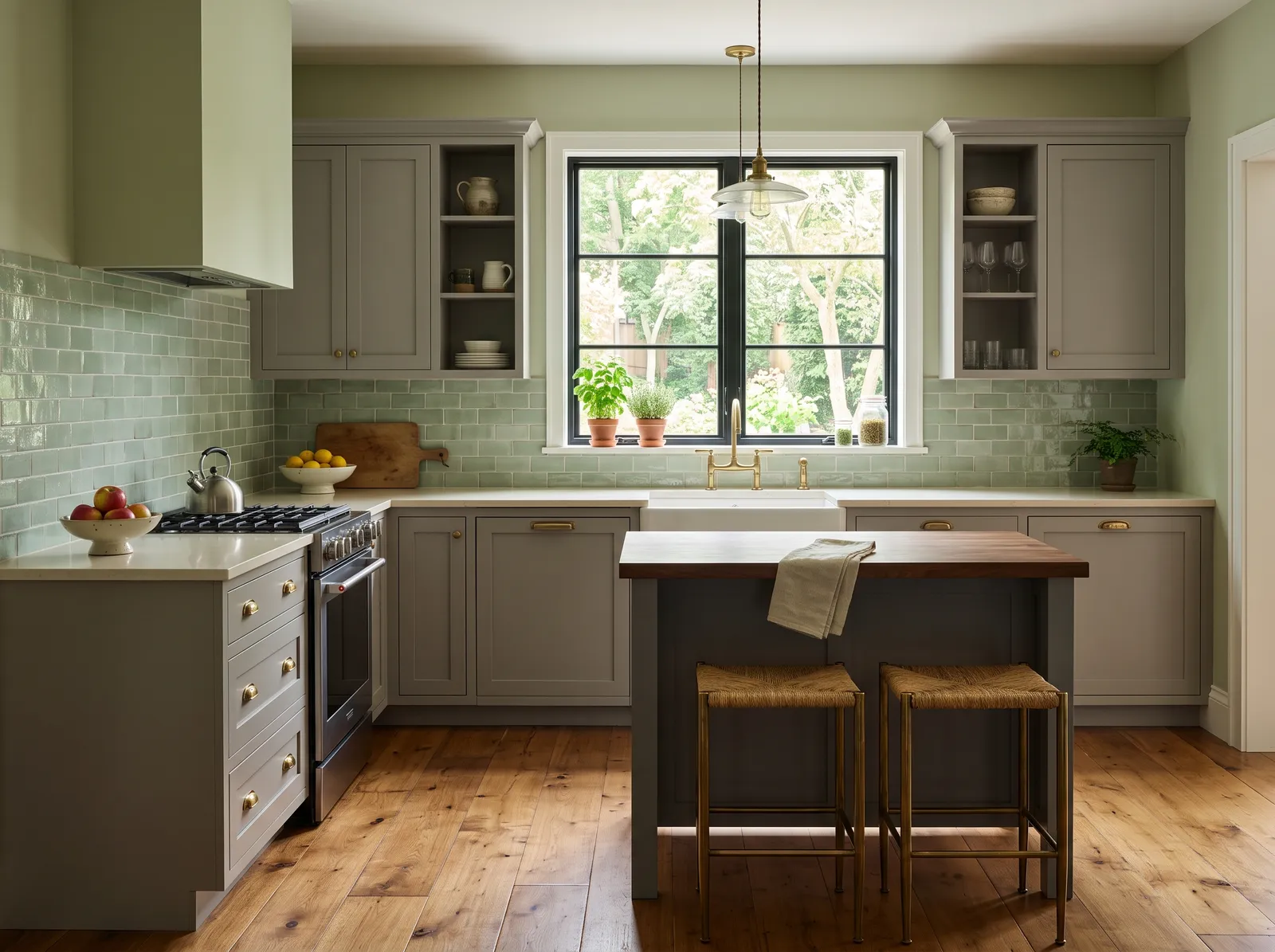
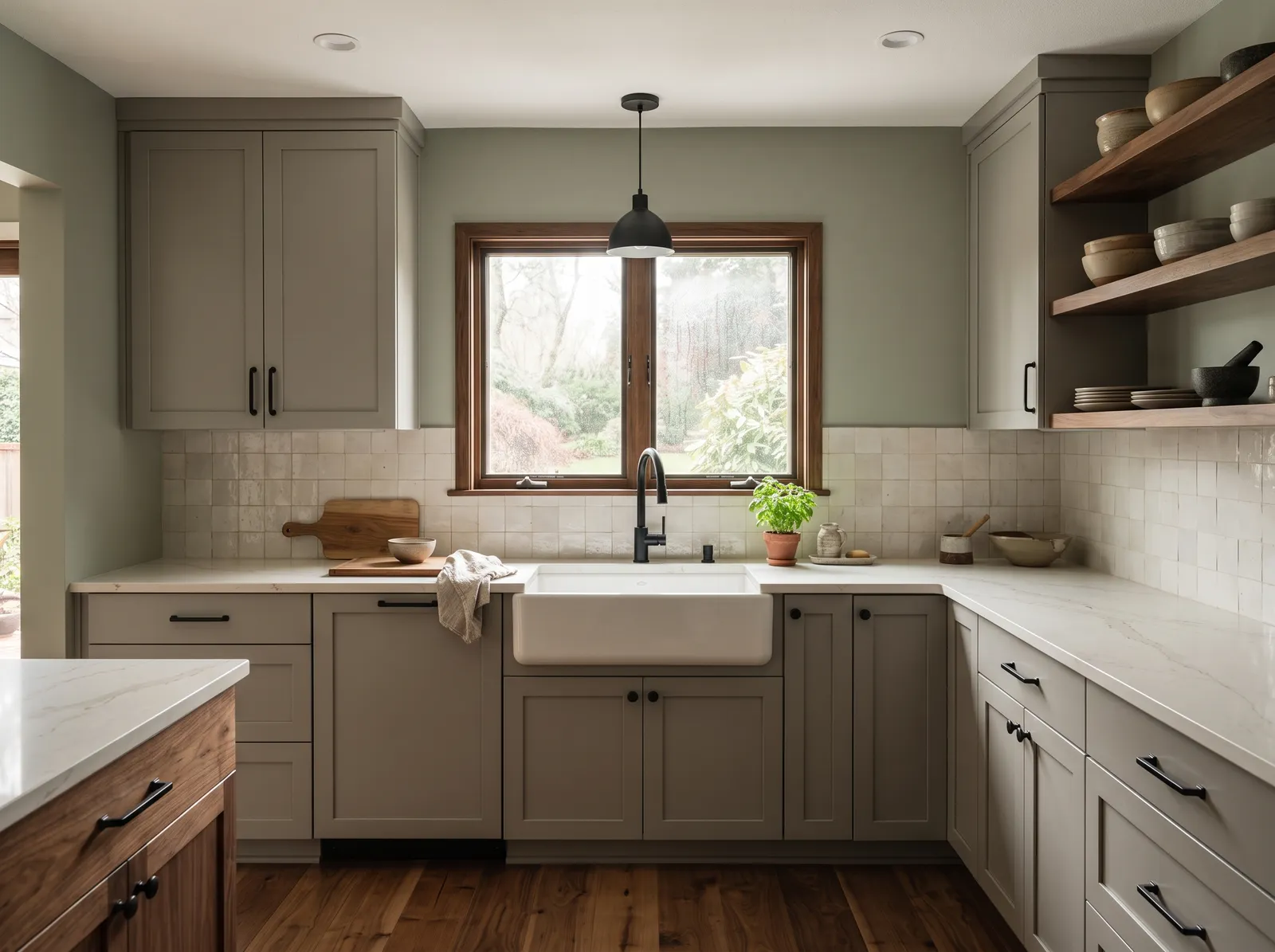
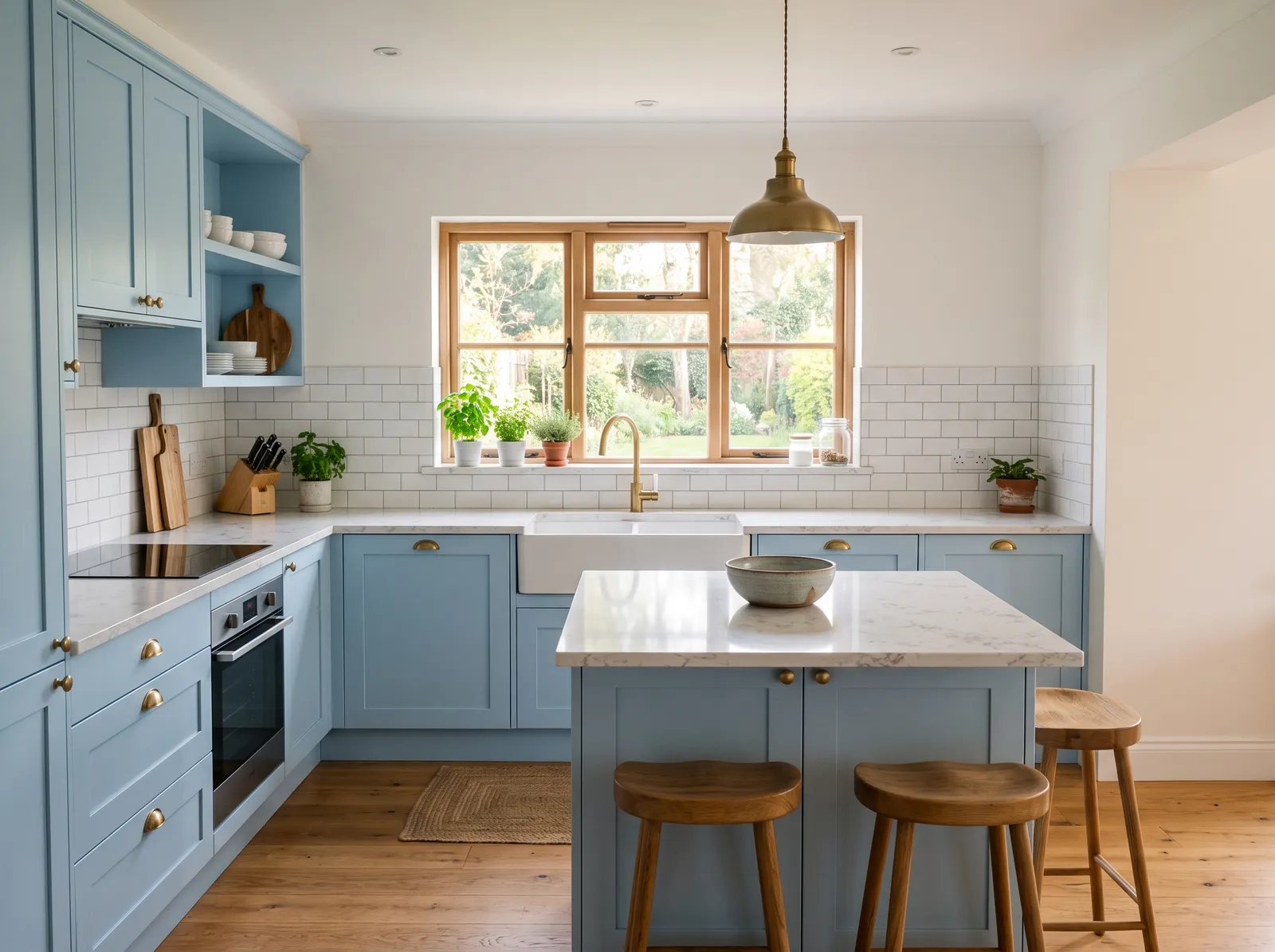
Gray is one of the most forgiving ways to bring color into a kitchen without making it feel cold or trendy in a way that dates fast. It sits quietly behind the busy parts of the room, the cabinets, the backsplash, the hardware, and lets them lead. In a space full of stainless steel, stone, and reflective surfaces, gray reads as calm and clean rather than loud.
The catch is that gray almost never behaves the way it looks on the chip. Kitchen light bounces off countertops and floors all day, and that bounce can pull a soft gray toward blue, green, or purple before you finish the first wall. The sections below walk through how to pick the right depth of gray for your kitchen, what sheen actually survives cooking and cleaning, and how to pair it with the surfaces you already have. Every gray shown on this page is mixed to order at the store, so you can match the exact tone across brands.
Why Gray Works In A Kitchen
A kitchen has more competing materials than almost any other room: countertops, cabinet fronts, tile, appliances, and flooring all fight for attention. Gray is the rare wall color that calms that mix instead of adding to it, which is why it pairs so easily with both white cabinets and wood tones. It also hides the small scuffs and splatter shadows that show up fast near a stove or sink.
The thing to watch is that gray is never truly neutral. Most grays carry a hidden undertone, and a kitchen full of cool stainless and stone tends to amplify the cool ones, which can tip a soft gray into a chilly, almost clinical look. Pick a gray with a warm or greige lean if the room already runs cold.
The Right Depth Of Gray For Your Light
Light reflectance value, or LRV, tells you how much light a color bounces back on a 0 to 100 scale. For most kitchens, a gray in the mid-to-upper range, roughly an LRV of 55 to 70, keeps the room bright and food-prep tasks easy to see. Go much darker and a kitchen can feel like a cave under cabinet shadows and overhead glare.
Let the room's light steer the depth. A north-facing or basement kitchen gets cool, flat light that makes any gray look deeper and bluer, so lean lighter and warmer than the chip suggests. A south- or west-facing kitchen with strong afternoon sun can handle a deeper, mid-LRV gray without feeling closed in, and the warmth in that light softens cool undertones.
The Best Finish For Kitchen Walls
A kitchen is a wet, greasy, high-traffic room, so finish matters as much as color. Eggshell or satin is the sweet spot for kitchen walls: both wipe clean when grease and sauce splatter, and they shrug off the steam that flatter finishes absorb. A true flat or matte may look beautiful, but it holds stains and rubs off when you scrub, which you will do often near the range.
Save the higher-gloss finishes for the parts that take real abuse. Semi-gloss on trim, doors, and sometimes the ceiling near a cooktop stands up to moisture and frequent wiping. Just be aware that on a large gray wall, too much sheen throws glare under kitchen downlights and shows every roller mark, so keep the walls themselves at satin or below.
Pairing Gray With Cabinets, Trim, And Fixtures
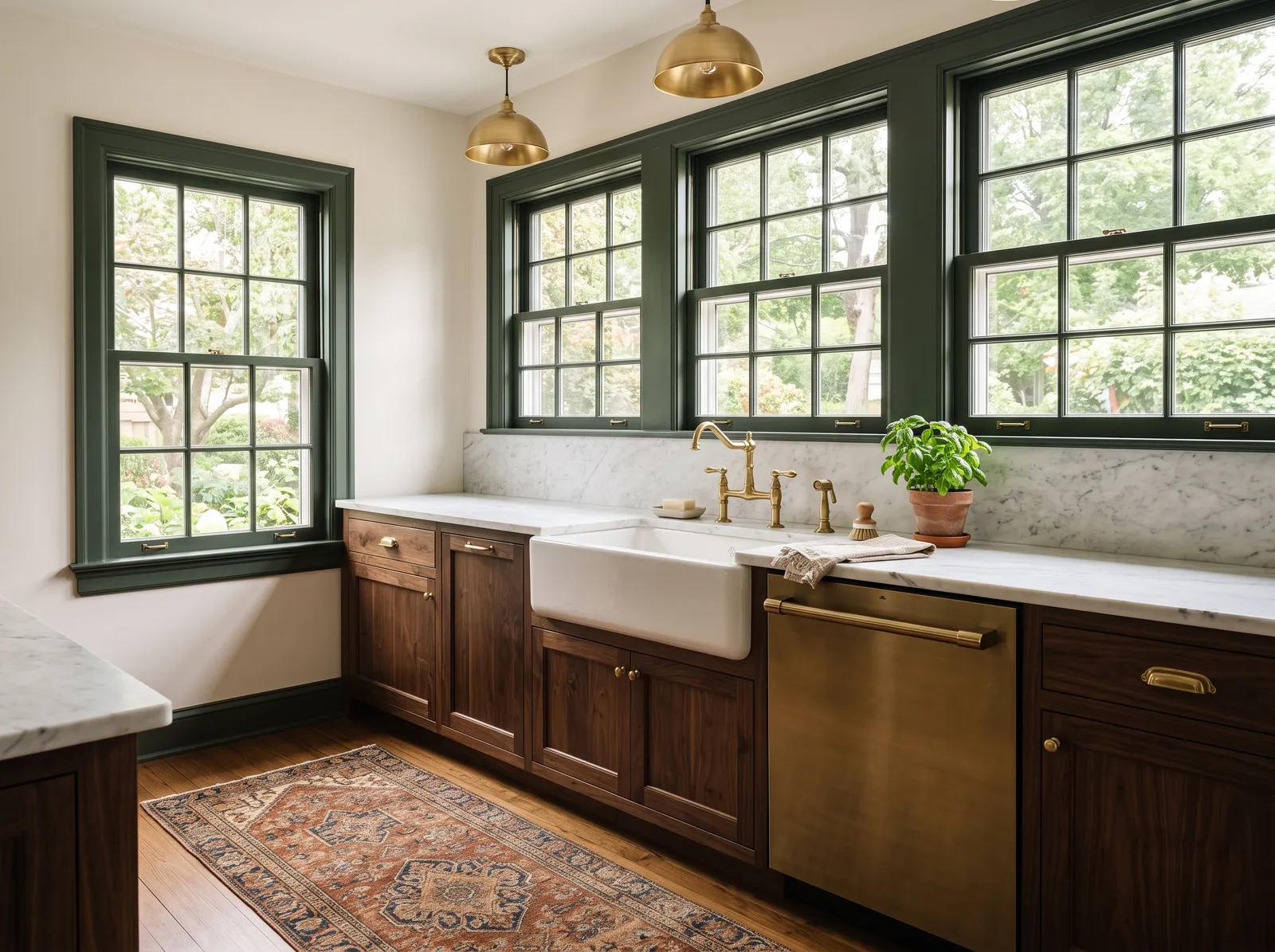
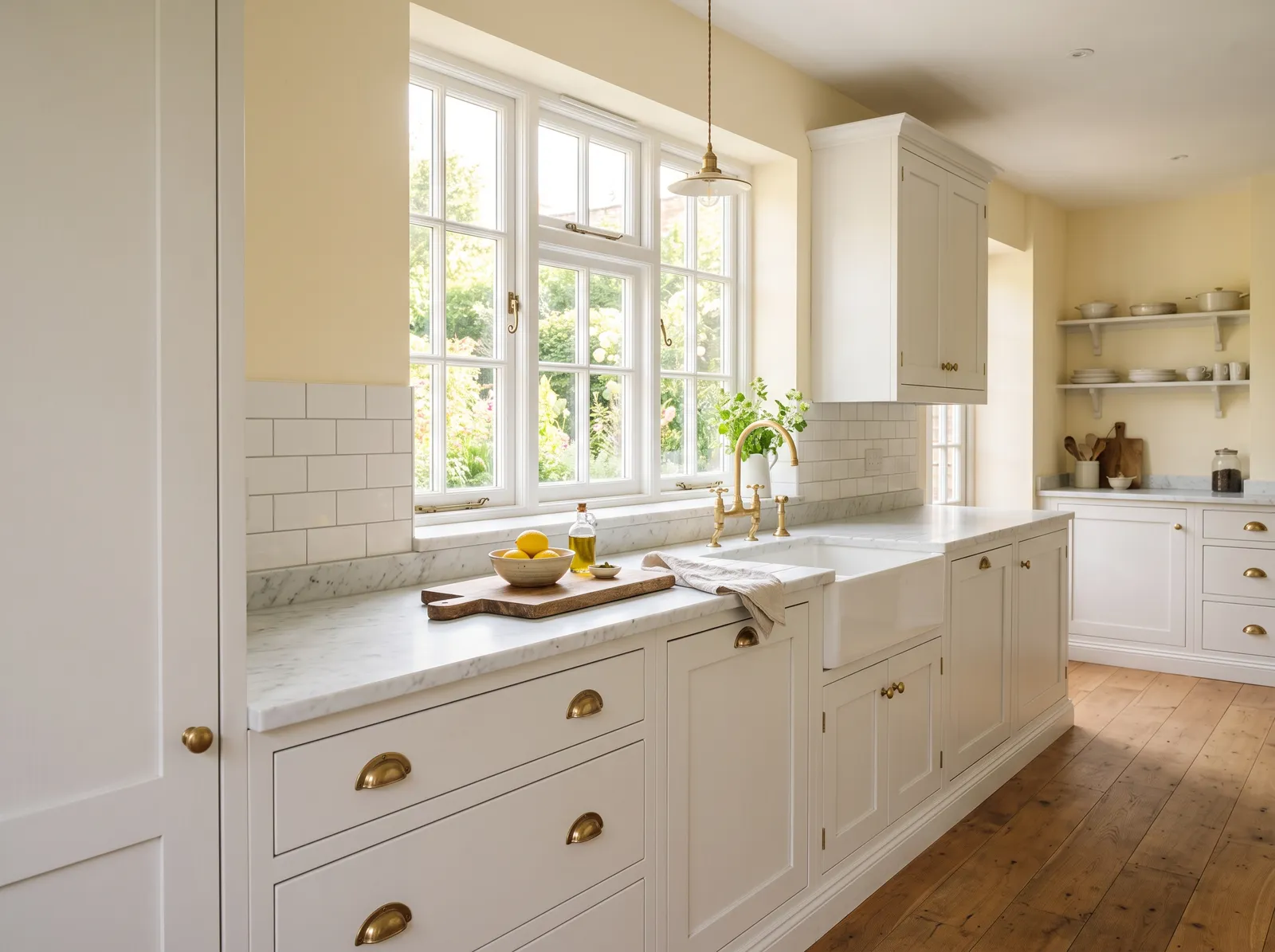
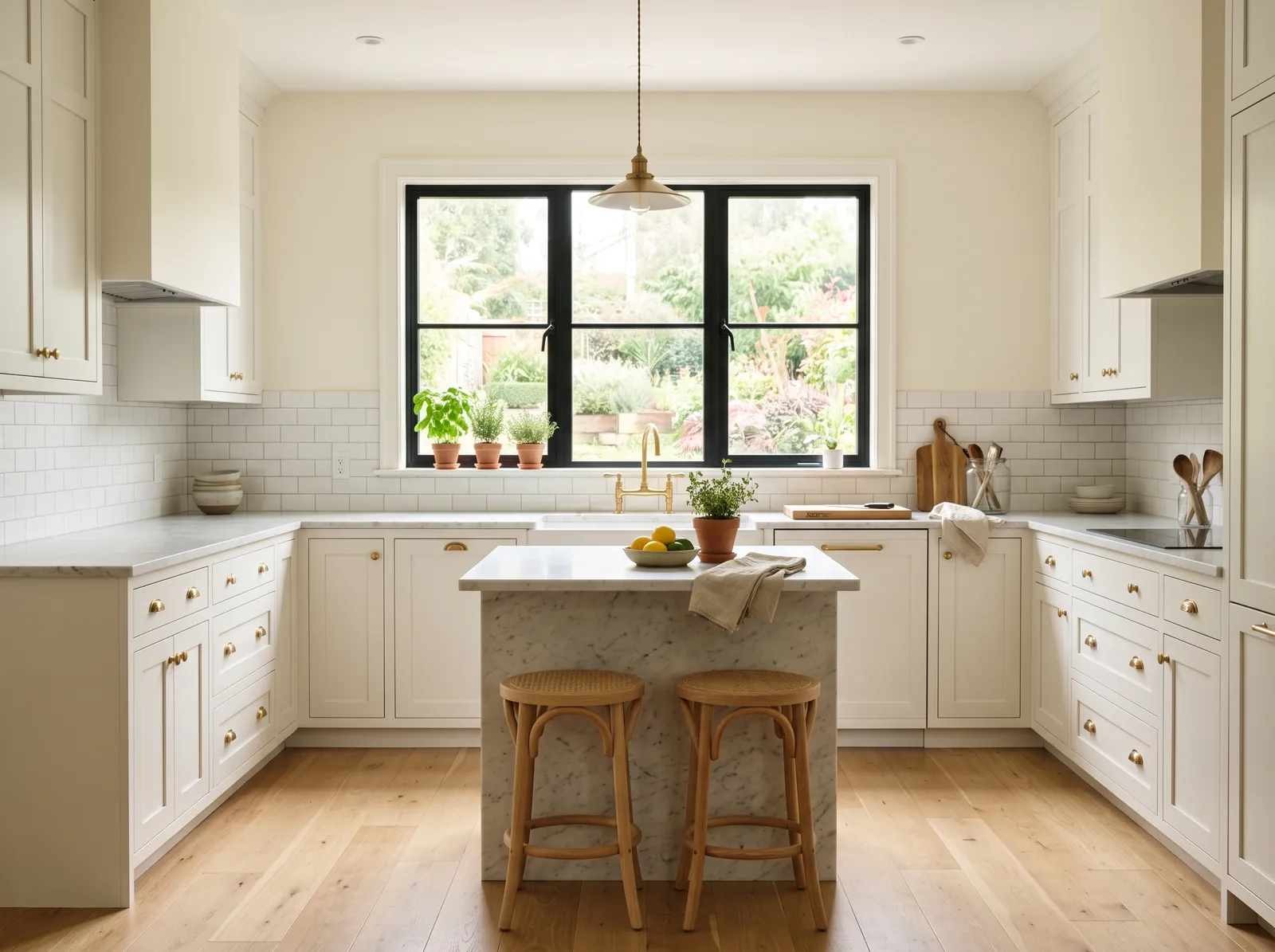
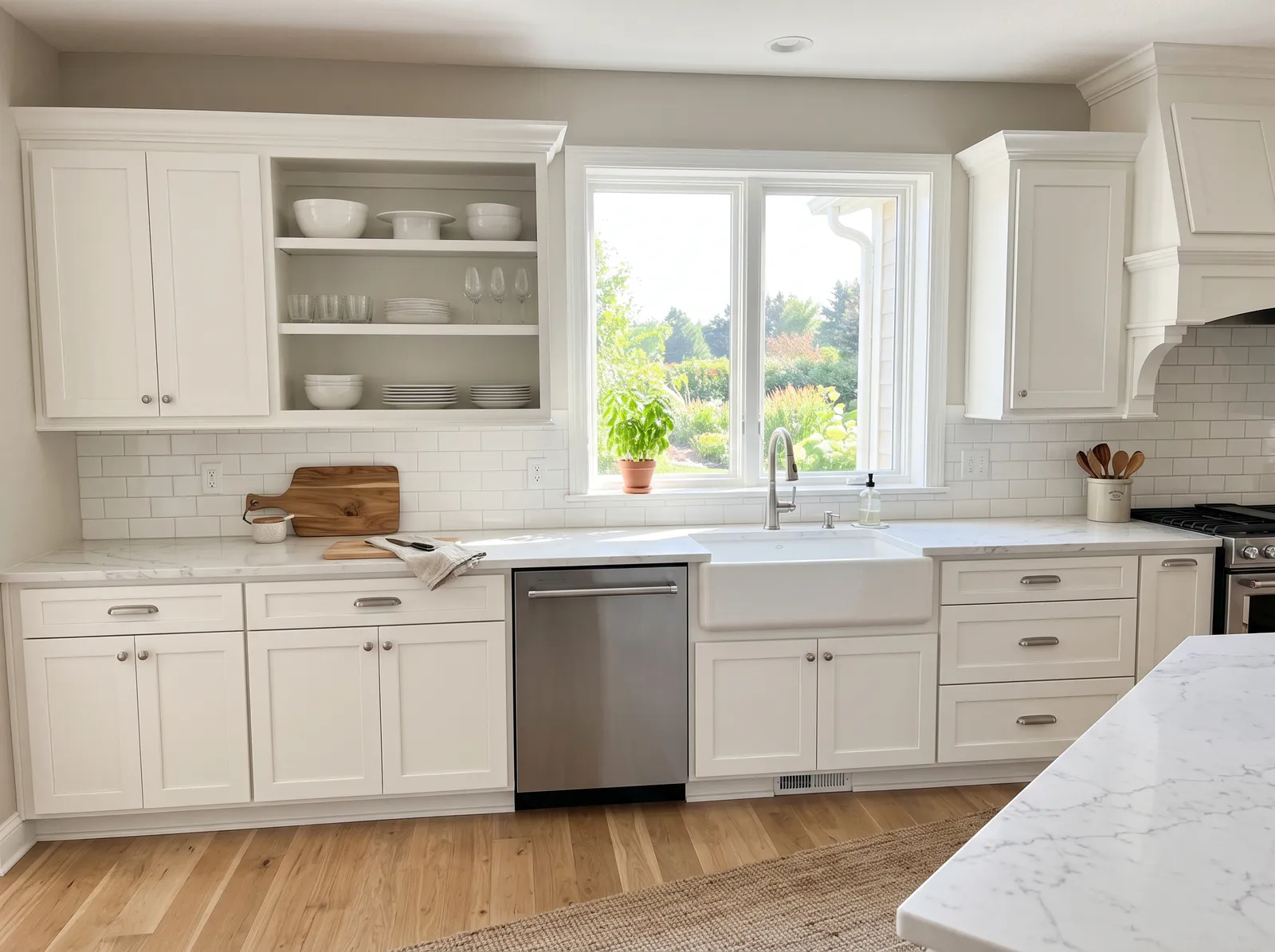
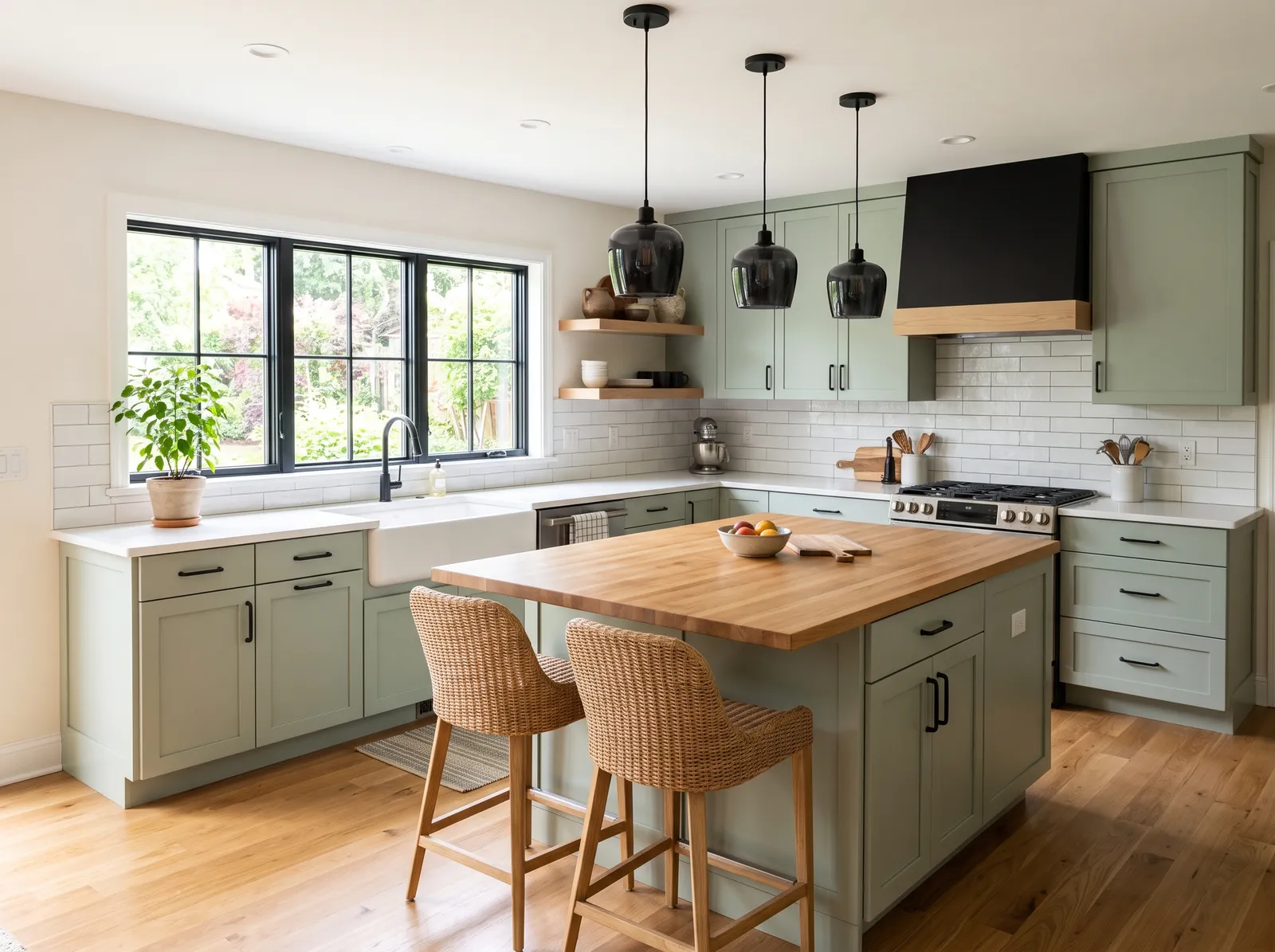
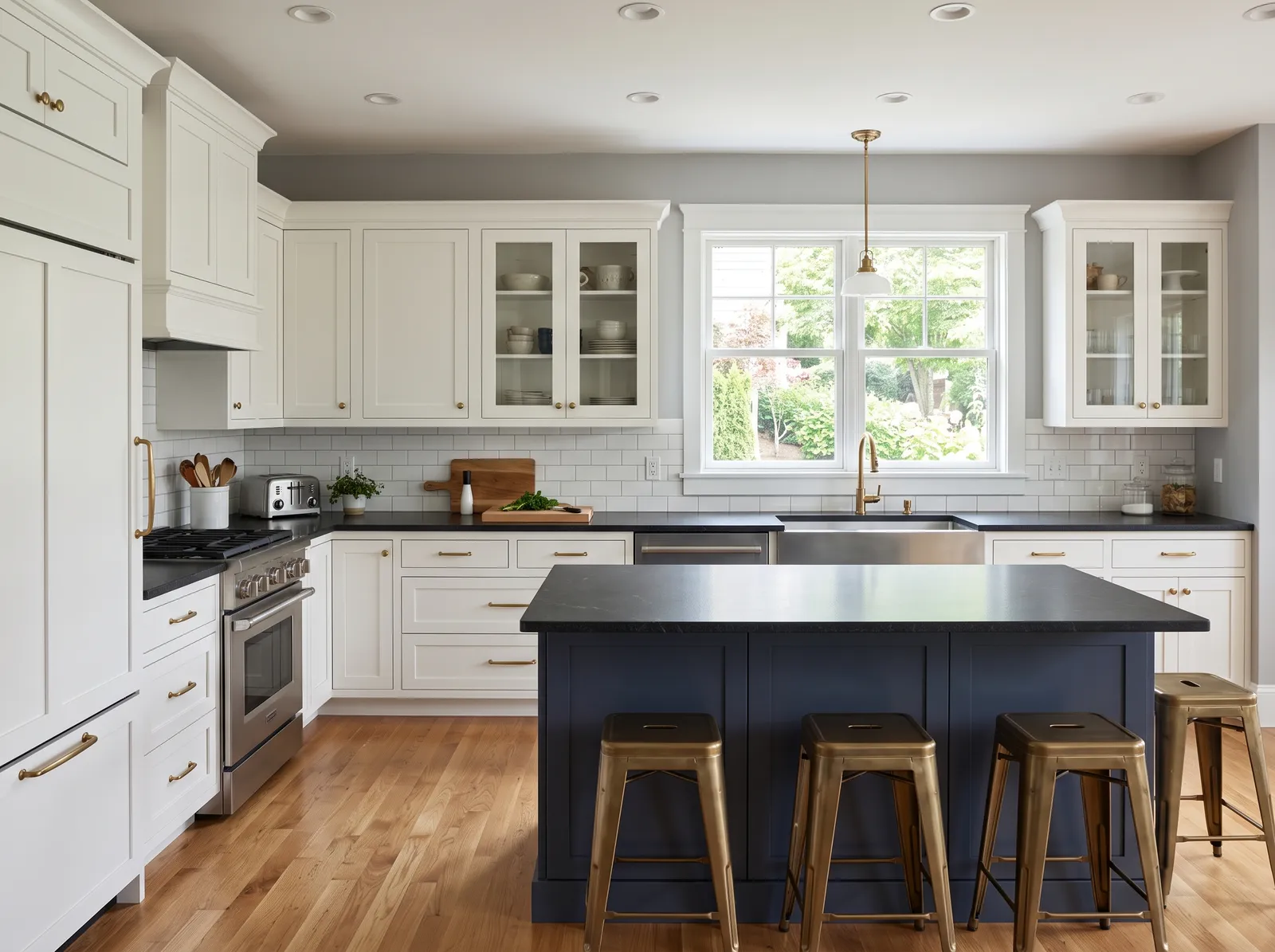
The single biggest pairing decision is your cabinets. Gray walls flatter white and off-white cabinets cleanly, but make sure the white doesn't have a yellow lean that fights a cool gray, or the two will clash in daylight. With wood cabinets, a greige or warm gray bridges the gap and keeps the wood from looking orange.
For trim, crisp white is the safe default, but match its temperature to the gray, warm white with greige, clean white with a cooler gray. Carry the conversation through to fixtures and hardware: brushed nickel and stainless echo cooler grays, while brass, bronze, and black anchor warmer ones. The ceiling almost always looks best a few shades lighter than the wall or a soft white, never the same gray, which can press down on the room.
Common Mistakes With Gray In A Kitchen
The most common mistake is picking gray off a tiny chip under store lighting and skipping a sample on the actual wall. Kitchen light and the glow from countertops will shift the undertone, and a gray that looked soft in the aisle can read cold blue or muddy green once it's up. Always paint a large swatch and look at it morning, noon, and night.
The other frequent miss is going too dark in a room that needs to stay functional, or matching the wall gray to gray countertops and gray floors until the whole kitchen flattens into one tone. Give gray something to contrast against, a white ceiling, warm wood, a punch of hardware, so the room has depth instead of feeling washed out.
Gray Kitchen Paint — Frequently Asked Questions
What is the best shade of gray for a kitchen?+
For most kitchens, a soft to medium gray with an LRV in the 55 to 70 range works best because it keeps the room bright enough for cooking while still adding color. If your kitchen has a lot of cool stainless and stone, choose a gray with a warm or greige undertone so the space doesn't feel cold. Darker grays can work as an accent or on a lower cabinet run, but they make a whole kitchen feel smaller.
Does gray make a kitchen look cold?+
It can, especially in a kitchen full of stainless steel and stone that already reflect cool light. The fix is to choose a gray that leans warm or greige rather than a true blue-gray, and to pair it with warm elements like wood, brass, or a soft white trim. North-facing kitchens are the most prone to a cold result, so lean warmer there.
What sheen should I use for gray kitchen walls?+
Use eggshell or satin on the walls. Both wipe clean when grease and food splatter hit them and they handle kitchen steam far better than a flat finish. Save semi-gloss for trim and doors, and keep the walls themselves below that level so you don't get glare and visible roller marks under your lights.
What color cabinets go with gray walls in a kitchen?+
White and off-white cabinets are the cleanest match, as long as the white's temperature agrees with the gray's undertone. Wood cabinets pair well with a warm gray or greige, which keeps the wood from looking too orange. Darker cabinets with a lighter gray wall also work and add depth without closing the room in.
Why does my gray paint look different on the kitchen wall than on the chip?+
Gray almost always carries a hidden undertone, and your kitchen's light plus the color bouncing off countertops and floors will pull that undertone out. A gray can read blue, green, or purple on the wall even when the chip looked neutral. Paint a large sample on the actual wall and check it in morning, midday, and evening light before you commit.
Can I match a gray from one brand to another?+
Yes. Every gray shown here is mixed to order at the paint counter, so the color is not locked to a single brand. If you like a gray from one brand but prefer another brand's paint line or finish, the store can cross-match the same tone, which makes it easy to keep one consistent gray across walls, trim, and touch-ups.