Gray Kitchen Cabinet Paint Colors
3,425 gray colors that work in kitchen cabinets, drawn from the full ~30,000-color US paint deck. Below: editor's picks specific to kitchen cabinets, then 30 picks spread across the LRV range — narrow further on the brand page when you've shortlisted.
Gray is the most-recommended neutral in American interiors — the safe choice that anchors a room without committing to a strong color. The "true" grays here lean cool (blue or violet undertone) or stay almost dead-neutral. The warm-leaning grays (taupe, mushroom, greige) live in the Neutral family next door because they read closer to beige than to true gray on the wall.
Editor's Picks: Gray for Kitchen Cabinets
4 picks30 Gray Picks Across the LRV Range
30 of 3,425 · sorted dark → lightLooking for more? All gray → covers every brand; brand × family pages show full decks.
Gray Kitchen Cabinet Colors at Every US Brand
21 brands · up to 10 picks eachUp to 10 picks per brand spread across the gray LRV range, drawn from each brand's full deck. Tap any swatch with a curated guide for full spec; tap the brand title for the brand's complete gray deck.
Behr
Glidden
Valspar
Benjamin Moore
PPG / Glidden
Sherwin-Williams
Dunn-Edwards
Dutch Boy
Diamond Vogel
Hirshfield's
Kompozit
C2 Paint
Rodda
Magnolia Home
Farrow & Ball
Clare
Portola Paints
Annie Sloan
Backdrop
Rust-Oleum
Other Kitchen Cabinet Color Families
Gray Colors in Other Rooms
Gray Paint Colors for a Kitchen Cabinet
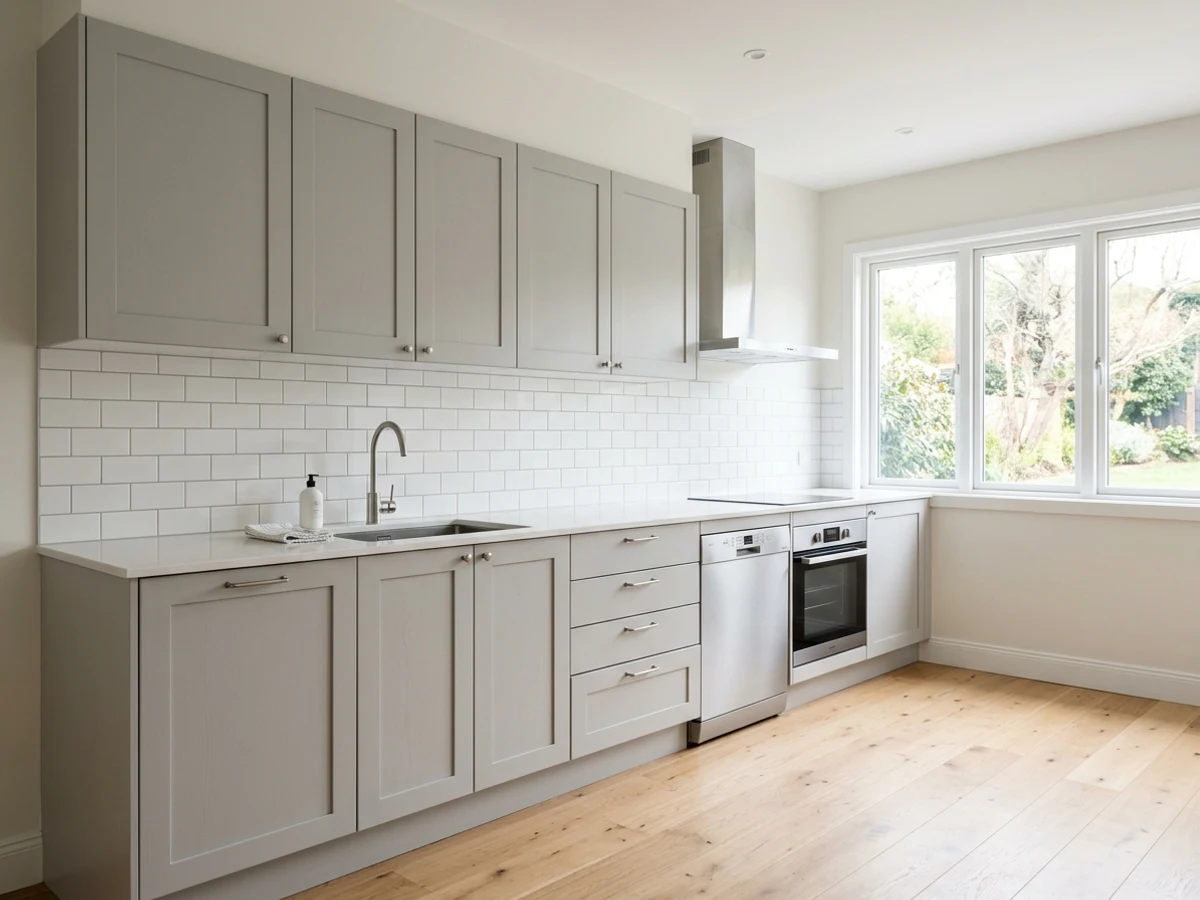
Gray is one of the safest, smartest colors you can put on a cabinet. It hides fingerprints and small scuffs better than pure white, it reads as calm and modern, and it sits quietly under whatever countertop, hardware, or tile you already have. The trick is that "gray" covers a huge range, and the wrong one on a cabinet can go cold, flat, or dingy fast.
This page is about choosing gray for a cabinet specifically, not gray in general. Cabinets get touched, splashed, and lit from odd angles, so the depth of gray, the undertone, and the sheen all matter more here than on a wall. Below we cover how the room's light should steer your gray, which finish holds up to hands and moisture, and how to pair it with trim, counters, and fixtures so it looks intentional instead of accidental.
Why Gray Works on a Cabinet
A cabinet is a high-contact surface, and gray forgives a lot. It masks the daily dust, water spots, and finger smudges that make a white cabinet look tired by mid-afternoon. It also frames whatever sits on top of it, so your counter, sink, and hardware become the thing people notice, not the box itself.
The catch is that a cabinet is a large block of one color in a small footprint. That concentration can push a cool gray toward looking like raw concrete, or push a warm gray toward looking muddy. Pick the undertone on purpose and gray rewards you; pick it by accident and it fights the room.
Let the Room's Light Pick Your Depth
Light is the single biggest factor for gray on a cabinet, and LRV (light reflectance value, 0 for black to 100 for white) is the easiest way to talk about it. A cabinet in a bright, sunny room can carry a deeper gray, roughly an LRV in the 20s to low 40s, without feeling heavy. A cabinet in a dim corner or a north-facing room should stay lighter, around an LRV of 45 to 60, or it will sink into shadow and look dirty.
Also watch the kind of light. North light and cool LED bulbs pull a gray colder and bluer, so a warmer greige reads more balanced there. Warm afternoon sun and soft white bulbs do the opposite, so a true neutral gray keeps its shape instead of going beige. If you can, tape a sample to the cabinet door and look at it morning, noon, and night before you commit.
The Right Finish for a Cabinet
Cabinets need a tougher sheen than walls because hands, water, and cleaning happen constantly. Satin or semi-gloss is the sweet spot: both wipe clean, resist moisture around a sink, and stand up to repeated scrubbing without burnishing. Flat and matte may look elegant, but on a cabinet they trap grime and show every wet rag mark.
Gray has one finish quirk worth knowing. The more sheen you add, the cooler and harder a gray can read, because gloss reflects the room's light back at you. If your cabinet sits under bright direct light, lean toward satin to cut glare and keep the gray soft; in a darker spot, semi-gloss adds a little life and durability without going harsh.
Pairing Gray With Counters, Trim, and Hardware
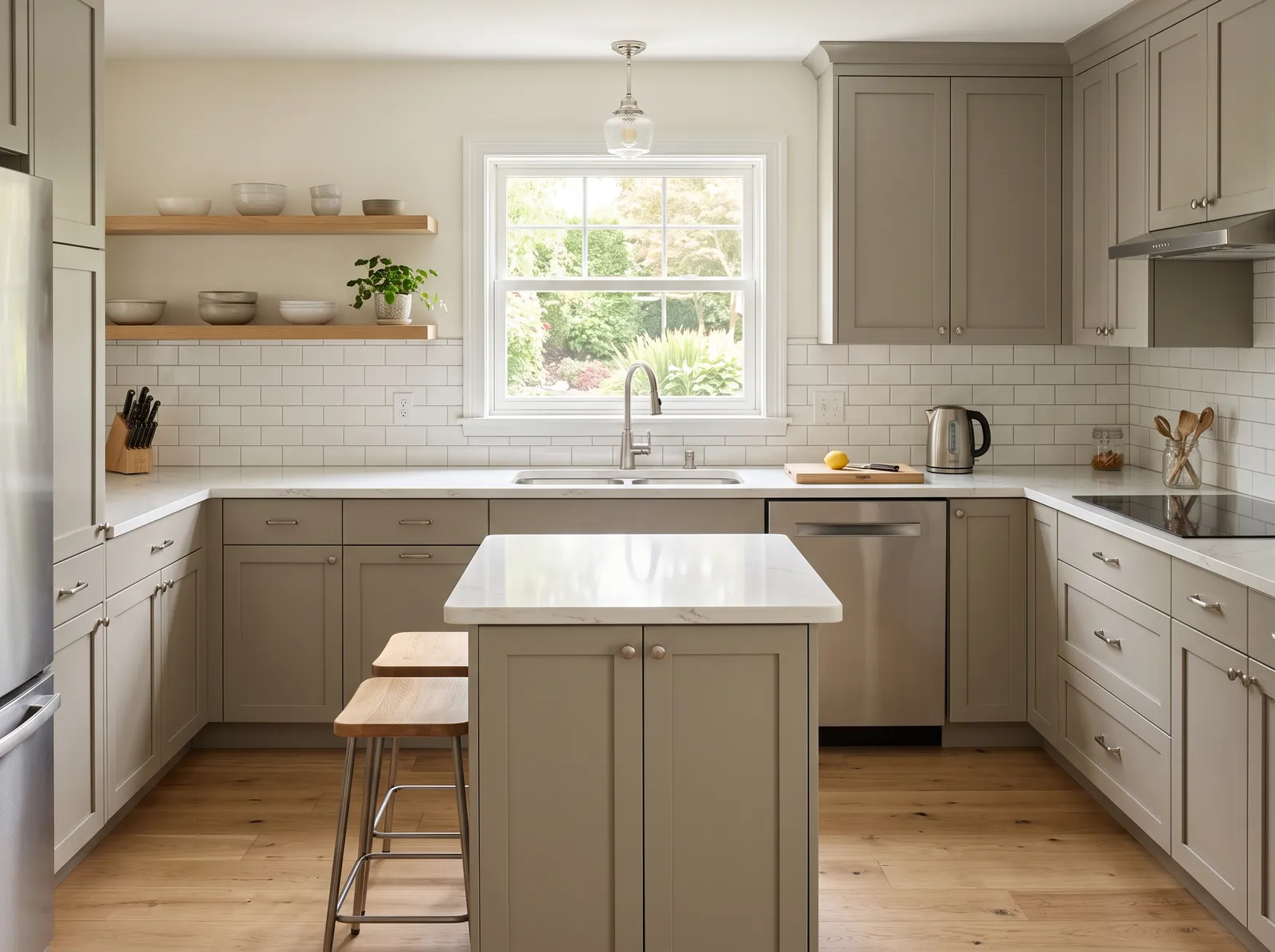
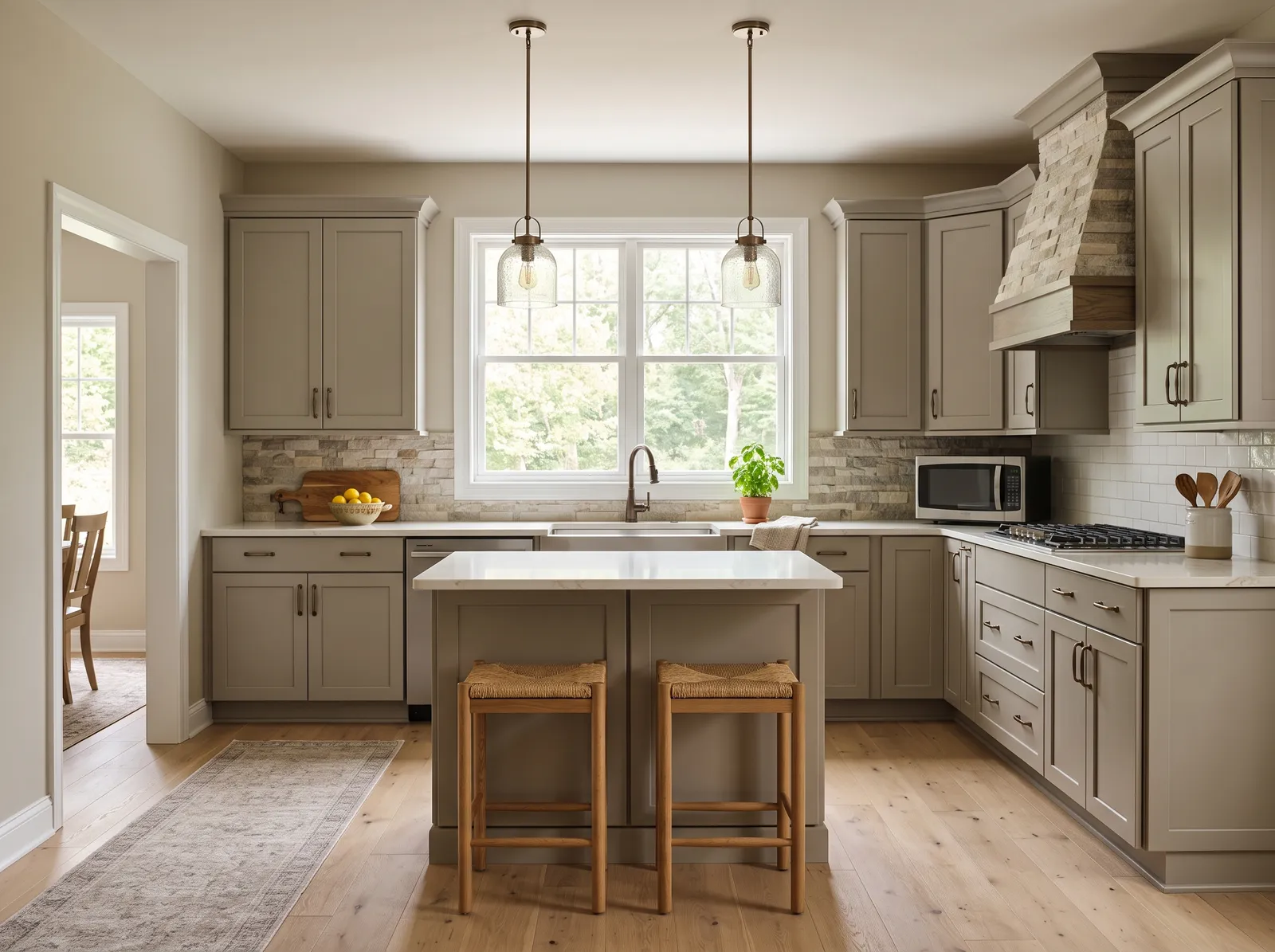
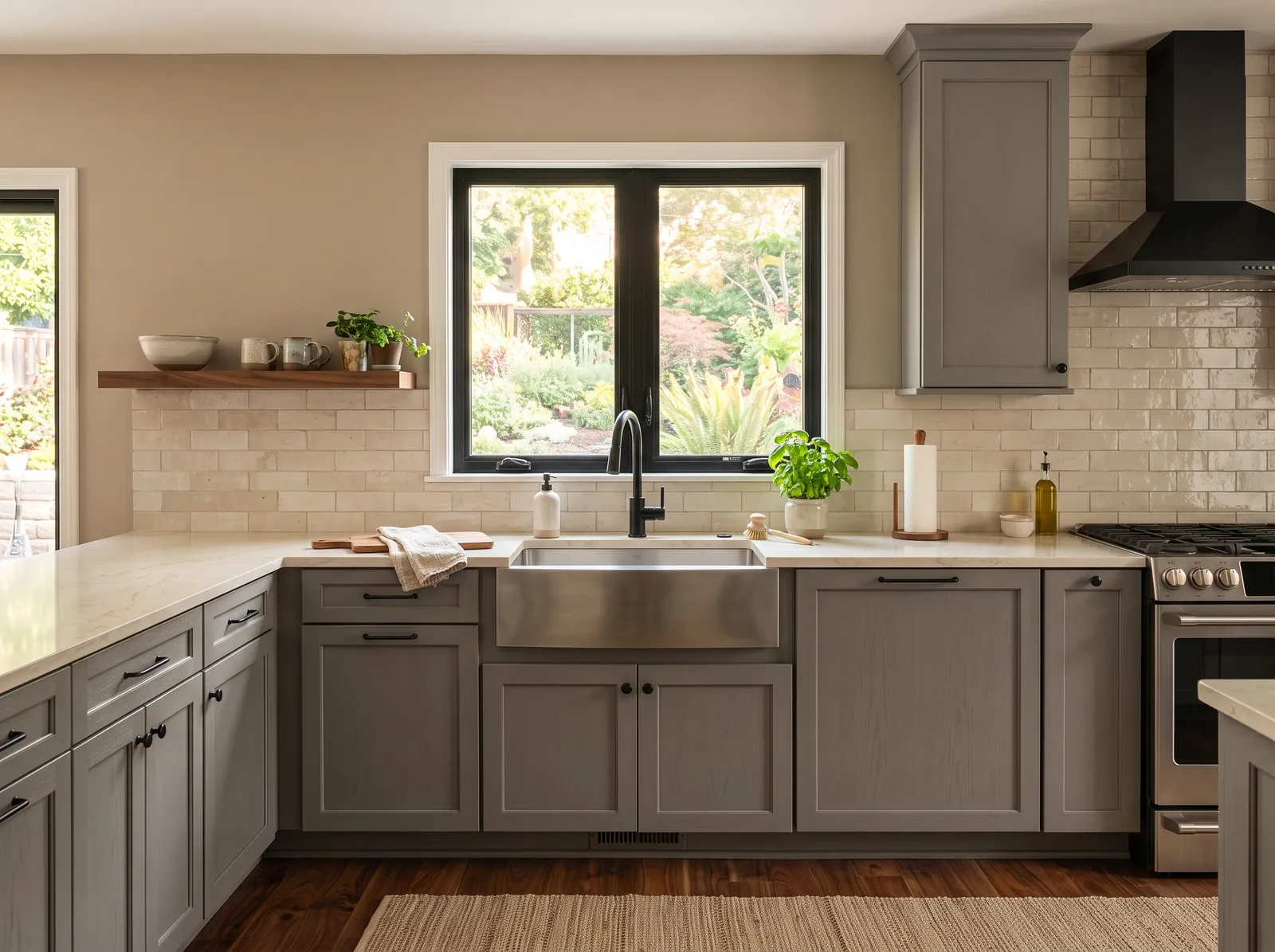
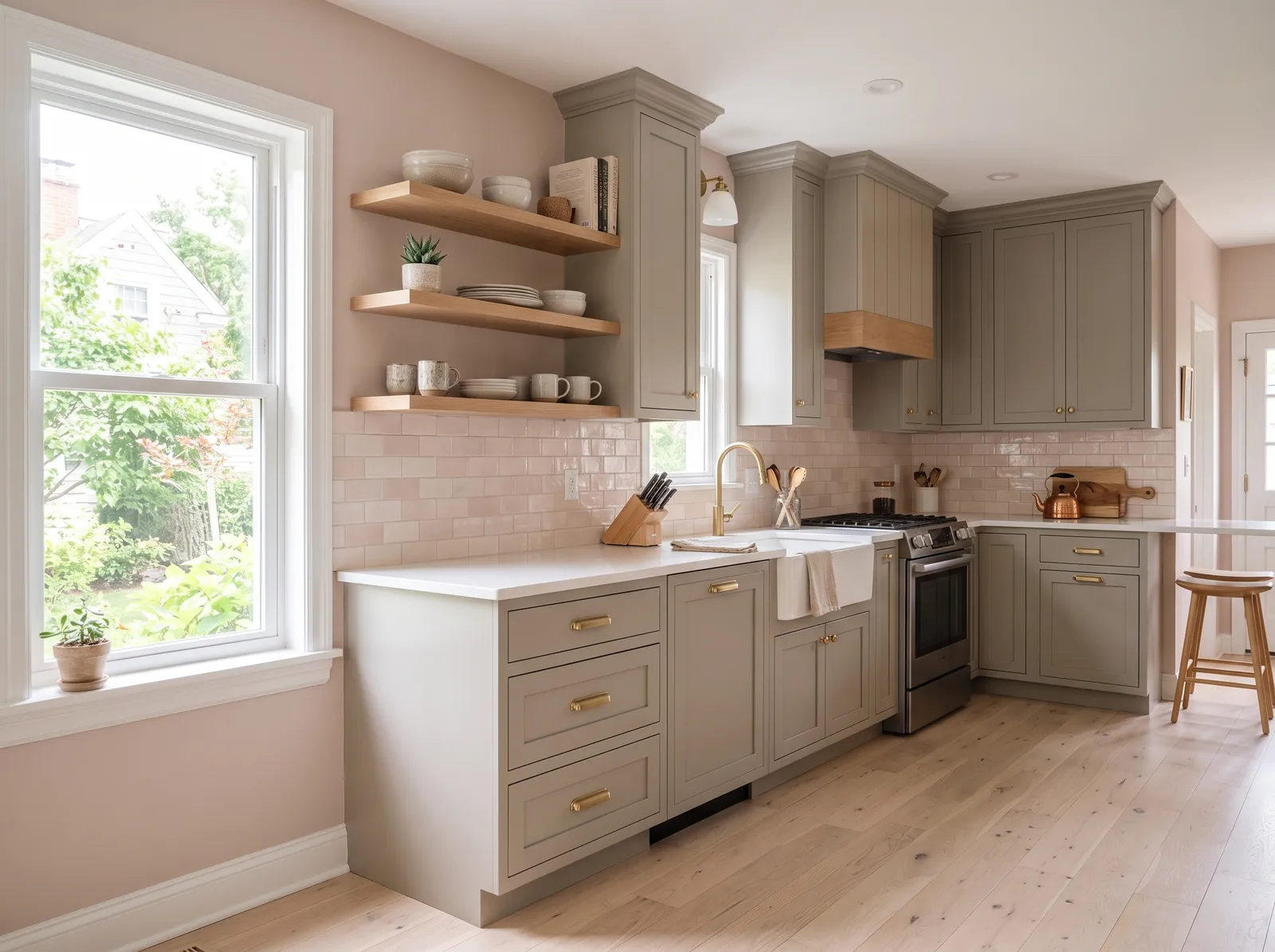
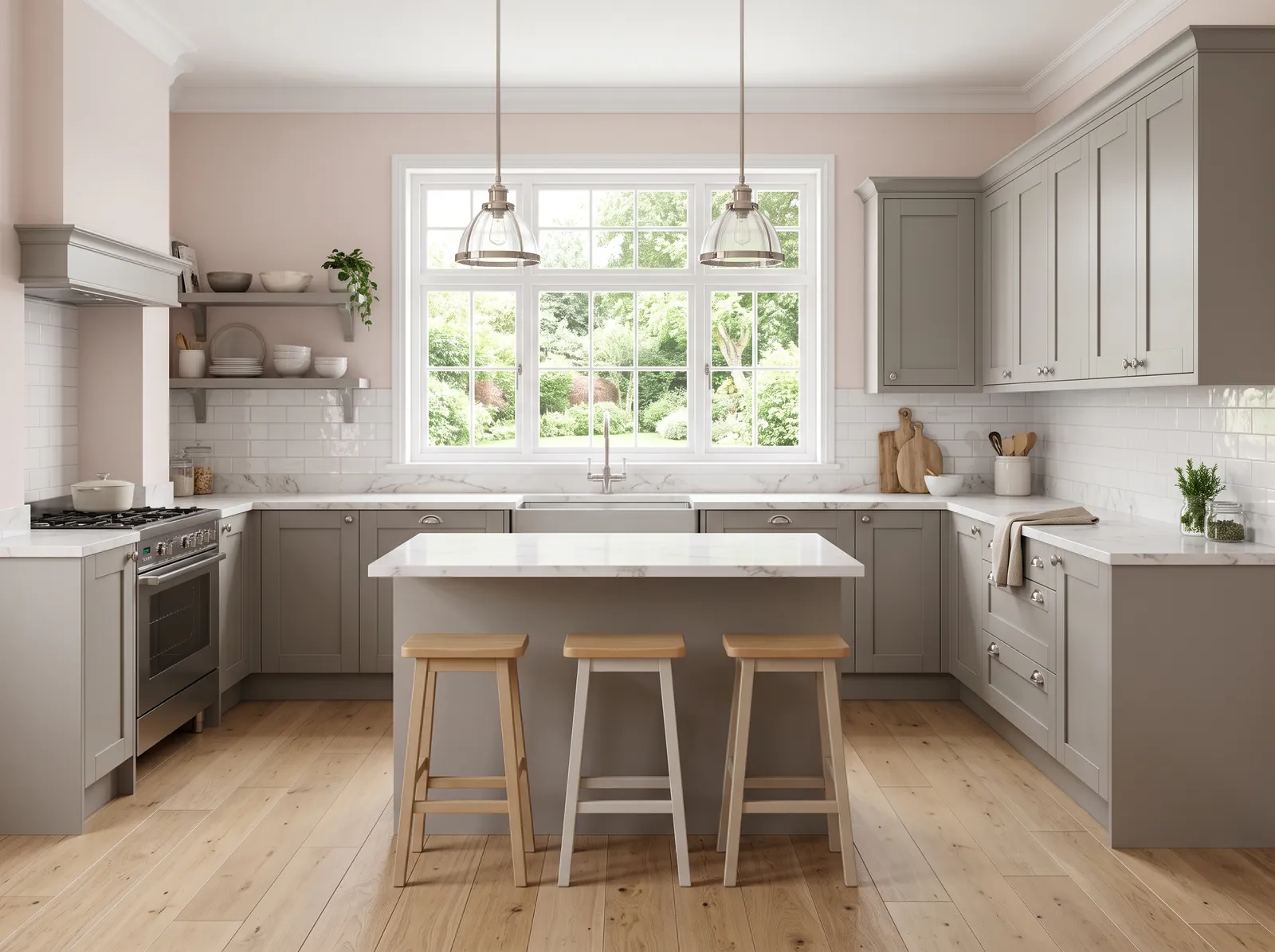
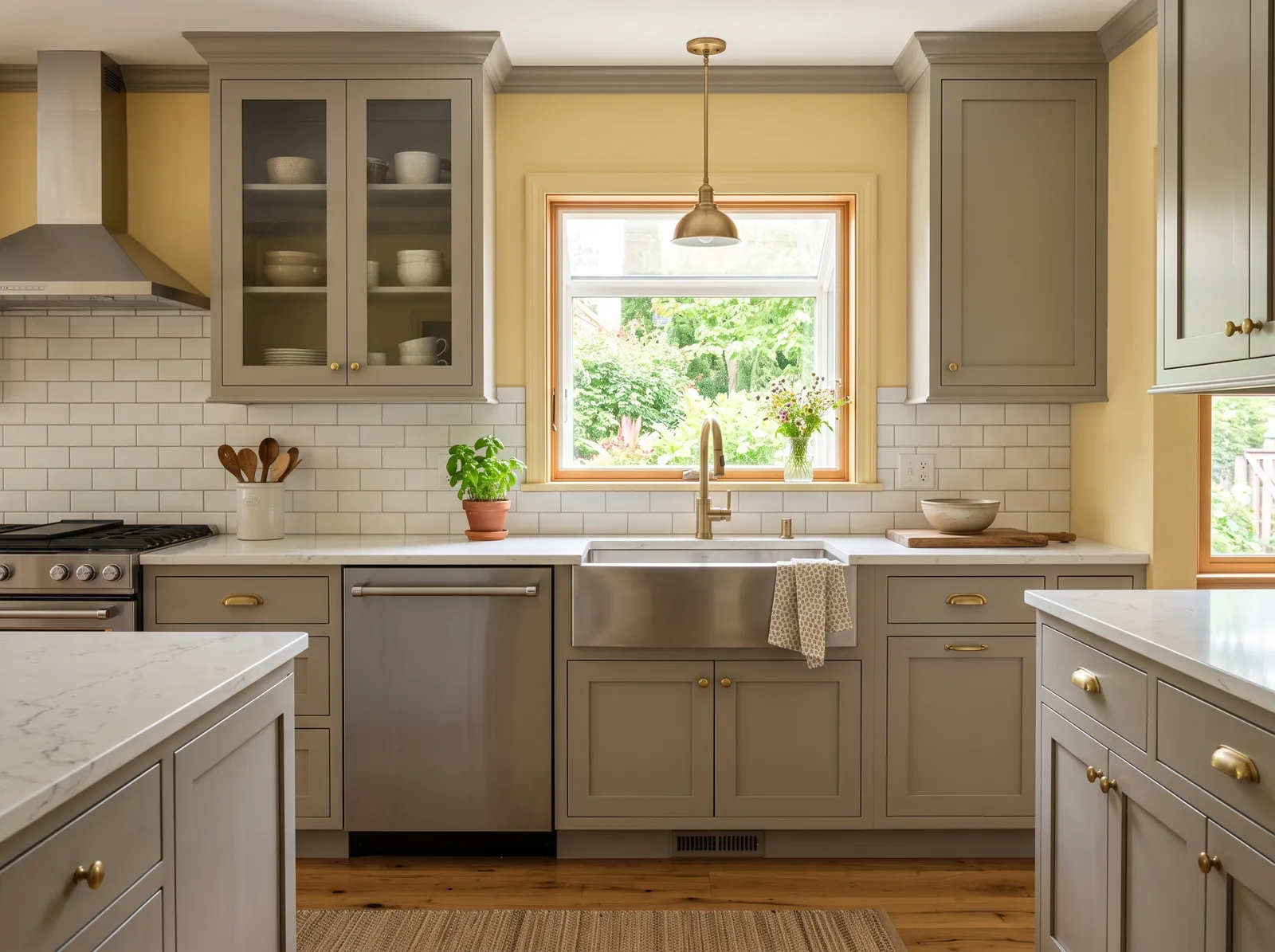
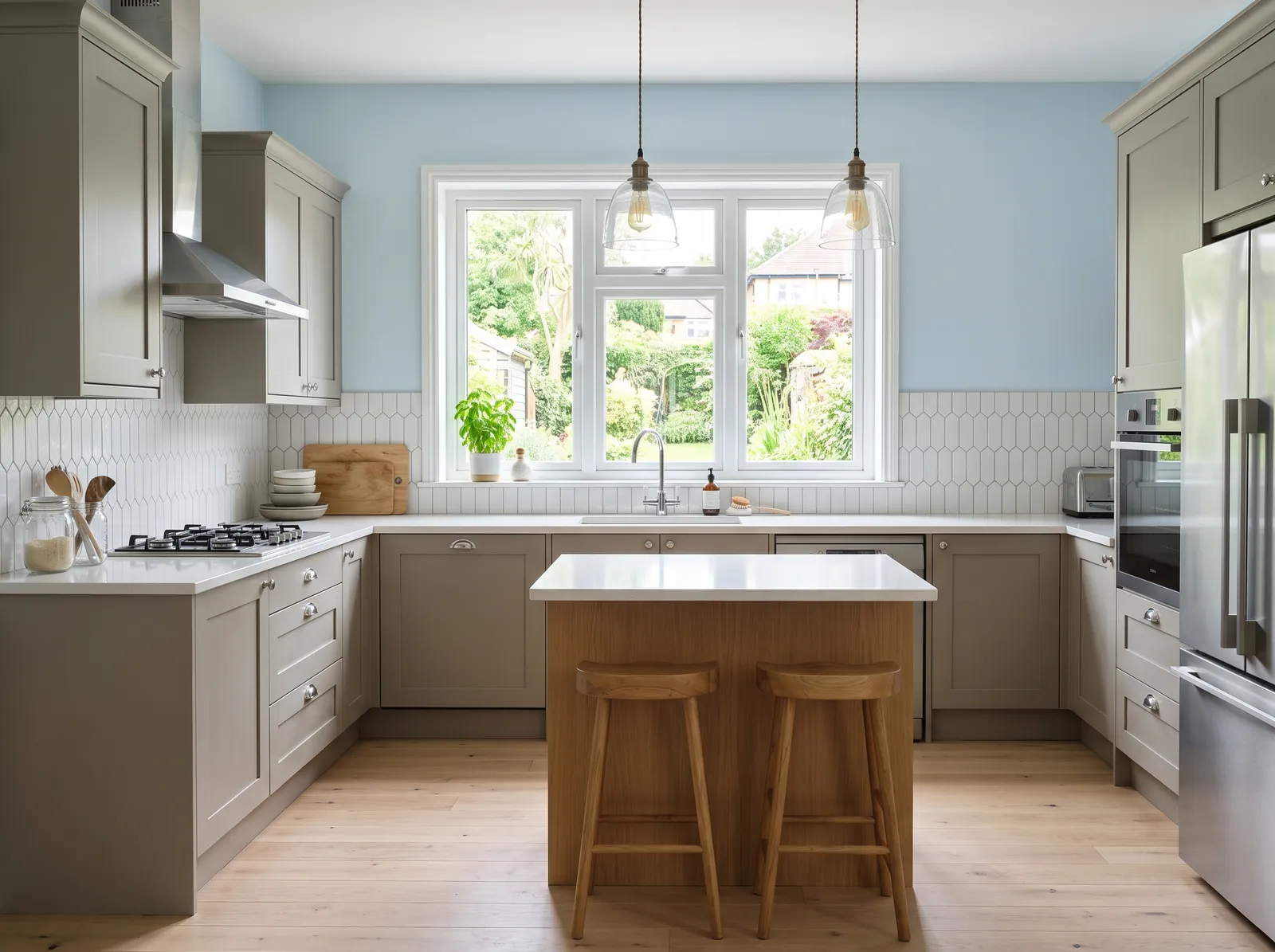
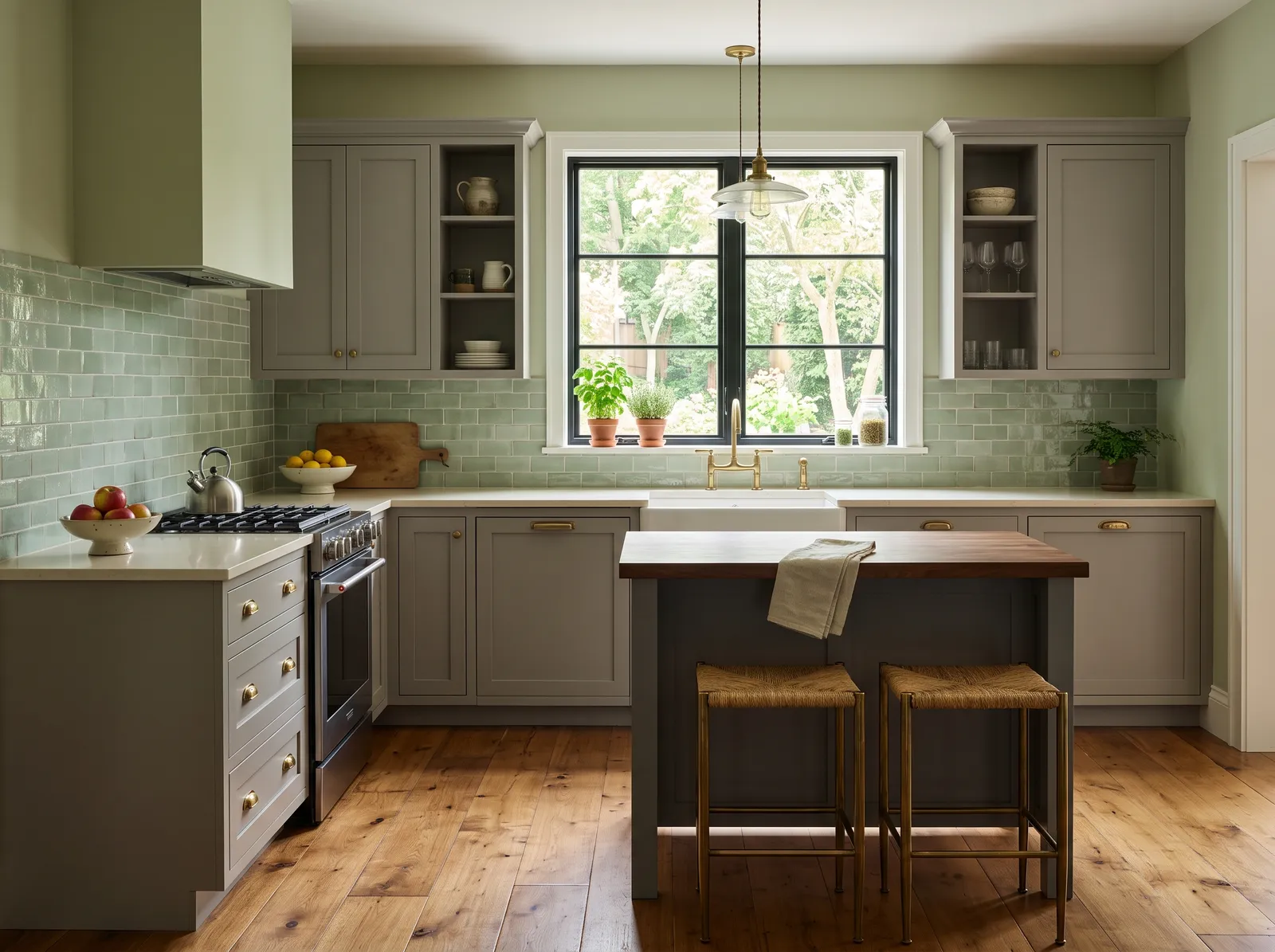
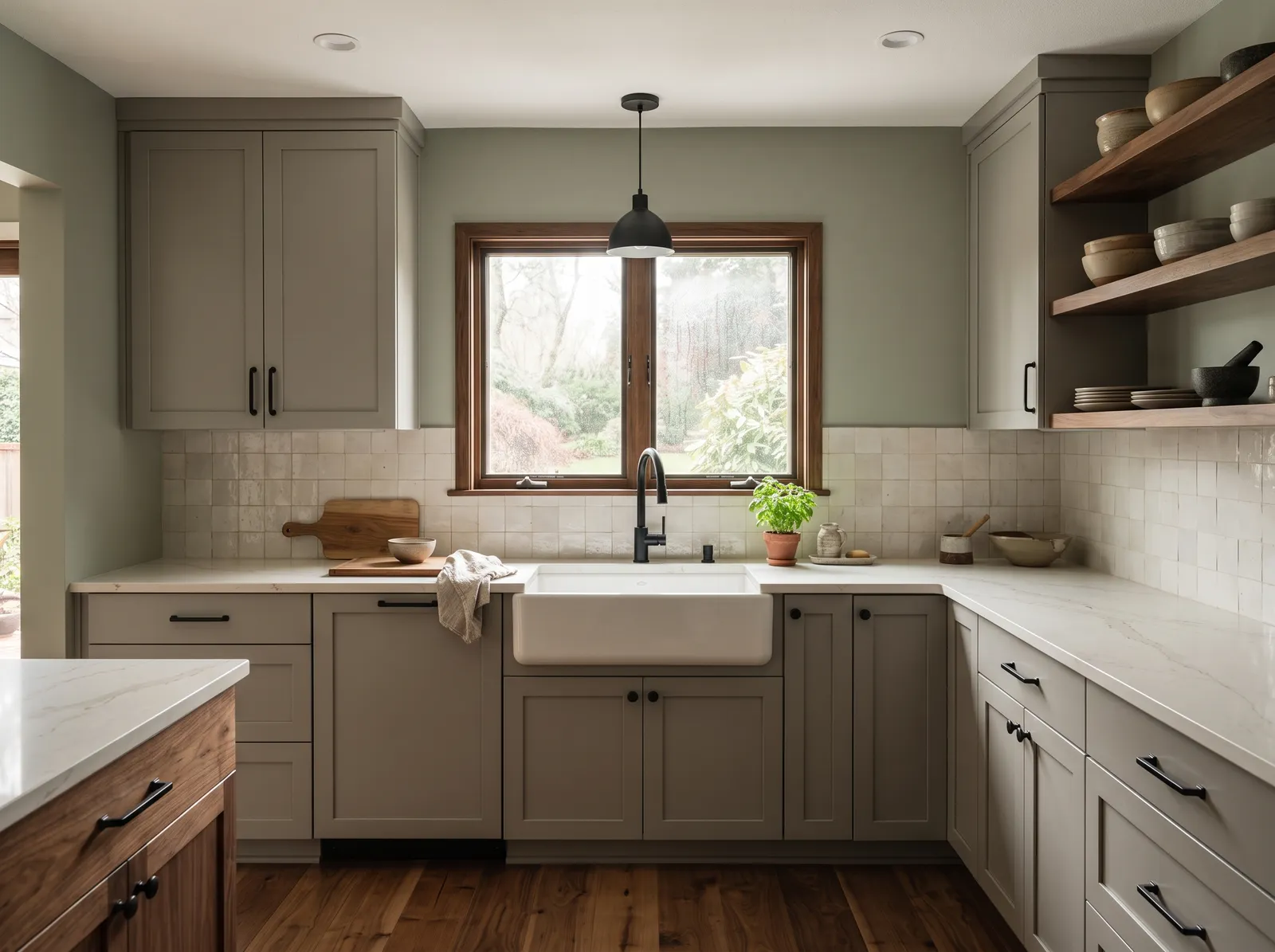
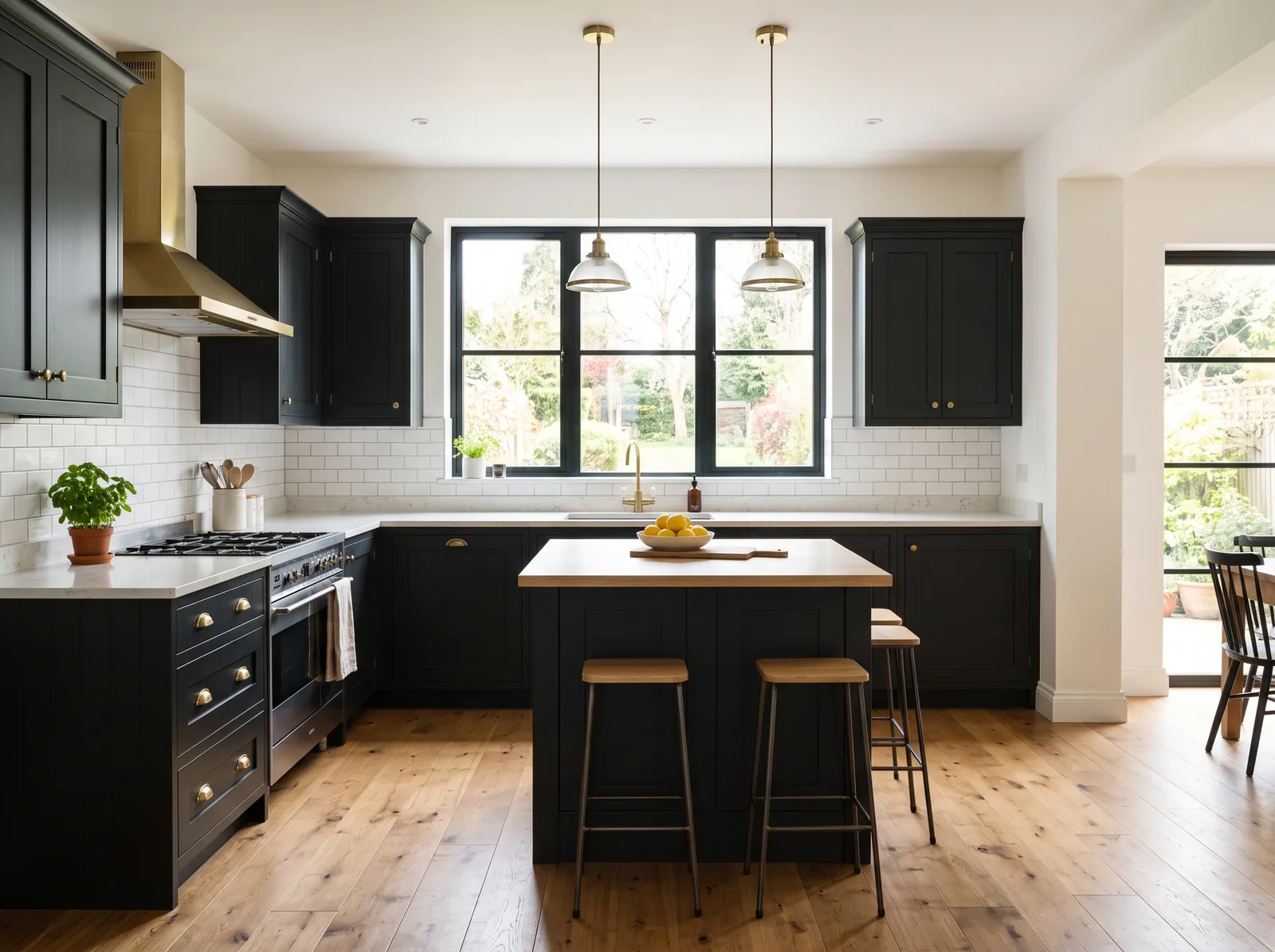
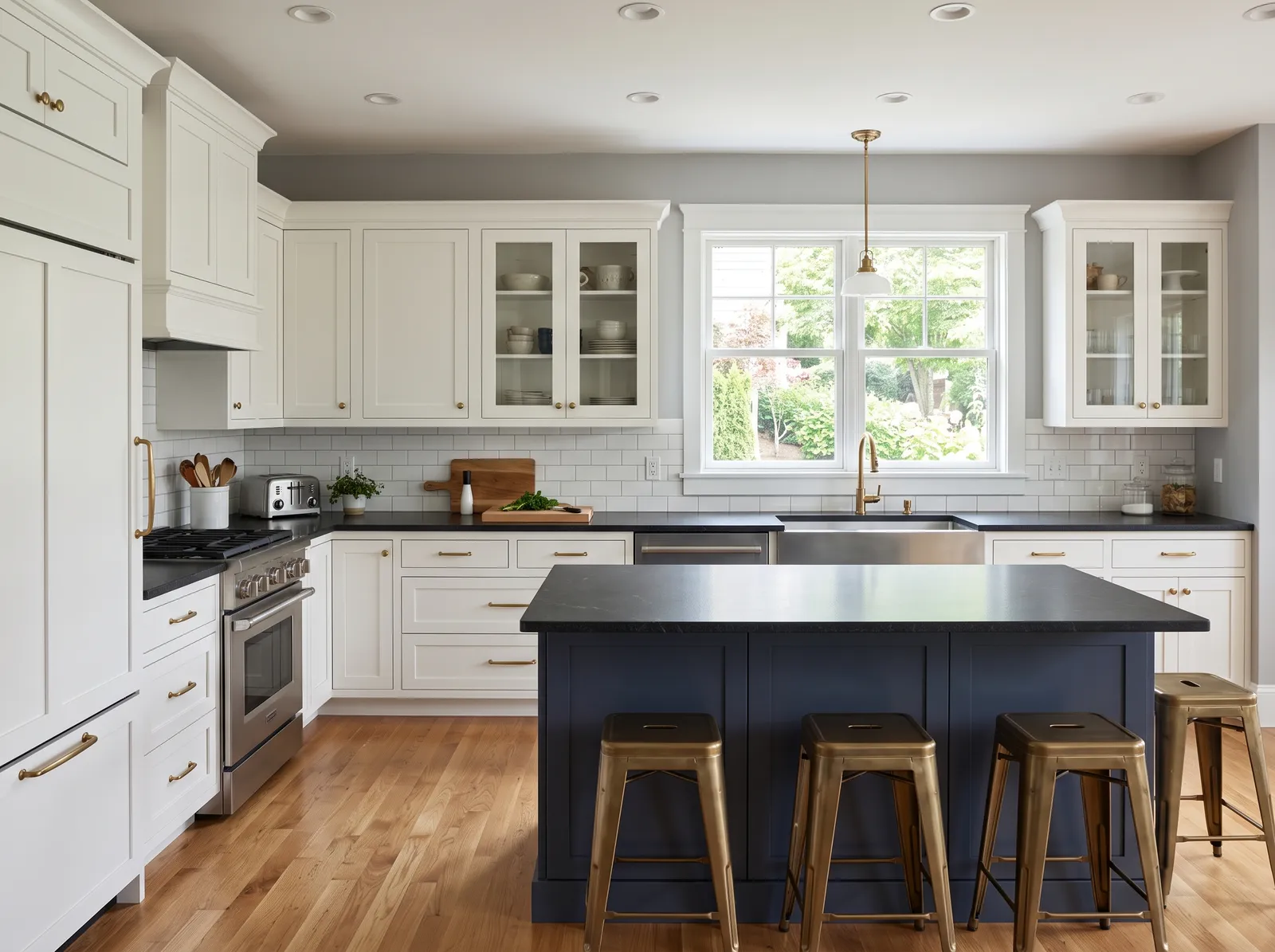
Gray is a team player, so decide whether it should blend or contrast. Against white counters and trim, a mid-to-deep gray cabinet looks crisp and tailored. Against wood tones or warm stone, a greige cabinet ties the warmth together instead of clashing with it. Keep the surrounding trim a clean white or a soft off-white so the gray stays the quiet anchor rather than competing.
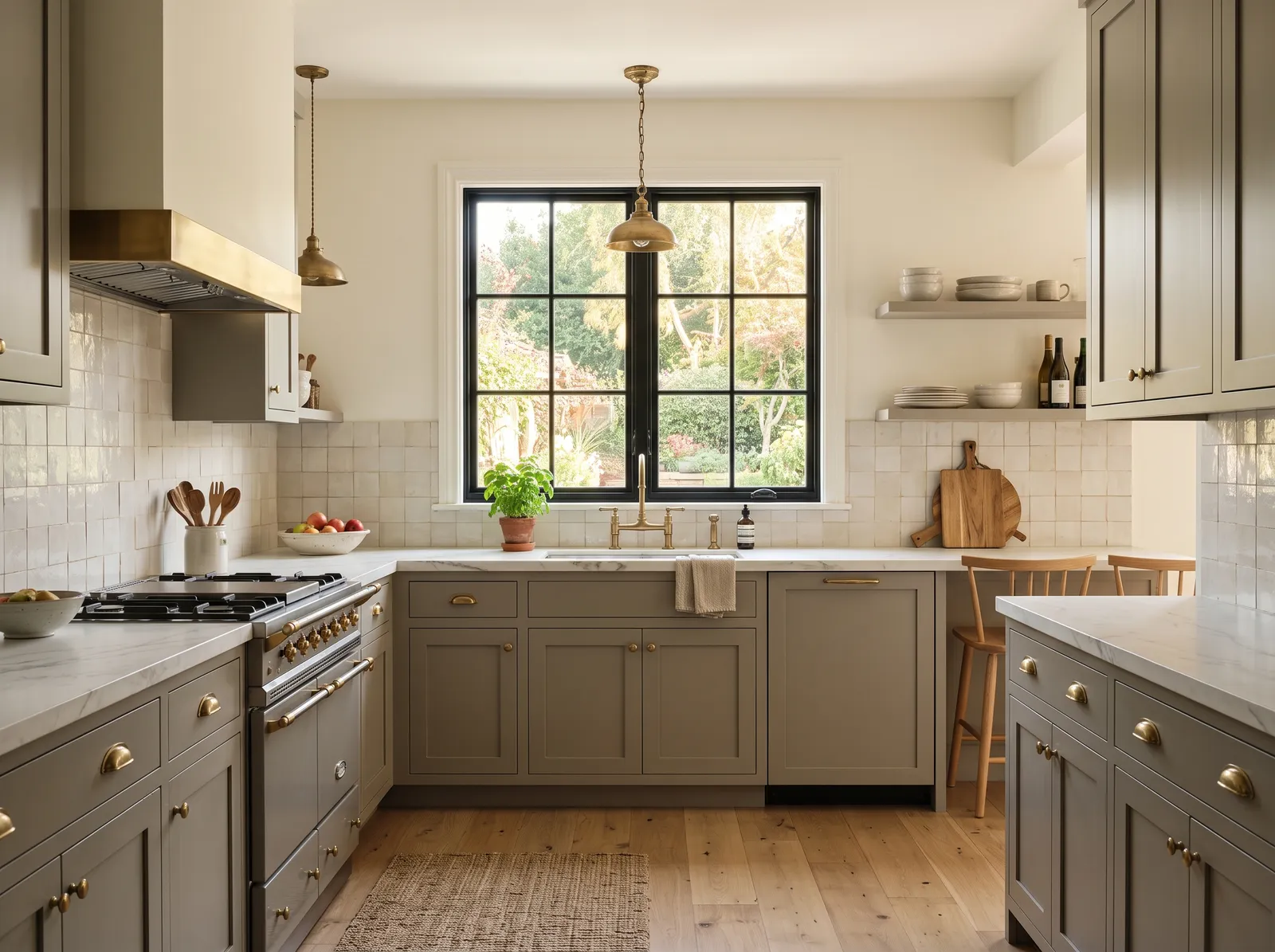
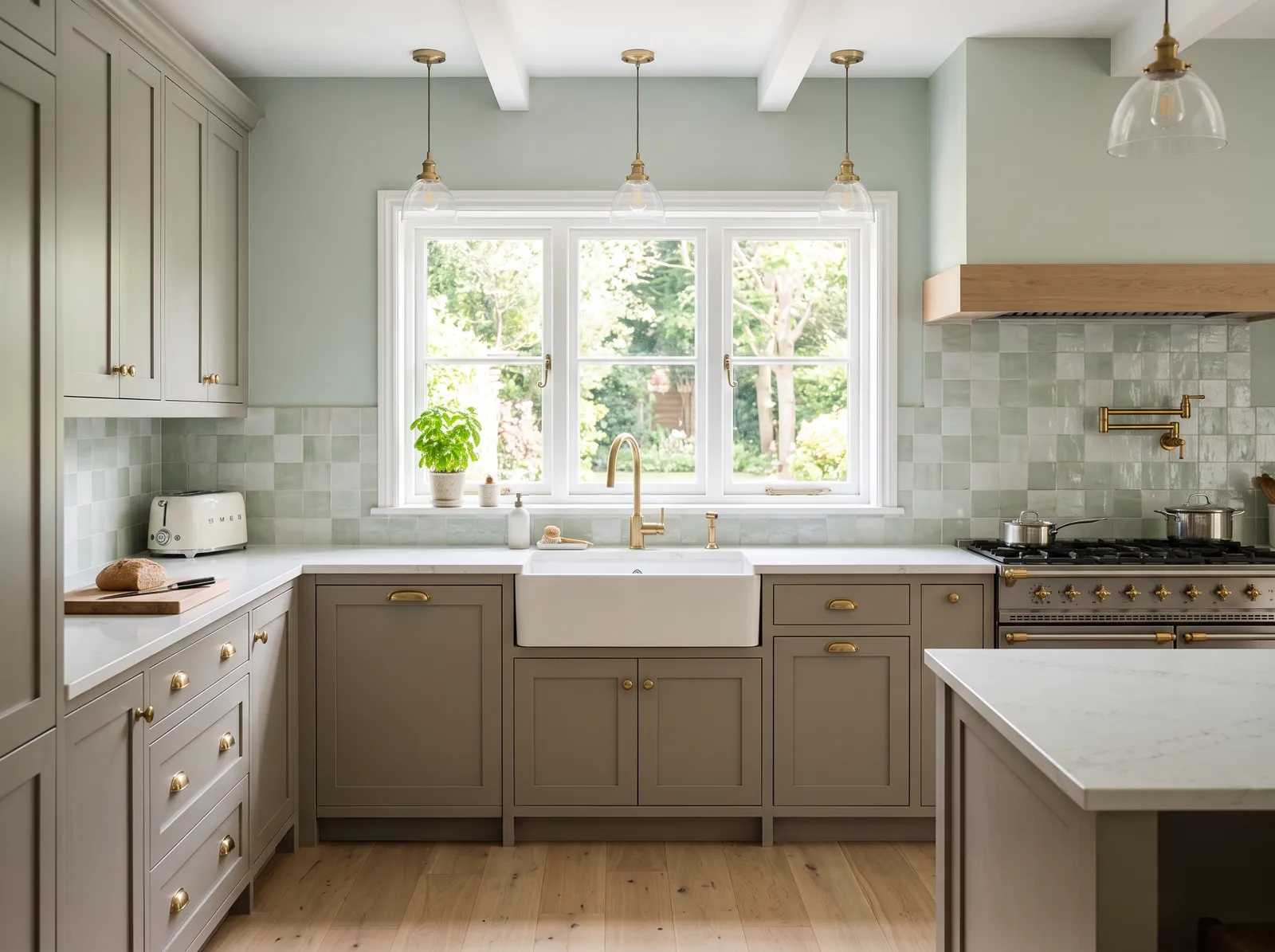
Hardware sets the whole tone. Matte black and brushed nickel keep a cool gray cabinet modern and grounded. Brass, bronze, and gold warm a gray cabinet up and stop it from feeling clinical. Pick the metal first, then nudge the gray's undertone to agree with it.
Common Mistakes With Gray on a Cabinet
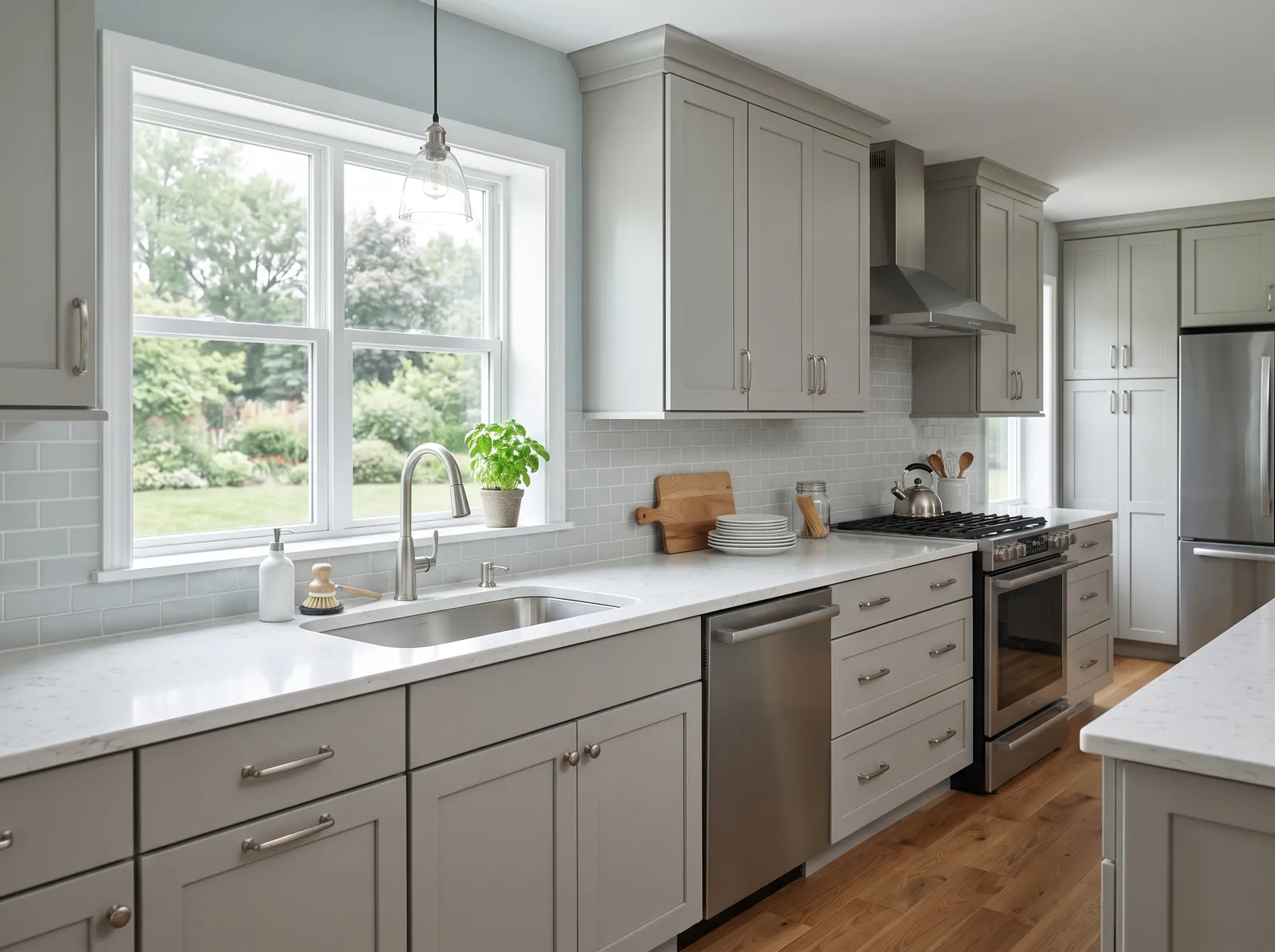
The biggest mistake is going too cold. A blue-gray that looked fine on a paint chip can read like a hospital surface once it covers a full cabinet under LED light. The second mistake is going too dark in a room that can't carry it, which turns the cabinet into a heavy shadow and shrinks the space.
Other traps: skipping primer on slick or previously stained cabinet doors, which lets the gray peel at the edges; using a flat sheen that streaks the first time you wipe it; and ignoring the undertone clash between a cool gray and warm wood floors. Remember that every gray shown here is mixed to order at the store, so you can match the exact shade across brands and test a real sample on your own door before painting the whole thing.
Gray Kitchen Cabinet Paint — Frequently Asked Questions
What is the best shade of gray for a cabinet?+
It depends on your light. In a bright room, a mid-to-deep gray with an LRV in the 20s to low 40s looks rich and tailored. In a dim or north-facing room, stay lighter, around 45 to 60 LRV, and lean slightly warm so the cabinet doesn't read cold or dingy.
What sheen should I use on a gray cabinet?+
Satin or semi-gloss. Both wipe clean, handle moisture near a sink, and survive repeated cleaning without wearing through. Satin cuts glare under bright light, while semi-gloss adds a little durability and life in darker spots. Skip flat and matte, which hold grime and streak when wiped.
Will a gray cabinet make the space feel smaller?+
Only if you pick a gray too dark for the available light. A deep gray cabinet in a dim room reads as a heavy block and can shrink the space. Match the depth to the room: lighter grays in low light, deeper grays where there's plenty of sun, and pair with light trim to keep things open.
What hardware and finishes pair well with gray cabinets?+
Matte black and brushed nickel keep a cool gray modern and grounded. Brass, bronze, and gold warm up a gray cabinet and stop it from feeling clinical. Choose the metal first, then nudge the gray's undertone to match it so the whole thing looks intentional.
Why does my gray cabinet look blue or cold?+
Gray takes on the room's light. North-facing windows and cool LED bulbs pull gray toward blue, which gets exaggerated when it covers a full cabinet. Either switch to a slightly warmer greige or change to warmer bulbs. Always test a sample on the actual door in your real lighting before committing.
Do I need to prime before painting a cabinet gray?+
Almost always, yes. Cabinet surfaces are often slick, stained, or sealed, and paint won't grip well without a bonding primer. Skipping it is the top reason gray cabinets chip and peel at the edges. Clean, lightly sand, prime, then paint for a finish that lasts.