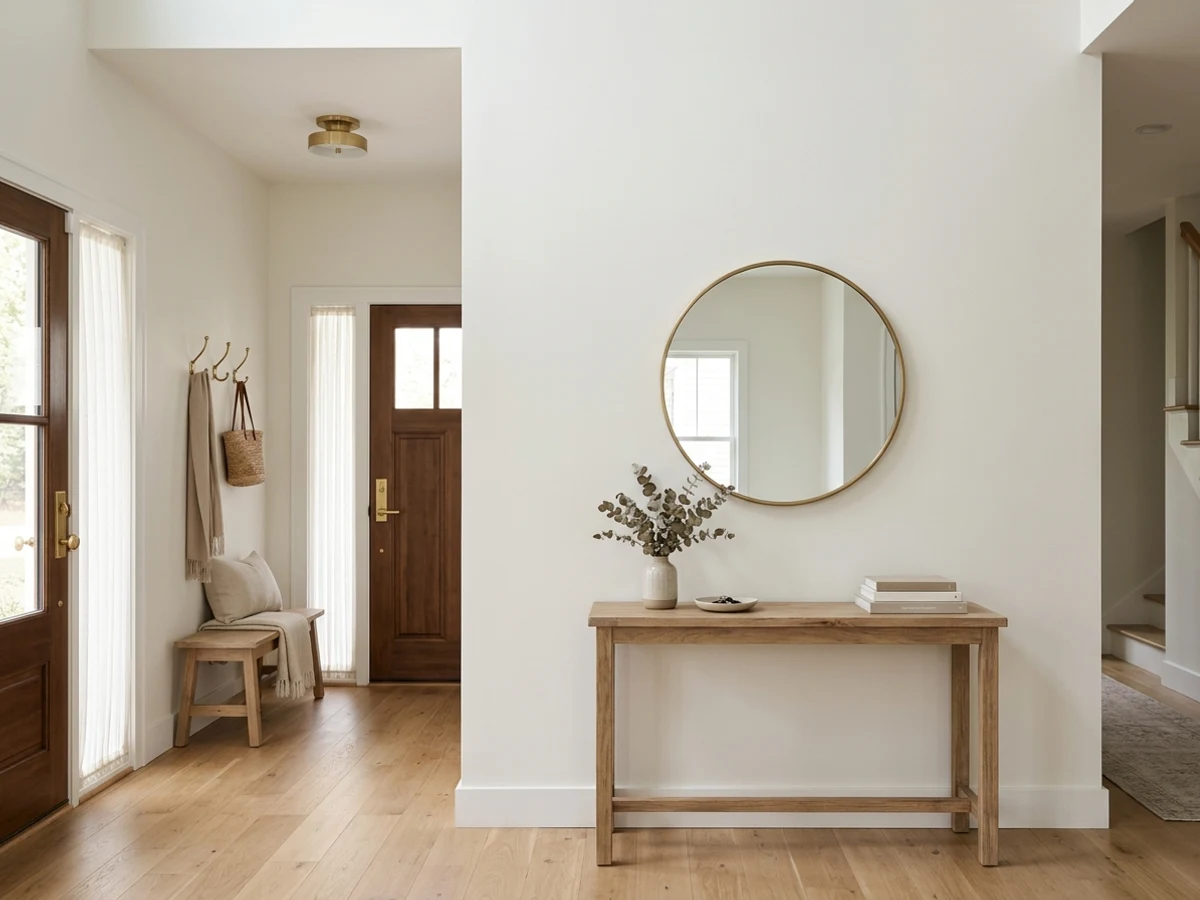
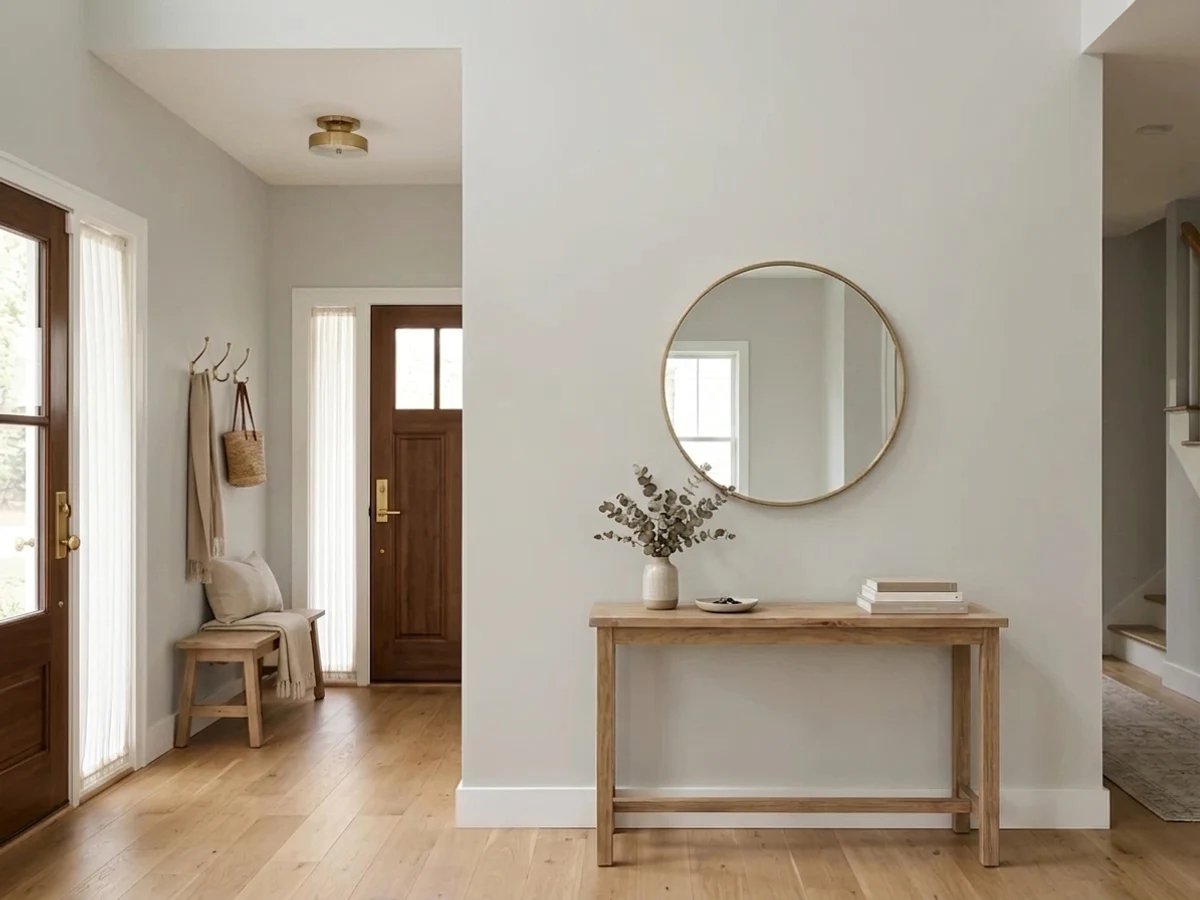
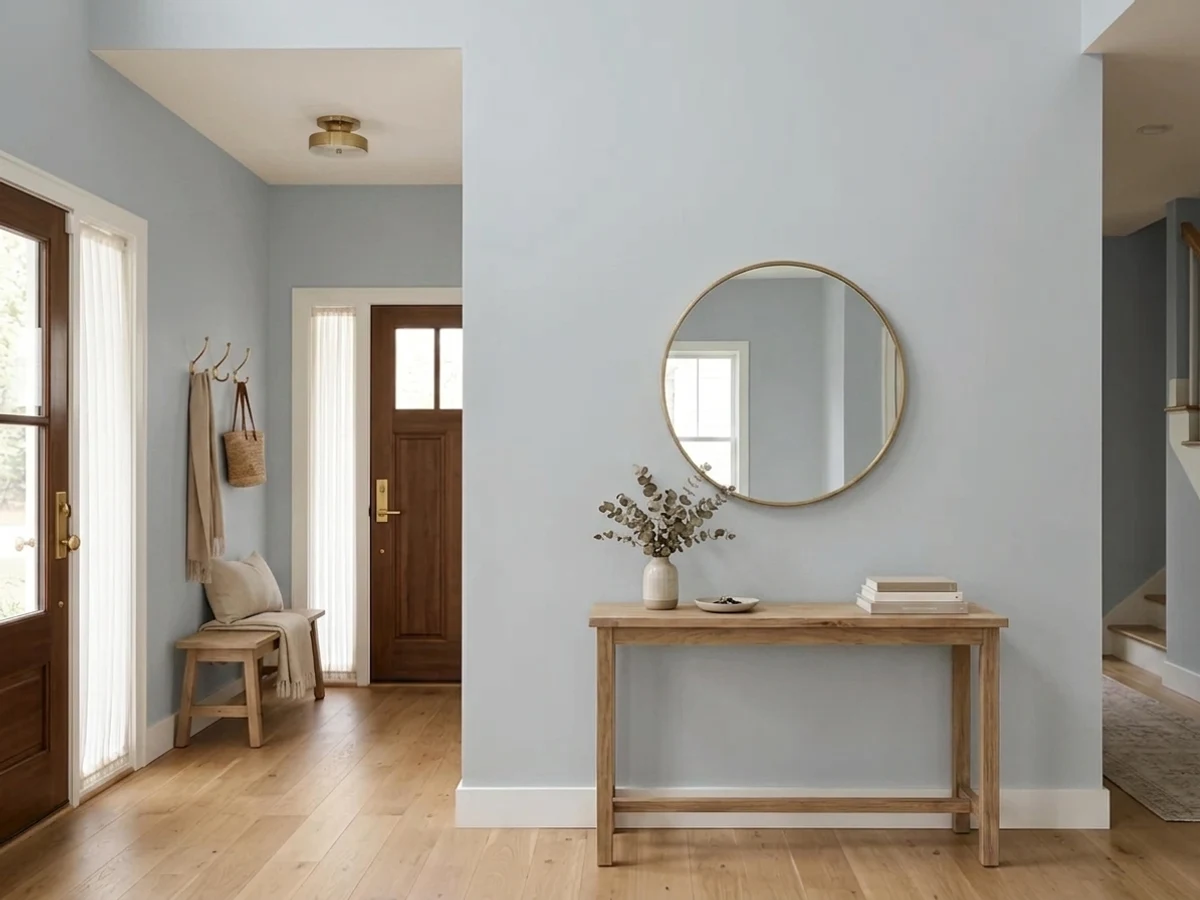
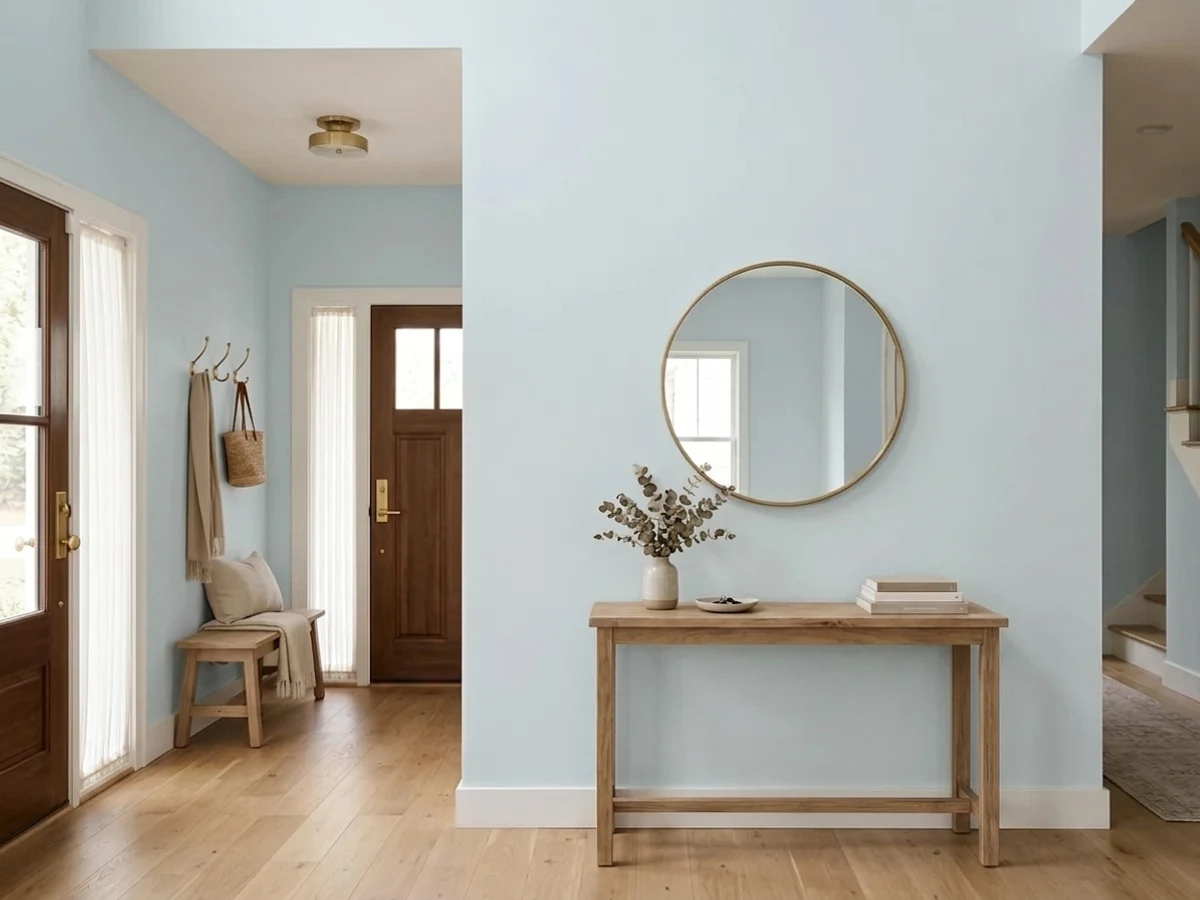
Gray Entryway Paint Colors
3,425 gray colors that work in entryways, drawn from the full ~30,000-color US paint deck. Below: editor's picks specific to entryways, then 30 picks spread across the LRV range — narrow further on the brand page when you've shortlisted.
Gray is the most-recommended neutral in American interiors — the safe choice that anchors a room without committing to a strong color. The "true" grays here lean cool (blue or violet undertone) or stay almost dead-neutral. The warm-leaning grays (taupe, mushroom, greige) live in the Neutral family next door because they read closer to beige than to true gray on the wall.
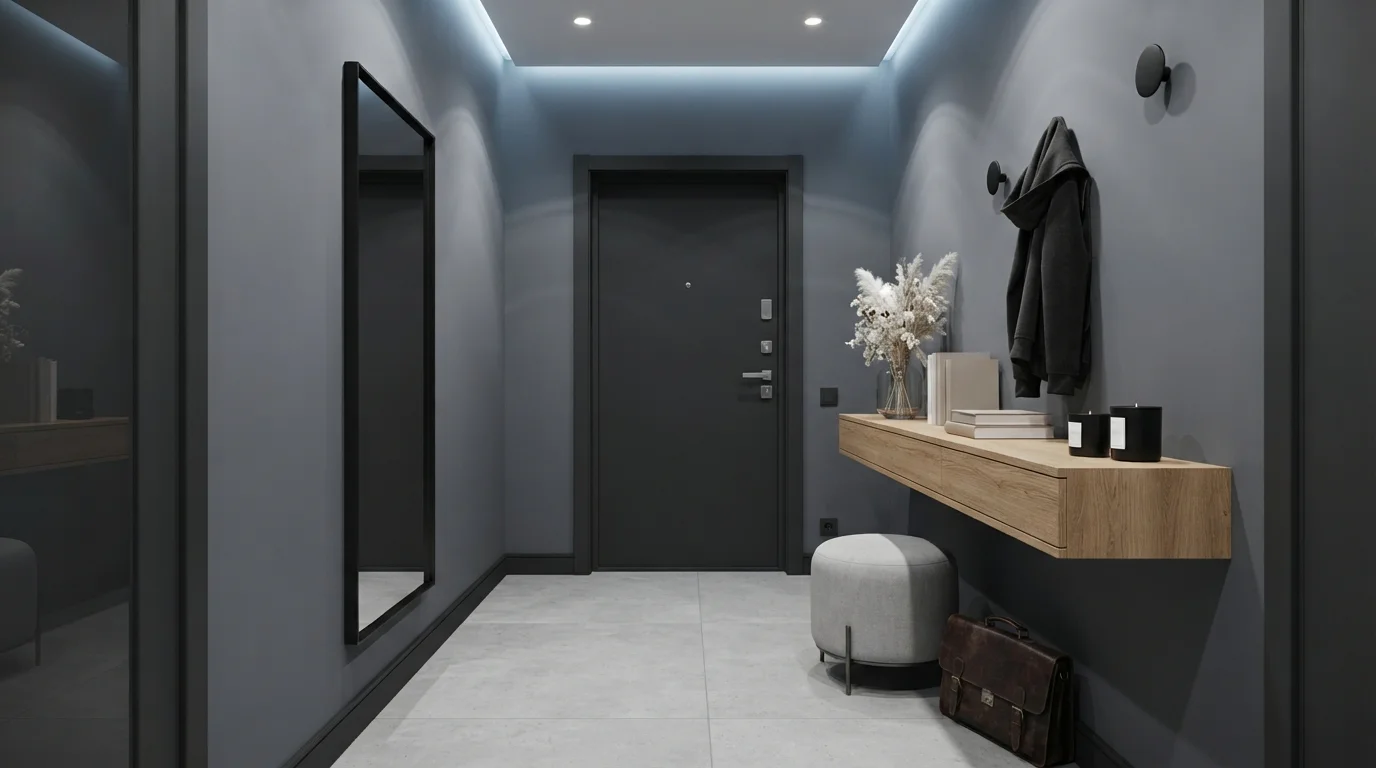
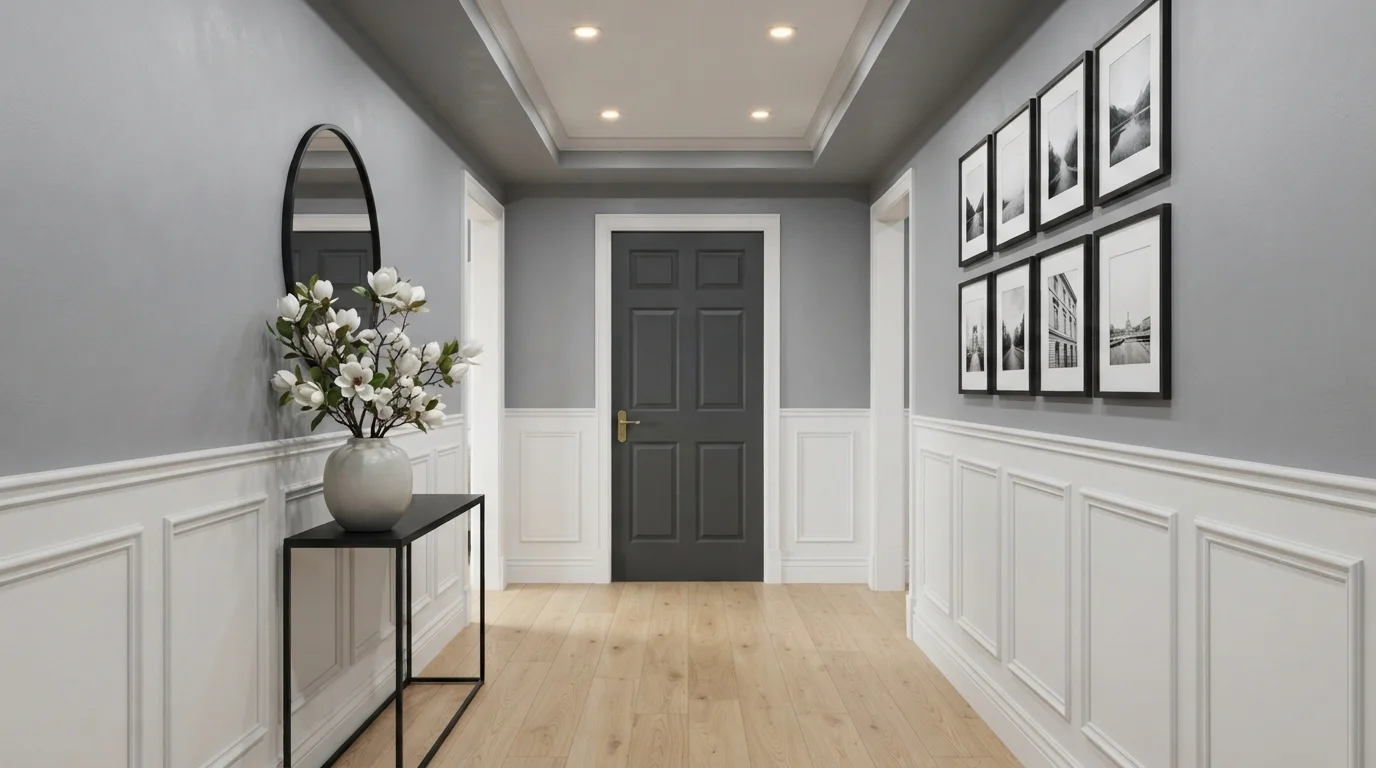
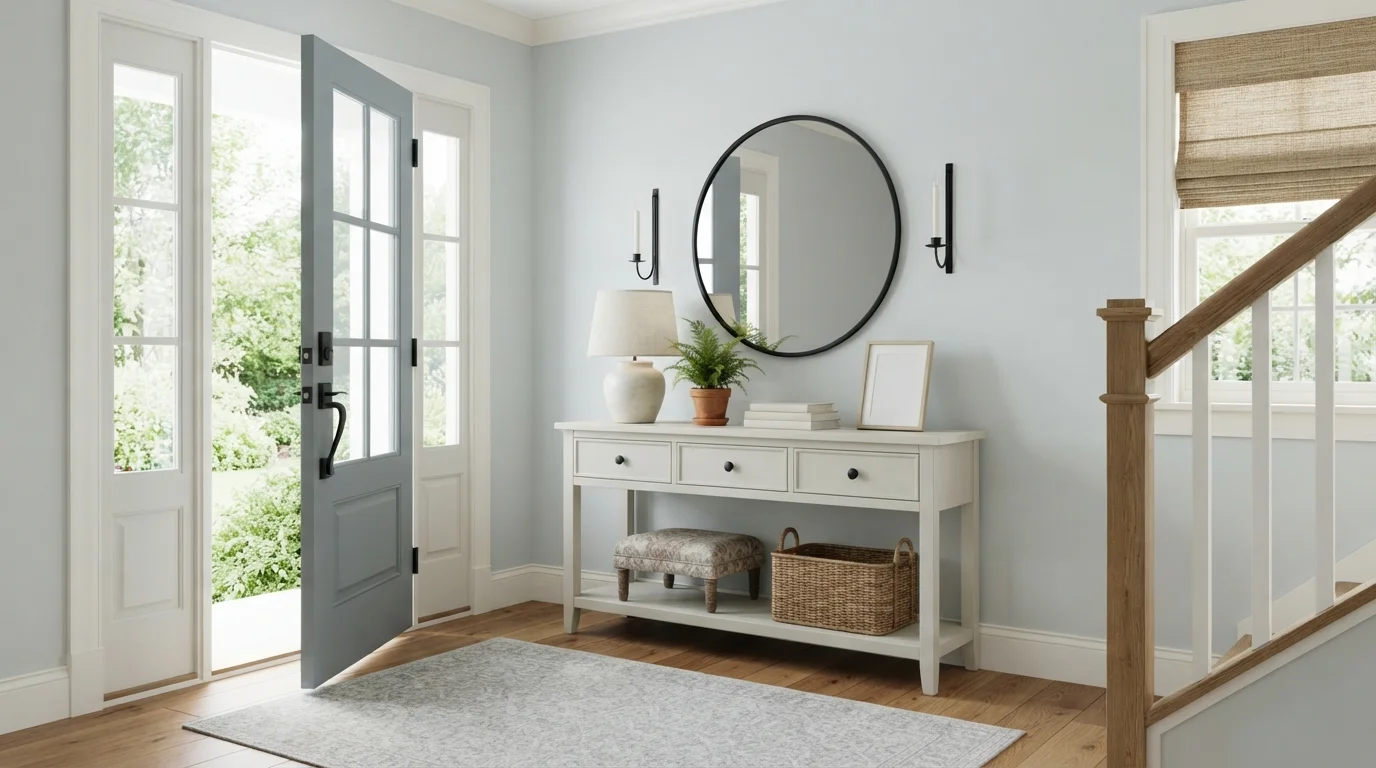
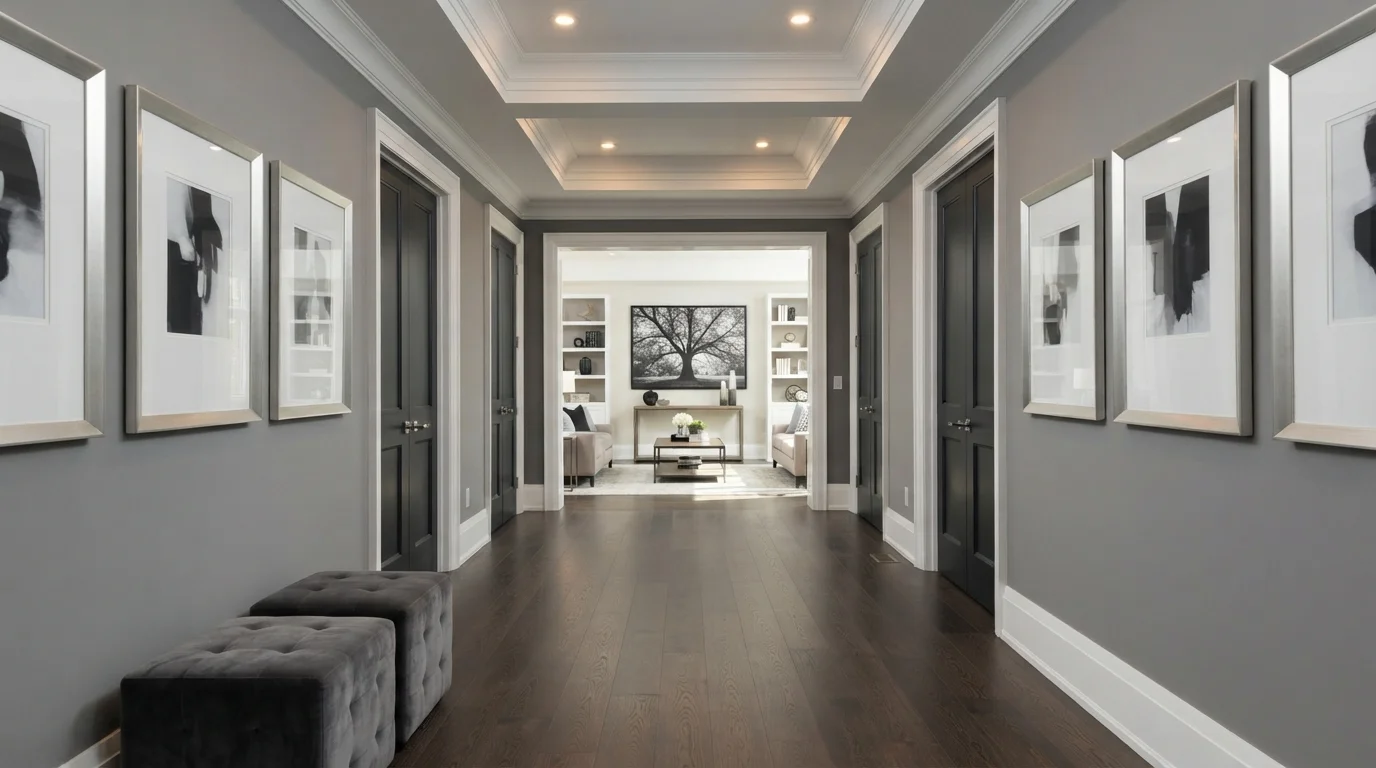
Editor's Picks: Gray for Entryways
4 picks30 Gray Picks Across the LRV Range
30 of 3,425 · sorted dark → lightLooking for more? All gray → covers every brand; brand × family pages show full decks.
Gray Entryway Colors at Every US Brand
21 brands · up to 10 picks eachUp to 10 picks per brand spread across the gray LRV range, drawn from each brand's full deck. Tap any swatch with a curated guide for full spec; tap the brand title for the brand's complete gray deck.
Behr
Glidden
Valspar
Benjamin Moore
PPG / Glidden
Sherwin-Williams
Dunn-Edwards
Dutch Boy
Diamond Vogel
Hirshfield's
Kompozit
C2 Paint
Rodda
Magnolia Home
Farrow & Ball
Clare
Portola Paints
Annie Sloan
Backdrop
Rust-Oleum
Other Entryway Color Families
Gray Colors in Other Rooms
Gray Paint Colors for a Entryway
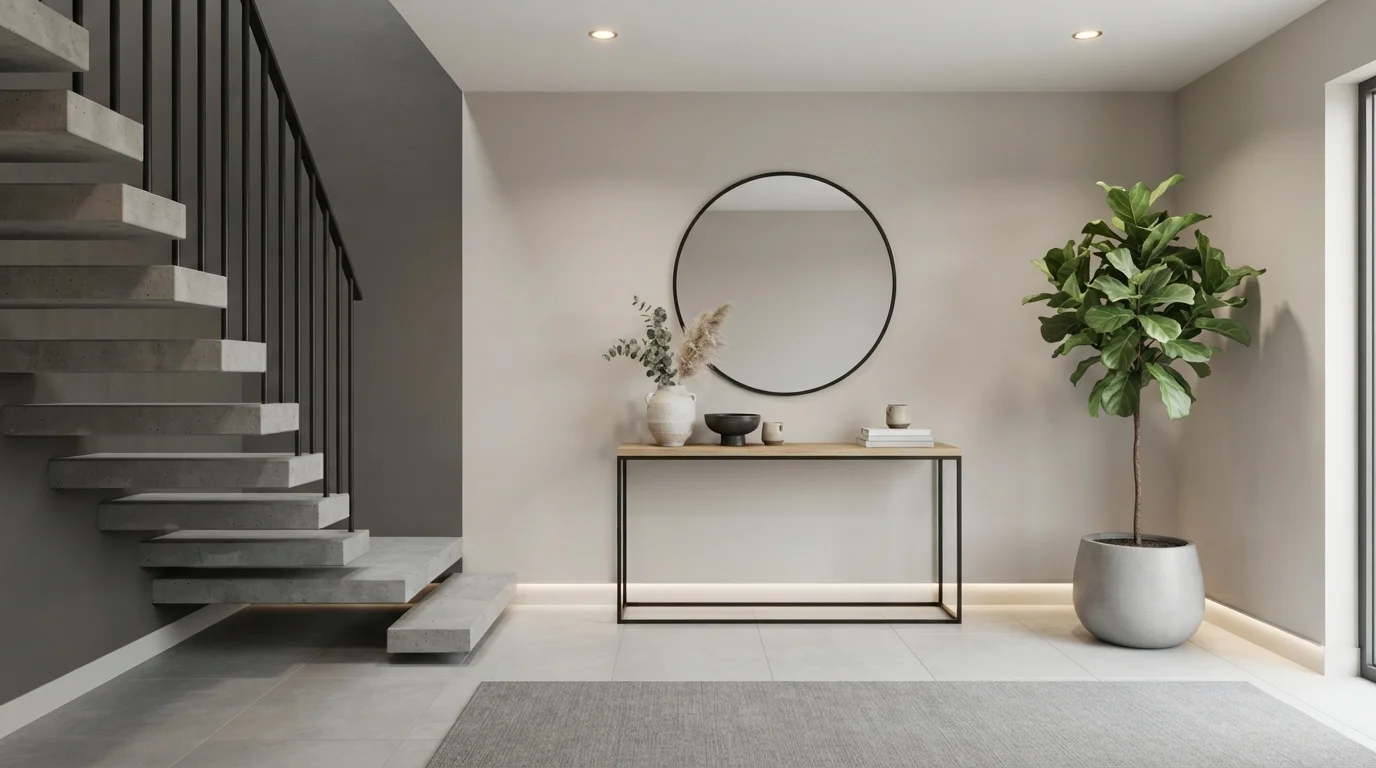
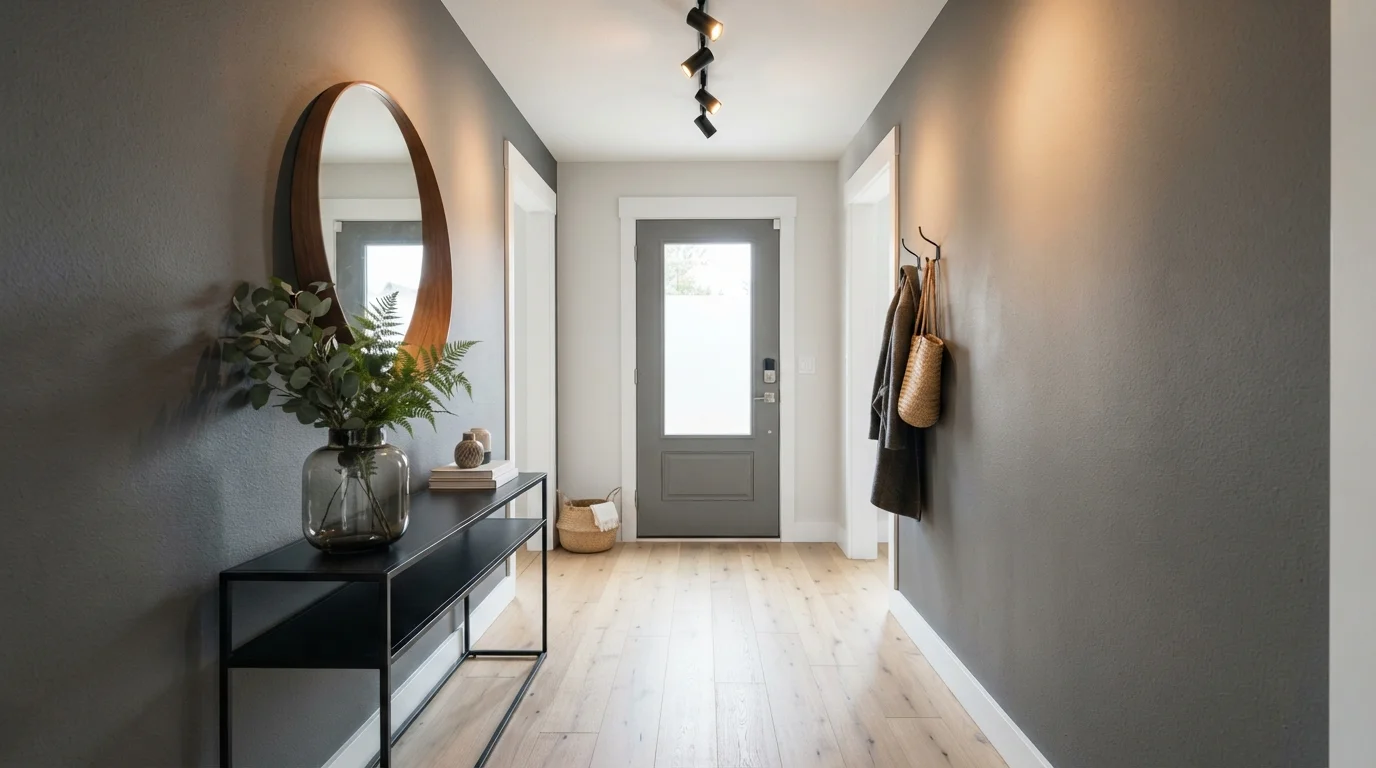
An entryway is the first room anyone sees, and it takes more abuse than almost any other spot in the house. Wet shoes, dropped bags, scuffs from the wall where everyone sets their hand, and constant in-and-out traffic all happen here. Gray is a smart pick because it hides a lot of that day-to-day grime and reads as calm and put-together the moment someone walks in.
The trick with gray in an entryway is that the light is rarely steady. Many entries have a single fixture, a small window beside the door, or no natural light at all, so the same gray can look soft and warm in the afternoon and flat or blue at night. The right shade depends on what light you actually have, and any color you see here is mixed to order at the store, so you can match it across brands and adjust the exact depth before you commit.
Why Gray Works in an Entryway
Gray sets a clean, neutral tone right at the front door without forcing a color decision on the rest of the house. It plays nicely with whatever flows off the entry, whether that's a bright living room, a wood staircase, or a hallway in a different shade.
It also hides wear better than most colors. Fingerprints near the light switch, scuffs along the baseboard, and the gray haze that builds up on a wall by the door all blend in instead of standing out, which matters in a room that gets touched and bumped all day.
Picking the Right Depth of Gray for the Light
LRV (light reflectance value) tells you how much light a color bounces back, on a scale from 0 (black) to 100 (white). Entryways are often short on natural light, so a gray in the mid-to-upper range, roughly an LRV of 55 to 70, keeps the space from feeling like a dim tunnel.
If your entry has a glass door or a good-sized window, you can go deeper, into the 35 to 50 range, for a richer, more grounded look. A dark, windowless entry will fight you on a low-LRV gray, so save the dramatic charcoals for entries that actually get some daylight or strong fixtures.
Watching the Undertone
Gray is never just gray. It leans blue, green, violet, or warm taupe, and a small entry with one light source will exaggerate whichever way it leans. Cool blue-grays can turn cold and gloomy in a north-facing or artificially lit entry, while warm greige reads friendlier and more welcoming.
The safest move for most entryways is a gray with a touch of warmth, since the room is meant to say welcome home. Always test a big sample on the actual wall and look at it both in daylight and under your entry light at night before you buy a full can.
The Right Finish for High-Touch Walls
Entryway walls get handled, so skip flat paint. An eggshell or satin sheen wipes clean when someone leaves a smudge by the door and holds up to the occasional wet sleeve or muddy backpack.
Use a tougher semi-gloss on the trim, baseboards, and any built-in bench or bead-board, since those surfaces take the most direct knocks from shoes and bags. The slight contrast between satin walls and glossier trim also adds a little crispness that an entry benefits from.
Pairing Gray with Trim, Floors, and Fixtures
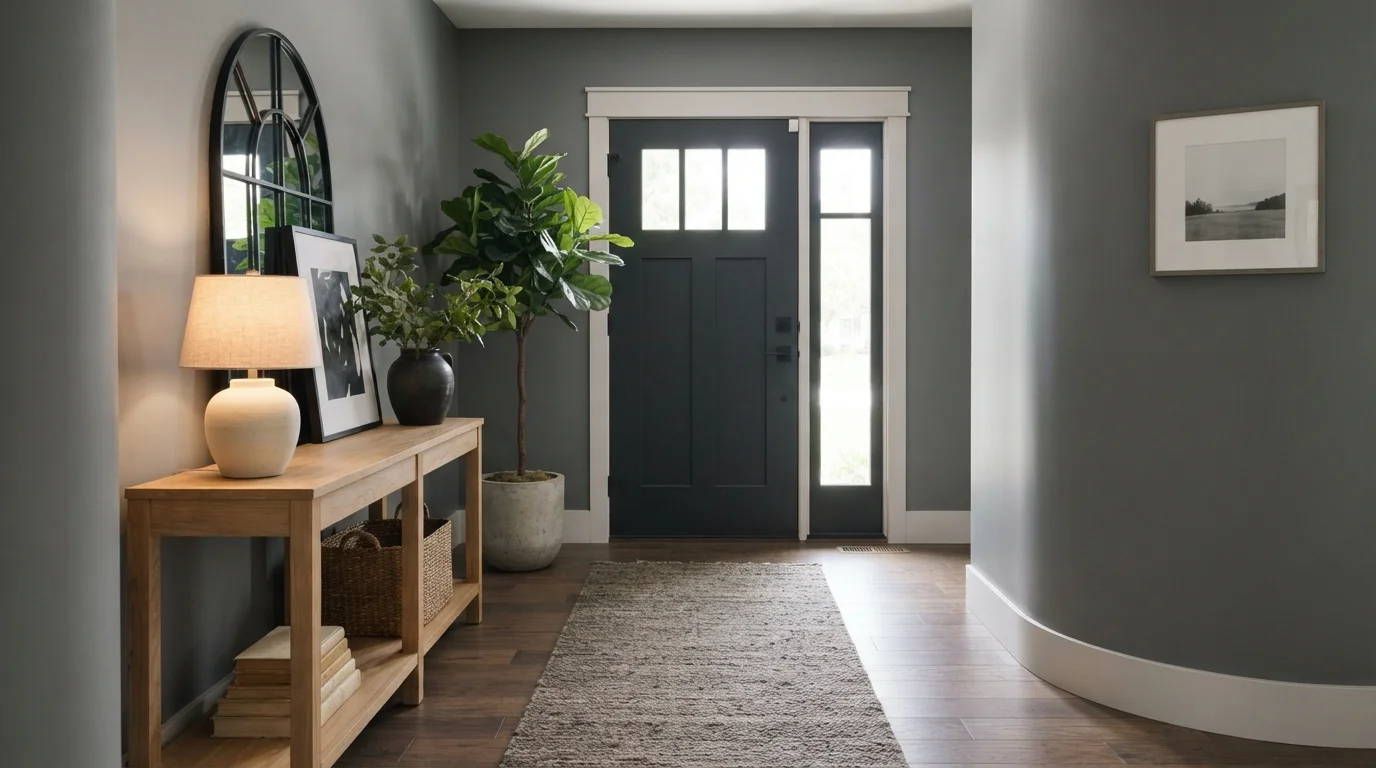
Crisp white trim keeps a gray entry feeling fresh and frames the front door nicely. If your gray runs warm, choose a soft or creamy white rather than a stark blue-white so the two don't clash.
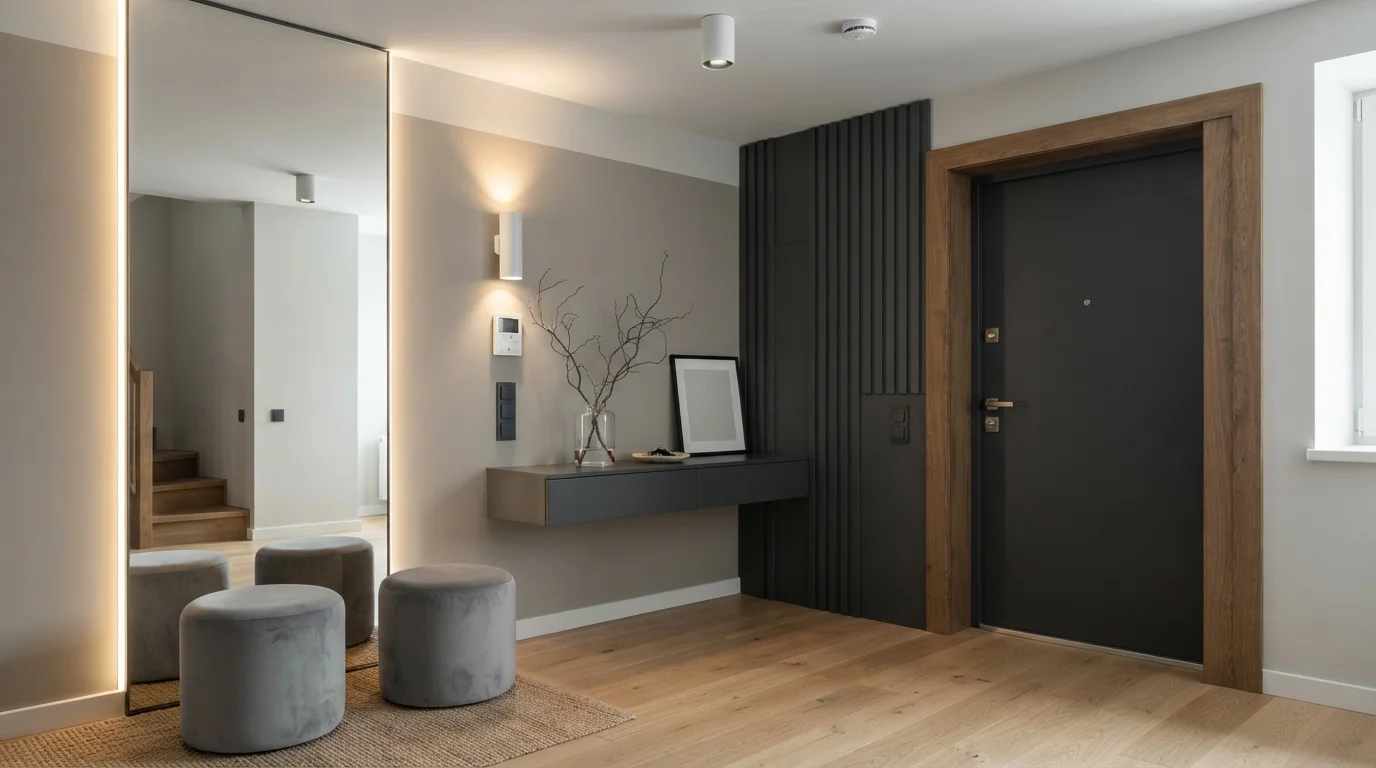
Gray is also forgiving with floors and metals. It sits well next to wood tones, tile, and stone, and it lets fixtures do the talking, so warm brass or matte black hardware on the door and light reads as an intentional accent against the neutral wall.
Gray Entryway Paint — Frequently Asked Questions
Will gray make my small entryway feel dark?+
It can if you go too deep in a space with little light. Stick to a lighter gray with an LRV around 60 to 70 in a dim or windowless entry, and save darker charcoals for entries that get real daylight or strong fixtures.
What sheen should I use on entryway walls?+
Eggshell or satin. Entryway walls get touched, scuffed, and occasionally splashed, and these finishes wipe clean where a flat paint would smudge and stain.
Should the trim be white or a darker gray?+
White trim is the easy, classic choice and keeps the entry feeling crisp. If you want a moodier look, a deeper gray trim against lighter gray walls works too, just keep both grays in the same undertone family so they don't fight.
How do I keep my gray entry from looking cold?+
Choose a gray with a warm or greige undertone instead of a strong blue lean, since an entry is meant to feel welcoming. Test it under your actual entry light at night, where cool grays tend to look their bluest.
What's the most common mistake with gray in an entryway?+
Picking the color from a tiny chip without checking the light. The single fixture and limited windows in most entries pull out undertones you won't see in the store, so always sample a large patch on the wall first.
Can I match the same gray across different paint brands?+
Yes. Every color shown here is mixed to order at the paint counter, so you can take a shade you like and have it cross-matched and tinted in another brand's base if you prefer their paint.